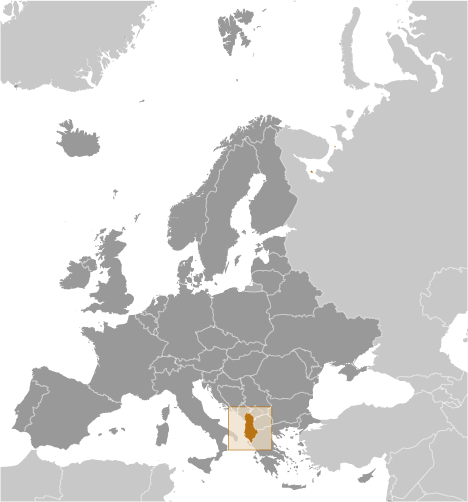

| ALBANIA Republic of Albania Republika e Shqiperise Joined United Nations: 14 December 1955 Human Rights as assured by their constitution Click here Updated 04 December 2012 |

| CAPITAL |
| POPULATION |
| CHIEF OF STATE |
| SELECTION PROCESS |
Tirana (Tirane)
3,002,859 (July 2012 est.)
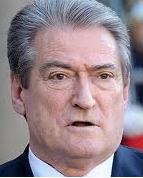
Sali Berisha
Prime Minister since 10 September 2005
Prime Minister since 10 September 2005
President elected by the People's Assembly for a five-year term
(eligible for a second term); four election rounds held between 30
May and 11 June 2012
Next scheduled election: 2017
(eligible for a second term); four election rounds held between 30
May and 11 June 2012
Next scheduled election: 2017
HEAD OF GOVERNMENT
SELECTION PROCESS
Prime Minister appointed by the President
| DECLARATION OF HUMAN RIGHTS |
| ETHNIC GROUPS |
Albanian 95%, Greek 3%, other 2% (Vlach, Roma (Gypsy), Serb, Macedonian, Bulgarian) (1989 est.)
note: in 1989, other estimates of the Greek population ranged from 1% (official Albanian statistics) to 12% (from a Greek
organization)
note: in 1989, other estimates of the Greek population ranged from 1% (official Albanian statistics) to 12% (from a Greek
organization)
| RELIGIONS |
Muslim 70%, Albanian Orthodox 20%, Roman Catholic 10%
note: percentages are estimates; there are no available current statistics on religious affiliation; all mosques and churches were
closed in 1967 and religious observances prohibited; in November 1990, Albania began allowing private religious practice
note: percentages are estimates; there are no available current statistics on religious affiliation; all mosques and churches were
closed in 1967 and religious observances prohibited; in November 1990, Albania began allowing private religious practice
| GOVERNMENT STRUCTURE |
Emerging democracy with 12 counties (qarqe, singular - qark); Legal system has a civil law system; has not accepted compulsory
ICJ jurisdiction; has accepted jurisdiction of the International Criminal Court for its citizens
Executive: President elected by the People's Assembly for a five-year term (eligible for a second term); Prime Minister appointed
by the President; four election rounds held between 30 May and 11 June 2012 (next election to be held in 2017); prime minister
appointed by the president
Legislative: Unicameral Assembly or Kuvendi (140 seats; 100 members are elected by direct popular vote and 40 by
proportional vote to serve four-year terms)
elections: last held 28 June 2009 (next to be held in 2014)
Judicial: Constitutional Court, Supreme Court (chairman is elected by the People's Assembly for a four-year term), and multiple
appeals and district courts
ICJ jurisdiction; has accepted jurisdiction of the International Criminal Court for its citizens
Executive: President elected by the People's Assembly for a five-year term (eligible for a second term); Prime Minister appointed
by the President; four election rounds held between 30 May and 11 June 2012 (next election to be held in 2017); prime minister
appointed by the president
Legislative: Unicameral Assembly or Kuvendi (140 seats; 100 members are elected by direct popular vote and 40 by
proportional vote to serve four-year terms)
elections: last held 28 June 2009 (next to be held in 2014)
Judicial: Constitutional Court, Supreme Court (chairman is elected by the People's Assembly for a four-year term), and multiple
appeals and district courts
| LANGUAGES |
Albanian (official - derived from Tosk dialect), Greek, Vlach, Romani, Slavic dialects
| BRIEF HISTORY |
Some scholars consider that Albanians are direct descendants of an Illyrian tribe that was named "Albanoi," which was located in
modern-day Albania. Other scholars dispute this and claim that Albanian derives from a dialect of the now-extinct Thracian
language and that the Albanians are not autochthonous. Some others believes the majority of the Illyrians were conquered and/ or
assimilated by the invading Slavic tribes after the fall of the Roman Empire. The perception of Illyrian as centum language was based
on analysis of Venetic language in northern Italy which scholars believed was related to Illyrian language. The Illyrians were Indo-
European tribesmen who appeared in the western portion of the Balkan Peninsula about 1000 B.C., a period coinciding with the
end of the Bronze Age and beginning of the Iron Age. They inhabited much of the area for at least the next millennium.
Archaeologists associate the Illyrians with the Hallstatt culture, an Iron Age people noted for production of iron, bronze swords with
winged-shaped handles, and domestication of horses. The Illyrian kingdom of Bardhyllis became a formidable local power in the
fourth century B.C. He fought against Greek settlers and Macedonia, a powerful kingdom to the southeast. In 358 B.C., however,
Macedonia's Phillip II, father of Alexander the Great, defeated the Illyrians and assumed control of their territory as far as Lake
Ohrid. Alexander himself routed the forces of the Illyrian chieftain Clitus in 335 B.C. and Illyrian tribal leaders and soldiers
accompanied Alexander on his conquest of Persia. In the Illyrian Wars of 229 and 219 B.C., Rome overran the Illyrian settlements
in the Neretva River valley. The Romans made new gains in 168 B.C., with Roman forces capturing Illyria's King Gentius at
Shkodër, which they called Scodra, and bringing him to Rome in 165 B.C. A century later, Julius Caesar and his rival Pompey
fought their decisive battle near Durrës (Dyrrachium). Rome finally subjugated recalcitrant Illyrian tribes in the western Balkans
during the reign of Emperor Tiberius in A.D. 9. Illyrians distinguished themselves as warriors in the Roman legions and made up a
significant portion of the Praetorian Guard. Several Roman emperors were of Illyrian origin, including Gaius Decius, Claudius
Gothicus, Aurelian, Probus, Diocletian, and Constantine the Great. Christianity came to Illyrian-populated lands in the first century
A.D. Saint Paul wrote that he preached in the Roman province of Illyricum, and tradition holds that he visited Durrës. In 379, under
emperor Theodosius I, as part of the Prefecture of Illyricum Orientale, the southern region was divided into three provinces: Epirus
Vetus, with capital at Nicopolis (modern Preveza), Epirus Nova, with capital at Durrës, and Praevalitania, with capital at Shkodër.
Each city formed an archdiocese. The fall of the Western Roman Empire and the age of great migrations brought radical changes to
the Balkan Peninsula and the Illyrian people. Barbarian tribesmen overran many rich Roman cities, destroying the existing social and
economic order and leaving the great Roman aqueducts, coliseums, temples, and roads in ruins. The Illyrians gradually disappeared
as a distinct people from the Balkans, replaced by the Bulgars, Serbs, Croats, Bosnians and Albanians and their lands were
gradually overtaken by them. In the late Middle Ages, new waves of invaders swept over the Albanian-populated lands. In the
fourth century, barbarian tribes began to prey upon the Roman Empire, and the fortunes of the Illyrian-populated lands sagged. The
Germanic Goths and Asiatic Huns were the first to arrive, invading in mid-century; the Avars attacked in A.D. 570; and the Slavic
Serbs and Croats overran Illyrian-populated areas in the early seventh century. In the 9th century, the Bulgars conquered much of
the Balkan Peninsula and extended their domain to the lowlands of what is now central and southern Albania. But the Byzantine
emperor Basil II, nicknamed the “Bulgar-slayer”, counterattacked in 1014. The Byzantine forces smashed the Bulgarian army,
seized the Adriatic ports, and conquered Epirus, which lies south of Albania. The first historical mention of Albania and the
Albanians as such appears in an account of the resistance by a Byzantine emperor, Alexius I Comnenus, to an offensive by the
Vatican-backed Normans from southern Italy into the Albanian-populated lands in 1081. In the same year, the weakness of the
Byzantine empire let northern Albania slip under Serbian control. Ottoman supremacy in the Balkan region began in 1385 with the
Battle of Savra but was briefly interrupted in the 15th century, when Gjergj Kastrioti, an Albanian warrior known as Skanderbeg,
allied with some Albanian chiefs and fought-off Turkish rule from 1443-1478 (although Kastrioti died in 1468). Upon the Ottomans'
return, a large number of Albanians fled to Italy, Greece and Egypt and maintained their Arbëresh identity. Many Albanians won
fame and fortune as soldiers, administrators, and merchants in far-flung parts of the empire. As the centuries passed, however,
Ottoman rulers lost the capacity to command the loyalty of local pashas, who governed districts on the empire's fringes, which
threatened stability in the region. The Ottoman rulers of the nineteenth century struggled to shore up central authority, introducing
reforms aimed at harnessing unruly pashas and checking the spread of nationalist ideas. Albania would be a part of the Ottoman
Empire until the early 20th century. Albanian leaders formed the League of Prizren in 1878 with the backing of sultan Abdulhamid
II, through which they pressed for territorial autonomy and defending their lands from the onslaught of their neighbours. After
decades of unrest a major uprising exploded in the Albanian-populated Ottoman territories in 1912, on the eve of the First Balkan
War. When Serbia, Montenegro, and Greece laid claim to Albanian lands during the war, the Albanians declared independence.
The European Great Powers endorsed an independent Albania in 1913, after the Second Balkan War. They were assisted by
Aubrey Herbert, a British MP who passionately advocated their cause in London. As a result, Herbert was offered the crown of
Albania, but was dissuaded by the British prime minister, H. H. Asquith, from accepting. Instead the offer went to William of Wied,
a German prince who accepted and became sovereign of the new Principality of Albania. The young state, however, collapsed
within weeks of the outbreak of World War I.Before this, Albanians rebelled against the German prince and declared the
independence of their country from the jurisdiction of the great powers and established throughout the country a Muslim regime
under the leadership of a local warrior, Haji Qamil. Albania achieved a degree of statehood after World War I, in part because of
the diplomatic intercession of the United States. The country suffered from a debilitating lack of economic and social development,
however, and its first years of independence were fraught with political instability. Unable to find strength without a foreign
protector, Albania became the object of tensions between Italy and the Kingdom of the Serbs, Croats, and Slovenes (the later
Yugoslavia), which both sought to dominate the country. During World War II, Albanian fascists supported Italy in its invasion on
Greece in October 1940. Some Albanians took a part in muslim formations which helped German SS force in repression on
Yugoslavian and Albanian resistance movements. Communist partisans fought Italian and German occupation forces as well as
various nationalist Albanian partisans. However, they were victorious in World War II and took over the country which became
communist immediately after that. Enver Hoxha and Mehmet Shehu emerged as the dominant figures in Albania after five years of
political turmoil following the end of World War II. They began to concentrate primarily on securing and maintaining their power
base, and secondarily on preserving Albania's independence and reshaping the country according to the precepts of Stalinism. Soon
after Hoxha's death, the government began to seek closer ties with the West in order to improve economic conditions, and initial
democratic reforms were introduced including multi-party elections in 1991. Pursuant to a 1991 interim basic law, Albanians ratified
a constitution in 1998, establishing a democratic system of government based upon the rule of law and guaranteeing the protection
of fundamental human rights. Albania approved its constitution through a popular referendum which was held in November 1998,
but which was boycotted by the opposition. Although Albania has made strides toward democratic reform and maintaining the rule
of law, serious deficiencies in the electoral code remain to be addressed, as demonstrated in the June 2001 parliamentary elections.
Aside from internationally acceptable statistics, Albania shows incredible infastructural and economic improvement. Construction is
at a current boom in Albania as villas, apartment complexes, offices, restaurants, and hotels are multiplying at a frantic rate. Also,
due to black market trade and through other venues, Albania currently boasts the highest percentage of Mercedes-Benz
automobiles of any European nation. The Socialists re-elected Ilir Meta as Prime Minister in August 2001, a post which he held till
February 2002, when he resigned due to party infighting. Pandeli Majko was re-elected Prime Minister in February 2002. In the
June 2005, the democratic coalition formed a government with Prime Minister Sali Berisha. His return to power in the elections of 3
July 2005 ended eight years of Socialist Party rule. After Alfred Moisiu, in 2006 Bamir Topi was elected President of Albania until
2010. Bujar Nishani was elected president in July 2012.
Source: Wikipedia: History of Albania
modern-day Albania. Other scholars dispute this and claim that Albanian derives from a dialect of the now-extinct Thracian
language and that the Albanians are not autochthonous. Some others believes the majority of the Illyrians were conquered and/ or
assimilated by the invading Slavic tribes after the fall of the Roman Empire. The perception of Illyrian as centum language was based
on analysis of Venetic language in northern Italy which scholars believed was related to Illyrian language. The Illyrians were Indo-
European tribesmen who appeared in the western portion of the Balkan Peninsula about 1000 B.C., a period coinciding with the
end of the Bronze Age and beginning of the Iron Age. They inhabited much of the area for at least the next millennium.
Archaeologists associate the Illyrians with the Hallstatt culture, an Iron Age people noted for production of iron, bronze swords with
winged-shaped handles, and domestication of horses. The Illyrian kingdom of Bardhyllis became a formidable local power in the
fourth century B.C. He fought against Greek settlers and Macedonia, a powerful kingdom to the southeast. In 358 B.C., however,
Macedonia's Phillip II, father of Alexander the Great, defeated the Illyrians and assumed control of their territory as far as Lake
Ohrid. Alexander himself routed the forces of the Illyrian chieftain Clitus in 335 B.C. and Illyrian tribal leaders and soldiers
accompanied Alexander on his conquest of Persia. In the Illyrian Wars of 229 and 219 B.C., Rome overran the Illyrian settlements
in the Neretva River valley. The Romans made new gains in 168 B.C., with Roman forces capturing Illyria's King Gentius at
Shkodër, which they called Scodra, and bringing him to Rome in 165 B.C. A century later, Julius Caesar and his rival Pompey
fought their decisive battle near Durrës (Dyrrachium). Rome finally subjugated recalcitrant Illyrian tribes in the western Balkans
during the reign of Emperor Tiberius in A.D. 9. Illyrians distinguished themselves as warriors in the Roman legions and made up a
significant portion of the Praetorian Guard. Several Roman emperors were of Illyrian origin, including Gaius Decius, Claudius
Gothicus, Aurelian, Probus, Diocletian, and Constantine the Great. Christianity came to Illyrian-populated lands in the first century
A.D. Saint Paul wrote that he preached in the Roman province of Illyricum, and tradition holds that he visited Durrës. In 379, under
emperor Theodosius I, as part of the Prefecture of Illyricum Orientale, the southern region was divided into three provinces: Epirus
Vetus, with capital at Nicopolis (modern Preveza), Epirus Nova, with capital at Durrës, and Praevalitania, with capital at Shkodër.
Each city formed an archdiocese. The fall of the Western Roman Empire and the age of great migrations brought radical changes to
the Balkan Peninsula and the Illyrian people. Barbarian tribesmen overran many rich Roman cities, destroying the existing social and
economic order and leaving the great Roman aqueducts, coliseums, temples, and roads in ruins. The Illyrians gradually disappeared
as a distinct people from the Balkans, replaced by the Bulgars, Serbs, Croats, Bosnians and Albanians and their lands were
gradually overtaken by them. In the late Middle Ages, new waves of invaders swept over the Albanian-populated lands. In the
fourth century, barbarian tribes began to prey upon the Roman Empire, and the fortunes of the Illyrian-populated lands sagged. The
Germanic Goths and Asiatic Huns were the first to arrive, invading in mid-century; the Avars attacked in A.D. 570; and the Slavic
Serbs and Croats overran Illyrian-populated areas in the early seventh century. In the 9th century, the Bulgars conquered much of
the Balkan Peninsula and extended their domain to the lowlands of what is now central and southern Albania. But the Byzantine
emperor Basil II, nicknamed the “Bulgar-slayer”, counterattacked in 1014. The Byzantine forces smashed the Bulgarian army,
seized the Adriatic ports, and conquered Epirus, which lies south of Albania. The first historical mention of Albania and the
Albanians as such appears in an account of the resistance by a Byzantine emperor, Alexius I Comnenus, to an offensive by the
Vatican-backed Normans from southern Italy into the Albanian-populated lands in 1081. In the same year, the weakness of the
Byzantine empire let northern Albania slip under Serbian control. Ottoman supremacy in the Balkan region began in 1385 with the
Battle of Savra but was briefly interrupted in the 15th century, when Gjergj Kastrioti, an Albanian warrior known as Skanderbeg,
allied with some Albanian chiefs and fought-off Turkish rule from 1443-1478 (although Kastrioti died in 1468). Upon the Ottomans'
return, a large number of Albanians fled to Italy, Greece and Egypt and maintained their Arbëresh identity. Many Albanians won
fame and fortune as soldiers, administrators, and merchants in far-flung parts of the empire. As the centuries passed, however,
Ottoman rulers lost the capacity to command the loyalty of local pashas, who governed districts on the empire's fringes, which
threatened stability in the region. The Ottoman rulers of the nineteenth century struggled to shore up central authority, introducing
reforms aimed at harnessing unruly pashas and checking the spread of nationalist ideas. Albania would be a part of the Ottoman
Empire until the early 20th century. Albanian leaders formed the League of Prizren in 1878 with the backing of sultan Abdulhamid
II, through which they pressed for territorial autonomy and defending their lands from the onslaught of their neighbours. After
decades of unrest a major uprising exploded in the Albanian-populated Ottoman territories in 1912, on the eve of the First Balkan
War. When Serbia, Montenegro, and Greece laid claim to Albanian lands during the war, the Albanians declared independence.
The European Great Powers endorsed an independent Albania in 1913, after the Second Balkan War. They were assisted by
Aubrey Herbert, a British MP who passionately advocated their cause in London. As a result, Herbert was offered the crown of
Albania, but was dissuaded by the British prime minister, H. H. Asquith, from accepting. Instead the offer went to William of Wied,
a German prince who accepted and became sovereign of the new Principality of Albania. The young state, however, collapsed
within weeks of the outbreak of World War I.Before this, Albanians rebelled against the German prince and declared the
independence of their country from the jurisdiction of the great powers and established throughout the country a Muslim regime
under the leadership of a local warrior, Haji Qamil. Albania achieved a degree of statehood after World War I, in part because of
the diplomatic intercession of the United States. The country suffered from a debilitating lack of economic and social development,
however, and its first years of independence were fraught with political instability. Unable to find strength without a foreign
protector, Albania became the object of tensions between Italy and the Kingdom of the Serbs, Croats, and Slovenes (the later
Yugoslavia), which both sought to dominate the country. During World War II, Albanian fascists supported Italy in its invasion on
Greece in October 1940. Some Albanians took a part in muslim formations which helped German SS force in repression on
Yugoslavian and Albanian resistance movements. Communist partisans fought Italian and German occupation forces as well as
various nationalist Albanian partisans. However, they were victorious in World War II and took over the country which became
communist immediately after that. Enver Hoxha and Mehmet Shehu emerged as the dominant figures in Albania after five years of
political turmoil following the end of World War II. They began to concentrate primarily on securing and maintaining their power
base, and secondarily on preserving Albania's independence and reshaping the country according to the precepts of Stalinism. Soon
after Hoxha's death, the government began to seek closer ties with the West in order to improve economic conditions, and initial
democratic reforms were introduced including multi-party elections in 1991. Pursuant to a 1991 interim basic law, Albanians ratified
a constitution in 1998, establishing a democratic system of government based upon the rule of law and guaranteeing the protection
of fundamental human rights. Albania approved its constitution through a popular referendum which was held in November 1998,
but which was boycotted by the opposition. Although Albania has made strides toward democratic reform and maintaining the rule
of law, serious deficiencies in the electoral code remain to be addressed, as demonstrated in the June 2001 parliamentary elections.
Aside from internationally acceptable statistics, Albania shows incredible infastructural and economic improvement. Construction is
at a current boom in Albania as villas, apartment complexes, offices, restaurants, and hotels are multiplying at a frantic rate. Also,
due to black market trade and through other venues, Albania currently boasts the highest percentage of Mercedes-Benz
automobiles of any European nation. The Socialists re-elected Ilir Meta as Prime Minister in August 2001, a post which he held till
February 2002, when he resigned due to party infighting. Pandeli Majko was re-elected Prime Minister in February 2002. In the
June 2005, the democratic coalition formed a government with Prime Minister Sali Berisha. His return to power in the elections of 3
July 2005 ended eight years of Socialist Party rule. After Alfred Moisiu, in 2006 Bamir Topi was elected President of Albania until
2010. Bujar Nishani was elected president in July 2012.
Source: Wikipedia: History of Albania
| ECONOMIC OVERVIEW |
Albania, a formerly closed, centrally-planned state, is making the difficult transition to a more modern open-market economy.
Macroeconomic growth averaged around 6% between 2004-08, but declined to about 3% in 2009-11. Inflation is low and stable.
The government has taken measures to curb violent crime, and recently adopted a fiscal reform package aimed at reducing the large
gray economy and attracting foreign investment. Remittances, a significant catalyst for economic growth declined from 12-15% of
GDP before the 2008 financial crisis to 8% of GDP in 2010, mostly from Albanians residing in Greece and Italy. The agricultural
sector, which accounts for almost half of employment but only about one-fifth of GDP, is limited primarily to small family operations
and subsistence farming because of lack of modern equipment, unclear property rights, and the prevalence of small, inefficient plots
of land. Energy shortages because of a reliance on hydropower - 98% of the electrical power produced in Albania - and antiquated
and inadequate infrastructure contribute to Albania's poor business environment and lack of success in attracting new foreign
investment needed to expand the country's export base. FDI is among the lowest in the region, but the government has embarked
on an ambitious program to improve the business climate through fiscal and legislative reforms. The completion of a new thermal
power plant near Vlore has helped diversify generation capacity, and plans to upgrade transmission lines between Albania and
Montenegro and Kosovo would help relieve the energy shortages. Also, with help from EU funds, the government is taking steps to
improve the poor national road and rail network, a long-standing barrier to sustained economic growth. The country will continue to
face challenges from increasing public debt, approaching its statutory limit of 60% of GDP. Strong trade, remittance, and banking
sector ties with Greece and Italy make Albania vulnerable to spillover effects of the global financial crisis.
Source: CIA World Factbook (select Albania)
Macroeconomic growth averaged around 6% between 2004-08, but declined to about 3% in 2009-11. Inflation is low and stable.
The government has taken measures to curb violent crime, and recently adopted a fiscal reform package aimed at reducing the large
gray economy and attracting foreign investment. Remittances, a significant catalyst for economic growth declined from 12-15% of
GDP before the 2008 financial crisis to 8% of GDP in 2010, mostly from Albanians residing in Greece and Italy. The agricultural
sector, which accounts for almost half of employment but only about one-fifth of GDP, is limited primarily to small family operations
and subsistence farming because of lack of modern equipment, unclear property rights, and the prevalence of small, inefficient plots
of land. Energy shortages because of a reliance on hydropower - 98% of the electrical power produced in Albania - and antiquated
and inadequate infrastructure contribute to Albania's poor business environment and lack of success in attracting new foreign
investment needed to expand the country's export base. FDI is among the lowest in the region, but the government has embarked
on an ambitious program to improve the business climate through fiscal and legislative reforms. The completion of a new thermal
power plant near Vlore has helped diversify generation capacity, and plans to upgrade transmission lines between Albania and
Montenegro and Kosovo would help relieve the energy shortages. Also, with help from EU funds, the government is taking steps to
improve the poor national road and rail network, a long-standing barrier to sustained economic growth. The country will continue to
face challenges from increasing public debt, approaching its statutory limit of 60% of GDP. Strong trade, remittance, and banking
sector ties with Greece and Italy make Albania vulnerable to spillover effects of the global financial crisis.
Source: CIA World Factbook (select Albania)
| POLITICAL CLIMATE |
Politics of Albania takes place in a framework of a parliamentary representative democratic republic, whereby the Prime Minister is
the head of government, and of a multi-party system. Executive power is exercised by the government. Legislative power is vested
in both the government and parliament, the Assembly of the Republic of Albania (Kuvendi i Republikës së Shqipërisë). Since 1991,
the introduction of pluralism, the party system is dominated by the Democratic Party of Albania and the socialist (post-communist)
Socialist Party of Albania.
The head of state in Albania is the President of the Republic. The President is elected to a 5-year term by the Assembly of the
Republic of Albania by secret ballot, requiring a two-thirds majority of the votes of all deputies. Bujar Nishani was on 11 June 2012
elected president by a simple majority of deputies in the assembly, after it had failed on three earlier occasions to agree on a
nominee. He took the oath of office on 25 July 2012
The Assembly has the power to decide the direction of domestic and foreign policy; approve or amend the constitution; declare war
on another state; ratify or annul international treaties; elect the President of the Republic, the Supreme Court, and the Attorney
General and his or her deputies; and control the activity of state radio and television, state news agency, and other official
information media
Source: Wikipedia: Politics of Albania
the head of government, and of a multi-party system. Executive power is exercised by the government. Legislative power is vested
in both the government and parliament, the Assembly of the Republic of Albania (Kuvendi i Republikës së Shqipërisë). Since 1991,
the introduction of pluralism, the party system is dominated by the Democratic Party of Albania and the socialist (post-communist)
Socialist Party of Albania.
The head of state in Albania is the President of the Republic. The President is elected to a 5-year term by the Assembly of the
Republic of Albania by secret ballot, requiring a two-thirds majority of the votes of all deputies. Bujar Nishani was on 11 June 2012
elected president by a simple majority of deputies in the assembly, after it had failed on three earlier occasions to agree on a
nominee. He took the oath of office on 25 July 2012
The Assembly has the power to decide the direction of domestic and foreign policy; approve or amend the constitution; declare war
on another state; ratify or annul international treaties; elect the President of the Republic, the Supreme Court, and the Attorney
General and his or her deputies; and control the activity of state radio and television, state news agency, and other official
information media
Source: Wikipedia: Politics of Albania
| INTERNATIONAL DISPUTES |
The Albanian Government calls for the protection of the rights of ethnic Albanians in neighboring countries, and the peaceful
resolution of interethnic disputes; some ethnic Albanian groups in neighboring countries advocate for a "greater Albania," but the
idea has little appeal among Albanian nationals; the mass emigration of unemployed Albanians remains a problem for developed
countries, chiefly Greece and Italy
resolution of interethnic disputes; some ethnic Albanian groups in neighboring countries advocate for a "greater Albania," but the
idea has little appeal among Albanian nationals; the mass emigration of unemployed Albanians remains a problem for developed
countries, chiefly Greece and Italy


| REFUGEES AND INTERNALLY DISPLACED PERSONS (IDPS) |
None reported.
| ILLICIT DRUGS |
Increasingly active transshipment point for Southwest Asian opiates, hashish, and cannabis transiting the Balkan route and - to a
lesser extent - cocaine from South America destined for Western Europe; limited opium and expanding cannabis production;
ethnic Albanian narcotrafficking organizations active and expanding in Europe; vulnerable to money laundering associated with
regional trafficking in narcotics, arms, contraband, and illegal aliens
lesser extent - cocaine from South America destined for Western Europe; limited opium and expanding cannabis production;
ethnic Albanian narcotrafficking organizations active and expanding in Europe; vulnerable to money laundering associated with
regional trafficking in narcotics, arms, contraband, and illegal aliens
| HUMAN RIGHTS STATEMENTS, ANALYSIS AND CRITIQUES |
2011 Human Rights Report: Albania
Bureau of Democracy, Human Rights, and Labor
2011 Country Reports on Human Rights Practices
May 25, 2012
The Republic of Albania is a parliamentary democracy. The constitution vests legislative authority in the unicameral Assembly
(parliament), which elects both the prime minister and the president. The prime minister heads the government, while the president has
limited executive power. On May 8, the country held nationwide local elections, which the Organization for Security and Cooperation in
Europe (OSCE) characterized as competitive and transparent, but nevertheless highly polarized, due to mistrust between political parties
in government and in the opposition. Security forces reported to civilian authorities.
Corruption in all branches of government, and particularly within the court system, remained a serious problem. A highly polarized
electoral environment characterized by incidents of fraud and controversial ballot counting undermined the right of citizens to change
their government freely. Police beating and other mistreatment of suspects during detention and interrogation, sometimes to elicit
confessions, were also significant problems.
Other human rights problems included some cases of physical mistreatment in police detention centers, domestic violence and
discrimination against women, child abuse, and discrimination on the basis of ethnic minority status and sexual orientation and gender
identity. Cases of trafficking in persons continued to be reported.
The government did not always take steps to prosecute officials who committed abuses. Many government officials enjoyed immunity
from prosecution, and those with powerful business interests often were able to avoid prosecution. Some lower-level officials were
punished for abuses, but police impunity for physical abuse persisted.
Click here to read more »
Bureau of Democracy, Human Rights, and Labor
2011 Country Reports on Human Rights Practices
May 25, 2012
The Republic of Albania is a parliamentary democracy. The constitution vests legislative authority in the unicameral Assembly
(parliament), which elects both the prime minister and the president. The prime minister heads the government, while the president has
limited executive power. On May 8, the country held nationwide local elections, which the Organization for Security and Cooperation in
Europe (OSCE) characterized as competitive and transparent, but nevertheless highly polarized, due to mistrust between political parties
in government and in the opposition. Security forces reported to civilian authorities.
Corruption in all branches of government, and particularly within the court system, remained a serious problem. A highly polarized
electoral environment characterized by incidents of fraud and controversial ballot counting undermined the right of citizens to change
their government freely. Police beating and other mistreatment of suspects during detention and interrogation, sometimes to elicit
confessions, were also significant problems.
Other human rights problems included some cases of physical mistreatment in police detention centers, domestic violence and
discrimination against women, child abuse, and discrimination on the basis of ethnic minority status and sexual orientation and gender
identity. Cases of trafficking in persons continued to be reported.
The government did not always take steps to prosecute officials who committed abuses. Many government officials enjoyed immunity
from prosecution, and those with powerful business interests often were able to avoid prosecution. Some lower-level officials were
punished for abuses, but police impunity for physical abuse persisted.
Click here to read more »
5 October 2012
Committee on the Rights of the Child
Sixty - first session
17 September – 5 October 2012
Consideration of reports submitted by States parties under article 44 of the Convention
Concluding observations: Albania
I. Introduction
2. The Committee welcomes the submission of the State party‟s combined second to fourth periodic reports (CRC/C/ALB/2-4) and the
written replies to its list of issues (CRC/C/ALB/Q/2-4/Add.1), which allowed for a better understanding of the situation of children in the
State party. However, while taking note of the additional information provided by the State party after the dialogue, the Committee
regrets the absence of representatives from the Ministry of Justice in the State party‟s delegation, which impeded the dialogue on several
issues and in particular those related to judicial matters.
II. Follow-up measures undertaken and progress achieved by the State party
4. The Committee notes the adoption of the following legislative measures:
(a) The Law No. 10347 on the Protection of the Rights of the Child in November 2010;
(b) The Law No. 10221 on the Protection against Discrimination in February 2010; and
(c) The Law No. 9669 on Measures against Violence in Family Relations in December 2006.
5. The Committee welcomes the ratification of or accession to:
(a) The Optional Protocol to the Convention on the Rights of the Child on the involvement of children in armed conflict in December
2008;
III. Main areas of concerns and recommendations
A. General measures of implementation (arts. 4, 42 and 44, para. 6 of the Convention)
The Committee‟s previous recommendations
7. The Committee, while welcoming the State party‟s efforts to implement the concluding observations (CRC/C/15/Add.249,2005) to its
previous report, notes with regret that some of the recommendations contained therein have not been fully addressed.
8. The Committee urges the State party to take all necessary measures to address those recommendations from the concluding
observations of the initial report under the Convention that have not been sufficiently implemented, particularly those related to non-
discrimination, abuse and neglect, children deprived of a family environment, children with disabilities and juvenile justice.
Legislation
9. The Committee notes the adoption of numerous child-related laws over the reporting period and in particular the adoption of the Law
on the Protection of the Rights of the Child on 4 November 2010. The Committee is however concerned that the promulgation of new
laws, including the Law on the Protection of the Rights of the Child, was not followed up with the review of the existing legal provisions
and as such there remain inconsistencies between the new law and previous laws. The Committee is further concerned about the
generally weak capacity of the State party to effectively implement child-related laws.
10. The Committee urges the State party to ensure that the Law on the Protection of the Rights of the Child supersedes all legislation and
provide children with appropriate means of redress. The Committee also urges the State party to establish adequate mechanisms,
frameworks and systems for an effective implementation of child-related laws at State, provincial and municipal levels.
Click here to read more »
Committee on the Rights of the Child
Sixty - first session
17 September – 5 October 2012
Consideration of reports submitted by States parties under article 44 of the Convention
Concluding observations: Albania
I. Introduction
2. The Committee welcomes the submission of the State party‟s combined second to fourth periodic reports (CRC/C/ALB/2-4) and the
written replies to its list of issues (CRC/C/ALB/Q/2-4/Add.1), which allowed for a better understanding of the situation of children in the
State party. However, while taking note of the additional information provided by the State party after the dialogue, the Committee
regrets the absence of representatives from the Ministry of Justice in the State party‟s delegation, which impeded the dialogue on several
issues and in particular those related to judicial matters.
II. Follow-up measures undertaken and progress achieved by the State party
4. The Committee notes the adoption of the following legislative measures:
(a) The Law No. 10347 on the Protection of the Rights of the Child in November 2010;
(b) The Law No. 10221 on the Protection against Discrimination in February 2010; and
(c) The Law No. 9669 on Measures against Violence in Family Relations in December 2006.
5. The Committee welcomes the ratification of or accession to:
(a) The Optional Protocol to the Convention on the Rights of the Child on the involvement of children in armed conflict in December
2008;
III. Main areas of concerns and recommendations
A. General measures of implementation (arts. 4, 42 and 44, para. 6 of the Convention)
The Committee‟s previous recommendations
7. The Committee, while welcoming the State party‟s efforts to implement the concluding observations (CRC/C/15/Add.249,2005) to its
previous report, notes with regret that some of the recommendations contained therein have not been fully addressed.
8. The Committee urges the State party to take all necessary measures to address those recommendations from the concluding
observations of the initial report under the Convention that have not been sufficiently implemented, particularly those related to non-
discrimination, abuse and neglect, children deprived of a family environment, children with disabilities and juvenile justice.
Legislation
9. The Committee notes the adoption of numerous child-related laws over the reporting period and in particular the adoption of the Law
on the Protection of the Rights of the Child on 4 November 2010. The Committee is however concerned that the promulgation of new
laws, including the Law on the Protection of the Rights of the Child, was not followed up with the review of the existing legal provisions
and as such there remain inconsistencies between the new law and previous laws. The Committee is further concerned about the
generally weak capacity of the State party to effectively implement child-related laws.
10. The Committee urges the State party to ensure that the Law on the Protection of the Rights of the Child supersedes all legislation and
provide children with appropriate means of redress. The Committee also urges the State party to establish adequate mechanisms,
frameworks and systems for an effective implementation of child-related laws at State, provincial and municipal levels.
Click here to read more »
Freedom House Applauds Global Action on International Day to End Homophobia
May 18 2012 - 2:01pm
Freedom House applauds international efforts to combat discrimination based on sexual orientation and gender identity exemplified by
global events on May 17 marking the International Day to End Homophobia (IDAHO). The coordination of events in more than 100
countries worldwide, including countries with poor human rights records like Burma, Algeria, Iran and the United Arab Emirates, is a
positive step forward in the struggle for equal rights for LGBTI. Despite these positive events, a number of troubling attacks on the day’
s supporters illustrates the continuing need for vigilance in acknowledging rights abuses and ending discrimination.
More than 30 countries participated in public action to commemorate International Day to End Homophobia, which calls for the repeal of
legislation discriminating against LGBTI persons. The day drew support from institutions including the World Health Organization,
United Nations and European Union.
Freedom House is concerned though that in a disturbing sign of intolerance and intimidation, persons at public events commemorating
the IDAHO in Albania, Slovakia, Georgia and Russia were attacked, demonstrators in Malaysia were deterred by threats, and activists in
Fiji were denied a permit to host a public event.
In St. Petersburg, Russia, thugs attacked a group of LGBTI rights activists who were participating in a “flashmob” protest. According to
media reports, the incident started when a counter-protestor shot an LGBTI rights activist in the face with an air gun. After the activists
left the scene, thugs hurled stones and flares at a bus filled with migrant laborers, which they mistook for a bus occupied by LGBTI
rights activists. Violence in Russia follows the passage of legislation banning "homosexual propaganda," which has drawn widespread
condemnation from LGBTI rights activists, Russian human rights defenders, and international human rights groups.
In Georgia, a group of 20 people hosting a gay pride parade was attacked, blocked from marching towards parliament, and had their
signs smashed by a group of Christian activists lead by Orthodox priests. Demonstrators in Albania were prevented from hosting a gay
pride parade, and later attacked with homemade bombs by youth while cycling through the Albanian capital to mark the IDAHO.
Click here to read more »
May 18 2012 - 2:01pm
Freedom House applauds international efforts to combat discrimination based on sexual orientation and gender identity exemplified by
global events on May 17 marking the International Day to End Homophobia (IDAHO). The coordination of events in more than 100
countries worldwide, including countries with poor human rights records like Burma, Algeria, Iran and the United Arab Emirates, is a
positive step forward in the struggle for equal rights for LGBTI. Despite these positive events, a number of troubling attacks on the day’
s supporters illustrates the continuing need for vigilance in acknowledging rights abuses and ending discrimination.
More than 30 countries participated in public action to commemorate International Day to End Homophobia, which calls for the repeal of
legislation discriminating against LGBTI persons. The day drew support from institutions including the World Health Organization,
United Nations and European Union.
Freedom House is concerned though that in a disturbing sign of intolerance and intimidation, persons at public events commemorating
the IDAHO in Albania, Slovakia, Georgia and Russia were attacked, demonstrators in Malaysia were deterred by threats, and activists in
Fiji were denied a permit to host a public event.
In St. Petersburg, Russia, thugs attacked a group of LGBTI rights activists who were participating in a “flashmob” protest. According to
media reports, the incident started when a counter-protestor shot an LGBTI rights activist in the face with an air gun. After the activists
left the scene, thugs hurled stones and flares at a bus filled with migrant laborers, which they mistook for a bus occupied by LGBTI
rights activists. Violence in Russia follows the passage of legislation banning "homosexual propaganda," which has drawn widespread
condemnation from LGBTI rights activists, Russian human rights defenders, and international human rights groups.
In Georgia, a group of 20 people hosting a gay pride parade was attacked, blocked from marching towards parliament, and had their
signs smashed by a group of Christian activists lead by Orthodox priests. Demonstrators in Albania were prevented from hosting a gay
pride parade, and later attacked with homemade bombs by youth while cycling through the Albanian capital to mark the IDAHO.
Click here to read more »
Albania: Remzi Hoxha – justice delayed and denied
26 November 2012
In 1995, Remzi Hoxha, an Albanian businessman from Macedonia disappeared in Albania. On 22 November, the Serious Crimes Court in
Tirana convicted three former members of Albanian’s security services (SHIK) for their part in his detention and the subsequent torture
which killed him, and for the detention and torture of two other men, Ziso Kristopulli and Avdyl Loshaj. However, Amnesty International
regrets that the court ruling failed to bring full justice to Remzi Hoxha’s family.
Former senior SHIK agent Ilir Kumbaro, was sentenced – in his absence - to 15 years’ imprisonment for torturing Remzi Hoxha, and
causing his death. However, Ilir Kumbaro remains at large after fleeing extradition proceedings in London in December 2011. Co-
defendants Avni Koldashi and Arben Sefgjini were found guilty of ‘arbitrary acts’ and ‘deprivation of freedom’. However, as these
offences were amnestied in 1997, the judge ruled that the 1997 amnesty should apply to them and the case against them be dismissed.
The result of this ruling is that all three defendants remain free. One of the defendants – Arben Sefgjini – was appointed in 2009 to a
senior post in the Ministry of Justice, as head of the national Probation Service, at a time when he was still being prosecuted for his
participation in these most serious crimes - a post he continues to occupy.
Amnesty International notes the extraordinarily prolonged proceedings in Albania, which have delayed justice for Remzi Hoxha’s family.
The organization also regrets that the British courts and authorities failed to ensure that Ilir Kumbaro was duly extradited – he had been
granted bail, but an electronic tagging measure had been lifted, enabling him to leave his home unnoticed and go into hiding.
These failings have ultimately denied Remzi Hoxha’s family justice and reparations. Further, his family have still not been informed of
where Remzi Hoxha’s body may be found, so that they may be able to recover his remains, and bury them. The organization notes tha
Bashkim Gazidede, head of the SHIK in 1995, who denied all knowledge of this case, died in 2008. Amnesty International has
campaigned for many years on Remzi Hoxha’s case, calling on the Albanian authorities to clarify his fate and to bring to justice those
responsible for his disappearance. After 18 years, the Hoxha family deserves to know the truth about what happened.
Click here to read more »
26 November 2012
In 1995, Remzi Hoxha, an Albanian businessman from Macedonia disappeared in Albania. On 22 November, the Serious Crimes Court in
Tirana convicted three former members of Albanian’s security services (SHIK) for their part in his detention and the subsequent torture
which killed him, and for the detention and torture of two other men, Ziso Kristopulli and Avdyl Loshaj. However, Amnesty International
regrets that the court ruling failed to bring full justice to Remzi Hoxha’s family.
Former senior SHIK agent Ilir Kumbaro, was sentenced – in his absence - to 15 years’ imprisonment for torturing Remzi Hoxha, and
causing his death. However, Ilir Kumbaro remains at large after fleeing extradition proceedings in London in December 2011. Co-
defendants Avni Koldashi and Arben Sefgjini were found guilty of ‘arbitrary acts’ and ‘deprivation of freedom’. However, as these
offences were amnestied in 1997, the judge ruled that the 1997 amnesty should apply to them and the case against them be dismissed.
The result of this ruling is that all three defendants remain free. One of the defendants – Arben Sefgjini – was appointed in 2009 to a
senior post in the Ministry of Justice, as head of the national Probation Service, at a time when he was still being prosecuted for his
participation in these most serious crimes - a post he continues to occupy.
Amnesty International notes the extraordinarily prolonged proceedings in Albania, which have delayed justice for Remzi Hoxha’s family.
The organization also regrets that the British courts and authorities failed to ensure that Ilir Kumbaro was duly extradited – he had been
granted bail, but an electronic tagging measure had been lifted, enabling him to leave his home unnoticed and go into hiding.
These failings have ultimately denied Remzi Hoxha’s family justice and reparations. Further, his family have still not been informed of
where Remzi Hoxha’s body may be found, so that they may be able to recover his remains, and bury them. The organization notes tha
Bashkim Gazidede, head of the SHIK in 1995, who denied all knowledge of this case, died in 2008. Amnesty International has
campaigned for many years on Remzi Hoxha’s case, calling on the Albanian authorities to clarify his fate and to bring to justice those
responsible for his disappearance. After 18 years, the Hoxha family deserves to know the truth about what happened.
Click here to read more »
Albania: Reprimand Official for Anti-Gay Remarks
Called for Violence Against Pride Paraders
March 26, 2012
(London) – The Albanian government should publicly reprimand Deputy Defense Minister Ekrem Spahiu for homophobic remarks and
endorsing violence against people participating in a Gay Pride parade, Human Rights Watch said today. Asked what he thinks of plans to
hold a Gay Pride parade in the capital, Tirana, Spahiu said the participants should be beaten.
“I am shocked that a high ranking government official is calling for violence against peaceful LGBT demonstrators,” said Boris Dittrich,
advocacy director in the Lesbian, Gay, Bisexual, and Transgender (LGBT) Rights Program at Human Rights Watch. “Government
officials should be supporting plans to hold a Gay Pride parade, not making threats against the participants.”
On March 22, 2012, Spahiu told the Albanian newspaper Gazeta Shqiptare in response to a question about plans of the Albanian LGBT
community to hold a Gay Pride parade on May 17, the International Day against Homophobia and Transphobia:
“What remains to be done is to beat them up with a stick. If you don’t understand this, I can explain it: to beat them with a rubber stick.”
Albania’s Ombudsman, Igli Totzani, swiftly condemned Spahiu’s homophobic remarks, saying they contradicted “the spirit of tolerance,
coexistence and diversity as the traditional values ofAlbanian society.” In addition, he said, such statements “incite violence and hatred,
constituting also a criminal act.”
The Albanian government has recently taken positive steps to promote tolerance and eliminate discrimination on the basis of sexual
orientation and gender identity. Two years ago the government implemented a broad anti-discrimination bill, including a provision to
protect LGBT people. On March 31, 2010, the Committee of Ministers of the Council of Europe adopted recommendations concerning
sexual orientation and gender identity. The Albanian foreign affairs minister agreed to the recommendations, which are directed to
governments of the council’s 47 member states.
Articles 6 and 7 in the Appendix to the Recommendations CM/Rec (2010/5) under “Hate Speech” read:
6. Member states should take appropriate measures to combat all forms of expression, including in the media and on the Internet, which
may be reasonably understood as likely to produce the effect of inciting, spreading or promoting hatred or other forms of discrimination
against lesbian, gay, bisexual and transgender persons. Such “hate speech” should be prohibited and publicly disavowed whenever it
occurs. All measures should respect the fundamental right to freedom of expression in accordance with Article 10 of the Convention and
the case law of the Court.
Click here to read more »
Called for Violence Against Pride Paraders
March 26, 2012
(London) – The Albanian government should publicly reprimand Deputy Defense Minister Ekrem Spahiu for homophobic remarks and
endorsing violence against people participating in a Gay Pride parade, Human Rights Watch said today. Asked what he thinks of plans to
hold a Gay Pride parade in the capital, Tirana, Spahiu said the participants should be beaten.
“I am shocked that a high ranking government official is calling for violence against peaceful LGBT demonstrators,” said Boris Dittrich,
advocacy director in the Lesbian, Gay, Bisexual, and Transgender (LGBT) Rights Program at Human Rights Watch. “Government
officials should be supporting plans to hold a Gay Pride parade, not making threats against the participants.”
On March 22, 2012, Spahiu told the Albanian newspaper Gazeta Shqiptare in response to a question about plans of the Albanian LGBT
community to hold a Gay Pride parade on May 17, the International Day against Homophobia and Transphobia:
“What remains to be done is to beat them up with a stick. If you don’t understand this, I can explain it: to beat them with a rubber stick.”
Albania’s Ombudsman, Igli Totzani, swiftly condemned Spahiu’s homophobic remarks, saying they contradicted “the spirit of tolerance,
coexistence and diversity as the traditional values ofAlbanian society.” In addition, he said, such statements “incite violence and hatred,
constituting also a criminal act.”
The Albanian government has recently taken positive steps to promote tolerance and eliminate discrimination on the basis of sexual
orientation and gender identity. Two years ago the government implemented a broad anti-discrimination bill, including a provision to
protect LGBT people. On March 31, 2010, the Committee of Ministers of the Council of Europe adopted recommendations concerning
sexual orientation and gender identity. The Albanian foreign affairs minister agreed to the recommendations, which are directed to
governments of the council’s 47 member states.
Articles 6 and 7 in the Appendix to the Recommendations CM/Rec (2010/5) under “Hate Speech” read:
6. Member states should take appropriate measures to combat all forms of expression, including in the media and on the Internet, which
may be reasonably understood as likely to produce the effect of inciting, spreading or promoting hatred or other forms of discrimination
against lesbian, gay, bisexual and transgender persons. Such “hate speech” should be prohibited and publicly disavowed whenever it
occurs. All measures should respect the fundamental right to freedom of expression in accordance with Article 10 of the Convention and
the case law of the Court.
Click here to read more »
PM Berisha addresses scientific conference on violence against children in Albania
21/11/2012
Prime Minister Sali Berisha addressed today the proceedings of the scientific conference under topic, “Violence against children in
Albania: How does social protection system and social services prevent violence against children in Albania”, organized by the Ministry
of Labour, Social Affairs and Equal Opportunities, supported by the UNICEF and the European Commission.
PM Berisha congratulated the organizers for holding the conference that deals with an issue of great importance for the family and the
society. In his speech delivered on this occasion, PM Berisha highlighted the need to make the utmost for promotion in all Albanian
society of a more civilized and human approach on the children. “We must do our best to clarify the parents, their older sisters and
brothers that the undeserved pressure on the children infringes the main pillars of their personality and have an impact into the success
and their life”, said PM Berisha. While bringing to the limelight the notable progress made, the prime minister emphasized that all
textbooks on citizen education must carry children’ rights as the most important chapter.
PM Berisha ensured that the government is determined to support every initiative which has as its main aim to guarantee the freedoms
and rights of the Albanian children.
Click here to read more »
21/11/2012
Prime Minister Sali Berisha addressed today the proceedings of the scientific conference under topic, “Violence against children in
Albania: How does social protection system and social services prevent violence against children in Albania”, organized by the Ministry
of Labour, Social Affairs and Equal Opportunities, supported by the UNICEF and the European Commission.
PM Berisha congratulated the organizers for holding the conference that deals with an issue of great importance for the family and the
society. In his speech delivered on this occasion, PM Berisha highlighted the need to make the utmost for promotion in all Albanian
society of a more civilized and human approach on the children. “We must do our best to clarify the parents, their older sisters and
brothers that the undeserved pressure on the children infringes the main pillars of their personality and have an impact into the success
and their life”, said PM Berisha. While bringing to the limelight the notable progress made, the prime minister emphasized that all
textbooks on citizen education must carry children’ rights as the most important chapter.
PM Berisha ensured that the government is determined to support every initiative which has as its main aim to guarantee the freedoms
and rights of the Albanian children.
Click here to read more »
The right of persons deprived of liberty to complain and implementation of the self-evaluation instrument in prison system
15.11.2012
Albanian Helsinki Committee (AHC) and the Training Center of Prisons (TCP) organized on 2-3 October and 6-7 November 2012 two
training sessions on the enjoyment of the right of prisoners to complain and implementation of the new initiative of the self-evaluation
tool in prisons.
Participants in this activity were representatives of civil and uniform staff as well as representatives of the middle and high management
levels of all relevant sectors of all penal institutions in Burrel, Tepelena and Saranda penal institutions. Trainers in this training were Mr.
Jan van den Brand, in the capacity of international prison expert, Mr. Femi Sufaj, head of the TCP and Mrs. Edlira Papavangjeli,
Programs’ Manager at the AHC.
Among the topics treated were the legal national and international framework on the rights of prisoners to make a request and lodge a
complaint; principles of a good management of requests and complaints; presentation of the protocol, guidelines and formats of
complaints and request; complaints regarding disciplinary procedures focusing on concrete cases; drafting incident service reports and
complaint handling; self-evaluation audit which measures the climate and services in the prisons; advantages of the implementation of
this initiative; presentation of the questionnaire of prison personnel and that for the prisoners; and implementation strategy of this
instrument in some pilot prisons.
A positive step taken in the daily practice is the fact that recently a unified format of complaint and another one of request are used in
penal institutions. Nevertheless, AHC has addressed its concrete recommendations to the General Directorate of Prisons for a better
implementation of this unified practice. This activity is implemented in the framework of the project “For a better respect of persons
deprived of liberty in closed institutions” and is financed by Open Society Foundation (OSI) Budapest.
Click here to read more »
15.11.2012
Albanian Helsinki Committee (AHC) and the Training Center of Prisons (TCP) organized on 2-3 October and 6-7 November 2012 two
training sessions on the enjoyment of the right of prisoners to complain and implementation of the new initiative of the self-evaluation
tool in prisons.
Participants in this activity were representatives of civil and uniform staff as well as representatives of the middle and high management
levels of all relevant sectors of all penal institutions in Burrel, Tepelena and Saranda penal institutions. Trainers in this training were Mr.
Jan van den Brand, in the capacity of international prison expert, Mr. Femi Sufaj, head of the TCP and Mrs. Edlira Papavangjeli,
Programs’ Manager at the AHC.
Among the topics treated were the legal national and international framework on the rights of prisoners to make a request and lodge a
complaint; principles of a good management of requests and complaints; presentation of the protocol, guidelines and formats of
complaints and request; complaints regarding disciplinary procedures focusing on concrete cases; drafting incident service reports and
complaint handling; self-evaluation audit which measures the climate and services in the prisons; advantages of the implementation of
this initiative; presentation of the questionnaire of prison personnel and that for the prisoners; and implementation strategy of this
instrument in some pilot prisons.
A positive step taken in the daily practice is the fact that recently a unified format of complaint and another one of request are used in
penal institutions. Nevertheless, AHC has addressed its concrete recommendations to the General Directorate of Prisons for a better
implementation of this unified practice. This activity is implemented in the framework of the project “For a better respect of persons
deprived of liberty in closed institutions” and is financed by Open Society Foundation (OSI) Budapest.
Click here to read more »
TRANSLATED FROM ALBANIAN BY GOOGLE TRANSLATE
Tirana on 27.11.2012
Ombudsman Response for video where a minor raped by the police: There was violence in station 2 and concealment of the
event
Regarding the video of the broadcast media, where a police officer violates a minor, the Ombudsman stated that such events
unprofessional by the state police are intolerable.
The Ombudsman welcomes the decision of the State Police, which took immediate measures suspended two police officers, who
exercised violence against two minors.
But apart from the above, the full investigation did the group of experts of the Ombudsman shows that in addition to images of violence
that has seen the audience in the video are detected and other violations by the police.
Two police officers raped in the grounds of Station 2, not just 15-year-old EK, which is seen in the video, but also fellow FV, 14 years
In addition to the violence against two minors, police have hidden the fact that followed for about 20 minutes at station 2, two minors.
These police actions constitute the crime of taking arbitrary actions, as provided by Article 250 of the Penal Code. For these reasons, the
Ombudsman reports recommended that the bodies of the Prosecutor General of the investigation against two police officers police
station no. 2
Click here to read more>>
Tirana on 27.11.2012
Ombudsman Response for video where a minor raped by the police: There was violence in station 2 and concealment of the
event
Regarding the video of the broadcast media, where a police officer violates a minor, the Ombudsman stated that such events
unprofessional by the state police are intolerable.
The Ombudsman welcomes the decision of the State Police, which took immediate measures suspended two police officers, who
exercised violence against two minors.
But apart from the above, the full investigation did the group of experts of the Ombudsman shows that in addition to images of violence
that has seen the audience in the video are detected and other violations by the police.
Two police officers raped in the grounds of Station 2, not just 15-year-old EK, which is seen in the video, but also fellow FV, 14 years
In addition to the violence against two minors, police have hidden the fact that followed for about 20 minutes at station 2, two minors.
These police actions constitute the crime of taking arbitrary actions, as provided by Article 250 of the Penal Code. For these reasons, the
Ombudsman reports recommended that the bodies of the Prosecutor General of the investigation against two police officers police
station no. 2
Click here to read more>>
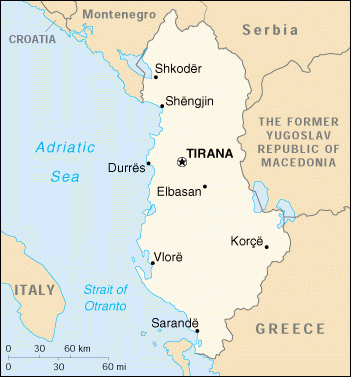
| Click map for larger view |
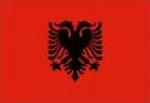
| Click flag for Country Report |



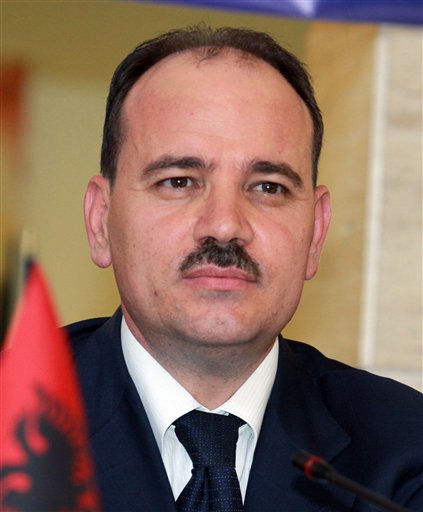
Bujar Nishani
President of the Republic since 24 July 2012
President of the Republic since 24 July 2012
| TRAFFICKING IN PERSONS |
None reported.