
| ANTIGUA AND BARBUDA Antigua and Barbuda Antigua and Barbuda Joined United Nations: 11 November 1981 Human Rights as assured by their constitution Click here Updated 21 January 2013 |

| CAPITAL |
| POPULATION |
| CHIEF OF STATE |
| SELECTION PROCESS |
Saint John's
89,018 (July 2012 est.)
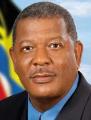
Winston Baldwin Spencer
Prime Minister since 24 March 2004
Prime Minister since 24 March 2004
The monarch is hereditary; governor general chosen by the monarch
on the advice of the prime minister;
Next scheduled election: None
on the advice of the prime minister;
Next scheduled election: None
HEAD OF GOVERNMENT
SELECTION PROCESS
Following legislative elections, the leader of the majority party or
the leader of the majority coalition is usually appointed prime
minister by the governor general; last held 12 March 2009
Next scheduled election: 2014
the leader of the majority coalition is usually appointed prime
minister by the governor general; last held 12 March 2009
Next scheduled election: 2014
| DECLARATION OF HUMAN RIGHTS |
| ETHNIC GROUPS |
Black 91%, mixed 4.4%, white 1.7%, other 2.9% (2001 census)
| RELIGIONS |
Anglican 25.7%, Seventh Day Adventist 12.3%, Pentecostal 10.6%, Moravian 10.5%, Roman Catholic 10.4%, Methodist 7.9%,
Baptist 4.9%, Church of God 4.5%, other Christian 5.4%, other 2%, none or unspecified 5.8% (2001 census)
Baptist 4.9%, Church of God 4.5%, other Christian 5.4%, other 2%, none or unspecified 5.8% (2001 census)
| GOVERNMENT STRUCTURE |
Constitutional monarchy with a parliamentary system of government with 6 parishes and 2 dependencies; Legal system is based on
English common law
Executive: The monarch is hereditary; governor general chosen by the monarch on the advice of the prime minister; following
legislative elections, the leader of the majority party or the leader of the majority coalition is usually appointed prime minister by the
governor general
Legislative: Bicameral Parliament consists of the Senate (17 seats; members appointed by the governor general) and the House of
Representatives (17 seats; members are elected by proportional representation to serve five-year terms)
elections: House of Representatives - last held 12 March 2009 (next to be held in 2014)
Judicial: Eastern Caribbean Supreme Court (based in Saint Lucia; one judge of the Supreme Court is a resident of the islands and
presides over the Court of Summary Jurisdiction); member Caribbean Court of Justice
English common law
Executive: The monarch is hereditary; governor general chosen by the monarch on the advice of the prime minister; following
legislative elections, the leader of the majority party or the leader of the majority coalition is usually appointed prime minister by the
governor general
Legislative: Bicameral Parliament consists of the Senate (17 seats; members appointed by the governor general) and the House of
Representatives (17 seats; members are elected by proportional representation to serve five-year terms)
elections: House of Representatives - last held 12 March 2009 (next to be held in 2014)
Judicial: Eastern Caribbean Supreme Court (based in Saint Lucia; one judge of the Supreme Court is a resident of the islands and
presides over the Court of Summary Jurisdiction); member Caribbean Court of Justice
| LANGUAGES |
English (official), local dialects
| BRIEF HISTORY |
Antigua was first settled by pre-agricultural Amerindians known as "Archaic People", (although they are commonly, but erroneously
known in Antigua as Siboney, a pre-ceramic Cuban people). The earliest settlements on the island date to 2900 BC [1]. They were
succeeded by ceramic-using agriculturalist Saladoid people who migrated up the island chain from Venezuela. They were later
replaced by Arawakan speakers, and around 1500 by Island Caribs. The Arawaks were the first well-documented group of
Antiguans. They paddled to the island by canoe (piragua) from Venezuela, ejected by the Caribs--another people indigenous to the
area. Arawaks introduced agriculture to Antigua and Barbuda, raising, among other crops, the famous Antiguan "Black" pineapple.
They also cultivated various other foods. The bulk of the Arawaks left Antigua about 1100 A.D. Those who remained were
subsequently raided by the Caribs. According to the Catholic Encyclopedia, the Carib's superior weapons and seafaring prowess
allowed them to defeat most Arawak nations in the West Indies--enslaving some, and cannibalizing others. The Catholic
Encyclopedia does make it clear that the European invaders had some difficulty identifying and differentiating between the various
native peoples they encountered. As a result, the number and types of ethnic/tribal/national groups in existence at the time may be
much more varied and numerous than the two mentioned in this Article. According to A Brief History of the Caribbean (Jan
Rogozinski, Penguin Putnam, Inc September 2000 ), European and African diseases, malnutrition and slavery eventually destroyed
the vast majority of the Caribbean's native population. No researcher has conclusively proven any of these causes as the real reason
for the destruction of West Indian natives. In fact, some historians believe that the psychological stress of slavery may also have
played a part in the massive number of native deaths while in servitude. Others believe that the reportedly abundant, but starchy,
low-protein diet may have contributed to severe malnutrition of the "Indians" who were used to a diet fortified with protein from
sea-life. The Indigenous West Indians made excellent sea vessels that they used to sail the Atlantic and Caribbean. As a result,
Caribs and Arawaks populated much of South American and the Caribbean Islands. Relatives of the Antiguan Arawaks and Caribs
still live in various countries in South America, notably Brazil, Venezuela and Colombia. The smaller remaining native populations in
the West Indies maintain a pride in their heritage. Christopher Columbus landed on the islands in 1493, naming the larger one Santa
Maria de la Antigua. However, early attempts by Europeans to settle the islands failed due to the Caribs' excellent defenses.
England succeeded in colonising the islands in 1632, with Thomas Warner as the first governor. Settlers raised tobacco, indigo,
ginger, and sugarcane as cash crops. Sir Christopher Codrington established the first large sugar estate in Antigua in 1674, and
leased Barbuda to raise provisions for his plantations. Barbuda's only town is named after him. In the fifty years after Codrington
established his initial plantation, the sugar industry became so profitable that many farmers replaced other crops with sugar, making
it the economic backbone of the islands. Codrington and others brought slaves from Africa's west coast to work the plantations
under brutal conditions. By 1736, so many slaves had been brought in from Africa that their conditions were crowded and open to
unrest. A slave called "Prince Klaas" (whose real name was Count) planned an uprising in which the whites would be massacred,
but the plot was discovered and put down. The whites caught Prince Klaas and four other accomplices and "broke" them "on the
wheel". According to www.torture-museum.com, "breaking on the wheel" was actually a common and popular form of punishment
in Europe at the time. According the site: The victim, naked, was stretched out supine on the ground or on the execution dock, with
his or her limbs spread, and tied to stakes or iron rings. Stout wooden crosspieces were placed under the wrists, elbows, ankles,
knees and hips. The executioner then smashed limb after limb and joint after joint, including the shoulders and hips, with the
iron-tyred edge of the wheel, but avoiding fatal blows. The victim was transformed, according to the observations of a
seventeenth-century German chronicler, "into a sort of huge screaming puppet writhing in rivulets of blood, a puppet with four
tentacles, like a sea monster, of raw, slimy and shapeless flesh . . . mixed up with splinters of smashed bones." Thereafter the
shattered limbs were "braided" into the spokes of the large wheel, and the victim hoisted up horizontally to the top of a pole, where
the crows ripped away bits of flesh and pecked out [the] eyes. Ironically, the location of this torture and execution is now the
Antiguan Recreation Ground. As an aside, this type of European practice probably strongly influenced the clause in the American
legal code protecting citizens from "cruel and unusual punishment". The slave-holders caught six other slaves and put them "out to
dry", another form of torture, which involves hanging the victims in chains and starving them to death. The slave-holders also burned
fifty-eight other slaves at the stake. During the 18th century, Antigua was used as the headquarters of the British Royal Navy
Caribbean fleet. English Dockyard, as it came to be called, a sheltered and well-protected deepwater port, was the main base and
facilities there were greatly expanded during the later 18th century. Admiral Lord Horatio Nelson commanded the British fleet for
much of this time, and made himself unpopular with local merchants by enforcing the Navigation Act, a British ruling that only
British-registered ships could trade with British colonies. As the United States were no longer British colonies, the act posed a
problem for merchants, who depended on trade with the fledgling country. With all others in the British Empire, Antiguan slaves
were emancipated in 1834, but remained economically dependent upon the plantation owners. Economic opportunities for the new
freedmen were limited by a lack of surplus farming land, no access to credit, and an economy built on agriculture rather than
manufacturing. Poor labour conditions persisted until 1939 when a member of a royal commission urged the formation of a trade
union movement. The Antigua Trades and Labour Union, formed shortly afterward, became the political vehicle for Vere Cornwall
Bird who became the union's president in 1943. The Antigua Labour Party (ALP), formed by Bird and other trade unionists, first
ran candidates in the 1946 elections and became the majority party in 1951 beginning a long history of electoral victories. Voted out
of office in the 1971 general elections that swept the progressive labour movement into power, Bird and the ALP returned to office
in 1976. The islands achieved independence from the United Kingdom in 1981, becoming the nation of Antigua and Barbuda. It
remains part of the Commonwealth of Nations, and remains a constitutional monarchy, with Queen Elizabeth II as Queen of Antigua
and Barbuda. In 1997, Prime Minister Lester Bird announced that a group of ecologically sensitive islands just off Antigua's
northeastern coast, previously proposed for national park status, were being turned over to Malaysian developers. The Guiana
Island Development Project deal, calling for a 1000-room hotel, an 18-hole golf course and a world-class casino, sparked
widespread criticism by environmentalists, minority members in parliament, and the press. The issue came to a head when a local
resident shot the PM's brother. Today, the proposed development is mired in lawsuits and politics. The ALP won renewed
mandates in the general elections in 1984 and 1989. In the 1989 elections, the ruling ALP won all but two of the 17 seats. During
elections in March 1994, power passed from Vere Bird to his son, Lester Bird, but remained within the ALP which won 11 of the
17 parliamentary seats. The United Progressive Party won the 2004 elections and Baldwin Spencer became Prime Minister,
removing from power the longest-serving elected government in the Caribbean. That domination was reiterated in 2009 elections.
Source: Wikipedia: History of Antigua and Barbuda
known in Antigua as Siboney, a pre-ceramic Cuban people). The earliest settlements on the island date to 2900 BC [1]. They were
succeeded by ceramic-using agriculturalist Saladoid people who migrated up the island chain from Venezuela. They were later
replaced by Arawakan speakers, and around 1500 by Island Caribs. The Arawaks were the first well-documented group of
Antiguans. They paddled to the island by canoe (piragua) from Venezuela, ejected by the Caribs--another people indigenous to the
area. Arawaks introduced agriculture to Antigua and Barbuda, raising, among other crops, the famous Antiguan "Black" pineapple.
They also cultivated various other foods. The bulk of the Arawaks left Antigua about 1100 A.D. Those who remained were
subsequently raided by the Caribs. According to the Catholic Encyclopedia, the Carib's superior weapons and seafaring prowess
allowed them to defeat most Arawak nations in the West Indies--enslaving some, and cannibalizing others. The Catholic
Encyclopedia does make it clear that the European invaders had some difficulty identifying and differentiating between the various
native peoples they encountered. As a result, the number and types of ethnic/tribal/national groups in existence at the time may be
much more varied and numerous than the two mentioned in this Article. According to A Brief History of the Caribbean (Jan
Rogozinski, Penguin Putnam, Inc September 2000 ), European and African diseases, malnutrition and slavery eventually destroyed
the vast majority of the Caribbean's native population. No researcher has conclusively proven any of these causes as the real reason
for the destruction of West Indian natives. In fact, some historians believe that the psychological stress of slavery may also have
played a part in the massive number of native deaths while in servitude. Others believe that the reportedly abundant, but starchy,
low-protein diet may have contributed to severe malnutrition of the "Indians" who were used to a diet fortified with protein from
sea-life. The Indigenous West Indians made excellent sea vessels that they used to sail the Atlantic and Caribbean. As a result,
Caribs and Arawaks populated much of South American and the Caribbean Islands. Relatives of the Antiguan Arawaks and Caribs
still live in various countries in South America, notably Brazil, Venezuela and Colombia. The smaller remaining native populations in
the West Indies maintain a pride in their heritage. Christopher Columbus landed on the islands in 1493, naming the larger one Santa
Maria de la Antigua. However, early attempts by Europeans to settle the islands failed due to the Caribs' excellent defenses.
England succeeded in colonising the islands in 1632, with Thomas Warner as the first governor. Settlers raised tobacco, indigo,
ginger, and sugarcane as cash crops. Sir Christopher Codrington established the first large sugar estate in Antigua in 1674, and
leased Barbuda to raise provisions for his plantations. Barbuda's only town is named after him. In the fifty years after Codrington
established his initial plantation, the sugar industry became so profitable that many farmers replaced other crops with sugar, making
it the economic backbone of the islands. Codrington and others brought slaves from Africa's west coast to work the plantations
under brutal conditions. By 1736, so many slaves had been brought in from Africa that their conditions were crowded and open to
unrest. A slave called "Prince Klaas" (whose real name was Count) planned an uprising in which the whites would be massacred,
but the plot was discovered and put down. The whites caught Prince Klaas and four other accomplices and "broke" them "on the
wheel". According to www.torture-museum.com, "breaking on the wheel" was actually a common and popular form of punishment
in Europe at the time. According the site: The victim, naked, was stretched out supine on the ground or on the execution dock, with
his or her limbs spread, and tied to stakes or iron rings. Stout wooden crosspieces were placed under the wrists, elbows, ankles,
knees and hips. The executioner then smashed limb after limb and joint after joint, including the shoulders and hips, with the
iron-tyred edge of the wheel, but avoiding fatal blows. The victim was transformed, according to the observations of a
seventeenth-century German chronicler, "into a sort of huge screaming puppet writhing in rivulets of blood, a puppet with four
tentacles, like a sea monster, of raw, slimy and shapeless flesh . . . mixed up with splinters of smashed bones." Thereafter the
shattered limbs were "braided" into the spokes of the large wheel, and the victim hoisted up horizontally to the top of a pole, where
the crows ripped away bits of flesh and pecked out [the] eyes. Ironically, the location of this torture and execution is now the
Antiguan Recreation Ground. As an aside, this type of European practice probably strongly influenced the clause in the American
legal code protecting citizens from "cruel and unusual punishment". The slave-holders caught six other slaves and put them "out to
dry", another form of torture, which involves hanging the victims in chains and starving them to death. The slave-holders also burned
fifty-eight other slaves at the stake. During the 18th century, Antigua was used as the headquarters of the British Royal Navy
Caribbean fleet. English Dockyard, as it came to be called, a sheltered and well-protected deepwater port, was the main base and
facilities there were greatly expanded during the later 18th century. Admiral Lord Horatio Nelson commanded the British fleet for
much of this time, and made himself unpopular with local merchants by enforcing the Navigation Act, a British ruling that only
British-registered ships could trade with British colonies. As the United States were no longer British colonies, the act posed a
problem for merchants, who depended on trade with the fledgling country. With all others in the British Empire, Antiguan slaves
were emancipated in 1834, but remained economically dependent upon the plantation owners. Economic opportunities for the new
freedmen were limited by a lack of surplus farming land, no access to credit, and an economy built on agriculture rather than
manufacturing. Poor labour conditions persisted until 1939 when a member of a royal commission urged the formation of a trade
union movement. The Antigua Trades and Labour Union, formed shortly afterward, became the political vehicle for Vere Cornwall
Bird who became the union's president in 1943. The Antigua Labour Party (ALP), formed by Bird and other trade unionists, first
ran candidates in the 1946 elections and became the majority party in 1951 beginning a long history of electoral victories. Voted out
of office in the 1971 general elections that swept the progressive labour movement into power, Bird and the ALP returned to office
in 1976. The islands achieved independence from the United Kingdom in 1981, becoming the nation of Antigua and Barbuda. It
remains part of the Commonwealth of Nations, and remains a constitutional monarchy, with Queen Elizabeth II as Queen of Antigua
and Barbuda. In 1997, Prime Minister Lester Bird announced that a group of ecologically sensitive islands just off Antigua's
northeastern coast, previously proposed for national park status, were being turned over to Malaysian developers. The Guiana
Island Development Project deal, calling for a 1000-room hotel, an 18-hole golf course and a world-class casino, sparked
widespread criticism by environmentalists, minority members in parliament, and the press. The issue came to a head when a local
resident shot the PM's brother. Today, the proposed development is mired in lawsuits and politics. The ALP won renewed
mandates in the general elections in 1984 and 1989. In the 1989 elections, the ruling ALP won all but two of the 17 seats. During
elections in March 1994, power passed from Vere Bird to his son, Lester Bird, but remained within the ALP which won 11 of the
17 parliamentary seats. The United Progressive Party won the 2004 elections and Baldwin Spencer became Prime Minister,
removing from power the longest-serving elected government in the Caribbean. That domination was reiterated in 2009 elections.
Source: Wikipedia: History of Antigua and Barbuda
| ECONOMIC OVERVIEW |
Tourism continues to dominate Antigua and Barbuda's economy, accounting for nearly 60% of GDP and 40% of investment. The
dual-island nation's agricultural production is focused on the domestic market and constrained by a limited water supply and a labor
shortage stemming from the lure of higher wages in tourism and construction. Manufacturing comprises enclave-type assembly for
export with major products being bedding, handicrafts, and electronic components. Prospects for economic growth in the medium
term will continue to depend on tourist arrivals from the US, Canada, and Europe and potential damages from natural disasters.
After taking office in 2004, the SPENCER government adopted an ambitious fiscal reform program and was successful in reducing
its public debt-to-GDP ratio from 120% to about 90% in 2008. However, the global financial crisis that began in 2008, has led to a
significant increase in the national debt, which topped 130% at the end of 2010. The Antiguan economy experienced solid growth
from 2003 to 2007, reaching over 12% in 2006 driven by a construction boom in hotels and housing associated with the Cricket
World Cup, but growth dropped off in 2008 with the end of the boom. In 2009, Antigua's economy was severely hit by the global
economic crisis, suffering from the collapse of its largest financial institution and a steep decline in tourism. This decline continued in
2010 as the country struggled with a yawning budget deficit but returned to positive growth in 2011.
Source: CIA World Factbook (select Antigua and Barbuda)
dual-island nation's agricultural production is focused on the domestic market and constrained by a limited water supply and a labor
shortage stemming from the lure of higher wages in tourism and construction. Manufacturing comprises enclave-type assembly for
export with major products being bedding, handicrafts, and electronic components. Prospects for economic growth in the medium
term will continue to depend on tourist arrivals from the US, Canada, and Europe and potential damages from natural disasters.
After taking office in 2004, the SPENCER government adopted an ambitious fiscal reform program and was successful in reducing
its public debt-to-GDP ratio from 120% to about 90% in 2008. However, the global financial crisis that began in 2008, has led to a
significant increase in the national debt, which topped 130% at the end of 2010. The Antiguan economy experienced solid growth
from 2003 to 2007, reaching over 12% in 2006 driven by a construction boom in hotels and housing associated with the Cricket
World Cup, but growth dropped off in 2008 with the end of the boom. In 2009, Antigua's economy was severely hit by the global
economic crisis, suffering from the collapse of its largest financial institution and a steep decline in tourism. This decline continued in
2010 as the country struggled with a yawning budget deficit but returned to positive growth in 2011.
Source: CIA World Factbook (select Antigua and Barbuda)
| POLITICAL CLIMATE |
In 2007 Louise Lake-Tack became the first female to hold the position of Governor-General in the history of Antigua and Barbuda.
A Council of Ministers is appointed by the Governor-General on the advice of the Prime Minister, currently Baldwin Spencer. The
Prime Minister is the head of the government. Vere Cornwall Bird Sr., Antigua and Barbuda's first Prime Minister, is credited with
having brought Antigua and Barbuda and the Caribbean into a new era of independence.
Executive power is exercised by the government. Legislative power is vested in both the government and the two chambers of the
Parliament. The bicameral Parliament consists of the Senate (seventeen-member body appointed by the governor general) and the
House of Representatives (seventeen seats; members are elected by first past the post to serve five-year terms). The last elections
held were on 12 March 2009, while the next are due in 2014. At the last elections, the Antigua Labour Party won four seats, while
the United Progressive Party won thirteen.
Since 1949, the party system had been dominated by the personalist Antigua Labour Party. However, the Antigua and Barbuda
legislative election, 2004, saw the defeat of the longest-serving elected government in the Caribbean. The Prime Minister, Lester
Bryant Bird and deputy Robin Yearwood had been in office since 1994, when he succeeded his father, Vere Bird. The elder Bird
had been Prime Minister from independence in 1981 and, before independence, had been Chief Minister of Antigua from 1960,
except for the period 1971-76 when the Progressive Labour Movement (PLM) defeated them in those elections.
Antigua is also a member of the Caribbean Court of Justice, although it has not yet acceeded to Part III of the 2001 Agreement
Establishing a Caribbean Court of Justice.[2] Its supreme appellate court therefore remains the British Judicial Committee of the
Privy Council. Indeed, of the signatories to the Agreement,[2] as of December, 2010, only Barbados has replaced appeals to Her
Majesty in Council with the Caribbean Court of Justice.
Source: Wikipedia: Antigua and Barbuda
A Council of Ministers is appointed by the Governor-General on the advice of the Prime Minister, currently Baldwin Spencer. The
Prime Minister is the head of the government. Vere Cornwall Bird Sr., Antigua and Barbuda's first Prime Minister, is credited with
having brought Antigua and Barbuda and the Caribbean into a new era of independence.
Executive power is exercised by the government. Legislative power is vested in both the government and the two chambers of the
Parliament. The bicameral Parliament consists of the Senate (seventeen-member body appointed by the governor general) and the
House of Representatives (seventeen seats; members are elected by first past the post to serve five-year terms). The last elections
held were on 12 March 2009, while the next are due in 2014. At the last elections, the Antigua Labour Party won four seats, while
the United Progressive Party won thirteen.
Since 1949, the party system had been dominated by the personalist Antigua Labour Party. However, the Antigua and Barbuda
legislative election, 2004, saw the defeat of the longest-serving elected government in the Caribbean. The Prime Minister, Lester
Bryant Bird and deputy Robin Yearwood had been in office since 1994, when he succeeded his father, Vere Bird. The elder Bird
had been Prime Minister from independence in 1981 and, before independence, had been Chief Minister of Antigua from 1960,
except for the period 1971-76 when the Progressive Labour Movement (PLM) defeated them in those elections.
Antigua is also a member of the Caribbean Court of Justice, although it has not yet acceeded to Part III of the 2001 Agreement
Establishing a Caribbean Court of Justice.[2] Its supreme appellate court therefore remains the British Judicial Committee of the
Privy Council. Indeed, of the signatories to the Agreement,[2] as of December, 2010, only Barbados has replaced appeals to Her
Majesty in Council with the Caribbean Court of Justice.
Source: Wikipedia: Antigua and Barbuda
| INTERNATIONAL DISPUTES |
None reported.


| REFUGEES AND INTERNALLY DISPLACED PERSONS (IDPS) |
None reported.
| ILLICIT DRUGS |
Considered a minor transshipment point for narcotics bound for the US and Europe; more significant as an offshore financial
center.
center.
| HUMAN RIGHTS STATEMENTS, ANALYSIS AND CRITIQUES |
2011 Human Rights Reports: Antigua and Barbuda
Bureau of Democracy, Human Rights, and Labor
2011 Country Reports on Human Rights Practices
May 25, 2012
Antigua and Barbuda is a multiparty, parliamentary democracy. In parliamentary elections in March 2009, which observers described as
generally free and fair, the ruling United Progressive Party (UPP) defeated the Antigua Labour Party (ALP), and Baldwin Spencer was
reelected as prime minister. Security forces reported to civilian authorities.
The most serious human rights problems involved poor prison conditions.
Other human rights problems included discrimination and violence against women; members of the lesbian, gay, bisexual, and
transgender (LGBT) community; and persons with HIV/AIDS. There were reports of the mental, physical, and sexual abuse of children.
The government made strides in prosecuting and punishing those who committed human rights abuses, and impunity was not a
widespread problem
Click here to read more »
Bureau of Democracy, Human Rights, and Labor
2011 Country Reports on Human Rights Practices
May 25, 2012
Antigua and Barbuda is a multiparty, parliamentary democracy. In parliamentary elections in March 2009, which observers described as
generally free and fair, the ruling United Progressive Party (UPP) defeated the Antigua Labour Party (ALP), and Baldwin Spencer was
reelected as prime minister. Security forces reported to civilian authorities.
The most serious human rights problems involved poor prison conditions.
Other human rights problems included discrimination and violence against women; members of the lesbian, gay, bisexual, and
transgender (LGBT) community; and persons with HIV/AIDS. There were reports of the mental, physical, and sexual abuse of children.
The government made strides in prosecuting and punishing those who committed human rights abuses, and impunity was not a
widespread problem
Click here to read more »
11 April 2007
COMMITTEE ON THE ELIMINATION OF RACIAL DISCRIMINATION
Seventieth session
19 February - 9 March 2007
CONSIDERATION OF REPORTS SUBMITTED BY STATES PARTIES UNDER ARTICLE 9 OF THE CONVENTION
Concluding observations of the Committee on the Elimination of Racial Discrimination
ANTIGUA AND BARBUDA
Introduction
2. The Committee welcomes the initial to 9th periodic reports of Antigua and Barbuda and the opportunity thus offered to begin an open
and constructive dialogue with the State party. The Committee expresses appreciation for the supplementary information provided by the
delegation in writing, as well as the comprehensive and thorough answers to the wide range of questions raised by members of the
Committee.
Positive aspects
5. The Committee notes with satisfaction that the State party, in addition to the Convention on the Elimination of All Forms of Racial
Discrimination, has ratified three of the core United Nations human rights treaties, namely the Convention against Torture and Other
Cruel, Inhuman or Degrading Treatment or Punishment, the Convention on the Elimination of All Forms of Discrimination Against
Women, and the Convention on the Rights of the Child and its Optional Protocol on the sale of children, child prostitution and child
pornography. The Committee is confident that the State party will take the necessary measures to ratify the other human rights treaties.
C. Factors and difficulties impeding the implementation of the Convention
9. The Committee acknowledges the challenges faced by the State party, namely the increasing debt burden and the vulnerability to
natural disasters, including hurricanes and droughts, which impede progress towards the full realization of children’s rights enshrined in
the Convention.
Principal areas of concern and recommendations
8. The Committee notes with concern the declaration entered by the State party at the time of ratification of the Convention, in particular
its wording that acceptance of the Convention does not imply the acceptance of obligations going beyond the constitutional limits, nor the
acceptance of any obligations to introduce judicial processes beyond those provided in the Constitution.
The Committee encourages the State party to consider withdrawing the declaration entered upon acceding to the Convention.
Click here to read more »
COMMITTEE ON THE ELIMINATION OF RACIAL DISCRIMINATION
Seventieth session
19 February - 9 March 2007
CONSIDERATION OF REPORTS SUBMITTED BY STATES PARTIES UNDER ARTICLE 9 OF THE CONVENTION
Concluding observations of the Committee on the Elimination of Racial Discrimination
ANTIGUA AND BARBUDA
Introduction
2. The Committee welcomes the initial to 9th periodic reports of Antigua and Barbuda and the opportunity thus offered to begin an open
and constructive dialogue with the State party. The Committee expresses appreciation for the supplementary information provided by the
delegation in writing, as well as the comprehensive and thorough answers to the wide range of questions raised by members of the
Committee.
Positive aspects
5. The Committee notes with satisfaction that the State party, in addition to the Convention on the Elimination of All Forms of Racial
Discrimination, has ratified three of the core United Nations human rights treaties, namely the Convention against Torture and Other
Cruel, Inhuman or Degrading Treatment or Punishment, the Convention on the Elimination of All Forms of Discrimination Against
Women, and the Convention on the Rights of the Child and its Optional Protocol on the sale of children, child prostitution and child
pornography. The Committee is confident that the State party will take the necessary measures to ratify the other human rights treaties.
C. Factors and difficulties impeding the implementation of the Convention
9. The Committee acknowledges the challenges faced by the State party, namely the increasing debt burden and the vulnerability to
natural disasters, including hurricanes and droughts, which impede progress towards the full realization of children’s rights enshrined in
the Convention.
Principal areas of concern and recommendations
8. The Committee notes with concern the declaration entered by the State party at the time of ratification of the Convention, in particular
its wording that acceptance of the Convention does not imply the acceptance of obligations going beyond the constitutional limits, nor the
acceptance of any obligations to introduce judicial processes beyond those provided in the Constitution.
The Committee encourages the State party to consider withdrawing the declaration entered upon acceding to the Convention.
Click here to read more »
Freedom In The World 2012 Report
Political Rights Score: 3
Civil Liberties Score: 2
Status: Free
Overview
Antigua and Barbuda’s economy continued to struggle in 2011 following the collapse of the Stanford Financial Group two years earlier
and as a result of an increase in crime affecting the country’s tourism industry.
The 2009 parliamentary elections returned Spencer and the UPP to power with 9 seats in the 17-seat lower house; the ALP took 7 seats,
while the Barbuda People’s Movement (BPM) retained the single seat representing Barbuda. While elections were deemed fair and
competitive by the Organization of American States, the voting was preceded by instances of violence, including attacks on ALP offices,
and there were accusations of voter registration irregularities. In March 2010, a High Court ruling invalidated the election of Spencer and
other members of Parliament due to electoral irregularities, though the Eastern Caribbean Court of Appeals overturned the verdict in
October.
The collapse in 2009 of the $7 billion Stanford Financial Group, run by U.S. financier R. Allen Stanford, exposed deep ties between
Stanford and the government of Antigua and Barbuda. A consortium of defrauded investors sued the government, claiming that top
officials had been aware of and benefitted from a Ponzi scheme run by the company. In July 2009, the Eastern Caribbean Central Bank—
the monetary authority of six independent Caribbean nations, including Antigua and Barbuda—seized control of Stanford’s Bank of
Antigua. A new financial entity, the Eastern Caribbean Amalgamated Bank—co-owned by the Government of Antigua and several other
Eastern Caribbean private financial institutions—took over the Bank of Antigua in October 2010. No Antiguan officials connected to the
Stanford fraud scheme have been brought to trial in Antigua and Barbuda. However, Stanford, who was accused of masterminding the
massive fraud that led to his financial group losing more than $7 billion dollars, was in custody in the United States. In December 2011, a
Texas judge ruled that he was mentally fit to stand trial.
Fallout from the collapse of the Stanford Financial Group, as well as the global economic downturn, continued to wreak havoc on
Antigua and Barbuda’s economy in 2011. In July, the government and the Eastern Caribbean Central Bank were forced to take over the
Antigua and Barbuda Investment Bank, which was established in 1990, to save it from collapse due to liquidity problems.
In addition to the Stanford financial crisis, crime continues to be a roadblock to the country’s economic recovery. Antiguan authorities
attribute an increasing crime rate to drug trafficking and the deportation of expatriates from North America and Europe. In 2010, a
leading cruise line canceled all calls to Antigua following the murder of one of its passengers on the island.
Click here to read more »
Political Rights Score: 3
Civil Liberties Score: 2
Status: Free
Overview
Antigua and Barbuda’s economy continued to struggle in 2011 following the collapse of the Stanford Financial Group two years earlier
and as a result of an increase in crime affecting the country’s tourism industry.
The 2009 parliamentary elections returned Spencer and the UPP to power with 9 seats in the 17-seat lower house; the ALP took 7 seats,
while the Barbuda People’s Movement (BPM) retained the single seat representing Barbuda. While elections were deemed fair and
competitive by the Organization of American States, the voting was preceded by instances of violence, including attacks on ALP offices,
and there were accusations of voter registration irregularities. In March 2010, a High Court ruling invalidated the election of Spencer and
other members of Parliament due to electoral irregularities, though the Eastern Caribbean Court of Appeals overturned the verdict in
October.
The collapse in 2009 of the $7 billion Stanford Financial Group, run by U.S. financier R. Allen Stanford, exposed deep ties between
Stanford and the government of Antigua and Barbuda. A consortium of defrauded investors sued the government, claiming that top
officials had been aware of and benefitted from a Ponzi scheme run by the company. In July 2009, the Eastern Caribbean Central Bank—
the monetary authority of six independent Caribbean nations, including Antigua and Barbuda—seized control of Stanford’s Bank of
Antigua. A new financial entity, the Eastern Caribbean Amalgamated Bank—co-owned by the Government of Antigua and several other
Eastern Caribbean private financial institutions—took over the Bank of Antigua in October 2010. No Antiguan officials connected to the
Stanford fraud scheme have been brought to trial in Antigua and Barbuda. However, Stanford, who was accused of masterminding the
massive fraud that led to his financial group losing more than $7 billion dollars, was in custody in the United States. In December 2011, a
Texas judge ruled that he was mentally fit to stand trial.
Fallout from the collapse of the Stanford Financial Group, as well as the global economic downturn, continued to wreak havoc on
Antigua and Barbuda’s economy in 2011. In July, the government and the Eastern Caribbean Central Bank were forced to take over the
Antigua and Barbuda Investment Bank, which was established in 1990, to save it from collapse due to liquidity problems.
In addition to the Stanford financial crisis, crime continues to be a roadblock to the country’s economic recovery. Antiguan authorities
attribute an increasing crime rate to drug trafficking and the deportation of expatriates from North America and Europe. In 2010, a
leading cruise line canceled all calls to Antigua following the murder of one of its passengers on the island.
Click here to read more »
Antigua and Barbuda: Amnesty International welcomes the commitment to condemn human rights violations against persons
because of their sexual orientation, but regrets the rejection of recommendations to abolish the death penalty
16 March 2012
Human Rights Council adopts Universal Periodic Review outcome on Antigua and Barbuda
Amnesty International welcomes that there have been no executions in Antigua and Barbuda in the last 11 years, and further welcomes
the government’s commitment to rigorously apply international standards for fair trial in all death penalty cases.1 However, Amnesty
International is disappointed that Antigua and Barbuda rejected recommendations from six States to abolish the death penalty.2 Amnesty
International rejects the government’s justification that it does not have a political mandate to abolish the death penalty.3 The organization
believes that public opinion on capital punishment is overwhelmingly based on a desire to be protected from violence and to be free from
fear of crime. A more effective strategy to address public safety would involve improving the capacity of the police to detect and solve
crimes, enhancing the criminal justice system, and tackling the root causes of crime and violence more effectively. Amnesty
International recalls that the death penalty violates the right to life as recognized in the Universal Declaration of Human Rights, and urges
Antigua and Barbuda to impose a formal moratorium on the use of the death penalty with a view to abolishing it; to commute all death
sentences to terms of imprisonment; to ratify the Second Optional Protocol to the ICCPR; and to vote in support of the next General
Assembly resolution on a moratorium on the use of the death penalty.
Amnesty International welcomes Antigua and Barbuda’s commitment to condemn human rights violations against persons because of
their sexual orientation4 and to institute policies and initiatives to address discrimination based on sexual orientation or gender identity.5
However, the organization emphasizes that the removal of discriminatory laws is a first step in fighting the stigma surrounding
homosexuality, and regrets the government’s rejection of recommendations to decriminalize sexual relations between consenting adults
of the same sex.6
Amnesty International welcomes Antigua and Barbuda’s support of recommendations to sign and ratify international human rights
conventions including the International Covenants on Civil and Political Rights and on Economic, Social and Cultural Rights.7
Click here to read more »
because of their sexual orientation, but regrets the rejection of recommendations to abolish the death penalty
16 March 2012
Human Rights Council adopts Universal Periodic Review outcome on Antigua and Barbuda
Amnesty International welcomes that there have been no executions in Antigua and Barbuda in the last 11 years, and further welcomes
the government’s commitment to rigorously apply international standards for fair trial in all death penalty cases.1 However, Amnesty
International is disappointed that Antigua and Barbuda rejected recommendations from six States to abolish the death penalty.2 Amnesty
International rejects the government’s justification that it does not have a political mandate to abolish the death penalty.3 The organization
believes that public opinion on capital punishment is overwhelmingly based on a desire to be protected from violence and to be free from
fear of crime. A more effective strategy to address public safety would involve improving the capacity of the police to detect and solve
crimes, enhancing the criminal justice system, and tackling the root causes of crime and violence more effectively. Amnesty
International recalls that the death penalty violates the right to life as recognized in the Universal Declaration of Human Rights, and urges
Antigua and Barbuda to impose a formal moratorium on the use of the death penalty with a view to abolishing it; to commute all death
sentences to terms of imprisonment; to ratify the Second Optional Protocol to the ICCPR; and to vote in support of the next General
Assembly resolution on a moratorium on the use of the death penalty.
Amnesty International welcomes Antigua and Barbuda’s commitment to condemn human rights violations against persons because of
their sexual orientation4 and to institute policies and initiatives to address discrimination based on sexual orientation or gender identity.5
However, the organization emphasizes that the removal of discriminatory laws is a first step in fighting the stigma surrounding
homosexuality, and regrets the government’s rejection of recommendations to decriminalize sexual relations between consenting adults
of the same sex.6
Amnesty International welcomes Antigua and Barbuda’s support of recommendations to sign and ratify international human rights
conventions including the International Covenants on Civil and Political Rights and on Economic, Social and Cultural Rights.7
Click here to read more »
Global State of Pain Treatment
June 2, 2011
IV. The Americas
Regional Overview
Consumption of opioid analgesics varies greatly in the Americas from some of the highest levels in the world in the United States and
Canada to very low levels in Central America and the Caribbean. At least 100,000 terminal cancer and HIV/AIDS patients die without
adequate pain treatment in the Americas each year, although the real number is probably much higher.
In Central America and the Caribbean, about half of the countries consume so few opioid medications that even if all were used
exclusively to treat patients with terminal cancer and HIV for pain, less than a third of them could receive adequate treatment (Belize, El
Salvador, Honduras, Nicaragua, Saint Kitts and Nevis, Trinidad and Tobago, Jamaica, Dominican Republic, and Haiti). Bolivia, Antigua
and Barbuda, and Honduras reported no consumption of opioids for 2006 to 2008, and Haiti could treat pain in less than 1 percent of its
terminal cancer and HIV/AIDS patients.
In South America, consumption levels are generally significantly higher than in Central America and the Caribbean countries, but still far
lower than in North America or Western Europe. Several South American countries, such as Bolivia, Ecuador, Peru, and Suriname,
significantly lag behind their neighbors. In these countries, even if all opioid medications were used exclusively to treat chronic pain,
fewer than 40 percent of patients could be treated adequately.
Policy
As Table 7 shows, policy support for palliative care is very limited in the countries surveyed in the Americas. Five of eight countries do
not have national palliative care policies; survey participants in two countries that do have such policies, Argentina and Brazil, said that
they are not implemented in practice. [92] A positive exception is Mexico, which recently adopted a policy on management of terminal
patients. None of the countries surveyed have HIV policies that refer to palliative care and only two countries, Brazil and Colombia,
address pain management in their national cancer control policies. More positively, oral morphine is a registered medicine in all countries
surveyed, and most have it on their essential medicines lists.
Click here to read more »
June 2, 2011
IV. The Americas
Regional Overview
Consumption of opioid analgesics varies greatly in the Americas from some of the highest levels in the world in the United States and
Canada to very low levels in Central America and the Caribbean. At least 100,000 terminal cancer and HIV/AIDS patients die without
adequate pain treatment in the Americas each year, although the real number is probably much higher.
In Central America and the Caribbean, about half of the countries consume so few opioid medications that even if all were used
exclusively to treat patients with terminal cancer and HIV for pain, less than a third of them could receive adequate treatment (Belize, El
Salvador, Honduras, Nicaragua, Saint Kitts and Nevis, Trinidad and Tobago, Jamaica, Dominican Republic, and Haiti). Bolivia, Antigua
and Barbuda, and Honduras reported no consumption of opioids for 2006 to 2008, and Haiti could treat pain in less than 1 percent of its
terminal cancer and HIV/AIDS patients.
In South America, consumption levels are generally significantly higher than in Central America and the Caribbean countries, but still far
lower than in North America or Western Europe. Several South American countries, such as Bolivia, Ecuador, Peru, and Suriname,
significantly lag behind their neighbors. In these countries, even if all opioid medications were used exclusively to treat chronic pain,
fewer than 40 percent of patients could be treated adequately.
Policy
As Table 7 shows, policy support for palliative care is very limited in the countries surveyed in the Americas. Five of eight countries do
not have national palliative care policies; survey participants in two countries that do have such policies, Argentina and Brazil, said that
they are not implemented in practice. [92] A positive exception is Mexico, which recently adopted a policy on management of terminal
patients. None of the countries surveyed have HIV policies that refer to palliative care and only two countries, Brazil and Colombia,
address pain management in their national cancer control policies. More positively, oral morphine is a registered medicine in all countries
surveyed, and most have it on their essential medicines lists.
Click here to read more »
End stigma and discrimination in the workplace
Posted On: November 26, 2012
The Labour Department in the Ministry of National Security and Labour is encouraging workplace education to combat stigma and
discrimination aimed at people living with HIV/AIDS. The call comes at the start of 16 days of activism, a United Nations construct that
began on November 25 and ends on December 10.
The observation begins with the International Day for the Elimination of Violence Against Women and ends with Human Rights Days.
World AIDS Day, on December 1, is included in the calendar.
The Labour Department recognises that HIV/AIDS is becoming a workplace issue, as it affects the most productive segment of the
labour force. HIV/ AIDS is rapidly emerging as a serious problem and is affecting the fundamental rights of workers. It is also a major
threat to the International Labour Organization’s guiding principle of decent work.
With HIV/AIDS as a global problem some Caribbean countries have made significant progress, with governments, employers’
organisations and trade unions joining the call for action and development of workplace policies. Employees and their representatives are
also called upon to support and encourage their employers in the implementation of personnel policies and practices.
It is believed that workplace information and education programmes are essential to combat the spread of the disease and foster greater
tolerance for infected workers.
The Labour Department takes this opportunity to inform the public that discrimination and stigmatisation constitute unfair labour
practices and should not be encouraged.
Click here to read more »
Posted On: November 26, 2012
The Labour Department in the Ministry of National Security and Labour is encouraging workplace education to combat stigma and
discrimination aimed at people living with HIV/AIDS. The call comes at the start of 16 days of activism, a United Nations construct that
began on November 25 and ends on December 10.
The observation begins with the International Day for the Elimination of Violence Against Women and ends with Human Rights Days.
World AIDS Day, on December 1, is included in the calendar.
The Labour Department recognises that HIV/AIDS is becoming a workplace issue, as it affects the most productive segment of the
labour force. HIV/ AIDS is rapidly emerging as a serious problem and is affecting the fundamental rights of workers. It is also a major
threat to the International Labour Organization’s guiding principle of decent work.
With HIV/AIDS as a global problem some Caribbean countries have made significant progress, with governments, employers’
organisations and trade unions joining the call for action and development of workplace policies. Employees and their representatives are
also called upon to support and encourage their employers in the implementation of personnel policies and practices.
It is believed that workplace information and education programmes are essential to combat the spread of the disease and foster greater
tolerance for infected workers.
The Labour Department takes this opportunity to inform the public that discrimination and stigmatisation constitute unfair labour
practices and should not be encouraged.
Click here to read more »
Sharing the Ombudsman’s Story
May 5, 2011
The Office of the ombudsman committed itself to engage senior secondary school students. This was to acquaint them with the
Ombudsman as well as to answer questions on the role of the Ombudsman in national development.
Mrs. Eusalyn Lewis, Ombudsman of Antigua and Barbuda met with the students of the Antigua Girls’ High School on March 2, 2011,
students of the St. Joseph’s Academy on March 3, 2011 and students of the Christ the King High School on March 15, 2011. She
described the roles and functions of her Office, the powers given to the Ombudsman as mandated by Sec. 66 (10) of the Constitution of
Antigua and Barbuda 1981, students learned about who can make a complaint. Some institutions of government are exempted from
investigation by the Ombudsman. These were identified for the students’ information and include:-
Students of the Social Science classes at the Antigua Girls’ High School were most curious to know what the requirements were of
someone being selected as an Ombudsman. The Ombudsman explained that in most instances, the Ombudsman is selected on the
premise of his or her legal background, or someone with a vast knowledge of the laws of his/her country. However, the Ombudsman of
Antigua and Barbuda was selected based on her forty years of experience as a career Civil Servant. She further explained that the post of
the Ombudsman requires someone with integrity, unbiased and who must be neutral in their investigations.
The following day, the Ombudsman met with Principal, Mr. Rudolph Davis and students of the St. Joseph’s Academy School as she
continued her information campaign throughout the schools. There was a large gathering of fourth and fifth forms students.
Commenting on the Ombudsman functions she described how the term was interpreted under different jurisdictions, for example, “a
protector of citizens against abuse of powers”, “the protector of Human Rights” even though the office does not have the mandate to
carry out all human rights functions. The session was very interactive. The students were eager to learn more about the Ombudsman
and quizzed the Ombudsman with questions such as (1) what are the selection processes for an Ombudsman; (2) are there any cases
which the office would have closed and later had to reopen; (3) can the Ombudsman make recommendations to the court; (4) can
anyone refuse the Ombudsman’s decisions; (5) does the Ombudsman refer to a lawyer for opinion.
Click here to read more »
May 5, 2011
The Office of the ombudsman committed itself to engage senior secondary school students. This was to acquaint them with the
Ombudsman as well as to answer questions on the role of the Ombudsman in national development.
Mrs. Eusalyn Lewis, Ombudsman of Antigua and Barbuda met with the students of the Antigua Girls’ High School on March 2, 2011,
students of the St. Joseph’s Academy on March 3, 2011 and students of the Christ the King High School on March 15, 2011. She
described the roles and functions of her Office, the powers given to the Ombudsman as mandated by Sec. 66 (10) of the Constitution of
Antigua and Barbuda 1981, students learned about who can make a complaint. Some institutions of government are exempted from
investigation by the Ombudsman. These were identified for the students’ information and include:-
Students of the Social Science classes at the Antigua Girls’ High School were most curious to know what the requirements were of
someone being selected as an Ombudsman. The Ombudsman explained that in most instances, the Ombudsman is selected on the
premise of his or her legal background, or someone with a vast knowledge of the laws of his/her country. However, the Ombudsman of
Antigua and Barbuda was selected based on her forty years of experience as a career Civil Servant. She further explained that the post of
the Ombudsman requires someone with integrity, unbiased and who must be neutral in their investigations.
The following day, the Ombudsman met with Principal, Mr. Rudolph Davis and students of the St. Joseph’s Academy School as she
continued her information campaign throughout the schools. There was a large gathering of fourth and fifth forms students.
Commenting on the Ombudsman functions she described how the term was interpreted under different jurisdictions, for example, “a
protector of citizens against abuse of powers”, “the protector of Human Rights” even though the office does not have the mandate to
carry out all human rights functions. The session was very interactive. The students were eager to learn more about the Ombudsman
and quizzed the Ombudsman with questions such as (1) what are the selection processes for an Ombudsman; (2) are there any cases
which the office would have closed and later had to reopen; (3) can the Ombudsman make recommendations to the court; (4) can
anyone refuse the Ombudsman’s decisions; (5) does the Ombudsman refer to a lawyer for opinion.
Click here to read more »
*PowaLine* When Justice Wears Sunglasses
Created on Tuesday, 20 November 2012
Yesterday’s editorial, "A Glimmer of Hope," served to illuminate what some of us fear most in Antigua & Barbuda: That justice is not
blind, at all. We say this in the hope that readers, and not merely the players in the latest justice saga, will – unlike Lady Justice herself –
remove the blinders from their eyes, the better to "see what we are saying" and to draw conclusions for themselves.
By now, the followers of news and opinions would have known that the Commissioner of Police recently condemned the Chief
Magistrate’s decision to throw out a case because she was, essentially, "fed up." Although the law apparently gives a certain latitude to
the bench, and although we would expect the chief to defend his men once he considers their behaviour correct (and to discipline them
when it is not), our column today is not to decide whether the magistrate was wrong or the commissioner right. What we want to test
is how this democracy thing works.
Here in Antigua & Barbuda, government is comprised of three branches – the Executive, the Legislature, and the Judiciary – and, we are
taught that while they are separate, they are all equal. We took that to mean – maybe naively – that no branch is above the other in the
eyes of the law. But that, essentially, is the where the conundrum lies. For if the law is, in fact, the yardstick, then, necessarily, it falls
short in measuring itself when it is placed above the other two branches.
Consider, if you will, the way life operates in Antigua & Barbuda. Every single day, in every single medium, the Executive, otherwise
known as "The Cabinet," is taken to task for what it has done and what it has failed to do. By those who know and by those who think
they know, the persons elected to run the affairs of the country are raked over the coals, vilified, criticized, held up to ridicule, and
downright disrespected. Just as often, sittings of the legislature are greeted with either cynicism or with skepticism and, sometimes,
with both, as the pundits and the public weigh in on the demerits of a Bill and, frequently, on the competence, intelligence, and integrity
of the elected members to whom honour, though due, is seldom accorded.
If we proceed, therefore, on the premise of equality of the branches, what is at the root of the condemnation of the police commissioner
for disagreeing with the magistrate’s decision? And what puts any and every member of the judiciary so far above the criticism of the
people he or she is appointed to judge?
Is it that we truly believe that the decisions of the bench are never wrong? If that were so, there would be no reason for courts of
appeal. Or is it that we believe judges are, indeed, human, but that their competencies and faculties are superior to those of "ordinary"
human beings? In that case, who is to adjudicate this matter, since the commissioner and the magistrate are both trained in the law?
No, what we believe – because we, in POWA, have experienced it ourselves – is that people fear the retaliation of the bench ("The judge
in court is like a god," our lawyer once warned us); and so if they speak no evil of it, it might not punish them unduly if they are ever
unfortunate enough to be taken before the court.
We believe that a good democracy needs challenges in order to learn and grow. Many of us of a certain age will remember the bad old
days when children were to be seen and not heard and in which a bright youngster’s "Why?" would be answered with the asinine
statement, "Because ‘y’ has a long tail and ‘w’ has none." Is that the type of society to which we want to return? In the same way
that, a couple days ago, we ridiculed two women for being "duped and scammed," are we not putting ourselves in a similar position
when we accept, without question, whatever is handed down from an authority figure? Are the advocates advocating that, like the
people of Jonestown, we simply quaff the cup before asking, "And why, exactly, is this Kool-Aid red?"
Surely, even if we accept that all men are created equal, but some more equal than others, a wholesale veneration of the bench cannot be
good for any nation; especially not a struggling Third World island where it is still believed that only the little man is punished by the
courts while cronyism favours the brand name.
…We, too, found it ironic and instructive that the Bar Association cleared its throat and found its voice to condemn the commissioner of
police when we hardly ever hear from this body on the things that really matter to the citizens. It was not so long ago that an attorney
condemned the practice of victims having to identify their attackers in a line-up without the protection or privacy of a two-way mirror.
And why did we hear about it then? Only because the attorney had been the victim of a violent crime. Before that, where was the
concern for the injured parties from whose pain lawyers make their daily bread? Was the Bar Association not in the financial position to
donate to the police a piece of tinted glass?
Click here to read more>>
Created on Tuesday, 20 November 2012
Yesterday’s editorial, "A Glimmer of Hope," served to illuminate what some of us fear most in Antigua & Barbuda: That justice is not
blind, at all. We say this in the hope that readers, and not merely the players in the latest justice saga, will – unlike Lady Justice herself –
remove the blinders from their eyes, the better to "see what we are saying" and to draw conclusions for themselves.
By now, the followers of news and opinions would have known that the Commissioner of Police recently condemned the Chief
Magistrate’s decision to throw out a case because she was, essentially, "fed up." Although the law apparently gives a certain latitude to
the bench, and although we would expect the chief to defend his men once he considers their behaviour correct (and to discipline them
when it is not), our column today is not to decide whether the magistrate was wrong or the commissioner right. What we want to test
is how this democracy thing works.
Here in Antigua & Barbuda, government is comprised of three branches – the Executive, the Legislature, and the Judiciary – and, we are
taught that while they are separate, they are all equal. We took that to mean – maybe naively – that no branch is above the other in the
eyes of the law. But that, essentially, is the where the conundrum lies. For if the law is, in fact, the yardstick, then, necessarily, it falls
short in measuring itself when it is placed above the other two branches.
Consider, if you will, the way life operates in Antigua & Barbuda. Every single day, in every single medium, the Executive, otherwise
known as "The Cabinet," is taken to task for what it has done and what it has failed to do. By those who know and by those who think
they know, the persons elected to run the affairs of the country are raked over the coals, vilified, criticized, held up to ridicule, and
downright disrespected. Just as often, sittings of the legislature are greeted with either cynicism or with skepticism and, sometimes,
with both, as the pundits and the public weigh in on the demerits of a Bill and, frequently, on the competence, intelligence, and integrity
of the elected members to whom honour, though due, is seldom accorded.
If we proceed, therefore, on the premise of equality of the branches, what is at the root of the condemnation of the police commissioner
for disagreeing with the magistrate’s decision? And what puts any and every member of the judiciary so far above the criticism of the
people he or she is appointed to judge?
Is it that we truly believe that the decisions of the bench are never wrong? If that were so, there would be no reason for courts of
appeal. Or is it that we believe judges are, indeed, human, but that their competencies and faculties are superior to those of "ordinary"
human beings? In that case, who is to adjudicate this matter, since the commissioner and the magistrate are both trained in the law?
No, what we believe – because we, in POWA, have experienced it ourselves – is that people fear the retaliation of the bench ("The judge
in court is like a god," our lawyer once warned us); and so if they speak no evil of it, it might not punish them unduly if they are ever
unfortunate enough to be taken before the court.
We believe that a good democracy needs challenges in order to learn and grow. Many of us of a certain age will remember the bad old
days when children were to be seen and not heard and in which a bright youngster’s "Why?" would be answered with the asinine
statement, "Because ‘y’ has a long tail and ‘w’ has none." Is that the type of society to which we want to return? In the same way
that, a couple days ago, we ridiculed two women for being "duped and scammed," are we not putting ourselves in a similar position
when we accept, without question, whatever is handed down from an authority figure? Are the advocates advocating that, like the
people of Jonestown, we simply quaff the cup before asking, "And why, exactly, is this Kool-Aid red?"
Surely, even if we accept that all men are created equal, but some more equal than others, a wholesale veneration of the bench cannot be
good for any nation; especially not a struggling Third World island where it is still believed that only the little man is punished by the
courts while cronyism favours the brand name.
…We, too, found it ironic and instructive that the Bar Association cleared its throat and found its voice to condemn the commissioner of
police when we hardly ever hear from this body on the things that really matter to the citizens. It was not so long ago that an attorney
condemned the practice of victims having to identify their attackers in a line-up without the protection or privacy of a two-way mirror.
And why did we hear about it then? Only because the attorney had been the victim of a violent crime. Before that, where was the
concern for the injured parties from whose pain lawyers make their daily bread? Was the Bar Association not in the financial position to
donate to the police a piece of tinted glass?
Click here to read more>>
| Click map for larger view |
| Click flag for Country Report |



Elizabeth II of the United Kingdom
Queen since 6 February 1952
Queen since 6 February 1952
Louisse Lake-Tack
Governor General since 17 July 2007
Governor General since 17 July 2007
| TRAFFICKING IN PERSONS |
None reported.