| BRAZIL Federative Republic of Brazil Republica Federativa do Brasil Joined United Nations: 24 October 1945 Human Rights as assured by their constitution Click here Updated 19 August 2012 |
| CAPITAL |
| POPULATION |
| CHIEF OF STATE |
| SELECTION PROCESS |
Brasilia
205,716,890
note: Brazil conducted a census in August 2000, which reported a population of
169,872,855; that figure was about 3.8% lower than projections by the US Census
Bureau, and is close to the implied underenumeration of 4.6% for the 1991 census
(July 2012 est.)
note: Brazil conducted a census in August 2000, which reported a population of
169,872,855; that figure was about 3.8% lower than projections by the US Census
Bureau, and is close to the implied underenumeration of 4.6% for the 1991 census
(July 2012 est.)
Dilma Vana Rousseff
President since 1 January 2011
President since 1 January 2011
President and vice president elected on the same ticket by
popular vote for a single four-year term; election last held 3
October 2010 with runoff 31 October 2010
Next scheduled election: October 2014
popular vote for a single four-year term; election last held 3
October 2010 with runoff 31 October 2010
Next scheduled election: October 2014
HEAD OF GOVERNMENT
SELECTION PROCESS
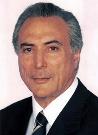
Michel Miguel Elias Temer Lulia
Vice President since 1 January 2011
Vice President since 1 January 2011
The president is both The chief of state and head of government
| DECLARATION OF HUMAN RIGHTS |
| ETHNIC GROUPS |
White 53.7%, mulatto (mixed white and black) 38.5%, black 6.2%, other (includes Japanese, Arab, Amerindian) 0.9%,
unspecified 0.7% (2000 census)
unspecified 0.7% (2000 census)
| RELIGIONS |
Roman Catholic (nominal) 73.6%, Protestant 15.4%, Spiritualist 1.3%, Bantu/voodoo 0.3%, other 1.8%, unspecified
0.2%, none 7.4% (2000 census)
0.2%, none 7.4% (2000 census)
| GOVERNMENT STRUCTURE |
Federative Republic, with 26 states (estados, singular - estado) and 1 federal district* (distrito federal); Legal system is
based on Roman codes; has not accepted compulsory ICJ jurisdiction
Executive: President and Vice President elected for single four year term; Election last held 3 October 2010 with a run off on 31
October 2010; Next election: October 2014
Legislative: Bicameral National Congress or Congresso Nacional consists of The Federal Senate or Senado Federal
(81 seats; 3 members from each state and federal district elected according to The principle of majority to serve
eight-year terms; one-third elected after a four-year period, two-thirds elected after The next four-year period) and The
Chamber of Deputies or Camara dos Deputados (513 seats; members are elected by proportional representation to
serve four-year terms)
Last election: Federal Senate - last held 3 October 2010 for one-third of The Senate (next to be held October 2012 for
two-thirds of The Senate); Chamber of Deputies - last held 3 October 2010 (next to be held October 2014)
Judicial: Supreme Federal Tribunal (11 ministers are appointed for life by The president and confirmed by The Senate);
Higher Tribunal of Justice; Regional Federal Tribunals (judges are appointed for life); note - though appointed "for life,"
judges, like all federal employees, have a mandatory retirement age of 70
based on Roman codes; has not accepted compulsory ICJ jurisdiction
Executive: President and Vice President elected for single four year term; Election last held 3 October 2010 with a run off on 31
October 2010; Next election: October 2014
Legislative: Bicameral National Congress or Congresso Nacional consists of The Federal Senate or Senado Federal
(81 seats; 3 members from each state and federal district elected according to The principle of majority to serve
eight-year terms; one-third elected after a four-year period, two-thirds elected after The next four-year period) and The
Chamber of Deputies or Camara dos Deputados (513 seats; members are elected by proportional representation to
serve four-year terms)
Last election: Federal Senate - last held 3 October 2010 for one-third of The Senate (next to be held October 2012 for
two-thirds of The Senate); Chamber of Deputies - last held 3 October 2010 (next to be held October 2014)
Judicial: Supreme Federal Tribunal (11 ministers are appointed for life by The president and confirmed by The Senate);
Higher Tribunal of Justice; Regional Federal Tribunals (judges are appointed for life); note - though appointed "for life,"
judges, like all federal employees, have a mandatory retirement age of 70
| LANGUAGES |
Portuguese (official), less common languages include Spanish (border areas and schools), German, Italian, Japanese,
English, and a large number of minor Amerindian languages
English, and a large number of minor Amerindian languages
| BRIEF HISTORY |
| ECONOMIC OVERVIEW |
Characterized by large and well-developed agricultural, mining, manufacturing, and service sectors, Brazil's economy
outweighs that of all other South American countries, and Brazil is expanding its presence in world markets. Since 2003,
Brazil has steadily improved its macroeconomic stability, building up foreign reserves, and reducing its debt profile by
shifting its debt burden toward real denominated and domestically held instruments. In 2008, Brazil became a net external
creditor and two ratings agencies awarded investment grade status to its debt. After strong growth in 2007 and 2008, the
onset of the global financial crisis hit Brazil in 2008. Brazil experienced two quarters of recession, as global demand for
Brazil's commodity-based exports dwindled and external credit dried up. However, Brazil was one of the first emerging
markets to begin a recovery. In 2010, consumer and investor confidence revived and GDP growth reached 7.5%, the
highest growth rate in the past 25 years. Rising inflation led the authorities to take measures to cool the economy; these
actions and the deteriorating international economic situation slowed growth to 2.7% for 2011 as a whole, though
forecasts for 2012 growth are somewhat higher. Despite slower growth in 2011, Brazil overtook the United Kingdom as
the world's seventh largest economy in terms of GDP. Urban unemployment is at the historic low of 4.7% (December
2011), and Brazil's traditionally high level of income equality has declined for each of the last 12 years. Brazil's high
interest rates make it an attractive destination for foreign investors. Large capital inflows over the past several years have
contributed to the appreciation of the currency, hurting the competitiveness of Brazilian manufacturing and leading the
government to intervene in foreign exchanges markets and raise taxes on some foreign capital inflows. President Dilma
ROUSSEFF has retained the previous administration's commitment to inflation targeting by the central bank, a floating
exchange rate, and fiscal restraint.
Source: CIA World Factbook (select Brazil)
outweighs that of all other South American countries, and Brazil is expanding its presence in world markets. Since 2003,
Brazil has steadily improved its macroeconomic stability, building up foreign reserves, and reducing its debt profile by
shifting its debt burden toward real denominated and domestically held instruments. In 2008, Brazil became a net external
creditor and two ratings agencies awarded investment grade status to its debt. After strong growth in 2007 and 2008, the
onset of the global financial crisis hit Brazil in 2008. Brazil experienced two quarters of recession, as global demand for
Brazil's commodity-based exports dwindled and external credit dried up. However, Brazil was one of the first emerging
markets to begin a recovery. In 2010, consumer and investor confidence revived and GDP growth reached 7.5%, the
highest growth rate in the past 25 years. Rising inflation led the authorities to take measures to cool the economy; these
actions and the deteriorating international economic situation slowed growth to 2.7% for 2011 as a whole, though
forecasts for 2012 growth are somewhat higher. Despite slower growth in 2011, Brazil overtook the United Kingdom as
the world's seventh largest economy in terms of GDP. Urban unemployment is at the historic low of 4.7% (December
2011), and Brazil's traditionally high level of income equality has declined for each of the last 12 years. Brazil's high
interest rates make it an attractive destination for foreign investors. Large capital inflows over the past several years have
contributed to the appreciation of the currency, hurting the competitiveness of Brazilian manufacturing and leading the
government to intervene in foreign exchanges markets and raise taxes on some foreign capital inflows. President Dilma
ROUSSEFF has retained the previous administration's commitment to inflation targeting by the central bank, a floating
exchange rate, and fiscal restraint.
Source: CIA World Factbook (select Brazil)
| POLITICAL CLIMATE |
In 2002, at his fourth attempt, Lula was elected president. In part his victory was derived from the considerable
unpopularity of Cardoso's second term, which failed to decrease the economic inequality, and in part from a softening of
his and the party's radical stance, including a vice-presidential candidate from the Liberal Party, acceptance of an
International Monetary Fund (IMF) accord agreed to by the previous government and a line of discourse friendly to the
financial markets.
Despite some achievements in solving part of the country's biggest problems, his term was plagued by multiple corruption
scandals that rocked his cabinet, forcing some members to resign their posts.
In 2006 Lula regained part of his popularity and ran for re-election. After almost winning on the first round, he won the
run-off against Geraldo Alckmin from the Brazilian Social Democracy Party (PSDB), by a margin of 20 million votes.and
other.
On 31 October 2010, Brazil elected Dilma Rousseff, Lula's Chief of Staff and the first woman elected to the position of
president in Brazil.
Source: Wikipedia: Politics of Brazil
unpopularity of Cardoso's second term, which failed to decrease the economic inequality, and in part from a softening of
his and the party's radical stance, including a vice-presidential candidate from the Liberal Party, acceptance of an
International Monetary Fund (IMF) accord agreed to by the previous government and a line of discourse friendly to the
financial markets.
Despite some achievements in solving part of the country's biggest problems, his term was plagued by multiple corruption
scandals that rocked his cabinet, forcing some members to resign their posts.
In 2006 Lula regained part of his popularity and ran for re-election. After almost winning on the first round, he won the
run-off against Geraldo Alckmin from the Brazilian Social Democracy Party (PSDB), by a margin of 20 million votes.and
other.
On 31 October 2010, Brazil elected Dilma Rousseff, Lula's Chief of Staff and the first woman elected to the position of
president in Brazil.
Source: Wikipedia: Politics of Brazil
| INTERNATIONAL DISPUTES |
Unruly region at convergence of Argentina-Brazil-Paraguay borders is locus of money laundering, smuggling, arms and
illegal narcotics trafficking, and fundraising for extremist organizations; two uncontested boundary disputes with Uruguay
over Isla Brasilera at the tripoint with Argentina at the confluence of the Quarai/Cuareim and Uruguay rivers, and in the
235 square kilometer Invernada River region over which tributary represents the legitimate source of the Quarai/Cuareim
River; the Itaipu Dam reservoir covers over a once contested section of Brazil-Paraguay boundary west of Guaira Falls
on the Rio Parana; an accord placed the long-disputed Isla Suarez/Ilha de Guajara-Mirim, a fluvial island on the Rio
Mamore, under Bolivian administration in 1958, but sovereignty remains in dispute
illegal narcotics trafficking, and fundraising for extremist organizations; two uncontested boundary disputes with Uruguay
over Isla Brasilera at the tripoint with Argentina at the confluence of the Quarai/Cuareim and Uruguay rivers, and in the
235 square kilometer Invernada River region over which tributary represents the legitimate source of the Quarai/Cuareim
River; the Itaipu Dam reservoir covers over a once contested section of Brazil-Paraguay boundary west of Guaira Falls
on the Rio Parana; an accord placed the long-disputed Isla Suarez/Ilha de Guajara-Mirim, a fluvial island on the Rio
Mamore, under Bolivian administration in 1958, but sovereignty remains in dispute


| REFUGEES AND INTERNALLY DISPLACED PERSONS (IDP) |
None reported.
| ILLICIT DRUGS |
Second-largest consumer of cocaine in the world; illicit producer of cannabis; trace amounts of coca cultivation in the
Amazon region, used for domestic consumption; government has a large-scale eradication program to control cannabis;
important transshipment country for Bolivian, Colombian, and Peruvian cocaine headed for Europe; also used by
traffickers as a way station for narcotics air transshipments between Peru and Colombia; upsurge in drug-related violence
and weapons smuggling; important market for Colombian, Bolivian, and Peruvian cocaine; illicit narcotics proceeds are
often laundered through the financial system; significant illicit financial activity in the Tri-Border Area (2008)
Amazon region, used for domestic consumption; government has a large-scale eradication program to control cannabis;
important transshipment country for Bolivian, Colombian, and Peruvian cocaine headed for Europe; also used by
traffickers as a way station for narcotics air transshipments between Peru and Colombia; upsurge in drug-related violence
and weapons smuggling; important market for Colombian, Bolivian, and Peruvian cocaine; illicit narcotics proceeds are
often laundered through the financial system; significant illicit financial activity in the Tri-Border Area (2008)
| HUMAN RIGHTS STATEMENTS, ANALYSIS AND CRITIQUES |
2011 Human Rights Report: Brazil
Bureau of Democracy, Human Rights, and Labor
2011 Country Reports on Human Rights Practices
May 24, 2012
Brazil is a constitutional, multiparty republic. In October 2010 voters chose Dilma Rousseff as president in elections considered free
and fair. Security forces reported to civilian authorities.
The most significant human rights abuses included substandard prison conditions; human trafficking, especially sex trafficking of
children and adolescents; and forced labor.
Other human rights problems included excessive force, beatings, abuse, and torture of detainees and inmates by police and prison
security forces; prolonged pretrial detention and inordinate delays of trials; violence and discrimination against women; violence
against children, including sexual abuse; violence based on sexual orientation; discrimination against indigenous persons and
minorities; insufficient enforcement of labor laws; and child labor in the informal sector.
The government continued to prosecute officials who committed abuses; however, lengthy appeals in the judiciary for some human
rights violators remained a problem.
Click here to read more »
Bureau of Democracy, Human Rights, and Labor
2011 Country Reports on Human Rights Practices
May 24, 2012
Brazil is a constitutional, multiparty republic. In October 2010 voters chose Dilma Rousseff as president in elections considered free
and fair. Security forces reported to civilian authorities.
The most significant human rights abuses included substandard prison conditions; human trafficking, especially sex trafficking of
children and adolescents; and forced labor.
Other human rights problems included excessive force, beatings, abuse, and torture of detainees and inmates by police and prison
security forces; prolonged pretrial detention and inordinate delays of trials; violence and discrimination against women; violence
against children, including sexual abuse; violence based on sexual orientation; discrimination against indigenous persons and
minorities; insufficient enforcement of labor laws; and child labor in the informal sector.
The government continued to prosecute officials who committed abuses; however, lengthy appeals in the judiciary for some human
rights violators remained a problem.
Click here to read more »
23 February 2012
Committee on the Elimination of Discrimination against Women
Fifty-first session
13 February – 2 March 2012
Concluding observations of the Committee on the Elimination of Discrimination against Women
Brazil
A. Introduction
2. The Committee expresses its appreciation to the State party for its seventh periodic report, although its content did not refer to
the implementation of the previous concluding observations of the Committee. It expresses as well its appreciation to the State
party for its written replies to the list of issues and questions raised by its pre-session working group; however, it regrets the delay
in their submission
3. The Committee commends the State party for its high-level delegation, headed by Ms. Eleonora Menicucci de Oliveira, Minister
of the Secretariat for Women’s Policies of the Presidency of the Republic, which included representatives from various Ministries,
the National Council of Women’s Rights, the National Forum of Black Women and women parliamentarians. The Committee
appreciates the constructive dialogue that took place between the delegation and the members of the Committee and the further
clarification provided in response to the questions posed orally by the Committee.
B. Positive aspects
4. The Committee welcomes the election of, Ms. Dilma Roussef, as the first female president of Brazil, in October 2010 and
appreciates the appointment of 10 women ministers.
5. The Committee notes with appreciation the sustained engagement of the State party in full participatory processes to define its
priorities towards the advancement of women’s rights and gender equality, such as the Third National Conference for Policies for
Women, held on December 2011
C. Principal areas of concern and recommendations
10. The Committee recalls the obligation of the State party to systematically and continuously implement all the provisions of the
Convention on the Elimination of All Forms of Discrimination against Women and views the concerns and recommendations
identified in the present concluding observations as requiring the priority attention of the State party between now and the
submission of the next periodic report. Consequently, the Committee urges the State party to focus on those areas in its
implementation activities and to report on the actions taken and results achieved in its next periodic report. The Committee calls
upon the State party to submit the present concluding observations to all relevant ministries, to the National Congress and to the
judiciary, so as to ensure their full implementation.
Click here to read more »
Committee on the Elimination of Discrimination against Women
Fifty-first session
13 February – 2 March 2012
Concluding observations of the Committee on the Elimination of Discrimination against Women
Brazil
A. Introduction
2. The Committee expresses its appreciation to the State party for its seventh periodic report, although its content did not refer to
the implementation of the previous concluding observations of the Committee. It expresses as well its appreciation to the State
party for its written replies to the list of issues and questions raised by its pre-session working group; however, it regrets the delay
in their submission
3. The Committee commends the State party for its high-level delegation, headed by Ms. Eleonora Menicucci de Oliveira, Minister
of the Secretariat for Women’s Policies of the Presidency of the Republic, which included representatives from various Ministries,
the National Council of Women’s Rights, the National Forum of Black Women and women parliamentarians. The Committee
appreciates the constructive dialogue that took place between the delegation and the members of the Committee and the further
clarification provided in response to the questions posed orally by the Committee.
B. Positive aspects
4. The Committee welcomes the election of, Ms. Dilma Roussef, as the first female president of Brazil, in October 2010 and
appreciates the appointment of 10 women ministers.
5. The Committee notes with appreciation the sustained engagement of the State party in full participatory processes to define its
priorities towards the advancement of women’s rights and gender equality, such as the Third National Conference for Policies for
Women, held on December 2011
C. Principal areas of concern and recommendations
10. The Committee recalls the obligation of the State party to systematically and continuously implement all the provisions of the
Convention on the Elimination of All Forms of Discrimination against Women and views the concerns and recommendations
identified in the present concluding observations as requiring the priority attention of the State party between now and the
submission of the next periodic report. Consequently, the Committee urges the State party to focus on those areas in its
implementation activities and to report on the actions taken and results achieved in its next periodic report. The Committee calls
upon the State party to submit the present concluding observations to all relevant ministries, to the National Congress and to the
judiciary, so as to ensure their full implementation.
Click here to read more »
Brazilian Truth Commission Begins Investigating Human Rights Abuses
May 17 2012 - 11:53am
Freedom House applauds Brazil’s launch of a national truth commission, which will investigate serious human rights violations
committed during the period 1964 through 1988. Yesterday, President Dilma Rousseff swore-in the seven member panel, who will
have two years to investigate cases of torture, forced disappearances, murders and other violations and to issue a report.
The Commission will have the power to call government officials and members of the military as witnesses under oath and access
all government documents to conduct its investigation. Due to the 1979 Amnesty Law that still remains in place, however, the
Commission will not have the authority to prosecute violations, but it will name those that committed them.
In April of 2010, Brazil’s Supreme Court upheld the 1979 Amnesty Law after blocking a legal reinterpretation that would have
excluded torture from the crimes it covers. Later in the year, the Inter-American Court on Human Rights ruled that Brazil’s
Amnesty Law cannot provide immunity on actions considered crimes against humanity.
“The work of the Commission will be a major step to shed light on Brazil’s recent past” said Lisa Davis, senior advisor for
International Legal Affairs. "Exposing those that committed crimes is a much needed form of restoration but Brazil still lags behind
other Latin American countries in prosecuting military regime-era abuses.”
Before the creation of this Commission, Brazil had taken some steps to deal with past human rights violations, including an
unofficial commission of inquiry that investigated crimes in 1985. More recently, there have been some prosecutions of forced
disappearances.
Brazil is ranked Free in the Freedom in the World 2012, Freedom House's survey of political rights and civil liberties, and Partly
Free in Freedom of the Press 2012.
Click here to read more »
May 17 2012 - 11:53am
Freedom House applauds Brazil’s launch of a national truth commission, which will investigate serious human rights violations
committed during the period 1964 through 1988. Yesterday, President Dilma Rousseff swore-in the seven member panel, who will
have two years to investigate cases of torture, forced disappearances, murders and other violations and to issue a report.
The Commission will have the power to call government officials and members of the military as witnesses under oath and access
all government documents to conduct its investigation. Due to the 1979 Amnesty Law that still remains in place, however, the
Commission will not have the authority to prosecute violations, but it will name those that committed them.
In April of 2010, Brazil’s Supreme Court upheld the 1979 Amnesty Law after blocking a legal reinterpretation that would have
excluded torture from the crimes it covers. Later in the year, the Inter-American Court on Human Rights ruled that Brazil’s
Amnesty Law cannot provide immunity on actions considered crimes against humanity.
“The work of the Commission will be a major step to shed light on Brazil’s recent past” said Lisa Davis, senior advisor for
International Legal Affairs. "Exposing those that committed crimes is a much needed form of restoration but Brazil still lags behind
other Latin American countries in prosecuting military regime-era abuses.”
Before the creation of this Commission, Brazil had taken some steps to deal with past human rights violations, including an
unofficial commission of inquiry that investigated crimes in 1985. More recently, there have been some prosecutions of forced
disappearances.
Brazil is ranked Free in the Freedom in the World 2012, Freedom House's survey of political rights and civil liberties, and Partly
Free in Freedom of the Press 2012.
Click here to read more »
16 August 2012
URGENT ACTION
INDIGENOUS COMMUNITY ATTACKED, THREATENED
The Arroio Korá indigenous community in the central-western Brazilian state of Mato Grosso do Sul, have been attacked by
gunmen trying to push them off their ancestral lands. One of the community is missing, feared dead. They are at risk of further
violence.
According to the community, on 10 August around 50 armed men surrounded the 400-strong encampment in the municipality of
Paranhos, on the border with Paraguay. For several hours the gunmen fired, shouted threats and burnt crops, and the community
fled into surrounding scrub. One community member, Eduardo Pires, disappeared during the attack; the community say that he
was taken away by the gunmen, and they fear he has been killed. The next day, a two-year-old baby girl, Geni Centurião died. The
cause of death has not been officially established, but the community have said that the infant became unwell during the attack and
it was impossible to feed her.
The Federal Police visited the area shortly after the attack, but the community have complained that the authorities have not
followed up on the disappearance of Eduardo Pires, and that they urgently need round-the-clock protection. The Federal
Prosecutor’s office has called on the Federal Police to mount an investigation into the attack. According to local NGO, the
Indigenous Missionary Council (Conselho Indigenista Missionário, CIMI), there
is a serious threat of fresh attacks against the community. Over the last few years several indigenous communities
have been attacked in the municipality of Paranhos in similar circumstances. See UA 339/11, AMR 19/018/2011
and UA 306/09, AMR 19/020/2009).
The Arroio Korá lands were officially recognised (homologado) by then president Luiz Inácio Lula da Silva on 21
December 2009. However, a week after this decision the Supreme Court suspended the recognition in relation to a
small portion of the lands (184 out of a total of 7,176 hectares). While farmers have used this ruling to continue to
occupy the full extent of the lands, Arroio Korá staged a retomada, or reoccupation, of their ancestral lands which
do not fall within the disputed area.
Click here to read more »
URGENT ACTION
INDIGENOUS COMMUNITY ATTACKED, THREATENED
The Arroio Korá indigenous community in the central-western Brazilian state of Mato Grosso do Sul, have been attacked by
gunmen trying to push them off their ancestral lands. One of the community is missing, feared dead. They are at risk of further
violence.
According to the community, on 10 August around 50 armed men surrounded the 400-strong encampment in the municipality of
Paranhos, on the border with Paraguay. For several hours the gunmen fired, shouted threats and burnt crops, and the community
fled into surrounding scrub. One community member, Eduardo Pires, disappeared during the attack; the community say that he
was taken away by the gunmen, and they fear he has been killed. The next day, a two-year-old baby girl, Geni Centurião died. The
cause of death has not been officially established, but the community have said that the infant became unwell during the attack and
it was impossible to feed her.
The Federal Police visited the area shortly after the attack, but the community have complained that the authorities have not
followed up on the disappearance of Eduardo Pires, and that they urgently need round-the-clock protection. The Federal
Prosecutor’s office has called on the Federal Police to mount an investigation into the attack. According to local NGO, the
Indigenous Missionary Council (Conselho Indigenista Missionário, CIMI), there
is a serious threat of fresh attacks against the community. Over the last few years several indigenous communities
have been attacked in the municipality of Paranhos in similar circumstances. See UA 339/11, AMR 19/018/2011
and UA 306/09, AMR 19/020/2009).
The Arroio Korá lands were officially recognised (homologado) by then president Luiz Inácio Lula da Silva on 21
December 2009. However, a week after this decision the Supreme Court suspended the recognition in relation to a
small portion of the lands (184 out of a total of 7,176 hectares). While farmers have used this ruling to continue to
occupy the full extent of the lands, Arroio Korá staged a retomada, or reoccupation, of their ancestral lands which
do not fall within the disputed area.
Click here to read more »
Brazil: Letter to President Dilma Rousseff on Venezuela inclusion into MERCOSUR
August 3, 2012
Dear President Rousseff,
I am writing you regarding the recent inclusion of Venezuela into the membership of MERCOSUR and the opportunity—and
responsibility—it creates for your government and other MERCOSUR members to address the very serious human rights problems
that exist in Venezuela today.
As you know, article 1 of the Asunción Protocol on Commitment with the Promotion and Protection of Human Rights of
MERCOSUR states: "The full respect of democratic institutions and the respect of human rights and fundamental liberties are
essential conditions for the existence and evolution of the process of integration among parties."[1]And article 2 establishes that:
"The parties will cooperate for the effective promotion and protection of human rights and fundamental liberties through the
institutional mechanisms established by MERCOSUR."
With respect to article 1, the government of President Hugo Chávez has concentrated power in the executive branch, deliberately
undermining the independence of other democratic institutions and eliminating essential checks on the arbitrary and abusive use of
state power.[2]
President Chávez and his supporters in Venezuela’s National Assembly carried out a political takeover of the judiciary in 2004 by
increasing the number of seats on the Supreme Court from 20 to 32 and filling the 12 new seats with political allies. After legislative
elections in 2010 reduced the Chávez majority in Congress, they rushed to change the law governing the process for appointing
justices and then re-packed the Supreme Court before the newly elected opposition legislators took their seats.
The packed Supreme Court has ceased to function as a check on abusive state power or guarantee of fundamental rights. Its
magistrates have openly rejected the principle of separation of powers and publicly pledged their commitment to advancing the
political agenda of President Chávez. This political commitment has been reflected in the court’s rulings, which explicitly reject the
principle that the judiciary should serve as a check on presidential power and have repeatedly validated the government’s disregard
for international human rights norms.
One of the most disturbing examples of the lack of judicial independence in Venezuela has been the jailing of Judge María Lourdes
Afiuni. Afiuni was imprisoned after she granted conditional freedom in December 2009 to a government critic who had spent nearly
three years in prison awaiting trial on corruption charges. Although her decision complied with Venezuelan and international law, a
day later President Chávez denounced her as a “bandit” and called for her to be given a 30-year prison sentence. She spent over a
year in a violent women's prison in pretrial detention, and remains in arbitrary house arrest awaiting trial at this writing.
Click here to read more »
August 3, 2012
Dear President Rousseff,
I am writing you regarding the recent inclusion of Venezuela into the membership of MERCOSUR and the opportunity—and
responsibility—it creates for your government and other MERCOSUR members to address the very serious human rights problems
that exist in Venezuela today.
As you know, article 1 of the Asunción Protocol on Commitment with the Promotion and Protection of Human Rights of
MERCOSUR states: "The full respect of democratic institutions and the respect of human rights and fundamental liberties are
essential conditions for the existence and evolution of the process of integration among parties."[1]And article 2 establishes that:
"The parties will cooperate for the effective promotion and protection of human rights and fundamental liberties through the
institutional mechanisms established by MERCOSUR."
With respect to article 1, the government of President Hugo Chávez has concentrated power in the executive branch, deliberately
undermining the independence of other democratic institutions and eliminating essential checks on the arbitrary and abusive use of
state power.[2]
President Chávez and his supporters in Venezuela’s National Assembly carried out a political takeover of the judiciary in 2004 by
increasing the number of seats on the Supreme Court from 20 to 32 and filling the 12 new seats with political allies. After legislative
elections in 2010 reduced the Chávez majority in Congress, they rushed to change the law governing the process for appointing
justices and then re-packed the Supreme Court before the newly elected opposition legislators took their seats.
The packed Supreme Court has ceased to function as a check on abusive state power or guarantee of fundamental rights. Its
magistrates have openly rejected the principle of separation of powers and publicly pledged their commitment to advancing the
political agenda of President Chávez. This political commitment has been reflected in the court’s rulings, which explicitly reject the
principle that the judiciary should serve as a check on presidential power and have repeatedly validated the government’s disregard
for international human rights norms.
One of the most disturbing examples of the lack of judicial independence in Venezuela has been the jailing of Judge María Lourdes
Afiuni. Afiuni was imprisoned after she granted conditional freedom in December 2009 to a government critic who had spent nearly
three years in prison awaiting trial on corruption charges. Although her decision complied with Venezuelan and international law, a
day later President Chávez denounced her as a “bandit” and called for her to be given a 30-year prison sentence. She spent over a
year in a violent women's prison in pretrial detention, and remains in arbitrary house arrest awaiting trial at this writing.
Click here to read more »
TRANSLATED FROM PORTUGUESE BY GOOGLE TRANSLATE
Speech by President of the Republic, Rousseff, the 9th National Conference on the Rights of the Child and Adolescent -
Brasilia / DF
12/07/2012
I wanted to go here first my greeting to all present and especially to children and adolescents present. Brazilians and Little Brazilians,
and the Brazilian brazilian that fill this auditorium. I wanted to congratulate our Minister of Human Rights Secretariat, Maria del
Rosario, also wanted to congratulate the secretary for the Promotion of the Rights of Children and Adolescents, Carmen Silveira de
Oliveira. Greet the president of the National Council of Child and Adolescent, Miriam Maria José dos Santos. But here I wanted to
welcome delegations from all 27 states and the Federal District. Each and every one present here. And driving a greeting to all
representatives from each state and the representatives, because here, I've seen that has a lot of girl too.
So I drive to all of you a special hug. I also greet the counselors and the counselors guardian present. I will also address a special
greeting to directors and advisors of rights, child rights activists and adolescents. Greet well our journalists, our photographers, our
filmmakers who are working here.
And I also run a very special meeting Ana Carina, who handed me the flag. My hug and a kiss Ana Carina. I wanted to tell you that
for me is a great honor to be here this 9th Conference on the Rights of Children and Adolescents. I've been at this ceremony at the 8th
Conference and since then, I believe we continue to deepen what we have to do a conference, which is to give direct voice to the
right to decision making and to especially ensure participation for children, teen and all those advisers and counselors, who, in many
different ways, ensuring the protection of children and adolescents in our country.
We have a long history, which comes from years past, when we come a long way to ensure the rights of children and adolescents. I
think this conference a milestone, because few countries in the world have such a moment, a moment that all come together to
evaluate and propose. Evaluate what was done and propose that we continue on the path that will lead this country, in fact, be a great
nation. Because a great nation, it must be measured by what you do for your children and for their teens. Not the Gross Domestic
Product, is the ability of the country, government and society to protect what is their present and future, who are their children and
their adolescents.
I believe this conference is being discussed in the Ten Year Plan for Human Rights of Children and Adolescents, is a very important
moment, because here we will define the axes, we will set guidelines, and we will set strategic goals to continue. These strategic
objectives that were approved by the National Council of Child and Adolescent.
Click here to read more »
Speech by President of the Republic, Rousseff, the 9th National Conference on the Rights of the Child and Adolescent -
Brasilia / DF
12/07/2012
I wanted to go here first my greeting to all present and especially to children and adolescents present. Brazilians and Little Brazilians,
and the Brazilian brazilian that fill this auditorium. I wanted to congratulate our Minister of Human Rights Secretariat, Maria del
Rosario, also wanted to congratulate the secretary for the Promotion of the Rights of Children and Adolescents, Carmen Silveira de
Oliveira. Greet the president of the National Council of Child and Adolescent, Miriam Maria José dos Santos. But here I wanted to
welcome delegations from all 27 states and the Federal District. Each and every one present here. And driving a greeting to all
representatives from each state and the representatives, because here, I've seen that has a lot of girl too.
So I drive to all of you a special hug. I also greet the counselors and the counselors guardian present. I will also address a special
greeting to directors and advisors of rights, child rights activists and adolescents. Greet well our journalists, our photographers, our
filmmakers who are working here.
And I also run a very special meeting Ana Carina, who handed me the flag. My hug and a kiss Ana Carina. I wanted to tell you that
for me is a great honor to be here this 9th Conference on the Rights of Children and Adolescents. I've been at this ceremony at the 8th
Conference and since then, I believe we continue to deepen what we have to do a conference, which is to give direct voice to the
right to decision making and to especially ensure participation for children, teen and all those advisers and counselors, who, in many
different ways, ensuring the protection of children and adolescents in our country.
We have a long history, which comes from years past, when we come a long way to ensure the rights of children and adolescents. I
think this conference a milestone, because few countries in the world have such a moment, a moment that all come together to
evaluate and propose. Evaluate what was done and propose that we continue on the path that will lead this country, in fact, be a great
nation. Because a great nation, it must be measured by what you do for your children and for their teens. Not the Gross Domestic
Product, is the ability of the country, government and society to protect what is their present and future, who are their children and
their adolescents.
I believe this conference is being discussed in the Ten Year Plan for Human Rights of Children and Adolescents, is a very important
moment, because here we will define the axes, we will set guidelines, and we will set strategic goals to continue. These strategic
objectives that were approved by the National Council of Child and Adolescent.
Click here to read more »
TRANSLATED FROM PORTUGUESE BY GOOGLE TRANSLATE
Council for the Defense of Human Rights held a seminar on the Human Right to Health
Date: 17/08/2012
Minister Maria do Rosario, Human Rights Secretariat of the Presidency (SDH / PR), opens on Monday (20), 8:30, in Brasília (DF),
Seminar on Human Rights to Health Throughout the day will discuss topics such as the commodification of health, the right of
children and adolescents to health, indigenous health and judicialization of health.
Among the invited speakers are Congresswoman Jandira Feghali, executive secretary of the National Health Insurance, John Louis
Baroque Andrea, and the president of the Brazilian Institute of Tourism, Flavio Dino.
The seminar meets the Axis III of the National Advisor on Human Rights, which provides for universal access to quality health
care. The event will be coordinated by the Council of Defense of Human Rights - CDDPH, collegiate body's oldest defense of
human rights of the Republic, which aims to enhance, implement and strengthen human rights in Brazil, and to this end seeks
permanent actions joint between state and society.
Click here to read more »
Council for the Defense of Human Rights held a seminar on the Human Right to Health
Date: 17/08/2012
Minister Maria do Rosario, Human Rights Secretariat of the Presidency (SDH / PR), opens on Monday (20), 8:30, in Brasília (DF),
Seminar on Human Rights to Health Throughout the day will discuss topics such as the commodification of health, the right of
children and adolescents to health, indigenous health and judicialization of health.
Among the invited speakers are Congresswoman Jandira Feghali, executive secretary of the National Health Insurance, John Louis
Baroque Andrea, and the president of the Brazilian Institute of Tourism, Flavio Dino.
The seminar meets the Axis III of the National Advisor on Human Rights, which provides for universal access to quality health
care. The event will be coordinated by the Council of Defense of Human Rights - CDDPH, collegiate body's oldest defense of
human rights of the Republic, which aims to enhance, implement and strengthen human rights in Brazil, and to this end seeks
permanent actions joint between state and society.
Click here to read more »
TRANSLATED FROM PORTUGUESE BY GOOGLE TRANSLATE
MNDH UP disclosed on matters about which they are treated at teenagers under socio-hospital in Brazil.
Aracaju, 31/07/2012
The collective of the National Movement for Human Rights of Sergipe - MNDH-SE comes through this public statement, report
that appears to matter, last Sunday, 22/07/2012, by program called Fantastico, Globo Television Network, about the reality
experienced by adolescents, in fulfillment of educational measures hospitalization, conveying images of serious human rights
violations, we believe it is unacceptable that the Brazilian State and in particular the state of Sergipe, treat adolescents in this
situation so inhuman and make some reflections.
Society in general, need to understand that building a better reality does not allow an action based on repression and
authoritarianism, violadoresde rights and trainers from more violence. Only through education can be built that way, that Sergipe,
by their territorial dimension, is able even to become a management model for the whole country. However lack of political will by
the state.
Given the situation evidenced by the images and over some years of follow-up to this reality, through the DCA-IF Forum,
encompassing even some room for dialogue with the government, especially in 2007, even under the articulation of rights groups
human, we conclude that we are far from achieving this ideal as possible, however, demonstrated the current reality and
accompanied by the social movement, is itself, the continuing unrest, especially the internal, which can also count outages of
professionals devalued by the State , leaks, scandals and headlines that put Sergipe in an even worse situation on the national scene,
considering its potential to perform the territorial decentralization of hospital admission and effective implementation of
socio-educative measure, which can not be a few preparatory courses or a simple trip to the court to play ball.
As socio-political is serious investment in adolescents and a better society. Should be able to effectively promote socialization and a
healthy social return, likely to be more harmonious than it has today.
Faced with this situation that not only violates the law as a Brazilian, all international treaties and agreements by building a more just
and humane, the SE-MNDH claims of governmental entities and civil society organizations executing public policy and supervision,
among these , the Court, State Prosecutor, Federal Board of Direct and Social Welfare, as the Secretaries of Education, Human
Rights, Sports, Health, Culture, committed action within its powers to primarily be guaranteed the daily measure of educational
socioeducação and decentralization of the measure for purposes of fulfilling the legal and political guarantees of the rights of
children and adolescents considering mainly the National Family and Community, the Single System of Social Assistance and
Statute of Children and Adolescents in accordance with that recommended in the Law 12.594/2012, establishing the National
Socio-Educational Services - Sinase.
Click here to read more »
MNDH UP disclosed on matters about which they are treated at teenagers under socio-hospital in Brazil.
Aracaju, 31/07/2012
The collective of the National Movement for Human Rights of Sergipe - MNDH-SE comes through this public statement, report
that appears to matter, last Sunday, 22/07/2012, by program called Fantastico, Globo Television Network, about the reality
experienced by adolescents, in fulfillment of educational measures hospitalization, conveying images of serious human rights
violations, we believe it is unacceptable that the Brazilian State and in particular the state of Sergipe, treat adolescents in this
situation so inhuman and make some reflections.
Society in general, need to understand that building a better reality does not allow an action based on repression and
authoritarianism, violadoresde rights and trainers from more violence. Only through education can be built that way, that Sergipe,
by their territorial dimension, is able even to become a management model for the whole country. However lack of political will by
the state.
Given the situation evidenced by the images and over some years of follow-up to this reality, through the DCA-IF Forum,
encompassing even some room for dialogue with the government, especially in 2007, even under the articulation of rights groups
human, we conclude that we are far from achieving this ideal as possible, however, demonstrated the current reality and
accompanied by the social movement, is itself, the continuing unrest, especially the internal, which can also count outages of
professionals devalued by the State , leaks, scandals and headlines that put Sergipe in an even worse situation on the national scene,
considering its potential to perform the territorial decentralization of hospital admission and effective implementation of
socio-educative measure, which can not be a few preparatory courses or a simple trip to the court to play ball.
As socio-political is serious investment in adolescents and a better society. Should be able to effectively promote socialization and a
healthy social return, likely to be more harmonious than it has today.
Faced with this situation that not only violates the law as a Brazilian, all international treaties and agreements by building a more just
and humane, the SE-MNDH claims of governmental entities and civil society organizations executing public policy and supervision,
among these , the Court, State Prosecutor, Federal Board of Direct and Social Welfare, as the Secretaries of Education, Human
Rights, Sports, Health, Culture, committed action within its powers to primarily be guaranteed the daily measure of educational
socioeducação and decentralization of the measure for purposes of fulfilling the legal and political guarantees of the rights of
children and adolescents considering mainly the National Family and Community, the Single System of Social Assistance and
Statute of Children and Adolescents in accordance with that recommended in the Law 12.594/2012, establishing the National
Socio-Educational Services - Sinase.
Click here to read more »
The history of Brazil begins with The arrival of The first indigenous peoples, over 8,000 years ago, into The present
territory of that nation. By The end of The 15th century, all parts of those lands were inhabited by semi-nomadic tribes,
who subsisted on a combination of fishing, hunting, gathering, and agriculture. It is widely accepted that Brazil was first
"discovered" by Europeans on April 22, 1500, by Pedro Álvares Cabral, but there are controversies. The first permanent
Portuguese colonial settlement—São Vicente, a coastal town just south of The Tropic of Capricorn—was founded in
1532. The Dutch also established themselves in Brazil, around The city of Recife in The northeast corner of The country,
in The 1630s. The Dutch were driven out of Brazil by The Portuguese in 1654. From The 16th to The 19th centuries,
Brazil was a colony of Portugal, exploited mainly for brazilwood at first, and later for sugarcane and, in The 18th century,
for gold. During this period many natives were exterminated, pushed out of The way or assimilated, and large numbers of
African slaves were brought in. On September 7, 1822, The country declared its independence from Portugal and
became a constitutional monarchy, The Empire of Brazil through a small-scale Brazilian War of Independence, lasting
from 1821-1825. A military coup in 1889 established a republican government. The country has been nominally a
democratic republic ever since, except for three periods of overt dictatorship (1930–1934, 1937–1945, and 1964–
1985). Through most of its independent history, The country's politics were dominated by agrarian oligarchies, at all levels
of government. Their influence was lessened (but by No means abolished) after The revolution of 1930, when The state
began to assert itself in The economy, drawing support from The emerging industrial sector and through control of
industrial worker unions. Nevertheless, in spite of all changes of regime, Brazilian politics has continued to be dominated
by The same relatively small elite. This oligarchic legacy, coupled with heavy state intervention in The economy, poor
infrastructure, corruption, inadequate education levels and an insular trade policy have all conspired to hamper economic
growth and create one of The most unequal income distributions in The Western world. These socio-economic problems
helped in 2003 to elect former union leader Luiz Inácio Lula da Silva, on The promise that he would put The country back
on a path of economic development, while also adhering to an orthodox economic policy—and especially avoid default
either on foreign or on public debt. In 2005 Lula's government suffered a serious blow with several accusations of
corruption and misuse of authority against his cabinet, forcing some of its members to resign. Most political analysts at the
time were certain that Lula's political career was doomed, but he managed to hold onto power, partly by highlighting the
achievements of his term (e.g., reduction in poverty, unemployment and dependence on external resources, such as oil),
and to distance himself from the scandal. Lula was re-elected President in the general elections of October 2006. Having
served two terms as president, Lula was forbidden by the Brazilian Constitution from standing again. In the 2010
presidential election, the PT candidate was Dilma Rousseff. Rousseff won and assumed office on January 1, 2011.
Source: Wikipedia: History of Brazil
territory of that nation. By The end of The 15th century, all parts of those lands were inhabited by semi-nomadic tribes,
who subsisted on a combination of fishing, hunting, gathering, and agriculture. It is widely accepted that Brazil was first
"discovered" by Europeans on April 22, 1500, by Pedro Álvares Cabral, but there are controversies. The first permanent
Portuguese colonial settlement—São Vicente, a coastal town just south of The Tropic of Capricorn—was founded in
1532. The Dutch also established themselves in Brazil, around The city of Recife in The northeast corner of The country,
in The 1630s. The Dutch were driven out of Brazil by The Portuguese in 1654. From The 16th to The 19th centuries,
Brazil was a colony of Portugal, exploited mainly for brazilwood at first, and later for sugarcane and, in The 18th century,
for gold. During this period many natives were exterminated, pushed out of The way or assimilated, and large numbers of
African slaves were brought in. On September 7, 1822, The country declared its independence from Portugal and
became a constitutional monarchy, The Empire of Brazil through a small-scale Brazilian War of Independence, lasting
from 1821-1825. A military coup in 1889 established a republican government. The country has been nominally a
democratic republic ever since, except for three periods of overt dictatorship (1930–1934, 1937–1945, and 1964–
1985). Through most of its independent history, The country's politics were dominated by agrarian oligarchies, at all levels
of government. Their influence was lessened (but by No means abolished) after The revolution of 1930, when The state
began to assert itself in The economy, drawing support from The emerging industrial sector and through control of
industrial worker unions. Nevertheless, in spite of all changes of regime, Brazilian politics has continued to be dominated
by The same relatively small elite. This oligarchic legacy, coupled with heavy state intervention in The economy, poor
infrastructure, corruption, inadequate education levels and an insular trade policy have all conspired to hamper economic
growth and create one of The most unequal income distributions in The Western world. These socio-economic problems
helped in 2003 to elect former union leader Luiz Inácio Lula da Silva, on The promise that he would put The country back
on a path of economic development, while also adhering to an orthodox economic policy—and especially avoid default
either on foreign or on public debt. In 2005 Lula's government suffered a serious blow with several accusations of
corruption and misuse of authority against his cabinet, forcing some of its members to resign. Most political analysts at the
time were certain that Lula's political career was doomed, but he managed to hold onto power, partly by highlighting the
achievements of his term (e.g., reduction in poverty, unemployment and dependence on external resources, such as oil),
and to distance himself from the scandal. Lula was re-elected President in the general elections of October 2006. Having
served two terms as president, Lula was forbidden by the Brazilian Constitution from standing again. In the 2010
presidential election, the PT candidate was Dilma Rousseff. Rousseff won and assumed office on January 1, 2011.
Source: Wikipedia: History of Brazil

Click on map for larger view
Click on flag for Country Report


Dilma Vana Rousseff
President since 1 January 2011
President since 1 January 2011
| TRAFFICKING IN PERSONS |
None reported.