
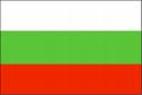
| BULGARIA Republic of Bulgaria Republika Balgariya Joined United Nations: 14 December 1955 Human Rights as assured by their constitution Click here Updated 19 January 2013 |

| CAPITAL |
| POPULATION |
| CHIEF OF STATE |
| SELECTION PROCESS |
Sofia
7,037,935 (July 2012 est.)
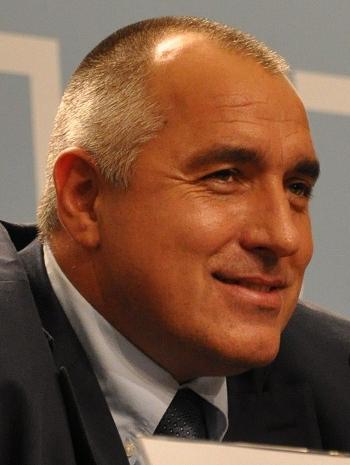
Boyko Borissov
Prime Minister since 27 July 2009
Prime Minister since 27 July 2009
President and vice president elected on the same ticket by popular
vote for a five-year term (eligible for a second term); election last
held 23 and 30 October 2011
Next scheduled election: 2016
vote for a five-year term (eligible for a second term); election last
held 23 and 30 October 2011
Next scheduled election: 2016
HEAD OF GOVERNMENT
SELECTION PROCESS
Chairman of the Council of Ministers (prime minister) nominated
by the president and elected by the National Assembly; deputy
prime ministers nominated by the prime minister and elected by
the National Assembly; last election: 5 July 2009
Next scheduled election: mid-2013
by the president and elected by the National Assembly; deputy
prime ministers nominated by the prime minister and elected by
the National Assembly; last election: 5 July 2009
Next scheduled election: mid-2013
| DECLARATION OF HUMAN RIGHTS |
| ETHNIC GROUPS |
Bulgarian 76.9%, Turk 8%, Roma 4.4%, other 0.7% (including Macedonian, Armenian, Tatar, Circassian), other (unknown) 10%
(2011 census)
(2011 census)
| RELIGIONS |
Eastern Orthodox 59.4%, Muslim (Sunni) 7.4%, Muslim (Shia) 0.4%, other (including Catholic, Protestant, Armenian Apostolic Orthodox,
and Judaism) 1.7%, other (unknown) 27.4%, none 3.7% (2011 census)
and Judaism) 1.7%, other (unknown) 27.4%, none 3.7% (2011 census)
| GOVERNMENT STRUCTURE |
Parliamentary democracy with 28 provinces (oblasti, singular - oblast); Legal system is civil law and criminal law based on Roman
law; accepts compulsory ICJ jurisdiction with reservations
Executive: President and vice president elected on the same ticket by popular vote for a five-year term (eligible for a second term);
election last held on 23 and 30 October 2011 (next to be held in 2016); chairman of the Council of Ministers (prime minister)
elected by the National Assembly; deputy prime ministers nominated by the prime minister and elected by the National Assembly
Legislative: Unicameral National Assembly or Narodno Sobranie (240 seats; members elected by popular vote to serve four-year
terms)
elections: last held 5 July 2009 (next to be held mid-2013)
Judicial: Supreme Administrative Court; Supreme Court of Cassation; Constitutional Court (12 justices appointed or elected for
nine-year terms); Supreme Judicial Council (consists of the chairmen of the two Supreme Courts, the Chief Prosecutor, and 22
other members; responsible for appointing the justices, prosecutors, and investigating magistrates in the justice system; members of
the Supreme Judicial Council elected for five-year terms, 11 elected by the National Assembly and 11 by bodies of the judiciary)
law; accepts compulsory ICJ jurisdiction with reservations
Executive: President and vice president elected on the same ticket by popular vote for a five-year term (eligible for a second term);
election last held on 23 and 30 October 2011 (next to be held in 2016); chairman of the Council of Ministers (prime minister)
elected by the National Assembly; deputy prime ministers nominated by the prime minister and elected by the National Assembly
Legislative: Unicameral National Assembly or Narodno Sobranie (240 seats; members elected by popular vote to serve four-year
terms)
elections: last held 5 July 2009 (next to be held mid-2013)
Judicial: Supreme Administrative Court; Supreme Court of Cassation; Constitutional Court (12 justices appointed or elected for
nine-year terms); Supreme Judicial Council (consists of the chairmen of the two Supreme Courts, the Chief Prosecutor, and 22
other members; responsible for appointing the justices, prosecutors, and investigating magistrates in the justice system; members of
the Supreme Judicial Council elected for five-year terms, 11 elected by the National Assembly and 11 by bodies of the judiciary)
| LANGUAGES |
Bulgarian (official) 76.8%, Turkish 8.2%, Roma 3.8%, other 0.7%, other (unknown) 10.5% (2011 census)
| BRIEF HISTORY |
Prehistoric cultures include the neolithic Hamangia culture and Vinča culture (6th to 3rd millennia BC), the eneolithic Varna culture
(5th millennium BC, Varna Necropolis), and the Bronze Age Ezero culture. The Karanovo chronology serves as a gauge for the
prehistory of the wider Balkans region. Indigenous Thracian and Daco-Getic population, lived on the territory of modern Bulgaria
before the Slavic invasion. Their ancient languages had already gone extinct before the arrival of the Slavs, and their cultural
influence was highly reduced due to the repeated barbaric invasions on the Balkans during the early Middle Ages by Huns, Goths,
Celts and Sarmatians, accompanied by persistent hellenization, romanisation and later slavicisation. The Slavs emerged from their
original homeland (most commonly thought to have been in Eastern Europe) in the early 6th century, and spread to most of the
eastern Central Europe, Eastern Europe and the Balkans, thus forming three main branches - the West Slavs, the East Slavs and the
South Slavs. The easternmost South Slavs settled on the territory of modern Bulgaria during the 6th Century. The ancient Bulgars
belong to the big Iranian ethno-tribal group with origins that can be traced back to the Balhara region in the foothills of the Hindu
Kush mountain range. Ancient Bulgarian language belongs to the Indo-European Languages Group. The Bulgars arrived on the
Balkans in the early 7th century from central Asia, merged with the local romanized and hellenized Thracians and the recently
settled, in 6th century, Slavic inhabitants to form the first Bulgarian state. Swept by the Hun wave at the beginning of the 4th century,
other numerous Bulgarian tribes broke loose from their settlements in central Asia to migrate to the fertile lands along the lower
valleys of the Donets and the Don rivers and the Azov seashore. Some of these remained for centuries in their new settlements,
whereas others moved on with the Huns towards Central Europe, settling in Pannonia. In the 632, the Bulgars, led by Khan Kubrat
formed an independent state, often called Great Bulgaria (also known as Onoguria), between the lower course of the Danube river
to the west, the Black Sea and the Azov Sea to the south, the Kuban river to the east, and the Donets river to the north. The capital
was Phanagoria, on the Azov. By the early 9th century the lands, settled by the Kuber's horde, were incorporated into the First
Bulgarian Empire. During the late Roman Empire, the land of present-day Bulgaria was organised in several Roman provinces:
Scythia (Scythia Minor), Moesia (Upper and Lower), Thrace, Macedonia (First and Second), Dacia (Coastal and Inner, both
south of Danube), Dardania, Rhodope and Hemimont, and had a mixed population of Greeks, Thracians and Dacians, most of
whom spoke either Greek or a Latin-derived language known as Romance. Several consecutive waves of Slavic migration
throughout the 6th and the early 7th century led to a dramatic change of the demographics of the region and its almost complete
Slavicisation. Under Boris I, Bulgarians became Christians, and the Ecumenical Patriarch agreed to allow an autonomous Bulgarian
Archbishop at Pliska. Byzantium ruled Bulgaria from 1018 to 1185, subordinating the independent Bulgarian Orthodox Church to
the authority of the Ecumenical Patriarch in Constantinople but otherwise interfering little in Bulgarian local affairs. In 1185 Peter and
Asen, leading nobles of supposed and contested Bulgarian, Cuman, Vlach or mixed origin, led a revolt against Byzantine rule and
Peter declared himself Tsar Peter II (also known as Theodore Peter). The following year the Byzantines were forced to recognize
Bulgaria's independence. Peter styled himself "Tsar of the Bulgars, Greeks and Vlachs". Resurrected Bulgaria occupied the territory
between the Black Sea, the Danube and Stara Planina, including a part of eastern Macedonia and the valley of the Morava. It also
exercised control over Wallachia and Moldova. In 1393 the Ottomans occupied Turnovo after a three-month siege. It is thought
that the south gate was opened from inside and so the Ottomans managed to enter the fortress. In 1396 the Kingdom (Tsardom) of
Vidin was also occupied, bringing the Second Bulgarian Empire and Bulgarian independence to an end. The Ottomans reorganised
the Bulgarian territories as the Beyerlik of Rumili, ruled by a Beylerbey at Sofia. This territory, which included Moesia, Thrace and
Macedonia, was divided into several sanjaks, each ruled by a Sanjakbey accountable to the Beylerbey. Bulgarian nationalism
emerged in the early 19th century under the influence of western ideas such as liberalism and nationalism, which trickled into the
country after the French Revolution, mostly via Greece. In April 1876 the Bulgarians revolted in the so-called April Uprising. The
strongest reaction, however, came from Russia. The enormous public outcry which the April Uprising had caused in Europe gave
the Russians a long-waited chance to realise their long-term objectives with regard to the Ottoman Empire. Having its reputation at
stake, Russia had no other choice but to declare war on the Ottomans in April 1877. The Treaty of San Stefano of March 3, 1878
provided for an independent Bulgarian state, which spanned over the geographical regions of Moesia, Thrace and Macedonia. As a
result, the Treaty of Berlin (1878), under the supervision of Otto von Bismarck of Germany and Benjamin Disraeli of Britain,
revised the earlier treaty, and scaled back the proposed Bulgarian state. In 1911 the Nationalist Prime Minister, Ivan Geshov,
formed an alliance with Greece and Serbia to jointly attack the Ottomans. In February 1912 a secret treaty was signed between
Bulgaria and Serbia, and in May 1912 a similar treaty with Greece. Montenegro was also brought into the pact. After the Ottomans
refused to implement reforms in the disputed areas, the First Balkan War broke out in October 1912. The allies defeated the
Ottomans. In June 1913 Serbia and Greece formed a new alliance against Bulgaria. The war was now definitely lost for Bulgaria,
which had to abandon most of its claims of Macedonia to Serbia and Greece, while the revived Ottomans retook Adrianople.
Romania took southern Dobruja. In alliance with Germany, Austria-Hungary and the Ottomans, Bulgaria won military victories
against Serbia and Romania, occupying much of Macedonia (taking Skopje in October), advancing into Greek Macedonia, and
taking Dobruja from Romania in September 1916. Upon the outbreak of World War II, the government of the Kingdom of
Bulgaria under Bogdan Filov declared a position of neutrality, being determined to observe it until the end of the war, but hoping for
bloodless territorial gains, especially in the lands with a significant Bulgarian population occupied by neighbouring countries after the
Second Balkan War and World War I. But Bulgaria was forced to join the Axis powers in 1941, when German troops who were
preparing to invade Greece from Romania reached the Bulgarian borders and demanded permission to pass through Bulgarian
territory. Threatened by direct military confrontation, Tsar Boris III had no choice but to join the fascist bloc, which officially
happened on 1 March 1941. There was little popular opposition, since the Soviet Union was in a non-aggression pact with
Germany. During this time (1944-1989), the country was known as the "People's Republic of Bulgaria" (PRB) and was ruled by the
Bulgarian Communist Party (BCP). The BCP transformed itself in 1990, changing its name to "Bulgarian Socialist Party", and is
currently part of the governing coalition government. Bulgaria's Stalinist phase lasted less than five years. In February 1990 the Party
voluntarily gave up its claim on power and in June 1990 the first free elections since 1931 were held, won by the moderate wing of
the Communist Party, renamed the Bulgarian Socialist Party. In July 1991 a new Constitution was adopted, in which there was a
weak elected President and a Prime Minister accountable to the legislature. Like the other post-Communist regimes in Eastern
Europe, Bulgaria found the transition to capitalism more painful than expected. he anti-Communist Union of Democratic Forces
(UDF) took office and between 1992 and 1994 carried through the privatisation of land and industry. The negative reaction against
economic reform allowed Zhan Videnov of the BSP to take office in 1995. By 1996 the BSP government was also in difficulties
and in the presidential elections of that year the UDF's Petar Stoyanov was elected. In 1997 the BSP government collapsed and the
UDF came to power. Unemployment, however, remained high and the electorate became increasingly dissatisfied with both parties.
On 17 June 2001, Simeon II, the son of Tsar Boris III and himself the former Head of state (as Tsar of Bulgaria from 1943 to
1946), won a narrow victory in elections. The Tsar's party — National Movement Simeon II ("NMSII") — won 120 of the 240
seats in Parliament. Since 1989 Bulgaria has held multi-party elections and privatized its economy, but economic difficulties and a
tide of corruption have led over 800,000 Bulgarians, including many qualified professionals, to emigrate in a "brain drain". Bulgaria
became a member of NATO in 2004 and of the European Union in 2007 and is generally accepted as having good freedom of
speech and human rights record. According to a 2009 Pew Global Attitudes Project survey, 76% of Bulgarians said they were
dissatisfied with the system of democracy, 63% thought that free markets did not make people better off and only 11% of
Bulgarians agreed that ordinary people had benefited from the changes in 1989. In 2010 it was ranked 32nd (between Greece and
Lithuania) out of 181 countries in the Globalization Index.
Source: Wikipedia: History of Bulgaria
(5th millennium BC, Varna Necropolis), and the Bronze Age Ezero culture. The Karanovo chronology serves as a gauge for the
prehistory of the wider Balkans region. Indigenous Thracian and Daco-Getic population, lived on the territory of modern Bulgaria
before the Slavic invasion. Their ancient languages had already gone extinct before the arrival of the Slavs, and their cultural
influence was highly reduced due to the repeated barbaric invasions on the Balkans during the early Middle Ages by Huns, Goths,
Celts and Sarmatians, accompanied by persistent hellenization, romanisation and later slavicisation. The Slavs emerged from their
original homeland (most commonly thought to have been in Eastern Europe) in the early 6th century, and spread to most of the
eastern Central Europe, Eastern Europe and the Balkans, thus forming three main branches - the West Slavs, the East Slavs and the
South Slavs. The easternmost South Slavs settled on the territory of modern Bulgaria during the 6th Century. The ancient Bulgars
belong to the big Iranian ethno-tribal group with origins that can be traced back to the Balhara region in the foothills of the Hindu
Kush mountain range. Ancient Bulgarian language belongs to the Indo-European Languages Group. The Bulgars arrived on the
Balkans in the early 7th century from central Asia, merged with the local romanized and hellenized Thracians and the recently
settled, in 6th century, Slavic inhabitants to form the first Bulgarian state. Swept by the Hun wave at the beginning of the 4th century,
other numerous Bulgarian tribes broke loose from their settlements in central Asia to migrate to the fertile lands along the lower
valleys of the Donets and the Don rivers and the Azov seashore. Some of these remained for centuries in their new settlements,
whereas others moved on with the Huns towards Central Europe, settling in Pannonia. In the 632, the Bulgars, led by Khan Kubrat
formed an independent state, often called Great Bulgaria (also known as Onoguria), between the lower course of the Danube river
to the west, the Black Sea and the Azov Sea to the south, the Kuban river to the east, and the Donets river to the north. The capital
was Phanagoria, on the Azov. By the early 9th century the lands, settled by the Kuber's horde, were incorporated into the First
Bulgarian Empire. During the late Roman Empire, the land of present-day Bulgaria was organised in several Roman provinces:
Scythia (Scythia Minor), Moesia (Upper and Lower), Thrace, Macedonia (First and Second), Dacia (Coastal and Inner, both
south of Danube), Dardania, Rhodope and Hemimont, and had a mixed population of Greeks, Thracians and Dacians, most of
whom spoke either Greek or a Latin-derived language known as Romance. Several consecutive waves of Slavic migration
throughout the 6th and the early 7th century led to a dramatic change of the demographics of the region and its almost complete
Slavicisation. Under Boris I, Bulgarians became Christians, and the Ecumenical Patriarch agreed to allow an autonomous Bulgarian
Archbishop at Pliska. Byzantium ruled Bulgaria from 1018 to 1185, subordinating the independent Bulgarian Orthodox Church to
the authority of the Ecumenical Patriarch in Constantinople but otherwise interfering little in Bulgarian local affairs. In 1185 Peter and
Asen, leading nobles of supposed and contested Bulgarian, Cuman, Vlach or mixed origin, led a revolt against Byzantine rule and
Peter declared himself Tsar Peter II (also known as Theodore Peter). The following year the Byzantines were forced to recognize
Bulgaria's independence. Peter styled himself "Tsar of the Bulgars, Greeks and Vlachs". Resurrected Bulgaria occupied the territory
between the Black Sea, the Danube and Stara Planina, including a part of eastern Macedonia and the valley of the Morava. It also
exercised control over Wallachia and Moldova. In 1393 the Ottomans occupied Turnovo after a three-month siege. It is thought
that the south gate was opened from inside and so the Ottomans managed to enter the fortress. In 1396 the Kingdom (Tsardom) of
Vidin was also occupied, bringing the Second Bulgarian Empire and Bulgarian independence to an end. The Ottomans reorganised
the Bulgarian territories as the Beyerlik of Rumili, ruled by a Beylerbey at Sofia. This territory, which included Moesia, Thrace and
Macedonia, was divided into several sanjaks, each ruled by a Sanjakbey accountable to the Beylerbey. Bulgarian nationalism
emerged in the early 19th century under the influence of western ideas such as liberalism and nationalism, which trickled into the
country after the French Revolution, mostly via Greece. In April 1876 the Bulgarians revolted in the so-called April Uprising. The
strongest reaction, however, came from Russia. The enormous public outcry which the April Uprising had caused in Europe gave
the Russians a long-waited chance to realise their long-term objectives with regard to the Ottoman Empire. Having its reputation at
stake, Russia had no other choice but to declare war on the Ottomans in April 1877. The Treaty of San Stefano of March 3, 1878
provided for an independent Bulgarian state, which spanned over the geographical regions of Moesia, Thrace and Macedonia. As a
result, the Treaty of Berlin (1878), under the supervision of Otto von Bismarck of Germany and Benjamin Disraeli of Britain,
revised the earlier treaty, and scaled back the proposed Bulgarian state. In 1911 the Nationalist Prime Minister, Ivan Geshov,
formed an alliance with Greece and Serbia to jointly attack the Ottomans. In February 1912 a secret treaty was signed between
Bulgaria and Serbia, and in May 1912 a similar treaty with Greece. Montenegro was also brought into the pact. After the Ottomans
refused to implement reforms in the disputed areas, the First Balkan War broke out in October 1912. The allies defeated the
Ottomans. In June 1913 Serbia and Greece formed a new alliance against Bulgaria. The war was now definitely lost for Bulgaria,
which had to abandon most of its claims of Macedonia to Serbia and Greece, while the revived Ottomans retook Adrianople.
Romania took southern Dobruja. In alliance with Germany, Austria-Hungary and the Ottomans, Bulgaria won military victories
against Serbia and Romania, occupying much of Macedonia (taking Skopje in October), advancing into Greek Macedonia, and
taking Dobruja from Romania in September 1916. Upon the outbreak of World War II, the government of the Kingdom of
Bulgaria under Bogdan Filov declared a position of neutrality, being determined to observe it until the end of the war, but hoping for
bloodless territorial gains, especially in the lands with a significant Bulgarian population occupied by neighbouring countries after the
Second Balkan War and World War I. But Bulgaria was forced to join the Axis powers in 1941, when German troops who were
preparing to invade Greece from Romania reached the Bulgarian borders and demanded permission to pass through Bulgarian
territory. Threatened by direct military confrontation, Tsar Boris III had no choice but to join the fascist bloc, which officially
happened on 1 March 1941. There was little popular opposition, since the Soviet Union was in a non-aggression pact with
Germany. During this time (1944-1989), the country was known as the "People's Republic of Bulgaria" (PRB) and was ruled by the
Bulgarian Communist Party (BCP). The BCP transformed itself in 1990, changing its name to "Bulgarian Socialist Party", and is
currently part of the governing coalition government. Bulgaria's Stalinist phase lasted less than five years. In February 1990 the Party
voluntarily gave up its claim on power and in June 1990 the first free elections since 1931 were held, won by the moderate wing of
the Communist Party, renamed the Bulgarian Socialist Party. In July 1991 a new Constitution was adopted, in which there was a
weak elected President and a Prime Minister accountable to the legislature. Like the other post-Communist regimes in Eastern
Europe, Bulgaria found the transition to capitalism more painful than expected. he anti-Communist Union of Democratic Forces
(UDF) took office and between 1992 and 1994 carried through the privatisation of land and industry. The negative reaction against
economic reform allowed Zhan Videnov of the BSP to take office in 1995. By 1996 the BSP government was also in difficulties
and in the presidential elections of that year the UDF's Petar Stoyanov was elected. In 1997 the BSP government collapsed and the
UDF came to power. Unemployment, however, remained high and the electorate became increasingly dissatisfied with both parties.
On 17 June 2001, Simeon II, the son of Tsar Boris III and himself the former Head of state (as Tsar of Bulgaria from 1943 to
1946), won a narrow victory in elections. The Tsar's party — National Movement Simeon II ("NMSII") — won 120 of the 240
seats in Parliament. Since 1989 Bulgaria has held multi-party elections and privatized its economy, but economic difficulties and a
tide of corruption have led over 800,000 Bulgarians, including many qualified professionals, to emigrate in a "brain drain". Bulgaria
became a member of NATO in 2004 and of the European Union in 2007 and is generally accepted as having good freedom of
speech and human rights record. According to a 2009 Pew Global Attitudes Project survey, 76% of Bulgarians said they were
dissatisfied with the system of democracy, 63% thought that free markets did not make people better off and only 11% of
Bulgarians agreed that ordinary people had benefited from the changes in 1989. In 2010 it was ranked 32nd (between Greece and
Lithuania) out of 181 countries in the Globalization Index.
Source: Wikipedia: History of Bulgaria
| ECONOMIC OVERVIEW |
Bulgaria, a former Communist country that entered the EU on 1 January 2007, averaged more than 6% annual growth from 2004 to
2008, driven by significant amounts of bank lending, consumption, and foreign direct investment. Successive governments have
demonstrated a commitment to economic reforms and responsible fiscal planning, but the global downturn sharply reduced domestic
demand, exports, capital inflows, and industrial production. GDP contracted by 5.5% in 2009, stagnated in 2010, despite a
significant recovery in exports, and grew approximately 2.2% in 2011. Despite having a favorable investment regime, including low,
flat corporate income taxes, significant challenges remain. Corruption in public administration, a weak judiciary, and the presence of
organized crime continue to hamper the country's investment climate and economic prospects.
Source: CIA World Factbook (select Bulgaria)
2008, driven by significant amounts of bank lending, consumption, and foreign direct investment. Successive governments have
demonstrated a commitment to economic reforms and responsible fiscal planning, but the global downturn sharply reduced domestic
demand, exports, capital inflows, and industrial production. GDP contracted by 5.5% in 2009, stagnated in 2010, despite a
significant recovery in exports, and grew approximately 2.2% in 2011. Despite having a favorable investment regime, including low,
flat corporate income taxes, significant challenges remain. Corruption in public administration, a weak judiciary, and the presence of
organized crime continue to hamper the country's investment climate and economic prospects.
Source: CIA World Factbook (select Bulgaria)
| POLITICAL CLIMATE |
The Bulgarian Socialist Party (BSP) won the first post-communist Assembly elections in 1990 with a small majority. The BSP
government formed at that time was brought down by a general strike in late 1990 and replaced by a transitional coalition
government. Meanwhile, Zhelyu Zhelev, a communist-era dissident, was elected President by the Assembly in 1990 and later won
Bulgaria's first direct presidential elections, in 1992. Zhelev served until early 1997. The country's first fully democratic Assembly
elections, in November 1991, ushered in another coalition government, which was led by the pro-reform Union of Democratic
Forces (UDF) in partnership with the Turkish party Movement for Rights and Freedoms (MRF). This coalition collapsed in late
1992, however, and was succeeded by a technocratic team, put forward by the MRF, which governed at the sufferance of the BSP
for 2 years. The BSP won pre-term elections in December 1994 and remained in office until February 1997, when a populace
alienated by the BSP's failed, corrupt government demanded its resignation and called for new elections. A caretaker cabinet
appointed by the President served until pre-term parliamentary elections in April 1997, which yielded a landslide victory for pro-
reform forces led by the UDF in the United Democratic Forces coalition.
In 2001, former King Simeon Saxe-Coburg-Gotha returned to power, this time as Prime Minister with his National Movement
Simeon II. The last parliamentary elections took place on 25 June 2005.
On July 27, 2005 the Bulgarian Parliament chose Sergey Stanishev of the Bulgarian Socialist Party as the new Prime Minister in a
coalition government with the Movement for Rights and Freedoms. The vote was 120 against 119. However, the parliament voted
against the cabinet's staff by 119 to 117 votes. Finally, on August 15, 2005, the BSP and National Movement Simeon II formed a
stable government, along with the Movement for Rights and Freedoms. This grand coalition comprises the three largest parties. This
coalition will have a large majority in parliament with 169 of the 240 deputies. Bulgaria joined the European Union in 2007. Bulgaria
joined the European Union in 2007.[4] On the parliamentary elections in 2009, the newly established personalistic party of Boyko
Borisov - Citizens for European Development of Bulgaria (GERB) won the elections, securing 117 seats out of 240, which enabled
it to form a cabinet alone. Once the governing party - the National Movement Simeon II have not amassed enough votes to enter
the parliament. In the last seven elections held since 1989, no government has been re-elected—each has had to implement stringent
economic and social reforms, since the fall of communism. The next elections will be held in 2013.
Source: Wikipedia: Politics of Bulgaria
government formed at that time was brought down by a general strike in late 1990 and replaced by a transitional coalition
government. Meanwhile, Zhelyu Zhelev, a communist-era dissident, was elected President by the Assembly in 1990 and later won
Bulgaria's first direct presidential elections, in 1992. Zhelev served until early 1997. The country's first fully democratic Assembly
elections, in November 1991, ushered in another coalition government, which was led by the pro-reform Union of Democratic
Forces (UDF) in partnership with the Turkish party Movement for Rights and Freedoms (MRF). This coalition collapsed in late
1992, however, and was succeeded by a technocratic team, put forward by the MRF, which governed at the sufferance of the BSP
for 2 years. The BSP won pre-term elections in December 1994 and remained in office until February 1997, when a populace
alienated by the BSP's failed, corrupt government demanded its resignation and called for new elections. A caretaker cabinet
appointed by the President served until pre-term parliamentary elections in April 1997, which yielded a landslide victory for pro-
reform forces led by the UDF in the United Democratic Forces coalition.
In 2001, former King Simeon Saxe-Coburg-Gotha returned to power, this time as Prime Minister with his National Movement
Simeon II. The last parliamentary elections took place on 25 June 2005.
On July 27, 2005 the Bulgarian Parliament chose Sergey Stanishev of the Bulgarian Socialist Party as the new Prime Minister in a
coalition government with the Movement for Rights and Freedoms. The vote was 120 against 119. However, the parliament voted
against the cabinet's staff by 119 to 117 votes. Finally, on August 15, 2005, the BSP and National Movement Simeon II formed a
stable government, along with the Movement for Rights and Freedoms. This grand coalition comprises the three largest parties. This
coalition will have a large majority in parliament with 169 of the 240 deputies. Bulgaria joined the European Union in 2007. Bulgaria
joined the European Union in 2007.[4] On the parliamentary elections in 2009, the newly established personalistic party of Boyko
Borisov - Citizens for European Development of Bulgaria (GERB) won the elections, securing 117 seats out of 240, which enabled
it to form a cabinet alone. Once the governing party - the National Movement Simeon II have not amassed enough votes to enter
the parliament. In the last seven elections held since 1989, no government has been re-elected—each has had to implement stringent
economic and social reforms, since the fall of communism. The next elections will be held in 2013.
Source: Wikipedia: Politics of Bulgaria
| INTERNATIONAL DISPUTES |
None reported.


| REFUGEES AND INTERNALLY DISPLACED PERSONS (IDPS) |
None reported.
| ILLICIT DRUGS |
Major European transshipment point for Southwest Asian heroin and, to a lesser degree, South American cocaine for the
European market; limited producer of precursor chemicals; vulnerable to money laundering because of corruption, organized
crime; some money laundering of drug-related proceeds through financial institutions (2008)
European market; limited producer of precursor chemicals; vulnerable to money laundering because of corruption, organized
crime; some money laundering of drug-related proceeds through financial institutions (2008)
| HUMAN RIGHTS STATEMENTS, ANALYSIS AND CRITIQUES |
2011 Human Rights Report: Bulgaria
Bureau of Democracy, Human Rights, and Labor
2011 Country Reports on Human Rights Practices
May 25, 2012
The Republic of Bulgaria is a parliamentary democracy. The constitution vests legislative authority in the unicameral National Assembly
(Narodno Sabranie). A minority government headed by a prime minister led the country. Observers characterized the 2011 presidential
elections as reflecting “a respect for fundamental rights and freedoms,” but they also noted reports of vote buying and organizational
weaknesses. Security forces reported to civilian authorities.
The marginalization of the Romani minority remained Bulgaria’s most pressing human rights problem. Also of note was right-wing
extremist violence against Roma, Muslims, and other religious minorities. Corruption continued to be a drag on the government’s
capabilities and public confidence in the judiciary and other state institutions.
Other human rights problems included harsh conditions in prisons and detention facilities, including overcrowding. Mistreatment of
prisoners and detainees, especially members of minorities, was also alleged. There were also long delays in the judicial system; apparent
abuse of wiretapping; violence and discrimination against women; violence against children; discrimination against members of the
Romani and Turkish ethnic minorities; anti-Semitic vandalism; trafficking in persons; and discrimination against persons with disabilities,
against lesbian, gay, bisexual, and transgender persons, and persons with HIV/AIDS.
The government took steps to prosecute and punish officials who committed abuses both in the security services and elsewhere in the
government. However, their actions were often ineffective, and impunity was a problem.
Click here to read more »
Bureau of Democracy, Human Rights, and Labor
2011 Country Reports on Human Rights Practices
May 25, 2012
The Republic of Bulgaria is a parliamentary democracy. The constitution vests legislative authority in the unicameral National Assembly
(Narodno Sabranie). A minority government headed by a prime minister led the country. Observers characterized the 2011 presidential
elections as reflecting “a respect for fundamental rights and freedoms,” but they also noted reports of vote buying and organizational
weaknesses. Security forces reported to civilian authorities.
The marginalization of the Romani minority remained Bulgaria’s most pressing human rights problem. Also of note was right-wing
extremist violence against Roma, Muslims, and other religious minorities. Corruption continued to be a drag on the government’s
capabilities and public confidence in the judiciary and other state institutions.
Other human rights problems included harsh conditions in prisons and detention facilities, including overcrowding. Mistreatment of
prisoners and detainees, especially members of minorities, was also alleged. There were also long delays in the judicial system; apparent
abuse of wiretapping; violence and discrimination against women; violence against children; discrimination against members of the
Romani and Turkish ethnic minorities; anti-Semitic vandalism; trafficking in persons; and discrimination against persons with disabilities,
against lesbian, gay, bisexual, and transgender persons, and persons with HIV/AIDS.
The government took steps to prosecute and punish officials who committed abuses both in the security services and elsewhere in the
government. However, their actions were often ineffective, and impunity was a problem.
Click here to read more »
30 November 2012
Committee on Economic, Social and Cultural Rights
Concluding observations on the combined fourth and fifth reports of Bulgaria, adopted by the Committee at its fortyninth
session (12-30 November 2012)
A. Introduction
2. The Committee takes note with satisfaction of the submission by Bulgaria of its combined fourth and fifth periodic reports, which are
in conformity with the Committee’s reporting guidelines and reflects the State party’s effort to provide an account of the steps taken to
implement the recommendations made by the Committee in its preceding concluding observations. The Committee also takes note with
satisfaction of the detailed written replies which it received to its list of issues (E/C.12/BGR/Q/4-5/Add.1), and it welcomes the
constructive dialogue held with the State party’s high level inter-ministerial delegation.
B. Positive aspects
3. The Committee welcomes the State party’s ratification of the following instruments:
(a) The Convention on the Rights of Persons with Disabilities on 26 January
2012;
(b) The Optional Protocol to the Convention on the Elimination of All Forms of
Discrimination against Women in 2006;
(c) The United Nations Convention against Transnational Organized Crime
(2001);
(d) The ILO Convention No. 177 on Home Work, the ILO Convention No. 161
on Occupation Health Service Convention, and the Maritime Labour Convention.
C. Principal subjects of concern and recommendations
5. The Committee regrets that the International Covenant on Economic, Social and Cultural Rights is still rarely invoked by domestic
courts, including because of the reduced knowledge of the covenant by judges, lawyers, and prosecutors.
The Committee recommends that the State party improve human rights training programmes in such way as to ensure better knowledge,
awareness and application the International Covenant on Economic, Social and Cultural Rights, in particular among judiciary, law
enforcement officials and other actors responsible for implementation of the Covenant. The Committee also draws the State party’s
attention to its General Comment No. 9 (1998) on the domestic application of the Covenant.
Click here to read more »
Committee on Economic, Social and Cultural Rights
Concluding observations on the combined fourth and fifth reports of Bulgaria, adopted by the Committee at its fortyninth
session (12-30 November 2012)
A. Introduction
2. The Committee takes note with satisfaction of the submission by Bulgaria of its combined fourth and fifth periodic reports, which are
in conformity with the Committee’s reporting guidelines and reflects the State party’s effort to provide an account of the steps taken to
implement the recommendations made by the Committee in its preceding concluding observations. The Committee also takes note with
satisfaction of the detailed written replies which it received to its list of issues (E/C.12/BGR/Q/4-5/Add.1), and it welcomes the
constructive dialogue held with the State party’s high level inter-ministerial delegation.
B. Positive aspects
3. The Committee welcomes the State party’s ratification of the following instruments:
(a) The Convention on the Rights of Persons with Disabilities on 26 January
2012;
(b) The Optional Protocol to the Convention on the Elimination of All Forms of
Discrimination against Women in 2006;
(c) The United Nations Convention against Transnational Organized Crime
(2001);
(d) The ILO Convention No. 177 on Home Work, the ILO Convention No. 161
on Occupation Health Service Convention, and the Maritime Labour Convention.
C. Principal subjects of concern and recommendations
5. The Committee regrets that the International Covenant on Economic, Social and Cultural Rights is still rarely invoked by domestic
courts, including because of the reduced knowledge of the covenant by judges, lawyers, and prosecutors.
The Committee recommends that the State party improve human rights training programmes in such way as to ensure better knowledge,
awareness and application the International Covenant on Economic, Social and Cultural Rights, in particular among judiciary, law
enforcement officials and other actors responsible for implementation of the Covenant. The Committee also draws the State party’s
attention to its General Comment No. 9 (1998) on the domestic application of the Covenant.
Click here to read more »
Freedom In The World 2012 Report
Political Rights Score: 2
Civil Liberties Score: 2
Status: Free
Overview
A series of small bombings targeted opposition-oriented media and political parties during 2011, and the killing of an ethnic Bulgarian
youth in September triggered a series of street protests against organized crime and the Romany minority. Nevertheless, concurrent
presidential and municipal elections proceeded peacefully in late October, with Rosen Plevneliev of the ruling Citizens for the European
Development of Bulgaria (GERB) party defeating Ivailo Kalfin of the opposition Bulgarian Socialist Party in a runoff vote for the
presidency.
In 2011, a succession of small bombings struck targets that had been critical of the government, including the weekly publication Galeria
in February, the offices of RZS and a constituent party of the Blue Coalition in July, and the car of television journalist Sasha Dikov in
October; there were no casualties. Both Galeria and RZS were reportedly linked to suspected crime boss Aleksei Petrov, who was facing
racketeering charges after an arrest in the government’s 2010 anticrime campaign. The government argued that the blasts, which
coincided with key EU visits or reports, were meant to discredit it. In January, Galeria had published alleged telephone conversations that
purported to show Borisov and other officials seeking favors from the customs chief, which led to an unsuccessful no-confidence vote
in the parliament.
The September 23 death of a 19-year-old ethnic Bulgarian youth in the village of Katunitsa, in an apparent hit-and-run by an associate of
reputed local Romany crime boss Kiril Rashkov, set off violent protests in which some of Rashkov’s properties were destroyed. Over
the subsequent week, demonstrations led by right-wing soccer fans and political parties were held in several cities, with overlapping
slogans aimed at Roma, Turks, and criminals. Hundreds were arrested, often for carrying weapons, and Rashkov was charged with
threatening those who burned his property. After the initial outbreak of violence in Katunitsa, police mobilized to protect Romany
communities from protesters.
In the October presidential election, GERB candidate Rosen Plevneliev, a businessman who had served as regional development and
public works minister in Borisov’s government, led the first round with 40 percent, followed by Ivailo Kalfin of the BSP with 29
percent, independent former EU commissioner Meglena Kuneva with 14 percent, Ataka leader Volen Siderov with 3.6 percent, and 14
other candidates with smaller shares of the vote. Plevneliev went on to win the runoff with about 53 percent, and was set to replace the
term-limited Georgi Parvanov of the BSP. GERB also performed well in concurrent municipal elections, winning in most large cities.
Click here to read more »
Political Rights Score: 2
Civil Liberties Score: 2
Status: Free
Overview
A series of small bombings targeted opposition-oriented media and political parties during 2011, and the killing of an ethnic Bulgarian
youth in September triggered a series of street protests against organized crime and the Romany minority. Nevertheless, concurrent
presidential and municipal elections proceeded peacefully in late October, with Rosen Plevneliev of the ruling Citizens for the European
Development of Bulgaria (GERB) party defeating Ivailo Kalfin of the opposition Bulgarian Socialist Party in a runoff vote for the
presidency.
In 2011, a succession of small bombings struck targets that had been critical of the government, including the weekly publication Galeria
in February, the offices of RZS and a constituent party of the Blue Coalition in July, and the car of television journalist Sasha Dikov in
October; there were no casualties. Both Galeria and RZS were reportedly linked to suspected crime boss Aleksei Petrov, who was facing
racketeering charges after an arrest in the government’s 2010 anticrime campaign. The government argued that the blasts, which
coincided with key EU visits or reports, were meant to discredit it. In January, Galeria had published alleged telephone conversations that
purported to show Borisov and other officials seeking favors from the customs chief, which led to an unsuccessful no-confidence vote
in the parliament.
The September 23 death of a 19-year-old ethnic Bulgarian youth in the village of Katunitsa, in an apparent hit-and-run by an associate of
reputed local Romany crime boss Kiril Rashkov, set off violent protests in which some of Rashkov’s properties were destroyed. Over
the subsequent week, demonstrations led by right-wing soccer fans and political parties were held in several cities, with overlapping
slogans aimed at Roma, Turks, and criminals. Hundreds were arrested, often for carrying weapons, and Rashkov was charged with
threatening those who burned his property. After the initial outbreak of violence in Katunitsa, police mobilized to protect Romany
communities from protesters.
In the October presidential election, GERB candidate Rosen Plevneliev, a businessman who had served as regional development and
public works minister in Borisov’s government, led the first round with 40 percent, followed by Ivailo Kalfin of the BSP with 29
percent, independent former EU commissioner Meglena Kuneva with 14 percent, Ataka leader Volen Siderov with 3.6 percent, and 14
other candidates with smaller shares of the vote. Plevneliev went on to win the runoff with about 53 percent, and was set to replace the
term-limited Georgi Parvanov of the BSP. GERB also performed well in concurrent municipal elections, winning in most large cities.
Click here to read more »
25 September 2012
Bulgaria: the perpetrators of the killing of Mihail Stoyanov must be brought to justice
Dear Prosecutor
The Bulgarian Helsinki Committee and Amnesty International are writing this letter to you to express deep concerns with respect to the
legal proceedings in the case of Mihail Stoyanov’s killing, which occurred four years ago, on 30 September 2008, in Borisova Garden, in
Sofia.
In early 2010, two suspects were arrested. They were initially held in custody and later under house arrest until April 2012 when they
were both released on bail as the maximum pre-trial detention period permissible under domestic law had elapsed. According to the
information available to us, the investigation established that Mihail was targeted because his killers thought he was gay. Three witnesses
testified that they were in Borisova Garden the night of the killing and that they watched the two suspects killing Mihail. They were all
part of a group who claimed to be cleansing the park of gays and who attacked other men in the same park only because of their
perceived sexual orientation.
The Bulgarian Helsinki Committee and Amnesty International are deeply concerned that the procedure is currently at a standstill.
Although the investigation was completed on 28 May 2012, it has not been followed up to date.
The two organizations are calling on you as Prosecutor in charge of the case to promptly draw conclusions from the results of the
investigation. If sufficient evidence has been collected against the suspects, we are calling on you to issue an indictment against them so
that they can be tried in proceedings abiding by international standards. If not, we are calling on you to re-open the investigation so that
those responsible for the killing can be brought to justice.
Click here to read more »
Bulgaria: the perpetrators of the killing of Mihail Stoyanov must be brought to justice
Dear Prosecutor
The Bulgarian Helsinki Committee and Amnesty International are writing this letter to you to express deep concerns with respect to the
legal proceedings in the case of Mihail Stoyanov’s killing, which occurred four years ago, on 30 September 2008, in Borisova Garden, in
Sofia.
In early 2010, two suspects were arrested. They were initially held in custody and later under house arrest until April 2012 when they
were both released on bail as the maximum pre-trial detention period permissible under domestic law had elapsed. According to the
information available to us, the investigation established that Mihail was targeted because his killers thought he was gay. Three witnesses
testified that they were in Borisova Garden the night of the killing and that they watched the two suspects killing Mihail. They were all
part of a group who claimed to be cleansing the park of gays and who attacked other men in the same park only because of their
perceived sexual orientation.
The Bulgarian Helsinki Committee and Amnesty International are deeply concerned that the procedure is currently at a standstill.
Although the investigation was completed on 28 May 2012, it has not been followed up to date.
The two organizations are calling on you as Prosecutor in charge of the case to promptly draw conclusions from the results of the
investigation. If sufficient evidence has been collected against the suspects, we are calling on you to issue an indictment against them so
that they can be tried in proceedings abiding by international standards. If not, we are calling on you to re-open the investigation so that
those responsible for the killing can be brought to justice.
Click here to read more »
Bulgaria: "Chilling" calls for stoning of LGBT citizens in Bulgaria
June 28, 2012
Two years ago, I was asked to speak at the opening of the first Baltic Pride Parade in Vilnius, Lithuania. It was a chilling experience.
When I arrived in that European Union member state, the organisers greeted me with disappointment. A court had issued an order
banning the parade, which was to be a proud celebration of the lesbian, gay, bisexual, and transgender community. Members of
parliament had also written an open letter claiming that a Pride Parade would be harmful to children and an affront to Lithuania's moral
standards. Fortunately, the Vilnius appeals court decided otherwise - upholding the supremacy of the rights to freedom of assembly and
expression over prejudice.
The march was allowed to go ahead the next day. However, as I joined the peaceful demonstrators, singing songs and waving rainbow
flags - I was astonished to witness hundreds of aggressive opponents screaming and shouting, throwing Molotov cocktails and stones at
us. Among them were three members of parliament. One of them broke through the police cordon and physically attacked the organiser
of the parade.
Unfortunately, pride parades have not yet become dull, it seems. Take, for instance, the LGBT Pride Parade planned for June 30 in Sofia,
Bulgaria. On June 6, Father Evgeni Yanakiev of the Bulgarian Orthodox Church was quoted in the newspaper Standart as saying: "Our
whole society must, in every possible way, oppose the gay parade that is being planned. For this reason, today I appeal to all those who
consider themselves Christians and Bulgarians. Throwing stones at gays is an appropriate way." On June 12, Father Yanakiev confirmed
his statement in an interview on Bulgarian national radio.
The call to stone gay people is not only incitement to commit a crime and disrupt public order, but also a heinous threat to the security of
peaceful EU citizens who want nothing more than to enjoy their freedom of assembly and expression. It is all the more chilling given that
two previous pride parades, in Sofia, have been marred by violent attacks on participants. In 2008, the year of Bulgaria's first pride
parade, right-wing extremist groups and football hooligans violently attacked participants. And last year, thugs attacked and beat three
volunteers from the parade. One year on, the police have yet to say whether they have made any progress with an investigation of those
attacks; much less prosecution of the attackers.
After Father Yanakiev made his statements about this year's parade, the Holy Synod - the highest authority in the Bulgarian Orthodox
Church - was urged to denounce his call for violence. But in a statement on June 13, the Holy Synod did not even address the incitement
to hatred and violence. Instead, it said that homosexuality is "an unnatural lust that unconditionally harms both the personality of those
who commit it and the society as a whole" and confirmed the church's firm opposition to such "immoral manifestations" as the pride
parade.
So much for looking out for people's lives and safety. On the contrary, the statement indicates that the church is planning to look the
other way if violence is used against people participating in the LGBT parade in Sofia. This makes it all the more imperative for state
authorities to support unequivocally the right of the LGBT community to freely and safely exercise their rights to assembly and
expression. This could start with the Bulgarian Justice Minister Diana Kovacheva publicly and firmly denouncing the cleric's calls to
stone gay people.
Bulgaria should also act upon the recommendation of the committee of ministers of the Council of Europe to its member states, including
Bulgaria, to combat discrimination on grounds of sexual orientation or gender identity. The recommendation instructs member states to
"take appropriate measures to combat all forms of expression, including in the media and on the internet, which may be reasonably
understood as likely to produce the effect of inciting, spreading or promoting hatred or other forms of discrimination against lesbian,
gay, bisexual and transgender persons; such 'hate speech' should be prohibited and publicly disavowed whenever it occurs". There is no
doubt that Father Yanakiev's call to stone LGBT people falls under the category of hate speech.
Click here to read more »
June 28, 2012
Two years ago, I was asked to speak at the opening of the first Baltic Pride Parade in Vilnius, Lithuania. It was a chilling experience.
When I arrived in that European Union member state, the organisers greeted me with disappointment. A court had issued an order
banning the parade, which was to be a proud celebration of the lesbian, gay, bisexual, and transgender community. Members of
parliament had also written an open letter claiming that a Pride Parade would be harmful to children and an affront to Lithuania's moral
standards. Fortunately, the Vilnius appeals court decided otherwise - upholding the supremacy of the rights to freedom of assembly and
expression over prejudice.
The march was allowed to go ahead the next day. However, as I joined the peaceful demonstrators, singing songs and waving rainbow
flags - I was astonished to witness hundreds of aggressive opponents screaming and shouting, throwing Molotov cocktails and stones at
us. Among them were three members of parliament. One of them broke through the police cordon and physically attacked the organiser
of the parade.
Unfortunately, pride parades have not yet become dull, it seems. Take, for instance, the LGBT Pride Parade planned for June 30 in Sofia,
Bulgaria. On June 6, Father Evgeni Yanakiev of the Bulgarian Orthodox Church was quoted in the newspaper Standart as saying: "Our
whole society must, in every possible way, oppose the gay parade that is being planned. For this reason, today I appeal to all those who
consider themselves Christians and Bulgarians. Throwing stones at gays is an appropriate way." On June 12, Father Yanakiev confirmed
his statement in an interview on Bulgarian national radio.
The call to stone gay people is not only incitement to commit a crime and disrupt public order, but also a heinous threat to the security of
peaceful EU citizens who want nothing more than to enjoy their freedom of assembly and expression. It is all the more chilling given that
two previous pride parades, in Sofia, have been marred by violent attacks on participants. In 2008, the year of Bulgaria's first pride
parade, right-wing extremist groups and football hooligans violently attacked participants. And last year, thugs attacked and beat three
volunteers from the parade. One year on, the police have yet to say whether they have made any progress with an investigation of those
attacks; much less prosecution of the attackers.
After Father Yanakiev made his statements about this year's parade, the Holy Synod - the highest authority in the Bulgarian Orthodox
Church - was urged to denounce his call for violence. But in a statement on June 13, the Holy Synod did not even address the incitement
to hatred and violence. Instead, it said that homosexuality is "an unnatural lust that unconditionally harms both the personality of those
who commit it and the society as a whole" and confirmed the church's firm opposition to such "immoral manifestations" as the pride
parade.
So much for looking out for people's lives and safety. On the contrary, the statement indicates that the church is planning to look the
other way if violence is used against people participating in the LGBT parade in Sofia. This makes it all the more imperative for state
authorities to support unequivocally the right of the LGBT community to freely and safely exercise their rights to assembly and
expression. This could start with the Bulgarian Justice Minister Diana Kovacheva publicly and firmly denouncing the cleric's calls to
stone gay people.
Bulgaria should also act upon the recommendation of the committee of ministers of the Council of Europe to its member states, including
Bulgaria, to combat discrimination on grounds of sexual orientation or gender identity. The recommendation instructs member states to
"take appropriate measures to combat all forms of expression, including in the media and on the internet, which may be reasonably
understood as likely to produce the effect of inciting, spreading or promoting hatred or other forms of discrimination against lesbian,
gay, bisexual and transgender persons; such 'hate speech' should be prohibited and publicly disavowed whenever it occurs". There is no
doubt that Father Yanakiev's call to stone LGBT people falls under the category of hate speech.
Click here to read more »
The voice of every one of us is important for the sake of more tolerance, respect and justice
10.12.2012
On the occasion of World Human Rights Day, Nickolay Mladenov said:
The right to freedom of expression, to freedom of opinion, the right of citizens to participate in public affairs is the theme of today,
December 10th. Since the proclamation of the Universal Declaration of Human Rights - one of humanity’s most humanistic and inspiring
texts, human rights have been and are today recognized as a universal value. The voices of each of us are significant, because the
vibrancy of civil society is a measure of the proper functioning of each country. Attempts to discriminate against the voice of citizens, to
repress the actions of defenders of human rights, to restrict the right to freedom of expression, must be denounced and discouraged.
I am convinced that institutions and civil society organizations will continue to struggle for the voices of everyone in the world,
regardless of race, religion, gender and social status, to be heard. New technologies and social media give us new and greater
opportunities for dialogue, participation and mobilization. Freedom of speech is a powerful weapon in the fight, against repression,
violence, terrorism, and for greater tolerance, respect and justice. But there are countries in which citizens’ associations are being
subjected to great pressure, even repression and the silencing of their voices. Building a culture of tolerance, of respect for human rights
and democracy, is the path that we should follow so that we do not allow a repeat of the dark pages of history such as the Holocaust,
totalitarianism and genocide.
Bulgaria is a convinced advocate of the principles of the Universal Declaration of Human Rights and participated actively in the
preparation of the EU Strategic Framework on Human Rights and the Action Plan. In order to contribute in this area, Bulgaria is a
candidate for membership of the United Nations Human Rights Council for the 2019-2021 period.
Click here to read more »
10.12.2012
On the occasion of World Human Rights Day, Nickolay Mladenov said:
The right to freedom of expression, to freedom of opinion, the right of citizens to participate in public affairs is the theme of today,
December 10th. Since the proclamation of the Universal Declaration of Human Rights - one of humanity’s most humanistic and inspiring
texts, human rights have been and are today recognized as a universal value. The voices of each of us are significant, because the
vibrancy of civil society is a measure of the proper functioning of each country. Attempts to discriminate against the voice of citizens, to
repress the actions of defenders of human rights, to restrict the right to freedom of expression, must be denounced and discouraged.
I am convinced that institutions and civil society organizations will continue to struggle for the voices of everyone in the world,
regardless of race, religion, gender and social status, to be heard. New technologies and social media give us new and greater
opportunities for dialogue, participation and mobilization. Freedom of speech is a powerful weapon in the fight, against repression,
violence, terrorism, and for greater tolerance, respect and justice. But there are countries in which citizens’ associations are being
subjected to great pressure, even repression and the silencing of their voices. Building a culture of tolerance, of respect for human rights
and democracy, is the path that we should follow so that we do not allow a repeat of the dark pages of history such as the Holocaust,
totalitarianism and genocide.
Bulgaria is a convinced advocate of the principles of the Universal Declaration of Human Rights and participated actively in the
preparation of the EU Strategic Framework on Human Rights and the Action Plan. In order to contribute in this area, Bulgaria is a
candidate for membership of the United Nations Human Rights Council for the 2019-2021 period.
Click here to read more »
TRANSLATED FROM BULGARIAN BY GOOGLE TRANSLATE
Ombudsman to attack KC texts of the laws of state and municipal property
Sofia, January 15, 2013
Konstantin Penchev approach the Constitutional Court (CC) with a request to declare unconstitutional the provision of Art. 38, para. 1,
para. 2 and par. 3, Art. 39, para. 1, second sentence and part II 'Compensation for use of property - private property "in Chapter Three"
Forcible expropriation of property - private property for public use "from the State Property (LSP) and Art. 27, para. 1, Art. 29, para. 3,
item 1 and art. 30 of the Municipal Property Act (MPA), because contrary to Art. 56, Art. 17, para. 3 and par. 5, Art. 4, para. 1 and Art.
5 para. 1 of the Constitution of the Republic of Bulgaria (CRB), and Art. 6, Paragraph 1 of the Convention for the Protection of Human
Rights and Fundamental Freedoms (ECHR).
Under the text of the impugned law in both periods for appeal of the acts of expropriation will begin upon publication in the "Official
Gazette" (SG). Ombudsman says that this legislation actually imposes on citizens a duty to monitor the SG for be able to exercise their
right to protection condemnation as relevant administrative authority is not obliged to notify the owner or the intention of the state,
respectively. municipality to expropriate property, or for the very act of expropriation. He noted that since 2003, both through changes in
the law, the legislator gradually and consistently confined to the protection of individuals in favor of the state and the municipality. He
cites Zakonoprekta reasoning for amending the Civil Service Act, submitted on 18.06.2010 by the Government, indicating that the
changes aim the utmost priority to ensure the timely and developing national projects. The reasoning writes: "For faster implementation
of projects, which meet the state needed was provided and the order of the governor to be published in the Gazette, not as far - to be
reported to the owners of expropriated property under CPC ... Act should not be reported due to the large number of individual
recipients in most cases of expropriation. " The Ombudsman is clear that such an approach that facilitates the activities of privileged
state and municipality at the expense of limiting the rights of citizens is inconsistent with the Constitution. Konstantin Penchev cites
reasoning of the Constitutional Court in its judgment on Case № 12/2009: "The rule of law requires the legislature to be consistent and
predictable ... Received its laws is necessary to ensure legal certainty, including respecting acquired by citizens and legal persons under
legal rights and not make changes to the state and to the detriment of citizens and legal persons. " The Ombudsman and attacked
takstove violate Art. 6, Paragraph 1 of the ECHR. He cited the judgment "de Gouffre de la Pradelle against France," in which the
European Court of Human Rights states that the applicant must have a clear, practical and effective opportunity to challenge the
administrative act which directly affects and interferes with its right property. Court penalizes failings of the French system of disclosure
of administrative acts and states that these acts must be communicated to the applicant himself, without the need to follow it "Official
Gazette" for months or years.
Click here to read more »
Ombudsman to attack KC texts of the laws of state and municipal property
Sofia, January 15, 2013
Konstantin Penchev approach the Constitutional Court (CC) with a request to declare unconstitutional the provision of Art. 38, para. 1,
para. 2 and par. 3, Art. 39, para. 1, second sentence and part II 'Compensation for use of property - private property "in Chapter Three"
Forcible expropriation of property - private property for public use "from the State Property (LSP) and Art. 27, para. 1, Art. 29, para. 3,
item 1 and art. 30 of the Municipal Property Act (MPA), because contrary to Art. 56, Art. 17, para. 3 and par. 5, Art. 4, para. 1 and Art.
5 para. 1 of the Constitution of the Republic of Bulgaria (CRB), and Art. 6, Paragraph 1 of the Convention for the Protection of Human
Rights and Fundamental Freedoms (ECHR).
Under the text of the impugned law in both periods for appeal of the acts of expropriation will begin upon publication in the "Official
Gazette" (SG). Ombudsman says that this legislation actually imposes on citizens a duty to monitor the SG for be able to exercise their
right to protection condemnation as relevant administrative authority is not obliged to notify the owner or the intention of the state,
respectively. municipality to expropriate property, or for the very act of expropriation. He noted that since 2003, both through changes in
the law, the legislator gradually and consistently confined to the protection of individuals in favor of the state and the municipality. He
cites Zakonoprekta reasoning for amending the Civil Service Act, submitted on 18.06.2010 by the Government, indicating that the
changes aim the utmost priority to ensure the timely and developing national projects. The reasoning writes: "For faster implementation
of projects, which meet the state needed was provided and the order of the governor to be published in the Gazette, not as far - to be
reported to the owners of expropriated property under CPC ... Act should not be reported due to the large number of individual
recipients in most cases of expropriation. " The Ombudsman is clear that such an approach that facilitates the activities of privileged
state and municipality at the expense of limiting the rights of citizens is inconsistent with the Constitution. Konstantin Penchev cites
reasoning of the Constitutional Court in its judgment on Case № 12/2009: "The rule of law requires the legislature to be consistent and
predictable ... Received its laws is necessary to ensure legal certainty, including respecting acquired by citizens and legal persons under
legal rights and not make changes to the state and to the detriment of citizens and legal persons. " The Ombudsman and attacked
takstove violate Art. 6, Paragraph 1 of the ECHR. He cited the judgment "de Gouffre de la Pradelle against France," in which the
European Court of Human Rights states that the applicant must have a clear, practical and effective opportunity to challenge the
administrative act which directly affects and interferes with its right property. Court penalizes failings of the French system of disclosure
of administrative acts and states that these acts must be communicated to the applicant himself, without the need to follow it "Official
Gazette" for months or years.
Click here to read more »
Council of Europe Disturbed by Conditions in Bulgarian Prisons
07 December 2012
Overcrowding remains a major issue in the Bulgarian penitentiary system, according to a report published by the Council of Europe's
Committee for the Prevention of Torture and Inhuman or Degrading Treatment or Punishment (CPT).
The repoirt reflects a visit to Burgasand Varna prisons in Bulgaria in May 2012, together with the response of theBulgarian authorities.
The report stresses that the material conditions at Burgas and Varna prisons are not acceptable. The CPT report also mentions allegations
of ill-treatment and corruption, and a very problematic health-care situation.
In their response, Bulgarian authorities draw attention to a government-adopted agenda for the period 2011-2013 in view of the
improvement of conditions in the penitentiary establishments. The lack of financial resources hampering their efforts is also stressed by
the Bulgarian authorities. Concerning allegations of ill-treatment and of corrupt practices, authorities draw attention to investigations
launched and sanctions taken. Health-care problems are due to an extreme shortage of staff and resources Bulgarian authorities said,
indicating measures nevertheless taken.
Click here to read more>>
07 December 2012
Overcrowding remains a major issue in the Bulgarian penitentiary system, according to a report published by the Council of Europe's
Committee for the Prevention of Torture and Inhuman or Degrading Treatment or Punishment (CPT).
The repoirt reflects a visit to Burgasand Varna prisons in Bulgaria in May 2012, together with the response of theBulgarian authorities.
The report stresses that the material conditions at Burgas and Varna prisons are not acceptable. The CPT report also mentions allegations
of ill-treatment and corruption, and a very problematic health-care situation.
In their response, Bulgarian authorities draw attention to a government-adopted agenda for the period 2011-2013 in view of the
improvement of conditions in the penitentiary establishments. The lack of financial resources hampering their efforts is also stressed by
the Bulgarian authorities. Concerning allegations of ill-treatment and of corrupt practices, authorities draw attention to investigations
launched and sanctions taken. Health-care problems are due to an extreme shortage of staff and resources Bulgarian authorities said,
indicating measures nevertheless taken.
Click here to read more>>
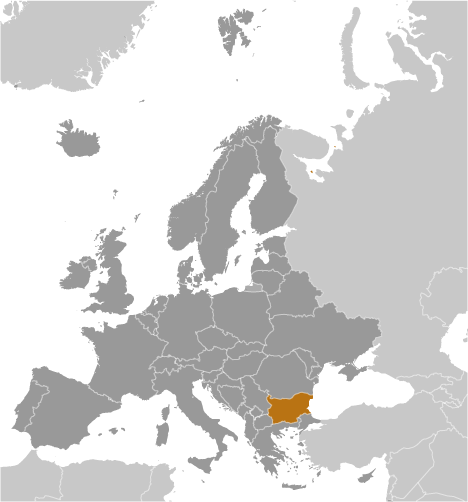
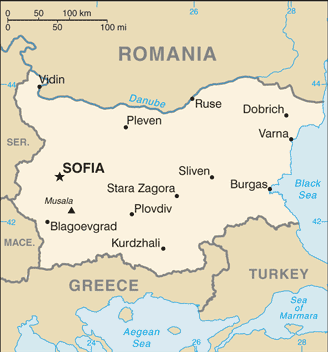
| Click map for larger view |
| Click flag for Country Report |



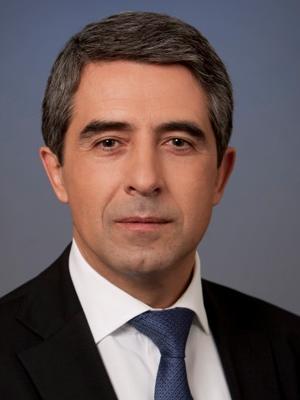
Rosen Plevneliev
President since 22 January 2012
President since 22 January 2012
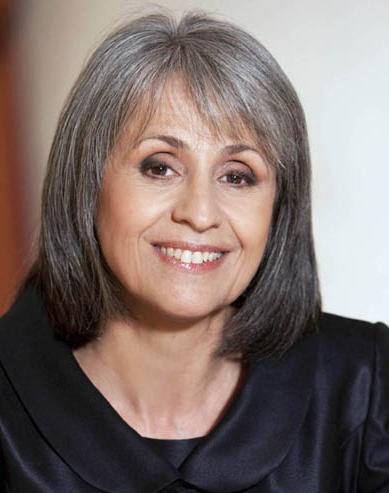
Margarita Popova
Vice President since 22 January 2012
Vice President since 22 January 2012
| TRAFFICKING IN PERSONS |
None reported.
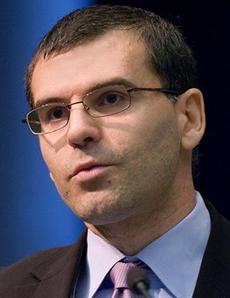
Simeon Djankov
Deputy Prime Minister since 27 July 2009
Deputy Prime Minister since 27 July 2009
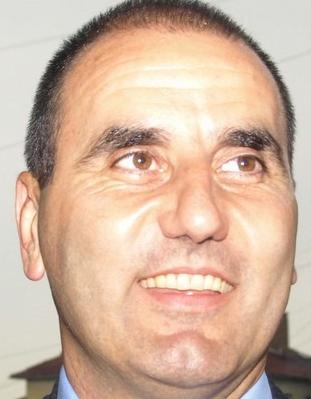
Tsvetan Tsvetanov
Deputy Prime Minister since 27 July 2009
Deputy Prime Minister since 27 July 2009