

| CHINA People's Republic of China Zhonghua Renmin Gongheguo Joined United Nations: 24 October 1945 Human Rights as assured by their constitution Click here Updated 22 March 2013 |

| CAPITAL |
| POPULATION |
| CHIEF OF STATE |
| SELECTION PROCESS |
Beijing
1,349,585,838 (July 2013 est.)
Li Keqiang
Premier since 14 March 2013
Premier since 14 March 2013
President and vice president elected by the National People's
Congress for a five-year term (eligible for a second term); elections
last held 14 March 2013
Next scheduled election: March 2018
Congress for a five-year term (eligible for a second term); elections
last held 14 March 2013
Next scheduled election: March 2018
HEAD OF GOVERNMENT
SELECTION PROCESS
Premier nominated by the president, confirmed by the National
People's Congress; elections last held 14 March 2013
Next scheduled election: March 2018
People's Congress; elections last held 14 March 2013
Next scheduled election: March 2018
| DECLARATION OF HUMAN RIGHTS |
| ETHNIC GROUPS |
Han Chinese 91.5%, Zhuang, Manchu, Hui, Miao, Uyghur, Tujia, Yi, Mongol, Tibetan, Buyi, Dong, Yao, Korean, and other
nationalities 8.5% (2000 census)
nationalities 8.5% (2000 census)
| RELIGIONS |
Daoist (Taoist), Buddhist, Christian 3%-4%, Muslim 1%-2%
note: officially atheist (2002 est.)
note: officially atheist (2002 est.)
| GOVERNMENT STRUCTURE |
Communist state with 123 provinces (sheng, singular and plural), 5 autonomous regions (zizhiqu, singular and plural), and 4
municipalities (shi, singular and plural); Legal system is based on civil law system; derived from Soviet and continental civil code
legal principles; legislature retains power to interpret statutes; constitution ambiguous on judicial review of legislation; has not
accepted compulsory ICJ jurisdiction
Executive: President and vice president elected by the National People's Congress for a five-year term (eligible for a second term);
elections last held 14 March 2013 (next to be held in mid-March 2018); premier nominated by the president, confirmed by the
National People's Congress
Legislative: Unicameral National People's Congress or Quanguo Renmin Daibiao Dahui (2,987 seats; members elected by
municipal, regional, and provincial people's congresses, and People's Liberation Army to serve five-year terms)
elections: last held 14 March 2013; date of next election March 2018
Judicial: Supreme People's Court (judges appointed by the National People's Congress); Local People's Courts (comprise higher,
intermediate, and basic courts); Special People's Courts (primarily military, maritime, railway transportation, and forestry courts)
municipalities (shi, singular and plural); Legal system is based on civil law system; derived from Soviet and continental civil code
legal principles; legislature retains power to interpret statutes; constitution ambiguous on judicial review of legislation; has not
accepted compulsory ICJ jurisdiction
Executive: President and vice president elected by the National People's Congress for a five-year term (eligible for a second term);
elections last held 14 March 2013 (next to be held in mid-March 2018); premier nominated by the president, confirmed by the
National People's Congress
Legislative: Unicameral National People's Congress or Quanguo Renmin Daibiao Dahui (2,987 seats; members elected by
municipal, regional, and provincial people's congresses, and People's Liberation Army to serve five-year terms)
elections: last held 14 March 2013; date of next election March 2018
Judicial: Supreme People's Court (judges appointed by the National People's Congress); Local People's Courts (comprise higher,
intermediate, and basic courts); Special People's Courts (primarily military, maritime, railway transportation, and forestry courts)
| LANGUAGES |
Standard Chinese or Mandarin (Putonghua, based on the Beijing dialect), Yue (Cantonese), Wu (Shanghainese), Minbei (Fuzhou),
Minnan (Hokkien-Taiwanese), Xiang, Gan, Hakka dialects, minority languages (see Ethnic groups entry)
note: Mongolian is official in Nei Mongol, Uighur is official in Xinjiang Uygur, and Tibetan is official in Xizang (Tibet)
Minnan (Hokkien-Taiwanese), Xiang, Gan, Hakka dialects, minority languages (see Ethnic groups entry)
note: Mongolian is official in Nei Mongol, Uighur is official in Xinjiang Uygur, and Tibetan is official in Xizang (Tibet)
| BRIEF HISTORY |
What is now China was inhabited by Homo erectus more than a million years ago. Two pottery pieces were unearthed at Liyuzui
Cave in Liuzhou, Guangxi Province dated 16,500 and 19,000 BC. The Neolithic age in China can be traced back as early as
10,000 B.C. Early evidence for proto-Chinese millet agriculture is carbon-dated to about 7,000 BC. The early history of China is
complicated by the lack of a written language during this period coupled with the existence of documents from later time periods
attempting to describe events that occurred several centuries before. The earliest comprehensive history of China, the Records of
the Grand Historian written by Chinese historiographer Sima Qian in the 2nd century BC, and the Bamboo Annals trace Chinese
history from about 2800 BC, with an account of the Three August Ones and the Five Emperors. These rulers were semi-mythical
sage-kings and moral exemplars. Tradition regards one of them, the Yellow Emperor, as the ancestor of the Han Chinese people.
The historian Sima Qian (145 BC-90 BC) and the account in the Bamboo Annals date the founding of the Xia Dynasty to 4,200
years ago, but this date has not been corroborated. The Shang and Zhou people had existed within the Xia Dynasty since the
beginning of Xia. The earliest discovered written record of China's past dates from the Shang Dynasty in perhaps the 13th century
BC, and takes the form of inscriptions of divination records on the bones or shells of animals—the so-called oracle bones. Chinese
historians living in later periods were accustomed to the notion of one dynasty succeeding another, but the actual political situation in
early China is known to have been much more complicated. By the end of the 2nd millennium BC, the Zhou Dynasty began to
emerge in the Yellow River valley, overrunning the Shang. The Zhou appeared to have begun their rule under a semi-feudal system.
In the 8th century BC, power became decentralized during the Spring and Autumn Period, named after the influential Spring and
Autumn Annals. In this period, local military leaders used by the Zhou began to assert their power and vie for hegemony. The
Spring and Autumn Period is marked by a falling apart of the central Zhou power. China now consists of hundreds of states, some
only as large as a village with a fort. After further political consolidation, seven prominent states remained by the end of 5th century
BC, and the years in which these few states battled each other is known as the Warring States Period. Historians often refer to the
period from Qin Dynasty to the end of Qing Dynasty as Imperial China. The Qin Dynasty is well known for beginning the Great
Wall of China, which was later augmented and enhanced during the Ming Dynasty. The Han Dynasty emerged in 206 BC. It was
the first dynasty to embrace the philosophy of Confucianism, which became the ideological underpinning of all regimes until the end
of imperial China. Under the Han Dynasty, China made great advances in many areas of the arts and sciences. Though the three
kingdoms were reunited temporarily in 278 by the Jin Dynasty, the contemporary non-Han Chinese ethnic groups controlled much
of the country in the early 4th century and provoked large-scale Han Chinese migrations to south of the Chang Jiang. Many ethnic
groups were involved, including ancestors of the Turks, Mongolians, and Tibetans. Most of these nomadic peoples had to some
extent been "Sinicized" long before their ascent to power. Signaled by the collapse of East Jin Dynasty in 420, China entered the era
of the Southern and Northern Dynasties. An increasing number of nomadic people in Northern China adopted Confucianism as
personal life guidance and state ideology while becoming gradually assimilated into the Han Chinese civilization. The Sui Dynasty,
which managed to reunite the country in 589 after nearly four centuries of political fragmentation, played a role more important than
its length of existence would suggest. On June 18, 618, Gaozu took the throne, and the Tang Dynasty was established, opening a
new age of prosperity and innovations in arts and technology. Buddhism, which had gradually been established in China from the
first century, became the predominant religion and was adopted by the imperial family and many of the common people. The period
of political disunity between the Tang and the Song, known as the Five Dynasties and Ten Kingdoms Period, lasted little more than
half a century, from 907 to 960. Jurchen tribes' Jin Dynasty, whose names are also rendered "Jin" in pinyin, was defeated by the
Mongols, who then proceeded to defeat the Southern Song in a long and bloody war, the first war where firearms played an
important role. During the era after the war, later called the Pax Mongolica, adventurous Westerners such as Marco Polo travelled
all the way to China and brought the first reports of its wonders to Europe. Throughout a short-lived Yuan Dynasty, there was
strong sentiment, among the populace, against the rule of the foreigners, which finally led to peasant revolts. The Mongolians were
pushed back to the steppes and replaced by the Ming Dynasty in 1368. The Qing Dynasty 1644–1911) was founded after the
defeat of the Ming, the last Han Chinese dynasty, by the Manchus . The Manchus were formerly known as the Jurchen and invaded
from the north in the late seventeenth century. An estimated 25 million people died during the Manchu conquest of Ming Dynasty
(1616-1644). Even though the Manchus started out as alien conquerors, they quickly adopted the Confucian norms of traditional
Chinese government. They eventually ruled in the manner of traditional native dynasties. The Manchus enforced a 'queue order'
forcing the Han Chinese to adopt the Manchu queue hairstyle and Manchu-style clothing. Britain's desire to continue its opium trade
with China collided with imperial edicts prohibiting the addictive drug, and the First Opium War erupted in 1840. Britain and other
major powers, including the United States, France, Russia, Germany, and Japan thereupon forcibly occupied "concessions" and
gained special commercial privileges. Hong Kong was ceded to Britain in 1842 under the Treaty of Nanjing. At the start of the 20th
century, the Boxer Rebellion threatened northern China. This was a conservative anti-imperialist movement that sought to return
China to old ways. Frustrated by the Qing court's resistance to reform and by China's weakness, young officials, military officers,
and students—inspired by the revolutionary ideas of Sun Yat-sen —began to advocate the overthrow of the Qing Dynasty and
creation of a republic. A revolutionary military uprising, the Wuchang Uprising, began on October 10, 1911 in Wuhan. The
provisional government of the Republic of China was formed in Nanjing on March 12, 1912 with Sun Yat-sen as President. In the
1920s, Sun Yat-Sen established a revolutionary base in south China, and set out to unite the fragmented nation. With Soviet
assistance, he entered into an alliance with the fledgling Communist Party of China After Sun's death from cancer in 1925, one of
his protégés, Chiang Kai-shek, seized control of the Kuomintang (Nationalist Party or KMT). During the Long March, the
communists reorganized under a new leader, Mao Zedong . The bitter struggle between the KMT and the CPC continued, openly
or clandestinely, through the 14-year long Japanese invasion (1931-1945), even though the two parties nominally formed a united
front to oppose the Japanese invaders in 1937, during the Sino-Japanese War (1937-1945) portion of World War II. The war
between the two parties resumed following the Japanese defeat in 1945. By 1949, the CPC occupied most of the country. Chiang
Kai-shek fled with the remnants of his government to Taiwan in 1949 and his Nationalist Party would control the island as well as a
few neighboring islands until democratic elections in the early 1990s. Since then, the political status of Taiwan has always been
under dispute. Since the 1990s, the Republic of China government that governs Taiwan along with associated islands as well as
some small islands off the coast of Fujian has been pushing to gain greater international recognition, while the People's Republic of
China vehemently opposes involvement by third parties, and insists that foreign relations not deviate from the One-China policy. In
1989, the death of former general secretary Hu Yaobang helped to spark the Tiananmen Square protests of 1989, during which
students and others campaigned for several months, speaking out against corruption and in favour of greater political reform,
including democratic rights and freedom of speech. However, they were eventually put down on 4 June when PLA troops and
vehicles entered and forcibly cleared the square, resulting in numerous casualties. This event was widely reported and brought
worldwide condemnation and sanctions against the government. The "Tank Man" incident in particular became famous. CPC
General Secretary and PRC President Jiang Zemin and PRC Premier Zhu Rongji, both former mayors of Shanghai, led post-
Tiananmen PRC in the 1990s. Under Jiang and Zhu's ten years of administration, the PRC's economic performance pulled an
estimated 150 million peasants out of poverty and sustained an average annual gross domestic product growth rate of 11.2% The
country formally joined the World Trade Organization in 2001. Although the PRC needs economic growth to spur its development,
the government has begun to worry that rapid economic growth has negatively impacted the country's resources and environment.
Another concern is that certain sectors of society are not sufficiently benefiting from the PRC's economic development; one example
of this is the wide gap between urban and rural areas. As a result, under current CPC General Secretary and President Hu Jintao
and Premier Wen Jiabao, the PRC has initiated policies to address these issues of equitable distribution of resources, but the
outcome remains to be seen. More than 40 million farmers have been displaced from their land, usually for economic development,
contributing to 87,000 demonstrations and riots across China in 2005. For much of the PRC's population, living standards have
seen extremely large improvements and freedom continues to expand, but political controls remain tight and rural areas poor. In
August of 2005 China and Russia took part in joint military exercises to "strengthen friendship." In June 2006, due to massive
commercial industrial growth, China surpasses the United States in carbon dioxide production primarily due to concrete production.
In March 2008, violent ethnic protests escalate throughout Tibet leading to severe political crackdowns. In May a massive
earthquake hits Sichuan province killing nearly 70,000 people and leading to protests due to allegations of shoddy construction. In
September over 13,000 infants are made sick because of tainted milk. Premier Wen Jiaobao took the unusual step of taking
responsibility for the milk scandal that overall may have affected 50,000 children. In July 2009, ethnic violence in Xinjiang province
led to the death of over 200 people and over 1700 injuries. In August 2009, China officially surpasses the United States as the
largest producer of household garbage and in November became the world's largest auto market. In January 2010 Google
announces it will stop self-censoring its Internet search engine in China. External Link The Wall Street Journal and in March Google
stops its Chinese Internet search engine and re-routes mainland Chinese users to its Hong Kong site. External Link The Wall Street
Journal, In April an Earthquake of magnitude 7.1 on Richter scale hits southern Qinghai province May: China joins supercomputing
elite. In May China reiterates ban of evidence obtained under torture. External Link BBC-News In July: Chongqing's director of
the municipal Judical Bureau, Wen Qiang, is executed for corruption. In October, jailed Chinese dissident Liu Xiaobo wins 2010
Nobel Peace Price and Xi Jinping is appointed a vice chairman of the party's Central Military Commission In Novrmber China
starts 2010 population census. In January 2011 China unveils its new J-20 stealth fighter. Violent protests in southern fishing village
of Wukan against land seizures by officials. In February China overtakes Japan as world's second-biggest economy. In April:
Chinese artist Ai Weiwei is arrested for "economic crimes". In July Coca-Cola profits jump on sales to China. In January of 2012,
China's urban population outnumbers its rural population. On 15 November, 2012 China unveiled the elite group of leaders who
will set the agenda for the country for the next decade, the culmination of months of secretive bargaining and a carefully
choreographed performance of political pomp. Most were elected to senior positions on the election held of the Supreme People's
Assembly on 14 March 2013, most notably Xi Jinping who was elevated to President from Vice President and Li Keqiang who
was elected Premier.
Source: Wikipedia: History of China
Cave in Liuzhou, Guangxi Province dated 16,500 and 19,000 BC. The Neolithic age in China can be traced back as early as
10,000 B.C. Early evidence for proto-Chinese millet agriculture is carbon-dated to about 7,000 BC. The early history of China is
complicated by the lack of a written language during this period coupled with the existence of documents from later time periods
attempting to describe events that occurred several centuries before. The earliest comprehensive history of China, the Records of
the Grand Historian written by Chinese historiographer Sima Qian in the 2nd century BC, and the Bamboo Annals trace Chinese
history from about 2800 BC, with an account of the Three August Ones and the Five Emperors. These rulers were semi-mythical
sage-kings and moral exemplars. Tradition regards one of them, the Yellow Emperor, as the ancestor of the Han Chinese people.
The historian Sima Qian (145 BC-90 BC) and the account in the Bamboo Annals date the founding of the Xia Dynasty to 4,200
years ago, but this date has not been corroborated. The Shang and Zhou people had existed within the Xia Dynasty since the
beginning of Xia. The earliest discovered written record of China's past dates from the Shang Dynasty in perhaps the 13th century
BC, and takes the form of inscriptions of divination records on the bones or shells of animals—the so-called oracle bones. Chinese
historians living in later periods were accustomed to the notion of one dynasty succeeding another, but the actual political situation in
early China is known to have been much more complicated. By the end of the 2nd millennium BC, the Zhou Dynasty began to
emerge in the Yellow River valley, overrunning the Shang. The Zhou appeared to have begun their rule under a semi-feudal system.
In the 8th century BC, power became decentralized during the Spring and Autumn Period, named after the influential Spring and
Autumn Annals. In this period, local military leaders used by the Zhou began to assert their power and vie for hegemony. The
Spring and Autumn Period is marked by a falling apart of the central Zhou power. China now consists of hundreds of states, some
only as large as a village with a fort. After further political consolidation, seven prominent states remained by the end of 5th century
BC, and the years in which these few states battled each other is known as the Warring States Period. Historians often refer to the
period from Qin Dynasty to the end of Qing Dynasty as Imperial China. The Qin Dynasty is well known for beginning the Great
Wall of China, which was later augmented and enhanced during the Ming Dynasty. The Han Dynasty emerged in 206 BC. It was
the first dynasty to embrace the philosophy of Confucianism, which became the ideological underpinning of all regimes until the end
of imperial China. Under the Han Dynasty, China made great advances in many areas of the arts and sciences. Though the three
kingdoms were reunited temporarily in 278 by the Jin Dynasty, the contemporary non-Han Chinese ethnic groups controlled much
of the country in the early 4th century and provoked large-scale Han Chinese migrations to south of the Chang Jiang. Many ethnic
groups were involved, including ancestors of the Turks, Mongolians, and Tibetans. Most of these nomadic peoples had to some
extent been "Sinicized" long before their ascent to power. Signaled by the collapse of East Jin Dynasty in 420, China entered the era
of the Southern and Northern Dynasties. An increasing number of nomadic people in Northern China adopted Confucianism as
personal life guidance and state ideology while becoming gradually assimilated into the Han Chinese civilization. The Sui Dynasty,
which managed to reunite the country in 589 after nearly four centuries of political fragmentation, played a role more important than
its length of existence would suggest. On June 18, 618, Gaozu took the throne, and the Tang Dynasty was established, opening a
new age of prosperity and innovations in arts and technology. Buddhism, which had gradually been established in China from the
first century, became the predominant religion and was adopted by the imperial family and many of the common people. The period
of political disunity between the Tang and the Song, known as the Five Dynasties and Ten Kingdoms Period, lasted little more than
half a century, from 907 to 960. Jurchen tribes' Jin Dynasty, whose names are also rendered "Jin" in pinyin, was defeated by the
Mongols, who then proceeded to defeat the Southern Song in a long and bloody war, the first war where firearms played an
important role. During the era after the war, later called the Pax Mongolica, adventurous Westerners such as Marco Polo travelled
all the way to China and brought the first reports of its wonders to Europe. Throughout a short-lived Yuan Dynasty, there was
strong sentiment, among the populace, against the rule of the foreigners, which finally led to peasant revolts. The Mongolians were
pushed back to the steppes and replaced by the Ming Dynasty in 1368. The Qing Dynasty 1644–1911) was founded after the
defeat of the Ming, the last Han Chinese dynasty, by the Manchus . The Manchus were formerly known as the Jurchen and invaded
from the north in the late seventeenth century. An estimated 25 million people died during the Manchu conquest of Ming Dynasty
(1616-1644). Even though the Manchus started out as alien conquerors, they quickly adopted the Confucian norms of traditional
Chinese government. They eventually ruled in the manner of traditional native dynasties. The Manchus enforced a 'queue order'
forcing the Han Chinese to adopt the Manchu queue hairstyle and Manchu-style clothing. Britain's desire to continue its opium trade
with China collided with imperial edicts prohibiting the addictive drug, and the First Opium War erupted in 1840. Britain and other
major powers, including the United States, France, Russia, Germany, and Japan thereupon forcibly occupied "concessions" and
gained special commercial privileges. Hong Kong was ceded to Britain in 1842 under the Treaty of Nanjing. At the start of the 20th
century, the Boxer Rebellion threatened northern China. This was a conservative anti-imperialist movement that sought to return
China to old ways. Frustrated by the Qing court's resistance to reform and by China's weakness, young officials, military officers,
and students—inspired by the revolutionary ideas of Sun Yat-sen —began to advocate the overthrow of the Qing Dynasty and
creation of a republic. A revolutionary military uprising, the Wuchang Uprising, began on October 10, 1911 in Wuhan. The
provisional government of the Republic of China was formed in Nanjing on March 12, 1912 with Sun Yat-sen as President. In the
1920s, Sun Yat-Sen established a revolutionary base in south China, and set out to unite the fragmented nation. With Soviet
assistance, he entered into an alliance with the fledgling Communist Party of China After Sun's death from cancer in 1925, one of
his protégés, Chiang Kai-shek, seized control of the Kuomintang (Nationalist Party or KMT). During the Long March, the
communists reorganized under a new leader, Mao Zedong . The bitter struggle between the KMT and the CPC continued, openly
or clandestinely, through the 14-year long Japanese invasion (1931-1945), even though the two parties nominally formed a united
front to oppose the Japanese invaders in 1937, during the Sino-Japanese War (1937-1945) portion of World War II. The war
between the two parties resumed following the Japanese defeat in 1945. By 1949, the CPC occupied most of the country. Chiang
Kai-shek fled with the remnants of his government to Taiwan in 1949 and his Nationalist Party would control the island as well as a
few neighboring islands until democratic elections in the early 1990s. Since then, the political status of Taiwan has always been
under dispute. Since the 1990s, the Republic of China government that governs Taiwan along with associated islands as well as
some small islands off the coast of Fujian has been pushing to gain greater international recognition, while the People's Republic of
China vehemently opposes involvement by third parties, and insists that foreign relations not deviate from the One-China policy. In
1989, the death of former general secretary Hu Yaobang helped to spark the Tiananmen Square protests of 1989, during which
students and others campaigned for several months, speaking out against corruption and in favour of greater political reform,
including democratic rights and freedom of speech. However, they were eventually put down on 4 June when PLA troops and
vehicles entered and forcibly cleared the square, resulting in numerous casualties. This event was widely reported and brought
worldwide condemnation and sanctions against the government. The "Tank Man" incident in particular became famous. CPC
General Secretary and PRC President Jiang Zemin and PRC Premier Zhu Rongji, both former mayors of Shanghai, led post-
Tiananmen PRC in the 1990s. Under Jiang and Zhu's ten years of administration, the PRC's economic performance pulled an
estimated 150 million peasants out of poverty and sustained an average annual gross domestic product growth rate of 11.2% The
country formally joined the World Trade Organization in 2001. Although the PRC needs economic growth to spur its development,
the government has begun to worry that rapid economic growth has negatively impacted the country's resources and environment.
Another concern is that certain sectors of society are not sufficiently benefiting from the PRC's economic development; one example
of this is the wide gap between urban and rural areas. As a result, under current CPC General Secretary and President Hu Jintao
and Premier Wen Jiabao, the PRC has initiated policies to address these issues of equitable distribution of resources, but the
outcome remains to be seen. More than 40 million farmers have been displaced from their land, usually for economic development,
contributing to 87,000 demonstrations and riots across China in 2005. For much of the PRC's population, living standards have
seen extremely large improvements and freedom continues to expand, but political controls remain tight and rural areas poor. In
August of 2005 China and Russia took part in joint military exercises to "strengthen friendship." In June 2006, due to massive
commercial industrial growth, China surpasses the United States in carbon dioxide production primarily due to concrete production.
In March 2008, violent ethnic protests escalate throughout Tibet leading to severe political crackdowns. In May a massive
earthquake hits Sichuan province killing nearly 70,000 people and leading to protests due to allegations of shoddy construction. In
September over 13,000 infants are made sick because of tainted milk. Premier Wen Jiaobao took the unusual step of taking
responsibility for the milk scandal that overall may have affected 50,000 children. In July 2009, ethnic violence in Xinjiang province
led to the death of over 200 people and over 1700 injuries. In August 2009, China officially surpasses the United States as the
largest producer of household garbage and in November became the world's largest auto market. In January 2010 Google
announces it will stop self-censoring its Internet search engine in China. External Link The Wall Street Journal and in March Google
stops its Chinese Internet search engine and re-routes mainland Chinese users to its Hong Kong site. External Link The Wall Street
Journal, In April an Earthquake of magnitude 7.1 on Richter scale hits southern Qinghai province May: China joins supercomputing
elite. In May China reiterates ban of evidence obtained under torture. External Link BBC-News In July: Chongqing's director of
the municipal Judical Bureau, Wen Qiang, is executed for corruption. In October, jailed Chinese dissident Liu Xiaobo wins 2010
Nobel Peace Price and Xi Jinping is appointed a vice chairman of the party's Central Military Commission In Novrmber China
starts 2010 population census. In January 2011 China unveils its new J-20 stealth fighter. Violent protests in southern fishing village
of Wukan against land seizures by officials. In February China overtakes Japan as world's second-biggest economy. In April:
Chinese artist Ai Weiwei is arrested for "economic crimes". In July Coca-Cola profits jump on sales to China. In January of 2012,
China's urban population outnumbers its rural population. On 15 November, 2012 China unveiled the elite group of leaders who
will set the agenda for the country for the next decade, the culmination of months of secretive bargaining and a carefully
choreographed performance of political pomp. Most were elected to senior positions on the election held of the Supreme People's
Assembly on 14 March 2013, most notably Xi Jinping who was elevated to President from Vice President and Li Keqiang who
was elected Premier.
Source: Wikipedia: History of China
| ECONOMIC OVERVIEW |
Since the late 1970s China has moved from a closed, centrally planned system to a more market-oriented one that plays a major
global role - in 2010 China became the world's largest exporter. Reforms began with the phasing out of collectivized agriculture,
and expanded to include the gradual liberalization of prices, fiscal decentralization, increased autonomy for state enterprises,
creation of a diversified banking system, development of stock markets, rapid growth of the private sector, and opening to foreign
trade and investment. China has implemented reforms in a gradualist fashion. In recent years, China has renewed its support for
state-owned enterprises in sectors it considers important to "economic security," explicitly looking to foster globally competitive
national champions. After keeping its currency tightly linked to the US dollar for years, in July 2005 China revalued its currency by
2.1% against the US dollar and moved to an exchange rate system that references a basket of currencies. From mid 2005 to late
2008 cumulative appreciation of the renminbi against the US dollar was more than 20%, but the exchange rate remained virtually
pegged to the dollar from the onset of the global financial crisis until June 2010, when Beijing allowed resumption of a gradual
appreciation. The restructuring of the economy and resulting efficiency gains have contributed to a more than tenfold increase in
GDP since 1978. Measured on a purchasing power parity (PPP) basis that adjusts for price differences, China in 2012 stood as the
second-largest economy in the world after the US, having surpassed Japan in 2001. The dollar values of China's agricultural and
industrial output each exceed those of the US; China is second to the US in the value of services it produces. Still, per capita
income is below the world average. The Chinese government faces numerous economic challenges, including: (a) reducing its high
domestic savings rate and correspondingly low domestic demand; (b) sustaining adequate job growth for tens of millions of migrants
and new entrants to the work force; (c) reducing corruption and other economic crimes; and (d) containing environmental damage
and social strife related to the economy's rapid transformation. Economic development has progressed further in coastal provinces
than in the interior, and by 2011 more than 250 million migrant workers and their dependents had relocated to urban areas to find
work. One consequence of population control policy is that China is now one of the most rapidly aging countries in the world.
Deterioration in the environment - notably air pollution, soil erosion, and the steady fall of the water table, especially in the North - is
another long-term problem. China continues to lose arable land because of erosion and economic development. The Chinese
government is seeking to add energy production capacity from sources other than coal and oil, focusing on nuclear and alternative
energy development. In 2010-11, China faced high inflation resulting largely from its credit-fueled stimulus program. Some tightening
measures appear to have controlled inflation, but GDP growth consequently slowed to under 8% for 2012. An economic slowdown
in Europe contributed to China's, and is expected to further drag Chinese growth in 2013. Debt overhang from the stimulus
program, particularly among local governments, and a property price bubble challenge policy makers currently. The government's
12th Five-Year Plan, adopted in March 2011, emphasizes continued economic reforms and the need to increase domestic
consumption in order to make the economy less dependent on exports in the future. However, China has made only marginal
progress toward these rebalancing goals.
Source: CIA World Factbook (select China)
global role - in 2010 China became the world's largest exporter. Reforms began with the phasing out of collectivized agriculture,
and expanded to include the gradual liberalization of prices, fiscal decentralization, increased autonomy for state enterprises,
creation of a diversified banking system, development of stock markets, rapid growth of the private sector, and opening to foreign
trade and investment. China has implemented reforms in a gradualist fashion. In recent years, China has renewed its support for
state-owned enterprises in sectors it considers important to "economic security," explicitly looking to foster globally competitive
national champions. After keeping its currency tightly linked to the US dollar for years, in July 2005 China revalued its currency by
2.1% against the US dollar and moved to an exchange rate system that references a basket of currencies. From mid 2005 to late
2008 cumulative appreciation of the renminbi against the US dollar was more than 20%, but the exchange rate remained virtually
pegged to the dollar from the onset of the global financial crisis until June 2010, when Beijing allowed resumption of a gradual
appreciation. The restructuring of the economy and resulting efficiency gains have contributed to a more than tenfold increase in
GDP since 1978. Measured on a purchasing power parity (PPP) basis that adjusts for price differences, China in 2012 stood as the
second-largest economy in the world after the US, having surpassed Japan in 2001. The dollar values of China's agricultural and
industrial output each exceed those of the US; China is second to the US in the value of services it produces. Still, per capita
income is below the world average. The Chinese government faces numerous economic challenges, including: (a) reducing its high
domestic savings rate and correspondingly low domestic demand; (b) sustaining adequate job growth for tens of millions of migrants
and new entrants to the work force; (c) reducing corruption and other economic crimes; and (d) containing environmental damage
and social strife related to the economy's rapid transformation. Economic development has progressed further in coastal provinces
than in the interior, and by 2011 more than 250 million migrant workers and their dependents had relocated to urban areas to find
work. One consequence of population control policy is that China is now one of the most rapidly aging countries in the world.
Deterioration in the environment - notably air pollution, soil erosion, and the steady fall of the water table, especially in the North - is
another long-term problem. China continues to lose arable land because of erosion and economic development. The Chinese
government is seeking to add energy production capacity from sources other than coal and oil, focusing on nuclear and alternative
energy development. In 2010-11, China faced high inflation resulting largely from its credit-fueled stimulus program. Some tightening
measures appear to have controlled inflation, but GDP growth consequently slowed to under 8% for 2012. An economic slowdown
in Europe contributed to China's, and is expected to further drag Chinese growth in 2013. Debt overhang from the stimulus
program, particularly among local governments, and a property price bubble challenge policy makers currently. The government's
12th Five-Year Plan, adopted in March 2011, emphasizes continued economic reforms and the need to increase domestic
consumption in order to make the economy less dependent on exports in the future. However, China has made only marginal
progress toward these rebalancing goals.
Source: CIA World Factbook (select China)
| POLITICAL CLIMATE |
Central government leaders must increasingly build consensus for new policies among party members, local and regional leaders,
influential non-party members, and the population at large. However, control is often maintained over the larger group through
control of information. The Chinese Communist Party considers China to be in the initial stages of socialism. Many Chinese and
foreign observers see the PRC as in transition from a system of public ownership to one in which private ownership plays an
increasingly important role. Privatization of housing and increasing freedom to make choices about education and employment
severely weakened the work unit system that was once the basic cell of Communist Party control over society. China's complex
political, ethnic and ideological mosaic, much less uniform beneath the surface than in the idealized story of the Propaganda
Department of the Central Committee of the Communist Party of China, resist simple categorization.
As the social, cultural and political as well as economic consequences of market reform becoming increasingly manifest, tensions
between the old -- the way of the comrade -- and the new -- the way of the citizen -- are sharpening. Some Chinese scholars such
as Zhou Tianyong, the vice director of research of the Central Party School, argue that gradual political reform as well as repression
of those pushing for overly rapid change over the next thirty years will be essential if China is to avoid an overly turbulent transition
to a middle class dominated polity.
On 15 November, 2012 China unveiled the elite group of leaders who will set the agenda for the country for the next decade, the
culmination of months of secretive bargaining and a carefully choreographed performance of political pomp. Most were elected to
senior positions on the election held of the Supreme People's Assembly on 14 March 2013, most notably Xi Jinping who was
elevated to President from Vice President and Li Keqiang who was elected Premier.
Source: Wikipedia: Politics of People's Republic of China
influential non-party members, and the population at large. However, control is often maintained over the larger group through
control of information. The Chinese Communist Party considers China to be in the initial stages of socialism. Many Chinese and
foreign observers see the PRC as in transition from a system of public ownership to one in which private ownership plays an
increasingly important role. Privatization of housing and increasing freedom to make choices about education and employment
severely weakened the work unit system that was once the basic cell of Communist Party control over society. China's complex
political, ethnic and ideological mosaic, much less uniform beneath the surface than in the idealized story of the Propaganda
Department of the Central Committee of the Communist Party of China, resist simple categorization.
As the social, cultural and political as well as economic consequences of market reform becoming increasingly manifest, tensions
between the old -- the way of the comrade -- and the new -- the way of the citizen -- are sharpening. Some Chinese scholars such
as Zhou Tianyong, the vice director of research of the Central Party School, argue that gradual political reform as well as repression
of those pushing for overly rapid change over the next thirty years will be essential if China is to avoid an overly turbulent transition
to a middle class dominated polity.
On 15 November, 2012 China unveiled the elite group of leaders who will set the agenda for the country for the next decade, the
culmination of months of secretive bargaining and a carefully choreographed performance of political pomp. Most were elected to
senior positions on the election held of the Supreme People's Assembly on 14 March 2013, most notably Xi Jinping who was
elevated to President from Vice President and Li Keqiang who was elected Premier.
Source: Wikipedia: Politics of People's Republic of China
| INTERNATIONAL DISPUTES |
Continuing talks and confidence-building measures work toward reducing tensions over Kashmir that nonetheless remains
militarized with portions under the de facto administration of China (Aksai Chin), India (Jammu and Kashmir), and Pakistan (Azad
Kashmir and Northern Areas); India does not recognize Pakistan's ceding historic Kashmir lands to China in 1964; China and India
continue their security and foreign policy dialogue started in 2005 related to the dispute over most of their rugged, militarized
boundary, regional nuclear proliferation, and other matters; China claims most of India's Arunachal Pradesh to the base of the
Himalayas; lacking any treaty describing the boundary, Bhutan and China continue negotiations to establish a common boundary
alignment to resolve territorial disputes arising from substantial cartographic discrepancies, the largest of which lie in Bhutan's
northwest and along the Chumbi salient; Burmese forces attempting to dig in to the largely autonomous Shan State to rout local
militias tied to the drug trade, prompts local residents to periodically flee into neighboring Yunnan Province in China; Chinese maps
show an international boundary symbol off the coasts of the littoral states of the South China Seas, where China has interrupted
Vietnamese hydrocarbon exploration; China asserts sovereignty over Scarborough Reef along with the Philippines and Taiwan, and
over the Spratly Islands together with Malaysia, the Philippines, Taiwan, Vietnam, and Brunei; the 2002 Declaration on the Conduct
of Parties in the South China Sea eased tensions in the Spratlys but is not the legally binding code of conduct sought by some
parties; Vietnam and China continue to expand construction of facilities in the Spratlys and in March 2005, the national oil
companies of China, the Philippines, and Vietnam signed a joint accord on marine seismic activities in the Spratly Islands; China
occupies some of the Paracel Islands also claimed by Vietnam and Taiwan; China and Taiwan continue to reject both Japan's
claims to the uninhabited islands of Senkaku-shoto (Diaoyu Tai) and Japan's unilaterally declared equidistance line in the East China
Sea, the site of intensive hydrocarbon exploration and exploitation; certain islands in the Yalu and Tumen rivers are in dispute with
North Korea; North Korea and China seek to stem illegal migration to China by North Koreans, fleeing privations and oppression,
by building a fence along portions of the border and imprisoning North Koreans deported by China; China and Russia have
demarcated the once disputed islands at the Amur and Ussuri confluence and in the Argun River in accordance with their 2004
Agreement; China and Tajikistan have begun demarcating the revised boundary agreed to in the delimitation of 2002; the
decade-long demarcation of the China-Vietnam land boundary was completed in 2009; citing environmental, cultural, and social
concerns, China has reconsidered construction of 13 dams on the Salween River, but energy-starved Burma, with backing from
Thailand, remains intent on building five hydro-electric dams downstream despite regional and international protests; Chinese and
Hong Kong authorities met in March 2008 to resolve ownership and use of lands recovered in Shenzhen River channelization,
including 96-hectare Lok Ma Chau Loop; Hong Kong developing plans to reduce 2,000 out of 2,800 hectares of its restricted
Closed Area by 2010
militarized with portions under the de facto administration of China (Aksai Chin), India (Jammu and Kashmir), and Pakistan (Azad
Kashmir and Northern Areas); India does not recognize Pakistan's ceding historic Kashmir lands to China in 1964; China and India
continue their security and foreign policy dialogue started in 2005 related to the dispute over most of their rugged, militarized
boundary, regional nuclear proliferation, and other matters; China claims most of India's Arunachal Pradesh to the base of the
Himalayas; lacking any treaty describing the boundary, Bhutan and China continue negotiations to establish a common boundary
alignment to resolve territorial disputes arising from substantial cartographic discrepancies, the largest of which lie in Bhutan's
northwest and along the Chumbi salient; Burmese forces attempting to dig in to the largely autonomous Shan State to rout local
militias tied to the drug trade, prompts local residents to periodically flee into neighboring Yunnan Province in China; Chinese maps
show an international boundary symbol off the coasts of the littoral states of the South China Seas, where China has interrupted
Vietnamese hydrocarbon exploration; China asserts sovereignty over Scarborough Reef along with the Philippines and Taiwan, and
over the Spratly Islands together with Malaysia, the Philippines, Taiwan, Vietnam, and Brunei; the 2002 Declaration on the Conduct
of Parties in the South China Sea eased tensions in the Spratlys but is not the legally binding code of conduct sought by some
parties; Vietnam and China continue to expand construction of facilities in the Spratlys and in March 2005, the national oil
companies of China, the Philippines, and Vietnam signed a joint accord on marine seismic activities in the Spratly Islands; China
occupies some of the Paracel Islands also claimed by Vietnam and Taiwan; China and Taiwan continue to reject both Japan's
claims to the uninhabited islands of Senkaku-shoto (Diaoyu Tai) and Japan's unilaterally declared equidistance line in the East China
Sea, the site of intensive hydrocarbon exploration and exploitation; certain islands in the Yalu and Tumen rivers are in dispute with
North Korea; North Korea and China seek to stem illegal migration to China by North Koreans, fleeing privations and oppression,
by building a fence along portions of the border and imprisoning North Koreans deported by China; China and Russia have
demarcated the once disputed islands at the Amur and Ussuri confluence and in the Argun River in accordance with their 2004
Agreement; China and Tajikistan have begun demarcating the revised boundary agreed to in the delimitation of 2002; the
decade-long demarcation of the China-Vietnam land boundary was completed in 2009; citing environmental, cultural, and social
concerns, China has reconsidered construction of 13 dams on the Salween River, but energy-starved Burma, with backing from
Thailand, remains intent on building five hydro-electric dams downstream despite regional and international protests; Chinese and
Hong Kong authorities met in March 2008 to resolve ownership and use of lands recovered in Shenzhen River channelization,
including 96-hectare Lok Ma Chau Loop; Hong Kong developing plans to reduce 2,000 out of 2,800 hectares of its restricted
Closed Area by 2010


| REFUGEES AND INTERNALLY DISPLACED PERSONS (IDPS) |
Refugees (country of origin): 300,897 (Vietnam); estimated 30,000-50,000 (North Korea)
IDPs: 90,000 (2010)
IDPs: 90,000 (2010)
| ILLICIT DRUGS |
Major transshipment point for heroin produced in the Golden Triangle region of Southeast Asia; growing domestic consumption
of synthetic drugs, and heroin from Southeast and Southwest Asia; source country for methamphetamine and heroin chemical
precursors, despite new regulations on its large chemical industry (2008)
of synthetic drugs, and heroin from Southeast and Southwest Asia; source country for methamphetamine and heroin chemical
precursors, despite new regulations on its large chemical industry (2008)
| HUMAN RIGHTS STATEMENTS, ANALYSIS AND CRITIQUES |
2011 Human Rights Report: China (includes Tibet, Hong Kong, and Macau)
Bureau of Democracy, Human Rights, and Labor
2011 Country Reports on Human Rights Practices
May 25, 2012
The People’s Republic of China (PRC) is an authoritarian state in which the Chinese Communist Party (CCP) constitutionally is the
paramount authority. CCP members hold almost all top government, police, and military positions. Ultimate authority rests with the 25-
member Political Bureau (Politburo) of the CCP and its nine-member Standing Committee. Hu Jintao holds the three most powerful
positions as CCP general secretary, president, and chairman of the Central Military Commission. Civilian authorities generally maintained
effective control of the security forces.
Deterioration in key aspects of the country’s human rights situation continued. Repression and coercion, particularly against
organizations and individuals involved in rights advocacy and public interest issues, were routine. Individuals and groups seen as
politically sensitive by the authorities continued to face tight restrictions on their freedom to assemble, practice religion, and travel.
Efforts to silence political activists and public interest lawyers were stepped up, and, increasingly, authorities resorted to extralegal
measures including enforced disappearance, “soft detention,” and strict house arrest, including house arrest of family members, to
prevent the public voicing of independent opinions. Public interest law firms that took on sensitive cases continued to face harassment,
disbarment of legal staff, and closure. The authorities increased attempts to limit freedom of speech and to control the press, the
Internet, and Internet access. The authorities continued severe cultural and religious repression of ethnic minorities in Xinjiang Uighur
Autonomous Region (XUAR) and Tibetan areas. Abuses peaked around high-profile events, such as the visit of foreign officials,
sensitive anniversaries, and in response to Internet-based calls for “Jasmine Revolution” protests.
As in previous years, citizens did not have the right to change their government. Other human rights problems during the year included:
extrajudicial killings, including executions without due process; enforced disappearance and incommunicado detention, including
prolonged illegal detentions at unofficial holding facilities known as “black jails”; torture and coerced confessions of prisoners; detention
and harassment of lawyers, journalists, writers, dissidents, petitioners, and others who sought to peacefully exercise their rights under
the law; a lack of due process in judicial proceedings; political control of courts and judges; closed trials; the use of administrative
detention; restrictions on freedom to assemble, practice religion, and travel; failure to protect refugees and asylum seekers; pressure on
other countries to forcibly return citizens to China; intense scrutiny of and restrictions on nongovernmental organizations (NGOs);
discrimination against women, minorities, and persons with disabilities; a coercive birth limitation policy that in some cases resulted in
forced abortion or forced sterilization; trafficking in persons; prohibitions on independent unions and a lack of protection for workers’
right to strike; and the use of forced labor, including prison labor. Corruption remained widespread.
The authorities prosecuted a number of abuses of power, particularly with regard to corruption. However, the internal disciplinary
procedures of the CCP were opaque, and it was not clear whether human rights and administrative abuses were consistently punished.
Click here to read more »
Bureau of Democracy, Human Rights, and Labor
2011 Country Reports on Human Rights Practices
May 25, 2012
The People’s Republic of China (PRC) is an authoritarian state in which the Chinese Communist Party (CCP) constitutionally is the
paramount authority. CCP members hold almost all top government, police, and military positions. Ultimate authority rests with the 25-
member Political Bureau (Politburo) of the CCP and its nine-member Standing Committee. Hu Jintao holds the three most powerful
positions as CCP general secretary, president, and chairman of the Central Military Commission. Civilian authorities generally maintained
effective control of the security forces.
Deterioration in key aspects of the country’s human rights situation continued. Repression and coercion, particularly against
organizations and individuals involved in rights advocacy and public interest issues, were routine. Individuals and groups seen as
politically sensitive by the authorities continued to face tight restrictions on their freedom to assemble, practice religion, and travel.
Efforts to silence political activists and public interest lawyers were stepped up, and, increasingly, authorities resorted to extralegal
measures including enforced disappearance, “soft detention,” and strict house arrest, including house arrest of family members, to
prevent the public voicing of independent opinions. Public interest law firms that took on sensitive cases continued to face harassment,
disbarment of legal staff, and closure. The authorities increased attempts to limit freedom of speech and to control the press, the
Internet, and Internet access. The authorities continued severe cultural and religious repression of ethnic minorities in Xinjiang Uighur
Autonomous Region (XUAR) and Tibetan areas. Abuses peaked around high-profile events, such as the visit of foreign officials,
sensitive anniversaries, and in response to Internet-based calls for “Jasmine Revolution” protests.
As in previous years, citizens did not have the right to change their government. Other human rights problems during the year included:
extrajudicial killings, including executions without due process; enforced disappearance and incommunicado detention, including
prolonged illegal detentions at unofficial holding facilities known as “black jails”; torture and coerced confessions of prisoners; detention
and harassment of lawyers, journalists, writers, dissidents, petitioners, and others who sought to peacefully exercise their rights under
the law; a lack of due process in judicial proceedings; political control of courts and judges; closed trials; the use of administrative
detention; restrictions on freedom to assemble, practice religion, and travel; failure to protect refugees and asylum seekers; pressure on
other countries to forcibly return citizens to China; intense scrutiny of and restrictions on nongovernmental organizations (NGOs);
discrimination against women, minorities, and persons with disabilities; a coercive birth limitation policy that in some cases resulted in
forced abortion or forced sterilization; trafficking in persons; prohibitions on independent unions and a lack of protection for workers’
right to strike; and the use of forced labor, including prison labor. Corruption remained widespread.
The authorities prosecuted a number of abuses of power, particularly with regard to corruption. However, the internal disciplinary
procedures of the CCP were opaque, and it was not clear whether human rights and administrative abuses were consistently punished.
Click here to read more »
11 October 2012
Committee on the Rights of Persons with Disabilities
Concluding observations on the initial report of China, adopted by the Committee at its eighth session
(17–28 September 2012)
I. Introduction
1. The Committee considered the initial report of China (CRPD/C/CHN/1), including Hong Kong, China (CRPD/C/CHN-HKG/1),
and Macao, China (CRPD/C/CHN-MAC/1), at its 77th and 78th meetings, held on 18 and 19 September 2012, and adopted the following
concluding observations at its 91st meeting, held on 27 September 2012.
2. The Committee welcomes the initial report of China, including Hong Kong, China, and Macao, China, which was prepared in
accordance with the Committee’s reporting guidelines (CRPD/C/2/3). It also appreciates the written replies to the list of issues raised by
the Committee (CRPD/C/CHN/Q/1/Add.1).
II. Positive aspects
5. The Committee congratulates the State party on its achievements in terms of accessibility, such as the accessibility stipulations in
the Law on the Protection of Persons with Disabilities, the Implementation Plan for Barrier-Free Construction in the Eleventh Five-Year
Plan (2006-2010) or the standards facilitating the use of public facilities for persons with disabilities.
6. The Committee supports the legal protection of workers with disabilities from exploitation, violence and abuse, such as the
relevant regulations in the Law on the Protection of Persons with Disabilities, the Law on Public Security Administration Punishments
and the Law on Employment Contracts.
III. Principle areas of concern and recommendations
A. General principles and obligations (arts. 1–4)
9. The Committee takes note of the prevalence of the medical model of disability in both the definition of disability and the enduring
terminology and language of the discourse on the status of persons with disabilities. Therefore, the Committee is concerned about the
lack of a coherent and comprehensive disability strategy to implement the human rights model of disability that the Convention
establishes to achieve the de facto equality of persons with disabilities and implement the rights enshrined in the Convention at all levels.
The Committee is concerned that organizations of persons with disabilities outside of the China Disabled Persons’ Federation are not
included in the implementation of the Convention.
10. The Committee urges the introduction of a comprehensive and inclusive national plan of action, which includes full participation
of all representatives of persons with disabilities in China, to introduce the human rights model of disability into Chinese disability policy.
Click here to read more »
Committee on the Rights of Persons with Disabilities
Concluding observations on the initial report of China, adopted by the Committee at its eighth session
(17–28 September 2012)
I. Introduction
1. The Committee considered the initial report of China (CRPD/C/CHN/1), including Hong Kong, China (CRPD/C/CHN-HKG/1),
and Macao, China (CRPD/C/CHN-MAC/1), at its 77th and 78th meetings, held on 18 and 19 September 2012, and adopted the following
concluding observations at its 91st meeting, held on 27 September 2012.
2. The Committee welcomes the initial report of China, including Hong Kong, China, and Macao, China, which was prepared in
accordance with the Committee’s reporting guidelines (CRPD/C/2/3). It also appreciates the written replies to the list of issues raised by
the Committee (CRPD/C/CHN/Q/1/Add.1).
II. Positive aspects
5. The Committee congratulates the State party on its achievements in terms of accessibility, such as the accessibility stipulations in
the Law on the Protection of Persons with Disabilities, the Implementation Plan for Barrier-Free Construction in the Eleventh Five-Year
Plan (2006-2010) or the standards facilitating the use of public facilities for persons with disabilities.
6. The Committee supports the legal protection of workers with disabilities from exploitation, violence and abuse, such as the
relevant regulations in the Law on the Protection of Persons with Disabilities, the Law on Public Security Administration Punishments
and the Law on Employment Contracts.
III. Principle areas of concern and recommendations
A. General principles and obligations (arts. 1–4)
9. The Committee takes note of the prevalence of the medical model of disability in both the definition of disability and the enduring
terminology and language of the discourse on the status of persons with disabilities. Therefore, the Committee is concerned about the
lack of a coherent and comprehensive disability strategy to implement the human rights model of disability that the Convention
establishes to achieve the de facto equality of persons with disabilities and implement the rights enshrined in the Convention at all levels.
The Committee is concerned that organizations of persons with disabilities outside of the China Disabled Persons’ Federation are not
included in the implementation of the Convention.
10. The Committee urges the introduction of a comprehensive and inclusive national plan of action, which includes full participation
of all representatives of persons with disabilities in China, to introduce the human rights model of disability into Chinese disability policy.
Click here to read more »
CHINA MEDIA BULLETIN
Freedom House’s biweekly update of press freedom and censorship news related to the People’s Republic of China
Issue No. 83: March 21, 2013
BROADCAST / PRINT MEDIA NEWS
As new premier urges media scrutiny, censorship continues
As the two annual sessions of China’s rubber-stamp parliament and advisory body—the National People’s Congress (NPC) and the
Chinese People’s Political Consultative Conference (CCPCC)—wrapped up in Beijing last week, the NPC delegates “elected” Communist
Party general secretary Xi Jinping as president and Li Keqiang as premier. Following his predecessor’s example, Li held a press
conference with local and foreign journalists that was aired live on national television on March 17. Li appeared confident, relaxed, and
down-to-earth in his speaking style as he promised to tackle inequality, corruption, and environmental pollution. But also following
previous practice, he took no unscripted questions, only those submitted and approved in advance, while some foreign news outlets, like
the New York Times, were not allowed to attend. Li encouraged the media and public to hold him accountable if his government fails to
clean up the country’s water and food supplies. However, if the censorship surrounding the two sessions is any indication, journalists
will continue to face obstacles in any attempt to critique the leadership. According to Ivan Zhai of Hong Kong’s South China Morning
Post, several Beijing-based journalists complained of tighter restrictions and more prior censorship than usual, and netizens reported that
posts with the terms HuWen (referring to outgoing president Hu Jintao and outgoing premier Wen Jiabao) and XiLi (referring to Xi
Jinping and Li Keqiang) were being blocked on the Sina Weibo microblogging service. Meanwhile, directives from the Central
Propaganda Department that were leaked online included instructions not to report without permission on reforms of the State Council’s
structure and to adhere to copy from the state-run Xinhua news agency when reporting on the new leadership, for instance by carefully
reproducing the order of listed officials. A directive from Guangdong’s provincial propaganda department added, “You cannot debate or
pass judgment on the results of the election in your coverage.”
Xi Jinping woos public with affable image
According to media reports, the Chinese authorities have adopted a successful public relations strategy to boost the personal image of
Chinese Communist Party (CCP) leader Xi Jinping, who officially became China’s president on March 14. The campaign, though it
resembled those prevalent in other countries, especially during election periods, was unusual for senior government officials in Beijing.
Despite being prominent among the CCP’s “princelings”—the privileged offspring of revolutionary heroes from the Mao Zedong era—Xi
has presented himself as a plainspoken and unpretentious man (see CMB No. 79). His apology for being more than an hour late to a
public event in November 2012 quickly generated online discussion. His more natural speaking style, in sharp contrast to his
predecessors’ wooden delivery and dense party jargon, has also earned praise from Chinese netizens. The new approach appears to
reflect official recognition that the party must do more to win over an increasingly well-informed and disillusioned public, which is able
to share opinions and spread uncensored information via social media. In another novel development, Xi’s wife, Peng Liyuan, has begun
to play a larger role after previously keeping a low profile in state media (see CMB No. 75). As a famous folk singer and World Health
Organization ambassador for AIDS issues, a sensitive topic in China, she is expected to help Xi expand China’s “soft power” abroad.
The Financial Times reported on March 13 that she would make an independent appearance in Durban, South Africa, as her husband
attends the March 25–27 BRICS (Brazil, Russia, India, China, South Africa) summit. Despite the popular appeal of Xi’s more humble
and accessible style, some observers have warned that it could lead to a backlash if concrete reforms do not follow. In the meantime,
the authorities retain tight control over the new leader’s image. Jia Juchuan, a party historian who wrote the biography of Xi’s father,
told the Washington Post that he had been harassed and interrogated after giving interviews to foreign media outlets last year. Expressing
concerns that his book would be revised to meet new political priorities, he said, “Now that he’s become China’s leader, anything to do
with Xi is a much more sensitive topic.” The website of Bloomberg News has been blocked in China since it reported on Xi’s family
wealth in mid-2012.
Click here to read more »
Freedom House’s biweekly update of press freedom and censorship news related to the People’s Republic of China
Issue No. 83: March 21, 2013
BROADCAST / PRINT MEDIA NEWS
As new premier urges media scrutiny, censorship continues
As the two annual sessions of China’s rubber-stamp parliament and advisory body—the National People’s Congress (NPC) and the
Chinese People’s Political Consultative Conference (CCPCC)—wrapped up in Beijing last week, the NPC delegates “elected” Communist
Party general secretary Xi Jinping as president and Li Keqiang as premier. Following his predecessor’s example, Li held a press
conference with local and foreign journalists that was aired live on national television on March 17. Li appeared confident, relaxed, and
down-to-earth in his speaking style as he promised to tackle inequality, corruption, and environmental pollution. But also following
previous practice, he took no unscripted questions, only those submitted and approved in advance, while some foreign news outlets, like
the New York Times, were not allowed to attend. Li encouraged the media and public to hold him accountable if his government fails to
clean up the country’s water and food supplies. However, if the censorship surrounding the two sessions is any indication, journalists
will continue to face obstacles in any attempt to critique the leadership. According to Ivan Zhai of Hong Kong’s South China Morning
Post, several Beijing-based journalists complained of tighter restrictions and more prior censorship than usual, and netizens reported that
posts with the terms HuWen (referring to outgoing president Hu Jintao and outgoing premier Wen Jiabao) and XiLi (referring to Xi
Jinping and Li Keqiang) were being blocked on the Sina Weibo microblogging service. Meanwhile, directives from the Central
Propaganda Department that were leaked online included instructions not to report without permission on reforms of the State Council’s
structure and to adhere to copy from the state-run Xinhua news agency when reporting on the new leadership, for instance by carefully
reproducing the order of listed officials. A directive from Guangdong’s provincial propaganda department added, “You cannot debate or
pass judgment on the results of the election in your coverage.”
Xi Jinping woos public with affable image
According to media reports, the Chinese authorities have adopted a successful public relations strategy to boost the personal image of
Chinese Communist Party (CCP) leader Xi Jinping, who officially became China’s president on March 14. The campaign, though it
resembled those prevalent in other countries, especially during election periods, was unusual for senior government officials in Beijing.
Despite being prominent among the CCP’s “princelings”—the privileged offspring of revolutionary heroes from the Mao Zedong era—Xi
has presented himself as a plainspoken and unpretentious man (see CMB No. 79). His apology for being more than an hour late to a
public event in November 2012 quickly generated online discussion. His more natural speaking style, in sharp contrast to his
predecessors’ wooden delivery and dense party jargon, has also earned praise from Chinese netizens. The new approach appears to
reflect official recognition that the party must do more to win over an increasingly well-informed and disillusioned public, which is able
to share opinions and spread uncensored information via social media. In another novel development, Xi’s wife, Peng Liyuan, has begun
to play a larger role after previously keeping a low profile in state media (see CMB No. 75). As a famous folk singer and World Health
Organization ambassador for AIDS issues, a sensitive topic in China, she is expected to help Xi expand China’s “soft power” abroad.
The Financial Times reported on March 13 that she would make an independent appearance in Durban, South Africa, as her husband
attends the March 25–27 BRICS (Brazil, Russia, India, China, South Africa) summit. Despite the popular appeal of Xi’s more humble
and accessible style, some observers have warned that it could lead to a backlash if concrete reforms do not follow. In the meantime,
the authorities retain tight control over the new leader’s image. Jia Juchuan, a party historian who wrote the biography of Xi’s father,
told the Washington Post that he had been harassed and interrogated after giving interviews to foreign media outlets last year. Expressing
concerns that his book would be revised to meet new political priorities, he said, “Now that he’s become China’s leader, anything to do
with Xi is a much more sensitive topic.” The website of Bloomberg News has been blocked in China since it reported on Xi’s family
wealth in mid-2012.
Click here to read more »
China: Further information: Chinese activist's whereabouts unknown ...
20 March 2013
Chinese prisoner of conscience Zhu Chengzhi has been moved from his home – where he was under “residential surveillance” (a form of
house arrest) – to an unknown location. He is at risk of enforced disappearance, torture and other ill-treatment.
Zhu Chengzhi was placed under “residential surveillance” on 4 January. He was first held at an unknown location but was returned to his
own home on 1 February. Following his return, he was able to travel within China, meet with fellow human rights activists, and give
media interviews – despite still being under “residential surveillance”. According to his lawyer, the prosecutors sent Zhu Chengzhi’s case
back to the police for a second time for further investigation on 15 March.
On the same day, the police took him again from his home. His current whereabouts are unknown. The police have informed Zhu
Chengzhi’s sister that he is still considered to be held under “residential surveillance”.
China’s Criminal Procedure Law (CPL) allows the police to hold people under “residential surveillance” at undisclosed locations that are
not official detention centres for up to six months. If required, this can be extended up to a year. Neither the CPL nor relevant
regulations require the authorities to inform family members of the whereabouts of these detainees. Such detention violates international
human rights law.
Fellow human rights activists and friends think that Zhu Chengzhi was taken to an unknown location on 15 March because he had been
raising awareness on the case of Li Wangling and her husband Zhao Baozhu who have been missing since 7 March. The police warned
Zhu Chengzhi on 13 March not to continue his activities. Zhu Chengzhi was detained on 8 June 2012 and later formally arrested on
suspicion of “inciting subversion of state power”. The prosecutors however returned his case to the police for “further investigation”
who subsequently placed him under “residential surveillance”.
Click here to read more »
20 March 2013
Chinese prisoner of conscience Zhu Chengzhi has been moved from his home – where he was under “residential surveillance” (a form of
house arrest) – to an unknown location. He is at risk of enforced disappearance, torture and other ill-treatment.
Zhu Chengzhi was placed under “residential surveillance” on 4 January. He was first held at an unknown location but was returned to his
own home on 1 February. Following his return, he was able to travel within China, meet with fellow human rights activists, and give
media interviews – despite still being under “residential surveillance”. According to his lawyer, the prosecutors sent Zhu Chengzhi’s case
back to the police for a second time for further investigation on 15 March.
On the same day, the police took him again from his home. His current whereabouts are unknown. The police have informed Zhu
Chengzhi’s sister that he is still considered to be held under “residential surveillance”.
China’s Criminal Procedure Law (CPL) allows the police to hold people under “residential surveillance” at undisclosed locations that are
not official detention centres for up to six months. If required, this can be extended up to a year. Neither the CPL nor relevant
regulations require the authorities to inform family members of the whereabouts of these detainees. Such detention violates international
human rights law.
Fellow human rights activists and friends think that Zhu Chengzhi was taken to an unknown location on 15 March because he had been
raising awareness on the case of Li Wangling and her husband Zhao Baozhu who have been missing since 7 March. The police warned
Zhu Chengzhi on 13 March not to continue his activities. Zhu Chengzhi was detained on 8 June 2012 and later formally arrested on
suspicion of “inciting subversion of state power”. The prosecutors however returned his case to the police for “further investigation”
who subsequently placed him under “residential surveillance”.
Click here to read more »
China: Letter to Xi Jinping outlining issues for reform during China National People's Conference
February 28, 2013
Dear General Secretary Xi,
I am writing on behalf of Human Rights Watch on the occasion of the annual plenary session of China’s National People’s Congress
(NPC). Human Rights Watch is a nongovernmental organization that monitors and reports on human rights in about 90 countries around
the world.
Popular support for significant legal and political reform in China has grown substantially in recent years, and many of your remarks and
those of other senior officials in recent months have asserted, in your words, that “the government takes seriously people’s aspirations
and demands. This session of the NPC, the first under the new Chinese Communist Party leadership, is an opportunity to demonstrate
the extent of these stated commitments to enacting crucial legislative reforms to improve human rights protections in China.
We urge that the NPC take immediate legislative action on four major issues on which there is broad support for [reform/legislation], as
reiterated in recent months by senior Party and government leaders. These are 1) abolish re-education through labor; 2) abolish the
hukou household registration system; 3) adopt a comprehensive domestic violence law; and 4) ratify the International Covenant on Civil
and Political Rights
Abolish re-education through labor
The administrative system of detention of re-education through labor (RTL) is in contravention with China’s international legal
obligations as well as China’s own constitution; as such, its abolition is long overdue. On January 7, 2013, this system was listed as one
of the “four items of reform” by the Party Committee in charge of legal affairs, headed by then-Public Security Minister Meng Jianzhu.
Official media reported that the use of the system would be halted this year, until the NPC adopts a decision legislating its abolition or
reform. Shortly thereafter, the Guangdong provincial chief justice announced that it was “ready” to abolish the system as soon as the
NPC validated the decision.[1]
Human Rights Watch has long urged the Chinese government to abolish in its entirety the RTL system,[2] and to refrain from replacing
it with any system of detention that would not comply with the right to a fair trial and other fundamental rights protected under
international law, such as found in the International Covenant on Civil and Political Rights (ICCPR).
Abolish the household registration system
China’s household registration, or hukou, system, which links government services to the birthplaces of citizens or their parents,
chronically deprives China’s estimated 150 million migrant workers and their children of social welfare protection such as the
unemployment, medical, and education benefits that are guaranteed to registered urban residents. The system is a source of deep
resentment in China.
Click here to read more »
February 28, 2013
Dear General Secretary Xi,
I am writing on behalf of Human Rights Watch on the occasion of the annual plenary session of China’s National People’s Congress
(NPC). Human Rights Watch is a nongovernmental organization that monitors and reports on human rights in about 90 countries around
the world.
Popular support for significant legal and political reform in China has grown substantially in recent years, and many of your remarks and
those of other senior officials in recent months have asserted, in your words, that “the government takes seriously people’s aspirations
and demands. This session of the NPC, the first under the new Chinese Communist Party leadership, is an opportunity to demonstrate
the extent of these stated commitments to enacting crucial legislative reforms to improve human rights protections in China.
We urge that the NPC take immediate legislative action on four major issues on which there is broad support for [reform/legislation], as
reiterated in recent months by senior Party and government leaders. These are 1) abolish re-education through labor; 2) abolish the
hukou household registration system; 3) adopt a comprehensive domestic violence law; and 4) ratify the International Covenant on Civil
and Political Rights
Abolish re-education through labor
The administrative system of detention of re-education through labor (RTL) is in contravention with China’s international legal
obligations as well as China’s own constitution; as such, its abolition is long overdue. On January 7, 2013, this system was listed as one
of the “four items of reform” by the Party Committee in charge of legal affairs, headed by then-Public Security Minister Meng Jianzhu.
Official media reported that the use of the system would be halted this year, until the NPC adopts a decision legislating its abolition or
reform. Shortly thereafter, the Guangdong provincial chief justice announced that it was “ready” to abolish the system as soon as the
NPC validated the decision.[1]
Human Rights Watch has long urged the Chinese government to abolish in its entirety the RTL system,[2] and to refrain from replacing
it with any system of detention that would not comply with the right to a fair trial and other fundamental rights protected under
international law, such as found in the International Covenant on Civil and Political Rights (ICCPR).
Abolish the household registration system
China’s household registration, or hukou, system, which links government services to the birthplaces of citizens or their parents,
chronically deprives China’s estimated 150 million migrant workers and their children of social welfare protection such as the
unemployment, medical, and education benefits that are guaranteed to registered urban residents. The system is a source of deep
resentment in China.
Click here to read more »
China will continue with reforms, peaceful development: President Xi
BEIJING, March 20, 2013
Chinese President Xi Jinping said on Tuesday that the ruling Communist Party of China (CPC) will never stop reforms and opening-up,
and as always, China will stick to the path of peaceful development despite its growing economic might.
Xi made the pledge in a joint interview with Xinhua and other media outlets from BRICS countries before his first foreign visit as China's
head of state.
REFORMS WILL NOT STOP
While answering a question from Russia's ITAR-TASS news agency, Xi said that in order to lead the people to achieve greater national
development, the CPC must strengthen party building, maintain close ties with the people, steadily improve its performance and
governance and fight corruption.
"Reform and opening-up is the defining feature and source of vitality of today's China," Xi said. "Without reform and opening-up, China
would not have come this far, nor will we have a brighter future."
The president vowed to make new reform breakthroughs so as to open up new prospects for development, saying that China will
enhance top-level design and overall planning, and pursue a "balanced way" in structural reforms.
He pledged to continue to develop and improve socialism with Chinese characteristics to keep in line with the changing world, as it is not
possible for "a development model" to "stay forever the same."
He also stressed that China will not copy the development model of any other country, while drawing on the fine achievements of all
civilizations.
Answering a question from Xinhua on China's relations with the rest of the world, Xi said as China's strength grows, China will assume
more international responsibilities and obligations within the scope of its capabilities, and make greater contribution to the noble cause of
world peace and development.
Click here to read more »
BEIJING, March 20, 2013
Chinese President Xi Jinping said on Tuesday that the ruling Communist Party of China (CPC) will never stop reforms and opening-up,
and as always, China will stick to the path of peaceful development despite its growing economic might.
Xi made the pledge in a joint interview with Xinhua and other media outlets from BRICS countries before his first foreign visit as China's
head of state.
REFORMS WILL NOT STOP
While answering a question from Russia's ITAR-TASS news agency, Xi said that in order to lead the people to achieve greater national
development, the CPC must strengthen party building, maintain close ties with the people, steadily improve its performance and
governance and fight corruption.
"Reform and opening-up is the defining feature and source of vitality of today's China," Xi said. "Without reform and opening-up, China
would not have come this far, nor will we have a brighter future."
The president vowed to make new reform breakthroughs so as to open up new prospects for development, saying that China will
enhance top-level design and overall planning, and pursue a "balanced way" in structural reforms.
He pledged to continue to develop and improve socialism with Chinese characteristics to keep in line with the changing world, as it is not
possible for "a development model" to "stay forever the same."
He also stressed that China will not copy the development model of any other country, while drawing on the fine achievements of all
civilizations.
Answering a question from Xinhua on China's relations with the rest of the world, Xi said as China's strength grows, China will assume
more international responsibilities and obligations within the scope of its capabilities, and make greater contribution to the noble cause of
world peace and development.
Click here to read more »
Human rights forum opens in Beijing
BEIJING, Dec. 12, 2012
The Fifth Beijing Forum on Human Rights opened Wednesday with experts and officials calling for efforts through science and
technology and better environmental protection.
Themed Science and Technology, Environment and Human Rights, this year's forum will have three sub-themes, namely "scientific and
technological development and human rights", "era of information and human rights", and "environment and human rights".
Addressing the forum, Orest Nowosad, a United Nations official with the Office of the High Commissioner for Human Rights said, "The
establishment of a sound and healthy environment is a precondition in enjoying a variety of human rights."
Luo Haocai, chairman of the China Society for Human Rights Studies (CSHRS) said, "We need to pursue economic development and
eradication of poverty to ensure that people enjoy the achievements of modern civilization. Meanwhile, we need to set our sights afar to
protect the environment so as to preserve a beautiful homeland for our offspring."
The two-day forum, which was first organized by the CSHRS in Beijing in 2008, has attracted more than 100 human rights experts and
officials from around the world.
Click here to read more »
BEIJING, Dec. 12, 2012
The Fifth Beijing Forum on Human Rights opened Wednesday with experts and officials calling for efforts through science and
technology and better environmental protection.
Themed Science and Technology, Environment and Human Rights, this year's forum will have three sub-themes, namely "scientific and
technological development and human rights", "era of information and human rights", and "environment and human rights".
Addressing the forum, Orest Nowosad, a United Nations official with the Office of the High Commissioner for Human Rights said, "The
establishment of a sound and healthy environment is a precondition in enjoying a variety of human rights."
Luo Haocai, chairman of the China Society for Human Rights Studies (CSHRS) said, "We need to pursue economic development and
eradication of poverty to ensure that people enjoy the achievements of modern civilization. Meanwhile, we need to set our sights afar to
protect the environment so as to preserve a beautiful homeland for our offspring."
The two-day forum, which was first organized by the CSHRS in Beijing in 2008, has attracted more than 100 human rights experts and
officials from around the world.
Click here to read more »
Three Tibetans sentenced to prison for ‘inciting separatism’
Wednesday, 20 March 2013
China has sentenced three Tibetans to prison on charges of ‘incitement to split the country’, reported the official Qinghai People’s Daily.
(Click here for the full report in Chinese)
On 18 March 2013, the Intermediate People’s Court in Tsoshar (Ch: Haidong) Prefecture sentenced Jigme Thabkey to five years
imprisonment and three years’ deprivation of political rights, while Kalsang Dhondup was sentenced to 6 years with four years’
deprivation of political rights. The court, located in Ping‘an County, also sentenced Lobsang to four years in prison with two years’
deprivation of political rights.
The court said the three Tibetans used self-immolation incidents in sending out and distributing texts and photographs related to Tibetan
separatist activities and thus, inciting to split the country.
The court invoked article 103 of the Chinese Criminal Law to punish the so-called offenders. The said provision deals with those who
“organize, plot or carry out the scheme of splitting the State or undermining unity of the country.”
There are no other details available on those sentenced.
Click here to read more>>
Wednesday, 20 March 2013
China has sentenced three Tibetans to prison on charges of ‘incitement to split the country’, reported the official Qinghai People’s Daily.
(Click here for the full report in Chinese)
On 18 March 2013, the Intermediate People’s Court in Tsoshar (Ch: Haidong) Prefecture sentenced Jigme Thabkey to five years
imprisonment and three years’ deprivation of political rights, while Kalsang Dhondup was sentenced to 6 years with four years’
deprivation of political rights. The court, located in Ping‘an County, also sentenced Lobsang to four years in prison with two years’
deprivation of political rights.
The court said the three Tibetans used self-immolation incidents in sending out and distributing texts and photographs related to Tibetan
separatist activities and thus, inciting to split the country.
The court invoked article 103 of the Chinese Criminal Law to punish the so-called offenders. The said provision deals with those who
“organize, plot or carry out the scheme of splitting the State or undermining unity of the country.”
There are no other details available on those sentenced.
Click here to read more>>
| Click map for larger view |
| Click flag for Country Report |



Xi Jinping
President since 14 March 2013
President since 14 March 2013
| TRAFFICKING IN PERSONS |
Current situation: China is a source, transit, and destination country for men, women, and children trafficked for the purposes of
sexual exploitation and forced labor; the majority of trafficking in China occurs within the country's borders, but there is also
considerable international trafficking of Chinese citizens to Africa, Asia, Europe, Latin America, the Middle East, and North
America; Chinese women are lured abroad through false promises of legitimate employment, only to be forced into commercial
sexual exploitation, largely in Taiwan, Thailand, Malaysia, and Japan; women and children are trafficked to China from Mongolia,
Burma, North Korea, Russia, and Vietnam for forced labor, marriage, and prostitution; some North Korean women and children
seeking to leave their country voluntarily cross the border into China and are then sold into prostitution, marriage, or forced labor
Tier rating: Tier 2 Watch List - China is on the Tier 2 Watch List for the fourth consecutive year for its failure to provide evidence
of increasing efforts to combat human trafficking, particularly in terms of punishment of trafficking crimes and the protection of
Chinese and foreign victims of trafficking; victims are sometimes punished for unlawful acts that were committed as a direct result of
their being trafficked, such as violations of prostitution or immigration/emigration controls; the Chinese Government continued to
treat North Korean victims of trafficking solely as economic migrants, routinely deporting them back to horrendous conditions in
North Korea; additional challenges facing the Chinese Government include the enormous size of its trafficking problem and the
significant level of corruption and complicity in trafficking by some local government officials (2008)
sexual exploitation and forced labor; the majority of trafficking in China occurs within the country's borders, but there is also
considerable international trafficking of Chinese citizens to Africa, Asia, Europe, Latin America, the Middle East, and North
America; Chinese women are lured abroad through false promises of legitimate employment, only to be forced into commercial
sexual exploitation, largely in Taiwan, Thailand, Malaysia, and Japan; women and children are trafficked to China from Mongolia,
Burma, North Korea, Russia, and Vietnam for forced labor, marriage, and prostitution; some North Korean women and children
seeking to leave their country voluntarily cross the border into China and are then sold into prostitution, marriage, or forced labor
Tier rating: Tier 2 Watch List - China is on the Tier 2 Watch List for the fourth consecutive year for its failure to provide evidence
of increasing efforts to combat human trafficking, particularly in terms of punishment of trafficking crimes and the protection of
Chinese and foreign victims of trafficking; victims are sometimes punished for unlawful acts that were committed as a direct result of
their being trafficked, such as violations of prostitution or immigration/emigration controls; the Chinese Government continued to
treat North Korean victims of trafficking solely as economic migrants, routinely deporting them back to horrendous conditions in
North Korea; additional challenges facing the Chinese Government include the enormous size of its trafficking problem and the
significant level of corruption and complicity in trafficking by some local government officials (2008)
Liu Yandong, Wang Yang and Ma Kai
Vice Premiers since 14 March 2013
Vice Premiers since 14 March 2013
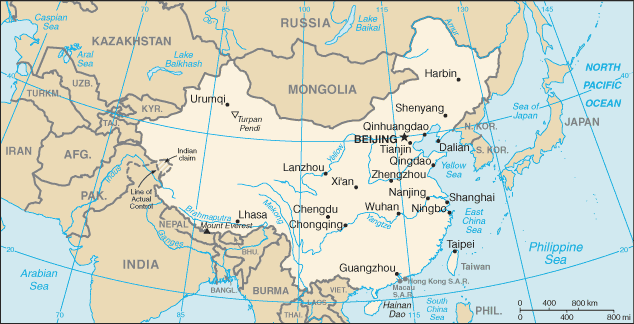

Li Yuanchao
Vice President since 14 March 2013
Vice President since 14 March 2013
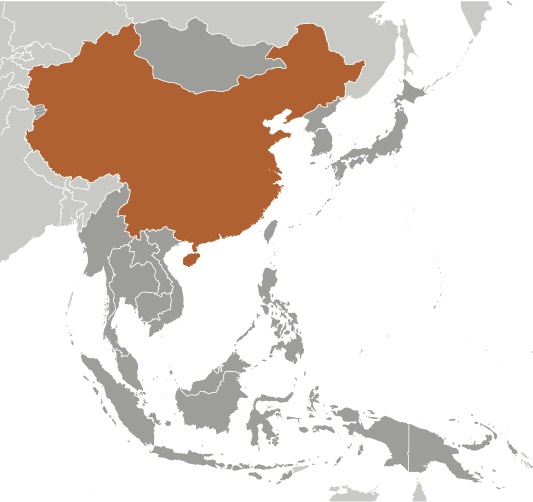
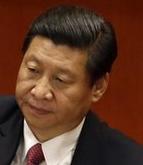
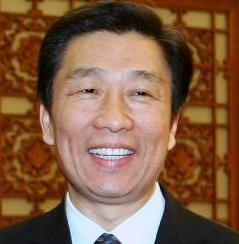
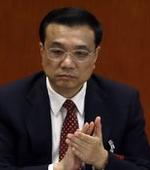
Zhang Gaoli
Executive Vice Premier since 14 March 2013
Executive Vice Premier since 14 March 2013