
| COLOMBIA Republic of Colombia Republica de Colombia Joined United Nations: 5 November 1945 Human Rights as assured by their constitution Click here Updated 24 October 2012 |

| CAPITAL |
| POPULATION |
| CHIEF OF STATE |
| SELECTION PROCESS |
Bogota
45,239,079 (July 2012 est.)
Juan Manuel Santos Calderon
President since 7 August 2010
President since 7 August 2010
President and vice president elected by popular vote for a
four-year term (eligible for a second term); election last held 30
May 2010 with a runoff election 20 June 2010
Next scheduled election: May 2014
four-year term (eligible for a second term); election last held 30
May 2010 with a runoff election 20 June 2010
Next scheduled election: May 2014
HEAD OF GOVERNMENT
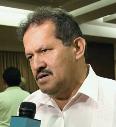
Angelino Garzón
Vice President since 7 August 2010
Vice President since 7 August 2010
According to the Colombian Constitution, the president is both
the chief of state and head of government
the chief of state and head of government
| DECLARATION OF HUMAN RIGHTS |
| ETHNIC GROUPS |
Mestizo 58%, white 20%, mulatto 14%, black 4%, mixed black-Amerindian 3%, Amerindian 1%
| RELIGIONS |
Roman Catholic 90%, other 10%
| GOVERNMENT STRUCTURE |
Republic with a strong executive branch which dominates government structure -32 departments (departamentos, singular -
departamento) and 1 capital district (distrito capital); Legal system is based on Spanish law; a new criminal code modeled after US
procedures was enacted into law in 2004 and is gradually being implemented; judicial review of executive and legislative acts
Executive: President and vice president elected by popular vote for a four-year term (eligible for a second term); election last held
30 May 2010 with a runoff election 20 June 2010
Legislative: bicameral Congress or Congreso consists of the Senate or Senado (102 seats; members are elected by popular vote
to serve four-year terms) and the House of Representatives or Camara de Representantes (166 seats; members are elected by
popular vote to serve four-year terms)
elections: Senate - last held on 14 March 2010 (next to be held in March 2014); House of Representatives - last held on 14 March
2010 (next to be held in March 2014)
Judicial: Four roughly coequal, supreme judicial organs; Supreme Court of Justice or Corte Suprema de Justicia (highest court of
criminal law; judges are selected by their peers from the nominees of the Superior Judicial Council for eight-year terms); Council of
State (highest court of administrative law; judges are selected from the nominees of the Superior Judicial Council for eight-year
terms); Constitutional Court (guards integrity and supremacy of the constitution; rules on constitutionality of laws, amendments to the
constitution, and international treaties); Superior Judicial Council (administers and disciplines the civilian judiciary; resolves
jurisdictional conflicts arising between other courts; members are elected by three sister courts and Congress for eight-year terms)
departamento) and 1 capital district (distrito capital); Legal system is based on Spanish law; a new criminal code modeled after US
procedures was enacted into law in 2004 and is gradually being implemented; judicial review of executive and legislative acts
Executive: President and vice president elected by popular vote for a four-year term (eligible for a second term); election last held
30 May 2010 with a runoff election 20 June 2010
Legislative: bicameral Congress or Congreso consists of the Senate or Senado (102 seats; members are elected by popular vote
to serve four-year terms) and the House of Representatives or Camara de Representantes (166 seats; members are elected by
popular vote to serve four-year terms)
elections: Senate - last held on 14 March 2010 (next to be held in March 2014); House of Representatives - last held on 14 March
2010 (next to be held in March 2014)
Judicial: Four roughly coequal, supreme judicial organs; Supreme Court of Justice or Corte Suprema de Justicia (highest court of
criminal law; judges are selected by their peers from the nominees of the Superior Judicial Council for eight-year terms); Council of
State (highest court of administrative law; judges are selected from the nominees of the Superior Judicial Council for eight-year
terms); Constitutional Court (guards integrity and supremacy of the constitution; rules on constitutionality of laws, amendments to the
constitution, and international treaties); Superior Judicial Council (administers and disciplines the civilian judiciary; resolves
jurisdictional conflicts arising between other courts; members are elected by three sister courts and Congress for eight-year terms)
| LANGUAGES |
Spanish
| BRIEF HISTORY |
In ancient times this land was occupied by societies governed by chiefs. Gold, the sacred metal, adorned the political leaders and
was used as offerings to the gods. In the southwest of Colombia, the cultures which archaeologists call Tumaco, Calima, Malagana,
Cauca, San Agustín, Tierradentro, Nariño, Quimbaya and Tolima, were the first to work the metal they found in the rivers. Around
the beginning of our era these peoples lived in villages surrounded by fields. Trade and exchange routes ensured that ideas and news
travelled from one region to another. However, the zenith of the southwestern cultures declined around A.D. 1000 and the territory
was taken over by more populous egalitarian societies. When the European conquistadors arrived in 1500, goldwork was
characteristic of the cultures to the north: Sinú, Urabá, Tairona, Muisca. Their styles, while distinct from one another, shared a
preference for casting in tumbaga, an alloy of gold and copper. Gold objects accompanied the dead in their tombs, and today bear
witness to the spirit of the people who created them. The Spanish settled along the north coast of today's Colombia as early as
1500, but their first permanent settlement, at Santa Marta, was not established until 1525. In 1549, the institution of the Audiencia in
Santa Fe de Bogotá gave that city the status of capital of New Granada, comprised in large part of what is now territory of
Colombia. In 1717 the Viceroyalty of New Granada was originally created, and then it was temporarily removed, to finally be
reestablished in 1739. The Viceroyalty had Santa Fé de Bogotá as its capital. This Viceroyalty included some other provinces of
northwestern South America which had previously been under the jurisdiction of the Viceroyalties of New Spain or Peru and
correspond mainly to today's Venezuela, Ecuador and Panama. So, Bogotá became one of the principal administrative centers of
the Spanish possessions in the New World, along with Lima and Mexico City, though it remained somewhat backward compared
to those two cities in several economic and logistical ways. July 20, 1810, the citizens of Bogotá created the first representative
council to defy Spanish authority, with full independence being proclaimed in 1810. A long Independency War, led mainly by Simón
Bolívar and Francisco de Paula Santander in New Granada ended after the Battle of Boyaca, on August 7, 1819. That year, the
Congress of Angostura established the Republic of Greater Colombia, which included all territories under jurisdiction of the
Viceroyalty of New Granada. Bolívar was elected first president of Greater Colombia and Francisco de Paula Santander, vice
president. As the Federation of Greater Colombia was dissolved in 1830, the Department of Cundinamarca (as established in
Angostura) became a new country, the Republic of New Granada. In 1863 the name of the Republic was changed officially to
"United States of Colombia", and in 1886 the country adopted its present name: "Republic of Colombia". Two political parties grew
out of conflicts between the followers of Bolivar and Santander and their political visions -- the Conservatives and the Liberals --
and have since dominated Colombian politics. Bolívar's supporters, who later formed the nucleus of the Conservative Party, sought
strong centralized government, alliance with the Roman Catholic Church, and a limited franchise. Santander's followers, forerunners
of the Liberals, wanted a decentralized government, state rather than church control over education and other civil matters, and a
broadened suffrage. Throughout the 19th century and early 20th centuries, each party held the presidency for roughly equal periods
of time. Colombia maintained a tradition of civilian government and regular, free elections. The military has seized power three times
in Colombia's history: in 1830, after the dissolution of Great Colombia; again in 1854; and from 1953 to 1957. Civilian rule was
restored within one year in the first two instances. Notwithstanding the country's commitment to democratic institutions, Colombia's
history has also been characterized by widespread, violent conflict. Two civil wars resulted from bitter rivalry between the
Conservative and Liberal parties. Thousand Days War (1899-1902) cost an estimated 100,000 lives, and up to 300,000 people
died during "La Violencia" (The Violence) of the late 1940s and 1950s, a bipartisan confrontation which erupted after the
assassination of Liberal popular candidate Jorge Eliécer Gaitán. A military coup in 1953 toppled the right-wing government of
Conservative Laureano Gómez and brought Gen. Gustavo Rojas Pinilla to power. Initially, Rojas enjoyed considerable popular
support, due largely to his success in reducing "La Violencia." When he did not restore democratic rule and occasionally engaged in
open repression, however, he was overthrown by the military in 1957 with the backing of both political parties, and a provisional
government was installed. In July 1957, former Conservative President Laureano Gomez (1950-1953) and former Liberal
President Alberto Lleras Camargo (1945-1946, 1958-1962) issued the "Declaration of Sitges," in which they proposed a "National
Front," whereby the Liberal and Conservative parties would govern jointly. The presidency would be determined by an alternating
conservative and liberal president every 4 years for 16 years; the two parties would have parity in all other elective offices. The
National Front ended "La Violencia", and National Front administrations attempted to institute far-reaching social and economic
reforms in cooperation with the Alliance for Progress. In the end, the contradictions between each successive Liberal and
Conservative administration made the results decidedly mixed. Despite the progress in certain sectors, many social and political
injustices continued. Although the system established by the Sitges agreement was phased out by 1974, the 1886 Colombian
constitution—in effect until 1991—required that the losing political party be given adequate and equitable participation in the
government which, according to many observers and later analysis, eventually resulted in some increase in corruption and legal
relaxation. The current 1991 constitution does not have that requirement, but subsequent administrations have tended to include
members of opposition parties. From 1974 until 1982, different presidential administrations chose to focus on ending the persistent
insurgencies that sought to undermine Colombia's traditional political system. Both groups claimed to represent the poor and weak
against the rich and powerful classes of the country, demanding the completion of true land and political reform, from an openly
Communist perspective. By 1974, another challenge to the state's authority and legitimacy had come from the 19th of April
Movement (M-19), a mostly urban guerrilla group founded allegedly in response to an electoral fraud. As these events were
developing, the growing illegal drug trade and its consequences were also increasingly becoming a matter of widespread importance
to all participants in the Colombian conflict. Guerrillas and newly wealthy drug lords had mutually uneven relations and thus
numerous incidents occurred between them. Narcoterrorists assassinated three presidential candidates before César Gaviria Trujillo
was elected in 1990. The M-19 and several smaller guerrilla groups were successfully incorporated into a peace process as the
1980s ended and the 90s began, which culminated in the elections for a Constituent Assembly of Colombia that would write a new
constitution, which took effect in 1991. Although the FARC and ELN accepted participation in the peace process, they did not
make explicit commitments to end the conflict. The FARC suspended talks in November 2000, to protest what it called
"paramilitary terrorism" but returned to the negotiating table in February 2001, following 2 days of meetings between President
Pastrana and FARC leader Manuel Marulanda. The Colombian Government and ELN in early 2001 continued discussions aimed
at opening a formal peace process. No single explanation fully addresses the deep roots of Colombia's present-day troubles, but
they include limited government presence in large areas of the interior, the expansion of illicit drug cultivation, endemic violence, and
social inequities. The United States approved a US$1.3 billion assistance package, mostly of military and counternarcotics nature,
but also including a small amount of social aid. As of 2004, two years after its implementation began, the security situation of inside
Colombia has shown some measure of an improvement and the economy, while still fragile, has also shown some positive signs
according to observers, but relatively little has yet to have been accomplished in structurally solving most of the country's other
grave problems, possibly in part due to legislative and political conflicts between the administration and the Colombian Congress
(including those over the controversial project to eventually re-elect Uribe), and a relative lack of freely allocated funds and credits.
With such conflicting perspectives, it can be argued that a certain polarization between both supporters and opponents of President
Uribe seems to be forming both inside and outside the country. Uribe was reelected in 2006 after a change in the constitution
allowed presidents to be reelected. On June 20th of 2010, after two rounds of elections, Juan Manuel Santos Calderón, the new
head of Uribe's Social Unity Party was officially elected as President-Elect of the Republic of Colombia.
Source: Wikipedia: History of Colombia
was used as offerings to the gods. In the southwest of Colombia, the cultures which archaeologists call Tumaco, Calima, Malagana,
Cauca, San Agustín, Tierradentro, Nariño, Quimbaya and Tolima, were the first to work the metal they found in the rivers. Around
the beginning of our era these peoples lived in villages surrounded by fields. Trade and exchange routes ensured that ideas and news
travelled from one region to another. However, the zenith of the southwestern cultures declined around A.D. 1000 and the territory
was taken over by more populous egalitarian societies. When the European conquistadors arrived in 1500, goldwork was
characteristic of the cultures to the north: Sinú, Urabá, Tairona, Muisca. Their styles, while distinct from one another, shared a
preference for casting in tumbaga, an alloy of gold and copper. Gold objects accompanied the dead in their tombs, and today bear
witness to the spirit of the people who created them. The Spanish settled along the north coast of today's Colombia as early as
1500, but their first permanent settlement, at Santa Marta, was not established until 1525. In 1549, the institution of the Audiencia in
Santa Fe de Bogotá gave that city the status of capital of New Granada, comprised in large part of what is now territory of
Colombia. In 1717 the Viceroyalty of New Granada was originally created, and then it was temporarily removed, to finally be
reestablished in 1739. The Viceroyalty had Santa Fé de Bogotá as its capital. This Viceroyalty included some other provinces of
northwestern South America which had previously been under the jurisdiction of the Viceroyalties of New Spain or Peru and
correspond mainly to today's Venezuela, Ecuador and Panama. So, Bogotá became one of the principal administrative centers of
the Spanish possessions in the New World, along with Lima and Mexico City, though it remained somewhat backward compared
to those two cities in several economic and logistical ways. July 20, 1810, the citizens of Bogotá created the first representative
council to defy Spanish authority, with full independence being proclaimed in 1810. A long Independency War, led mainly by Simón
Bolívar and Francisco de Paula Santander in New Granada ended after the Battle of Boyaca, on August 7, 1819. That year, the
Congress of Angostura established the Republic of Greater Colombia, which included all territories under jurisdiction of the
Viceroyalty of New Granada. Bolívar was elected first president of Greater Colombia and Francisco de Paula Santander, vice
president. As the Federation of Greater Colombia was dissolved in 1830, the Department of Cundinamarca (as established in
Angostura) became a new country, the Republic of New Granada. In 1863 the name of the Republic was changed officially to
"United States of Colombia", and in 1886 the country adopted its present name: "Republic of Colombia". Two political parties grew
out of conflicts between the followers of Bolivar and Santander and their political visions -- the Conservatives and the Liberals --
and have since dominated Colombian politics. Bolívar's supporters, who later formed the nucleus of the Conservative Party, sought
strong centralized government, alliance with the Roman Catholic Church, and a limited franchise. Santander's followers, forerunners
of the Liberals, wanted a decentralized government, state rather than church control over education and other civil matters, and a
broadened suffrage. Throughout the 19th century and early 20th centuries, each party held the presidency for roughly equal periods
of time. Colombia maintained a tradition of civilian government and regular, free elections. The military has seized power three times
in Colombia's history: in 1830, after the dissolution of Great Colombia; again in 1854; and from 1953 to 1957. Civilian rule was
restored within one year in the first two instances. Notwithstanding the country's commitment to democratic institutions, Colombia's
history has also been characterized by widespread, violent conflict. Two civil wars resulted from bitter rivalry between the
Conservative and Liberal parties. Thousand Days War (1899-1902) cost an estimated 100,000 lives, and up to 300,000 people
died during "La Violencia" (The Violence) of the late 1940s and 1950s, a bipartisan confrontation which erupted after the
assassination of Liberal popular candidate Jorge Eliécer Gaitán. A military coup in 1953 toppled the right-wing government of
Conservative Laureano Gómez and brought Gen. Gustavo Rojas Pinilla to power. Initially, Rojas enjoyed considerable popular
support, due largely to his success in reducing "La Violencia." When he did not restore democratic rule and occasionally engaged in
open repression, however, he was overthrown by the military in 1957 with the backing of both political parties, and a provisional
government was installed. In July 1957, former Conservative President Laureano Gomez (1950-1953) and former Liberal
President Alberto Lleras Camargo (1945-1946, 1958-1962) issued the "Declaration of Sitges," in which they proposed a "National
Front," whereby the Liberal and Conservative parties would govern jointly. The presidency would be determined by an alternating
conservative and liberal president every 4 years for 16 years; the two parties would have parity in all other elective offices. The
National Front ended "La Violencia", and National Front administrations attempted to institute far-reaching social and economic
reforms in cooperation with the Alliance for Progress. In the end, the contradictions between each successive Liberal and
Conservative administration made the results decidedly mixed. Despite the progress in certain sectors, many social and political
injustices continued. Although the system established by the Sitges agreement was phased out by 1974, the 1886 Colombian
constitution—in effect until 1991—required that the losing political party be given adequate and equitable participation in the
government which, according to many observers and later analysis, eventually resulted in some increase in corruption and legal
relaxation. The current 1991 constitution does not have that requirement, but subsequent administrations have tended to include
members of opposition parties. From 1974 until 1982, different presidential administrations chose to focus on ending the persistent
insurgencies that sought to undermine Colombia's traditional political system. Both groups claimed to represent the poor and weak
against the rich and powerful classes of the country, demanding the completion of true land and political reform, from an openly
Communist perspective. By 1974, another challenge to the state's authority and legitimacy had come from the 19th of April
Movement (M-19), a mostly urban guerrilla group founded allegedly in response to an electoral fraud. As these events were
developing, the growing illegal drug trade and its consequences were also increasingly becoming a matter of widespread importance
to all participants in the Colombian conflict. Guerrillas and newly wealthy drug lords had mutually uneven relations and thus
numerous incidents occurred between them. Narcoterrorists assassinated three presidential candidates before César Gaviria Trujillo
was elected in 1990. The M-19 and several smaller guerrilla groups were successfully incorporated into a peace process as the
1980s ended and the 90s began, which culminated in the elections for a Constituent Assembly of Colombia that would write a new
constitution, which took effect in 1991. Although the FARC and ELN accepted participation in the peace process, they did not
make explicit commitments to end the conflict. The FARC suspended talks in November 2000, to protest what it called
"paramilitary terrorism" but returned to the negotiating table in February 2001, following 2 days of meetings between President
Pastrana and FARC leader Manuel Marulanda. The Colombian Government and ELN in early 2001 continued discussions aimed
at opening a formal peace process. No single explanation fully addresses the deep roots of Colombia's present-day troubles, but
they include limited government presence in large areas of the interior, the expansion of illicit drug cultivation, endemic violence, and
social inequities. The United States approved a US$1.3 billion assistance package, mostly of military and counternarcotics nature,
but also including a small amount of social aid. As of 2004, two years after its implementation began, the security situation of inside
Colombia has shown some measure of an improvement and the economy, while still fragile, has also shown some positive signs
according to observers, but relatively little has yet to have been accomplished in structurally solving most of the country's other
grave problems, possibly in part due to legislative and political conflicts between the administration and the Colombian Congress
(including those over the controversial project to eventually re-elect Uribe), and a relative lack of freely allocated funds and credits.
With such conflicting perspectives, it can be argued that a certain polarization between both supporters and opponents of President
Uribe seems to be forming both inside and outside the country. Uribe was reelected in 2006 after a change in the constitution
allowed presidents to be reelected. On June 20th of 2010, after two rounds of elections, Juan Manuel Santos Calderón, the new
head of Uribe's Social Unity Party was officially elected as President-Elect of the Republic of Colombia.
Source: Wikipedia: History of Colombia
| ECONOMIC OVERVIEW |
Colombia's consistently sound economic policies and aggressive promotion of free trade agreements in recent years have bolstered
its ability to face external shocks. Real GDP grew 5.7% in 2011 and inflation ended 2011 at 3.7%, continuing almost a decade of
strong economic performance. All three major ratings agencies have upgraded Colombia''s investment grade. Nevertheless,
Colombia depends heavily on oil exports, making it vulnerable to a drop in oil prices. Economic development is stymied by
inadequate infrastructure, weakened further by recent flooding. Moreover, the unemployment rate of 10.8% in 2011 is still one of
Latin America''s highest. The SANTOS Administration''s foreign policy has focused on bolstering Colombia''s commercial ties and
boosting investment at home. The US-Colombia Free Trade Agreement (FTA) was ratified by the US Congress in October 2011
and is pending implementation in 2012. Columbia has signed or is negotiating FTAs with a number of other countries, including
Canada, Chile, Mexico, Switzerland, the EU, Venezuela, South Korea, Turkey, Japan, and Israel. Foreign direct investment -
notably in the oil sector - reached a record $10 billion in 2008 but dropped to $7.2 billion in 2009, before beginning to recover in
2010, and it appears to have reached a record high $13 billion in 2011. Colombia is the third largest Latin American exporter of oil
to the US. Inequality, underemployment, and narcotrafficking remain significant challenges, and Colombia''s infrastructure requires
major improvements to sustain economic expansion. In late 2010, Colombia experienced its most severe flooding in decades with
damages estimated to exceed $6 billion. The rains resumed in 2011 causing further damages to crops and infrastructure as well as
killing hundreds of Colombians and displacing millions.
Source: CIA World Factbook (select Colombia)
its ability to face external shocks. Real GDP grew 5.7% in 2011 and inflation ended 2011 at 3.7%, continuing almost a decade of
strong economic performance. All three major ratings agencies have upgraded Colombia''s investment grade. Nevertheless,
Colombia depends heavily on oil exports, making it vulnerable to a drop in oil prices. Economic development is stymied by
inadequate infrastructure, weakened further by recent flooding. Moreover, the unemployment rate of 10.8% in 2011 is still one of
Latin America''s highest. The SANTOS Administration''s foreign policy has focused on bolstering Colombia''s commercial ties and
boosting investment at home. The US-Colombia Free Trade Agreement (FTA) was ratified by the US Congress in October 2011
and is pending implementation in 2012. Columbia has signed or is negotiating FTAs with a number of other countries, including
Canada, Chile, Mexico, Switzerland, the EU, Venezuela, South Korea, Turkey, Japan, and Israel. Foreign direct investment -
notably in the oil sector - reached a record $10 billion in 2008 but dropped to $7.2 billion in 2009, before beginning to recover in
2010, and it appears to have reached a record high $13 billion in 2011. Colombia is the third largest Latin American exporter of oil
to the US. Inequality, underemployment, and narcotrafficking remain significant challenges, and Colombia''s infrastructure requires
major improvements to sustain economic expansion. In late 2010, Colombia experienced its most severe flooding in decades with
damages estimated to exceed $6 billion. The rains resumed in 2011 causing further damages to crops and infrastructure as well as
killing hundreds of Colombians and displacing millions.
Source: CIA World Factbook (select Colombia)
| POLITICAL CLIMATE |
Colombia's present constitution, enacted on July 5, 1991, strengthened the administration of justice with the provision for
introduction of an adversarial system which ultimately is to entirely replace the existing Napoleonic Code. Other significant reforms
under the new constitution provide for civil divorce, dual nationality, the election of a vice president, and the election of departmental
governors. The constitution expanded citizens' basic rights, including that of "tutela," under which an immediate court action can be
requested by an individual if he or she feels that their constitutional rights are being violated and if there is no other legal recourse.
The national government has separate executive, legislative, and judicial branches
The president is elected for a four-year term and, since 2005, can be re-elected for one consecutive term. The 1991 constitution
reestablished the position of vice president, who is elected on the same ticket as the president. By law, the vice president will
succeed in the event of the president's resignation, illness, or death.
Source: Wikipedia: Politics of Colombia
introduction of an adversarial system which ultimately is to entirely replace the existing Napoleonic Code. Other significant reforms
under the new constitution provide for civil divorce, dual nationality, the election of a vice president, and the election of departmental
governors. The constitution expanded citizens' basic rights, including that of "tutela," under which an immediate court action can be
requested by an individual if he or she feels that their constitutional rights are being violated and if there is no other legal recourse.
The national government has separate executive, legislative, and judicial branches
The president is elected for a four-year term and, since 2005, can be re-elected for one consecutive term. The 1991 constitution
reestablished the position of vice president, who is elected on the same ticket as the president. By law, the vice president will
succeed in the event of the president's resignation, illness, or death.
Source: Wikipedia: Politics of Colombia
| INTERNATIONAL DISPUTES |
In December 2007, ICJ allocates San Andres, Providencia, and Santa Catalina islands to Colombia under 1928 Treaty but does
not rule on 82 degrees W meridian as maritime boundary with Nicaragua; managed dispute with Venezuela over maritime boundary
and Venezuelan-administered Los Monjes Islands near the Gulf of Venezuela; Colombian-organized illegal narcotics, guerrilla, and
paramilitary activities penetrate all neighboring borders and have caused Colombian citizens to flee mostly into neighboring
countries; Colombia, Honduras, Nicaragua, Jamaica, and the US assert various claims to Bajo Nuevo and Serranilla Bank
not rule on 82 degrees W meridian as maritime boundary with Nicaragua; managed dispute with Venezuela over maritime boundary
and Venezuelan-administered Los Monjes Islands near the Gulf of Venezuela; Colombian-organized illegal narcotics, guerrilla, and
paramilitary activities penetrate all neighboring borders and have caused Colombian citizens to flee mostly into neighboring
countries; Colombia, Honduras, Nicaragua, Jamaica, and the US assert various claims to Bajo Nuevo and Serranilla Bank


| REFUGEES AND INTERNALLY DISPLACED PERSONS (IDPs) |
IDPs: 3.6-5.2 million (conflict between government and illegal armed groups and drug traffickers since 1985) (2011)
| ILLICIT DRUGS |
Illicit producer of coca, opium poppy, and cannabis; world's leading coca cultivator with 167,000 hectares in coca cultivation in
2007, a 6% increase over 2006, producing a potential of 535 mt of pure cocaine; the world's largest producer of coca
derivatives; supplies cocaine to nearly all of the US market and the great majority of other international drug markets; in 2005,
aerial eradication dispensed herbicide to treat over 130,000 hectares but aggressive replanting on the part of coca growers
means Colombia remains a key producer; a significant portion of narcotics proceeds are either laundered or invested in Colombia
through the black market peso exchange; important supplier of heroin to the US market; opium poppy cultivation is estimated to
have fallen 25% between 2006 and 2007; most Colombian heroin is destined for the US market (2008)
2007, a 6% increase over 2006, producing a potential of 535 mt of pure cocaine; the world's largest producer of coca
derivatives; supplies cocaine to nearly all of the US market and the great majority of other international drug markets; in 2005,
aerial eradication dispensed herbicide to treat over 130,000 hectares but aggressive replanting on the part of coca growers
means Colombia remains a key producer; a significant portion of narcotics proceeds are either laundered or invested in Colombia
through the black market peso exchange; important supplier of heroin to the US market; opium poppy cultivation is estimated to
have fallen 25% between 2006 and 2007; most Colombian heroin is destined for the US market (2008)
| HUMAN RIGHTS STATEMENTS, ANALYSIS AND CRITIQUES |
2011 Human Rights Reports: Colombia
Bureau of Democracy, Human Rights, and Labor
2011 Country Reports on Human Rights Practices
May 25, 2012
Colombia is a constitutional, multiparty republic. In June 2010 Juan Manuel Santos was chosen president in elections that were
considered generally free and fair. The internal armed conflict continued between the government and terrorist organizations,
particularly the Revolutionary Armed Forces of Colombia (FARC) and the National Liberation Army (ELN). Security forces
reported to civilian authorities. Although significantly fewer than past years, there were instances in which elements of the security
forces acted independently of civilian control.
The most serious human rights problems were impunity and an inefficient judiciary, corruption, and societal discrimination.
Impunity and an inefficient justice system subject to intimidation limited the state’s ability to prosecute effectively those accused of
human rights abuses and to process former paramilitaries. Corruption often was exacerbated by drug-trafficking revenue. Societal
discrimination against indigenous persons and Afro-Colombians negatively affected the ability of these groups to exercise their
rights.
Other problems included extrajudicial killings, insubordinate military collaboration with members of illegal armed groups, forced
disappearances, overcrowded and insecure prisons, harassment of human rights groups and activists, violence against women,
trafficking in persons, and illegal child labor.
The government continued efforts to improve respect for human rights and prosecute and punish officials, including members of
the security services, who committed abuses, but some impunity persisted. The government took significant steps to increase
resources for the Prosecutor General’s Office.
Illegal armed groups, including the FARC, ELN, and organized crime groups that included some former paramilitary members,
committed numerous abuses, including the following: political killings; killings of members of the public security forces and local
officials; widespread use of land mines; kidnappings and forced disappearances; subornation and intimidation of judges,
prosecutors, and witnesses; infringement on citizens’ privacy rights; restrictions on freedom of movement; widespread recruitment
and use of child soldiers; attacks against human rights activists; violence against women, including rape and forced abortions; and
harassment, intimidation, and killings of teachers and trade unionists. Illegal armed groups continued to be responsible for most
instances of forced displacement in the country
Click here to read more »
Bureau of Democracy, Human Rights, and Labor
2011 Country Reports on Human Rights Practices
May 25, 2012
Colombia is a constitutional, multiparty republic. In June 2010 Juan Manuel Santos was chosen president in elections that were
considered generally free and fair. The internal armed conflict continued between the government and terrorist organizations,
particularly the Revolutionary Armed Forces of Colombia (FARC) and the National Liberation Army (ELN). Security forces
reported to civilian authorities. Although significantly fewer than past years, there were instances in which elements of the security
forces acted independently of civilian control.
The most serious human rights problems were impunity and an inefficient judiciary, corruption, and societal discrimination.
Impunity and an inefficient justice system subject to intimidation limited the state’s ability to prosecute effectively those accused of
human rights abuses and to process former paramilitaries. Corruption often was exacerbated by drug-trafficking revenue. Societal
discrimination against indigenous persons and Afro-Colombians negatively affected the ability of these groups to exercise their
rights.
Other problems included extrajudicial killings, insubordinate military collaboration with members of illegal armed groups, forced
disappearances, overcrowded and insecure prisons, harassment of human rights groups and activists, violence against women,
trafficking in persons, and illegal child labor.
The government continued efforts to improve respect for human rights and prosecute and punish officials, including members of
the security services, who committed abuses, but some impunity persisted. The government took significant steps to increase
resources for the Prosecutor General’s Office.
Illegal armed groups, including the FARC, ELN, and organized crime groups that included some former paramilitary members,
committed numerous abuses, including the following: political killings; killings of members of the public security forces and local
officials; widespread use of land mines; kidnappings and forced disappearances; subornation and intimidation of judges,
prosecutors, and witnesses; infringement on citizens’ privacy rights; restrictions on freedom of movement; widespread recruitment
and use of child soldiers; attacks against human rights activists; violence against women, including rape and forced abortions; and
harassment, intimidation, and killings of teachers and trade unionists. Illegal armed groups continued to be responsible for most
instances of forced displacement in the country
Click here to read more »
International Covenant
Civil and political rights Distr. general
August 4, 2010
Geneva, 12 to 30 July 2010
Consideration of reports submitted by States parties under article 40 of the Covenant
Concluding observations of the Human Rights Committee
Colombia
A. Introduction
2. The Committee welcomes the submission of the sixth periodic report of the State party that provides information on the
measures taken by the State party to promote the implementation of the Covenant, while noting that the report mainly describes the
legislative progress without an assessment of the degree of rights implementation in practice. It also welcomes the dialogue with the
delegation, the detailed written replies (CCPR/C/COL/Q/6/Add.1) submitted in response to the Committee's list of issues, and
additional information and clarifications provided orally . The Committee commends the State party for having translated the
answers offered to the list of issues.
B. Positives
3. The Committee welcomes the legislative measures taken since the consideration of the previous periodic report of the State party:
a) The adoption of Law 1257 of 2008: "By establishing rules awareness, prevention and punishment of all forms of violence and
discrimination against women, are reformed Penal Code, Criminal Procedure, Law 294 of 1996 and other provisions ";
b) The adoption of Law 1098 of 2006 "Issuing the Code for Children and Adolescents."
4. The Committee welcomes the State party's ongoing collaboration with the Office of the High Commissioner for Human Rights
(OHCHR) since the establishment of an office in the country in 1997.
5. The Committee considers positive the State party's collaboration with the special rapporteurs, special representatives and
working groups of the System of Human Rights of the United Nations.
C. Principal subjects of concern and recommendations
8. The Committee expresses concern at the lack of significant progress in the implementation of previous recommendations
(including those relating to legal benefits for demobilized members of illegal armed groups, weapons collusion between the forces
and members of paramilitary groups, the lack of research of serious human rights violations and attacks against human rights
defenders). The Committee regrets that many concerns persist (art. 2 of the Covenant).
The State party should take all necessary measures to give full effect to the recommendations adopted by the Committee.
9. The Committee is concerned by the Law No. 975 of 2005 (Law of Justice and Peace), and that despite the State party
(paragraph 49 of its report and oral responses) that the law does not allow amnesties for these crimes, impunity exists in practice
for a number of serious human rights violations. Among the more than 30,000 paramilitaries demobilized, the vast majority have not
benefited to the Law No. 975 of 2005 and lack clarity about their legal status. The Committee notes with concern that has been
only one conviction against two people and few investigations have been opened, despite the violence systematically surveyed in the
free versions of the paramilitaries postulates. The Committee also notes with concern information that reveals that the actions of
new groups emerging after demobilization in different parts of the country agrees with the opus moderandi paramilitary groups
identified. The Committee notes that the adoption of the 1312 Act in July 2009 on the implementation of the principle of opportunity
can lead to impunity, if the waiver of prosecution is exercised without regard human rights law, thus constituting one violation of
the right of victims to an effective remedy. The Committee notes the State party, according to its General Comment No. 31
(CCPR/C/21/Rev.1/Add.13, 2004), that "the general obligation to investigate allegations of rape in a quick, thoroughly and
effectively through independent and impartial bodies ... (and that) the problem of impunity for these violations, a matter of sustained
concern by the Committee, may be an important contributing element in the recurrence of violations "(Articles 2, 6 and 7).
The State party must comply with its obligations under the Covenant and other international instruments, including the Rome
Statute of the International Criminal Court, and to investigate and punish serious violations of human rights and international
humanitarian law with appropriate penalties which take into account its severity.
Click here to read more »
Civil and political rights Distr. general
August 4, 2010
Geneva, 12 to 30 July 2010
Consideration of reports submitted by States parties under article 40 of the Covenant
Concluding observations of the Human Rights Committee
Colombia
A. Introduction
2. The Committee welcomes the submission of the sixth periodic report of the State party that provides information on the
measures taken by the State party to promote the implementation of the Covenant, while noting that the report mainly describes the
legislative progress without an assessment of the degree of rights implementation in practice. It also welcomes the dialogue with the
delegation, the detailed written replies (CCPR/C/COL/Q/6/Add.1) submitted in response to the Committee's list of issues, and
additional information and clarifications provided orally . The Committee commends the State party for having translated the
answers offered to the list of issues.
B. Positives
3. The Committee welcomes the legislative measures taken since the consideration of the previous periodic report of the State party:
a) The adoption of Law 1257 of 2008: "By establishing rules awareness, prevention and punishment of all forms of violence and
discrimination against women, are reformed Penal Code, Criminal Procedure, Law 294 of 1996 and other provisions ";
b) The adoption of Law 1098 of 2006 "Issuing the Code for Children and Adolescents."
4. The Committee welcomes the State party's ongoing collaboration with the Office of the High Commissioner for Human Rights
(OHCHR) since the establishment of an office in the country in 1997.
5. The Committee considers positive the State party's collaboration with the special rapporteurs, special representatives and
working groups of the System of Human Rights of the United Nations.
C. Principal subjects of concern and recommendations
8. The Committee expresses concern at the lack of significant progress in the implementation of previous recommendations
(including those relating to legal benefits for demobilized members of illegal armed groups, weapons collusion between the forces
and members of paramilitary groups, the lack of research of serious human rights violations and attacks against human rights
defenders). The Committee regrets that many concerns persist (art. 2 of the Covenant).
The State party should take all necessary measures to give full effect to the recommendations adopted by the Committee.
9. The Committee is concerned by the Law No. 975 of 2005 (Law of Justice and Peace), and that despite the State party
(paragraph 49 of its report and oral responses) that the law does not allow amnesties for these crimes, impunity exists in practice
for a number of serious human rights violations. Among the more than 30,000 paramilitaries demobilized, the vast majority have not
benefited to the Law No. 975 of 2005 and lack clarity about their legal status. The Committee notes with concern that has been
only one conviction against two people and few investigations have been opened, despite the violence systematically surveyed in the
free versions of the paramilitaries postulates. The Committee also notes with concern information that reveals that the actions of
new groups emerging after demobilization in different parts of the country agrees with the opus moderandi paramilitary groups
identified. The Committee notes that the adoption of the 1312 Act in July 2009 on the implementation of the principle of opportunity
can lead to impunity, if the waiver of prosecution is exercised without regard human rights law, thus constituting one violation of
the right of victims to an effective remedy. The Committee notes the State party, according to its General Comment No. 31
(CCPR/C/21/Rev.1/Add.13, 2004), that "the general obligation to investigate allegations of rape in a quick, thoroughly and
effectively through independent and impartial bodies ... (and that) the problem of impunity for these violations, a matter of sustained
concern by the Committee, may be an important contributing element in the recurrence of violations "(Articles 2, 6 and 7).
The State party must comply with its obligations under the Covenant and other international instruments, including the Rome
Statute of the International Criminal Court, and to investigate and punish serious violations of human rights and international
humanitarian law with appropriate penalties which take into account its severity.
Click here to read more »
Human Rights Defender Fatally Shot in Colombia After Opening Home to Activists
Aug 7 2012
Freedom House is deeply troubled by the reported killing of Colombian activist Luz Neida Gomez Gomez, the treasurer of a local
community action council in Vereda Buenos Aires, Colombia. Authorities must conduct a thorough and transparent investigation
into her death, and ensure that all steps are taken to hold accountable those responsible for this crime.
Five assailants wearing army uniforms and balaclavas shot Gomez while she was walking down the main highway, which serves
the capital, Sierra. The murder occurred just days after civil society groups organized a series of workshops to discuss the impact
of transnational mining companies on human rights in the region. She had reportedly opened up her home to out-of-town
participants in need of a place to stay. Gomez, whose husband Oscar Diaz survived an attempt on his life in June 2012, had
suffered months of harassment as unidentified men extorted money from her and made regular threats against her family.
Colombia is ranked Partly Free in Freedom of the World 2012, Freedom House's survey of political rights and civil liberties, and
Partly Free in Freedom of the Press 2012. Freedom House has noted an increase in violence and attacks, particularly against
journalists in Colombia, including the brutal killing of freelance reporter Luis Eduardo Gomez in 2011, and the recent court decision
to uphold the prison sentence for criminal libel against Luis Agustin Gonzalez.
Click here to read more »
Aug 7 2012
Freedom House is deeply troubled by the reported killing of Colombian activist Luz Neida Gomez Gomez, the treasurer of a local
community action council in Vereda Buenos Aires, Colombia. Authorities must conduct a thorough and transparent investigation
into her death, and ensure that all steps are taken to hold accountable those responsible for this crime.
Five assailants wearing army uniforms and balaclavas shot Gomez while she was walking down the main highway, which serves
the capital, Sierra. The murder occurred just days after civil society groups organized a series of workshops to discuss the impact
of transnational mining companies on human rights in the region. She had reportedly opened up her home to out-of-town
participants in need of a place to stay. Gomez, whose husband Oscar Diaz survived an attempt on his life in June 2012, had
suffered months of harassment as unidentified men extorted money from her and made regular threats against her family.
Colombia is ranked Partly Free in Freedom of the World 2012, Freedom House's survey of political rights and civil liberties, and
Partly Free in Freedom of the Press 2012. Freedom House has noted an increase in violence and attacks, particularly against
journalists in Colombia, including the brutal killing of freelance reporter Luis Eduardo Gomez in 2011, and the recent court decision
to uphold the prison sentence for criminal libel against Luis Agustin Gonzalez.
Click here to read more »
Date: 19 October 2012
URGENT ACTION
MORE LAND RIGHTS DEFENDERS THREATENED
On 11 October, the National Coordination of Displaced People – a group that works with people displaced by armed conflict –
received a death threat from the paramilitary group
Anti Land Restitution Army, mentioning several human right defenders and organizations. A similar death threat was sent on 2
October.
On 11 October, a death threat was emailed to the National Coordination of Displaced People (Coordinación Nacional de
Desplazados, CND), which was also intended for Alfonso Castillo of the National Association of Solidarity Help (Asociación
Nacional de Ayuda Solidaria, ANDAS). Both organizations are members of MOVICE. The email was sent by the Anti Land
Restitution Army and named several individuals and organizations, some of whom had been mentioned in an earlier death threat sent
on 2 October. Many of the organizations named are members of MOVICE.
Less than 10 days after the last email with death threats, a new email from the Anti Land Restitution Army paramilitary group
containing death threats was received. It accused numerous NGOs and individuals of being collaborators of the guerrilla, saying
they were “advising victims and displaced people to sue the Colombian state for recovery of lands from which they were
displaced” (“orientando a las víctimas y a personas desplazda [sic] para demandar al estado colombiano por las tierras
desplazadas”). The email continued, saying “we have received all the addresses of the offices, of your homes and the places you
frequent daily, because we are going after the following organizations and people” (“ya nos dieron todas las direcciones de las
oficinas, de sus residencias y los sitios que frecuentan a diario ya nos vamos por las siguientes organizaciones y personas”). The
email also stated that there were regions where they exercise control without specifying the regions.
Click here to read more »
URGENT ACTION
MORE LAND RIGHTS DEFENDERS THREATENED
On 11 October, the National Coordination of Displaced People – a group that works with people displaced by armed conflict –
received a death threat from the paramilitary group
Anti Land Restitution Army, mentioning several human right defenders and organizations. A similar death threat was sent on 2
October.
On 11 October, a death threat was emailed to the National Coordination of Displaced People (Coordinación Nacional de
Desplazados, CND), which was also intended for Alfonso Castillo of the National Association of Solidarity Help (Asociación
Nacional de Ayuda Solidaria, ANDAS). Both organizations are members of MOVICE. The email was sent by the Anti Land
Restitution Army and named several individuals and organizations, some of whom had been mentioned in an earlier death threat sent
on 2 October. Many of the organizations named are members of MOVICE.
Less than 10 days after the last email with death threats, a new email from the Anti Land Restitution Army paramilitary group
containing death threats was received. It accused numerous NGOs and individuals of being collaborators of the guerrilla, saying
they were “advising victims and displaced people to sue the Colombian state for recovery of lands from which they were
displaced” (“orientando a las víctimas y a personas desplazda [sic] para demandar al estado colombiano por las tierras
desplazadas”). The email continued, saying “we have received all the addresses of the offices, of your homes and the places you
frequent daily, because we are going after the following organizations and people” (“ya nos dieron todas las direcciones de las
oficinas, de sus residencias y los sitios que frecuentan a diario ya nos vamos por las siguientes organizaciones y personas”). The
email also stated that there were regions where they exercise control without specifying the regions.
Click here to read more »
Colombia: Make Victims’ Rights Central to Peace Talks
Peace Without Justice Not Sustainable
October 16, 2012
Colombia will only achieve sustainable peace by protecting victims’ right to justice, Human Rights Watch said today in advance of
peace talks between the Colombian government and Revolutionary Armed Forces of Colombia (FARC) guerrillas. The talks will
begin in Oslo on October 17, 2012.
Colombia’s half-century-long internal armed conflict has had a devastating impact on civilians. Thousands have been killed, forcibly
disappeared, kidnapped, and subject to sexual violence, and more than 4 million have been internally displaced.
“I welcome these peace talks – who could oppose initiatives to end a conflict that has produced so many atrocities and taken so
many Colombian lives,” said José Miguel Vivanco, Americas director at Human Rights Watch. “But to be successful, any
agreement must ensure accountability for serious abuses.”
Human Rights Watch research in Colombia over the past two decades shows that rampant impunity for atrocities has been key to
enabling ongoing violations. A peace agreement that forgoes justice risks irreversibly compounding this impunity, and thus
encouraging future abuses, Human Rights Watch said. It would also disregard the rights of thousands of victims of war crimes and
crimes against humanity.
“The Colombian people have been waiting a long time for peace, but it will neither be durable nor just if a deal between the parties is
based on immunity for atrocities,” said Jan Egeland, Europe director at Human Rights Watch.
In July, Colombia enacted a constitutional amendment, the Legal Framework for Peace, which would regulate the administration of
justice in the context of a peace agreement with the FARC. The amendment paves the way for widespread immunity for atrocities
committed by guerrillas, paramilitaries, and the military, and directly conflicts with Colombia’s obligations under international law,
Human Rights Watch said.
The amendment empowers Congress to limit the scope of prosecutions of atrocities to those found “most responsible,” and provide
statutory immunity to all the other guerrillas, paramilitaries, and military members who participated in the planning, execution, and
cover up of the same crimes – but who are not deemed “most responsible.” It also gives Congress the authority to exempt from
criminal investigation entire cases of war crimes – if they have not been committed on a systematic basis – and incidents of serious
human rights violations, if they are not part of a widespread or systematic attack against the civilian population.
Click here to read more »
Peace Without Justice Not Sustainable
October 16, 2012
Colombia will only achieve sustainable peace by protecting victims’ right to justice, Human Rights Watch said today in advance of
peace talks between the Colombian government and Revolutionary Armed Forces of Colombia (FARC) guerrillas. The talks will
begin in Oslo on October 17, 2012.
Colombia’s half-century-long internal armed conflict has had a devastating impact on civilians. Thousands have been killed, forcibly
disappeared, kidnapped, and subject to sexual violence, and more than 4 million have been internally displaced.
“I welcome these peace talks – who could oppose initiatives to end a conflict that has produced so many atrocities and taken so
many Colombian lives,” said José Miguel Vivanco, Americas director at Human Rights Watch. “But to be successful, any
agreement must ensure accountability for serious abuses.”
Human Rights Watch research in Colombia over the past two decades shows that rampant impunity for atrocities has been key to
enabling ongoing violations. A peace agreement that forgoes justice risks irreversibly compounding this impunity, and thus
encouraging future abuses, Human Rights Watch said. It would also disregard the rights of thousands of victims of war crimes and
crimes against humanity.
“The Colombian people have been waiting a long time for peace, but it will neither be durable nor just if a deal between the parties is
based on immunity for atrocities,” said Jan Egeland, Europe director at Human Rights Watch.
In July, Colombia enacted a constitutional amendment, the Legal Framework for Peace, which would regulate the administration of
justice in the context of a peace agreement with the FARC. The amendment paves the way for widespread immunity for atrocities
committed by guerrillas, paramilitaries, and the military, and directly conflicts with Colombia’s obligations under international law,
Human Rights Watch said.
The amendment empowers Congress to limit the scope of prosecutions of atrocities to those found “most responsible,” and provide
statutory immunity to all the other guerrillas, paramilitaries, and military members who participated in the planning, execution, and
cover up of the same crimes – but who are not deemed “most responsible.” It also gives Congress the authority to exempt from
criminal investigation entire cases of war crimes – if they have not been committed on a systematic basis – and incidents of serious
human rights violations, if they are not part of a widespread or systematic attack against the civilian population.
Click here to read more »
TRANSLATED FROM SPANISH BY GOOGLE TRANSLATE
President Santos reaffirms commitment to the rights and dignity of indigenous peoples
Bogota, Oct 12, 2012
President Juan Manuel Santos reaffirmed the commitment to the Colombian State to the rights and dignity of indigenous peoples.
This was stated by the president in message sent on Friday to celebrate the October 12th.
"To reaffirm, in our State, the commitment to the rights and dignity of indigenous peoples, in particular peoples than a century ago
suffered the humiliation of enslavement of their territory, their resources and their lives in the midst of economic greed by
Amazonian rubber "he said.
The President considered that the Colombians in general not only recognize and are proud of their ancestors, but also embarrassed
"by the ruthlessness with which disappeared some cultures and peoples that exist today, could help us reflect on life and understand
their natural balance. "
"The state and society have a duty to remember our history, we recognize that indigenous peoples at risk of physical and cultural
extinction, and to do everything possible to prevent this from happening," he said.
He said the Government respectfully requests receive state support to plans of life of indigenous peoples to go to improve the living
conditions of their communities, as appropriate.
"We can not enjoy the economic development if it is achieved at the expense of life and physical and cultural integrity of the people.
Ethnic and cultural diversity of our nation and the biological and genetic diversity of our nature are essential for balance of life in
Colombia and the world, "he said.
The President told them indigenous peoples, their organizations and authorities, who have in their government, "a partner that
respects its ancient wisdom and its contribution to the building of our nation."
A Government also maintains he concluded, "determined to listen, to understand their vision of development, and to increase their
participation in decisions that affect them to weave together the basket of life, wealth and peace national ".
Click here to read more »
President Santos reaffirms commitment to the rights and dignity of indigenous peoples
Bogota, Oct 12, 2012
President Juan Manuel Santos reaffirmed the commitment to the Colombian State to the rights and dignity of indigenous peoples.
This was stated by the president in message sent on Friday to celebrate the October 12th.
"To reaffirm, in our State, the commitment to the rights and dignity of indigenous peoples, in particular peoples than a century ago
suffered the humiliation of enslavement of their territory, their resources and their lives in the midst of economic greed by
Amazonian rubber "he said.
The President considered that the Colombians in general not only recognize and are proud of their ancestors, but also embarrassed
"by the ruthlessness with which disappeared some cultures and peoples that exist today, could help us reflect on life and understand
their natural balance. "
"The state and society have a duty to remember our history, we recognize that indigenous peoples at risk of physical and cultural
extinction, and to do everything possible to prevent this from happening," he said.
He said the Government respectfully requests receive state support to plans of life of indigenous peoples to go to improve the living
conditions of their communities, as appropriate.
"We can not enjoy the economic development if it is achieved at the expense of life and physical and cultural integrity of the people.
Ethnic and cultural diversity of our nation and the biological and genetic diversity of our nature are essential for balance of life in
Colombia and the world, "he said.
The President told them indigenous peoples, their organizations and authorities, who have in their government, "a partner that
respects its ancient wisdom and its contribution to the building of our nation."
A Government also maintains he concluded, "determined to listen, to understand their vision of development, and to increase their
participation in decisions that affect them to weave together the basket of life, wealth and peace national ".
Click here to read more »
TRANSLATED FROM SPANISH BY GOOGLE TRANSLATE
October 11, 2012
Prosecutor asks Ombudsman create special unit to investigate such crimes
Alert for increased violence against children and youth
While the United Nations (UN) is preparing to celebrate the day of the child, Colombia continues to have negative news regarding
the violence affecting children.
To prevent further increasing violence against children and adolescents, as has been occurring in the departments of Boyacá,
Antioquia and Cauca, the Ombudsman, Jorge Armando Otalora Gomez caught alarms and respectfully asks Mr. Attorney General's
Office, Eduardo Montealegre, the creation of a special unit of prosecution and judicial police to advance an investigation to clarify
the facts and the prosecution of persons responsible for these crimes will not go unpunished.
Widespread violence
In the last 11 days there have been cases of disappearances, killings and attacks on children. Among the most memorable are: the
lifeless finding the dismembered bodies of two 15-year-old freshmen from St. Francis College of Villatina neighborhood in Medellin,
who had been missing when as recreationists participating in the commemoration 25 years of slip that affected the community.
On Saturday, October 6, on the road that leads from Tunja to Villa de Leyva (Boyacá), police found the body of Andrea Marcela
García Buitrago, 12 years old, who had disappeared on October. According to the preliminary report of the Institute of Legal
Medicine, the cause of death corresponds to a mechanical asphyxia by strangulation in manual mode, and the body showed effects
have been damaged by the action of animals
That same day, in the town of Itagui (Antioquia), two brothers aged 10 and 12 years old, resident of the village Ajizal, were found
dead by his parents to return home, in bed with signs of multiple blows in the head with a blunt object.
Click here to read more »
October 11, 2012
Prosecutor asks Ombudsman create special unit to investigate such crimes
Alert for increased violence against children and youth
While the United Nations (UN) is preparing to celebrate the day of the child, Colombia continues to have negative news regarding
the violence affecting children.
To prevent further increasing violence against children and adolescents, as has been occurring in the departments of Boyacá,
Antioquia and Cauca, the Ombudsman, Jorge Armando Otalora Gomez caught alarms and respectfully asks Mr. Attorney General's
Office, Eduardo Montealegre, the creation of a special unit of prosecution and judicial police to advance an investigation to clarify
the facts and the prosecution of persons responsible for these crimes will not go unpunished.
Widespread violence
In the last 11 days there have been cases of disappearances, killings and attacks on children. Among the most memorable are: the
lifeless finding the dismembered bodies of two 15-year-old freshmen from St. Francis College of Villatina neighborhood in Medellin,
who had been missing when as recreationists participating in the commemoration 25 years of slip that affected the community.
On Saturday, October 6, on the road that leads from Tunja to Villa de Leyva (Boyacá), police found the body of Andrea Marcela
García Buitrago, 12 years old, who had disappeared on October. According to the preliminary report of the Institute of Legal
Medicine, the cause of death corresponds to a mechanical asphyxia by strangulation in manual mode, and the body showed effects
have been damaged by the action of animals
That same day, in the town of Itagui (Antioquia), two brothers aged 10 and 12 years old, resident of the village Ajizal, were found
dead by his parents to return home, in bed with signs of multiple blows in the head with a blunt object.
Click here to read more »
Carmen Mayusa left me speechless
Justice for Colombia blog on: Thursday, 20 September 2012
Carmen Mayusa is one of very few people who has left me speechless. As I sat with her in a sunlit conference room in Brighton,
she told me about her brother’s death: ‘We were supposed to go to a New Year’s Eve party, but I couldn’t go because he was
assassinated that day.’ The story represents a double loss for Carmen: the loss of her brother’s life in his assassination, and the loss
of her own freedom. Unlike the tourists who now flock to her home country, Carmen doesn’t visit beaches, or while away the
hours in bars. She can’t even board a bus without putting her own life in danger. Despite being free, Carmen is a prisoner every
day of her life.
At this point you’re probably wondering who Carmen Mayusa is. So let me go back to the beginning. Carmen Mayusa is a trade
unionist. She’s not a criminal or a gangster. But she happens to have been born in Colombia, the most dangerous country in the
world to be a trade unionist. In the past 22 years, approximately 3000 trade unionists have been killed by right-wing militia in
Colombia – 12 in this year alone. In 97% of these cases, no one is convicted of the killings. Trade unionists, like Carmen, must
accept that those closest to them might one day disappear forever, and no one will ever be held responsible. Usually the greatest
crime committed by Colombian trade unionists is to criticise government policy. For that, they are denounced as terrorists, arrested
in their homes and imprisoned without trial, in what POA General Secretary Steve Gillan calls, ‘the most terrible conditions I have
ever seen.’ Carmen Mayusa herself was detained for two years without trial, before eventually being released in 2008.
What Carmen Mayusa has lived through is so far outside of my understanding of reality that it’s difficult to describe her. I was
struck by the natural poetry to her vernacular, which infuses her words with a sort of heroic romance. And yet at the same time,
she never lets you get carried away with the image of her as a brave heroine. During our meeting, she talked defiantly about her
struggle, but she was also honest about her despair. She wept as she told me, ‘I’m scared.’ She grieved openly about the death of
her family members who were murdered by militia. She became angry about the unfairness of her situation; not always the
determined anger we associate with heroes, but the raw, bitter anger of someone who feels gravely wronged. When I was
introduced to Carmen, I wanted to meet a superhero; but instead I met a human being.
Carmen is human and therefore deserves rights. She deserves to be able to leave her house without fearing for her life. She
deserves the family that has been taken away from her. She deserves to be on the front page of every single newspaper across the
world until something is done to stop these atrocities. She deserves the support of the international community. At the moment she
is barely getting its attention.
In Carmen I saw that when the authorities take away someone’s freedom, they don’t oppress them: they put them in the position of
having nothing to lose. For all her despair, grief and rage, Carmen Meyusa will continue to fight in Colombia. Her sense now is that
to give up would render her grief meaningless, and would betray the struggles of her family. I asked her if she had ever thought of
stopping. Her reply? ‘I will never stop. My family died in this fight. I will never turn my back on the banners they have lifted.’
Click here to read more >>
Justice for Colombia blog on: Thursday, 20 September 2012
Carmen Mayusa is one of very few people who has left me speechless. As I sat with her in a sunlit conference room in Brighton,
she told me about her brother’s death: ‘We were supposed to go to a New Year’s Eve party, but I couldn’t go because he was
assassinated that day.’ The story represents a double loss for Carmen: the loss of her brother’s life in his assassination, and the loss
of her own freedom. Unlike the tourists who now flock to her home country, Carmen doesn’t visit beaches, or while away the
hours in bars. She can’t even board a bus without putting her own life in danger. Despite being free, Carmen is a prisoner every
day of her life.
At this point you’re probably wondering who Carmen Mayusa is. So let me go back to the beginning. Carmen Mayusa is a trade
unionist. She’s not a criminal or a gangster. But she happens to have been born in Colombia, the most dangerous country in the
world to be a trade unionist. In the past 22 years, approximately 3000 trade unionists have been killed by right-wing militia in
Colombia – 12 in this year alone. In 97% of these cases, no one is convicted of the killings. Trade unionists, like Carmen, must
accept that those closest to them might one day disappear forever, and no one will ever be held responsible. Usually the greatest
crime committed by Colombian trade unionists is to criticise government policy. For that, they are denounced as terrorists, arrested
in their homes and imprisoned without trial, in what POA General Secretary Steve Gillan calls, ‘the most terrible conditions I have
ever seen.’ Carmen Mayusa herself was detained for two years without trial, before eventually being released in 2008.
What Carmen Mayusa has lived through is so far outside of my understanding of reality that it’s difficult to describe her. I was
struck by the natural poetry to her vernacular, which infuses her words with a sort of heroic romance. And yet at the same time,
she never lets you get carried away with the image of her as a brave heroine. During our meeting, she talked defiantly about her
struggle, but she was also honest about her despair. She wept as she told me, ‘I’m scared.’ She grieved openly about the death of
her family members who were murdered by militia. She became angry about the unfairness of her situation; not always the
determined anger we associate with heroes, but the raw, bitter anger of someone who feels gravely wronged. When I was
introduced to Carmen, I wanted to meet a superhero; but instead I met a human being.
Carmen is human and therefore deserves rights. She deserves to be able to leave her house without fearing for her life. She
deserves the family that has been taken away from her. She deserves to be on the front page of every single newspaper across the
world until something is done to stop these atrocities. She deserves the support of the international community. At the moment she
is barely getting its attention.
In Carmen I saw that when the authorities take away someone’s freedom, they don’t oppress them: they put them in the position of
having nothing to lose. For all her despair, grief and rage, Carmen Meyusa will continue to fight in Colombia. Her sense now is that
to give up would render her grief meaningless, and would betray the struggles of her family. I asked her if she had ever thought of
stopping. Her reply? ‘I will never stop. My family died in this fight. I will never turn my back on the banners they have lifted.’
Click here to read more >>
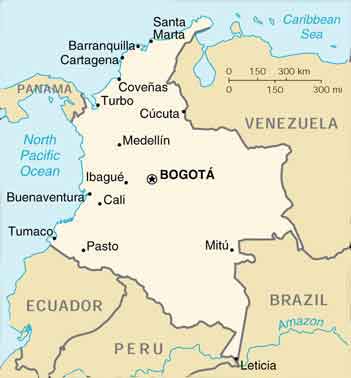
| Click map for larger view |
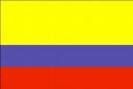
| Click flag for Country Report |



| TRAFFICKING IN PERSONS |
None reported.