| CROATIA Republic of Croatia Republika Hrvatska Joined United Nations: 22 May 1992 Human Rights as assured by their constitution Click here Updated 04 September 2012 |
| CAPITAL |
| POPULATION |
| CHIEF OF STATE |
| SELECTION PROCESS |
Zagreb
4,480,043 (July 2012 est.)
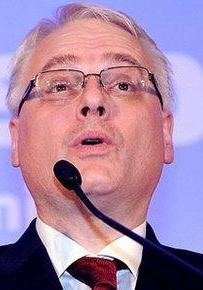
Ivo Jospovic
President since 18 February 2010
President since 18 February 2010
President elected by popular vote for a five-year term (eligible
for a second term); election last held 10 January 2010
Next scheduled election: January 2015
for a second term); election last held 10 January 2010
Next scheduled election: January 2015
HEAD OF GOVERNMENT
SELECTION PROCESS
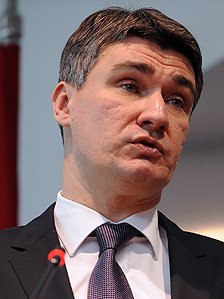
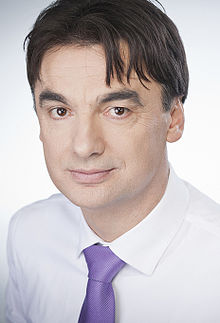
Zoran Milanovic
Prime Minister since 23 December 2011
Prime Minister since 23 December 2011
The leader of the majority party or the leader of the majority
coalition is usually appointed prime minister by the president and
then approved by the Assembly; prime minister appoints deputies
coalition is usually appointed prime minister by the president and
then approved by the Assembly; prime minister appoints deputies
| DECLARATION OF HUMAN RIGHTS |
| ETHNIC GROUPS |
Croat 89.6%, Serb 4.5%, other 5.9% (including Bosniak, Hungarian, Slovene, Czech, and Roma) (2001 census)
| RELIGIONS |
Roman Catholic 87.8%, Orthodox 4.4%, other Christian 0.4%, Muslim 1.3%, other and unspecified 0.9%, none
5.2% (2001 census)
5.2% (2001 census)
| GOVERNMENT STRUCTURE |
Presidential/parliamentary democracy comprised of 20 counties (zupanije, zupanija - singular) and 1 city (grad -
singular); Legal system is a based on civil law system which does not accept compulsory ICJ jurisdiction.
Executive: President elected by popular vote for a five-year term (eligible for a second term); election last held 10 January
2010 (next to be held January 2015); the leader of the majority party or the leader of the majority coalition is usually
appointed prime minister by the president and then approved by the Assembly
Legislative: Unicameral Assembly or Sabor (151 seats; members elected from party lists by popular vote to serve
four-year terms)
elections: last held on 4 December 2011 (next to be held in late 2015)
Judicial: Supreme Court; Constitutional Court; judges for both courts appointed for eight-year terms by the Judicial
Council of the Republic, which is elected by the Assembly
singular); Legal system is a based on civil law system which does not accept compulsory ICJ jurisdiction.
Executive: President elected by popular vote for a five-year term (eligible for a second term); election last held 10 January
2010 (next to be held January 2015); the leader of the majority party or the leader of the majority coalition is usually
appointed prime minister by the president and then approved by the Assembly
Legislative: Unicameral Assembly or Sabor (151 seats; members elected from party lists by popular vote to serve
four-year terms)
elections: last held on 4 December 2011 (next to be held in late 2015)
Judicial: Supreme Court; Constitutional Court; judges for both courts appointed for eight-year terms by the Judicial
Council of the Republic, which is elected by the Assembly
| LANGUAGES |
Croatian 96.1%, Serbian 1%, other and undesignated 2.9% (including Italian, Hungarian, Czech, Slovak, and
German) (2001 census)
German) (2001 census)
| BRIEF HISTORY |
| ECONOMIC OVERVIEW |
Though still one of the wealthiest of the former Yugoslav republics, Croatia's economy suffered badly during the
1991-95 war. The country''s output during that time collapsed and Croatia missed the early waves of investment in
Central and Eastern Europe that followed the fall of the Berlin Wall. Between 2000 and 2007, however, Croatia''s
economic fortunes began to improve slowly with moderate but steady GDP growth between 4% and 6% led by a
rebound in tourism and credit-driven consumer spending. Inflation over the same period remained tame and the
currency, the kuna, stable. Croatia experienced an abrupt slowdown in the economy in 2008 and has yet to recover.
Difficult problems still remain, including a stubbornly high unemployment rate, a growing trade deficit, uneven regional
development, and a challenging investment climate. The new government has announced a more flexible approach to
privatization, including the sale in the coming years of state-owned businesses that are not of strategic importance.
While macroeconomic stabilization has largely been achieved, structural reforms lag. Croatia will face significant
pressure as a result of the global financial crisis, due to reduced exports and capital inflows. The World Bank
expects Croatia to enter a recession in 2012 and has urged the new government to cut spending, particularly on
social programs. Croatia''s high foreign debt, anemic export sector, strained state budget, and over-reliance on
tourism revenue will result in higher risk to economic progress over the medium term.
Source: CIA World Factbook (select Croatia)
1991-95 war. The country''s output during that time collapsed and Croatia missed the early waves of investment in
Central and Eastern Europe that followed the fall of the Berlin Wall. Between 2000 and 2007, however, Croatia''s
economic fortunes began to improve slowly with moderate but steady GDP growth between 4% and 6% led by a
rebound in tourism and credit-driven consumer spending. Inflation over the same period remained tame and the
currency, the kuna, stable. Croatia experienced an abrupt slowdown in the economy in 2008 and has yet to recover.
Difficult problems still remain, including a stubbornly high unemployment rate, a growing trade deficit, uneven regional
development, and a challenging investment climate. The new government has announced a more flexible approach to
privatization, including the sale in the coming years of state-owned businesses that are not of strategic importance.
While macroeconomic stabilization has largely been achieved, structural reforms lag. Croatia will face significant
pressure as a result of the global financial crisis, due to reduced exports and capital inflows. The World Bank
expects Croatia to enter a recession in 2012 and has urged the new government to cut spending, particularly on
social programs. Croatia''s high foreign debt, anemic export sector, strained state budget, and over-reliance on
tourism revenue will result in higher risk to economic progress over the medium term.
Source: CIA World Factbook (select Croatia)
| POLITICAL CLIMATE |
In 1989, the government of the Socialist Republic of Croatia decided to tolerate political parties in response to
growing demands to allow political activities outside the Communist party. The first political party founded in Croatia
since the beginning of the Communist rule was the Croatian Social Liberal Party (HSLS), established on 20 May
1989, followed by the Croatian Democratic Union on 17 June 1989. In December 1989, Ivica Račan became the
head of the reformed Communist party. At the same time, the party cancelled political trials, released political
prisoners and endorsed a multi-party political system. The Civil Organisations Act was formally amended to allow
political parties on 11 January 1990, legalising the parties that were already founded. By the time of the first round of
the first multi-party elections, held on 22 April 1990, there were 33 registered parties. The most relevant parties and
coalitions were the League of Communists of Croatia - Party of Democratic Changes (the renamed Communist
party), the HDZ and the Coalition of People's Accord (KNS), which included the HSLS led by Dražen Budiša and
the HSS, which resumed operating in Croatia in December 1989. The runoff election was held on 6 May 1990. The
Croatian Democratic Union (HDZ), led by Franjo Tuđman, won ahead of the reformed Communists and the KNS.
The KNS, led by Savka Dabčević-Kučar and Miko Tripalo – who had led the Croatian Spring – soon splintered
into individual parties. The HDZ maintained a parliamentary majority until the 2000 parliamentary election, when it
was defeated by the Social Democratic Party of Croatia (SDP), led by Račan. Franjo Gregurić, of the HDZ, was
appointed prime minister to head a national unity government in July 1991 as the Croatian War of Independence
escalated in intensity. His appointment lasted until August 1992. During his term, Croatia's declaration of
independence from Yugoslavia took effect on 8 October 1991. The HDZ returned to power in the 2003
parliamentary election, while the SDP remained the largest opposition party. Franjo Tuđman won the presidential
elections in 1992 and 1997. During his terms, the Constitution of Croatia, adopted in 1990, provided for a semi-
presidential system. After Tuđman's death in 1999, the constitution was amended and much of the presidential
powers were transferred to the parliament and the government. Stjepan Mesić won two consecutive terms in 2000
and 2005 on a Croatian People's Party (HNS) ticket. Ivo Josipović, an SDP candidate, won the presidential
elections in December 2009 and January 2010.
Source: Wikipedia: Politics of Croatia
growing demands to allow political activities outside the Communist party. The first political party founded in Croatia
since the beginning of the Communist rule was the Croatian Social Liberal Party (HSLS), established on 20 May
1989, followed by the Croatian Democratic Union on 17 June 1989. In December 1989, Ivica Račan became the
head of the reformed Communist party. At the same time, the party cancelled political trials, released political
prisoners and endorsed a multi-party political system. The Civil Organisations Act was formally amended to allow
political parties on 11 January 1990, legalising the parties that were already founded. By the time of the first round of
the first multi-party elections, held on 22 April 1990, there were 33 registered parties. The most relevant parties and
coalitions were the League of Communists of Croatia - Party of Democratic Changes (the renamed Communist
party), the HDZ and the Coalition of People's Accord (KNS), which included the HSLS led by Dražen Budiša and
the HSS, which resumed operating in Croatia in December 1989. The runoff election was held on 6 May 1990. The
Croatian Democratic Union (HDZ), led by Franjo Tuđman, won ahead of the reformed Communists and the KNS.
The KNS, led by Savka Dabčević-Kučar and Miko Tripalo – who had led the Croatian Spring – soon splintered
into individual parties. The HDZ maintained a parliamentary majority until the 2000 parliamentary election, when it
was defeated by the Social Democratic Party of Croatia (SDP), led by Račan. Franjo Gregurić, of the HDZ, was
appointed prime minister to head a national unity government in July 1991 as the Croatian War of Independence
escalated in intensity. His appointment lasted until August 1992. During his term, Croatia's declaration of
independence from Yugoslavia took effect on 8 October 1991. The HDZ returned to power in the 2003
parliamentary election, while the SDP remained the largest opposition party. Franjo Tuđman won the presidential
elections in 1992 and 1997. During his terms, the Constitution of Croatia, adopted in 1990, provided for a semi-
presidential system. After Tuđman's death in 1999, the constitution was amended and much of the presidential
powers were transferred to the parliament and the government. Stjepan Mesić won two consecutive terms in 2000
and 2005 on a Croatian People's Party (HNS) ticket. Ivo Josipović, an SDP candidate, won the presidential
elections in December 2009 and January 2010.
Source: Wikipedia: Politics of Croatia
| INTERNATIONAL DISPUTES |
Dispute remains with Bosnia and Herzegovina over several small sections of the boundary related to maritime access
that hinders ratification of the 1999 border agreement; the Croatia-Slovenia land and maritime boundary agreement,
which would have ceded most of Pirin Bay and maritime access to Slovenia and several villages to Croatia, remains
unratified and in dispute; Slovenia also protests Croatia's 2003 claim to an exclusive economic zone in the Adriatic;
as a European Union peripheral state, Slovenia imposed a hard border Schengen regime with non-member Croatia
in December 2007
that hinders ratification of the 1999 border agreement; the Croatia-Slovenia land and maritime boundary agreement,
which would have ceded most of Pirin Bay and maritime access to Slovenia and several villages to Croatia, remains
unratified and in dispute; Slovenia also protests Croatia's 2003 claim to an exclusive economic zone in the Adriatic;
as a European Union peripheral state, Slovenia imposed a hard border Schengen regime with non-member Croatia
in December 2007


| REFUGEES AND INTERNALLY DISPLACED PERSONS (IDP) |
IDPs: 2,900-7,000 (Croats and Serbs displaced in 1992-95 war) (2007)
| ILLICIT DRUGS |
Transit point along the Balkan route for Southwest Asian heroin to Western Europe; has been used as a transit point
for maritime shipments of South American cocaine bound for Western Europe (2008)
for maritime shipments of South American cocaine bound for Western Europe (2008)
| HUMAN RIGHTS STATEMENTS, ANALYSIS AND CRITIQUES |
2011 Human Rights Report: Croatia
Bureau of Democracy, Human Rights, and Labor
2011 Country Reports on Human Rights Practices
May 24, 2012
The Republic of Croatia is a constitutional parliamentary democracy. Legislative authority is vested in the unicameral parliament
(Sabor). The president serves as head of state and nominates the prime minister, who leads the government. Domestic and
international observers stated that parliamentary elections held in December were in accordance with international standards.
Security forces reported to civilian authorities.
During the year the most important problems in the country were societal discrimination and some instances of violence directed
against members of ethnic minorities, particularly ethnic Serbs and Roma, which discouraged the return of displaced persons to
their homes, slowed property restitution, and delayed recovery from the conflict in the early 1990s. Hostility and violence directed
at lesbian, gay, bisexual, and transgender (LGBT) persons increased during the year. Official corruption remained a deep-seated
problem despite the ongoing prosecution of a former prime minister and other senior Croatian officials.
Other important human rights problems included prison conditions, such as overcrowding, and delays in the judicial system.
Property restitution claims stemming from World War II, the Communist era, and the wars of 1991-95 remain unresolved.
Instances of restrictions on freedom of association, child abuse, limitations on the right to strike, restrictions on collective
bargaining, and child labor problems were also reported.
The government took significant steps to prosecute and punish officials who committed abuses of human rights. It has not,
however, succeeded in establishing a certainty of punishment for abusers, and lingering ethnic prejudices from the wars of 1991-95
remain.
Click here to read more »
Bureau of Democracy, Human Rights, and Labor
2011 Country Reports on Human Rights Practices
May 24, 2012
The Republic of Croatia is a constitutional parliamentary democracy. Legislative authority is vested in the unicameral parliament
(Sabor). The president serves as head of state and nominates the prime minister, who leads the government. Domestic and
international observers stated that parliamentary elections held in December were in accordance with international standards.
Security forces reported to civilian authorities.
During the year the most important problems in the country were societal discrimination and some instances of violence directed
against members of ethnic minorities, particularly ethnic Serbs and Roma, which discouraged the return of displaced persons to
their homes, slowed property restitution, and delayed recovery from the conflict in the early 1990s. Hostility and violence directed
at lesbian, gay, bisexual, and transgender (LGBT) persons increased during the year. Official corruption remained a deep-seated
problem despite the ongoing prosecution of a former prime minister and other senior Croatian officials.
Other important human rights problems included prison conditions, such as overcrowding, and delays in the judicial system.
Property restitution claims stemming from World War II, the Communist era, and the wars of 1991-95 remain unresolved.
Instances of restrictions on freedom of association, child abuse, limitations on the right to strike, restrictions on collective
bargaining, and child labor problems were also reported.
The government took significant steps to prosecute and punish officials who committed abuses of human rights. It has not,
however, succeeded in establishing a certainty of punishment for abusers, and lingering ethnic prejudices from the wars of 1991-95
remain.
Click here to read more »
30 December 2010
Human Rights Council
Sixteenth session
Agenda item 3
Promotion and protection of all human rights, civil, political, economic, social and cultural rights, including the right to
development
Report of the Special Rapporteur on adequate housing as a component of the right to an adequate standard of living, and
on the right to non-discrimination in this context, Raquel Rolnik
Mission to Croatia
Summary
The Special Rapporteur on adequate housing as a component of the right to an adequate standard of living, and on the right to non-
discrimination in this context, undertook an official visit to Croatia from 5 to 13 July 2010 to examine the realization of the right to
adequate housing in the country and the achievements and difficulties encountered in its fulfilment, in particular in relation to post-
conflict housing reconstruction and restitution, access to housing in the context of the transition from a State-run to a market
economy, and current housing challenges and policies.
The first part of the report provides a brief overview of the evolution of the national housing situation in Croatia. The second part
of the report discusses the challenges to security of tenure in transitional and post-conflict Croatia; analyses the realization of the
right to adequate housing of vulnerable groups, including refugees, internally displaced persons, minorities, homeless people, low-
income families and young people; and examines the present and future challenges of housing policies with regards to social
housing, affordability, access to basic infrastructure and services, and participation and accountability in the design and
implementation of policies. The Special Rapporteur concludes her report with a number of recommendations addressed to the
Government of Croatia and to the international community.
Click here to read more »
Human Rights Council
Sixteenth session
Agenda item 3
Promotion and protection of all human rights, civil, political, economic, social and cultural rights, including the right to
development
Report of the Special Rapporteur on adequate housing as a component of the right to an adequate standard of living, and
on the right to non-discrimination in this context, Raquel Rolnik
Mission to Croatia
Summary
The Special Rapporteur on adequate housing as a component of the right to an adequate standard of living, and on the right to non-
discrimination in this context, undertook an official visit to Croatia from 5 to 13 July 2010 to examine the realization of the right to
adequate housing in the country and the achievements and difficulties encountered in its fulfilment, in particular in relation to post-
conflict housing reconstruction and restitution, access to housing in the context of the transition from a State-run to a market
economy, and current housing challenges and policies.
The first part of the report provides a brief overview of the evolution of the national housing situation in Croatia. The second part
of the report discusses the challenges to security of tenure in transitional and post-conflict Croatia; analyses the realization of the
right to adequate housing of vulnerable groups, including refugees, internally displaced persons, minorities, homeless people, low-
income families and young people; and examines the present and future challenges of housing policies with regards to social
housing, affordability, access to basic infrastructure and services, and participation and accountability in the design and
implementation of policies. The Special Rapporteur concludes her report with a number of recommendations addressed to the
Government of Croatia and to the international community.
Click here to read more »
FREEDOM IN THE WORLD REPORT- 2012
Political Rights Score: 1
Civil Liberties Score: 2
Status: Free
Overview
Croatia completed European Union accession negotiations in June 2011, with membership expected in 2013. The government made
progress on key EU reforms and continued to cooperate with The International Criminal Tribunal for the former Yugoslavia in a
year that saw significant war crimes convictions. The opposition coalition Kukuriku defeated the ruling Croatian Democratic Union
in December parliamentary elections.
Government corruption dominated public debate throughout 2010 and remained prominent in 2011. In October, the State Attorney's
Office for the Suppression of Corruption and Organized Crime (USKOK) expanded its ongoing investigation into the so-called Fimi
media case, which includes indictments of Sanader and other HDZ officials, to include the HDZ as a legal entity. In Croatia's first
legal case against a political party, the HDZ is accused of funneling money from public companies to a slush fund from 2003 to
2009. In November, a Croatian court added two other corruption indictments against Sanader.
Croatia made strides in 2011 to cooperate with the International Criminal Tribunal for the former Yugoslavia (ICTY), a pre-
condition for EU membership. In April, the court convicted Croatian army generals Ante Gotovina and Mladen Markač of crimes
against humanity for participating in Operation Storm, a 1995 campaign to remove ethnic Serbs from the Krajina, a self-proclaimed
Serb republic within Croatia that existed from 1991 to 1995.
Though Croatia’s EU bid had stalled in recent years over concerns about insufficient cooperation with the ICTY, mixed results at
reducing corruption, and a territorial dispute with Slovenia, the country closed the final four of 35 accession negotiation chapters
required to join the EU in 2011. Noting reform progress in two key chapters—judiciary and fundamental rights and competition
policy—the European Commission (EC), the leading body of the EU, cleared Croatia to sign the Accession Treaty, which Josipović
and Kosor did in Brussels on December 9. Croatia should become the 28th EU member state in July 2013, following ratification
procedures.
In the December 4 parliamentary elections, the center-left opposition Kukuriku coalition, comprising the SDP and three other
parties, placed first with 80 seats. The HDZ and its coalition partners, the Croatian Civic Party and the Democratic Centre, followed
with 47 seats. Zoran Milanović of the SDP succeeded Kosor as prime minister.
Click here to read more »
Political Rights Score: 1
Civil Liberties Score: 2
Status: Free
Overview
Croatia completed European Union accession negotiations in June 2011, with membership expected in 2013. The government made
progress on key EU reforms and continued to cooperate with The International Criminal Tribunal for the former Yugoslavia in a
year that saw significant war crimes convictions. The opposition coalition Kukuriku defeated the ruling Croatian Democratic Union
in December parliamentary elections.
Government corruption dominated public debate throughout 2010 and remained prominent in 2011. In October, the State Attorney's
Office for the Suppression of Corruption and Organized Crime (USKOK) expanded its ongoing investigation into the so-called Fimi
media case, which includes indictments of Sanader and other HDZ officials, to include the HDZ as a legal entity. In Croatia's first
legal case against a political party, the HDZ is accused of funneling money from public companies to a slush fund from 2003 to
2009. In November, a Croatian court added two other corruption indictments against Sanader.
Croatia made strides in 2011 to cooperate with the International Criminal Tribunal for the former Yugoslavia (ICTY), a pre-
condition for EU membership. In April, the court convicted Croatian army generals Ante Gotovina and Mladen Markač of crimes
against humanity for participating in Operation Storm, a 1995 campaign to remove ethnic Serbs from the Krajina, a self-proclaimed
Serb republic within Croatia that existed from 1991 to 1995.
Though Croatia’s EU bid had stalled in recent years over concerns about insufficient cooperation with the ICTY, mixed results at
reducing corruption, and a territorial dispute with Slovenia, the country closed the final four of 35 accession negotiation chapters
required to join the EU in 2011. Noting reform progress in two key chapters—judiciary and fundamental rights and competition
policy—the European Commission (EC), the leading body of the EU, cleared Croatia to sign the Accession Treaty, which Josipović
and Kosor did in Brussels on December 9. Croatia should become the 28th EU member state in July 2013, following ratification
procedures.
In the December 4 parliamentary elections, the center-left opposition Kukuriku coalition, comprising the SDP and three other
parties, placed first with 80 seats. The HDZ and its coalition partners, the Croatian Civic Party and the Democratic Centre, followed
with 47 seats. Zoran Milanović of the SDP succeeded Kosor as prime minister.
Click here to read more »
Balkans: The right to know: Families still left in the dark in the Balkans
30 August 2012
INTRODUCTION
The enforced disappearance and abduction of tens of thousands of people constitutes one of the most serious unresolved human
rights violations from the armed conflicts in the Balkans in the 1990s and 2001. These violations cannot be consigned to the past.
They result in ongoing, daily pain for the relatives still waiting to know the fate and the whereabouts of their loved ones, still
searching for truth, justice and reparations.
It is estimated that 40,000 persons went missing as a consequence of the armed conflicts in the former Yugoslavia, of which
around 30,000 are from Bosnia and Herzegovina (BiH). Some 14,000 people remain unaccounted for. Of these, more than 10,500
are linked to the conflict in BiH, 2,400 to the conflict in Croatia and some 1,800 to the conflict in Kosovo. The ICRC estimates that
these missing people affect the lives of another 200,000 people who still search for their family members.
Enforced disappearances and abductions constitute a crime under international law, and in certain circumstances can amount to a
crime against humanity or a war crime. The governments of Croatia, BiH, the former Yugoslav Republic of Macedonia
(Macedonia), Montenegro, Serbia and Kosovo have failed to abide by their obligations, as set out in international law, to investigate
and prosecute enforced disappearances and abductions, and to bring those responsible to justice.
Lack of investigations and prosecutions into war crimes related to enforced disappearances and abductions remains a serious
concern throughout the Balkans. There are continuing obstacles to the investigation and prosecution of war crimes, crimes against
humanity and genocide. This occurs especially where members of the government, ruling political parties and their allies, and
members of the military and police forces are suspects. The governments have also failed to provide adequate, effective and
prompt reparation to the victims and their families.
Click here to read more »
30 August 2012
INTRODUCTION
The enforced disappearance and abduction of tens of thousands of people constitutes one of the most serious unresolved human
rights violations from the armed conflicts in the Balkans in the 1990s and 2001. These violations cannot be consigned to the past.
They result in ongoing, daily pain for the relatives still waiting to know the fate and the whereabouts of their loved ones, still
searching for truth, justice and reparations.
It is estimated that 40,000 persons went missing as a consequence of the armed conflicts in the former Yugoslavia, of which
around 30,000 are from Bosnia and Herzegovina (BiH). Some 14,000 people remain unaccounted for. Of these, more than 10,500
are linked to the conflict in BiH, 2,400 to the conflict in Croatia and some 1,800 to the conflict in Kosovo. The ICRC estimates that
these missing people affect the lives of another 200,000 people who still search for their family members.
Enforced disappearances and abductions constitute a crime under international law, and in certain circumstances can amount to a
crime against humanity or a war crime. The governments of Croatia, BiH, the former Yugoslav Republic of Macedonia
(Macedonia), Montenegro, Serbia and Kosovo have failed to abide by their obligations, as set out in international law, to investigate
and prosecute enforced disappearances and abductions, and to bring those responsible to justice.
Lack of investigations and prosecutions into war crimes related to enforced disappearances and abductions remains a serious
concern throughout the Balkans. There are continuing obstacles to the investigation and prosecution of war crimes, crimes against
humanity and genocide. This occurs especially where members of the government, ruling political parties and their allies, and
members of the military and police forces are suspects. The governments have also failed to provide adequate, effective and
prompt reparation to the victims and their families.
Click here to read more »
Croatia: Don’t Force Change in Pride March Route
Threat of Violence Requires Protection, Not Interference
May 31, 2012
(Berlin, May 31, 2012) – Authorities in the Croatian city of Split should permit the 2012 Gay Pride March on June 9, 2012, to end
on the city’s waterfront as planned, Human Rights Watch said today. Croatian police have an obligation to facilitate the peaceful
passage of the pride march, protect the safety of the participants, and ensure that anti-gay protesters are not allowed to disrupt or
interfere with the parade, Human Rights Watch said.
On May 28, the Split City Council issued a decision refusing permission for the march to take the same route as last year, to the
city’s waterfront. The City Council cited the need to avoid a repeat of the violence during last year’s march, when an estimated
10,000 anti-gay protesters turned up and some attacked 200 peaceful demonstrators. The decision followed several written
petitions against the march by Split residents.
“Denying Split’s Gay Pride March its chosen route rewards violent bigotry against lesbian, gay, bisexual, and transgender people,”
said Lydia Gall, Eastern Europe and Balkans researcher at Human Rights Watch. “It sends a signal that LGBT people don’t deserve
the same rights as everyone else.”
The Split gay pride organizer, Kontra, a lesbian association, stated on its website that it will challenge the City Council decision in
court. Kontra and national media have reported that Split police had not expressed any security concerns with the original route.
On May 28, the Croatian Gender Equality Ombudsman condemned the City Council’s decision and called on the City Council to
allow the march to proceed on its chosen route. The Ombudsman said the refusal constitutes “direct discrimination on the basis of
sexual orientation,” as it was not based on security concerns but rather on the complaints made by civil organizations with
“homophobic attitudes.”
Croatian media reports indicate that Interior Minister Ranko Ostojic and Public Administration Minister Arsen Bauk have both
expressed their support for the original route on their personal social networking sites. Several people were injured when the anti-
gay protesters rioted at the 2011 march. Police arrested 137 people, resulting in seven convictions in April 2012.
The incident happened the day after Croatia was accepted for membership in the European Union. Respect for human rights is a
precondition for membership. The October 2011 European Commission Annual Progress report on Croatia stated that the
government needed to do more to address homophobic and xenophobic sentiment in society.
Bans and cancellations of gay pride marches are not uncommon in the Balkans. Following violence during a gay pride march in
Belgrade, Serbia, in 2010, local authorities banned the 2011 gay pride march, citing the risk of renewed violence. No gay pride
marches have ever been organized in Bosnia and Herzegovina, Macedonia, or Kosovo.
Click here to read more »
Threat of Violence Requires Protection, Not Interference
May 31, 2012
(Berlin, May 31, 2012) – Authorities in the Croatian city of Split should permit the 2012 Gay Pride March on June 9, 2012, to end
on the city’s waterfront as planned, Human Rights Watch said today. Croatian police have an obligation to facilitate the peaceful
passage of the pride march, protect the safety of the participants, and ensure that anti-gay protesters are not allowed to disrupt or
interfere with the parade, Human Rights Watch said.
On May 28, the Split City Council issued a decision refusing permission for the march to take the same route as last year, to the
city’s waterfront. The City Council cited the need to avoid a repeat of the violence during last year’s march, when an estimated
10,000 anti-gay protesters turned up and some attacked 200 peaceful demonstrators. The decision followed several written
petitions against the march by Split residents.
“Denying Split’s Gay Pride March its chosen route rewards violent bigotry against lesbian, gay, bisexual, and transgender people,”
said Lydia Gall, Eastern Europe and Balkans researcher at Human Rights Watch. “It sends a signal that LGBT people don’t deserve
the same rights as everyone else.”
The Split gay pride organizer, Kontra, a lesbian association, stated on its website that it will challenge the City Council decision in
court. Kontra and national media have reported that Split police had not expressed any security concerns with the original route.
On May 28, the Croatian Gender Equality Ombudsman condemned the City Council’s decision and called on the City Council to
allow the march to proceed on its chosen route. The Ombudsman said the refusal constitutes “direct discrimination on the basis of
sexual orientation,” as it was not based on security concerns but rather on the complaints made by civil organizations with
“homophobic attitudes.”
Croatian media reports indicate that Interior Minister Ranko Ostojic and Public Administration Minister Arsen Bauk have both
expressed their support for the original route on their personal social networking sites. Several people were injured when the anti-
gay protesters rioted at the 2011 march. Police arrested 137 people, resulting in seven convictions in April 2012.
The incident happened the day after Croatia was accepted for membership in the European Union. Respect for human rights is a
precondition for membership. The October 2011 European Commission Annual Progress report on Croatia stated that the
government needed to do more to address homophobic and xenophobic sentiment in society.
Bans and cancellations of gay pride marches are not uncommon in the Balkans. Following violence during a gay pride march in
Belgrade, Serbia, in 2010, local authorities banned the 2011 gay pride march, citing the risk of renewed violence. No gay pride
marches have ever been organized in Bosnia and Herzegovina, Macedonia, or Kosovo.
Click here to read more »
TRANSLATED FROM CROATIAN BY GOOGLE TRANSLATE
21st March 2012.
Deputy Prime Minister Mimica received Thommasa Hammarberg, Commissioner for Human Rights of the Council of
Europe
Deputy Prime Minister for Internal, External and European Affairs, mr. Sc. Neven Mimica, received on Wednesday, 21 March 2012.
The Thommasa Hammarberg, Commissioner for Human Rights of the Council of Europe.
Commissioner for Human Rights of the Council of Europe Thommas Hammarberg presented a document entitled "Post-war justice
and lasting peace in the former Yugoslavia."
The document focuses on four key components of post-war justice that include measures to eliminate impunity, provisions for
adequate and effective compensation for all victims of war, the fact-finding and dealing with the truth, and the establishment of
effective and accountable state institutions in order to avoid the appearance of a new crude violations of human rights. Concluding
remarks and recommendations contain the region's countries for accession to certain relevant legal instruments of the Council of
Europe.
Mimica vice president welcomed the activities and efforts of the Council of Europe to protect and promote human rights. He stressed
that Croatia is a party almost all international instruments in this field and is one the most accepted and supervisory mechanisms and
the newly added protocols.
He highlighted the importance of institutional and legislative reforms undertaken in the field of human rights, particularly the rights of
national minorities, which have been identified and the closure of Chapter 23 and completion of the accession negotiations. With
regard to the prosecution of war crimes confirmed the continuation of full cooperation with the ICTY and Croatian determination and
the clear political will to prosecute war crimes before domestic courts. Also, Croatia actively participates in regional processes aimed
at resolving the remaining issues of refugees and internally displaced persons.
Final Deputy Prime Minister Mimica recalled that Croatia's progress in implementing the measures in the area of human rights
protection in the framework of the pre-accession monitoring mechanism regularly inform the European Union.
Click here to read more »
21st March 2012.
Deputy Prime Minister Mimica received Thommasa Hammarberg, Commissioner for Human Rights of the Council of
Europe
Deputy Prime Minister for Internal, External and European Affairs, mr. Sc. Neven Mimica, received on Wednesday, 21 March 2012.
The Thommasa Hammarberg, Commissioner for Human Rights of the Council of Europe.
Commissioner for Human Rights of the Council of Europe Thommas Hammarberg presented a document entitled "Post-war justice
and lasting peace in the former Yugoslavia."
The document focuses on four key components of post-war justice that include measures to eliminate impunity, provisions for
adequate and effective compensation for all victims of war, the fact-finding and dealing with the truth, and the establishment of
effective and accountable state institutions in order to avoid the appearance of a new crude violations of human rights. Concluding
remarks and recommendations contain the region's countries for accession to certain relevant legal instruments of the Council of
Europe.
Mimica vice president welcomed the activities and efforts of the Council of Europe to protect and promote human rights. He stressed
that Croatia is a party almost all international instruments in this field and is one the most accepted and supervisory mechanisms and
the newly added protocols.
He highlighted the importance of institutional and legislative reforms undertaken in the field of human rights, particularly the rights of
national minorities, which have been identified and the closure of Chapter 23 and completion of the accession negotiations. With
regard to the prosecution of war crimes confirmed the continuation of full cooperation with the ICTY and Croatian determination and
the clear political will to prosecute war crimes before domestic courts. Also, Croatia actively participates in regional processes aimed
at resolving the remaining issues of refugees and internally displaced persons.
Final Deputy Prime Minister Mimica recalled that Croatia's progress in implementing the measures in the area of human rights
protection in the framework of the pre-accession monitoring mechanism regularly inform the European Union.
Click here to read more »
TRANSLATED FROM CROATIAN BY GOOGLE TRANSLATE
International Conference on the Application of the Law on Free Legal Aid
26 July 2010
UNHCR Representation in Croatia, the Croatian Ministry of Justice, the Center for Human Rights and the Coalition for Promotion
and Protection of Human Rights organized at the Hotel International in Zagreb, 26 July 2010., an international conference entitled
"Access to Justice: A year of implementation of the Law on Free Legal Aid".
Conference participants were civil society organizations from the Croatian, the Croatian representatives of the Ministries (Ministry
of Interior, Ministry of Justice), the Office of the Ombudsman / ca, Office of the Government, the Embassy of the Republic of
Croatia, International organizations, government offices in Croatia, UNHCR, Centre for Human Rights , participants outside the
Croatian and many others.
UNHCR Representation in Croatia, the Croatian Ministry of Justice, the Center for Human Rights and the Coalition for Promotion
and Protection of Human Rights organized at the Hotel International in Zagreb, 26 July 2010., an international conference entitled
"Access to Justice: A year of implementation of the Law on Free Legal Aid".
Conference participants were civil society organizations from the Croatian, the Croatian representatives of the Ministries (Ministry
of Interior, Ministry of Justice), the Office of the Ombudsman / ca, Office of the Government, the Embassy of the Republic of
Croatia, International organizations, government offices in Croatia, UNHCR, Centre for Human Rights , participants outside the
Croatian and many others.
A year and a half ago, in Croatia began to apply the Law on Free Legal Aid, with whom, according to the president of the Assembly
of the Coalition for the Protection and Promotion of Human Rights, Ljiljana Christmas-Krstanović, we can not be satisfied, because
it does not suit the needs of the indigent citizens conditions for free legal assistance and does not ensure equal enjoyment of their
rights in proceedings before administrative and judicial bodies, and what is it's main purpose.
The main objectives of the conference in terms of the current implementation of the Act were:
First Evaluation of the current implementation of
Second Identify both positive and problematic aspects of the implementation
3rd Harmonization of all stakeholders in providing free legal aid to take concrete steps to facilitate the creation of an effective
system of free legal aid in Croatia
As a result of the evaluation of the current implementation, many problems that are tried at the International Conference to discuss
the leading people in the struggle for human rights.
Some of these problems were:
· Insufficient awareness of the citizens about the existence of and the opportunities in the complexity of the previous application
form
· Insufficient availability of applications for approval of free legal aid throughout the country.
· Conditions of approval and that their lack of compliance with the difficult economic and social conditions in which they live
Croatian citizens
· Problem of interpretation of application fields (eg, determining the notion of existential questions of citizens)
· Problems interpreting the statutory criteria
· Problem of receiving the refusal of citizens / ki with a referral by individual lawyers
· Problems compensation litigation cost
· Issue of strengthening and inclusion of legal clinics in the system
· Civil society organizations in the system with respect to its project financing
· Uneven practices of the state administration
· The problem of defective legal assistance to facilitate access to the justice system than other forms of social assistance to citizens
With regard to the problems in the implementation of the Act, the majority of conference participants had to admit that the purpose
of the Law on Free Legal Aid in terms of allowing citizens indigent providing expert legal assistance for the realization of certain
rights, and ensuring equal access to courts and other state government, is not entirely true.
Click here to read more »
International Conference on the Application of the Law on Free Legal Aid
26 July 2010
UNHCR Representation in Croatia, the Croatian Ministry of Justice, the Center for Human Rights and the Coalition for Promotion
and Protection of Human Rights organized at the Hotel International in Zagreb, 26 July 2010., an international conference entitled
"Access to Justice: A year of implementation of the Law on Free Legal Aid".
Conference participants were civil society organizations from the Croatian, the Croatian representatives of the Ministries (Ministry
of Interior, Ministry of Justice), the Office of the Ombudsman / ca, Office of the Government, the Embassy of the Republic of
Croatia, International organizations, government offices in Croatia, UNHCR, Centre for Human Rights , participants outside the
Croatian and many others.
UNHCR Representation in Croatia, the Croatian Ministry of Justice, the Center for Human Rights and the Coalition for Promotion
and Protection of Human Rights organized at the Hotel International in Zagreb, 26 July 2010., an international conference entitled
"Access to Justice: A year of implementation of the Law on Free Legal Aid".
Conference participants were civil society organizations from the Croatian, the Croatian representatives of the Ministries (Ministry
of Interior, Ministry of Justice), the Office of the Ombudsman / ca, Office of the Government, the Embassy of the Republic of
Croatia, International organizations, government offices in Croatia, UNHCR, Centre for Human Rights , participants outside the
Croatian and many others.
A year and a half ago, in Croatia began to apply the Law on Free Legal Aid, with whom, according to the president of the Assembly
of the Coalition for the Protection and Promotion of Human Rights, Ljiljana Christmas-Krstanović, we can not be satisfied, because
it does not suit the needs of the indigent citizens conditions for free legal assistance and does not ensure equal enjoyment of their
rights in proceedings before administrative and judicial bodies, and what is it's main purpose.
The main objectives of the conference in terms of the current implementation of the Act were:
First Evaluation of the current implementation of
Second Identify both positive and problematic aspects of the implementation
3rd Harmonization of all stakeholders in providing free legal aid to take concrete steps to facilitate the creation of an effective
system of free legal aid in Croatia
As a result of the evaluation of the current implementation, many problems that are tried at the International Conference to discuss
the leading people in the struggle for human rights.
Some of these problems were:
· Insufficient awareness of the citizens about the existence of and the opportunities in the complexity of the previous application
form
· Insufficient availability of applications for approval of free legal aid throughout the country.
· Conditions of approval and that their lack of compliance with the difficult economic and social conditions in which they live
Croatian citizens
· Problem of interpretation of application fields (eg, determining the notion of existential questions of citizens)
· Problems interpreting the statutory criteria
· Problem of receiving the refusal of citizens / ki with a referral by individual lawyers
· Problems compensation litigation cost
· Issue of strengthening and inclusion of legal clinics in the system
· Civil society organizations in the system with respect to its project financing
· Uneven practices of the state administration
· The problem of defective legal assistance to facilitate access to the justice system than other forms of social assistance to citizens
With regard to the problems in the implementation of the Act, the majority of conference participants had to admit that the purpose
of the Law on Free Legal Aid in terms of allowing citizens indigent providing expert legal assistance for the realization of certain
rights, and ensuring equal access to courts and other state government, is not entirely true.
Click here to read more »
TRANSLATED FROM CROATIAN BY GOOGLE TRANSLATE
National Preventive Mechanism (NPM) began to operate in the full range
The Office of the Ombudsman
12th July 2012
The first meeting of the National Preventive Mechanism for the Prevention of Torture and Other Cruel, Inhuman or Degrading
Treatment or Punishment (NPM). In addition to experts of the Office of the Ombudsman, the work of NPM included two
academics and two representatives of organizations registered to conduct business in the field of human rights. At the first meeting
the NPM have agreed on the method and work plan for 2012. year.
United Nations General Assembly 18th is December 2002. adopted the Optional Protocol to the Convention against Torture and
Other Cruel, Inhuman or Degrading Treatment or Punishment (OPCAT). In accordance with Article 3 OPCAT each State Party
undertakes to establish, designate or maintain at the national level, one or more of the body that will make regular visits to places
where persons are deprived of their liberty or who may be deprived of their liberty, in order to prevent torture and other cruel,
inhuman or Degrading Treatment or Punishment. It does a body called the National Preventive Mechanism (NPM).
National preventive functions of the body to prevent torture assigned to the Office of the Ombudsman has a special law in February
2011. year because the institution already has in its jurisdiction regular monitoring of places where persons are deprived of their
liberty or whose freedom of movement is restricted. NPM is able to fully start working only when the budget for 2012 provided
with the necessary funds to get started.
In accordance with Article 3 Law on national preventive mechanisms for the prevention of torture and other cruel, inhuman or
degrading treatment or punish Anja NPM tasks are:
- Regular visits to the places in which they are or may hold persons deprived of their liberty for gum Anja their protection against
torture and other cruel, inhuman or degrading treatment or punish Anja ,
- Making recommendations to government authorities and institutions to Improves Anja procedure Anja of persons deprived of
liberty and the conditions in which they are located for preventing Anja Torture and other cruel, inhuman or degrading treatment or
punish Anja ,
- Make suggestions and comments on the laws and regulations of that draft laws and other regulations in order promotes Anja
protection of persons deprived of their liberty against torture and other cruel, inhuman or degrading treatment or punish Anja ,
- Cooperation with the United Nations Subcommittee on Prevention of Torture and Other Cruel, Inhuman or Degrading Treatment
or punishes Anja (Hereinafter referred to as the Subcommittee on Prevention of Torture), information and meeting with the
Subcommittee on Prevention of Torture.
Detainees are persons who provided any detention, imprisonment or placement in a public supervision and that it not permitted to
leave at will.
Click here to read more »
National Preventive Mechanism (NPM) began to operate in the full range
The Office of the Ombudsman
12th July 2012
The first meeting of the National Preventive Mechanism for the Prevention of Torture and Other Cruel, Inhuman or Degrading
Treatment or Punishment (NPM). In addition to experts of the Office of the Ombudsman, the work of NPM included two
academics and two representatives of organizations registered to conduct business in the field of human rights. At the first meeting
the NPM have agreed on the method and work plan for 2012. year.
United Nations General Assembly 18th is December 2002. adopted the Optional Protocol to the Convention against Torture and
Other Cruel, Inhuman or Degrading Treatment or Punishment (OPCAT). In accordance with Article 3 OPCAT each State Party
undertakes to establish, designate or maintain at the national level, one or more of the body that will make regular visits to places
where persons are deprived of their liberty or who may be deprived of their liberty, in order to prevent torture and other cruel,
inhuman or Degrading Treatment or Punishment. It does a body called the National Preventive Mechanism (NPM).
National preventive functions of the body to prevent torture assigned to the Office of the Ombudsman has a special law in February
2011. year because the institution already has in its jurisdiction regular monitoring of places where persons are deprived of their
liberty or whose freedom of movement is restricted. NPM is able to fully start working only when the budget for 2012 provided
with the necessary funds to get started.
In accordance with Article 3 Law on national preventive mechanisms for the prevention of torture and other cruel, inhuman or
degrading treatment or punish Anja NPM tasks are:
- Regular visits to the places in which they are or may hold persons deprived of their liberty for gum Anja their protection against
torture and other cruel, inhuman or degrading treatment or punish Anja ,
- Making recommendations to government authorities and institutions to Improves Anja procedure Anja of persons deprived of
liberty and the conditions in which they are located for preventing Anja Torture and other cruel, inhuman or degrading treatment or
punish Anja ,
- Make suggestions and comments on the laws and regulations of that draft laws and other regulations in order promotes Anja
protection of persons deprived of their liberty against torture and other cruel, inhuman or degrading treatment or punish Anja ,
- Cooperation with the United Nations Subcommittee on Prevention of Torture and Other Cruel, Inhuman or Degrading Treatment
or punishes Anja (Hereinafter referred to as the Subcommittee on Prevention of Torture), information and meeting with the
Subcommittee on Prevention of Torture.
Detainees are persons who provided any detention, imprisonment or placement in a public supervision and that it not permitted to
leave at will.
Click here to read more »
The area known as Croatia today has been inhabited throughout the prehistoric period, since the Stone Age. In the
middle Paleolithic, Neanderthals lived in Krapina. In the early Neolithic period, the Starčevo, Vinča, Sopot, Vučedol
and Hvar cultures were scattered around the region. The Iron Age left traces of the Hallstatt culture (proto-Illyrians)
and the La Tène culture (proto-Celts).In recorded history, the area was inhabited by the Illyrians, and since the 4th
century BC also colonized by the Celts and by the Greeks. Illyria was a sovereign state until the Romans conquered
it in 168 BC. The Western Empire organized the provinces of Pannonia and Dalmatia, which after its downfall
passed to the Huns, the Ostrogoths and then to the Byzantine Empire. Forebears of Croatia's current Slav population
settled there in the 7th century. The Croats arrived in what is today Croatia in the seventh century. They organized
into two dukedoms; the duchy of Pannonian Croatia in the north and the duchy of Littoral Croatia duchy in the south.
The biggest part of Christianization of the Croats ended in the 9th century. Croatian duke Trpimir I (845–864),
founder of Trpimirović dynasty, fought successfully against Bulgarians, and against Byzantine strategos in Zadar. He
expanded his state in east to the Drava River. The first native Croatian ruler recognized by a pope was duke
Branimir, whom Pope John VIII called dux Chroatorum in 879. The first King of Croatia, Tomislav (910–928) of
the Trpimirović dynasty, was crowned in 925. Tomislav, rex Chroatorum, united the Pannonian and Dalmatian
duchies and created a sizeable state. He defeated Bulgarian Tsar Simeon I in battle of the Bosnian Highlands. The
mediæval Croatian kingdom reached its peak during the reign of King Petar Krešimir IV (1058–1074). Following
the disappearance of the major native dynasty by the end of the 11th century in the Battle of Gvozd Mountain, the
Croats eventually recognized the Hungarian ruler Coloman as the common king for Croatia and Hungary in a treaty
of 1102 (often referred to as the Pacta conventa). The consequences of the change to the Hungarian king included
the introduction of feudalism and the rise of the native noble families such as Frankopan and Šubić. The later kings
sought to restore some of their previously lost influence by giving certain privileges to the towns. The primary
governor of Croatian provinces was the ban. The princes of Bribir from the Šubić family became particularly
influential, asserting control over large parts of Dalmatia, Slavonia and Bosnia. Later, however, the Angevines
intervened and restored royal power. They also sold the whole of Dalmatia to Venice in 1409. As the Turkish
incursion into Europe started, Croatia once again became a border area. The Croats fought an increasing number of
battles and gradually lost increasing swaths of territory to the Ottoman Empire (Battle of Krbava field). The 1526
Battle of Mohács was a crucial event in which the rule of the Jagiellon dynasty was shattered by the death of King
Louis II. The Ottoman Empire further expanded in the 16th century to include most of Slavonia, western Bosnia and
Lika. After the Bihać fort finally fell in 1592, only small parts of Croatia remained unconquered. The remaining
16,800 km² were referred to as the remnants of the remnants of the once great Croatian kingdom. The Croats have
participated in the Thirty Years' War. By the 1700s, the Ottoman Empire was driven out of Hungary and Croatia,
and Austria brought the empire under central control. The Habsburgs eventually secured them (by 1815) and
Dalmatia and Istria became part of the empire, though they were in Cisleithania while Croatia and Slavonia were
under Hungary. Following the Revolutions of 1848 in Habsburg areas and the creation of the dual monarchy of
Austria-Hungary, Croatia lost its domestic autonomy, despite the contributions of its ban Jelačić in quenching the
Hungarian rebellion. Shortly before the end of the First World War in 1918, the Croatian Parliament severed
relations with Austria-Hungary as the Entente armies defeated those of the Habsburgs. Croatia and Slavonia' became
a part of the State of Slovenes, Croats and Serbs composed out of all Southern Slavic territories of the now former
Austro-Hungarian Monarchy with a transitional government headed in Zagreb. In 1934, King Aleksandar was
assassinated abroad, in Marseilles, by a coalition of two radical groups: the Croatian Ustaše and the Macedonian
pro-Bulgarian VMORO. The Axis occupation of Yugoslavia in 1941 allowed the Croatian radical right Ustaše party
to come into power, forming the so-called "Independent State of Croatia", led by Ante Pavelić, he was styled
(Führer-like) Poglavnik Nezavisne Drzave Hrvatske (i.e. Leader of the Independent State of Croatia). His fascist
puppet regime enacted racial laws, formed eight concentration camps and started a campaign to exterminate
Croatia's ethnic minorities (Serbs, Romas and Jews in presice) and remove the "enemies of the state". Up to
200,000 persons are estimated to have been killed in this campaign, most notably in the Jasenovac extermination
camp. By 1943, the communist Partisan resistance movement had gained the upper hand and in 1945, with the help
of the Soviet Red Army, expelled the Axis forces and local supporters. Croatia became part of the Socialist Federal
Republic of Yugoslavia in 1945, which was run by Tito's Communist Party of Yugoslavia. Tito, himself a Croat,
adopted a carefully contrived policy to manage the conflicting national ambitions of the Croats and Serbs. 1980, after
Tito's death economic, political, and ethnic difficulties started to mount and the federal government began to crumble.
The crisis in Kosovo and, in 1986, the emergence of Slobodan Milošević in Serbia provoked a very negative
reaction in Croatia and Slovenia. After the Croatian government had declared independence from Yugoslavia on 25
June 1991, the Yugoslav National Army (JNA) began military actions. A peaceful integration of the remaining
Serbian-controlled territories in Eastern Slavonia was completed in 1998 under UN supervision. Most of the Serbs
expelled from the Krajina region have not returned. The country underwent many liberal reforms beginning in 2000.
An economic recovery as well as healing of many war wounds ensued and the country proceeded to become a
member of several important regional and international organizations. The country has started the process of joining
the European Union, but a perceived lack of co-operation with the International Criminal Tribunal for the former
Yugoslavia concerning the tracking down of the indicted general Ante Gotovina long formed difficulties. After
Gotovina's capture on 8 December 2005 negotiations with the aim of Croatia joining the EU have begun, although no
sooner than 2009. Sanader was reelected in the closely contested 2007 parliamentary election. Other complications
continued to stall the EU negotiating process, most notably Slovenia's blockade of Croatia's EU accession in 2008–
2009. In June 2009, Sanader abruptly resigned his post, and named Jadranka Kosor in his place. Kosor introduced
austerity measures to counter the economic crisis and launched an anti-corruption campaign aimed at public officials.
In late 2009, Kosor signed an agreement with Borut Pahor, the premier of Slovenia, that allowed the EU accession
to proceed. In the Croatian presidential election, 2009-2010, Ivo Josipović, the candidate of the SDP won a
landslide victory. Sanader tried to come back into HDZ in 2010, but was then ejected, and USKOK soon had him
arrested on several corruption charges. As of 2012, his trial is ongoing. In 2011, the accession agreement was
concluded, giving Croatia the all-clear to join, with a projected accession date of 1 July 2013.The Croatian
parliamentary election, 2011 was held on 4 December 2011, and the Kukuriku coalition won.
Source: Wikipedia: History of Croatia
middle Paleolithic, Neanderthals lived in Krapina. In the early Neolithic period, the Starčevo, Vinča, Sopot, Vučedol
and Hvar cultures were scattered around the region. The Iron Age left traces of the Hallstatt culture (proto-Illyrians)
and the La Tène culture (proto-Celts).In recorded history, the area was inhabited by the Illyrians, and since the 4th
century BC also colonized by the Celts and by the Greeks. Illyria was a sovereign state until the Romans conquered
it in 168 BC. The Western Empire organized the provinces of Pannonia and Dalmatia, which after its downfall
passed to the Huns, the Ostrogoths and then to the Byzantine Empire. Forebears of Croatia's current Slav population
settled there in the 7th century. The Croats arrived in what is today Croatia in the seventh century. They organized
into two dukedoms; the duchy of Pannonian Croatia in the north and the duchy of Littoral Croatia duchy in the south.
The biggest part of Christianization of the Croats ended in the 9th century. Croatian duke Trpimir I (845–864),
founder of Trpimirović dynasty, fought successfully against Bulgarians, and against Byzantine strategos in Zadar. He
expanded his state in east to the Drava River. The first native Croatian ruler recognized by a pope was duke
Branimir, whom Pope John VIII called dux Chroatorum in 879. The first King of Croatia, Tomislav (910–928) of
the Trpimirović dynasty, was crowned in 925. Tomislav, rex Chroatorum, united the Pannonian and Dalmatian
duchies and created a sizeable state. He defeated Bulgarian Tsar Simeon I in battle of the Bosnian Highlands. The
mediæval Croatian kingdom reached its peak during the reign of King Petar Krešimir IV (1058–1074). Following
the disappearance of the major native dynasty by the end of the 11th century in the Battle of Gvozd Mountain, the
Croats eventually recognized the Hungarian ruler Coloman as the common king for Croatia and Hungary in a treaty
of 1102 (often referred to as the Pacta conventa). The consequences of the change to the Hungarian king included
the introduction of feudalism and the rise of the native noble families such as Frankopan and Šubić. The later kings
sought to restore some of their previously lost influence by giving certain privileges to the towns. The primary
governor of Croatian provinces was the ban. The princes of Bribir from the Šubić family became particularly
influential, asserting control over large parts of Dalmatia, Slavonia and Bosnia. Later, however, the Angevines
intervened and restored royal power. They also sold the whole of Dalmatia to Venice in 1409. As the Turkish
incursion into Europe started, Croatia once again became a border area. The Croats fought an increasing number of
battles and gradually lost increasing swaths of territory to the Ottoman Empire (Battle of Krbava field). The 1526
Battle of Mohács was a crucial event in which the rule of the Jagiellon dynasty was shattered by the death of King
Louis II. The Ottoman Empire further expanded in the 16th century to include most of Slavonia, western Bosnia and
Lika. After the Bihać fort finally fell in 1592, only small parts of Croatia remained unconquered. The remaining
16,800 km² were referred to as the remnants of the remnants of the once great Croatian kingdom. The Croats have
participated in the Thirty Years' War. By the 1700s, the Ottoman Empire was driven out of Hungary and Croatia,
and Austria brought the empire under central control. The Habsburgs eventually secured them (by 1815) and
Dalmatia and Istria became part of the empire, though they were in Cisleithania while Croatia and Slavonia were
under Hungary. Following the Revolutions of 1848 in Habsburg areas and the creation of the dual monarchy of
Austria-Hungary, Croatia lost its domestic autonomy, despite the contributions of its ban Jelačić in quenching the
Hungarian rebellion. Shortly before the end of the First World War in 1918, the Croatian Parliament severed
relations with Austria-Hungary as the Entente armies defeated those of the Habsburgs. Croatia and Slavonia' became
a part of the State of Slovenes, Croats and Serbs composed out of all Southern Slavic territories of the now former
Austro-Hungarian Monarchy with a transitional government headed in Zagreb. In 1934, King Aleksandar was
assassinated abroad, in Marseilles, by a coalition of two radical groups: the Croatian Ustaše and the Macedonian
pro-Bulgarian VMORO. The Axis occupation of Yugoslavia in 1941 allowed the Croatian radical right Ustaše party
to come into power, forming the so-called "Independent State of Croatia", led by Ante Pavelić, he was styled
(Führer-like) Poglavnik Nezavisne Drzave Hrvatske (i.e. Leader of the Independent State of Croatia). His fascist
puppet regime enacted racial laws, formed eight concentration camps and started a campaign to exterminate
Croatia's ethnic minorities (Serbs, Romas and Jews in presice) and remove the "enemies of the state". Up to
200,000 persons are estimated to have been killed in this campaign, most notably in the Jasenovac extermination
camp. By 1943, the communist Partisan resistance movement had gained the upper hand and in 1945, with the help
of the Soviet Red Army, expelled the Axis forces and local supporters. Croatia became part of the Socialist Federal
Republic of Yugoslavia in 1945, which was run by Tito's Communist Party of Yugoslavia. Tito, himself a Croat,
adopted a carefully contrived policy to manage the conflicting national ambitions of the Croats and Serbs. 1980, after
Tito's death economic, political, and ethnic difficulties started to mount and the federal government began to crumble.
The crisis in Kosovo and, in 1986, the emergence of Slobodan Milošević in Serbia provoked a very negative
reaction in Croatia and Slovenia. After the Croatian government had declared independence from Yugoslavia on 25
June 1991, the Yugoslav National Army (JNA) began military actions. A peaceful integration of the remaining
Serbian-controlled territories in Eastern Slavonia was completed in 1998 under UN supervision. Most of the Serbs
expelled from the Krajina region have not returned. The country underwent many liberal reforms beginning in 2000.
An economic recovery as well as healing of many war wounds ensued and the country proceeded to become a
member of several important regional and international organizations. The country has started the process of joining
the European Union, but a perceived lack of co-operation with the International Criminal Tribunal for the former
Yugoslavia concerning the tracking down of the indicted general Ante Gotovina long formed difficulties. After
Gotovina's capture on 8 December 2005 negotiations with the aim of Croatia joining the EU have begun, although no
sooner than 2009. Sanader was reelected in the closely contested 2007 parliamentary election. Other complications
continued to stall the EU negotiating process, most notably Slovenia's blockade of Croatia's EU accession in 2008–
2009. In June 2009, Sanader abruptly resigned his post, and named Jadranka Kosor in his place. Kosor introduced
austerity measures to counter the economic crisis and launched an anti-corruption campaign aimed at public officials.
In late 2009, Kosor signed an agreement with Borut Pahor, the premier of Slovenia, that allowed the EU accession
to proceed. In the Croatian presidential election, 2009-2010, Ivo Josipović, the candidate of the SDP won a
landslide victory. Sanader tried to come back into HDZ in 2010, but was then ejected, and USKOK soon had him
arrested on several corruption charges. As of 2012, his trial is ongoing. In 2011, the accession agreement was
concluded, giving Croatia the all-clear to join, with a projected accession date of 1 July 2013.The Croatian
parliamentary election, 2011 was held on 4 December 2011, and the Kukuriku coalition won.
Source: Wikipedia: History of Croatia


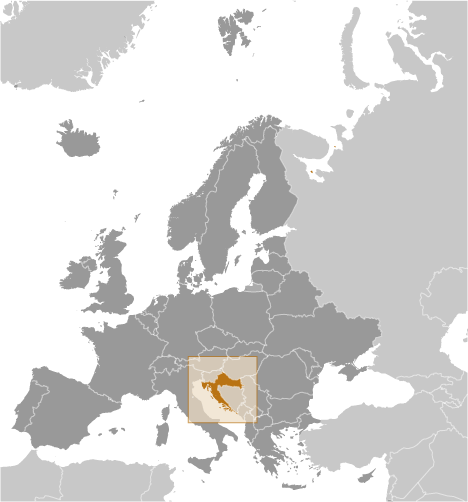
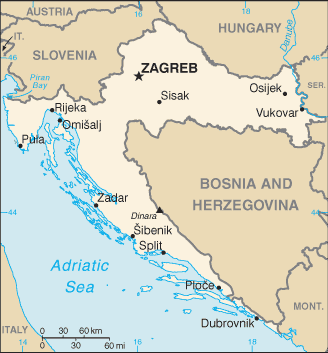
Click on map for larger view
Click on flag for Country Report



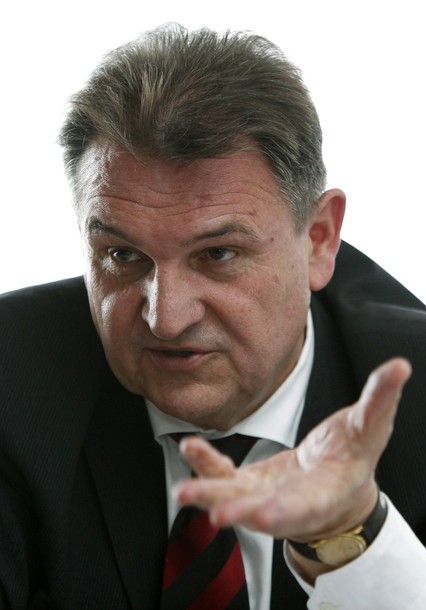
Radimir Cacic
First Deputy Prime Minister since 23 December 2011
First Deputy Prime Minister since 23 December 2011
| TRAFFICKING IN PERSONS |
None reported.
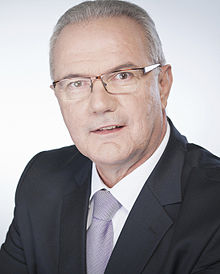
Neven Mimica, Branko Grčić and Milanka Opačić
Deputy Prime Ministers since 23 Decembee 2011
Deputy Prime Ministers since 23 Decembee 2011