
| DEMOCRATIC REPUBLIC OF THE CONGO Democratic Republic of the Congo Republique Democratique du Congo Joined United Nations: 20 September 1960 Human Rights as assured by their constitution Click here Updated 25 February 2013 |

| CAPITAL |
| POPULATION |
| CHIEF OF STATE |
| SELECTION PROCESS |
Kinshasa
73,599,190
note: estimates for this country explicitly take into account the effects of excess mortality
due to AIDS; this can result in lower life expectancy, higher infant mortality and death
rates, lower population and growth rates, and changes in the distribution of population by
age and sex than would otherwise be expected (July 2012 est.)
note: estimates for this country explicitly take into account the effects of excess mortality
due to AIDS; this can result in lower life expectancy, higher infant mortality and death
rates, lower population and growth rates, and changes in the distribution of population by
age and sex than would otherwise be expected (July 2012 est.)
Augustin Matata Ponyo Mapon
Prime Minister since 18 April 2012
Prime Minister since 18 April 2012
Under the new constitution the president elected by popular vote for
a five-year term (eligible for a second term); elections last held on
28 November 2011; prime minister appointed by the president
Next scheduled election: November 2016
a five-year term (eligible for a second term); elections last held on
28 November 2011; prime minister appointed by the president
Next scheduled election: November 2016
HEAD OF GOVERNMENT
SELECTION PROCESS
Prime minister appointed by the president
| DECLARATION OF HUMAN RIGHTS |
| ETHNIC GROUPS |
Over 200 African ethnic groups of which the majority are Bantu; the four largest tribes - Mongo, Luba, Kongo (all Bantu), and the
Mangbetu-Azande (Hamitic) make up about 45% of the population
Mangbetu-Azande (Hamitic) make up about 45% of the population
| RELIGIONS |
Roman Catholic 50%, Protestant 20%, Kimbanguist 10%, Muslim 10%, other (includes syncretic sects and indigenous beliefs)
10%
10%
| GOVERNMENT STRUCTURE |
Republic with 10 provinces (provinces, singular - province) and 1 city (ville); Legal system is based on a new constitution which
was adopted by referendum 18 December 2005; accepts compulsory ICJ jurisdiction, with reservations
Executive: Under the new constitution the president elected by popular vote for a five-year term (eligible for a second term);
elections last held on 28 November 2011 (next to be held on November 2016); prime minister appointed by the president
Legislative: Bicameral legislature consists of a Senate (108 seats; members elected by provincial assemblies to serve five-year
terms) and a National Assembly (500 seats; 61 members elected by majority vote in single-member constituencies, 439 members
elected by open list proportional-representation in multi-member constituencies to serve five-year terms)
elections: Senate - last held on 19 January 2007 (next scheduled for 5 June 2013; though likely to be delayed); National Assembly
- last held on 28 November 2011 (next to be held in 2016)
Judicial: Constitutional Court; Appeals Court or Cour de Cassation; Council of State; High Military Court; plus civil and military
courts and tribunals
was adopted by referendum 18 December 2005; accepts compulsory ICJ jurisdiction, with reservations
Executive: Under the new constitution the president elected by popular vote for a five-year term (eligible for a second term);
elections last held on 28 November 2011 (next to be held on November 2016); prime minister appointed by the president
Legislative: Bicameral legislature consists of a Senate (108 seats; members elected by provincial assemblies to serve five-year
terms) and a National Assembly (500 seats; 61 members elected by majority vote in single-member constituencies, 439 members
elected by open list proportional-representation in multi-member constituencies to serve five-year terms)
elections: Senate - last held on 19 January 2007 (next scheduled for 5 June 2013; though likely to be delayed); National Assembly
- last held on 28 November 2011 (next to be held in 2016)
Judicial: Constitutional Court; Appeals Court or Cour de Cassation; Council of State; High Military Court; plus civil and military
courts and tribunals
| LANGUAGES |
French (official), Lingala (a lingua franca trade language), Kingwana (a dialect of Kiswahili or Swahili), Kikongo, Tshiluba
| BRIEF HISTORY |
Early Congo history covers most of the Congo River basin occupied today by the Democratic Republic of the Congo, the Republic
of the Congo, Angola's Cabinda province and northern Angola. 'Congo' and 'Congolese' refer to this area. Early Congo history
began with waves of Bantu migrations from 2000 BC to 500 AD moving into the basin from the northwest and covers the
precolonial states absorbed or overthrown by the colonial powers. The Bantu migrations added to and displaced the indigenous
Pygmy populations into the southern regions of the modern Congo states. The Bantu imported agriculture and iron-working
techniques from West Africa into the area, as well as establishing the Bantu language family as the primary set of tongues for the
Congolese. Subsequent migrations from the Darfur and Kordofan regions of Sudan into the north of Congo, as well as East
Africans migrating into the eastern Congo, added to the mix of ethnic groups. Bantu peoples began settling in the extreme northwest
of Central Africa in the beginning of the fifth century and then gradually started to expand southward. Their propagation was
accelerated by the transition from Stone-Age to Iron-Age techniques. The peoples living in the south and southwest were mostly
San and hunter-gatherer groups, whose technology involved only minimal use of metal technologies. The development of metal tools
during this time period revolutionized agriculture and animal husbandry. This led to the displacement of the hunter-gatherer groups in
the east and southeast. The tenth century marked the final expansion of the Bantu in West-Central Africa. Rising population soon
made intricate local, regional and foreign commercial nets possible, forming networks that traded mostly in salt, iron and copper. In
the fifth century, a society began to develop in the Upemba depression along the banks of the Lualaba River in Katanga. This
culture, known as the Upemba, would eventually evolve into the more significant Luba Empire, as well as the Lunda Kingdom. The
process in which the primitive original Upemba society transitioned into the Luba kingdom was gradual and complex. This transition
ran without interruption, with several distinct societies developing out of the Upemba culture prior to the genesis of the Luba. Each
of these societies based the foundation of their society on that of the one which preceded it (much in the way that many aspects of
Roman culture were borrowed from the Greeks). The fifth century saw this societal evolution develop in the area around present
day Kamilamba at the Kabambasee, which was followed and replaced by a number of other cultures which were based around the
cities of Sanga and Katango. The dominant political force of the Congo region prior to and during the initial arrival of Europeans
was the Kongo Empire. The Kongo was a highly developed state located primarily in the southwest portion of the modern Congo,
and also occupying portions of northern Angola and Cabinda. At its greatest extent, the empire reached from the Atlantic Ocean in
the west to the Kwango River in the east, and from the Point Noire in the north to the Loje River in the south. The eastern region of
the Congo [such as the province of Katanga] is particularly rich in mineral resources, especially diamonds. These trade goods would
also form, in addition to slaves, the backbone of the Kongo's trade with Europeans(primarily the Portuguese), upon their arrival. At
the Battle of Ambuila in 1665, the Portuguese forces from Angola defeated the forces of king Antonio I of Kongo; Antonio was
killed with many of his courtiers and the Luso-African author Manuel Roboredo, who had attempted to prevent this final war.
Nevertheless, the country continued to exist, at least in name, for over two centuries, until the realm was divided among Portugal,
Belgium, and France at the Conference of Berlin in 1884-1885. The Luba Kingdom arose out of the Upemba culture and was
founded by King Kongolo around 1585. The birth of the Lunda Kingdom is traced back to Ilunga Tshibinda who left his brother's
Luba Kingdom and married a princess from an area in the south of Katanga. Their son, Mwaant Yav or Mwata Yamvo formed the
central Lunda Kingdom there with a population of about 175,000 and became its ruler from 1660 to 1665. The Yeke Kingdom (or
Garanganze Kingdom) in Katanga was short-lived, existing from about 1856 to 1891 under one king, Msiri, a Nyamwezi (also
known as 'Yeke') from Tabora in Tanzania who got himself appointed as successor to a Wasanga chief west of the Luapula River
by defeating the chief's Lunda enemies. The Kuba Kingdom, or more accurately, the Kuba Federation, was a political entity (one
comprising a collection of approximately twenty Bantu ethnic groups) that began to develop out of a number of decentralized,
ethnically Bantu states (namely the Luba, the Leele, and the Wongo ethnic groups). The Belgians began attempting to gain the
acceptance of the Kuba in the early 1880s; however, the gifts Belgium attempted to give were always rejected and king aMbweeky
aMileng threatened to behead any foreign intruders. Eventually, after colonial officials were able to enforce their authority upon the
Kuba near the end of the 1800s, the entire region became increasingly unstable. However, the well-organized Kuba fought
relentlessly against the regime and the area was one of the main sectors of resistance to Belgium throughout its rule. On November
15, 1908, King Léopold II of Belgium formally relinquished personal control of the Congo Free State and the renamed Belgian
Congo came under the administration of the Belgian parliament, a system which lasted until independence was granted in 1960. The
Belgian administration might be most charitably characterized as paternalistic colonialism. The educational system was dominated by
the Roman Catholic Church and Protestant churches and the curricula reflected Christian and Western values. Agitation for
independence in the Congo arose fairly late, only becoming a prominent factor by the mid-1950s. Even this separatist spirit was far
more an anti-Belgian movement than one of Congolese nationalism. Following a series of riots and unrest, the Belgians realised they
could not maintain control of such a vast country. The Belgians announced on January 27, 1960 that they would relinquish control in
six months. The Congo was granted its independence on June 30, 1960, adopting the name "Republic of the Congo" (République
du Congo). As the French colony of Middle Congo (Moyen Congo) also chose the name Republic of Congo upon receiving its
independence, the two countries were more commonly known as Congo-Léopoldville and Congo-Brazzaville, after their capital
cities. In 1966, Joseph Désiré Mobutu changed the country's official name to Zaire. Through that time Zaire had to be the best name
for them. Even from this fleeting moment of independence democracy began to unravel. A military coup broke out in the capital and
rampant looting began. This rebellion was ended with the help of Belgian, British and US troops. They worked together and helped
with Congo. Unrest and rebellion plagued the government until 1965, when Lieutenant General Mobutu, by then commander in
chief of the national army, seized control of the country and declared himself president for five years. Mobutu quickly consolidated
his power and was elected unopposed as president in 1970. During the 1980s, Zaire remained a one-party state. By 1996, tensions
from the neighboring Rwanda war and genocide had spilled over to Zaire. Rwandan Hutu militia forces (Interahamwe), who had
fled Rwanda following the ascension of a Tutsi-led government, had been using Hutu refugees camps in eastern Zaire as a basis for
incursion against Rwanda. These Hutu militia forces soon allied with the Zairian armed forces (FAZ) to launch a campaign against
Congolese ethnic Tutsis in eastern Zaire. In turn, these Tutsis formed a militia to defend themselves against attacks. When the
Zairian government began to escalate its massacres in November 1996, the Tutsi militias erupted in rebellion against Mobutu.
Following failed peace talks between Mobutu and Kabila in May 1997, Mobutu left the country, and Kabila marched unopposed
to Kinshasa on May 20. Kabila named himself president, consolidated power around himself and the AFDL, and reverted the name
of the country to the Democratic Republic of Congo. Talks between Kabila and the rebel leaders (held in Sun City) lasted a full six
weeks (beginning in April 2002). In June they signed a peace accord in which Kabila would share power with former rebels. By
June 2003 all foreign armies except those of Rwanda had pulled out of Congo. DR Congo has a transitional government until the
election is over. A constitution was approved by voters and on July 30, 2006 the Congo held its first multi-party elections since
independence in 1960. On December 6, 2006 the Transitional Government came to an end as Joseph Kabila was sworn in as
President. The fragility of the state has allowed continued violence and human rights abuses in the east. In October 2009 a new
conflict started in Dongo, Sud-Ubangi District where clashes had broken out over access to fishing ponds. On December 2011,
Joseph Kabila was re-elected for a second term as president. After the results were announced on 9 December, there was violent
unrest in Kinshasa and Mbuji-Mayi, where official tallies showed that a strong majority had voted for the opposition candidate
Etienne Tshisekedi. Official observers from the Carter Center reported that returns from almost 2,000 polling stations in areas
where support for Tshisekedi was strong had been lost and not included in the official results. They described the election as lacking
credibility. On 20 December, Kabila was sworn in for a second term, promising to invest in infrastructure and public services.
However, Tshisekedi maintained that the result of the election was illegitimate and said that he intended also to "swear himself in" as
president. In April 2012, ethnic Tutsi soldiers mutinied against the government of the Democratic Republic of the Congo. Mutineers
formed a rebel group called the March 23 Movement (M23), composed of former members of the rebel National Congress for the
Defence of the People (CNDP). On 20 November 2012, M23 took control of Goma, a provincial capital with a population of one
million people.
Source: Wikipedia: History of Democratic Republic of the Congo
of the Congo, Angola's Cabinda province and northern Angola. 'Congo' and 'Congolese' refer to this area. Early Congo history
began with waves of Bantu migrations from 2000 BC to 500 AD moving into the basin from the northwest and covers the
precolonial states absorbed or overthrown by the colonial powers. The Bantu migrations added to and displaced the indigenous
Pygmy populations into the southern regions of the modern Congo states. The Bantu imported agriculture and iron-working
techniques from West Africa into the area, as well as establishing the Bantu language family as the primary set of tongues for the
Congolese. Subsequent migrations from the Darfur and Kordofan regions of Sudan into the north of Congo, as well as East
Africans migrating into the eastern Congo, added to the mix of ethnic groups. Bantu peoples began settling in the extreme northwest
of Central Africa in the beginning of the fifth century and then gradually started to expand southward. Their propagation was
accelerated by the transition from Stone-Age to Iron-Age techniques. The peoples living in the south and southwest were mostly
San and hunter-gatherer groups, whose technology involved only minimal use of metal technologies. The development of metal tools
during this time period revolutionized agriculture and animal husbandry. This led to the displacement of the hunter-gatherer groups in
the east and southeast. The tenth century marked the final expansion of the Bantu in West-Central Africa. Rising population soon
made intricate local, regional and foreign commercial nets possible, forming networks that traded mostly in salt, iron and copper. In
the fifth century, a society began to develop in the Upemba depression along the banks of the Lualaba River in Katanga. This
culture, known as the Upemba, would eventually evolve into the more significant Luba Empire, as well as the Lunda Kingdom. The
process in which the primitive original Upemba society transitioned into the Luba kingdom was gradual and complex. This transition
ran without interruption, with several distinct societies developing out of the Upemba culture prior to the genesis of the Luba. Each
of these societies based the foundation of their society on that of the one which preceded it (much in the way that many aspects of
Roman culture were borrowed from the Greeks). The fifth century saw this societal evolution develop in the area around present
day Kamilamba at the Kabambasee, which was followed and replaced by a number of other cultures which were based around the
cities of Sanga and Katango. The dominant political force of the Congo region prior to and during the initial arrival of Europeans
was the Kongo Empire. The Kongo was a highly developed state located primarily in the southwest portion of the modern Congo,
and also occupying portions of northern Angola and Cabinda. At its greatest extent, the empire reached from the Atlantic Ocean in
the west to the Kwango River in the east, and from the Point Noire in the north to the Loje River in the south. The eastern region of
the Congo [such as the province of Katanga] is particularly rich in mineral resources, especially diamonds. These trade goods would
also form, in addition to slaves, the backbone of the Kongo's trade with Europeans(primarily the Portuguese), upon their arrival. At
the Battle of Ambuila in 1665, the Portuguese forces from Angola defeated the forces of king Antonio I of Kongo; Antonio was
killed with many of his courtiers and the Luso-African author Manuel Roboredo, who had attempted to prevent this final war.
Nevertheless, the country continued to exist, at least in name, for over two centuries, until the realm was divided among Portugal,
Belgium, and France at the Conference of Berlin in 1884-1885. The Luba Kingdom arose out of the Upemba culture and was
founded by King Kongolo around 1585. The birth of the Lunda Kingdom is traced back to Ilunga Tshibinda who left his brother's
Luba Kingdom and married a princess from an area in the south of Katanga. Their son, Mwaant Yav or Mwata Yamvo formed the
central Lunda Kingdom there with a population of about 175,000 and became its ruler from 1660 to 1665. The Yeke Kingdom (or
Garanganze Kingdom) in Katanga was short-lived, existing from about 1856 to 1891 under one king, Msiri, a Nyamwezi (also
known as 'Yeke') from Tabora in Tanzania who got himself appointed as successor to a Wasanga chief west of the Luapula River
by defeating the chief's Lunda enemies. The Kuba Kingdom, or more accurately, the Kuba Federation, was a political entity (one
comprising a collection of approximately twenty Bantu ethnic groups) that began to develop out of a number of decentralized,
ethnically Bantu states (namely the Luba, the Leele, and the Wongo ethnic groups). The Belgians began attempting to gain the
acceptance of the Kuba in the early 1880s; however, the gifts Belgium attempted to give were always rejected and king aMbweeky
aMileng threatened to behead any foreign intruders. Eventually, after colonial officials were able to enforce their authority upon the
Kuba near the end of the 1800s, the entire region became increasingly unstable. However, the well-organized Kuba fought
relentlessly against the regime and the area was one of the main sectors of resistance to Belgium throughout its rule. On November
15, 1908, King Léopold II of Belgium formally relinquished personal control of the Congo Free State and the renamed Belgian
Congo came under the administration of the Belgian parliament, a system which lasted until independence was granted in 1960. The
Belgian administration might be most charitably characterized as paternalistic colonialism. The educational system was dominated by
the Roman Catholic Church and Protestant churches and the curricula reflected Christian and Western values. Agitation for
independence in the Congo arose fairly late, only becoming a prominent factor by the mid-1950s. Even this separatist spirit was far
more an anti-Belgian movement than one of Congolese nationalism. Following a series of riots and unrest, the Belgians realised they
could not maintain control of such a vast country. The Belgians announced on January 27, 1960 that they would relinquish control in
six months. The Congo was granted its independence on June 30, 1960, adopting the name "Republic of the Congo" (République
du Congo). As the French colony of Middle Congo (Moyen Congo) also chose the name Republic of Congo upon receiving its
independence, the two countries were more commonly known as Congo-Léopoldville and Congo-Brazzaville, after their capital
cities. In 1966, Joseph Désiré Mobutu changed the country's official name to Zaire. Through that time Zaire had to be the best name
for them. Even from this fleeting moment of independence democracy began to unravel. A military coup broke out in the capital and
rampant looting began. This rebellion was ended with the help of Belgian, British and US troops. They worked together and helped
with Congo. Unrest and rebellion plagued the government until 1965, when Lieutenant General Mobutu, by then commander in
chief of the national army, seized control of the country and declared himself president for five years. Mobutu quickly consolidated
his power and was elected unopposed as president in 1970. During the 1980s, Zaire remained a one-party state. By 1996, tensions
from the neighboring Rwanda war and genocide had spilled over to Zaire. Rwandan Hutu militia forces (Interahamwe), who had
fled Rwanda following the ascension of a Tutsi-led government, had been using Hutu refugees camps in eastern Zaire as a basis for
incursion against Rwanda. These Hutu militia forces soon allied with the Zairian armed forces (FAZ) to launch a campaign against
Congolese ethnic Tutsis in eastern Zaire. In turn, these Tutsis formed a militia to defend themselves against attacks. When the
Zairian government began to escalate its massacres in November 1996, the Tutsi militias erupted in rebellion against Mobutu.
Following failed peace talks between Mobutu and Kabila in May 1997, Mobutu left the country, and Kabila marched unopposed
to Kinshasa on May 20. Kabila named himself president, consolidated power around himself and the AFDL, and reverted the name
of the country to the Democratic Republic of Congo. Talks between Kabila and the rebel leaders (held in Sun City) lasted a full six
weeks (beginning in April 2002). In June they signed a peace accord in which Kabila would share power with former rebels. By
June 2003 all foreign armies except those of Rwanda had pulled out of Congo. DR Congo has a transitional government until the
election is over. A constitution was approved by voters and on July 30, 2006 the Congo held its first multi-party elections since
independence in 1960. On December 6, 2006 the Transitional Government came to an end as Joseph Kabila was sworn in as
President. The fragility of the state has allowed continued violence and human rights abuses in the east. In October 2009 a new
conflict started in Dongo, Sud-Ubangi District where clashes had broken out over access to fishing ponds. On December 2011,
Joseph Kabila was re-elected for a second term as president. After the results were announced on 9 December, there was violent
unrest in Kinshasa and Mbuji-Mayi, where official tallies showed that a strong majority had voted for the opposition candidate
Etienne Tshisekedi. Official observers from the Carter Center reported that returns from almost 2,000 polling stations in areas
where support for Tshisekedi was strong had been lost and not included in the official results. They described the election as lacking
credibility. On 20 December, Kabila was sworn in for a second term, promising to invest in infrastructure and public services.
However, Tshisekedi maintained that the result of the election was illegitimate and said that he intended also to "swear himself in" as
president. In April 2012, ethnic Tutsi soldiers mutinied against the government of the Democratic Republic of the Congo. Mutineers
formed a rebel group called the March 23 Movement (M23), composed of former members of the rebel National Congress for the
Defence of the People (CNDP). On 20 November 2012, M23 took control of Goma, a provincial capital with a population of one
million people.
Source: Wikipedia: History of Democratic Republic of the Congo
| ECONOMIC OVERVIEW |
The economy of the Democratic Republic of the Congo - a nation endowed with vast potential wealth - is slowly recovering from
decades of decline. Systemic corruption since independence in 1960, combined with country-wide instability and conflict that began
in the mid-90s has dramatically reduced national output and government revenue, increased external debt, and resulted in the deaths
of more than 5 million people from violence, famine, and disease. With the installation of a transitional government in 2003 after
peace accords, economic conditions slowly began to improve as the transitional government reopened relations with international
financial institutions and international donors, and President KABILA began implementing reforms. Progress has been slow. An
uncertain legal framework, corruption, and a lack of transparency in government policy are long-term problems for the mining sector
and for the economy as a whole. Much economic activity still occurs in the informal sector and is not reflected in GDP data.
Renewed activity in the mining sector, the source of most export income, boosted Kinshasa's fiscal position and GDP growth in
recent years The global recession cut economic growth in 2009 to less than half its 2008 level, but growth returned to around 7%
per year in 2010-12. The DRC signed a Poverty Reduction and Growth Facility with the IMF in 2009 and received $12 billion in
multilateral and bilateral debt relief in 2010, but the IMF at the end of 2012 suspended the last three payments under the loan facility
- worth $240 million - because of concerns about the lack of transparency in mining contracts.
Source: CIA World Factbook (select Congo, Democratic Republic of the)
decades of decline. Systemic corruption since independence in 1960, combined with country-wide instability and conflict that began
in the mid-90s has dramatically reduced national output and government revenue, increased external debt, and resulted in the deaths
of more than 5 million people from violence, famine, and disease. With the installation of a transitional government in 2003 after
peace accords, economic conditions slowly began to improve as the transitional government reopened relations with international
financial institutions and international donors, and President KABILA began implementing reforms. Progress has been slow. An
uncertain legal framework, corruption, and a lack of transparency in government policy are long-term problems for the mining sector
and for the economy as a whole. Much economic activity still occurs in the informal sector and is not reflected in GDP data.
Renewed activity in the mining sector, the source of most export income, boosted Kinshasa's fiscal position and GDP growth in
recent years The global recession cut economic growth in 2009 to less than half its 2008 level, but growth returned to around 7%
per year in 2010-12. The DRC signed a Poverty Reduction and Growth Facility with the IMF in 2009 and received $12 billion in
multilateral and bilateral debt relief in 2010, but the IMF at the end of 2012 suspended the last three payments under the loan facility
- worth $240 million - because of concerns about the lack of transparency in mining contracts.
Source: CIA World Factbook (select Congo, Democratic Republic of the)
| POLITICAL CLIMATE |
Since the July 2006 elections, the country is led by a semi-presidential, strongly-decentralized state. The executive at the central
level, is divided between the President, and a Prime Minister appointed by him/her from the party having the majority of seats in
Parliament. Should there be no clear majority, the President can appoint a "government former" that will then have the task to win
the confidence of the National Assembly. The President appoints the government members (ministers) at the proposal of the Prime
Minister. In coordination, the President and the government have the charge of the executive. The Prime minister and the
government are responsible to the lower-house of Parliament, the National Assembly.
At the province level, the Provincial legislature (Provincial Assembly) elects a governor, and the governor, with his government of up
to 10 ministers, is in charge of the provincial executive. Some domains of government power are of the exclusive provision of the
Province, and some are held concurrently with the Central government. This is not a Federal state however, simply a decentralized
one, as the majority of the domains of power are still vested in the Central government. The governor is responsible to the Provincial
Assembly.
The Parliament of the third republic is also bicameral, with a National Assembly and a Senate. Members of the National Assembly,
the lower - but the most powerful - house, are elected by direct suffrage. Senators are elected by the legislatures of the 26
provinces.
Presidential and parliamentary elections were held in Democratic Republic of the Congo on 28 November 2011; a facultative
run-off on 26 February 2012 was shelved with a change in election laws. Jerome Kitoko, President of the Supreme Court,
announcing the official results proclaimed Kabila to be the winner of the Presidential election. Indirect Senate elections will be held
in the Democratic Republic of the Congo on 5 June 2013, followed by gubernatorial elections on 22 June. These elections were
postponed one year from an earlier date in June 2012.
Source: Wikipedia: Politics of Democratic Republic of the Congo
level, is divided between the President, and a Prime Minister appointed by him/her from the party having the majority of seats in
Parliament. Should there be no clear majority, the President can appoint a "government former" that will then have the task to win
the confidence of the National Assembly. The President appoints the government members (ministers) at the proposal of the Prime
Minister. In coordination, the President and the government have the charge of the executive. The Prime minister and the
government are responsible to the lower-house of Parliament, the National Assembly.
At the province level, the Provincial legislature (Provincial Assembly) elects a governor, and the governor, with his government of up
to 10 ministers, is in charge of the provincial executive. Some domains of government power are of the exclusive provision of the
Province, and some are held concurrently with the Central government. This is not a Federal state however, simply a decentralized
one, as the majority of the domains of power are still vested in the Central government. The governor is responsible to the Provincial
Assembly.
The Parliament of the third republic is also bicameral, with a National Assembly and a Senate. Members of the National Assembly,
the lower - but the most powerful - house, are elected by direct suffrage. Senators are elected by the legislatures of the 26
provinces.
Presidential and parliamentary elections were held in Democratic Republic of the Congo on 28 November 2011; a facultative
run-off on 26 February 2012 was shelved with a change in election laws. Jerome Kitoko, President of the Supreme Court,
announcing the official results proclaimed Kabila to be the winner of the Presidential election. Indirect Senate elections will be held
in the Democratic Republic of the Congo on 5 June 2013, followed by gubernatorial elections on 22 June. These elections were
postponed one year from an earlier date in June 2012.
Source: Wikipedia: Politics of Democratic Republic of the Congo
| INTERNATIONAL DISPUTES |
Heads of the Great Lakes states and UN pledged in 2004 to abate tribal, rebel, and militia fighting in the region, including northeast
Congo, where the UN Organization Mission in the Democratic Republic of the Congo (MONUC), organized in 1999, maintains
over 16,500 uniformed peacekeepers; members of Uganda's Lords Resistance Army forces continue to seek refuge in Congo's
Garamba National Park as peace talks with the Uganda government evolve; the location of the boundary in the broad Congo River
with the Republic of the Congo is indefinite except in the Pool Malebo/Stanley Pool area; Uganda and DRC dispute Rukwanzi
Island in Lake Albert and other areas on the Semliki River with hydrocarbon potential; boundary commission continues discussions
over Congolese-administered triangle of land on the right bank of the Lunkinda River claimed by Zambia near the DRC village of
Pweto; DRC accuses Angola of shifting monuments
Congo, where the UN Organization Mission in the Democratic Republic of the Congo (MONUC), organized in 1999, maintains
over 16,500 uniformed peacekeepers; members of Uganda's Lords Resistance Army forces continue to seek refuge in Congo's
Garamba National Park as peace talks with the Uganda government evolve; the location of the boundary in the broad Congo River
with the Republic of the Congo is indefinite except in the Pool Malebo/Stanley Pool area; Uganda and DRC dispute Rukwanzi
Island in Lake Albert and other areas on the Semliki River with hydrocarbon potential; boundary commission continues discussions
over Congolese-administered triangle of land on the right bank of the Lunkinda River claimed by Zambia near the DRC village of
Pweto; DRC accuses Angola of shifting monuments


| REFUGEES AND INTERNALLY DISPLACED PERSONS (IDPS) |
Refugees (country of origin): 78,144 (Angola); 61,481 (Rwanda); 8,915 (Burundi) (2011)
IDPs: 2,435,351 (fighting between government forces and rebels since mid-1990s; most IDPs are in eastern provinces) (2012)
IDPs: 2,435,351 (fighting between government forces and rebels since mid-1990s; most IDPs are in eastern provinces) (2012)
| ILLICIT DRUGS |
One of Africa's biggest producers of cannabis, but mostly for domestic consumption; traffickers exploit lax shipping controls to
transit pseudoephedrine through the capital; while rampant corruption and inadequate supervision leaves the banking system
vulnerable to money laundering, the lack of a well-developed financial system limits the country's utility as a money-laundering
center (2008)
transit pseudoephedrine through the capital; while rampant corruption and inadequate supervision leaves the banking system
vulnerable to money laundering, the lack of a well-developed financial system limits the country's utility as a money-laundering
center (2008)
| HUMAN RIGHTS STATEMENTS, ANALYSIS AND CRITIQUES |
2011 Human Rights Report: Democratic Republic of the Congo
Bureau of Democracy, Human Rights, and Labor
2011 Country Reports on Human Rights Practices
May 25, 2012
The Democratic Republic of the Congo (DRC) is a nominally centralized, constitutional republic. The president and the lower house of
parliament (National Assembly) are popularly elected. Provincial assemblies choose the members of the upper house (Senate). On
November 28, the country held multiparty presidential and National Assembly elections, which many local and international observers
judged lacked credibility and were seriously flawed. State security forces (SSF) acted independently of civilian control and of military
command in many instances.
The three most important human rights issues were: conflict and insecurity in the East that exacerbated an already precarious human
rights situation, particularly sexual- and gender-based violence (SGBV); insecurity during the election period; and the lack of an
independent and effective judiciary.
Other major human rights problems included the following: impunity enjoyed by SSF throughout the country for many serious abuses,
including unlawful killings, disappearances, torture, rape, and arbitrary arrests and detention; severe and life-threatening conditions in
prison and detention facilities; prolonged pretrial detention; arbitrary interference with privacy, family, and home; SSF members’ abuse
and threatening of journalists and human rights advocates, and threatening and obstructing the work of UN investigators; abuse of
internally displaced persons (IDPs) by SSF and rebel and militia groups (RMG); widespread official corruption; SSF and RMG retention
and recruitment of child soldiers; and use of forced civilian labor. Societal discrimination against and abuse of women and children,
Pygmies, persons with albinism, and homosexual persons; trafficking in persons; child labor; and lack of protection of workers’ rights
were also problems.
Impunity for human rights abuses was a severe problem in both the security services and elsewhere in the government. Authorities did
not prosecute or punish the great majority of abusers..
Internal conflicts, particularly in North Kivu, South Kivu, and Orientale provinces, permitted RMG to commit violent abuses against
civilians. These abuses--some of which may constitute war crimes--included unlawful killings, disappearances, torture, and SGBV.
RMG also recruited, abducted, and retained child soldiers and compelled forced labor. RMG and some army units engaged in the illegal
exploitation and trade of natural resources in the East. In a separate conflict in the Haut Uele and Bas Uele districts of Orientale Province,
the Lord’s Resistance Army (LRA) continued to commit serious human rights violations through attacks resulting in deaths, injuries,
abductions, forced labor, looting, and general insecurity.
Click here to read more »
Bureau of Democracy, Human Rights, and Labor
2011 Country Reports on Human Rights Practices
May 25, 2012
The Democratic Republic of the Congo (DRC) is a nominally centralized, constitutional republic. The president and the lower house of
parliament (National Assembly) are popularly elected. Provincial assemblies choose the members of the upper house (Senate). On
November 28, the country held multiparty presidential and National Assembly elections, which many local and international observers
judged lacked credibility and were seriously flawed. State security forces (SSF) acted independently of civilian control and of military
command in many instances.
The three most important human rights issues were: conflict and insecurity in the East that exacerbated an already precarious human
rights situation, particularly sexual- and gender-based violence (SGBV); insecurity during the election period; and the lack of an
independent and effective judiciary.
Other major human rights problems included the following: impunity enjoyed by SSF throughout the country for many serious abuses,
including unlawful killings, disappearances, torture, rape, and arbitrary arrests and detention; severe and life-threatening conditions in
prison and detention facilities; prolonged pretrial detention; arbitrary interference with privacy, family, and home; SSF members’ abuse
and threatening of journalists and human rights advocates, and threatening and obstructing the work of UN investigators; abuse of
internally displaced persons (IDPs) by SSF and rebel and militia groups (RMG); widespread official corruption; SSF and RMG retention
and recruitment of child soldiers; and use of forced civilian labor. Societal discrimination against and abuse of women and children,
Pygmies, persons with albinism, and homosexual persons; trafficking in persons; child labor; and lack of protection of workers’ rights
were also problems.
Impunity for human rights abuses was a severe problem in both the security services and elsewhere in the government. Authorities did
not prosecute or punish the great majority of abusers..
Internal conflicts, particularly in North Kivu, South Kivu, and Orientale provinces, permitted RMG to commit violent abuses against
civilians. These abuses--some of which may constitute war crimes--included unlawful killings, disappearances, torture, and SGBV.
RMG also recruited, abducted, and retained child soldiers and compelled forced labor. RMG and some army units engaged in the illegal
exploitation and trade of natural resources in the East. In a separate conflict in the Haut Uele and Bas Uele districts of Orientale Province,
the Lord’s Resistance Army (LRA) continued to commit serious human rights violations through attacks resulting in deaths, injuries,
abductions, forced labor, looting, and general insecurity.
Click here to read more »
7 March 2012
Committee on the Rights of the Child
Fifty-ninth session
16 January – 3 February 2012
Consideration of reports submitted by States parties under article 8, paragraph 1, of the Optional Protocol to the Convention
on the Rights of the Child on the involvement of children in armed conflict
Concluding observations: Democratic Republic of Congo
I. Introduction
2. The Committee welcomes the submission of the State party’s initial report under the Optional Protocol (CRC/C/OPAC/COD/1) and
the written replies to its list of issues (CRC/C/OPAC/COD/Q/1/Add.1).
3. The Committee reminds the State party that these concluding observations should be read in conjunction with its concluding
observations adopted on the State party’s second periodic report under the Convention on the Rights of the Child (CRC/C/COD/CO/2),
adopted on 10 February 2009. The Committee appreciates the dialogue with the multisectoral State party’s delegation.
II. Factors and difficulties affecting the implementation of the Optional Protocol
4. The Committee reiterates its concern expressed since 2001 (CRC/C/15/Add.153, para. 6) about the responsibilities of several other
States and certain other actors, including non-State armed groups and private companies, for the negative impact of the armed conflict
upon children and for violations of some provisions of the Convention on the Rights of the Child, its Optional Protocol on the
involvement of children in armed conflict, as well as provisions of international humanitarian law, within areas of the State party. The
United Nations Committee reminds however that the State party is primarily responsible to ensure the protection of all children within its
territory.
III. Positive aspects
6. The Committee welcomes: (a) The declaration made by the State party on the ratification of the Optional Protocol that the minimum
age for voluntary enlistment in its national armed forces is 18 years;
(b) The ratification of the Central African Convention for the Control of Small Arms and Light Weapons, their Ammunition and all Parts
and Components that can be used for their Manufacture, Repair and Assembly on 19 November 2010;
(c) The endorsement of the Paris Commitments to protect children from unlawful recruitment or use by armed forces or armed groups,
and the Paris Principles and guidelines on children associated with armed forces or armed groups in 2007.
7. The Committee also welcomes:
(a) The adoption of the Child Protection Code which prohibits the recruitment or use of children below the age of 18 by armed forces
and groups and the police and provides for the punishment of such actions with terms of imprisonment of between 10 and 20 years in
January 2009;
IV. General measures of implementation
Right to life, survival and development
8. The Committee, notes with deep concern that children continue to be the primary victims of the ongoing conflicts especially in the
Eastern provinces of the State party. Referring to its previous concluding observations (CRC/C/COD/2, paras. 33 and 34), the
Committee remains alarmed that all parties to the conflict continue to kill and to subject children to the worst forms of violence, including
torture and mutilation. The Committee expresses its deepest concern about:
(a) The use of children as human shields, as bodyguards for army commanders, as sexual slaves and for committing the most serious
human rights abuses, including massacres and mass rapes;
Click here to read more »
Committee on the Rights of the Child
Fifty-ninth session
16 January – 3 February 2012
Consideration of reports submitted by States parties under article 8, paragraph 1, of the Optional Protocol to the Convention
on the Rights of the Child on the involvement of children in armed conflict
Concluding observations: Democratic Republic of Congo
I. Introduction
2. The Committee welcomes the submission of the State party’s initial report under the Optional Protocol (CRC/C/OPAC/COD/1) and
the written replies to its list of issues (CRC/C/OPAC/COD/Q/1/Add.1).
3. The Committee reminds the State party that these concluding observations should be read in conjunction with its concluding
observations adopted on the State party’s second periodic report under the Convention on the Rights of the Child (CRC/C/COD/CO/2),
adopted on 10 February 2009. The Committee appreciates the dialogue with the multisectoral State party’s delegation.
II. Factors and difficulties affecting the implementation of the Optional Protocol
4. The Committee reiterates its concern expressed since 2001 (CRC/C/15/Add.153, para. 6) about the responsibilities of several other
States and certain other actors, including non-State armed groups and private companies, for the negative impact of the armed conflict
upon children and for violations of some provisions of the Convention on the Rights of the Child, its Optional Protocol on the
involvement of children in armed conflict, as well as provisions of international humanitarian law, within areas of the State party. The
United Nations Committee reminds however that the State party is primarily responsible to ensure the protection of all children within its
territory.
III. Positive aspects
6. The Committee welcomes: (a) The declaration made by the State party on the ratification of the Optional Protocol that the minimum
age for voluntary enlistment in its national armed forces is 18 years;
(b) The ratification of the Central African Convention for the Control of Small Arms and Light Weapons, their Ammunition and all Parts
and Components that can be used for their Manufacture, Repair and Assembly on 19 November 2010;
(c) The endorsement of the Paris Commitments to protect children from unlawful recruitment or use by armed forces or armed groups,
and the Paris Principles and guidelines on children associated with armed forces or armed groups in 2007.
7. The Committee also welcomes:
(a) The adoption of the Child Protection Code which prohibits the recruitment or use of children below the age of 18 by armed forces
and groups and the police and provides for the punishment of such actions with terms of imprisonment of between 10 and 20 years in
January 2009;
IV. General measures of implementation
Right to life, survival and development
8. The Committee, notes with deep concern that children continue to be the primary victims of the ongoing conflicts especially in the
Eastern provinces of the State party. Referring to its previous concluding observations (CRC/C/COD/2, paras. 33 and 34), the
Committee remains alarmed that all parties to the conflict continue to kill and to subject children to the worst forms of violence, including
torture and mutilation. The Committee expresses its deepest concern about:
(a) The use of children as human shields, as bodyguards for army commanders, as sexual slaves and for committing the most serious
human rights abuses, including massacres and mass rapes;
Click here to read more »
Freedom House Welcomes Conviction of Congolese Warlord by International Criminal Court
Mar 15 2012 - 12:12pm
Freedom House welcomes the International Criminal Court (ICC)’s guilty verdict for Congolese warlord Thomas Lubanga, who
recruited and used children as young as nine years old as personal bodyguards and soldiers in 2002 and 2003. This is the first verdict
handed down by the ICC since it was founded ten years ago, demonstrating that the institution does have the power to bring some of the
world’s worst human rights offenders to justice. Freedom House urges the ICC to seize this opportunity to increase its efforts in
arresting, trying and convicting those who commit mass atrocities.
The Democratic Republic of Congo has long been torn by undemocratic governance, corruption, and brutal violence stemming from
regional and ethnic conflicts. Freedom House has rated the Democratic Republic of Congo “Not Free” in Freedom in the World every
year since 1980. In recent years, opposition politicians, human rights activists, and the press have been the targets of attacks and
harassment, as evidenced by the murder of a cameraman in April 2011 and the suspicious death of a leading human rights activist in
June 2011. Lubanga was the first person to be arrested with an ICC warrant and was taken into custody six years ago. His trial took
more than three years to complete. Currently the ICC oversees 14 other cases, three of which are at the trial stage.
Click here to read more »
Mar 15 2012 - 12:12pm
Freedom House welcomes the International Criminal Court (ICC)’s guilty verdict for Congolese warlord Thomas Lubanga, who
recruited and used children as young as nine years old as personal bodyguards and soldiers in 2002 and 2003. This is the first verdict
handed down by the ICC since it was founded ten years ago, demonstrating that the institution does have the power to bring some of the
world’s worst human rights offenders to justice. Freedom House urges the ICC to seize this opportunity to increase its efforts in
arresting, trying and convicting those who commit mass atrocities.
The Democratic Republic of Congo has long been torn by undemocratic governance, corruption, and brutal violence stemming from
regional and ethnic conflicts. Freedom House has rated the Democratic Republic of Congo “Not Free” in Freedom in the World every
year since 1980. In recent years, opposition politicians, human rights activists, and the press have been the targets of attacks and
harassment, as evidenced by the murder of a cameraman in April 2011 and the suspicious death of a leading human rights activist in
June 2011. Lubanga was the first person to be arrested with an ICC warrant and was taken into custody six years ago. His trial took
more than three years to complete. Currently the ICC oversees 14 other cases, three of which are at the trial stage.
Click here to read more »
Annual Report 2012
DEMOCRATIC REPUBLIC OF CONGO
24 May 2012
Impunity for crimes under international law continued in the Democratic Republic of the Congo (DRC), despite some limited progress.
Government security forces and armed groups committed scores of human rights violations in eastern DRC. Nine soldiers from the
Congolese armed forces, including a lieutenant colonel, were convicted of crimes against humanity, notably rape, committed on 1
January in the town of Fizi, South Kivu. They were sentenced to jail in February in a rare example of perpetrators being promptly
brought to justice. However, investigations stalled into other cases of mass rapes committed by the national army and armed groups. The
general elections were marred by many human rights violations, including unlawful killings and arbitrary arrests by security forces.
Human rights defenders and journalists faced intimidation and restrictions on the freedoms of expression and association.
Background
The presidential residence and a military camp in Kinshasa were attacked on 27 February in what the government called a “coup d’état”.
A wave of arbitrary arrests followed, mainly targeting people from Equateur province.
The DRC’s second presidential and legislative elections since independence took place on 28 November. On 5 January, a constitutional
amendment changed the presidential electoral system from a two-round voting system to a single round, first-past-the-post vote. This
amendment, and logistical problems including delays in the electoral calendar, and controversy over the revised electoral register,
increased tensions between the presidential majority coalition and the opposition.
The national army, Forces Armées de la République Démocratique du Congo (FARDC), continued its military operations against foreign
armed groups in eastern and northern DRC, including the Democratic Liberation Forces of Rwanda (FDLR), the Lord’s Resistance
Army (LRA) and the Allied Democratic Forces/National Army for the Liberation of Uganda (ADF/NALU), causing further displacement
of civilians. In January, the national army started withdrawing troops for training and redeployment as part of its reconfiguration. This
led to armed groups resuming control of former FARDC areas and the desertion of armed groups recently integrated into the army. A
deteriorating security situation in North and South Kivu ensued, with increased activity by the FDLR, Mayi-Mayi Yakutumba and the
Burundian Forces Nationales de Libération (FNL). The army’s reconfiguration plan and the 31 December 2010 presidential decree to
redistribute ranks within the FARDC created additional difficulties for the already failing process of integrating former armed groups into
the FARDC.
Click here to read more »
DEMOCRATIC REPUBLIC OF CONGO
24 May 2012
Impunity for crimes under international law continued in the Democratic Republic of the Congo (DRC), despite some limited progress.
Government security forces and armed groups committed scores of human rights violations in eastern DRC. Nine soldiers from the
Congolese armed forces, including a lieutenant colonel, were convicted of crimes against humanity, notably rape, committed on 1
January in the town of Fizi, South Kivu. They were sentenced to jail in February in a rare example of perpetrators being promptly
brought to justice. However, investigations stalled into other cases of mass rapes committed by the national army and armed groups. The
general elections were marred by many human rights violations, including unlawful killings and arbitrary arrests by security forces.
Human rights defenders and journalists faced intimidation and restrictions on the freedoms of expression and association.
Background
The presidential residence and a military camp in Kinshasa were attacked on 27 February in what the government called a “coup d’état”.
A wave of arbitrary arrests followed, mainly targeting people from Equateur province.
The DRC’s second presidential and legislative elections since independence took place on 28 November. On 5 January, a constitutional
amendment changed the presidential electoral system from a two-round voting system to a single round, first-past-the-post vote. This
amendment, and logistical problems including delays in the electoral calendar, and controversy over the revised electoral register,
increased tensions between the presidential majority coalition and the opposition.
The national army, Forces Armées de la République Démocratique du Congo (FARDC), continued its military operations against foreign
armed groups in eastern and northern DRC, including the Democratic Liberation Forces of Rwanda (FDLR), the Lord’s Resistance
Army (LRA) and the Allied Democratic Forces/National Army for the Liberation of Uganda (ADF/NALU), causing further displacement
of civilians. In January, the national army started withdrawing troops for training and redeployment as part of its reconfiguration. This
led to armed groups resuming control of former FARDC areas and the desertion of armed groups recently integrated into the army. A
deteriorating security situation in North and South Kivu ensued, with increased activity by the FDLR, Mayi-Mayi Yakutumba and the
Burundian Forces Nationales de Libération (FNL). The army’s reconfiguration plan and the 31 December 2010 presidential decree to
redistribute ranks within the FARDC created additional difficulties for the already failing process of integrating former armed groups into
the FARDC.
Click here to read more »
World Report 2013: Democratic Republic of Congo
World Report Chapter - Jan 10 2013
State security forces and Congolese and foreign armed groups committed numerous and widespread violations of the laws of war
against civilians in eastern and northern Democratic Republic of Congo (Congo).
In late 2011, opposition party members and supporters, human rights activists, and journalists were threatened, arbitrarily arrested, and
killed during presidential and legislative election periods.
Gen. Bosco Ntaganda, sought on arrest warrants from the International Criminal Court (ICC) for war crimes and crimes against
humanity, defected from the army in March and started a new rebellion with other former members of the National Congress for the
Defense of the People (CNDP), a rebel group integrated into the army in early 2009. The new M23 rebel group received significant
support from Rwandan military officials. Its fighters were responsible for widespread war crimes, including summary executions, rapes,
and child recruitment.
As the government and military focused attention on defeating the M23, other armed groups became more active in other parts of North
and South Kivu, attacking civilians.
Abuses during National Elections
Presidential and legislative elections in November 2011 were characterized by targeted attacks by state security forces on opposition
party members and supporters, the use of force to quell political demonstrations, and threats or attacks on journalists and human rights
activists.President Joseph Kabila was declared winner of the November 28, 2011 election, which international and national election
observers criticized as lacking credibility and transparency.
The worst election-related violence was in the capital, Kinshasa, where at least 57 opposition party supporters or suspected supporters
were killed by security forces—mostly Kabila’s Republican Guard—between November 26 and December 31.
Human Rights Watch received credible reports of nearly 150 other people killed in this period, their bodies reportedly dumped in the
Congo River, in mass graves on Kinshasa’s outskirts, or in morgues far from the city center. Scores of people accused of opposing
Kabila were arbitrarily detained by Republican Guard soldiers and the police. Many were held in illegal detention centers where they were
mistreated and some were killed.
Abuses against opposition supporters also occurred in other areas, including North and South Kivu, Katanga, and the Kasai provinces. In
some areas, soldiers and militia members backing Kabila used intimidation and force to compel voters to vote for certain candidates.
Click here to read more »
World Report Chapter - Jan 10 2013
State security forces and Congolese and foreign armed groups committed numerous and widespread violations of the laws of war
against civilians in eastern and northern Democratic Republic of Congo (Congo).
In late 2011, opposition party members and supporters, human rights activists, and journalists were threatened, arbitrarily arrested, and
killed during presidential and legislative election periods.
Gen. Bosco Ntaganda, sought on arrest warrants from the International Criminal Court (ICC) for war crimes and crimes against
humanity, defected from the army in March and started a new rebellion with other former members of the National Congress for the
Defense of the People (CNDP), a rebel group integrated into the army in early 2009. The new M23 rebel group received significant
support from Rwandan military officials. Its fighters were responsible for widespread war crimes, including summary executions, rapes,
and child recruitment.
As the government and military focused attention on defeating the M23, other armed groups became more active in other parts of North
and South Kivu, attacking civilians.
Abuses during National Elections
Presidential and legislative elections in November 2011 were characterized by targeted attacks by state security forces on opposition
party members and supporters, the use of force to quell political demonstrations, and threats or attacks on journalists and human rights
activists.President Joseph Kabila was declared winner of the November 28, 2011 election, which international and national election
observers criticized as lacking credibility and transparency.
The worst election-related violence was in the capital, Kinshasa, where at least 57 opposition party supporters or suspected supporters
were killed by security forces—mostly Kabila’s Republican Guard—between November 26 and December 31.
Human Rights Watch received credible reports of nearly 150 other people killed in this period, their bodies reportedly dumped in the
Congo River, in mass graves on Kinshasa’s outskirts, or in morgues far from the city center. Scores of people accused of opposing
Kabila were arbitrarily detained by Republican Guard soldiers and the police. Many were held in illegal detention centers where they were
mistreated and some were killed.
Abuses against opposition supporters also occurred in other areas, including North and South Kivu, Katanga, and the Kasai provinces. In
some areas, soldiers and militia members backing Kabila used intimidation and force to compel voters to vote for certain candidates.
Click here to read more »
Democratic Republic of the Congo (The)
H.E. Mr. Joseph Kabila Kabange, President
25 September 2012
JOSEPH KABILA KABANGE, President of the Democratic Republic of the Congo, described the general debate as an opportunity for
Member States to participate in collective reflection on efforts made for peace, security and development. The Assembly President had
recommended that the debate focus on “the adjustment or settlement of international disputes or situations by peaceful means”, a wise
choice and a relevant theme in light of the international community’s tireless search for peace through means other than force.
While history taught that such solutions were possible, dialogue must be based on truth, he said, stressing the need to guard against
hasty action. More than 60 years after the creation of the United Nations, the world today still saw many wars, as well as instability.
Terrorism was not decreasing, but increasing, with the Middle East a focus of attention. Syria was in bloodshed and Mali was plagued
by separatism. Peace was more than the absence of war, he said, pointing out that numerous people were engaging in the trafficking of
drugs and human beings and other violations, instead of working for prosperity. For the sake of two thirds of humanity, there was an
urgent need to eradicate poverty, ignorance, violence, injustice and diseases such as HIV and malaria, he emphasized.
He said that after years of difficulty, his country was involved in the consolidation of peace and security. No effort had been spared,
including the establishment of the rule of law. All efforts under way proved his Government’s commitment to peace and stability. But
that momentum was now threatened by forces opposed to peace, he said. In North Kivu Province, where peace and stability, as well as
reconciliation and human dignity, had begun to take hold, women, children and men were now subjected to inhuman acts, falling victim
to profound evil and the philosophy of might. Children were stripped of the rights to attend school, he said. The situation was not
acceptable and should be met with sanctions, he said, stressing the important role of the Security Council in that regard. “It is up to us to
defend our country and law and order throughout the national territory”, he said, adding that the Government was mobilizing the
necessary human and financial resources at the sacrifice of the nation’s emergence. “The Democratic Republic of the Congo is a safe
investment”, he declared, urging bilateral and multilateral partners to continue investing in his country.
Click here to read more »
H.E. Mr. Joseph Kabila Kabange, President
25 September 2012
JOSEPH KABILA KABANGE, President of the Democratic Republic of the Congo, described the general debate as an opportunity for
Member States to participate in collective reflection on efforts made for peace, security and development. The Assembly President had
recommended that the debate focus on “the adjustment or settlement of international disputes or situations by peaceful means”, a wise
choice and a relevant theme in light of the international community’s tireless search for peace through means other than force.
While history taught that such solutions were possible, dialogue must be based on truth, he said, stressing the need to guard against
hasty action. More than 60 years after the creation of the United Nations, the world today still saw many wars, as well as instability.
Terrorism was not decreasing, but increasing, with the Middle East a focus of attention. Syria was in bloodshed and Mali was plagued
by separatism. Peace was more than the absence of war, he said, pointing out that numerous people were engaging in the trafficking of
drugs and human beings and other violations, instead of working for prosperity. For the sake of two thirds of humanity, there was an
urgent need to eradicate poverty, ignorance, violence, injustice and diseases such as HIV and malaria, he emphasized.
He said that after years of difficulty, his country was involved in the consolidation of peace and security. No effort had been spared,
including the establishment of the rule of law. All efforts under way proved his Government’s commitment to peace and stability. But
that momentum was now threatened by forces opposed to peace, he said. In North Kivu Province, where peace and stability, as well as
reconciliation and human dignity, had begun to take hold, women, children and men were now subjected to inhuman acts, falling victim
to profound evil and the philosophy of might. Children were stripped of the rights to attend school, he said. The situation was not
acceptable and should be met with sanctions, he said, stressing the important role of the Security Council in that regard. “It is up to us to
defend our country and law and order throughout the national territory”, he said, adding that the Government was mobilizing the
necessary human and financial resources at the sacrifice of the nation’s emergence. “The Democratic Republic of the Congo is a safe
investment”, he declared, urging bilateral and multilateral partners to continue investing in his country.
Click here to read more »
TRANSLATED FROM FRENCH BY GOOGLE TRANSLATE
Eu-Ministry of Justice: Human Rights and the situation in the eastern DRC menu of maintenance
Kinshasa, 03/09/2012 / Politics
The European Union is very concerned about the situation in eastern DRC caused by the rebellion of the M23 and the resurgence of
violence by other negative forces.
The Delegation of the European Union has been received by the Ministry of Justice and Human Rights. Menu interviews, sovereignty,
territorial integrity and the situation of human rights. To this end, the European Union is very concerned about the situation in eastern
DRC generated by the rebel Movement M23 and the resurgence of violence committed by other "negative forces". It deplores the
humanitarian crisis and massive violations of human rights resulting from the fact of violence against civilians, especially women and
children, including sexual violence. The EU calls for an immediate halt to all forms of violence perpetrated by armed groups. It also calls
on Rwanda to stop supporting armed groups in eastern DRC. "
Do not stop in so good way, "EU urges' Kinshasa and Kigali to contribute to a political solution and to address regional and local sources
of instability. While calling for respect for the sovereignty and territorial integrity of the DRC, it also calls on the Congolese authorities to
take greater responsibility in establishing the full authority of the State in the Kivu provinces. Protection of the civilian population and its
human rights must be at the center of government action, in close collaboration with MONUSCO. "
The situation of Human Rights has held most of the interviews with the Chief of Staff of the Minister of Justice. Thus, monitoring the
resolution of the Council of Human Rights, it appears that six months have passed since the adoption by the Council of Human Rights, at
its session in Geneva l9th, the resolution on the situation of human rights in the DRC.
To do this, "1'UE stands ready to support efforts at the national level to strengthen the rule of law, improving the situation of human
rights and responding to requests for technical assistance government. The EU pays particular attention to the fight against impunity
(ratification of the Rome Statute), the justice reform, abolition of the death penalty, the situation of children in armed conflict adoption by
the DRC Action Plan) and the fight against sexual violence. "
Moreover, "or 1'UE importance of monitoring online mapping report and recommendations, particularly in the context of transitional
justice and the establishment of a specialized court." N Do not there is no lasting peace without repair?
Click here to read more »
Eu-Ministry of Justice: Human Rights and the situation in the eastern DRC menu of maintenance
Kinshasa, 03/09/2012 / Politics
The European Union is very concerned about the situation in eastern DRC caused by the rebellion of the M23 and the resurgence of
violence by other negative forces.
The Delegation of the European Union has been received by the Ministry of Justice and Human Rights. Menu interviews, sovereignty,
territorial integrity and the situation of human rights. To this end, the European Union is very concerned about the situation in eastern
DRC generated by the rebel Movement M23 and the resurgence of violence committed by other "negative forces". It deplores the
humanitarian crisis and massive violations of human rights resulting from the fact of violence against civilians, especially women and
children, including sexual violence. The EU calls for an immediate halt to all forms of violence perpetrated by armed groups. It also calls
on Rwanda to stop supporting armed groups in eastern DRC. "
Do not stop in so good way, "EU urges' Kinshasa and Kigali to contribute to a political solution and to address regional and local sources
of instability. While calling for respect for the sovereignty and territorial integrity of the DRC, it also calls on the Congolese authorities to
take greater responsibility in establishing the full authority of the State in the Kivu provinces. Protection of the civilian population and its
human rights must be at the center of government action, in close collaboration with MONUSCO. "
The situation of Human Rights has held most of the interviews with the Chief of Staff of the Minister of Justice. Thus, monitoring the
resolution of the Council of Human Rights, it appears that six months have passed since the adoption by the Council of Human Rights, at
its session in Geneva l9th, the resolution on the situation of human rights in the DRC.
To do this, "1'UE stands ready to support efforts at the national level to strengthen the rule of law, improving the situation of human
rights and responding to requests for technical assistance government. The EU pays particular attention to the fight against impunity
(ratification of the Rome Statute), the justice reform, abolition of the death penalty, the situation of children in armed conflict adoption by
the DRC Action Plan) and the fight against sexual violence. "
Moreover, "or 1'UE importance of monitoring online mapping report and recommendations, particularly in the context of transitional
justice and the establishment of a specialized court." N Do not there is no lasting peace without repair?
Click here to read more »
TRANSLATED FROM FRENCH BY GOOGLE TRANSLATE
Sunday, January 20, 2013
DRC: Threats to the case of two lawyers Chebeya
The association of Congolese human rights, the Voice of the Voiceless (VSV), is concerned about threats and intimidation faced by
Jean-Marie and Peter Kabengela Ilunga Ngomo Milambo. These two lawyers representing the plaintiffs in the very "political" trial for the
murder of Chebeya and Fidèle Bazana.
Voice of the Voiceless appealed for help. According to the Congolese NGO, two lawyers belonging to the group attending the civil
parties in the trial on the murder of human rights defenders, Chebeya and Fidèle Bazana would be in danger. The two lawyers would be
subject to threats, intimidation and harassment. Voice of the Voiceless is very concerned for their safety ... and their lives.
For the Congolese, Jean-Marie Kabengela Ilunga has been "a verbal attack by the prosecution represented by Colonel Likulia during a
court hearing on the murder of human rights man Floribert Chebeya and Fidèle Bazana Edadi. " Voice of the Voiceless (VSV) explains
that this "attack follows the request by the latter to the Military High Court (HCM) to take into account the testimony of Major Paul
Milambwe, fugitive and eyewitness who attended" the Chebeya murder. Jean Marie Ilunga Kabengela received since October 2012, on
his phone calls with death threats telephone numbers "difficult to remember, no text messages, calls without the sender speaks ...".
Another threat letter sent by the president of the Military Court in Kinshasa-Gombe, Colonel Masungi, December 20, 2012, to the
president of Jean Marie Ilunga Kabengela for "disciplinary action against him." The pattern is "being absent at a hearing of the military
affairs of Ecuador." Unfounded reasons, according to the lawyer.
For me Peter Ngomo Milambo, threats are similar, according to the VSV. The lawyer defending me Firmin Yangambi, President of the
NGO "Peace on Earth" and two other co-detainees accused since 2009, attempted to organize the insurgency and illegal possession of
weapons. Peter Ngomo Milambo received January 9, 2013 a call issued by a masked number of a person refusing to identify themselves.
The lawyer was "threatened with death" and told him that his house "was well known for putting in execution of these threats." The
NGO says it is alleged that Mr. Peter Ngomo "for giving an interview on Radio France Internationale (RFI)." He was asked "to stop
exposing the country to RFI." Both lawyers also defend other people prosecuted for "political reasons", including "opponents and those
accused of insurrection."
Voice of the Voiceless is concerned these repeated threats and asked the Congolese authorities "to guarantee the safety, physical integrity
and freedom of these lawyers to enable them to exercise their profession freely."
Click here to read more>>
Sunday, January 20, 2013
DRC: Threats to the case of two lawyers Chebeya
The association of Congolese human rights, the Voice of the Voiceless (VSV), is concerned about threats and intimidation faced by
Jean-Marie and Peter Kabengela Ilunga Ngomo Milambo. These two lawyers representing the plaintiffs in the very "political" trial for the
murder of Chebeya and Fidèle Bazana.
Voice of the Voiceless appealed for help. According to the Congolese NGO, two lawyers belonging to the group attending the civil
parties in the trial on the murder of human rights defenders, Chebeya and Fidèle Bazana would be in danger. The two lawyers would be
subject to threats, intimidation and harassment. Voice of the Voiceless is very concerned for their safety ... and their lives.
For the Congolese, Jean-Marie Kabengela Ilunga has been "a verbal attack by the prosecution represented by Colonel Likulia during a
court hearing on the murder of human rights man Floribert Chebeya and Fidèle Bazana Edadi. " Voice of the Voiceless (VSV) explains
that this "attack follows the request by the latter to the Military High Court (HCM) to take into account the testimony of Major Paul
Milambwe, fugitive and eyewitness who attended" the Chebeya murder. Jean Marie Ilunga Kabengela received since October 2012, on
his phone calls with death threats telephone numbers "difficult to remember, no text messages, calls without the sender speaks ...".
Another threat letter sent by the president of the Military Court in Kinshasa-Gombe, Colonel Masungi, December 20, 2012, to the
president of Jean Marie Ilunga Kabengela for "disciplinary action against him." The pattern is "being absent at a hearing of the military
affairs of Ecuador." Unfounded reasons, according to the lawyer.
For me Peter Ngomo Milambo, threats are similar, according to the VSV. The lawyer defending me Firmin Yangambi, President of the
NGO "Peace on Earth" and two other co-detainees accused since 2009, attempted to organize the insurgency and illegal possession of
weapons. Peter Ngomo Milambo received January 9, 2013 a call issued by a masked number of a person refusing to identify themselves.
The lawyer was "threatened with death" and told him that his house "was well known for putting in execution of these threats." The
NGO says it is alleged that Mr. Peter Ngomo "for giving an interview on Radio France Internationale (RFI)." He was asked "to stop
exposing the country to RFI." Both lawyers also defend other people prosecuted for "political reasons", including "opponents and those
accused of insurrection."
Voice of the Voiceless is concerned these repeated threats and asked the Congolese authorities "to guarantee the safety, physical integrity
and freedom of these lawyers to enable them to exercise their profession freely."
Click here to read more>>
| Click map for larger view |
| Click flag for Country Report |



Joseph Kabila
President since 17 January 2001
President since 17 January 2001
| TRAFFICKING IN PERSONS |
Current situation: Democratic Republic of the Congo is a source and destination country for men, women, and children subjected
to trafficking for the purposes of forced labor and forced prostitution; the majority of this trafficking is internal, and much of it is
perpetrated by armed groups and government forces outside government control within the country's unstable eastern provinces;
Congolese women and children are exploited in forced prostitution, domestic servitude, and forced agricultural labor in Angola,
South Africa, Republic of the Congo, as well as East African, Middle Eastern, and European nations
Tier rating: Tier 3 - the Government of the Democratic Republic of the Congo does not fully comply with the minimum standards
for the elimination of trafficking and is not making significant efforts to do so; the government did not show evidence of progress in
prosecuting and punishing labor or sex trafficking offenders, including members of its own armed forces, in providing protective
services for the vast majority of trafficking victims, or in raising public awareness of human trafficking (2010)
to trafficking for the purposes of forced labor and forced prostitution; the majority of this trafficking is internal, and much of it is
perpetrated by armed groups and government forces outside government control within the country's unstable eastern provinces;
Congolese women and children are exploited in forced prostitution, domestic servitude, and forced agricultural labor in Angola,
South Africa, Republic of the Congo, as well as East African, Middle Eastern, and European nations
Tier rating: Tier 3 - the Government of the Democratic Republic of the Congo does not fully comply with the minimum standards
for the elimination of trafficking and is not making significant efforts to do so; the government did not show evidence of progress in
prosecuting and punishing labor or sex trafficking offenders, including members of its own armed forces, in providing protective
services for the vast majority of trafficking victims, or in raising public awareness of human trafficking (2010)

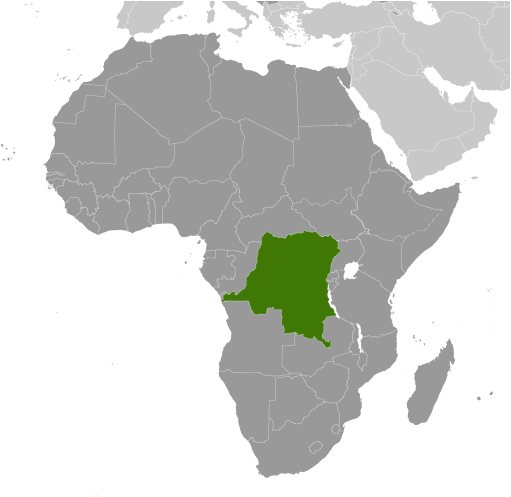
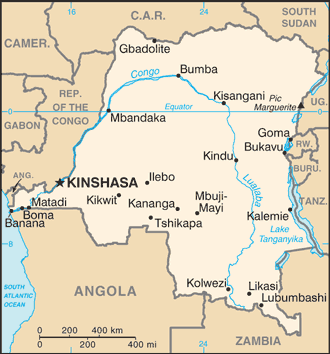
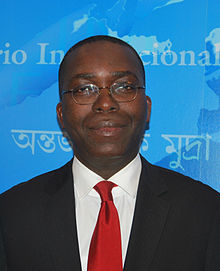
Alexandre Luba Ntambo
Deputy Prime Minister since 20 April 2012
Deputy Prime Minister since 20 April 2012
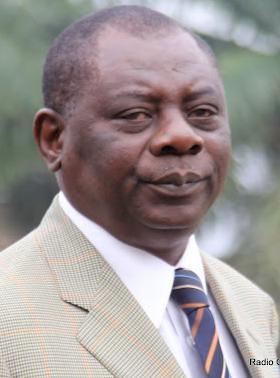
Daniel Mukoko Samba
Deputy Prime Minister since 28 April 2012
Deputy Prime Minister since 28 April 2012