



| DOMINICAN REPUBLIC Dominican Republic Republica Dominicana Joined United Nations: 24 October 1945 Human Rights as assured by their constitution Click here Updated 08 January 2013 |

| CAPITAL |
| POPULATION |
| CHIEF OF STATE |
| SELECTION PROCESS |
Santo Domingo
10,088,598 (July 2012 est.)
President and vice president elected on the same ticket by popular
vote for four-year terms (eligible for a second consecutive term);
election last held 20 May 2012
Next scheduled election: May 2016
vote for four-year terms (eligible for a second consecutive term);
election last held 20 May 2012
Next scheduled election: May 2016
HEAD OF GOVERNMENT
SELECTION PROCESS
According to the Dominican Republic constitution, the President
is both the Chief of State and Head of Government
is both the Chief of State and Head of Government
| DECLARATION OF HUMAN RIGHTS |
| ETHNIC GROUPS |
Mixed 73%, white 16%, black 11%
| RELIGIONS |
Roman Catholic 95%, other 5%
| GOVERNMENT STRUCTURE |
Democratic republic with 31 provinces (provincias, singular - provincia) and 1 district (distrito); Legal system is based on French
civil codes; Criminal Procedures Code modified in 2004 to include important elements of an accusatory system; accepts
compulsory ICJ jurisdiction
Executive: President and vice president elected on the same ticket by popular vote for four-year terms (eligible for a second
consecutive term); election last held 20 May 2012 (next to be held in 2016)
Legislative: Bicameral National Congress or Congreso Nacional consists of the Senate or Senado (32 seats; members elected by
popular vote to serve four-year terms) and the House of Representatives or Camara de Diputados (183 seats; members are elected
by popular vote to serve four-year terms)
elections: Senate - last held on 16 May 2010 (next to be held in May 2016); House of Representatives - last held on 16 May 2010
(next to be held in May 2016); in order to synchronize presidential, legislative, and local elections for 2016, those members elected
in 2010 will actually serve terms of six years
Judicial: Supreme Court or Corte Suprema (judges are appointed by the National Judicial Council comprised of the president, the
leaders of both chambers of congress, the president of the Supreme Court, and an additional non-governing party congressional
representative)
civil codes; Criminal Procedures Code modified in 2004 to include important elements of an accusatory system; accepts
compulsory ICJ jurisdiction
Executive: President and vice president elected on the same ticket by popular vote for four-year terms (eligible for a second
consecutive term); election last held 20 May 2012 (next to be held in 2016)
Legislative: Bicameral National Congress or Congreso Nacional consists of the Senate or Senado (32 seats; members elected by
popular vote to serve four-year terms) and the House of Representatives or Camara de Diputados (183 seats; members are elected
by popular vote to serve four-year terms)
elections: Senate - last held on 16 May 2010 (next to be held in May 2016); House of Representatives - last held on 16 May 2010
(next to be held in May 2016); in order to synchronize presidential, legislative, and local elections for 2016, those members elected
in 2010 will actually serve terms of six years
Judicial: Supreme Court or Corte Suprema (judges are appointed by the National Judicial Council comprised of the president, the
leaders of both chambers of congress, the president of the Supreme Court, and an additional non-governing party congressional
representative)
| LANGUAGES |
Spanish
| BRIEF HISTORY |
The Dominican Republic occupies the eastern two-thirds of the island of Hispaniola. Successive waves of Arawak migrants, moving
northward from the Orinoco delta, settled the islands of the Caribbean. Around 600 AD, the Taínos, a late Stone Age culture,
arrived on the island, displacing the previous inhabitants. They were organized into cacicazgos, which where led by a "cacique" .
The final Arawak migrants, the Caribs, began moving up the Lesser Antilles in the 1100s, and were raiding Taíno villages on the
island's eastern coast by the time the Spanish arrived. Christopher Columbus reached the island on his first voyage, on December 5,
1492, naming it La Española. Believing that the Europeans were in someway supernatural, the Taínos welcomed them with all the
honors available. This was a totally different society from the one the Europeans came from. One of the things that piqued the
curiosity was the amount of clothing worn by the Europeans. Therefore they came to call them "guamikena" (the covered ones). In
1493, Christopher Columbus came back to the island on his second voyage and founded the first Spanish colony in the New
World, the city of Isabella. In 1496, his brother Bartholomew Columbus established the settlement of Santo Domingo de Guzmán
on the southern coast, which became the new capital. An estimated 400,000 Tainos living on the island were soon enslaved to work
in gold mines. As a consequence of oppression, forced labor, hunger, disease, and mass killings, it is estimated that by 1508 that
number had been reduced to around 500,000. By 1535, only 60,000 were still alive. In 1501, the Spanish monarchs, Ferdinand I
and Isabella, first granted permission to the colonists of the Caribbean to import African slaves, which began arriving to the island in
1503. The first major slave revolt in the Americas occurred in Santo Domingo during 1522, when enslaved Muslims of the Wolof
nation led an uprising in the sugar plantation of admiral Don Diego Colon, son of Christopher Columbus. Many of these insurgents
managed to escape to the mountains where they formed independent maroon communities. They descended from tainos mix with
runaway Africans,who reach the cacique. While sugar cane dramatically increased Spain's earnings on the island, large numbers of
the newly imported slaves fled into the nearly impassable mountain ranges in the island's interior, joining the growing communities of
cimarrónes-literally, 'wild animals'. By the 1530s, cimarron bands had become so numerous that in rural areas the Spaniards could
only safely travel outside their plantations in large armed groups. By the 1540s, the Caribbean Sea had become overrun with
English, French and Dutch pirates. With the conquest of the American mainland, Hispaniola quickly declined. Most Spanish
colonists left for the silver-mines of Mexico and Peru, while new immigrants from Spain bypassed the island. In 1605, Spain,
unhappy that Santo Domingo was facilitating trade between its other colonies and other European powers, attacked vast parts of
the colony's northern and western regions, forcibly resettling their inhabitants closer to the city of Santo Domingo. The Bourbon
dynasty replaced the Habsburgs in Spain in 1700 and introduced economic reforms that gradually began to revive trade in Santo
Domingo. With the outbreak of the Haitian Revolution, the rich urban families linked to the colonial bureaucracy fled the island,
while most of the rural hateros (cattle ranchers) remained, even though they lost their principal market. Spain saw in the unrest an
opportunity to seize all, or part, of the western third of the island in an alliance of convenience with the British and the rebellious
slaves. They were defeated by the forces of the black Jacobin General Toussaint L'Ouverture, and in 1795, France gained control
of the whole island under the Treaties of Basel. The French held on in the eastern part of the island, until defeated by the Spanish
inhabitants at the Battle of Palo Hincado on November 7, 1808 and the final capitulation of the besieged Santo Domingo on July 9,
1809, with help from the Royal Navy. The twenty two year Haitian occupation that followed is recalled by Dominicans as a period
of brutal military rule, though the reality is more complex. It led to large-scale land expropriations and failed efforts to force
production of export crops, impose military services, restrict the use of the Spanish language, and eliminate traditional customs such
as cockfighting. It reinforced Dominican's perceptions of themselves as different from Haitians in "language, race, religion and
domestic customs." In an uprising timed to preempt Báez, on February 27, 1844, the Trinitarios declared independence from Haiti,
backed by Pedro Santana, a wealthy cattle-rancher from El Seibo who commanded a private army of peons who worked on his
estates. The Dominican Republic's first constitution was adopted on November 6, 1844. Offering the deepwater harbor of Samaná
bay as bait, over the next two decades, negotiations were made with Britain, France, the United States and Spain to declare a
protectorate over the country. It adopted a presidential form of government with many liberal tendencies, but it was marred by
Article 210, imposed by Pedro Santana on the constitutional assembly by force, giving him the privileges of a dictatorship until the
war of independence was over. Pedro Santana inherited a bankrupt government on the brink of collapse. Having failed in his initial
bids to secure annexation by the U.S. or France, Santana initiated negotiations with Queen Isabel II and the Captain-General of
Cuba to have the island reconverted into a Spanish colony. In March 1865, Queen Isabel II annulled the annexation and
independence was restored, with the last Spanish troops departing by July. Allying with the emerging sugar interests, the dictatorship
of General Ulises Heureaux, popularly known as Lilís, brought unprecedented stability to the island through iron-fisted rule that
lasted almost two decades. Lilís borrowed heavily from European and American banks-to enrich himself, stabilize the existing debt,
strengthen the bribe system, pay for the army, finance infrastructural development and help set up sugar mills. The six years after
Lilís death witnessed four revolutions and five different presidents. The United States occupied Haiti in July 1915, with the implicit
threat that the Dominican Republic might be next. United States Marines landed in Santo Domingo on May 15, 1916. The
occupation ended in 1924, with a democratically elected Dominican government under president Horacio Vasquez. Rafael
Leonidas Trujillo established absolute political control, while promoting economic development--from which mainly he and his
supporters benefitted--and severe repression of domestic human rights. In November 1961, the Trujillo family was forced into exile,
fleeing to France, and vice-president Joaquín Balaguer assumed power. On November 28 of 1966 a constitution was created,
signed, and put into use. The constitution stated that a president was elected to a four year term. Elections in 1990 were marked by
violence and suspected electoral fraud. The 1994 election too saw widespread pre-election violence, often aimed at intimidating
members of the opposition. Balaguer won in 1994 but most observers felt the election had been stolen. Under pressure from the
United States, Balaguer agreed to hold new elections in 1996. He himself would not run. In 1996, U.S.-raised Leonel Fernández
Reyna of the Partido de la Liberación Dominicana (Dominican Liberation Party) secured more than 51% of the vote through an
alliance with Balaguer. The first item on the president's agenda was the partial sale of some state-owned enterprises. Fernández was
praised for ending decades of isolationism and improving ties with other Caribbean countries, but he was criticized for not fighting
corruption or alleviating the poverty that affects 60% of the population. In 1997, a new law took effect, allowing Dominicans living
abroad to retain their citizenship and vote in Presidential elections. Leonel Fernández Reyna, who grew up in New York, was the
principal beneficiary of this law. The Dominican Republic was involved in the US-led coalition in Iraq, as part of the Spain-led Latin-
American Plus Ultra Brigade, but in 2004, the nation pulled its 300 or so troops out of Iraq. Fernández instituted austerity measures
to deflate the peso and rescue the country from its economic crisis, and in the first half of 2006, the economy grew 11.7%. The
peso is currently at the exchange rate of ~39 DOP to 1 USD. The Dominican Republic has gone through 38 constitutions, more
than any other country, since its independence in 1844. As specified in the new constitution ratified in January 2010, the presidential
elections of 2012 coincided with the election of Overseas Deputies in Dominican expatriate communities. In order to synchronize
presidential, legislative, and local elections for 2016, those members elected in 2010 will actually serve terms of six years Since
1974, elections in the Dominican Republic took place on 16 May every four years. Nevertheless, the constitutional reform of 2009
stipulated in article 209 that the elections would be held on 20 May 2012 to avoid their falling on a work day.
Source: Wikipedia: History of Dominican Republic
northward from the Orinoco delta, settled the islands of the Caribbean. Around 600 AD, the Taínos, a late Stone Age culture,
arrived on the island, displacing the previous inhabitants. They were organized into cacicazgos, which where led by a "cacique" .
The final Arawak migrants, the Caribs, began moving up the Lesser Antilles in the 1100s, and were raiding Taíno villages on the
island's eastern coast by the time the Spanish arrived. Christopher Columbus reached the island on his first voyage, on December 5,
1492, naming it La Española. Believing that the Europeans were in someway supernatural, the Taínos welcomed them with all the
honors available. This was a totally different society from the one the Europeans came from. One of the things that piqued the
curiosity was the amount of clothing worn by the Europeans. Therefore they came to call them "guamikena" (the covered ones). In
1493, Christopher Columbus came back to the island on his second voyage and founded the first Spanish colony in the New
World, the city of Isabella. In 1496, his brother Bartholomew Columbus established the settlement of Santo Domingo de Guzmán
on the southern coast, which became the new capital. An estimated 400,000 Tainos living on the island were soon enslaved to work
in gold mines. As a consequence of oppression, forced labor, hunger, disease, and mass killings, it is estimated that by 1508 that
number had been reduced to around 500,000. By 1535, only 60,000 were still alive. In 1501, the Spanish monarchs, Ferdinand I
and Isabella, first granted permission to the colonists of the Caribbean to import African slaves, which began arriving to the island in
1503. The first major slave revolt in the Americas occurred in Santo Domingo during 1522, when enslaved Muslims of the Wolof
nation led an uprising in the sugar plantation of admiral Don Diego Colon, son of Christopher Columbus. Many of these insurgents
managed to escape to the mountains where they formed independent maroon communities. They descended from tainos mix with
runaway Africans,who reach the cacique. While sugar cane dramatically increased Spain's earnings on the island, large numbers of
the newly imported slaves fled into the nearly impassable mountain ranges in the island's interior, joining the growing communities of
cimarrónes-literally, 'wild animals'. By the 1530s, cimarron bands had become so numerous that in rural areas the Spaniards could
only safely travel outside their plantations in large armed groups. By the 1540s, the Caribbean Sea had become overrun with
English, French and Dutch pirates. With the conquest of the American mainland, Hispaniola quickly declined. Most Spanish
colonists left for the silver-mines of Mexico and Peru, while new immigrants from Spain bypassed the island. In 1605, Spain,
unhappy that Santo Domingo was facilitating trade between its other colonies and other European powers, attacked vast parts of
the colony's northern and western regions, forcibly resettling their inhabitants closer to the city of Santo Domingo. The Bourbon
dynasty replaced the Habsburgs in Spain in 1700 and introduced economic reforms that gradually began to revive trade in Santo
Domingo. With the outbreak of the Haitian Revolution, the rich urban families linked to the colonial bureaucracy fled the island,
while most of the rural hateros (cattle ranchers) remained, even though they lost their principal market. Spain saw in the unrest an
opportunity to seize all, or part, of the western third of the island in an alliance of convenience with the British and the rebellious
slaves. They were defeated by the forces of the black Jacobin General Toussaint L'Ouverture, and in 1795, France gained control
of the whole island under the Treaties of Basel. The French held on in the eastern part of the island, until defeated by the Spanish
inhabitants at the Battle of Palo Hincado on November 7, 1808 and the final capitulation of the besieged Santo Domingo on July 9,
1809, with help from the Royal Navy. The twenty two year Haitian occupation that followed is recalled by Dominicans as a period
of brutal military rule, though the reality is more complex. It led to large-scale land expropriations and failed efforts to force
production of export crops, impose military services, restrict the use of the Spanish language, and eliminate traditional customs such
as cockfighting. It reinforced Dominican's perceptions of themselves as different from Haitians in "language, race, religion and
domestic customs." In an uprising timed to preempt Báez, on February 27, 1844, the Trinitarios declared independence from Haiti,
backed by Pedro Santana, a wealthy cattle-rancher from El Seibo who commanded a private army of peons who worked on his
estates. The Dominican Republic's first constitution was adopted on November 6, 1844. Offering the deepwater harbor of Samaná
bay as bait, over the next two decades, negotiations were made with Britain, France, the United States and Spain to declare a
protectorate over the country. It adopted a presidential form of government with many liberal tendencies, but it was marred by
Article 210, imposed by Pedro Santana on the constitutional assembly by force, giving him the privileges of a dictatorship until the
war of independence was over. Pedro Santana inherited a bankrupt government on the brink of collapse. Having failed in his initial
bids to secure annexation by the U.S. or France, Santana initiated negotiations with Queen Isabel II and the Captain-General of
Cuba to have the island reconverted into a Spanish colony. In March 1865, Queen Isabel II annulled the annexation and
independence was restored, with the last Spanish troops departing by July. Allying with the emerging sugar interests, the dictatorship
of General Ulises Heureaux, popularly known as Lilís, brought unprecedented stability to the island through iron-fisted rule that
lasted almost two decades. Lilís borrowed heavily from European and American banks-to enrich himself, stabilize the existing debt,
strengthen the bribe system, pay for the army, finance infrastructural development and help set up sugar mills. The six years after
Lilís death witnessed four revolutions and five different presidents. The United States occupied Haiti in July 1915, with the implicit
threat that the Dominican Republic might be next. United States Marines landed in Santo Domingo on May 15, 1916. The
occupation ended in 1924, with a democratically elected Dominican government under president Horacio Vasquez. Rafael
Leonidas Trujillo established absolute political control, while promoting economic development--from which mainly he and his
supporters benefitted--and severe repression of domestic human rights. In November 1961, the Trujillo family was forced into exile,
fleeing to France, and vice-president Joaquín Balaguer assumed power. On November 28 of 1966 a constitution was created,
signed, and put into use. The constitution stated that a president was elected to a four year term. Elections in 1990 were marked by
violence and suspected electoral fraud. The 1994 election too saw widespread pre-election violence, often aimed at intimidating
members of the opposition. Balaguer won in 1994 but most observers felt the election had been stolen. Under pressure from the
United States, Balaguer agreed to hold new elections in 1996. He himself would not run. In 1996, U.S.-raised Leonel Fernández
Reyna of the Partido de la Liberación Dominicana (Dominican Liberation Party) secured more than 51% of the vote through an
alliance with Balaguer. The first item on the president's agenda was the partial sale of some state-owned enterprises. Fernández was
praised for ending decades of isolationism and improving ties with other Caribbean countries, but he was criticized for not fighting
corruption or alleviating the poverty that affects 60% of the population. In 1997, a new law took effect, allowing Dominicans living
abroad to retain their citizenship and vote in Presidential elections. Leonel Fernández Reyna, who grew up in New York, was the
principal beneficiary of this law. The Dominican Republic was involved in the US-led coalition in Iraq, as part of the Spain-led Latin-
American Plus Ultra Brigade, but in 2004, the nation pulled its 300 or so troops out of Iraq. Fernández instituted austerity measures
to deflate the peso and rescue the country from its economic crisis, and in the first half of 2006, the economy grew 11.7%. The
peso is currently at the exchange rate of ~39 DOP to 1 USD. The Dominican Republic has gone through 38 constitutions, more
than any other country, since its independence in 1844. As specified in the new constitution ratified in January 2010, the presidential
elections of 2012 coincided with the election of Overseas Deputies in Dominican expatriate communities. In order to synchronize
presidential, legislative, and local elections for 2016, those members elected in 2010 will actually serve terms of six years Since
1974, elections in the Dominican Republic took place on 16 May every four years. Nevertheless, the constitutional reform of 2009
stipulated in article 209 that the elections would be held on 20 May 2012 to avoid their falling on a work day.
Source: Wikipedia: History of Dominican Republic
| ECONOMIC OVERVIEW |
The Dominican Republic has long been viewed primarily as an exporter of sugar, coffee, and tobacco, but in recent years the
service sector has overtaken agriculture as the economy's largest employer, due to growth in telecommunications, tourism, and free
trade zones. The economy is highly dependent upon the US, the destination for more than half of exports. Remittances from the US
amount to about a 10th of GDP, equivalent to almost half of exports and three-quarters of tourism receipts. The country suffers
from marked income inequality; the poorest half of the population receives less than one-fifth of GDP, while the richest 10% enjoys
nearly 40% of GDP. High unemployment and underemployment remains an important long-term challenge. The Central
America-Dominican Republic Free Trade Agreement (CAFTA-DR) came into force in March 2007, boosting investment and
exports and reducing losses to the Asian garment industry. The growth of the Dominican Republic's economy rebounded in
2010-11 from the global recession, and remains one of the fastest growing in the region.
Source: CIA World Factbook (select Dominican Republic)
service sector has overtaken agriculture as the economy's largest employer, due to growth in telecommunications, tourism, and free
trade zones. The economy is highly dependent upon the US, the destination for more than half of exports. Remittances from the US
amount to about a 10th of GDP, equivalent to almost half of exports and three-quarters of tourism receipts. The country suffers
from marked income inequality; the poorest half of the population receives less than one-fifth of GDP, while the richest 10% enjoys
nearly 40% of GDP. High unemployment and underemployment remains an important long-term challenge. The Central
America-Dominican Republic Free Trade Agreement (CAFTA-DR) came into force in March 2007, boosting investment and
exports and reducing losses to the Asian garment industry. The growth of the Dominican Republic's economy rebounded in
2010-11 from the global recession, and remains one of the fastest growing in the region.
Source: CIA World Factbook (select Dominican Republic)
| POLITICAL CLIMATE |
The Dominican Republic's long history of political instability had included many revolutions, coups d'état, barracks revolts, and
pronunciamientos (insurrections accompanied by declarations of disagreement with the existing government), as well as social and
political breakdowns. Coups and revolutions are among the easiest political phenomena to measure systematically. When a country
has had so many, one must conclude that they are a regular, normal part of the political process. Therefore, it is not the case that
Dominican politics are unsystematic.
Politics in the Dominican Republic functions on a smaller and less formal scale than politics in the United States. Sometimes it seems
that everyone in the Dominican Republic who counts politically knows everyone else who counts; many in this group are also
interrelated by blood or marriage. It is a small country, with only one main city. Politics is therefore more like old-fashioned United
States county politics. In this context, family and clan networks, patronage systems, close friendships, the bonds of kinship, personal
ties, and extended family, ethnic, or other personal connections are as important as the more formal and impersonal institutions of a
larger political system. The Dominican Republic has large-scale organizations, such as political parties, interest groups, professional
associations, and bureacratic organizations, but often the informal networks are at least as important. They are, in addition, the
features that are the most difficult for outsiders to penetrate and to understand. To comprehend Dominican politics, therefore, one
must understand first of all the family networks: who is related to whom, and how and what (if anything) these family ties mean. One
must also understand the social and the racial hierarchies, who speaks to whom and in what tone of voice, who sees whom socially,
and what these social ties imply politically. One must know about past business deals and associations, whether they were clean or
"dirty," and what each family or individual knows or thinks about associates. One must understand where the different families "fit" in
the Dominican system, whether they are old rich or new rich, their bloodlines, what they share politically, and what pulls them apart.
Many of these family and clan associations and rivalries go back for generations.
The Dominican Republic has gone through 38 constitutions, more than any other country, since its independence in 1844. As
specified in the new constitution ratified in January 2010, the presidential elections of 2012 coincided with the election of Overseas
Deputies in Dominican expatriate communities. In order to synchronize presidential, legislative, and local elections for 2016, those
members elected in 2010 will actually serve terms of six years Since 1974, elections in the Dominican Republic took place on 16
May every four years. Nevertheless, the constitutional reform of 2009 stipulated in article 209 that the elections would be held on
20 May 2012 to avoid their falling on a work day.
Source: Country Studies: Dominican Republic
pronunciamientos (insurrections accompanied by declarations of disagreement with the existing government), as well as social and
political breakdowns. Coups and revolutions are among the easiest political phenomena to measure systematically. When a country
has had so many, one must conclude that they are a regular, normal part of the political process. Therefore, it is not the case that
Dominican politics are unsystematic.
Politics in the Dominican Republic functions on a smaller and less formal scale than politics in the United States. Sometimes it seems
that everyone in the Dominican Republic who counts politically knows everyone else who counts; many in this group are also
interrelated by blood or marriage. It is a small country, with only one main city. Politics is therefore more like old-fashioned United
States county politics. In this context, family and clan networks, patronage systems, close friendships, the bonds of kinship, personal
ties, and extended family, ethnic, or other personal connections are as important as the more formal and impersonal institutions of a
larger political system. The Dominican Republic has large-scale organizations, such as political parties, interest groups, professional
associations, and bureacratic organizations, but often the informal networks are at least as important. They are, in addition, the
features that are the most difficult for outsiders to penetrate and to understand. To comprehend Dominican politics, therefore, one
must understand first of all the family networks: who is related to whom, and how and what (if anything) these family ties mean. One
must also understand the social and the racial hierarchies, who speaks to whom and in what tone of voice, who sees whom socially,
and what these social ties imply politically. One must know about past business deals and associations, whether they were clean or
"dirty," and what each family or individual knows or thinks about associates. One must understand where the different families "fit" in
the Dominican system, whether they are old rich or new rich, their bloodlines, what they share politically, and what pulls them apart.
Many of these family and clan associations and rivalries go back for generations.
The Dominican Republic has gone through 38 constitutions, more than any other country, since its independence in 1844. As
specified in the new constitution ratified in January 2010, the presidential elections of 2012 coincided with the election of Overseas
Deputies in Dominican expatriate communities. In order to synchronize presidential, legislative, and local elections for 2016, those
members elected in 2010 will actually serve terms of six years Since 1974, elections in the Dominican Republic took place on 16
May every four years. Nevertheless, the constitutional reform of 2009 stipulated in article 209 that the elections would be held on
20 May 2012 to avoid their falling on a work day.
Source: Country Studies: Dominican Republic
| INTERNATIONAL DISPUTES |
Haitian migrants cross the porous border into the Dominican Republic to find work; illegal migrants from the Dominican Republic
cross the Mona Passage each year to Puerto Rico to find better work
cross the Mona Passage each year to Puerto Rico to find better work



| REFUGEES AND INTERNALLY DISPLACED PERSONS (IDPS) |
None reported.
| ILLICIT DRUGS |
Transshipment point for South American drugs destined for the US and Europe; has become a transshipment point for ecstasy
from the Netherlands and Belgium destined for US and Canada; substantial money laundering activity in particular by Colombian
narcotics traffickers; significant amphetamine consumption (2008)
from the Netherlands and Belgium destined for US and Canada; substantial money laundering activity in particular by Colombian
narcotics traffickers; significant amphetamine consumption (2008)
| HUMAN RIGHTS STATEMENTS, ANALYSIS AND CRITIQUES |
2011 Human Rights Report: Dominican Republic
Bureau of Democracy, Human Rights, and Labor
2011 Country Reports on Human Rights Practices
May 25, 2012
The Dominican Republic is a representative constitutional democracy. In 2008 voters elected President Leonel Fernandez of the
Dominican Liberation Party (PLD) for a third term, and in 2010 elections the PLD and its allies won majorities in both chambers of
Congress. Impartial outside observers assessed these elections as generally free and fair. There were instances in which elements of the
security forces acted independently of civilian control.
The most serious human rights problems were lack of respect for the rule of law, manifested by extrajudicial killings and beatings and
other abuse of suspects; violence and discrimination against women, including domestic abuse, rape, and femicide; and severe
discrimination against Haitian migrants and their descendants, including the retroactive application of a new immigration policy resulting
in de facto statelessness for persons who have lived in the country for generations.
Other human rights problems involved widespread corruption, arbitrary arrest and detention, fair to harsh prison conditions, harassment
of certain human rights groups, child prostitution and other abuses of children, trafficking in persons, violence and discrimination against
persons based on sexual orientation, ineffective enforcement of labor laws, and child labor.
Although the government took some steps to prosecute and punish police and security officers who committed abuses, there was a
widespread perception of impunity afforded to senior officers and other government officials.
Click here to read more »
Bureau of Democracy, Human Rights, and Labor
2011 Country Reports on Human Rights Practices
May 25, 2012
The Dominican Republic is a representative constitutional democracy. In 2008 voters elected President Leonel Fernandez of the
Dominican Liberation Party (PLD) for a third term, and in 2010 elections the PLD and its allies won majorities in both chambers of
Congress. Impartial outside observers assessed these elections as generally free and fair. There were instances in which elements of the
security forces acted independently of civilian control.
The most serious human rights problems were lack of respect for the rule of law, manifested by extrajudicial killings and beatings and
other abuse of suspects; violence and discrimination against women, including domestic abuse, rape, and femicide; and severe
discrimination against Haitian migrants and their descendants, including the retroactive application of a new immigration policy resulting
in de facto statelessness for persons who have lived in the country for generations.
Other human rights problems involved widespread corruption, arbitrary arrest and detention, fair to harsh prison conditions, harassment
of certain human rights groups, child prostitution and other abuses of children, trafficking in persons, violence and discrimination against
persons based on sexual orientation, ineffective enforcement of labor laws, and child labor.
Although the government took some steps to prosecute and punish police and security officers who committed abuses, there was a
widespread perception of impunity afforded to senior officers and other government officials.
Click here to read more »
19 April 2012
Human Rights Committee
104th session
New York, 12–30 March 2012
Consideration of reports submitted by States parties under article 40 of the Covenant
Concluding observations of the Human Rights Committee
Dominican Republic
A. Introduction
2. The Committee welcomes the submission of the Dominican Republic’s fifth periodic report and the information contained
therein. The Committee expresses appreciation for the opportunity to resume the dialogue with the delegation on measures to implement
the provisions of the Covenant that were adopted by the State party during the reporting period. The Committee thanks the State party
for its written replies (CCPR/C/DOM/Q/5/Add.1) to the list of issues (CCPR/C/DOM/Q/5), which were supplemented by the oral replies
provided by the delegation and the additional information provided in writing. Nevertheless, the Committee notes the very late submission
of the written replies to the list of issues, just hours before the beginning of the dialogue, which meant that the document could not be
translated into the other working languages of the Committee in a timely fashion.
B. Positive aspects
3. The Committee notes with satisfaction:
(a) The adoption of the new Constitution in January 2010;
(b) The introduction of the right to vote for persons deprived of liberty.
4. The Committee welcomes:
(a) The accession in August 2009 to the Convention on the Rights of Persons with Disabilities;
(b) The ratification on 24 January 2012 of the Convention against Torture and Other Cruel, Inhuman or Degrading Treatment
or Punishment.
C. Principal subjects of concern and recommendations
5. The Committee notes that the State party has not to date listed any examples of application of the provisions of the Covenant by
the national courts and that the status of the Covenant in the domestic legal system is not entirely clear (art. 2).
The State party should clearly state that the Covenant takes precedence over domestic law. In its next periodic report, the State party
should include examples of application of the Covenant by national courts and of access to the remedies provided by law for persons
whose rights under the Covenant have been violated.
6. The Committee regrets that, more than 10 years after the establishment of the Office of the Ombudsman (Defensoría del
Pueblo), no Ombudsman has been appointed and that the institution has not yet begun its work. The Committee also regrets that there is
no national human rights institution functioning in conformity with the Paris Principles (art. 2).
The State party should appoint an Ombudsman as soon as possible through a transparent procedure, guaranteeing that the person
selected has the highest levels of professionalism, independence and expertise. The State party should ensure the proper functioning of
the Office of the Ombudsman, provide it with its own budget, strengthen its mandate, expand its powers of supervision and take all the
necessary measures to ensure its full independence in accordance with the Paris Principles (General Assembly resolution 48/134).
Click here to read more »
Human Rights Committee
104th session
New York, 12–30 March 2012
Consideration of reports submitted by States parties under article 40 of the Covenant
Concluding observations of the Human Rights Committee
Dominican Republic
A. Introduction
2. The Committee welcomes the submission of the Dominican Republic’s fifth periodic report and the information contained
therein. The Committee expresses appreciation for the opportunity to resume the dialogue with the delegation on measures to implement
the provisions of the Covenant that were adopted by the State party during the reporting period. The Committee thanks the State party
for its written replies (CCPR/C/DOM/Q/5/Add.1) to the list of issues (CCPR/C/DOM/Q/5), which were supplemented by the oral replies
provided by the delegation and the additional information provided in writing. Nevertheless, the Committee notes the very late submission
of the written replies to the list of issues, just hours before the beginning of the dialogue, which meant that the document could not be
translated into the other working languages of the Committee in a timely fashion.
B. Positive aspects
3. The Committee notes with satisfaction:
(a) The adoption of the new Constitution in January 2010;
(b) The introduction of the right to vote for persons deprived of liberty.
4. The Committee welcomes:
(a) The accession in August 2009 to the Convention on the Rights of Persons with Disabilities;
(b) The ratification on 24 January 2012 of the Convention against Torture and Other Cruel, Inhuman or Degrading Treatment
or Punishment.
C. Principal subjects of concern and recommendations
5. The Committee notes that the State party has not to date listed any examples of application of the provisions of the Covenant by
the national courts and that the status of the Covenant in the domestic legal system is not entirely clear (art. 2).
The State party should clearly state that the Covenant takes precedence over domestic law. In its next periodic report, the State party
should include examples of application of the Covenant by national courts and of access to the remedies provided by law for persons
whose rights under the Covenant have been violated.
6. The Committee regrets that, more than 10 years after the establishment of the Office of the Ombudsman (Defensoría del
Pueblo), no Ombudsman has been appointed and that the institution has not yet begun its work. The Committee also regrets that there is
no national human rights institution functioning in conformity with the Paris Principles (art. 2).
The State party should appoint an Ombudsman as soon as possible through a transparent procedure, guaranteeing that the person
selected has the highest levels of professionalism, independence and expertise. The State party should ensure the proper functioning of
the Office of the Ombudsman, provide it with its own budget, strengthen its mandate, expand its powers of supervision and take all the
necessary measures to ensure its full independence in accordance with the Paris Principles (General Assembly resolution 48/134).
Click here to read more »
Freedom House Condemns Defamation Lawsuit Against Dominican Journalists
Nov 19 2012 - 12:14pm
Freedom House expresses deep concern about a recent defamation lawsuit filed against two Dominican journalists, and urges the
country to decriminalize defamation in an effort to better protect free expression.
The lawsuit, filed by the Canadian apparel company Gildan Activewear, targets Robert Vargas and Genris Garcia, the authors of two
recent reports that allege Gildan Activewear played a role in accelerating environmental degradation in Guerra, a municipality of Santo
Domingo. Vargas is the editor of the website “Ciudad Oriental” and Garcia the editor of the website “Vigilante Informativo.”
The Dominican Republic was rated free in Freedom in the World 2012, and partly free in Freedom of the Press 2012, Freedom House’s
annual assessment of the legal, political, and economic environment for journalists. Gildan Activewear’s lawsuit comes at a critical time
for press freedom in the Dominican Republic, as the legislature is considering a repressive bill, which would amend the criminal code to
introduce hefty fines and jail sentences for journalists who criticize members of government. The environment for journalists is
increasingly hostile, as defamation lawsuits are used as sources of political and economic leverage to silence criticism and dissent.
Click here to read more »
Nov 19 2012 - 12:14pm
Freedom House expresses deep concern about a recent defamation lawsuit filed against two Dominican journalists, and urges the
country to decriminalize defamation in an effort to better protect free expression.
The lawsuit, filed by the Canadian apparel company Gildan Activewear, targets Robert Vargas and Genris Garcia, the authors of two
recent reports that allege Gildan Activewear played a role in accelerating environmental degradation in Guerra, a municipality of Santo
Domingo. Vargas is the editor of the website “Ciudad Oriental” and Garcia the editor of the website “Vigilante Informativo.”
The Dominican Republic was rated free in Freedom in the World 2012, and partly free in Freedom of the Press 2012, Freedom House’s
annual assessment of the legal, political, and economic environment for journalists. Gildan Activewear’s lawsuit comes at a critical time
for press freedom in the Dominican Republic, as the legislature is considering a repressive bill, which would amend the criminal code to
introduce hefty fines and jail sentences for journalists who criticize members of government. The environment for journalists is
increasingly hostile, as defamation lawsuits are used as sources of political and economic leverage to silence criticism and dissent.
Click here to read more »
Dominican Republic: Man abducted during forced eviction: Luis Polo
3 December 2012
On 20 November a mentally disabled man was brutally abducted in Santo Domingo, the capital of the Dominican Republic, during an
illegal forced eviction carried out by the police. Since then his family have had no information about his whereabouts and the authorities
are not investigating his disappearance.
On 20 November at 7.30 am, police officers and dozens of men who were believed to be thugs contracted by the police forced their
way into Luis Polo’s house in the neighbourhood of Villa Duarte in the eastern area of Santo Domingo, in order to forcibly evict the
residents of the building. According to his family, Luis Polo, who is mentally disabled, was violently removed from his house by the
thugs under the order of the police, and forced into a car. He has not been seen since.
Later the same day, the family went to report the disappearance to the police, who denied having arrested him. According to the family,
both the police and the local public prosecutor are not investigating his disappearance. On 23 November, police officers along with thugs
again went to the house to evict Luis Polo’s son and another family who were living in separate apartments in the same building.
According to the residents, the delinquents beat them in front of the police. The officers did not present any court order permitting them
to carry out either eviction.
Since then, all the residents are homeless and the building is guarded by police officers to prevent them from to returning.
Click here to read more »
3 December 2012
On 20 November a mentally disabled man was brutally abducted in Santo Domingo, the capital of the Dominican Republic, during an
illegal forced eviction carried out by the police. Since then his family have had no information about his whereabouts and the authorities
are not investigating his disappearance.
On 20 November at 7.30 am, police officers and dozens of men who were believed to be thugs contracted by the police forced their
way into Luis Polo’s house in the neighbourhood of Villa Duarte in the eastern area of Santo Domingo, in order to forcibly evict the
residents of the building. According to his family, Luis Polo, who is mentally disabled, was violently removed from his house by the
thugs under the order of the police, and forced into a car. He has not been seen since.
Later the same day, the family went to report the disappearance to the police, who denied having arrested him. According to the family,
both the police and the local public prosecutor are not investigating his disappearance. On 23 November, police officers along with thugs
again went to the house to evict Luis Polo’s son and another family who were living in separate apartments in the same building.
According to the residents, the delinquents beat them in front of the police. The officers did not present any court order permitting them
to carry out either eviction.
Since then, all the residents are homeless and the building is guarded by police officers to prevent them from to returning.
Click here to read more »
From Condoms to the Pill: Trust, Control and Violence
by Marianne Mollmann
Published in: Huffington Post
September 1, 2011
As media reports celebrate advances toward new male contraceptive methods, the fact that women currently take the larger
responsibility for birth control is held up as somewhat inevitable and sad. In effect, contraceptive use is now so firmly established as a
woman's responsibility that data on birth control often are collected from women only. Moreover, pundits regularly question how to get
a man to wear a condom -- the main existing form of male contraception, barring vasectomy -- and why men are so uninterested in
something that surely pertains to them, too.
Historically, however, the responsibility for birth control has fluctuated.
The use of modern contraceptive methods started at least in part as a male project. George Bernard Shaw called rubber condoms the
"greatest invention of the 19th century," and by the early 20th century the U.S. birth rate had fallen significantly, in part because of
effective contraceptive use, condoms in particular.
This male control over contraception was seen by some suffrage leaders as immoral, because it made it easier for married men to cheat
on their wives. Later feminists saw access to woman-controlled birth control as essential to advancing women as equals, in particular
women from the working classes. And in time, a woman's right to decide, alone, about the timing and spacing of her pregnancies has
become a key tenet of the women's rights movement, evidenced by the massive improvements in women's status since the approval of
the birth control pill over 50 years ago.
Male contraception remains very much in the mix, though, and contraception decisions still are very much a matter of trust and control.
For starters, as some of the suffragettes noted, the use of contraception allows for sexual encounters with a substantially lower risk of
both pregnancy and, depending on the method, sexually transmitted infections.
As a result, if a person wants to use contraception, that is sometimes seen as a sign of their desire to "cheat," or even as proof that they
already have. In societies where male infidelity is seen as more "normal" than female straying, this can cause problems. In 2004 I spoke
with dozens of women in the Dominican Republic who had been beaten by their male partners for daring to ask them to use condoms.
Click here to read more »
by Marianne Mollmann
Published in: Huffington Post
September 1, 2011
As media reports celebrate advances toward new male contraceptive methods, the fact that women currently take the larger
responsibility for birth control is held up as somewhat inevitable and sad. In effect, contraceptive use is now so firmly established as a
woman's responsibility that data on birth control often are collected from women only. Moreover, pundits regularly question how to get
a man to wear a condom -- the main existing form of male contraception, barring vasectomy -- and why men are so uninterested in
something that surely pertains to them, too.
Historically, however, the responsibility for birth control has fluctuated.
The use of modern contraceptive methods started at least in part as a male project. George Bernard Shaw called rubber condoms the
"greatest invention of the 19th century," and by the early 20th century the U.S. birth rate had fallen significantly, in part because of
effective contraceptive use, condoms in particular.
This male control over contraception was seen by some suffrage leaders as immoral, because it made it easier for married men to cheat
on their wives. Later feminists saw access to woman-controlled birth control as essential to advancing women as equals, in particular
women from the working classes. And in time, a woman's right to decide, alone, about the timing and spacing of her pregnancies has
become a key tenet of the women's rights movement, evidenced by the massive improvements in women's status since the approval of
the birth control pill over 50 years ago.
Male contraception remains very much in the mix, though, and contraception decisions still are very much a matter of trust and control.
For starters, as some of the suffragettes noted, the use of contraception allows for sexual encounters with a substantially lower risk of
both pregnancy and, depending on the method, sexually transmitted infections.
As a result, if a person wants to use contraception, that is sometimes seen as a sign of their desire to "cheat," or even as proof that they
already have. In societies where male infidelity is seen as more "normal" than female straying, this can cause problems. In 2004 I spoke
with dozens of women in the Dominican Republic who had been beaten by their male partners for daring to ask them to use condoms.
Click here to read more »
TRANSLATED FROM SPANISH BY GOOGLE TRANSLATE
September 25, 2012
Speech by President of the Republic, Mr. Danilo Medina Sánchez, in the 67th Session of the General Assembly of the United
Nations
Mr President,
Today we are more than 7,000 million people who inhabit the planet.
43%, or about 3.000 million are under 25.
Demand for investment that our youth have the skills and opportunities to meet with creative tasks and challenges that characterize our
societies.
For many years, developing countries have been assessed by international financial institutions, to some extent, as measured by income
or domestic production expressed in per capita terms, with which he identified the welfare state material.
Our country, the Dominican Republic, based on these measurements, has been ranked in recent years, as upper-middle income.
However, more than a third of our citizens remains in poverty. So how to exclude countries like ours of development aid?
Similarly, for purposes of international comparison, poverty has been measured based on income, considering poor families who live on
less than U.S. $ 2 per day and in extreme poverty on less than $ 1.25 a day, adjusted for both power purchasing.
According to these criteria, we conclude that globally about 2.036 million people are poor, that is, 33% of humanity, and that extreme
poverty would have fallen in the year 2005 to 1.400 million, the same measurements projected that by 2015 only 883 million live in
extreme poverty.
The measurements of these international optimism seems inconsistent with the perception of many of our fellow citizens who feel that
the growth of GDP does not express its shortcomings and despairs.
Neither the youth unrest that even having high educational level does not get a decent job or opportunities to boost their business ideas.
This discrepancy between the optimism of some international measurements and discomfort of our streets, can be understood by the
inadequate use of indicators to measure poverty, development and welfare.
The Dominican Republic reaffirms its strong commitment to peace, tolerance and international coexistence, as well as democracy and
freedom, as basic components of development. We hope that sustainable development is the enrichment of people's daily lives, families
and communities and countries, as well as the defense of our natural resources.
Peace, overcoming social inequalities, environmental sustainability, and the sustained growth of our capabilities to produce goods and
services needed by our people, go hand in hand and are the essence of development.
Click here to read more »
September 25, 2012
Speech by President of the Republic, Mr. Danilo Medina Sánchez, in the 67th Session of the General Assembly of the United
Nations
Mr President,
Today we are more than 7,000 million people who inhabit the planet.
43%, or about 3.000 million are under 25.
Demand for investment that our youth have the skills and opportunities to meet with creative tasks and challenges that characterize our
societies.
For many years, developing countries have been assessed by international financial institutions, to some extent, as measured by income
or domestic production expressed in per capita terms, with which he identified the welfare state material.
Our country, the Dominican Republic, based on these measurements, has been ranked in recent years, as upper-middle income.
However, more than a third of our citizens remains in poverty. So how to exclude countries like ours of development aid?
Similarly, for purposes of international comparison, poverty has been measured based on income, considering poor families who live on
less than U.S. $ 2 per day and in extreme poverty on less than $ 1.25 a day, adjusted for both power purchasing.
According to these criteria, we conclude that globally about 2.036 million people are poor, that is, 33% of humanity, and that extreme
poverty would have fallen in the year 2005 to 1.400 million, the same measurements projected that by 2015 only 883 million live in
extreme poverty.
The measurements of these international optimism seems inconsistent with the perception of many of our fellow citizens who feel that
the growth of GDP does not express its shortcomings and despairs.
Neither the youth unrest that even having high educational level does not get a decent job or opportunities to boost their business ideas.
This discrepancy between the optimism of some international measurements and discomfort of our streets, can be understood by the
inadequate use of indicators to measure poverty, development and welfare.
The Dominican Republic reaffirms its strong commitment to peace, tolerance and international coexistence, as well as democracy and
freedom, as basic components of development. We hope that sustainable development is the enrichment of people's daily lives, families
and communities and countries, as well as the defense of our natural resources.
Peace, overcoming social inequalities, environmental sustainability, and the sustained growth of our capabilities to produce goods and
services needed by our people, go hand in hand and are the essence of development.
Click here to read more »
TRANSLATED FROM SPANISH BY GOOGLE TRANSLATE
The Ombudsman and Citizen Security in the Dominican Republic
July 15, 2011
With the approval last year of major reforms to the Constitution of the State, was opened in the Dominican Republic, serious and
balanced discussion of the effectiveness and application of constitutional principles, which just approved on January 26, 2010.
New concepts, new legal concepts, new approaches, new debates and propel a new position on the constitutional, so far as to
effectively guarantee, to those, who once came to paint on the walls of the city: This is not my Constitution. That is the foundation of
the rule of law, truly and effectively protect everybody, including those who do not feel part of it.
That's why, that in defining what kind of state, must prevail, the Constitution defines it as a social and democratic state of law, organized
as a unitary, founded on respect for human dignity, fundamental rights, the work, popular sovereignty and the separation and
independence of public powers, their function being essential to effective protection of the rights of the person, respect for their dignity
and obtain the means to enable refined equally, fairly and progressive, within a framework of individual liberty and social justice,
compatible with public order, general welfare and rights of all.
It is in this context that we have to define new concepts, such as: Ombudsman and Public Safety. Undefined usually can not understand
the particular. As talk of an Ombudsman, we must place it in the political environment, which aims to implement and develop. What is
the rule of law? To understand the full extent of this constitutional concept must itemize. Because they know what is
A rule of law, can give reasons to baptize a particular legal situation with the rule of law. And it is not.
Ø A rule of law, has the following characteristics:
- Is one that is governed by a Statute Democratic freely discussed and widely accepted by all and called the State Constitution.
- Is this political scenario, where the State Constitution is the point of departure and port of arrival.
- In the place where the framework of the law is the common reference for all.
- Is that where the Constitution guarantees the effectiveness of fundamental rights that apply to each member of that community.
- Is that where the Constitution guarantees the effectiveness of Duties enshrined by it, every citizen in an order of legal and moral
responsibility.
- Is that where the law is a culture, to elaborate, to execute and to do. The law is the northern governors and governed behavior, making
governance instrument of peaceful coexistence. No law regulating the public and private action, there can be no rule of law. The law to
enforce the law, not to break the law, you can not break the law on behalf of the law.
- A rule of law is one based on the individual and collective security, where no one should live from the shock of a given situation,
because the rule of law, guarantees, the appropriate personal safety, no one should feel altered, by any event except the natural events.
And I conclude, this reference to the rule of law, with a statement of Prime Minister Sir Winston Churchill, who responded to a
journalist who asked him: What is the rule of law? And he answered: It is that, when they touch the door of your home at six o'clock,
we all know it's the milkman.
Who supervises and monitors that government officials and state bodies, observe and keep their actions within the provisions of this rule
of law? Well functionally independent authority with administrative and financial autonomy, which in the case of the Dominican
Republic, is called: Ombudsman. As required by Articles 192.193 and 194 of the Constitution of the State, whose main objective is to
help safeguard the fundamental rights of individuals and collective powers established by the constitution and laws, if they are violated by
officials or agencies of State.
This independent authority established constitutional, has among other constituents to let no one claim ignorance, the following
characteristics:
1. It is a figure of the State, with powers granted by law for a term of a collective nature for the benefit of the Dominican people.
2. Is an independent authority, under the Dominican State.
Click here to read more »
The Ombudsman and Citizen Security in the Dominican Republic
July 15, 2011
With the approval last year of major reforms to the Constitution of the State, was opened in the Dominican Republic, serious and
balanced discussion of the effectiveness and application of constitutional principles, which just approved on January 26, 2010.
New concepts, new legal concepts, new approaches, new debates and propel a new position on the constitutional, so far as to
effectively guarantee, to those, who once came to paint on the walls of the city: This is not my Constitution. That is the foundation of
the rule of law, truly and effectively protect everybody, including those who do not feel part of it.
That's why, that in defining what kind of state, must prevail, the Constitution defines it as a social and democratic state of law, organized
as a unitary, founded on respect for human dignity, fundamental rights, the work, popular sovereignty and the separation and
independence of public powers, their function being essential to effective protection of the rights of the person, respect for their dignity
and obtain the means to enable refined equally, fairly and progressive, within a framework of individual liberty and social justice,
compatible with public order, general welfare and rights of all.
It is in this context that we have to define new concepts, such as: Ombudsman and Public Safety. Undefined usually can not understand
the particular. As talk of an Ombudsman, we must place it in the political environment, which aims to implement and develop. What is
the rule of law? To understand the full extent of this constitutional concept must itemize. Because they know what is
A rule of law, can give reasons to baptize a particular legal situation with the rule of law. And it is not.
Ø A rule of law, has the following characteristics:
- Is one that is governed by a Statute Democratic freely discussed and widely accepted by all and called the State Constitution.
- Is this political scenario, where the State Constitution is the point of departure and port of arrival.
- In the place where the framework of the law is the common reference for all.
- Is that where the Constitution guarantees the effectiveness of fundamental rights that apply to each member of that community.
- Is that where the Constitution guarantees the effectiveness of Duties enshrined by it, every citizen in an order of legal and moral
responsibility.
- Is that where the law is a culture, to elaborate, to execute and to do. The law is the northern governors and governed behavior, making
governance instrument of peaceful coexistence. No law regulating the public and private action, there can be no rule of law. The law to
enforce the law, not to break the law, you can not break the law on behalf of the law.
- A rule of law is one based on the individual and collective security, where no one should live from the shock of a given situation,
because the rule of law, guarantees, the appropriate personal safety, no one should feel altered, by any event except the natural events.
And I conclude, this reference to the rule of law, with a statement of Prime Minister Sir Winston Churchill, who responded to a
journalist who asked him: What is the rule of law? And he answered: It is that, when they touch the door of your home at six o'clock,
we all know it's the milkman.
Who supervises and monitors that government officials and state bodies, observe and keep their actions within the provisions of this rule
of law? Well functionally independent authority with administrative and financial autonomy, which in the case of the Dominican
Republic, is called: Ombudsman. As required by Articles 192.193 and 194 of the Constitution of the State, whose main objective is to
help safeguard the fundamental rights of individuals and collective powers established by the constitution and laws, if they are violated by
officials or agencies of State.
This independent authority established constitutional, has among other constituents to let no one claim ignorance, the following
characteristics:
1. It is a figure of the State, with powers granted by law for a term of a collective nature for the benefit of the Dominican people.
2. Is an independent authority, under the Dominican State.
Click here to read more »
TRANSLATED FROM SPANISH BY GOOGLE TRANSLATE
December 8, 2012, 9:04 AM
The Ombudsman
If in practice not be reduced to a bureaucratic, merely decorative, "The Ombudsman" as given to channel social conflicts have a way.
But that figure is approved may take centuries, not only 12 years, and people will care a damn.
Amnesty International, which has put the issue on the table with his application to the Supreme Court to submit the shortlist of
candidates, ignores undoubtedly the national reality. It is expected that in the same way that they have rejected their reports on human
rights violations, in the same way they reject its pressure medium. It is not excluded to an interest in the matter.
That Article 192 of the Constitution empowers the court to decide if the House does not in the corresponding periods is the least
important. What matters, in any case, is that the conditions are not for the Dominican Republic have an "Ombudsman" to work. The
Constitution states that the essential function is to help safeguard the fundamental rights of individuals and the collective and diffuse
interests recorded in procedural laws or other state bodies.
In a nation where the Constitution is just a protocol and laws only apply to the weakest "Ombudsman" does not paint anything. Since
nothing will solve people has never been higher expectations with a figure that it will increase the already heavy burden.
The constitutional concept, one of those luxuries that are shown here as a sign of progress and modernization, has worked in countries
where laws are respected and even traditions. But in those where there is not even legal guarantee has been a fiasco.
Before election started tackling the Congress would have to tear their garments, and ensuring compliance with the law enforcement.
When has not waived its lawmaking function is that congressmen have made a blind eye or simply legitimize have simply deplorable
excesses.
Nor is there any guarantee that the request would be made up of figures, no need to be politically independent, they can guarantee that
the interests of the public would be above political ambitions that have so weakened the institutional system.
With "The Ombudsman" can wait until conditions are ripe to fulfill some function, rather than become a figurehead, but at high cost to
the taxpayer. Now might be more meaningful engagement with the laws that create new instances that sometimes result in conflicts
center.
Click here to read more>>
December 8, 2012, 9:04 AM
The Ombudsman
If in practice not be reduced to a bureaucratic, merely decorative, "The Ombudsman" as given to channel social conflicts have a way.
But that figure is approved may take centuries, not only 12 years, and people will care a damn.
Amnesty International, which has put the issue on the table with his application to the Supreme Court to submit the shortlist of
candidates, ignores undoubtedly the national reality. It is expected that in the same way that they have rejected their reports on human
rights violations, in the same way they reject its pressure medium. It is not excluded to an interest in the matter.
That Article 192 of the Constitution empowers the court to decide if the House does not in the corresponding periods is the least
important. What matters, in any case, is that the conditions are not for the Dominican Republic have an "Ombudsman" to work. The
Constitution states that the essential function is to help safeguard the fundamental rights of individuals and the collective and diffuse
interests recorded in procedural laws or other state bodies.
In a nation where the Constitution is just a protocol and laws only apply to the weakest "Ombudsman" does not paint anything. Since
nothing will solve people has never been higher expectations with a figure that it will increase the already heavy burden.
The constitutional concept, one of those luxuries that are shown here as a sign of progress and modernization, has worked in countries
where laws are respected and even traditions. But in those where there is not even legal guarantee has been a fiasco.
Before election started tackling the Congress would have to tear their garments, and ensuring compliance with the law enforcement.
When has not waived its lawmaking function is that congressmen have made a blind eye or simply legitimize have simply deplorable
excesses.
Nor is there any guarantee that the request would be made up of figures, no need to be politically independent, they can guarantee that
the interests of the public would be above political ambitions that have so weakened the institutional system.
With "The Ombudsman" can wait until conditions are ripe to fulfill some function, rather than become a figurehead, but at high cost to
the taxpayer. Now might be more meaningful engagement with the laws that create new instances that sometimes result in conflicts
center.
Click here to read more>>
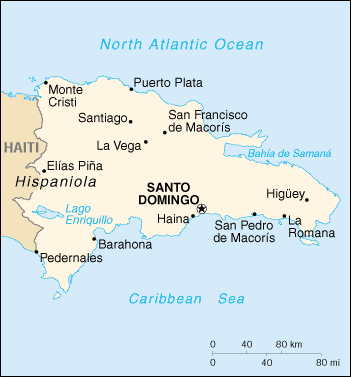
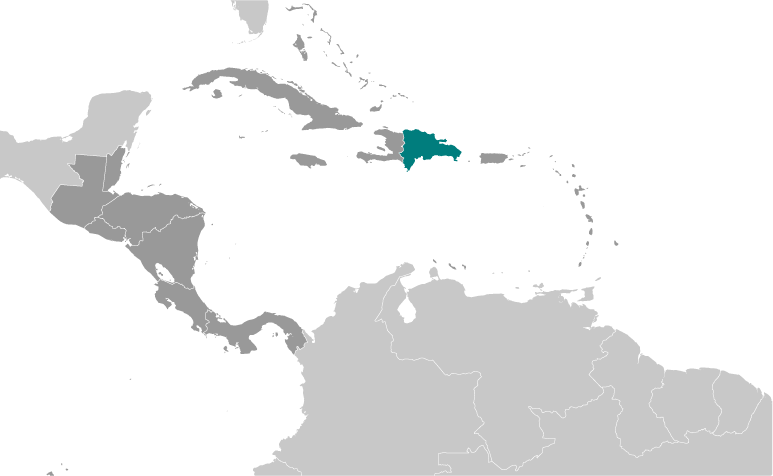
| Click map for larger view |
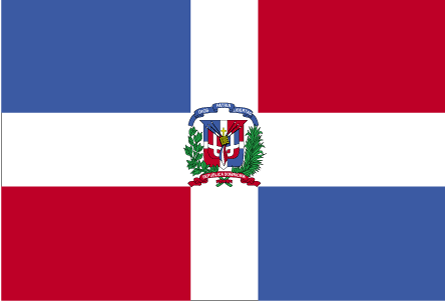
| Click flag for Country Report |



Danilo Medina Sanchez
President since 16 August 2012
President since 16 August 2012
Margarita Cedeno De Fernandez
Vice President since 16 August 2012
Vice President since 16 August 2012
| TRAFFICKING IN PERSONS |
None reported.
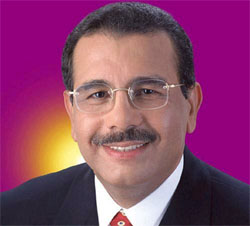
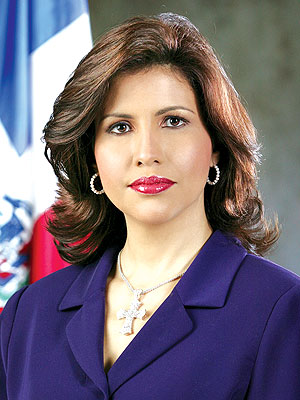
Danilo Medina Sanchez
President since 16 August 2012
President since 16 August 2012