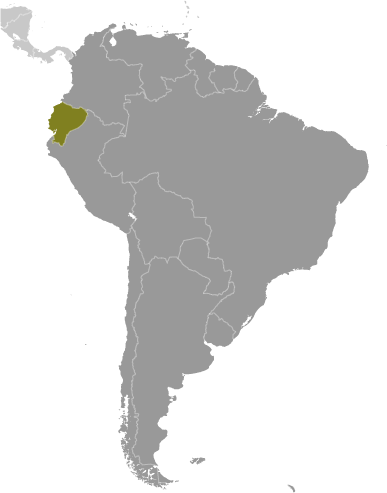
| ECUADOR Republic of Ecuador Republica del Ecuador Joined United Nations: 21 December 1945 Human Rights as assured by their constitution Click here Updated 02 August 2012 |
| CAPITAL |
| POPULATION |
| CHIEF OF STATE |
| SELECTION PROCESS |
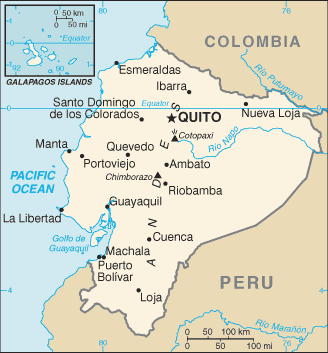
Quito
15,223,680 (July 2011 est.)
Rafael Correa Delgado
President since 15 January 2007
President since 15 January 2007
President and vice president are elected on the same ticket by
popular vote for a four-year term (may not serve consecutive
terms); election last held 26 April 2009
Next scheduled election: 2013
popular vote for a four-year term (may not serve consecutive
terms); election last held 26 April 2009
Next scheduled election: 2013
HEAD OF GOVERNMENT
SELECTION PROCESS
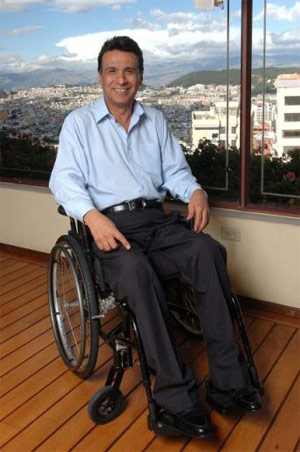
Lenin Moreno Garces
Vice President since 15 January 2007
Vice President since 15 January 2007
The president is both the chief of state and head of government
| DECLARATION OF HUMAN RIGHTS |
| ETHNIC GROUPS |
Mestizo (mixed Amerindian and white) 65%, Amerindian 25%, Spanish and others 7%, black 3%
| RELIGIONS |
Roman Catholic 95%, other 5%
| GOVERNMENT STRUCTURE |
Republic with 22 provinces. Legal system is based on civil law system; has not accepted compulsory ICJ jurisdiction
Executive: President and Vice President are elected on the same ticket by popular vote for a four-year term (may not serve
consecutive terms); elections: last held on 26 April 2009 (next to be held in 2013)
Legislative: unicameral National Congress or Congreso Nacional (100 seats; members are popularly elected by
province to serve four-year terms)
elections: last held 26 April 2009 (next to be held in 2013)
Judicial: Supreme Court or Corte Suprema (according to the Constitution, new justices are elected by the full Supreme
Court; in December 2004, however, Congress successfully replaced the entire court via a simple-majority resolution)
Executive: President and Vice President are elected on the same ticket by popular vote for a four-year term (may not serve
consecutive terms); elections: last held on 26 April 2009 (next to be held in 2013)
Legislative: unicameral National Congress or Congreso Nacional (100 seats; members are popularly elected by
province to serve four-year terms)
elections: last held 26 April 2009 (next to be held in 2013)
Judicial: Supreme Court or Corte Suprema (according to the Constitution, new justices are elected by the full Supreme
Court; in December 2004, however, Congress successfully replaced the entire court via a simple-majority resolution)
| LANGUAGES |
Spanish (official), Amerindian languages (especially Quechua)
| BRIEF HISTORY |
| ECONOMIC OVERVIEW |
Ecuador is substantially dependent on its petroleum resources, which have accounted for more than half of the country's
export earnings and approximately two-fifths of public sector revenues in recent years. In 1999/2000, Ecuador suffered a
severe economic crisis as a result of a banking crisis with GDP contracting by 5.3%. Poverty increased significantly and
Ecuador defaulted on some of its external debt. In March 2000, the Congress approved a series of structural reforms that
also provided for the adoption of the US dollar as legal tender. Dollarization stabilized the economy, and positive growth
returned in the years that followed, helped by high oil prices, remittances, and increased non-traditional exports. From
2002-06 the economy grew an average of 5.2% per year, the highest five-year average in 25 years. After moderate
growth in 2007, the economy reached a growth rate of 7.2% in 2008, in large part due to high global petroleum prices
and increased public sector investment. President Rafael CORREA, who took office in January 2007, defaulted in
December 2008 on Ecuador's sovereign debt, which, with a total face value of approximately US$3.2 billion, represented
about 30% of Ecuador's public external debt. In May 2009, Ecuador bought back 91% of its "defaulted" bonds via an
international reverse auction. Economic policies under the CORREA administration - including an announcement in late
2009 of its intention to terminate 13 bilateral investment treaties, including one with the United States - have generated
economic uncertainty and discouraged private investment. The Ecuadorian economy slowed to 0.4% growth in 2009 due
to the global financial crisis and to the sharp decline in world oil prices and remittance flows. Growth picked up to a 3.6%
rate in 2010 and 6.5% in 2011. The government in 2011 signed a $2 billion loan with the state-owned China
Development Bank, received $1 billion under a two-year forward sale of an oil contract, negotiated $571 million in
financing with China's Eximbank for a new hydroelectric project, and announced plans to obtain further Chinese loans in
2012. China has become Ecuador's largest foreign bilateral lender since Quito defaulted in 2008, allowing the government
to maintain a high rate of social spending.
export earnings and approximately two-fifths of public sector revenues in recent years. In 1999/2000, Ecuador suffered a
severe economic crisis as a result of a banking crisis with GDP contracting by 5.3%. Poverty increased significantly and
Ecuador defaulted on some of its external debt. In March 2000, the Congress approved a series of structural reforms that
also provided for the adoption of the US dollar as legal tender. Dollarization stabilized the economy, and positive growth
returned in the years that followed, helped by high oil prices, remittances, and increased non-traditional exports. From
2002-06 the economy grew an average of 5.2% per year, the highest five-year average in 25 years. After moderate
growth in 2007, the economy reached a growth rate of 7.2% in 2008, in large part due to high global petroleum prices
and increased public sector investment. President Rafael CORREA, who took office in January 2007, defaulted in
December 2008 on Ecuador's sovereign debt, which, with a total face value of approximately US$3.2 billion, represented
about 30% of Ecuador's public external debt. In May 2009, Ecuador bought back 91% of its "defaulted" bonds via an
international reverse auction. Economic policies under the CORREA administration - including an announcement in late
2009 of its intention to terminate 13 bilateral investment treaties, including one with the United States - have generated
economic uncertainty and discouraged private investment. The Ecuadorian economy slowed to 0.4% growth in 2009 due
to the global financial crisis and to the sharp decline in world oil prices and remittance flows. Growth picked up to a 3.6%
rate in 2010 and 6.5% in 2011. The government in 2011 signed a $2 billion loan with the state-owned China
Development Bank, received $1 billion under a two-year forward sale of an oil contract, negotiated $571 million in
financing with China's Eximbank for a new hydroelectric project, and announced plans to obtain further Chinese loans in
2012. China has become Ecuador's largest foreign bilateral lender since Quito defaulted in 2008, allowing the government
to maintain a high rate of social spending.
| POLITICAL CLIMATE |
Ecuador's political parties have historically been small, loose organizations that depended more on populist, often
charismatic, leaders to retain support than on programs or ideology. Frequent internal splits have produced extreme
factionalism. However, a pattern has emerged in which administrations from the center-left alternate with those from the
center-right. Although Ecuador's political elite is highly factionalized along regional, ideological, and personal lines, a
strong desire for consensus on major issues often leads to compromise. Opposition forces in Congress are loosely
organized, but historically they often unite to block the administration's initiatives and to remove cabinet ministers.
Constitutional changes enacted by a specially elected National Constitutional Assembly in 1998 took effect on August 10,
1998. The new constitution strengthens the executive branch by eliminating mid-term congressional elections and by
circumscribing Congress' power to challenge cabinet ministers. Party discipline is traditionally weak, and routinely many
deputies switch allegiance during each Congress. However, after the new Constitution took effect, the Congress passed a
code of ethics which imposes penalties on members who defy their party leadership on key votes.
Beginning with the 1996 election, the indigenous population abandoned its traditional policy of shunning the official
political system and participated actively. The indigenous population has established itself as a significant force in
Ecuadorian politics, as shown by the selection of indigenous representative Nina Pacari, who led the indigenous political
party, Pachakutik, as second vice president of the 1998 Congress.
A presidential election was held on 15 October 2006 and November 26, 2006. Rafael Correa defeated Alvaro Noboa in
a run-off election, or second and final round. Correa won with 56.8% of the vote. There was an attempted coup against
President Rafael Correa in 2010.
Source: Wikipedia: Politics of Ecuador
charismatic, leaders to retain support than on programs or ideology. Frequent internal splits have produced extreme
factionalism. However, a pattern has emerged in which administrations from the center-left alternate with those from the
center-right. Although Ecuador's political elite is highly factionalized along regional, ideological, and personal lines, a
strong desire for consensus on major issues often leads to compromise. Opposition forces in Congress are loosely
organized, but historically they often unite to block the administration's initiatives and to remove cabinet ministers.
Constitutional changes enacted by a specially elected National Constitutional Assembly in 1998 took effect on August 10,
1998. The new constitution strengthens the executive branch by eliminating mid-term congressional elections and by
circumscribing Congress' power to challenge cabinet ministers. Party discipline is traditionally weak, and routinely many
deputies switch allegiance during each Congress. However, after the new Constitution took effect, the Congress passed a
code of ethics which imposes penalties on members who defy their party leadership on key votes.
Beginning with the 1996 election, the indigenous population abandoned its traditional policy of shunning the official
political system and participated actively. The indigenous population has established itself as a significant force in
Ecuadorian politics, as shown by the selection of indigenous representative Nina Pacari, who led the indigenous political
party, Pachakutik, as second vice president of the 1998 Congress.
A presidential election was held on 15 October 2006 and November 26, 2006. Rafael Correa defeated Alvaro Noboa in
a run-off election, or second and final round. Correa won with 56.8% of the vote. There was an attempted coup against
President Rafael Correa in 2010.
Source: Wikipedia: Politics of Ecuador
| INTERNATIONAL DISPUTES |
Organized illegal narcotics operations in Colombia penetrate across Ecuador's shared border, which thousands of
Colombians also cross to escape the violence in their home country
Colombians also cross to escape the violence in their home country


| REFUGEES AND INTERNALLY DISPLACED PERSONS (IDP) |
Refugees (country of origin): 11,526 (Colombia); note - UNHCR estimates as many as 250,000 Colombians are seeking
asylum in Ecuador, many of whom do not register as refugees for fear of deportation (2007)
asylum in Ecuador, many of whom do not register as refugees for fear of deportation (2007)
| ILLICIT DRUGS |
Significant transit country for cocaine originating in Colombia and Peru, with much of the US-bound cocaine passing
through Ecuadorian Pacific waters; importer of precursor chemicals used in production of illicit narcotics; attractive
location for cash-placement by drug traffickers laundering money because of dollarization and weak
anti-money-laundering regime; increased activity on the northern frontier by trafficking groups and Colombian insurgents
(2008)
through Ecuadorian Pacific waters; importer of precursor chemicals used in production of illicit narcotics; attractive
location for cash-placement by drug traffickers laundering money because of dollarization and weak
anti-money-laundering regime; increased activity on the northern frontier by trafficking groups and Colombian insurgents
(2008)
| HUMAN RIGHTS STATEMENTS, ANALYSIS AND CRITIQUES |
2009 Human Rights Report: Ecuador
Bureau of Democracy, Human Rights, and Labor
2009 Country Reports on Human Rights Practices
March 11, 2010
EXECUTIVE SUMMARY
Ecuador is a constitutional multiparty republic with an elected president and unicameral legislature. In April 2009 voters reelected
President Rafael Correa and chose members of the National Assembly in elections that were considered generally free and fair. In
May voters approved amendments to the constitution in a process also considered free and fair. Security forces reported to civilian
authorities.
The main human rights abuses were use of excessive force by public security forces, restrictions on freedom of speech and press,
and official corruption. President Correa and his administration continued verbal and legal attacks against the media and increasingly
used legal mechanisms such as libel laws to suppress freedom of expression. Corruption was endemic, especially in the judicial
sector, and officials engaged in corrupt practices with impunity.
The following human rights problems continued: isolated unlawful killings, poor prison conditions, arbitrary arrest and detention,
corruption and other abuses by security forces, a high number of pretrial detainees, and corruption and denial of due process within
the judicial system. Societal problems continued, including: physical aggression against journalists; violence against women;
discrimination against women, indigenous persons, Afro-Ecuadorians, and persons based on their sexual orientation; trafficking in
persons and sexual exploitation of minors; and child labor.
The government sometimes took steps to prosecute or punish officials in the security services and elsewhere in government who
committed abuses, although political influence and a dysfunctional judiciary resulted in impunity in some cases.
Click here to read more »
Bureau of Democracy, Human Rights, and Labor
2009 Country Reports on Human Rights Practices
March 11, 2010
EXECUTIVE SUMMARY
Ecuador is a constitutional multiparty republic with an elected president and unicameral legislature. In April 2009 voters reelected
President Rafael Correa and chose members of the National Assembly in elections that were considered generally free and fair. In
May voters approved amendments to the constitution in a process also considered free and fair. Security forces reported to civilian
authorities.
The main human rights abuses were use of excessive force by public security forces, restrictions on freedom of speech and press,
and official corruption. President Correa and his administration continued verbal and legal attacks against the media and increasingly
used legal mechanisms such as libel laws to suppress freedom of expression. Corruption was endemic, especially in the judicial
sector, and officials engaged in corrupt practices with impunity.
The following human rights problems continued: isolated unlawful killings, poor prison conditions, arbitrary arrest and detention,
corruption and other abuses by security forces, a high number of pretrial detainees, and corruption and denial of due process within
the judicial system. Societal problems continued, including: physical aggression against journalists; violence against women;
discrimination against women, indigenous persons, Afro-Ecuadorians, and persons based on their sexual orientation; trafficking in
persons and sexual exploitation of minors; and child labor.
The government sometimes took steps to prosecute or punish officials in the security services and elsewhere in government who
committed abuses, although political influence and a dysfunctional judiciary resulted in impunity in some cases.
Click here to read more »
9 May 2011
Human Rights Council
Seventeenth session
Agenda item 3
Promotion and protection of all human rights, civil, political, economic, social and cultural rights, including the right to
development
Report of the Special Rapporteur on extrajudicial, summary or arbitrary executions, Philip Alston
Mission to Ecuador* **
Summary
The Government of Ecuador, under President Rafael Correa, has undertaken major reforms to improve human rights protection,
including constitutional renewal, prison reform, an increase in justice sector and witness-protection spending and social and
economic initiatives to improve the lives of disadvantaged citizens. Many ministers have a strong commitment to human rights.
Nevertheless, Ecuador faces major challenges relating to extrajudicial executions.
The homicide rate has skyrocketed in Ecuador over the past 20 years. The Government has taken significant steps to begin to
address the problem of hired killers, but there is an urgent need to put an end to the practice whereby police and prosecutors often
do not undertake serious investigations where the victim has a police record.
In the north, the conflict in Colombia has now spilled over into Ecuador. The number of illegal armed groups operating at the
border has grown significantly. They have engaged in physical abuses and killings of civilians. The armed forces of Ecuador have
had difficulty countering the groups, and in some areas appear to be unable or unwilling to do so. Furthermore, abuses have been
committed by the military against civilians.
Killings alleged by the media and officials to have resulted from the application of indigenous justice are prominently reported. The
Special Rapporteur, however, found no evidence of any such killings in recent years. Reporting to the contrary confuses formal
justice carried out in accordance with indigenous traditions, with lynchings, which are arbitrary or vengeful attacks against a
suspected criminal.
Lynching, social cleansing and abuses by rural juntas are serious problems in some areas of the country, but are underreported and
insufficiently studied.
Impunity is a significant cause and aggravator of all of these types of killings. Police and prosecutors are often poorly trained and
resourced. Witnesses often do not know about or trust the witness protection programme. The courts are slow. Corruption and
threats in the criminal justice system are common and skew “justice” in favour of the violent, wealthy and powerful.
Click here to read more »
Human Rights Council
Seventeenth session
Agenda item 3
Promotion and protection of all human rights, civil, political, economic, social and cultural rights, including the right to
development
Report of the Special Rapporteur on extrajudicial, summary or arbitrary executions, Philip Alston
Mission to Ecuador* **
Summary
The Government of Ecuador, under President Rafael Correa, has undertaken major reforms to improve human rights protection,
including constitutional renewal, prison reform, an increase in justice sector and witness-protection spending and social and
economic initiatives to improve the lives of disadvantaged citizens. Many ministers have a strong commitment to human rights.
Nevertheless, Ecuador faces major challenges relating to extrajudicial executions.
The homicide rate has skyrocketed in Ecuador over the past 20 years. The Government has taken significant steps to begin to
address the problem of hired killers, but there is an urgent need to put an end to the practice whereby police and prosecutors often
do not undertake serious investigations where the victim has a police record.
In the north, the conflict in Colombia has now spilled over into Ecuador. The number of illegal armed groups operating at the
border has grown significantly. They have engaged in physical abuses and killings of civilians. The armed forces of Ecuador have
had difficulty countering the groups, and in some areas appear to be unable or unwilling to do so. Furthermore, abuses have been
committed by the military against civilians.
Killings alleged by the media and officials to have resulted from the application of indigenous justice are prominently reported. The
Special Rapporteur, however, found no evidence of any such killings in recent years. Reporting to the contrary confuses formal
justice carried out in accordance with indigenous traditions, with lynchings, which are arbitrary or vengeful attacks against a
suspected criminal.
Lynching, social cleansing and abuses by rural juntas are serious problems in some areas of the country, but are underreported and
insufficiently studied.
Impunity is a significant cause and aggravator of all of these types of killings. Police and prosecutors are often poorly trained and
resourced. Witnesses often do not know about or trust the witness protection programme. The courts are slow. Corruption and
threats in the criminal justice system are common and skew “justice” in favour of the violent, wealthy and powerful.
Click here to read more »
Correa Continues Attempts to Silence Independent Media in Ecuador
Jun 13 2012
The closure of another independent media outlet and numerous public comments made by President Rafael Correa attacking
private media are an alarming illustration of Correa’s growing attempts to silence critical media. Freedom House calls on President
Correa to retract his order preventing government officials from speaking to private media and to allow all journalists and media
organizations to operate without interference.
During his weekly radio address on June 9, Correa asked government ministers to stop granting interviews to private media whom
he claims are “corrupt.” Political coordinator Betty Tola confirmed at a press conference on June 12 that cabinet members would
refuse to grant interviews to private media, because he said they received “clear instructions” from Correa. These actions were
demonstrated when Minister of Interior, Jose Serrano canceled his interview with the television station Ecuvisa. During the 42nd
Session of the General Assembly of the Organization of American States (OAS), Correa attacked the Inter-American Commission
on Human Rights (IACHR) and its Special Rapporteur on Freedom of Expression, claiming they were working to protect ‘private
media interests.’
“Freedom of expression continues to be severely threatened in Ecuador,” said Daniel Calingaert, vice president of policy and
external affairs at Freedom House. “What happens in Ecuador could have negative repercussions throughout the region, which has
witnessed a rapid decline in press freedom. Freedom House urges the international community to keep a close watch on the climate
for media in Ecuador and to raise concerns about this issue, both publicly and privately, with Correa’s administration.”
President Correa’s campaign against media has included the closure of independent radio and television stations across the country.
On June 6, a radio station in the city of Ambadio – Radio Net – was shut down. Radio Net was the fifth media outlet closed in
Ecuador within the last two weeks. The National Communications Council (CONANTEL) used the Telecommunications Act to
justify the closure of these media outlets. CONANTEL claimed that Radio Net was closed due to ‘non-compliance with the law’
and for failing to pay its operations fees for the last six months. Prior to Radio Net’s closure, a television station owned by the
Provincial Government of Morona Santiago, and a radio station in Sucumbíos were closed on May 23. The following day,
authorities closed a television and radio station in the Amazonian province of Napo.
Freedom House urges the Ecuadorean government to reopen these radio and television stations and allow them to broadcast without
fear of closure.
Click here to read more »
Jun 13 2012
The closure of another independent media outlet and numerous public comments made by President Rafael Correa attacking
private media are an alarming illustration of Correa’s growing attempts to silence critical media. Freedom House calls on President
Correa to retract his order preventing government officials from speaking to private media and to allow all journalists and media
organizations to operate without interference.
During his weekly radio address on June 9, Correa asked government ministers to stop granting interviews to private media whom
he claims are “corrupt.” Political coordinator Betty Tola confirmed at a press conference on June 12 that cabinet members would
refuse to grant interviews to private media, because he said they received “clear instructions” from Correa. These actions were
demonstrated when Minister of Interior, Jose Serrano canceled his interview with the television station Ecuvisa. During the 42nd
Session of the General Assembly of the Organization of American States (OAS), Correa attacked the Inter-American Commission
on Human Rights (IACHR) and its Special Rapporteur on Freedom of Expression, claiming they were working to protect ‘private
media interests.’
“Freedom of expression continues to be severely threatened in Ecuador,” said Daniel Calingaert, vice president of policy and
external affairs at Freedom House. “What happens in Ecuador could have negative repercussions throughout the region, which has
witnessed a rapid decline in press freedom. Freedom House urges the international community to keep a close watch on the climate
for media in Ecuador and to raise concerns about this issue, both publicly and privately, with Correa’s administration.”
President Correa’s campaign against media has included the closure of independent radio and television stations across the country.
On June 6, a radio station in the city of Ambadio – Radio Net – was shut down. Radio Net was the fifth media outlet closed in
Ecuador within the last two weeks. The National Communications Council (CONANTEL) used the Telecommunications Act to
justify the closure of these media outlets. CONANTEL claimed that Radio Net was closed due to ‘non-compliance with the law’
and for failing to pay its operations fees for the last six months. Prior to Radio Net’s closure, a television station owned by the
Provincial Government of Morona Santiago, and a radio station in Sucumbíos were closed on May 23. The following day,
authorities closed a television and radio station in the Amazonian province of Napo.
Freedom House urges the Ecuadorean government to reopen these radio and television stations and allow them to broadcast without
fear of closure.
Click here to read more »
Press releases
27 July 2012
Ecuador: Inter-American Court ruling marks key victory for Indigenous Peoples
A regional human rights court has come down in favour of the Sarayaku Indigenous community in the Ecuadorian Amazon in what
Amnesty International has called a key victory for Indigenous Peoples.
The Inter-American Court of Human Rights (IACHR) ruling in Sarayaku v. Ecuador, made public on Wednesday, ends a decade-
long legal battle by the Sarayaku Indigenous People – backed by their lawyers Mario Melo and the Centre for Justice and
International Law (CEJIL) – after a foreign oil company was allowed to encroach on their traditional lands in the early 2000s
without consultation with the Sarayaku.
Celebrating from his community, Sarayaku leader José Gualinga said, “the Sarayaku are extremely satisfied with this victory,
reached thanks to the efforts of our people and the help and solidarity of organizations devoted to the rights of Indigenous Peoples”.
Mario Melo, the community’s lawyer, explained that “this favourable ruling for the Sarayaku is the fruit of a large effort on the part
of the community’s people, who were key players in every step of the process. For that alone this deserves to be recognized as a
milestone in the ongoing struggle of Indigenous Peoples to reclaim their rights”.
The IACHR found that the Ecuadorian state violated the community’s right to be consulted, as well as their community property
rights and their cultural identity.
The Costa Rica-based Court also found Ecuador responsible for putting the life and physical integrity of the Sarayaku at grave risk,
after the oil company placed more than 1,400 kg of high-grade explosives on the Indigenous People’s territory.
“This sentence will have a far-reaching effect on countries across the region – it makes it crystal clear that states bear a
responsibility to carry out special consultation processes before engaging in development projects affecting Indigenous Peoples and
their rights,” said Fernanda Doz Costa, Amnesty International’s Researcher on Economic, Social and Cultural Rights in the
Americas.
Click here to read more »
27 July 2012
Ecuador: Inter-American Court ruling marks key victory for Indigenous Peoples
A regional human rights court has come down in favour of the Sarayaku Indigenous community in the Ecuadorian Amazon in what
Amnesty International has called a key victory for Indigenous Peoples.
The Inter-American Court of Human Rights (IACHR) ruling in Sarayaku v. Ecuador, made public on Wednesday, ends a decade-
long legal battle by the Sarayaku Indigenous People – backed by their lawyers Mario Melo and the Centre for Justice and
International Law (CEJIL) – after a foreign oil company was allowed to encroach on their traditional lands in the early 2000s
without consultation with the Sarayaku.
Celebrating from his community, Sarayaku leader José Gualinga said, “the Sarayaku are extremely satisfied with this victory,
reached thanks to the efforts of our people and the help and solidarity of organizations devoted to the rights of Indigenous Peoples”.
Mario Melo, the community’s lawyer, explained that “this favourable ruling for the Sarayaku is the fruit of a large effort on the part
of the community’s people, who were key players in every step of the process. For that alone this deserves to be recognized as a
milestone in the ongoing struggle of Indigenous Peoples to reclaim their rights”.
The IACHR found that the Ecuadorian state violated the community’s right to be consulted, as well as their community property
rights and their cultural identity.
The Costa Rica-based Court also found Ecuador responsible for putting the life and physical integrity of the Sarayaku at grave risk,
after the oil company placed more than 1,400 kg of high-grade explosives on the Indigenous People’s territory.
“This sentence will have a far-reaching effect on countries across the region – it makes it crystal clear that states bear a
responsibility to carry out special consultation processes before engaging in development projects affecting Indigenous Peoples and
their rights,” said Fernanda Doz Costa, Amnesty International’s Researcher on Economic, Social and Cultural Rights in the
Americas.
Click here to read more »
Ecuador: Official Misrepresents Human Rights Watch Position
Government Policies Undermine Free Speech
March 6, 2012
(Washington, DC) – An interview with Ecuador’s communications minister, Fernando Alvarado, in the March 4, 2012 edition of
the official newspaper El Ciudadano flagrantly distorted what happened during a recent meeting he had in Washington, DC, with
Human Rights Watch.
The interview suggests that Human Rights Watch condones certain government policies that undermine free speech. On the
contrary, in the meeting, Human Rights Watch repeatedly said that Ecuador should decriminalize defamation laws and stop
prosecuting people for expressing their opinions.
“Alvarado's description of the meeting with Human Rights Watch is a blatant misrepresentation of our position,” said Tom
Malinowski, Washington director of Human Rights Watch, who participated in the meeting. “During the meeting Human Rights
Watch clearly and repeatedly objected to the government’s policies and actions against its critics, which violate basic free speech
standards.”
Alvarado stated, for example, that all the nongovernmental organizations with which he met “understood the president's reasons to
take the El Universo and the Gran Hermano cases to court,” referring to government legal actions against the president's critics,
including directors and a journalist of the El Universo newspaper and the authors of a book titled Gran Hermano.
On February 29, Human Rights Watch met in its office with a large delegation from the Ecuadorian government led by Alvarado.
The email requesting the meeting with Human Rights Watch stated the Ecuadorian government wanted to “better understand the
concerns [of]... NGOs ... about the President’s actions [on free speech].”
During the meeting, Human Rights Watch stated that Ecuador has one of the poorest records on free expression in the entire
region. By using criminal defamation laws and requesting damages and fines amounting to millions of dollars against its critics, the
administration of President Rafael Correa has repeatedly violated international human rights standards and basic values of
democratic societies, Human Rights Watch said during the meeting.
Human Rights Watch also strongly questioned the Ecuadorian government's efforts to export its policies against free expression by
initiating an international campaign to discredit the work of the Organization of American States’ special rapporteur for freedom of
expression.
Click here to read more »
Government Policies Undermine Free Speech
March 6, 2012
(Washington, DC) – An interview with Ecuador’s communications minister, Fernando Alvarado, in the March 4, 2012 edition of
the official newspaper El Ciudadano flagrantly distorted what happened during a recent meeting he had in Washington, DC, with
Human Rights Watch.
The interview suggests that Human Rights Watch condones certain government policies that undermine free speech. On the
contrary, in the meeting, Human Rights Watch repeatedly said that Ecuador should decriminalize defamation laws and stop
prosecuting people for expressing their opinions.
“Alvarado's description of the meeting with Human Rights Watch is a blatant misrepresentation of our position,” said Tom
Malinowski, Washington director of Human Rights Watch, who participated in the meeting. “During the meeting Human Rights
Watch clearly and repeatedly objected to the government’s policies and actions against its critics, which violate basic free speech
standards.”
Alvarado stated, for example, that all the nongovernmental organizations with which he met “understood the president's reasons to
take the El Universo and the Gran Hermano cases to court,” referring to government legal actions against the president's critics,
including directors and a journalist of the El Universo newspaper and the authors of a book titled Gran Hermano.
On February 29, Human Rights Watch met in its office with a large delegation from the Ecuadorian government led by Alvarado.
The email requesting the meeting with Human Rights Watch stated the Ecuadorian government wanted to “better understand the
concerns [of]... NGOs ... about the President’s actions [on free speech].”
During the meeting, Human Rights Watch stated that Ecuador has one of the poorest records on free expression in the entire
region. By using criminal defamation laws and requesting damages and fines amounting to millions of dollars against its critics, the
administration of President Rafael Correa has repeatedly violated international human rights standards and basic values of
democratic societies, Human Rights Watch said during the meeting.
Human Rights Watch also strongly questioned the Ecuadorian government's efforts to export its policies against free expression by
initiating an international campaign to discredit the work of the Organization of American States’ special rapporteur for freedom of
expression.
Click here to read more »
TRANSLATED FROM SPANISH BY GOOGLE TRANSLATE
Intelligence Agency United States recruit journalists, reveals Christine Assange
Wednesday, August 1, 2012
Quito (Pichincha). - After thanking the President, Rafael Correa Delgado, by opening the government to treat asylum if requested by
the founder of Wikileaks, Julian Assange, it's mother, Christine, revealed the management of certain intelligence agencies of the United
States to "hire journalists for espionage."
Christine Assange, revealed that one of these intelligence agencies is the Global Stratford, whose undercover reporters worldwide.
In the complaint of Christine Assange, the President said that this will break down the myths that there are "heroic journalists who
(say) fight for freedom of expression, and know that people paid is infiltrated into the media to destabilize governments and this is
obvious who they are, "said Rafael Correa.
This accusation was formulated during the meeting with the president, which also described the situation faced by the family of the
founder of Wikileaks, in that sense, Christine Assange said Julian's son goes through moments of extreme tension and harassment
pressure means.
Also, Assange welcomed the reception he had since arriving in Ecuador, a country where it said, is respect for human rights and
freedoms. Ironically also by what he has heard of the opposition to the government and certain media who have called the President a
"dictator".
In that sense told the president: "You are a very good dictator, I walked the streets and see people smiling and happy," he quipped
Assange started laughing comment of the Head of State.
President Correa said the mother of the founder of Wikileaks that the Government will take a sovereign decision about the request for
asylum Assange and stressed that Ecuador "does not negotiate its sovereignty."
"If things Wikileaks revealed Ecuador, Venezuela, which had benefited the powers, maybe Julian would be a hero, but as revealed by
his manipulations, he is a persecuted (...) Unfortunately there is a double standard where there are international judges people for good
or bad, but if it is friendly or not, "he said.
Click here to read more »
Intelligence Agency United States recruit journalists, reveals Christine Assange
Wednesday, August 1, 2012
Quito (Pichincha). - After thanking the President, Rafael Correa Delgado, by opening the government to treat asylum if requested by
the founder of Wikileaks, Julian Assange, it's mother, Christine, revealed the management of certain intelligence agencies of the United
States to "hire journalists for espionage."
Christine Assange, revealed that one of these intelligence agencies is the Global Stratford, whose undercover reporters worldwide.
In the complaint of Christine Assange, the President said that this will break down the myths that there are "heroic journalists who
(say) fight for freedom of expression, and know that people paid is infiltrated into the media to destabilize governments and this is
obvious who they are, "said Rafael Correa.
This accusation was formulated during the meeting with the president, which also described the situation faced by the family of the
founder of Wikileaks, in that sense, Christine Assange said Julian's son goes through moments of extreme tension and harassment
pressure means.
Also, Assange welcomed the reception he had since arriving in Ecuador, a country where it said, is respect for human rights and
freedoms. Ironically also by what he has heard of the opposition to the government and certain media who have called the President a
"dictator".
In that sense told the president: "You are a very good dictator, I walked the streets and see people smiling and happy," he quipped
Assange started laughing comment of the Head of State.
President Correa said the mother of the founder of Wikileaks that the Government will take a sovereign decision about the request for
asylum Assange and stressed that Ecuador "does not negotiate its sovereignty."
"If things Wikileaks revealed Ecuador, Venezuela, which had benefited the powers, maybe Julian would be a hero, but as revealed by
his manipulations, he is a persecuted (...) Unfortunately there is a double standard where there are international judges people for good
or bad, but if it is friendly or not, "he said.
Click here to read more »
TRANSLATED FROM SPANISH BY GOOGLE TRANSLATE
Guayaquil
Thursday August 2, 2012
Proposals presented for workplaces
Jobs for the blind has met the requirements
The Ombudsman, in an inspection of the kiosks offered by the Buenos Aires City Council to relocate the traders evicted from the
Avenida 9 de Octubre, found deficiencies in the design of jobs and the influx of potential buyers.
The Ombudsman's Office will convene in the next few days to a new audience among the Municipality of Guayaquil and the Blind
Association and Friends of the Blind of Guayas (Acacig) after finding that the kiosks offered by the City Council to the blind do not
pay all guarantees required by this group of priority.
The Acacig, through attorney Hernán Ulloa requested a conciliation hearing for their grievances regarding the relocation undertaken
by the Municipality, after evict them from the Avenida 9 de Octubre, more than two weeks.
The market for Four Apples, agency center post of Ecuador Malecon Simon Bolivar Metrovía Daule River terminal and the
intersection of Rumichaca and Zaruma were the places provided by the municipal authorities.
The observations at these sites by the blind varied according to location (safety, lack of space, low sales). The kiosks have
provided similar designs, and each can work up to three people.
Maria Jose Hernandez, delegate of the Ombudsman in Nairobi, following the hearing held on Monday, conducted a site inspection
of these sites and confirmed the complaints of merchants. In a tour conducted by this newspaper at these locations was verified
also that most are not being used.
Release of the Four Apples, John Ramirez, who lost his sight at age 18, does not complain about sales or space, but the only
working in one of three modules located for the blind-side Huancavilca street.
Because its merchandise does not fit in the small kiosk had to locate a tent to extend your workspace. "The area that concerns me
is the ... being in (the market) I am safe, but go out I have no one to support me, "Ramirez said.
Click here to read more »
Guayaquil
Thursday August 2, 2012
Proposals presented for workplaces
Jobs for the blind has met the requirements
The Ombudsman, in an inspection of the kiosks offered by the Buenos Aires City Council to relocate the traders evicted from the
Avenida 9 de Octubre, found deficiencies in the design of jobs and the influx of potential buyers.
The Ombudsman's Office will convene in the next few days to a new audience among the Municipality of Guayaquil and the Blind
Association and Friends of the Blind of Guayas (Acacig) after finding that the kiosks offered by the City Council to the blind do not
pay all guarantees required by this group of priority.
The Acacig, through attorney Hernán Ulloa requested a conciliation hearing for their grievances regarding the relocation undertaken
by the Municipality, after evict them from the Avenida 9 de Octubre, more than two weeks.
The market for Four Apples, agency center post of Ecuador Malecon Simon Bolivar Metrovía Daule River terminal and the
intersection of Rumichaca and Zaruma were the places provided by the municipal authorities.
The observations at these sites by the blind varied according to location (safety, lack of space, low sales). The kiosks have
provided similar designs, and each can work up to three people.
Maria Jose Hernandez, delegate of the Ombudsman in Nairobi, following the hearing held on Monday, conducted a site inspection
of these sites and confirmed the complaints of merchants. In a tour conducted by this newspaper at these locations was verified
also that most are not being used.
Release of the Four Apples, John Ramirez, who lost his sight at age 18, does not complain about sales or space, but the only
working in one of three modules located for the blind-side Huancavilca street.
Because its merchandise does not fit in the small kiosk had to locate a tent to extend your workspace. "The area that concerns me
is the ... being in (the market) I am safe, but go out I have no one to support me, "Ramirez said.
Click here to read more »
TRANSLATED FROM SPANISH BY GOOGLE TRANSLATE
Sarayaku struggle strengthens and confirms that we are on track
01 Augusr 2012
The judgment given by the IACHR is an icon for the defense of collective rights and Mother Nature.
Fraternal organizations and authorities greet and acknowledge the strength and courageous struggle of the indigenous people of
Sarayaku Kichwa to uphold and enforce their rights, perseverance and endurance despite the time, but gives results that always
longs as peoples. We make public their thoughts and various criteria given on July 30, 2012, on the judgment of the Inter-American
Court for the fight of the Sarayaku.
The president of the Kichwa Confederation of Ecuador ECUARUNARI Tenesaca Dolphin, I note that on complex moments that
judgment strengthens, lifts, ratifies and gives light to continue with our struggle, often in the hands tremble as powerful as the fight
for Consultation, try to cheat and say already now the instructions and participate.
With these lights given after the sentencing we will continue in the ongoing fight against injustice, greet all this unity and struggle,
now we continue to strengthen the peoples of the Amazon, Andes, coast, all Abya Yala and the world . A clear example is task and
how to defend Mother Nature, life and the world, strengthen our struggles and lights appear very life and identity transformation, as
happened now to the case Sarayaku. No force can vanquish evil, when we are based in truth, I conclude Tensaca.
As Confeniae the people remains in control, thank the Andean for accompaniment and always be together in the fight, as was
indigenous kito progress in the fight for territory, as the nationalities of the Coast, leaders and leaders . He emphasized that the
struggle and resistance of the people Sarayaku without the presence and support of fellow women and beer, we would not have
achieved these goals, so we will continue to demand the government and the state to govern for the people.
For his part, Assemblyman Jerome Yantalema acknowledged the unrelenting struggle of the people Sarayaku, as an icon of the
defense of collective rights and the rights of nature, also denounced the systematic violation of these rights by the regime, are now
the discovered with the Constitutional Court ruling of 18 March 2010, the Community Consultation Kimsacocha and finally the
decision of the IACHR in the case Sarayaku.
The national coordinator of Pachakutik, Rafael Antuni said Sarayaku struggle, is the unity of all, we must applaud and everyone is
happy and satisfied with the achievements. Now we must demand to be done well and enforce the mandate of the people, from
Pachakutik going to be together the peoples in the struggle to enforce the rulers consultations with indigenous peoples.
Click here to read more »
Sarayaku struggle strengthens and confirms that we are on track
01 Augusr 2012
The judgment given by the IACHR is an icon for the defense of collective rights and Mother Nature.
Fraternal organizations and authorities greet and acknowledge the strength and courageous struggle of the indigenous people of
Sarayaku Kichwa to uphold and enforce their rights, perseverance and endurance despite the time, but gives results that always
longs as peoples. We make public their thoughts and various criteria given on July 30, 2012, on the judgment of the Inter-American
Court for the fight of the Sarayaku.
The president of the Kichwa Confederation of Ecuador ECUARUNARI Tenesaca Dolphin, I note that on complex moments that
judgment strengthens, lifts, ratifies and gives light to continue with our struggle, often in the hands tremble as powerful as the fight
for Consultation, try to cheat and say already now the instructions and participate.
With these lights given after the sentencing we will continue in the ongoing fight against injustice, greet all this unity and struggle,
now we continue to strengthen the peoples of the Amazon, Andes, coast, all Abya Yala and the world . A clear example is task and
how to defend Mother Nature, life and the world, strengthen our struggles and lights appear very life and identity transformation, as
happened now to the case Sarayaku. No force can vanquish evil, when we are based in truth, I conclude Tensaca.
As Confeniae the people remains in control, thank the Andean for accompaniment and always be together in the fight, as was
indigenous kito progress in the fight for territory, as the nationalities of the Coast, leaders and leaders . He emphasized that the
struggle and resistance of the people Sarayaku without the presence and support of fellow women and beer, we would not have
achieved these goals, so we will continue to demand the government and the state to govern for the people.
For his part, Assemblyman Jerome Yantalema acknowledged the unrelenting struggle of the people Sarayaku, as an icon of the
defense of collective rights and the rights of nature, also denounced the systematic violation of these rights by the regime, are now
the discovered with the Constitutional Court ruling of 18 March 2010, the Community Consultation Kimsacocha and finally the
decision of the IACHR in the case Sarayaku.
The national coordinator of Pachakutik, Rafael Antuni said Sarayaku struggle, is the unity of all, we must applaud and everyone is
happy and satisfied with the achievements. Now we must demand to be done well and enforce the mandate of the people, from
Pachakutik going to be together the peoples in the struggle to enforce the rulers consultations with indigenous peoples.
Click here to read more »
Ecuador's culture and history mirrors the diversity of its landscape. Like much of South America, Ecuadorian culture
blends the influences of Spanish colonialism with the resilient traditions of pre-Columbian peoples. Archaeologists trace
the first inhabitants as far back as 10,000 BC, when hunters and gatherers established settlements on the southern coast
and in the central highlands. By 3,200 BC three distinct agricultural-based civilizations had emerged, producing some of
the hemisphere's oldest known pottery. They developed trade routes with nearby Peru, Brazil, and Amazonian tribes.
Culture continued to thrive and diversify, and by 500 BC large cities had been established along the coast. Their
inhabitants had sophisticated metalworking and navigational skills and they traded with Mexico's Maya. In 1460 AD,
when the Inca ruler Tupac-Yupanqui invaded from the south, three major tribes in Ecuador were powerful enough to give
him a fight: the Canari, the Quitu, and the Caras. After conquering Ecuador, Huayna Capac indoctrinated the tribes to
Quechua, the language of the Incas, which is still widely spoken in Ecuador. In celebration of his victory, Huayna Capac
ordered a great city to be built at Tomebamba, near Cuenca. Its size and influence rivaled the capital of Cuzco in Peru--a
rivalry that would mature with posterity. When he died in 1526, Huayna Capac divided the empire between his two sons,
Atahualpa and Huascar. Atahualpa ruled the northern reaches from Tombebamba, while Huascar held court over the
south from Cuzco. The split inheritance was an unconventional and fateful move, as the first Spaniards arrived in the same
year. On the eve of Pizarro's expedition into the empire, the brothers entered into a civil war for complete control.
Francisco Pizarro landed in Ecuador in 1532, accompanied by 180 fully armed men and an equally strong lust for gold.
Several years earlier, Pizarro had made a peaceful visit to the coast, where he heard rumors of inland cities of incredible
wealth. This time, he intended to conquer the Incas just as Hernando Cortez had crushed Mexico's Aztecs--and he
couldn't have picked a better time. Atahualpa had only recently won the war against his brother when Pizarro arrived, and
the empire was still unstable. Pizarro ambushed the ruler, forced him to collect an enormous ransom, and then executed
him. Although the Incas mounted considerable resistance to Pizarro, they were soon broken. Spanish governors ruled
Ecuador for nearly 300 years, first from Lima, Peru, then later from the vice-royalty of Colombia. The Spanish introduced
Roman Catholicism, colonial architecture, and today's national language. Independence was won in 1822, when the
famed South American liberator Simon Bolivar defeated a Spanish army at the Battle of Pichincha. Bolivar united
Ecuador with Colombia and Venezuela, forming the state of Gran Colombia. His plan was to eventually unite all of South
America as a constitutional republic, and one can only wonder what such a nation would have been like if his dream had
been realized. After eight years, however, local interests sparked Ecuador to secede from the union. Colombia and
Venezuela soon split. When Quito withdrew in 1830, the traditional name was changed in favor of the "Republic of the
Equator." Between 1904 and 1942, Ecuador lost territories in a series of conflicts with its neighbors. A border war with
Peru that flared in 1995 was resolved in 1999. Although Ecuador marked 25 years of civilian governance in 2004, the
period has been marred by political instability. Eight presidents have governed Ecuador since 1996. In 15 January 2007,
the social-democrat Rafael Correa succeeded Palacio as President of Ecuador, with the promise of summoning a
Constituent Assembly, and bringing focus on poverty. The 2007-8 Ecuadorian Constituent Assembly drafted the 2008
Constitution of Ecuador, approved via the Ecuadorian constitutional referendum, 2008. In November 2009, Ecuador
faced an energy crisis that led to power rationing across the country.
Sources: Geographica Ecuador History ; CIA World Factbook (select Ecuador); Wikipedia: History of Ecuador
blends the influences of Spanish colonialism with the resilient traditions of pre-Columbian peoples. Archaeologists trace
the first inhabitants as far back as 10,000 BC, when hunters and gatherers established settlements on the southern coast
and in the central highlands. By 3,200 BC three distinct agricultural-based civilizations had emerged, producing some of
the hemisphere's oldest known pottery. They developed trade routes with nearby Peru, Brazil, and Amazonian tribes.
Culture continued to thrive and diversify, and by 500 BC large cities had been established along the coast. Their
inhabitants had sophisticated metalworking and navigational skills and they traded with Mexico's Maya. In 1460 AD,
when the Inca ruler Tupac-Yupanqui invaded from the south, three major tribes in Ecuador were powerful enough to give
him a fight: the Canari, the Quitu, and the Caras. After conquering Ecuador, Huayna Capac indoctrinated the tribes to
Quechua, the language of the Incas, which is still widely spoken in Ecuador. In celebration of his victory, Huayna Capac
ordered a great city to be built at Tomebamba, near Cuenca. Its size and influence rivaled the capital of Cuzco in Peru--a
rivalry that would mature with posterity. When he died in 1526, Huayna Capac divided the empire between his two sons,
Atahualpa and Huascar. Atahualpa ruled the northern reaches from Tombebamba, while Huascar held court over the
south from Cuzco. The split inheritance was an unconventional and fateful move, as the first Spaniards arrived in the same
year. On the eve of Pizarro's expedition into the empire, the brothers entered into a civil war for complete control.
Francisco Pizarro landed in Ecuador in 1532, accompanied by 180 fully armed men and an equally strong lust for gold.
Several years earlier, Pizarro had made a peaceful visit to the coast, where he heard rumors of inland cities of incredible
wealth. This time, he intended to conquer the Incas just as Hernando Cortez had crushed Mexico's Aztecs--and he
couldn't have picked a better time. Atahualpa had only recently won the war against his brother when Pizarro arrived, and
the empire was still unstable. Pizarro ambushed the ruler, forced him to collect an enormous ransom, and then executed
him. Although the Incas mounted considerable resistance to Pizarro, they were soon broken. Spanish governors ruled
Ecuador for nearly 300 years, first from Lima, Peru, then later from the vice-royalty of Colombia. The Spanish introduced
Roman Catholicism, colonial architecture, and today's national language. Independence was won in 1822, when the
famed South American liberator Simon Bolivar defeated a Spanish army at the Battle of Pichincha. Bolivar united
Ecuador with Colombia and Venezuela, forming the state of Gran Colombia. His plan was to eventually unite all of South
America as a constitutional republic, and one can only wonder what such a nation would have been like if his dream had
been realized. After eight years, however, local interests sparked Ecuador to secede from the union. Colombia and
Venezuela soon split. When Quito withdrew in 1830, the traditional name was changed in favor of the "Republic of the
Equator." Between 1904 and 1942, Ecuador lost territories in a series of conflicts with its neighbors. A border war with
Peru that flared in 1995 was resolved in 1999. Although Ecuador marked 25 years of civilian governance in 2004, the
period has been marred by political instability. Eight presidents have governed Ecuador since 1996. In 15 January 2007,
the social-democrat Rafael Correa succeeded Palacio as President of Ecuador, with the promise of summoning a
Constituent Assembly, and bringing focus on poverty. The 2007-8 Ecuadorian Constituent Assembly drafted the 2008
Constitution of Ecuador, approved via the Ecuadorian constitutional referendum, 2008. In November 2009, Ecuador
faced an energy crisis that led to power rationing across the country.
Sources: Geographica Ecuador History ; CIA World Factbook (select Ecuador); Wikipedia: History of Ecuador

Click on map for larger view
Click on flag for Country Report




Rafael Correa Delgado
President since 15 January 2007
President since 15 January 2007
| TRAFFICKING IN PERSONS |
None reported.