
| EQUATORIAL GUINEA Republic of Equatorial Guinea Republica de Guinea Ecuatorial/ Republique de Guinee Equatoriale Joined United Nations: 12 November 1968 Human Rights as assured by their constitution Click here Updated 27 March 2013 |

| CAPITAL |
| POPULATION |
| CHIEF OF STATE |
| SELECTION PROCESS |
Malabo
704,001 (July 2013 est.)
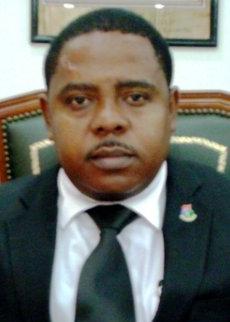
Vicente Ehate Tomi
Prime Minister since 22 May 2012
Prime Minister since 22 May 2012
President elected by popular vote for a seven-year term (no term
limits); election last held 29 November 2009
Next scheduled election: 2016
limits); election last held 29 November 2009
Next scheduled election: 2016
HEAD OF GOVERNMENT
SELECTION PROCESS
Prime Minister and Deputy Prime Ministers appointed by the
president
president
| DECLARATION OF HUMAN RIGHTS |
| ETHNIC GROUPS |
Fang 85.7%, Bubi 6.5%, Mdowe 3.6%, Annobon 1.6%, Bujeba 1.1%, other 1.4% (1994 census)
| RELIGIONS |
Nominally Christian and predominantly Roman Catholic, pagan practices
| GOVERNMENT STRUCTURE |
Republic with 7 provinces (provincias, singular - provincia); Legal system is partly based on Spanish civil law and tribal custom
Executive: President elected by popular vote for a seven-year term (no term limits); election lelection last held 29 November 2009
(next to be held in 2016); prime minister and deputy prime ministers appointed by the president
Legislative: Unicameral House of People's Representatives or Camara de Representantes del Pueblo (100 seats; members
directly elected by popular vote to serve five-year terms)
elections: last held 4 May 2008 (next to be held in 2013)
Judicial: Supreme Tribunal
Executive: President elected by popular vote for a seven-year term (no term limits); election lelection last held 29 November 2009
(next to be held in 2016); prime minister and deputy prime ministers appointed by the president
Legislative: Unicameral House of People's Representatives or Camara de Representantes del Pueblo (100 seats; members
directly elected by popular vote to serve five-year terms)
elections: last held 4 May 2008 (next to be held in 2013)
Judicial: Supreme Tribunal
| LANGUAGES |
Spanish 67.6% (official), other 32.4% (includes French (official), Fang, Bubi) (1994 census)
| BRIEF HISTORY |
The first inhabitants of the region that is now Equatorial Guinea are believed to have been Pygmies, of whom only isolated pockets
remain in northern Rio Muni. Bantu migrations between the 17th and 19th centuries brought the coastal tribes and later the Fang.
Elements of the latter may have generated the Bubi, who emigrated to Bioko from Cameroon and Río Muni in several waves and
succeeded former Neolithic populations. It is said the Igbo of Nigeria (mostly Aro) slave traders arrived and founded very few tiny
settlements in Bioko and Rio Muni which expanded the Aro Confederacy in the 18th and 19th centuries. The Annobon population,
native to Angola, was introduced by the Portuguese via São Tomé. The Portuguese explorer, Fernão do Pó, seeking a route to
India, is credited with having discovered the island of Bioko in 1471. He called it Formosa ("beautiful [isle]", a name later applied to
Taiwan), but it quickly took on the name of its European discoverer, albeit spelt "Fernando Poo". The islands of Fernando Poo and
Annobón were colonized by the Portuguese in 1474. The Portuguese retained control until 1778, when the island, adjacent islets,
and commercial rights to the mainland between the Niger and Ogooué Rivers were ceded to Spain in exchange for territory in South
America (Treaty of El Pardo). From 1827 to 1843, Britain established a base on the island to combat the slave trade. The mainland
portion, Río Muni, became a protectorate in 1885 and a colony in 1900. Conflicting claims to the mainland were settled in 1900 by
the Treaty of Paris, and periodically, the mainland territories were united administratively under Spanish rule. Between 1926 and
1959 they were united as the colony of Spanish Guinea. During the First World War, German troops retreated into this territory
from Kamerun because Spain was neutral during the war. Spain lacked the wealth and the interest to develop an extensive
economic infrastructure in what was commonly known as Spanish Guinea during the first half of the twentieth century. However,
through a paternalistic system, particularly on Bioko Island, Spain developed large cacao plantations for which thousands of
Nigerian workers were imported as laborers. At independence in 1968, largely as a result of this system, Equatorial Guinea had one
of the highest per capita incomes in Africa (332 USD). The Spanish also helped Equatorial Guinea achieve one of the continent's
highest literacy rates and developed a good network of health care facilities. However at the time of independence, the number of
native doctors and lawyers was in the single digits. In 1959, the Spanish territory of the Gulf of Guinea was established with the
same status as the provinces of metropolitan Spain. As the Spanish Equatorial Region, it was ruled by a governor general exercising
military and civilian powers. The first local elections were held in 1959, and the first Equato-guinean representatives were seated in
the Cortes Generales (Spanish parliament). Under the Basic Law of December 1963, limited autonomy was authorized under a
joint legislative body for the territory's two provinces. A paradoxical effect of this autonomy was that Guineans could choose among
several political parties while metropolitan Spaniards were under a single party regime. The name of the country was changed to
Equatorial Guinea. Although Spain's commissioner general had extensive powers, the Equatorial Guinean General Assembly had
considerable initiative in formulating laws and regulations. In March 1968, under pressure from Equato-guinean nationalists and the
United Nations, Spain announced that it would grant independence to Equatorial Guinea. A constitutional convention produced an
electoral law and draft constitution. In the presence of a UN observer team, a referendum was held on August 11, 1968, and 63%
of the electorate voted in favor of the constitution, which provided for a government with a General Assembly and a Supreme Court
with judges appointed by the president. In September 1968, Francisco Macías Nguema was elected first president of Equatorial
Guinea, and independence was granted in October. In July 1970, Macías created a single-party state and by May 1971, key
portions of the constitution were abrogated. In 1972 Macías took complete control of the government and assumed the title of
President for Life. The Macías regime was characterized by abandonment of all government functions except internal security, which
was accomplished by terror; this led to the death or exile of up to one-third of the country's population. Due to pilferage, ignorance,
and neglect, the country's infrastructure--electrical, water, road, transportation, and health--fell into ruin. Religion was repressed,
and education ceased. The private and public sectors of the economy were devastated. Nigerian contract laborers on Bioko,
estimated to have been 60,000, left en masse in early 1976. The economy collapsed, and skilled citizens and foreigners left. All
schools were ordered closed in 1975, and the country's churches were closed in 1978. Nguema introduced a campaign of
'authenticity,' replacing colonial names with native ones: the capital Santa Isabel became Malabo, the main island of Fernando Poo
was renamed Masie Nguema Biyogo after himself, and Annobón became Pagalu. As part of the same process, Nguema also
ordered the entire population to drop their European names and adopt African ones. His own name underwent several
transformations, so that by the end of his rule he was known as Masie Nguema Biyogo Ñegue Ndong. In August 1979 Macías'
nephew from Mongomo and former director of the infamous Black Beach Prison, Teodoro Obiang Nguema Mbasogo, led a
successful coup d'état; Macías was arrested, tried, and executed. Obiang assumed the Presidency in October 1979. The islands
were renamed Bioko and Annobón. The new ruler faced the challenge of restoring order in a country that was in shambles--by the
end of Masie Nguema's dictatorship, the state coffers were empty and the population had been reduced to only one-third of what it
was at independence. The unsuccessful "Wonga Coup" was attempted by European and South African mercenaries in 2004 with
the goal of replacing Obiang with a puppet ruler who would open the country's mineral wealth to the plotters. British aristocrat
Simon Mann, a former officer in the Special Air Service, led the plot, which also included former members of the South African
Army 32 Battalion. Financial backers included Sir Mark Thatcher, son of former British Prime Minister Margaret Thatcher and
possibly the British novelist Jeffrey Archer. Somewhere between $3 million and $20 million was expended on the failed coup, which
is said to have had the tacit support of some Western governments and international corporations. In 2011 the government
announced it was planning a new capital in the country, named Oyala
Source: Wikipedia: History of Equatorial Guinea
remain in northern Rio Muni. Bantu migrations between the 17th and 19th centuries brought the coastal tribes and later the Fang.
Elements of the latter may have generated the Bubi, who emigrated to Bioko from Cameroon and Río Muni in several waves and
succeeded former Neolithic populations. It is said the Igbo of Nigeria (mostly Aro) slave traders arrived and founded very few tiny
settlements in Bioko and Rio Muni which expanded the Aro Confederacy in the 18th and 19th centuries. The Annobon population,
native to Angola, was introduced by the Portuguese via São Tomé. The Portuguese explorer, Fernão do Pó, seeking a route to
India, is credited with having discovered the island of Bioko in 1471. He called it Formosa ("beautiful [isle]", a name later applied to
Taiwan), but it quickly took on the name of its European discoverer, albeit spelt "Fernando Poo". The islands of Fernando Poo and
Annobón were colonized by the Portuguese in 1474. The Portuguese retained control until 1778, when the island, adjacent islets,
and commercial rights to the mainland between the Niger and Ogooué Rivers were ceded to Spain in exchange for territory in South
America (Treaty of El Pardo). From 1827 to 1843, Britain established a base on the island to combat the slave trade. The mainland
portion, Río Muni, became a protectorate in 1885 and a colony in 1900. Conflicting claims to the mainland were settled in 1900 by
the Treaty of Paris, and periodically, the mainland territories were united administratively under Spanish rule. Between 1926 and
1959 they were united as the colony of Spanish Guinea. During the First World War, German troops retreated into this territory
from Kamerun because Spain was neutral during the war. Spain lacked the wealth and the interest to develop an extensive
economic infrastructure in what was commonly known as Spanish Guinea during the first half of the twentieth century. However,
through a paternalistic system, particularly on Bioko Island, Spain developed large cacao plantations for which thousands of
Nigerian workers were imported as laborers. At independence in 1968, largely as a result of this system, Equatorial Guinea had one
of the highest per capita incomes in Africa (332 USD). The Spanish also helped Equatorial Guinea achieve one of the continent's
highest literacy rates and developed a good network of health care facilities. However at the time of independence, the number of
native doctors and lawyers was in the single digits. In 1959, the Spanish territory of the Gulf of Guinea was established with the
same status as the provinces of metropolitan Spain. As the Spanish Equatorial Region, it was ruled by a governor general exercising
military and civilian powers. The first local elections were held in 1959, and the first Equato-guinean representatives were seated in
the Cortes Generales (Spanish parliament). Under the Basic Law of December 1963, limited autonomy was authorized under a
joint legislative body for the territory's two provinces. A paradoxical effect of this autonomy was that Guineans could choose among
several political parties while metropolitan Spaniards were under a single party regime. The name of the country was changed to
Equatorial Guinea. Although Spain's commissioner general had extensive powers, the Equatorial Guinean General Assembly had
considerable initiative in formulating laws and regulations. In March 1968, under pressure from Equato-guinean nationalists and the
United Nations, Spain announced that it would grant independence to Equatorial Guinea. A constitutional convention produced an
electoral law and draft constitution. In the presence of a UN observer team, a referendum was held on August 11, 1968, and 63%
of the electorate voted in favor of the constitution, which provided for a government with a General Assembly and a Supreme Court
with judges appointed by the president. In September 1968, Francisco Macías Nguema was elected first president of Equatorial
Guinea, and independence was granted in October. In July 1970, Macías created a single-party state and by May 1971, key
portions of the constitution were abrogated. In 1972 Macías took complete control of the government and assumed the title of
President for Life. The Macías regime was characterized by abandonment of all government functions except internal security, which
was accomplished by terror; this led to the death or exile of up to one-third of the country's population. Due to pilferage, ignorance,
and neglect, the country's infrastructure--electrical, water, road, transportation, and health--fell into ruin. Religion was repressed,
and education ceased. The private and public sectors of the economy were devastated. Nigerian contract laborers on Bioko,
estimated to have been 60,000, left en masse in early 1976. The economy collapsed, and skilled citizens and foreigners left. All
schools were ordered closed in 1975, and the country's churches were closed in 1978. Nguema introduced a campaign of
'authenticity,' replacing colonial names with native ones: the capital Santa Isabel became Malabo, the main island of Fernando Poo
was renamed Masie Nguema Biyogo after himself, and Annobón became Pagalu. As part of the same process, Nguema also
ordered the entire population to drop their European names and adopt African ones. His own name underwent several
transformations, so that by the end of his rule he was known as Masie Nguema Biyogo Ñegue Ndong. In August 1979 Macías'
nephew from Mongomo and former director of the infamous Black Beach Prison, Teodoro Obiang Nguema Mbasogo, led a
successful coup d'état; Macías was arrested, tried, and executed. Obiang assumed the Presidency in October 1979. The islands
were renamed Bioko and Annobón. The new ruler faced the challenge of restoring order in a country that was in shambles--by the
end of Masie Nguema's dictatorship, the state coffers were empty and the population had been reduced to only one-third of what it
was at independence. The unsuccessful "Wonga Coup" was attempted by European and South African mercenaries in 2004 with
the goal of replacing Obiang with a puppet ruler who would open the country's mineral wealth to the plotters. British aristocrat
Simon Mann, a former officer in the Special Air Service, led the plot, which also included former members of the South African
Army 32 Battalion. Financial backers included Sir Mark Thatcher, son of former British Prime Minister Margaret Thatcher and
possibly the British novelist Jeffrey Archer. Somewhere between $3 million and $20 million was expended on the failed coup, which
is said to have had the tacit support of some Western governments and international corporations. In 2011 the government
announced it was planning a new capital in the country, named Oyala
Source: Wikipedia: History of Equatorial Guinea
| ECONOMIC OVERVIEW |
The discovery and exploitation of large oil and gas reserves have contributed to dramatic economic growth, but fluctuating oil prices
have produced huge swings in GDP growth in recent years. Forestry and farming are also minor components of GDP. Subsistence
farming is the dominate form of livelihood. Although pre-independence Equatorial Guinea counted on cocoa production for hard
currency earnings, the neglect of the rural economy under successive regimes has diminished potential for agriculture-led growth (the
government has stated its intention to reinvest some oil revenue into agriculture). A number of aid programs sponsored by the World
Bank and the IMF have been cut off since 1993 because of corruption and mismanagement. The government has been widely
criticized for its lack of transparency and misuse of oil revenues; however, in 2010, under Equatorial Guinea's candidacy in the
Extractive Industries Transparency Initiative, the government published oil revenue figures for the first time. Undeveloped natural
resources include gold, zinc, diamonds, columbite-tantalite, and other base metals. The economy recovered from the global
recession in 2011-12 stimulated by higher oil prices and large investments in public infrastructure and hotels.
Source: CIA World Factbook (select Equatorial Guinea)
have produced huge swings in GDP growth in recent years. Forestry and farming are also minor components of GDP. Subsistence
farming is the dominate form of livelihood. Although pre-independence Equatorial Guinea counted on cocoa production for hard
currency earnings, the neglect of the rural economy under successive regimes has diminished potential for agriculture-led growth (the
government has stated its intention to reinvest some oil revenue into agriculture). A number of aid programs sponsored by the World
Bank and the IMF have been cut off since 1993 because of corruption and mismanagement. The government has been widely
criticized for its lack of transparency and misuse of oil revenues; however, in 2010, under Equatorial Guinea's candidacy in the
Extractive Industries Transparency Initiative, the government published oil revenue figures for the first time. Undeveloped natural
resources include gold, zinc, diamonds, columbite-tantalite, and other base metals. The economy recovered from the global
recession in 2011-12 stimulated by higher oil prices and large investments in public infrastructure and hotels.
Source: CIA World Factbook (select Equatorial Guinea)
| POLITICAL CLIMATE |
Although Equatorial Guinea lacks a well-established democratic tradition comparable to the developed democracies of the West, it
has progressed toward developing a participatory political system out of the anarchic, chaotic, and repressive conditions of the
Macías years. In power since 1979, the Obiang government has made little progress in stimulating the economy. Extremely serious
health and sanitary conditions persist, and the educational system remains in desperate condition. Although the abuses and atrocities
that characterized the Macías years have been eliminated, effective rule of law does not exist. Religious freedom is tolerated.
On December 15, 2002, Equatorial Guinea's four main opposition parties withdrew from the country's presidential election. Obiang
won an election widely considered fraudulent by members of the western press.
According to a March 2004 BBC profile, politics within the country are currently dominated by tensions between Obiang's son
Teodoro (known by the nickname Teodorín, meaning Little Teodoro), and other close relatives with powerful positions in the
security forces. The tension may be rooted in a power shift arising from the dramatic increase since 1997 in oil production.
A November 2004 report named Mark Thatcher, son of former British Prime Minister Margaret Thatcher, as a financial backer of
a March 2004 attempt to topple Obiang organized by Simon Mann. Various accounts also name Britain's MI6, the CIA, and Spain
as having been tacit supporters of the coup attempt. Nevertheless, an Amnesty International report on the ensuing trial highlights the
government's failure to demonstrate in court that the alleged coup attempt had ever actually taken place.
A presidential election was held in Equatorial Guinea on November 29, 2009. Teodoro Obiang Nguema, who has been President
of Equatorial Guinea since 1979, ran for another term and won re-election with 95.4% of the vote, according to official results.
Opposition leader Plácido Micó Abogo placed second with 3.6%. However, international observers and the main opposition
candidate questioned the legitimacy of this election, noting the poor management which created an unfriendly field for other
candidates to take part, media manipulation and the unbalanced results.
Source: Wikipedia: Politics of Equatorial Guinea
has progressed toward developing a participatory political system out of the anarchic, chaotic, and repressive conditions of the
Macías years. In power since 1979, the Obiang government has made little progress in stimulating the economy. Extremely serious
health and sanitary conditions persist, and the educational system remains in desperate condition. Although the abuses and atrocities
that characterized the Macías years have been eliminated, effective rule of law does not exist. Religious freedom is tolerated.
On December 15, 2002, Equatorial Guinea's four main opposition parties withdrew from the country's presidential election. Obiang
won an election widely considered fraudulent by members of the western press.
According to a March 2004 BBC profile, politics within the country are currently dominated by tensions between Obiang's son
Teodoro (known by the nickname Teodorín, meaning Little Teodoro), and other close relatives with powerful positions in the
security forces. The tension may be rooted in a power shift arising from the dramatic increase since 1997 in oil production.
A November 2004 report named Mark Thatcher, son of former British Prime Minister Margaret Thatcher, as a financial backer of
a March 2004 attempt to topple Obiang organized by Simon Mann. Various accounts also name Britain's MI6, the CIA, and Spain
as having been tacit supporters of the coup attempt. Nevertheless, an Amnesty International report on the ensuing trial highlights the
government's failure to demonstrate in court that the alleged coup attempt had ever actually taken place.
A presidential election was held in Equatorial Guinea on November 29, 2009. Teodoro Obiang Nguema, who has been President
of Equatorial Guinea since 1979, ran for another term and won re-election with 95.4% of the vote, according to official results.
Opposition leader Plácido Micó Abogo placed second with 3.6%. However, international observers and the main opposition
candidate questioned the legitimacy of this election, noting the poor management which created an unfriendly field for other
candidates to take part, media manipulation and the unbalanced results.
Source: Wikipedia: Politics of Equatorial Guinea
| INTERNATIONAL DISPUTES |
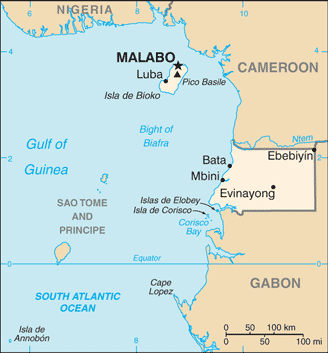
In 2002, ICJ ruled on an equidistance settlement of Cameroon-Equatorial Guinea-Nigeria maritime boundary in the Gulf of Guinea,
but a dispute between Equatorial Guinea and Cameroon over an island at the mouth of the Ntem River and imprecisely defined
maritime coordinates in the ICJ decision delay final delimitation; UN urges Equatorial Guinea and Gabon to resolve the sovereignty
dispute over Gabon-occupied Mbane and lesser islands and to create a maritime boundary in the hydrocarbon-rich Corisco Bay
but a dispute between Equatorial Guinea and Cameroon over an island at the mouth of the Ntem River and imprecisely defined
maritime coordinates in the ICJ decision delay final delimitation; UN urges Equatorial Guinea and Gabon to resolve the sovereignty
dispute over Gabon-occupied Mbane and lesser islands and to create a maritime boundary in the hydrocarbon-rich Corisco Bay


| REFUGEES AND INTERNALLY DISPLACED PERSONS (IDPS) |
None reported.
| ILLICIT DRUGS |
None reported.
| HUMAN RIGHTS STATEMENTS, ANALYSIS AND CRITIQUES |
2011 Human Rights Report: Equatorial Guinea
Bureau of Democracy, Human Rights, and Labor
2011 Country Reports on Human Rights Practices
May 25, 2012
Equatorial Guinea is nominally a multiparty constitutional republic. Since a military coup in 1979, President Obiang Nguema Mbasogo
dominated all branches of government in collaboration with his clan and his political party, the Democratic Party of Equatorial Guinea
(PDGE). In 2009 voters reelected President Obiang with a claimed 95.37 percent of votes cast. The lopsided results and weak
independent monitoring of the electoral process raised suspicions of systematic vote fraud. Foreign diplomatic observers noted
numerous irregularities and the presence of military personnel at all voting stations. There were instances in which elements of the
security forces acted independently of civilian control.
Major human rights abuses reported during the year included a disregard for the rule of law and due process, denial of basic political
rights including freedom of speech and press, and widespread official corruption.
Other human rights abuses included: inability of citizens to change their government; arbitrary arrest, detention, and incommunicado
detention; poor conditions in prisons and detention facilities; harassment and deportation of foreign residents with limited due process;
constraints on judicial independence; official corruption at all levels of government; restrictions on the right to privacy; restrictions on
freedoms of assembly, association, and movement; violence and discrimination against women; trafficking in persons; discrimination
against ethnic minorities; and restrictions on labor rights.
The government did not take steps to prosecute or punish officials who committed human rights abuses and itself committed such acts
with impunity. It did not maintain effective internal or external mechanisms to investigate security force abuses.
Click here to read more »
Bureau of Democracy, Human Rights, and Labor
2011 Country Reports on Human Rights Practices
May 25, 2012
Equatorial Guinea is nominally a multiparty constitutional republic. Since a military coup in 1979, President Obiang Nguema Mbasogo
dominated all branches of government in collaboration with his clan and his political party, the Democratic Party of Equatorial Guinea
(PDGE). In 2009 voters reelected President Obiang with a claimed 95.37 percent of votes cast. The lopsided results and weak
independent monitoring of the electoral process raised suspicions of systematic vote fraud. Foreign diplomatic observers noted
numerous irregularities and the presence of military personnel at all voting stations. There were instances in which elements of the
security forces acted independently of civilian control.
Major human rights abuses reported during the year included a disregard for the rule of law and due process, denial of basic political
rights including freedom of speech and press, and widespread official corruption.
Other human rights abuses included: inability of citizens to change their government; arbitrary arrest, detention, and incommunicado
detention; poor conditions in prisons and detention facilities; harassment and deportation of foreign residents with limited due process;
constraints on judicial independence; official corruption at all levels of government; restrictions on the right to privacy; restrictions on
freedoms of assembly, association, and movement; violence and discrimination against women; trafficking in persons; discrimination
against ethnic minorities; and restrictions on labor rights.
The government did not take steps to prosecute or punish officials who committed human rights abuses and itself committed such acts
with impunity. It did not maintain effective internal or external mechanisms to investigate security force abuses.
Click here to read more »
24 October 2012
Committee on the Elimination of Discrimination against Women
Fifty-third session
1–19 October 2012
Concluding observations of the Committee on the Elimination of Discrimination against Women
Equatorial Guinea
A. Introduction
2. The Committee appreciates that the State party submitted it sixth periodic report although it did not follow the reporting guidelines and
was overdue. It also expresses its appreciation to the State party for its written replies to the list of issues and questions raised by its
pre-session working group although they were not comprehensive. It welcomes the oral presentation of the delegation.
3. The Committee commends the State party for its high level delegation, which was headed by Mr. Alfonso Nsue Mokuy, Deputy Prime
Minister, which included the Minister of Social Affairs and the Status of Women and representatives from the General Directorate of
Human Rights as well as a representative from the Permanent Mission to the United Nations in Geneva. The Committee, however,
regrets that no answers were provided to some of the questions raised, and that some of the answers provided were not sufficiently
clear, precise or detailed.
B. Positive Aspects
4. The Committee notes with appreciation the adoption of Law No. 3/2005 on the prevention and combat of the transmission of STDs
and HIV/SIDA.
5.The Committee welcomes the 2008 “No to violence against women in Equatorial Guinea” campaign as well as the establishment of the
Fund for Social Development (FDS), which prioritizes women’s access to health care services.
6. The Committee commends the State party for its ratification of the Optional Protocol to the Convention on 16 October 2009.
C. Principal areas of concern and recommendations
7. The Committee recalls the obligation of the State party to systematically and continuously implement all the provisions of the
Convention on the Elimination of All Forms of Discrimination against Women and views the concerns and recommendations identified in
the present concluding observations as requiring the priority attention of the State party between now and the submission of the next
periodic report. Consequently, the Committee urges the State party to focus on those areas in its implementation activities and to report
on the actions taken and results achieved in its next periodic report. The Committee calls upon the State party to submit the present
concluding observations to all relevant ministries, to the National Congress and to the judiciary, so as to ensure their full implementation.
Parliament
8.While reaffirming that the Government has the primary responsibility and is particularly accountable for the full implementation of the
obligations of the State party under the Convention, the Committee stresses that the Convention is binding on all branches of the State
apparatus and invites the State party to encourage the Parliament, in line with its procedures, where appropriate, to take the necessary
steps with regard to the implementation of the present concluding observations between now and the State party’s next reporting
process under the Convention.
Click here to read more »
Committee on the Elimination of Discrimination against Women
Fifty-third session
1–19 October 2012
Concluding observations of the Committee on the Elimination of Discrimination against Women
Equatorial Guinea
A. Introduction
2. The Committee appreciates that the State party submitted it sixth periodic report although it did not follow the reporting guidelines and
was overdue. It also expresses its appreciation to the State party for its written replies to the list of issues and questions raised by its
pre-session working group although they were not comprehensive. It welcomes the oral presentation of the delegation.
3. The Committee commends the State party for its high level delegation, which was headed by Mr. Alfonso Nsue Mokuy, Deputy Prime
Minister, which included the Minister of Social Affairs and the Status of Women and representatives from the General Directorate of
Human Rights as well as a representative from the Permanent Mission to the United Nations in Geneva. The Committee, however,
regrets that no answers were provided to some of the questions raised, and that some of the answers provided were not sufficiently
clear, precise or detailed.
B. Positive Aspects
4. The Committee notes with appreciation the adoption of Law No. 3/2005 on the prevention and combat of the transmission of STDs
and HIV/SIDA.
5.The Committee welcomes the 2008 “No to violence against women in Equatorial Guinea” campaign as well as the establishment of the
Fund for Social Development (FDS), which prioritizes women’s access to health care services.
6. The Committee commends the State party for its ratification of the Optional Protocol to the Convention on 16 October 2009.
C. Principal areas of concern and recommendations
7. The Committee recalls the obligation of the State party to systematically and continuously implement all the provisions of the
Convention on the Elimination of All Forms of Discrimination against Women and views the concerns and recommendations identified in
the present concluding observations as requiring the priority attention of the State party between now and the submission of the next
periodic report. Consequently, the Committee urges the State party to focus on those areas in its implementation activities and to report
on the actions taken and results achieved in its next periodic report. The Committee calls upon the State party to submit the present
concluding observations to all relevant ministries, to the National Congress and to the judiciary, so as to ensure their full implementation.
Parliament
8.While reaffirming that the Government has the primary responsibility and is particularly accountable for the full implementation of the
obligations of the State party under the Convention, the Committee stresses that the Convention is binding on all branches of the State
apparatus and invites the State party to encourage the Parliament, in line with its procedures, where appropriate, to take the necessary
steps with regard to the implementation of the present concluding observations between now and the State party’s next reporting
process under the Convention.
Click here to read more »
UNESCO to Award Prize Funded by Dictator Obiang
Jul 16 2012 - 4:08pm
Freedom House strongly opposes the United Nations Education, Scientific and Cultural Organization (UNESCO)’s decision to award a
controversial prize financed by one of the world’s longest-ruling dictators, President Teodoro Obiang Nguema Mbasogo of Equatorial
Guinea.
“The decision by the UN’s primary educational and scientific organization to award a prize financed by the kleptocratic dictator of
Equatorial Guinea, who has maintained a viselike grip over the citizenry for 33 years, is fundamentally at odds with UNESCO’s
mandate,” said Courtney Radsch, senior program manager for the Global Freedom of Expression Campaign at Freedom House.
While UNESCO’s Executive Board has removed Mr. Obiang’s name from the award and renamed it the UNESCO-Equatorial Guinea
International Prize for Research in the Life Sciences, Freedom House believes this cosmetic change is not enough. The award still
serves to burnish Obiang’s unsavory reputation and is funded by one of the world’s most corrupt and repressive regimes.
Human rights organizations and several democratic governments opposed the $3 million prize, first proposed in 2008, amid concerns that
funding for the award came directly from the government of Equatorial Guinea. A number of notable public figures, including
Archbishop Desmond Tutu and Congressman Howard Berman, publicly urged UNESCO to reject the prize, citing a record of corruption,
abuse, and restricted press freedom that is well-documented by UN reports, government investigations and reports by non-governmental
organizations.
Equatorial Guinea ranks as one of the “Worst of the Worst” countries in Freedom House’s annual survey, Freedom in the World, for its
wretched human rights record and history of curtailing political rights and civil liberties.
Click here to read more »
Jul 16 2012 - 4:08pm
Freedom House strongly opposes the United Nations Education, Scientific and Cultural Organization (UNESCO)’s decision to award a
controversial prize financed by one of the world’s longest-ruling dictators, President Teodoro Obiang Nguema Mbasogo of Equatorial
Guinea.
“The decision by the UN’s primary educational and scientific organization to award a prize financed by the kleptocratic dictator of
Equatorial Guinea, who has maintained a viselike grip over the citizenry for 33 years, is fundamentally at odds with UNESCO’s
mandate,” said Courtney Radsch, senior program manager for the Global Freedom of Expression Campaign at Freedom House.
While UNESCO’s Executive Board has removed Mr. Obiang’s name from the award and renamed it the UNESCO-Equatorial Guinea
International Prize for Research in the Life Sciences, Freedom House believes this cosmetic change is not enough. The award still
serves to burnish Obiang’s unsavory reputation and is funded by one of the world’s most corrupt and repressive regimes.
Human rights organizations and several democratic governments opposed the $3 million prize, first proposed in 2008, amid concerns that
funding for the award came directly from the government of Equatorial Guinea. A number of notable public figures, including
Archbishop Desmond Tutu and Congressman Howard Berman, publicly urged UNESCO to reject the prize, citing a record of corruption,
abuse, and restricted press freedom that is well-documented by UN reports, government investigations and reports by non-governmental
organizations.
Equatorial Guinea ranks as one of the “Worst of the Worst” countries in Freedom House’s annual survey, Freedom in the World, for its
wretched human rights record and history of curtailing political rights and civil liberties.
Click here to read more »
Equatorial Guinea: Prominent human rights defender missing
23 October 2012
Lawyer and human rights defender Fabián Nsue Nguema has not been seen or heard from since 22 October, when he visited a client in
Black Beach Prison in the Equatorial Guinea capital of Malabo. There are fears for his safety. Prominent lawyer and human rights
defender Fabián Nsue Nguema is the legal representative of a man arrested on 16 October (or thereabouts) and held in Black Beach
Prison. For about a week, Fabián Nsue Nguema had been trying to see his client in prison but was denied permission by the prison
authorities.
Click here to read more »
23 October 2012
Lawyer and human rights defender Fabián Nsue Nguema has not been seen or heard from since 22 October, when he visited a client in
Black Beach Prison in the Equatorial Guinea capital of Malabo. There are fears for his safety. Prominent lawyer and human rights
defender Fabián Nsue Nguema is the legal representative of a man arrested on 16 October (or thereabouts) and held in Black Beach
Prison. For about a week, Fabián Nsue Nguema had been trying to see his client in prison but was denied permission by the prison
authorities.
Click here to read more »
Equatorial Guinea: Visiting Leaders Should Press for Rights
Country’s Citizens Denied Free, Fair Elections
February 18, 2013
(Washington, DC) – Latin American and African officials participating in a cross-regional meeting in Equatorial Guinea should press their
host, President Teodoro Obiang Nguema Mbasago, to undertake serious human rights and democratic reforms ahead of planned
parliamentary elections in May, 2013. President Dilma Rousseff of Brazil, among other officials, is anticipated to attend the Africa-South
America Summit scheduled for February 20-23.
President Obiang is the world’s longest-ruling head of state. He has claimed at least 95 percent of the vote in the five presidential
elections since he seized power in 1979 – elections marred by irregularities, intimidation, and voter fraud. His ruling party and its allies
control 99 of the country’s 100 seats in parliament. Constitutional changes approved in November 2011 strengthened the president’s
already considerable powers. Under the revised constitution, the country is to create a bicameral parliament by adding a 75-member
Senate. Obiang will directly appoint 15 of its members. Elections to name the remaining legislators and fill municipal posts have been
called for May 26.
“Foreign dignitaries should challenge President Obiang on his dismal human rights record and democratic credentials,” said Tutu
Alicante, executive director of EG Justice, a nongovernmental group that promotes human rights and good governance in Equatorial
Guinea. “With legislative elections coming up, major reforms are needed to ensure the right to a free and fair vote.”
The ruling Democratic Party of Equatorial Guinea (PDGE) maintains a monopoly over the country’s political life. The country’s most
recent vote, a November 2011 referendum on the constitutional amendments, was discredited by reports of voting fraud, harassment of
opposition supporters, and intimidation of voters. In recent election cycles, Equatorial Guinea’s National Electoral Commission, which
oversees voting, has been headed by Obiang’s interior minister, a top ruling party official who currently is also deputy prime minister.
The country’s beleaguered political opposition is pressured through various means, including arbitrary arrest. Since November 2011, the
government has detained at least four high-profile opposition members. One leading opposition figure, who is also a medical doctor and
human rights activist, spent four months behind bars in 2012 on politically motivated charges.
EG Justice and Human Rights Watch called on foreign officials attending the Africa-South America summit to press the Obiang
government to establish an independent electoral body to ensure that all electoral processes are free, fair, and accountable. They also said
the government should uphold political freedoms by respecting the right of opposition members to travel freely, to hold meetings, to
express their views, and to have access to the media without discrimination. The government should also allow independent electoral
observers unfettered access to election sites.
Click here to read more »
Country’s Citizens Denied Free, Fair Elections
February 18, 2013
(Washington, DC) – Latin American and African officials participating in a cross-regional meeting in Equatorial Guinea should press their
host, President Teodoro Obiang Nguema Mbasago, to undertake serious human rights and democratic reforms ahead of planned
parliamentary elections in May, 2013. President Dilma Rousseff of Brazil, among other officials, is anticipated to attend the Africa-South
America Summit scheduled for February 20-23.
President Obiang is the world’s longest-ruling head of state. He has claimed at least 95 percent of the vote in the five presidential
elections since he seized power in 1979 – elections marred by irregularities, intimidation, and voter fraud. His ruling party and its allies
control 99 of the country’s 100 seats in parliament. Constitutional changes approved in November 2011 strengthened the president’s
already considerable powers. Under the revised constitution, the country is to create a bicameral parliament by adding a 75-member
Senate. Obiang will directly appoint 15 of its members. Elections to name the remaining legislators and fill municipal posts have been
called for May 26.
“Foreign dignitaries should challenge President Obiang on his dismal human rights record and democratic credentials,” said Tutu
Alicante, executive director of EG Justice, a nongovernmental group that promotes human rights and good governance in Equatorial
Guinea. “With legislative elections coming up, major reforms are needed to ensure the right to a free and fair vote.”
The ruling Democratic Party of Equatorial Guinea (PDGE) maintains a monopoly over the country’s political life. The country’s most
recent vote, a November 2011 referendum on the constitutional amendments, was discredited by reports of voting fraud, harassment of
opposition supporters, and intimidation of voters. In recent election cycles, Equatorial Guinea’s National Electoral Commission, which
oversees voting, has been headed by Obiang’s interior minister, a top ruling party official who currently is also deputy prime minister.
The country’s beleaguered political opposition is pressured through various means, including arbitrary arrest. Since November 2011, the
government has detained at least four high-profile opposition members. One leading opposition figure, who is also a medical doctor and
human rights activist, spent four months behind bars in 2012 on politically motivated charges.
EG Justice and Human Rights Watch called on foreign officials attending the Africa-South America summit to press the Obiang
government to establish an independent electoral body to ensure that all electoral processes are free, fair, and accountable. They also said
the government should uphold political freedoms by respecting the right of opposition members to travel freely, to hold meetings, to
express their views, and to have access to the media without discrimination. The government should also allow independent electoral
observers unfettered access to election sites.
Click here to read more »
Conference on Human Rights
22/03/2013
Carmelo Nvono Nca, Ambassador of Equatorial Guinea for Belgium, Netherlands, Turkey and the European Union (EU), took part in the
event organized by the Spanish League for Human Rights in Madrid.
The Spanish League for Human Rights, a non-governmental association whose prime objective is the defense and vigilance of
fundamental rights and freedoms, celebrates its one hundred years of work. For this reason, they have organized the conference “Human
Rights as the Foundation of Democracy and Justice”, which took place at the Circulo de Bellas Artes (Fine Arts Circle) of Madrid.
Among the participants at the table were Eduardo Fungairiño, Public Prosecutor of the Supreme Court; Emilio Gines, member of the
Subcommittee on Prevention of Torture for the United Nations, and Carmelo Nvono Nca, Ambassador of Equatorial Guinea for Belgium,
Netherlands, the Republic of Turkey and the EU.
After the words of welcome from the league’s president, Francisco Jose Alonso, the ceremony began with the delivery of awards that
recognize the efforts of certain people who have dedicated their lives to the defense of human rights. Later, Eduardo Fungairiño opened
the debate with a speech in which he reviewed the history of the fundamental rights and their treatment.
For his part, the Ambassador of Equatorial Guinea for the EU offered the point of view of a country whose prime objective is to join the
group of States that are an example of human rights: “The Republic of Equatorial Guinea is on the path to progress. Proof of this is the
democratization that the country’s Government carried out in 2011, through which the highest bodies of the State were strengthened;
the Constitution was reformed, and several important bodies were created, such as the Auditor’s Court, the Ombudsman, the Economic
Council and the Senate, among many more.” Carmelo Nvono Nca recalled that the democratization process will be completed on May 26
with the upcoming municipal elections, for the Parliament and the new Senate.
-“For 33 years, Equatorial Guinea has been working to guarantee the respect of human rights, and proof of this is the effort and
dedication they have shown to achieve peace in the country and guarantee one of the largest political and social stabilities in the African
continent,” also said the Ambassador, who offered specific data about the good results that our country has obtained in the indicator of
peace levels in the world, the Global Peace Index.
Similarly, Nvono Nca referred to the progress in health and education, recalling that Equatorial Guinea led in 2012 the list of countries
with the highest investment in health care on the African continent, according to a study by the World Health Organization (WHO). He
also recalled that our nation has been, since 2008, the country with the highest level of literacy among adults of sub-Saharan Africa,
according to data from the UNESCO.
Click here to read more »
22/03/2013
Carmelo Nvono Nca, Ambassador of Equatorial Guinea for Belgium, Netherlands, Turkey and the European Union (EU), took part in the
event organized by the Spanish League for Human Rights in Madrid.
The Spanish League for Human Rights, a non-governmental association whose prime objective is the defense and vigilance of
fundamental rights and freedoms, celebrates its one hundred years of work. For this reason, they have organized the conference “Human
Rights as the Foundation of Democracy and Justice”, which took place at the Circulo de Bellas Artes (Fine Arts Circle) of Madrid.
Among the participants at the table were Eduardo Fungairiño, Public Prosecutor of the Supreme Court; Emilio Gines, member of the
Subcommittee on Prevention of Torture for the United Nations, and Carmelo Nvono Nca, Ambassador of Equatorial Guinea for Belgium,
Netherlands, the Republic of Turkey and the EU.
After the words of welcome from the league’s president, Francisco Jose Alonso, the ceremony began with the delivery of awards that
recognize the efforts of certain people who have dedicated their lives to the defense of human rights. Later, Eduardo Fungairiño opened
the debate with a speech in which he reviewed the history of the fundamental rights and their treatment.
For his part, the Ambassador of Equatorial Guinea for the EU offered the point of view of a country whose prime objective is to join the
group of States that are an example of human rights: “The Republic of Equatorial Guinea is on the path to progress. Proof of this is the
democratization that the country’s Government carried out in 2011, through which the highest bodies of the State were strengthened;
the Constitution was reformed, and several important bodies were created, such as the Auditor’s Court, the Ombudsman, the Economic
Council and the Senate, among many more.” Carmelo Nvono Nca recalled that the democratization process will be completed on May 26
with the upcoming municipal elections, for the Parliament and the new Senate.
-“For 33 years, Equatorial Guinea has been working to guarantee the respect of human rights, and proof of this is the effort and
dedication they have shown to achieve peace in the country and guarantee one of the largest political and social stabilities in the African
continent,” also said the Ambassador, who offered specific data about the good results that our country has obtained in the indicator of
peace levels in the world, the Global Peace Index.
Similarly, Nvono Nca referred to the progress in health and education, recalling that Equatorial Guinea led in 2012 the list of countries
with the highest investment in health care on the African continent, according to a study by the World Health Organization (WHO). He
also recalled that our nation has been, since 2008, the country with the highest level of literacy among adults of sub-Saharan Africa,
according to data from the UNESCO.
Click here to read more »
TRANSLATED FROM SPANISH BY GOOGLE TRANSLATE
Friday, February 1, 2013
NEWS ON SOCIAL NETWORKS: "And ADOLFO FERNANDEZ Asodegue Marugan, COULD BE MANAGERS OF TRAGEDY
Equatoguinean"
Operation Akamayong.
Asodegue, Aldofo Fernandez Marugan, poked phones Guineans in Madrid, with two engineers Telefonica de Espana.
The late Andrew Moise Mba Ada, his telefonino, had been played over 30 times for Asodegue.
Severo Moto Nsa, their phones were tapped more than 200 times by Asodegue, from 2003 to 2011.
Okenve Celestino, was always guarded their moves and their phones were tapped by Asodegue, more than 90 times, from May 2004
until recently two months.
Armengol Engonga, their phones were tapped by Asodegue, more than 100 times since March 2002 to September 2011, Asodegue.
Tomos Mangue, and their brothers, their phones were tapped by Asodegue, more than 100 times from 2004 to 2009.
Miguel Eson Eman and his wife, their phones were tapped more than 40 times per Asodegue.
Placido Mico Abogo, your calls in Spain, and were guarded by Asodegue contraladas, to know who their contacts. Bacale, current
minister of Obiang, Asodegue, skewer several times their communications more than 50 times.
Aquilino Nguema Ona, their communications were pinched by Asodegue, more than 40 times. So with two Engineers acted Asodegue
company Telefonica de Espana. S
Click here to read more »
Friday, February 1, 2013
NEWS ON SOCIAL NETWORKS: "And ADOLFO FERNANDEZ Asodegue Marugan, COULD BE MANAGERS OF TRAGEDY
Equatoguinean"
Operation Akamayong.
Asodegue, Aldofo Fernandez Marugan, poked phones Guineans in Madrid, with two engineers Telefonica de Espana.
The late Andrew Moise Mba Ada, his telefonino, had been played over 30 times for Asodegue.
Severo Moto Nsa, their phones were tapped more than 200 times by Asodegue, from 2003 to 2011.
Okenve Celestino, was always guarded their moves and their phones were tapped by Asodegue, more than 90 times, from May 2004
until recently two months.
Armengol Engonga, their phones were tapped by Asodegue, more than 100 times since March 2002 to September 2011, Asodegue.
Tomos Mangue, and their brothers, their phones were tapped by Asodegue, more than 100 times from 2004 to 2009.
Miguel Eson Eman and his wife, their phones were tapped more than 40 times per Asodegue.
Placido Mico Abogo, your calls in Spain, and were guarded by Asodegue contraladas, to know who their contacts. Bacale, current
minister of Obiang, Asodegue, skewer several times their communications more than 50 times.
Aquilino Nguema Ona, their communications were pinched by Asodegue, more than 40 times. So with two Engineers acted Asodegue
company Telefonica de Espana. S
Click here to read more »
TRANSLATED FROM SPANISH BY GOOGLE TRANSLATE
Human Rights
FIRST ANNIVERSARY of my imprisonment, Dr. Wenceslao Mansogo Alo - Bata, Equatorial Guinea, 09.02.2013 PDF
Monday, February 11, 2013
A year ago entered the public prison in Bata.
A year ago, on 09/02/2012, I stopped when I had the police voluntarily to testify about the death of a patient during surgery in my clinic.
As resembled instructions from a higher authority, the police referred me to judge, Augustine Chicampo, which, without much
contemplation, and saying that "my case was complicated," sent me directly to the public jail Bata. They accused me of having maimed
the body of my patient died.
The judgment or, rather, the political process was held against me in the courthouse Bata on 5 and 6 April 2012, coinciding with the
Saints on Wednesday and Thursday. I was tried by a court that had nothing to impartial and who clearly had instructions to frame me
anything. For nearly three hours I was riddled with questions most unlikely he could have imagined. Some judges, some people, who did
not understand much medicine, I was being judged and condemned by highly specialized medical topics (in Equatorial Guinea not allow
the creation of a medical school). They could not hold it in because the doctor mutilation of them, Salomon Nguema, confirmed that it
was an invention of their own, a lie. Then, during the same process changed. Now I was accused of malpractice and professional
negligence resulting in death by an anesthesia error. Doctors Hospital of Bata were called and they showed that there was no error of
anesthesia. But prosecutor Claudio Ndogula literally hung the phone throughout the hearing, was used repeatedly in awkward and want
to prove that there was no miscarriage of anesthesia and that I was responsible for that mistake.
In this trial attended the directing PDGE ruling party, headed by its own Secretary General, Lucas Nguema Esono and an important
member of the government. What these gentlemen came for my judgment? What chased by his presence in my judgment? Who called
them?
One of the many things that became clear in this public hearing was contrary to the accusation poured against me, that my own
accusers (the family of the deceased) yes they had desecrated the corpse and concealing evidence, so that the President of the Hearing,
Elisha Mengue, decided they were summoned before the judge for a hearing in return. None of that was done or has been done to date.
The penalty imposed on me was the extent of the regime's desire to kill me: three years in prison, five years of professional
disqualification, three years of closing the clinic and penalties and severance packages. I have a clinic that works and I confer autonomy
is clearly a thorn that fail to swallow. I decided with my lawyers appeal to the Supreme Court to logically exhaust the legal for more
instrumentalized to appear. Meanwhile, pardon intervened and I was released. I pardoned a sentence that was not yet firm.
Click here to read more>>
Human Rights
FIRST ANNIVERSARY of my imprisonment, Dr. Wenceslao Mansogo Alo - Bata, Equatorial Guinea, 09.02.2013 PDF
Monday, February 11, 2013
A year ago entered the public prison in Bata.
A year ago, on 09/02/2012, I stopped when I had the police voluntarily to testify about the death of a patient during surgery in my clinic.
As resembled instructions from a higher authority, the police referred me to judge, Augustine Chicampo, which, without much
contemplation, and saying that "my case was complicated," sent me directly to the public jail Bata. They accused me of having maimed
the body of my patient died.
The judgment or, rather, the political process was held against me in the courthouse Bata on 5 and 6 April 2012, coinciding with the
Saints on Wednesday and Thursday. I was tried by a court that had nothing to impartial and who clearly had instructions to frame me
anything. For nearly three hours I was riddled with questions most unlikely he could have imagined. Some judges, some people, who did
not understand much medicine, I was being judged and condemned by highly specialized medical topics (in Equatorial Guinea not allow
the creation of a medical school). They could not hold it in because the doctor mutilation of them, Salomon Nguema, confirmed that it
was an invention of their own, a lie. Then, during the same process changed. Now I was accused of malpractice and professional
negligence resulting in death by an anesthesia error. Doctors Hospital of Bata were called and they showed that there was no error of
anesthesia. But prosecutor Claudio Ndogula literally hung the phone throughout the hearing, was used repeatedly in awkward and want
to prove that there was no miscarriage of anesthesia and that I was responsible for that mistake.
In this trial attended the directing PDGE ruling party, headed by its own Secretary General, Lucas Nguema Esono and an important
member of the government. What these gentlemen came for my judgment? What chased by his presence in my judgment? Who called
them?
One of the many things that became clear in this public hearing was contrary to the accusation poured against me, that my own
accusers (the family of the deceased) yes they had desecrated the corpse and concealing evidence, so that the President of the Hearing,
Elisha Mengue, decided they were summoned before the judge for a hearing in return. None of that was done or has been done to date.
The penalty imposed on me was the extent of the regime's desire to kill me: three years in prison, five years of professional
disqualification, three years of closing the clinic and penalties and severance packages. I have a clinic that works and I confer autonomy
is clearly a thorn that fail to swallow. I decided with my lawyers appeal to the Supreme Court to logically exhaust the legal for more
instrumentalized to appear. Meanwhile, pardon intervened and I was released. I pardoned a sentence that was not yet firm.
Click here to read more>>
| Click map for larger view |
| Click flag for Country Report |



Brigidier Geneneral (Retired)
Teodoro Obiang Nguema Mbasogo
President since 3 August 1979
Teodoro Obiang Nguema Mbasogo
President since 3 August 1979
| TRAFFICKING IN PERSONS |
Current situation: Equatorial Guinea is primarily a destination country for children trafficked for the purpose of forced labor and
possibly for the purpose of sexual exploitation; children have been trafficked from nearby countries for domestic servitude, market
labor, ambulant vending, and possibly sexual exploitation; women may also be trafficked to Equatorial Guinea from Cameroon,
Benin, other neighboring countries, and China for sexual exploitation
Tier rating: Tier 2 Watch List - Equatorial Guinea is on the Tier 2 Watch List for its failure to provide evidence of increasing
efforts to eliminate trafficking, particularly in the areas of prosecuting and convicting trafficking offenders and failing to formalize
mechanisms to provide assistance to victims; although the government made some effort to enforce laws against child labor
exploitation, it failed to report any trafficking prosecutions or convictions in 2007; the government continued to lack shelters or
formal procedures for providing care to victims (2008)
possibly for the purpose of sexual exploitation; children have been trafficked from nearby countries for domestic servitude, market
labor, ambulant vending, and possibly sexual exploitation; women may also be trafficked to Equatorial Guinea from Cameroon,
Benin, other neighboring countries, and China for sexual exploitation
Tier rating: Tier 2 Watch List - Equatorial Guinea is on the Tier 2 Watch List for its failure to provide evidence of increasing
efforts to eliminate trafficking, particularly in the areas of prosecuting and convicting trafficking offenders and failing to formalize
mechanisms to provide assistance to victims; although the government made some effort to enforce laws against child labor
exploitation, it failed to report any trafficking prosecutions or convictions in 2007; the government continued to lack shelters or
formal procedures for providing care to victims (2008)