| CAPITAL |
| POPULATION |
| CHIEF OF STATE |
| SELECTION PROCESS |
Torshavn
49,483 (July 2012 est.)
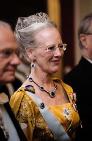
Margrethe II of Denmark
Queen since 14 January 1972
Queen since 14 January 1972
The monarch is hereditary and holds that position for life or until
abdication. The high commissioner is selected by the monarch
Next scheduled election: None
abdication. The high commissioner is selected by the monarch
Next scheduled election: None
HEAD OF GOVERNMENT
SELECTION PROCESS
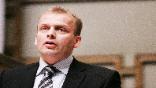
Kaj Leo Johannessen
Prime Minister
since 26 September 2008
Prime Minister
since 26 September 2008
Following legislative elections, the leader of the majority party or
the leader of the majority coalition is usually elected prime
minister by the Faroese Parliament; election last held 14
November 2011
Next scheduled election: November 2015
the leader of the majority coalition is usually elected prime
minister by the Faroese Parliament; election last held 14
November 2011
Next scheduled election: November 2015
| DECLARATION OF HUMAN RIGHTS |
| ETHNIC GROUPS |
Scandinavian
| RELIGIONS |
Evangelical Lutheran 83.8%, other and unspecified 16.2% (2006 census)
| GOVERNMENT STRUCTURE |
Part of the Kingdom of Denmark; self-governing overseas administrative division of Denmark since 1948 ; 49 second
order municipalities. Legal system is based Danish law;
Executive: the monarchy is hereditary; high commissioner appointed by the monarch; following legislative elections,
the leader of the majority party or the leader of the majority coalition is usually elected prime minister by the Faroese
Parliament; election last held on 14 November 2011 (next to be held no later than November 2015)
Legislative: Unicameral Faroese Parliament or Logting (33 seats; members are elected by popular vote on a
proportional basis from the seven constituencies to serve four-year terms)
elections:last held on 29 October 2011 (next to be held no later than October 2015)
election of two seats to the Danish Parliament was last held on 15 September 2011 (next to be held no later than
September 2015)
Judicial: None, all judicial branch responsibilities are under the auspices of the Danish Supreme Court (judges are
appointed by the monarch for life)
order municipalities. Legal system is based Danish law;
Executive: the monarchy is hereditary; high commissioner appointed by the monarch; following legislative elections,
the leader of the majority party or the leader of the majority coalition is usually elected prime minister by the Faroese
Parliament; election last held on 14 November 2011 (next to be held no later than November 2015)
Legislative: Unicameral Faroese Parliament or Logting (33 seats; members are elected by popular vote on a
proportional basis from the seven constituencies to serve four-year terms)
elections:last held on 29 October 2011 (next to be held no later than October 2015)
election of two seats to the Danish Parliament was last held on 15 September 2011 (next to be held no later than
September 2015)
Judicial: None, all judicial branch responsibilities are under the auspices of the Danish Supreme Court (judges are
appointed by the monarch for life)
| LANGUAGES |
Faroese (derived from Old Norse), Danish
| BRIEF HISTORY |
The early history of the Faroe Islands is not very clear. Irish hermits (monks) settled in the 6th century introducing
sheep and oats to the islands. Saint Brendan who lived ca. 484-578 is said to have visited the Faroe Islands on 2 or 3
occasions, naming two of the islands Sheep Island and Paradise Island of Birds. Later the Vikings replaced the Irish
settlers, bringing the Old Norse language to the islands, which locally evolved into the modern Faroese language
spoken today. Although the settlers were Norwegians, most of them probably didn't come from Norway, but rather
from the Norwegian settlements in Shetland, Orkney and around the Irish Sea, so-called Norse-Gaels. According to
Færeyinga Saga, emigrants who left Norway to escape the tyranny of Harald I of Norway settled in the islands about
the beginning of the 9th century. Early in the 11th century, Sigmund, whose family had flourished in the southern islands
but had been almost exterminated by invaders from the northern islands, escaped to Norway and was sent back to
take possession of the islands for Olaf Tryggvason, king of Norway. He introduced Christianity and, though he was
subsequently murdered, Norwegian supremacy was upheld. Norwegian control of the islands continued until 1380,
when Norway entered into a union with Denmark, which gradually evolved into Danish control of the islands. The
reformation reached the Faroes in 1538. When the union between Denmark and Norway was dissolved as a result of
the Treaty of Kiel in 1814, Denmark retained possession of the Faroe Islands. The monopoly trade over the Faroe
Islands was abolished in 1856. Since then, the country developed towards a modern fishery nation with its own fleet.
The national awakening since 1888 was first based on a struggle for the Faroese language, and thus more culturally
oriented, but after 1906 was more and more politically oriented after the foundation of the political parties of the Faroe
Islands. On April 12, 1940, the Faroes were invaded and occupied by British troops. The move followed the invasion
of Denmark by Nazi Germany and had the objective of strengthening British control of the North Atlantic (see Second
Battle of the Atlantic). In 1942–43 the British Royal Engineers built the only airport in the Faroes, the Vágar Airport.
Control of the islands reverted to Denmark following the war, but in 1948 a home rule regime was implemented
granting a high degree of local autonomy. The Faroes declined to join Denmark in entering the European Community
(now European Union) in 1973. The islands experienced considerable economic difficulties following the collapse of the
fishing industry in the early 1990s, but have since made efforts to diversify the economy. Support for independence has
grown and is the objective of the government.By the early 21st century, weakness in the Faroese economy had been
eliminated and, accordingly, many minds turned once again to the possibility of independence from Denmark. However,
a planned referendum on a roadmap towards independence in 2001 was called off following Danish Prime Minister
Poul Nyrup Rasmussen saying that Danish money grants would be phased out within four years if there was a 'yes' vote.
Sources Wikipedia: History of the Faroe Islands
sheep and oats to the islands. Saint Brendan who lived ca. 484-578 is said to have visited the Faroe Islands on 2 or 3
occasions, naming two of the islands Sheep Island and Paradise Island of Birds. Later the Vikings replaced the Irish
settlers, bringing the Old Norse language to the islands, which locally evolved into the modern Faroese language
spoken today. Although the settlers were Norwegians, most of them probably didn't come from Norway, but rather
from the Norwegian settlements in Shetland, Orkney and around the Irish Sea, so-called Norse-Gaels. According to
Færeyinga Saga, emigrants who left Norway to escape the tyranny of Harald I of Norway settled in the islands about
the beginning of the 9th century. Early in the 11th century, Sigmund, whose family had flourished in the southern islands
but had been almost exterminated by invaders from the northern islands, escaped to Norway and was sent back to
take possession of the islands for Olaf Tryggvason, king of Norway. He introduced Christianity and, though he was
subsequently murdered, Norwegian supremacy was upheld. Norwegian control of the islands continued until 1380,
when Norway entered into a union with Denmark, which gradually evolved into Danish control of the islands. The
reformation reached the Faroes in 1538. When the union between Denmark and Norway was dissolved as a result of
the Treaty of Kiel in 1814, Denmark retained possession of the Faroe Islands. The monopoly trade over the Faroe
Islands was abolished in 1856. Since then, the country developed towards a modern fishery nation with its own fleet.
The national awakening since 1888 was first based on a struggle for the Faroese language, and thus more culturally
oriented, but after 1906 was more and more politically oriented after the foundation of the political parties of the Faroe
Islands. On April 12, 1940, the Faroes were invaded and occupied by British troops. The move followed the invasion
of Denmark by Nazi Germany and had the objective of strengthening British control of the North Atlantic (see Second
Battle of the Atlantic). In 1942–43 the British Royal Engineers built the only airport in the Faroes, the Vágar Airport.
Control of the islands reverted to Denmark following the war, but in 1948 a home rule regime was implemented
granting a high degree of local autonomy. The Faroes declined to join Denmark in entering the European Community
(now European Union) in 1973. The islands experienced considerable economic difficulties following the collapse of the
fishing industry in the early 1990s, but have since made efforts to diversify the economy. Support for independence has
grown and is the objective of the government.By the early 21st century, weakness in the Faroese economy had been
eliminated and, accordingly, many minds turned once again to the possibility of independence from Denmark. However,
a planned referendum on a roadmap towards independence in 2001 was called off following Danish Prime Minister
Poul Nyrup Rasmussen saying that Danish money grants would be phased out within four years if there was a 'yes' vote.
Sources Wikipedia: History of the Faroe Islands
| ECONOMIC OVERVIEW |
The Faroese economy is dependent on fishing, which makes the economy vulnerable to price fluctuations. The sector
normally accounts for about 95% of exports and nearly half of GDP. In early 2008 the Faroese economy began to
slow as a result of smaller catches and historically high oil prices. The slowdown in the Faroese economy followed a
strong performance since the mid-1990s with annual growth rates averaging close to 6%, mostly a result of increased
fish landings and salmon farming, and high export prices. Unemployment reached its lowest level in June 2008 at 1.1%.
The Faroese Home Rule Government produced increasing budget surpluses in that period, which helped to reduce the
large public debt, most of it to Denmark. However, total dependence on fishing and salmon farming make the Faroese
economy vulnerable to fluctuations in world demand. Initial discoveries of oil in the Faroese area give hope for eventual
oil production, which may provide a foundation for a more diversified economy and less dependence on Danish
economic assistance. Aided by an annual subsidy from Denmark amounting to about 5% of Faroese GDP, the Faroese
have a standard of living almost equal to that of Denmark and Greenland. The Faroese Government ran relatively large
deficits from 2008 to 2010 and budget deficits are forecast for several years ahead. At year-end 2010 the gross debt
had reached approximately US$900 million.
normally accounts for about 95% of exports and nearly half of GDP. In early 2008 the Faroese economy began to
slow as a result of smaller catches and historically high oil prices. The slowdown in the Faroese economy followed a
strong performance since the mid-1990s with annual growth rates averaging close to 6%, mostly a result of increased
fish landings and salmon farming, and high export prices. Unemployment reached its lowest level in June 2008 at 1.1%.
The Faroese Home Rule Government produced increasing budget surpluses in that period, which helped to reduce the
large public debt, most of it to Denmark. However, total dependence on fishing and salmon farming make the Faroese
economy vulnerable to fluctuations in world demand. Initial discoveries of oil in the Faroese area give hope for eventual
oil production, which may provide a foundation for a more diversified economy and less dependence on Danish
economic assistance. Aided by an annual subsidy from Denmark amounting to about 5% of Faroese GDP, the Faroese
have a standard of living almost equal to that of Denmark and Greenland. The Faroese Government ran relatively large
deficits from 2008 to 2010 and budget deficits are forecast for several years ahead. At year-end 2010 the gross debt
had reached approximately US$900 million.
| POLITICAL CLIMATE |
Politics of the Faroe Islands takes place in a framework of a parliamentary representative democratic dependency,
whereby the Prime Minister of the Faroe Islands is the head of government, and of a multi-party system. The Faroe
Islands are politically associated with the Kingdom of Denmark, but have been self-governing since 1948. Executive
power is exercised by the government. Legislative power is vested in both the government and the Løgting. The
Judiciary is independent of the executive and the legislature and the responsibility of Denmark. There are currently 36
municipalities.
The Faroe Islands have a multi-party system (disputing on independence and unionism as well as left and right), with
numerous parties in which no one party often has a chance of gaining power alone, and parties must work with each
other to form coalition governments. The Faroese Parliament (Løgting) has 33 seats. Members are elected by popular
vote to serve four-year terms. For the Løgting elections there were seven electoral districts, each one comprehending
asýslur, while Streymoy is divided in a northern and southern part (Tórshavn region), but since 2008, the Faroes
constitute a single district.
Source: Wikipedia: Politics of the Faroe Islands
whereby the Prime Minister of the Faroe Islands is the head of government, and of a multi-party system. The Faroe
Islands are politically associated with the Kingdom of Denmark, but have been self-governing since 1948. Executive
power is exercised by the government. Legislative power is vested in both the government and the Løgting. The
Judiciary is independent of the executive and the legislature and the responsibility of Denmark. There are currently 36
municipalities.
The Faroe Islands have a multi-party system (disputing on independence and unionism as well as left and right), with
numerous parties in which no one party often has a chance of gaining power alone, and parties must work with each
other to form coalition governments. The Faroese Parliament (Løgting) has 33 seats. Members are elected by popular
vote to serve four-year terms. For the Løgting elections there were seven electoral districts, each one comprehending
asýslur, while Streymoy is divided in a northern and southern part (Tórshavn region), but since 2008, the Faroes
constitute a single district.
Source: Wikipedia: Politics of the Faroe Islands
| INTERNATIONAL DISPUTES |
Because anticipated offshore hydrocarbon resources have not been realized, earlier Faroese proposals for full
independence have been deferred; Iceland, the UK, and Ireland dispute Denmark's claim that the Faroe Islands'
continental shelf extends beyond 200 nm
independence have been deferred; Iceland, the UK, and Ireland dispute Denmark's claim that the Faroe Islands'
continental shelf extends beyond 200 nm


| REFUGEES AND INTERNALLY DISPLACED PERSONS (IDP) |
None reported.
| ILLICIT DRUGS |
None reported.
| HUMAN RIGHTS STATEMENTS, ANALYSIS AND CRITIQUES |
2011 Human Rights Reports: Denmark
Bureau of Democracy, Human Rights, and Labor
2011 Country Reports on Human Rights Practices
Report
May 24, 2012
Section 3. Respect for Political Rights: The Right of Citizens to Change Their Government
The constitution provides citizens the right to change their government peacefully, and citizens exercised this right in practice
through periodic, free, and fair elections based on universal suffrage.
The territories of Greenland and the Faroe Islands have democratically elected home rule governments whose powers may
encompass all matters except foreign and national security affairs, police services, and monetary matters. Greenlanders and Faroese
have the same rights throughout the kingdom as other citizens. Each territory elects two representatives to the Danish parliament.
Four citizens of other than Danish, Greenlandic, or Faroese origin were elected to the parliament in the 2011 elections. There was
one member of an ethnic minority in the 23-seat cabinet. In the November 2009 municipal elections, 65 persons of non-Danish
ethnic origin were elected to municipal councils.
The Danish Working Environment Authority (DWEA) effectively enforced labor health and safety in all sectors. The DWEA
inspected 27,933 workplaces and issued 14,343 improvement notices in the first seven months of the year, compared to 42,984
such inspections and 42,984 notices in all of 2010. The DWEA has the authority to report violations to police or the courts if the
employer fails to make required improvements by the deadline. Workers may remove themselves from hazardous situations without
jeopardizing their employment, and authorities effectively enforced this right in practice. Greenland and the Faroe Islands have
similar work conditions, except that there the standard workweek was established by collective bargaining at 40 hours. The DWEA
recorded 40,123 workplace accidents from January 1 to November 14, of which 37 were fatalities.
Click here to read more »
Bureau of Democracy, Human Rights, and Labor
2011 Country Reports on Human Rights Practices
Report
May 24, 2012
Section 3. Respect for Political Rights: The Right of Citizens to Change Their Government
The constitution provides citizens the right to change their government peacefully, and citizens exercised this right in practice
through periodic, free, and fair elections based on universal suffrage.
The territories of Greenland and the Faroe Islands have democratically elected home rule governments whose powers may
encompass all matters except foreign and national security affairs, police services, and monetary matters. Greenlanders and Faroese
have the same rights throughout the kingdom as other citizens. Each territory elects two representatives to the Danish parliament.
Four citizens of other than Danish, Greenlandic, or Faroese origin were elected to the parliament in the 2011 elections. There was
one member of an ethnic minority in the 23-seat cabinet. In the November 2009 municipal elections, 65 persons of non-Danish
ethnic origin were elected to municipal councils.
The Danish Working Environment Authority (DWEA) effectively enforced labor health and safety in all sectors. The DWEA
inspected 27,933 workplaces and issued 14,343 improvement notices in the first seven months of the year, compared to 42,984
such inspections and 42,984 notices in all of 2010. The DWEA has the authority to report violations to police or the courts if the
employer fails to make required improvements by the deadline. Workers may remove themselves from hazardous situations without
jeopardizing their employment, and authorities effectively enforced this right in practice. Greenland and the Faroe Islands have
similar work conditions, except that there the standard workweek was established by collective bargaining at 40 hours. The DWEA
recorded 40,123 workplace accidents from January 1 to November 14, of which 37 were fatalities.
Click here to read more »
4 February 2011
Consideration of reports submitted by States parties under article 44 of the Convention
Concluding Observations of the Committee on the Rights of the Child: DENMARK
A. Introduction
2. The Committee welcomes the submission of the fourth periodic report as well as the written replies to its list of issues
(CRC/C/DNK/Q/4/Add.1) and appreciates the constructive dialogue with the State party’s multi-sectoral delegation. However, the
Committee notes that the fourth periodic report of the State party does not conform to the reporting guidelines (CRC/C/58/Rev.2)
on the Convention and urges the State party to submit its subsequent periodic reports in accordance with the guidelines mentioned.
B. Follow-up measures undertaken and progress achieved by the State party
4. The Committee notes with appreciation the adoption of:
(a) The Child’s Reform (Barnets Reform) of 2010 which entered into force on 1 January 2011, and entails amendments to the
Act on Social Services, to better serve the best interests of the child in the handling of cases involving special support for
disadvantaged children and young people as well as strengthens the right of the National Social Appeals Board (Ankestyrelsen) to
take up cases at its own initiative, when a child is at risk;
C. Main areas of concern and recommendations
1. General measures of implementation (arts. 4, 42 and 44, para. 6 of the Convention)
The Committee’s previous recommendations
6. The Committee welcomes efforts by the State party to implement the concluding observations of the Committee adopted in
September 2005 (CRC/C/DNK/CO/3) following the consideration of the third periodic report of the State party. Nevertheless, the
Committee regrets that some of its concerns and recommendations have been insufficiently or not addressed.
7. The Committee urges the State party to take all necessary measures to address those recommendations from the concluding
observations on the third report that have not yet been implemented or sufficiently implemented, including those related to
legislation, coordination, national plan of action, dissemination, data collection and alternative care.
Reservations
8. While noting that the State party has indicated that only a small number of cases could be affected by the continuation of
the State party’s reservation to article 40 paragraph (2)(b) of the Convention on the Rights of the Child, the Committee remains
concerned at the maintenance of this reservation which, in breach of the right to a fair trial, limits the right to appeal for children
who have been sentenced for minor offences.
9. In light of the Vienna Declaration and Plan of Action of the World Conference on Human Rights of 1993 (A/CONF.157/23),
the Committee recommends that the State party consider withdrawing the reservation made to article 40 paragraph (2)(b) of the
Convention.
Click here to read more »
Consideration of reports submitted by States parties under article 44 of the Convention
Concluding Observations of the Committee on the Rights of the Child: DENMARK
A. Introduction
2. The Committee welcomes the submission of the fourth periodic report as well as the written replies to its list of issues
(CRC/C/DNK/Q/4/Add.1) and appreciates the constructive dialogue with the State party’s multi-sectoral delegation. However, the
Committee notes that the fourth periodic report of the State party does not conform to the reporting guidelines (CRC/C/58/Rev.2)
on the Convention and urges the State party to submit its subsequent periodic reports in accordance with the guidelines mentioned.
B. Follow-up measures undertaken and progress achieved by the State party
4. The Committee notes with appreciation the adoption of:
(a) The Child’s Reform (Barnets Reform) of 2010 which entered into force on 1 January 2011, and entails amendments to the
Act on Social Services, to better serve the best interests of the child in the handling of cases involving special support for
disadvantaged children and young people as well as strengthens the right of the National Social Appeals Board (Ankestyrelsen) to
take up cases at its own initiative, when a child is at risk;
C. Main areas of concern and recommendations
1. General measures of implementation (arts. 4, 42 and 44, para. 6 of the Convention)
The Committee’s previous recommendations
6. The Committee welcomes efforts by the State party to implement the concluding observations of the Committee adopted in
September 2005 (CRC/C/DNK/CO/3) following the consideration of the third periodic report of the State party. Nevertheless, the
Committee regrets that some of its concerns and recommendations have been insufficiently or not addressed.
7. The Committee urges the State party to take all necessary measures to address those recommendations from the concluding
observations on the third report that have not yet been implemented or sufficiently implemented, including those related to
legislation, coordination, national plan of action, dissemination, data collection and alternative care.
Reservations
8. While noting that the State party has indicated that only a small number of cases could be affected by the continuation of
the State party’s reservation to article 40 paragraph (2)(b) of the Convention on the Rights of the Child, the Committee remains
concerned at the maintenance of this reservation which, in breach of the right to a fair trial, limits the right to appeal for children
who have been sentenced for minor offences.
9. In light of the Vienna Declaration and Plan of Action of the World Conference on Human Rights of 1993 (A/CONF.157/23),
the Committee recommends that the State party consider withdrawing the reservation made to article 40 paragraph (2)(b) of the
Convention.
Click here to read more »
FREEDOM IN THE WORLD- 2012
Denmark (Including Faroe Islands)
Political Rights Score: 1
Civil Liberties Score: 1
Status: Free
Parliamentary elections in September 2011 resulted in Helle Thorning-Schmidt, leader of the Social Democratic Party, becoming
Denmark’s first female prime minster, ousting Lars Løkke Rasmussen’s center-right coalition. Thorning-Schmidt formed a
governing coalition with the Social Liberal Party and the Socialist People’s Party.
The territories of Greenland and the Faroe Islands each have two representatives in the Folketing. They also have their own elected
institutions, which have power over almost all areas of governance.
Women enjoy equal rights in Demark and represent half of the workforce. However, disparities have been reported in the Faroe
Islands and Greenland. Denmark is a destination and transit point for women and children trafficked for the purpose of sexual
exploitation. Following the 2003 adoption of legislation that defined and criminalized such trafficking, the government began
working regularly with nongovernmental organizations in their trafficking-prevention campaigns.
Click here to read more »
Denmark (Including Faroe Islands)
Political Rights Score: 1
Civil Liberties Score: 1
Status: Free
Parliamentary elections in September 2011 resulted in Helle Thorning-Schmidt, leader of the Social Democratic Party, becoming
Denmark’s first female prime minster, ousting Lars Løkke Rasmussen’s center-right coalition. Thorning-Schmidt formed a
governing coalition with the Social Liberal Party and the Socialist People’s Party.
The territories of Greenland and the Faroe Islands each have two representatives in the Folketing. They also have their own elected
institutions, which have power over almost all areas of governance.
Women enjoy equal rights in Demark and represent half of the workforce. However, disparities have been reported in the Faroe
Islands and Greenland. Denmark is a destination and transit point for women and children trafficked for the purpose of sexual
exploitation. Following the 2003 adoption of legislation that defined and criminalized such trafficking, the government began
working regularly with nongovernmental organizations in their trafficking-prevention campaigns.
Click here to read more »
This is the official homepage of Amnesty International Faroese Section. The Faroese section was established in 1965. Ever since
the section has been working actively. The number of members is one of the highest in the world, when compared to the
population. In the summer of 2005 we ran a Face2Face campaign with fantastic results. The number of members doubled in 4
weeks and is now almost 1200, that is over 2% of the Faroese population.
We participate in the ICM, Chair's and Director's Forum and in Nordic meetings. At home we have a board elected by the members
once a year. There are youth groups working on cases, an Urgent Action group and a fundraising group.
In the end of 2003 we had a campaign asking people to sign up via the website to Urgent Action letters once a month. By now
more than 170 joined the network.
Please also visit Amnesty International
We also participate in the Stop Violence Against Women campaign
Click here to read more »
the section has been working actively. The number of members is one of the highest in the world, when compared to the
population. In the summer of 2005 we ran a Face2Face campaign with fantastic results. The number of members doubled in 4
weeks and is now almost 1200, that is over 2% of the Faroese population.
We participate in the ICM, Chair's and Director's Forum and in Nordic meetings. At home we have a board elected by the members
once a year. There are youth groups working on cases, an Urgent Action group and a fundraising group.
In the end of 2003 we had a campaign asking people to sign up via the website to Urgent Action letters once a month. By now
more than 170 joined the network.
Please also visit Amnesty International
We also participate in the Stop Violence Against Women campaign
Click here to read more »
June 2006 Volume 18, No. 5(D)
Universal Jurisdiction in Europe
The State of the Art
B. Practical Arrangements for the Exercise of Universal Jurisdiction in Denmark
1. Special departments in charge of the investigation and prosecution of international crimes
The Special International Crimes Office (SICO) was established in 2002 and is in charge of the investigation and prosecution of
serious crimes committed abroad by persons present in Denmark. SICO currently has a staff of seventeen: six prosecutors, nine
investigators and two translators. The investigators and prosecutors work in teams,divided by geographical region. The
composition of prosecutors and investigators in the same unit has proven advantageous as both are able to profit from one another’
s expertise in the complex legal and investigative aspects of the investigation of international crimes. The office’s focus is on
serious crimes committed abroad, covering anything from murder and rape to genocide. Approximately 20 percent of their work
deals exclusively with international crimes. As one of three national police units, its budget is part of the overall police budget and is
determined by the Ministry of Justice. According to the officials interviewed, there is neither a lack of financial resources nor of
personnel available to SICO.
Click here to read more »
Universal Jurisdiction in Europe
The State of the Art
B. Practical Arrangements for the Exercise of Universal Jurisdiction in Denmark
1. Special departments in charge of the investigation and prosecution of international crimes
The Special International Crimes Office (SICO) was established in 2002 and is in charge of the investigation and prosecution of
serious crimes committed abroad by persons present in Denmark. SICO currently has a staff of seventeen: six prosecutors, nine
investigators and two translators. The investigators and prosecutors work in teams,divided by geographical region. The
composition of prosecutors and investigators in the same unit has proven advantageous as both are able to profit from one another’
s expertise in the complex legal and investigative aspects of the investigation of international crimes. The office’s focus is on
serious crimes committed abroad, covering anything from murder and rape to genocide. Approximately 20 percent of their work
deals exclusively with international crimes. As one of three national police units, its budget is part of the overall police budget and is
determined by the Ministry of Justice. According to the officials interviewed, there is neither a lack of financial resources nor of
personnel available to SICO.
Click here to read more »
Speech by the Prime Minister at the Mission of the Faroes in Brussels
Monday 23 April 2012
Excellences, ladies and gentlemen,
The Faroe Islands have chosen not to be a part of Denmark’s membership of the European Union. Our relationship with the EU as
a third country is based on three separate agreements, on free trade, fisheries and as an associated country to the Seventh
Framework Programme on Research.
It can be frustrating to have to constantly define ourselves as what we are not. The Faroe Islands are not a part of the EU, we are
not a part of the European Economic Area, we are not a member of EFTA nor Outermost Region in formal European terms and,
unlike Greenland, we are not considered as an Overseas Country or Territory.
So what are we? For me the answer is obvious – the Faroe Islands are very much a part of Europe, let there be no doubt about that.
But the formal framework for our relationship with our EU neighbours lags behind the broader prospects we see for our future
cooperation with the EU. I believe a more modern and comprehensive basis for our cooperation with the EU is long overdue. A
new generation of agreement should extend beyond trade in goods to all other relevant areas of business and economic cooperation,
as well as culture and education. We look forward to entering into a new dialogue with the EU on our future cooperation.
We are a small but valuable partner in Europe - a northern European nation at the crossroads of the North Atlantic and Arctic. The
Faroe Islands have a lot more to offer our European neighbours than most people think is possible for such a small country.
In the private sector we have a high level of innovation inspired by cutting edge business and research expertise. This is of couse
especially the case in the fisheries and maritime sectors, but also more and more in IT and other communication-based, service and
creative industries.
Faroese researchers are making important contributions to international research in key areas, including the effects of climate
change in the Faroese area and across the circumpolar North. This also includes participation by Faroese research institutions and
experts in a wide range of projects under the Seventh Framework Programme.
Personal contacts and interaction are the main point of events like this one. They are so important for strengthening bonds of
friendship and understanding between our countries, businesses and organisations. I look forward to a much stronger relationship
between the Faroe Islands and a wide range of European partners on all levels in the future.
Click here to read more »
Monday 23 April 2012
Excellences, ladies and gentlemen,
The Faroe Islands have chosen not to be a part of Denmark’s membership of the European Union. Our relationship with the EU as
a third country is based on three separate agreements, on free trade, fisheries and as an associated country to the Seventh
Framework Programme on Research.
It can be frustrating to have to constantly define ourselves as what we are not. The Faroe Islands are not a part of the EU, we are
not a part of the European Economic Area, we are not a member of EFTA nor Outermost Region in formal European terms and,
unlike Greenland, we are not considered as an Overseas Country or Territory.
So what are we? For me the answer is obvious – the Faroe Islands are very much a part of Europe, let there be no doubt about that.
But the formal framework for our relationship with our EU neighbours lags behind the broader prospects we see for our future
cooperation with the EU. I believe a more modern and comprehensive basis for our cooperation with the EU is long overdue. A
new generation of agreement should extend beyond trade in goods to all other relevant areas of business and economic cooperation,
as well as culture and education. We look forward to entering into a new dialogue with the EU on our future cooperation.
We are a small but valuable partner in Europe - a northern European nation at the crossroads of the North Atlantic and Arctic. The
Faroe Islands have a lot more to offer our European neighbours than most people think is possible for such a small country.
In the private sector we have a high level of innovation inspired by cutting edge business and research expertise. This is of couse
especially the case in the fisheries and maritime sectors, but also more and more in IT and other communication-based, service and
creative industries.
Faroese researchers are making important contributions to international research in key areas, including the effects of climate
change in the Faroese area and across the circumpolar North. This also includes participation by Faroese research institutions and
experts in a wide range of projects under the Seventh Framework Programme.
Personal contacts and interaction are the main point of events like this one. They are so important for strengthening bonds of
friendship and understanding between our countries, businesses and organisations. I look forward to a much stronger relationship
between the Faroe Islands and a wide range of European partners on all levels in the future.
Click here to read more »
Summary
Annual Report 2010
Copenhagen, September 2011
The Ombudsman has established targets for the desired case processing times for complaint cases, partly for rejected cases and
partly for substantively investigated cases. The target is that 90 per cent of rejected complaint cases should be concluded within
two months. Of the complaint cases which are substantively investigated, 75 per cent should be concluded within six months and
90 per cent must be concluded within 12 months.
This target was not entirely met in every respect in 2010: 86.2 per cent of rejected complaint cases were concluded within two
months (calculated as 60 days) – the target was 90 per cent. By contrast, 76.3 per cent of the substantively investigated complaint
cases were concluded within six months (calculated as 182 days) – the target of 75 per cent was therefore met. 89.6 per cent of
the substantively investigated complaint cases were concluded within 12 months, as against a target of 90 per cent.
As at 1 June 2011, 178 cases had not been concluded within five months of being opened. 120 of them were awaiting the
Ombudsman’s procedure.
In one complaint case, the Ombudsman declared himself disqualified. The Legal Affairs Committee assigned this case to Mr Hans
Würtzen, High Court Judge.
Neither the Landsting of Greenland nor the Faroese Lagting asked the Ombudsman to act as ad hoc Ombudsman in any cases in
2010.
Click here to read more »
Annual Report 2010
Copenhagen, September 2011
The Ombudsman has established targets for the desired case processing times for complaint cases, partly for rejected cases and
partly for substantively investigated cases. The target is that 90 per cent of rejected complaint cases should be concluded within
two months. Of the complaint cases which are substantively investigated, 75 per cent should be concluded within six months and
90 per cent must be concluded within 12 months.
This target was not entirely met in every respect in 2010: 86.2 per cent of rejected complaint cases were concluded within two
months (calculated as 60 days) – the target was 90 per cent. By contrast, 76.3 per cent of the substantively investigated complaint
cases were concluded within six months (calculated as 182 days) – the target of 75 per cent was therefore met. 89.6 per cent of
the substantively investigated complaint cases were concluded within 12 months, as against a target of 90 per cent.
As at 1 June 2011, 178 cases had not been concluded within five months of being opened. 120 of them were awaiting the
Ombudsman’s procedure.
In one complaint case, the Ombudsman declared himself disqualified. The Legal Affairs Committee assigned this case to Mr Hans
Würtzen, High Court Judge.
Neither the Landsting of Greenland nor the Faroese Lagting asked the Ombudsman to act as ad hoc Ombudsman in any cases in
2010.
Click here to read more »
07-08-2012
A more open and accepting society
When it comes to public support for homosexual rights, it looks like the approval rate among ordinary citizens in the Faroe Islands
is at a record high. More than a tenth of the population gathered to support the Faroe Pride march, which took place on the Friday
before last in the small and colourful capital.
As many as 5,000 people participated in the Faroe Pride march in Tórshavn on Friday 27 July 2012. The march was arranged by
the Faroese organisation for the lesbian, gay, bisexual and transgender people, LGBT Føroyar, in order to promote equal rights for
the LGBT community in the Faroe Islands.
'The march is a clear sign that Faroese people want a more diverse and tolerant society', said Eiler Fagraklett, a member of the
committee in LGBT Føroyar. 'We set out to get 1,000 people to participate in the event, but we ended up attracting five times as
many. This is testimony that we are not alone in the struggle to achieve a more open society in which everyone is equal regardless
of sexual orientation'.
The weather was friendly to the march, and the sun was shining as it took off from Gundadalur in the northern part of the centre
of Tórshavn. As the march went through the town, rows of people cheered and joined the march.
'Relative to the number of people in the Faroe Islands, today's pride must have been one of the biggest in the world, and this is a
record that we should be proud of', said Annlis Bjarkhamar, one of the organisers of Faroe Pride 2012.
The Mayor of Tórshavn, Heðin Mortensen, gave the inaugural address at the event. This was followed by an address by the Mayor
of Reykjavík, Jón Gnarr, who was visiting the Faroe Islands at the time and wished to give a speech at the event. Before he became
Mayor of the Icelandic capital, Jón Gnarr was well-known as an actor, comedian, punk musician and author. He created a stir last
year when he showed up at the Icelandic Pride march dressed in drag.
In addition to speeches, several well-known Faroese music acts performed in support of equal rights for the LGBT community.
Click here to read more »
A more open and accepting society
When it comes to public support for homosexual rights, it looks like the approval rate among ordinary citizens in the Faroe Islands
is at a record high. More than a tenth of the population gathered to support the Faroe Pride march, which took place on the Friday
before last in the small and colourful capital.
As many as 5,000 people participated in the Faroe Pride march in Tórshavn on Friday 27 July 2012. The march was arranged by
the Faroese organisation for the lesbian, gay, bisexual and transgender people, LGBT Føroyar, in order to promote equal rights for
the LGBT community in the Faroe Islands.
'The march is a clear sign that Faroese people want a more diverse and tolerant society', said Eiler Fagraklett, a member of the
committee in LGBT Føroyar. 'We set out to get 1,000 people to participate in the event, but we ended up attracting five times as
many. This is testimony that we are not alone in the struggle to achieve a more open society in which everyone is equal regardless
of sexual orientation'.
The weather was friendly to the march, and the sun was shining as it took off from Gundadalur in the northern part of the centre
of Tórshavn. As the march went through the town, rows of people cheered and joined the march.
'Relative to the number of people in the Faroe Islands, today's pride must have been one of the biggest in the world, and this is a
record that we should be proud of', said Annlis Bjarkhamar, one of the organisers of Faroe Pride 2012.
The Mayor of Tórshavn, Heðin Mortensen, gave the inaugural address at the event. This was followed by an address by the Mayor
of Reykjavík, Jón Gnarr, who was visiting the Faroe Islands at the time and wished to give a speech at the event. Before he became
Mayor of the Icelandic capital, Jón Gnarr was well-known as an actor, comedian, punk musician and author. He created a stir last
year when he showed up at the Icelandic Pride march dressed in drag.
In addition to speeches, several well-known Faroese music acts performed in support of equal rights for the LGBT community.
Click here to read more »

Represented by
Dan Michael Knudsen
High Commissioner and
Chief Administrative Officer
since 01 January 2008
Dan Michael Knudsen
High Commissioner and
Chief Administrative Officer
since 01 January 2008
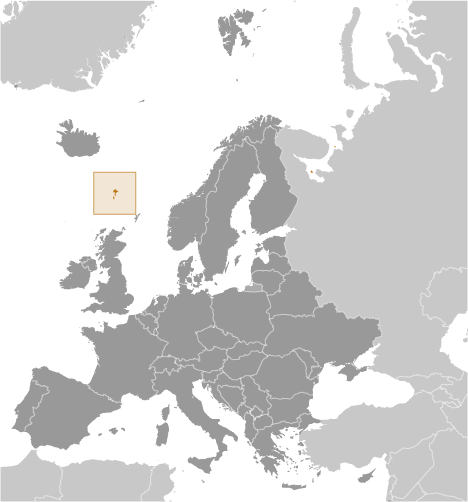
| Click map for larger view |
| Click flag for Country Report |





| Faroe Islands Faroe Islands Foroyar (part of the Kingdom of Denmark; self-governing overseas administrative division of Denmark since 1948) Joined United Nations: 25 October 1945 Human Rights as assured by their constitution Click here Updated 20 August 2012 |
| TRAFFICKING N PERSONS |
None reported.