| FRENCH POLYNESIA Overseas Lands of French Polynesia Pays d'outre-mer de la Polynesie Francaise (overseas lands of France) Joined United Nations: 24 October 1945 Human Rights as assured by their constitution Click here Updated 23 July 2012 |
| CAPITAL |
| POPULATION |
| CHIEF OF STATE |
| SELECTION PROCESS |
Papeete
274,512 (July 2011 est.)
Francois Hollande
President of France since 15 May 2012
President of France since 15 May 2012
French president elected by popular vote for a five-year term; high
commissioner appointed by the French president on the advice of the
French Ministry of Interior. Election last held 22 April and 6 May
2012
Next scheduled election: Spring 2017
commissioner appointed by the French president on the advice of the
French Ministry of Interior. Election last held 22 April and 6 May
2012
Next scheduled election: Spring 2017
HEAD OF GOVERNMENT
SELECTION PROCESS
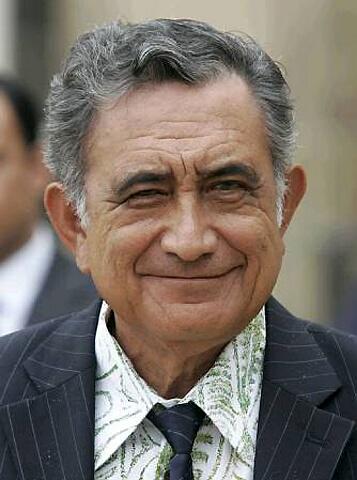
Oscar Temaru
President of French Polynesia
Since 01 April 2011
President of French Polynesia
Since 01 April 2011
President of the Territorial Government and the President of the
Territorial Assembly are elected by the members of the
Territorial Assembly for five-year terms (no term limits).
Territorial Assembly are elected by the members of the
Territorial Assembly for five-year terms (no term limits).
| DECLARATION OF HUMAN RIGHTS |
| ETHNIC GROUPS |
Polynesian 78%, Chinese 12%, local French 6%, metropolitan French 4%
| RELIGIONS |
Protestant 54%, Roman Catholic 30%, other 10%, no religion 6%
| GOVERNMENT STRUCTURE |
Overseas Lands of France. No administrative divisions but five archipelagic divisions . Legal system is based on French
civil law system with indigenous concepts; review of administrative but not legislative acts
Executive: Popularly elected in France for five year term represented by prefect, President of the Territorial Government
and the President of the Territorial Assembly are elected by the members of the Territorial Assembly for five-year terms
(no term limits) Election last held: 01 April 2011; Next election: 2014
Legislative: Unicameral Territorial Assembly or Assemblee Territoriale (57 seats; members are elected by popular vote
to serve five-year terms)
elections: last held 27 January 2008 (first round) and 10 February 2008 (second round) (next to be held NA 2013)
Judicial: Court of Appeal or Cour d'Appel; Court of the First Instance or Tribunal de Premiere Instance; Court of
Administrative Law or Tribunal Administratif
civil law system with indigenous concepts; review of administrative but not legislative acts
Executive: Popularly elected in France for five year term represented by prefect, President of the Territorial Government
and the President of the Territorial Assembly are elected by the members of the Territorial Assembly for five-year terms
(no term limits) Election last held: 01 April 2011; Next election: 2014
Legislative: Unicameral Territorial Assembly or Assemblee Territoriale (57 seats; members are elected by popular vote
to serve five-year terms)
elections: last held 27 January 2008 (first round) and 10 February 2008 (second round) (next to be held NA 2013)
Judicial: Court of Appeal or Cour d'Appel; Court of the First Instance or Tribunal de Premiere Instance; Court of
Administrative Law or Tribunal Administratif
| LANGUAGES |
French 61.1% (official), Polynesian 31.4% (official), Asian languages 1.2%, other 0.3%, unspecified 6% (2002 census)
| BRIEF HISTORY |
Spread across nearly 2,000,000 square miles of the South Pacific, in an area as large as the continent of Europe, lies
the Territory of French Polynesia and its principal island, Tahiti. Settlers from Southeast Asia are thought to have first
arrived in the Marquesas Islands, in the northeastern part of what is today called French Polynesia, around 300 AD
and in the Society Islands, including Tahiti, to the west by about 800 AD. Prior to the first European contact, the
islands were ruled by a hierarchy of hereditary tribal chiefs. The first Europeans to visit the area were the English
explorers Samuel Wallis in 1767 and James Cook in 1769. French explorer Louis-Antoine de Bougainville arrived in
1768 and claimed the islands for France. In the late 1700s occasional ships arrived in the islands, most notably the
H.M.S. Bounty in 1788, captained by William Bligh. The first missionaries, from the London Missionary Society,
arrived in the islands in 1797. By 1815, with the support of the most powerful ruling family in the islands, the Pomares,
the British missionaries had secured a strong influence in much of the Society Islands, doing everything possible to
eliminate traditional Polynesian culture by barring traditional dance and music as well as destroying carvings and temples
associated with native religion. The French continued to hold influence over the Marquesian Archipelago and eventually
were successful in expelling the British and securing influence over much of what today constitutes French Polynesia,
leaving the ruling Pomare family as little more than figureheads. In 1880, King Pomare V was forced to abdicate, and
a French colony was proclaimed. By 1901, the colony included the Austral Islands, the Gambier Archipelago, the
Marquesas Islands, the Society Islands and the Tuamotu atolls to the southeast. The first half of the twentieth century
saw periods of nationalistic protest in the colonies which were by then called the Établissements français d'Océanie
(French Pacific Settlements). It was not, however, until after World War II, when Tahitians who had served France
returned home, that pressure forced the French government to extend French citizenship to all islanders. The first
territorial assembly was established in 1946, and by 1949 the islands obtained representation in the French Assembly.
In 1957, the territory was officially renamed the Territory of French Polynesia. The Republic of France is represented
in the territory by a high commissioner appointed by the Republic. Throughout the second half of the twentieth century,
limited autonomy was granted to the territorial government to control socioeconomic policy but not defense, law and
order, or foreign affairs. While many citizens seek independence from France, those in control of the local government
are widely opposed to such a move. As is seen in much of the Pacific region, native culture has seen a rebirth in recent
years. The Tahitian language is once again taught in schools and even used in government meetings. Once all but
obliterated by the missionaries, the traditional arts of music and native dance (tamure) are now celebrated. However,
despite this rediscovered culture, increases in tourism, and the various local industries such as fishing and pearl farming,
the territory still remains highly dependent on France for its survival.In September 1995, France stirred up widespread
protests by resuming nuclear testing on the Mururoa atoll after a three-year moratorium. The tests were suspended in
January 1996. In recent years, French Polynesia's autonomy has been considerably expanded. On December 26,
2006, Pro France President Gaston Tong Sang replaced Oscar Temaru as President of French Polynesia. Oscar Temaru and
Gaston Tong Sang frequently contest and replace each oter as president of French Polynesia.
Sources: About.com Tahiti and French Polynesia; CIA World Factbook (select French Polynesia)
the Territory of French Polynesia and its principal island, Tahiti. Settlers from Southeast Asia are thought to have first
arrived in the Marquesas Islands, in the northeastern part of what is today called French Polynesia, around 300 AD
and in the Society Islands, including Tahiti, to the west by about 800 AD. Prior to the first European contact, the
islands were ruled by a hierarchy of hereditary tribal chiefs. The first Europeans to visit the area were the English
explorers Samuel Wallis in 1767 and James Cook in 1769. French explorer Louis-Antoine de Bougainville arrived in
1768 and claimed the islands for France. In the late 1700s occasional ships arrived in the islands, most notably the
H.M.S. Bounty in 1788, captained by William Bligh. The first missionaries, from the London Missionary Society,
arrived in the islands in 1797. By 1815, with the support of the most powerful ruling family in the islands, the Pomares,
the British missionaries had secured a strong influence in much of the Society Islands, doing everything possible to
eliminate traditional Polynesian culture by barring traditional dance and music as well as destroying carvings and temples
associated with native religion. The French continued to hold influence over the Marquesian Archipelago and eventually
were successful in expelling the British and securing influence over much of what today constitutes French Polynesia,
leaving the ruling Pomare family as little more than figureheads. In 1880, King Pomare V was forced to abdicate, and
a French colony was proclaimed. By 1901, the colony included the Austral Islands, the Gambier Archipelago, the
Marquesas Islands, the Society Islands and the Tuamotu atolls to the southeast. The first half of the twentieth century
saw periods of nationalistic protest in the colonies which were by then called the Établissements français d'Océanie
(French Pacific Settlements). It was not, however, until after World War II, when Tahitians who had served France
returned home, that pressure forced the French government to extend French citizenship to all islanders. The first
territorial assembly was established in 1946, and by 1949 the islands obtained representation in the French Assembly.
In 1957, the territory was officially renamed the Territory of French Polynesia. The Republic of France is represented
in the territory by a high commissioner appointed by the Republic. Throughout the second half of the twentieth century,
limited autonomy was granted to the territorial government to control socioeconomic policy but not defense, law and
order, or foreign affairs. While many citizens seek independence from France, those in control of the local government
are widely opposed to such a move. As is seen in much of the Pacific region, native culture has seen a rebirth in recent
years. The Tahitian language is once again taught in schools and even used in government meetings. Once all but
obliterated by the missionaries, the traditional arts of music and native dance (tamure) are now celebrated. However,
despite this rediscovered culture, increases in tourism, and the various local industries such as fishing and pearl farming,
the territory still remains highly dependent on France for its survival.In September 1995, France stirred up widespread
protests by resuming nuclear testing on the Mururoa atoll after a three-year moratorium. The tests were suspended in
January 1996. In recent years, French Polynesia's autonomy has been considerably expanded. On December 26,
2006, Pro France President Gaston Tong Sang replaced Oscar Temaru as President of French Polynesia. Oscar Temaru and
Gaston Tong Sang frequently contest and replace each oter as president of French Polynesia.
Sources: About.com Tahiti and French Polynesia; CIA World Factbook (select French Polynesia)
| ECONOMIC OVERVIEW |
Political life in French Polynesia has been marked by great instability since the mid-2000s. On September 14, 2007,
the pro-independence leader Oscar Temaru, 63, was elected president of French Polynesia for the 3rd time in 3 years
(with 27 of 44 votes cast in the territorial assembly). He replaced former President Gaston Tong Sang, opposed to
independence, who lost a no-confidence vote in the Assembly of French Polynesia on 31 August after the longtime
former president of French Polynesia, Gaston Flosse, hitherto opposed to independence, sided with his long enemy
Oscar Temaru to topple the government of Gaston Tong Sang. Oscar Temaru, however, had no stable majority in the
Assembly of French Polynesia, and new territorial elections were held in February 2008 to solve the political crisis.
Temaru lost a vote of no confidence on 13 December 2006, after months of protests against the high cost of living in
French Polynesia. Temaru had lost control of parliament due to defections. Gaston Tong Sang won the presidential
election on December 26. Temaru ran for parliament in the 2007 elections, but failed to win a seat. On September 14,
2007, Temaru was elected as President of French Polynesia for the third time in three years (with 27 of 44 votes). He
replaced Tong Sang, who lost a no-confidence vote on August 31. On 12 February 2009, he was elected president yet
again only to lose a vote of no confidence on 24 November 2009 and immediate restoration of Tong Sang to the
presidency.
Source: Wikipedia: Politics of French Polynesia
the pro-independence leader Oscar Temaru, 63, was elected president of French Polynesia for the 3rd time in 3 years
(with 27 of 44 votes cast in the territorial assembly). He replaced former President Gaston Tong Sang, opposed to
independence, who lost a no-confidence vote in the Assembly of French Polynesia on 31 August after the longtime
former president of French Polynesia, Gaston Flosse, hitherto opposed to independence, sided with his long enemy
Oscar Temaru to topple the government of Gaston Tong Sang. Oscar Temaru, however, had no stable majority in the
Assembly of French Polynesia, and new territorial elections were held in February 2008 to solve the political crisis.
Temaru lost a vote of no confidence on 13 December 2006, after months of protests against the high cost of living in
French Polynesia. Temaru had lost control of parliament due to defections. Gaston Tong Sang won the presidential
election on December 26. Temaru ran for parliament in the 2007 elections, but failed to win a seat. On September 14,
2007, Temaru was elected as President of French Polynesia for the third time in three years (with 27 of 44 votes). He
replaced Tong Sang, who lost a no-confidence vote on August 31. On 12 February 2009, he was elected president yet
again only to lose a vote of no confidence on 24 November 2009 and immediate restoration of Tong Sang to the
presidency.
Source: Wikipedia: Politics of French Polynesia
| POLITICAL CLIMATE |
Since 1962, when France stationed military personnel in the region, French Polynesia has changed from a subsistence
agricultural economy to one in which a high proportion of the work force is either employed by the military or supports
the tourist industry. With the halt of French nuclear testing in 1996, the military contribution to the economy fell sharply.
Tourism accounts for about one-fourth of GDP and is a primary source of hard currency earnings. Other sources of
income are pearl farming and deep-sea commercial fishing. The small manufacturing sector primarily processes
agricultural products. The territory benefits substantially from development agreements with France aimed principally at
creating new businesses and strengthening social services.
agricultural economy to one in which a high proportion of the work force is either employed by the military or supports
the tourist industry. With the halt of French nuclear testing in 1996, the military contribution to the economy fell sharply.
Tourism accounts for about one-fourth of GDP and is a primary source of hard currency earnings. Other sources of
income are pearl farming and deep-sea commercial fishing. The small manufacturing sector primarily processes
agricultural products. The territory benefits substantially from development agreements with France aimed principally at
creating new businesses and strengthening social services.
| INTERNATIONAL DISPUTES |
None reported.


| REFUGEES AND INTERNALLY DISPLACED PERSONS (IDP) |
None reported.
| ILLICIT DRUGS |
None reported.
| HUMAN RIGHTS STATEMENTS, ANALYSIS AND CRITIQUES |
2011 Human Rights Report: France (including overseas lands and territories)
Bureau of Democracy, Human Rights, and Labor
2011 Country Reports on Human Rights Practices
May 25, 2012
France is a multiparty constitutional democracy. The president of the republic is elected by popular vote for a five-year term. Nicolas
Sarkozy is the incumbent. The upper house (Senate) of the bicameral parliament is elected indirectly through an electoral college,
while the lower house (National Assembly) is elected directly. Elections for seats in the National Assembly and for the presidency in
2007 and for seats in the Senate in 2011 were considered free and fair. The Union for a Popular Movement (UMP) is the majority
party in parliament. Security forces reported to civilian authorities.
The most significant human rights problem during the year involved government evictions and compulsory repatriations of illegal
immigrants from Romania and Bulgaria, many of whom were Roma. Several attacks against Roma were also reported. Overcrowded
and unhygienic conditions in prisons were compounded by problems in the judicial system, including lengthy pretrial detention and
protracted investigation and trials. French Muslims and others of immigrant origin faced some discrimination, particularly, in the case
of Muslims, as a result of a prohibition against face-covering attire in public institutions.
Other human rights problems reported during the year included antidefamation laws that limited freedom of speech and press, societal
violence against women, anti-Semitic incidents, and trafficking in persons.
The government took steps to prosecute and punish security force and other officials who committed abuses. Impunity was not
widespread.
Note: The country includes 11 overseas administrative divisions that are covered in this report. Four overseas territories in French
Guiana, Guadeloupe, Martinique, and Reunion, have the same political status as the 22 metropolitan regions and 101 departments on
the mainland. Five divisions are overseas “collectivities”: French Polynesia, Saint-Barthelemy, Saint-Martin, Saint-Pierre and Miquelon,
and Wallis and Futuna. New Caledonia is a special overseas collectivity with a unique, semiautonomous status between an independent
country and an overseas department. Mayotte became the 101st department on March 31, 2011. Citizens of these territories
periodically elect deputies and senators to represent them in parliament, like the other overseas regions and departments.
Section 1. Respect for the Integrity of the Person, Including Freedom from:Share
Click here to read more »
Bureau of Democracy, Human Rights, and Labor
2011 Country Reports on Human Rights Practices
May 25, 2012
France is a multiparty constitutional democracy. The president of the republic is elected by popular vote for a five-year term. Nicolas
Sarkozy is the incumbent. The upper house (Senate) of the bicameral parliament is elected indirectly through an electoral college,
while the lower house (National Assembly) is elected directly. Elections for seats in the National Assembly and for the presidency in
2007 and for seats in the Senate in 2011 were considered free and fair. The Union for a Popular Movement (UMP) is the majority
party in parliament. Security forces reported to civilian authorities.
The most significant human rights problem during the year involved government evictions and compulsory repatriations of illegal
immigrants from Romania and Bulgaria, many of whom were Roma. Several attacks against Roma were also reported. Overcrowded
and unhygienic conditions in prisons were compounded by problems in the judicial system, including lengthy pretrial detention and
protracted investigation and trials. French Muslims and others of immigrant origin faced some discrimination, particularly, in the case
of Muslims, as a result of a prohibition against face-covering attire in public institutions.
Other human rights problems reported during the year included antidefamation laws that limited freedom of speech and press, societal
violence against women, anti-Semitic incidents, and trafficking in persons.
The government took steps to prosecute and punish security force and other officials who committed abuses. Impunity was not
widespread.
Note: The country includes 11 overseas administrative divisions that are covered in this report. Four overseas territories in French
Guiana, Guadeloupe, Martinique, and Reunion, have the same political status as the 22 metropolitan regions and 101 departments on
the mainland. Five divisions are overseas “collectivities”: French Polynesia, Saint-Barthelemy, Saint-Martin, Saint-Pierre and Miquelon,
and Wallis and Futuna. New Caledonia is a special overseas collectivity with a unique, semiautonomous status between an independent
country and an overseas department. Mayotte became the 101st department on March 31, 2011. Citizens of these territories
periodically elect deputies and senators to represent them in parliament, like the other overseas regions and departments.
Section 1. Respect for the Integrity of the Person, Including Freedom from:Share
Click here to read more »
22 June 2009
Concluding observations of the Committee on the Rights of the Child: France (including Overseas Departments)
A. Introduction
2. The Committee welcomes the submission of the combined third and fourth periodic report of the State party, as well as the written
replies to its list of issues (CRC/FRA/Q/4 and Add. 1). It also notes that the State party provided information on the Overseas
Departments and Territories, it however regrets that this information is presented in an annex and does not follow the general
guidelines regarding the form and content of periodic reports (CRC/C/58/Rev.1). The Committee appreciates the presence of a
high-level and multi-sectorial delegation and the open and positive dialogue it conducted, which allowed a better understanding of the
situation of children in the State party.
Adoption
63. The Committee takes note of the legislative reform in the area of adoption, as well as the establishment on 30 January 2009 of the
inter-ministerial Committee on adoption. The Committee however restates its concern that the majority of intercountry adoptions are
mainly carried out with countries of origin that have not ratified the 1993 Hague Convention on Protection of Children and
Cooperation in Respect of Intercountry Adoption (two-thirds), and that a high percentage of intercountry adoptions are carried out
through individual channels and not through accredited bodies. The Committee also notes with concern that intercountry adoptions are
facilitated by embassies and consulates, including the use of volunteers working with them, which may undermine the work of
accredited bodies. It further remains concerned at the absence of authorization by a competent authority of domestic adoptions of
children under the age of 2 in French Polynesia and New Caledonia.
64. Reiterating its previous recommendation and in the light of article 21 and other related provisions of the Convention, the
Committee recommends that the State party ensure that:
(a) Cases of intercountry adoption are dealt with by an accredited body in full compliance with the principles and provisions of the
Convention and the 1993 Hague Convention on Protection of Children and Cooperation in Respect of Intercountry Adoption;
(b) Bilateral agreements replicating the standards of the Convention, as well as the standards of the 1993 Hague Convention are
concluded with countries that have not ratified the aforementioned Convention;
(c) Authorization by the competent authority becomes mandatory for domestic adoptions in French Polynesia and New Caledonia.
Click here to read more »
Concluding observations of the Committee on the Rights of the Child: France (including Overseas Departments)
A. Introduction
2. The Committee welcomes the submission of the combined third and fourth periodic report of the State party, as well as the written
replies to its list of issues (CRC/FRA/Q/4 and Add. 1). It also notes that the State party provided information on the Overseas
Departments and Territories, it however regrets that this information is presented in an annex and does not follow the general
guidelines regarding the form and content of periodic reports (CRC/C/58/Rev.1). The Committee appreciates the presence of a
high-level and multi-sectorial delegation and the open and positive dialogue it conducted, which allowed a better understanding of the
situation of children in the State party.
Adoption
63. The Committee takes note of the legislative reform in the area of adoption, as well as the establishment on 30 January 2009 of the
inter-ministerial Committee on adoption. The Committee however restates its concern that the majority of intercountry adoptions are
mainly carried out with countries of origin that have not ratified the 1993 Hague Convention on Protection of Children and
Cooperation in Respect of Intercountry Adoption (two-thirds), and that a high percentage of intercountry adoptions are carried out
through individual channels and not through accredited bodies. The Committee also notes with concern that intercountry adoptions are
facilitated by embassies and consulates, including the use of volunteers working with them, which may undermine the work of
accredited bodies. It further remains concerned at the absence of authorization by a competent authority of domestic adoptions of
children under the age of 2 in French Polynesia and New Caledonia.
64. Reiterating its previous recommendation and in the light of article 21 and other related provisions of the Convention, the
Committee recommends that the State party ensure that:
(a) Cases of intercountry adoption are dealt with by an accredited body in full compliance with the principles and provisions of the
Convention and the 1993 Hague Convention on Protection of Children and Cooperation in Respect of Intercountry Adoption;
(b) Bilateral agreements replicating the standards of the Convention, as well as the standards of the 1993 Hague Convention are
concluded with countries that have not ratified the aforementioned Convention;
(c) Authorization by the competent authority becomes mandatory for domestic adoptions in French Polynesia and New Caledonia.
Click here to read more »
No reports from Freedom House mentioning French Polynesia after exhaustive search of their data base. Please forward
any information you may have regarding Freedom House efforts on behalf of French Polynesia to the Pax Gaea World
Report editor at the link below.
Contact the editor »
any information you may have regarding Freedom House efforts on behalf of French Polynesia to the Pax Gaea World
Report editor at the link below.
Contact the editor »
No Reports from Amnesty International mentioning French Polynesia after exhaustive search of their data Base. Please
forward any information you may have regarding Amnesty International efforts on behalf of French Polynesia to the Pax
Gaea World Report editor at the link below
Contact the editor »
forward any information you may have regarding Amnesty International efforts on behalf of French Polynesia to the Pax
Gaea World Report editor at the link below
Contact the editor »
No reports from Human Rights Watch mentioning French Polynesia after exhaustive search of their data base. Please
forward any information you may have regarding Human Rights Watch efforts on behalf of French Polynesia to the Pax
Gaea World Report editor at the link below.
Contact the editor »
forward any information you may have regarding Human Rights Watch efforts on behalf of French Polynesia to the Pax
Gaea World Report editor at the link below.
Contact the editor »
TRANSLATED FROM FRENCH BY GOOGLE TRANSLATE
The French Polynesia wants his name restored to the list of territories to be decolonized
Updated 19/08/11 at 15:11
The Assembly of French Polynesia voted Thursday in Papeete, for the reinstatement of this community on the list of dependent
territories to be decolonized, said a journalist from AFP.
By 30 votes to 57, the Assembly shall submit this request to the Secretary General of the United Nations and "calls the president to
kindly facilitate such restoration."
A "first step towards independence"
Autonomists consider such restoration as "a first step towards independence," while the majority, consisting essentially of
independence, she would judge "sanitized relations with the state," thanks "to look outside the UN "without rapid attainment of
independence.
In his speech, the independence President Oscar Temaru was inspired by the process "at the Caledonian", while having at heart "to
avoid a bloodbath," referring to the events of Ouvea in 1988.
Oscar Temaru regretted that Nicolas Sarkozy is opposed to any prospect of "decolonization process".
Flosse is concerned about the "dictatorship" that could move
In an interview with the Depeche de Tahiti in July, the head of state had said, "while I'm president, I will protect the Polynesians
against this demagoguery."
"Mr. President, when he goes to Palestine, recognizes the right of the Palestinian people to self determination, to his country," said
Oscar Temaru told AFP. "And when it comes to us? One must be consistent, France is the country of human rights, argued that all
countries have achieved independence. How about our country? ".
The autonomist opposition regretted that the Government of Papeete focuses "on political calculations, electoral or ideological"
rather than the severe economic crisis Polynesian.
Senator (DVD, former UMP) autonomist Flosse was concerned about a "dictatorship" that could result from independence,
referring to the confusion surrounding the vote, a part of the opposition could not speak at the meeting.
16 territories on the list
He called for organizing a referendum on independence. Oscar Temaru does not object, provided they book the vote to those who
"have at least ten years of residence" in Polynesia.
The application for reinstatement will be presented by Oscar Temaru in the Pacific Islands Forum in Auckland in September.
Developed in 1946, this list has 16 territories: New Caledonia (France), Tokelau (New Zealand), Western Sahara (Morocco and
Sahrawi Arab Democratic Republic, self-proclaimed) American Samoa, Guam, U.S. Virgin Islands (USA), islands Pitcairn,
Anguilla, Bermuda, British Virgin Islands, Cayman Islands, Falkland Islands, Gibraltar, Montserrat, St. Helena, Turkey and Caicos
(UK).
Polynesia was on the list developed in 1946, but was withdrawn the following year.
Imported by 20minutes.fr
Click here to read more »
The French Polynesia wants his name restored to the list of territories to be decolonized
Updated 19/08/11 at 15:11
The Assembly of French Polynesia voted Thursday in Papeete, for the reinstatement of this community on the list of dependent
territories to be decolonized, said a journalist from AFP.
By 30 votes to 57, the Assembly shall submit this request to the Secretary General of the United Nations and "calls the president to
kindly facilitate such restoration."
A "first step towards independence"
Autonomists consider such restoration as "a first step towards independence," while the majority, consisting essentially of
independence, she would judge "sanitized relations with the state," thanks "to look outside the UN "without rapid attainment of
independence.
In his speech, the independence President Oscar Temaru was inspired by the process "at the Caledonian", while having at heart "to
avoid a bloodbath," referring to the events of Ouvea in 1988.
Oscar Temaru regretted that Nicolas Sarkozy is opposed to any prospect of "decolonization process".
Flosse is concerned about the "dictatorship" that could move
In an interview with the Depeche de Tahiti in July, the head of state had said, "while I'm president, I will protect the Polynesians
against this demagoguery."
"Mr. President, when he goes to Palestine, recognizes the right of the Palestinian people to self determination, to his country," said
Oscar Temaru told AFP. "And when it comes to us? One must be consistent, France is the country of human rights, argued that all
countries have achieved independence. How about our country? ".
The autonomist opposition regretted that the Government of Papeete focuses "on political calculations, electoral or ideological"
rather than the severe economic crisis Polynesian.
Senator (DVD, former UMP) autonomist Flosse was concerned about a "dictatorship" that could result from independence,
referring to the confusion surrounding the vote, a part of the opposition could not speak at the meeting.
16 territories on the list
He called for organizing a referendum on independence. Oscar Temaru does not object, provided they book the vote to those who
"have at least ten years of residence" in Polynesia.
The application for reinstatement will be presented by Oscar Temaru in the Pacific Islands Forum in Auckland in September.
Developed in 1946, this list has 16 territories: New Caledonia (France), Tokelau (New Zealand), Western Sahara (Morocco and
Sahrawi Arab Democratic Republic, self-proclaimed) American Samoa, Guam, U.S. Virgin Islands (USA), islands Pitcairn,
Anguilla, Bermuda, British Virgin Islands, Cayman Islands, Falkland Islands, Gibraltar, Montserrat, St. Helena, Turkey and Caicos
(UK).
Polynesia was on the list developed in 1946, but was withdrawn the following year.
Imported by 20minutes.fr
Click here to read more »
TRANSLATED FROM FRENCH BY GOOGLE TRANSLATE
23/12/2009
French Nuclear Tests
The Ombudsman of the Republic welcomes the adoption of a compensation scheme for victims
The Parliament has adopted on the night of December 22, 2009, the final version of the law establishing a compensation scheme
for the benefit of persons (State personnel and civilians) who have suffered the adverse consequences of nuclear tests French
performed between 1960 and 1996 in the Algerian Sahara and in French Polynesia. The Ombudsman of the Republic, who
himself had presented its proposals to achieve the establishment of a mechanism for equitable relief, hails the passage of this law,
which it hopes will finally allow these victims to pursue their rights and express the solidarity of the nation against them.
It also welcomes the improvements to the device through the parliamentary debate.
Thus, recognition of a presumption of causation between the disease and the nuclear test, where the conditions provided by law
are met, represents significant progress for the victims, who have so far been met with great difficulty need to establish with
certainty the connection between their illnesses and exposure to radiation.
Similarly, respect for adversarial proceedings or the need for the Minister of Defence to explain its decisions are consistent
rejection of a more transparent and impartial.
The Ombudsman of the Republic regrets that the right to reparation for victims' relatives for their own injuries, is ultimately not
provided by the text. He hoped a speedy publication of implementing decrees and wishes that they guarantee the independent
functioning of the compensation committee and take into account all relevant conditions.
Click here to read more »
23/12/2009
French Nuclear Tests
The Ombudsman of the Republic welcomes the adoption of a compensation scheme for victims
The Parliament has adopted on the night of December 22, 2009, the final version of the law establishing a compensation scheme
for the benefit of persons (State personnel and civilians) who have suffered the adverse consequences of nuclear tests French
performed between 1960 and 1996 in the Algerian Sahara and in French Polynesia. The Ombudsman of the Republic, who
himself had presented its proposals to achieve the establishment of a mechanism for equitable relief, hails the passage of this law,
which it hopes will finally allow these victims to pursue their rights and express the solidarity of the nation against them.
It also welcomes the improvements to the device through the parliamentary debate.
Thus, recognition of a presumption of causation between the disease and the nuclear test, where the conditions provided by law
are met, represents significant progress for the victims, who have so far been met with great difficulty need to establish with
certainty the connection between their illnesses and exposure to radiation.
Similarly, respect for adversarial proceedings or the need for the Minister of Defence to explain its decisions are consistent
rejection of a more transparent and impartial.
The Ombudsman of the Republic regrets that the right to reparation for victims' relatives for their own injuries, is ultimately not
provided by the text. He hoped a speedy publication of implementing decrees and wishes that they guarantee the independent
functioning of the compensation committee and take into account all relevant conditions.
Click here to read more »
Human Rights League accuses Tahiti’s Temaru of inciting racial hatred
Posted at 05:12 on 05 April, 2012
The French Polynesian Human Rights League has accused the president, Oscar Temaru, of inciting racial hatred with his
comments in the assembly last month.
In a statement, it says it condemns Mr Temaru’s assertions that the territory’s problems such as the decline of tourism are the
result of a disease of being French.
The League says it is unacceptable to play down the remarks as they lead to violence.
Meanwhile, Mr Temaru’s party has issued a statement in response to press criticism of his remarks.
The party says according to the dictionary racism is a theory of the hierarchy of races, pointing out that the colonial power
doesn’t recognise the Tahitians as the indigenous population.
It also says it is terrified at the ease with which the likes of Nicolas Sarkozy and Marine le Pen abuse language without there
being a consequence.
Click here to read more »
Posted at 05:12 on 05 April, 2012
The French Polynesian Human Rights League has accused the president, Oscar Temaru, of inciting racial hatred with his
comments in the assembly last month.
In a statement, it says it condemns Mr Temaru’s assertions that the territory’s problems such as the decline of tourism are the
result of a disease of being French.
The League says it is unacceptable to play down the remarks as they lead to violence.
Meanwhile, Mr Temaru’s party has issued a statement in response to press criticism of his remarks.
The party says according to the dictionary racism is a theory of the hierarchy of races, pointing out that the colonial power
doesn’t recognise the Tahitians as the indigenous population.
It also says it is terrified at the ease with which the likes of Nicolas Sarkozy and Marine le Pen abuse language without there
being a consequence.
Click here to read more »

Represented by
Richard Didier
High Commissioner of the Republic since
24 January 2011
Richard Didier
High Commissioner of the Republic since
24 January 2011
Jacqui Drollet
President of the Territorial Assembly
Since 14 April 2011
President of the Territorial Assembly
Since 14 April 2011

Click on map for larger view
Click on flag for Country Report





| TRAFFICKING IN PERSONS |
None reported