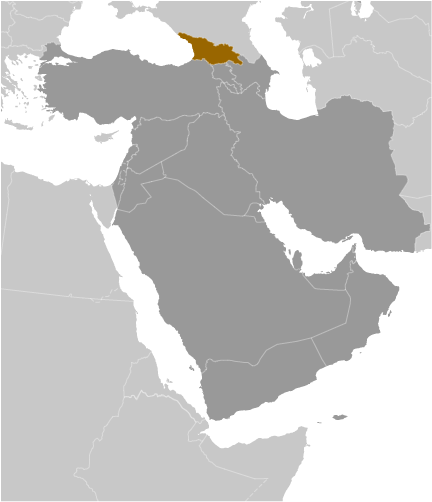
| GEORGIA Georgia Sak'art'velo Joined United Nations: 31 July 1992 Human Rights as assured by their constitution Click here Updated 11 September 2012 |
| CAPITAL |
| POPULATION |
| CHIEF OF STATE |
| SELECTION PROCESS |
T'bilisi
4,570,934 (July 2012 est.)
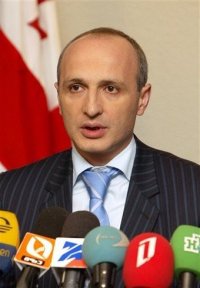
Mikheil Saakashvili
President since 25 January 2004
President since 25 January 2004
President elected by popular vote for a five-year term (eligible
for a second term); election last held 5 January 2008
Next scheduled election: January 2013
for a second term); election last held 5 January 2008
Next scheduled election: January 2013
HEAD OF GOVERNMENT
SELECTION PROCESS
Ivane "Vano" Merabishvili
Prime Minister since 30 June 2012
Prime Minister since 30 June 2012
The prime minister is selected by the president with the consent
of the parliament. The president is the chief of state and head of
government for the power ministries: state security (includes
interior) and defense; the prime minister is head of the remaining
ministries of government.
of the parliament. The president is the chief of state and head of
government for the power ministries: state security (includes
interior) and defense; the prime minister is head of the remaining
ministries of government.
| DECLARATION OF HUMAN RIGHTS |
| ETHNIC GROUPS |
Georgian 83.8%, Azeri 6.5%, Armenian 5.7%, Russian 1.5%, other 2.5% (2002 census)
| RELIGIONS |
Orthodox Christian 83.9%, Muslim 9.9%, Armenian-Gregorian 3.9%, Catholic 0.8%, other 0.8%, none 0.7%
(2002 census)
(2002 census)
| GOVERNMENT STRUCTURE |
Republic comprised of 9 regions (mkharebi, singular - mkhare), 9 cities (k'alak'ebi, singular - k'alak'i), and 2
autonomous republics (avtomnoy respubliki, singular - avtom respublika); Legal system is based on civil law system;
accepts compulsory ICJ jurisdiction
Executive: President elected by popular vote for a five-year term (eligible for a second term); election last held 5 January
2008 (next to be held January 2013)
Legislative: Unicameral Supreme Council (commonly referred to as Parliament) or Umaghiesi Sabcho (235 seats -
150 elected by party lists); members are elected by popular vote to serve four-year terms)
elections: last held 21 May 2008 (next to be held in the fall of 2012)
Judicial: Supreme Court (judges elected by the Supreme Council on the president's or chairman of the Supreme
Court's recommendation); Constitutional Court; first and second instance courts
autonomous republics (avtomnoy respubliki, singular - avtom respublika); Legal system is based on civil law system;
accepts compulsory ICJ jurisdiction
Executive: President elected by popular vote for a five-year term (eligible for a second term); election last held 5 January
2008 (next to be held January 2013)
Legislative: Unicameral Supreme Council (commonly referred to as Parliament) or Umaghiesi Sabcho (235 seats -
150 elected by party lists); members are elected by popular vote to serve four-year terms)
elections: last held 21 May 2008 (next to be held in the fall of 2012)
Judicial: Supreme Court (judges elected by the Supreme Council on the president's or chairman of the Supreme
Court's recommendation); Constitutional Court; first and second instance courts
| LANGUAGES |
Georgian 71% (official), Russian 9%, Armenian 7%, Azeri 6%, other 7% note: Abkhaz is the official language in
Abkhazia
Abkhazia
| BRIEF HISTORY |
| ECONOMIC OVERVIEW |
Georgia's main economic activities include the cultivation of agricultural products such as grapes, citrus fruits, and
hazelnuts; mining of manganese, copper, and gold; and output of a small industrial sector producing alcoholic and
nonalcoholic beverages, metals, machinery, and chemicals. The country imports nearly all its needed supplies of
natural gas and oil products. It has sizeable hydropower capacity that now provides most of its energy needs.
Georgia has overcome the chronic energy shortages and gas supply interruptions of the past by renovating
hydropower plants and by increasingly relying on natural gas imports from Azerbaijan instead of from Russia.
Construction of the Baku-T'bilisi-Ceyhan oil pipeline, the Baku-T'bilisi-Erzerum gas pipeline, and the
Kars-Akhalkalaki Railroad are part of a strategy to capitalize on Georgia's strategic location between Europe and
Asia and develop its role as a transit point for gas, oil, and other goods. Georgia's economy sustained GDP growth
of more than 10% in 2006-07, based on strong inflows of foreign investment and robust government spending.
However, GDP growth slowed following the August 2008 conflict with Russia, and turned negative in 2009 as
foreign direct investment and workers' remittances declined in the wake of the global financial crisis. The economy
rebounded in 2010-11, with growth rates above 6% per year, but FDI inflows, the engine of Georgian economic
growth prior to the 2008 conflict, have not recovered fully. Unemployment has also remained high at 16%. Georgia
has historically suffered from a chronic failure to collect tax revenues; however, the government, since coming to
power in 2004, has simplified the tax code, improved tax administration, increased tax enforcement, and cracked
down on petty corruption, leading to higher revenues. The economic downturn of 2008-09 eroded the tax base and
led to a decline in the budget surplus and an increase in public borrowing needs. The country is pinning its hopes for
renewed growth on a determined effort to continue to liberalize the economy by reducing regulation, taxes, and
corruption in order to attract foreign investment, with a focus on hydropower, agriculture, tourism, and textiles
production. Since 2004, the government has taken a series of actions against endemic corruption, including reform of
the traffic police and implementation of a fair examination system for entering the university system. The government
has received high marks from the World Bank for its anti-corruption efforts.
Source: CIA World Factbook (select Georgia)
hazelnuts; mining of manganese, copper, and gold; and output of a small industrial sector producing alcoholic and
nonalcoholic beverages, metals, machinery, and chemicals. The country imports nearly all its needed supplies of
natural gas and oil products. It has sizeable hydropower capacity that now provides most of its energy needs.
Georgia has overcome the chronic energy shortages and gas supply interruptions of the past by renovating
hydropower plants and by increasingly relying on natural gas imports from Azerbaijan instead of from Russia.
Construction of the Baku-T'bilisi-Ceyhan oil pipeline, the Baku-T'bilisi-Erzerum gas pipeline, and the
Kars-Akhalkalaki Railroad are part of a strategy to capitalize on Georgia's strategic location between Europe and
Asia and develop its role as a transit point for gas, oil, and other goods. Georgia's economy sustained GDP growth
of more than 10% in 2006-07, based on strong inflows of foreign investment and robust government spending.
However, GDP growth slowed following the August 2008 conflict with Russia, and turned negative in 2009 as
foreign direct investment and workers' remittances declined in the wake of the global financial crisis. The economy
rebounded in 2010-11, with growth rates above 6% per year, but FDI inflows, the engine of Georgian economic
growth prior to the 2008 conflict, have not recovered fully. Unemployment has also remained high at 16%. Georgia
has historically suffered from a chronic failure to collect tax revenues; however, the government, since coming to
power in 2004, has simplified the tax code, improved tax administration, increased tax enforcement, and cracked
down on petty corruption, leading to higher revenues. The economic downturn of 2008-09 eroded the tax base and
led to a decline in the budget surplus and an increase in public borrowing needs. The country is pinning its hopes for
renewed growth on a determined effort to continue to liberalize the economy by reducing regulation, taxes, and
corruption in order to attract foreign investment, with a focus on hydropower, agriculture, tourism, and textiles
production. Since 2004, the government has taken a series of actions against endemic corruption, including reform of
the traffic police and implementation of a fair examination system for entering the university system. The government
has received high marks from the World Bank for its anti-corruption efforts.
Source: CIA World Factbook (select Georgia)
| POLITICAL CLIMATE |
The Georgian government claims to have restored "constitutional order" in the Upper Kodori Gorge - The sole
Georgia-controlled part of breakaway region Abkhazia. Mikheil Saakashvili resigned from the position of the
President on November 25, 2007 as the Constitution of Georgia requires the president stands down at least 45 days
before the next election in order to be eligible for retaking part him/herself. The Speaker of the Parliament of Georgia
Mrs. Nino Burjanadze took over the position until the results were announced on January 5, 2008.
The registration for presidential elections was officially closed on November 27. 22 people, including the most recent
president Mikheil Saakashvili, approved candidate of the united opposition Levan Gachechiladze, influential
businessman Badri Patarkatsishvili, Leader of the New Right Party David Gamkrelidze, the Leader of the Georgian
Labour Party Shalva Natelashvili, the Leader of Hope Party Irina Sarishvili-Chanturia and Giorgi Maisashvili put
forward themselves for forthcoming elections.
On November 27 it was announced that a NATO membership referendum and election date referendum will also be
held on the election day together with presidential elections. The November 7 elections determined that more than
77% of the population voted in favor to NATO membership.
Mikhail Saakashvili on May 22, 2008 announced his confident victory for his ruling party in parliamentary polls amid
fears of political unrest, and rising tensions between Georgia and Russia. Early official results indicated his United
National Movement had 63% of the votes against the opposition's 13%, with about a quarter of the 3,664 precincts.
Source: Wikipedia: Politics of Georgia
Georgia-controlled part of breakaway region Abkhazia. Mikheil Saakashvili resigned from the position of the
President on November 25, 2007 as the Constitution of Georgia requires the president stands down at least 45 days
before the next election in order to be eligible for retaking part him/herself. The Speaker of the Parliament of Georgia
Mrs. Nino Burjanadze took over the position until the results were announced on January 5, 2008.
The registration for presidential elections was officially closed on November 27. 22 people, including the most recent
president Mikheil Saakashvili, approved candidate of the united opposition Levan Gachechiladze, influential
businessman Badri Patarkatsishvili, Leader of the New Right Party David Gamkrelidze, the Leader of the Georgian
Labour Party Shalva Natelashvili, the Leader of Hope Party Irina Sarishvili-Chanturia and Giorgi Maisashvili put
forward themselves for forthcoming elections.
On November 27 it was announced that a NATO membership referendum and election date referendum will also be
held on the election day together with presidential elections. The November 7 elections determined that more than
77% of the population voted in favor to NATO membership.
Mikhail Saakashvili on May 22, 2008 announced his confident victory for his ruling party in parliamentary polls amid
fears of political unrest, and rising tensions between Georgia and Russia. Early official results indicated his United
National Movement had 63% of the votes against the opposition's 13%, with about a quarter of the 3,664 precincts.
Source: Wikipedia: Politics of Georgia
| INTERNATIONAL DISPUTES |
Russia and Georgia agree on delimiting 80% of their common border, leaving certain small, strategic segments and
the maritime boundary unresolved; OSCE observers monitor volatile areas such as the Pankisi Gorge in the Akhmeti
region and the Argun Gorge in Abkhazia; UN Observer Mission in Georgia has maintained a peacekeeping force in
Georgia since 1993; Meshkheti Turks scattered throughout the former Soviet Union seek to return to Georgia;
boundary with Armenia remains undemarcated; ethnic Armenian groups in Javakheti region of Georgia seek greater
autonomy from the Georgian government; Azerbaijan and Georgia continue to discuss the alignment of their
boundary at certain crossing areas
the maritime boundary unresolved; OSCE observers monitor volatile areas such as the Pankisi Gorge in the Akhmeti
region and the Argun Gorge in Abkhazia; UN Observer Mission in Georgia has maintained a peacekeeping force in
Georgia since 1993; Meshkheti Turks scattered throughout the former Soviet Union seek to return to Georgia;
boundary with Armenia remains undemarcated; ethnic Armenian groups in Javakheti region of Georgia seek greater
autonomy from the Georgian government; Azerbaijan and Georgia continue to discuss the alignment of their
boundary at certain crossing areas


| REFUGEES AND INTERNALLY DISPLACED PERSONS (IDP) |
IDPs: 265,000 (displaced from Abkhazia and South Ossetia) (2012)
| ILLICIT DRUGS |
Limited cultivation of cannabis and opium poppy, mostly for domestic consumption; used as transshipment point for
opiates via Central Asia to Western Europe and Russia
opiates via Central Asia to Western Europe and Russia
| HUMAN RIGHTS STATEMENTS, ANALYSIS AND CRITIQUES |
2011 Human Rights Report: Georgia
Bureau of Democracy, Human Rights, and Labor
2011 Country Reports on Human Rights Practices
May 24, 2012
Note: Except where otherwise noted, figures and other data do not include the separatist, occupied regions of South Ossetia and
Abkhazia.
The constitution of Georgia provides for an executive branch that reports to the president, a unicameral parliament, and an
independent judiciary. President Mikheil Saakashvili was reelected in January 2008 in an election that international observers found
consistent with most Organization of Security and Cooperation in Europe (OSCE) democratic election commitments. However, the
OSCE also highlighted significant problems, including widespread allegations of intimidation and pressure, flawed vote-counting and
tabulation processes, and shortcomings in the complaints and appeals process. These and other problems were also seen in
parliamentary elections in May 2008, which OSCE observers concluded were uneven and incomplete in their adherence to
international standards. Despite a large number of opposition parties, the executive and parliament were dominated by a single party.
Security forces reported to civilian authorities.
The most important human rights problems reported during the year were:
1. Abuse of prisoners and detainees by government officials as well as dangerously substandard prison conditions.
2. Shortfalls in the rule of law, such as concerns about ensuring the judiciary’s independent and even-handed application of due
process protections.
3. Government interference with unions’ fundamental freedom of association in several areas, including interference with strikes,
arbitrary dismissals, interference with collection of dues, and harassment and intimidation of labor activists.
Other problems reported during the year included security forces’ use of excessive force against demonstrators without criminal
accountability, in particular during the breakup of opposition protests on May 26; harassment of members of the political
opposition; and continued allegations of politically motivated imprisonment, primarily of individuals incarcerated prior to 2011.
There were reports of improper government use of eminent domain to seize private property. Although parliament adopted a law
providing for greater transparency of media ownership, citizens had limited access to diverse and unfettered media. While
independent media were active and expressed a wide variety of views, the three largest television broadcasters reportedly had close
ties to the government, and direct or indirect government influence over media outlets remained a concern. Protection of religious
minorities improved, including parliament’s adoption of a law to permit a broad range of religious groups besides the Georgian
Orthodox Church to register as legal entities. Problems continued to be reported regarding the resettlement of internally displaced
persons (IDPs). Other problems included lack of transparency in business ownership and the conduct of government bids. There
were reports of low rates of women in elected positions. There were reportedly high rates of domestic violence. Georgia was
primarily a source country, but also a transit country for trafficking in persons.
Although the government took some steps to prosecute and punish officials who committed human rights abuses, investigations
into such allegations were frequently terminated or delayed, contributing to an atmosphere of impunity.
De facto authorities in the separatist regions of Abkhazia and South Ossetia remained outside the control of the central government.
These authorities continued to be supported by several thousand Russian troops and border guards occupying the areas since the
2008 armed conflict between Russia and Georgia. A cease-fire remained in effect in both Abkhazia and South Ossetia, although
incidents of violence occurred in both areas. Russian border guards restricted the movement of the local populations. De facto
authorities continued to restrict the rights, primarily of ethnic Georgians, to vote, otherwise participate in the political process, own
property, register businesses, and travel. The de facto South Ossetian authorities refused to permit most ethnic Georgians driven
out during and after the 2008 conflict to return to South Ossetia. With the exception of the International Committee of the Red
Cross (ICRC), international organizations were not allowed regular access to South Ossetia to provide humanitarian assistance.
Click here to read more »
Bureau of Democracy, Human Rights, and Labor
2011 Country Reports on Human Rights Practices
May 24, 2012
Note: Except where otherwise noted, figures and other data do not include the separatist, occupied regions of South Ossetia and
Abkhazia.
The constitution of Georgia provides for an executive branch that reports to the president, a unicameral parliament, and an
independent judiciary. President Mikheil Saakashvili was reelected in January 2008 in an election that international observers found
consistent with most Organization of Security and Cooperation in Europe (OSCE) democratic election commitments. However, the
OSCE also highlighted significant problems, including widespread allegations of intimidation and pressure, flawed vote-counting and
tabulation processes, and shortcomings in the complaints and appeals process. These and other problems were also seen in
parliamentary elections in May 2008, which OSCE observers concluded were uneven and incomplete in their adherence to
international standards. Despite a large number of opposition parties, the executive and parliament were dominated by a single party.
Security forces reported to civilian authorities.
The most important human rights problems reported during the year were:
1. Abuse of prisoners and detainees by government officials as well as dangerously substandard prison conditions.
2. Shortfalls in the rule of law, such as concerns about ensuring the judiciary’s independent and even-handed application of due
process protections.
3. Government interference with unions’ fundamental freedom of association in several areas, including interference with strikes,
arbitrary dismissals, interference with collection of dues, and harassment and intimidation of labor activists.
Other problems reported during the year included security forces’ use of excessive force against demonstrators without criminal
accountability, in particular during the breakup of opposition protests on May 26; harassment of members of the political
opposition; and continued allegations of politically motivated imprisonment, primarily of individuals incarcerated prior to 2011.
There were reports of improper government use of eminent domain to seize private property. Although parliament adopted a law
providing for greater transparency of media ownership, citizens had limited access to diverse and unfettered media. While
independent media were active and expressed a wide variety of views, the three largest television broadcasters reportedly had close
ties to the government, and direct or indirect government influence over media outlets remained a concern. Protection of religious
minorities improved, including parliament’s adoption of a law to permit a broad range of religious groups besides the Georgian
Orthodox Church to register as legal entities. Problems continued to be reported regarding the resettlement of internally displaced
persons (IDPs). Other problems included lack of transparency in business ownership and the conduct of government bids. There
were reports of low rates of women in elected positions. There were reportedly high rates of domestic violence. Georgia was
primarily a source country, but also a transit country for trafficking in persons.
Although the government took some steps to prosecute and punish officials who committed human rights abuses, investigations
into such allegations were frequently terminated or delayed, contributing to an atmosphere of impunity.
De facto authorities in the separatist regions of Abkhazia and South Ossetia remained outside the control of the central government.
These authorities continued to be supported by several thousand Russian troops and border guards occupying the areas since the
2008 armed conflict between Russia and Georgia. A cease-fire remained in effect in both Abkhazia and South Ossetia, although
incidents of violence occurred in both areas. Russian border guards restricted the movement of the local populations. De facto
authorities continued to restrict the rights, primarily of ethnic Georgians, to vote, otherwise participate in the political process, own
property, register businesses, and travel. The de facto South Ossetian authorities refused to permit most ethnic Georgians driven
out during and after the 2008 conflict to return to South Ossetia. With the exception of the International Committee of the Red
Cross (ICRC), international organizations were not allowed regular access to South Ossetia to provide humanitarian assistance.
Click here to read more »
2 September 2011
Committee on the Elimination of Racial Discrimination
Seventy-ninth session
8 August – 2 September 2011
Consideration of reports submitted by States parties under article 9 of the convention
Concluding observations of the Committee on the Elimination of Racial Discrimination
Georgia
A. Introduction
2. The Committee welcomes the submission of the combined fourth and fifth periodic report of the State party in conformity with
the Committee’s reporting guidelines. The Committee expresses its appreciation for the detailed replies provided by the delegation
during the consideration of the report and welcomes the open, substantive and constructive dialogue with the large delegation.
B. Positive aspects
3. The Committee welcomes the State party’s ongoing efforts to revise its legislation in order to ensure greater protection of human
rights and give effect to the Convention, including: amendments in 2010 to the Constitution of Georgia; amendment in 2007 to the
National Law on Refugees; adoption on 11 July 2007 of the Law of Georgia on the Repatriation of Forcefully Displaced Persons
from the Soviet Socialist Republic by the Former USSR in the 1940s; amendments to the Organic Law on Citizenship of Georgia in
December 2009; amendments to the Law on Higher Education in 2009; amendment on 5 July 2011 to the Civil Code of Georgia.
C. Factors and difficulties impeding the implementation of the Convention
8. Recalling paragraph 4 of its previous concluding observations (CERD/C//GEO/CO/3) the Committee reiterates that it
acknowledges that Georgia has been confronted with ethnic and political conflicts in Abkhazia and South Ossetia since
independence. The Committee notes that Abkhazia and South Ossetia continue to be outside the effective control of the State party,
which made it therefore unable to implement the Convention in these territories.
9. In addition, the armed conflict of 2008 in South Ossetia and military activities in Abkhazia have resulted in discrimination against
people of different ethnic origins, including a large number of internally displaced persons and refugees. The Security Council
adopted resolution 1866 (2009) asking the parties in conflict to facilitate the free movement of refugees and internally displaced
persons. The Committee notes the State party’s position that the obligation for implementing the Convention in South Ossetia and
Abkhazia belongs to a neighbouring country which has effective control over those territories.
The Committee notes that it has in the past taken the view that States which have effective control over a territory have the
responsibility under international law and the spirit of the Convention for implementing the Convention.
Click here to read more »
Committee on the Elimination of Racial Discrimination
Seventy-ninth session
8 August – 2 September 2011
Consideration of reports submitted by States parties under article 9 of the convention
Concluding observations of the Committee on the Elimination of Racial Discrimination
Georgia
A. Introduction
2. The Committee welcomes the submission of the combined fourth and fifth periodic report of the State party in conformity with
the Committee’s reporting guidelines. The Committee expresses its appreciation for the detailed replies provided by the delegation
during the consideration of the report and welcomes the open, substantive and constructive dialogue with the large delegation.
B. Positive aspects
3. The Committee welcomes the State party’s ongoing efforts to revise its legislation in order to ensure greater protection of human
rights and give effect to the Convention, including: amendments in 2010 to the Constitution of Georgia; amendment in 2007 to the
National Law on Refugees; adoption on 11 July 2007 of the Law of Georgia on the Repatriation of Forcefully Displaced Persons
from the Soviet Socialist Republic by the Former USSR in the 1940s; amendments to the Organic Law on Citizenship of Georgia in
December 2009; amendments to the Law on Higher Education in 2009; amendment on 5 July 2011 to the Civil Code of Georgia.
C. Factors and difficulties impeding the implementation of the Convention
8. Recalling paragraph 4 of its previous concluding observations (CERD/C//GEO/CO/3) the Committee reiterates that it
acknowledges that Georgia has been confronted with ethnic and political conflicts in Abkhazia and South Ossetia since
independence. The Committee notes that Abkhazia and South Ossetia continue to be outside the effective control of the State party,
which made it therefore unable to implement the Convention in these territories.
9. In addition, the armed conflict of 2008 in South Ossetia and military activities in Abkhazia have resulted in discrimination against
people of different ethnic origins, including a large number of internally displaced persons and refugees. The Security Council
adopted resolution 1866 (2009) asking the parties in conflict to facilitate the free movement of refugees and internally displaced
persons. The Committee notes the State party’s position that the obligation for implementing the Convention in South Ossetia and
Abkhazia belongs to a neighbouring country which has effective control over those territories.
The Committee notes that it has in the past taken the view that States which have effective control over a territory have the
responsibility under international law and the spirit of the Convention for implementing the Convention.
Click here to read more »
Secretary Clinton Should Raise Human Rights Concerns During Her Visit to the Caucasus
Jun 1 2012 - 3:17pm
Freedom House urges Secretary of State Hillary Clinton to make human rights and democracy shortfalls in the Caucasus region the
cornerstone topic in private meetings and in public statements during her upcoming visit to Azerbaijan, Armenia and Georgia. While
the trip of a high-ranking U.S. government official strengthens the bilateral relations between the United States and each of the
countries, it also offers an opportunity to publicly underscore U.S. support for the advancement of civil society as a crucial building
block of a well-functioning democracy.
Clinton is scheduled to visit the three countries from June 4 to 7 and will meet with Presidents Sargisian, Saakashvili and Aliyev,
other senior government officials and civil society leaders of each nation, according to the State Department press statement.
Additionally, in Georgia the Secretary will open the U.S.-Georgia Strategic Partnership Commission plenary session. In all three
countries, she plans to discuss “important issues of regional security, democracy, economic development and counterterrorism,â
€ the statement said.
“Encouraging and supporting democratically accountable systems in the Caucasus region is essential,” said Freedom House
president David J. Kramer. “While we realize there are a range of policy interests to be discussed during the trip, Freedom House
calls for a particular emphasis on the ongoing concerns about human rights and democracy throughout the region, especially in
Azerbaijan and Armenia.”
Freedom House urges Secretary Clinton to address the following human rights issues in bilateral meetings:
• In Azerbaijan, the authorities intimidated political activists, used force to break up antigovernment demonstrations, jailed
opposition leaders in a series of deeply flawed trials, and tried to neutralize international press, continuing the long-term trend of
suppressing virtually any meaningful open public debate.
• Despite repeated pledges of reform by the Armenian government, the country’s reform ambitions are hampered by the
deep relationship between politics and business, which effectively prevents the advancement of greater accountability and
transparency.
• Georgia affords some but not all of the institutional safeguards and holds promise for more meaningful reform, if the right
steps are taken. The upcoming parliamentary and presidential elections in Georgia present a test for civil society in Georgia to
develop more effective and mature political platforms.
Azerbaijan is rated Not Free in Freedom House’s Freedom in the World 2012 survey, and in Freedom of the Press 2012, which
ranks it 172nd out of 197 countries for media freedom.
Armenia is rated Partly Free in Freedom in the World 2012, and Not Free in Freedom of the Press 2012, which ranks it 149th out
of 197 countries.
Georgia is rated Partly Free in Freedom in the World 2012, and in Freedom of the Press 2012, which ranks it 111th out of 197
countries.
On June 6, Freedom House will release findings from its annual Nations in Transit report which provides analysis of democratic
development in Central and Eastern Europe and Eurasia, including Armenia, Azerbaijan and Georgia. For more information, contact
mcguire@freedomhouse.org.
Freedom House is an independent watchdog organization that supports democratic change, monitors the status of freedom around
the world, and advocates for democracy and human rights.
Click here to read more »
Jun 1 2012 - 3:17pm
Freedom House urges Secretary of State Hillary Clinton to make human rights and democracy shortfalls in the Caucasus region the
cornerstone topic in private meetings and in public statements during her upcoming visit to Azerbaijan, Armenia and Georgia. While
the trip of a high-ranking U.S. government official strengthens the bilateral relations between the United States and each of the
countries, it also offers an opportunity to publicly underscore U.S. support for the advancement of civil society as a crucial building
block of a well-functioning democracy.
Clinton is scheduled to visit the three countries from June 4 to 7 and will meet with Presidents Sargisian, Saakashvili and Aliyev,
other senior government officials and civil society leaders of each nation, according to the State Department press statement.
Additionally, in Georgia the Secretary will open the U.S.-Georgia Strategic Partnership Commission plenary session. In all three
countries, she plans to discuss “important issues of regional security, democracy, economic development and counterterrorism,â
€ the statement said.
“Encouraging and supporting democratically accountable systems in the Caucasus region is essential,” said Freedom House
president David J. Kramer. “While we realize there are a range of policy interests to be discussed during the trip, Freedom House
calls for a particular emphasis on the ongoing concerns about human rights and democracy throughout the region, especially in
Azerbaijan and Armenia.”
Freedom House urges Secretary Clinton to address the following human rights issues in bilateral meetings:
• In Azerbaijan, the authorities intimidated political activists, used force to break up antigovernment demonstrations, jailed
opposition leaders in a series of deeply flawed trials, and tried to neutralize international press, continuing the long-term trend of
suppressing virtually any meaningful open public debate.
• Despite repeated pledges of reform by the Armenian government, the country’s reform ambitions are hampered by the
deep relationship between politics and business, which effectively prevents the advancement of greater accountability and
transparency.
• Georgia affords some but not all of the institutional safeguards and holds promise for more meaningful reform, if the right
steps are taken. The upcoming parliamentary and presidential elections in Georgia present a test for civil society in Georgia to
develop more effective and mature political platforms.
Azerbaijan is rated Not Free in Freedom House’s Freedom in the World 2012 survey, and in Freedom of the Press 2012, which
ranks it 172nd out of 197 countries for media freedom.
Armenia is rated Partly Free in Freedom in the World 2012, and Not Free in Freedom of the Press 2012, which ranks it 149th out
of 197 countries.
Georgia is rated Partly Free in Freedom in the World 2012, and in Freedom of the Press 2012, which ranks it 111th out of 197
countries.
On June 6, Freedom House will release findings from its annual Nations in Transit report which provides analysis of democratic
development in Central and Eastern Europe and Eurasia, including Armenia, Azerbaijan and Georgia. For more information, contact
mcguire@freedomhouse.org.
Freedom House is an independent watchdog organization that supports democratic change, monitors the status of freedom around
the world, and advocates for democracy and human rights.
Click here to read more »
20 July 2012
Georgia: Authorities must stop violence against opposition ahead of elections
As Georgians prepare to vote in parliamentary elections in October, Amnesty International is concerned that the authorities are
failing to protect the opposition supporters and journalists from what appears to be politically targeted violence. The organization is
calling on the Georgian government to ensure freedom of expression and association of all persons regardless of their political
views or association and to bring those responsible for the recent attacks to justice following a thorough, impartial and effective
investigation.
In recent weeks several public meetings of the opposition coalition ‘Georgian Dream’ have been curtailed by the outbreak of
fighting. Opposition leaders say that local council workers and Ministry of Internal Affairs officials were involved in the incidents,
suggesting that some of these incidents were orchestrated by the authorities.
On 12 July a group of Georgian Dream activists travelled to Karaleti, central Georgia, to visit a settlement for people displaced as a
result of the 2008 Russia-Georgia war. According to eyewitness and media reports, several local residents of the Karaleti settlement
started verbally insulting the activists and demanding that they leave the place. Clashes ensued as verbal altercations turned physical.
Several video recordings of the meeting show residents throwing stones at representatives of the coalition and the media, while one
of the men accompanying a coalition leader is seen wielding a gun as he covers the retreat of opposition activists from the scene.
13 people, ten of them journalists, were injured and were subsequently treated in Gori hospital. Saba Tsitsikashvili, one of the
injured journalists, has stated that he recognized local municipality employees among those who beat him.
The Georgian Ministry of Internal Affairs issued a statement on 14 July, according to which six persons (four opposition
supporters and two residents of Karaleti, including one of the council employees who assaulted Saba Tsitsikashvili) were arrested
and given 15 days administrative detention in relation to the incident. However, a lawyer from the ‘Georgian Dream’ coalition told
Amnesty International that four individuals, allegedly connected with the ruling party, who directed and participated in the attack,
have not been brought to justice despite photo and video evidence that incriminates them.
On 26 June a similar incident took place in Mereti, Shida Kartli region, central Georgia. As opposition activists attempted to hold a
meeting, a fistfight broke out, preventing the ‘Georgian Dream’ coalition meeting with locals. As a result of the confrontation,
several people, including a number of journalists, reportedly sustained injuries and two coalition supporters were taken to hospital
for treatment. Local media outlets then aired a video which allegedly showed several public employees involved in the incident. On
28 June, the Ombudsperson’s office issued a statement, expressing concern that several public servants, including employees of
Gori council and the emergency service of the Shida Kartli region, were involved in the violence.
Click here to read more »
Georgia: Authorities must stop violence against opposition ahead of elections
As Georgians prepare to vote in parliamentary elections in October, Amnesty International is concerned that the authorities are
failing to protect the opposition supporters and journalists from what appears to be politically targeted violence. The organization is
calling on the Georgian government to ensure freedom of expression and association of all persons regardless of their political
views or association and to bring those responsible for the recent attacks to justice following a thorough, impartial and effective
investigation.
In recent weeks several public meetings of the opposition coalition ‘Georgian Dream’ have been curtailed by the outbreak of
fighting. Opposition leaders say that local council workers and Ministry of Internal Affairs officials were involved in the incidents,
suggesting that some of these incidents were orchestrated by the authorities.
On 12 July a group of Georgian Dream activists travelled to Karaleti, central Georgia, to visit a settlement for people displaced as a
result of the 2008 Russia-Georgia war. According to eyewitness and media reports, several local residents of the Karaleti settlement
started verbally insulting the activists and demanding that they leave the place. Clashes ensued as verbal altercations turned physical.
Several video recordings of the meeting show residents throwing stones at representatives of the coalition and the media, while one
of the men accompanying a coalition leader is seen wielding a gun as he covers the retreat of opposition activists from the scene.
13 people, ten of them journalists, were injured and were subsequently treated in Gori hospital. Saba Tsitsikashvili, one of the
injured journalists, has stated that he recognized local municipality employees among those who beat him.
The Georgian Ministry of Internal Affairs issued a statement on 14 July, according to which six persons (four opposition
supporters and two residents of Karaleti, including one of the council employees who assaulted Saba Tsitsikashvili) were arrested
and given 15 days administrative detention in relation to the incident. However, a lawyer from the ‘Georgian Dream’ coalition told
Amnesty International that four individuals, allegedly connected with the ruling party, who directed and participated in the attack,
have not been brought to justice despite photo and video evidence that incriminates them.
On 26 June a similar incident took place in Mereti, Shida Kartli region, central Georgia. As opposition activists attempted to hold a
meeting, a fistfight broke out, preventing the ‘Georgian Dream’ coalition meeting with locals. As a result of the confrontation,
several people, including a number of journalists, reportedly sustained injuries and two coalition supporters were taken to hospital
for treatment. Local media outlets then aired a video which allegedly showed several public employees involved in the incident. On
28 June, the Ombudsperson’s office issued a statement, expressing concern that several public servants, including employees of
Gori council and the emergency service of the Shida Kartli region, were involved in the violence.
Click here to read more »
Georgia: Flawed Misdemeanor System
Administrative Offenses Code Lacks Due Process Rights
January 4, 2012
(Tbilisi) – Georgia’s system for handling administrative offenses, or misdemeanors, violates the defendant’s due process rights,
Human Rights Watch said in a report released today. The Georgian government is reforming the system, but should take urgent
measures to ensure defendants’ rights.
The 41-page report, “Administrative Error: Georgia’s Flawed System for Administrative Detention,” documents how Georgia’s
Code of Administrative Offenses, which governs misdemeanors, lacks full due process and fair trial rights for those accused of
offenses under the code. The code, adopted in 1984, provides for prison sentences of up to 90 days for violations, but does not
require police to inform defendants of their rights promptly or to provide reasons for their detention. Detainees often are not
allowed to contact their families. Lawyers have difficulty finding detainees in custody. Trials are often perfunctory. Detainees often
serve their sentences in facilities that were not intended for stays longer than 72 hours and where conditions do not meet
international standards.
“People who are arrested shouldn’t have to wait for a reform process to be finished to have their basic rights respected,” said
Giorgi Gogia, senior Europe and Central Asia researcher at Human Rights Watchand author of the report. “It is encouraging that the
authorities are reforming the outdated code, but more urgent steps are needed to address the gaps in the law.”
Georgian authorities have used the Code of Administrative Offenses in recent years to lock up protesters and activists at times of
political tensions, Human Rights Watch said.
In 2011 Georgian authorities drafted a new Code of Administrative Offenses, but the version that passed the first hearing in
Georgia’s parliament in July still does not meet the country’s human rights obligations, Human Rights Watch said. The government
should take immediate steps to bring all detainees’ fair trial rights into compliance with its human rights obligations by ensuring that
anyone taken into custody for an alleged administrative offense is allowed to notify a third party, can choose and notify a lawyer,
and is tried under fair trial norms, Human Rights Watch said.
Click here to read more »
Administrative Offenses Code Lacks Due Process Rights
January 4, 2012
(Tbilisi) – Georgia’s system for handling administrative offenses, or misdemeanors, violates the defendant’s due process rights,
Human Rights Watch said in a report released today. The Georgian government is reforming the system, but should take urgent
measures to ensure defendants’ rights.
The 41-page report, “Administrative Error: Georgia’s Flawed System for Administrative Detention,” documents how Georgia’s
Code of Administrative Offenses, which governs misdemeanors, lacks full due process and fair trial rights for those accused of
offenses under the code. The code, adopted in 1984, provides for prison sentences of up to 90 days for violations, but does not
require police to inform defendants of their rights promptly or to provide reasons for their detention. Detainees often are not
allowed to contact their families. Lawyers have difficulty finding detainees in custody. Trials are often perfunctory. Detainees often
serve their sentences in facilities that were not intended for stays longer than 72 hours and where conditions do not meet
international standards.
“People who are arrested shouldn’t have to wait for a reform process to be finished to have their basic rights respected,” said
Giorgi Gogia, senior Europe and Central Asia researcher at Human Rights Watchand author of the report. “It is encouraging that the
authorities are reforming the outdated code, but more urgent steps are needed to address the gaps in the law.”
Georgian authorities have used the Code of Administrative Offenses in recent years to lock up protesters and activists at times of
political tensions, Human Rights Watch said.
In 2011 Georgian authorities drafted a new Code of Administrative Offenses, but the version that passed the first hearing in
Georgia’s parliament in July still does not meet the country’s human rights obligations, Human Rights Watch said. The government
should take immediate steps to bring all detainees’ fair trial rights into compliance with its human rights obligations by ensuring that
anyone taken into custody for an alleged administrative offense is allowed to notify a third party, can choose and notify a lawyer,
and is tried under fair trial norms, Human Rights Watch said.
Click here to read more »
6/25/2012
Mikheil Saakashvili: “We respect people’s free will and the freedom of choice”
Some are trying today to portray Georgia as if there are autocrats sitting in this building and are silencing people. There is no
restriction in Georgia, is there? Don’t we go outside? Everyone can express their own opinion and we will all be proof of it.
Personally, I will always accept your opinion – this is exactly what the free debates are about.
The Georgian State will respond to the attack on our democracy with the strengthening of democracy and not its restriction.
Every attempt of subjugation of law will be countered, on the one hand, with strict law enforcement effort, while on the other, with
the exemplary work of the state system to ensure that the election process is democratic.
I address all the representatives of the Georgian authorities on all levels.
Certain forces will attempt – they are already trying – to spread lies about your work.
That is why you should know that the best way to defeat lies – is by exemplary work.
Exemplary work to protect people’s freedom of choice; exemplary work so that no political force, including the one in authority, can
exercise illegal influence over the will of the electorate; exemplary work to make sure that the administrative resources are not used
for election purposes.
We need exemplary work to protect democracy and hence, the future of Georgia.
As you are the chief guarantors of the rule of law, you are the force which protects the rights and freedoms of our citizens –
including the right to conduct political campaigns – regardless of political worldview, religious or ethnic belonging.
As the head of the country, I am proud to have confidence in you that you will unreservedly protect the fundamental rights of our
people in every region of Georgia, every village and city, every district and street.
I am proud by the fact that I have confidence in you and the entire Georgian society.
The rule of law will be ensured! Our democracy will celebrate another victory!
Click here to read more »
Mikheil Saakashvili: “We respect people’s free will and the freedom of choice”
Some are trying today to portray Georgia as if there are autocrats sitting in this building and are silencing people. There is no
restriction in Georgia, is there? Don’t we go outside? Everyone can express their own opinion and we will all be proof of it.
Personally, I will always accept your opinion – this is exactly what the free debates are about.
The Georgian State will respond to the attack on our democracy with the strengthening of democracy and not its restriction.
Every attempt of subjugation of law will be countered, on the one hand, with strict law enforcement effort, while on the other, with
the exemplary work of the state system to ensure that the election process is democratic.
I address all the representatives of the Georgian authorities on all levels.
Certain forces will attempt – they are already trying – to spread lies about your work.
That is why you should know that the best way to defeat lies – is by exemplary work.
Exemplary work to protect people’s freedom of choice; exemplary work so that no political force, including the one in authority, can
exercise illegal influence over the will of the electorate; exemplary work to make sure that the administrative resources are not used
for election purposes.
We need exemplary work to protect democracy and hence, the future of Georgia.
As you are the chief guarantors of the rule of law, you are the force which protects the rights and freedoms of our citizens –
including the right to conduct political campaigns – regardless of political worldview, religious or ethnic belonging.
As the head of the country, I am proud to have confidence in you that you will unreservedly protect the fundamental rights of our
people in every region of Georgia, every village and city, every district and street.
I am proud by the fact that I have confidence in you and the entire Georgian society.
The rule of law will be ensured! Our democracy will celebrate another victory!
Click here to read more »
The Public Defender’s recommendation to the Minister of Internal Affairs
06 09 2012
In accordance with Article 21 of the Organic Law of Georgia on the Public Defender of Georgia, the Public Defender has
addressed the Minister of Internal Affairs of Georgia with a recommendation to immediately ensure the exercise of all the law-given
rights of administrative prisoners – Giorgi Jikia, Giorgi Natsvlishvili, Vakhtang Shakarashvili, and Kakhaber Mumladze, as well as
to study the facts of violation of rights and respond in an appropriate manner, in particular, to discuss the issue of disciplinary
responsibility of those persons whose actions violated the rights of the aforementioned prisoners.
On August 31, 2012, representatives of the Public Defender of Georgia met the persons who had been sentenced to administrative
imprisonment and placed in the Tbilisi Temporary Detention Isolator No. 2 – Giorgi Jikia, Goirgi Natsvlishvili, and Vakhtang
Shakarashvili, as we as the person placed in the Gardabani TDI – Kakhaber Mumladze. The prisoners noted that their rights were
violated grossly in the temporary detention isolators.
According to G. Jikia, G. Natsvlishvili, and V. Shakarashvili, in TDI No. 2 they are not allowed to exercise their law-given rights, in
particular, they cannot exercise their rights to receive visitors, use the telephone, take a walk, and cannot take a shower, have items
of hygiene, as well as newspapers, magazines and religious literature.
According to K. Mumladze, in addition to his being unable to exercise his law-given rights, the administration of the Gardabani TDI
prevented him from sending an application to the Public Defender. He stated that he was on a hunger strike and, for this reason,
demanded medical supervision, though the administration did not satisfy the aforementioned demand.
Click here to read more »
06 09 2012
In accordance with Article 21 of the Organic Law of Georgia on the Public Defender of Georgia, the Public Defender has
addressed the Minister of Internal Affairs of Georgia with a recommendation to immediately ensure the exercise of all the law-given
rights of administrative prisoners – Giorgi Jikia, Giorgi Natsvlishvili, Vakhtang Shakarashvili, and Kakhaber Mumladze, as well as
to study the facts of violation of rights and respond in an appropriate manner, in particular, to discuss the issue of disciplinary
responsibility of those persons whose actions violated the rights of the aforementioned prisoners.
On August 31, 2012, representatives of the Public Defender of Georgia met the persons who had been sentenced to administrative
imprisonment and placed in the Tbilisi Temporary Detention Isolator No. 2 – Giorgi Jikia, Goirgi Natsvlishvili, and Vakhtang
Shakarashvili, as we as the person placed in the Gardabani TDI – Kakhaber Mumladze. The prisoners noted that their rights were
violated grossly in the temporary detention isolators.
According to G. Jikia, G. Natsvlishvili, and V. Shakarashvili, in TDI No. 2 they are not allowed to exercise their law-given rights, in
particular, they cannot exercise their rights to receive visitors, use the telephone, take a walk, and cannot take a shower, have items
of hygiene, as well as newspapers, magazines and religious literature.
According to K. Mumladze, in addition to his being unable to exercise his law-given rights, the administration of the Gardabani TDI
prevented him from sending an application to the Public Defender. He stated that he was on a hunger strike and, for this reason,
demanded medical supervision, though the administration did not satisfy the aforementioned demand.
Click here to read more »
Appeal of „This Affects You Too“ campaign to political parties to start a dialogue and reach an agreement
17/07/2012
This Affects You Toocampaign responds to the recent initiative on establishing rules of conduct for political parties in the election
period. We consider that the current events concerning the election environment have lately become quite disturbing thus posing
danger to conducting elections in a peaceful and just atmosphere. The responsibility for diffusing the existing tension and
establishing public confidence towards the process goes both to the authorities and the political parties.
We deem it necessary that political parties reach a certain agreement in order to ensure a just, competitive, and peaceful election
process. At the same time, however, it is essential that the agreement principles are not dictated by only one political force but
rather be the subject of a real agreement between parties.
In our understanding, the principles suggested by the United National Movement are not sufficient and enough for the genuine
recovery of the process. Both the authorities and the political parties should assume a greater responsibility and reach an agreement
on additional important themes concerning the election environment.
We- the nongovernmental organizations observing the elections, hold it important that all parties involved in the election process
come to an agreement regarding the following principles:
Political parties:
·Shall not allow or encourage their supporters to carry out destructive actions. Parties’ activists shall conduct the campaign within
the framework of political ethics and take appropriate measures against the violators of those rules;
·Shall ensure that the society and the relevant agencies are given an advance notice on the activities planned by their parties;
·Shall prevent any interference in or attempt to discredit the activities of the impartial observer organizations;
·Shall not bribe voters and adhere to pertinent legislative requirements;
·Shall prevent abuse of administrative resources including budgetary resources through the use of the public sector employees and
the authority concentrated in the state agencies;
·Shall promote the establishment of high political culture and emphasize thematic political debates at the utmost extent, and by
doing so give the society an opportunity to make an informed choice;
·The political forces shall not allow for the encouragement of aggression and violence on the day of elections, including through
prior to elections mobilization of their supporters, which may lead to certain disorders and destabilization on the election day;
·Shall ensure that all media outlets have equal working conditions at events organized by them, prevent any acts of pressurizing
journalists and hindering their activities;
·Shall prevent abusing media outlets for campaigning purposes or for misinforming the public, and shall facilitate defusing tensions
and controversies between different media outlets.
Click here to read more »
17/07/2012
This Affects You Toocampaign responds to the recent initiative on establishing rules of conduct for political parties in the election
period. We consider that the current events concerning the election environment have lately become quite disturbing thus posing
danger to conducting elections in a peaceful and just atmosphere. The responsibility for diffusing the existing tension and
establishing public confidence towards the process goes both to the authorities and the political parties.
We deem it necessary that political parties reach a certain agreement in order to ensure a just, competitive, and peaceful election
process. At the same time, however, it is essential that the agreement principles are not dictated by only one political force but
rather be the subject of a real agreement between parties.
In our understanding, the principles suggested by the United National Movement are not sufficient and enough for the genuine
recovery of the process. Both the authorities and the political parties should assume a greater responsibility and reach an agreement
on additional important themes concerning the election environment.
We- the nongovernmental organizations observing the elections, hold it important that all parties involved in the election process
come to an agreement regarding the following principles:
Political parties:
·Shall not allow or encourage their supporters to carry out destructive actions. Parties’ activists shall conduct the campaign within
the framework of political ethics and take appropriate measures against the violators of those rules;
·Shall ensure that the society and the relevant agencies are given an advance notice on the activities planned by their parties;
·Shall prevent any interference in or attempt to discredit the activities of the impartial observer organizations;
·Shall not bribe voters and adhere to pertinent legislative requirements;
·Shall prevent abuse of administrative resources including budgetary resources through the use of the public sector employees and
the authority concentrated in the state agencies;
·Shall promote the establishment of high political culture and emphasize thematic political debates at the utmost extent, and by
doing so give the society an opportunity to make an informed choice;
·The political forces shall not allow for the encouragement of aggression and violence on the day of elections, including through
prior to elections mobilization of their supporters, which may lead to certain disorders and destabilization on the election day;
·Shall ensure that all media outlets have equal working conditions at events organized by them, prevent any acts of pressurizing
journalists and hindering their activities;
·Shall prevent abusing media outlets for campaigning purposes or for misinforming the public, and shall facilitate defusing tensions
and controversies between different media outlets.
Click here to read more »
Georgia is a unitary, emerging liberal democratic nation-state with an ancient historical and cultural heritage. Georgian
civilization stretches back for more than three thousand years of history with an exclusive literary and artistic heritage.
Culturally, historically, and politically Georgia is considered part of Europe; however, the official geographic
classification of the country varies according to different sources. Sometimes Georgia is considered a transcontinental
nation. The English name Georgia is a transliteration of the Hellenistic term (Greek: Γεωργία) derived from Georgios
(Greek: Γεώργιος), a Greek name meaning "farmer"; Georgia here is indicative of a farmland. Georgians used the
Greek and Aramaic alphabets before adopting the Georgian alphabet, reformed by King Pharnavaz I of Iberia,
which is not directly related to any other alphabet in the world. In 337, Christianity was declared the official state
religion in the ancient Georgian Kingdom of Iberia, making Georgia the second oldest country after Armenia (301) to
declare Christianity as her official state religion. The Bible was translated into Georgian in the 5th century. Two early
Georgian Kingdoms of late antiquity, known to ancient Greeks and Romans as Iberia in the east of the country and
Colchis in the west, were among the first nations in the region to adopt Christianity (in 337 AD, or in 319 AD as
recent research suggests.). Colchis is the location of the Golden Fleece sought by Jason and the Argonauts in the
Greek myth and may have derived from the local practice of using fleeces to sift gold dust from rivers. Known to its
natives as Egrisi or Lazica, Colchis often saw battles between the rival power of Persia and the Byzantine Empire,
both of which managed to conquer Western Georgia from time to time. As a result, those Kingdoms disintegrated
into various feudal regions in the early Middle Ages. This made it easy for Arabs to conquer Georgia in the 7th
century. The rebellious regions were liberated and united into the Georgian Kingdom at the beginning of the 11th
century. Starting in the 12th century the rule of Georgia extended over the significant part of the Southern Caucasus,
including northeastern parts and almost entire northern coast of what is now Turkey. The Georgian Kingdom, which
was tolerant towards its Muslim and Jewish subjects (who had already been settled there for many centuries),
reached its zenith in the 12th to early 13th centuries. This period has been widely termed as Georgia's Golden Age.
The revival of the Georgian Kingdom was shortlived however, and the Kingdom was eventually subordinated by the
Mongols in 1236. Thereafter, different local rulers fought for their independence from the central Georgian rule, until
the total disintegration of the Kingdom in the 15th century. Neighbouring kingdoms exploited the situation and from
the 16th century, the Persian Empire and the Ottoman Empire subordinated the eastern and western regions of
Georgia, respectively. In 1783 Russia and the eastern Georgian kingdom of Kartli-Kakheti signed the Treaty of
Georgievsk, according to which Kartli-Kakheti received protection by Russia. This, however, did not prevent Tbilisi
from being sacked by the Persians in 1795. On December 22, 1800, Tsar Paul I of Russia, at the alleged request of
the Georgian king George XII, signed the Proclamation on the incorporation of Georgia (Kartli-Kakheti) within the
Russian Empire. On January 8, 1801 Tsar Paul I of Russia, signed a decree on the incorporation of Georgia (Kartli-
Kakheti) within the Russian Empire which was confirmed by Tsar Alexander I on September 12, 1801. The
Georgian envoy in Saint Petersburg reacted with a note of protest that was presented to the Russian vice-chancellor
Prince Kurakin. In May 1801, Russian General Carl Heinrich Knorring dethroned the Georgian heir to the throne
David Batonishvili and deployed a government headed by General Ivan Petrovich Lasarev. The Georgian nobility did
not accept the decree until April 1802 when General Knorring compassed the nobility in Tbilisi's Sioni Cathedral and
forced them to take an oath on the imperial crown of Russia. Those who disagreed were arrested temporarily. After
the Russian Revolution of 1917, Georgia declared independence on May 26, 1918 in the midst of the Russian Civil
War. The parliamentary election was won by the Georgian Social-Democratic Party, considered to be a party of
Mensheviks, and its leader, Noe Zhordania, became the prime minister. In 1918 a Georgian–Armenian war erupted
over parts of Georgian provinces populated mostly by Armenians which ended due to British intervention. In 1918–
19 Georgian general Giorgi Mazniashvili led a Georgian attack against White Army led by Moiseev and Denikin in
order to claim the Black Sea coastline from Tuapse to Sochi and Adler for independent Georgia. The country's
independence did not last long, however. In February 1921 Georgia was attacked by the Red Army. Georgian
troops lost the battle and the Social-Democrat government fled the country. On February 25, 1921 the Red Army
entered the capital Tbilisi and installed a puppet communist government led by Georgian Bolshevik Filipp
Makharadze, but the Soviet rule was firmly established only after the 1924 revolt was brutally suppressed. Georgia
was incorporated into the Transcaucasian SFSR uniting Georgia, Armenia and Azerbaijan. The TFSSR was
disaggregated into its component elements in 1936 and Georgia became the Georgian SSR. The Georgian Eduard
Shevardnadze, the USSR's Georgian minister for foreign affairs, was one of the main architects of the Perestroika
reforms of the late 1980s. During this period, Georgia developed a vigorous multiparty system which strongly
favoured independence. The country staged the first democratic, multiparty parliamentary elections in the Soviet
Union on October 28, 1990. From November 1990 to March 1991, one of the leaders of the National Liberation
movement, Dr Zviad Gamsakhurdia, was the Chairman of the Supreme Council of the Republic of Georgia (the
Georgian parliament). On April 9, 1991, shortly before the collapse of the USSR, Georgia declared independence.
On May 26, 1991, Zviad Gamsakhurdia was elected as a first President of independent Georgia. However,
Gamsakhurdia was soon deposed in a bloody coup d'état, from December 22, 1991 to January 6, 1992. The coup
was instigated by part of the National Guards and a paramilitary organization called "Mkhedrioni" which allegedly
was supported by Russian military units stationed in Tbilisi. The country became embroiled in a bitter civil war which
lasted almost until 1995. In 2003 Shevardnadze was deposed by the Rose Revolution, after Georgian opposition
and international monitors asserted that the November 2] parliamentary elections were marred by fraud. The
revolution was led by Mikheil Saakashvili, Zurab Zhvania and Nino Burjanadze, former members and leaders of
Shavarnadze's ruling party. Mikheil Saakashvili was elected as President of Georgia in 2004. Restoring Georgia's
territorial integrity, reversing the effects of ethnic cleansing and returning refugees to their home places were the main
pre-election promises of Saakashvili's government. Relations with Russia remained problematic due to Russia's
continuing political, economic and military support to separatist governments in Abkhazia and South Ossetia. In 2006
Georgia's relationship with Russia was at nadir due to the Georgian-Russian espionage controversy and related
events. In 2007, a political crisis led to serious anti-government protests, and Russia allegedly led a series of airspace
violations against Georgia. Since the weakening of the democratic credentials of the Saakashvili cabinet after the
police crackdown of the 2007 protests, the government has put the stress on his successful economic reforms. In
August 2008 Russia and Georgia engaged in the 2008 South Ossetia war. Its aftermath, leading to the 2008–2010
Georgia–Russia crisis, is still tense. As of April 2012, there are 283 EU ceasefire monitors operating in Georgia.
Source: Wikipedia: History of Georgia
civilization stretches back for more than three thousand years of history with an exclusive literary and artistic heritage.
Culturally, historically, and politically Georgia is considered part of Europe; however, the official geographic
classification of the country varies according to different sources. Sometimes Georgia is considered a transcontinental
nation. The English name Georgia is a transliteration of the Hellenistic term (Greek: Γεωργία) derived from Georgios
(Greek: Γεώργιος), a Greek name meaning "farmer"; Georgia here is indicative of a farmland. Georgians used the
Greek and Aramaic alphabets before adopting the Georgian alphabet, reformed by King Pharnavaz I of Iberia,
which is not directly related to any other alphabet in the world. In 337, Christianity was declared the official state
religion in the ancient Georgian Kingdom of Iberia, making Georgia the second oldest country after Armenia (301) to
declare Christianity as her official state religion. The Bible was translated into Georgian in the 5th century. Two early
Georgian Kingdoms of late antiquity, known to ancient Greeks and Romans as Iberia in the east of the country and
Colchis in the west, were among the first nations in the region to adopt Christianity (in 337 AD, or in 319 AD as
recent research suggests.). Colchis is the location of the Golden Fleece sought by Jason and the Argonauts in the
Greek myth and may have derived from the local practice of using fleeces to sift gold dust from rivers. Known to its
natives as Egrisi or Lazica, Colchis often saw battles between the rival power of Persia and the Byzantine Empire,
both of which managed to conquer Western Georgia from time to time. As a result, those Kingdoms disintegrated
into various feudal regions in the early Middle Ages. This made it easy for Arabs to conquer Georgia in the 7th
century. The rebellious regions were liberated and united into the Georgian Kingdom at the beginning of the 11th
century. Starting in the 12th century the rule of Georgia extended over the significant part of the Southern Caucasus,
including northeastern parts and almost entire northern coast of what is now Turkey. The Georgian Kingdom, which
was tolerant towards its Muslim and Jewish subjects (who had already been settled there for many centuries),
reached its zenith in the 12th to early 13th centuries. This period has been widely termed as Georgia's Golden Age.
The revival of the Georgian Kingdom was shortlived however, and the Kingdom was eventually subordinated by the
Mongols in 1236. Thereafter, different local rulers fought for their independence from the central Georgian rule, until
the total disintegration of the Kingdom in the 15th century. Neighbouring kingdoms exploited the situation and from
the 16th century, the Persian Empire and the Ottoman Empire subordinated the eastern and western regions of
Georgia, respectively. In 1783 Russia and the eastern Georgian kingdom of Kartli-Kakheti signed the Treaty of
Georgievsk, according to which Kartli-Kakheti received protection by Russia. This, however, did not prevent Tbilisi
from being sacked by the Persians in 1795. On December 22, 1800, Tsar Paul I of Russia, at the alleged request of
the Georgian king George XII, signed the Proclamation on the incorporation of Georgia (Kartli-Kakheti) within the
Russian Empire. On January 8, 1801 Tsar Paul I of Russia, signed a decree on the incorporation of Georgia (Kartli-
Kakheti) within the Russian Empire which was confirmed by Tsar Alexander I on September 12, 1801. The
Georgian envoy in Saint Petersburg reacted with a note of protest that was presented to the Russian vice-chancellor
Prince Kurakin. In May 1801, Russian General Carl Heinrich Knorring dethroned the Georgian heir to the throne
David Batonishvili and deployed a government headed by General Ivan Petrovich Lasarev. The Georgian nobility did
not accept the decree until April 1802 when General Knorring compassed the nobility in Tbilisi's Sioni Cathedral and
forced them to take an oath on the imperial crown of Russia. Those who disagreed were arrested temporarily. After
the Russian Revolution of 1917, Georgia declared independence on May 26, 1918 in the midst of the Russian Civil
War. The parliamentary election was won by the Georgian Social-Democratic Party, considered to be a party of
Mensheviks, and its leader, Noe Zhordania, became the prime minister. In 1918 a Georgian–Armenian war erupted
over parts of Georgian provinces populated mostly by Armenians which ended due to British intervention. In 1918–
19 Georgian general Giorgi Mazniashvili led a Georgian attack against White Army led by Moiseev and Denikin in
order to claim the Black Sea coastline from Tuapse to Sochi and Adler for independent Georgia. The country's
independence did not last long, however. In February 1921 Georgia was attacked by the Red Army. Georgian
troops lost the battle and the Social-Democrat government fled the country. On February 25, 1921 the Red Army
entered the capital Tbilisi and installed a puppet communist government led by Georgian Bolshevik Filipp
Makharadze, but the Soviet rule was firmly established only after the 1924 revolt was brutally suppressed. Georgia
was incorporated into the Transcaucasian SFSR uniting Georgia, Armenia and Azerbaijan. The TFSSR was
disaggregated into its component elements in 1936 and Georgia became the Georgian SSR. The Georgian Eduard
Shevardnadze, the USSR's Georgian minister for foreign affairs, was one of the main architects of the Perestroika
reforms of the late 1980s. During this period, Georgia developed a vigorous multiparty system which strongly
favoured independence. The country staged the first democratic, multiparty parliamentary elections in the Soviet
Union on October 28, 1990. From November 1990 to March 1991, one of the leaders of the National Liberation
movement, Dr Zviad Gamsakhurdia, was the Chairman of the Supreme Council of the Republic of Georgia (the
Georgian parliament). On April 9, 1991, shortly before the collapse of the USSR, Georgia declared independence.
On May 26, 1991, Zviad Gamsakhurdia was elected as a first President of independent Georgia. However,
Gamsakhurdia was soon deposed in a bloody coup d'état, from December 22, 1991 to January 6, 1992. The coup
was instigated by part of the National Guards and a paramilitary organization called "Mkhedrioni" which allegedly
was supported by Russian military units stationed in Tbilisi. The country became embroiled in a bitter civil war which
lasted almost until 1995. In 2003 Shevardnadze was deposed by the Rose Revolution, after Georgian opposition
and international monitors asserted that the November 2] parliamentary elections were marred by fraud. The
revolution was led by Mikheil Saakashvili, Zurab Zhvania and Nino Burjanadze, former members and leaders of
Shavarnadze's ruling party. Mikheil Saakashvili was elected as President of Georgia in 2004. Restoring Georgia's
territorial integrity, reversing the effects of ethnic cleansing and returning refugees to their home places were the main
pre-election promises of Saakashvili's government. Relations with Russia remained problematic due to Russia's
continuing political, economic and military support to separatist governments in Abkhazia and South Ossetia. In 2006
Georgia's relationship with Russia was at nadir due to the Georgian-Russian espionage controversy and related
events. In 2007, a political crisis led to serious anti-government protests, and Russia allegedly led a series of airspace
violations against Georgia. Since the weakening of the democratic credentials of the Saakashvili cabinet after the
police crackdown of the 2007 protests, the government has put the stress on his successful economic reforms. In
August 2008 Russia and Georgia engaged in the 2008 South Ossetia war. Its aftermath, leading to the 2008–2010
Georgia–Russia crisis, is still tense. As of April 2012, there are 283 EU ceasefire monitors operating in Georgia.
Source: Wikipedia: History of Georgia


Click on map for larger view
Click on flag for Country Report



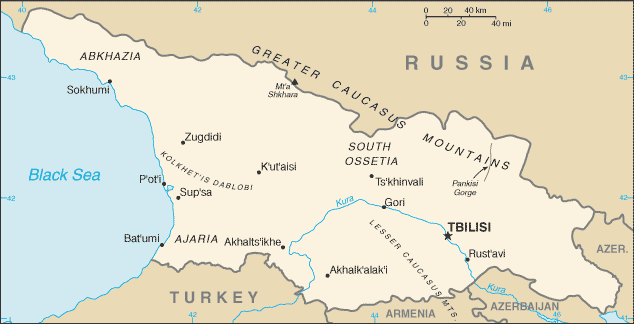

| TRAFFICKING IN PERSONS |
None reported.