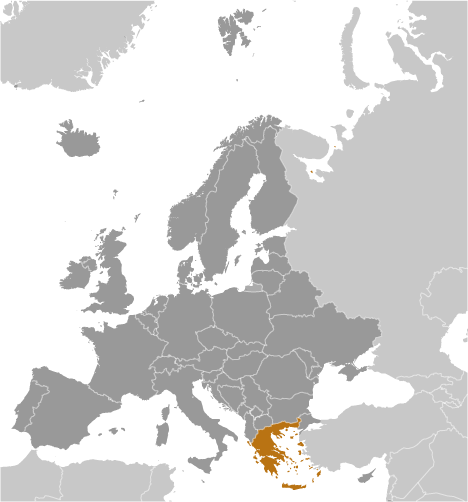
| GREECE Hellenic Republic Elliniki Dhimokratia Joined United Nations: 25 October 1945 Human Rights as assured by their constitution Click here Updated 12 August 2012 |
| CAPITAL |
| POPULATION |
| CHIEF OF STATE |
| SELECTION PROCESS |
Athens
10,767,827 (July 2012 est.)
Karolos Papoulias
President since 12 March 2005
President since 12 March 2005
President elected by parliament for a five-year term (eligible for
a second term); according to the Greek Constitution, presidents
may only serve two terms; election last held 3 February 2010
Next scheduled election: February 2015
a second term); according to the Greek Constitution, presidents
may only serve two terms; election last held 3 February 2010
Next scheduled election: February 2015
HEAD OF GOVERNMENT
SELECTION PROCESS
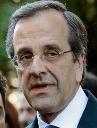
Antonis Samaras
Prime Minister since 20 June 2012
Prime Minister since 20 June 2012
Following legislative elections, president appoints leader of the
party securing plurality of vote in election to become prime
minister and form a government Elections last held 04 October
2009 (NOTE: there was a legislative election on 6 May 2012 in
which none of the leaders of the top three parties (New
Democracy, Coalition of the Radical Left, and the Panhellenic
Socialist Movement)were able to form a government)
Next election to be held: 2016
party securing plurality of vote in election to become prime
minister and form a government Elections last held 04 October
2009 (NOTE: there was a legislative election on 6 May 2012 in
which none of the leaders of the top three parties (New
Democracy, Coalition of the Radical Left, and the Panhellenic
Socialist Movement)were able to form a government)
Next election to be held: 2016
| DECLARATION OF HUMAN RIGHTS |
| ETHNIC GROUPS |
Population: Greek 93%, other (foreign citizens) 7% (2001 census)
note: percents represent citizenship, since Greece does not collect data on ethnicity
note: percents represent citizenship, since Greece does not collect data on ethnicity
| RELIGIONS |
Greek Orthodox 98%, Muslim 1.3%, other 0.7%
| GOVERNMENT STRUCTURE |
Parliamentary republic comprised of 51 prefectures (nomoi, singular - nomos) and 1 autonomous region. Legal system
is based on codified Roman law; judiciary divided into civil, criminal, and administrative courts; accepts compulsory ICJ
jurisdiction, with reservations
Executive: President elected by parliament for a five-year term (eligible for a second term); election last held 3 February 2010
(next to be held by February 2015);
Legislative: Unicameral Parliament or Vouli ton Ellinon (300 seats; members are elected by direct popular vote to
serve four-year terms)
elections: elections last held 17 June 2012 (next to be held by 2016) note - there was a legislative election on 6 May
2012 in which none of the leaders of the top three parties (New Democracy, Coalition of the Radical Left, and the
Panhellenic Socialist Movement) were able to form a government
Judicial: Supreme Judicial Court; Special Supreme Tribunal; all judges appointed for life by the president after
consultation with a judicial council
is based on codified Roman law; judiciary divided into civil, criminal, and administrative courts; accepts compulsory ICJ
jurisdiction, with reservations
Executive: President elected by parliament for a five-year term (eligible for a second term); election last held 3 February 2010
(next to be held by February 2015);
Legislative: Unicameral Parliament or Vouli ton Ellinon (300 seats; members are elected by direct popular vote to
serve four-year terms)
elections: elections last held 17 June 2012 (next to be held by 2016) note - there was a legislative election on 6 May
2012 in which none of the leaders of the top three parties (New Democracy, Coalition of the Radical Left, and the
Panhellenic Socialist Movement) were able to form a government
Judicial: Supreme Judicial Court; Special Supreme Tribunal; all judges appointed for life by the president after
consultation with a judicial council
| LANGUAGES |
Greek 99% (official), English, French
| BRIEF HISTORY |
| ECONOMIC OVERVIEW |
Greece has a capitalist economy with a public sector accounting for about 40% of GDP and with per capita GDP about
two-thirds that of the leading euro-zone economies. Tourism provides 15% of GDP. Immigrants make up nearly one-
fifth of the work force, mainly in agricultural and unskilled jobs. Greece is a major beneficiary of EU aid, equal to about
3.3% of annual GDP. The Greek economy grew by nearly 4% per year between 2003 and 2007, due partly to
infrastructural spending related to the 2004 Athens Olympic Games, and in part to an increased availability of credit,
which has sustained record levels of consumer spending. But the economy went into recession in 2009 as a result of the
world financial crisis, tightening credit conditions, and Athens' failure to address a growing budget deficit. The economy
contracted by 2.3% in 2009, 3.5% in 2010, and 6.0% in 2011. Greece violated the EU's Growth and Stability Pact
budget deficit criterion of no more than 3% of GDP from 2001 to 2006, but finally met that criterion in 2007-08, before
exceeding it again in 2009, with the deficit reaching 15% of GDP. Austerity measures reduced the deficit to 11% of
GDP in 2010 and about 9% in 2011. Eroding public finances, inaccurate and misreported statistics, and consistent
underperformance on reforms prompted major credit rating agencies in late 2009 to downgrade Greece's international
debt rating, and has led the country into a financial crisis. Under intense pressure from the EU and international market
participants, the government adopted a medium-term austerity program that includes cutting government spending,
decreasing tax evasion, reworking the health-care and pension systems, and reforming the labor and product markets.
Athens, however, faces long-term challenges to push through unpopular reforms in the face of widespread unrest from
the country's powerful labor unions and the general public. In April 2010 a leading credit agency assigned Greek debt its
lowest possible credit rating; in May 2010, the International Monetary Fund and Eurozone governments provided
Greece emergency short- and medium-term loans worth $147 billion so that the country could make debt repayments to
creditors. In exchange for the largest bailout ever assembled, the government announced combined spending cuts and
tax increases totaling $40 billion over three years, on top of the tough austerity measures already taken. Greece,
however, struggled to meet 2010 targets set by the EU and the IMF, especially after Eurostat - the EU's statistical office
- revised upward Greece's deficit and debt numbers for 2009 and 2010. European leaders and the IMF agreed in
October 2011 to provide Athens a second bailout package of $169 billion. The second deal however, calls for
Greece's creditors to write down a significant portion of their Greek government bond holdings. In exchange for the
second loan Greece has promised to introduce an additional $7.8 billion in austerity measures during 2013-15.
However, these massive austerity cuts are lengthening Greece's economic recession and depressing tax revenues.
Greece's lenders are calling on Athens to step up efforts to increase tax collection, privatize public enterprises, and rein
in health spending, and are planning to give Greece more time to shore up its economy and finances. Many investors
doubt that Greece can sustain fiscal efforts in the face of a bleak economic outlook, public discontent, and political
instability.
Source: CIA World Factbook (select Greece)
two-thirds that of the leading euro-zone economies. Tourism provides 15% of GDP. Immigrants make up nearly one-
fifth of the work force, mainly in agricultural and unskilled jobs. Greece is a major beneficiary of EU aid, equal to about
3.3% of annual GDP. The Greek economy grew by nearly 4% per year between 2003 and 2007, due partly to
infrastructural spending related to the 2004 Athens Olympic Games, and in part to an increased availability of credit,
which has sustained record levels of consumer spending. But the economy went into recession in 2009 as a result of the
world financial crisis, tightening credit conditions, and Athens' failure to address a growing budget deficit. The economy
contracted by 2.3% in 2009, 3.5% in 2010, and 6.0% in 2011. Greece violated the EU's Growth and Stability Pact
budget deficit criterion of no more than 3% of GDP from 2001 to 2006, but finally met that criterion in 2007-08, before
exceeding it again in 2009, with the deficit reaching 15% of GDP. Austerity measures reduced the deficit to 11% of
GDP in 2010 and about 9% in 2011. Eroding public finances, inaccurate and misreported statistics, and consistent
underperformance on reforms prompted major credit rating agencies in late 2009 to downgrade Greece's international
debt rating, and has led the country into a financial crisis. Under intense pressure from the EU and international market
participants, the government adopted a medium-term austerity program that includes cutting government spending,
decreasing tax evasion, reworking the health-care and pension systems, and reforming the labor and product markets.
Athens, however, faces long-term challenges to push through unpopular reforms in the face of widespread unrest from
the country's powerful labor unions and the general public. In April 2010 a leading credit agency assigned Greek debt its
lowest possible credit rating; in May 2010, the International Monetary Fund and Eurozone governments provided
Greece emergency short- and medium-term loans worth $147 billion so that the country could make debt repayments to
creditors. In exchange for the largest bailout ever assembled, the government announced combined spending cuts and
tax increases totaling $40 billion over three years, on top of the tough austerity measures already taken. Greece,
however, struggled to meet 2010 targets set by the EU and the IMF, especially after Eurostat - the EU's statistical office
- revised upward Greece's deficit and debt numbers for 2009 and 2010. European leaders and the IMF agreed in
October 2011 to provide Athens a second bailout package of $169 billion. The second deal however, calls for
Greece's creditors to write down a significant portion of their Greek government bond holdings. In exchange for the
second loan Greece has promised to introduce an additional $7.8 billion in austerity measures during 2013-15.
However, these massive austerity cuts are lengthening Greece's economic recession and depressing tax revenues.
Greece's lenders are calling on Athens to step up efforts to increase tax collection, privatize public enterprises, and rein
in health spending, and are planning to give Greece more time to shore up its economy and finances. Many investors
doubt that Greece can sustain fiscal efforts in the face of a bleak economic outlook, public discontent, and political
instability.
Source: CIA World Factbook (select Greece)
| POLITICAL CLIMATE |
The 1975 constitution, which describes Greece as a "presidential parliamentary republic", includes extensive specific
guarantees of civil liberties and vests the powers of the head of state in a president elected by parliament. The Greek
governmental structure is similar to that found in many Western democracies, and has been described as a compromise
between the French and German models. The prime minister and cabinet play the central role in the political process,
while the president performs some executive and legislative functions in addition to ceremonial duties. Voting in Greece is
compulsory but is not enforced.
Greek parliamentary politics hinge upon the principle of the "dedilomeni", the "declared confidence" of Parliament to the
Prime Minister and his/her administration. This means that the President of the Republic is bound to appoint as Prime
Minister a person who will be approved by a majority of the Parliament's members (i.e. 151 votes). With the current
electoral system, it is the leader of the party gaining a plurality of the votes in the Parliamentary elections who gets
appointed Prime Minister. An administration may, at any time, seek a "vote of confidence"; conversely, a number of
Members of Parliament may ask that a "vote of reproach" be taken. Both are rare occurrences with usually predictable
outcomes as voting outside the party line happens very seldom.
On 4 April, 2009 legislative elections were held in Greece with Panhellenic Socialist Movement (PASOK) party winning
a majority, routing the conservative New Democracy (ND) Party. Prime Minister Kostas Karamanlis tendered his
resignation and President Karolos Papoulias commissioned PASOK party leader George Papandreou to forma
government as Prime Minister elect on 5 November 2009.
On 4 November 2011, there was a vote of confidence in Parliament, narrowly won by the government of George
Papandreou by a vote of 153 to 145 in the 300-seat body. Although a number of Panhellenic Socialist Movement
(PASOK) MPs said they would not support the government in the vote of confidence, all 152 eventually did support the
government after PASOK's leader Papandreou agreed to step down as Prime Minister in order for a government of
national unity to take over. Following the vote of confidence one previously expelled PASOK member was re-admitted
to the party, raising the Papandreou majority to 153 seats. Despite the narrow victory, Papandreou eventually resigned a
few days later, making way for a three-party "grand coalition" caretaker government under Lucas Papademos, a former
ECB vice president, with the support of PASOK, ND and LAOS. However, LAOS later resigned over further austerity
measures.
The Greek government formation of May 2012 was a series of failed attempts to form a new government after the
legislative election in May 2012 by the three largest parties: New Democracy (centre-right), Coalition of the Radical Left
(SYRIZA, left-far left) and Panhellenic Socialist Movement (PASOK, centre-Left), respectively, and then followed by
the President of Greece. After the negotiations led by the president had failed on 15 May, a temporary caretaker cabinet
under Council of State president Panagiotis Pikrammenos was appointed on 16 May, and a new election was set for 17
June. On 20 June, a new unity government comprising ND, PASOK and DIMAR was formed for a planned 4 year
term, with Antonis Samaras appointed to be the new Prime Minister. The new cabinet of the governemt however only
comprised a mix of technocrats and lawmakers from ND, as the other two parties PASOK and DIMAR opted not elect
any of their lawmakers for minister posts.
Source: Wikipedia: Politics of Greece
guarantees of civil liberties and vests the powers of the head of state in a president elected by parliament. The Greek
governmental structure is similar to that found in many Western democracies, and has been described as a compromise
between the French and German models. The prime minister and cabinet play the central role in the political process,
while the president performs some executive and legislative functions in addition to ceremonial duties. Voting in Greece is
compulsory but is not enforced.
Greek parliamentary politics hinge upon the principle of the "dedilomeni", the "declared confidence" of Parliament to the
Prime Minister and his/her administration. This means that the President of the Republic is bound to appoint as Prime
Minister a person who will be approved by a majority of the Parliament's members (i.e. 151 votes). With the current
electoral system, it is the leader of the party gaining a plurality of the votes in the Parliamentary elections who gets
appointed Prime Minister. An administration may, at any time, seek a "vote of confidence"; conversely, a number of
Members of Parliament may ask that a "vote of reproach" be taken. Both are rare occurrences with usually predictable
outcomes as voting outside the party line happens very seldom.
On 4 April, 2009 legislative elections were held in Greece with Panhellenic Socialist Movement (PASOK) party winning
a majority, routing the conservative New Democracy (ND) Party. Prime Minister Kostas Karamanlis tendered his
resignation and President Karolos Papoulias commissioned PASOK party leader George Papandreou to forma
government as Prime Minister elect on 5 November 2009.
On 4 November 2011, there was a vote of confidence in Parliament, narrowly won by the government of George
Papandreou by a vote of 153 to 145 in the 300-seat body. Although a number of Panhellenic Socialist Movement
(PASOK) MPs said they would not support the government in the vote of confidence, all 152 eventually did support the
government after PASOK's leader Papandreou agreed to step down as Prime Minister in order for a government of
national unity to take over. Following the vote of confidence one previously expelled PASOK member was re-admitted
to the party, raising the Papandreou majority to 153 seats. Despite the narrow victory, Papandreou eventually resigned a
few days later, making way for a three-party "grand coalition" caretaker government under Lucas Papademos, a former
ECB vice president, with the support of PASOK, ND and LAOS. However, LAOS later resigned over further austerity
measures.
The Greek government formation of May 2012 was a series of failed attempts to form a new government after the
legislative election in May 2012 by the three largest parties: New Democracy (centre-right), Coalition of the Radical Left
(SYRIZA, left-far left) and Panhellenic Socialist Movement (PASOK, centre-Left), respectively, and then followed by
the President of Greece. After the negotiations led by the president had failed on 15 May, a temporary caretaker cabinet
under Council of State president Panagiotis Pikrammenos was appointed on 16 May, and a new election was set for 17
June. On 20 June, a new unity government comprising ND, PASOK and DIMAR was formed for a planned 4 year
term, with Antonis Samaras appointed to be the new Prime Minister. The new cabinet of the governemt however only
comprised a mix of technocrats and lawmakers from ND, as the other two parties PASOK and DIMAR opted not elect
any of their lawmakers for minister posts.
Source: Wikipedia: Politics of Greece
| INTERNATIONAL DISPUTES |
Greece and Turkey continue discussions to resolve their complex maritime, air, territorial, and boundary disputes in the
Aegean Sea; Cyprus question with Turkey; Greece rejects the use of the name Macedonia or Republic of Macedonia;
the mass migration of unemployed Albanians still remains a problem for developed countries, chiefly Greece and Italy
Aegean Sea; Cyprus question with Turkey; Greece rejects the use of the name Macedonia or Republic of Macedonia;
the mass migration of unemployed Albanians still remains a problem for developed countries, chiefly Greece and Italy


| REFUGEES AND INTERNALLY DISPLACED PERSONS (IDP) |
None reported.
| ILLICIT DRUGS |
A gateway to Europe for traffickers smuggling cannabis and heroin from the Middle East and Southwest Asia to the
West and precursor chemicals to the East; some South American cocaine transits or is consumed in Greece; money
laundering related to drug trafficking and organized crime
West and precursor chemicals to the East; some South American cocaine transits or is consumed in Greece; money
laundering related to drug trafficking and organized crime
| HUMAN RIGHTS STATEMENTS, ANALYSIS AND CRITIQUES |
2009 Human Rights Report: Greece
Bureau of Democracy, Human Rights, and Labor
2009 Country Reports on Human Rights Practices
May 24, 2012
Greece is a constitutional republic and multiparty parliamentary democracy. On November 11, a new “unity” government
composed of the Pan-Hellenic Socialist Movement (PASOK), the New Democracy (ND) party, and the Popular Orthodox Rally
(LAOS) party was sworn in, with Lucas Papademos as prime minister. Security forces reported to civilian authorities.
The most important human rights problem during the year concerned the government’s treatment of undocumented migrants,
including unaccompanied minors, detained for long periods pending disposition of their cases in overcrowded and unsanitary
conditions and sometimes allegedly subjected to physical abuse by security forces. There were also reports of harsh prison
conditions as well as discrimination against Roma and exploitation of Romani children.
Other human rights problems cited during the year included alleged abuse of detainees by security forces, laws restricting freedom
of speech, restrictions on religious freedom, deportation of unaccompanied immigrant minors, inadequate reception capacity or
legal aid for asylum seekers and refugees, domestic violence, incidents of anti-Semitism, trafficking in persons, limits on the
freedom of certain ethnic minority groups to self-identify, and discrimination against and social exclusion of ethnic minorities.
There were also allegations of excessive use of force against protestors during violent demonstrations in which police officers were
also injured.
The government took steps to prosecute and punish officials who committed abuses, whether in the security services or elsewhere
in the government.
Click here to read more »
Bureau of Democracy, Human Rights, and Labor
2009 Country Reports on Human Rights Practices
May 24, 2012
Greece is a constitutional republic and multiparty parliamentary democracy. On November 11, a new “unity” government
composed of the Pan-Hellenic Socialist Movement (PASOK), the New Democracy (ND) party, and the Popular Orthodox Rally
(LAOS) party was sworn in, with Lucas Papademos as prime minister. Security forces reported to civilian authorities.
The most important human rights problem during the year concerned the government’s treatment of undocumented migrants,
including unaccompanied minors, detained for long periods pending disposition of their cases in overcrowded and unsanitary
conditions and sometimes allegedly subjected to physical abuse by security forces. There were also reports of harsh prison
conditions as well as discrimination against Roma and exploitation of Romani children.
Other human rights problems cited during the year included alleged abuse of detainees by security forces, laws restricting freedom
of speech, restrictions on religious freedom, deportation of unaccompanied immigrant minors, inadequate reception capacity or
legal aid for asylum seekers and refugees, domestic violence, incidents of anti-Semitism, trafficking in persons, limits on the
freedom of certain ethnic minority groups to self-identify, and discrimination against and social exclusion of ethnic minorities.
There were also allegations of excessive use of force against protestors during violent demonstrations in which police officers were
also injured.
The government took steps to prosecute and punish officials who committed abuses, whether in the security services or elsewhere
in the government.
Click here to read more »
13 August 2012
Committee on the Rights of the Child
Sixtieth session
29 May – 15 June 2012
Consideration of reports submitted by States parties under article 44 of the Convention
Concluding observations: Greece
I. Introduction
2. The Committee welcomes the submission of the State party’s combined second and third periodic report, although it regrets the
delay of its submission. The Committee furthermore appreciates the written response to the list of issues (CRC/C/GRC/Q/2-
3/Add.1) and the fruitful dialogue held with the multisectoral delegation, which allowed for a better understanding of the situation of
children in the State party.
II. Follow-up measures undertaken and progress achieved by the State party
3. The Committee notes with appreciation the adoption of the following legislative measures:
(a) Law No. 3918/2011 on the rationalization of the three-child- and large-family benefits to parents;
(b) Law No. 3860/2010 on improvements to the criminal legislation regarding juvenile offenders;
(c) Law No. 3699/2008 on special education of persons with disabilities or special educational needs;
(d) Law No. 3500/2006 on domestic violence, which also prohibits corporal punishment;
III. Factors and difficulties impeding the implementation of the Convention
6. The Committee notes that the recession and the current financial and economic crisis are taking their toll on families and on
public social investment, including on the prospects of implementing the Convention, especially with regard to article 4 of the
Convention. In this respect, the Committee reminds the State party that, in time of fiscal constraint, efforts must be made to sustain
and expand social investment and social protection of those in the most vulnerable situations and to employ an equitable approach,
giving priority to children.
IV. Main areas of concern and recommendations
A. General measures of implementation (arts. 4, 42 and 44, para. 6, of the Convention)
The Committee’s previous recommendations
7. The Committee notes efforts by the State party to implement the Committee’s concluding observations of 2002 (CRC/C/15/Add.
170) on the State party’s initial report (CRC/C/28/Add.17). However, the Committee regrets that some recommendations have been
insufficiently or only partly addressed.
8. The Committee urges the State party to take all measures necessary to address those recommendations from the concluding
observations of the State party’s initial report that have not yet been, or not sufficiently, implemented, including those relating, in
particular, to legislation, coordination, allocation of resources for children, data collection, cooperation with civil society, the
definition of the child, the administration of juvenile justice, and children in street situations, and to provide adequate follow-up to
the recommendations contained in the present concluding observations.
Click here to read more »
Committee on the Rights of the Child
Sixtieth session
29 May – 15 June 2012
Consideration of reports submitted by States parties under article 44 of the Convention
Concluding observations: Greece
I. Introduction
2. The Committee welcomes the submission of the State party’s combined second and third periodic report, although it regrets the
delay of its submission. The Committee furthermore appreciates the written response to the list of issues (CRC/C/GRC/Q/2-
3/Add.1) and the fruitful dialogue held with the multisectoral delegation, which allowed for a better understanding of the situation of
children in the State party.
II. Follow-up measures undertaken and progress achieved by the State party
3. The Committee notes with appreciation the adoption of the following legislative measures:
(a) Law No. 3918/2011 on the rationalization of the three-child- and large-family benefits to parents;
(b) Law No. 3860/2010 on improvements to the criminal legislation regarding juvenile offenders;
(c) Law No. 3699/2008 on special education of persons with disabilities or special educational needs;
(d) Law No. 3500/2006 on domestic violence, which also prohibits corporal punishment;
III. Factors and difficulties impeding the implementation of the Convention
6. The Committee notes that the recession and the current financial and economic crisis are taking their toll on families and on
public social investment, including on the prospects of implementing the Convention, especially with regard to article 4 of the
Convention. In this respect, the Committee reminds the State party that, in time of fiscal constraint, efforts must be made to sustain
and expand social investment and social protection of those in the most vulnerable situations and to employ an equitable approach,
giving priority to children.
IV. Main areas of concern and recommendations
A. General measures of implementation (arts. 4, 42 and 44, para. 6, of the Convention)
The Committee’s previous recommendations
7. The Committee notes efforts by the State party to implement the Committee’s concluding observations of 2002 (CRC/C/15/Add.
170) on the State party’s initial report (CRC/C/28/Add.17). However, the Committee regrets that some recommendations have been
insufficiently or only partly addressed.
8. The Committee urges the State party to take all measures necessary to address those recommendations from the concluding
observations of the State party’s initial report that have not yet been, or not sufficiently, implemented, including those relating, in
particular, to legislation, coordination, allocation of resources for children, data collection, cooperation with civil society, the
definition of the child, the administration of juvenile justice, and children in street situations, and to provide adequate follow-up to
the recommendations contained in the present concluding observations.
Click here to read more »
Freedom In The World Report- 2011
Political Rights Score: 1
Civil Liberties Score: 2
Status: Free
Overview
In an effort to address a debt crisis that began in 2009, the government announced a second round of austerity measures in 2010,
inciting a series of strikes and protests that engulfed the country at several points during the year. In July, a radio journalist and
blogger was shot dead, marking the first murder of a journalist in Greece in 20 years.
At the end of 2009, Greece faced a serious fiscal and economic crisis, with public debt amounting to over $400 billion. In
January 2010, the government presented a plan to cut the budget deficit from 12.7 percent of gross domestic product (GDP) in
2009 to 2.8 percent in 2012. In the subsequent months it initiated a number of other austerity measures, including a freeze on
public-sector pay, an increase in the retirement age, and a hike of the value-added tax (VAT) from 19 to 23 percent. These steps
were met with a series of national strikes and protests. Those who viewed the austerity measures as an attack on the working
class staged protests in May, leading to the deaths of three people in a firebomb attack on a bank. Journalists reported being
subjected to excessive force by police while covering the protests.
Also in May, a €110 billion ($145 billion) rescue plan, including financing from the International Monetary Fund (IMF) and 15
eurozone countries, was issued to help prevent a Greek debt default. Greece’s budget deficit stood at about 9.4 percent of GDP
by the end of 2010, still about three times the official eurozone limit.
Despite the fallout from its fiscal policies, PASOK won 13 gubernatorial elections, including the race in the capital, during regional
balloting in November. Protests resumed in December after the government passed another austerity budget for the following year.
Greece continued to struggle with an influx of illegal immigrants during 2010. In October, the EU’s rapid intervention border team
was deployed for the first time since its creation in 2007 to guard Greece’s frontiers. The European Commission dispatched the
unit after deciding that the flow of immigrants—many of whom claimed to be from Afghanistan—from Turkey into Greece had
reached alarming numbers. According to the Greek government, over 100,000 illegal border crossings took place during the year.
Click here to read more »
Political Rights Score: 1
Civil Liberties Score: 2
Status: Free
Overview
In an effort to address a debt crisis that began in 2009, the government announced a second round of austerity measures in 2010,
inciting a series of strikes and protests that engulfed the country at several points during the year. In July, a radio journalist and
blogger was shot dead, marking the first murder of a journalist in Greece in 20 years.
At the end of 2009, Greece faced a serious fiscal and economic crisis, with public debt amounting to over $400 billion. In
January 2010, the government presented a plan to cut the budget deficit from 12.7 percent of gross domestic product (GDP) in
2009 to 2.8 percent in 2012. In the subsequent months it initiated a number of other austerity measures, including a freeze on
public-sector pay, an increase in the retirement age, and a hike of the value-added tax (VAT) from 19 to 23 percent. These steps
were met with a series of national strikes and protests. Those who viewed the austerity measures as an attack on the working
class staged protests in May, leading to the deaths of three people in a firebomb attack on a bank. Journalists reported being
subjected to excessive force by police while covering the protests.
Also in May, a €110 billion ($145 billion) rescue plan, including financing from the International Monetary Fund (IMF) and 15
eurozone countries, was issued to help prevent a Greek debt default. Greece’s budget deficit stood at about 9.4 percent of GDP
by the end of 2010, still about three times the official eurozone limit.
Despite the fallout from its fiscal policies, PASOK won 13 gubernatorial elections, including the race in the capital, during regional
balloting in November. Protests resumed in December after the government passed another austerity budget for the following year.
Greece continued to struggle with an influx of illegal immigrants during 2010. In October, the EU’s rapid intervention border team
was deployed for the first time since its creation in 2007 to guard Greece’s frontiers. The European Commission dispatched the
unit after deciding that the flow of immigrants—many of whom claimed to be from Afghanistan—from Turkey into Greece had
reached alarming numbers. According to the Greek government, over 100,000 illegal border crossings took place during the year.
Click here to read more »
8 August 2012
Greece must halt mass police crackdown on 'irregular migrants'
The Greek authorities must halt a mass police crackdown on "irregular migrants" and allow for effective access to asylum-seeking
procedures to those in need of international protection Amnesty International said today following reports that more than 7,500
foreign nationals have been arrested in Athens since last Thursday.
A large number of those arrested were reported to be of Asian, African and North African origin. Many have since been released
because they were found to be legally residing in Greece.
According to Greek police, around 2,000 of those rounded up were found with no papers and were placed in administrative
detention. People are being held in overcrowded conditions at the Attika Aliens Police Directorate or at other police stations in
Athens. Others have been transferred to police academies in Northern Greece which are being used as detention facilities.
"While Greece has the right to control migration, it does not have the right to treat people in the street like criminals purely because
of the colour of their skin," said Jezerca Tigani, Deputy Director of the Europe and Central Asia Programme.
"The scale of the police operation in Athens at the weekend raises serious concerns about discrimination on the basis of perceived
ethnicity."
According to reports some people were transferred to police stations despite showing police papers proving their legal residence in
Greece.
One of the men arrested on Saturday told Amnesty International that he was held at Petrou Ralli in a room with around 170
people. He said he was only given water on the day of his arrest and later could only eat bread because religiously inappropriate
food was provided. Many detainees were sleeping on the floor and because of the overcrowding many were taking it in turns to
sleep.
In view of the sharp rise of racially motivated attacks against foreign nationals in the past year, Amnesty International said it is
concerned that such a massive and discriminatory operation will fuel further attacks and xenophobia
"Greece may be going through financial difficulties while at the same time facing one of the highest migration flows among the EU
countries, but these police sweep operations violate international human rights standards and should stop immediately," said
Jezerca Tigani
Click here to read more »
Greece must halt mass police crackdown on 'irregular migrants'
The Greek authorities must halt a mass police crackdown on "irregular migrants" and allow for effective access to asylum-seeking
procedures to those in need of international protection Amnesty International said today following reports that more than 7,500
foreign nationals have been arrested in Athens since last Thursday.
A large number of those arrested were reported to be of Asian, African and North African origin. Many have since been released
because they were found to be legally residing in Greece.
According to Greek police, around 2,000 of those rounded up were found with no papers and were placed in administrative
detention. People are being held in overcrowded conditions at the Attika Aliens Police Directorate or at other police stations in
Athens. Others have been transferred to police academies in Northern Greece which are being used as detention facilities.
"While Greece has the right to control migration, it does not have the right to treat people in the street like criminals purely because
of the colour of their skin," said Jezerca Tigani, Deputy Director of the Europe and Central Asia Programme.
"The scale of the police operation in Athens at the weekend raises serious concerns about discrimination on the basis of perceived
ethnicity."
According to reports some people were transferred to police stations despite showing police papers proving their legal residence in
Greece.
One of the men arrested on Saturday told Amnesty International that he was held at Petrou Ralli in a room with around 170
people. He said he was only given water on the day of his arrest and later could only eat bread because religiously inappropriate
food was provided. Many detainees were sleeping on the floor and because of the overcrowding many were taking it in turns to
sleep.
In view of the sharp rise of racially motivated attacks against foreign nationals in the past year, Amnesty International said it is
concerned that such a massive and discriminatory operation will fuel further attacks and xenophobia
"Greece may be going through financial difficulties while at the same time facing one of the highest migration flows among the EU
countries, but these police sweep operations violate international human rights standards and should stop immediately," said
Jezerca Tigani
Click here to read more »
Greece: Halt Mass Migrant Round-Ups
Discriminatory Police Sweeps Violate Rights
August 8, 2012
(London) - The Greek authorities’ ongoing sweeps targeting suspected migrants based on little more than their physical
appearance violate international standards, Human Rights Watch said today. Since August 4, 2012, more than 6,000 foreigners
presumed to be undocumented migrants have been taken into police stations for questioning, and more than 1,500 arrested for
illegal entry and residence with a view to deportation to their countries of origin.
“Greece has the right to enforce its immigration laws, and after a fair process, to deport people with no legal basis to stay in the
country”, said Benjamin Ward, deputy director of the Europe and Central Asia division at Human Rights Watch. “But it doesn't
have the right to treat people like criminals or to presume irregular immigration status just because of their race or ethnicity.”
Greek police must have specific cause to stop and question people beyond the appearance of their national origin. Mass expulsions
are strictly prohibited under international law. Greece is also legally bound not to return refugees to persecution or anyone to risk
of torture. Yet Greece has failed to demonstrate its capacity even to receive asylum claims, let alone to process and decide them
fairly, Human Rights Watch said.
Human Rights Watch and others have also documented inhuman and degrading conditions in Greek migrant detention facilities.
While enforcing its immigration laws, Greece needs to be scrupulous in respecting the basic human rights of migrants. Greece
should not discriminate based on race or ethnicity and should not subject migrants to arbitrary detention, inhuman and degrading
treatment or to summary removal without due process of law. Greece should also provide effective remedies to those in need of
protection.
With its deep economic crisis, and after years of mismanaged migration and asylum policies, anti-migrant sentiment has grown in
Greece. A far-right party entered parliament for the first time in 2012 elections. A recent Human Rights Watch report showed that
xenophobic violence in Greece has reached alarming proportions, with gangs regularly attacking migrants and asylum seekers.
The attackers are rarely arrested, and police inaction is the rule.
Click here to read more »
Discriminatory Police Sweeps Violate Rights
August 8, 2012
(London) - The Greek authorities’ ongoing sweeps targeting suspected migrants based on little more than their physical
appearance violate international standards, Human Rights Watch said today. Since August 4, 2012, more than 6,000 foreigners
presumed to be undocumented migrants have been taken into police stations for questioning, and more than 1,500 arrested for
illegal entry and residence with a view to deportation to their countries of origin.
“Greece has the right to enforce its immigration laws, and after a fair process, to deport people with no legal basis to stay in the
country”, said Benjamin Ward, deputy director of the Europe and Central Asia division at Human Rights Watch. “But it doesn't
have the right to treat people like criminals or to presume irregular immigration status just because of their race or ethnicity.”
Greek police must have specific cause to stop and question people beyond the appearance of their national origin. Mass expulsions
are strictly prohibited under international law. Greece is also legally bound not to return refugees to persecution or anyone to risk
of torture. Yet Greece has failed to demonstrate its capacity even to receive asylum claims, let alone to process and decide them
fairly, Human Rights Watch said.
Human Rights Watch and others have also documented inhuman and degrading conditions in Greek migrant detention facilities.
While enforcing its immigration laws, Greece needs to be scrupulous in respecting the basic human rights of migrants. Greece
should not discriminate based on race or ethnicity and should not subject migrants to arbitrary detention, inhuman and degrading
treatment or to summary removal without due process of law. Greece should also provide effective remedies to those in need of
protection.
With its deep economic crisis, and after years of mismanaged migration and asylum policies, anti-migrant sentiment has grown in
Greece. A far-right party entered parliament for the first time in 2012 elections. A recent Human Rights Watch report showed that
xenophobic violence in Greece has reached alarming proportions, with gangs regularly attacking migrants and asylum seekers.
The attackers are rarely arrested, and police inaction is the rule.
Click here to read more »
Statement by H.E Mr Stavros Lambrinidis, Minister of Foreign Affairs of Greece to the 66th UNGA
Friday, September 23, 2011
Mr. President,
Two world wars taught humanity of the necessity to infuse international relations with respect for a few simple yet powerful
ideals. This is what the United Nations is all about: Respect for peace and good neighborly relations; respect for the rule of law
and the international justice system; respect for the fundamental right of every person on this planet, to have a chance for a
better life.
The United Nations is what we, its member-states, make of it. We are the driving force behind its accomplishments. We are the
reason behind any of its failures. The United Nations is where we meet and agree or disagree on global cooperation. And when
we agree, humanity becomes stronger.
Today, the UN is leading vital international cooperation to confront climate change and desertification. There is, too, the
challenge of non-communicable diseases – which hinder macro-economic development and keep the bottom billion locked in
chronic poverty. Unregulated migration is putting huge pressure on some countries – including Greece – while at once resulting
from -- and often exacerbating -- a lack of development in countries of origin, poverty, and wars.
There is the crucial contribution of the UN and its Human Rights Council on human rights issues – a contribution that can grow
with a stronger mandate for the HRC. Greece stands for election to the Council for the 2012 term and deeply values the support
of every single one of its partners in that effort.
The UN’s perhaps most overarching responsibilities lie in the area of peace and security, for without peace and security, it is
much more difficult, if not impossible, to pursue the myriad other goals of our Organization. This means ensuring nuclear
security, combating terrorism, combating piracy. It means managing crises as they arise – as in the recent case of Libya. It
means working together with our partners in the international community to establish and keep peace. It means, as I said earlier,
fostering good neighborly relations the world over.
Greece’s immediate region is Southeast Europe -- the Balkans. And Greece has a vision for peace, stability and cooperation in
our region. Its key component is the European perspective of our region as a whole and of our individual neighbors. To this end,
two years ago we launched “Agenda 2014,” which is aimed at revitalizing our neighbors’ efforts to realize their European
aspirations, on the one hand, while also reigniting the European Union’s vision of welcoming the countries of the Balkans into the
European family. Indeed, creating a European neighborhood of peace and cooperation in Southeast Europe should be our
collective goal. And that is because peace and cooperation are anything but a foregone conclusion in the Balkans. Recent history
– often bloody history – makes this abundantly clear. And there are still pending issues that need to be resolved.
Click here to read more »
Friday, September 23, 2011
Mr. President,
Two world wars taught humanity of the necessity to infuse international relations with respect for a few simple yet powerful
ideals. This is what the United Nations is all about: Respect for peace and good neighborly relations; respect for the rule of law
and the international justice system; respect for the fundamental right of every person on this planet, to have a chance for a
better life.
The United Nations is what we, its member-states, make of it. We are the driving force behind its accomplishments. We are the
reason behind any of its failures. The United Nations is where we meet and agree or disagree on global cooperation. And when
we agree, humanity becomes stronger.
Today, the UN is leading vital international cooperation to confront climate change and desertification. There is, too, the
challenge of non-communicable diseases – which hinder macro-economic development and keep the bottom billion locked in
chronic poverty. Unregulated migration is putting huge pressure on some countries – including Greece – while at once resulting
from -- and often exacerbating -- a lack of development in countries of origin, poverty, and wars.
There is the crucial contribution of the UN and its Human Rights Council on human rights issues – a contribution that can grow
with a stronger mandate for the HRC. Greece stands for election to the Council for the 2012 term and deeply values the support
of every single one of its partners in that effort.
The UN’s perhaps most overarching responsibilities lie in the area of peace and security, for without peace and security, it is
much more difficult, if not impossible, to pursue the myriad other goals of our Organization. This means ensuring nuclear
security, combating terrorism, combating piracy. It means managing crises as they arise – as in the recent case of Libya. It
means working together with our partners in the international community to establish and keep peace. It means, as I said earlier,
fostering good neighborly relations the world over.
Greece’s immediate region is Southeast Europe -- the Balkans. And Greece has a vision for peace, stability and cooperation in
our region. Its key component is the European perspective of our region as a whole and of our individual neighbors. To this end,
two years ago we launched “Agenda 2014,” which is aimed at revitalizing our neighbors’ efforts to realize their European
aspirations, on the one hand, while also reigniting the European Union’s vision of welcoming the countries of the Balkans into the
European family. Indeed, creating a European neighborhood of peace and cooperation in Southeast Europe should be our
collective goal. And that is because peace and cooperation are anything but a foregone conclusion in the Balkans. Recent history
– often bloody history – makes this abundantly clear. And there are still pending issues that need to be resolved.
Click here to read more »
20-03-2012
RECORDING NETWORK OF INCIDENTS OF RACIST VIOLENCE
PRESENTATION OF THE RESULTS OF THE PILOT PHASE
1.10.2011-31.12.2011
With the initiative of the Greek National Commission for Human Rights (GNCHR) and the Office of the High Commissioner for
Refugees in Greece (UNCHR), the Racist Violence Recording Network was created with the participation of 18 non-governmental
organizations and other actors: Aitima, Antigone, Medecins du Monde, Amnesty International, the Hellenic League for Human
Rights, the Greek Agreements’ Observatory of Helsinki, the Greek Council for Refugees, the Greek Forum of Migrants, the Greek
Forum of Refugees, the Day’s Centre ‘Babel’, the Defense Move of the Rights of Refugees and Migrants (Patras), the
METAdrasi, the Universal Programme for Refugees, the Group of Lawyers for the Rights of Refugees and Migrants, the Legal
Group for the Defense of the Rights of Refugees and Migrants (Thessaloniki), the Migrants’ Forum in Creta, the i-RED Institute
for Rights, Equality and Diversity and PRAKSIS, as well as the Greek Ombudsman as an observer. The participating actors have
signed a cooperation agreement aiming to compensate the vacuum created by the absence of a formal and effective system for
recording incidents and trends of racism and racist violence in Greece, according to the international and European obligations
of the state. The Recording Network is open to any actor having the required participation characteristics, meaning providing
medical, social and legal services and / or comes to direct contact with victims of racist violence.
The systematic recording of racist violence acts started with a pilot phase on 1 October and a common Recording Form of Racist
Incident in order to provide as clear and comprehensive indications of the quantitative and qualitative trends in racist violence in
Greece as possible. Within three months of the pilot phase, incidents were recorded mainly within the geographical area where the
participant organisations are active, namely in the areas of downtown Athens (near Omonia Square, in Attica Square, in Agios
Panteleimon) and in certain areas of Patras. Therefore, due to the severe geographical limitations and the recording method based
on the victim’s voluntary testimony, the results represent a small to bare minimum sample of the real situation. The participant
organisations noted that even in cases where the victim, often with fresh signs of violence is addressing their services for some
help, still avoids filing a complaint. The reasons of this reluctance can be found on fear, lack of confidence in the system and
sometimes the passive familiarity with racist behavior. In brief, during the period 1.10.2011-31.12.2011 63 incidents of racist
violence were registered. In 51 of them more than one perpetrators were involved.
Data regarding the perpetrators: 18 perpetrators seem to operate as members of extremist groups and 26 as individual citizens.
Most perpetrators are men (61 versus 2 women). Note however that in group incidents women are involved as well.
Click here to read more »
RECORDING NETWORK OF INCIDENTS OF RACIST VIOLENCE
PRESENTATION OF THE RESULTS OF THE PILOT PHASE
1.10.2011-31.12.2011
With the initiative of the Greek National Commission for Human Rights (GNCHR) and the Office of the High Commissioner for
Refugees in Greece (UNCHR), the Racist Violence Recording Network was created with the participation of 18 non-governmental
organizations and other actors: Aitima, Antigone, Medecins du Monde, Amnesty International, the Hellenic League for Human
Rights, the Greek Agreements’ Observatory of Helsinki, the Greek Council for Refugees, the Greek Forum of Migrants, the Greek
Forum of Refugees, the Day’s Centre ‘Babel’, the Defense Move of the Rights of Refugees and Migrants (Patras), the
METAdrasi, the Universal Programme for Refugees, the Group of Lawyers for the Rights of Refugees and Migrants, the Legal
Group for the Defense of the Rights of Refugees and Migrants (Thessaloniki), the Migrants’ Forum in Creta, the i-RED Institute
for Rights, Equality and Diversity and PRAKSIS, as well as the Greek Ombudsman as an observer. The participating actors have
signed a cooperation agreement aiming to compensate the vacuum created by the absence of a formal and effective system for
recording incidents and trends of racism and racist violence in Greece, according to the international and European obligations
of the state. The Recording Network is open to any actor having the required participation characteristics, meaning providing
medical, social and legal services and / or comes to direct contact with victims of racist violence.
The systematic recording of racist violence acts started with a pilot phase on 1 October and a common Recording Form of Racist
Incident in order to provide as clear and comprehensive indications of the quantitative and qualitative trends in racist violence in
Greece as possible. Within three months of the pilot phase, incidents were recorded mainly within the geographical area where the
participant organisations are active, namely in the areas of downtown Athens (near Omonia Square, in Attica Square, in Agios
Panteleimon) and in certain areas of Patras. Therefore, due to the severe geographical limitations and the recording method based
on the victim’s voluntary testimony, the results represent a small to bare minimum sample of the real situation. The participant
organisations noted that even in cases where the victim, often with fresh signs of violence is addressing their services for some
help, still avoids filing a complaint. The reasons of this reluctance can be found on fear, lack of confidence in the system and
sometimes the passive familiarity with racist behavior. In brief, during the period 1.10.2011-31.12.2011 63 incidents of racist
violence were registered. In 51 of them more than one perpetrators were involved.
Data regarding the perpetrators: 18 perpetrators seem to operate as members of extremist groups and 26 as individual citizens.
Most perpetrators are men (61 versus 2 women). Note however that in group incidents women are involved as well.
Click here to read more »
TRANSLATED FROM GREEK BY GOOGLE TRANSLATE
Press Release
Athens, July 3, 2012
The Ombudsman for the phenomena of racist violence
The Ombudsman is deeply concerned about the increase in racist violence phenomena, so as to continuously increasing number of
cases, and as to how action and intensity of violence. Recently found organized and systematic action extremist groups, which
citing the insecurity of many citizens, engaged attacks against members of vulnerable or socially excluded groups (foreigners,
Roma, etc.). The tolerance or even partial, even acceptance of such action segments of the population intensifies reflection on the
phenomenon. The Ombudsman invites enforcement agencies to not allow the development of organized criminal enclaves who
exploit gaps created by the negligence or inaction of the state apparatus.
Specifically, the Ombudsman finds an increased incidence organized and systematic use of violence - aimed mainly foreigners -
by groups with extreme ideological characteristics, using a guise of protecting public order and security to commit serious crimes
and to encourage widespread take the law into one's hand. The use of violence affecting fundamental rights and threatens to lead
to a "vicious cycle" of escalating violence facts from both sides of group conflict and challenge, with ultimately resulting in severe
disruption of social cohesion and peace.
Counsel points out that observance of legality, protection of rights and combating discrimination are essential the rule of law.
Moreover, the legitimate object of public determined by content security by ensuring the individual right to security of any person,
Greeks and foreigners who reside on Greek territory. Violence, particularly racist, is the most repulsive form of criminal behavior
because stochopoiei generally, diversity, and exploits the weakness and exclusion of the victim. The independent authority has
consistently highlighted the need for combinatorial measures and coordinated actions to address the phenomenon of racist
violence, and its causes, particularly in areas where population groups are more affected by the crisis live with other socially
vulnerable groups. At This requires not only legislative initiatives and specific planning officer for the effective exercise
democratic state of the exclusive constitutional competence and obligation for the safety of any person. The Ombudsman intends
to take direct initiatives in this direction, consultation with relevant stakeholders.
Click here to read more »
Press Release
Athens, July 3, 2012
The Ombudsman for the phenomena of racist violence
The Ombudsman is deeply concerned about the increase in racist violence phenomena, so as to continuously increasing number of
cases, and as to how action and intensity of violence. Recently found organized and systematic action extremist groups, which
citing the insecurity of many citizens, engaged attacks against members of vulnerable or socially excluded groups (foreigners,
Roma, etc.). The tolerance or even partial, even acceptance of such action segments of the population intensifies reflection on the
phenomenon. The Ombudsman invites enforcement agencies to not allow the development of organized criminal enclaves who
exploit gaps created by the negligence or inaction of the state apparatus.
Specifically, the Ombudsman finds an increased incidence organized and systematic use of violence - aimed mainly foreigners -
by groups with extreme ideological characteristics, using a guise of protecting public order and security to commit serious crimes
and to encourage widespread take the law into one's hand. The use of violence affecting fundamental rights and threatens to lead
to a "vicious cycle" of escalating violence facts from both sides of group conflict and challenge, with ultimately resulting in severe
disruption of social cohesion and peace.
Counsel points out that observance of legality, protection of rights and combating discrimination are essential the rule of law.
Moreover, the legitimate object of public determined by content security by ensuring the individual right to security of any person,
Greeks and foreigners who reside on Greek territory. Violence, particularly racist, is the most repulsive form of criminal behavior
because stochopoiei generally, diversity, and exploits the weakness and exclusion of the victim. The independent authority has
consistently highlighted the need for combinatorial measures and coordinated actions to address the phenomenon of racist
violence, and its causes, particularly in areas where population groups are more affected by the crisis live with other socially
vulnerable groups. At This requires not only legislative initiatives and specific planning officer for the effective exercise
democratic state of the exclusive constitutional competence and obligation for the safety of any person. The Ombudsman intends
to take direct initiatives in this direction, consultation with relevant stakeholders.
Click here to read more »
The earliest civilization to appear around Greece was the Minoan civilization in Crete, which lasted approximately from
3650 (Early Minoan) BCE to 1450 BCE, and on the Early Helladic period on the Greek mainland from ca. 2800 BCE
to 2100 BCE. Little specific information is known about the Minoans (even the name is a modern appellation, from
Minos, the legendary king of Crete). They have been characterized as a pre-Indo-European people, apparently the
linguistic ancestors of the Eteo-Cretan speakers of Classical Antiquity, their language being encoded in the undeciphered
Linear A script. They were primarily a mercantile people engaged in overseas trade. Although the causes of their demise
are uncertain, they were eventually invaded by the Mycenaeans from mainland Greece. Mycenaean Greece, also known
as Bronze Age Greece, is the Late Helladic Bronze Age civilization of Ancient Greece. It lasted from the arrival of the
Greeks in the Aegean around 1600 BCE to the collapse of their Bronze Age civilization around 1100 BCE. It is the
historical setting of the epics of Homer and much other Greek mythology. The Mycenaean period takes its name from
the archaeological site Mycenae in the northeastern Argolid, in the Peloponnesos of southern Greece. Athens, Pylos,
Thebes, and Tiryns are also important Mycenaean sites. The Greek Dark Ages (ca. 1200 BC–800 BC) refers to the
period of Greek prehistory from the presumed Dorian invasion and end of the Mycenaean civilization in the 11th century
BC to the rise of the first Greek city-states in the 9th century BC and the epics of Homer and earliest writings in
alphabetic Greek in the 8th century BC. There are no fixed or universally agreed dates for the beginning or the end of the
Ancient Greek period. Traditionally, the Ancient Greek period was taken to begin with the date of the first Olympic
Games in 776 BC, but most historians now extend the term back to about 1000 BC. The traditional date for the end of
the Ancient Greek period is the death of Alexander the Great in 323 BC. The following period is classed as Hellenistic.
Ancient Greece is considered by most historians to be the foundational culture of Western Civilization. The Hellenistic
period of Greek history begins with the death of Alexander the Great in 323 BC and ends with the annexation of the
Greek peninsula and islands by Rome in 146 BC. During the Hellenistic period the importance of "Greece proper" (that
is, the territory of modern Greece) within the Greek-speaking world declined sharply. The great centres of Hellenistic
culture were Alexandria and Antioch, capitals of Ptolemaic Egypt and Seleucid Syria respectively. (See Hellenistic
civilization for the history of Greek culture outside of Greece in this period.). Militarily Greece itself declined to the point
that the Romans conquered the land (187 BC onwards), though Greek culture would in turn conquer Roman life.
Although the period of Roman rule in Greece is conventionally dated as starting from the sacking of Corinth by the
Roman Lucius Mummius in 123 BC, Macedonia had already come under Roman control with the defeat of its king,
Perseus, by the Roman Aemilius Paullus at Pydna in 168 BC. The Romans divided the region into four smaller republics,
and in 146 BC Macedonia officially became a Roman province, with its capital at Thessalonica. The rest of the Greek
city-states gradually and eventually paid homage to Rome ending their de jure autonomy as well. The Romans left local
administration to the Greeks without making any attempt to abolish traditional political patterns. The agora in Athens
continued to be the centre of civic and political life. The history of the Byzantine Empire is described by scholar August
Heisenberg as the history "of the Roman state of the Greek nation, that turned Christian". The division of the empire into
East and West and the subsequent collapse of the Western Roman Empire were developments that constantly
accentuated the position of the Greeks in the empire and eventually allowed them to become identified with it altogether.
The leading role of Constantinople began when Constantine the Great turned Byzantium into the new capital of the
Roman Empire, henceforth to be known as Constantinople, placing the city at the centre of Hellenism a beacon for the
Greeks that lasted to the modern era. The 11th and 12th centuries are said to be the Golden Age of Byzantine art in
Greece. Many of the most important Byzantine churches in around Athens, for example, were built during these two
centuries, and this reflects the growth of urbanisation in Greece during this period. There was also a revival in the mosaic
art with artists showing great interest in depicting natural landscapes with wild animals and scenes from the hunt. Mosaics
became more realistic and vivid, with an increased emphasis on depicting three-dimensional forms. With its love of
luxury and passion for colour, the art of this age delighted in the production of masterpieces that spread the fame of
Byzantium throughout the whole of the Christian world. The year 1204 marks the beginning of the late Byzantine period,
when probably the most important event for the Empire occurred. Constantinople was lost for the Greek people for the
first time, and the empire was conquered by Latin crusaders and would be replaced by a new Latin one, for 57 years. In
addition, the period of Latin occupation decisively influenced the empire's internal development, as elements of feudality
entered aspects of Byzantine life. In 1261 the Greek empire was divided between the former Greek Byzantine
Comnenos dynasty members (Epirus) and Palaiologos dynasty (the last dynasty until the fall of Constantinople). After the
gradual weakening of the structures of the Greek Byzantine state and the reduction of its land from Turkish invasions,
came the fall of the Greek Byzantine Empire, at the hands of the Ottomans, in 1453, when the Byzantine period is
considered to have ended. When the Ottomans arrived, two Greek migrations occurred. The first migration entailed the
Greek intelligentsia migrating to Western Europe and influencing the advent of the Renaissance. The second migration
entailed Greeks leaving the plains of the Greek peninsula and resettling in the mountains. Greece being mostly
mountainous, the Ottomans could not conquer the entire Greek peninsula since they created neither a military nor an
administrative presence in the mountains. The Ottomans ruled Greece until the early 19th century. On March 25, 1821
(also the same day as the Greek Orthodox day of the Annunciation of the Theotokos), the Greeks rebelled and declared
their independence, but did not achieve it until 1829. The big European powers saw the war of Greek independence,
with its accounts of Turkish atrocities, in a romantic light. During the 19th and early 20th centuries, in a series of wars
with the Ottomans, Greece sought to enlarge its boundaries to include the ethnic Greek population of the Ottoman
Empire. As a result of the Balkan Wars of 1912-13 Epirus, southern Macedonia, Crete and the Aegean Islands were
annexed into Greece. Greece reached its present configuration in 1947.In the 1950s and 1960s, Greece developed
rapidly, initially with the help of the U.S. Marshall Plans' grants and loans, and later through growth in the tourism sector.
In 1967, the Greek military seized power in a coup d'état, overthrew the centre right government of Panagiotis
Kanellopoulos and established the Greek military junta of 1967-1974 which became known as the Régime of the
Colonels. The Central Intelligence Agency was involved in the coup and President Clinton later apologised for the
interference. In 1975, following a referendum to confirm the deposition of King Constantine II, a democratic republican
constitution came into force. Another previously exiled politician, Andreas Papandreou also returned and founded the
socialist PASOK party, which won the elections in 1981 and dominated the country's political course for almost two
decades. Since the restoration of democracy, the stability and economic prosperity of Greece have grown. Greece
joined the European Union in 1981 and adopted the Euro as its currency in 2001. From late 2009, fears of a sovereign
debt crisis developed among investors concerning Greece's ability to meet its debt obligations due to strong increase in
government debt levels. This led to a crisis of confidence, indicated by a widening of bond yield spreads and risk
insurance on credit default swaps compared to other countries, most importantly Germany.[26][27] Downgrading of
Greek government debt to junk bonds created alarm in financial markets. On 2 May 2010, the Eurozone countries and
the International Monetary Fund agreed on a €110 billion loan for Greece, conditional on the implementation of harsh
austerity measures. In October 2011, Eurozone leaders also agreed on a proposal to write off 50% of Greek debt owed
to private creditors, increasing the EFSF to about €1 trillion and requiring European banks to achieve 9% capitalization
to reduce the risk of contagion to other countries. These austerity measures have proved extremely unpopular with the
Greek public, precipitating demonstrations and civil unrest. There are widespread fears that a Greek default on its debt
would have global repercussions, endangering the economies of many other countries in the European Union, threatening
the stability of the European currency, the euro, and possibly plunging the world into another recession. It has been
speculated that the crisis will force Greece to abandon the euro and bring back its former currency, the drachma.
Sources: Wikipedia: History of Greece
3650 (Early Minoan) BCE to 1450 BCE, and on the Early Helladic period on the Greek mainland from ca. 2800 BCE
to 2100 BCE. Little specific information is known about the Minoans (even the name is a modern appellation, from
Minos, the legendary king of Crete). They have been characterized as a pre-Indo-European people, apparently the
linguistic ancestors of the Eteo-Cretan speakers of Classical Antiquity, their language being encoded in the undeciphered
Linear A script. They were primarily a mercantile people engaged in overseas trade. Although the causes of their demise
are uncertain, they were eventually invaded by the Mycenaeans from mainland Greece. Mycenaean Greece, also known
as Bronze Age Greece, is the Late Helladic Bronze Age civilization of Ancient Greece. It lasted from the arrival of the
Greeks in the Aegean around 1600 BCE to the collapse of their Bronze Age civilization around 1100 BCE. It is the
historical setting of the epics of Homer and much other Greek mythology. The Mycenaean period takes its name from
the archaeological site Mycenae in the northeastern Argolid, in the Peloponnesos of southern Greece. Athens, Pylos,
Thebes, and Tiryns are also important Mycenaean sites. The Greek Dark Ages (ca. 1200 BC–800 BC) refers to the
period of Greek prehistory from the presumed Dorian invasion and end of the Mycenaean civilization in the 11th century
BC to the rise of the first Greek city-states in the 9th century BC and the epics of Homer and earliest writings in
alphabetic Greek in the 8th century BC. There are no fixed or universally agreed dates for the beginning or the end of the
Ancient Greek period. Traditionally, the Ancient Greek period was taken to begin with the date of the first Olympic
Games in 776 BC, but most historians now extend the term back to about 1000 BC. The traditional date for the end of
the Ancient Greek period is the death of Alexander the Great in 323 BC. The following period is classed as Hellenistic.
Ancient Greece is considered by most historians to be the foundational culture of Western Civilization. The Hellenistic
period of Greek history begins with the death of Alexander the Great in 323 BC and ends with the annexation of the
Greek peninsula and islands by Rome in 146 BC. During the Hellenistic period the importance of "Greece proper" (that
is, the territory of modern Greece) within the Greek-speaking world declined sharply. The great centres of Hellenistic
culture were Alexandria and Antioch, capitals of Ptolemaic Egypt and Seleucid Syria respectively. (See Hellenistic
civilization for the history of Greek culture outside of Greece in this period.). Militarily Greece itself declined to the point
that the Romans conquered the land (187 BC onwards), though Greek culture would in turn conquer Roman life.
Although the period of Roman rule in Greece is conventionally dated as starting from the sacking of Corinth by the
Roman Lucius Mummius in 123 BC, Macedonia had already come under Roman control with the defeat of its king,
Perseus, by the Roman Aemilius Paullus at Pydna in 168 BC. The Romans divided the region into four smaller republics,
and in 146 BC Macedonia officially became a Roman province, with its capital at Thessalonica. The rest of the Greek
city-states gradually and eventually paid homage to Rome ending their de jure autonomy as well. The Romans left local
administration to the Greeks without making any attempt to abolish traditional political patterns. The agora in Athens
continued to be the centre of civic and political life. The history of the Byzantine Empire is described by scholar August
Heisenberg as the history "of the Roman state of the Greek nation, that turned Christian". The division of the empire into
East and West and the subsequent collapse of the Western Roman Empire were developments that constantly
accentuated the position of the Greeks in the empire and eventually allowed them to become identified with it altogether.
The leading role of Constantinople began when Constantine the Great turned Byzantium into the new capital of the
Roman Empire, henceforth to be known as Constantinople, placing the city at the centre of Hellenism a beacon for the
Greeks that lasted to the modern era. The 11th and 12th centuries are said to be the Golden Age of Byzantine art in
Greece. Many of the most important Byzantine churches in around Athens, for example, were built during these two
centuries, and this reflects the growth of urbanisation in Greece during this period. There was also a revival in the mosaic
art with artists showing great interest in depicting natural landscapes with wild animals and scenes from the hunt. Mosaics
became more realistic and vivid, with an increased emphasis on depicting three-dimensional forms. With its love of
luxury and passion for colour, the art of this age delighted in the production of masterpieces that spread the fame of
Byzantium throughout the whole of the Christian world. The year 1204 marks the beginning of the late Byzantine period,
when probably the most important event for the Empire occurred. Constantinople was lost for the Greek people for the
first time, and the empire was conquered by Latin crusaders and would be replaced by a new Latin one, for 57 years. In
addition, the period of Latin occupation decisively influenced the empire's internal development, as elements of feudality
entered aspects of Byzantine life. In 1261 the Greek empire was divided between the former Greek Byzantine
Comnenos dynasty members (Epirus) and Palaiologos dynasty (the last dynasty until the fall of Constantinople). After the
gradual weakening of the structures of the Greek Byzantine state and the reduction of its land from Turkish invasions,
came the fall of the Greek Byzantine Empire, at the hands of the Ottomans, in 1453, when the Byzantine period is
considered to have ended. When the Ottomans arrived, two Greek migrations occurred. The first migration entailed the
Greek intelligentsia migrating to Western Europe and influencing the advent of the Renaissance. The second migration
entailed Greeks leaving the plains of the Greek peninsula and resettling in the mountains. Greece being mostly
mountainous, the Ottomans could not conquer the entire Greek peninsula since they created neither a military nor an
administrative presence in the mountains. The Ottomans ruled Greece until the early 19th century. On March 25, 1821
(also the same day as the Greek Orthodox day of the Annunciation of the Theotokos), the Greeks rebelled and declared
their independence, but did not achieve it until 1829. The big European powers saw the war of Greek independence,
with its accounts of Turkish atrocities, in a romantic light. During the 19th and early 20th centuries, in a series of wars
with the Ottomans, Greece sought to enlarge its boundaries to include the ethnic Greek population of the Ottoman
Empire. As a result of the Balkan Wars of 1912-13 Epirus, southern Macedonia, Crete and the Aegean Islands were
annexed into Greece. Greece reached its present configuration in 1947.In the 1950s and 1960s, Greece developed
rapidly, initially with the help of the U.S. Marshall Plans' grants and loans, and later through growth in the tourism sector.
In 1967, the Greek military seized power in a coup d'état, overthrew the centre right government of Panagiotis
Kanellopoulos and established the Greek military junta of 1967-1974 which became known as the Régime of the
Colonels. The Central Intelligence Agency was involved in the coup and President Clinton later apologised for the
interference. In 1975, following a referendum to confirm the deposition of King Constantine II, a democratic republican
constitution came into force. Another previously exiled politician, Andreas Papandreou also returned and founded the
socialist PASOK party, which won the elections in 1981 and dominated the country's political course for almost two
decades. Since the restoration of democracy, the stability and economic prosperity of Greece have grown. Greece
joined the European Union in 1981 and adopted the Euro as its currency in 2001. From late 2009, fears of a sovereign
debt crisis developed among investors concerning Greece's ability to meet its debt obligations due to strong increase in
government debt levels. This led to a crisis of confidence, indicated by a widening of bond yield spreads and risk
insurance on credit default swaps compared to other countries, most importantly Germany.[26][27] Downgrading of
Greek government debt to junk bonds created alarm in financial markets. On 2 May 2010, the Eurozone countries and
the International Monetary Fund agreed on a €110 billion loan for Greece, conditional on the implementation of harsh
austerity measures. In October 2011, Eurozone leaders also agreed on a proposal to write off 50% of Greek debt owed
to private creditors, increasing the EFSF to about €1 trillion and requiring European banks to achieve 9% capitalization
to reduce the risk of contagion to other countries. These austerity measures have proved extremely unpopular with the
Greek public, precipitating demonstrations and civil unrest. There are widespread fears that a Greek default on its debt
would have global repercussions, endangering the economies of many other countries in the European Union, threatening
the stability of the European currency, the euro, and possibly plunging the world into another recession. It has been
speculated that the crisis will force Greece to abandon the euro and bring back its former currency, the drachma.
Sources: Wikipedia: History of Greece


Click on map for larger view
Click on flag for Country Report
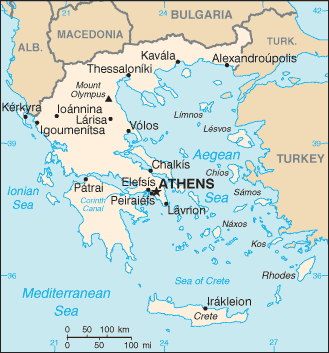

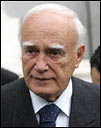



| TRAFFICKING IN PERSONS |
None reported.