
| HONG KONG Hong Kong Special Administrative Region Xianggang Tebie Xingzhengqu (special administrative region of China) Joined United Nations: 24 October 1945 Human Rights as assured by their constitution Click here Updated 14 February 2013 |

| CAPITAL |
| POPULATION |
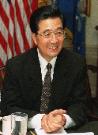
| CHIEF OF STATE |
| SELECTION PROCESS |
Hong Kong
7,153,519 (July 2012 est.)
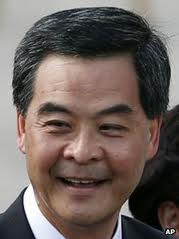
Leung Chun-ying
Chief Executive since 1 July 2012
Chief Executive since 1 July 2012
President elected by the National People's Congress for a five-year
term (eligible for a second term); elections last held 1on 25 March
2007
Next scheduled election: Mid-March 2013
term (eligible for a second term); elections last held 1on 25 March
2007
Next scheduled election: Mid-March 2013
HEAD OF GOVERNMENT
SELECTION PROCESS
Chief Executive elected for five-year term by 800-member
electoral committee; last held on 25 March 2012
Next scheduled election: March 2017
electoral committee; last held on 25 March 2012
Next scheduled election: March 2017
| DECLARATION OF HUMAN RIGHTS |
| ETHNIC GROUPS |
Chinese 95%, Filipino 1.6%, Indonesian 1.3%, other 2.1% (2006 census)
| RELIGIONS |
Eclectic mixture of local religions 90%, Christian 10%
| GOVERNMENT STRUCTURE |
Special administrative region of China with a limited democracy and no administrative divisions; Legal system is based on English
common law
Executive: President elected by the National People's Congress for a five-year term (eligible for a second term); elections last held
15-17 March 2008 ; Next scheduled election: mid-March 2013 ; Chief Executive elected for five-year term by 1,193-member
electoral committee; last held on 25 March 2012 (next to be held in March 2017)
Legislative: Unicameral Legislative Council or LEGCO (60 seats; in 2004, 30 seats indirectly elected by functional constituencies,
30 elected by popular vote; members serve four-year terms)
elections: last held 9 September 2012 (next to be held in September 2016)
Judicial: Court of Final Appeal in the Hong Kong Special Administrative Region
common law
Executive: President elected by the National People's Congress for a five-year term (eligible for a second term); elections last held
15-17 March 2008 ; Next scheduled election: mid-March 2013 ; Chief Executive elected for five-year term by 1,193-member
electoral committee; last held on 25 March 2012 (next to be held in March 2017)
Legislative: Unicameral Legislative Council or LEGCO (60 seats; in 2004, 30 seats indirectly elected by functional constituencies,
30 elected by popular vote; members serve four-year terms)
elections: last held 9 September 2012 (next to be held in September 2016)
Judicial: Court of Final Appeal in the Hong Kong Special Administrative Region
| LANGUAGES |
Cantonese 90.8% (official), English 2.8% (official), Putonghua (Mandarin) 0.9%, other Chinese dialects 4.4%, other 1.1% (2006
census)
census)
| BRIEF HISTORY |
Archaeological findings suggest human activity in Hong Kong dates back over 30 000 years. Stone tools of hong Kong's pre-
historic people during the old stone age have been excavated in Sai Kung in Wong Tei Tung. The stone tools found in Sai Kung was
perhaps from a stone tools making ground. Religious carvings on outlying islands and coastal areas have also been found, possibly
related to Che people in Neolithic. The latest findings dating from the Paleolithic suggest that Wong Tei Tung is one of the most
ancient settlements in Hong Kong. The territory was incorporated into China during the Qin Dynasty (221 BC - 206 BC), and the
area was firmly consolidated under Nam Yuet (203 BC - 111 BC.) Archaeological evidence indicates that the population has
increased since the Han Dynasty (206 BC - 220). In the 1950s, the tomb at Lei Cheng Uk from the Eastern Han Dynasty (25 –
220) was excavated and archaeologists began to investigate the possibility that salt production flourished in Hong Kong around
2000 years ago, although conclusive evidence has not been found. Tai Po Hoi, the sea of Tai Po, was a major pearl hunting harbour
in China since Han Dynasty. The activities peaked during the Southern Han (917 to 971) and continued till Ming Dynasty (1368 to
1644) During the Tang Dynasty, the Guangdong region flourished as an international trading center. The Tuen Mun region in what is
now Hong Kong's New Territories served as a port, naval base, salt production centre and later, base for the exploitation of pearls.
Lantau Island was also the salt production centre where the salt smugglers riots broke out against the government. In 1276 during
the Mongol invasion, the Southern Song Dynasty court moved to Fujian, then to Lantau Island and later to today's Kowloon City,
but the child emperor, Zhao Bing, after being defeated in the Battle of Yamen, committed suicide by drowning with his officials.
Tung Chung valley, named after a hero who gave up his life for the emperor, is believed to have been a base for the court. Hau
Wong, an official of the emperor is still worshipped in Hong Kong today. However, during the Mongol period, Hong Kong saw its
first population boom as Chinese refugees entered the area. The main reason for them to enter Hong Kong was because of wars,
famines and some groups even came here to find jobs. Five clans of Hau (Hou), Tang (Deng), Pang (Peng) and Liu (Liao) and Man
(Wen) were claimed to be the Puntis from Guangdong, Fujian and Jiangxi in China. Despite the immigration and light development
of agriculture, the area was hilly and relatively barren. People had to rely on salt, pearl and fishery trades to produce income. Some
clans built walled villages to protect themselves from the threat of bandits, rival clans and wild animals. The famous Chinese pirate
Cheung Po Tsai also had many legendary stories in Hong Kong. The last dynasty in China, Qing Dynasty, would also be the last to
come in contact with Hong Kong. As a military outpost and trading port, the Hong Kong territory would gain the attention of the
world. By the early 19th century, the British Empire trade was heavily dependent upon the importation of tea from China. While the
British exported to China luxurious items like clocks and watches, there was an overwhelming imbalance between the trades. China
developed a strong demand for silver, which was a difficult commodity to come by in large quantities for the British. The
counterbalance of trades would come with illegal opium entering China. Lin Zexu would become the Chinese commissioner who
voiced to Queen Victoria the Qing state's opposition to the unlawful opium trade. It resulted in the Opium Wars, which led to British
victories over China and the cession of Hong Kong to the United Kingdom via the enactment of the new treaties. After the territorial
settlements, the achievements of the era would set the foundation for the culture and commerce in modern Hong Kong for years to
come. The territory's commercial and industry transitioned in numerous ways: Hong Kong and China Gas Company to the first
electric company; Rickshaws would transition to bus; ferries, trams and airline, there was no shortage of improvements. Every
industry went through major transformation and growth. Other vital establishments include the change in philosophy starting with a
western-style education with Frederick Stewart, which a critical step in separating Hong Kong from mainland China during the
political turmoil associated with the falling Qing dynasty. The monumental start of the financial powerhouse industry of the far east
would begin with the first large scale bank. The period is also challenged by the onslaught of the Third Pandemic of Bubonic Plague
changing the view of importance of the first hospital. On the outbreak of World War I in 1914, fear of a possible attack on the
colony led to an exodus of 60,000 Chinese. Statistically Hong Kong's population would continue to boom in the following decades
from 530,000 in 1916 to 725,000 in 1925. Nonetheless the crisis in mainland China in the 1920s and 1930s would leave Hong
Kong vulnerable to a strategic invasion from Japan. Hong Kong was occupied by Japan from 25 December 1941 to 15 August
1945. The period, called '3 years and 8 months' halted the economy. The British, Canadians, Indians and the Hong Kong Volunteer
Defense Forces resisted the Japanese invasion commanded by Sakai Takashi which started on December 8, 1941, eight hours after
the attack on Pearl Harbor. By the end of the war in 1945, the population of Hong Kong shrunk to 600,000, less than half of the
pre-war population of 1.6 million. The communist takeover of mainland China in 1949 led to another population boom in Hong
Kong. Thousands of refugees emigrated from mainland China to Hong Kong, and made it an important entrepôt until the United
Nations ordered a trade embargo on mainland China due to the Korean War. More refugees came during the Great Leap Forward.
Skills and capital brought by refugees of Mainland China, especially from Shanghai, along with a vast pool of cheap labor helped
revive the economy. At the same time, many foreign firms relocated their offices from Shanghai to Hong Kong. Enjoying
unprecedented growth Hong Kong would transform from a territory of entrepôt trade to industrial and manufacturing. The
manufacturing industry opened a new decade utilizing large portions of the population. The period is considered the first turning
point for Hong Kong's economy. The 1970s also saw the extension of government subsidized education from six years to nine years
and the creation of Hong Kong's country parks system. In 1982, the British Prime Minister, Margaret Thatcher, hoped that the
increasing openness of the PRC government and the economic reform in the mainland would allow the continuation of British rule.
The resulting meeting, led to the signing of Sino-British Joint Declaration and the proposal of the One country, two systems concept
by Deng Xiaoping. On April 4, 1990, the Hong Kong Basic Law was officially accepted as the mini-constitution of the Hong Kong
SAR after the handover. The pro-Beijing bloc welcomed the Basic Law, calling it the most democratic legal system to ever exist in
the PRC. The pro-democratic bloc criticized it as not democratic enough. In July 1992, Chris Patten was appointed as the last
British Governor of Hong Kong. On July 1, 1997 Hong Kong was handed over to the People's Republic of China by the United
Kingdom. The old Legislative Council, elected under Chris Patten's reforms, was replaced by the Provisional Legislative Council
elected by a selection committee whose members were appointed by the PRC government. Tung Chee Hwa, elected in December
by a selection committee with members appointed by the PRC government, assumed duty as the first Chief Executive of Hong
Kong. The new millennium would signal a series of events. A sizeable portion of the population who were previously against the
handover found themselves living with the adjustments. Article 23 became a controversy, and led to a marches in different parts of
Hong Kong with as many as 750,000 people out of a population of approximately 6,800,000 at the time. The government also
dealt with the SARS outbreak in 2003. Other health crisis such as the Bird Flu Pandemic (H5N1) gained momentum from the late
90s, and led to the disposal of millions of chicken and poultry. The slaughtering put Hong Kong at the center of global discussions.
At the same time, the economy is trying to rebound fiscally. Hong Kong Disneyland was also introduced in the much turbulent time.
In a very short time, the political climate heated up and the Chief Executive position would be challenged culturally, politically and
managerially. For the first time in Hong Kong's history, on 1 July 2006, the People's Liberation Army marched through the city. At
the end of the 2000s, the International Commerce Centre (ICC), at 484 m (1,588 ft) high, was the tallest building in Hong Kong.
Towards the end of the decade, Hong Kong's population had slowed further to a growth of 0.5% in 2009 with the city having a
total population of 7,055,071 as of 2009. The Hong Kong Chief Executive election of 2012 was an election held on 25 March
2012 to select the Chief Executive of Hong Kong by a 1200-member Election Committee ("EC") to replace the incumbent Chief
Executive, Donald Tsang, who was barred from seeking a third term pursuant to the Basic Law of Hong Kong. The winner was
Leung Chun-ying. The 2012 Hong Kong Legislative Council Election was held on 9 September 2012 for the 5th Legislative Council
(LegCo) since the establishment of the Hong Kong Special Administrative Region.
Source: Wikipedia: History of Hong Kong
historic people during the old stone age have been excavated in Sai Kung in Wong Tei Tung. The stone tools found in Sai Kung was
perhaps from a stone tools making ground. Religious carvings on outlying islands and coastal areas have also been found, possibly
related to Che people in Neolithic. The latest findings dating from the Paleolithic suggest that Wong Tei Tung is one of the most
ancient settlements in Hong Kong. The territory was incorporated into China during the Qin Dynasty (221 BC - 206 BC), and the
area was firmly consolidated under Nam Yuet (203 BC - 111 BC.) Archaeological evidence indicates that the population has
increased since the Han Dynasty (206 BC - 220). In the 1950s, the tomb at Lei Cheng Uk from the Eastern Han Dynasty (25 –
220) was excavated and archaeologists began to investigate the possibility that salt production flourished in Hong Kong around
2000 years ago, although conclusive evidence has not been found. Tai Po Hoi, the sea of Tai Po, was a major pearl hunting harbour
in China since Han Dynasty. The activities peaked during the Southern Han (917 to 971) and continued till Ming Dynasty (1368 to
1644) During the Tang Dynasty, the Guangdong region flourished as an international trading center. The Tuen Mun region in what is
now Hong Kong's New Territories served as a port, naval base, salt production centre and later, base for the exploitation of pearls.
Lantau Island was also the salt production centre where the salt smugglers riots broke out against the government. In 1276 during
the Mongol invasion, the Southern Song Dynasty court moved to Fujian, then to Lantau Island and later to today's Kowloon City,
but the child emperor, Zhao Bing, after being defeated in the Battle of Yamen, committed suicide by drowning with his officials.
Tung Chung valley, named after a hero who gave up his life for the emperor, is believed to have been a base for the court. Hau
Wong, an official of the emperor is still worshipped in Hong Kong today. However, during the Mongol period, Hong Kong saw its
first population boom as Chinese refugees entered the area. The main reason for them to enter Hong Kong was because of wars,
famines and some groups even came here to find jobs. Five clans of Hau (Hou), Tang (Deng), Pang (Peng) and Liu (Liao) and Man
(Wen) were claimed to be the Puntis from Guangdong, Fujian and Jiangxi in China. Despite the immigration and light development
of agriculture, the area was hilly and relatively barren. People had to rely on salt, pearl and fishery trades to produce income. Some
clans built walled villages to protect themselves from the threat of bandits, rival clans and wild animals. The famous Chinese pirate
Cheung Po Tsai also had many legendary stories in Hong Kong. The last dynasty in China, Qing Dynasty, would also be the last to
come in contact with Hong Kong. As a military outpost and trading port, the Hong Kong territory would gain the attention of the
world. By the early 19th century, the British Empire trade was heavily dependent upon the importation of tea from China. While the
British exported to China luxurious items like clocks and watches, there was an overwhelming imbalance between the trades. China
developed a strong demand for silver, which was a difficult commodity to come by in large quantities for the British. The
counterbalance of trades would come with illegal opium entering China. Lin Zexu would become the Chinese commissioner who
voiced to Queen Victoria the Qing state's opposition to the unlawful opium trade. It resulted in the Opium Wars, which led to British
victories over China and the cession of Hong Kong to the United Kingdom via the enactment of the new treaties. After the territorial
settlements, the achievements of the era would set the foundation for the culture and commerce in modern Hong Kong for years to
come. The territory's commercial and industry transitioned in numerous ways: Hong Kong and China Gas Company to the first
electric company; Rickshaws would transition to bus; ferries, trams and airline, there was no shortage of improvements. Every
industry went through major transformation and growth. Other vital establishments include the change in philosophy starting with a
western-style education with Frederick Stewart, which a critical step in separating Hong Kong from mainland China during the
political turmoil associated with the falling Qing dynasty. The monumental start of the financial powerhouse industry of the far east
would begin with the first large scale bank. The period is also challenged by the onslaught of the Third Pandemic of Bubonic Plague
changing the view of importance of the first hospital. On the outbreak of World War I in 1914, fear of a possible attack on the
colony led to an exodus of 60,000 Chinese. Statistically Hong Kong's population would continue to boom in the following decades
from 530,000 in 1916 to 725,000 in 1925. Nonetheless the crisis in mainland China in the 1920s and 1930s would leave Hong
Kong vulnerable to a strategic invasion from Japan. Hong Kong was occupied by Japan from 25 December 1941 to 15 August
1945. The period, called '3 years and 8 months' halted the economy. The British, Canadians, Indians and the Hong Kong Volunteer
Defense Forces resisted the Japanese invasion commanded by Sakai Takashi which started on December 8, 1941, eight hours after
the attack on Pearl Harbor. By the end of the war in 1945, the population of Hong Kong shrunk to 600,000, less than half of the
pre-war population of 1.6 million. The communist takeover of mainland China in 1949 led to another population boom in Hong
Kong. Thousands of refugees emigrated from mainland China to Hong Kong, and made it an important entrepôt until the United
Nations ordered a trade embargo on mainland China due to the Korean War. More refugees came during the Great Leap Forward.
Skills and capital brought by refugees of Mainland China, especially from Shanghai, along with a vast pool of cheap labor helped
revive the economy. At the same time, many foreign firms relocated their offices from Shanghai to Hong Kong. Enjoying
unprecedented growth Hong Kong would transform from a territory of entrepôt trade to industrial and manufacturing. The
manufacturing industry opened a new decade utilizing large portions of the population. The period is considered the first turning
point for Hong Kong's economy. The 1970s also saw the extension of government subsidized education from six years to nine years
and the creation of Hong Kong's country parks system. In 1982, the British Prime Minister, Margaret Thatcher, hoped that the
increasing openness of the PRC government and the economic reform in the mainland would allow the continuation of British rule.
The resulting meeting, led to the signing of Sino-British Joint Declaration and the proposal of the One country, two systems concept
by Deng Xiaoping. On April 4, 1990, the Hong Kong Basic Law was officially accepted as the mini-constitution of the Hong Kong
SAR after the handover. The pro-Beijing bloc welcomed the Basic Law, calling it the most democratic legal system to ever exist in
the PRC. The pro-democratic bloc criticized it as not democratic enough. In July 1992, Chris Patten was appointed as the last
British Governor of Hong Kong. On July 1, 1997 Hong Kong was handed over to the People's Republic of China by the United
Kingdom. The old Legislative Council, elected under Chris Patten's reforms, was replaced by the Provisional Legislative Council
elected by a selection committee whose members were appointed by the PRC government. Tung Chee Hwa, elected in December
by a selection committee with members appointed by the PRC government, assumed duty as the first Chief Executive of Hong
Kong. The new millennium would signal a series of events. A sizeable portion of the population who were previously against the
handover found themselves living with the adjustments. Article 23 became a controversy, and led to a marches in different parts of
Hong Kong with as many as 750,000 people out of a population of approximately 6,800,000 at the time. The government also
dealt with the SARS outbreak in 2003. Other health crisis such as the Bird Flu Pandemic (H5N1) gained momentum from the late
90s, and led to the disposal of millions of chicken and poultry. The slaughtering put Hong Kong at the center of global discussions.
At the same time, the economy is trying to rebound fiscally. Hong Kong Disneyland was also introduced in the much turbulent time.
In a very short time, the political climate heated up and the Chief Executive position would be challenged culturally, politically and
managerially. For the first time in Hong Kong's history, on 1 July 2006, the People's Liberation Army marched through the city. At
the end of the 2000s, the International Commerce Centre (ICC), at 484 m (1,588 ft) high, was the tallest building in Hong Kong.
Towards the end of the decade, Hong Kong's population had slowed further to a growth of 0.5% in 2009 with the city having a
total population of 7,055,071 as of 2009. The Hong Kong Chief Executive election of 2012 was an election held on 25 March
2012 to select the Chief Executive of Hong Kong by a 1200-member Election Committee ("EC") to replace the incumbent Chief
Executive, Donald Tsang, who was barred from seeking a third term pursuant to the Basic Law of Hong Kong. The winner was
Leung Chun-ying. The 2012 Hong Kong Legislative Council Election was held on 9 September 2012 for the 5th Legislative Council
(LegCo) since the establishment of the Hong Kong Special Administrative Region.
Source: Wikipedia: History of Hong Kong
| ECONOMIC OVERVIEW |
Hong Kong has a free market economy, highly dependent on international trade and finance - the value of goods and services trade,
including the sizable share of re-exports, is about four times GDP. Hong Kong's open economy left it exposed to the global
economic slowdown that began in 2008. Although increasing integration with China, through trade, tourism, and financial links,
helped it to make an initial recovery more quickly than many observers anticipated, it again faces a possible slowdown as exports to
the Euro zone and US slump. The Hong Kong government is promoting the Special Administrative Region (SAR) as the site for
Chinese renminbi (RMB) internationalization. Hong Kong residents are allowed to establish RMB-denominated savings accounts;
RMB-denominated corporate and Chinese government bonds have been issued in Hong Kong; and RMB trade settlement is
allowed. The territory far exceeded the RMB conversion quota set by Beijing for trade settlements in 2010 due to the growth of
earnings from exports to the mainland. RMB deposits grew to roughly 7.8% of total system deposits in Hong Kong by the end of
2011, an increase of over 59% since the beginning of the year. The government is pursuing efforts to introduce additional use of
RMB in Hong Kong financial markets and is seeking to expand the RMB quota. The mainland has long been Hong Kong's largest
trading partner, accounting for about half of Hong Kong's exports by value. Hong Kong's natural resources are limited, and food
and raw materials must be imported. As a result of China's easing of travel restrictions, the number of mainland tourists to the
territory has surged from 4.5 million in 2001 to 28 million in 2011, outnumbering visitors from all other countries combined. Hong
Kong has also established itself as the premier stock market for Chinese firms seeking to list abroad. In 2011 mainland Chinese
companies constituted about 43% of the firms listed on the Hong Kong Stock Exchange and accounted for about 56% of the
Exchange's market capitalization. During the past decade, as Hong Kong's manufacturing industry moved to the mainland, its service
industry has grown rapidly. Growth slowed to 5% in 2011, and less than 2% in 2012. Credit expansion and tight housing supply
conditions caused Hong Kong property prices to rise rapidly in 2010 and inflation to rise 5.3% in 2011, but the tempo slowed in
2012. Lower and middle income segments of the population are increasingly unable to afford adequate housing. Hong Kong
continues to link its currency closely to the US dollar, maintaining an arrangement established in 1983.
Source: CIA World Factbook (select Hong Kong)
including the sizable share of re-exports, is about four times GDP. Hong Kong's open economy left it exposed to the global
economic slowdown that began in 2008. Although increasing integration with China, through trade, tourism, and financial links,
helped it to make an initial recovery more quickly than many observers anticipated, it again faces a possible slowdown as exports to
the Euro zone and US slump. The Hong Kong government is promoting the Special Administrative Region (SAR) as the site for
Chinese renminbi (RMB) internationalization. Hong Kong residents are allowed to establish RMB-denominated savings accounts;
RMB-denominated corporate and Chinese government bonds have been issued in Hong Kong; and RMB trade settlement is
allowed. The territory far exceeded the RMB conversion quota set by Beijing for trade settlements in 2010 due to the growth of
earnings from exports to the mainland. RMB deposits grew to roughly 7.8% of total system deposits in Hong Kong by the end of
2011, an increase of over 59% since the beginning of the year. The government is pursuing efforts to introduce additional use of
RMB in Hong Kong financial markets and is seeking to expand the RMB quota. The mainland has long been Hong Kong's largest
trading partner, accounting for about half of Hong Kong's exports by value. Hong Kong's natural resources are limited, and food
and raw materials must be imported. As a result of China's easing of travel restrictions, the number of mainland tourists to the
territory has surged from 4.5 million in 2001 to 28 million in 2011, outnumbering visitors from all other countries combined. Hong
Kong has also established itself as the premier stock market for Chinese firms seeking to list abroad. In 2011 mainland Chinese
companies constituted about 43% of the firms listed on the Hong Kong Stock Exchange and accounted for about 56% of the
Exchange's market capitalization. During the past decade, as Hong Kong's manufacturing industry moved to the mainland, its service
industry has grown rapidly. Growth slowed to 5% in 2011, and less than 2% in 2012. Credit expansion and tight housing supply
conditions caused Hong Kong property prices to rise rapidly in 2010 and inflation to rise 5.3% in 2011, but the tempo slowed in
2012. Lower and middle income segments of the population are increasingly unable to afford adequate housing. Hong Kong
continues to link its currency closely to the US dollar, maintaining an arrangement established in 1983.
Source: CIA World Factbook (select Hong Kong)
| POLITICAL CLIMATE |
On December 4, 2005, people in Hong Kong demonstrated against Donald Tsang's proposed reform package, before a vote on
December 21. An estimated 250,000 turned out into the streets.
The march has sent a strong message to hesitant pro-democracy legislators to follow public opinion. The pro-government camp
claims to have collected 700,000 signatures on a petition backing Mr. Tsang's reform package. This number, however, is widely
seen as too small to influence pro-democracy lawmakers. The Reform Package debate has seen the return of key political figure
and former Chief Secretary Anson Chan, raising speculations of a possible run up for the 2007 Chief Executive election, though she
dismissed having a personal interest in standing for the next election.
In August 2008, the appointment of Leung Chin-man as deputy managing director and executive director of New World China
Land, subsidiary of New World Development, was greeted with uproar amidst widespread public suspicion that job offer was a
quid pro quo for the favours he allegedly granted to NWD. Leung was seen to have been involved with the sale of the Hung Hom
Peninsula HOS public housing estate|housing estate to NWD at under-value in 2004.
The Hong Kong Chief Executive election of 2012 was an election held on 25 March 2012 to select the Chief Executive of Hong
Kong by a 1200-member Election Committee ("EC") to replace the incumbent Chief Executive, Donald Tsang, who was barred
from seeking a third term pursuant to the Basic Law of Hong Kong. The winner was Leung Chun-ying. The 2012 Hong Kong
Legislative Council Election was held on 9 September 2012 for the 5th Legislative Council (LegCo) since the establishment of the
Hong Kong Special Administrative Region.
Source: Wikipedia: Politics of Hong Kong
December 21. An estimated 250,000 turned out into the streets.
The march has sent a strong message to hesitant pro-democracy legislators to follow public opinion. The pro-government camp
claims to have collected 700,000 signatures on a petition backing Mr. Tsang's reform package. This number, however, is widely
seen as too small to influence pro-democracy lawmakers. The Reform Package debate has seen the return of key political figure
and former Chief Secretary Anson Chan, raising speculations of a possible run up for the 2007 Chief Executive election, though she
dismissed having a personal interest in standing for the next election.
In August 2008, the appointment of Leung Chin-man as deputy managing director and executive director of New World China
Land, subsidiary of New World Development, was greeted with uproar amidst widespread public suspicion that job offer was a
quid pro quo for the favours he allegedly granted to NWD. Leung was seen to have been involved with the sale of the Hung Hom
Peninsula HOS public housing estate|housing estate to NWD at under-value in 2004.
The Hong Kong Chief Executive election of 2012 was an election held on 25 March 2012 to select the Chief Executive of Hong
Kong by a 1200-member Election Committee ("EC") to replace the incumbent Chief Executive, Donald Tsang, who was barred
from seeking a third term pursuant to the Basic Law of Hong Kong. The winner was Leung Chun-ying. The 2012 Hong Kong
Legislative Council Election was held on 9 September 2012 for the 5th Legislative Council (LegCo) since the establishment of the
Hong Kong Special Administrative Region.
Source: Wikipedia: Politics of Hong Kong
| INTERNATIONAL DISPUTES |
None reported.


| REFUGEES AND INTERNALLY DISPLACED PERSONS (IDPS) |
None reported.
| ILLICIT DRUGS |
Despite strenuous law enforcement efforts, faces difficult challenges in controlling transit of heroin and methamphetamine to
regional and world markets; modern banking system provides conduit for money laundering; rising indigenous use of synthetic
drugs, especially among young people
regional and world markets; modern banking system provides conduit for money laundering; rising indigenous use of synthetic
drugs, especially among young people
| HUMAN RIGHTS STATEMENTS, ANALYSIS AND CRITIQUES |
2011 Human Rights Report: China (includes Tibet, Hong Kong, and Macau)
Bureau of Democracy, Human Rights, and Labor
2011 Country Reports on Human Rights Practices
May 25, 2012
Hong Kong is a Special Administrative Region (SAR) of the People’s Republic of China (PRC). The 1984 Sino-British Joint Declaration
on the Question of Hong Kong and the SAR’s charter, the Basic Law of the SAR (the Basic Law), specify that Hong Kong will enjoy a
high degree of autonomy except in matters of defense and foreign affairs. The Fourth Term Legislative Council (Legco) was elected
from a combination of geographic and functional constituencies in 2008 elections that were generally free and fair. Security forces
reported to civilian authorities.
The three most important human rights problems reported were the limited ability of citizens to participate in and change their
government; an increase in arbitrary arrest or detention and other aggressive police tactics hampering the freedom of assembly; and a
legislature with limited powers in which certain sectors of society wield disproportionate political influence.
Other areas of reported concern include increasing limitations on freedom of the press and self-censorship; increasing denial of visas for
political reasons; alleged election fraud; trafficking in persons; and societal prejudice against certain ethnic minorities.
The government took steps to prosecute and punish officials who committed abuses.
Click here to read more »
Bureau of Democracy, Human Rights, and Labor
2011 Country Reports on Human Rights Practices
May 25, 2012
Hong Kong is a Special Administrative Region (SAR) of the People’s Republic of China (PRC). The 1984 Sino-British Joint Declaration
on the Question of Hong Kong and the SAR’s charter, the Basic Law of the SAR (the Basic Law), specify that Hong Kong will enjoy a
high degree of autonomy except in matters of defense and foreign affairs. The Fourth Term Legislative Council (Legco) was elected
from a combination of geographic and functional constituencies in 2008 elections that were generally free and fair. Security forces
reported to civilian authorities.
The three most important human rights problems reported were the limited ability of citizens to participate in and change their
government; an increase in arbitrary arrest or detention and other aggressive police tactics hampering the freedom of assembly; and a
legislature with limited powers in which certain sectors of society wield disproportionate political influence.
Other areas of reported concern include increasing limitations on freedom of the press and self-censorship; increasing denial of visas for
political reasons; alleged election fraud; trafficking in persons; and societal prejudice against certain ethnic minorities.
The government took steps to prosecute and punish officials who committed abuses.
Click here to read more »
15 October 2012
Committee on the Rights of Persons with Disabilities
Concluding observations on the initial report of China, adopted by the Committee at its eighth session (17–28 September 2012)
(including Hong Kong and Macau Special Administrative Regions)
I. Introduction
1. The Committee considered the initial report of China (CRPD/C/CHN/1), including Hong Kong, China (CRPD/C/CHN-HKG/1),
and Macao, China (CRPD/C/CHN-MAC/1), at its 77th and 78th meetings, held on 18 and 19 September 2012, and adopted the following
concluding observations at its 91st meeting, held on 27 September 2012.
2. The Committee welcomes the initial report of China, including Hong Kong, China, and Macao, China, which was prepared in
accordance with the Committee’s reporting guidelines (CRPD/C/2/3). It also appreciates the written replies to the list of issues raised by
the Committee (CRPD/C/CHN/Q/1/Add.1).
IV. Hong Kong, China
A. Positive aspects
51. The Committee appreciates the introduction of affirmative measures of action for persons with disabilities in Hong Kong, China,
such as the Disability Allowance.
52. The Committee welcomes the awarding of Learning Support Grants, under which schools receive a certain sum for each
student with “special educational needs”.
B. Principle areas of concern and recommendations
1. General principles and obligations (arts. 1–4)
53. The Committee regrets the outdated eligibility standard in the Disability Allowance Scheme and lack of unity in the various
definitions of disability that have been adopted in different pieces of legislation and by Government bureaux and departments.
54. The Committee encourages Hong Kong, China, to revise the inappropriate eligibility standard and to adopt definition of persons
with disabilities that adequately reflects article 1 and the human rights model of the Convention.
2. Specific rights (arts. 5–30)
Equality and non-discrimination (art. 5)
55. The Committee is concerned about the rather passive role adopted by the Equal Opportunities Commission, which is responsible
for monitoring and executing the Disability Discrimination Ordinance.
56. The Committee recommends that the Equal Opportunities Commission review its role and assume a more proactive part,
especially when handling complaint cases.
Click here to read more »
Committee on the Rights of Persons with Disabilities
Concluding observations on the initial report of China, adopted by the Committee at its eighth session (17–28 September 2012)
(including Hong Kong and Macau Special Administrative Regions)
I. Introduction
1. The Committee considered the initial report of China (CRPD/C/CHN/1), including Hong Kong, China (CRPD/C/CHN-HKG/1),
and Macao, China (CRPD/C/CHN-MAC/1), at its 77th and 78th meetings, held on 18 and 19 September 2012, and adopted the following
concluding observations at its 91st meeting, held on 27 September 2012.
2. The Committee welcomes the initial report of China, including Hong Kong, China, and Macao, China, which was prepared in
accordance with the Committee’s reporting guidelines (CRPD/C/2/3). It also appreciates the written replies to the list of issues raised by
the Committee (CRPD/C/CHN/Q/1/Add.1).
IV. Hong Kong, China
A. Positive aspects
51. The Committee appreciates the introduction of affirmative measures of action for persons with disabilities in Hong Kong, China,
such as the Disability Allowance.
52. The Committee welcomes the awarding of Learning Support Grants, under which schools receive a certain sum for each
student with “special educational needs”.
B. Principle areas of concern and recommendations
1. General principles and obligations (arts. 1–4)
53. The Committee regrets the outdated eligibility standard in the Disability Allowance Scheme and lack of unity in the various
definitions of disability that have been adopted in different pieces of legislation and by Government bureaux and departments.
54. The Committee encourages Hong Kong, China, to revise the inappropriate eligibility standard and to adopt definition of persons
with disabilities that adequately reflects article 1 and the human rights model of the Convention.
2. Specific rights (arts. 5–30)
Equality and non-discrimination (art. 5)
55. The Committee is concerned about the rather passive role adopted by the Equal Opportunities Commission, which is responsible
for monitoring and executing the Disability Discrimination Ordinance.
56. The Committee recommends that the Equal Opportunities Commission review its role and assume a more proactive part,
especially when handling complaint cases.
Click here to read more »
China Media Bulletin: Issue No. 79
Feb 1 2013 - 3:10pm
HONG KONG
Journalists organize to block corporate privacy bill
A petition signed by nearly 1,800 Hong Kong reporters, journalism professors, and students against a government proposal to restrict
access to corporate information was published in five local newspapers on January 28. The full-page advertisement, headlined “Secrecy
Breeds Corruption,” called on Hong Kong chief executive Leung Chun-ying to withdraw the bill, under which company officials could
ask the government to block their personal information, including addresses and identification numbers, from public view. Hong Kong
Journalists Association chairwoman Mak Yin-ting said on January 26 that the proposal would suffocate the free flow of information and
jeopardize Hong Kong’s status as a regional information hub as well as a financial center.
Bloomberg News and the New York Times had used public business records available in Hong Kong for their 2012 exposés on the
family wealth of Chinese Communist Party leader Xi Jinping and Chinese premier Wen Jiabao, respectively. Chinese authorities reacted
angrily to the stories and blocked both news outlets’ websites; on January 30 the Times reported that China-linked hackers had infiltrated
its computer systems in the period surrounding publication of its Wen article (see CMB No. 73). The South China Morning Post reported
the same day that the Hong Kong government had offered to provide “media companies” with an account and password to access the
information that would be restricted under the draft ordinance. However, critics of that alternative said it seemed to exclude new media
platforms and could allow authorities to track journalists’ searches. Mak rejected the offer, explaining that her organization was
interested in defending freedom of information for all citizens, not just professional journalists. She said, “There are many social groups
who investigate dirty deals through company searches and they release the findings to the public. The new law would make them unable
to do so.”
Click here to read more »
Feb 1 2013 - 3:10pm
HONG KONG
Journalists organize to block corporate privacy bill
A petition signed by nearly 1,800 Hong Kong reporters, journalism professors, and students against a government proposal to restrict
access to corporate information was published in five local newspapers on January 28. The full-page advertisement, headlined “Secrecy
Breeds Corruption,” called on Hong Kong chief executive Leung Chun-ying to withdraw the bill, under which company officials could
ask the government to block their personal information, including addresses and identification numbers, from public view. Hong Kong
Journalists Association chairwoman Mak Yin-ting said on January 26 that the proposal would suffocate the free flow of information and
jeopardize Hong Kong’s status as a regional information hub as well as a financial center.
Bloomberg News and the New York Times had used public business records available in Hong Kong for their 2012 exposés on the
family wealth of Chinese Communist Party leader Xi Jinping and Chinese premier Wen Jiabao, respectively. Chinese authorities reacted
angrily to the stories and blocked both news outlets’ websites; on January 30 the Times reported that China-linked hackers had infiltrated
its computer systems in the period surrounding publication of its Wen article (see CMB No. 73). The South China Morning Post reported
the same day that the Hong Kong government had offered to provide “media companies” with an account and password to access the
information that would be restricted under the draft ordinance. However, critics of that alternative said it seemed to exclude new media
platforms and could allow authorities to track journalists’ searches. Mak rejected the offer, explaining that her organization was
interested in defending freedom of information for all citizens, not just professional journalists. She said, “There are many social groups
who investigate dirty deals through company searches and they release the findings to the public. The new law would make them unable
to do so.”
Click here to read more »
24 May 2012
Report 2012: No longer business as usual for tyranny and injustice
Hong Kong Special Administrative Region
Freedom of expression, association and assembly
Security forces and police used excessive force against peaceful protesters.
During a peaceful demonstration on 15 May, the International Day Against Homophobia and Transphobia, police threatened to arrest
protesters unless they stopped dancing. Police argued that organizers – including Amnesty International Hong Kong – had not obtained a
“temporary public entertainment license”. Critics considered this harassment, having no legal basis.
On 2 July, police arrested 228 participants in the annual 1 July pro-democracy march, for causing an obstruction in a public place and
unlawful assembly. The Hong Kong Journalists Association said that 19 journalists were attacked with pepper spray and one journalist
was arrested during the 10,000-strong march. Police also attempted to arrest Law Yuk Kai, Director of Hong Kong Human Rights
Monitor, while he observed them removing and arresting protesters who were blocking traffic. All those arrested were released later the
same day. Several were subsequently charged with disturbing public order.
During Chinese Vice Premier Li Keqiang’s three-day visit to Hong Kong in August, police set up “core security areas” keeping protesters
and press away from him. Legislative Councillors and others criticized these tactics as heavy-handed, undermining freedom of
expression. Police dragged away one resident wearing a t-shirt commemorating the 1989 Tiananmen massacre.
Legal developments
In June, the government introduced controversial proposals which in some circumstances would end by-elections as the means for
replacing Legislative Council members whose terms ended early.
Also in June, the Law Reform Committee issued a consultation paper on setting up a Charity Law and a Charity Commission.
Amnesty International and other rights-based groups criticized the proposals’ definition of charity, which excluded human rights
activities while recognizing 13 other sectors, including animal rights.
Discrimination
On 30 September, the High Court ruled in favour of a Filipina domestic helper, determining that immigration provisions prohibiting
foreign domestic helpers from applying for right of abode were unconstitutional. The government appealed against the ruling. Critics of
the government’s stance believed the exclusion amounted to ethnic discrimination.
Click here to read more »
Report 2012: No longer business as usual for tyranny and injustice
Hong Kong Special Administrative Region
Freedom of expression, association and assembly
Security forces and police used excessive force against peaceful protesters.
During a peaceful demonstration on 15 May, the International Day Against Homophobia and Transphobia, police threatened to arrest
protesters unless they stopped dancing. Police argued that organizers – including Amnesty International Hong Kong – had not obtained a
“temporary public entertainment license”. Critics considered this harassment, having no legal basis.
On 2 July, police arrested 228 participants in the annual 1 July pro-democracy march, for causing an obstruction in a public place and
unlawful assembly. The Hong Kong Journalists Association said that 19 journalists were attacked with pepper spray and one journalist
was arrested during the 10,000-strong march. Police also attempted to arrest Law Yuk Kai, Director of Hong Kong Human Rights
Monitor, while he observed them removing and arresting protesters who were blocking traffic. All those arrested were released later the
same day. Several were subsequently charged with disturbing public order.
During Chinese Vice Premier Li Keqiang’s three-day visit to Hong Kong in August, police set up “core security areas” keeping protesters
and press away from him. Legislative Councillors and others criticized these tactics as heavy-handed, undermining freedom of
expression. Police dragged away one resident wearing a t-shirt commemorating the 1989 Tiananmen massacre.
Legal developments
In June, the government introduced controversial proposals which in some circumstances would end by-elections as the means for
replacing Legislative Council members whose terms ended early.
Also in June, the Law Reform Committee issued a consultation paper on setting up a Charity Law and a Charity Commission.
Amnesty International and other rights-based groups criticized the proposals’ definition of charity, which excluded human rights
activities while recognizing 13 other sectors, including animal rights.
Discrimination
On 30 September, the High Court ruled in favour of a Filipina domestic helper, determining that immigration provisions prohibiting
foreign domestic helpers from applying for right of abode were unconstitutional. The government appealed against the ruling. Critics of
the government’s stance believed the exclusion amounted to ethnic discrimination.
Click here to read more »
Hong Kong: Investigate Police Actions at July 1 Rally
Protect Activists, Journalists from Unwarranted Police Obstruction
July 11, 2011
(New York) - The Hong Kong government should immediately investigate allegations that police violated participants' rights during the
annual Hong Kong protest march on July 1, 2011, Human Rights Watch said today. The police were assigned to keep order at the march
and rally, but allegedly violated participants' rights of freedom of expression and association and used disproportionate force against
some members of the news media, Human Rights Watch said.
The alleged abuses occurred in the early hours of July 2, after the rally ended as the remaining protesters converged in front of the Bank
of China Tower and Cheung Kong Center in central Hong Kong. Police briefly detained Law Yuk Kai, director of Hong Kong Human
Rights Monitor, a nongovernmental organization, as he videotaped police officers removing and arresting protesters who were blocking
traffic. Police released him shortly afterward, but removing him from the scene prevented him from effectively monitoring the protest.
"The Hong Kong government needs to adopt a zero tolerance policy against the abuse of the freedoms of protesters and journalists who
seek only to exercise their legal rights," said Sophie Richardson, Asia advocacy director at Human Rights Watch.
Journalists have alleged that police at the scene unnecessarily used pepper spray against reporters covering the march. The Hong Kong
Journalists' Association chairwoman, Mak Yin-ting, complained in a letter sent to Police Commissioner Andy Tsang Wai-hung, news
reports said, that police used pepper spray against at least 19 journalists, including three reporters who were sprayed directly in the face
and eyes. The journalists' group is demanding a police investigation. "At a time when freedom of speech and assembly and the rights of a
free press are under serious attack by Chinese security forces just over the border, it's essential for the Hong Kong government to
demonstrate a strong commitment to the defense of those same rights and freedoms in Hong Kong," Richardson said.
Click here to read more »
Protect Activists, Journalists from Unwarranted Police Obstruction
July 11, 2011
(New York) - The Hong Kong government should immediately investigate allegations that police violated participants' rights during the
annual Hong Kong protest march on July 1, 2011, Human Rights Watch said today. The police were assigned to keep order at the march
and rally, but allegedly violated participants' rights of freedom of expression and association and used disproportionate force against
some members of the news media, Human Rights Watch said.
The alleged abuses occurred in the early hours of July 2, after the rally ended as the remaining protesters converged in front of the Bank
of China Tower and Cheung Kong Center in central Hong Kong. Police briefly detained Law Yuk Kai, director of Hong Kong Human
Rights Monitor, a nongovernmental organization, as he videotaped police officers removing and arresting protesters who were blocking
traffic. Police released him shortly afterward, but removing him from the scene prevented him from effectively monitoring the protest.
"The Hong Kong government needs to adopt a zero tolerance policy against the abuse of the freedoms of protesters and journalists who
seek only to exercise their legal rights," said Sophie Richardson, Asia advocacy director at Human Rights Watch.
Journalists have alleged that police at the scene unnecessarily used pepper spray against reporters covering the march. The Hong Kong
Journalists' Association chairwoman, Mak Yin-ting, complained in a letter sent to Police Commissioner Andy Tsang Wai-hung, news
reports said, that police used pepper spray against at least 19 journalists, including three reporters who were sprayed directly in the face
and eyes. The journalists' group is demanding a police investigation. "At a time when freedom of speech and assembly and the rights of a
free press are under serious attack by Chinese security forces just over the border, it's essential for the Hong Kong government to
demonstrate a strong commitment to the defense of those same rights and freedoms in Hong Kong," Richardson said.
Click here to read more »
2012-08-02
Working Together for the Betterment of Hong Kong
C Y Leung
Chief Executive
Two typhoons hit Hong Kong in a month, with last week’s Vicente being the strongest in 13 years. The impact, however, was far less
serious than the difficulties the global economy is facing. Spain’s unemployment rate has soared to 25 per cent, while many British
people fear they are experiencing the worst recession since World War II. What far-reaching and long-lasting effects could the Eurozone
debt crisis bring to the global economy? Is there a genuine economic recovery in the US? Will the adjustment and control measures
launched in China work? All these are shared concerns of the Hong Kong Special Administrative Region (HKSAR) Government, our
business sector and our community. As an export-dependent small and open economy, Hong Kong is inevitably vulnerable to external
shocks. We must work together to tide ourselves over the difficulties.
When unemployment rises to a level as high as that of Spain, where one out of four people is jobless, other issues become less relevant.
In this first month of administration, my team has been working closely with colleagues in the civil service to implement effective short-
term measures and medium- to long-term development strategies. Short-term measures announced two weeks ago include the old-age
living allowance, a quota for white form applicants to purchase Home Ownership Scheme flats, youth hostels, health-care vouchers for
the elderly and a Social Enterprises Development Fund. Preparatory work for long-term initiatives to alleviate poverty and promote
economic and financial development has also begun, and members of a Preparatory Task Force on the Chinese Medicine Development
Committee will be appointed shortly.
Beyond the economy, I will do all I can to help preserve Hong Kong people’s way of life and our core values. This is not a responsibility
or privilege to be taken up by a particular group of people. As a member of the Hong Kong community and as the head of the HKSAR
Government, I fully understand and share the public concern over our core values. However, discussions on relevant subjects and other
political issues must be based on facts and should not distract us from other social and, in particular, economic issues.
The fourth term of Government is engaged in real work. What we did in the past two weeks has proved that. In such a short period of
time, I and my team, together with all civil servants, have put forward five measures mentioned in my manifesto to improve people’s
livelihoods. Looking forward, as the Chief Executive I will lead the HKSAR Government to address political issues while watching
closely the developments in the Eurozone, the US and Mainland China as well as their implications for Hong Kong. We will make good
use of the support and opportunities provided by our country to protect our economy and preserve jobs. I will continue to honour my
election pledges to expand our economy, improve people’s livelihoods and build a more prosperous, just and progressive Hong Kong.
Click here to read more »
Working Together for the Betterment of Hong Kong
C Y Leung
Chief Executive
Two typhoons hit Hong Kong in a month, with last week’s Vicente being the strongest in 13 years. The impact, however, was far less
serious than the difficulties the global economy is facing. Spain’s unemployment rate has soared to 25 per cent, while many British
people fear they are experiencing the worst recession since World War II. What far-reaching and long-lasting effects could the Eurozone
debt crisis bring to the global economy? Is there a genuine economic recovery in the US? Will the adjustment and control measures
launched in China work? All these are shared concerns of the Hong Kong Special Administrative Region (HKSAR) Government, our
business sector and our community. As an export-dependent small and open economy, Hong Kong is inevitably vulnerable to external
shocks. We must work together to tide ourselves over the difficulties.
When unemployment rises to a level as high as that of Spain, where one out of four people is jobless, other issues become less relevant.
In this first month of administration, my team has been working closely with colleagues in the civil service to implement effective short-
term measures and medium- to long-term development strategies. Short-term measures announced two weeks ago include the old-age
living allowance, a quota for white form applicants to purchase Home Ownership Scheme flats, youth hostels, health-care vouchers for
the elderly and a Social Enterprises Development Fund. Preparatory work for long-term initiatives to alleviate poverty and promote
economic and financial development has also begun, and members of a Preparatory Task Force on the Chinese Medicine Development
Committee will be appointed shortly.
Beyond the economy, I will do all I can to help preserve Hong Kong people’s way of life and our core values. This is not a responsibility
or privilege to be taken up by a particular group of people. As a member of the Hong Kong community and as the head of the HKSAR
Government, I fully understand and share the public concern over our core values. However, discussions on relevant subjects and other
political issues must be based on facts and should not distract us from other social and, in particular, economic issues.
The fourth term of Government is engaged in real work. What we did in the past two weeks has proved that. In such a short period of
time, I and my team, together with all civil servants, have put forward five measures mentioned in my manifesto to improve people’s
livelihoods. Looking forward, as the Chief Executive I will lead the HKSAR Government to address political issues while watching
closely the developments in the Eurozone, the US and Mainland China as well as their implications for Hong Kong. We will make good
use of the support and opportunities provided by our country to protect our economy and preserve jobs. I will continue to honour my
election pledges to expand our economy, improve people’s livelihoods and build a more prosperous, just and progressive Hong Kong.
Click here to read more »
Office of The Ombudsman
10 January 2013
2. press Release - Ombudsman Probes Access to Information and Records Management in Hong Kong
The Ombudsman, Mr Alan Lai, has decided to initiate a direct investigation into the access to information regime and Government's
records management system in Hong Kong, under section 7(1)(a)(ii) of The Ombudsman Ordinance, Cap. 397.
There have been calls from time to time from the public for the Administration to enhance citizens' right to access
information. The Administration has thus far maintained that there is no such need because it considers that its Code on Access to
Information ("the Code") already provides an effective framework for the public to access a wide range of information held by
Government.
The Code was first introduced in 1995 and has remained unchanged ever since. Meanwhile, elsewhere in the world, more
than 88 jurisdictions have passed freedom of information ("FOI") laws to protect the people's right to access information. In recent
years, many jurisdictions have further introduced major reforms to their FOI regimes to increase the public's access to information,
expand the coverage of the FOI stipulations, and update the laws to keep up with the advance of information technology.
"In view of all these, this Office considers it necessary to look into the standards and practices of the Code, vis-à-vis the FOI
regimes in other jurisdictions, so as to determine whether the public's right to access information in Hong Kong is adequately provided
for and whether the measures taken are in keeping with modern standards of open and good administration," The Ombudsman said.
An inseparable or closely related subject is Government's records management system. Records management and archiving
of public records is currently done by the Government Records Service. There is no statutory protection of archival records. The
Administration has maintained that the current administrative framework is effective in ensuring proper records management. However,
elsewhere in the world, many jurisdictions introduced, as early as in the 1940s and 1950s, specific laws to protect their archives. Some
of such laws require proper creation and management of records, with penalty provisions to ensure compliance.
"In our direct investigation, we will compare Government's records management system with those in other jurisdictions, so
as to find out whether there are systemic inadequacies in Hong Kong and how these inadequacies affect the public’s access to
information," said Mr Lai.
The Ombudsman welcomes public views on the subject. Comments should reach the Office of The Ombudsman by 4
February 2013
Click here to read more »
10 January 2013
2. press Release - Ombudsman Probes Access to Information and Records Management in Hong Kong
The Ombudsman, Mr Alan Lai, has decided to initiate a direct investigation into the access to information regime and Government's
records management system in Hong Kong, under section 7(1)(a)(ii) of The Ombudsman Ordinance, Cap. 397.
There have been calls from time to time from the public for the Administration to enhance citizens' right to access
information. The Administration has thus far maintained that there is no such need because it considers that its Code on Access to
Information ("the Code") already provides an effective framework for the public to access a wide range of information held by
Government.
The Code was first introduced in 1995 and has remained unchanged ever since. Meanwhile, elsewhere in the world, more
than 88 jurisdictions have passed freedom of information ("FOI") laws to protect the people's right to access information. In recent
years, many jurisdictions have further introduced major reforms to their FOI regimes to increase the public's access to information,
expand the coverage of the FOI stipulations, and update the laws to keep up with the advance of information technology.
"In view of all these, this Office considers it necessary to look into the standards and practices of the Code, vis-à-vis the FOI
regimes in other jurisdictions, so as to determine whether the public's right to access information in Hong Kong is adequately provided
for and whether the measures taken are in keeping with modern standards of open and good administration," The Ombudsman said.
An inseparable or closely related subject is Government's records management system. Records management and archiving
of public records is currently done by the Government Records Service. There is no statutory protection of archival records. The
Administration has maintained that the current administrative framework is effective in ensuring proper records management. However,
elsewhere in the world, many jurisdictions introduced, as early as in the 1940s and 1950s, specific laws to protect their archives. Some
of such laws require proper creation and management of records, with penalty provisions to ensure compliance.
"In our direct investigation, we will compare Government's records management system with those in other jurisdictions, so
as to find out whether there are systemic inadequacies in Hong Kong and how these inadequacies affect the public’s access to
information," said Mr Lai.
The Ombudsman welcomes public views on the subject. Comments should reach the Office of The Ombudsman by 4
February 2013
Click here to read more »
TRANSLATED FROM CHINESE BY GOOGLE TRANSLATE
Welcome to Lai Chi Kok Reception Centre began Cancel pass cabinet "
To hope fully Cancel Interests security officials and ex-offenders
February 7, 2013
Hong Kong Human Rights Monitor CSD Lai Chi Kok Reception Centre full use of X-ray body scanner, replace the the manual rectal
searches practice (also known as: "through cabinet") welcomes. Human Rights Watch concerns in some cases, Lai Chi Kok Reception
Centre will be retained through cabinet "approach seems to continue through Cabinet and other prison facilities, public officials may
violate the United Nations responsible for" through cabinet Prohibition torture, degrading treatment Convention provisions, and even have
the instruments or criminal responsibility. Human Rights Watch urged the Correctional Services Department as soon as possible a
comprehensive use of X-ray body scanner, abolition of the practice of "through cabinet.
Today, the Commissioner of Correctional Services, Mr Sin Yat-kin anniversary reporters speech mentioned LCKRC was January 2013,
full use of X-ray body scanner, to recovery use "through cabinet" practice only under special circumstances. He pointed out that the
CSD is planning to add the X-ray body scanner, in other correctional institutions in the coming year.
Human Rights Watch believes that through cabinet "violated the dignity of the inmates, privacy and personal, inhuman and degrading
treatment, even in the cause in the case of severe physical or mental pain, will be regarded as torture by international standards, make
personnel responsible for the implementation of the "through cabinet may be contrary to the United Nations Convention against Torture
and Other Cruel, Inhuman or Degrading Treatment or Punishment, as well as likely to commit the crime of torture in the Crimes
(Torture) Ordinance in Hong Kong. The crime of torture, the maximum imprisonment for life and exoneration provisions of lawful
authority, but also may be international on the right to freedom from torture is an absolute right, and therefore may not be able to stand
up to judicial review. Especially in technically has Equipment can be less intrusive search still "through cabinet", in the law believe it more
difficult to effectively excuse.
Caused by the report of the United Nations Committee against Torture in 2009, Human Rights Watch, has pointed out the deficiency
through cabinet "contrary to the Convention and the Crimes (Torture) Ordinance, respectively, to stop and revision. Conclusion by the
Commission in its 2009 consideration stipulated in section 10 (c), the Hong Kong government should seek other ways to replace
conventional search body cavity searches of prisoners, To perform a body cavity search, you should be a last resort, by trained medical
due consideration to prisoners privacy and dignity of implementation.
Human Rights Monitor appreciate CSD LCKRC the full use of the X-ray body scanner, and urged the CSD full use of X-ray body
scanners, disable through cabinet "as soon as possible to protect the interests of rehabilitated offenders and law enforcement officers.
Click here to read more »
Welcome to Lai Chi Kok Reception Centre began Cancel pass cabinet "
To hope fully Cancel Interests security officials and ex-offenders
February 7, 2013
Hong Kong Human Rights Monitor CSD Lai Chi Kok Reception Centre full use of X-ray body scanner, replace the the manual rectal
searches practice (also known as: "through cabinet") welcomes. Human Rights Watch concerns in some cases, Lai Chi Kok Reception
Centre will be retained through cabinet "approach seems to continue through Cabinet and other prison facilities, public officials may
violate the United Nations responsible for" through cabinet Prohibition torture, degrading treatment Convention provisions, and even have
the instruments or criminal responsibility. Human Rights Watch urged the Correctional Services Department as soon as possible a
comprehensive use of X-ray body scanner, abolition of the practice of "through cabinet.
Today, the Commissioner of Correctional Services, Mr Sin Yat-kin anniversary reporters speech mentioned LCKRC was January 2013,
full use of X-ray body scanner, to recovery use "through cabinet" practice only under special circumstances. He pointed out that the
CSD is planning to add the X-ray body scanner, in other correctional institutions in the coming year.
Human Rights Watch believes that through cabinet "violated the dignity of the inmates, privacy and personal, inhuman and degrading
treatment, even in the cause in the case of severe physical or mental pain, will be regarded as torture by international standards, make
personnel responsible for the implementation of the "through cabinet may be contrary to the United Nations Convention against Torture
and Other Cruel, Inhuman or Degrading Treatment or Punishment, as well as likely to commit the crime of torture in the Crimes
(Torture) Ordinance in Hong Kong. The crime of torture, the maximum imprisonment for life and exoneration provisions of lawful
authority, but also may be international on the right to freedom from torture is an absolute right, and therefore may not be able to stand
up to judicial review. Especially in technically has Equipment can be less intrusive search still "through cabinet", in the law believe it more
difficult to effectively excuse.
Caused by the report of the United Nations Committee against Torture in 2009, Human Rights Watch, has pointed out the deficiency
through cabinet "contrary to the Convention and the Crimes (Torture) Ordinance, respectively, to stop and revision. Conclusion by the
Commission in its 2009 consideration stipulated in section 10 (c), the Hong Kong government should seek other ways to replace
conventional search body cavity searches of prisoners, To perform a body cavity search, you should be a last resort, by trained medical
due consideration to prisoners privacy and dignity of implementation.
Human Rights Monitor appreciate CSD LCKRC the full use of the X-ray body scanner, and urged the CSD full use of X-ray body
scanners, disable through cabinet "as soon as possible to protect the interests of rehabilitated offenders and law enforcement officers.
Click here to read more »
| Click map for larger view |
| Click flag for Country Report |



Hu Jintao
President of China since 15 March 2003
President of China since 15 March 2003
| TRAFFICKING IN PERSONS |
None reported.