| JAMAICA Jamaica Jamaica Joined United Nations: 18 September 1962 Human Rights as assured by their constitution Click here Updated 02 November 2012 |
| CAPITAL |
| POPULATION |
| CHIEF OF STATE |
| SELECTION PROCESS |
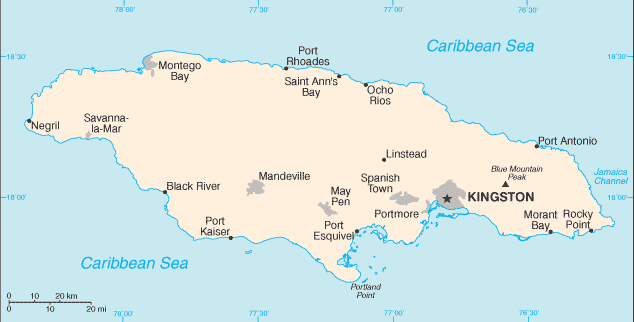
Kingston
2,889,187 (July 2012 est.)
Elizabeth II of United Kingdom
Queen since 6 February 1952
Queen since 6 February 1952
The monarch is hereditary; governor general appointed by the
monarch on the recommendation of the prime minister;
Next scheduled election: None
monarch on the recommendation of the prime minister;
Next scheduled election: None
HEAD OF GOVERNMENT
SELECTION PROCESS
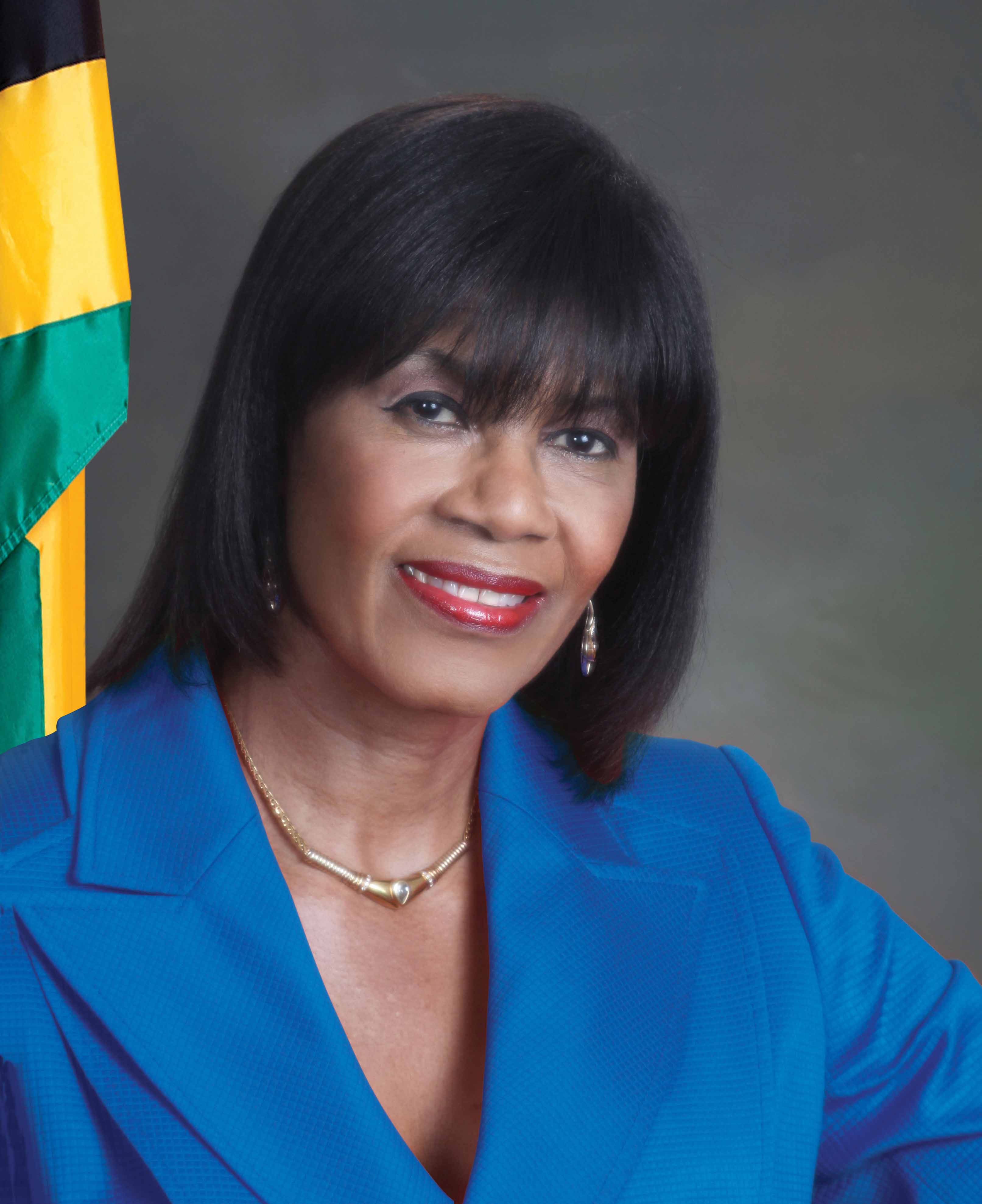
Portia Simpson-Miller
Prime Minister since 5 January 2012
Prime Minister since 5 January 2012
Following legislative elections, the leader of the majority party or
the leader of the majority coalition in the House of
Representatives is appointed prime minister by the governor
general; the deputy prime minister is recommended by the prime
minister Elections last held: 29 December 2011
Next scheduled election: December 2016
the leader of the majority coalition in the House of
Representatives is appointed prime minister by the governor
general; the deputy prime minister is recommended by the prime
minister Elections last held: 29 December 2011
Next scheduled election: December 2016
| DECLARATION OF HUMAN RIGHTS |
| ETHNIC GROUPS |
Black 91.2%, mixed 6.2%, other or unknown 2.6% (2001 census)
| RELIGIONS |
Protestant 62.5% (Seventh-Day Adventist 10.8%, Pentecostal 9.5%, Other Church of God 8.3%, Baptist 7.2%,
New Testament Church of God 6.3%, Church of God in Jamaica 4.8%, Church of God of Prophecy 4.3%,
Anglican 3.6%, other Christian 7.7%), Roman Catholic 2.6%, other or unspecified 14.2%, none 20.9%, (2001
census)
New Testament Church of God 6.3%, Church of God in Jamaica 4.8%, Church of God of Prophecy 4.3%,
Anglican 3.6%, other Christian 7.7%), Roman Catholic 2.6%, other or unspecified 14.2%, none 20.9%, (2001
census)
| GOVERNMENT STRUCTURE |
Constitutional parliamentary democracy ; 14 parishes; Legal system is based on English common law; has not accepted
compulsory ICJ jurisdiction
Executive: The monarch is hereditary; governor general appointed by the monarch on the recommendation of the
prime minister; following legislative elections, the leader of the majority party or the leader of the majority coalition in
the House of Representatives is appointed prime minister by the governor general; the deputy prime minister is
recommended by the prime minister
Legislative: Bicameral Parliament consists of the Senate (a 21-member body appointed by the governor general on
the recommendations of the prime minister and the leader of the opposition; ruling party is allocated 13 seats, and the
opposition is allocated eight seats) and the House of Representatives (60 seats; members are elected by popular vote
to serve five-year terms)
elections: last held 29 December 2011 (next to be held no later than December 2016)
Judicial: Supreme Court (judges appointed by the governor general on the advice of the prime minister); Court of
Appeal
compulsory ICJ jurisdiction
Executive: The monarch is hereditary; governor general appointed by the monarch on the recommendation of the
prime minister; following legislative elections, the leader of the majority party or the leader of the majority coalition in
the House of Representatives is appointed prime minister by the governor general; the deputy prime minister is
recommended by the prime minister
Legislative: Bicameral Parliament consists of the Senate (a 21-member body appointed by the governor general on
the recommendations of the prime minister and the leader of the opposition; ruling party is allocated 13 seats, and the
opposition is allocated eight seats) and the House of Representatives (60 seats; members are elected by popular vote
to serve five-year terms)
elections: last held 29 December 2011 (next to be held no later than December 2016)
Judicial: Supreme Court (judges appointed by the governor general on the advice of the prime minister); Court of
Appeal
| LANGUAGES |
English, English patois
| BRIEF HISTORY |
Tainos from South America had settled in Jamaica at around 1,000 BC and called the land Xamayca, meaning land of
wood and water. After Christopher Columbus' arrival in 1494, Spain claimed the island and began occupation in 1509,
naming the island Santiago (St. James). The Arawaks were exterminated by disease, slavery, and war. Some also
committed suicide, presumably to escape their conditions as slaves. Spain brought the first African slaves to Jamaica in
1517. On Jamaica one outspoken man, Bartolome de Las Casas, worked for the protection of the Taino population. It
was also he who suggested, and later came to regret, the importation of slaves from Africa. De Las Casas was a Spanish
priest, and wrote several books about the poor treatment of the natives by Spanish conquistadors. He believed that the
Spanish should work to convert the Tainos to Christianity. The settlers later moved to Villa de la Vega, now called
Spanish Town. This settlement became the capital of Jamaica. By the 1640s many people were attracted to Jamaica,
which had a reputation for stunning beauty. In fact, pirates were known to desert their raiding parties and stay on the
island. For 100 years between 1555 and 1655 Spanish Jamaica was subject to many pirate attacks, the final attack left
the island in the hands of the English. The English were also subject to pirate raids after they began their occupation of the
island. The 1907 Catholic Encyclopedia states, "A review of the period of Spanish occupation is one which reflects very
little credit on Spanish colonial administration in those days. Their treatment of the aboriginal inhabitants, whom they are
accused of having practically exterminated, is a grave charge, and if true, cannot be condoned on the plea that such
conduct was characteristic of the age, and that as bad or worse was perpetrated by other nations even in later years."
This is borne out by the much more detailed history of Spanish Jamaica by Francisco Morales Padrón. In May 1655,
British forces in the form of a joint expedition by Admiral Sir William Penn (father of the founder of Pennsylvania), and
General Robert Venables seized the island. In 1657 the Governor invited buccaneers to base themselves at Port Royal to
deter Spanish aggression. In 1657 and 1658 the Spanish, sailing from Cuba, failed at the battles of Ocho Rios and Rio
Nuevo in their attempts to retake the island, and in 1657 Admiral Robert Blake defeated the Spanish West Indian Fleet.
The British extended colonisation in 1661 and gained formal recognition of possession from other European powers
through the Treaty of Madrid in 1670. However part of the Island remained in the hands of the Maroons with whom they
signed a treaty on 1 March 1738. Although much of the Spanish capital, Villa de la Vega, was burned during the
conquest, the English renamed it Spanish Town and kept it as the island's capital. For some time, however, Port Royal
functioned as the capital while Spanish Town was being rebuilt. The island was a major base for pirates, especially at Port
Royal before it was destroyed in an earthquake in 1692. After the disaster, Kingston was founded across the harbor, one
of the largest natural havens in the world, and rapidly became the major commercial centre of the island. The cultivation of
sugar cane and coffee by African slave labour made Jamaica one of the most valuable possessions in the world for more
than 150 years. The colony's slaves, who outnumbered their white masters 300,000 to 30,000 in 1800, mounted over a
dozen major slave conspiracies and uprisings between 1673 and 1832. Escaped slaves, known as Maroons established
independent communities in the mountainous interior that the British were unable to defeat, despite major attempts in the
1730s and 1790s; one Maroon community was expelled from the island after the Second Maroon War in the 1790s and
those Maroons eventually became part of the core of the Creole community of Sierra Leone. The colonial government
enlisted the Maroons in capturing escaped plantation slaves. The British also used Jamaica's free people of color, 10,000
strong by 1800, to keep the enslaved population in check. During the Christmas holiday of 1831, a large scale slave
revolt (involving as many as 60,000 of the island's 300,000 slave population) known as the Baptist War broke. It was
organised originally as a peaceful strike by Samuel Sharp. The rebellion was suppressed by the militia of the Jamaican
plantocracy and the British garrison ten days later in early 1832. Because the loss of property and life in the 1831
rebellion, the British Parliament held two inquiries. The results of these inquiries contributed greatly to the abolition of
slavery as of August 1, 1834 throughout the British Empire. However the Jamaican slaves remained bound to their former
owners' service, albeit with a guarantee of rights, until 1838 under what was called the Apprenticeship System. The freed
population still faced significant hardships, marked by the October 1865 Morant Bay rebellion led by George William
Gordon and Paul Bogle. It was brutally repressed and in its wake the island's Assembly renounced its authority and
Jamaica became a Crown Colony. The sugar crop was declining in importance in the late 19th century and the colony
diversified into bananas. In 1872 the capital was moved to Kingston, as the port city had far outstripped the inland
Spanish Town in size and sophistication. The establishment of Crown Colony rule resulted over the next few decades in
the growth of a middle class of low-level public officials and police officers drawn from the mass of the population whose
social and political advancement was blocked by the colonial authorities. The Great Depression had a serious impact both
on the emergent middle class and the working class of the 1930s. In the spring of 1938 sugar and dock workers around
the island rose in revolt. Although the revolt was suppressed it led to significant changes including the emergence of an
organized labour movement and a competitive party system. Jamaica gained a degree of local political control in the
mid-1940s. The People's National Party (PNP) was founded in 1938. Its main rival, the Jamaica Labour Party (JLP) was
established five years later. The first elections under universal adult suffrage was held in 1944. Jamaica joined nine other
UK territories in the Federation of the West Indies in 1958 but withdrew after Jamaican voters rejected membership in
1961. Jamaica gained independence on August 6, 1962, remaining a member of the Commonwealth of Nations. The first
prime minister was Alexander Bustamante of the Jamaica Labour Party. Initially, power swapped between the People's
National Party and the Jamaican Labour Party regularly. Michael Manley was the first PNP prime minister in 1972 and he
introduced socialist policies and improved relations with Cuba. His second term elections marked the start of repeated
political violence. When the PNP lost power in 1980 Edward Seaga immediately began to reverse the policies of his
predecessor, bringing in privatization and seeking closer ties with the USA. When the PNP and Manley returned to
power in 1989 they continued the more moderate policies and were returned in the elections of 1993 and 1998. Manley
resigned for health reasons in 1992 and was succeeded as leader of the PNP by Percival Patterson Historically, Jamaican
emigration has been heavy. In the late 19th and early 20th centuries, many Jamaicans migrated to Central America, Cuba,
and the Dominican Republic to work in the banana and canefields. In the 1950s and 1960s the primary destination was
the United Kingdom; since the United Kingdom restricted emigration in 1962, the major flow has been to the United
States and Canada. About 20,000 Jamaicans emigrate to the United States each year; another 200,000 visit annually.
New York, Miami, Chicago, and Hartford are among the U.S. cities with a significant Jamaican population. Remittances
from the expatriate communities in the United States, United Kingdom, and Canada make increasingly significant
contributions to Jamaica's economy.
Source: Wikipedia History of the Jamaica
wood and water. After Christopher Columbus' arrival in 1494, Spain claimed the island and began occupation in 1509,
naming the island Santiago (St. James). The Arawaks were exterminated by disease, slavery, and war. Some also
committed suicide, presumably to escape their conditions as slaves. Spain brought the first African slaves to Jamaica in
1517. On Jamaica one outspoken man, Bartolome de Las Casas, worked for the protection of the Taino population. It
was also he who suggested, and later came to regret, the importation of slaves from Africa. De Las Casas was a Spanish
priest, and wrote several books about the poor treatment of the natives by Spanish conquistadors. He believed that the
Spanish should work to convert the Tainos to Christianity. The settlers later moved to Villa de la Vega, now called
Spanish Town. This settlement became the capital of Jamaica. By the 1640s many people were attracted to Jamaica,
which had a reputation for stunning beauty. In fact, pirates were known to desert their raiding parties and stay on the
island. For 100 years between 1555 and 1655 Spanish Jamaica was subject to many pirate attacks, the final attack left
the island in the hands of the English. The English were also subject to pirate raids after they began their occupation of the
island. The 1907 Catholic Encyclopedia states, "A review of the period of Spanish occupation is one which reflects very
little credit on Spanish colonial administration in those days. Their treatment of the aboriginal inhabitants, whom they are
accused of having practically exterminated, is a grave charge, and if true, cannot be condoned on the plea that such
conduct was characteristic of the age, and that as bad or worse was perpetrated by other nations even in later years."
This is borne out by the much more detailed history of Spanish Jamaica by Francisco Morales Padrón. In May 1655,
British forces in the form of a joint expedition by Admiral Sir William Penn (father of the founder of Pennsylvania), and
General Robert Venables seized the island. In 1657 the Governor invited buccaneers to base themselves at Port Royal to
deter Spanish aggression. In 1657 and 1658 the Spanish, sailing from Cuba, failed at the battles of Ocho Rios and Rio
Nuevo in their attempts to retake the island, and in 1657 Admiral Robert Blake defeated the Spanish West Indian Fleet.
The British extended colonisation in 1661 and gained formal recognition of possession from other European powers
through the Treaty of Madrid in 1670. However part of the Island remained in the hands of the Maroons with whom they
signed a treaty on 1 March 1738. Although much of the Spanish capital, Villa de la Vega, was burned during the
conquest, the English renamed it Spanish Town and kept it as the island's capital. For some time, however, Port Royal
functioned as the capital while Spanish Town was being rebuilt. The island was a major base for pirates, especially at Port
Royal before it was destroyed in an earthquake in 1692. After the disaster, Kingston was founded across the harbor, one
of the largest natural havens in the world, and rapidly became the major commercial centre of the island. The cultivation of
sugar cane and coffee by African slave labour made Jamaica one of the most valuable possessions in the world for more
than 150 years. The colony's slaves, who outnumbered their white masters 300,000 to 30,000 in 1800, mounted over a
dozen major slave conspiracies and uprisings between 1673 and 1832. Escaped slaves, known as Maroons established
independent communities in the mountainous interior that the British were unable to defeat, despite major attempts in the
1730s and 1790s; one Maroon community was expelled from the island after the Second Maroon War in the 1790s and
those Maroons eventually became part of the core of the Creole community of Sierra Leone. The colonial government
enlisted the Maroons in capturing escaped plantation slaves. The British also used Jamaica's free people of color, 10,000
strong by 1800, to keep the enslaved population in check. During the Christmas holiday of 1831, a large scale slave
revolt (involving as many as 60,000 of the island's 300,000 slave population) known as the Baptist War broke. It was
organised originally as a peaceful strike by Samuel Sharp. The rebellion was suppressed by the militia of the Jamaican
plantocracy and the British garrison ten days later in early 1832. Because the loss of property and life in the 1831
rebellion, the British Parliament held two inquiries. The results of these inquiries contributed greatly to the abolition of
slavery as of August 1, 1834 throughout the British Empire. However the Jamaican slaves remained bound to their former
owners' service, albeit with a guarantee of rights, until 1838 under what was called the Apprenticeship System. The freed
population still faced significant hardships, marked by the October 1865 Morant Bay rebellion led by George William
Gordon and Paul Bogle. It was brutally repressed and in its wake the island's Assembly renounced its authority and
Jamaica became a Crown Colony. The sugar crop was declining in importance in the late 19th century and the colony
diversified into bananas. In 1872 the capital was moved to Kingston, as the port city had far outstripped the inland
Spanish Town in size and sophistication. The establishment of Crown Colony rule resulted over the next few decades in
the growth of a middle class of low-level public officials and police officers drawn from the mass of the population whose
social and political advancement was blocked by the colonial authorities. The Great Depression had a serious impact both
on the emergent middle class and the working class of the 1930s. In the spring of 1938 sugar and dock workers around
the island rose in revolt. Although the revolt was suppressed it led to significant changes including the emergence of an
organized labour movement and a competitive party system. Jamaica gained a degree of local political control in the
mid-1940s. The People's National Party (PNP) was founded in 1938. Its main rival, the Jamaica Labour Party (JLP) was
established five years later. The first elections under universal adult suffrage was held in 1944. Jamaica joined nine other
UK territories in the Federation of the West Indies in 1958 but withdrew after Jamaican voters rejected membership in
1961. Jamaica gained independence on August 6, 1962, remaining a member of the Commonwealth of Nations. The first
prime minister was Alexander Bustamante of the Jamaica Labour Party. Initially, power swapped between the People's
National Party and the Jamaican Labour Party regularly. Michael Manley was the first PNP prime minister in 1972 and he
introduced socialist policies and improved relations with Cuba. His second term elections marked the start of repeated
political violence. When the PNP lost power in 1980 Edward Seaga immediately began to reverse the policies of his
predecessor, bringing in privatization and seeking closer ties with the USA. When the PNP and Manley returned to
power in 1989 they continued the more moderate policies and were returned in the elections of 1993 and 1998. Manley
resigned for health reasons in 1992 and was succeeded as leader of the PNP by Percival Patterson Historically, Jamaican
emigration has been heavy. In the late 19th and early 20th centuries, many Jamaicans migrated to Central America, Cuba,
and the Dominican Republic to work in the banana and canefields. In the 1950s and 1960s the primary destination was
the United Kingdom; since the United Kingdom restricted emigration in 1962, the major flow has been to the United
States and Canada. About 20,000 Jamaicans emigrate to the United States each year; another 200,000 visit annually.
New York, Miami, Chicago, and Hartford are among the U.S. cities with a significant Jamaican population. Remittances
from the expatriate communities in the United States, United Kingdom, and Canada make increasingly significant
contributions to Jamaica's economy.
Source: Wikipedia History of the Jamaica
| ECONOMIC OVERVIEW |
The Jamaican economy is heavily dependent on services, which now account for nearly 65% of GDP. The country
continues to derive most of its foreign exchange from tourism, remittances, and bauxite/alumina. Remittances account
for nearly 15% of GDP and exports of bauxite and alumina make up about 10%. The bauxite/alumina sector was most
affected by the global downturn while the tourism industry was resilient, experiencing an increase of 4% in tourist
arrivals. Tourism revenues account for roughly 10% of GDP, and both arrivals and revenues grew in 2010, up 4% and
6% respectively. Jamaica's economy faces many challenges to growth: high crime and corruption, large-scale
unemployment and underemployment, and a debt-to-GDP ratio of more than 120%. Jamaica''s onerous public debt
burden is the result of government bailouts to ailing sectors of the economy, most notably to the financial sector in the
mid-to-late 1990s. In early 2010, the Jamaican government created the Jamaica Debt Exchange in order to retire
high-priced domestic bonds and significantly reduce annual debt servicing. The Government of Jamaica signed a $1.27
billion, 27-month Standby Agreement with the International Monetary Fund for balance of payment support in
February 2010. Other multilaterals have also provided millions of dollars in loans and grants. Despite the improvement,
debt servicing costs still hinder the government''s ability to spend on infrastructure and social programs, particularly as
job losses rise in a shrinking economy. The SIMPSON-MILLER administration faces the difficult prospect of having to
achieve fiscal discipline in order to maintain debt payments, while simultaneously attacking a serious crime problem that
is hampering economic growth. High unemployment exacerbates the crime problem, including gang violence that is
fueled by the drug trade.
Source: CIA World Factbook (select Jamaica)
continues to derive most of its foreign exchange from tourism, remittances, and bauxite/alumina. Remittances account
for nearly 15% of GDP and exports of bauxite and alumina make up about 10%. The bauxite/alumina sector was most
affected by the global downturn while the tourism industry was resilient, experiencing an increase of 4% in tourist
arrivals. Tourism revenues account for roughly 10% of GDP, and both arrivals and revenues grew in 2010, up 4% and
6% respectively. Jamaica's economy faces many challenges to growth: high crime and corruption, large-scale
unemployment and underemployment, and a debt-to-GDP ratio of more than 120%. Jamaica''s onerous public debt
burden is the result of government bailouts to ailing sectors of the economy, most notably to the financial sector in the
mid-to-late 1990s. In early 2010, the Jamaican government created the Jamaica Debt Exchange in order to retire
high-priced domestic bonds and significantly reduce annual debt servicing. The Government of Jamaica signed a $1.27
billion, 27-month Standby Agreement with the International Monetary Fund for balance of payment support in
February 2010. Other multilaterals have also provided millions of dollars in loans and grants. Despite the improvement,
debt servicing costs still hinder the government''s ability to spend on infrastructure and social programs, particularly as
job losses rise in a shrinking economy. The SIMPSON-MILLER administration faces the difficult prospect of having to
achieve fiscal discipline in order to maintain debt payments, while simultaneously attacking a serious crime problem that
is hampering economic growth. High unemployment exacerbates the crime problem, including gang violence that is
fueled by the drug trade.
Source: CIA World Factbook (select Jamaica)
| POLITICAL CLIMATE |
The two long-established political parties have historical links with two major trade unions — the Jamaica Labour Party
(JLP) with the Bustamante Industrial Trade Union (BITU) and the People's National Party (PNP) with the National
Workers Union (NWU). A third party, the National Democratic Movement (NDM), was created in October 1995; it
does not have links with any particular trade union, and its leading figures have mostly withdrawn from it or significantly
reduced their activity.
In 2005, JLP leader Edward Seaga (who had headed the party since 1974), announced his resignation from that
position. He was succeeded by Bruce Golding, who had been a government minister under him in the 1980s, but who
had broken from the JLP to found the NDM and had subsequently returned to the JLP.
In March 2006, Portia Simpson-Miller was appointed Jamaica's seventh Prime Minister. She is the first woman in the
country's history to hold the position of Prime Minister of Jamaica.
On September 11, 2007, Bruce Golding assumed office as Prime Minister of Jamaica.
The 2011 Jamaican general election was held on 29 December 2011 in Jamaica. The election was contested mainly
between the nation's two major political parties, the governing Jamaica Labour Party (JLP), led by Andrew Holness,
and the Portia Simpson-Miller-led opposition People's National Party (PNP). The result was a landslide victory for the
PNP which won 42 of the 63 seats, a two-thirds majority
Source: Wikipedia: Politics of Jamaica
(JLP) with the Bustamante Industrial Trade Union (BITU) and the People's National Party (PNP) with the National
Workers Union (NWU). A third party, the National Democratic Movement (NDM), was created in October 1995; it
does not have links with any particular trade union, and its leading figures have mostly withdrawn from it or significantly
reduced their activity.
In 2005, JLP leader Edward Seaga (who had headed the party since 1974), announced his resignation from that
position. He was succeeded by Bruce Golding, who had been a government minister under him in the 1980s, but who
had broken from the JLP to found the NDM and had subsequently returned to the JLP.
In March 2006, Portia Simpson-Miller was appointed Jamaica's seventh Prime Minister. She is the first woman in the
country's history to hold the position of Prime Minister of Jamaica.
On September 11, 2007, Bruce Golding assumed office as Prime Minister of Jamaica.
The 2011 Jamaican general election was held on 29 December 2011 in Jamaica. The election was contested mainly
between the nation's two major political parties, the governing Jamaica Labour Party (JLP), led by Andrew Holness,
and the Portia Simpson-Miller-led opposition People's National Party (PNP). The result was a landslide victory for the
PNP which won 42 of the 63 seats, a two-thirds majority
Source: Wikipedia: Politics of Jamaica
| INTERNATIONAL DISPUTES |
None reported.


| REFUGEES AND INTERNALLY DISPLACED PERSONS (IDP) |
None reported.
| ILLICIT DRUGS |
Transshipment point for cocaine from South America to North America and Europe; illicit cultivation and consumption
of cannabis; government has an active manual cannabis eradication program; corruption is a major concern; substantial
money-laundering activity; Colombian narcotics traffickers favor Jamaica for illicit financial transactions
of cannabis; government has an active manual cannabis eradication program; corruption is a major concern; substantial
money-laundering activity; Colombian narcotics traffickers favor Jamaica for illicit financial transactions
| HUMAN RIGHTS STATEMENTS, ANALYSIS AND CRITIQUES |
2011 Human Rights Report: Jamaica
Bureau of Democracy, Human Rights, and Labor
2011 Country Reports on Human Rights Practices
May 25, 2012
Jamaica is a constitutional parliamentary democracy. On December 29, the opposition Peoples National Party (PNP) won 42 of the
63 seats in the House of Representatives, and PNP leader Portia Simpson Miller was sworn in as prime minister on January 5,
2012. The leader of the defeated Jamaica Labour Party (JLP), Andrew Holness, served as prime minister after October 23,
following the unexpected resignation of Prime Minister Bruce Golding. International election observers deemed the elections
transparent, free and fair, and without violence. During the year there were instances in which elements of security forces acted
independently of civilian control.
The most serious human rights problems in the country were alleged unlawful security force killings, instances where cases
involving the violation of rights were not resolved in a timely way, and poor prison and jail conditions, including abuse of detainees
and prisoners.
Other human rights problems included an overburdened judicial system and frequent lengthy delays in trials, violence against and
sexual abuse of children, violence and discrimination against women, trafficking in persons, and violence against persons based on
their suspected or known sexual orientation.
The government took some steps to punish members of the security forces who committed abuses, but there were other instances
where no arrests or prosecutions occurred, providing impunity for police who committed crimes.
Click here to read more »
Bureau of Democracy, Human Rights, and Labor
2011 Country Reports on Human Rights Practices
May 25, 2012
Jamaica is a constitutional parliamentary democracy. On December 29, the opposition Peoples National Party (PNP) won 42 of the
63 seats in the House of Representatives, and PNP leader Portia Simpson Miller was sworn in as prime minister on January 5,
2012. The leader of the defeated Jamaica Labour Party (JLP), Andrew Holness, served as prime minister after October 23,
following the unexpected resignation of Prime Minister Bruce Golding. International election observers deemed the elections
transparent, free and fair, and without violence. During the year there were instances in which elements of security forces acted
independently of civilian control.
The most serious human rights problems in the country were alleged unlawful security force killings, instances where cases
involving the violation of rights were not resolved in a timely way, and poor prison and jail conditions, including abuse of detainees
and prisoners.
Other human rights problems included an overburdened judicial system and frequent lengthy delays in trials, violence against and
sexual abuse of children, violence and discrimination against women, trafficking in persons, and violence against persons based on
their suspected or known sexual orientation.
The government took some steps to punish members of the security forces who committed abuses, but there were other instances
where no arrests or prosecutions occurred, providing impunity for police who committed crimes.
Click here to read more »
Human Rights Committee
103rd session
Geneva, 17 October – 4 November 2011
Consideration of reports submitted by States parties under article 40 of the Covenant
Concluding observations of the Human Rights Committee
Jamaica
A. Introduction
2. The Committee welcomes the submission of the third periodic report of Jamaica, albeit 10 years late. The Committee
expresses appreciation for the information contained therein and for the opportunity to renew its constructive dialogue with the
State party. The Committee is grateful to the State party for its written replies (CCPR/C/JAM/Q/3/Add.1) to the list of issues,
which were supplemented by the oral responses provided by the delegation and for the supplementary information provided to it in
writing.
B. Positive aspects
3. The Committee welcomes the following legislative and institutional steps taken by the State party:
(i) The enactment of the Trafficking in Persons Act of 2007;
(ii) The enactment of the Child Care and Protection Act of 2004; and
(iii) The establishment of the Independent Commission of Investigations (INDECOM) in 2010;
4. The Committee also welcomes the ratification of the following international human rights instruments:
(i) The Convention on the Rights of Persons with Disabilities on 30 March 2007; and
(ii) The Optional Protocol to the Convention on the Rights of the Child on the Sale of Children, Child Prostitution and Child
Pornography on 26 August 2011.
C. Principal matters of concern and recommendations
5. While welcoming the establishment of the Office of the Public Defender and the Bureau of Women’s Affairs, the
Committee is concerned that the State party has not yet established a national institution in accordance with the Paris Principles
(General Assembly resolution 48/134). (art. 2)
The State party should establish an independent national human rights institution, and provide it with adequate financial and human
resources, in line with the Paris Principles (General Assembly resolution 48/134, annex).
6. While taking note that most of the provisions of the Covenant are contained in the Constitution of the State party under the
Charter of Fundamental Rights and Freedoms, the Committee is concerned that the provisions of the Covenant cannot be directly
invoked before domestic courts (art. 2).
The State party should take appropriate measures to raise awareness of the Covenant among judges, lawyers and prosecutors to
ensure that its provisions are taken into account before domestic courts. In this regard, the State party should take effective
measures to widely disseminate the Covenant in the State party.
Click here to read more »
103rd session
Geneva, 17 October – 4 November 2011
Consideration of reports submitted by States parties under article 40 of the Covenant
Concluding observations of the Human Rights Committee
Jamaica
A. Introduction
2. The Committee welcomes the submission of the third periodic report of Jamaica, albeit 10 years late. The Committee
expresses appreciation for the information contained therein and for the opportunity to renew its constructive dialogue with the
State party. The Committee is grateful to the State party for its written replies (CCPR/C/JAM/Q/3/Add.1) to the list of issues,
which were supplemented by the oral responses provided by the delegation and for the supplementary information provided to it in
writing.
B. Positive aspects
3. The Committee welcomes the following legislative and institutional steps taken by the State party:
(i) The enactment of the Trafficking in Persons Act of 2007;
(ii) The enactment of the Child Care and Protection Act of 2004; and
(iii) The establishment of the Independent Commission of Investigations (INDECOM) in 2010;
4. The Committee also welcomes the ratification of the following international human rights instruments:
(i) The Convention on the Rights of Persons with Disabilities on 30 March 2007; and
(ii) The Optional Protocol to the Convention on the Rights of the Child on the Sale of Children, Child Prostitution and Child
Pornography on 26 August 2011.
C. Principal matters of concern and recommendations
5. While welcoming the establishment of the Office of the Public Defender and the Bureau of Women’s Affairs, the
Committee is concerned that the State party has not yet established a national institution in accordance with the Paris Principles
(General Assembly resolution 48/134). (art. 2)
The State party should establish an independent national human rights institution, and provide it with adequate financial and human
resources, in line with the Paris Principles (General Assembly resolution 48/134, annex).
6. While taking note that most of the provisions of the Covenant are contained in the Constitution of the State party under the
Charter of Fundamental Rights and Freedoms, the Committee is concerned that the provisions of the Covenant cannot be directly
invoked before domestic courts (art. 2).
The State party should take appropriate measures to raise awareness of the Covenant among judges, lawyers and prosecutors to
ensure that its provisions are taken into account before domestic courts. In this regard, the State party should take effective
measures to widely disseminate the Covenant in the State party.
Click here to read more »
FREEDOM IN THE WORLD 2012 REPORT
Political Rights Score: 2
Civil Liberties Score: 3
Status: Free
Overview
In August 2011, Jamaican drug lord Christopher “Dudus” Coke pled guilty in the United States to drug trafficking charges. The
following month, Jamaican prime minister Bruce Golding resigned, likely as a result of public anger over his handling of the Coke
situation. Golding was replaced as prime minister and leader of the Jamaica Labour Party (JLP) by Andrew Holness, who called for
early elections in December. The People’s National Party (PNP) won a strong parliamentary majority, and PNP leader Portia
Simpson Miller became prime minister.
Long-standing relationships between elected representatives and organized crime, in which criminal gangs guaranteed voter turnout
in certain neighborhoods in exchange for political favors and protection, received special scrutiny in recent years as the U.S.
government pressed for the extradition of alleged drug trafficker Christopher “Dudus” Coke. The gang Coke reputedly led, the
Shower Posse, was based in Tivoli Gardens, an area of Kingston that Golding represented in Parliament. In April 2010, the
Washington Post reported that a JLP government official had signed a $400,000 contract with the U.S. lobbying firm Manatt,
Phelps & Phillips to fight Coke’s extradition. The public outcry in the United States and Jamaica forced Golding in May 2010 to
order Jamaican security forces into Tivoli Gardens to arrest Coke, leading to days of violence in which over 70 civilians and several
police personnel were killed. Coke was finally apprehended in late June, reportedly on his way to surrender at the U.S. embassy. In
August 2011, after being extradited to the United States, he pled guilty to drug trafficking and assault charges and faced up to 21
years in prison under a plea bargain. Coke had not been sentenced by year’s end.
Prime Minister Golding suddenly announced his resignation in September 2011, a move widely interpreted as fallout from the Coke
affair, which had caused Golding to lose support within his own party and among the electorate. Observers speculated that the
managed transition to a successor was a preemptive political maneuver to keep the JLP as a viable political contender. In October,
the JLP elected Minister of Education Andrew Holness to become Golding’s successor as party leader and prime minister. The
transition to Holness, who was 39 years old, was seen by some as marking a generational shift within the JLP, and possibly within
Jamaican party politics in general.
Holness called for early general elections at the end of the year. On December 29, the PNP was overwhelmingly victorious in those
elections, winning 41 seats in Parliament, while the JLP took only 22. Portia Simpson Miller became prime minister; she had
previously held the position in 2006 and 2007.
Click here to read more »
Political Rights Score: 2
Civil Liberties Score: 3
Status: Free
Overview
In August 2011, Jamaican drug lord Christopher “Dudus” Coke pled guilty in the United States to drug trafficking charges. The
following month, Jamaican prime minister Bruce Golding resigned, likely as a result of public anger over his handling of the Coke
situation. Golding was replaced as prime minister and leader of the Jamaica Labour Party (JLP) by Andrew Holness, who called for
early elections in December. The People’s National Party (PNP) won a strong parliamentary majority, and PNP leader Portia
Simpson Miller became prime minister.
Long-standing relationships between elected representatives and organized crime, in which criminal gangs guaranteed voter turnout
in certain neighborhoods in exchange for political favors and protection, received special scrutiny in recent years as the U.S.
government pressed for the extradition of alleged drug trafficker Christopher “Dudus” Coke. The gang Coke reputedly led, the
Shower Posse, was based in Tivoli Gardens, an area of Kingston that Golding represented in Parliament. In April 2010, the
Washington Post reported that a JLP government official had signed a $400,000 contract with the U.S. lobbying firm Manatt,
Phelps & Phillips to fight Coke’s extradition. The public outcry in the United States and Jamaica forced Golding in May 2010 to
order Jamaican security forces into Tivoli Gardens to arrest Coke, leading to days of violence in which over 70 civilians and several
police personnel were killed. Coke was finally apprehended in late June, reportedly on his way to surrender at the U.S. embassy. In
August 2011, after being extradited to the United States, he pled guilty to drug trafficking and assault charges and faced up to 21
years in prison under a plea bargain. Coke had not been sentenced by year’s end.
Prime Minister Golding suddenly announced his resignation in September 2011, a move widely interpreted as fallout from the Coke
affair, which had caused Golding to lose support within his own party and among the electorate. Observers speculated that the
managed transition to a successor was a preemptive political maneuver to keep the JLP as a viable political contender. In October,
the JLP elected Minister of Education Andrew Holness to become Golding’s successor as party leader and prime minister. The
transition to Holness, who was 39 years old, was seen by some as marking a generational shift within the JLP, and possibly within
Jamaican party politics in general.
Holness called for early general elections at the end of the year. On December 29, the PNP was overwhelmingly victorious in those
elections, winning 41 seats in Parliament, while the JLP took only 22. Portia Simpson Miller became prime minister; she had
previously held the position in 2006 and 2007.
Click here to read more »
Jamaica: One more year without justice
22 May 2012
Two years have passed with no answers. Paulette Wellington is still waiting to know the circumstances in which her son, Sheldon
Gary Davis, was killed, less than a week after the proclamation of the state of emergency in May 2010. He was arrested at home
by the security forces on Sunday 30 May 2010 in Denham Town, West Kingston. After the arrest, Paulette desperately searched
for him and only four days later received confirmation that he had been killed. A police officer told her that an officer shot him
under custody when he tried to take a soldier’s gun. Other men under custody with Sheldon said that they saw a police officer
putting Sheldon under a mango tree and shooting him.
Like Paulette Wellington, many other families are still waiting for truth and justice. Two years have passed since the Jamaican
security forces entered the West Kingston inner-city of Tivoli Gardens and killed at least 73 people as part of a law enforcement
operation aimed at arresting suspected gang leader Christopher Coke. Two years have passed since the two monthlong state of
emergency was declared, during which time several other people, like Sheldon Gary Davis, were suspected of having been
unlawfully killed by the security forces and hundreds of others are believed to have been unlawfully arrested. Amnesty International
documented these allegations in the report “Jamaica: A long road to justice? Human rights violations under the state of emergency”
(AI Index: AMR 38/002/2011), published on 23 May 2011.
The investigation by the office of the Public Defender into over 1000 complaints about the conduct of the security forces under the
state of emergency has yet to be concluded. On 21 May 2012, the Public Defender reported to the press that an interim
investigation report would be submitted to Parliament by the end of the month, indicating initial findings and setting out the
Government support required in order to conclude the investigations.
Shortcomings in the forensic services are one of the reasons for the long delay in the investigations. . In particular, the resources
available at the ballistics laboratory were deemed to be inadequate to deal with such a high number of cases, especially given that
the laboratory had already a backlog of 2000 requests in October 2010 for cases prior to the state of emergency. Jamaica has one
of the highest murder rates in the world and the number of fatal shootings by the police every year is also fairly high. As a result of
this, and well before the 2010 state of emergency, Jamaican human rights organizations and Amnesty International have been
campaigning for years to enhance the capacity and ensure the independence of the forensic services.
For the past two years, the Public Defender and Jamaican civil society organizations have been calling for the establishment of a
commission of inquiry into the allegations of human rights violations committed during the state of emergency. Amnesty
International also believes that such a commission is the best way to shed light on the overall scale of the alleged human rights
violations. In addition to clarifying the facts and establishing individual and institutional responsibility, a commission of inquiry
would also allow measures to be identified that could help prevent abuses being committed in the future.
Click here to read more »
22 May 2012
Two years have passed with no answers. Paulette Wellington is still waiting to know the circumstances in which her son, Sheldon
Gary Davis, was killed, less than a week after the proclamation of the state of emergency in May 2010. He was arrested at home
by the security forces on Sunday 30 May 2010 in Denham Town, West Kingston. After the arrest, Paulette desperately searched
for him and only four days later received confirmation that he had been killed. A police officer told her that an officer shot him
under custody when he tried to take a soldier’s gun. Other men under custody with Sheldon said that they saw a police officer
putting Sheldon under a mango tree and shooting him.
Like Paulette Wellington, many other families are still waiting for truth and justice. Two years have passed since the Jamaican
security forces entered the West Kingston inner-city of Tivoli Gardens and killed at least 73 people as part of a law enforcement
operation aimed at arresting suspected gang leader Christopher Coke. Two years have passed since the two monthlong state of
emergency was declared, during which time several other people, like Sheldon Gary Davis, were suspected of having been
unlawfully killed by the security forces and hundreds of others are believed to have been unlawfully arrested. Amnesty International
documented these allegations in the report “Jamaica: A long road to justice? Human rights violations under the state of emergency”
(AI Index: AMR 38/002/2011), published on 23 May 2011.
The investigation by the office of the Public Defender into over 1000 complaints about the conduct of the security forces under the
state of emergency has yet to be concluded. On 21 May 2012, the Public Defender reported to the press that an interim
investigation report would be submitted to Parliament by the end of the month, indicating initial findings and setting out the
Government support required in order to conclude the investigations.
Shortcomings in the forensic services are one of the reasons for the long delay in the investigations. . In particular, the resources
available at the ballistics laboratory were deemed to be inadequate to deal with such a high number of cases, especially given that
the laboratory had already a backlog of 2000 requests in October 2010 for cases prior to the state of emergency. Jamaica has one
of the highest murder rates in the world and the number of fatal shootings by the police every year is also fairly high. As a result of
this, and well before the 2010 state of emergency, Jamaican human rights organizations and Amnesty International have been
campaigning for years to enhance the capacity and ensure the independence of the forensic services.
For the past two years, the Public Defender and Jamaican civil society organizations have been calling for the establishment of a
commission of inquiry into the allegations of human rights violations committed during the state of emergency. Amnesty
International also believes that such a commission is the best way to shed light on the overall scale of the alleged human rights
violations. In addition to clarifying the facts and establishing individual and institutional responsibility, a commission of inquiry
would also allow measures to be identified that could help prevent abuses being committed in the future.
Click here to read more »
Jamaica: Investigate Killing of Human Rights Defender
Tragic Death of Clover Graham, Advocate for Refugees, Asylum Seekers
August 29, 2012
(Washington, DC) – Police should ensure that the investigation into the death of the refugee and asylum advocate Clover Graham is
effective, thorough, and impartial.
Graham’s body was discovered with her throat slit in St. Catherine, Jamaica, on August 19, 2012.
“It is critically important for authorities to act with urgency to find those responsible for this deplorable attack on a dedicated
human rights defender,” said Bill Frelick, Refugee Program director at Human Rights Watch.
Graham had worked with the United Nations High Commissioner for Refugees (UNHCR) since 1998, serving most recently as its
liaison for Jamaica, as well as in a legal aid clinic. She also lectured at the University of West Indies Law School and Jamaica’s
Institute of Technology.
Police have opened an investigation into Graham’s murder but have not yet identified or detained any suspects in the case,
according to news reports.
In November 2007, Graham’s son and his girlfriend were also murdered in Jamaica, likewise found with their throats slit, after they
took medical supplies to men with whom they had previously had a car accident. Two men were convicted for the crime in June
2012, and are to be sentenced in September.
“Graham’s untimely death is a devastating loss for the refugees and asylum seekers she assisted, and for the broader human rights
community in Jamaica,” Frelick said.
Click here to read more »
Tragic Death of Clover Graham, Advocate for Refugees, Asylum Seekers
August 29, 2012
(Washington, DC) – Police should ensure that the investigation into the death of the refugee and asylum advocate Clover Graham is
effective, thorough, and impartial.
Graham’s body was discovered with her throat slit in St. Catherine, Jamaica, on August 19, 2012.
“It is critically important for authorities to act with urgency to find those responsible for this deplorable attack on a dedicated
human rights defender,” said Bill Frelick, Refugee Program director at Human Rights Watch.
Graham had worked with the United Nations High Commissioner for Refugees (UNHCR) since 1998, serving most recently as its
liaison for Jamaica, as well as in a legal aid clinic. She also lectured at the University of West Indies Law School and Jamaica’s
Institute of Technology.
Police have opened an investigation into Graham’s murder but have not yet identified or detained any suspects in the case,
according to news reports.
In November 2007, Graham’s son and his girlfriend were also murdered in Jamaica, likewise found with their throats slit, after they
took medical supplies to men with whom they had previously had a car accident. Two men were convicted for the crime in June
2012, and are to be sentenced in September.
“Graham’s untimely death is a devastating loss for the refugees and asylum seekers she assisted, and for the broader human rights
community in Jamaica,” Frelick said.
Click here to read more »
Gender Mainstreaming in Progress
Friday, 02 November 2012
Executive Director, Bureau of Women's Affairs, Faith Webster, says the Government has embarked on a process of gender
mainstreaming, to ensure that gender is integrated into all policies, programmes and plans.
Mrs. Webster noted that the Bureau has been charged with the responsibility to lead the process of gender mainstreaming in the
public sector. “So, for the past two years we have been trying to see specifically how we can integrate gender into all the various
sectors of government,” she said.
The Executive Director was addressing members of various public sector agencies and departments during a training workshop on
HIV/AIDS and Gender Equality for Gender Focal Points in the Public Sector, held at the Hotel Four Seasons in Kingston, on
October 31.
Mrs. Webster also informed that much training and sensitisation has taken place over the last two years with representatives from
the public sector, which has resulted in a better understanding of gender issues among civil servants.
“We are quite pleased to see the high level of enthusiasm and participation, which the various groups have shown. It makes us feel
very good that people now understand the whole issue of gender, because once, gender was a concept that was so far removed,
but now persons are really relating it to their everyday life,” she said.
"They have really grasped the concepts and the issues and begun to utilise lessons learnt in their own work,” she added.
Gender Equality and HIV Technical Advisor, National HIV Programme (NHP), Patricia Phillips, explained that a major focus of the
NHP is to halt and reverse the spread of HIV in Jamaica by 2015.
She pointed out that the issues of gender inequality and HIV/AIDS are interconnected and therefore must be “be looked at
together,” in order to achieve the desired results.
“We will therefore seek to build your (public sector workers) competence to identify that gender equality and HIV has a connection
and to enable you to contribute the gender perspective in your workplaces, when your workplace takes on the HIV response,” she
said.
Ms. Phillips noted that public officials, who have been exposed to gender training through the intervention of the BWA, are
strategically positioned to influence policies and programmes that address the issue of HIV in the workplace.
Click here to read more »
Friday, 02 November 2012
Executive Director, Bureau of Women's Affairs, Faith Webster, says the Government has embarked on a process of gender
mainstreaming, to ensure that gender is integrated into all policies, programmes and plans.
Mrs. Webster noted that the Bureau has been charged with the responsibility to lead the process of gender mainstreaming in the
public sector. “So, for the past two years we have been trying to see specifically how we can integrate gender into all the various
sectors of government,” she said.
The Executive Director was addressing members of various public sector agencies and departments during a training workshop on
HIV/AIDS and Gender Equality for Gender Focal Points in the Public Sector, held at the Hotel Four Seasons in Kingston, on
October 31.
Mrs. Webster also informed that much training and sensitisation has taken place over the last two years with representatives from
the public sector, which has resulted in a better understanding of gender issues among civil servants.
“We are quite pleased to see the high level of enthusiasm and participation, which the various groups have shown. It makes us feel
very good that people now understand the whole issue of gender, because once, gender was a concept that was so far removed,
but now persons are really relating it to their everyday life,” she said.
"They have really grasped the concepts and the issues and begun to utilise lessons learnt in their own work,” she added.
Gender Equality and HIV Technical Advisor, National HIV Programme (NHP), Patricia Phillips, explained that a major focus of the
NHP is to halt and reverse the spread of HIV in Jamaica by 2015.
She pointed out that the issues of gender inequality and HIV/AIDS are interconnected and therefore must be “be looked at
together,” in order to achieve the desired results.
“We will therefore seek to build your (public sector workers) competence to identify that gender equality and HIV has a connection
and to enable you to contribute the gender perspective in your workplaces, when your workplace takes on the HIV response,” she
said.
Ms. Phillips noted that public officials, who have been exposed to gender training through the intervention of the BWA, are
strategically positioned to influence policies and programmes that address the issue of HIV in the workplace.
Click here to read more »
March 1, 2012
Is it necessary to abridge individual Human Rights in the fight against crime?
By Sophia M. Paz and Mikhail A.C. Jackson
Introduction
As human rights have developed over centuries, so have its several interpretations in society, but the overall theme has always
remained the same: they are rights inherent to all human beings. Based on this understanding, by definition, human rights cannot be
taken away, altered, amended or abridged because they are innate and fundamental to every human being. However, we do not live
in a utopian society where an individual’s human rights can exist absolutely sans limitations, indicating that human rights must be
approached as a social construct. This does not necessarily dilute their significance or make them less real because the effects of a
social construct are often as real as the physical objects before us. It simply facilitates and initiates the debate as to the appropriate
parameters of an individual’s human rights it is helpful. It is after all deemed a necessity to put limitations on an individual’s
human rights, as is apparent in our respective Constitutions and legislation.
Human rights are expressed in the absolute form through the Constitution. The Judiciary plays the role of devising limitations and
principles for restricting these fundamental rights as it suits the “greater good” of society. However, as a result of rampant crime,
many states, through our legislative bodies, have arrived at the conclusion that an individual’s human rights can be “edited” as it
suits our societal needs despite the fact that Constitutional provisions and customary International laws suggest that limitations must
only be exercised where it is absolutely necessary, such as in states of emergency, maintain public order, upholding public interest,
etc. In addition, according to Ian Boyne, “while rights [are inherent] in individuals, it is the state as an institution which has the
responsibility to balance the interests and rights of all of us. At least this is the theory in class society.”
In seeking a solution for the incidence of crime, within the context of human rights, is the right question truly “is it necessary to
abridge them”? Where the question is taken literally, it would be answered in the negative because, simply put, the “end justifies the
means” argument is old and of no utility. However, we propose that the relationship between human rights and crime is entirely
different, rending that question inappropriate for 3 reasons: first, it indicates a lack of understanding of the complexities and
intricacies of human rights; second it undermines the fact that to solve a problem, first the causes need to be determined and
analyzed; third and most importantly, we intend to put forth the argument that the abridgement of human rights already exists long
before it is put on a piece of legislation. Putting it into legislation is not only unconstitutional and contrary to the principles
enshrined in customary international law, it only serves to compounds the problem.
The abridgment of human rights may very well be the primary cause of crime and the very fact that people operate under the
misguided believe that abridging individual human rights in the name of fighting crime is a reasonable and just crusade indicates that
human rights is not understood for the complex concept that it is. Further, it suggests that solving crime can be done by treating
the symptoms and not the disease.
The problems that arise from crime are a central issue in public debate and important public policy concerns most Caribbean
countries. This problem is perhaps most acute in Jamaica due to its high rate of violent crime. Therefore, Jamaica will be used in
this paper for illustrative purposes.
Putting Crime into Context
Crime is a serious socio-economic problem that affects all states. Undoubtedly, the question that often follows is whether we can
find some justification for abridging of an individual’s human rights, such as punitively punishing criminals by depriving them of
their liberty and placing them in prison, in order to fight against crime. However, it would perhaps be more instructive to explore
the potential causes of crime.
What are the causes of crime in Jamaica? According to a report of the National Committee on Crime and Violence, among the
factors giving rise to crime and violence in Jamaica are the following: destabilized family structure (including poor parenting),
decline in values and attitudes across the society, urban drift, economic instability (including high unemployment). inequality in
income distribution, drug culture, high level of illiteracy, political tribalism, emergence of non-traditional/parallel leadership within
communities, ineffectual, citizen-unfriendly policing, negative perceptions towards access to security and Justice (particularly in
poor communities), ineffectiveness of channels of communication between the community and the police, high availability of
firearms and other weapons, lack of community empowerment (to address/ameliorate problems before they escalate), weak
financial status of civil society organizations which limits pre-emptive and response capability, corruption. All these factors
constitute the ingredients that create the problem child we call crime.
Though not an exhausting list, the Report highlights the key issues that form part of the problem. This begs the questions, what
causes these issues to occur in Jamaican society? Perhaps if human rights would come first, some of these issues would not
occur in such extreme abundance. For example, “citizen-unfriendly policing” is mentioned in the report as a contributing “cause”
of crime. According to Jamaicans for Justice, the Jamaica Constabulary Force has adopted hard policing and the various
formations of special squads to deal with crime. These methods undermine common humanity, decency and are a violation of
human rights.
In addition, using Draconian approaches in the fight against crime do not solve the medium to long term problem of crime in
Jamaica but will have only short term solutions. Besides affecting people directly, it also has had adverse effects on the country’s
prospects for Tourism, Investment and other important aspects of the country’s economic development. To site another example
of a contributing “cause” of crime in the report of the National Committee, is “economic instability.” This is a clear sign that these
methods of “abridging” a person’s individual rights form part of a cycle that affect all aspects of a society and only propels crime
forward.
Click here to read more »
Is it necessary to abridge individual Human Rights in the fight against crime?
By Sophia M. Paz and Mikhail A.C. Jackson
Introduction
As human rights have developed over centuries, so have its several interpretations in society, but the overall theme has always
remained the same: they are rights inherent to all human beings. Based on this understanding, by definition, human rights cannot be
taken away, altered, amended or abridged because they are innate and fundamental to every human being. However, we do not live
in a utopian society where an individual’s human rights can exist absolutely sans limitations, indicating that human rights must be
approached as a social construct. This does not necessarily dilute their significance or make them less real because the effects of a
social construct are often as real as the physical objects before us. It simply facilitates and initiates the debate as to the appropriate
parameters of an individual’s human rights it is helpful. It is after all deemed a necessity to put limitations on an individual’s
human rights, as is apparent in our respective Constitutions and legislation.
Human rights are expressed in the absolute form through the Constitution. The Judiciary plays the role of devising limitations and
principles for restricting these fundamental rights as it suits the “greater good” of society. However, as a result of rampant crime,
many states, through our legislative bodies, have arrived at the conclusion that an individual’s human rights can be “edited” as it
suits our societal needs despite the fact that Constitutional provisions and customary International laws suggest that limitations must
only be exercised where it is absolutely necessary, such as in states of emergency, maintain public order, upholding public interest,
etc. In addition, according to Ian Boyne, “while rights [are inherent] in individuals, it is the state as an institution which has the
responsibility to balance the interests and rights of all of us. At least this is the theory in class society.”
In seeking a solution for the incidence of crime, within the context of human rights, is the right question truly “is it necessary to
abridge them”? Where the question is taken literally, it would be answered in the negative because, simply put, the “end justifies the
means” argument is old and of no utility. However, we propose that the relationship between human rights and crime is entirely
different, rending that question inappropriate for 3 reasons: first, it indicates a lack of understanding of the complexities and
intricacies of human rights; second it undermines the fact that to solve a problem, first the causes need to be determined and
analyzed; third and most importantly, we intend to put forth the argument that the abridgement of human rights already exists long
before it is put on a piece of legislation. Putting it into legislation is not only unconstitutional and contrary to the principles
enshrined in customary international law, it only serves to compounds the problem.
The abridgment of human rights may very well be the primary cause of crime and the very fact that people operate under the
misguided believe that abridging individual human rights in the name of fighting crime is a reasonable and just crusade indicates that
human rights is not understood for the complex concept that it is. Further, it suggests that solving crime can be done by treating
the symptoms and not the disease.
The problems that arise from crime are a central issue in public debate and important public policy concerns most Caribbean
countries. This problem is perhaps most acute in Jamaica due to its high rate of violent crime. Therefore, Jamaica will be used in
this paper for illustrative purposes.
Putting Crime into Context
Crime is a serious socio-economic problem that affects all states. Undoubtedly, the question that often follows is whether we can
find some justification for abridging of an individual’s human rights, such as punitively punishing criminals by depriving them of
their liberty and placing them in prison, in order to fight against crime. However, it would perhaps be more instructive to explore
the potential causes of crime.
What are the causes of crime in Jamaica? According to a report of the National Committee on Crime and Violence, among the
factors giving rise to crime and violence in Jamaica are the following: destabilized family structure (including poor parenting),
decline in values and attitudes across the society, urban drift, economic instability (including high unemployment). inequality in
income distribution, drug culture, high level of illiteracy, political tribalism, emergence of non-traditional/parallel leadership within
communities, ineffectual, citizen-unfriendly policing, negative perceptions towards access to security and Justice (particularly in
poor communities), ineffectiveness of channels of communication between the community and the police, high availability of
firearms and other weapons, lack of community empowerment (to address/ameliorate problems before they escalate), weak
financial status of civil society organizations which limits pre-emptive and response capability, corruption. All these factors
constitute the ingredients that create the problem child we call crime.
Though not an exhausting list, the Report highlights the key issues that form part of the problem. This begs the questions, what
causes these issues to occur in Jamaican society? Perhaps if human rights would come first, some of these issues would not
occur in such extreme abundance. For example, “citizen-unfriendly policing” is mentioned in the report as a contributing “cause”
of crime. According to Jamaicans for Justice, the Jamaica Constabulary Force has adopted hard policing and the various
formations of special squads to deal with crime. These methods undermine common humanity, decency and are a violation of
human rights.
In addition, using Draconian approaches in the fight against crime do not solve the medium to long term problem of crime in
Jamaica but will have only short term solutions. Besides affecting people directly, it also has had adverse effects on the country’s
prospects for Tourism, Investment and other important aspects of the country’s economic development. To site another example
of a contributing “cause” of crime in the report of the National Committee, is “economic instability.” This is a clear sign that these
methods of “abridging” a person’s individual rights form part of a cycle that affect all aspects of a society and only propels crime
forward.
Click here to read more »
Public Defender’s office mum on JDF admission
Friday June 8, 2012
The Office of the Public Defender is today refusing to say whether the admission by the Jamaica Defence Force (JDF), that mortar
bombs were used during the Tivoli Gardens incursion in May 2010 would change the course of its investigations.
Public Defender Earl Witter said he will not make any public comments until he has submitted the preliminary findings of his
investigations.
However, he has not said when the report will be ready.
In a statement released yesterday, the JDF admitted that the mortar bombs were used to divert the attention of gunmen, who had
barricaded themselves inside the west Kingston community while members of the security forces moved in.
Head of the JDF Civil Military Co-operation Unit, Captain Basil Jarrett, made it clear that at no time were civilians at risk.
The JDF had initially denied that bombs were used in the operation which was carried out to capture then fugitive Christopher
‘Dudus’ Coke.
The admission came after the release of an unclassified US diplomatic cable asserted that the JDF used mortar rounds during the
operation.
The Cable, which was obtained by the New Yorker Magazine under the US Freedom of Information Act, was sent by the US
Embassy in Kingston to Secretary of State Hilary Clinton in Washington.
Click here to read more »
Friday June 8, 2012
The Office of the Public Defender is today refusing to say whether the admission by the Jamaica Defence Force (JDF), that mortar
bombs were used during the Tivoli Gardens incursion in May 2010 would change the course of its investigations.
Public Defender Earl Witter said he will not make any public comments until he has submitted the preliminary findings of his
investigations.
However, he has not said when the report will be ready.
In a statement released yesterday, the JDF admitted that the mortar bombs were used to divert the attention of gunmen, who had
barricaded themselves inside the west Kingston community while members of the security forces moved in.
Head of the JDF Civil Military Co-operation Unit, Captain Basil Jarrett, made it clear that at no time were civilians at risk.
The JDF had initially denied that bombs were used in the operation which was carried out to capture then fugitive Christopher
‘Dudus’ Coke.
The admission came after the release of an unclassified US diplomatic cable asserted that the JDF used mortar rounds during the
operation.
The Cable, which was obtained by the New Yorker Magazine under the US Freedom of Information Act, was sent by the US
Embassy in Kingston to Secretary of State Hilary Clinton in Washington.
Click here to read more »

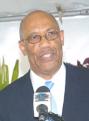
Represented by
Dr. Patrick L. Allen
Governor General since 26 February 2009
Dr. Patrick L. Allen
Governor General since 26 February 2009
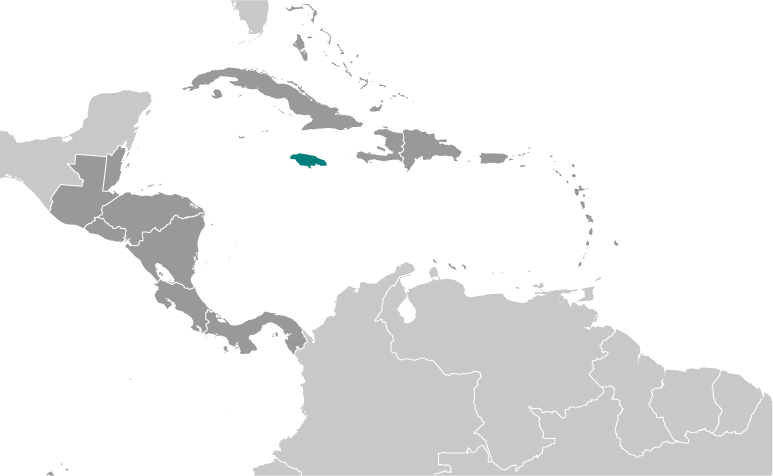
| Click map for larger view |
| Click flag for Country Report |




| TRAFFICKING IN PERSONS |
None reported.