| JAPAN Japan Nihon-koku/Nippon-koku Joined United Nations: 18 December 1956 Human Rights as assured by their constitution Click here Updated 26 December 2012 |
| CAPITAL |
| POPULATION |
| CHIEF OF STATE |
| SELECTION PROCESS |
Tokyo
127,368,088 (July 2012 est.)
Akihito
Emperor since 7 July 1989
Emperor since 7 July 1989
Ascended to the throne upon the death of his father Emperor
Shōwa (Hirohito) after 63 year rule
Next scheduled election: None, the monarch is hereditary;
heir apparent is Crown Prince Naruhito
Shōwa (Hirohito) after 63 year rule
Next scheduled election: None, the monarch is hereditary;
heir apparent is Crown Prince Naruhito
HEAD OF GOVERNMENT
SELECTION PROCESS
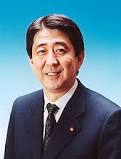
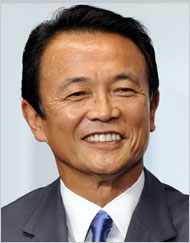
Shinzo Abe
Prime Minister since 26 December 2012
Prime Minister since 26 December 2012
Diet designates prime minister; constitution requires that prime
minister commands parliamentary majority; following legislative
elections, leader of majority party or leader of majority coalition
in House of Representatives usually becomes prime minister
minister commands parliamentary majority; following legislative
elections, leader of majority party or leader of majority coalition
in House of Representatives usually becomes prime minister
| DECLARATION OF HUMAN RIGHTS |
| ETHNIC GROUPS |
Japanese 98.5%, Koreans 0.5%, Chinese 0.4%, other 0.6%
note: up to 230,000 Brazilians of Japanese origin migrated to Japan in the 1990s to work in industries; some have returned
to Brazil (2004)
note: up to 230,000 Brazilians of Japanese origin migrated to Japan in the 1990s to work in industries; some have returned
to Brazil (2004)
| RELIGIONS |
Shintoism 83.9%, Buddhism 71.4%, Christianity 2%, other 7.8%
note: total adherents exceeds 100% because many people belong to both Shintoism and Buddhism (2005)
note: total adherents exceeds 100% because many people belong to both Shintoism and Buddhism (2005)
| GOVERNMENT STRUCTURE |
Constitutional monarchy with a parliamentary government comprised of 47 prefectures. Legal system is modeled after
European civil law system with English-American influence; judicial review of legislative acts in the Supreme Court;
accepts compulsory ICJ jurisdiction with reservations
Executive: The monarch is hereditary; Diet designates the prime minister; constitution requires that the prime minister
commands parliamentary majority; following legislative elections, the leader of majority party or leader of majority coalition in
House of Representatives usually becomes prime minister; the monarchy is hereditary
Legislative: Bicameral Diet or Kokkai consists of the House of Councillors or Sangi-in (242 seats - members elected
for six-year terms; half reelected every three years; 146 members in multi-seat constituencies and 96 by proportional
representation) and the House of Representatives or Shugi-in (480 seats - members elected for four-year terms; 300 in
single-seat constituencies; 180 members by proportional representation in 11 regional blocs)
elections: House of Councillors - last held on 11 July 2010 (next to be held in July 2013); House of Representatives -
last held on 16 December 2012 (next to be held by December 2016)
Judicial: Supreme Court (chief justice is appointed by the monarch after designation by the cabinet; all other justices are
appointed by the cabinet)
European civil law system with English-American influence; judicial review of legislative acts in the Supreme Court;
accepts compulsory ICJ jurisdiction with reservations
Executive: The monarch is hereditary; Diet designates the prime minister; constitution requires that the prime minister
commands parliamentary majority; following legislative elections, the leader of majority party or leader of majority coalition in
House of Representatives usually becomes prime minister; the monarchy is hereditary
Legislative: Bicameral Diet or Kokkai consists of the House of Councillors or Sangi-in (242 seats - members elected
for six-year terms; half reelected every three years; 146 members in multi-seat constituencies and 96 by proportional
representation) and the House of Representatives or Shugi-in (480 seats - members elected for four-year terms; 300 in
single-seat constituencies; 180 members by proportional representation in 11 regional blocs)
elections: House of Councillors - last held on 11 July 2010 (next to be held in July 2013); House of Representatives -
last held on 16 December 2012 (next to be held by December 2016)
Judicial: Supreme Court (chief justice is appointed by the monarch after designation by the cabinet; all other justices are
appointed by the cabinet)
| LANGUAGES |
Japanese
| BRIEF HISTORY |
| ECONOMIC OVERVIEW |
In the years following World War II, government-industry cooperation, a strong work ethic, mastery of high technology,
and a comparatively small defense allocation (1% of GDP) helped Japan develop a technologically advanced economy.
Two notable characteristics of the post-war economy were the close interlocking structures of manufacturers, suppliers,
and distributors, known as keiretsu, and the guarantee of lifetime employment for a substantial portion of the urban labor
force. Both features are now eroding under the dual pressures of global competition and domestic demographic change.
Japan's industrial sector is heavily dependent on imported raw materials and fuels. A tiny agricultural sector is highly
subsidized and protected, with crop yields among the highest in the world. Usually self-sufficient in rice, Japan imports
about 60% of its food on a caloric basis. Japan maintains one of the world's largest fishing fleets and accounts for nearly
15% of the global catch. For three decades, overall real economic growth had been spectacular - a 10% average in the
1960s, a 5% average in the 1970s, and a 4% average in the 1980s. Growth slowed markedly in the 1990s, averaging just
1.7%, largely because of the after effects of inefficient investment and an asset price bubble in the late 1980s that required
a protracted period of time for firms to reduce excess debt, capital, and labor. Measured on a purchasing power parity
(PPP) basis that adjusts for price differences, Japan in 2011 stood as the fourth-largest economy in the world after
second-place China, which surpassed Japan in 2001, and third-place India, which edged out Japan in 2011. A sharp
downturn in business investment and global demand for Japan's exports in late 2008 pushed Japan further into recession.
Government stimulus spending helped the economy recover in late 2009 and 2010, but the economy contracted again in
2011 as the massive 9.0 magnitude earthquake in March disrupted manufacturing. Electricity supplies remain tight
because Japan has temporarily shut down almost all of its nuclear power plants after the Fukushima Daiichi nuclear
reactors were crippled by the earthquake and resulting tsunami. Estimates of the direct costs of the damage - rebuilding
homes, factories, and infrastructure - range from $235 billion to $310 billion, and GDP declined almost 0.5% in 2011.
Prime Minister Yoshihiko NODA has proposed opening the agricultural and services sectors to greater foreign
competition and boosting exports through membership in the US-led Trans-Pacific Partnership trade talks and by
pursuing free-trade agreements with the EU and others, but debate continues on restructuring the economy and reining in
Japan's huge government debt, which exceeds 200% of GDP. Persistent deflation, reliance on exports to drive growth,
and an aging and shrinking population are other major long-term challenges for the economy.
Source: CIA World Factbook (select Japan)
and a comparatively small defense allocation (1% of GDP) helped Japan develop a technologically advanced economy.
Two notable characteristics of the post-war economy were the close interlocking structures of manufacturers, suppliers,
and distributors, known as keiretsu, and the guarantee of lifetime employment for a substantial portion of the urban labor
force. Both features are now eroding under the dual pressures of global competition and domestic demographic change.
Japan's industrial sector is heavily dependent on imported raw materials and fuels. A tiny agricultural sector is highly
subsidized and protected, with crop yields among the highest in the world. Usually self-sufficient in rice, Japan imports
about 60% of its food on a caloric basis. Japan maintains one of the world's largest fishing fleets and accounts for nearly
15% of the global catch. For three decades, overall real economic growth had been spectacular - a 10% average in the
1960s, a 5% average in the 1970s, and a 4% average in the 1980s. Growth slowed markedly in the 1990s, averaging just
1.7%, largely because of the after effects of inefficient investment and an asset price bubble in the late 1980s that required
a protracted period of time for firms to reduce excess debt, capital, and labor. Measured on a purchasing power parity
(PPP) basis that adjusts for price differences, Japan in 2011 stood as the fourth-largest economy in the world after
second-place China, which surpassed Japan in 2001, and third-place India, which edged out Japan in 2011. A sharp
downturn in business investment and global demand for Japan's exports in late 2008 pushed Japan further into recession.
Government stimulus spending helped the economy recover in late 2009 and 2010, but the economy contracted again in
2011 as the massive 9.0 magnitude earthquake in March disrupted manufacturing. Electricity supplies remain tight
because Japan has temporarily shut down almost all of its nuclear power plants after the Fukushima Daiichi nuclear
reactors were crippled by the earthquake and resulting tsunami. Estimates of the direct costs of the damage - rebuilding
homes, factories, and infrastructure - range from $235 billion to $310 billion, and GDP declined almost 0.5% in 2011.
Prime Minister Yoshihiko NODA has proposed opening the agricultural and services sectors to greater foreign
competition and boosting exports through membership in the US-led Trans-Pacific Partnership trade talks and by
pursuing free-trade agreements with the EU and others, but debate continues on restructuring the economy and reining in
Japan's huge government debt, which exceeds 200% of GDP. Persistent deflation, reliance on exports to drive growth,
and an aging and shrinking population are other major long-term challenges for the economy.
Source: CIA World Factbook (select Japan)
| POLITICAL CLIMATE |
The Imperial Household of Japan is headed by the Emperor of Japan. The Constitution of Japan defines the emperor to
be "the symbol of the state and of the unity of the people." He performs ceremonial duties and holds no real power, not
even emergency reserve powers. Power is held mainly by the Prime Minister and other elected members of the Diet.
Sovereignty is vested in the Japanese people by the constitution. Though his official status is disputed, on diplomatic
occasions the emperor tends to behave as though he were a head of state (with widespread public support). Japan is
the only country in the world headed by an emperor!
Despite an increasingly unpredictable domestic and international environment, policy making conforms to well
established postwar patterns. The close collaboration of the ruling party, the elite bureaucracy and important interest
groups often make it difficult to tell who exactly is responsible for specific policy decisions. The tendency for insiders to
guard information on such matters compounds the difficulty, especially for foreigners wishing to understand how
domestic decision making can be influenced to reduce trade problems.
The election results for the House of Representatives were announced on 30 and 31 August 2009. The opposition
party DPJ led by Yukio Hatoyama, won a majority by gaining 308 seats (10 seats were won by its allies the Social
Democratic Party and the People's New Party). The LDP secured 119 seats (21 seats won by New Komeito) and
failed to form a government. This was a big change. In the early 1990s, the opposition united and formed a government
but it did not last long. The LDP returned to power from 1994 to 2009. Even though the LDP managed a huge
majority in the 2005 elections under Koizumi, the weak performance of later LDP leaders led to its defeat. On 16
September 2009, president of DPJ, Hatoyama was elected by the House of Representatives as the 93rd Prime
Minister of Japan. On 2 June 2010, Hatoyama resigned due to lack of fulfillments of his policies, both domestically and
internationally and soon after, on 8 June, Akihito, Emperor of Japan ceremonially swore in the newly elected DPJ's
president, Naoto Kan as prime minister. Kan suffered an early setback in the Japanese House of Councillors election,
2010. In a routine political change in Japan, DPJ’s new president and former finance minister of Naoto Kan’s cabinet,
Yoshihiko Noda was cleared and elected by the Diet as 95th prime minister on 30 August 2011. He was officially
appointed as prime minister in the attestation ceremony at imperial palace on 2 September 2011. A general election
was held in Japan on 16 December 2012. Voters gave the Liberal Democratic Party a landslide victory, ejecting the
Democratic Party of Japan from power after three years. It was the fourth worst defeat suffered by a ruling party in
Japanese history. Despite this landslide victory, Shinzo Abe acknowledged that his party won mainly because of voter
antipathy towards the Democratic Party and not due to a resurgence in popularity for the LDP.
Source: Wikipedia: Politics of Japan
be "the symbol of the state and of the unity of the people." He performs ceremonial duties and holds no real power, not
even emergency reserve powers. Power is held mainly by the Prime Minister and other elected members of the Diet.
Sovereignty is vested in the Japanese people by the constitution. Though his official status is disputed, on diplomatic
occasions the emperor tends to behave as though he were a head of state (with widespread public support). Japan is
the only country in the world headed by an emperor!
Despite an increasingly unpredictable domestic and international environment, policy making conforms to well
established postwar patterns. The close collaboration of the ruling party, the elite bureaucracy and important interest
groups often make it difficult to tell who exactly is responsible for specific policy decisions. The tendency for insiders to
guard information on such matters compounds the difficulty, especially for foreigners wishing to understand how
domestic decision making can be influenced to reduce trade problems.
The election results for the House of Representatives were announced on 30 and 31 August 2009. The opposition
party DPJ led by Yukio Hatoyama, won a majority by gaining 308 seats (10 seats were won by its allies the Social
Democratic Party and the People's New Party). The LDP secured 119 seats (21 seats won by New Komeito) and
failed to form a government. This was a big change. In the early 1990s, the opposition united and formed a government
but it did not last long. The LDP returned to power from 1994 to 2009. Even though the LDP managed a huge
majority in the 2005 elections under Koizumi, the weak performance of later LDP leaders led to its defeat. On 16
September 2009, president of DPJ, Hatoyama was elected by the House of Representatives as the 93rd Prime
Minister of Japan. On 2 June 2010, Hatoyama resigned due to lack of fulfillments of his policies, both domestically and
internationally and soon after, on 8 June, Akihito, Emperor of Japan ceremonially swore in the newly elected DPJ's
president, Naoto Kan as prime minister. Kan suffered an early setback in the Japanese House of Councillors election,
2010. In a routine political change in Japan, DPJ’s new president and former finance minister of Naoto Kan’s cabinet,
Yoshihiko Noda was cleared and elected by the Diet as 95th prime minister on 30 August 2011. He was officially
appointed as prime minister in the attestation ceremony at imperial palace on 2 September 2011. A general election
was held in Japan on 16 December 2012. Voters gave the Liberal Democratic Party a landslide victory, ejecting the
Democratic Party of Japan from power after three years. It was the fourth worst defeat suffered by a ruling party in
Japanese history. Despite this landslide victory, Shinzo Abe acknowledged that his party won mainly because of voter
antipathy towards the Democratic Party and not due to a resurgence in popularity for the LDP.
Source: Wikipedia: Politics of Japan
| INTERNATIONAL DISPUTES |
The sovereignty dispute over the islands of Etorofu, Kunashiri, and Shikotan, and the Habomai group, known in Japan
as the "Northern Territories" and in Russia as the "Southern Kuril Islands," occupied by the Soviet Union in 1945, now
administered by Russia and claimed by Japan, remains the primary sticking point to signing a peace treaty formally
ending World War II hostilities; Japan and South Korea claim Liancourt Rocks (Take-shima/Dokdo) occupied by
South Korea since 1954; China and Taiwan dispute both Japan's claims to the uninhabited islands of the
Senkaku-shoto (Diaoyu Tai) and Japan's unilaterally declared exclusive economic zone in the East China Sea, the site
of intensive hydrocarbon prospecting
as the "Northern Territories" and in Russia as the "Southern Kuril Islands," occupied by the Soviet Union in 1945, now
administered by Russia and claimed by Japan, remains the primary sticking point to signing a peace treaty formally
ending World War II hostilities; Japan and South Korea claim Liancourt Rocks (Take-shima/Dokdo) occupied by
South Korea since 1954; China and Taiwan dispute both Japan's claims to the uninhabited islands of the
Senkaku-shoto (Diaoyu Tai) and Japan's unilaterally declared exclusive economic zone in the East China Sea, the site
of intensive hydrocarbon prospecting


| TRAFFICKING IN PERSONS |
None reported.
| ILLICIT DRUGS |
None reported.
| HUMAN RIGHTS STATEMENTS, ANALYSIS AND CRITIQUES |
2011 Human Rights Report: Japan
Bureau of Democracy, Human Rights, and Labor
2011 Country Reports on Human Rights Practices
May 24, 2012
EXECUTIVE SUMMARY
Japan is a constitutional monarchy with a parliamentary government. Prime Minister Yoshihiko Noda, leader of the Democratic
Party of Japan, derives his authority to govern from the constitution. July 2010 upper-house elections were considered free and
fair. Security forces reported to civilian authorities.
The leading human rights problems included the lack of due process for pretrial detainees; the exploitation of children; and societal
discrimination against women in employment, children born out of wedlock, ethnic minority group members, persons with
disabilities, and foreigners, including permanent residents.
Other human rights problems included prison and detention center conditions, prosecutorial misconduct, journalistic
self-censorship, domestic violence and sexual harassment against women, corruption, trafficking in persons, and the exploitation of
foreign trainee workers.
The government enforced laws prohibiting human rights abuses and prosecuted officials who committed them.
Click here to read more »
Bureau of Democracy, Human Rights, and Labor
2011 Country Reports on Human Rights Practices
May 24, 2012
EXECUTIVE SUMMARY
Japan is a constitutional monarchy with a parliamentary government. Prime Minister Yoshihiko Noda, leader of the Democratic
Party of Japan, derives his authority to govern from the constitution. July 2010 upper-house elections were considered free and
fair. Security forces reported to civilian authorities.
The leading human rights problems included the lack of due process for pretrial detainees; the exploitation of children; and societal
discrimination against women in employment, children born out of wedlock, ethnic minority group members, persons with
disabilities, and foreigners, including permanent residents.
Other human rights problems included prison and detention center conditions, prosecutorial misconduct, journalistic
self-censorship, domestic violence and sexual harassment against women, corruption, trafficking in persons, and the exploitation of
foreign trainee workers.
The government enforced laws prohibiting human rights abuses and prosecuted officials who committed them.
Click here to read more »
4 July 2011
Human Rights Council
Eighteenth session
Agenda item 3
Promotion and protection of all human rights, civil, political, economic, social and cultural rights,
including the right to development
Report of the Special Rapporteur on the human right to safe drinking water and sanitation, Catarina de Albuquerque∗
Addendum
Mission to Japan
Summary
From 20 to 28 July 2010, the independent expert on the issue of human rights obligations related to access to safe drinking water
and sanitation conducted an official mission to Japan in order to assess the manner in which the Government was ensuring the
enjoyment of the rights to water and to sanitation. The mandate holder observes that in Japan, the vast majority of the population
enjoys good access to water and sanitation, and that Japan has well-developed systems in place to assure this access. She raises
some concerns related to the following issues and groups: poverty, homelessness, persons with disabilities, the situation of
underserved persons of Korean descent, and prisoners.
At the end of the report, conclusions and recommendations are made.
I. Introduction
1. From 20 to 28 July 2010, the independent expert on the issue of human rights obligations related to access to safe drinking water
and sanitation conducted an official mission to Japan in order to assess the manner in which the Government was ensuring the
enjoyment of the rights to water and to sanitation. She had meetings with representatives of Government ministries responsible for
topics falling within her mandate, including the Ministries of Foreign Affairs; Health, Labour and Welfare; Land, Infrastructure,
Transport and Tourism; Agriculture, Forestry and Fisheries; the Environment; and Justice. She was honoured to meet with the
Parliamentary Vice-Minister for Foreign Affairs. The independent expert also met with representatives of the Japan International
Cooperation Agency (JICA), as well as prefectural and city authorities in Osaka. Visits were made to the Misono Water Purification
Plant and the Ochiai Water Reclamation Center in Tokyo. She held numerous meetings with civil society groups in Tokyo, Kyoto
and Osaka, and visited homeless communities in Osaka and Tokyo, as well as the Utoro community outside Kyoto. The special
procedures mandate holder expresses her appreciation to the Government for organizing and facilitating the visit. She is also
particularly grateful to the civil society organizations and individuals who helped to prepare the mission and who assisted during it.
Through all of the meetings, she gained a more complete picture of the status of access to water and sanitation in Japan, and of the
role Japan plays in ensuring access to water and sanitation in other countries through its international development aid.
2. Overall, the independent expert was impressed at the levels of access to water and sanitation. She was pleased to observe that
the large majority of people in Japan enjoy the rights to water and to sanitation. However, the mandate holder expresses concern
about the lack of access for certain groups, as well as in certain spheres of life. Furthermore, she examines the extent to which
Japan, the largest bilateral donor in the sectors of water and sanitation, has integrated the human rights to water and to sanitation
into its development cooperation policy. As further detailed in this report, she considers that a more explicit focus on the human
rights to water and to sanitation would require special attention to excluded groups in Japan, and a shift in policy regarding official
development cooperation.
Click here to read more »
Human Rights Council
Eighteenth session
Agenda item 3
Promotion and protection of all human rights, civil, political, economic, social and cultural rights,
including the right to development
Report of the Special Rapporteur on the human right to safe drinking water and sanitation, Catarina de Albuquerque∗
Addendum
Mission to Japan
Summary
From 20 to 28 July 2010, the independent expert on the issue of human rights obligations related to access to safe drinking water
and sanitation conducted an official mission to Japan in order to assess the manner in which the Government was ensuring the
enjoyment of the rights to water and to sanitation. The mandate holder observes that in Japan, the vast majority of the population
enjoys good access to water and sanitation, and that Japan has well-developed systems in place to assure this access. She raises
some concerns related to the following issues and groups: poverty, homelessness, persons with disabilities, the situation of
underserved persons of Korean descent, and prisoners.
At the end of the report, conclusions and recommendations are made.
I. Introduction
1. From 20 to 28 July 2010, the independent expert on the issue of human rights obligations related to access to safe drinking water
and sanitation conducted an official mission to Japan in order to assess the manner in which the Government was ensuring the
enjoyment of the rights to water and to sanitation. She had meetings with representatives of Government ministries responsible for
topics falling within her mandate, including the Ministries of Foreign Affairs; Health, Labour and Welfare; Land, Infrastructure,
Transport and Tourism; Agriculture, Forestry and Fisheries; the Environment; and Justice. She was honoured to meet with the
Parliamentary Vice-Minister for Foreign Affairs. The independent expert also met with representatives of the Japan International
Cooperation Agency (JICA), as well as prefectural and city authorities in Osaka. Visits were made to the Misono Water Purification
Plant and the Ochiai Water Reclamation Center in Tokyo. She held numerous meetings with civil society groups in Tokyo, Kyoto
and Osaka, and visited homeless communities in Osaka and Tokyo, as well as the Utoro community outside Kyoto. The special
procedures mandate holder expresses her appreciation to the Government for organizing and facilitating the visit. She is also
particularly grateful to the civil society organizations and individuals who helped to prepare the mission and who assisted during it.
Through all of the meetings, she gained a more complete picture of the status of access to water and sanitation in Japan, and of the
role Japan plays in ensuring access to water and sanitation in other countries through its international development aid.
2. Overall, the independent expert was impressed at the levels of access to water and sanitation. She was pleased to observe that
the large majority of people in Japan enjoy the rights to water and to sanitation. However, the mandate holder expresses concern
about the lack of access for certain groups, as well as in certain spheres of life. Furthermore, she examines the extent to which
Japan, the largest bilateral donor in the sectors of water and sanitation, has integrated the human rights to water and to sanitation
into its development cooperation policy. As further detailed in this report, she considers that a more explicit focus on the human
rights to water and to sanitation would require special attention to excluded groups in Japan, and a shift in policy regarding official
development cooperation.
Click here to read more »
FREEDOM IN THE WORLD REPORT- 2012
Political Rights Score: 1
Civil Liberties Score: 2
Status: Free
Overview
In the midst of a faltering economy, Japan was hit by a massive earthquake and subsequent tsunami in March 2011 that caused
widespread devastation and a nuclear meltdown at the Fukushima Daiichi Nuclear Power Plant. Criticism of the government’s
response to the disaster led to the resignation of Prime Minister Naoto Kan and his replacement in August by Yoshihiko Noda.
Antinuclear power rallies and efforts to rebuild the affected areas and to support the hundreds of thousands displaced by the
disasters continued throughout the year.
The LDP’s nearly 55-year dominance in the legislature’s lower chamber ended when the DPJ captured 308 seats in the August
2009 elections, and Yukio Hatoyama became prime minister. The DPJ’s platform challenged many of the LDP’s long-standing
policies, including greater independence from U.S. influence, improved relations with neighboring Asian countries, and a more
decentralized and accountable government concerned with social welfare and environmental issues. However, confronted with an
economic recession and increased regional tensions, Hatoyama shifted his foreign policy focus back to the United States for
security guarantees. The prime minister also failed to implement a number of his campaign promises, including closing the
controversial U.S. military base on the island of Okinawa. Hatoyama announced his resignation in June 2010, partly due to a
financial scandal involving DPJ secretary general Ichiro Ozawa.
On June 4, Finance Minister Naoto Kan was chosen prime minister, though his approval ratings plummeted after he proposed
raising the country’s sales tax from 5 percent to 10 percent. Following this unpopular move, the DPJ captured only 44 of the 121
seats at stake in the July elections to the legislature’s upper chamber, while a coalition of the LDP and two smaller parties took 61
seats. Kan continued to face significant domestic and international challenges, including continued inflation, a faltering economy,
and diplomatic disputes with China and Russia.
On March 11, 2011, Japan was hit by a 9.0 earthquake just off the east coast of Tohoku, which triggered a subsequent tsunami.
The majority of buildings and critical infrastructure were damaged or destroyed, and there was a massive toll on human lives. The
National Policy Agency of Japan has reported that the known death toll for the earthquake and tsunami is just over 18,000, though
the real toll may never be known. The overall costs of the earthquake are estimated at over $300 billion. The Fukushima Daiichi
Nuclear Power Plant also suffered severe damage; reactor cooling systems were debilitated, triggering nuclear meltdown.
Widespread radioactive contamination led to an evacuation of the surrounding area, displacing several hundred thousand residents.
Amid plunging approval ratings over the government’s handling of the crises, Kan resigned in August, and Finance Minister
Yoshihiko Noda was elected in DPJ preliminary elections that same month to succeed Kan. Noda will serve as prime minister for
the duration of Kan’s regular term, until fall 2012, when regular DPJ presidential elections will be held.
Click here to read more »
Political Rights Score: 1
Civil Liberties Score: 2
Status: Free
Overview
In the midst of a faltering economy, Japan was hit by a massive earthquake and subsequent tsunami in March 2011 that caused
widespread devastation and a nuclear meltdown at the Fukushima Daiichi Nuclear Power Plant. Criticism of the government’s
response to the disaster led to the resignation of Prime Minister Naoto Kan and his replacement in August by Yoshihiko Noda.
Antinuclear power rallies and efforts to rebuild the affected areas and to support the hundreds of thousands displaced by the
disasters continued throughout the year.
The LDP’s nearly 55-year dominance in the legislature’s lower chamber ended when the DPJ captured 308 seats in the August
2009 elections, and Yukio Hatoyama became prime minister. The DPJ’s platform challenged many of the LDP’s long-standing
policies, including greater independence from U.S. influence, improved relations with neighboring Asian countries, and a more
decentralized and accountable government concerned with social welfare and environmental issues. However, confronted with an
economic recession and increased regional tensions, Hatoyama shifted his foreign policy focus back to the United States for
security guarantees. The prime minister also failed to implement a number of his campaign promises, including closing the
controversial U.S. military base on the island of Okinawa. Hatoyama announced his resignation in June 2010, partly due to a
financial scandal involving DPJ secretary general Ichiro Ozawa.
On June 4, Finance Minister Naoto Kan was chosen prime minister, though his approval ratings plummeted after he proposed
raising the country’s sales tax from 5 percent to 10 percent. Following this unpopular move, the DPJ captured only 44 of the 121
seats at stake in the July elections to the legislature’s upper chamber, while a coalition of the LDP and two smaller parties took 61
seats. Kan continued to face significant domestic and international challenges, including continued inflation, a faltering economy,
and diplomatic disputes with China and Russia.
On March 11, 2011, Japan was hit by a 9.0 earthquake just off the east coast of Tohoku, which triggered a subsequent tsunami.
The majority of buildings and critical infrastructure were damaged or destroyed, and there was a massive toll on human lives. The
National Policy Agency of Japan has reported that the known death toll for the earthquake and tsunami is just over 18,000, though
the real toll may never be known. The overall costs of the earthquake are estimated at over $300 billion. The Fukushima Daiichi
Nuclear Power Plant also suffered severe damage; reactor cooling systems were debilitated, triggering nuclear meltdown.
Widespread radioactive contamination led to an evacuation of the surrounding area, displacing several hundred thousand residents.
Amid plunging approval ratings over the government’s handling of the crises, Kan resigned in August, and Finance Minister
Yoshihiko Noda was elected in DPJ preliminary elections that same month to succeed Kan. Noda will serve as prime minister for
the duration of Kan’s regular term, until fall 2012, when regular DPJ presidential elections will be held.
Click here to read more »
3 August 2012
Amnesty International condemns executions in Japan
Amnesty International condemns the two executions carried out in Japan today. Today’s hangings bring the number of executions
this year to five. Junya Hattori and Kyozo Matsumura were executed at the Tokyo and Osaka Detention Centers respectively.
In 2011 Japan did not carry out any executions. Former Justice Minister Toshio Ogawa authorised the execution of three people on
29 March 2012, ending a 20 months’ hiatus in executions in Japan.
Junya Hattori was sentenced to life imprisonment by the Shizuoka District Court but this was increased to the death penalty by the
Tokyo High Court after an appeal by the Prosecution. The Supreme Court upheld the death penalty in February 2008. Kyozo
Matsumura was given the death sentence by the Kyoto District Court in March 2008. Matsumura withdrew his appeal to the High
Court in April 2008. Japan has no automatic appeal system for death sentence cases.
Justice Minister Makoto Taki had stated his support for maintaining the death penalty because it already exists in the judicial
system. Justifying acts which violate human rights as a 'Minister's duty' is unacceptable. Rather it is the responsibility of leaders to
address crime without resorting to this ultimate cruel, inhuman and degrading punishment
Executions in Japan are by hanging and are usually carried out in secret and without prior notice to the families. Prisoners are
typically given just a few hours’ notice but some may be given no warning at all of their imminent execution.
More than two-thirds of all countries have abolished the death penalty in law and practice. Out of 41 countries in the Asia-pacific
region, 17 have abolished the death penalty for all crimes, 10 are abolitionist in practice.
Amnesty International opposes the death penalty in all cases without exception regardless of the nature of the crime, the
characteristics of the individual on whom it is imposed and the method of execution used by the State, as a violation of the right
to live and the ultimate cruel, inhuman and degrading punishment.
Click here to read more »
Amnesty International condemns executions in Japan
Amnesty International condemns the two executions carried out in Japan today. Today’s hangings bring the number of executions
this year to five. Junya Hattori and Kyozo Matsumura were executed at the Tokyo and Osaka Detention Centers respectively.
In 2011 Japan did not carry out any executions. Former Justice Minister Toshio Ogawa authorised the execution of three people on
29 March 2012, ending a 20 months’ hiatus in executions in Japan.
Junya Hattori was sentenced to life imprisonment by the Shizuoka District Court but this was increased to the death penalty by the
Tokyo High Court after an appeal by the Prosecution. The Supreme Court upheld the death penalty in February 2008. Kyozo
Matsumura was given the death sentence by the Kyoto District Court in March 2008. Matsumura withdrew his appeal to the High
Court in April 2008. Japan has no automatic appeal system for death sentence cases.
Justice Minister Makoto Taki had stated his support for maintaining the death penalty because it already exists in the judicial
system. Justifying acts which violate human rights as a 'Minister's duty' is unacceptable. Rather it is the responsibility of leaders to
address crime without resorting to this ultimate cruel, inhuman and degrading punishment
Executions in Japan are by hanging and are usually carried out in secret and without prior notice to the families. Prisoners are
typically given just a few hours’ notice but some may be given no warning at all of their imminent execution.
More than two-thirds of all countries have abolished the death penalty in law and practice. Out of 41 countries in the Asia-pacific
region, 17 have abolished the death penalty for all crimes, 10 are abolitionist in practice.
Amnesty International opposes the death penalty in all cases without exception regardless of the nature of the crime, the
characteristics of the individual on whom it is imposed and the method of execution used by the State, as a violation of the right
to live and the ultimate cruel, inhuman and degrading punishment.
Click here to read more »
Letter to Japanese Foreign Minister Gemba on Afghanistan
June 25, 2012
Dear ForeignMinisterGemba,
We write to you in advance of the Tokyo Conference on Afghanistan on July 8, 2012to recommend ways in which Japan can help
improve the human rights situation in Afghanistan.
At the outset, we would like to recognize the major commitment Japan has made to support Afghanistan and acknowledge in
particular Japan’s steadfastness in meeting its aid pledges to Afghanistan even in the face of the huge challenges Japan has faced
after the 2011 earthquake and tsunami.
As you are aware, the human rights situation in Afghanistan remains poor. While there has been important progress since 2001 in
areas such as freedom of speech and association, education, health care, andwomen’s participation in public life, the situation
remains extremely difficult. Ongoing problems include abuses by the security forces and the Taliban and other non-state armed
groups; gender and ethnic discrimination; victimization of vulnerable groups including women, children and refugees;violence
against women; major problems in the criminal justice system, including torture; and impunity for warlords and suspected war
criminals, some of whom are in the highest echelons of government. As the international community decreases its attention and
support, there is now a serious risk that the limited progress that has been achieved could be lost.Declining aid, increasing
insecurity, and poor governance could lead to reversals in key indicators such as school attendance, literacy, life expectancy, and
infant and maternal mortality rates.
Human Rights Watch is asking Japan and other key donors to Afghanistanto makehuman rights and the basic needs of Afghans a
priority. The protection of human rights requires strong political engagement with senior Afghan government officials and
policymakers. With declining aid, there is a real risk to the supply of essential services to protect human rights,including education,
healthcare, legal aid, and shelters to protect women against violence.
We hope Japan will take a leadership role and take some key steps to protect and promote human rights in Afghanistan. We request
that the Japanese government:
Click here to read more »
June 25, 2012
Dear ForeignMinisterGemba,
We write to you in advance of the Tokyo Conference on Afghanistan on July 8, 2012to recommend ways in which Japan can help
improve the human rights situation in Afghanistan.
At the outset, we would like to recognize the major commitment Japan has made to support Afghanistan and acknowledge in
particular Japan’s steadfastness in meeting its aid pledges to Afghanistan even in the face of the huge challenges Japan has faced
after the 2011 earthquake and tsunami.
As you are aware, the human rights situation in Afghanistan remains poor. While there has been important progress since 2001 in
areas such as freedom of speech and association, education, health care, andwomen’s participation in public life, the situation
remains extremely difficult. Ongoing problems include abuses by the security forces and the Taliban and other non-state armed
groups; gender and ethnic discrimination; victimization of vulnerable groups including women, children and refugees;violence
against women; major problems in the criminal justice system, including torture; and impunity for warlords and suspected war
criminals, some of whom are in the highest echelons of government. As the international community decreases its attention and
support, there is now a serious risk that the limited progress that has been achieved could be lost.Declining aid, increasing
insecurity, and poor governance could lead to reversals in key indicators such as school attendance, literacy, life expectancy, and
infant and maternal mortality rates.
Human Rights Watch is asking Japan and other key donors to Afghanistanto makehuman rights and the basic needs of Afghans a
priority. The protection of human rights requires strong political engagement with senior Afghan government officials and
policymakers. With declining aid, there is a real risk to the supply of essential services to protect human rights,including education,
healthcare, legal aid, and shelters to protect women against violence.
We hope Japan will take a leadership role and take some key steps to protect and promote human rights in Afghanistan. We request
that the Japanese government:
Click here to read more »
Statement by H.E. Mr. Kazuo Kodama
Deputy Permanent Representative of Japan to the United Nations
Open Debate on the Protection of Civilians in Armed Conflict
Security Council
25 June 2012
The current state of the protection of civilians has not improved since the last open debate of the Security Council on this issue, and
attacks continue against civilians, humanitarian workers and UN peacekeepers. Earlier this month, seven UN peacekeepers were
attacked and lost their lives during patrols to protect civilians in Côte d’Ivoire. The Government of Japan strongly condemns such
attacks.
Also, the use of explosive weapons in densely populated areas as seen in Syria and Sudan is of grave concern, as it results in
numerous civilian casualties. It also leads to the creation of scores of Internally Displaced Persons (IDPs) and refugees, which affects
not only the epicenter of violence but also neighboring countries and regions.
Based upon this current state of affairs, I would like to raise the following 3 issues:
Need for enhancing effectiveness in implementing PoC mandate
First, there are high demands on PKO missions to provide protection to civilians in a role supplementary to the primary responsibility
of host governments, and indeed many missions are mandated to do so. The implementation of the PoC mandate, which can affect
the credibility of a mission, is increasingly challenging and important, and the lack of adequate resources is a pressing issue. In this
light, we commend efforts made by DPKO and DFS to produce resource capacity matrix and training modules, and we look forward
to further improvement of these tools. In addition, we call for efforts to improve the effectiveness of the implementation of the PoC
mandate, with attention paid to mid- and long-term capacity building of host countries as well as efforts made by local residents.
Humanitarian access
Second, rapid and unimpeded humanitarian access is indispensable in protecting civilians. Political climate, including UN sanctions,
often complicate negotiations on humanitarian access; however, we stress that humanitarian assistance, which stands on the principle
of neutrality and impartiality, should not be politicized and host countries should cooperate in light of their responsibility to protect
civilians. In such complex circumstances, close communication among relevant bodies such as the Security Council, DPKO and DPA
as well as the leadership of Emergency Relief Coordinator are critical.
Ensuring accountability
Third, it is crucial to seek facts and hold perpetrators accountable for violence against civilians in order to prevent further deterioration
of situations. In this light, the Government of Japan welcomes the resolution adopted at the Human Rights Council earlier this month
to request the Commission of Inquiry to urgently conduct an inquiry into the events in El-Houleh. We urge the Government of Syria to
cooperate with the Commission to fully implement the resolution.
Click here to read more »
Deputy Permanent Representative of Japan to the United Nations
Open Debate on the Protection of Civilians in Armed Conflict
Security Council
25 June 2012
The current state of the protection of civilians has not improved since the last open debate of the Security Council on this issue, and
attacks continue against civilians, humanitarian workers and UN peacekeepers. Earlier this month, seven UN peacekeepers were
attacked and lost their lives during patrols to protect civilians in Côte d’Ivoire. The Government of Japan strongly condemns such
attacks.
Also, the use of explosive weapons in densely populated areas as seen in Syria and Sudan is of grave concern, as it results in
numerous civilian casualties. It also leads to the creation of scores of Internally Displaced Persons (IDPs) and refugees, which affects
not only the epicenter of violence but also neighboring countries and regions.
Based upon this current state of affairs, I would like to raise the following 3 issues:
Need for enhancing effectiveness in implementing PoC mandate
First, there are high demands on PKO missions to provide protection to civilians in a role supplementary to the primary responsibility
of host governments, and indeed many missions are mandated to do so. The implementation of the PoC mandate, which can affect
the credibility of a mission, is increasingly challenging and important, and the lack of adequate resources is a pressing issue. In this
light, we commend efforts made by DPKO and DFS to produce resource capacity matrix and training modules, and we look forward
to further improvement of these tools. In addition, we call for efforts to improve the effectiveness of the implementation of the PoC
mandate, with attention paid to mid- and long-term capacity building of host countries as well as efforts made by local residents.
Humanitarian access
Second, rapid and unimpeded humanitarian access is indispensable in protecting civilians. Political climate, including UN sanctions,
often complicate negotiations on humanitarian access; however, we stress that humanitarian assistance, which stands on the principle
of neutrality and impartiality, should not be politicized and host countries should cooperate in light of their responsibility to protect
civilians. In such complex circumstances, close communication among relevant bodies such as the Security Council, DPKO and DPA
as well as the leadership of Emergency Relief Coordinator are critical.
Ensuring accountability
Third, it is crucial to seek facts and hold perpetrators accountable for violence against civilians in order to prevent further deterioration
of situations. In this light, the Government of Japan welcomes the resolution adopted at the Human Rights Council earlier this month
to request the Commission of Inquiry to urgently conduct an inquiry into the events in El-Houleh. We urge the Government of Syria to
cooperate with the Commission to fully implement the resolution.
Click here to read more »
TRANSLATED FROM JAPANESE BY GOOGLE TRANSLATE
February 16, 2012
Prospectus meaning
Association Human Rights Institute of freedom
According to the news, etc., Osaka, on the relationship between labor and management "of the Annex as of February 09 this year
Addressed to the Supervisor issued to each "About the survey of staff, for each staff have conducted a questionnaire survey (note
that the study period until the date that is 16 month). OTA, (the "case study" below) This survey, possibly overlooked. imagine that
there can not be, is a serious problem too, as follows, express their opinions about the survey.
1 Introduction
In a nutshell, to study this matter, as a public act of the municipality, and the unprecedented. There is a serious problem and say about
a very large number. Case study, the vertex and the Constitution. There is to completely ignore the law and order, to investigate this
matter like this, lawyer. Toru Hashimoto, Osaka mayor is having a case against Dear staff, to answer exactly the truth In addition, it
requires that, Shuya Nomura Osaka City case study is a lawyer) That have been conducted under the Special Adviser, past the
surprise, and does not say a word. Or less, to point out specific issues of this case study.
Second problem
A case study is a violation of the freedom of thought and conscience. Case study, rather than any research has been done as mayor of
business instruction. In addition, if the exact answer has not been made is that the note may be subject to disposal Are.
Sonouede, this case study is sufficient to identify each staff such as your name, and each staff. The question matters, further, union
activities related to working conditions of union made by Osaka City Hall. There is some, its contents and to participate in the
presence or absence of motion, in the past two years, because of the specific. Content and the presence or absence and to participate
in activities that support the politicians, from the specific relationship between the workplace. Such as the existence and contents of
quality and content of the presence or absence of a request to vote for politicians, and union membership. That question.
The above questions, and are not over the inner spirit of the moral effect of each staff Lee, this case study, the answer to these
questions have a means of disposal is public power. Not to force the other, the infringement (Article 19 Constitution) freedom of
thought and conscience of each staff Is prejudice. If additional remarks here just in case, freedom of thought and conscience, "the
Constitution is Article 19, the call should be noted Report shall not be violated. And that the meaning of "is, first of all, I have national
or No matter the original limited view of the nation, world view, outlook on life, the mind that it stays in the area. Lee is a thing that is
absolutely free, in the second, thought about. Freedom of silence has been security, public power, the individual has been holding in
mind. Thought about, that directly or indirectly, that are not even allowed to ask Is. Case study, the infringement of freedom of
thought and conscience in the sense of both of these are to be.
Click here to read more »
February 16, 2012
Prospectus meaning
Association Human Rights Institute of freedom
According to the news, etc., Osaka, on the relationship between labor and management "of the Annex as of February 09 this year
Addressed to the Supervisor issued to each "About the survey of staff, for each staff have conducted a questionnaire survey (note
that the study period until the date that is 16 month). OTA, (the "case study" below) This survey, possibly overlooked. imagine that
there can not be, is a serious problem too, as follows, express their opinions about the survey.
1 Introduction
In a nutshell, to study this matter, as a public act of the municipality, and the unprecedented. There is a serious problem and say about
a very large number. Case study, the vertex and the Constitution. There is to completely ignore the law and order, to investigate this
matter like this, lawyer. Toru Hashimoto, Osaka mayor is having a case against Dear staff, to answer exactly the truth In addition, it
requires that, Shuya Nomura Osaka City case study is a lawyer) That have been conducted under the Special Adviser, past the
surprise, and does not say a word. Or less, to point out specific issues of this case study.
Second problem
A case study is a violation of the freedom of thought and conscience. Case study, rather than any research has been done as mayor of
business instruction. In addition, if the exact answer has not been made is that the note may be subject to disposal Are.
Sonouede, this case study is sufficient to identify each staff such as your name, and each staff. The question matters, further, union
activities related to working conditions of union made by Osaka City Hall. There is some, its contents and to participate in the
presence or absence of motion, in the past two years, because of the specific. Content and the presence or absence and to participate
in activities that support the politicians, from the specific relationship between the workplace. Such as the existence and contents of
quality and content of the presence or absence of a request to vote for politicians, and union membership. That question.
The above questions, and are not over the inner spirit of the moral effect of each staff Lee, this case study, the answer to these
questions have a means of disposal is public power. Not to force the other, the infringement (Article 19 Constitution) freedom of
thought and conscience of each staff Is prejudice. If additional remarks here just in case, freedom of thought and conscience, "the
Constitution is Article 19, the call should be noted Report shall not be violated. And that the meaning of "is, first of all, I have national
or No matter the original limited view of the nation, world view, outlook on life, the mind that it stays in the area. Lee is a thing that is
absolutely free, in the second, thought about. Freedom of silence has been security, public power, the individual has been holding in
mind. Thought about, that directly or indirectly, that are not even allowed to ask Is. Case study, the infringement of freedom of
thought and conscience in the sense of both of these are to be.
Click here to read more »
Meeting commemorating 90th anniversary of the establishment of the Zenkoku Suiheisha was held in Kyoto
3rd March 2012
On 3rd March 2012, a meeting to commemorate the 90th anniversary of the Zenkoku Suiheisha (National Levelers’ League) was held
at Kyoto Kaikan (Kyoto Hall) in Kyoto City where the organization’s inaugural meeting was held in 1922. About 1,800 people across
the nation joined the meeting.
The meeting was opened with the chorus of “Takeda no komoriuta (Lullaby of Takeda)” by women’s department of the Kaishin
chapter of Kyoto Prefectural Association of Buraku Liberation League (BLL) and the recitation of the Declaration of the Suiheisha by
an actor, Kazuhisa Nakanishi. In the speech on behalf of the organizer, Shigeyuki Kumisaka, chairperson of central executive
committee of BLL said, “We have to take into our heart how our predecessors suffered severe persecution and inherit the spirit of the
Declaration of the Suihaish”. He stressed that, “We vow to dedicate all our strength to liberation movement of the world by keeping
our mind that we are here today because of blood sweat and tears of ancestors.”
The award in honor of the late chairperson Jiichiro Matsumoto who was called the “father of buraku liberation movement” was given
to Mr. Masaaki Ueda (honorary professor of Kyoto University) and Mr. Kazuteru Okiura (honorary professor of Momoyama Gakuin
University). Mr. Ueda expressed his expectations on buraku liberation movement that, “you can be proud and confident of the culture
and entertainment that buraku communities have created and lead the movement for various human rights issues,” referring to the
words in the General Principles of Suiheisha, “we shall awaken to the fundamentals of human nature and march toward highest
human perfection.” One hundred and thirty four persons of merit and seventy two deceased persons were also given a commendation.
Following messages and appeals by other minorities, Toru Matsuoka, secretary general of the central executive committee of BLL
stated that, “We gather here to decide to move forward with the movement by remembering the spirit of ancestors when they started
the movement ninety years ago. Let us advance the movement on our own and break away from dependence on government in each
community from tomorrow.”
The meeting was closed by adopting an appeal at the end.
Click here to read more »
3rd March 2012
On 3rd March 2012, a meeting to commemorate the 90th anniversary of the Zenkoku Suiheisha (National Levelers’ League) was held
at Kyoto Kaikan (Kyoto Hall) in Kyoto City where the organization’s inaugural meeting was held in 1922. About 1,800 people across
the nation joined the meeting.
The meeting was opened with the chorus of “Takeda no komoriuta (Lullaby of Takeda)” by women’s department of the Kaishin
chapter of Kyoto Prefectural Association of Buraku Liberation League (BLL) and the recitation of the Declaration of the Suiheisha by
an actor, Kazuhisa Nakanishi. In the speech on behalf of the organizer, Shigeyuki Kumisaka, chairperson of central executive
committee of BLL said, “We have to take into our heart how our predecessors suffered severe persecution and inherit the spirit of the
Declaration of the Suihaish”. He stressed that, “We vow to dedicate all our strength to liberation movement of the world by keeping
our mind that we are here today because of blood sweat and tears of ancestors.”
The award in honor of the late chairperson Jiichiro Matsumoto who was called the “father of buraku liberation movement” was given
to Mr. Masaaki Ueda (honorary professor of Kyoto University) and Mr. Kazuteru Okiura (honorary professor of Momoyama Gakuin
University). Mr. Ueda expressed his expectations on buraku liberation movement that, “you can be proud and confident of the culture
and entertainment that buraku communities have created and lead the movement for various human rights issues,” referring to the
words in the General Principles of Suiheisha, “we shall awaken to the fundamentals of human nature and march toward highest
human perfection.” One hundred and thirty four persons of merit and seventy two deceased persons were also given a commendation.
Following messages and appeals by other minorities, Toru Matsuoka, secretary general of the central executive committee of BLL
stated that, “We gather here to decide to move forward with the movement by remembering the spirit of ancestors when they started
the movement ninety years ago. Let us advance the movement on our own and break away from dependence on government in each
community from tomorrow.”
The meeting was closed by adopting an appeal at the end.
Click here to read more »
The first signs of civilization and stable living patterns appeared around 10,000 BC with the Jōmon culture, characterized
by a mesolithic to neolithic semi-sedentary hunter-gatherer lifestyle of wood stilt house and pit dwelling and a
rudimentary form of agriculture. Weaving was still unknown and clothes were often made of bark. Bear worship was
common, as many place names still today have the word "kuma" (bear) in them. Around that time, however, the Jomon
people started to make clay vessels, decorated with patterns made by impressing the wet clay with braided or unbraided
cord and sticks (Jōmon means "patterns of plaited cord"). The start of the Yayoi period around 300 BC marked the
influx of new practices such as rice farming, shamanism and iron and bronze-making brought by migrants (i.e. Yayoi-jin)
from outside of Japan. Yamato polity was the main ruling power in Japan from the middle of the 3rd century until 710.
The Kofun period (mid 3rd century - mid 6th century), is defined by a tumulus-building culture; the keyhole-shaped
tumuli are called kofun. The Asuka period (mid 6th century - 710), is defined as the time in which the capital was in
Asuka, near present-day Nara. During the 5th and 6th centuries, there was much contact between the Korean kingdoms
such as Baekje and the Yamato state. Some of the results of this contact were the introduction of Buddhism to Japan by
people from Baekje, and military support given by the Yamato state to Baekje. Buddhism was introduced to Japan by
Baekje, to which Japan provided military support and promoted by the ruling class. Starting with the Taika Reform
Edicts of 645, Japanese intensified the adoption of Chinese cultural practices and reorganized the government and the
penal code in accordance with the Chinese administrative structure (the Ritsuryo state) of the time. This paved the way
for the dominance of Confucian philosophy in Japan until the 19th century. The Nara period of the 8th century marked
the first emergence of a strong Japanese state. Historical writing in Japan culminated in the early 8th century with the
massive chronicles, the Kojiki (The Record of Ancient Matters, 712) and the Nihon Shoki (Chronicles of Japan, 720).
For most of Japan's history, actual political power has not been in the hands of the emperor, but in the hands of the court
nobility, the shoguns, the military and, more recently, the prime minister. The Heian period, lasting from 794 to 1185, is
the final period of classical Japanese history. It is considered the peak of the Japanese imperial court and noted for its
art, especially in poetry and literature. The "feudal" period of Japanese history, dominated by the powerful regional
families (daimyo) and the military rule of warlords (shogun), stretched from the twelfth through the nineteenth centuries.
The Emperor remained but was (mostly) kept to a de jure figurehead ruling position. This time is usually divided into
periods following the reigning family of the shogun. In about 1542, a Portuguese ship, blown off its course to China,
landed in Japan. Firearms introduced by Portuguese would bring the major innovation to Sengoku period culminating in
the Battle of Nagashino where reportedly 3,000 arquebuses (the actual number is believed to be around 2,000) cut
down charging ranks of samurai. During the following years, traders from Portugal, the Netherlands, England, and Spain
arrived, as did Jesuit, Dominican, and Franciscan missionaries. After having united Japan, Hideyoshi invaded Korea,
however, after unsuccessful campaigns toward the allied forces of Korea and China and his death, his forces retreated
from the Korean peninsula. During the early part of the 17th century, the shogunate suspected that the traders and
missionaries were actually forerunners of a military conquest by European powers. This caused the shogunate to place
foreigners under progressively tighter restrictions. It monopolized foreign policy, and expelled traders, missionaries, and
foreigners, with the exception of the Dutch and the Chinese merchants restricted to the manmade island of Dejima in
Nagasaki Bay and several small trading outposts outside the country. However, during this period of isolation (sakoku)
that began in 1641, Japan was much less cut off from the rest of the world than is commonly assumed, and some
acquisition of western knowledge occurred under the Rangaku system. Russian encroachments from the north led the
shogunate to extend direct rule to Hokkaidō, Sakhalin and the Kuriles in 1807 but the policy of exclusion continued.
This policy of isolation lasted for more than 200 years, until, on July 8, 1853, Commodore Matthew Perry of the U.S.
Navy with four warships: the Mississippi, Plymouth, Saratoga, and Susquehanna, steamed into the bay at Edo, old
Tokyo, and displayed the threatening power of his ships' cannon. He demanded that Japan open to trade with the West.
These ships became known as the kurofune, the Black Ships. The following year, at the Convention of Kanagawa on
March 31, 1854, Perry returned with seven ships and forced the Shogun to sign the "Treaty of Peace and Amity,"
establishing formal diplomatic relations between Japan and the United States. Within five years Japan had signed similar
treaties with other western countries.It was tensions over Korea and Manchuria, respectively, that led Japan to become
involved in the first Sino-Japanese War with China in 1894-1895 and the Russo-Japanese War with Russia in 1904-
1905. In a manner perhaps reminiscent of its participation in quelling the Boxer Rebellion at the turn of the century,
Japan entered World War I and declared war on the Central Powers. Though Japan's role in World War I was limited
largely to attacking German colonial outposts in East Asia, it took advantage of the opportunity to expand its influence in
Asia and its territorial holdings in the Pacific. During the 1920s, Japan progressed toward a democratic system of
government in a movement known as 'Taisho Democracy'. However, parliamentary government was not rooted deeply
enough to withstand the economic and political pressures of the late 1920s and 1930s, during which military leaders
became increasingly influential. Under the pretense of the Manchurian Incident, Lieutenant Colonel Kanji Ishiwara
invaded Inner (Chinese) Manchuria in 1931, an action the Japanese government mandated with the creation of the
puppet state of Manchukuo under the last Manchu emperor, Pu Yi. As a result of international condemnation of the
incident, Japan resigned from the League of Nations in 1933.As a result of public outcry over Japanese aggression and
reports of atrocities in China, such as the infamous Nanjing Massacre, the U.S. began an embargo on such goods as
petroleum products and scrap iron in 1940. On July 25, 1941, all Japanese assets in the US were frozen. The attack on
Pearl Harbor occurred December 7, 1941 (December 8 in Japan). At the same time, the Japanese army attacked
colonial Hong Kong and occupied it for nearly four years. After almost 4 years of war resulting in the loss of 3 million
Japanese lives, the atomic bombings of Hiroshima and Nagasaki, the daily air raids on Tokyo, Osaka, Nagoya,
Yokohama, the destruction of all other major cities (except Kyoto, Nara, and Kamakura, for their historical
importance), and finally the Soviet Union's declaration of war on Japan the day before the second atomic bomb was
dropped, Japan signed an instrument of surrender on the USS Missouri in Tokyo Harbor on September 2, 1945. Japan
lost all of its overseas possessions and retained only the home islands. After the war, Japan was placed under
international control of the Allies through the Supreme Commander, Gen. Douglas MacArthur. Entering the Cold War
with the Korean War, Japan came to be seen as an important ally of the US government. From the 1950s to the 1980s,
Japan's history consists mainly of its rapid development into a first-rank economic power, through a process often
referred to as the "economic miracle". The economic miracle ended abruptly at the very start of the 1990s. In the late
1980s, abnormalities within the Japanese economic system had fueled a massive wave of speculation by Japanese
companies, banks and securities companies. Unemployment ran reasonably high, but not at crisis levels. The official
figure is a little under 5%, but this is a considerable underestimate — the actual situation would probably be around 10%.
This has combined with the traditional Japanese emphasis on frugality and saving (saving money is a cultural habit in
Japan) to produce a quite limited effect on the average Japanese family, which continues much as it did in the period of
the miracle. The ruling coalition is formed by the liberal Democratic Party of Japan (DPJ), the leftist Social Democratic
Party and the conservative People's New Party. The opposition is formed by the liberal conservative Liberal Democratic
Party (LDP). Other parties are the New Komeito Party, a Sōka Gakkai party and the Japanese Communist Party. On 2
June 2010 Prime Minister Yukio Hatoyama resigned from his position as leader of the DPJ, citing the failure to fulfill his
campaign promise of removing a U.S. base from the island of Okinawa as his main reason for stepping down. On
March 11, 2011, Japan suffered the strongest earthquake in its recorded history, affecting the north-east area of
Honshū. The magnitude 9.0 quake was aggravated by a tsunami and also caused numerous fires and damaged several
nuclear reactors. Damage to Fukushima Nuclear Plant led to meltdown of three reactors and release of radioactive
material, in the largest nuclear accident since the 1986 Chernobyl disaster. A general election was held in Japan on 16
December 2012. Voters gave the Liberal Democratic Party a landslide victory, ejecting the Democratic Party of Japan
from power after three years. It was the fourth worst defeat suffered by a ruling party in Japanese history. Despite this
landslide victory, Shinzo Abe acknowledged that his party won mainly because of voter antipathy towards the
Democratic Party and not due to a resurgence in popularity for the LDP.
Sources: Wikipedia: History of Japan
by a mesolithic to neolithic semi-sedentary hunter-gatherer lifestyle of wood stilt house and pit dwelling and a
rudimentary form of agriculture. Weaving was still unknown and clothes were often made of bark. Bear worship was
common, as many place names still today have the word "kuma" (bear) in them. Around that time, however, the Jomon
people started to make clay vessels, decorated with patterns made by impressing the wet clay with braided or unbraided
cord and sticks (Jōmon means "patterns of plaited cord"). The start of the Yayoi period around 300 BC marked the
influx of new practices such as rice farming, shamanism and iron and bronze-making brought by migrants (i.e. Yayoi-jin)
from outside of Japan. Yamato polity was the main ruling power in Japan from the middle of the 3rd century until 710.
The Kofun period (mid 3rd century - mid 6th century), is defined by a tumulus-building culture; the keyhole-shaped
tumuli are called kofun. The Asuka period (mid 6th century - 710), is defined as the time in which the capital was in
Asuka, near present-day Nara. During the 5th and 6th centuries, there was much contact between the Korean kingdoms
such as Baekje and the Yamato state. Some of the results of this contact were the introduction of Buddhism to Japan by
people from Baekje, and military support given by the Yamato state to Baekje. Buddhism was introduced to Japan by
Baekje, to which Japan provided military support and promoted by the ruling class. Starting with the Taika Reform
Edicts of 645, Japanese intensified the adoption of Chinese cultural practices and reorganized the government and the
penal code in accordance with the Chinese administrative structure (the Ritsuryo state) of the time. This paved the way
for the dominance of Confucian philosophy in Japan until the 19th century. The Nara period of the 8th century marked
the first emergence of a strong Japanese state. Historical writing in Japan culminated in the early 8th century with the
massive chronicles, the Kojiki (The Record of Ancient Matters, 712) and the Nihon Shoki (Chronicles of Japan, 720).
For most of Japan's history, actual political power has not been in the hands of the emperor, but in the hands of the court
nobility, the shoguns, the military and, more recently, the prime minister. The Heian period, lasting from 794 to 1185, is
the final period of classical Japanese history. It is considered the peak of the Japanese imperial court and noted for its
art, especially in poetry and literature. The "feudal" period of Japanese history, dominated by the powerful regional
families (daimyo) and the military rule of warlords (shogun), stretched from the twelfth through the nineteenth centuries.
The Emperor remained but was (mostly) kept to a de jure figurehead ruling position. This time is usually divided into
periods following the reigning family of the shogun. In about 1542, a Portuguese ship, blown off its course to China,
landed in Japan. Firearms introduced by Portuguese would bring the major innovation to Sengoku period culminating in
the Battle of Nagashino where reportedly 3,000 arquebuses (the actual number is believed to be around 2,000) cut
down charging ranks of samurai. During the following years, traders from Portugal, the Netherlands, England, and Spain
arrived, as did Jesuit, Dominican, and Franciscan missionaries. After having united Japan, Hideyoshi invaded Korea,
however, after unsuccessful campaigns toward the allied forces of Korea and China and his death, his forces retreated
from the Korean peninsula. During the early part of the 17th century, the shogunate suspected that the traders and
missionaries were actually forerunners of a military conquest by European powers. This caused the shogunate to place
foreigners under progressively tighter restrictions. It monopolized foreign policy, and expelled traders, missionaries, and
foreigners, with the exception of the Dutch and the Chinese merchants restricted to the manmade island of Dejima in
Nagasaki Bay and several small trading outposts outside the country. However, during this period of isolation (sakoku)
that began in 1641, Japan was much less cut off from the rest of the world than is commonly assumed, and some
acquisition of western knowledge occurred under the Rangaku system. Russian encroachments from the north led the
shogunate to extend direct rule to Hokkaidō, Sakhalin and the Kuriles in 1807 but the policy of exclusion continued.
This policy of isolation lasted for more than 200 years, until, on July 8, 1853, Commodore Matthew Perry of the U.S.
Navy with four warships: the Mississippi, Plymouth, Saratoga, and Susquehanna, steamed into the bay at Edo, old
Tokyo, and displayed the threatening power of his ships' cannon. He demanded that Japan open to trade with the West.
These ships became known as the kurofune, the Black Ships. The following year, at the Convention of Kanagawa on
March 31, 1854, Perry returned with seven ships and forced the Shogun to sign the "Treaty of Peace and Amity,"
establishing formal diplomatic relations between Japan and the United States. Within five years Japan had signed similar
treaties with other western countries.It was tensions over Korea and Manchuria, respectively, that led Japan to become
involved in the first Sino-Japanese War with China in 1894-1895 and the Russo-Japanese War with Russia in 1904-
1905. In a manner perhaps reminiscent of its participation in quelling the Boxer Rebellion at the turn of the century,
Japan entered World War I and declared war on the Central Powers. Though Japan's role in World War I was limited
largely to attacking German colonial outposts in East Asia, it took advantage of the opportunity to expand its influence in
Asia and its territorial holdings in the Pacific. During the 1920s, Japan progressed toward a democratic system of
government in a movement known as 'Taisho Democracy'. However, parliamentary government was not rooted deeply
enough to withstand the economic and political pressures of the late 1920s and 1930s, during which military leaders
became increasingly influential. Under the pretense of the Manchurian Incident, Lieutenant Colonel Kanji Ishiwara
invaded Inner (Chinese) Manchuria in 1931, an action the Japanese government mandated with the creation of the
puppet state of Manchukuo under the last Manchu emperor, Pu Yi. As a result of international condemnation of the
incident, Japan resigned from the League of Nations in 1933.As a result of public outcry over Japanese aggression and
reports of atrocities in China, such as the infamous Nanjing Massacre, the U.S. began an embargo on such goods as
petroleum products and scrap iron in 1940. On July 25, 1941, all Japanese assets in the US were frozen. The attack on
Pearl Harbor occurred December 7, 1941 (December 8 in Japan). At the same time, the Japanese army attacked
colonial Hong Kong and occupied it for nearly four years. After almost 4 years of war resulting in the loss of 3 million
Japanese lives, the atomic bombings of Hiroshima and Nagasaki, the daily air raids on Tokyo, Osaka, Nagoya,
Yokohama, the destruction of all other major cities (except Kyoto, Nara, and Kamakura, for their historical
importance), and finally the Soviet Union's declaration of war on Japan the day before the second atomic bomb was
dropped, Japan signed an instrument of surrender on the USS Missouri in Tokyo Harbor on September 2, 1945. Japan
lost all of its overseas possessions and retained only the home islands. After the war, Japan was placed under
international control of the Allies through the Supreme Commander, Gen. Douglas MacArthur. Entering the Cold War
with the Korean War, Japan came to be seen as an important ally of the US government. From the 1950s to the 1980s,
Japan's history consists mainly of its rapid development into a first-rank economic power, through a process often
referred to as the "economic miracle". The economic miracle ended abruptly at the very start of the 1990s. In the late
1980s, abnormalities within the Japanese economic system had fueled a massive wave of speculation by Japanese
companies, banks and securities companies. Unemployment ran reasonably high, but not at crisis levels. The official
figure is a little under 5%, but this is a considerable underestimate — the actual situation would probably be around 10%.
This has combined with the traditional Japanese emphasis on frugality and saving (saving money is a cultural habit in
Japan) to produce a quite limited effect on the average Japanese family, which continues much as it did in the period of
the miracle. The ruling coalition is formed by the liberal Democratic Party of Japan (DPJ), the leftist Social Democratic
Party and the conservative People's New Party. The opposition is formed by the liberal conservative Liberal Democratic
Party (LDP). Other parties are the New Komeito Party, a Sōka Gakkai party and the Japanese Communist Party. On 2
June 2010 Prime Minister Yukio Hatoyama resigned from his position as leader of the DPJ, citing the failure to fulfill his
campaign promise of removing a U.S. base from the island of Okinawa as his main reason for stepping down. On
March 11, 2011, Japan suffered the strongest earthquake in its recorded history, affecting the north-east area of
Honshū. The magnitude 9.0 quake was aggravated by a tsunami and also caused numerous fires and damaged several
nuclear reactors. Damage to Fukushima Nuclear Plant led to meltdown of three reactors and release of radioactive
material, in the largest nuclear accident since the 1986 Chernobyl disaster. A general election was held in Japan on 16
December 2012. Voters gave the Liberal Democratic Party a landslide victory, ejecting the Democratic Party of Japan
from power after three years. It was the fourth worst defeat suffered by a ruling party in Japanese history. Despite this
landslide victory, Shinzo Abe acknowledged that his party won mainly because of voter antipathy towards the
Democratic Party and not due to a resurgence in popularity for the LDP.
Sources: Wikipedia: History of Japan


Click on map for larger view
Click on flag for Country Report
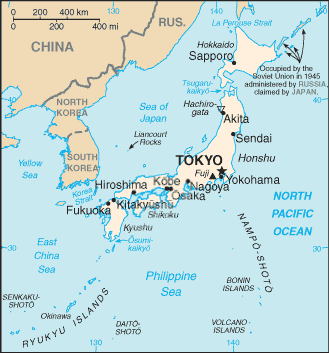




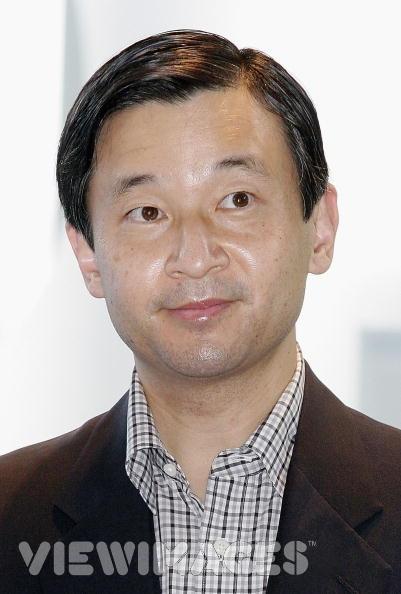
Naruhito
Crown Prince since 7 July 1989
Crown Prince since 7 July 1989
| REFUGEES AND INTERNALLY DISPLACED PERSONS (IDP) |
None reported.
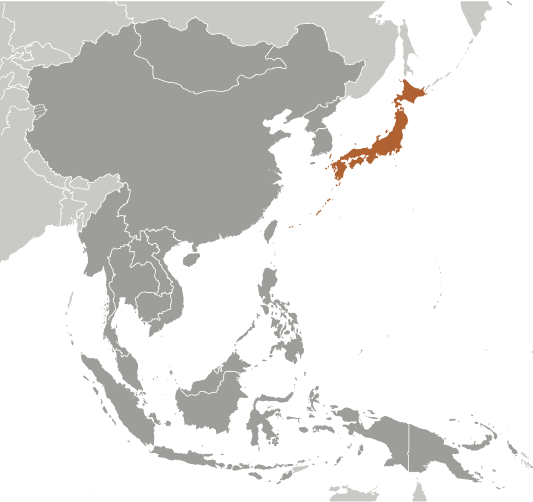
Taro Aso
Deputy Prime Minister
since 26 December 2012
Deputy Prime Minister
since 26 December 2012