
| KUWAIT State of Kuwait Dawlat al Kuwayt Joined United Nations: 14 May 1963 Human Rights as assured by their constitution Click here Updated 05 December 2012 |

| CAPITAL |
| POPULATION |
| CHIEF OF STATE |
| SELECTION PROCESS |
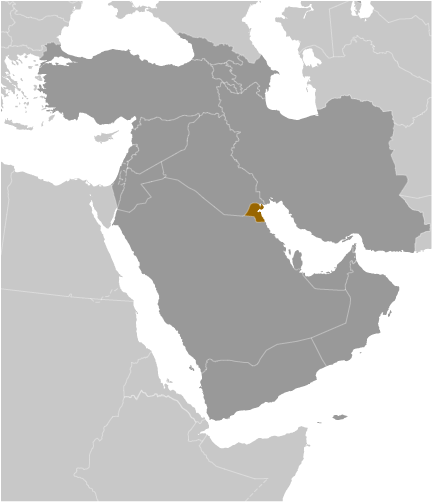
Kuwait
2,646,314
note: includes 1,291,354 non-nationals (July 2012 est.)
note: includes 1,291,354 non-nationals (July 2012 est.)
The Amir is hereditary; the Amir appoints the crown prince and broke
with tradition of the Al-Sabah family in which the Amir and the Crown
Prince alternates between the Al-Salim and Al-Jabir branches and
instead by nominated his half-brother.
Next scheduled election: None
with tradition of the Al-Sabah family in which the Amir and the Crown
Prince alternates between the Al-Salim and Al-Jabir branches and
instead by nominated his half-brother.
Next scheduled election: None
HEAD OF GOVERNMENT
SELECTION PROCESS
The Amir appoints the prime minister and deputy prime ministers
| DECLARATION OF HUMAN RIGHTS |
| ETHNIC GROUPS |
Kuwaiti 45%, other Arab 35%, South Asian 9%, Iranian 4%, other 7%
| RELIGIONS |
Muslim 85% (Sunni 70%, Shi'a 30%), other (includes Christian, Hindu, Parsi) 15%
| GOVERNMENT STRUCTURE |
Constitutional emirate with 6 governorates (muhafazat, singular - muhafazah); Legal system is a civil law system with Islamic law
significant in personal matters; has not accepted compulsory ICJ jurisdiction
Executive: The Amir is hereditary; the Amir appoints the Prime Minister and Deputy Prime Ministers
Legislative: Unicameral National Assembly or Majlis al-Umma (66 seats - 50 members elected by popular vote plus 16 cabinet
ministers appointed by the prime minister as ex officio voting members; elected members serve four-year terms); note - the National
Assembly was dissolved on 7 October 2012
elections: last held on 2 February 2012 (next to be held in 2016)
Judicial: High Court of Appeal
significant in personal matters; has not accepted compulsory ICJ jurisdiction
Executive: The Amir is hereditary; the Amir appoints the Prime Minister and Deputy Prime Ministers
Legislative: Unicameral National Assembly or Majlis al-Umma (66 seats - 50 members elected by popular vote plus 16 cabinet
ministers appointed by the prime minister as ex officio voting members; elected members serve four-year terms); note - the National
Assembly was dissolved on 7 October 2012
elections: last held on 2 February 2012 (next to be held in 2016)
Judicial: High Court of Appeal
| LANGUAGES |
Arabic (official), English widely spoken
| BRIEF HISTORY |
In 3rd century BC the Ancient Greeks colonized the island Failaka under Alexander the Great and named it "Ikaros". Some believe
the name came from an island off the Greek coast, where it is believed that the mythical Icarus was buried, which resembled
Failaka. Others however believe it was named so due to its heat and the belief that it was close to the sun. For recent archaeological
activities at Failaka visit the website of Kuwaiti-Slovak Archaeological Mission (KSAM). Kuwait was founded in the early
eighteenth century by various clans of the Anaiza, who gradually migrated sometime in the late seventeenth century from Nejd to the
shores of the Persian Gulf. In the course of these migrations, different tribal groups with different skills came together to form a new
tribe, what became collectively known as Bani Utub after the migration. According to one local tradition, the Sabahs migrated south
to flee drought in Najd, but found conditions bleaker. Returning to Najd, they regrouped with other families and migrated to Zubara,
on Qatar's west coast. Finding conditions no better there, they finally migrated north to Kuwait where they found water and
consequently settled. Peace in a region dominated by the Bani Khalid, as well as internal problems that kept other regional powers
from interfering, allowed the Bani Utub to develop new maritime skills. Although the Bani Khalid controlled the harbors and kept
the peace, they were primarily a desert-oriented people and did not trade much by sea. Kuwait had arguably one of the best natural
harbors in the Persian Gulf; its location allowed it to benefit from the caravan trade to Aleppo and Baghdad, Shatt al-Arab trade,
and from smuggling trade into Ottoman territory that high tariffs encouraged. Soon after the colony was founded, a Sabah became
leader, ruling until his death in 1762. One tradition has it that political preeminence went to the Sabahs as part of an explicit
agreement: in 1716 the heads of the al-Khalifa, al-Sabah, and al-Jalahima agreed to give the Sabahs preeminence in government
and military affairs, subject to consultation, while the Khalifas controlled local commerce and the Jalahima maritime affairs. Another
account has it that after reaching Kuwait the Bani Utub held a council and elected a representative to go to Basra to explain their
peaceful intent to the Ottomans. The man chosen was a Sabah, Sabah I bin Jaber. Many theories exist as to the source and origin of
Sabah power. The Sabahs, because of their role in the caravan (as opposed to sea) trade, developed closer ties with the desert,
and as a result became the tax collectors there, an important revenue source. Sabah family rule, though well established, remained
limited until well into the 20th century. This is because the merchants, owing to their financial power, could still check Sabah designs.
Kuwait's first contact with Britain occurred in 1775 when first plague, then the Persians,[citation needed] struck Basra and East
India Company made arrangements to have the Persian Gulf-Aleppo Mail Service diverted through Kuwait. Also during this period,
the British established a base in the region. The British became increasingly interested in Kuwait, and the Middle East in general, as
the Germans made plans to extend their proposed Berlin-Baghdad railway into Kuwait, where they intended to locate a coaling
station. In the 1870s, Ottoman officials were reasserting their presence in the Gulf, with a military intervention in 1871—which was
not effectively pursued—where family rivalries in Kuwait and Qatar were breeding chaos. The Ottomans were bankrupt, and when
the European banks took control of the Ottoman budget in 1881, additional income was required from Kuwait and the Arabian
peninsula. Midhat Pasha, the governor of Iraq, demanded that Kuwait submit to Ottoman rule. The al-Sabah found diplomatic allies
in the British Foreign Office. In May 1896, Shaikh Muhammad Al-Sabah was assassinated by his half-brother, Mubarak al-Sabah
(the Great) who, in early 1897, was recognized, by the Ottoman sultan, as the qaimmaqam (provincial sub-governor) of Kuwait. In
July 1897, Mubarak invited the British to deploy gunboats along the Kuwaiti coast. This led to what is known as the First Kuwaiti
Crisis, in which the Ottomans demanded that the British stop interfering with their empire. In the end, the Ottoman Empire backed
down, rather than go to war. In January 1899, Mubarak signed an agreement with the British which pledged that Kuwait would
never cede any territory nor receive agents or representatives of any foreign power without the British Government's consent. In
essence, this policy gave Britain control of Kuwait's foreign policy. The treaty also gave Britain responsibility for Kuwait's national
security. In return, Britain agreed to grant an annual subsidy of 15,000 Indian rupees (£1,500) to the ruling family. Despite the
Kuwaiti government's desire to either be independent or under British rule, in the Anglo-Ottoman Convention of 1913, the British
concurred with the Ottoman Empire in defining Kuwait as an "autonomous caza" of the Ottoman Empire and that the Shaikhs of
Kuwait were not independent leaders, but rather qaimmaqams (provincial sub-governors) of the Ottoman government. After World
War I, the Ottoman Empire was defeated and the British invalidated the Anglo-Ottoman Convention, declaring Kuwait to be an
"independent sheikhdom under British protectorate." The power vacuum left by the fall of the Ottomans sharpened conflict between
Kuwait and Najd. In May 1920 ibn Saud's Wahhabi Bedouins of Nejd had attacked a Kuwaiti detachment in southern Kuwait,
forcing its retreat. In October they raided Jahra, 40km from the capital. In response, the British deployed gunboats, armored cars
and aircraft. The Bedouins withdrew. The 1920s and 30s saw the collapse of the pearl fishery and with it Kuwait's economy. This is
attributed to the invention of the artificial cultivation of pearls. Kuwait became one of the world's poorest countries and became
even more dependent on Britain for protection. In 1941 on the same day as the German invasion of Russia (22 June) the British
took total control over Iraq and Kuwait. (The British and Russians would invade the neighboring Iran in September of that year).
By early 1961, the British had withdrawn their special court system, which handled the cases of foreigners resident in Kuwait, and
the Kuwaiti Government began to exercise legal jurisdiction under new laws drawn up by an Egyptian jurist. On June 19, 1961,
Kuwait became fully independent following an exchange of notes with the United Kingdom. The boundary with Saudi Arabia was
set in 1922 with the Treaty of Uqair following the Battle of Jahrah. This treaty also established the Kuwait-Saudi Arabia Neutral
Zone, an area of about 5,180 sq. km. (2,000 sq. mi.) adjoining Kuwait's southern border. In December 1969, Kuwait and Saudi
Arabia signed an agreement dividing the Neutral Zone (now called the Divided Zone) and demarcating a new international
boundary. Both countries share equally the Divided Zone's petroleum, onshore and offshore. Kuwait's northern border with Iraq
dates from an agreement made with Turkey in 1913. Iraq accepted this claim in 1932 upon its independence from Turkey.
However, following Kuwait's independence in 1961, Iraq claimed Kuwait, under the pretense that Kuwait had been part of the
Ottoman Empire subject to Iraqi suzerainty. In 1963, Iraq reaffirmed its acceptance of Kuwaiti sovereignty and the boundary it
agreed to in 1913 and 1932. In the 1980s Kuwait, fearful of Iran after the Islamic Revolution in Iran, supported Iraq in the Iran-
Iraq war. Kuwait sent large sums of money [5 Billion US$] to Iraq. As a consequence of this Iran attacked Kuwait's oil tankers,
and Kuwait was forced to seek protection from the United States, which sent warships to the Persian Gulf. Kuwait was then
invaded and annexed by Iraq (under Saddam Hussein) in August 1990. Hussein's primary justifications included a charge that
Kuwaiti territory was in fact an Iraqi province, and that annexation was retaliation for "economic warfare" Kuwait had waged
through slant drilling into Iraq's oil supplies. The monarchy was deposed after annexation, and an Iraqi governor installed. U.S.
President George H.W. Bush condemned the invasion, and led efforts to drive out the Iraqi forces. Authorized by the United
Nations Security Council, an American-led coalition of 34 nations fought the First Persian Gulf War to reinstate the Kuwaiti Emir.
Following several weeks of aerial bombardment, a U.S.-led United Nations (UN) coalition began a ground assault on February 23,
1991 that completely removed Iraqi forces from Kuwait in four days. After liberation, the UN, under Security Council Resolution
687, demarcated the Iraq-Kuwait boundary on the basis of the 1932 and the 1963 agreements between the two states. In
November 1994, Iraq formally accepted the UN-demarcated border with Kuwait, which had been further spelled out in Security
Council Resolutions 773 and 883. Kuwait has spent more than five billion dollars to repair oil infrastructure damaged during 1990–
1991. In 2003, Kuwait served as the major staging base for the coalition forces in the U.S.-led invasion of Iraq; it was the only
Arab nation to publicly support the invasion. An early parliamentary election was held in Kuwait on 16 May 2009, the country's
third in a three-year period. 210 candidates attempted to win 50 seats. 16 were female. For the first time, Kuwait, which has no
political parties, elected female MPs. Four women will appear in parliament. Though elections were held on 2 February 2012 the
National Assembly was dissolved on 7 October 2012.
Source: Wikipedia: History of Kuwait
the name came from an island off the Greek coast, where it is believed that the mythical Icarus was buried, which resembled
Failaka. Others however believe it was named so due to its heat and the belief that it was close to the sun. For recent archaeological
activities at Failaka visit the website of Kuwaiti-Slovak Archaeological Mission (KSAM). Kuwait was founded in the early
eighteenth century by various clans of the Anaiza, who gradually migrated sometime in the late seventeenth century from Nejd to the
shores of the Persian Gulf. In the course of these migrations, different tribal groups with different skills came together to form a new
tribe, what became collectively known as Bani Utub after the migration. According to one local tradition, the Sabahs migrated south
to flee drought in Najd, but found conditions bleaker. Returning to Najd, they regrouped with other families and migrated to Zubara,
on Qatar's west coast. Finding conditions no better there, they finally migrated north to Kuwait where they found water and
consequently settled. Peace in a region dominated by the Bani Khalid, as well as internal problems that kept other regional powers
from interfering, allowed the Bani Utub to develop new maritime skills. Although the Bani Khalid controlled the harbors and kept
the peace, they were primarily a desert-oriented people and did not trade much by sea. Kuwait had arguably one of the best natural
harbors in the Persian Gulf; its location allowed it to benefit from the caravan trade to Aleppo and Baghdad, Shatt al-Arab trade,
and from smuggling trade into Ottoman territory that high tariffs encouraged. Soon after the colony was founded, a Sabah became
leader, ruling until his death in 1762. One tradition has it that political preeminence went to the Sabahs as part of an explicit
agreement: in 1716 the heads of the al-Khalifa, al-Sabah, and al-Jalahima agreed to give the Sabahs preeminence in government
and military affairs, subject to consultation, while the Khalifas controlled local commerce and the Jalahima maritime affairs. Another
account has it that after reaching Kuwait the Bani Utub held a council and elected a representative to go to Basra to explain their
peaceful intent to the Ottomans. The man chosen was a Sabah, Sabah I bin Jaber. Many theories exist as to the source and origin of
Sabah power. The Sabahs, because of their role in the caravan (as opposed to sea) trade, developed closer ties with the desert,
and as a result became the tax collectors there, an important revenue source. Sabah family rule, though well established, remained
limited until well into the 20th century. This is because the merchants, owing to their financial power, could still check Sabah designs.
Kuwait's first contact with Britain occurred in 1775 when first plague, then the Persians,[citation needed] struck Basra and East
India Company made arrangements to have the Persian Gulf-Aleppo Mail Service diverted through Kuwait. Also during this period,
the British established a base in the region. The British became increasingly interested in Kuwait, and the Middle East in general, as
the Germans made plans to extend their proposed Berlin-Baghdad railway into Kuwait, where they intended to locate a coaling
station. In the 1870s, Ottoman officials were reasserting their presence in the Gulf, with a military intervention in 1871—which was
not effectively pursued—where family rivalries in Kuwait and Qatar were breeding chaos. The Ottomans were bankrupt, and when
the European banks took control of the Ottoman budget in 1881, additional income was required from Kuwait and the Arabian
peninsula. Midhat Pasha, the governor of Iraq, demanded that Kuwait submit to Ottoman rule. The al-Sabah found diplomatic allies
in the British Foreign Office. In May 1896, Shaikh Muhammad Al-Sabah was assassinated by his half-brother, Mubarak al-Sabah
(the Great) who, in early 1897, was recognized, by the Ottoman sultan, as the qaimmaqam (provincial sub-governor) of Kuwait. In
July 1897, Mubarak invited the British to deploy gunboats along the Kuwaiti coast. This led to what is known as the First Kuwaiti
Crisis, in which the Ottomans demanded that the British stop interfering with their empire. In the end, the Ottoman Empire backed
down, rather than go to war. In January 1899, Mubarak signed an agreement with the British which pledged that Kuwait would
never cede any territory nor receive agents or representatives of any foreign power without the British Government's consent. In
essence, this policy gave Britain control of Kuwait's foreign policy. The treaty also gave Britain responsibility for Kuwait's national
security. In return, Britain agreed to grant an annual subsidy of 15,000 Indian rupees (£1,500) to the ruling family. Despite the
Kuwaiti government's desire to either be independent or under British rule, in the Anglo-Ottoman Convention of 1913, the British
concurred with the Ottoman Empire in defining Kuwait as an "autonomous caza" of the Ottoman Empire and that the Shaikhs of
Kuwait were not independent leaders, but rather qaimmaqams (provincial sub-governors) of the Ottoman government. After World
War I, the Ottoman Empire was defeated and the British invalidated the Anglo-Ottoman Convention, declaring Kuwait to be an
"independent sheikhdom under British protectorate." The power vacuum left by the fall of the Ottomans sharpened conflict between
Kuwait and Najd. In May 1920 ibn Saud's Wahhabi Bedouins of Nejd had attacked a Kuwaiti detachment in southern Kuwait,
forcing its retreat. In October they raided Jahra, 40km from the capital. In response, the British deployed gunboats, armored cars
and aircraft. The Bedouins withdrew. The 1920s and 30s saw the collapse of the pearl fishery and with it Kuwait's economy. This is
attributed to the invention of the artificial cultivation of pearls. Kuwait became one of the world's poorest countries and became
even more dependent on Britain for protection. In 1941 on the same day as the German invasion of Russia (22 June) the British
took total control over Iraq and Kuwait. (The British and Russians would invade the neighboring Iran in September of that year).
By early 1961, the British had withdrawn their special court system, which handled the cases of foreigners resident in Kuwait, and
the Kuwaiti Government began to exercise legal jurisdiction under new laws drawn up by an Egyptian jurist. On June 19, 1961,
Kuwait became fully independent following an exchange of notes with the United Kingdom. The boundary with Saudi Arabia was
set in 1922 with the Treaty of Uqair following the Battle of Jahrah. This treaty also established the Kuwait-Saudi Arabia Neutral
Zone, an area of about 5,180 sq. km. (2,000 sq. mi.) adjoining Kuwait's southern border. In December 1969, Kuwait and Saudi
Arabia signed an agreement dividing the Neutral Zone (now called the Divided Zone) and demarcating a new international
boundary. Both countries share equally the Divided Zone's petroleum, onshore and offshore. Kuwait's northern border with Iraq
dates from an agreement made with Turkey in 1913. Iraq accepted this claim in 1932 upon its independence from Turkey.
However, following Kuwait's independence in 1961, Iraq claimed Kuwait, under the pretense that Kuwait had been part of the
Ottoman Empire subject to Iraqi suzerainty. In 1963, Iraq reaffirmed its acceptance of Kuwaiti sovereignty and the boundary it
agreed to in 1913 and 1932. In the 1980s Kuwait, fearful of Iran after the Islamic Revolution in Iran, supported Iraq in the Iran-
Iraq war. Kuwait sent large sums of money [5 Billion US$] to Iraq. As a consequence of this Iran attacked Kuwait's oil tankers,
and Kuwait was forced to seek protection from the United States, which sent warships to the Persian Gulf. Kuwait was then
invaded and annexed by Iraq (under Saddam Hussein) in August 1990. Hussein's primary justifications included a charge that
Kuwaiti territory was in fact an Iraqi province, and that annexation was retaliation for "economic warfare" Kuwait had waged
through slant drilling into Iraq's oil supplies. The monarchy was deposed after annexation, and an Iraqi governor installed. U.S.
President George H.W. Bush condemned the invasion, and led efforts to drive out the Iraqi forces. Authorized by the United
Nations Security Council, an American-led coalition of 34 nations fought the First Persian Gulf War to reinstate the Kuwaiti Emir.
Following several weeks of aerial bombardment, a U.S.-led United Nations (UN) coalition began a ground assault on February 23,
1991 that completely removed Iraqi forces from Kuwait in four days. After liberation, the UN, under Security Council Resolution
687, demarcated the Iraq-Kuwait boundary on the basis of the 1932 and the 1963 agreements between the two states. In
November 1994, Iraq formally accepted the UN-demarcated border with Kuwait, which had been further spelled out in Security
Council Resolutions 773 and 883. Kuwait has spent more than five billion dollars to repair oil infrastructure damaged during 1990–
1991. In 2003, Kuwait served as the major staging base for the coalition forces in the U.S.-led invasion of Iraq; it was the only
Arab nation to publicly support the invasion. An early parliamentary election was held in Kuwait on 16 May 2009, the country's
third in a three-year period. 210 candidates attempted to win 50 seats. 16 were female. For the first time, Kuwait, which has no
political parties, elected female MPs. Four women will appear in parliament. Though elections were held on 2 February 2012 the
National Assembly was dissolved on 7 October 2012.
Source: Wikipedia: History of Kuwait
| ECONOMIC OVERVIEW |
Kuwait has a geographically small, but wealthy, relatively open economy with crude oil reserves of about 104 billion barrels - about
7% of world reserves. Petroleum accounts for nearly half of GDP, 95% of export revenues, and 95% of government income.
Kuwaiti officials have committed to increasing oil production to 4 million barrels per day by 2020. The rise in global oil prices
throughout 2011 is reviving government consumption and economic growth. Kuwait has experienced a 20% increase in government
budget revenue, which has led to higher budget expenditures, particularly wage hikes for many public sector employees. Kuwait has
done little to diversify its economy, in part, because of this positive fiscal situation, and, in part, due to the poor business climate and
the acrimonious relationship between the National Assembly and the executive branch, which has stymied most movement on
economic reforms. In 2010, Kuwait passed an economic development plan that pledges to spend up to $130 billion over five years
to diversify the economy away from oil, attract more investment, and boost private sector participation in the economy.
Source: CIA World Factbook (select Kuwait)
7% of world reserves. Petroleum accounts for nearly half of GDP, 95% of export revenues, and 95% of government income.
Kuwaiti officials have committed to increasing oil production to 4 million barrels per day by 2020. The rise in global oil prices
throughout 2011 is reviving government consumption and economic growth. Kuwait has experienced a 20% increase in government
budget revenue, which has led to higher budget expenditures, particularly wage hikes for many public sector employees. Kuwait has
done little to diversify its economy, in part, because of this positive fiscal situation, and, in part, due to the poor business climate and
the acrimonious relationship between the National Assembly and the executive branch, which has stymied most movement on
economic reforms. In 2010, Kuwait passed an economic development plan that pledges to spend up to $130 billion over five years
to diversify the economy away from oil, attract more investment, and boost private sector participation in the economy.
Source: CIA World Factbook (select Kuwait)
| POLITICAL CLIMATE |
Kuwait's monarchical system of government is marked by the unusually wide involvement of members of the ruling family in state
posts. Several important cabinet portfolios are held by members of the ruling family, including defense, interior and foreign affairs.
Members of the ruling family (who bear the title 'shaykh' in Kuwait) typically hold additional cabinet posts, and are found in many
other high posts in the government. This major family role in politics emerged in 1939, when shaykhs of the al-Sabah closed the
Kuwaiti parliament that the merchants had established the year before.
Perhaps the two most contentious issues, leading to six different elections between 1991 - 2008, involve issues pretaining to the
electoral process and the involvement that the royal family has in the government.
Accusations have been mounted that the government has fixed elections and that corrupt candidates, with friendly ties to the royal
family, buy their way into the parliament. The exclusion of women from the electoral process, prior to 2005, the 21 minimum voting
age and fact that parties are still illegal, are also frequent points of contention.
The Prime Minister is typically royal blood and the Amir is the head of State. The more liberal MPs generally distrust the political
power of the royalty, where as the Independents and Islamicists tend to see the royalty as a source of tradition, order and clan
allegiance.
The Constitution does not allow the parliament to fire the Prime Minister, at least not directly, but does allow them to issue an
indirect no-confidence vote and call the Prime Minister to hear and have to answer to public criticism of his policies. Such things
would be illegal in other Gulf States and are seen, by the more conservative-traditionalist factions, as being beyond the pale. It is
possible that the future government will either not have anyone from the royal family in it or that the Prime Minister will be the likely
future king. Due to corruption allegations against previous Prime Minister Nasser Al-Sabah and mounting pressure from the
parliament and numerous protests, the government resigned on 28 November 2011. Parliament was dissolved and early elections
called for the early spring of 2012.
Source: Wikipedia: Politics of Kuwait
posts. Several important cabinet portfolios are held by members of the ruling family, including defense, interior and foreign affairs.
Members of the ruling family (who bear the title 'shaykh' in Kuwait) typically hold additional cabinet posts, and are found in many
other high posts in the government. This major family role in politics emerged in 1939, when shaykhs of the al-Sabah closed the
Kuwaiti parliament that the merchants had established the year before.
Perhaps the two most contentious issues, leading to six different elections between 1991 - 2008, involve issues pretaining to the
electoral process and the involvement that the royal family has in the government.
Accusations have been mounted that the government has fixed elections and that corrupt candidates, with friendly ties to the royal
family, buy their way into the parliament. The exclusion of women from the electoral process, prior to 2005, the 21 minimum voting
age and fact that parties are still illegal, are also frequent points of contention.
The Prime Minister is typically royal blood and the Amir is the head of State. The more liberal MPs generally distrust the political
power of the royalty, where as the Independents and Islamicists tend to see the royalty as a source of tradition, order and clan
allegiance.
The Constitution does not allow the parliament to fire the Prime Minister, at least not directly, but does allow them to issue an
indirect no-confidence vote and call the Prime Minister to hear and have to answer to public criticism of his policies. Such things
would be illegal in other Gulf States and are seen, by the more conservative-traditionalist factions, as being beyond the pale. It is
possible that the future government will either not have anyone from the royal family in it or that the Prime Minister will be the likely
future king. Due to corruption allegations against previous Prime Minister Nasser Al-Sabah and mounting pressure from the
parliament and numerous protests, the government resigned on 28 November 2011. Parliament was dissolved and early elections
called for the early spring of 2012.
Source: Wikipedia: Politics of Kuwait
| INTERNATIONAL DISPUTES |
Kuwait and Saudi Arabia continue negotiating a joint maritime boundary with Iran; no maritime boundary exists with Iraq in the
Persian Gulf
Persian Gulf


| REFUGEES AND INTERNALLY DISPLACED PERSONS (IDPS) |
None reported.
| ILLICIT DRUGS |
None reported.
| HUMAN RIGHTS STATEMENTS, ANALYSIS AND CRITIQUES |
2011 Human Rights Report: Kuwait
Bureau of Democracy, Human Rights, and Labor
2011 Country Reports on Human Rights Practices
May 25, 2012
Kuwait is a constitutional, hereditary emirate ruled by the Al Sabah family. The country has a population of 3.44 million, of whom 1.1
million are citizens. The May 2009 parliamentary elections were considered generally free and fair. Security forces reported to civilian
authorities.
Principal human rights problems included limitations on citizens' right to change their government; trafficking in persons within the
expatriate worker population, especially in the domestic and unskilled service sectors; and limitations on workers' rights. Authorities
restricted freedom of speech and assembly, especially among foreign workers and stateless Arabs (called "Bidoon").
Other human rights problems included reports of security forces abusing prisoners; restrictions on freedom of movement for certain
groups, including foreign workers and Bidoon; and limitations on freedoms of press, association, and religion at times during the year.
Bidoon faced social and legal discrimination, and women did not enjoy equal rights.
The government took steps to prosecute and punish officials who committed abuses, whether in the security services or elsewhere in
the government. Impunity was sometimes a problem in corruption cases
Click here to read more »
Bureau of Democracy, Human Rights, and Labor
2011 Country Reports on Human Rights Practices
May 25, 2012
Kuwait is a constitutional, hereditary emirate ruled by the Al Sabah family. The country has a population of 3.44 million, of whom 1.1
million are citizens. The May 2009 parliamentary elections were considered generally free and fair. Security forces reported to civilian
authorities.
Principal human rights problems included limitations on citizens' right to change their government; trafficking in persons within the
expatriate worker population, especially in the domestic and unskilled service sectors; and limitations on workers' rights. Authorities
restricted freedom of speech and assembly, especially among foreign workers and stateless Arabs (called "Bidoon").
Other human rights problems included reports of security forces abusing prisoners; restrictions on freedom of movement for certain
groups, including foreign workers and Bidoon; and limitations on freedoms of press, association, and religion at times during the year.
Bidoon faced social and legal discrimination, and women did not enjoy equal rights.
The government took steps to prosecute and punish officials who committed abuses, whether in the security services or elsewhere in
the government. Impunity was sometimes a problem in corruption cases
Click here to read more »
9 March 2012
Committee on the Elimination of Racial Discrimination
Eightieth session
13 February – 9 March 2012
Consideration of reports submitted by States parties under article 9 of the convention
Concluding observations of the Committee on the Elimination of Racial Discrimination
Kuwait
A. Introduction
2. The Committee welcomes the submission of the combined fifteenth to twentieth periodic report of the State party. However, the
Committee notes that the periodic report is not completely in line with all the elements of the Committee’s reporting guidelines. It
regrets the late submission of the report which has prevented the Committee from conducting an on-going analysis of the implementation
of the Convention for more than a decade.
B. Positive aspects
4. The Committee welcomes the State party’s ongoing efforts to revise its legislation in order to ensure greater protection of human
rights and give effect to the Convention, such as the amendment to the Electoral Act No. 35 of 1962 by Act No. 17 of 2005 which
granted Kuwaiti women full rights to vote and to stand for elections.
5. The Committee notes with interest that since the consideration of the thirteenth and fourteenth periodic report of the State party, the
latter has acceded to or ratified international and regional instruments, such as:
(a) Optional Protocol to the Convention on the Rights of the Child on the sale of children, child prostitution and child pornography
(26August 2004);
(b) Optional Protocol to the Convention on the Rights of the Child on the involvement of children in armed conflicts (26 August 2004);
C. Concerns and recommendations
7. The Committee regrets that the State party’s periodic report did not contain statistics regarding the ethnic composition of the persons
living in its territory.
In accordance with paragraphs 10 to 12 of its revised reporting guidelines (CERD/C/2007/1), the Committee recommends that the State
party collect and publicize reliable and comprehensive statistical data on the ethnic composition of its population, and its economic and
social indicators disaggregated by ethnicity, including on immigrants, from national census or surveys which include the ethnic and racial
dimension based on self-identification, to enable the Committee to better evaluate the enjoyment of rights under the Convention in
Kuwait. The Committee requests the State party to provide it with such disaggregated data in its next report.
8. The Committee is concerned that national legislation does not contain a definition of racial discrimination in full conformity with article
1 of the Convention, as well as a general norm of prohibition of racial discrimination according to the Convention. (art. 1).
The Committee recommends that the State party amend its legislation to include a definition of racial discrimination in full conformity
with article 1 of the Convention.
Click here to read more »
Committee on the Elimination of Racial Discrimination
Eightieth session
13 February – 9 March 2012
Consideration of reports submitted by States parties under article 9 of the convention
Concluding observations of the Committee on the Elimination of Racial Discrimination
Kuwait
A. Introduction
2. The Committee welcomes the submission of the combined fifteenth to twentieth periodic report of the State party. However, the
Committee notes that the periodic report is not completely in line with all the elements of the Committee’s reporting guidelines. It
regrets the late submission of the report which has prevented the Committee from conducting an on-going analysis of the implementation
of the Convention for more than a decade.
B. Positive aspects
4. The Committee welcomes the State party’s ongoing efforts to revise its legislation in order to ensure greater protection of human
rights and give effect to the Convention, such as the amendment to the Electoral Act No. 35 of 1962 by Act No. 17 of 2005 which
granted Kuwaiti women full rights to vote and to stand for elections.
5. The Committee notes with interest that since the consideration of the thirteenth and fourteenth periodic report of the State party, the
latter has acceded to or ratified international and regional instruments, such as:
(a) Optional Protocol to the Convention on the Rights of the Child on the sale of children, child prostitution and child pornography
(26August 2004);
(b) Optional Protocol to the Convention on the Rights of the Child on the involvement of children in armed conflicts (26 August 2004);
C. Concerns and recommendations
7. The Committee regrets that the State party’s periodic report did not contain statistics regarding the ethnic composition of the persons
living in its territory.
In accordance with paragraphs 10 to 12 of its revised reporting guidelines (CERD/C/2007/1), the Committee recommends that the State
party collect and publicize reliable and comprehensive statistical data on the ethnic composition of its population, and its economic and
social indicators disaggregated by ethnicity, including on immigrants, from national census or surveys which include the ethnic and racial
dimension based on self-identification, to enable the Committee to better evaluate the enjoyment of rights under the Convention in
Kuwait. The Committee requests the State party to provide it with such disaggregated data in its next report.
8. The Committee is concerned that national legislation does not contain a definition of racial discrimination in full conformity with article
1 of the Convention, as well as a general norm of prohibition of racial discrimination according to the Convention. (art. 1).
The Committee recommends that the State party amend its legislation to include a definition of racial discrimination in full conformity
with article 1 of the Convention.
Click here to read more »
Freedom Alert
Kuwait Cracks Down on Free Assembly with Ban on ‘Unlicensed’ Demonstrations
Oct 26 2012 - 9:21am
The decision by Kuwait’s Interior Ministry to ban ‘unlicensed’ peaceful demonstrations is worrisome and is an indicator of the
deteriorating conditions for free expression and assembly in Kuwait. Authorities must reverse the ban on ‘unlicensed’ demonstrations
and implement policies that ensure free speech and assembly without fear of prosecution.
On October 22, the interior ministry declared that groups of more than 20 people gathered in a public area without a license will be
‘banned’ from assembling. According to the ministry, police will have the right to prevent and to disperse these ‘unlicensed’ rallies, if
they believe they are a ‘security breach,’ or a threat to ‘public order’ or ‘morals,’ vague descriptions which could serve as justification
for banning or dispersing virtually any type of peaceful assembly.
The ban on ‘unlicensed demonstrations’ comes after an October 2 demonstration – “The March of the Nation’s Dignity” – during which
tens of thousands of Kuwaitis expressed concern with a draft decree issued by the government which would change the number of
candidates voters can choose in December 1’s parliamentary elections from four to one, effectively limiting the role of the opposition.
Because of potential changes to the electoral law, many opposition parties plan to boycott the election. During the October 2
demonstration against the draft decree, at least 29 protesters were injured and 15 detained by authorities, some still face charges despite
being released from jail.
Kuwait is not an electoral democracy - rated Partly Free in Freedom in the World and Freedom of the Press - as the ruling family sets
the political agenda. While political groupings have been allowed to emerge, formal political parties are banned. Authorities continue to
limit criticism and political debate in the press. And while freedom of assembly and freedom of association are guaranteed by law, the
government in practice restricts these rights.
Click here to read more »
Kuwait Cracks Down on Free Assembly with Ban on ‘Unlicensed’ Demonstrations
Oct 26 2012 - 9:21am
The decision by Kuwait’s Interior Ministry to ban ‘unlicensed’ peaceful demonstrations is worrisome and is an indicator of the
deteriorating conditions for free expression and assembly in Kuwait. Authorities must reverse the ban on ‘unlicensed’ demonstrations
and implement policies that ensure free speech and assembly without fear of prosecution.
On October 22, the interior ministry declared that groups of more than 20 people gathered in a public area without a license will be
‘banned’ from assembling. According to the ministry, police will have the right to prevent and to disperse these ‘unlicensed’ rallies, if
they believe they are a ‘security breach,’ or a threat to ‘public order’ or ‘morals,’ vague descriptions which could serve as justification
for banning or dispersing virtually any type of peaceful assembly.
The ban on ‘unlicensed demonstrations’ comes after an October 2 demonstration – “The March of the Nation’s Dignity” – during which
tens of thousands of Kuwaitis expressed concern with a draft decree issued by the government which would change the number of
candidates voters can choose in December 1’s parliamentary elections from four to one, effectively limiting the role of the opposition.
Because of potential changes to the electoral law, many opposition parties plan to boycott the election. During the October 2
demonstration against the draft decree, at least 29 protesters were injured and 15 detained by authorities, some still face charges despite
being released from jail.
Kuwait is not an electoral democracy - rated Partly Free in Freedom in the World and Freedom of the Press - as the ruling family sets
the political agenda. While political groupings have been allowed to emerge, formal political parties are banned. Authorities continue to
limit criticism and political debate in the press. And while freedom of assembly and freedom of association are guaranteed by law, the
government in practice restricts these rights.
Click here to read more »
1 November 2012
Kuwait: Charges against Musallam al-Barrak must be dropped
The Kuwaiti authorities must drop charges against Musallam al-Barrak, who faces prosecution purely for peacefully exercising his right
to freedom of expression with remarks he made that have been deemed to undermine the Amir of Kuwait, Sheikh Sabah Al-Ahmad Al-
Jaber Al Sabah, Amnesty International said.
Al-Barrak was charged on Thursday with "undermining the status of the Amir", which could result in a prison sentence of up to five
years, for making statements at a public demonstration on 15 October.
The former parliamentarian was released after spending four days in detention and making a heavy bail payment of 10,000 KD
(US$35,500).
“The arrest and prosecution of Musallam al-Barrak, on account of his peaceful criticism of Amir Sheikh Sabah Al-Ahmad Al-Jaber Al
Sabah, is outrageous and is yet another manifestation of the increasing restrictions on freedom of expression and assembly in Kuwait,”
said Ann Harrison, Deputy Director for Amnesty International’s Middle East and North Africa Programme.
“He did not incite violence or hatred but was engaged purely in exercising his right to peaceful freedom of expression – the Kuwaiti
authorities must drop the charges against him and against anyone else facing similar charges for peacefully expressing their views.”
A number of protesters were arrested on Wednesday night during demonstrations against al-Barrak’s arrest and dozens of people,
including children, were taken to hospital after inhaling teargas.
Al-Barrak was arrested on 29 October following his appearance in the 15 October demonstration where he warned against the
government’s proposal to amend the country’s electoral law and argued that Kuwait risked becoming an autocratic state.
The government has called for a parliamentary election on 1 December. A registration process for candidates began on Wednesday 31
October.
His arrest led to a protest by around 200 people the same day outside Kuwait’s Central Courthouse which was dispersed by police and
security personnel.
A further demonstration of more than 2,000 people on Wednesday 31 October, calling for al-Barrak’s release, was dispersed by security
forces using tear gas and stun grenades (sound bombs), an eyewitness told Amnesty International.
Click here to read more »
Kuwait: Charges against Musallam al-Barrak must be dropped
The Kuwaiti authorities must drop charges against Musallam al-Barrak, who faces prosecution purely for peacefully exercising his right
to freedom of expression with remarks he made that have been deemed to undermine the Amir of Kuwait, Sheikh Sabah Al-Ahmad Al-
Jaber Al Sabah, Amnesty International said.
Al-Barrak was charged on Thursday with "undermining the status of the Amir", which could result in a prison sentence of up to five
years, for making statements at a public demonstration on 15 October.
The former parliamentarian was released after spending four days in detention and making a heavy bail payment of 10,000 KD
(US$35,500).
“The arrest and prosecution of Musallam al-Barrak, on account of his peaceful criticism of Amir Sheikh Sabah Al-Ahmad Al-Jaber Al
Sabah, is outrageous and is yet another manifestation of the increasing restrictions on freedom of expression and assembly in Kuwait,”
said Ann Harrison, Deputy Director for Amnesty International’s Middle East and North Africa Programme.
“He did not incite violence or hatred but was engaged purely in exercising his right to peaceful freedom of expression – the Kuwaiti
authorities must drop the charges against him and against anyone else facing similar charges for peacefully expressing their views.”
A number of protesters were arrested on Wednesday night during demonstrations against al-Barrak’s arrest and dozens of people,
including children, were taken to hospital after inhaling teargas.
Al-Barrak was arrested on 29 October following his appearance in the 15 October demonstration where he warned against the
government’s proposal to amend the country’s electoral law and argued that Kuwait risked becoming an autocratic state.
The government has called for a parliamentary election on 1 December. A registration process for candidates began on Wednesday 31
October.
His arrest led to a protest by around 200 people the same day outside Kuwait’s Central Courthouse which was dispersed by police and
security personnel.
A further demonstration of more than 2,000 people on Wednesday 31 October, calling for al-Barrak’s release, was dispersed by security
forces using tear gas and stun grenades (sound bombs), an eyewitness told Amnesty International.
Click here to read more »
The State of Kuwait
by Mariwan Hama
Published in: Sada, Carnegie Endowment for International Peace
November 27, 2012
On November 5, Kuwait’s emir, Sheikh Sabah al-Ahmad Al Sabah, confirmed that he would go ahead with the changes he made in the
Kuwait’s electoral law this past October 19, explaining that the measures will “protect national unity.” This amendment to the electoral
law ahead of the December 1 parliamentary elections is likely to escalate the political crisis in Kuwait, as opposition groups have, in
response, threatened to boycott the elections. The resulting political instability is threatening to strip the country of its history of strong
political participation.
The amendment reduces the number of votes each voter can cast to one; a change from the previous electoral law, which allowed each
voter in a district to select up to four MPs. Critics claim that the new electoral system will benefit pro-government candidates and will
result in a tame parliament that will be unable to stand up to or hold the government accountable. Previous issues over the electoral issue
have centered on redrawing of electoral districts: currently Kuwait has five—each with 10 elected MPs. Before 2006, Kuwait had 25
electoral districts, and the government lobbied for 10. The opposition, in turn, wanted 5—arguing that too many districts would pave the
way for corruption and vote-buying. More recently, the emir’s decree came after the Constitutional Court rejected a government appeal
to redraw the electoral districts.
The pronouncement has caused upheaval among the opposition, which is already at odds with the government (as has been the case for
the past few years). Opposition Islamists, liberals, and nationalists have all vowed to boycott the elections and have held at least four
rallies that brought tens of thousands of protesters to the streets—one such demonstration was the “March of Dignity” on October 20,
the largest political rally in the country’s history, with some estimates counting as many as 150,000 participants.
The protest was met with a strong response from the country’s security forces that fired tear gas and sound bombs to disperse
protesters wounding several demonstrators. The opposition is attempting to pressure the emir to withdraw his decree and let the next
elected parliament decide on amending the law. The opposition says that a new pro-monarchy parliament is likely to vote in favor of the
change—thereby definitively weakening their position.
Click here to read more »
by Mariwan Hama
Published in: Sada, Carnegie Endowment for International Peace
November 27, 2012
On November 5, Kuwait’s emir, Sheikh Sabah al-Ahmad Al Sabah, confirmed that he would go ahead with the changes he made in the
Kuwait’s electoral law this past October 19, explaining that the measures will “protect national unity.” This amendment to the electoral
law ahead of the December 1 parliamentary elections is likely to escalate the political crisis in Kuwait, as opposition groups have, in
response, threatened to boycott the elections. The resulting political instability is threatening to strip the country of its history of strong
political participation.
The amendment reduces the number of votes each voter can cast to one; a change from the previous electoral law, which allowed each
voter in a district to select up to four MPs. Critics claim that the new electoral system will benefit pro-government candidates and will
result in a tame parliament that will be unable to stand up to or hold the government accountable. Previous issues over the electoral issue
have centered on redrawing of electoral districts: currently Kuwait has five—each with 10 elected MPs. Before 2006, Kuwait had 25
electoral districts, and the government lobbied for 10. The opposition, in turn, wanted 5—arguing that too many districts would pave the
way for corruption and vote-buying. More recently, the emir’s decree came after the Constitutional Court rejected a government appeal
to redraw the electoral districts.
The pronouncement has caused upheaval among the opposition, which is already at odds with the government (as has been the case for
the past few years). Opposition Islamists, liberals, and nationalists have all vowed to boycott the elections and have held at least four
rallies that brought tens of thousands of protesters to the streets—one such demonstration was the “March of Dignity” on October 20,
the largest political rally in the country’s history, with some estimates counting as many as 150,000 participants.
The protest was met with a strong response from the country’s security forces that fired tear gas and sound bombs to disperse
protesters wounding several demonstrators. The opposition is attempting to pressure the emir to withdraw his decree and let the next
elected parliament decide on amending the law. The opposition says that a new pro-monarchy parliament is likely to vote in favor of the
change—thereby definitively weakening their position.
Click here to read more »
Speech by HH Amir of the state of Kuwait
Sheikh Sabah Al Ahmad Al Jaber Al Sabah Addressing Members of both Houses of Parliament at the Palace of Westminster
Thursday 29 November 2012
My Lords, Ladies and Gentlemen,,,
I consider it a particular privilege to be able to meet with members of both houses of the UK Parliament. This is a great institution, with
an ancient lineage, stretching back to the first English Parliament of Simon de Montfort in 1265. Since those early beginnings, the
Mother of Parliament's has challenged arbitrary power, established and defended the rights of ordinary citizens, and built a modern
representative democracy.
A few weeks ago, the State of Kuwait celebrated the 50th anniversary of the ratification of its constitution.
This marked the culmination of a process of political and social development over four centuries. As in the UK, over that time the nature
between the ruler and his people has changed. today, that relationship is securely established within the framework of an active
constitutional democracy.
We Kuwaitis share your sense of democracy. Our constitution is the beacon that guides our government and people in leading a good
and fulfilling way of life, based on well-defined rights and duties for all. It regulates the relations between the three main sources of
authority : legislative, executive and judicial. The Kuwaiti constitution aims at ensuring fundamental freedoms for our people and defined
and clear functions for the State. It also provides the basis for the conduct of Kuwait's foreign affairs – respecting the sovereignty of the
State of Kuwait on the one hand; and enshrining the principle of non-interference with the internal affairs of other states on the other. It
also makes clear Kuwait's desire to develop and strengthen its relations with all countries, at both regional and international levels, in
accordance with the principles of mutual respect and common interest.
In summary, it is a constitution which embodies the rights, duties and aspirations of the Kuwaiti people in securing a future of peace,
progress and prosperity.
The parliaments of the United Kingdom and of Kuwait may be very different in age but we share a common endeavor. We seek for our
two nations a modern, representative and responsive democracy. our task is an unending one, of course, but we constantly strive to
improve. in that respect the parliaments of Kuwait and the United Kingdom co-operate in sharing our experiences, and learning from
each other. This is only part of our mutual desire to develop the strong and warm bilateral relations which exist between our two
countries.
Click here to read more »
Sheikh Sabah Al Ahmad Al Jaber Al Sabah Addressing Members of both Houses of Parliament at the Palace of Westminster
Thursday 29 November 2012
My Lords, Ladies and Gentlemen,,,
I consider it a particular privilege to be able to meet with members of both houses of the UK Parliament. This is a great institution, with
an ancient lineage, stretching back to the first English Parliament of Simon de Montfort in 1265. Since those early beginnings, the
Mother of Parliament's has challenged arbitrary power, established and defended the rights of ordinary citizens, and built a modern
representative democracy.
A few weeks ago, the State of Kuwait celebrated the 50th anniversary of the ratification of its constitution.
This marked the culmination of a process of political and social development over four centuries. As in the UK, over that time the nature
between the ruler and his people has changed. today, that relationship is securely established within the framework of an active
constitutional democracy.
We Kuwaitis share your sense of democracy. Our constitution is the beacon that guides our government and people in leading a good
and fulfilling way of life, based on well-defined rights and duties for all. It regulates the relations between the three main sources of
authority : legislative, executive and judicial. The Kuwaiti constitution aims at ensuring fundamental freedoms for our people and defined
and clear functions for the State. It also provides the basis for the conduct of Kuwait's foreign affairs – respecting the sovereignty of the
State of Kuwait on the one hand; and enshrining the principle of non-interference with the internal affairs of other states on the other. It
also makes clear Kuwait's desire to develop and strengthen its relations with all countries, at both regional and international levels, in
accordance with the principles of mutual respect and common interest.
In summary, it is a constitution which embodies the rights, duties and aspirations of the Kuwaiti people in securing a future of peace,
progress and prosperity.
The parliaments of the United Kingdom and of Kuwait may be very different in age but we share a common endeavor. We seek for our
two nations a modern, representative and responsive democracy. our task is an unending one, of course, but we constantly strive to
improve. in that respect the parliaments of Kuwait and the United Kingdom co-operate in sharing our experiences, and learning from
each other. This is only part of our mutual desire to develop the strong and warm bilateral relations which exist between our two
countries.
Click here to read more »
06/12/2012
Non-Kuwaiti women married to Kuwaitis will get ‘citizenship’ PM ready to take podium in ‘majority’ grilling on Thursday
KUWAIT CITY, March 10: MP Muhammad Al-Khalifa, Member of the National Assembly’s Interior and Defense Affairs Committee has
announced non-Kuwaiti women married to Kuwaitis will be soon be granted the Kuwaiti citizenship in accordance with Article 2 of the
Citizenship Law number 15/1959 reports Al-Watan Arabic daily,
This will come after addition of some regulations which will pave the way for the process of granting citizenship after it was stopped for
10 years.
Reasons
MP Al-Khalifa has reveled he met the acting Prime Minister and Minister of Interior Sheikh Ahmad Al-Hmoud Al-Sabah in his office and
discussed the reasons which led the Ministry of Interior to delay issuing citizenship to wives of Kuwaitis in spite of they fulfilling all
requirements.
He also said he discussed the issue of not granting promotion to non-commissioned officers in spite of them acquiring of higher
secondary certificates.
Without going into more details Al-Khalifa added the meeting with Sheikh Ahmad Al-Hmoud was fruitful.
Meanwhile, the majority bloc of 35 MPs is looking forward to getting their priorities approved by the National Assembly during the next
session, reports Al-Jaridah daily.
MP Mohammad Al-Dalal said the MPs have planned to reschedule the grilling of HH the Prime Minister Sheikh Jaber Al-Mubarak Al-
Sabah to Thursday instead of Tuesday. This will enable the group to discuss their priorities on Tuesday and Wednesday.
Meanwhile, the Al-Watan Arabic daily quoted MP Dr Mohammad Al-Matar as saying HH the Prime Minister has refused to refer the
grilling either to the Constitutional Court, the Legal and Legislative Affairs Committee of the National Assembly or to discuss it during a
closed-door session.
He praised the Prime Minister for agreeing to take the grilling podium in an open session saying ‘This is a normal procedure’.
Detainees
In another development, members of the parliamentary Human Rights Committee visited the Central Jail recently and met a number of
detainees, including some Syrians accused of breaking into their embassy, reports Al-Rai daily quoting sources.
Sources confirmed the committee members also looked into the conditions of Bedoun prisoners, adding that 14 of these inmates have
been released on KD 100 bail.
Speaking to reporters after the visit, MP Mohammed Hayef disclosed the committee members also met columnist Mohammed Al-Mulaifi,
admitting that it is difficult to handle political cases through security decisions. “Some corrupt senior officials at the Interior Ministry had
exaggerated the case of Al-Mulaifi, deliberately disregarding the law. They should punish whoever called for the death of Al-Mulaifi and
abused his mother,” he added.
Hayef also stressed the need take into consideration the humanitarian aspect of the Syrians’ case.
Click here to read more »
Non-Kuwaiti women married to Kuwaitis will get ‘citizenship’ PM ready to take podium in ‘majority’ grilling on Thursday
KUWAIT CITY, March 10: MP Muhammad Al-Khalifa, Member of the National Assembly’s Interior and Defense Affairs Committee has
announced non-Kuwaiti women married to Kuwaitis will be soon be granted the Kuwaiti citizenship in accordance with Article 2 of the
Citizenship Law number 15/1959 reports Al-Watan Arabic daily,
This will come after addition of some regulations which will pave the way for the process of granting citizenship after it was stopped for
10 years.
Reasons
MP Al-Khalifa has reveled he met the acting Prime Minister and Minister of Interior Sheikh Ahmad Al-Hmoud Al-Sabah in his office and
discussed the reasons which led the Ministry of Interior to delay issuing citizenship to wives of Kuwaitis in spite of they fulfilling all
requirements.
He also said he discussed the issue of not granting promotion to non-commissioned officers in spite of them acquiring of higher
secondary certificates.
Without going into more details Al-Khalifa added the meeting with Sheikh Ahmad Al-Hmoud was fruitful.
Meanwhile, the majority bloc of 35 MPs is looking forward to getting their priorities approved by the National Assembly during the next
session, reports Al-Jaridah daily.
MP Mohammad Al-Dalal said the MPs have planned to reschedule the grilling of HH the Prime Minister Sheikh Jaber Al-Mubarak Al-
Sabah to Thursday instead of Tuesday. This will enable the group to discuss their priorities on Tuesday and Wednesday.
Meanwhile, the Al-Watan Arabic daily quoted MP Dr Mohammad Al-Matar as saying HH the Prime Minister has refused to refer the
grilling either to the Constitutional Court, the Legal and Legislative Affairs Committee of the National Assembly or to discuss it during a
closed-door session.
He praised the Prime Minister for agreeing to take the grilling podium in an open session saying ‘This is a normal procedure’.
Detainees
In another development, members of the parliamentary Human Rights Committee visited the Central Jail recently and met a number of
detainees, including some Syrians accused of breaking into their embassy, reports Al-Rai daily quoting sources.
Sources confirmed the committee members also looked into the conditions of Bedoun prisoners, adding that 14 of these inmates have
been released on KD 100 bail.
Speaking to reporters after the visit, MP Mohammed Hayef disclosed the committee members also met columnist Mohammed Al-Mulaifi,
admitting that it is difficult to handle political cases through security decisions. “Some corrupt senior officials at the Interior Ministry had
exaggerated the case of Al-Mulaifi, deliberately disregarding the law. They should punish whoever called for the death of Al-Mulaifi and
abused his mother,” he added.
Hayef also stressed the need take into consideration the humanitarian aspect of the Syrians’ case.
Click here to read more »
Parliamentary election preparations underway – Human rights society ‘partial’
28 October 2012
KUWAIT: The location and staff of electoral committees are likely to be decided during a meeting next week to be chaired by head of the
Supreme Judicial Council, Faisal Al- Mershed, sources privy to the developments, said yesterday. The sources who spoke on the
condition of anonymity believe that an announcement about the location besides the heads and members of main and subsidiary
committees is expected to be made “within a couple of weeks” or before Nov 10.
No significant changes in the number of staff compared to last February’s elections are expected, besides a number of consultants and
judges “for personal reasons,” according to the sources. The upcoming elections are set for Dec 1. Meanwhile, the Ministry of
Information will be allowing candidates to address the people for a few minutes, explaining their election agenda, in free-of-cost ads to
be broadcast on Kuwait TV, as was done during last February’s elections. Candidates will be notified to contact the ministry after the
end of the candidacy registration period, as the ads are to be broadcast in the second half of November.
Separately, the Ministry of Social Affairs and Labor received a complaint against the Kuwait Human Rights Society, accusing it of being
“partial” in its approach and favoring the opposition. “The complaint argues that the KHRS board is in harmony with the opposition when
it comes to highlighting governmental malpractices and releasing exaggerated reactions,” sources, who refused to identify those behind
the complaint, said. The complaint demanded investigation into the society’s work.
This comes amid reports hinting that the Public Prosecution agreed to launch legal procedures with regards to a complaint filed by
attorney Yaqoub Al-Sane’a against oppositionists Musallam Al-Barrak and Hamad Al- Muttar, in which the two former lawmakers are
accused of allegedly offending HH the Amir during a demonstration staged at the Iradah Square October 15th. An arrest warrant has
already been issued against Al-Barrak for an earlier allegation in which former MPs Falah Al-Sawagh, Khalid Al-Tahous and Badr Al-
Dahoum were also detained and released on bail following investigations.
Click here to read more>>
28 October 2012
KUWAIT: The location and staff of electoral committees are likely to be decided during a meeting next week to be chaired by head of the
Supreme Judicial Council, Faisal Al- Mershed, sources privy to the developments, said yesterday. The sources who spoke on the
condition of anonymity believe that an announcement about the location besides the heads and members of main and subsidiary
committees is expected to be made “within a couple of weeks” or before Nov 10.
No significant changes in the number of staff compared to last February’s elections are expected, besides a number of consultants and
judges “for personal reasons,” according to the sources. The upcoming elections are set for Dec 1. Meanwhile, the Ministry of
Information will be allowing candidates to address the people for a few minutes, explaining their election agenda, in free-of-cost ads to
be broadcast on Kuwait TV, as was done during last February’s elections. Candidates will be notified to contact the ministry after the
end of the candidacy registration period, as the ads are to be broadcast in the second half of November.
Separately, the Ministry of Social Affairs and Labor received a complaint against the Kuwait Human Rights Society, accusing it of being
“partial” in its approach and favoring the opposition. “The complaint argues that the KHRS board is in harmony with the opposition when
it comes to highlighting governmental malpractices and releasing exaggerated reactions,” sources, who refused to identify those behind
the complaint, said. The complaint demanded investigation into the society’s work.
This comes amid reports hinting that the Public Prosecution agreed to launch legal procedures with regards to a complaint filed by
attorney Yaqoub Al-Sane’a against oppositionists Musallam Al-Barrak and Hamad Al- Muttar, in which the two former lawmakers are
accused of allegedly offending HH the Amir during a demonstration staged at the Iradah Square October 15th. An arrest warrant has
already been issued against Al-Barrak for an earlier allegation in which former MPs Falah Al-Sawagh, Khalid Al-Tahous and Badr Al-
Dahoum were also detained and released on bail following investigations.
Click here to read more>>
| Click map for larger view |
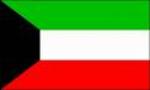
| Click flag for Country Report |



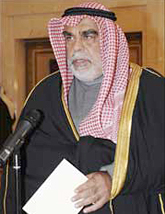
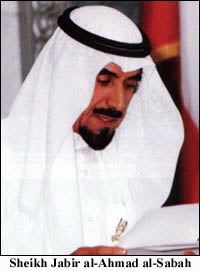
Sabah al-Ahmad al-Jabir al-Sabah
Amir since 29 January 2006
Amir since 29 January 2006
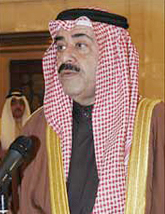
Nawaf al-Ahmad al-Jabir al-Sabah
Crown Prince and Heir Apparent
since 7 February 2006
Crown Prince and Heir Apparent
since 7 February 2006
| TRAFFICKING IN PERSONS |
Current situation: Kuwait is a destination country for men and women who migrate legally from South and Southeast Asia for
domestic or low-skilled labor, but are subjected to conditions of involuntary servitude by employers in Kuwait including conditions
of physical and sexual abuse, non-payment of wages, confinement to the home, and withholding of passports to restrict their
freedom of movement; Kuwait is reportedly a transit point for South and East Asian workers recruited for low-skilled work in Iraq;
some of these workers are deceived as to the true location and nature of this work, and others are subjected to conditions of
involuntary servitude in Iraq
Tier rating: Tier 3 - Kuwaiti government has shown an inability to define trafficking and has demonstrated insufficient political will
to address human trafficking adequately; much of the human trafficking found in Kuwait involves domestic workers in private
residences and the government is reluctant to prosecute Kuwaiti citizens; the government has not enacted legislation targeting human
trafficking nor established a permanent shelter for victims of trafficking (2009)
domestic or low-skilled labor, but are subjected to conditions of involuntary servitude by employers in Kuwait including conditions
of physical and sexual abuse, non-payment of wages, confinement to the home, and withholding of passports to restrict their
freedom of movement; Kuwait is reportedly a transit point for South and East Asian workers recruited for low-skilled work in Iraq;
some of these workers are deceived as to the true location and nature of this work, and others are subjected to conditions of
involuntary servitude in Iraq
Tier rating: Tier 3 - Kuwaiti government has shown an inability to define trafficking and has demonstrated insufficient political will
to address human trafficking adequately; much of the human trafficking found in Kuwait involves domestic workers in private
residences and the government is reluctant to prosecute Kuwaiti citizens; the government has not enacted legislation targeting human
trafficking nor established a permanent shelter for victims of trafficking (2009)



Jabir Mubarak al-Hamad al-Sabah
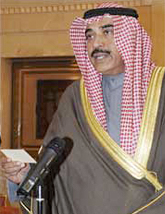
Prime Minister since 30 November 2011
Prime Minister since 30 November 2011
Ahmad Al-Khalid al-Hamad al-Sabah
Deputy Prime Minister since 30 November 2011
Deputy Prime Minister since 30 November 2011
Sabah Al-Khalid al-Hamad al-Sabah
Deputy Prime Minister since 30 November 2011
Deputy Prime Minister since 30 November 2011
Ahmad al-Hamud al-Jabir al-Sabah
First Deputy Prime Minister since 30 November 2011
First Deputy Prime Minister since 30 November 2011