
| KYRGYZSTAN Kyrgyz Republic Kyrgyz Respublikasy Joined United Nations: 2 March 1992 Human Rights as assured by their constitution Click here Updated 28 September 2012 |

| CAPITAL |
| POPULATION |
| CHIEF OF STATE |
| SELECTION PROCESS |
Bishkek
5,496,737 (July 2012 est.)
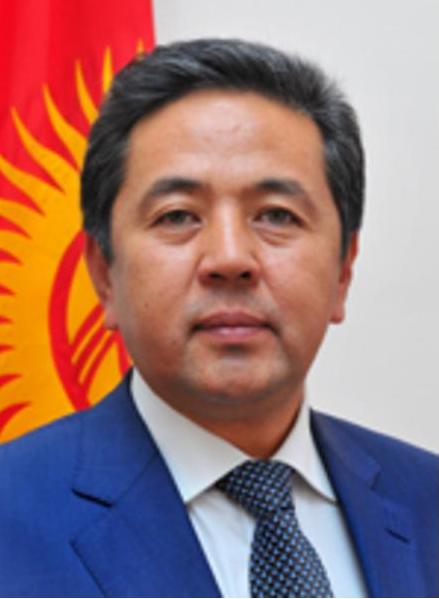
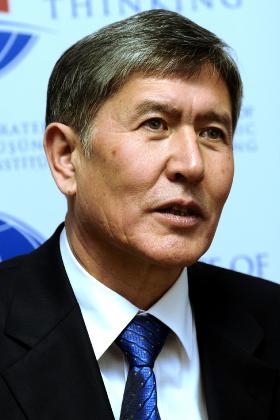
Almazbek Atambaev
President since 1 December 2011
President since 1 December 2011
President elected by popular vote for a six-year term; election
last held on 30 October 2011
Next scheduled election: 2017
last held on 30 October 2011
Next scheduled election: 2017
| HEAD OF GOVERNMENT |
| SELECTION PROCESS |
Jantoro Satybaldiev
Prime Minister since 5 September 2012
Prime Minister since 5 September 2012
Prime minister nominated by the parliamentary party holding
more than 50% of the seats; if no such party exists, the
president selects the party that will form a coalition majority and
government; NOTE- present government is the third attempt to
establish a coalition as a result of two prior collapses Election
last held: 10 October 2010
Next scheduled election: 2015
more than 50% of the seats; if no such party exists, the
president selects the party that will form a coalition majority and
government; NOTE- present government is the third attempt to
establish a coalition as a result of two prior collapses Election
last held: 10 October 2010
Next scheduled election: 2015
| DECLARATION OF HUMAN RIGHTS |
| ETHNIC GROUPS |
Kyrgyz 64.9%, Uzbek 13.8%, Russian 12.5%, Dungan 1.1%, Ukrainian 1%, Uygur 1%, other 5.7% (1999 census)
| RELIGIONS |
Muslim 75%, Russian Orthodox 20%, other 5%
| GOVERNMENT STRUCTURE |
Republic with 7 provinces (oblastlar, singular - oblasty) and 1 city* (shaar); Legal system is based on civil law system
Executive: President elected by popular vote for a six-year term; election last held on 30 October 2011 (next scheduled for 2017);
prime minister nominated by the parliamentary party holding more than 50% of the seats; if no such party exists, the president
selects the party that will form a coalition majority and government
Legislative: Unicameral Supreme Council or Jogorku Kengesh (120 seats; members elected by popular vote to serve
five-year terms)
elections: last held on 10 October 2010 (next to be held in 2015)
Judicial: Supreme Court; Constitutional Court (judges of both the Supreme and Constitutional Courts are appointed for
10-year terms by the Jogorku Kengesh on the recommendation of the president; their mandatory retirement age is 70
years); Higher Court of Arbitration; Local Courts (judges appointed by the president on the recommendation of the National
Council on Legal Affairs for a probationary period of five years, then 10 years)
Executive: President elected by popular vote for a six-year term; election last held on 30 October 2011 (next scheduled for 2017);
prime minister nominated by the parliamentary party holding more than 50% of the seats; if no such party exists, the president
selects the party that will form a coalition majority and government
Legislative: Unicameral Supreme Council or Jogorku Kengesh (120 seats; members elected by popular vote to serve
five-year terms)
elections: last held on 10 October 2010 (next to be held in 2015)
Judicial: Supreme Court; Constitutional Court (judges of both the Supreme and Constitutional Courts are appointed for
10-year terms by the Jogorku Kengesh on the recommendation of the president; their mandatory retirement age is 70
years); Higher Court of Arbitration; Local Courts (judges appointed by the president on the recommendation of the National
Council on Legal Affairs for a probationary period of five years, then 10 years)
| LANGUAGES |
Kyrgyz (official) 64.7%, Uzbek 13.6%, Russian (official) 12.5%, Dungun 1%, other 8.2% (1999 census)
| BRIEF HISTORY |
Stone implements found in the Tian Shan mountains indicate the presence of human society in what is now Kyrgyzstan as
many as 200,000 to 300,000 years ago. The first written records of a civilization in the area occupied by Kyrgyzstan appear
in Chinese chronicles beginning about 2000 B.C. The earliest ancestors of the Altaic peoples, the Xiongnu tribes, originally
inhabited a region in the northwest of present-day Mongolia. The forebears of the present-day Kyrgyz are believed to have
been either southern Samoyed or Yeniseyan Altaic tribes. The homeland of these proto-Kyrgyz was the upper Yenisey
River and Sayan Mountains of southern Siberia in what is now modern Khakassia and Tuva. First appearing in Chinese
records of the Grand Historian as Gekun or Jiankun and later as part of the Tiele tribes, they were once under the rule of
Göktürks and Uyghurs. After they defeated the Uyghurs in the 9th century, the Uyghurs began to migrate to Xinjiang. The
Kyrgyz started moving to the area of present-day Kyrgyzstan from the Yenisey River region in central Siberia in the 10th
century. Ethnographers dispute their Yeniseyan origin, however, because of the very close cultural and linguistic connections
between Kyrgyz and Kazaks. A great Kyrgyz-led tribal confederation flourished in the 10th century. By the 12th century,
however, Kyrgyz dominion had shrunk to the region of the Sayan Mountains, northwest of present-day Mongolia, and the
Altai Range on the present-day border of China and Mongolia. In the same period, other Kyrgyz tribes were moving across
a wide area of Central Asia, mingling with other ethnic groups. The first Turks to form a state in the territory of Central Asia
(including Kyrgyzstan) were Göktürks or Kök-Türks. Known in medieval Chinese sources as Tujue (ú jué), the Göktürks
under the leadership of Bumin/Tuman Khan/Khaghan (d. 552) and his sons established the first known Turkic state around
552 in the general area of territory that had earlier been occupied by the Xiongnu, and expanded rapidly to rule wide
territories in Central Asia. The Göktürks split in two rival Khanates, of which the western one disintegrated in 744 AD. The
first kingdom to emerge from the Qokturk khanate was the Buddhist Uyghur Empire that flourished in the territory
encompassing most of Central Asia from 740 to 840 AD. After the Uyghur empire disintegrated a branch of the Uyghurs
migrated to oasis settlements in the Tarim Basin and Gansu, such as Gaochang (Khoja) and Hami (Kumul), and set up a
confederation of decentralized Buddhist states called Kara-Khoja. Others, mainly closely related to Uyghurs (Qarluks),
occupying the western Tarim Basin, Ferghana Valley, Jungaria and parts of modern Kazakhstan bordering the Muslim
Turco-Tajik Khwarazm Sultanate, converted to Islam no later than the 10th century and built a federation with Muslim
institutions called Kara-Khanlik, whose princely dynasties are called Karakhanids by most historians. Its capital, Balasagun
flourished as a cultural and economic centre. The Islamized Qarluk princely clan, the Balasaghunlu Ashinalar (or the
Karakhanids) gravitated toward the Persian Islamic cultural zone after their political autonomy and suzerainty over Central
Asia was secured during the 9-10th century. The Mongols' invasion of Central Asia in the 13th century devastated the
territory of Kyrgyzstan, costing its people their independence and their written language. The son of (Genghis) Khan, Juche,
conquered the Kyrgyz tribes of the Yenisey region, who by this time had become disunited. At the same time, the area of
present Kyrgyzstan was an important link in the Silk Road, as attested by several Nestorian gravestones. For the next 200
years, the Kyrgyz remained under the Golden Horde and the Oriot and Jumgar khanates that succeeded that regime.
Freedom was regained in 1510, but Kyrgyz tribes were overrun in the seventeenth century by the Kalmyks, in the mid-
eighteenth century by the Manchus, and in the early nineteenth century by the Uzbeks. In the early 19th century, the southern
territory of the Kyrgyz Republic came under the control of the Khanate of Kokand, but the territory was occupied and
formally annexed by the Russian Empire in 1876. The Russian takeover instigated numerous revolts against tsarist authority,
and many Kyrgyz opted to move into the Pamir Mountains or to Afghanistan. The ruthless suppression of the 1916 rebellion
in Central Asia, triggered by the Russian imposition of the military draft on the Kyrgyz and other Central Asian peoples,
caused many Kyrgyz to flee to China. Soviet power was initially established in the region in 1918, and in 1924, the Kara-
Kyrgyz Autonomous Oblast was created within the Russian SFSR. (The term Kara-Kyrgyz was used until the mid-1920s
by the Russians to distinguish them from the Kazakhs, who were also referred to as Kyrgyz.) In 1926, it became the Kirghiz
Autonomous Soviet Socialist Republic. On December 5, 1936, the Kirghiz Soviet Socialist Republic (SSR) was established
as a full Union Republic of the U.S.S.R. On August 19, 1991, when the State Emergency Committee assumed power in
Moscow, there was an attempt to depose Akayev in Kyrgyzstan. After the coup collapsed the following week, Akayev and
Vice President German Kuznetsov announced their resignations from the Communist Party of the Soviet Union (CPSU),
and the entire politburo and secretariat resigned. This was followed by the Supreme Soviet vote declaring independence
from the U.S.S.R. on August 31, 1991. Kyrgyz was announced as the state language in September 1991. (In December
2001, through a constitutional amendment, the Russian language was given official status.) A new constitution was passed by
the parliament in May 1993. A February 1996 referendum—in violation of the constitution and the law on referendums—
amended the constitution to give President Akayev more power. Although the changes gave the president the power to
dissolve parliament, it also more clearly defined the parliament's powers. Since that time, the parliament has demonstrated
real independence from the executive branch. The most recent elections were parliamentary, held February 27 and March
13, 2005. The OSCE found that while the elections failed to comply with commitments to free and fair elections, there were
improvements over the 2000 elections, notably the use of indelible ink, transparent ballot boxes, and generally good access
by election observers. Sporadic protests against perceived manipulation and fraud during the elections of February 27,
2005, erupted into widespread calls for the government to resign, which started in the southern provinces. On March 24,
15,000 pro-opposition demonstrators called for the resignation of the President and his regime in Bishkek. Protesters seized
the main government building, and Akayev hurriedly fled the country, first to neighboring Kazakhstan and then to Moscow.
Initially refusing to resign and denouncing the events as a coup, he subsequently resigned his office on April 4. The Kyrgyz
Revolution of 2010 was a series of riots and demonstrations across Kyrgyzstan in April 2010 that led ultimately to the
ousting of President Kurmanbek Bakiyev. The uprising stemmed from growing anger against Bakiyev's administration, rising
energy prices, and the sluggish economy, and follow the government's closure of several media outlets. Protesters took
control of a government office in Talas on April 6, and on April 7 clashes between protesters and police in the capital
Bishkek turned violent. At least 88 deaths and over 1000 injuries have been confirmed. Bakiyev also accused Russia of
staging his ousting because he extended the lease of the Manas Air Base to the Americans. After the riots, President
Bakiyev fled the capital in his private jet south to Osh, while opposition leaders formed a new interim government led by
former foreign minister Roza Otunbayeva. In his southern home base Bakiyev supporters turned out in large numbers to
show support for him and demanded his restoration to power. On April 15, a rally in support of Bakiyev was abruptly
stopped due to gunfire from unknown sources. The same day, Bakiyev left the country for Kazakhstan, and then went on to
Belarus. He subsequently resigned as President, although he has since renounced his resignation. An early parliamentary
election was held in Kyrgyzstan on 10 October 2010. All 120 seats of the Jogorku Kenesh were elected by using a party
list system. Seats were allocated to all parties who obtained more than 5% of the vote and more than 0.5% in each of the
nine provinces, capped at 65 seats per party. Ata-Zhurt won a plurality of seats, while the ruling interim government's party
finished second, and the Ar-Namys came in third.Early presidential elections were held in Kyrgyzstan on 30 October 2011
to replace Interim President Roza Otunbayeva. Former Prime Minister Almazbek Atambayev of the Social Democratic
Party of Kyrgyzstan won in the first round. After two failed attempt to form a coalition government in parliament, Jantoro
Satybaldiev, a non-aligned politician was elected as a compromise candidate on 5 September 2012.
Sources: Wikipedia: History of Kyrgyzstan
many as 200,000 to 300,000 years ago. The first written records of a civilization in the area occupied by Kyrgyzstan appear
in Chinese chronicles beginning about 2000 B.C. The earliest ancestors of the Altaic peoples, the Xiongnu tribes, originally
inhabited a region in the northwest of present-day Mongolia. The forebears of the present-day Kyrgyz are believed to have
been either southern Samoyed or Yeniseyan Altaic tribes. The homeland of these proto-Kyrgyz was the upper Yenisey
River and Sayan Mountains of southern Siberia in what is now modern Khakassia and Tuva. First appearing in Chinese
records of the Grand Historian as Gekun or Jiankun and later as part of the Tiele tribes, they were once under the rule of
Göktürks and Uyghurs. After they defeated the Uyghurs in the 9th century, the Uyghurs began to migrate to Xinjiang. The
Kyrgyz started moving to the area of present-day Kyrgyzstan from the Yenisey River region in central Siberia in the 10th
century. Ethnographers dispute their Yeniseyan origin, however, because of the very close cultural and linguistic connections
between Kyrgyz and Kazaks. A great Kyrgyz-led tribal confederation flourished in the 10th century. By the 12th century,
however, Kyrgyz dominion had shrunk to the region of the Sayan Mountains, northwest of present-day Mongolia, and the
Altai Range on the present-day border of China and Mongolia. In the same period, other Kyrgyz tribes were moving across
a wide area of Central Asia, mingling with other ethnic groups. The first Turks to form a state in the territory of Central Asia
(including Kyrgyzstan) were Göktürks or Kök-Türks. Known in medieval Chinese sources as Tujue (ú jué), the Göktürks
under the leadership of Bumin/Tuman Khan/Khaghan (d. 552) and his sons established the first known Turkic state around
552 in the general area of territory that had earlier been occupied by the Xiongnu, and expanded rapidly to rule wide
territories in Central Asia. The Göktürks split in two rival Khanates, of which the western one disintegrated in 744 AD. The
first kingdom to emerge from the Qokturk khanate was the Buddhist Uyghur Empire that flourished in the territory
encompassing most of Central Asia from 740 to 840 AD. After the Uyghur empire disintegrated a branch of the Uyghurs
migrated to oasis settlements in the Tarim Basin and Gansu, such as Gaochang (Khoja) and Hami (Kumul), and set up a
confederation of decentralized Buddhist states called Kara-Khoja. Others, mainly closely related to Uyghurs (Qarluks),
occupying the western Tarim Basin, Ferghana Valley, Jungaria and parts of modern Kazakhstan bordering the Muslim
Turco-Tajik Khwarazm Sultanate, converted to Islam no later than the 10th century and built a federation with Muslim
institutions called Kara-Khanlik, whose princely dynasties are called Karakhanids by most historians. Its capital, Balasagun
flourished as a cultural and economic centre. The Islamized Qarluk princely clan, the Balasaghunlu Ashinalar (or the
Karakhanids) gravitated toward the Persian Islamic cultural zone after their political autonomy and suzerainty over Central
Asia was secured during the 9-10th century. The Mongols' invasion of Central Asia in the 13th century devastated the
territory of Kyrgyzstan, costing its people their independence and their written language. The son of (Genghis) Khan, Juche,
conquered the Kyrgyz tribes of the Yenisey region, who by this time had become disunited. At the same time, the area of
present Kyrgyzstan was an important link in the Silk Road, as attested by several Nestorian gravestones. For the next 200
years, the Kyrgyz remained under the Golden Horde and the Oriot and Jumgar khanates that succeeded that regime.
Freedom was regained in 1510, but Kyrgyz tribes were overrun in the seventeenth century by the Kalmyks, in the mid-
eighteenth century by the Manchus, and in the early nineteenth century by the Uzbeks. In the early 19th century, the southern
territory of the Kyrgyz Republic came under the control of the Khanate of Kokand, but the territory was occupied and
formally annexed by the Russian Empire in 1876. The Russian takeover instigated numerous revolts against tsarist authority,
and many Kyrgyz opted to move into the Pamir Mountains or to Afghanistan. The ruthless suppression of the 1916 rebellion
in Central Asia, triggered by the Russian imposition of the military draft on the Kyrgyz and other Central Asian peoples,
caused many Kyrgyz to flee to China. Soviet power was initially established in the region in 1918, and in 1924, the Kara-
Kyrgyz Autonomous Oblast was created within the Russian SFSR. (The term Kara-Kyrgyz was used until the mid-1920s
by the Russians to distinguish them from the Kazakhs, who were also referred to as Kyrgyz.) In 1926, it became the Kirghiz
Autonomous Soviet Socialist Republic. On December 5, 1936, the Kirghiz Soviet Socialist Republic (SSR) was established
as a full Union Republic of the U.S.S.R. On August 19, 1991, when the State Emergency Committee assumed power in
Moscow, there was an attempt to depose Akayev in Kyrgyzstan. After the coup collapsed the following week, Akayev and
Vice President German Kuznetsov announced their resignations from the Communist Party of the Soviet Union (CPSU),
and the entire politburo and secretariat resigned. This was followed by the Supreme Soviet vote declaring independence
from the U.S.S.R. on August 31, 1991. Kyrgyz was announced as the state language in September 1991. (In December
2001, through a constitutional amendment, the Russian language was given official status.) A new constitution was passed by
the parliament in May 1993. A February 1996 referendum—in violation of the constitution and the law on referendums—
amended the constitution to give President Akayev more power. Although the changes gave the president the power to
dissolve parliament, it also more clearly defined the parliament's powers. Since that time, the parliament has demonstrated
real independence from the executive branch. The most recent elections were parliamentary, held February 27 and March
13, 2005. The OSCE found that while the elections failed to comply with commitments to free and fair elections, there were
improvements over the 2000 elections, notably the use of indelible ink, transparent ballot boxes, and generally good access
by election observers. Sporadic protests against perceived manipulation and fraud during the elections of February 27,
2005, erupted into widespread calls for the government to resign, which started in the southern provinces. On March 24,
15,000 pro-opposition demonstrators called for the resignation of the President and his regime in Bishkek. Protesters seized
the main government building, and Akayev hurriedly fled the country, first to neighboring Kazakhstan and then to Moscow.
Initially refusing to resign and denouncing the events as a coup, he subsequently resigned his office on April 4. The Kyrgyz
Revolution of 2010 was a series of riots and demonstrations across Kyrgyzstan in April 2010 that led ultimately to the
ousting of President Kurmanbek Bakiyev. The uprising stemmed from growing anger against Bakiyev's administration, rising
energy prices, and the sluggish economy, and follow the government's closure of several media outlets. Protesters took
control of a government office in Talas on April 6, and on April 7 clashes between protesters and police in the capital
Bishkek turned violent. At least 88 deaths and over 1000 injuries have been confirmed. Bakiyev also accused Russia of
staging his ousting because he extended the lease of the Manas Air Base to the Americans. After the riots, President
Bakiyev fled the capital in his private jet south to Osh, while opposition leaders formed a new interim government led by
former foreign minister Roza Otunbayeva. In his southern home base Bakiyev supporters turned out in large numbers to
show support for him and demanded his restoration to power. On April 15, a rally in support of Bakiyev was abruptly
stopped due to gunfire from unknown sources. The same day, Bakiyev left the country for Kazakhstan, and then went on to
Belarus. He subsequently resigned as President, although he has since renounced his resignation. An early parliamentary
election was held in Kyrgyzstan on 10 October 2010. All 120 seats of the Jogorku Kenesh were elected by using a party
list system. Seats were allocated to all parties who obtained more than 5% of the vote and more than 0.5% in each of the
nine provinces, capped at 65 seats per party. Ata-Zhurt won a plurality of seats, while the ruling interim government's party
finished second, and the Ar-Namys came in third.Early presidential elections were held in Kyrgyzstan on 30 October 2011
to replace Interim President Roza Otunbayeva. Former Prime Minister Almazbek Atambayev of the Social Democratic
Party of Kyrgyzstan won in the first round. After two failed attempt to form a coalition government in parliament, Jantoro
Satybaldiev, a non-aligned politician was elected as a compromise candidate on 5 September 2012.
Sources: Wikipedia: History of Kyrgyzstan
| ECONOMIC OVERVIEW |
Kyrgyzstan is a poor, mountainous country with a dominant agricultural sector. Cotton, tobacco, wool, and meat are the
main agricultural products, although only tobacco and cotton are exported in any quantity. Industrial exports include gold,
mercury, uranium, natural gas, and electricity. The economy depends heavily on gold exports - mainly from output at the
Kumtor gold mine. Following independence, Kyrgyzstan was progressive in carrying out market reforms, such as an
improved regulatory system and land reform. Kyrgyzstan was the first Commonwealth of Independent States (CIS) country
to be accepted into the World Trade Organization. Much of the government's stock in enterprises has been sold. Drops in
production had been severe after the breakup of the Soviet Union in December 1991, but by mid-1995, production began
to recover and exports began to increase. In 2005, the BAKIEV government and international financial institutions initiated a
comprehensive medium-term poverty reduction and economic growth strategy. The government made steady strides in
controlling its substantial fiscal deficit, nearly closing the gap between revenues and expenditures in 2006, before boosting
expenditures more than 20% in 2007-08. GDP grew about 8% annually in 2007-08, partly due to higher gold prices
internationally, but slowed to 2.9% in 2009. The overthrow of President BAKIEV in April 2010 and subsequent ethnic
clashes left hundreds dead and damaged infrastructure. Shrinking trade and agricultural production, as well as political
instability, caused GDP to contract 0.4% in 2010. The fiscal deficit widened to 11% of GDP, reflecting significant increases
in crisis-related spending, including both rehabilitation of damaged infrastructure and bank recapitalization. The economy
grew 5.7% in 2011, and the budget deficit was reduced to just over 5% of GDP. Progress in reconstruction, fighting
corruption, restructuring domestic industry, and attracting foreign aid and investment are key to future growth.
Source: CIA World Factbook (select Kyrgyzstan)
main agricultural products, although only tobacco and cotton are exported in any quantity. Industrial exports include gold,
mercury, uranium, natural gas, and electricity. The economy depends heavily on gold exports - mainly from output at the
Kumtor gold mine. Following independence, Kyrgyzstan was progressive in carrying out market reforms, such as an
improved regulatory system and land reform. Kyrgyzstan was the first Commonwealth of Independent States (CIS) country
to be accepted into the World Trade Organization. Much of the government's stock in enterprises has been sold. Drops in
production had been severe after the breakup of the Soviet Union in December 1991, but by mid-1995, production began
to recover and exports began to increase. In 2005, the BAKIEV government and international financial institutions initiated a
comprehensive medium-term poverty reduction and economic growth strategy. The government made steady strides in
controlling its substantial fiscal deficit, nearly closing the gap between revenues and expenditures in 2006, before boosting
expenditures more than 20% in 2007-08. GDP grew about 8% annually in 2007-08, partly due to higher gold prices
internationally, but slowed to 2.9% in 2009. The overthrow of President BAKIEV in April 2010 and subsequent ethnic
clashes left hundreds dead and damaged infrastructure. Shrinking trade and agricultural production, as well as political
instability, caused GDP to contract 0.4% in 2010. The fiscal deficit widened to 11% of GDP, reflecting significant increases
in crisis-related spending, including both rehabilitation of damaged infrastructure and bank recapitalization. The economy
grew 5.7% in 2011, and the budget deficit was reduced to just over 5% of GDP. Progress in reconstruction, fighting
corruption, restructuring domestic industry, and attracting foreign aid and investment are key to future growth.
Source: CIA World Factbook (select Kyrgyzstan)
| POLITICAL CLIMATE |
Presidential elections, originally expected in 2010, were rescheduled for 23 July 2009.[3] President Bakiyev was widely
expected to retain his mandate, while the opposition United People's Movement (OND) announced on 20 April 2009 that it
would field a single candidate – Social Democratic Party leader Almaz Atambayev.[4] The election turnout was reported at
79.3%.[5] As of 00:45 local time in Kyrgyzstan on 25 July 2009 (with 2058 of 2330 polling districts reporting), Bakiyev
had won the election with 83.8% of the vote.
In assessing the election, the OSCE stated that Bakiyev had gained an "unfair advantage" and that media bias "did not allow
voters to make an informed choice." Additionally, they found that the election was "marred by many problems and
irregularities", citing ballot stuffing and problems with the counting of votes. On polling day Atambayev withdrew his
candidacy claiming widespread fraud, stating "due to massive, unprecedented violations, we consider these elections
illegitimate and a new election should be held." Independent candidate Jenishbek Nazaraliev also withdrew on election day.
An opposition rally of 1,000 people in Balykchy on election day was broken up by riot police.
The arrest of an opposition figure on 6 April 2010 in the town of Talas led opposition supporters to protest. The protestors
took control of a governmental building, demanding a new government. Riot police were sent from Bishkek, and managed to
temporarily regain control of the building. Later the same day several more opposition figures were arrested, while the
government claimed to have regained control of the situation. The following day, however, hundreds of opposition
supporters gathered in Bishkek and marched on the government headquarters. Security personnel attempted to disperse the
protestors with the use of stun grenades and live rounds, at the cost of dozens of lives. The protests continued, however,
resulting in the flight of President Bakiyev to his southern stronghold of Jalalabad, and the freeing later the same day of the
arrested opposition figures. A new government was formed under opposition leader Roza Otunbayeva, while Bakiyev
remained for several days in southern Kyrgyzstan, before fleeing to Belarus, where he was given asylum by President
Lukashenko. The new interim government held consultations on a new constitution, intended to increase the powers of the
parliament and reduce those of the president. A referendum was held on the resulting document on 27 June 2010, and was
approved by over 90% of voters, with a turnout of 72%. Elections were subsequently held on 10 October 2010. These
elections resulted in five parties reaching the 5% threshold necessary to enter parliament. As of 25 October, the five
successful parties were continued negotiations on the formation of a governing coalition. After two failed attempt to form a
coalition government in parliament, Jantoro Satybaldiev, a non-aligned politician was elected as a compromise candidate on
5 September 2012.
Source: Politics of Kyrgyzstan
expected to retain his mandate, while the opposition United People's Movement (OND) announced on 20 April 2009 that it
would field a single candidate – Social Democratic Party leader Almaz Atambayev.[4] The election turnout was reported at
79.3%.[5] As of 00:45 local time in Kyrgyzstan on 25 July 2009 (with 2058 of 2330 polling districts reporting), Bakiyev
had won the election with 83.8% of the vote.
In assessing the election, the OSCE stated that Bakiyev had gained an "unfair advantage" and that media bias "did not allow
voters to make an informed choice." Additionally, they found that the election was "marred by many problems and
irregularities", citing ballot stuffing and problems with the counting of votes. On polling day Atambayev withdrew his
candidacy claiming widespread fraud, stating "due to massive, unprecedented violations, we consider these elections
illegitimate and a new election should be held." Independent candidate Jenishbek Nazaraliev also withdrew on election day.
An opposition rally of 1,000 people in Balykchy on election day was broken up by riot police.
The arrest of an opposition figure on 6 April 2010 in the town of Talas led opposition supporters to protest. The protestors
took control of a governmental building, demanding a new government. Riot police were sent from Bishkek, and managed to
temporarily regain control of the building. Later the same day several more opposition figures were arrested, while the
government claimed to have regained control of the situation. The following day, however, hundreds of opposition
supporters gathered in Bishkek and marched on the government headquarters. Security personnel attempted to disperse the
protestors with the use of stun grenades and live rounds, at the cost of dozens of lives. The protests continued, however,
resulting in the flight of President Bakiyev to his southern stronghold of Jalalabad, and the freeing later the same day of the
arrested opposition figures. A new government was formed under opposition leader Roza Otunbayeva, while Bakiyev
remained for several days in southern Kyrgyzstan, before fleeing to Belarus, where he was given asylum by President
Lukashenko. The new interim government held consultations on a new constitution, intended to increase the powers of the
parliament and reduce those of the president. A referendum was held on the resulting document on 27 June 2010, and was
approved by over 90% of voters, with a turnout of 72%. Elections were subsequently held on 10 October 2010. These
elections resulted in five parties reaching the 5% threshold necessary to enter parliament. As of 25 October, the five
successful parties were continued negotiations on the formation of a governing coalition. After two failed attempt to form a
coalition government in parliament, Jantoro Satybaldiev, a non-aligned politician was elected as a compromise candidate on
5 September 2012.
Source: Politics of Kyrgyzstan
| INTERNATIONAL DISPUTES |
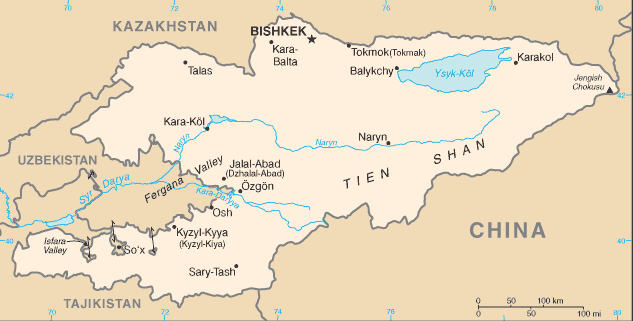
Kyrgyzstan has yet to ratify the 2001 boundary delimitation with Kazakhstan; disputes in Isfara Valley delay completion of
delimitation with Tajikistan; delimitation of 130 km of border with Uzbekistan is hampered by serious disputes around
enclaves and other areas
delimitation with Tajikistan; delimitation of 130 km of border with Uzbekistan is hampered by serious disputes around
enclaves and other areas


| REFUGEES AND INTERNALLY DISPLACED PERSONS (IDP) |
None reported.
| ILLICIT DRUGS |
Limited illicit cultivation of cannabis and opium poppy for CIS markets; limited government eradication of illicit crops; transit
point for Southwest Asian narcotics bound for Russia and the rest of Europe; major consumer of opiates
point for Southwest Asian narcotics bound for Russia and the rest of Europe; major consumer of opiates
| HUMAN RIGHTS STATEMENTS, ANALYSIS AND CRITIQUES |
2011 Human Rights Report: Kyrgyz Republic
Bureau of Democracy, Human Rights, and Labor
2011 Country Reports on Human Rights Practices
May 25, 2012
The Kyrgyz Republic has a parliamentary form of government that limits presidential power and enhances the role of parliament and
the prime minister. The October 2010 parliamentary elections, considered relatively free and fair, led to a three-party coalition that
took power in December 2010. In the 2011 presidential election held on October 30, Almazbek Atambayev, the then prime minister,
received more than 60 percent of the vote. Independent observers considered the election generally transparent and competitive,
despite some irregularities. This was the country’s first peaceful transfer of power in its 20-year history. Following Atambayev’s
inauguration on December 1, parliament formed a new governing coalition that included four of the five parties that held seats.
While security forces officially reported to civilian authorities, in some regions, particularly in the south, there were instances in
which elements of the security forces acted independently of civilian control.
The most important human rights problems were a continuation of the June 2010 ethnic tension that erupted in violent clashes in
the South, and an absence of due process and accountability in judicial and law enforcement proceedings, as represented by the
pervasive oppression of ethnic Uzbeks and others by members of law enforcement. Members of law enforcement continued to
commit human rights violations, such as arbitrary arrest, mistreatment, torture, and extortion, against all demographic groups, but
particularly against ethnic Uzbeks, who constituted more than 70 percent of June 2010 casualties but comprised 80 percent of
those charged with crimes related to that violence. The central government’s inability to hold human rights violators accountable
allowed security forces to act arbitrarily and emboldened law enforcement to prey on vulnerable citizens. Furthermore, the
weakness of central authority empowered mobs to disrupt trials by attacking defendants, attorneys, witnesses, and judges.
The following additional human rights problems existed: arbitrary killings by law enforcement officials; poor prison conditions; lack
of judicial impartiality; harassment of nongovernmental organizations (NGOs), activists, and journalists; pressure on independent
media; authorities’ failure to protect refugees adequately; pervasive corruption; discrimination against women, persons with
disabilities, ethnic and religious minorities, and other persons based on sexual orientation or gender identity; child abuse; trafficking
in persons; and child labor.
Impunity was a major problem, as the government did not take steps to restrain the security forces from exploiting the citizenry.
Click here to read more »
Bureau of Democracy, Human Rights, and Labor
2011 Country Reports on Human Rights Practices
May 25, 2012
The Kyrgyz Republic has a parliamentary form of government that limits presidential power and enhances the role of parliament and
the prime minister. The October 2010 parliamentary elections, considered relatively free and fair, led to a three-party coalition that
took power in December 2010. In the 2011 presidential election held on October 30, Almazbek Atambayev, the then prime minister,
received more than 60 percent of the vote. Independent observers considered the election generally transparent and competitive,
despite some irregularities. This was the country’s first peaceful transfer of power in its 20-year history. Following Atambayev’s
inauguration on December 1, parliament formed a new governing coalition that included four of the five parties that held seats.
While security forces officially reported to civilian authorities, in some regions, particularly in the south, there were instances in
which elements of the security forces acted independently of civilian control.
The most important human rights problems were a continuation of the June 2010 ethnic tension that erupted in violent clashes in
the South, and an absence of due process and accountability in judicial and law enforcement proceedings, as represented by the
pervasive oppression of ethnic Uzbeks and others by members of law enforcement. Members of law enforcement continued to
commit human rights violations, such as arbitrary arrest, mistreatment, torture, and extortion, against all demographic groups, but
particularly against ethnic Uzbeks, who constituted more than 70 percent of June 2010 casualties but comprised 80 percent of
those charged with crimes related to that violence. The central government’s inability to hold human rights violators accountable
allowed security forces to act arbitrarily and emboldened law enforcement to prey on vulnerable citizens. Furthermore, the
weakness of central authority empowered mobs to disrupt trials by attacking defendants, attorneys, witnesses, and judges.
The following additional human rights problems existed: arbitrary killings by law enforcement officials; poor prison conditions; lack
of judicial impartiality; harassment of nongovernmental organizations (NGOs), activists, and journalists; pressure on independent
media; authorities’ failure to protect refugees adequately; pervasive corruption; discrimination against women, persons with
disabilities, ethnic and religious minorities, and other persons based on sexual orientation or gender identity; child abuse; trafficking
in persons; and child labor.
Impunity was a major problem, as the government did not take steps to restrain the security forces from exploiting the citizenry.
Click here to read more »
1 April 2011
Human Rights Council
Seventeenth session
Agenda items 2 and 10
Annual report of the United Nations High Commissioner for Human Rights and reports of the Office of the High
Commissioner and the Secretary-General
Technical assistance and capacity-building
Report of the United Nations High Commissioner for Human Rights on technical assistance and cooperation on human
rights for Kyrgyzstan
Summary
The present report, submitted pursuant to Human Rights Council resolution 14/14 of 18 June 2010, identifies the main areas of
assistance that will aid Kyrgyzstan in fulfilling its human rights obligations. In the report, the United Nations High Commissioner for
Human Rights describes activities undertaken by her Office on technical cooperation through the Regional Office for Central Asia
and its mission to Osh.
The present report covers the period from June 2010 to February 2011. It focuses on developments in legislative and electoral
processes, and in particular in the human rights sphere. In this context, a number of critical human rights issues are identified and,
on this basis, areas of assistance with a view to supporting Kyrgyzstan in fulfilling its human rights obligations are discussed.
The present report outlines a set of conclusions and recommendations for the Government of Kyrgyzstan aimed at improving the
human rights situation in the country through the implementation of the provisions of international human rights norms. The High
Commissioner acknowledges the spirit of cooperation between the Government and her Office.
Click here to read more »
Human Rights Council
Seventeenth session
Agenda items 2 and 10
Annual report of the United Nations High Commissioner for Human Rights and reports of the Office of the High
Commissioner and the Secretary-General
Technical assistance and capacity-building
Report of the United Nations High Commissioner for Human Rights on technical assistance and cooperation on human
rights for Kyrgyzstan
Summary
The present report, submitted pursuant to Human Rights Council resolution 14/14 of 18 June 2010, identifies the main areas of
assistance that will aid Kyrgyzstan in fulfilling its human rights obligations. In the report, the United Nations High Commissioner for
Human Rights describes activities undertaken by her Office on technical cooperation through the Regional Office for Central Asia
and its mission to Osh.
The present report covers the period from June 2010 to February 2011. It focuses on developments in legislative and electoral
processes, and in particular in the human rights sphere. In this context, a number of critical human rights issues are identified and,
on this basis, areas of assistance with a view to supporting Kyrgyzstan in fulfilling its human rights obligations are discussed.
The present report outlines a set of conclusions and recommendations for the Government of Kyrgyzstan aimed at improving the
human rights situation in the country through the implementation of the provisions of international human rights norms. The High
Commissioner acknowledges the spirit of cooperation between the Government and her Office.
Click here to read more »
Kyrgyz Republic Takes Key Steps to Combat Torture
Jun 18 2012 - 12:18pm
Freedom House applauds the government of Kyrgyzstan for recent critical steps it has taken to combat torture, including the
creation of a partnership with civil society to work on torture prevention, as well as the passage of a law creating a torture
prevention mechanism.
On June 15, a Memorandum of Understanding (MoU) was signed between several Kyrgyzstani government ministries, the OSCE
Centre in Bishkek, Freedom House, and thirteen Kyrgyz human rights and other organizations creating a framework for
government-civil society cooperation in combatting torture. On June 7, the Kyrgyzstani Parliament passed the Law on the National
Center for the Prevention of Torture, legislation that fulfills Kyrgyzstan’s obligation under the Convention against Torture and other
Cruel, Inhuman or Degrading Treatment or Punishment’s Optional Protocol to establish a national mechanism to prevent torture in
detention facilities.
“These groundbreaking actions by the Kyrgyz government demonstrate its commitment to eliminate torture and are a very positive
step forward in combatting this scourge,” said David J. Kramer, president of Freedom House.
The signing of the MoU and the passage of the anti-torture law strengthen the government’s and civil society’s hand in
investigating and preventing torture. For example, signatory organizations will be able to make unannounced visits to detention
facilitates to monitor conditions and identify signs of torture or poor treatment. The law passed by the parliament creates a
powerful domestic body to monitor detention facilities.
Torture is an issue that has wide resonance in Kyrgyzstan. According to an April 2012 poll, almost 30% of respondents in
Kyrgyzstan’s capital, Bishkek, and 25% in Osh noted that torture was the human rights issue that concerned them the most.
Monitoring of all 47 temporary detention centers in Kyrgyzstan conducted in 2011 by Golos Svobody, a local NGO, found that
over 30% of detainees interviewed said that they had been tortured. The UN Special Rapporteur on Torture, Juan Mendez,
following his visit in December 2011, reported that the use of torture to obtain confessions is widespread and the conditions of
detention facilities constitute cruel and inhuman treatment.
Kyrgyzstan is ranked Partly Free in Freedom in the World 2012, Freedom House's survey of political rights and civil liberties. The
country is ranked Not Free in Freedom of the Press 2012.
Click here to read more »
Jun 18 2012 - 12:18pm
Freedom House applauds the government of Kyrgyzstan for recent critical steps it has taken to combat torture, including the
creation of a partnership with civil society to work on torture prevention, as well as the passage of a law creating a torture
prevention mechanism.
On June 15, a Memorandum of Understanding (MoU) was signed between several Kyrgyzstani government ministries, the OSCE
Centre in Bishkek, Freedom House, and thirteen Kyrgyz human rights and other organizations creating a framework for
government-civil society cooperation in combatting torture. On June 7, the Kyrgyzstani Parliament passed the Law on the National
Center for the Prevention of Torture, legislation that fulfills Kyrgyzstan’s obligation under the Convention against Torture and other
Cruel, Inhuman or Degrading Treatment or Punishment’s Optional Protocol to establish a national mechanism to prevent torture in
detention facilities.
“These groundbreaking actions by the Kyrgyz government demonstrate its commitment to eliminate torture and are a very positive
step forward in combatting this scourge,” said David J. Kramer, president of Freedom House.
The signing of the MoU and the passage of the anti-torture law strengthen the government’s and civil society’s hand in
investigating and preventing torture. For example, signatory organizations will be able to make unannounced visits to detention
facilitates to monitor conditions and identify signs of torture or poor treatment. The law passed by the parliament creates a
powerful domestic body to monitor detention facilities.
Torture is an issue that has wide resonance in Kyrgyzstan. According to an April 2012 poll, almost 30% of respondents in
Kyrgyzstan’s capital, Bishkek, and 25% in Osh noted that torture was the human rights issue that concerned them the most.
Monitoring of all 47 temporary detention centers in Kyrgyzstan conducted in 2011 by Golos Svobody, a local NGO, found that
over 30% of detainees interviewed said that they had been tortured. The UN Special Rapporteur on Torture, Juan Mendez,
following his visit in December 2011, reported that the use of torture to obtain confessions is widespread and the conditions of
detention facilities constitute cruel and inhuman treatment.
Kyrgyzstan is ranked Partly Free in Freedom in the World 2012, Freedom House's survey of political rights and civil liberties. The
country is ranked Not Free in Freedom of the Press 2012.
Click here to read more »
8 June 2012
Kyrgyzstan: Justice on hold
The Kyrgyzstani authorities seem unwilling or unable to investigate allegations of collusion or complicity of security forces in the
commission of human rights violations against civilians during four days of violence between ethnic Kyrgyz and ethnic Uzbeks in
the south of the country in June 2010 Amnesty International said in a briefing published today.
Hundreds died, thousands were injured and hundreds of thousands displaced in June 2010.
“There are wounds that time will not heal. Truth, accountability and justice are the only tools that will mend the bridges between
the two ethnic communities,” said Maisy Weicherding, Amnesty International’s expert on Kyrgyzstan.
“Crimes against humanity, which have included torture, rape and murder of civilians have been left unpunished. Whatever
investigations were undertaken, have been one-sided, trials have fallen short of international standards of fairness.”
Amnesty International’s briefing, Kyrgyzstan: Dereliction of duty, outlines the failure of the Kyrgyzstani authorities to fairly and
effectively investigate the June 2010 violence and its aftermath and provide justice for the thousands of victims of the serious
crimes and human rights violations and calls on the international community to provide the authorities of the country with technical
and financial support.
In June two years ago members of both the Kyrgyz and Uzbek ethnic groups were involved in killings, looting and rampaging in the
southern towns of Osh and Jalal-Abad, however, the majority of the damage, injuries and deaths were suffered by ethnic Uzbeks.
Under international pressure, the government and former president mandated an Independent International Commission of inquiry
into the events, however, in May 2011 the authorities rejected its findings that there was strong evidence that crimes against
humanity had been committed against ethnic Uzbeks in the city of Osh.
To date no investigations and prosecutions of any crimes against humanity have been initiated.
Click here to read more »
Kyrgyzstan: Justice on hold
The Kyrgyzstani authorities seem unwilling or unable to investigate allegations of collusion or complicity of security forces in the
commission of human rights violations against civilians during four days of violence between ethnic Kyrgyz and ethnic Uzbeks in
the south of the country in June 2010 Amnesty International said in a briefing published today.
Hundreds died, thousands were injured and hundreds of thousands displaced in June 2010.
“There are wounds that time will not heal. Truth, accountability and justice are the only tools that will mend the bridges between
the two ethnic communities,” said Maisy Weicherding, Amnesty International’s expert on Kyrgyzstan.
“Crimes against humanity, which have included torture, rape and murder of civilians have been left unpunished. Whatever
investigations were undertaken, have been one-sided, trials have fallen short of international standards of fairness.”
Amnesty International’s briefing, Kyrgyzstan: Dereliction of duty, outlines the failure of the Kyrgyzstani authorities to fairly and
effectively investigate the June 2010 violence and its aftermath and provide justice for the thousands of victims of the serious
crimes and human rights violations and calls on the international community to provide the authorities of the country with technical
and financial support.
In June two years ago members of both the Kyrgyz and Uzbek ethnic groups were involved in killings, looting and rampaging in the
southern towns of Osh and Jalal-Abad, however, the majority of the damage, injuries and deaths were suffered by ethnic Uzbeks.
Under international pressure, the government and former president mandated an Independent International Commission of inquiry
into the events, however, in May 2011 the authorities rejected its findings that there was strong evidence that crimes against
humanity had been committed against ethnic Uzbeks in the city of Osh.
To date no investigations and prosecutions of any crimes against humanity have been initiated.
Click here to read more »
Kyrgyzstan: No Justice Two Years After Osh Uprising
For Uzbeks, Unfair Trials, Extortion
June 14, 2012
(Berlin) – Two years after ethnic clashes erupted in southern Kyrgyzstan, the targeting of Uzbeks and failure to redress abuses
against them, such as arbitrary detention and torture, undermine efforts to promote stability and reconciliation, Human Rights
Watch said today. The Kyrgyzstan government should take urgent steps to meet the unaddressed need for justice and accountability
for the June 2010 violence and its aftermath, Human Rights Watch said.
In response to the 2010 violence between ethnic Kyrgyz and Uzbeks, the government has opened more than 5,000 criminal cases.
However while most of the victims of the violence are ethnic Uzbek, the majority of those prosecuted for homicide are also ethnic
Uzbek. The vast majority of criminal cases in which the victims are ethnic Uzbeks have not yet been investigated. Dozens of trials
in the immediate aftermath of the violence were seriously flawed by outrageous violations of the defendants’ rights from the time of
detention through to conviction, and were followed by harsh verdicts handed down to mainly Uzbek defendants.
“Two years after the violence in Kyrgyzstan, the government has failed to ensure real justice,” said Hugh Williamson, Europe and
Central Asia director at Human Rights Watch. “Although the situation has begun to normalize, the rule of force still prevails over the
rule of law in southern Kyrgyzstan.”
Violence between ethnic Kyrgyz and Uzbeks erupted in southern Kyrgyzstan on June 10, 2010, and lasted for four days, leaving
more than 400 people dead, thousands homeless, and entire Uzbek neighborhoods burned to the ground. The government’s
response to the violence was marred by serious human rights violations including widespread arbitrary detentions and torture, and a
failure to acknowledge the role played by military and security personnel in the violence.
The Kyrgyzstan government needs to ensure both thorough and impartial investigations into the use of torture during the
investigation into the violence, and due process guarantees for those on trial now, Human Rights Watch said.
Human Rights Watch also called on the government of Kyrgyzstan to set up a review process for all criminal cases related to the
clashes in which the verdicts are unsound because of credible allegations of torture and other human rights violations against the
defendants.
Hundreds of defendants, mostly ethnic Uzbeks, have been found guilty and sentenced to prison terms ranging from several years to
life, based primarily on confessions that many alleged were coerced under torture. In trials, several of which were monitored by
Human Rights Watch, judges have routinely ignored allegations of torture. These verdicts have been upheld by the Kyrgyzstan
Supreme Court, leaving the defendants with no other national remedies. Several of the accused who alleged that they were tortured
have applied to the UN Committee Against Torture to review their cases.
Click here to read more »
For Uzbeks, Unfair Trials, Extortion
June 14, 2012
(Berlin) – Two years after ethnic clashes erupted in southern Kyrgyzstan, the targeting of Uzbeks and failure to redress abuses
against them, such as arbitrary detention and torture, undermine efforts to promote stability and reconciliation, Human Rights
Watch said today. The Kyrgyzstan government should take urgent steps to meet the unaddressed need for justice and accountability
for the June 2010 violence and its aftermath, Human Rights Watch said.
In response to the 2010 violence between ethnic Kyrgyz and Uzbeks, the government has opened more than 5,000 criminal cases.
However while most of the victims of the violence are ethnic Uzbek, the majority of those prosecuted for homicide are also ethnic
Uzbek. The vast majority of criminal cases in which the victims are ethnic Uzbeks have not yet been investigated. Dozens of trials
in the immediate aftermath of the violence were seriously flawed by outrageous violations of the defendants’ rights from the time of
detention through to conviction, and were followed by harsh verdicts handed down to mainly Uzbek defendants.
“Two years after the violence in Kyrgyzstan, the government has failed to ensure real justice,” said Hugh Williamson, Europe and
Central Asia director at Human Rights Watch. “Although the situation has begun to normalize, the rule of force still prevails over the
rule of law in southern Kyrgyzstan.”
Violence between ethnic Kyrgyz and Uzbeks erupted in southern Kyrgyzstan on June 10, 2010, and lasted for four days, leaving
more than 400 people dead, thousands homeless, and entire Uzbek neighborhoods burned to the ground. The government’s
response to the violence was marred by serious human rights violations including widespread arbitrary detentions and torture, and a
failure to acknowledge the role played by military and security personnel in the violence.
The Kyrgyzstan government needs to ensure both thorough and impartial investigations into the use of torture during the
investigation into the violence, and due process guarantees for those on trial now, Human Rights Watch said.
Human Rights Watch also called on the government of Kyrgyzstan to set up a review process for all criminal cases related to the
clashes in which the verdicts are unsound because of credible allegations of torture and other human rights violations against the
defendants.
Hundreds of defendants, mostly ethnic Uzbeks, have been found guilty and sentenced to prison terms ranging from several years to
life, based primarily on confessions that many alleged were coerced under torture. In trials, several of which were monitored by
Human Rights Watch, judges have routinely ignored allegations of torture. These verdicts have been upheld by the Kyrgyzstan
Supreme Court, leaving the defendants with no other national remedies. Several of the accused who alleged that they were tortured
have applied to the UN Committee Against Torture to review their cases.
Click here to read more »
A.Atambaev expressed gratitude to the UN System for supporting the reforms implemented in the Kyrgyz Republic
11-02-2011
Bishkek (AKIpress) - On February 11th, the Prime-minister of the Kyrgyz Republic Almazbek Atambaev held a meeting with the
Resident Coordinator of the UN system, the UNDP Resident Representative in Kyrgyzstan Neal Walker.
The press-service of the Government of the Kyrgyz Republic informs, A.Atambaev expressed a gratitude to the UN system
agencies and the UN Development Programme for multilateral support of the reforms implemented in our country in order to
overcome crisis situations and problems associated with them.
“United Nations became one of the first international organizations, with which the close relations have being restored immediately
after the April revolution of 2010, and this organization was the first providing remedy humanitarian aid after tragic events in June
last year,” – he stated out.
In his turn, Mr. Neal Walker informed the Head of the Government about the humanitarian aid provided to Kyrgyzstan by the UN
system. He emphasized attention on the new UN and UNDP programme cycle for 2012-2016 and elaboration of the Development
Assistance Framework to the Kyrgyz Republic by the UN system agencies (UNDAF) and the UNDP Programme Document (CPD)
and on development of the new programme promoting the peace-building and conflict prevention through attraction of the funds of
the UN Peace-building Fund.
Besides, he has informed about conducted work and problem related to the uranium tailing sites.
The Prime-minister mentioned that the Government supported the strategies on assistance provided to Kyrgyzstan by the UN –
UNDAF and UNDP – the Country Programme Document have being developed within the next programme cycle for 2012-2016.
He has expressed a readiness to sign the UNDAF in the second half of March, and to cooperate with UNDP regarding
implementation of its new country programme document.
Mr. Atambaev underlined that the Government of Kyrgyzstan paid a special attention to ensuring security, peace-building and
conflict prevention. The Government puts strong efforts on causes prevention and combating against challenges and risk.
“The Government of the country is ready to contribute into implementation of the second phase of the peace-building and conflict-
prevention programme and it is interested in further follow-up of this programme. Since a process of peace recovery and conflict
prevention is very complex and the long-term one. Therefore, we have to think jointly about continuation of this programme on a
long-term base, including attraction of funds from the UN Peace-building Fund. The Government will provide support for
mobilization of funds from this Fund,” – the Prime-minister pointed out in conclusion.
Click here to read more »
11-02-2011
Bishkek (AKIpress) - On February 11th, the Prime-minister of the Kyrgyz Republic Almazbek Atambaev held a meeting with the
Resident Coordinator of the UN system, the UNDP Resident Representative in Kyrgyzstan Neal Walker.
The press-service of the Government of the Kyrgyz Republic informs, A.Atambaev expressed a gratitude to the UN system
agencies and the UN Development Programme for multilateral support of the reforms implemented in our country in order to
overcome crisis situations and problems associated with them.
“United Nations became one of the first international organizations, with which the close relations have being restored immediately
after the April revolution of 2010, and this organization was the first providing remedy humanitarian aid after tragic events in June
last year,” – he stated out.
In his turn, Mr. Neal Walker informed the Head of the Government about the humanitarian aid provided to Kyrgyzstan by the UN
system. He emphasized attention on the new UN and UNDP programme cycle for 2012-2016 and elaboration of the Development
Assistance Framework to the Kyrgyz Republic by the UN system agencies (UNDAF) and the UNDP Programme Document (CPD)
and on development of the new programme promoting the peace-building and conflict prevention through attraction of the funds of
the UN Peace-building Fund.
Besides, he has informed about conducted work and problem related to the uranium tailing sites.
The Prime-minister mentioned that the Government supported the strategies on assistance provided to Kyrgyzstan by the UN –
UNDAF and UNDP – the Country Programme Document have being developed within the next programme cycle for 2012-2016.
He has expressed a readiness to sign the UNDAF in the second half of March, and to cooperate with UNDP regarding
implementation of its new country programme document.
Mr. Atambaev underlined that the Government of Kyrgyzstan paid a special attention to ensuring security, peace-building and
conflict prevention. The Government puts strong efforts on causes prevention and combating against challenges and risk.
“The Government of the country is ready to contribute into implementation of the second phase of the peace-building and conflict-
prevention programme and it is interested in further follow-up of this programme. Since a process of peace recovery and conflict
prevention is very complex and the long-term one. Therefore, we have to think jointly about continuation of this programme on a
long-term base, including attraction of funds from the UN Peace-building Fund. The Government will provide support for
mobilization of funds from this Fund,” – the Prime-minister pointed out in conclusion.
Click here to read more »
Official in the ministry of social development intends to charge journalists, human rights defenders and parents of
disabled children 60 thousand soms through court
[27.09.2012 - 04:51]
State Secretary of Ministry of Social Developmen Baktybek Jekshenov intends to charge journalists, human rights defenders and
parents of disabled children 60 thousand soms by court decision. Head of partership group Precedent Nurbek Toktakunov reports.
According to him, the official already filed as threatened in court on defamation. Baktybek Jekshenov committed to recovering
10,000 to the parents of children with disabilities, who sent a letter of appeal to the Minister and representatives of the Coalition of
Civil Initiatives to reform social security. Civil society activists have expressed distrust Jekshenov, accused him of corruption and
demanded a new open competition for the post of State Secretary of relevant agencies. The claims also brought the two news
agencies and newspaper covering the conflict.
Minister Ravshan Sabirov has ignored the message of civil activists on the ground based suspicions against Baktybek Jekshenov in
the involvement in corruption. In particular, during the due diligence of the Mental hospitals in Iskra Chui found Cellular Company
Nur Telecom
mounted on a pipe former boiler house orphanage. Compensation for the use of the pipe as the mast used for personal purposes
Baktybek Jekshenov. Others complained that it exports products Nizhneserafimovsky boarding a service car. Mothers of children
with disabilities were told that children of Baktybek Jekshenov relax in spas instead of the disabled. All these reports were ignored,
"- says the statement of civil activists.
Click here to read more »
disabled children 60 thousand soms through court
[27.09.2012 - 04:51]
State Secretary of Ministry of Social Developmen Baktybek Jekshenov intends to charge journalists, human rights defenders and
parents of disabled children 60 thousand soms by court decision. Head of partership group Precedent Nurbek Toktakunov reports.
According to him, the official already filed as threatened in court on defamation. Baktybek Jekshenov committed to recovering
10,000 to the parents of children with disabilities, who sent a letter of appeal to the Minister and representatives of the Coalition of
Civil Initiatives to reform social security. Civil society activists have expressed distrust Jekshenov, accused him of corruption and
demanded a new open competition for the post of State Secretary of relevant agencies. The claims also brought the two news
agencies and newspaper covering the conflict.
Minister Ravshan Sabirov has ignored the message of civil activists on the ground based suspicions against Baktybek Jekshenov in
the involvement in corruption. In particular, during the due diligence of the Mental hospitals in Iskra Chui found Cellular Company
Nur Telecom
mounted on a pipe former boiler house orphanage. Compensation for the use of the pipe as the mast used for personal purposes
Baktybek Jekshenov. Others complained that it exports products Nizhneserafimovsky boarding a service car. Mothers of children
with disabilities were told that children of Baktybek Jekshenov relax in spas instead of the disabled. All these reports were ignored,
"- says the statement of civil activists.
Click here to read more »
TRANSLATED FROM RUSSIAN BY GOOGLE TRANSLATE
Official should know that for obstructing the work of the Ombudsman, criminal liability
Friday, 07 September 2012 10:49
Akyikatchy (Ombudsman) of the Kyrgyz Republic Akun sent a letter to the General Prosecutor of the Kyrgyz Republic A.
Salyanovoy. It particular, it is written that Akyikatchy (Ombudsman) of the Kyrgyz Republic, initiated the monitoring of municipal
parking Directorate municipal markets, parking lots and parking Mayor of Bishkek and an order was 01-1 № 89 dated August 15 of
this year, "On monitoring the parking lots and Directorate of Municipal Market car parks, parking lots and parking Mayor of
Bishkek. " The purpose of monitoring is to identify gray corruption schemes, described the Ombudsman residents of Bishkek in
meetings, on the personal reception of citizens as respected the rights of residents of Bishkek for a comfortable and safe place to
live in accordance with the requirements of the International Covenant on Civil and Political Rights.
In this regard, September 5, 2012 employees of the Akyikatchy (Ombudsman) of the Kyrgyz Republic visited the Directorate on
the issue of the said monitoring. However, the director of NU Shukurov was denied documentation, citing the lack of resolution of
the City Hall of Bishkek of monitoring. Human rights activists believe that the actions of
Action director Shukurova NU contrary to the requirements of current legislation.
According to Article § 8 of Article 8 of the Law "On Ombudsman (Akyikatchy)" Akyikatchy (Ombudsman) has the right to require
officials of state authorities, local authorities, enterprises, institutions, organizations, regardless of ownership, facilitate inspections
of controlled and subordinate enterprises, institutions, organizations, allocating staff to participate in inspections, examinations and
submission of relevant evidence;
And paragraph 2 of Article 12 of the same Act provides that during the verification phase of the complaint and investigate it or the
action taken by virtue of office, the Ombudsman (Akyikatchy), his deputy, or the person may be seconded to them to appear in
person to any state agency, institution or department and familiarize him with all necessary information, to have discussions with
the relevant parties, and to learn all the necessary documents.
Click here to read more »
Official should know that for obstructing the work of the Ombudsman, criminal liability
Friday, 07 September 2012 10:49
Akyikatchy (Ombudsman) of the Kyrgyz Republic Akun sent a letter to the General Prosecutor of the Kyrgyz Republic A.
Salyanovoy. It particular, it is written that Akyikatchy (Ombudsman) of the Kyrgyz Republic, initiated the monitoring of municipal
parking Directorate municipal markets, parking lots and parking Mayor of Bishkek and an order was 01-1 № 89 dated August 15 of
this year, "On monitoring the parking lots and Directorate of Municipal Market car parks, parking lots and parking Mayor of
Bishkek. " The purpose of monitoring is to identify gray corruption schemes, described the Ombudsman residents of Bishkek in
meetings, on the personal reception of citizens as respected the rights of residents of Bishkek for a comfortable and safe place to
live in accordance with the requirements of the International Covenant on Civil and Political Rights.
In this regard, September 5, 2012 employees of the Akyikatchy (Ombudsman) of the Kyrgyz Republic visited the Directorate on
the issue of the said monitoring. However, the director of NU Shukurov was denied documentation, citing the lack of resolution of
the City Hall of Bishkek of monitoring. Human rights activists believe that the actions of
Action director Shukurova NU contrary to the requirements of current legislation.
According to Article § 8 of Article 8 of the Law "On Ombudsman (Akyikatchy)" Akyikatchy (Ombudsman) has the right to require
officials of state authorities, local authorities, enterprises, institutions, organizations, regardless of ownership, facilitate inspections
of controlled and subordinate enterprises, institutions, organizations, allocating staff to participate in inspections, examinations and
submission of relevant evidence;
And paragraph 2 of Article 12 of the same Act provides that during the verification phase of the complaint and investigate it or the
action taken by virtue of office, the Ombudsman (Akyikatchy), his deputy, or the person may be seconded to them to appear in
person to any state agency, institution or department and familiarize him with all necessary information, to have discussions with
the relevant parties, and to learn all the necessary documents.
Click here to read more »
| Click map for larger view |
| Click flag for Country Report |




| TRAFFICKING IN PERSONS |
None reported.
Joomart Otorbaev
First Deputy Prime Minister
since 5 September 2012
First Deputy Prime Minister
since 5 September 2012
Kamila Talieva
Deputy Prime Minister since 5 September 2012
Deputy Prime Minister since 5 September 2012
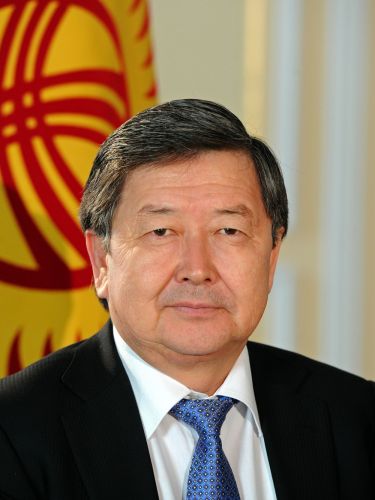

Tayyrbek Sarpashev
Deputy Prime Minister since 5 September 2012
Deputy Prime Minister since 5 September 2012