
| LITHUANIA Republic of Lithuania Lietuvos Respublika Joined United Nations: 17 September 1991 Human Rights as assured by their constitution Click here Updated 24 December 2012 |

| CAPITAL |
| POPULATION |
| CHIEF OF STATE |
| SELECTION PROCESS |
Vilnius
3,525,761 (July 2012 est.)
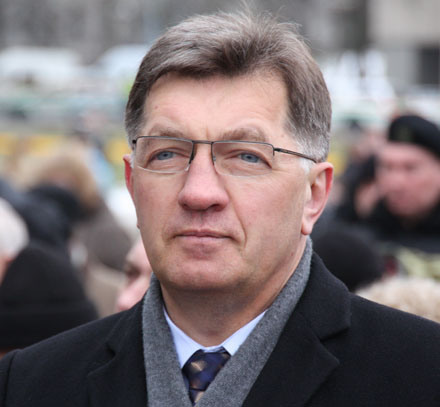
Algirdas Butkevicius
Prime Minister since 22 November 2012
Prime Minister since 22 November 2012
President elected by popular vote for a five-year term (eligible for a
second term); election last held 17 May 2009
Next scheduled election: May 2014
second term); election last held 17 May 2009
Next scheduled election: May 2014
HEAD OF GOVERNMENT
SELECTION PROCESS
Prime minister appointed by the president on the approval of the
Parliament
Next scheduled election: None
Parliament
Next scheduled election: None
| DECLARATION OF HUMAN RIGHTS |
| ETHNIC GROUPS |
Lithuanian 84%, Polish 6.1%, Russian 4.9%, Belarusian 1.1%, other or unspecified 3.9% (2009)
| RELIGIONS |
Roman Catholic 79%, Russian Orthodox 4.1%, Protestant (including Lutheran and Evangelical Christian Baptist) 1.9%, other or
unspecified 5.5%, none 9.5% (2001 census)
unspecified 5.5%, none 9.5% (2001 census)
| GOVERNMENT STRUCTURE |
Parliamentary democracy with 10 counties (apskritys, singular - apskritis); Legal system is based on civil law system; legislative acts
can be appealed to the constitutional court; has not accepted compulsory ICJ jurisdiction
Executive: President elected by popular vote for a five-year term (eligible for a second term); election last held 17 May 2009 (next
to be held May 2014); prime minister appointed by the president on the approval of the Parliament
Legislative: Unicameral Parliament or Seimas (141 seats; 71 members are elected by popular vote, 70 are elected by proportional
representation; to serve four-year terms)
elections: last held 14 and 28 October 2012 (next to be held in October 2016)
Judicial: Constitutional Court; Supreme Court; Court of Appeal; judges for all courts appointed by the President
can be appealed to the constitutional court; has not accepted compulsory ICJ jurisdiction
Executive: President elected by popular vote for a five-year term (eligible for a second term); election last held 17 May 2009 (next
to be held May 2014); prime minister appointed by the president on the approval of the Parliament
Legislative: Unicameral Parliament or Seimas (141 seats; 71 members are elected by popular vote, 70 are elected by proportional
representation; to serve four-year terms)
elections: last held 14 and 28 October 2012 (next to be held in October 2016)
Judicial: Constitutional Court; Supreme Court; Court of Appeal; judges for all courts appointed by the President
| LANGUAGES |
Lithuanian (official) 82%, Russian 8%, Polish 5.6%, other and unspecified 4.4% (2001 census)
| BRIEF HISTORY |
The first people arrived to the territory of modern Lithuania in the 10th millennium BC after glaciers had retreated and the last glacial
period had ended. According to historian Marija Gimbutas, the people came from two directions: from the Jutland Peninsula and
from present-day Poland. They brought two different cultures as evidenced by the tools they used. They were travelling hunters and
did not form more stable settlements. In the 8th millennium BC the climate became much warmer and forests developed. The
people started to gather berries and mushrooms from the forests and fish in the local rivers and lakes. They travelled less. During the
6th–5th millennium BC people domesticated various animals, the houses became more sophisticated and could shelter larger
families. Agriculture came late, only in the 3rd millennium BC because there were no efficient tools to cultivate the land. At the same
time crafts and trade started to form. The Indo-European people came around 2500 BC and the identity of the Balts formed about
2000 BC. The first Lithuanians, or Liths, were a branch of an ancient group known as the Balts, whose tribes also included the
original Prussian and Latvian people. The Baltic tribes were not directly influenced by the Roman empire, but the tribes did maintain
close trade contacts (see Amber Road). During the 11th century Lithuanian territories were included into the list of lands paying
tribute to Kievan Rus', but by the 12th century, the Lithuanians were plundering neighbouring territories themselves. The military and
plundering activities of the Lithuanians triggered a struggle for power in Lithuania which began the formation of early statehood, and
was a precondition of the founding of the Grand Duchy of Lithuania. In the early 13th century two German religious orders, the
Teutonic Knights and the Livonian Brothers of the Sword, conquered much of the area that is now Estonia and Latvia, in addition to
parts of Lithuania. In response, a number of small Baltic tribal groups united under the rule of Mindaugas (Myndowe) and soundly
defeated the Livonians at Šiauliai in the battle of the Sun in 1236. In 1250 Mindaugas signed an agreement with the Teutonic Order
and in 1251 was baptized in their presence by the bishop of Chełmno (in Chełmno Land.) On 6 July 1253, Mindaugas was
crowned as King of Lithuania and state was proclaimed as Kingdom of Lithuania. However, Mindaugas was later murdered by his
nephew Treniota which resulted in great unrest and a return to paganism. In 1241, 1259 and 1275 the kingdom was ravaged by
raids from the Golden Horde. In 1316, Gediminas, with the aid of colonists from Germany, began restoration of the land. The
brothers Vytenis and Gediminas united various groups into one Lithuania. Nowadays Lithuanian paganism is practised by Ancient
Baltic faith community 'Romuva'. Jadwiga of Poland was strongly urged by the Poles to marry Jogaila who had become the Grand
Duke of Lithuania in 1377 and for the good of Christianity, Jadwiga consented and married Jogaila three days after he was
baptized. Lithuania remained sovereign state but the highest social class in Lithuanian nobility became increasingly influenced by
Christian culture and language and the countries grew closer. In the 16th century, when many educated Lithuanians came back from
studies abroad, Grand Duchy of Lithuania was boiling with active cultural life, sometimes referred to as Lithunanian Renaissance.
With the Lublin Union of 1569 Poland and Lithuania formed a new state: the Republic of Both Nations (commonly known as
Poland-Lithuania or the Polish-Lithuanian Commonwealth. Following the union, Polonization of Lithuanian life, especially of state
institutions, became stronger. Under the influence of the Lithuanian upper classes and the church, who used Polish language, also
lower levels of the nobility and gentry and the majority of non-Jewish inhabitants of the two larger towns, Vilnius and Grodna, began
to use the Polish language more frequently. Despite the Union and integration of the two countries, for nearly two centuries Lithuania
continued to exist as the Grand Duchy of Lithuania in the Polish-Lithuanian Commonwealth, retaining separate laws as well as an
Army and a Treasury. The Constitution of May 3, 1791, agreed by the Sejm abolished the division of Poland and Lithuania.
However, partitions of Poland in 1772, 1793 and 1795 saw Lithuania divided between Russia and Prussia and Lithuania ceased to
exist as a distinct entity for more than a century. Following the third partition, the Russian Empire controlled the majority of
Lithuania, including Vilnius. These hopes were soon to be dashed, particularly subsequent to 1812, when Lithuanians eagerly
welcomed Napoleon's French army as liberators. After the French army's withdrawal, Tsar Nicholas I began an intensive program
of Russification. The Lithuanians and Poles revolted twice, in 1831 and 1863, but both attempts failed. Under late Russian
occupation, the native language of Lithuania was reborn after many years of dormancy. This revival spearheaded the independence
movement, with various organisations opposing Russian influence. Despite Russian attempts to integrate Lithuania by the end of the
19th century Lithuania had developed a growing nationalist movement. During the Russia-wide revolutionary upsurge of 1905 a
congress (Seimas) of Lithuanian representatives in Vilnius on 5 December 1905 demanded provincial autonomy. During World War
I Lithuania's occupation by Germany (1915) and the subsequent collapse of the Russian imperial government led to the
proclamation of an independent republic (February 16, 1918) under German control, and full independence upon Germany's
surrender (November 1918). From July, 1918, until November of that year, Monaco-born King Mindaugas II was pronounced the
titular monarch of the Kingdom of Lithuania, until the country's parliament opted for a republican form of government. The term
"Freedom wars" refers to the three wars Lithuania was fighting to defend its territory from various powers: Bolsheviks, Bermontians
and Poles; each of these powers had their own reasons for fighting Lithuania. Lithuania became a democratic state briefly, with a
president elected for 3 years by parliament and a parliament elected by the people (1922–1926). Following a succession of
conservative governments, Lithuania's first elected government of the left (June 1926) was overthrown in a military coup d' etat in
December 1926. In August 1939, Nazi Germany and the Soviet Union signed an agreement (the Ribbentrop-Molotov pact), with
secret clauses assigning spheres of influence in the area of the Baltic Sea. Lithuania was initially assigned to the German sphere of
influence, but when Lithuania refused to ally with Nazi Germany in the attack on Poland, it was transferred to the Soviets in another
secret pact later that year. Despite having a non-aggression pact signed and in force, Soviet Russia gave Lithuania an ultimatum in
1940. It demanded the removal and imprisonment of several key Lithuanian politicians under the pretext of a supposed kidnapping
of Russian border guards (it is alleged that the incident was staged by the Russians themselves). The Soviets sought military units in
the Lithuanian territory. On June 22, 1941, Hitler invaded the Soviet Union. Independence was declared with the expectation that
the Soviets would weaken and wouldn't have enough strength to hold Lithuania. Before the Holocaust, Lithuania was home to
160,000 Jews, and was one of the great centers of Jewish theology, philosophy, and learning which preceded even the times of the
Gaon of Vilna. In the summer of 1944, the Red Army reached eastern Lithuania, while the city of Vilnius was captured by the
Home Army during the ill-fated Operation Ostra Brama. By January 1945, the Russians captured Klaipėda, on the Baltic coast.
The mass deportation campaigns of 1941–52 exiled 29,923 families to Siberia and other remote parts of the Soviet Union. Until
mid-1988, all political, economic, and cultural life was controlled by the Lithuanian Communist Party (LCP). Lithuanians as well as
people in two other Baltic republics distrusted the Soviet regime even more than people in other regions of the Soviet state, and
gave their own specific and active support to Gorbachev's program of social and political reforms by Lithuanians. Under the
leadership of intellectuals, the Lithuanian reform movement "Lietuvos persitvarkymo sąjūdis" (the Reform Movement of Lithuania)
was formed in mid1988 and declared a program of democratic and national rights, winning nationwide popularity. On March 11,
1990, the Supreme Soviet (or, more precisely, the Supreme Council of Lithuania) proclaimed the restitution of Lithuanian
independence, becoming the first of the Soviet republics to declare national rights. Independence was finally recognized by Russia in
September of 1991, several months after the referendum. Lithuania and Russia signed an agreement on September 8, 1992, calling
for Russian troop withdrawals by August 31, 1993, which took place on time. In October 2002, Lithuania was invited to join the
European Union and one month later to join NATO; it became a member of both in 2004. The Lithuanian Military began a
programme of modernisation and integration with NATO forces, It has been noted that since Lithuania joined the EU there has been
significant emigration to both the UK and Ireland. Another major problem continues to be the rapid emigration primarily to the
Western Europe, especially the United Kingdom and Ireland. This emigration gained epic proportions after Lithuania’s admission
into the European Union made it legal to settle anywhere in Western Europe and the population of Lithuania went down from 3,5
million to 3 million people in a decade between censae of years 2001 and 2011. Currently the population of Lithuania is even
smaller than that before the World War 2. Such emigration levels are unheard of anywhere outside of the countries struck by wars
and disasters and are much higher than in the neighboring countries.
Source: Wikipedia: History of Lithuania
period had ended. According to historian Marija Gimbutas, the people came from two directions: from the Jutland Peninsula and
from present-day Poland. They brought two different cultures as evidenced by the tools they used. They were travelling hunters and
did not form more stable settlements. In the 8th millennium BC the climate became much warmer and forests developed. The
people started to gather berries and mushrooms from the forests and fish in the local rivers and lakes. They travelled less. During the
6th–5th millennium BC people domesticated various animals, the houses became more sophisticated and could shelter larger
families. Agriculture came late, only in the 3rd millennium BC because there were no efficient tools to cultivate the land. At the same
time crafts and trade started to form. The Indo-European people came around 2500 BC and the identity of the Balts formed about
2000 BC. The first Lithuanians, or Liths, were a branch of an ancient group known as the Balts, whose tribes also included the
original Prussian and Latvian people. The Baltic tribes were not directly influenced by the Roman empire, but the tribes did maintain
close trade contacts (see Amber Road). During the 11th century Lithuanian territories were included into the list of lands paying
tribute to Kievan Rus', but by the 12th century, the Lithuanians were plundering neighbouring territories themselves. The military and
plundering activities of the Lithuanians triggered a struggle for power in Lithuania which began the formation of early statehood, and
was a precondition of the founding of the Grand Duchy of Lithuania. In the early 13th century two German religious orders, the
Teutonic Knights and the Livonian Brothers of the Sword, conquered much of the area that is now Estonia and Latvia, in addition to
parts of Lithuania. In response, a number of small Baltic tribal groups united under the rule of Mindaugas (Myndowe) and soundly
defeated the Livonians at Šiauliai in the battle of the Sun in 1236. In 1250 Mindaugas signed an agreement with the Teutonic Order
and in 1251 was baptized in their presence by the bishop of Chełmno (in Chełmno Land.) On 6 July 1253, Mindaugas was
crowned as King of Lithuania and state was proclaimed as Kingdom of Lithuania. However, Mindaugas was later murdered by his
nephew Treniota which resulted in great unrest and a return to paganism. In 1241, 1259 and 1275 the kingdom was ravaged by
raids from the Golden Horde. In 1316, Gediminas, with the aid of colonists from Germany, began restoration of the land. The
brothers Vytenis and Gediminas united various groups into one Lithuania. Nowadays Lithuanian paganism is practised by Ancient
Baltic faith community 'Romuva'. Jadwiga of Poland was strongly urged by the Poles to marry Jogaila who had become the Grand
Duke of Lithuania in 1377 and for the good of Christianity, Jadwiga consented and married Jogaila three days after he was
baptized. Lithuania remained sovereign state but the highest social class in Lithuanian nobility became increasingly influenced by
Christian culture and language and the countries grew closer. In the 16th century, when many educated Lithuanians came back from
studies abroad, Grand Duchy of Lithuania was boiling with active cultural life, sometimes referred to as Lithunanian Renaissance.
With the Lublin Union of 1569 Poland and Lithuania formed a new state: the Republic of Both Nations (commonly known as
Poland-Lithuania or the Polish-Lithuanian Commonwealth. Following the union, Polonization of Lithuanian life, especially of state
institutions, became stronger. Under the influence of the Lithuanian upper classes and the church, who used Polish language, also
lower levels of the nobility and gentry and the majority of non-Jewish inhabitants of the two larger towns, Vilnius and Grodna, began
to use the Polish language more frequently. Despite the Union and integration of the two countries, for nearly two centuries Lithuania
continued to exist as the Grand Duchy of Lithuania in the Polish-Lithuanian Commonwealth, retaining separate laws as well as an
Army and a Treasury. The Constitution of May 3, 1791, agreed by the Sejm abolished the division of Poland and Lithuania.
However, partitions of Poland in 1772, 1793 and 1795 saw Lithuania divided between Russia and Prussia and Lithuania ceased to
exist as a distinct entity for more than a century. Following the third partition, the Russian Empire controlled the majority of
Lithuania, including Vilnius. These hopes were soon to be dashed, particularly subsequent to 1812, when Lithuanians eagerly
welcomed Napoleon's French army as liberators. After the French army's withdrawal, Tsar Nicholas I began an intensive program
of Russification. The Lithuanians and Poles revolted twice, in 1831 and 1863, but both attempts failed. Under late Russian
occupation, the native language of Lithuania was reborn after many years of dormancy. This revival spearheaded the independence
movement, with various organisations opposing Russian influence. Despite Russian attempts to integrate Lithuania by the end of the
19th century Lithuania had developed a growing nationalist movement. During the Russia-wide revolutionary upsurge of 1905 a
congress (Seimas) of Lithuanian representatives in Vilnius on 5 December 1905 demanded provincial autonomy. During World War
I Lithuania's occupation by Germany (1915) and the subsequent collapse of the Russian imperial government led to the
proclamation of an independent republic (February 16, 1918) under German control, and full independence upon Germany's
surrender (November 1918). From July, 1918, until November of that year, Monaco-born King Mindaugas II was pronounced the
titular monarch of the Kingdom of Lithuania, until the country's parliament opted for a republican form of government. The term
"Freedom wars" refers to the three wars Lithuania was fighting to defend its territory from various powers: Bolsheviks, Bermontians
and Poles; each of these powers had their own reasons for fighting Lithuania. Lithuania became a democratic state briefly, with a
president elected for 3 years by parliament and a parliament elected by the people (1922–1926). Following a succession of
conservative governments, Lithuania's first elected government of the left (June 1926) was overthrown in a military coup d' etat in
December 1926. In August 1939, Nazi Germany and the Soviet Union signed an agreement (the Ribbentrop-Molotov pact), with
secret clauses assigning spheres of influence in the area of the Baltic Sea. Lithuania was initially assigned to the German sphere of
influence, but when Lithuania refused to ally with Nazi Germany in the attack on Poland, it was transferred to the Soviets in another
secret pact later that year. Despite having a non-aggression pact signed and in force, Soviet Russia gave Lithuania an ultimatum in
1940. It demanded the removal and imprisonment of several key Lithuanian politicians under the pretext of a supposed kidnapping
of Russian border guards (it is alleged that the incident was staged by the Russians themselves). The Soviets sought military units in
the Lithuanian territory. On June 22, 1941, Hitler invaded the Soviet Union. Independence was declared with the expectation that
the Soviets would weaken and wouldn't have enough strength to hold Lithuania. Before the Holocaust, Lithuania was home to
160,000 Jews, and was one of the great centers of Jewish theology, philosophy, and learning which preceded even the times of the
Gaon of Vilna. In the summer of 1944, the Red Army reached eastern Lithuania, while the city of Vilnius was captured by the
Home Army during the ill-fated Operation Ostra Brama. By January 1945, the Russians captured Klaipėda, on the Baltic coast.
The mass deportation campaigns of 1941–52 exiled 29,923 families to Siberia and other remote parts of the Soviet Union. Until
mid-1988, all political, economic, and cultural life was controlled by the Lithuanian Communist Party (LCP). Lithuanians as well as
people in two other Baltic republics distrusted the Soviet regime even more than people in other regions of the Soviet state, and
gave their own specific and active support to Gorbachev's program of social and political reforms by Lithuanians. Under the
leadership of intellectuals, the Lithuanian reform movement "Lietuvos persitvarkymo sąjūdis" (the Reform Movement of Lithuania)
was formed in mid1988 and declared a program of democratic and national rights, winning nationwide popularity. On March 11,
1990, the Supreme Soviet (or, more precisely, the Supreme Council of Lithuania) proclaimed the restitution of Lithuanian
independence, becoming the first of the Soviet republics to declare national rights. Independence was finally recognized by Russia in
September of 1991, several months after the referendum. Lithuania and Russia signed an agreement on September 8, 1992, calling
for Russian troop withdrawals by August 31, 1993, which took place on time. In October 2002, Lithuania was invited to join the
European Union and one month later to join NATO; it became a member of both in 2004. The Lithuanian Military began a
programme of modernisation and integration with NATO forces, It has been noted that since Lithuania joined the EU there has been
significant emigration to both the UK and Ireland. Another major problem continues to be the rapid emigration primarily to the
Western Europe, especially the United Kingdom and Ireland. This emigration gained epic proportions after Lithuania’s admission
into the European Union made it legal to settle anywhere in Western Europe and the population of Lithuania went down from 3,5
million to 3 million people in a decade between censae of years 2001 and 2011. Currently the population of Lithuania is even
smaller than that before the World War 2. Such emigration levels are unheard of anywhere outside of the countries struck by wars
and disasters and are much higher than in the neighboring countries.
Source: Wikipedia: History of Lithuania
| ECONOMIC OVERVIEW |
Lithuania gained membership in the World Trade Organization and joined the EU in May 2004. Despite Lithuania's EU accession,
Lithuania's trade with its Central and Eastern European neighbors, and Russia in particular, accounts for a significant share of total
trade. Foreign investment and business support have helped in the transition from the old command economy to a market economy.
Lithuania's economy grew on average 8% per year for the four years prior to 2008 driven by exports and domestic demand.
However, GDP plunged nearly 15% in 2009 - the three former Soviet Baltic republics were among the hardest hit by the 2008-09
financial crisis. In 2009, the government launched a high-profile campaign, led by Prime Minister KUBILIUS, to attract foreign
investment and to develop export markets, and the government's steadfast commitment to broad economic reforms has been vital in
Lithuania's quick recovery from a deep recession - GDP grew 1.3% in 2010 and jumped 5.8% in 2011, making Lithuania one of
the fastest growing economies in the EU. However, unemployment - at 15.6% in 2011 - remains stubbornly high. Lithuania in 2011
also began to unbundle its energy networks in order to reduce its dependence on Russian energy.
Source: CIA World Factbook (select Lithuania)
Lithuania's trade with its Central and Eastern European neighbors, and Russia in particular, accounts for a significant share of total
trade. Foreign investment and business support have helped in the transition from the old command economy to a market economy.
Lithuania's economy grew on average 8% per year for the four years prior to 2008 driven by exports and domestic demand.
However, GDP plunged nearly 15% in 2009 - the three former Soviet Baltic republics were among the hardest hit by the 2008-09
financial crisis. In 2009, the government launched a high-profile campaign, led by Prime Minister KUBILIUS, to attract foreign
investment and to develop export markets, and the government's steadfast commitment to broad economic reforms has been vital in
Lithuania's quick recovery from a deep recession - GDP grew 1.3% in 2010 and jumped 5.8% in 2011, making Lithuania one of
the fastest growing economies in the EU. However, unemployment - at 15.6% in 2011 - remains stubbornly high. Lithuania in 2011
also began to unbundle its energy networks in order to reduce its dependence on Russian energy.
Source: CIA World Factbook (select Lithuania)
| POLITICAL CLIMATE |
Since Lithuania declared independence on March 11, 1990, it kept strong democratic traditions. Drawing from the interwar
experiences, politicians made many different proposals that ranged from strong parliamentarism to a presidential republic with
checks and balances similar to the United States. Through compromise, a semi-presidential system was settled.[1] In a referendum
on October 25, 1992, the first general vote of the people since their declared independence, 56.75% of the total number of voters
supported the new constitution.[2]
All major political parties declared their support for Lithuania's membership in NATO and the European Union (EU). Lithuania
joined NATO on March 29, 2004, and joined the EU on May 1, 2004.
Since 1991, Lithuanian voters have shifted from right to left and back again, swinging between the Conservatives, led by Vytautas
Landsbergis, and the (formerly Communist) Democratic Labour Party of Lithuania, led by president Algirdas Brazauskas. During
this period, the prime minister was Gediminas Vagnorius.
Valdas Adamkus has been the president for most of the time since 1998. His prime minister was Rolandas Paksas, whose
government got off to a rocky start and collapsed within seven months. The alternation between left and right was broken in the
October 2000 elections when the Liberal Union and New Union parties won the most votes and were able to form a centrist ruling
coalition with minor partners. President Adamkus played a key role in bringing the new centrist parties together. Artūras
Paulauskas, the leader of the center-left New Union (also known as the Social Liberal party), became the Chairman of the Seimas.
In July 2001, the center-left New Union party forged an alliance with the Social Democratic Party of Lithuania and formed a new
cabinet under former president Algirdas Brazauskas. On April 11, 2006, Artūras Paulauskas was removed from his position and
Viktoras Muntianas was elected Chairman of the Seimas.
The cabinet of Algirdas Brazauskas resigned on May 31, 2006, as President Valdas Adamkus expressed no confidence in two of
the Ministers, formerly party colleagues of Brazauskas, over ethical principles. Brazauskas decided not to remain in office as acting
Prime Minister, and announced that he was finally retiring from politics. Even so, he led the ruling Social Democratic Party of
Lithuania for one more year, until May 19, 2007, when he passed the reins to Gediminas Kirkilas. On November 27, 2008,
Andrius Kubilius was appointed as a new Prime Minister. On 22 November 2012 Algirdas Butkevičius was elected by seimas to
be Prime Minister designate. He was appointed Prime Minister by presidential decree on 7 December 2012 and his cabinet was
sworn on 13 December, following the approval of the governmental program by Parliament.
Source: Wikipedia: Politics of Lithuania
experiences, politicians made many different proposals that ranged from strong parliamentarism to a presidential republic with
checks and balances similar to the United States. Through compromise, a semi-presidential system was settled.[1] In a referendum
on October 25, 1992, the first general vote of the people since their declared independence, 56.75% of the total number of voters
supported the new constitution.[2]
All major political parties declared their support for Lithuania's membership in NATO and the European Union (EU). Lithuania
joined NATO on March 29, 2004, and joined the EU on May 1, 2004.
Since 1991, Lithuanian voters have shifted from right to left and back again, swinging between the Conservatives, led by Vytautas
Landsbergis, and the (formerly Communist) Democratic Labour Party of Lithuania, led by president Algirdas Brazauskas. During
this period, the prime minister was Gediminas Vagnorius.
Valdas Adamkus has been the president for most of the time since 1998. His prime minister was Rolandas Paksas, whose
government got off to a rocky start and collapsed within seven months. The alternation between left and right was broken in the
October 2000 elections when the Liberal Union and New Union parties won the most votes and were able to form a centrist ruling
coalition with minor partners. President Adamkus played a key role in bringing the new centrist parties together. Artūras
Paulauskas, the leader of the center-left New Union (also known as the Social Liberal party), became the Chairman of the Seimas.
In July 2001, the center-left New Union party forged an alliance with the Social Democratic Party of Lithuania and formed a new
cabinet under former president Algirdas Brazauskas. On April 11, 2006, Artūras Paulauskas was removed from his position and
Viktoras Muntianas was elected Chairman of the Seimas.
The cabinet of Algirdas Brazauskas resigned on May 31, 2006, as President Valdas Adamkus expressed no confidence in two of
the Ministers, formerly party colleagues of Brazauskas, over ethical principles. Brazauskas decided not to remain in office as acting
Prime Minister, and announced that he was finally retiring from politics. Even so, he led the ruling Social Democratic Party of
Lithuania for one more year, until May 19, 2007, when he passed the reins to Gediminas Kirkilas. On November 27, 2008,
Andrius Kubilius was appointed as a new Prime Minister. On 22 November 2012 Algirdas Butkevičius was elected by seimas to
be Prime Minister designate. He was appointed Prime Minister by presidential decree on 7 December 2012 and his cabinet was
sworn on 13 December, following the approval of the governmental program by Parliament.
Source: Wikipedia: Politics of Lithuania
| INTERNATIONAL DISPUTES |
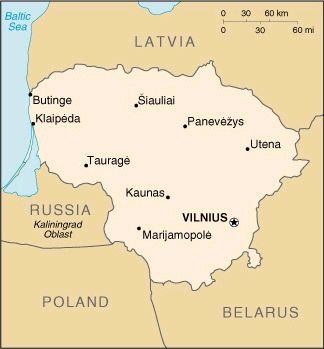
Lithuania and Russia committed to demarcating their boundary in 2006 in accordance with the land and maritime treaty ratified by
Russia in May 2003 and by Lithuania in 1999; Lithuania operates a simplified transit regime for Russian nationals traveling from the
Kaliningrad coastal exclave into Russia, while still conforming, as a EU member state having an external border with a non-EU
member, to strict Schengen border rules; the Latvian parliament has not ratified its 1998 maritime boundary treaty with Lithuania,
primarily due to concerns over potential hydrocarbons; as of January 2007, ground demarcation of the boundary with Belarus was
complete and mapped with final ratification documents in preparation
Russia in May 2003 and by Lithuania in 1999; Lithuania operates a simplified transit regime for Russian nationals traveling from the
Kaliningrad coastal exclave into Russia, while still conforming, as a EU member state having an external border with a non-EU
member, to strict Schengen border rules; the Latvian parliament has not ratified its 1998 maritime boundary treaty with Lithuania,
primarily due to concerns over potential hydrocarbons; as of January 2007, ground demarcation of the boundary with Belarus was
complete and mapped with final ratification documents in preparation


| REFUGEES AND INTERNALLY DISPLACED PERSONS (IDPS) |
None reported
| ILLICIT DRUGS |
Transshipment and destination point for cannabis, cocaine, ecstasy, and opiates from Southwest Asia, Latin America, Western
Europe, and neighboring Baltic countries; growing production of high-quality amphetamines, but limited production of cannabis,
methamphetamines; susceptible to money laundering despite changes to banking legislation
Europe, and neighboring Baltic countries; growing production of high-quality amphetamines, but limited production of cannabis,
methamphetamines; susceptible to money laundering despite changes to banking legislation
| HUMAN RIGHTS STATEMENTS, ANALYSIS AND CRITIQUES |
2011 Human Rights Report: Lithuania
Bureau of Democracy, Human Rights, and Labor
2011 Country Reports on Human Rights Practices
May 25, 2012
The Republic of Lithuania is a constitutional, multiparty, parliamentary democracy. Legislative authority resides in the unicameral
parliament (Seimas). Presidential elections in 2009 were considered free and fair. Parliamentary elections in 2008, also free and fair, led
to the formation of a center-right coalition government. Security forces reported to civilian authorities.
The country’s most significant human rights problems were poor prison conditions, intolerance of sexual and ethnic minorities, and
lengthy detention of persons awaiting trial.
Additional problems included interference with the privacy of persons, domestic violence, child abuse, libel and antidiscrimination laws
that limited freedom of expression, and trafficking in persons.
The government took measures to prosecute or otherwise punish officials who committed abuses, whether in the security services or
elsewhere. There were some reports of impunity among personnel in the prison system.
Click here to read more »
Bureau of Democracy, Human Rights, and Labor
2011 Country Reports on Human Rights Practices
May 25, 2012
The Republic of Lithuania is a constitutional, multiparty, parliamentary democracy. Legislative authority resides in the unicameral
parliament (Seimas). Presidential elections in 2009 were considered free and fair. Parliamentary elections in 2008, also free and fair, led
to the formation of a center-right coalition government. Security forces reported to civilian authorities.
The country’s most significant human rights problems were poor prison conditions, intolerance of sexual and ethnic minorities, and
lengthy detention of persons awaiting trial.
Additional problems included interference with the privacy of persons, domestic violence, child abuse, libel and antidiscrimination laws
that limited freedom of expression, and trafficking in persons.
The government took measures to prosecute or otherwise punish officials who committed abuses, whether in the security services or
elsewhere. There were some reports of impunity among personnel in the prison system.
Click here to read more »
11 March 2011
Committee on the Elimination of Racial Discrimination
Seventy-eighth session
14 February – 11 March 2011
Consideration of reports submitted by States parties under article 9 of the convention
Concluding observations of the Committee on the Elimination of Racial Discrimination
Lithuania
A. Introduction
2. The Committee commends the excellent quality of the combined fourth and fifth periodic report submitted by the State party. It
welcomes the presence of a large and highlevel delegation and expresses its appreciation for updated information that the delegation
provided verbally to complement the report, taking into account the list of themes identified by the Rapporteur. It also appreciates the
frank and constructive dialogue with the State party.
B. Positive aspects
3. The Committee welcomes the enactment of the Law on Equal Treatment in 2005 which prohibits direct or indirect discrimination on
the grounds of, inter alia, age, sexual orientation, disability, race and ethnic origin.
4. The Committee welcomes the amendment of legislation aimed at addressing discrimination such as:
(a) The amendment of the Criminal Code (July 2009) expressly considering racial motivation or aim behind a crime as an aggravating
circumstance;
(b) The amendment of the Law on Equal Treatment (June 2008) providing victims of racial discrimination with more procedural
guarantees by shifting the burden of proof in discrimination cases over to the respondent, except in criminal cases.
(c) The law amending and supplementing the Criminal Code (July 2007) extending the scope of crime of desecration to other sites of
public respect on racial, national or religious grounds.
C. Concerns and recommendations
10. The Committee, while commending the work of advisory bodies dealing with human rights, in particular the Equal Opportunities
Ombudsman, expresses its concerns on budget cuts imposed on these bodies. It reiterates its regrets that the State party has not yet
decided to establish a National Human Rights Institution (CERD/C/LTU/CO/3, para. 11). However, the Committee takes note of the
statement made by the delegation that this matter is still under consideration (art. 2).
The Committee recommends that the State party provide these advisory bodies with appropriate human and financial resources in order
to enable them to perform optimally. Furthermore, the Committee recommends that the State party establish an independent national
human rights institution, in accordance with the Paris Principles relating to the status of national institutions for the promotion and
protection of human rights (General Assembly resolution 48/134).
11. The Committee notes that a law on national minorities is under consideration.
The Committee encourages the State party to adopt this law as soon as possible, giving effect to the relevant provisions of the
Convention, particularly those of article 4.
Click here to read more »
Committee on the Elimination of Racial Discrimination
Seventy-eighth session
14 February – 11 March 2011
Consideration of reports submitted by States parties under article 9 of the convention
Concluding observations of the Committee on the Elimination of Racial Discrimination
Lithuania
A. Introduction
2. The Committee commends the excellent quality of the combined fourth and fifth periodic report submitted by the State party. It
welcomes the presence of a large and highlevel delegation and expresses its appreciation for updated information that the delegation
provided verbally to complement the report, taking into account the list of themes identified by the Rapporteur. It also appreciates the
frank and constructive dialogue with the State party.
B. Positive aspects
3. The Committee welcomes the enactment of the Law on Equal Treatment in 2005 which prohibits direct or indirect discrimination on
the grounds of, inter alia, age, sexual orientation, disability, race and ethnic origin.
4. The Committee welcomes the amendment of legislation aimed at addressing discrimination such as:
(a) The amendment of the Criminal Code (July 2009) expressly considering racial motivation or aim behind a crime as an aggravating
circumstance;
(b) The amendment of the Law on Equal Treatment (June 2008) providing victims of racial discrimination with more procedural
guarantees by shifting the burden of proof in discrimination cases over to the respondent, except in criminal cases.
(c) The law amending and supplementing the Criminal Code (July 2007) extending the scope of crime of desecration to other sites of
public respect on racial, national or religious grounds.
C. Concerns and recommendations
10. The Committee, while commending the work of advisory bodies dealing with human rights, in particular the Equal Opportunities
Ombudsman, expresses its concerns on budget cuts imposed on these bodies. It reiterates its regrets that the State party has not yet
decided to establish a National Human Rights Institution (CERD/C/LTU/CO/3, para. 11). However, the Committee takes note of the
statement made by the delegation that this matter is still under consideration (art. 2).
The Committee recommends that the State party provide these advisory bodies with appropriate human and financial resources in order
to enable them to perform optimally. Furthermore, the Committee recommends that the State party establish an independent national
human rights institution, in accordance with the Paris Principles relating to the status of national institutions for the promotion and
protection of human rights (General Assembly resolution 48/134).
11. The Committee notes that a law on national minorities is under consideration.
The Committee encourages the State party to adopt this law as soon as possible, giving effect to the relevant provisions of the
Convention, particularly those of article 4.
Click here to read more »
Human rights Defenders from Azerbaijan, Belarus, Russia and Ukraine Call for Universal Definition of ‘Political Prisoner’
Aug 31 2012 - 1:50pm
The absence of internationally accepted criteria to define the term “political prisoner” is a critical problem that allows repressive regimes
to hide behind ambiguity and hampers the ability of those advocating on prisoners’ behalves. Human rights defenders from Azerbaijan,
Belarus, Russia and Ukraine addressed this issue at a two-day working session, organized by Freedom House and the Belarusian Human
Rights House on August 27-28, 2012, in Vilnius, Lithuania.
Despite the wide use of the term “political prisoner” by intergovernmental and international bodies in reference to victims of politically
motivated persecution, the term has never been defined in international legal instruments.
“The meeting in Vilnius was an important step towards developing universal criteria for political prisoners by human rights defenders
from the Eurasia region where imprisoning people for exercising their fundamental rights is a common practice,” said Susan Corke,
director of Eurasia programs at Freedom House.
The event in Vilnius, which followed an earlier initiative launched by human rights defenders in Kiev, was attended by representatives of
the human rights communities in Azerbaijan, Belarus, Russia and Ukraine as well as international experts. The participants of the meeting
supported the criteria drafted by the independent experts on the Initiative of the General Secretary of the Council of Europe in 2001,
which aimed to seek resolution of the issue in the European institutions.
“We commend the Council of Europe on its efforts to create greater legal protections for political prisoners within European institutions
and hope to see other international organizations follow suit,” continued Corke.
Freedom House is an independent watchdog organization that supports democratic change, monitors the status of freedom around the
world, and advocates for democracy and human rights.
Click here to read more »
Aug 31 2012 - 1:50pm
The absence of internationally accepted criteria to define the term “political prisoner” is a critical problem that allows repressive regimes
to hide behind ambiguity and hampers the ability of those advocating on prisoners’ behalves. Human rights defenders from Azerbaijan,
Belarus, Russia and Ukraine addressed this issue at a two-day working session, organized by Freedom House and the Belarusian Human
Rights House on August 27-28, 2012, in Vilnius, Lithuania.
Despite the wide use of the term “political prisoner” by intergovernmental and international bodies in reference to victims of politically
motivated persecution, the term has never been defined in international legal instruments.
“The meeting in Vilnius was an important step towards developing universal criteria for political prisoners by human rights defenders
from the Eurasia region where imprisoning people for exercising their fundamental rights is a common practice,” said Susan Corke,
director of Eurasia programs at Freedom House.
The event in Vilnius, which followed an earlier initiative launched by human rights defenders in Kiev, was attended by representatives of
the human rights communities in Azerbaijan, Belarus, Russia and Ukraine as well as international experts. The participants of the meeting
supported the criteria drafted by the independent experts on the Initiative of the General Secretary of the Council of Europe in 2001,
which aimed to seek resolution of the issue in the European institutions.
“We commend the Council of Europe on its efforts to create greater legal protections for political prisoners within European institutions
and hope to see other international organizations follow suit,” continued Corke.
Freedom House is an independent watchdog organization that supports democratic change, monitors the status of freedom around the
world, and advocates for democracy and human rights.
Click here to read more »
Annual Report 2012
Lithuania
The government failed to conduct an effective investigation into its role in US-led rendition and secret detention programmes.
Discrimination against lesbians, gay men, and bisexual and transgender people was widespread.
Counter-terror and security
In January, the Lithuanian Prosecutor General closed a criminal investigation into the alleged involvement of state officials in two secret
CIA detention sites. The reasons he gave were the need to protect state secrets and that the statute of limitations had expired on the
investigation of the officials abusing their authority.
In May, the European Committee for the Prevention of Torture published a report on Lithuania, which included its inspection of the CIA
detention sites. In September, NGOs presented new data about rendition flights to Lithuania. In October, however, in spite of the new
information, the Prosecutor General refused to reopen the investigation.
On 27 October, lawyers of Abu Zubaydah, a Palestinian detained in Guantánamo Bay, filed a complaint in the European Court of
Human Rights, alleging that he was unlawfully transferred to Lithuania in 2005, where he was tortured at a secret detention facility.
Discrimination – lesbian, gay, bisexual and transgender people
In June, following public pressure, a further amendment to the Law on Provision of Information to the Public came into force. It
reversed the 2010 amendment, and banned discrimination in advertising and public broadcast on the basis of sexual orientation, as
required under international law.
However, other legislation or proposals remained discriminatory. The parliamentary agenda published in September included amendments
to the Code on Administrative Offences. These amendments covered fines for “denigrating constitutional moral values and the principles
of family” as well as “organizing events contradicting social morality”. The same agenda proposed amendments to the Civil Code to ban
gender reassignment surgery.
The Law on the Protection of Minors against the Detrimental Effect of Public Information remained in force. Any information which
“denigrates family values”, or encourages marriage between anyone other than between a man and a woman, was banned from places
accessible to children.
Click here to read more »
Lithuania
The government failed to conduct an effective investigation into its role in US-led rendition and secret detention programmes.
Discrimination against lesbians, gay men, and bisexual and transgender people was widespread.
Counter-terror and security
In January, the Lithuanian Prosecutor General closed a criminal investigation into the alleged involvement of state officials in two secret
CIA detention sites. The reasons he gave were the need to protect state secrets and that the statute of limitations had expired on the
investigation of the officials abusing their authority.
In May, the European Committee for the Prevention of Torture published a report on Lithuania, which included its inspection of the CIA
detention sites. In September, NGOs presented new data about rendition flights to Lithuania. In October, however, in spite of the new
information, the Prosecutor General refused to reopen the investigation.
On 27 October, lawyers of Abu Zubaydah, a Palestinian detained in Guantánamo Bay, filed a complaint in the European Court of
Human Rights, alleging that he was unlawfully transferred to Lithuania in 2005, where he was tortured at a secret detention facility.
Discrimination – lesbian, gay, bisexual and transgender people
In June, following public pressure, a further amendment to the Law on Provision of Information to the Public came into force. It
reversed the 2010 amendment, and banned discrimination in advertising and public broadcast on the basis of sexual orientation, as
required under international law.
However, other legislation or proposals remained discriminatory. The parliamentary agenda published in September included amendments
to the Code on Administrative Offences. These amendments covered fines for “denigrating constitutional moral values and the principles
of family” as well as “organizing events contradicting social morality”. The same agenda proposed amendments to the Civil Code to ban
gender reassignment surgery.
The Law on the Protection of Minors against the Detrimental Effect of Public Information remained in force. Any information which
“denigrates family values”, or encourages marriage between anyone other than between a man and a woman, was banned from places
accessible to children.
Click here to read more »
‘Traditional Values’ code for human rights abuse?
by Graeme Reid
Published in: CNN.com
October 17, 2012
The U.N. Human Rights Council recently passed a resolution on “traditional values of humankind” as a vehicle for “promoting human
rights and fundamental freedoms.” It sounds innocuous, but its implications are ominous. Indeed, it is an immediate threat to the rights
of many vulnerable groups – including women and lesbian, gay, bi-sexual and transgender (LGBT) people. And it flies in the face of the
founding principles of universality and indivisibility enshrined in the Universal Declaration of Human Rights.
This is the third Russian-sponsored traditional values resolution adopted by the Human Rights Council. The second, in 2011, called for a
study, and the resulting draft study is highly critical of “traditional values” as a framework, criticizing the concept as “vague, subjective
and unclear.” The third, though, adopted on September 27, affirms traditional values as a valid framework for human rights.
Underpinning this is an argument that homosexuality is a moral issue and not a rights issue at all. A pernicious development is the recent
proliferation of laws in Eastern Europe and Central Asia that seek to curtain freedom of speech by clamping down on “homosexual
propaganda” under the pretext of “protecting children.” These laws are vaguely defined and have the effect of outlawing any supportive
messages or activism around LGBT issues.
Laws have, for example, been passed or are under discussion in Ukraine, Moldova, Lithuania, Hungary and in Russia’s regions. In
March, St. Petersburg became one of the nine regions in Russia to adopt such a law (upheld, albeit restricted, by the Supreme Court in
October), a dangerous precedent for similar legislation to be imposed nationwide. The law explicitly conflates homosexuality with
pedophilia and outlaws “creating distorted perceptions about social equality of traditional and non-traditional family relationships.”
Foreign Minister Sergei Lavrov justified these propaganda laws by arguing that the human rights of LGBT people were nothing but an
outside “appendage to the universal values.”
We can see where “traditional values” is headed.
Click here to read more »
by Graeme Reid
Published in: CNN.com
October 17, 2012
The U.N. Human Rights Council recently passed a resolution on “traditional values of humankind” as a vehicle for “promoting human
rights and fundamental freedoms.” It sounds innocuous, but its implications are ominous. Indeed, it is an immediate threat to the rights
of many vulnerable groups – including women and lesbian, gay, bi-sexual and transgender (LGBT) people. And it flies in the face of the
founding principles of universality and indivisibility enshrined in the Universal Declaration of Human Rights.
This is the third Russian-sponsored traditional values resolution adopted by the Human Rights Council. The second, in 2011, called for a
study, and the resulting draft study is highly critical of “traditional values” as a framework, criticizing the concept as “vague, subjective
and unclear.” The third, though, adopted on September 27, affirms traditional values as a valid framework for human rights.
Underpinning this is an argument that homosexuality is a moral issue and not a rights issue at all. A pernicious development is the recent
proliferation of laws in Eastern Europe and Central Asia that seek to curtain freedom of speech by clamping down on “homosexual
propaganda” under the pretext of “protecting children.” These laws are vaguely defined and have the effect of outlawing any supportive
messages or activism around LGBT issues.
Laws have, for example, been passed or are under discussion in Ukraine, Moldova, Lithuania, Hungary and in Russia’s regions. In
March, St. Petersburg became one of the nine regions in Russia to adopt such a law (upheld, albeit restricted, by the Supreme Court in
October), a dangerous precedent for similar legislation to be imposed nationwide. The law explicitly conflates homosexuality with
pedophilia and outlaws “creating distorted perceptions about social equality of traditional and non-traditional family relationships.”
Foreign Minister Sergei Lavrov justified these propaganda laws by arguing that the human rights of LGBT people were nothing but an
outside “appendage to the universal values.”
We can see where “traditional values” is headed.
Click here to read more »
The President suggests a global map of human rights
Thursday, June 21, 2012
Rio de Janeiro
President Dalia Grybauskaitė, currently attending the United Nations Conference on Sustainable Development, delivered a speech at the
Women World Leaders' event. The President focused on the factual position of women in the world, the legal framework for gender
equality, and the role of non-governmental organizations.
The President underlined that official statistics was not enough to evaluate the human rights situation across the world and suggested
creating a web-map of human rights.
"To evaluate the human rights situation, let women speak for themselves, for example, let us create a global web-map of human rights.
If we have web-maps portraying global income inequality, why not to have one showing gender inequality? We invite citizens to report
cases of bribery online, why not to create a space online to report cases of gender discrimination? And I say it with no illusion to quick-
fixes. It is just a tool, one among many to investigate real situation using modern technologies," she said.
The amount of documents already adopted and policies already enforced do not do the job alone, the President noted. There is a need for
innovative, out-of-the-box thinking. She also stressed that given hundreds of international and national declarations and regulations on
human rights and gender equality issues it was necessary to focus on their actual implementation rather than pass another one.
According to the President, political will, constructive work of institutions cannot be really successful without a powerful engine -
women's non-governmental organizations. For actual implementation of gender equality it is important to have effective interaction of
governmental and non-governmental organizations, in particular when addressing such concerns as human trafficking or other issues
that go beyond national borders.
Dalia Grybauskaitė has also mentioned that in 2013 Lithuania will hold the EU presidency and that one of the targets will be to monitor
mechanisms how gender issues are solved in Europe.
Joint declaration "The future women want: A call to action", urging to take responsible action in implementing women's rights, was
endorsed at the event.
The event is also attended by other members of the Council of Women World Leaders: President of Brazil Dilma Rousseff, President of
Argentina Christina Fernandez de Kirchner, President of Costa Rica Laura Chinchilla Miranda, President of the Swiss Confederation
Eveline Widmer-Schlumpf, Prime Minister of Jamaica Portia Simpson-Miller, Prime Minister of Australia Julia Gillard, Prime Minister of
Denmark Helle Thorning-Schmidt, Prime Minister of the Republic of Trinidad and Tobago Kamla Persad-Bissessar, Head of the
International Monetary Fund Christine Lagarde, and former President of Finland Tarja Halonen.
Click here to read more »
Thursday, June 21, 2012
Rio de Janeiro
President Dalia Grybauskaitė, currently attending the United Nations Conference on Sustainable Development, delivered a speech at the
Women World Leaders' event. The President focused on the factual position of women in the world, the legal framework for gender
equality, and the role of non-governmental organizations.
The President underlined that official statistics was not enough to evaluate the human rights situation across the world and suggested
creating a web-map of human rights.
"To evaluate the human rights situation, let women speak for themselves, for example, let us create a global web-map of human rights.
If we have web-maps portraying global income inequality, why not to have one showing gender inequality? We invite citizens to report
cases of bribery online, why not to create a space online to report cases of gender discrimination? And I say it with no illusion to quick-
fixes. It is just a tool, one among many to investigate real situation using modern technologies," she said.
The amount of documents already adopted and policies already enforced do not do the job alone, the President noted. There is a need for
innovative, out-of-the-box thinking. She also stressed that given hundreds of international and national declarations and regulations on
human rights and gender equality issues it was necessary to focus on their actual implementation rather than pass another one.
According to the President, political will, constructive work of institutions cannot be really successful without a powerful engine -
women's non-governmental organizations. For actual implementation of gender equality it is important to have effective interaction of
governmental and non-governmental organizations, in particular when addressing such concerns as human trafficking or other issues
that go beyond national borders.
Dalia Grybauskaitė has also mentioned that in 2013 Lithuania will hold the EU presidency and that one of the targets will be to monitor
mechanisms how gender issues are solved in Europe.
Joint declaration "The future women want: A call to action", urging to take responsible action in implementing women's rights, was
endorsed at the event.
The event is also attended by other members of the Council of Women World Leaders: President of Brazil Dilma Rousseff, President of
Argentina Christina Fernandez de Kirchner, President of Costa Rica Laura Chinchilla Miranda, President of the Swiss Confederation
Eveline Widmer-Schlumpf, Prime Minister of Jamaica Portia Simpson-Miller, Prime Minister of Australia Julia Gillard, Prime Minister of
Denmark Helle Thorning-Schmidt, Prime Minister of the Republic of Trinidad and Tobago Kamla Persad-Bissessar, Head of the
International Monetary Fund Christine Lagarde, and former President of Finland Tarja Halonen.
Click here to read more »
2012-11-29 | 16:27:51
Meeting with representatives of the CPT delegation, headed by Mr James McManus
On 27 November 2012 the Head of the Seimas Ombudsmen’s Office, the Seimas Ombudsman Romas Valentukevičius received
representatives of delegation of the European Committee for the Prevention of Torture and Inhuman or Degrading Treatment or
Punishment (CPT) under the leadership of its Head, Mr James McManus. The meeting focused on topics and peculiarities of complaints
received from detention and lockup facilities and psychiatric establishments. In addition, discussions touched upon violations of the
human rights situation observed by the Ombudsman during monitoring visits carried out at closed detention institutions.
"The Seimas Ombudsmen’s Office is not obliged to monitor the human rights situation at closed detention institutions. We perform
monitoring on our own initiative and only to the extent that is possible taking into account our human and financial resources," - said
Romas Valentukevicius at the meeting.
The Convention against Torture and Other Cruel, Inhuman or Degrading Treatment or Punishment in respect to Lithuania came into
force on 1 March 1999. The Convention provides for efficient protection of persons deprived of their liberty, whose protection is
guaranteed internationally through non-legislative measures, based on inspections of places of detention.
"Lithuania has ratified the United Nations Convention against Torture and Other Cruel, Inhuman or Degrading Treatment or Punishment;
however, has not ratified the Optional Protocol (OPCAT), which provides for inspections of imprisonment places, not only on
international, but also on national level – by establishing of an independent, preventive mechanism for inspections of imprisonment
places. Therefore, up to now there is no designated authority, which would be responsible for monitoring of human rights situation in
closed places of detention. If it was decided to delegate this function to us, the Ombudsman institution would be prepared to extend the
scope of on-going human rights monitoring; however, it would be necessary to strengthen the existing human and financial resources," -
noted the Seimas Ombudsman.
The meeting was also to discuss the complaints received by the Ombudsmen’s Office regarding actions of police, detention officers and
mental health personnel. Questions of the representatives of the European Committee for the Prevention of Torture and Inhuman or
Degrading Treatment or Punishment were answered by the Ombudsman's senior adviser Tomas Ragauskas and the chief specialist of
the Group Monitoring Human Rights Situation in Closed Institutions Kristina Brazevič..
Click here to read more »
Meeting with representatives of the CPT delegation, headed by Mr James McManus
On 27 November 2012 the Head of the Seimas Ombudsmen’s Office, the Seimas Ombudsman Romas Valentukevičius received
representatives of delegation of the European Committee for the Prevention of Torture and Inhuman or Degrading Treatment or
Punishment (CPT) under the leadership of its Head, Mr James McManus. The meeting focused on topics and peculiarities of complaints
received from detention and lockup facilities and psychiatric establishments. In addition, discussions touched upon violations of the
human rights situation observed by the Ombudsman during monitoring visits carried out at closed detention institutions.
"The Seimas Ombudsmen’s Office is not obliged to monitor the human rights situation at closed detention institutions. We perform
monitoring on our own initiative and only to the extent that is possible taking into account our human and financial resources," - said
Romas Valentukevicius at the meeting.
The Convention against Torture and Other Cruel, Inhuman or Degrading Treatment or Punishment in respect to Lithuania came into
force on 1 March 1999. The Convention provides for efficient protection of persons deprived of their liberty, whose protection is
guaranteed internationally through non-legislative measures, based on inspections of places of detention.
"Lithuania has ratified the United Nations Convention against Torture and Other Cruel, Inhuman or Degrading Treatment or Punishment;
however, has not ratified the Optional Protocol (OPCAT), which provides for inspections of imprisonment places, not only on
international, but also on national level – by establishing of an independent, preventive mechanism for inspections of imprisonment
places. Therefore, up to now there is no designated authority, which would be responsible for monitoring of human rights situation in
closed places of detention. If it was decided to delegate this function to us, the Ombudsman institution would be prepared to extend the
scope of on-going human rights monitoring; however, it would be necessary to strengthen the existing human and financial resources," -
noted the Seimas Ombudsman.
The meeting was also to discuss the complaints received by the Ombudsmen’s Office regarding actions of police, detention officers and
mental health personnel. Questions of the representatives of the European Committee for the Prevention of Torture and Inhuman or
Degrading Treatment or Punishment were answered by the Ombudsman's senior adviser Tomas Ragauskas and the chief specialist of
the Group Monitoring Human Rights Situation in Closed Institutions Kristina Brazevič..
Click here to read more »
Black people in Europe are still treated as second class human beings
2012 08 23
Slavery was abolished some 150 years ago, but racism against Black Europeans and people of African descent in Europe is still ingrained
in European society today, resulting in everyday discrimination and prejudice in all walks of life.Mamadou is a civil engineer living in
Belgium. He spends his days and nights on the roads, but driving in his taxi instead of planning their construction.
Ghufira is a qualified nurse living in Poland, who works full-time in the city hospital. Despite her degree, her job is to clean the hospital
rooms, not to provide care to the patients.
Ken is a Black British citizen and is at least six times more likely to be stopped and searched by the police than a White person.
These represent some of the many situations experienced by people of African descent in Europe as a result of structural discrimination
and racism, which is pervasive in employment, housing, healthcare, education, access to goods and services, the criminal justice system,
and in the media – as shown in the European Network Against Racism’s (ENAR) Fact Sheet on Black Europeans and people of African
descent in Europe, released today on the occasion of the International Day for the Remembrance of the Slave Trade and its Abolition.
Black Europeans and people of African descent face a specific form of systematic discrimination, first instigated with the slave trade and
continuing to this day. The majority population continues to view and treat black people as inferior because of their skin colour. In this
context, it is urgent to address this ingrained racism and ensure that people of African descent in Europe are finally treated on equal
terms to the rest of the population.
Chibo Onyeji, ENAR Chair, said: “It is unacceptable that an estimated 7,000,000 individuals of African descent living in Europe are
treated as second class human beings every day because of their skin colour. European and national decision makers need to take
immediate steps to end this situation of systematic discrimination against Black people in Europe.”
Click here to read more>>
2012 08 23
Slavery was abolished some 150 years ago, but racism against Black Europeans and people of African descent in Europe is still ingrained
in European society today, resulting in everyday discrimination and prejudice in all walks of life.Mamadou is a civil engineer living in
Belgium. He spends his days and nights on the roads, but driving in his taxi instead of planning their construction.
Ghufira is a qualified nurse living in Poland, who works full-time in the city hospital. Despite her degree, her job is to clean the hospital
rooms, not to provide care to the patients.
Ken is a Black British citizen and is at least six times more likely to be stopped and searched by the police than a White person.
These represent some of the many situations experienced by people of African descent in Europe as a result of structural discrimination
and racism, which is pervasive in employment, housing, healthcare, education, access to goods and services, the criminal justice system,
and in the media – as shown in the European Network Against Racism’s (ENAR) Fact Sheet on Black Europeans and people of African
descent in Europe, released today on the occasion of the International Day for the Remembrance of the Slave Trade and its Abolition.
Black Europeans and people of African descent face a specific form of systematic discrimination, first instigated with the slave trade and
continuing to this day. The majority population continues to view and treat black people as inferior because of their skin colour. In this
context, it is urgent to address this ingrained racism and ensure that people of African descent in Europe are finally treated on equal
terms to the rest of the population.
Chibo Onyeji, ENAR Chair, said: “It is unacceptable that an estimated 7,000,000 individuals of African descent living in Europe are
treated as second class human beings every day because of their skin colour. European and national decision makers need to take
immediate steps to end this situation of systematic discrimination against Black people in Europe.”
Click here to read more>>
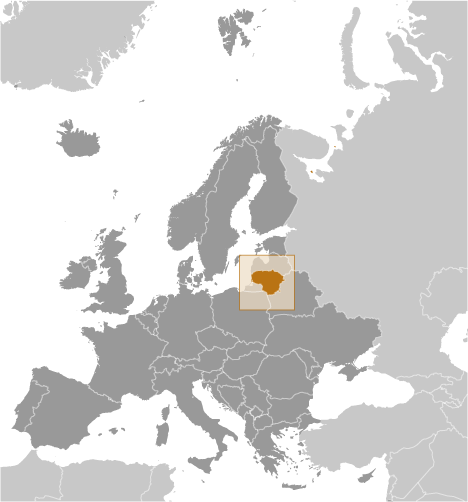
| Click map for larger view |
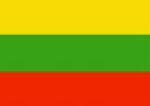
| Click flag for Country Report |



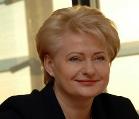
Dalia Grybauskaite
President since 12 July 2009
President since 12 July 2009
| TRAFFICKING IN PERSONS |
None reported