

| MACAU Macau Special Administrative Region Aomen Tebie Xingzhengqu (Chinese); Regiao Administrativa Especial de Macau (Portuguese) (Special Administrative Region of China) Joined United Nations: 24 October 1945 Human Rights as assured by their constitution Click here Updated 26 July 2012 |

| CAPITAL |
| POPULATION |
| CHIEF OF STATE |
| SELECTION PROCESS |
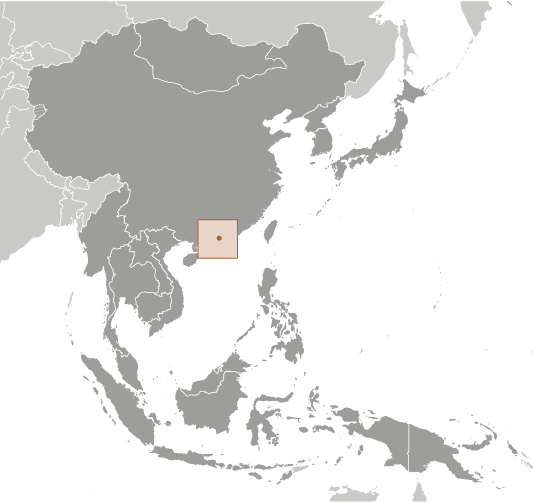
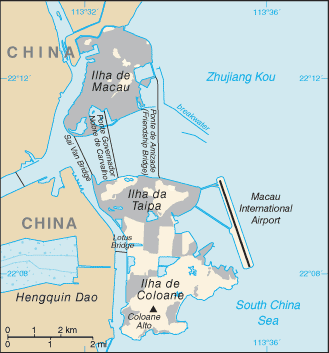
Macau
578,025 (July 2011 est.)
Hu Jintao
President of China
since 15 March 2003
President of China
since 15 March 2003
President and vice president elected by National People's
Congress for a five-year term (eligible for a second term);
elections last held 15-17 March 2008
Next scheduled election: mid-March 2013
Congress for a five-year term (eligible for a second term);
elections last held 15-17 March 2008
Next scheduled election: mid-March 2013
HEAD OF GOVERNMENT
SELECTION PROCESS
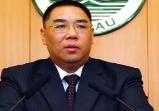
Fernando Chui Sai-on
Chief Executive
since 20 December 2009
Chief Executive
since 20 December 2009
Chief executive chosen by a 300-member Election Committee for
a five-year term (eligible for a second term); election last held 26
July 2009
Next scheduled election: July 2014
a five-year term (eligible for a second term); election last held 26
July 2009
Next scheduled election: July 2014
| DECLARATION OF HUMAN RIGHTS |
| ETHNIC GROUPS |
Chinese 94.3%, other 5.7% (includes Macanese - mixed Portuguese and Asian ancestry) (2006 census)
| RELIGIONS |
Buddhist 50%, Roman Catholic 15%, none and other 35% (1997 est.)
| GOVERNMENT STRUCTURE |
Limited democracy as a special administrative region of China - 0 provinces, Legal system is based on based on Portuguese civil
law system
Executive: President elected by China's National People's Congress for a five-year term, eligible for a second term; elections last
held 15-17 March 2008 (next to be held in mid-March 2013) Chief Executive chosen by a 300-member Election Committee for a
five-year term, eligible for a second term; election last held 26 July 2009 (next to be held on in July 2014)
Legislative: unicameral Legislative Assembly (29 seats; 12 elected by popular vote, 10 by indirect vote, and 7 appointed
by the chief executive; members serve four-year terms)
elections: last held on 20 September 2009 (next to be held in September 2013)
Judicial: Court of Final Appeal in Macau Special Administrative Region
law system
Executive: President elected by China's National People's Congress for a five-year term, eligible for a second term; elections last
held 15-17 March 2008 (next to be held in mid-March 2013) Chief Executive chosen by a 300-member Election Committee for a
five-year term, eligible for a second term; election last held 26 July 2009 (next to be held on in July 2014)
Legislative: unicameral Legislative Assembly (29 seats; 12 elected by popular vote, 10 by indirect vote, and 7 appointed
by the chief executive; members serve four-year terms)
elections: last held on 20 September 2009 (next to be held in September 2013)
Judicial: Court of Final Appeal in Macau Special Administrative Region
| LANGUAGES |
Cantonese 85.7%, Hokkien 4%, Mandarin 3.2%, other Chinese dialects 2.7%, English 1.5%, Tagalog 1.3%, other 1.6%
note: Chinese and Portuguese are the official language (2001 census)
note: Chinese and Portuguese are the official language (2001 census)
| BRIEF HISTORY |
The human history of Macau stretches back up to 6,000 years, and includes many different and diverse civilisations and
periods of existence. Evidence of Chinese culture dating back 4,000 to 6,000 years has been discovered on the Macau
Peninsula and dating back 5,000 years on Coloane Island. Historical records show that what was later known as Macau
was part of Panyu County, Nanhai District, Guangdong Province, under the Qin empire (221–206 BC). During the Jin
Dynasty (265-420), the area was part of Dongguan County and later alternated under the control of Nanhai and
Dongguan. In 1152 (during the Song Dynasty, 960–1279), it was identified as administratively part of the new Xiangshan
County. Since at least the 5th century, merchant ships traveling between Southeast Asia and Guangzhou used Haojingao
as a way stop for refuge, fresh water, and food. Members of the southern Song Dynasty and some 50,000 followers
were the first recorded inhabitants of the area, seeking refuge in Macau from invading Mongols in 1277. Mong Há has
long been the center of Chinese life in Macau and the site of what may be the region's oldest temple, a shrine devoted to
the Buddhist Guanyin (Goddess of Mercy). The Hoklo Boat people were the first to show commercial interest in Macau
as a trading center for the southern provinces. During the Ming Dynasty (1368–1643), fishermen migrated to Macau from
various parts of Guangdong and Fujian provinces and built the A-Ma Temple in which they prayed for safety on the sea.
Macau did not develop as a major settlement until the Portuguese arrived in the 16th century. Having established
themselves at Goa in 1510 and Malacca in 1511, the first Portuguese arrived on the China coast in 1513 aboard a hired
junk sailing from Malacca. They landed on Lintin Island in the Zhujiang (Pearl River) estuary and erected a stone marker
claiming the island for the king of Portugal. When Portuguese fleets arrived in the vicinity of Haojing'ao in 1517 and 1518,
Chinese officials expressed displeasure over violations of China's sovereignty. Portuguese adventurers were forcibly
expelled from along the coast of Guangdong in 1521. Following a ship wreck in 1536, Portuguese traders were allowed
to moor at Haojingao, however. Most historians note the date of the permanent presence of the Portuguese in Macau as
1553, the year they started establishing on-shore trading depots there. The Portuguese set up bases of operations there
for trade with China, especially Guangzhou, and for trade with Japan. Both Portuguese and Chinese merchants flocked to
Macau, and it quickly became an important node in the development of Portugal's trade with India, southern China,
Japan, and Southeast Asia. Lisbon obtained a leasehold for Macau in return for tribute paid to Beijing in 1557, and during
that same year, established a walled village there. Ground rent payments began in 1573. In 1582 a land lease was signed,
and annual rent was paid to Xiangshan County. In 1586 Macau became a self-governing city. In 1605 Dutch attacks led
the Portuguese to build a city wall without China's permission. China officially established Macau as a foreign-trade port in
1685. After the House of Braganza regained control of Portugal from the Spanish Habsburgs in 1640, Macau was
granted the official title of Cidade do (Santo) Nome de Deus de Macau, Não há outra mais Leal, which means City of the
(Holy) Name of God of Macau, "There is none more Loyal" never having recognized Spanish authority..The first
Portuguese Governor of Macau was appointed to Macau in 1680, but the Chinese continued to assert their authority,
collecting land and customs taxes. During the 17th, 18th, and 19th centuries, Macau served as an important center for
Portuguese trade with China (primarily with Guangzhou), Japan, the Philippines, mainland and island Southeast Asia, Goa,
and Mexico during the Ming (1368–1643) and Qing (1644–1911) dynasties. The decline of Lisbon's world trade system
in the mid-17th century ended Macao's role as a major trade entrepôt. The development of Hong Kong by the British and
the opening of treaty ports along the China coast after 1842 further overshadowed the commercial importance of Macau.
Until 20 April 1844, Macau was under the jurisdiction of Portugal's Indian colonies, the so-called “Estado português da
India” (Portuguese State of India), but after this date, it, along with East Timor, was accorded recognition by Lisbon (but
not by Beijing) as an overseas province of Portugal. The Treaty of Peace, Amity, and Commerce between China and the
United States (also known as the Treaty of Mong Há) was signed in a temple in Macau on 3 July 1844. The temple was
used by a Chinese judicial administrator, who also oversaw matters concerning foreigners, and was located in the village
of Mong Há. The Templo de Kun Iam was the site where, on July 3, 1844, the treaty of Wangxia (named after the village
of Mong Ha where the temple was located) was signed by representatives of the United States and China. This marked
the official beginning of Sino-US relations. Portugal continued to pay rent to China until 1849, when the Portuguese
abolished the Chinese customs house and declared Macau's “independence”, a year which also saw Chinese retaliation..
Macau enjoyed a brief period of economic prosperity during World War II as the only neutral port in South China, after
the Japanese occupied Guangzhou (Canton) and Hong Kong. In 1943, Japan created a virtual protectorate over Macau.
Japanese domination ended in August 1945. When the Chinese communists came to power in 1949, they declared the
Protocol of Lisbon to be invalid as an “unequal treaty” imposed by foreigners on China. However, Beijing was not ready
to settle the treaty question, requesting a maintenance of “the status quo” until a more appropriate time. Beijing took a
similar position on treaties relating to the Hong Kong territories of the United Kingdom. Portugal designated Macau a
separate overseas province in 1955. In 1974, following the anti-colonialist Carnation Revolution, Portugal relinquished all
colonial claims and recognized Chinese sovereignty over Macau. Portugal and the People's Republic of China established
diplomatic relations on 8 February 1979, and Beijing acknowledged Macau as “Chinese territory under Portuguese
administration.” A year later, Gen. Melo Egidio became the first governor of Macau to pay an official visit to Beijing.
Macau became the Macau Special Administrative Region (SAR) of China on 20 December 1999. China has promised
that, under its "one country, two systems" formula, China's socialist economic system will not be practiced in Macau, and
that Macau will enjoy a high degree of autonomy in all matters except foreign and defense affairs for the next 50 years
Sources : Wikipedia: History of Macau ; CIA World Factbook (select Macau)
periods of existence. Evidence of Chinese culture dating back 4,000 to 6,000 years has been discovered on the Macau
Peninsula and dating back 5,000 years on Coloane Island. Historical records show that what was later known as Macau
was part of Panyu County, Nanhai District, Guangdong Province, under the Qin empire (221–206 BC). During the Jin
Dynasty (265-420), the area was part of Dongguan County and later alternated under the control of Nanhai and
Dongguan. In 1152 (during the Song Dynasty, 960–1279), it was identified as administratively part of the new Xiangshan
County. Since at least the 5th century, merchant ships traveling between Southeast Asia and Guangzhou used Haojingao
as a way stop for refuge, fresh water, and food. Members of the southern Song Dynasty and some 50,000 followers
were the first recorded inhabitants of the area, seeking refuge in Macau from invading Mongols in 1277. Mong Há has
long been the center of Chinese life in Macau and the site of what may be the region's oldest temple, a shrine devoted to
the Buddhist Guanyin (Goddess of Mercy). The Hoklo Boat people were the first to show commercial interest in Macau
as a trading center for the southern provinces. During the Ming Dynasty (1368–1643), fishermen migrated to Macau from
various parts of Guangdong and Fujian provinces and built the A-Ma Temple in which they prayed for safety on the sea.
Macau did not develop as a major settlement until the Portuguese arrived in the 16th century. Having established
themselves at Goa in 1510 and Malacca in 1511, the first Portuguese arrived on the China coast in 1513 aboard a hired
junk sailing from Malacca. They landed on Lintin Island in the Zhujiang (Pearl River) estuary and erected a stone marker
claiming the island for the king of Portugal. When Portuguese fleets arrived in the vicinity of Haojing'ao in 1517 and 1518,
Chinese officials expressed displeasure over violations of China's sovereignty. Portuguese adventurers were forcibly
expelled from along the coast of Guangdong in 1521. Following a ship wreck in 1536, Portuguese traders were allowed
to moor at Haojingao, however. Most historians note the date of the permanent presence of the Portuguese in Macau as
1553, the year they started establishing on-shore trading depots there. The Portuguese set up bases of operations there
for trade with China, especially Guangzhou, and for trade with Japan. Both Portuguese and Chinese merchants flocked to
Macau, and it quickly became an important node in the development of Portugal's trade with India, southern China,
Japan, and Southeast Asia. Lisbon obtained a leasehold for Macau in return for tribute paid to Beijing in 1557, and during
that same year, established a walled village there. Ground rent payments began in 1573. In 1582 a land lease was signed,
and annual rent was paid to Xiangshan County. In 1586 Macau became a self-governing city. In 1605 Dutch attacks led
the Portuguese to build a city wall without China's permission. China officially established Macau as a foreign-trade port in
1685. After the House of Braganza regained control of Portugal from the Spanish Habsburgs in 1640, Macau was
granted the official title of Cidade do (Santo) Nome de Deus de Macau, Não há outra mais Leal, which means City of the
(Holy) Name of God of Macau, "There is none more Loyal" never having recognized Spanish authority..The first
Portuguese Governor of Macau was appointed to Macau in 1680, but the Chinese continued to assert their authority,
collecting land and customs taxes. During the 17th, 18th, and 19th centuries, Macau served as an important center for
Portuguese trade with China (primarily with Guangzhou), Japan, the Philippines, mainland and island Southeast Asia, Goa,
and Mexico during the Ming (1368–1643) and Qing (1644–1911) dynasties. The decline of Lisbon's world trade system
in the mid-17th century ended Macao's role as a major trade entrepôt. The development of Hong Kong by the British and
the opening of treaty ports along the China coast after 1842 further overshadowed the commercial importance of Macau.
Until 20 April 1844, Macau was under the jurisdiction of Portugal's Indian colonies, the so-called “Estado português da
India” (Portuguese State of India), but after this date, it, along with East Timor, was accorded recognition by Lisbon (but
not by Beijing) as an overseas province of Portugal. The Treaty of Peace, Amity, and Commerce between China and the
United States (also known as the Treaty of Mong Há) was signed in a temple in Macau on 3 July 1844. The temple was
used by a Chinese judicial administrator, who also oversaw matters concerning foreigners, and was located in the village
of Mong Há. The Templo de Kun Iam was the site where, on July 3, 1844, the treaty of Wangxia (named after the village
of Mong Ha where the temple was located) was signed by representatives of the United States and China. This marked
the official beginning of Sino-US relations. Portugal continued to pay rent to China until 1849, when the Portuguese
abolished the Chinese customs house and declared Macau's “independence”, a year which also saw Chinese retaliation..
Macau enjoyed a brief period of economic prosperity during World War II as the only neutral port in South China, after
the Japanese occupied Guangzhou (Canton) and Hong Kong. In 1943, Japan created a virtual protectorate over Macau.
Japanese domination ended in August 1945. When the Chinese communists came to power in 1949, they declared the
Protocol of Lisbon to be invalid as an “unequal treaty” imposed by foreigners on China. However, Beijing was not ready
to settle the treaty question, requesting a maintenance of “the status quo” until a more appropriate time. Beijing took a
similar position on treaties relating to the Hong Kong territories of the United Kingdom. Portugal designated Macau a
separate overseas province in 1955. In 1974, following the anti-colonialist Carnation Revolution, Portugal relinquished all
colonial claims and recognized Chinese sovereignty over Macau. Portugal and the People's Republic of China established
diplomatic relations on 8 February 1979, and Beijing acknowledged Macau as “Chinese territory under Portuguese
administration.” A year later, Gen. Melo Egidio became the first governor of Macau to pay an official visit to Beijing.
Macau became the Macau Special Administrative Region (SAR) of China on 20 December 1999. China has promised
that, under its "one country, two systems" formula, China's socialist economic system will not be practiced in Macau, and
that Macau will enjoy a high degree of autonomy in all matters except foreign and defense affairs for the next 50 years
Sources : Wikipedia: History of Macau ; CIA World Factbook (select Macau)
| ECONOMIC OVERVIEW |
After opening up its locally-controlled casino industry to foreign competition in 2001, the territory attracted tens of billions
of dollars in foreign investment, transforming Macau into one of the world's largest gaming centers. Macau''s gaming and
tourism businesses were fueled by China''s decision to relax travel restrictions on Chinese citizens wishing to visit Macau.
By 2006, Macau''s gaming revenue surpassed that of the Las Vegas strip, and gaming-related taxes accounted for more
than 70% of total government revenue. In 2008, Macau introduced measures to cool the rapidly developing sector.
Macau''s economy slowed dramatically in 2009 as a result of the global economic slowdown, but strong growth resumed
in 2010, largely on the back of tourism from mainland China and the gaming sectors. This city of 550,000 hosted nearly
25 million visitors in 2010. Almost 53% came from mainland China. Macau''s traditional manufacturing industry slowed
greatly since the termination of the Multi-Fiber Agreement in 2005. The Closer Economic Partnership Agreement
(CEPA) between Macau and mainland China that came into effect in January 2004 offers Macau-made products
tariff-free access to the mainland; nevertheless, China is Macau''s second largest goods export market, behind Hong
Kong, and followed by the United States. However, exports in 2010 were less than US$900 million, while gaming
receipts were almost US$24 billion, a 58% increase over 2009. Macau continues to face the challenges of managing its
growing casino industry, money-laundering, and the need to diversifying the economy away from heavy dependence on
gaming revenues. Macau''s currency, the pataca, is closely tied to the Hong Kong dollar, which is also freely accepted in
the territory.
of dollars in foreign investment, transforming Macau into one of the world's largest gaming centers. Macau''s gaming and
tourism businesses were fueled by China''s decision to relax travel restrictions on Chinese citizens wishing to visit Macau.
By 2006, Macau''s gaming revenue surpassed that of the Las Vegas strip, and gaming-related taxes accounted for more
than 70% of total government revenue. In 2008, Macau introduced measures to cool the rapidly developing sector.
Macau''s economy slowed dramatically in 2009 as a result of the global economic slowdown, but strong growth resumed
in 2010, largely on the back of tourism from mainland China and the gaming sectors. This city of 550,000 hosted nearly
25 million visitors in 2010. Almost 53% came from mainland China. Macau''s traditional manufacturing industry slowed
greatly since the termination of the Multi-Fiber Agreement in 2005. The Closer Economic Partnership Agreement
(CEPA) between Macau and mainland China that came into effect in January 2004 offers Macau-made products
tariff-free access to the mainland; nevertheless, China is Macau''s second largest goods export market, behind Hong
Kong, and followed by the United States. However, exports in 2010 were less than US$900 million, while gaming
receipts were almost US$24 billion, a 58% increase over 2009. Macau continues to face the challenges of managing its
growing casino industry, money-laundering, and the need to diversifying the economy away from heavy dependence on
gaming revenues. Macau''s currency, the pataca, is closely tied to the Hong Kong dollar, which is also freely accepted in
the territory.
| POLITICAL CLIMATE |
In accordance with Article 31 of the Constitution of the People's Republic of China, Macau has Special Administrative
Region status, which provides constitutional guarantees for implementing the policy of "one country, two systems" and the
constitutional basis for enacting the Basic Law of the Macau Special Administrative Region. Although geographically part
of Guangdong Province, the Macau Special Administrative Region is directly under the authority of the central government
of the People's Republic of China in Beijing, which controls the foreign affairs and defense of Macau but otherwise grants
the region "a high degree of authority." The Basic Law took force upon handover of sovereignty from Portugal on
December 20, 1999, and is to remain in effect for fifty years (that is, until 2049).
The Chief Executive of Macau is appointed by the People's Republic of China's central government after selection by an
election committee, whose members are nominated by corporate bodies. The chief executive appears before a cabinet,
the Executive Council, of between 7 and 11 members. The term of office of the chief executive is 5 years, and no
individual may serve for more than two consecutive terms. The governor has strong policymaking and executive powers
similar to those of a president. These powers are, however, limited from above by the central government in Beijing, to
whom the governor reports directly, and from below (to a more limited extent) by the legislature.
The central government in Beijing controls the foreign affairs of Macau. The Commission of the Ministry of Foreign Affairs
opened its office in Macau on 20 December 1999. A central government agency, the commission interacts with the
Macau government in matters of foreign policy. It also processes applications from foreign nations and international
organizations wishing to establish consulates or representative offices in Macau. Macau is also authorized to handle some
external affairs on its own.In June 2009 Fernando Chui declared himself the sole candidate for Macau's chief executive
election. He was nominated by 286 members of the 300-member election committee, most with direct ties to Beijing. On
"election" day, July 26, 282 committee members voted for Chui (14 blank, 4 abstention) and assumed his new role as
Chief executive of Macau on 20 December 2009.
Wikipedia: Politics of Macau
Region status, which provides constitutional guarantees for implementing the policy of "one country, two systems" and the
constitutional basis for enacting the Basic Law of the Macau Special Administrative Region. Although geographically part
of Guangdong Province, the Macau Special Administrative Region is directly under the authority of the central government
of the People's Republic of China in Beijing, which controls the foreign affairs and defense of Macau but otherwise grants
the region "a high degree of authority." The Basic Law took force upon handover of sovereignty from Portugal on
December 20, 1999, and is to remain in effect for fifty years (that is, until 2049).
The Chief Executive of Macau is appointed by the People's Republic of China's central government after selection by an
election committee, whose members are nominated by corporate bodies. The chief executive appears before a cabinet,
the Executive Council, of between 7 and 11 members. The term of office of the chief executive is 5 years, and no
individual may serve for more than two consecutive terms. The governor has strong policymaking and executive powers
similar to those of a president. These powers are, however, limited from above by the central government in Beijing, to
whom the governor reports directly, and from below (to a more limited extent) by the legislature.
The central government in Beijing controls the foreign affairs of Macau. The Commission of the Ministry of Foreign Affairs
opened its office in Macau on 20 December 1999. A central government agency, the commission interacts with the
Macau government in matters of foreign policy. It also processes applications from foreign nations and international
organizations wishing to establish consulates or representative offices in Macau. Macau is also authorized to handle some
external affairs on its own.In June 2009 Fernando Chui declared himself the sole candidate for Macau's chief executive
election. He was nominated by 286 members of the 300-member election committee, most with direct ties to Beijing. On
"election" day, July 26, 282 committee members voted for Chui (14 blank, 4 abstention) and assumed his new role as
Chief executive of Macau on 20 December 2009.
Wikipedia: Politics of Macau
| INTERNATIONAL DISPUTES |
None reported.


| REFUGEES AND INTERNALLY DISPLACED PERSONS (IDP) |
None reported.
| ILLICIT DRUGS |
Transshipment point for drugs going into mainland China; consumer of opiates and amphetamines
| HUMAN RIGHTS STATEMENTS, ANALYSIS AND CRITIQUES |
2011 Human Rights Report: China (includes Tibet, Hong Kong, and Macau)
Bureau of Democracy, Human Rights, and Labor
2011 Country Reports on Human Rights Practices
May 25, 2012
Macau is a Special Administrative Region (SAR) of the People’s Republic of China (PRC) and enjoys a high degree of autonomy, except
in defense and foreign affairs, under the SAR’s constitution (the Basic Law). Chief Executive Fernando Chui Sai-on, who took office in
December 2009, headed the government after being elected in July 2009 by a 300-member commission. Security forces reported to
civilian authorities.
Three prominent human rights abuses reported during the year included limits on citizens’ ability to change their government, concerns
over press freedom, and concerns over workers’ rights.
Although trafficking in persons remained a problem, there was a lack of prosecutors to pursue trafficking cases. Moreover, national
security legislation, passed in 2009 in accordance with Article 23 of the Basic Law, remained a source of concern, but by year’s end no
cases had been brought under the law.
The government took steps to prosecute and punish officials who committed abuses. There was no impunity for government officials.
Click here to read more »
Bureau of Democracy, Human Rights, and Labor
2011 Country Reports on Human Rights Practices
May 25, 2012
Macau is a Special Administrative Region (SAR) of the People’s Republic of China (PRC) and enjoys a high degree of autonomy, except
in defense and foreign affairs, under the SAR’s constitution (the Basic Law). Chief Executive Fernando Chui Sai-on, who took office in
December 2009, headed the government after being elected in July 2009 by a 300-member commission. Security forces reported to
civilian authorities.
Three prominent human rights abuses reported during the year included limits on citizens’ ability to change their government, concerns
over press freedom, and concerns over workers’ rights.
Although trafficking in persons remained a problem, there was a lack of prosecutors to pursue trafficking cases. Moreover, national
security legislation, passed in 2009 in accordance with Article 23 of the Basic Law, remained a source of concern, but by year’s end no
cases had been brought under the law.
The government took steps to prosecute and punish officials who committed abuses. There was no impunity for government officials.
Click here to read more »
21 November 2008
COMMITTEE AGAINST TORTURE
Forty-first session Geneva, 3-21 November 2008
CONSIDERATION OF REPORTS SUBMITTED BY STATES PARTIES UNDER ARTICLE 19 OF THE CONVENTION
Concluding observations of the Committee against Torture
Macao Special Administrative Region
A. Introduction
1. The Committee against Torture (“the Committee”) considered the fourth periodic report of China with respect to the Macao Special
Administrative Region (Macao SAR) (CAT/C/MAC/4) at its 844th and 846th meetings, held on 7 and 10 November 2008 (CAT/C/SR.
844 and 846), and adopted, at its 864th meeting on 21 November 2008 (CAT/C/SR.860), the following concluding observations.
B. Positive aspects
2. The Committee welcomes the submission of the report of Macao SAR, included in the fourth periodic report of the State party China.
It also welcomes the written replies to the list of issues (CAT/C/MAC/Q/4/Add.1) which provided additional information on the
legislative, administrative, judicial and other measures taken for the implementation of the Convention.
C. Main issues of concerns and recommendations
Definition and criminalization of torture
4. The Committee takes note of the Macao SAR’s explanation with respect to the term “public official” contained in article 234 read in
conjunction with article 235 of the Criminal Code. Nonetheless, the Committee is concerned that the restriction mentioned in article 234
(1) of the Criminal Code regarding the scope of the crime to the mentioned public officials is not fully compliant with the definition of
torture contained in article 1 (1) of the Convention.
The Macao SAR should adopt a definition of the term “public official” fully in line with article 1 (1) of the Convention, so as to
include all acts inflicted by or at the instigation of or with the consent or acquiescence of all public officials or other persons acting in an
official capacity. The Committee further recommends that Macao SAR consider using a wording of the definition of torture similar to
that used in the Convention so as to ensure that all elements contained in article 1, including discrimination of any kind, are covered in
the definition.
Click here to read more »
COMMITTEE AGAINST TORTURE
Forty-first session Geneva, 3-21 November 2008
CONSIDERATION OF REPORTS SUBMITTED BY STATES PARTIES UNDER ARTICLE 19 OF THE CONVENTION
Concluding observations of the Committee against Torture
Macao Special Administrative Region
A. Introduction
1. The Committee against Torture (“the Committee”) considered the fourth periodic report of China with respect to the Macao Special
Administrative Region (Macao SAR) (CAT/C/MAC/4) at its 844th and 846th meetings, held on 7 and 10 November 2008 (CAT/C/SR.
844 and 846), and adopted, at its 864th meeting on 21 November 2008 (CAT/C/SR.860), the following concluding observations.
B. Positive aspects
2. The Committee welcomes the submission of the report of Macao SAR, included in the fourth periodic report of the State party China.
It also welcomes the written replies to the list of issues (CAT/C/MAC/Q/4/Add.1) which provided additional information on the
legislative, administrative, judicial and other measures taken for the implementation of the Convention.
C. Main issues of concerns and recommendations
Definition and criminalization of torture
4. The Committee takes note of the Macao SAR’s explanation with respect to the term “public official” contained in article 234 read in
conjunction with article 235 of the Criminal Code. Nonetheless, the Committee is concerned that the restriction mentioned in article 234
(1) of the Criminal Code regarding the scope of the crime to the mentioned public officials is not fully compliant with the definition of
torture contained in article 1 (1) of the Convention.
The Macao SAR should adopt a definition of the term “public official” fully in line with article 1 (1) of the Convention, so as to
include all acts inflicted by or at the instigation of or with the consent or acquiescence of all public officials or other persons acting in an
official capacity. The Committee further recommends that Macao SAR consider using a wording of the definition of torture similar to
that used in the Convention so as to ensure that all elements contained in article 1, including discrimination of any kind, are covered in
the definition.
Click here to read more »
China's rating in Web freedom
Thursday, 02 April 2009
Macau Daily Times
China's "sophisticated and multi-layered" efforts to censor and control the Internet earned it a "not free" rating by a US rights group in a
report released yesterday in Washington.
Freedom House, which examined web freedom issues in 15 countries, listed Cuba, Iran and Tunisia as three other nations it considered
"not free" due to government control of online activity.
Seven countries studied -- Egypt, India, Georgia, Kenya, Malaysia, Russia and Turkey -- were considered "partly free" while four others --
Brazil, Britain, Estonia and South Africa -- were labeled "free."
Freedom House, which monitors political rights and civil liberties around the globe, said the rights of Internet users were increasingly at
risk as governments expanded their ability to control online activity.
"More than a billion people look to the Internet and mobile phones to provide a new freedom frontier, where they can exercise their right to
freedom of expression without repercussion," Freedom House executive director Jennifer Windsor said in a statement.
"But as access grows, more governments are employing diverse and sophisticated methods to monitor, censor and punish Internet users."
In its report, "Freedom on the Net," to be formally released later Wednesday at a conference of bloggers in Berlin, Freedom House
evaluated the 15 countries based on barriers to Internet access, limitations on content and violations of users' rights.
The Washington-based group said Cuba received the lowest score in the study.
"Cuba is one of the world's most repressive environments for Internet freedom, despite a slight relaxation of restrictions on computer and
mobile phone sales in 2008," it said.
"There is almost no access to Internet applications other than e-mail and surveillance is extensive. Cuba is one of the few countries with
laws and regulations explicitly restricting and outlawing certain online activities."
Freedom House also said that China and Cuba were tied for curbing the most users' rights.
China has the world's most Internet users, an estimated 300 million, but "also has the world's most highly-developed censorship apparatus,"
it said.
The report cited "sophisticated and multilayered system" used by Chinese authorities to censor, monitor and control Internet and mobile
telephone activities.
It also mentioned the "hundreds of thousands" of people authorities and private providers employ to "monitor, censor and manipulate online
content."
But "due to the egalitarian nature and technical flexibility of the Internet, the online environment remains more free than traditional media,"
Freedom House said.
Click here to read more »
Thursday, 02 April 2009
Macau Daily Times
China's "sophisticated and multi-layered" efforts to censor and control the Internet earned it a "not free" rating by a US rights group in a
report released yesterday in Washington.
Freedom House, which examined web freedom issues in 15 countries, listed Cuba, Iran and Tunisia as three other nations it considered
"not free" due to government control of online activity.
Seven countries studied -- Egypt, India, Georgia, Kenya, Malaysia, Russia and Turkey -- were considered "partly free" while four others --
Brazil, Britain, Estonia and South Africa -- were labeled "free."
Freedom House, which monitors political rights and civil liberties around the globe, said the rights of Internet users were increasingly at
risk as governments expanded their ability to control online activity.
"More than a billion people look to the Internet and mobile phones to provide a new freedom frontier, where they can exercise their right to
freedom of expression without repercussion," Freedom House executive director Jennifer Windsor said in a statement.
"But as access grows, more governments are employing diverse and sophisticated methods to monitor, censor and punish Internet users."
In its report, "Freedom on the Net," to be formally released later Wednesday at a conference of bloggers in Berlin, Freedom House
evaluated the 15 countries based on barriers to Internet access, limitations on content and violations of users' rights.
The Washington-based group said Cuba received the lowest score in the study.
"Cuba is one of the world's most repressive environments for Internet freedom, despite a slight relaxation of restrictions on computer and
mobile phone sales in 2008," it said.
"There is almost no access to Internet applications other than e-mail and surveillance is extensive. Cuba is one of the few countries with
laws and regulations explicitly restricting and outlawing certain online activities."
Freedom House also said that China and Cuba were tied for curbing the most users' rights.
China has the world's most Internet users, an estimated 300 million, but "also has the world's most highly-developed censorship apparatus,"
it said.
The report cited "sophisticated and multilayered system" used by Chinese authorities to censor, monitor and control Internet and mobile
telephone activities.
It also mentioned the "hundreds of thousands" of people authorities and private providers employ to "monitor, censor and manipulate online
content."
But "due to the egalitarian nature and technical flexibility of the Internet, the online environment remains more free than traditional media,"
Freedom House said.
Click here to read more »
24 May 2012
Report 2012: No longer business as usual for tyranny and injustice
Strong Arms Trade Treaty needed as UN Security Council looks unfit for purpose
The courage shown by protesters in the past 12 months has been matched by a failure of leadership that makes the UN Security Council
seem tired, out of step and increasingly unfit for purpose, Amnesty International said as it launched its 50th global human rights report
with a call for a strong global Arms Trade Treaty later this year.
“Failed leadership has gone global in the last year, with politicians responding to protests with brutality or indifference. Governments
must show legitimate leadership and reject injustice by protecting the powerless and restraining the powerful. It is time to put people
before corporations and rights before profits,” said Salil Shetty, Amnesty International Secretary General.
The vocal and enthusiastic support for the protest movements shown by many global and regional powers in the early months of 2011,
has not translated into action. As Egyptians go to the polls to vote for a new president, it looks increasingly as if the opportunities for
change created by the protesters are being squandered.
Amnesty International Report 2012 documents specific restrictions on free speech in at least 91 countries as well as cases of people
tortured or otherwise ill-treated in at least 101 countries – in many cases for taking part in demonstrations.
“Ousting individual leaders – however tyrannical – is not enough to deliver long-term change. Governments must uphold freedom of
expression at home and abroad, take international responsibilities seriously, and invest in systems and structures that ensure justice,
freedom and equality before the law.”
Other global developments highlighted in Amnesty International Report 2012:
Highly repressive states including China threw the full weight of their security apparatus into the suffocation of protest. There was no
improvement in North Korea’s horrific human rights situation.
Click here to read more »
Report 2012: No longer business as usual for tyranny and injustice
Strong Arms Trade Treaty needed as UN Security Council looks unfit for purpose
The courage shown by protesters in the past 12 months has been matched by a failure of leadership that makes the UN Security Council
seem tired, out of step and increasingly unfit for purpose, Amnesty International said as it launched its 50th global human rights report
with a call for a strong global Arms Trade Treaty later this year.
“Failed leadership has gone global in the last year, with politicians responding to protests with brutality or indifference. Governments
must show legitimate leadership and reject injustice by protecting the powerless and restraining the powerful. It is time to put people
before corporations and rights before profits,” said Salil Shetty, Amnesty International Secretary General.
The vocal and enthusiastic support for the protest movements shown by many global and regional powers in the early months of 2011,
has not translated into action. As Egyptians go to the polls to vote for a new president, it looks increasingly as if the opportunities for
change created by the protesters are being squandered.
Amnesty International Report 2012 documents specific restrictions on free speech in at least 91 countries as well as cases of people
tortured or otherwise ill-treated in at least 101 countries – in many cases for taking part in demonstrations.
“Ousting individual leaders – however tyrannical – is not enough to deliver long-term change. Governments must uphold freedom of
expression at home and abroad, take international responsibilities seriously, and invest in systems and structures that ensure justice,
freedom and equality before the law.”
Other global developments highlighted in Amnesty International Report 2012:
Highly repressive states including China threw the full weight of their security apparatus into the suffocation of protest. There was no
improvement in North Korea’s horrific human rights situation.
Click here to read more »
“You’ll Be Fired if You Refuse”
November 3, 2011
I. Background
China in Africa
In 2001, the Chinese government formalized a policy of “going out” (zou chuqu, in Mandarin), in which the central government actively
supported Chinese companies in economic investment abroad that fit “with one or more of four objectives: providing a market for Chinese
products, improving resource security, enabling technology transfer, and promoting research and development.”[4] Chinese engagement in
Africa did not begin at this point—as just one example, the Chinese government financed and constructed between 1970 and 1975 the
US$500 million Tanzam Railway that linked Zambia’s mines to Dar es Salaam’s port—but the direct engagement in industry across the
continent has grown steadily throughout the last decade. In 2006, the Forum on China-Africa Cooperation, which has organized four
summits involving China and African states, published “China’s African policy,” which includes:
[The Chinese government] supports competent Chinese enterprises to cooperate with African nations in various ways on the basis of the
principle of mutual benefit and common development, to develop and exploit rationally their resources, with a view to helping African
countries to translate their advantages in resources to competitive strength, and realize sustainable development.[5]
China’s increasing role in Africa has spawned a breathtaking number of academic articles, books, media reports, documentaries, and
commentary.[6] At its best, this attention has critically examined the positive and negative implications of this “going out” for Africans.
This includes China’s role in highly abusive states like Sudan and Zimbabwe, as well as the greater access to cheap goods that Chinese
exports often bring, though at times with negative impacts on local production. At its worst, some publications have turned unsupported
assertions into fact and drastically overstated the size of Chinese investment and its relationship to natural resource exploitation. Many
publications have also treated every “Chinese” company the same—and also as a representation of the Chinese government—whether state-
owned or run by a private Macau businessman.[7] At times, this has been exploited by Western politicians and investors to create a false
dichotomy between “good” Western investment and “bad” Chinese investment. While there are concerning patterns to Chinese employment
practices, this should not malign or ignore the positive potential for Chinese investment in improving economic conditions in Africa.
Click here to read more »
November 3, 2011
I. Background
China in Africa
In 2001, the Chinese government formalized a policy of “going out” (zou chuqu, in Mandarin), in which the central government actively
supported Chinese companies in economic investment abroad that fit “with one or more of four objectives: providing a market for Chinese
products, improving resource security, enabling technology transfer, and promoting research and development.”[4] Chinese engagement in
Africa did not begin at this point—as just one example, the Chinese government financed and constructed between 1970 and 1975 the
US$500 million Tanzam Railway that linked Zambia’s mines to Dar es Salaam’s port—but the direct engagement in industry across the
continent has grown steadily throughout the last decade. In 2006, the Forum on China-Africa Cooperation, which has organized four
summits involving China and African states, published “China’s African policy,” which includes:
[The Chinese government] supports competent Chinese enterprises to cooperate with African nations in various ways on the basis of the
principle of mutual benefit and common development, to develop and exploit rationally their resources, with a view to helping African
countries to translate their advantages in resources to competitive strength, and realize sustainable development.[5]
China’s increasing role in Africa has spawned a breathtaking number of academic articles, books, media reports, documentaries, and
commentary.[6] At its best, this attention has critically examined the positive and negative implications of this “going out” for Africans.
This includes China’s role in highly abusive states like Sudan and Zimbabwe, as well as the greater access to cheap goods that Chinese
exports often bring, though at times with negative impacts on local production. At its worst, some publications have turned unsupported
assertions into fact and drastically overstated the size of Chinese investment and its relationship to natural resource exploitation. Many
publications have also treated every “Chinese” company the same—and also as a representation of the Chinese government—whether state-
owned or run by a private Macau businessman.[7] At times, this has been exploited by Western politicians and investors to create a false
dichotomy between “good” Western investment and “bad” Chinese investment. While there are concerning patterns to Chinese employment
practices, this should not malign or ignore the positive potential for Chinese investment in improving economic conditions in Africa.
Click here to read more »
CE guarantees court decisions are made without any interference
28/05/2012 07:55:00
The Macau SAR keeps its principle of non-interference in the legal process and of absolutely respecting the decisions of the court,
the Chief Executive stressed last Saturday to local journalists prior to leaving Beijing. Chui Sai On added that the government has
been watching cases related to the judicial process of the ex-secretary for Transport and Public Works Ao Man Long concerning
the concession of lands in particular.
He also stressed that the Macau Public Prosecutions Office (MP) enjoys total independence in the execution of its accusation
competence, without any government interference. Additionally, he highlighted that in the judicial organization of Macau, the courts
work as totally independent elements in terms of judgment, including in the power of the final decision.
President of the Macau Lawyers Association Neto Valente previously accused local courts of being more inclined towards the
government position in lawsuits related to the authority’s administrative problems. He said judges of local courts demonstrated a
certain extent of bias favoring the authority in their rulings of recent years. This statement made by Valente on May 16 caused the
Judicial Magistrates Commission of Macau to express their strong disagreement. The Commission said judges of all courts at
different levels had been exercising “great impartiality and upholding unbiased positions.” Chui Sai On said he is convinced the
Court of Final Appeal (TUI) will soon conclude its work on the most recent judgment involving Ao Man Long.
Strengthening business ties with Beijing
Chui Sai On met Mayor of Beijing Mr Guo Jinlong at the first China Beijing International Fair for Trade in Services (CIFTIS) on
Saturday. There, both agreed on the intensification of the cooperation, bilateral relations and exchange between Beijing and Macau.
Chui Sai On, who traveled with a delegation of entrepreneurs, stated that the fair was a good occasion for the concretization of the
12th Five-Year-Plan’s aims to affirm Macau as an international center for tourism and leisure, as well as a platform for commercial
services between China and the Portuguese-speaking countries.
Click here to read more
28/05/2012 07:55:00
The Macau SAR keeps its principle of non-interference in the legal process and of absolutely respecting the decisions of the court,
the Chief Executive stressed last Saturday to local journalists prior to leaving Beijing. Chui Sai On added that the government has
been watching cases related to the judicial process of the ex-secretary for Transport and Public Works Ao Man Long concerning
the concession of lands in particular.
He also stressed that the Macau Public Prosecutions Office (MP) enjoys total independence in the execution of its accusation
competence, without any government interference. Additionally, he highlighted that in the judicial organization of Macau, the courts
work as totally independent elements in terms of judgment, including in the power of the final decision.
President of the Macau Lawyers Association Neto Valente previously accused local courts of being more inclined towards the
government position in lawsuits related to the authority’s administrative problems. He said judges of local courts demonstrated a
certain extent of bias favoring the authority in their rulings of recent years. This statement made by Valente on May 16 caused the
Judicial Magistrates Commission of Macau to express their strong disagreement. The Commission said judges of all courts at
different levels had been exercising “great impartiality and upholding unbiased positions.” Chui Sai On said he is convinced the
Court of Final Appeal (TUI) will soon conclude its work on the most recent judgment involving Ao Man Long.
Strengthening business ties with Beijing
Chui Sai On met Mayor of Beijing Mr Guo Jinlong at the first China Beijing International Fair for Trade in Services (CIFTIS) on
Saturday. There, both agreed on the intensification of the cooperation, bilateral relations and exchange between Beijing and Macau.
Chui Sai On, who traveled with a delegation of entrepreneurs, stated that the fair was a good occasion for the concretization of the
12th Five-Year-Plan’s aims to affirm Macau as an international center for tourism and leisure, as well as a platform for commercial
services between China and the Portuguese-speaking countries.
Click here to read more
2012 07 25
CCAC Detects Case of “Technical Mark Forgery and Fraud Involving a Nurse of Hospital Centre S. Januario
The CCAC has revealed a case of alleged forgery of technical mark and fraud involving a senior nurse of the Hospital Centre S.
Januario who is responsible for out-patient service. The nurse, surnamed Cheong, is suspected to have, repeatedly and for a long
time, made use of the loopholes of the system of overtime declaration and doctor’s trust in attempt to defraud overtime pay that
s/he did not deserve. After the doctor and the last patient have left the consulting room, the nurse did not switch off the medical
record on computer in order to deliberately extend the time record of consultation as if s/he was still working. The CCAC referred
the case to the Public Prosecutions Office today (25th July).
After in-depth investigation, the CCAC discovered that at least during the period of January 2011 to May 2012, the suspect
allegedly made use of the mechanism of the hospital for the calculation of the compensation of overtime work (it is calculated by
using the time registered by the computer of the last patient completed the consultation at the out-patient department with an
additional 20 minutes for finishing off). It is suspected that the nurse, after the doctor has finished the out-patient duties and left the
consulting room, deliberately kept the patient’s medical record open on the computer in order to delay the time record of the patient
completing the consultation, so as to obtain additional monetary compensation as the remuneration for overtime. With full
knowledge that it is a violation of code of practice, the suspect has committed the fraud repeatedly for a long time. The CCAC also
found that on some of the days of the stated period, the medical records of patients had even been left open for over four hours,
close to the length of time of daily service of relevant doctors at the out-patient department. There are also computer records
showing that some patients were still “under diagnosis or treatment” at the time when in fact they had left Macao already.
In the course of investigation, the suspect admitted having committed the said fraudulent acts and deceived the Macao SAR
Government.
The CCAC will continue to investigate whether other public servants have involved in covering up the illicit acts or committed
similar offences. It has also informed the Health Bureau of the case and requested it to take immediate action to eliminate factors
that may cause corruption.
Click here to read more »
CCAC Detects Case of “Technical Mark Forgery and Fraud Involving a Nurse of Hospital Centre S. Januario
The CCAC has revealed a case of alleged forgery of technical mark and fraud involving a senior nurse of the Hospital Centre S.
Januario who is responsible for out-patient service. The nurse, surnamed Cheong, is suspected to have, repeatedly and for a long
time, made use of the loopholes of the system of overtime declaration and doctor’s trust in attempt to defraud overtime pay that
s/he did not deserve. After the doctor and the last patient have left the consulting room, the nurse did not switch off the medical
record on computer in order to deliberately extend the time record of consultation as if s/he was still working. The CCAC referred
the case to the Public Prosecutions Office today (25th July).
After in-depth investigation, the CCAC discovered that at least during the period of January 2011 to May 2012, the suspect
allegedly made use of the mechanism of the hospital for the calculation of the compensation of overtime work (it is calculated by
using the time registered by the computer of the last patient completed the consultation at the out-patient department with an
additional 20 minutes for finishing off). It is suspected that the nurse, after the doctor has finished the out-patient duties and left the
consulting room, deliberately kept the patient’s medical record open on the computer in order to delay the time record of the patient
completing the consultation, so as to obtain additional monetary compensation as the remuneration for overtime. With full
knowledge that it is a violation of code of practice, the suspect has committed the fraud repeatedly for a long time. The CCAC also
found that on some of the days of the stated period, the medical records of patients had even been left open for over four hours,
close to the length of time of daily service of relevant doctors at the out-patient department. There are also computer records
showing that some patients were still “under diagnosis or treatment” at the time when in fact they had left Macao already.
In the course of investigation, the suspect admitted having committed the said fraudulent acts and deceived the Macao SAR
Government.
The CCAC will continue to investigate whether other public servants have involved in covering up the illicit acts or committed
similar offences. It has also informed the Health Bureau of the case and requested it to take immediate action to eliminate factors
that may cause corruption.
Click here to read more »
TRANSLATED FROM CHINESE BY GOOGLE TRANSLATE
Promote in accordance with the law prompted the Societies published annual accounts of the New Macau
Association, July 12, 2012
Following the Audit Commission earlier issued a report criticizing the Macao Foundation the chaos approved funded report, the
New Macau Association to expose the societies received unfair heavily subsidized, the public is gradually awakening must be
strengthened to monitor the government heavily subsidized societies.
New Macau Association found that 12 years to the establishment of the SAR, do not comply with the legal section 2/99/M
association rights norms, "19 require" any other allowance or financial nature associations receive public entities funded The set
amount is higher than the Governor (now the Chief Executive ") shall publish annually in Macau in a newspaper published
accounts. Since this law has not been the implementation of the Macao Foundation and various government departments in the
absence of restraint, the lack of police accountability to the public case, easily millions, millions of the amount of grant funding, but
when questioned by public interest thick dough refused to provide information to the public. New Macau Association urges the
Chief Executive, the arrears as soon as possible to fill this thing of Macao residents for many years: announce the relevant amount
in accordance with the law, associations receive government sector funding above the amount to be released the year's accounts,
so that the public can monitor to receive funding in accordance with the law to take the operation of societies.
Reference to the Macao Foundation in 2011 awarded the records of the amount of subsidy, calculated by statistical methods, the
New Macau Association recommends that the Chief Executive issued an annual total charge the government higher than MOP $
498,000.00 (funded up to 20% of societies - that is higher than 80 per cent of digits or more), they have to publish their annual
accounts in Macau newspapers.
If this statutory requirement can drop real execution public Biezhu questions can be solved. For example, the New Macau
Association recently questioned the prime research center "in connection with the name of" service charge "to the Macao Daily
News" to pay the rent "the voices of doubt in the public uproar, the Macao Foundation While acknowledging that the accounts
submitted by the prime research center mesh using the word "service fee", but refused to explain to the public the actual amount of
the so-called "service charge". If the provisions of law 2/99/M No. 19 is implemented, the public will be informed that the prime
research center to Macau to pay the service charge per month for the amount of money, so that the public can judge for
themselves should be regarded as "rent" or "service fee", without making unnecessary speculation.
Click here to read more »
Promote in accordance with the law prompted the Societies published annual accounts of the New Macau
Association, July 12, 2012
Following the Audit Commission earlier issued a report criticizing the Macao Foundation the chaos approved funded report, the
New Macau Association to expose the societies received unfair heavily subsidized, the public is gradually awakening must be
strengthened to monitor the government heavily subsidized societies.
New Macau Association found that 12 years to the establishment of the SAR, do not comply with the legal section 2/99/M
association rights norms, "19 require" any other allowance or financial nature associations receive public entities funded The set
amount is higher than the Governor (now the Chief Executive ") shall publish annually in Macau in a newspaper published
accounts. Since this law has not been the implementation of the Macao Foundation and various government departments in the
absence of restraint, the lack of police accountability to the public case, easily millions, millions of the amount of grant funding, but
when questioned by public interest thick dough refused to provide information to the public. New Macau Association urges the
Chief Executive, the arrears as soon as possible to fill this thing of Macao residents for many years: announce the relevant amount
in accordance with the law, associations receive government sector funding above the amount to be released the year's accounts,
so that the public can monitor to receive funding in accordance with the law to take the operation of societies.
Reference to the Macao Foundation in 2011 awarded the records of the amount of subsidy, calculated by statistical methods, the
New Macau Association recommends that the Chief Executive issued an annual total charge the government higher than MOP $
498,000.00 (funded up to 20% of societies - that is higher than 80 per cent of digits or more), they have to publish their annual
accounts in Macau newspapers.
If this statutory requirement can drop real execution public Biezhu questions can be solved. For example, the New Macau
Association recently questioned the prime research center "in connection with the name of" service charge "to the Macao Daily
News" to pay the rent "the voices of doubt in the public uproar, the Macao Foundation While acknowledging that the accounts
submitted by the prime research center mesh using the word "service fee", but refused to explain to the public the actual amount of
the so-called "service charge". If the provisions of law 2/99/M No. 19 is implemented, the public will be informed that the prime
research center to Macau to pay the service charge per month for the amount of money, so that the public can judge for
themselves should be regarded as "rent" or "service fee", without making unnecessary speculation.
Click here to read more »
| Click map for larger view |
| Click flag for Country Report |




| TRAFFICKING IN PERSONS |
Current situation: Macau is a transit and destination territory for women trafficked for the purpose of commercial sexual
exploitation; most females in Macau's sizeable sex industry come from the interior regions of China or Mongolia, though a
significant number also come from Russia, Eastern Europe, Thailand, and Vietnam; the majority of women in Macau's
prostitution trade appear to have entered Macau and the sex trade voluntarily, though there is evidence that some are
deceived or coerced into sexual servitude, often through the use of debt bondage; organized criminal syndicates are
reportedly involved in bringing women to Macau, and fear of reprisals from these groups may prevent some women from
seeking help
Tier rating: Tier 2 Watch List - Macau is placed on the Tier 2 Watch List for failing to show evidence of increasing
efforts to address trafficking since 2004
exploitation; most females in Macau's sizeable sex industry come from the interior regions of China or Mongolia, though a
significant number also come from Russia, Eastern Europe, Thailand, and Vietnam; the majority of women in Macau's
prostitution trade appear to have entered Macau and the sex trade voluntarily, though there is evidence that some are
deceived or coerced into sexual servitude, often through the use of debt bondage; organized criminal syndicates are
reportedly involved in bringing women to Macau, and fear of reprisals from these groups may prevent some women from
seeking help
Tier rating: Tier 2 Watch List - Macau is placed on the Tier 2 Watch List for failing to show evidence of increasing
efforts to address trafficking since 2004