



| MEXICO United Mexican States Estados Unidos Mexicanos Joined United Nations: 7 November 1945 Human Rights as assured by their constitution Click here Updated 11 December 2012 |

| CAPITAL |
| POPULATION |
| CHIEF OF STATE |
| SELECTION PROCESS |
Mexico (Distrito Federal)
114,975,406 (July 2012 est.)
President elected by popular vote for a single six-year term; election
last held on 1 July 2012
Next scheduled election: 1 July 2018
last held on 1 July 2012
Next scheduled election: 1 July 2018
HEAD OF GOVERNMENT
SELECTION PROCESS
According to the Mexican Constitution, the President is both the
Chief of State and Head of Government
Chief of State and Head of Government
| DECLARATION OF HUMAN RIGHTS |
| ETHNIC GROUPS |
Mestizo (Amerindian-Spanish) 60%, Amerindian or predominantly Amerindian 30%, white 9%, other 1%
| RELIGIONS |
Roman Catholic 76.5%, Protestant 6.3% (Pentecostal 1.4%, Jehovah's Witnesses 1.1%, other 3.8%), other 0.3%, unspecified
13.8%, none 3.1% (2000 census)
13.8%, none 3.1% (2000 census)
| GOVERNMENT STRUCTURE |
Federal republic with 31 states (estados, singular - estado) and 1 federal district (distrito federal); Legal system is a mixture of US
constitutional theory and civil law system; judicial review of legislative acts; accepts compulsory ICJ jurisdiction with reservations
Executive: President elected by popular vote for a single six-year term; election last held on 1 July 2012 (next to be held July
2018)
Legislative: Bicameral National Congress or Congreso de la Union consists of the Senate or Camara de Senadores (128 seats; 96
members elected by popular vote to serve six-year terms, and 32 seats allocated on the basis of each party's popular vote) and the
Chamber of Deputies or Camara de Diputados (500 seats; 300 members are elected by popular vote; remaining 200 members are
allocated on the basis of each party's popular vote; members to serve three-year terms)
elections: Senate - last held on 1 July 2012 for all of the seats (next to be held on 1 July 2018); Chamber of Deputies - last held on
1 July 2012 (next to be held on 5 July 2015)
Judicial: Supreme Court of Justice or Suprema Corte de Justicia de la Nacion (justices or ministros are appointed by the president
with consent of the Senate)
constitutional theory and civil law system; judicial review of legislative acts; accepts compulsory ICJ jurisdiction with reservations
Executive: President elected by popular vote for a single six-year term; election last held on 1 July 2012 (next to be held July
2018)
Legislative: Bicameral National Congress or Congreso de la Union consists of the Senate or Camara de Senadores (128 seats; 96
members elected by popular vote to serve six-year terms, and 32 seats allocated on the basis of each party's popular vote) and the
Chamber of Deputies or Camara de Diputados (500 seats; 300 members are elected by popular vote; remaining 200 members are
allocated on the basis of each party's popular vote; members to serve three-year terms)
elections: Senate - last held on 1 July 2012 for all of the seats (next to be held on 1 July 2018); Chamber of Deputies - last held on
1 July 2012 (next to be held on 5 July 2015)
Judicial: Supreme Court of Justice or Suprema Corte de Justicia de la Nacion (justices or ministros are appointed by the president
with consent of the Senate)
| LANGUAGES |
Spanish, various Mayan, Nahuatl, and other regional indigenous languages
| BRIEF HISTORY |
Mexico is a country of North America and the largest Spanish-speaking country in the world. Its history begins with the arrival of
the first substantiated indigenous inhabitants 12,500 years ago (with potential settlement as early as 20,000 years ago.) The
indigenous peoples began to selectively breed maize plants around 8,000 BC. Evidence shows an explosion of pottery works by
2300 B.C. and the beginning of intensive corn farming between 1800 and 1500 B.C. Between 1800 and 300 BC, complex cultures
began to form. Many matured into advanced pre-Columbian Mesoamerican civilizations such as the: Olmec, Izapa, Teotihuacan,
Maya, Zapotec, Mixtec, Huastec, Tarascan, "Toltec" and Aztec, which flourished for nearly 4,000 years before first contact with
Europeans. These civilizations are credited with many inventions and advancements in many subjects including pyramid-temples,
mathematics, astronomy, medicine, theology, and the wheel. Many claim that ancient Egyptians traded with Mexico, though there is
no evidence to suggest such a claim. However, one can find similarities in Egyptian culture and Native American culture. In 1428,
the Aztecs led a war of liberation against their rulers from the city of Azcapotzalco, which had subjugated most of the Valley of
Mexico's peoples. The revolt was successful, and the Aztecs, through cunning political maneuvers and ferocious fighting skills,
managed to pull off a true "rags-to-riches" story: they became the rulers of central Mexico as the head of the Triple Alliance. By
1519, the Aztec capital, Tenochtitlan, was the largest city in the world with a population of around 350,000 (although some
estimates range as high as 500,000). By comparison, the population of London in 1519 was 80,000 people. Tenochtitlan is the site
of modern-day Mexico City. In 1519, the native civilizations of what now is known as Mexico were invaded by Spain, and two
years later in 1521, the Aztec capital of Tenochtitlan was conquered by an alliance between Spanish and Tlaxcaltecs (the main
enemies of Aztecs). Francisco Hernández de Córdoba explored the shores of South Mexico in 1517, followed by Juan de Grijalva
in 1518. The most important of the early Conquistadores was Hernán Cortés, who entered the country in 1519 from a native
coastal town which he renamed "Puerto de la Villa Rica de la Vera Cruz" (today's Veracruz). Contrary to popular opinion, Spain
did not conquer all the empire when Cortes conquered Tenochtitlan in 1521. It would take another two centuries after the Siege of
Tenochtitlan before the Conquest of the Aztec Empire would be complete, as rebellions, attacks, and wars continued against the
Spanish by other native peoples. The Spanish defeat of the Aztecs in 1521 marked the beginning of the 300 year-long colonial
period called the New Spain. After the fall of Tenochtitlan, it would take decades of sporadic warfare to pacify the rest of
Mesoamerica. Particularly fierce were the "Chichimeca wars" in the north of the New Spain (1576-1606). During the colonial
period, which lasted from 1521 to 1810, Mexico was known as "Nueva España" or "New Spain" (as aforementioned), whose
claimed territories included today's Mexico, the Spanish Caribbean islands, Central America as far south as Costa Rica, an area
comprising today's southwestern United States, and the Philippine Islands. Spaniards claimed all lands they walked across and all
the land drained by the rivers they saw. They did not conquer or develop any territories that did not have an Indian population to
catechize and provide a sufficient labor source. After Napoleon I invaded Spain in 1807 and put his brother on the Spanish throne,
Mexican Conservatives and rich land-owners who supported Spain's Bourbon royal family objected to the comparatively liberal
Napoleonic policies. Taking advantage of the fact that Spain was severely handicapped under the occupation of Napoleon's army,
Miguel Hidalgo y Costilla, a Catholic priest of Spanish descent and progressive ideas, declared Mexico's independence from Spain
in the small town of Dolores on September 16, 1810. This act started the long war, the first official document of independence was
the Solemn Act of the Declaration of Independence of Northern America signed in 1813 by the Congress of Anáhuac. Eventually
led to the official recognition of independence from Spain in 1821 and the creation of the First Mexican Empire. As with many early
leaders in the movement for Mexican independence, Hidalgo was captured by opposing forces and executed. After independence,
several Spanish possessions in Central America which also proclaimed their independence were incorporated into Mexico from
1822 to 1823, with the exception of Chiapas and several other Central American states. Many presidents, generalisimos, emperors,
dictators, etc. came and went during a long period of instability which lasted most of the 19th century. One of the dominant figures
of the second quarter of that century was the dictator Antonio López de Santa Anna. Disagreements about boundaries made the
conflict inevitable. Mexican troops then attacked and killed several American soldiers and captured a small American detachment
between the Rio Grande (which the Republic of Texas, and subsequently the U.S., claimed as the southern border) and the Nueces
River (which had been considered the historic southern border of the Mexican department of Tejas). As a result, President James
K. Polk requested a declaration of war, and the US Congress voted in favor on May 13, 1846. Mexico formally declared war on
23 May. This resulted in the Mexican-American War, which lasted from 1846 to 1848. Mexico was defeated by United States
forces, which occupied Mexico City and many other parts of Mexico. The war was terminated with the Treaty of Guadalupe
Hildalgo which stipulated that, as a condition for peace, Mexico was obligated to sell the mostly vacant northern territories to the
United States for $15 million. In 1855, Santa Anna, who had become dictator one more time, was overthrown by the liberals, in
what was called the Revolution of Ayutla. The moderate liberal Ignacio Comonfort became president. During Comonfort's
presidency, a new Constitution was drafted. The Constitution of 1857 retained most of the Roman Catholic Church's Colonial era
privileges and revenues, but, unlike the earlier constitution, did not mandate that the Catholic Church be the nation's exclusive
religion. In the 1860s, the country again underwent a military occupation, this time by France, establishing the Habsburg Archduke
Ferdinand Maximilian of Austria on the throne of Mexico as Emperor Maximilian I of Mexico, with support from the Roman
Catholic clergy and conservative elements of the upper class as well as some indigenous communities. Although the French, then
considered one of the most efficient armies of the world, suffered an initial defeat in the Battle of Puebla on May 5, 1862 (now
commemorated as the Cinco de Mayo holiday) they eventually defeated the Mexican government forces led by the general Ignacio
Zaragoza and set the couple upon the throne. In mid-1867, following repeated losses in battle to the Republican Army and ever
decreasing support by Napoleon III, Maximilian was captured and executed by Juárez's soldiers, along with his last loyal generals,
Mejia and Miramon in Querétaro. In 1876 Lerdo was re-elected, defeating Porfirio Díaz in the elections. Díaz rebelled against the
government with the proclamation of the Plan de Tuxtepec, in which he opposed reelection, in 1876. Díaz managed to overthrow
Lerdo, who fled the country, and was named president. Díaz became the new president. Thus began a period of more than thirty
years (1876–1911) during which Díaz was the strong man in Mexico. On November 20, 1910. Madero managed to flee to San
Antonio, Texas, where he started to prepare his overthrow of the Díaz government. This started what is known as the Mexican
Revolution. Between 1926 and 1929 an armed conflict in the form of a popular uprising broke out against the anti-Catholic/anti-
clerical Mexican government, set off specifically by the anti-clerical provisions of the Mexican Constitution of 1917. Discontent over
the provisions had been simmering for years. The conflict is known as the Cristero War. In 1929, the National Mexican Party
(PNM) was formed by the serving president, General Plutarco Elías Calles. (It would later become the Partido Revolucionario
Institucional (PRI) that ruled the country for the rest of the 20th century.) On January 1, 1994, Mexico became a full member of the
North American Free Trade Agreement, joining the United States of America and Canada in a large and prosperous economic
bloc. It is on this date that the Zapatista Army of National Liberation emerged, capturing several towns and sparking a brief conflict
with the government. As a result of popular discontent, the presidential candidate of the National Action Party, (PAN) Vicente Fox
Quesada won the federal election of July 2, 2000, but did not win a majority in the chambers of congress. The results of this
election ended 71 years of PRI hegemony in the presidency. PAN maintained the presidency with the election of Felipe Calderon
on 1 December 2006 in a highly contested election race against PRD candidate Andrés Manuel López Obrador. Calderón won by
such a small margin (.56% or 233,831 votes.) that the runner-up, Andrés Manuel López Obrador of the leftist Party of the
Democratic Revolution (PRD) contested the results. Mexico is a major transit and drug-producing nation: an estimated 90% of the
cocaine smuggled into the United States every year moves through Mexico. Fueled by the increasing demand for drugs in the United
States, the country has become a major supplier of heroin, producer and distributor of ecstasy, and the largest foreign supplier of
marijuana and methamphetamine to the U.S.'s market. Major drug syndicates control the majority of drug trafficking in the country,
and Mexico is a significant money-laundering center. On July 1, 2012, Enrique Peña Nieto was elected president of Mexico with
38% of the vote. He is a former governor of the state of Mexico and a member of the PRI. His election returned the PRI to power
after 12 years of PAN rule. He was officially sworn into office on December 1, 2012.
Source: Wikipedia: History of Mexico
the first substantiated indigenous inhabitants 12,500 years ago (with potential settlement as early as 20,000 years ago.) The
indigenous peoples began to selectively breed maize plants around 8,000 BC. Evidence shows an explosion of pottery works by
2300 B.C. and the beginning of intensive corn farming between 1800 and 1500 B.C. Between 1800 and 300 BC, complex cultures
began to form. Many matured into advanced pre-Columbian Mesoamerican civilizations such as the: Olmec, Izapa, Teotihuacan,
Maya, Zapotec, Mixtec, Huastec, Tarascan, "Toltec" and Aztec, which flourished for nearly 4,000 years before first contact with
Europeans. These civilizations are credited with many inventions and advancements in many subjects including pyramid-temples,
mathematics, astronomy, medicine, theology, and the wheel. Many claim that ancient Egyptians traded with Mexico, though there is
no evidence to suggest such a claim. However, one can find similarities in Egyptian culture and Native American culture. In 1428,
the Aztecs led a war of liberation against their rulers from the city of Azcapotzalco, which had subjugated most of the Valley of
Mexico's peoples. The revolt was successful, and the Aztecs, through cunning political maneuvers and ferocious fighting skills,
managed to pull off a true "rags-to-riches" story: they became the rulers of central Mexico as the head of the Triple Alliance. By
1519, the Aztec capital, Tenochtitlan, was the largest city in the world with a population of around 350,000 (although some
estimates range as high as 500,000). By comparison, the population of London in 1519 was 80,000 people. Tenochtitlan is the site
of modern-day Mexico City. In 1519, the native civilizations of what now is known as Mexico were invaded by Spain, and two
years later in 1521, the Aztec capital of Tenochtitlan was conquered by an alliance between Spanish and Tlaxcaltecs (the main
enemies of Aztecs). Francisco Hernández de Córdoba explored the shores of South Mexico in 1517, followed by Juan de Grijalva
in 1518. The most important of the early Conquistadores was Hernán Cortés, who entered the country in 1519 from a native
coastal town which he renamed "Puerto de la Villa Rica de la Vera Cruz" (today's Veracruz). Contrary to popular opinion, Spain
did not conquer all the empire when Cortes conquered Tenochtitlan in 1521. It would take another two centuries after the Siege of
Tenochtitlan before the Conquest of the Aztec Empire would be complete, as rebellions, attacks, and wars continued against the
Spanish by other native peoples. The Spanish defeat of the Aztecs in 1521 marked the beginning of the 300 year-long colonial
period called the New Spain. After the fall of Tenochtitlan, it would take decades of sporadic warfare to pacify the rest of
Mesoamerica. Particularly fierce were the "Chichimeca wars" in the north of the New Spain (1576-1606). During the colonial
period, which lasted from 1521 to 1810, Mexico was known as "Nueva España" or "New Spain" (as aforementioned), whose
claimed territories included today's Mexico, the Spanish Caribbean islands, Central America as far south as Costa Rica, an area
comprising today's southwestern United States, and the Philippine Islands. Spaniards claimed all lands they walked across and all
the land drained by the rivers they saw. They did not conquer or develop any territories that did not have an Indian population to
catechize and provide a sufficient labor source. After Napoleon I invaded Spain in 1807 and put his brother on the Spanish throne,
Mexican Conservatives and rich land-owners who supported Spain's Bourbon royal family objected to the comparatively liberal
Napoleonic policies. Taking advantage of the fact that Spain was severely handicapped under the occupation of Napoleon's army,
Miguel Hidalgo y Costilla, a Catholic priest of Spanish descent and progressive ideas, declared Mexico's independence from Spain
in the small town of Dolores on September 16, 1810. This act started the long war, the first official document of independence was
the Solemn Act of the Declaration of Independence of Northern America signed in 1813 by the Congress of Anáhuac. Eventually
led to the official recognition of independence from Spain in 1821 and the creation of the First Mexican Empire. As with many early
leaders in the movement for Mexican independence, Hidalgo was captured by opposing forces and executed. After independence,
several Spanish possessions in Central America which also proclaimed their independence were incorporated into Mexico from
1822 to 1823, with the exception of Chiapas and several other Central American states. Many presidents, generalisimos, emperors,
dictators, etc. came and went during a long period of instability which lasted most of the 19th century. One of the dominant figures
of the second quarter of that century was the dictator Antonio López de Santa Anna. Disagreements about boundaries made the
conflict inevitable. Mexican troops then attacked and killed several American soldiers and captured a small American detachment
between the Rio Grande (which the Republic of Texas, and subsequently the U.S., claimed as the southern border) and the Nueces
River (which had been considered the historic southern border of the Mexican department of Tejas). As a result, President James
K. Polk requested a declaration of war, and the US Congress voted in favor on May 13, 1846. Mexico formally declared war on
23 May. This resulted in the Mexican-American War, which lasted from 1846 to 1848. Mexico was defeated by United States
forces, which occupied Mexico City and many other parts of Mexico. The war was terminated with the Treaty of Guadalupe
Hildalgo which stipulated that, as a condition for peace, Mexico was obligated to sell the mostly vacant northern territories to the
United States for $15 million. In 1855, Santa Anna, who had become dictator one more time, was overthrown by the liberals, in
what was called the Revolution of Ayutla. The moderate liberal Ignacio Comonfort became president. During Comonfort's
presidency, a new Constitution was drafted. The Constitution of 1857 retained most of the Roman Catholic Church's Colonial era
privileges and revenues, but, unlike the earlier constitution, did not mandate that the Catholic Church be the nation's exclusive
religion. In the 1860s, the country again underwent a military occupation, this time by France, establishing the Habsburg Archduke
Ferdinand Maximilian of Austria on the throne of Mexico as Emperor Maximilian I of Mexico, with support from the Roman
Catholic clergy and conservative elements of the upper class as well as some indigenous communities. Although the French, then
considered one of the most efficient armies of the world, suffered an initial defeat in the Battle of Puebla on May 5, 1862 (now
commemorated as the Cinco de Mayo holiday) they eventually defeated the Mexican government forces led by the general Ignacio
Zaragoza and set the couple upon the throne. In mid-1867, following repeated losses in battle to the Republican Army and ever
decreasing support by Napoleon III, Maximilian was captured and executed by Juárez's soldiers, along with his last loyal generals,
Mejia and Miramon in Querétaro. In 1876 Lerdo was re-elected, defeating Porfirio Díaz in the elections. Díaz rebelled against the
government with the proclamation of the Plan de Tuxtepec, in which he opposed reelection, in 1876. Díaz managed to overthrow
Lerdo, who fled the country, and was named president. Díaz became the new president. Thus began a period of more than thirty
years (1876–1911) during which Díaz was the strong man in Mexico. On November 20, 1910. Madero managed to flee to San
Antonio, Texas, where he started to prepare his overthrow of the Díaz government. This started what is known as the Mexican
Revolution. Between 1926 and 1929 an armed conflict in the form of a popular uprising broke out against the anti-Catholic/anti-
clerical Mexican government, set off specifically by the anti-clerical provisions of the Mexican Constitution of 1917. Discontent over
the provisions had been simmering for years. The conflict is known as the Cristero War. In 1929, the National Mexican Party
(PNM) was formed by the serving president, General Plutarco Elías Calles. (It would later become the Partido Revolucionario
Institucional (PRI) that ruled the country for the rest of the 20th century.) On January 1, 1994, Mexico became a full member of the
North American Free Trade Agreement, joining the United States of America and Canada in a large and prosperous economic
bloc. It is on this date that the Zapatista Army of National Liberation emerged, capturing several towns and sparking a brief conflict
with the government. As a result of popular discontent, the presidential candidate of the National Action Party, (PAN) Vicente Fox
Quesada won the federal election of July 2, 2000, but did not win a majority in the chambers of congress. The results of this
election ended 71 years of PRI hegemony in the presidency. PAN maintained the presidency with the election of Felipe Calderon
on 1 December 2006 in a highly contested election race against PRD candidate Andrés Manuel López Obrador. Calderón won by
such a small margin (.56% or 233,831 votes.) that the runner-up, Andrés Manuel López Obrador of the leftist Party of the
Democratic Revolution (PRD) contested the results. Mexico is a major transit and drug-producing nation: an estimated 90% of the
cocaine smuggled into the United States every year moves through Mexico. Fueled by the increasing demand for drugs in the United
States, the country has become a major supplier of heroin, producer and distributor of ecstasy, and the largest foreign supplier of
marijuana and methamphetamine to the U.S.'s market. Major drug syndicates control the majority of drug trafficking in the country,
and Mexico is a significant money-laundering center. On July 1, 2012, Enrique Peña Nieto was elected president of Mexico with
38% of the vote. He is a former governor of the state of Mexico and a member of the PRI. His election returned the PRI to power
after 12 years of PAN rule. He was officially sworn into office on December 1, 2012.
Source: Wikipedia: History of Mexico
| ECONOMIC OVERVIEW |
Mexico has a free market economy in the trillion dollar class. It contains a mixture of modern and outmoded industry and
agriculture, increasingly dominated by the private sector. Recent administrations have expanded competition in seaports, railroads,
telecommunications, electricity generation, natural gas distribution, and airports. Per capita income is roughly one-third that of the
US; income distribution remains highly unequal. Since the implementation of the North American Free Trade Agreement (NAFTA)
in 1994, Mexico's share of US imports has increased from 7% to 12%, and its share of Canadian imports has doubled to 5%.
Mexico has free trade agreements with over 50 countries including Guatemala, Honduras, El Salvador, the European Free Trade
Area, and Japan - putting more than 90% of trade under free trade agreements. In 2007, during its first year in office, the Felipe
CALDERON administration was able to garner support from the opposition to successfully pass pension and fiscal reforms. The
administration passed an energy reform measure in 2008 and another fiscal reform in 2009. Mexico's GDP plunged 6.2% in 2009
as world demand for exports dropped, asset prices tumbled, and remittances and investment declined. GDP posted positive growth
of 5.4% in 2010 and 3.8% in 2011, with exports - particularly to the United States - leading the way. The administration continues
to face many economic challenges, including improving the public education system, upgrading infrastructure, modernizing labor
laws, and fostering private investment in the energy sector. CALDERON has stated that his top economic priorities remain reducing
poverty and creating jobs.
Source: CIA World Factbook (select Mexico)
agriculture, increasingly dominated by the private sector. Recent administrations have expanded competition in seaports, railroads,
telecommunications, electricity generation, natural gas distribution, and airports. Per capita income is roughly one-third that of the
US; income distribution remains highly unequal. Since the implementation of the North American Free Trade Agreement (NAFTA)
in 1994, Mexico's share of US imports has increased from 7% to 12%, and its share of Canadian imports has doubled to 5%.
Mexico has free trade agreements with over 50 countries including Guatemala, Honduras, El Salvador, the European Free Trade
Area, and Japan - putting more than 90% of trade under free trade agreements. In 2007, during its first year in office, the Felipe
CALDERON administration was able to garner support from the opposition to successfully pass pension and fiscal reforms. The
administration passed an energy reform measure in 2008 and another fiscal reform in 2009. Mexico's GDP plunged 6.2% in 2009
as world demand for exports dropped, asset prices tumbled, and remittances and investment declined. GDP posted positive growth
of 5.4% in 2010 and 3.8% in 2011, with exports - particularly to the United States - leading the way. The administration continues
to face many economic challenges, including improving the public education system, upgrading infrastructure, modernizing labor
laws, and fostering private investment in the energy sector. CALDERON has stated that his top economic priorities remain reducing
poverty and creating jobs.
Source: CIA World Factbook (select Mexico)
| POLITICAL CLIMATE |
The federal government, called the Supreme Power of the Federation, is constituted by the Powers of the Union: the executive, the
legislative and the judicial powers. Mexico City, as the capital of the federation is the Federal District, the seat of the powers of the
Union. All branches of government are independent; no two separate branches must be vested upon a single person or institution,
and the legislative power must not be vested upon single individual.
The 2006 presidential elections were the most competitive in the history of the country up to that point in which the difference in the
ballot count between the winner and the first runner up was less than one percent point, and in which neither candidate got absolute
majority in a system in which a second round of voting has not been instituted. Felipe Calderón got the greatest number of votes
according to the preliminary computation (PREP) and the ballot recount. Andrés Manuel López Obrador contested the results and
demanded a vote-per-vote recount, which was denied by the Federal Electoral Tribunal, based on the argument that inconsistencies
could not be proved for all electoral circumscriptions, but order a partial recount of votes of those that did show inconsistencies
which represented 9.2% of the total, after which the results were not significantly altered. The Federal Electoral Tribunal declared
Felipe Calderón the winner of the elections on September 5, and president elect. He took office on December 1, and his term will
end on November 30, 2012.
The 2012 elections were also contentious with PRI fielding a major candidate with Enrique Peña Nieto. After the preliminary results
of the Federal Electoral Institute announced Enrique Peña Nieto as virtual President-elect, several student protests led by the youth
movement Yo Soy 132 and independent citizen movements, have broken out throughout the country claiming the forced imposition
of a President and electoral fraud, as evidence of an alleged fraud has surfaced and pointed towards the PRI buying votes by
providing voting citizens with store credit cards of Mexican supermarket chain Soriana. Further alleged evidence arose as pictures
of ballots already marked in favor of the PRI, with the logo of the party printed over the marking, have been shared widely over
online social networks, and there have also been numerous videos and photos of that show the irregularities between local ballot
boxes and the official result of those ballot boxes. More allegations appeared as videos showing protection of local police patrols
protecting supposed "Mapaches". Following a request from Andrés Manuel López Obrador, the Federal Electoral Institute agreed
to recount more than half of the ballots cast in the presidential election. It later reconfirmed the original result. The result was
endorsed by Barack Obama, the president of the United States, and by the Venezuelan president Hugo Chávez, who backed
López Obrador in a similar dispute in 2006. On December 1, 2012, as Peña Nieto was being sworn in as President, protesters
rioted outside of the national palace and clashed with Federal Police forces while vandalizing hotel structures and setting fires around
Mexico City. More than 90 protesters were arrested and several were injured. Mexico City Mayor Marcelo Ebrard blamed
anarchist groups for causing the violent outcomes.
Source: Wikipedia: Politics of Mexico
legislative and the judicial powers. Mexico City, as the capital of the federation is the Federal District, the seat of the powers of the
Union. All branches of government are independent; no two separate branches must be vested upon a single person or institution,
and the legislative power must not be vested upon single individual.
The 2006 presidential elections were the most competitive in the history of the country up to that point in which the difference in the
ballot count between the winner and the first runner up was less than one percent point, and in which neither candidate got absolute
majority in a system in which a second round of voting has not been instituted. Felipe Calderón got the greatest number of votes
according to the preliminary computation (PREP) and the ballot recount. Andrés Manuel López Obrador contested the results and
demanded a vote-per-vote recount, which was denied by the Federal Electoral Tribunal, based on the argument that inconsistencies
could not be proved for all electoral circumscriptions, but order a partial recount of votes of those that did show inconsistencies
which represented 9.2% of the total, after which the results were not significantly altered. The Federal Electoral Tribunal declared
Felipe Calderón the winner of the elections on September 5, and president elect. He took office on December 1, and his term will
end on November 30, 2012.
The 2012 elections were also contentious with PRI fielding a major candidate with Enrique Peña Nieto. After the preliminary results
of the Federal Electoral Institute announced Enrique Peña Nieto as virtual President-elect, several student protests led by the youth
movement Yo Soy 132 and independent citizen movements, have broken out throughout the country claiming the forced imposition
of a President and electoral fraud, as evidence of an alleged fraud has surfaced and pointed towards the PRI buying votes by
providing voting citizens with store credit cards of Mexican supermarket chain Soriana. Further alleged evidence arose as pictures
of ballots already marked in favor of the PRI, with the logo of the party printed over the marking, have been shared widely over
online social networks, and there have also been numerous videos and photos of that show the irregularities between local ballot
boxes and the official result of those ballot boxes. More allegations appeared as videos showing protection of local police patrols
protecting supposed "Mapaches". Following a request from Andrés Manuel López Obrador, the Federal Electoral Institute agreed
to recount more than half of the ballots cast in the presidential election. It later reconfirmed the original result. The result was
endorsed by Barack Obama, the president of the United States, and by the Venezuelan president Hugo Chávez, who backed
López Obrador in a similar dispute in 2006. On December 1, 2012, as Peña Nieto was being sworn in as President, protesters
rioted outside of the national palace and clashed with Federal Police forces while vandalizing hotel structures and setting fires around
Mexico City. More than 90 protesters were arrested and several were injured. Mexico City Mayor Marcelo Ebrard blamed
anarchist groups for causing the violent outcomes.
Source: Wikipedia: Politics of Mexico
| INTERNATIONAL DISPUTES |
Abundant rainfall in recent years along much of the Mexico-US border region has ameliorated periodically strained water-sharing
arrangements; the US has intensified security measures to monitor and control legal and illegal personnel, transport, and
commodities across its border with Mexico; Mexico must deal with thousands of impoverished Guatemalans and other Central
Americans who cross the porous border looking for work in Mexico and the United States
arrangements; the US has intensified security measures to monitor and control legal and illegal personnel, transport, and
commodities across its border with Mexico; Mexico must deal with thousands of impoverished Guatemalans and other Central
Americans who cross the porous border looking for work in Mexico and the United States


| REFUGEES AND INTERNALLY DISPLACED PERSONS (IDPS) |
IDPs: 5,500-10,000 (government's quashing of Zapatista uprising in 1994 in eastern Chiapas Region) (2007)
| ILLICIT DRUGS |
Major drug-producing nation; cultivation of opium poppy in 2007 rose to 6,900 hectares yielding a potential production of 18
metric tons of pure heroin, or 50 metric tons of "black tar" heroin, the dominant form of Mexican heroin in the western United
States; marijuana cultivation increased to 8,900 hectares in 2007 and yielded a potential production of 15,800 metric tons;
government conducts the largest independent illicit-crop eradication program in the world; continues as the primary transshipment
country for US-bound cocaine from South America, with an estimated 90% of annual cocaine movements toward the US
stopping in Mexico; major drug syndicates control the majority of drug trafficking throughout the country; producer and
distributor of ecstasy; significant money-laundering center; major supplier of heroin and largest foreign supplier of marijuana and
methamphetamine to the US market (2007)
metric tons of pure heroin, or 50 metric tons of "black tar" heroin, the dominant form of Mexican heroin in the western United
States; marijuana cultivation increased to 8,900 hectares in 2007 and yielded a potential production of 15,800 metric tons;
government conducts the largest independent illicit-crop eradication program in the world; continues as the primary transshipment
country for US-bound cocaine from South America, with an estimated 90% of annual cocaine movements toward the US
stopping in Mexico; major drug syndicates control the majority of drug trafficking throughout the country; producer and
distributor of ecstasy; significant money-laundering center; major supplier of heroin and largest foreign supplier of marijuana and
methamphetamine to the US market (2007)
| HUMAN RIGHTS STATEMENTS, ANALYSIS AND CRITIQUES |
2011 Human Rights Report: Mexico
Bureau of Democracy, Human Rights, and Labor
2011 Country Reports on Human Rights Practices
May 25, 2012
Mexico is a multiparty federal republic with an elected president and bicameral legislature. Citizens elected President Felipe Calderon of
the National Action Party (PAN) in 2006 to a six-year term in generally free and fair multiparty elections. Security forces reported to
civilian authorities.
The most serious human rights issues in the country arose from the fight against organized crime, which involved frequent clashes
between security forces and Transnational Criminal Organizations (TCOs). TCOs and gangs linked to them battled each other to
establish or maintain control of trafficking routes and markets. In multiple instances, TCOs used brutal tactics against members of the
public. TCOs remained the most significant perpetrator of violent crimes in the country, showing disregard for civilian casualties,
engaging in human trafficking, and intimidating journalists and human rights defenders with violence and threats. Sometimes in the
context of the fight against TCOs, but also at times unrelated to it, security forces reportedly engaged in unlawful killings, forced
disappearances, and instances of physical abuse and torture.
The following problems also were reported during the year by the country’s National Human Rights Commission (CNDH) and other
sources: kidnappings; physical abuse; poor, overcrowded prison conditions; arbitrary arrest and detention; corruption and lack of
transparency that engendered impunity within the judicial system; and confessions coerced through torture. Societal problems included:
killings of women; domestic violence; threats and violence against journalists and social media users, leading to self-censorship in some
cases; trafficking in persons; social and economic discrimination against some members of the indigenous population; and child labor.
Despite some arrests for corruption, widespread impunity for human rights abuses by officials remained a problem in both civilian and
military jurisdictions.
Click here to read more »
Bureau of Democracy, Human Rights, and Labor
2011 Country Reports on Human Rights Practices
May 25, 2012
Mexico is a multiparty federal republic with an elected president and bicameral legislature. Citizens elected President Felipe Calderon of
the National Action Party (PAN) in 2006 to a six-year term in generally free and fair multiparty elections. Security forces reported to
civilian authorities.
The most serious human rights issues in the country arose from the fight against organized crime, which involved frequent clashes
between security forces and Transnational Criminal Organizations (TCOs). TCOs and gangs linked to them battled each other to
establish or maintain control of trafficking routes and markets. In multiple instances, TCOs used brutal tactics against members of the
public. TCOs remained the most significant perpetrator of violent crimes in the country, showing disregard for civilian casualties,
engaging in human trafficking, and intimidating journalists and human rights defenders with violence and threats. Sometimes in the
context of the fight against TCOs, but also at times unrelated to it, security forces reportedly engaged in unlawful killings, forced
disappearances, and instances of physical abuse and torture.
The following problems also were reported during the year by the country’s National Human Rights Commission (CNDH) and other
sources: kidnappings; physical abuse; poor, overcrowded prison conditions; arbitrary arrest and detention; corruption and lack of
transparency that engendered impunity within the judicial system; and confessions coerced through torture. Societal problems included:
killings of women; domestic violence; threats and violence against journalists and social media users, leading to self-censorship in some
cases; trafficking in persons; social and economic discrimination against some members of the indigenous population; and child labor.
Despite some arrests for corruption, widespread impunity for human rights abuses by officials remained a problem in both civilian and
military jurisdictions.
Click here to read more »
TRANSLATED FROM SPANISH BY GOOGLE TRANSLATE
March 9, 2012
Committee on the Elimination of Racial Discrimination
80th session
February 13 to March 9, 2012
Consideration of reports submitted by States parties in accordance with Article 9 of the Convention
Concluding Observations of the Committee on the Elimination of Racial Discrimination
Mexico
A. Introduction
2. The Committee welcomes the report of the State party and the answers provided orally by the delegation of the State party to
questions made, and the dialogue has been established with the delegation.
3. The Committee welcomes the active participation of civil society representatives in the preparation and submission of contributions
that were valuable for the consideration of the report the State party.
B. Positives
4.The Committee commends the State party for the entry into force of the reform of the Constitution of the United Mexican States,
particularly with regard to protection, judicial and collective actions.
5. The Committee also commends the State party for constitutional status to the international human rights treaties ratified by the State
party, including the Convention, allowing direct application, taking into account that there is still secondary legislation to implement this
reform squarely on Rights Human.
Concerns and recommendations
9. The Committee is deeply concerned that despite the fact that the State part has a highly developed institutional framework to combat
racial discrimination, this remains a structural reality. It also notes with concern the lack information about the true impact and result of
such institutions, programs, plans and strategies in the State party. (Article 2).
The Committee invites the State party to determine methods of measuring results implementation of public policies that allow you to
evaluate the extent of their
institutions and decision of such measures, including through indicators human rights. Also requests the State party to report on the
subject in his next report, and suggests that it is more substantial and short, with tables, data and information to facilitate understanding
of the progress of compliance recommendations. The Committee also recommends that the State party take into consideration the results
of its second survey for Discrimination designing and implementing effective campaigns to combat discriminatory attitudes and
xenophobic and strengthen the powers and capabilities of the National Council for Prevent Discrimination (CONAPRED), so that has
more elements to combat racism, xenophobia and related intolerance.
Click here to read more »
March 9, 2012
Committee on the Elimination of Racial Discrimination
80th session
February 13 to March 9, 2012
Consideration of reports submitted by States parties in accordance with Article 9 of the Convention
Concluding Observations of the Committee on the Elimination of Racial Discrimination
Mexico
A. Introduction
2. The Committee welcomes the report of the State party and the answers provided orally by the delegation of the State party to
questions made, and the dialogue has been established with the delegation.
3. The Committee welcomes the active participation of civil society representatives in the preparation and submission of contributions
that were valuable for the consideration of the report the State party.
B. Positives
4.The Committee commends the State party for the entry into force of the reform of the Constitution of the United Mexican States,
particularly with regard to protection, judicial and collective actions.
5. The Committee also commends the State party for constitutional status to the international human rights treaties ratified by the State
party, including the Convention, allowing direct application, taking into account that there is still secondary legislation to implement this
reform squarely on Rights Human.
Concerns and recommendations
9. The Committee is deeply concerned that despite the fact that the State part has a highly developed institutional framework to combat
racial discrimination, this remains a structural reality. It also notes with concern the lack information about the true impact and result of
such institutions, programs, plans and strategies in the State party. (Article 2).
The Committee invites the State party to determine methods of measuring results implementation of public policies that allow you to
evaluate the extent of their
institutions and decision of such measures, including through indicators human rights. Also requests the State party to report on the
subject in his next report, and suggests that it is more substantial and short, with tables, data and information to facilitate understanding
of the progress of compliance recommendations. The Committee also recommends that the State party take into consideration the results
of its second survey for Discrimination designing and implementing effective campaigns to combat discriminatory attitudes and
xenophobic and strengthen the powers and capabilities of the National Council for Prevent Discrimination (CONAPRED), so that has
more elements to combat racism, xenophobia and related intolerance.
Click here to read more »
The Culture of Fear Among Mexican Journalists
Dec 6 2012 - 9:24am
The violence and impunity that pushed Mexico into the ranks of Not Free nations continued in 2011, with the targeting of journalists as
well as communicators who used social media to bypass censorship in the traditional press. The challenging conditions that have
emerged from the convergence of the country’s central position in the international narcotics trade, the use of the military to combat
feuding criminal groups in major cities, and an inability to enact reforms to enhance government accountability and the rule of law
continued to pose a key threat to media freedom. Promises to improve ineffective government protection and prosecution agencies failed
to materialize, and there was no headway on structural reforms to offset media concentration issues in broadcasting.
Freedom of expression in Mexico is established in Articles 6 and 7 of the constitution. The federal criminal defamation law was
eliminated in 2007, but civil insult laws remain intact, as do criminal defamation statutes in 15 states. In 2002, Mexico passed a Freedom
of Information Law, and a 2007 amendment to Article 6 of the constitution stated that all levels of government would be required to
make their information public. However, that information can be temporarily withheld if it is in the public interest to do so. Despite the
existence of these laws, accessing information is a time-consuming and difficult process.
Impunity remains a problem in Mexico, with little progress in the prosecution of cases of murder and allegations of torture of media
workers. The special prosecutor’s office is considered largely ineffective, and it failed to prosecute any major crimes against journalists
in 2011. The protection unit has only eight journalists under its care, after estimating last year that hundreds would seek protection. The
prosecutor’s office is hampered by jurisdictional weaknesses, a small number of investigators, and the need to draw upon the resources
of several rival agencies. Further, journalists distrust the government because in some cases, politicians and police officers are among
those threatening them. In October, an initiative to make crimes against journalists a federal offense was reignited, but the bill had not
passed at year’s end.
Press freedom organizations also distrust government programs to protect them or investigate crimes against journalists, echoing
journalists’ frustration. President Felipe Calderón had promised a number of international press monitors in 2010 that the revamped
special prosecutor’s office and a new program protecting journalists would operate more effectively than in the past. However, a special
report by the Committee to Protect Journalists (CPJ) found that both promises remain unfulfilled.
Over the past decade, journalists have attempted to be more critical than they were during the 71-year rule of the Institutional
Revolutionary Party (PRI) that ended in 2000, and although media pluralism has improved during this period, concerns remain about
fairness and balance, particularly in the concentrated broadcast sector. Also, journalists and news organizations regularly censor news
about criminal organizations and increasingly avoid covering local corruption. And in a growing number of cities, media are pressured to
follow the orders of organized crime cartels in their reporting, and to bow to pressure from the government. Journalists are frequently
removed from their positions after reporting on these sensitive issues. In February 2011, journalist Carmen Aristegui was briefly fired
from her position at MVS Radio after inviting the president’s office to respond to opposition claims that the president had a drinking
problem. She was reinstated after a firestorm of public criticism of the network. In April, a reporter and editor were fired from their
positions at San Luis Potosí newspaper El Portal at the request of the state government. The government conditioned state advertising on
their removal from the newspaper. In addition, a number of community radio stations were raided and closed by state police.
Click here to read more »
Dec 6 2012 - 9:24am
The violence and impunity that pushed Mexico into the ranks of Not Free nations continued in 2011, with the targeting of journalists as
well as communicators who used social media to bypass censorship in the traditional press. The challenging conditions that have
emerged from the convergence of the country’s central position in the international narcotics trade, the use of the military to combat
feuding criminal groups in major cities, and an inability to enact reforms to enhance government accountability and the rule of law
continued to pose a key threat to media freedom. Promises to improve ineffective government protection and prosecution agencies failed
to materialize, and there was no headway on structural reforms to offset media concentration issues in broadcasting.
Freedom of expression in Mexico is established in Articles 6 and 7 of the constitution. The federal criminal defamation law was
eliminated in 2007, but civil insult laws remain intact, as do criminal defamation statutes in 15 states. In 2002, Mexico passed a Freedom
of Information Law, and a 2007 amendment to Article 6 of the constitution stated that all levels of government would be required to
make their information public. However, that information can be temporarily withheld if it is in the public interest to do so. Despite the
existence of these laws, accessing information is a time-consuming and difficult process.
Impunity remains a problem in Mexico, with little progress in the prosecution of cases of murder and allegations of torture of media
workers. The special prosecutor’s office is considered largely ineffective, and it failed to prosecute any major crimes against journalists
in 2011. The protection unit has only eight journalists under its care, after estimating last year that hundreds would seek protection. The
prosecutor’s office is hampered by jurisdictional weaknesses, a small number of investigators, and the need to draw upon the resources
of several rival agencies. Further, journalists distrust the government because in some cases, politicians and police officers are among
those threatening them. In October, an initiative to make crimes against journalists a federal offense was reignited, but the bill had not
passed at year’s end.
Press freedom organizations also distrust government programs to protect them or investigate crimes against journalists, echoing
journalists’ frustration. President Felipe Calderón had promised a number of international press monitors in 2010 that the revamped
special prosecutor’s office and a new program protecting journalists would operate more effectively than in the past. However, a special
report by the Committee to Protect Journalists (CPJ) found that both promises remain unfulfilled.
Over the past decade, journalists have attempted to be more critical than they were during the 71-year rule of the Institutional
Revolutionary Party (PRI) that ended in 2000, and although media pluralism has improved during this period, concerns remain about
fairness and balance, particularly in the concentrated broadcast sector. Also, journalists and news organizations regularly censor news
about criminal organizations and increasingly avoid covering local corruption. And in a growing number of cities, media are pressured to
follow the orders of organized crime cartels in their reporting, and to bow to pressure from the government. Journalists are frequently
removed from their positions after reporting on these sensitive issues. In February 2011, journalist Carmen Aristegui was briefly fired
from her position at MVS Radio after inviting the president’s office to respond to opposition claims that the president had a drinking
problem. She was reinstated after a firestorm of public criticism of the network. In April, a reporter and editor were fired from their
positions at San Luis Potosí newspaper El Portal at the request of the state government. The government conditioned state advertising on
their removal from the newspaper. In addition, a number of community radio stations were raided and closed by state police.
Click here to read more »
Mexico: Transforming pain into hope: human rights defenders in the Americas
7 December 2012
Fray Tomas Gonzalez, Mexico
Take action now
Support human rights defenders in the Americas
Human rights defenders in the Americas play a vital role in exposing and combating human rights violations. Many
have paid a high price for their courageous efforts to break cycles of injustice, discrimination and impunity. In the past
few years, hundreds have been persecuted and attacked. Despite the lack of effective protection for themselves and
their families and widespread impunity, they continue their struggle – transforming pain into hope.
Fray Tomás González runs “La 72” migrants’ shelter in Tenosique, Mexico. He is founder and president of the
Usumacinta Human Rights Centre, both in Tabasco state. Every year, tens of thousands of irregular migrants travel
through Mexico. They risk kidnap, rape and murder at the hands of criminal gangs who often act in collusion with
authorities. Human rights defenders like Fray Tomás put their lives at risk to provide shelter and protection to
migrants.
Support those who defend the rights of migrants by calling on the Mexican authorities to recognize and support their
work, ensure full investigation of threats against them, and guarantee effective protection for those working in the
shelters.
Click here to read more »
7 December 2012
Fray Tomas Gonzalez, Mexico
Take action now
Support human rights defenders in the Americas
Human rights defenders in the Americas play a vital role in exposing and combating human rights violations. Many
have paid a high price for their courageous efforts to break cycles of injustice, discrimination and impunity. In the past
few years, hundreds have been persecuted and attacked. Despite the lack of effective protection for themselves and
their families and widespread impunity, they continue their struggle – transforming pain into hope.
Fray Tomás González runs “La 72” migrants’ shelter in Tenosique, Mexico. He is founder and president of the
Usumacinta Human Rights Centre, both in Tabasco state. Every year, tens of thousands of irregular migrants travel
through Mexico. They risk kidnap, rape and murder at the hands of criminal gangs who often act in collusion with
authorities. Human rights defenders like Fray Tomás put their lives at risk to provide shelter and protection to
migrants.
Support those who defend the rights of migrants by calling on the Mexican authorities to recognize and support their
work, ensure full investigation of threats against them, and guarantee effective protection for those working in the
shelters.
Click here to read more »
Mexico: Letter to Nuevo León Congress on Criminalizing Enforced Disappearances
October 26, 2012
Luis David Ortíz Salinas, President of Congress of Nuevo León
Juan Carlos Ruiz García, Coordinator of the PAN
Edgar Romo García, Coordinator of the PRI
Francisco Reynaldo Cienfuegos Martínez, President of the Justice and Public Security Commission
José Juan Guajardo Martínez, President of the Social Development and Human Rights Commission
Celina del Carmen Hernández Garza, Vice President of the Social Development and Human Rights Commission
Representatives Ortíz Salinas, Ruiz García, Romo García, Cienfuegos Martínez, Guajardo Martínez, and Hernández Garza:
On behalf of Human Rights Watch, I am writing to offer recommendations regarding the potential reform of Nuevo León’s criminal
code to include the crime of enforced disappearance. We understand that the newly inaugurated state congress intends to undertake this
reform before the end of the year, and we support efforts to address this serious problem.
The efforts of the legislature are timely given the current state of security and human rights in Nuevo León. Human Rights Watch has
documented dozens of cases of disappearances in Nuevo León— several of which were included in our November 2011 report Neither
Rights Nor Security—in which strong evidence points to the participation of security forces, including state and municipal police. The
state prosecutor’s office, local human rights groups, and the UN Working Group on Enforced Disappearances have all documented an
increase in enforced disappearances in the state since 2008.
Ensuring that the crime of enforced disappearances is properly codified in domestic criminal law is essential to secure successful
prosecutions of those responsible for the crime, to determine the fate of victims, and to help prevent disappearances from being
committed in the future.
In order to be effective, it is crucial to ensure that the proposed legislation is fully consistent with international human rights standards.
As you know, Mexico was one of the first countries to ratify the UN International Convention for the Protection of All Persons from
Enforced Disappearance, and is party to the Inter-American Convention on Forced Disappearances of Persons. These treaties provide a
comprehensive model for drafting legislation on enforced disappearance—from the definition of the crime to remuneration to victims—
and should be adhered to fully in any reform.
We wish to highlight several principles that are critical to an effective reform and mandated by international law:
1. The crime of enforced disappearance is continuous by nature, so long as the fate of the victim remains unknown. As a result, any
statute of limitations placed on the prosecution of cases of enforced disappearances may only start from the moment when the offence
of enforced disappearance ceases (i.e. the fate of the disappeared person is resolved), and then should be of a lengthy duration
proportionate to the extreme seriousness of the crime.
Click here to read more »
October 26, 2012
Luis David Ortíz Salinas, President of Congress of Nuevo León
Juan Carlos Ruiz García, Coordinator of the PAN
Edgar Romo García, Coordinator of the PRI
Francisco Reynaldo Cienfuegos Martínez, President of the Justice and Public Security Commission
José Juan Guajardo Martínez, President of the Social Development and Human Rights Commission
Celina del Carmen Hernández Garza, Vice President of the Social Development and Human Rights Commission
Representatives Ortíz Salinas, Ruiz García, Romo García, Cienfuegos Martínez, Guajardo Martínez, and Hernández Garza:
On behalf of Human Rights Watch, I am writing to offer recommendations regarding the potential reform of Nuevo León’s criminal
code to include the crime of enforced disappearance. We understand that the newly inaugurated state congress intends to undertake this
reform before the end of the year, and we support efforts to address this serious problem.
The efforts of the legislature are timely given the current state of security and human rights in Nuevo León. Human Rights Watch has
documented dozens of cases of disappearances in Nuevo León— several of which were included in our November 2011 report Neither
Rights Nor Security—in which strong evidence points to the participation of security forces, including state and municipal police. The
state prosecutor’s office, local human rights groups, and the UN Working Group on Enforced Disappearances have all documented an
increase in enforced disappearances in the state since 2008.
Ensuring that the crime of enforced disappearances is properly codified in domestic criminal law is essential to secure successful
prosecutions of those responsible for the crime, to determine the fate of victims, and to help prevent disappearances from being
committed in the future.
In order to be effective, it is crucial to ensure that the proposed legislation is fully consistent with international human rights standards.
As you know, Mexico was one of the first countries to ratify the UN International Convention for the Protection of All Persons from
Enforced Disappearance, and is party to the Inter-American Convention on Forced Disappearances of Persons. These treaties provide a
comprehensive model for drafting legislation on enforced disappearance—from the definition of the crime to remuneration to victims—
and should be adhered to fully in any reform.
We wish to highlight several principles that are critical to an effective reform and mandated by international law:
1. The crime of enforced disappearance is continuous by nature, so long as the fate of the victim remains unknown. As a result, any
statute of limitations placed on the prosecution of cases of enforced disappearances may only start from the moment when the offence
of enforced disappearance ceases (i.e. the fate of the disappeared person is resolved), and then should be of a lengthy duration
proportionate to the extreme seriousness of the crime.
Click here to read more »
TRANSLATED FROM SPANISH BY GOOGLE TRANSLATE
10 December 2012
Alejandro Solalinde, National Human Rights Award 2012
The National Human Rights Award is recognition that gives Mexican society, through the National Human Rights Commission, to
persons who have excelled in the effective promotion and protection of fundamental rights.
The Council Award of National Human Rights Award 2012 decided unanimously to award the priest José Alejandro Solalinde War for
lifetime achievement in the promotion and defense of human rights of migrants.
Highlights the work of the Father in the hostel Solalinde "Hermanos en el Camino" in Ixtepec, Oaxaca, same as founded on 27 February
2007. During the last five years has accompanied migrants to present more than 200 complaints to the competent authorities for crimes
such as murder, robbery, kidnapping, assault, extortion and rape.
This morning, on the International Day of Human Rights, the President of the United Mexican States gave the National Human Rights
Award 2012 to Father Jose Alejandro Solalinde War.
Click here to read more »
10 December 2012
Alejandro Solalinde, National Human Rights Award 2012
The National Human Rights Award is recognition that gives Mexican society, through the National Human Rights Commission, to
persons who have excelled in the effective promotion and protection of fundamental rights.
The Council Award of National Human Rights Award 2012 decided unanimously to award the priest José Alejandro Solalinde War for
lifetime achievement in the promotion and defense of human rights of migrants.
Highlights the work of the Father in the hostel Solalinde "Hermanos en el Camino" in Ixtepec, Oaxaca, same as founded on 27 February
2007. During the last five years has accompanied migrants to present more than 200 complaints to the competent authorities for crimes
such as murder, robbery, kidnapping, assault, extortion and rape.
This morning, on the International Day of Human Rights, the President of the United Mexican States gave the National Human Rights
Award 2012 to Father Jose Alejandro Solalinde War.
Click here to read more »
TRANSLATED FROM SPANISH BY GOOGLE TRANSLATE
Remarks by Dr. Raúl Plascencia Villanueva,
CHAIRMAN OF THE NATIONAL COMMISSION RIGHTS
Human in the inauguration of the Forum "
CONSUMER SOCIETY AND HUMAN TRAFFICKING: CHALLENGES AND PROSPECTS IN MEXICO "
Puebla, Puebla, November 30, 2012
Human trafficking is a criminal phenomenon present throughout the world through which labor is exploited and sexually beings
humans, especially children and women. Each year the number of cases increases so significant. It is estimated that, worldwide, from 2
to 4 million people are caught each year with the purpose of trafficking.
This painful problem related to multiple factors associated with economic difficulties facing many countries, which generate extreme
poverty, exclusion, discrimination and unemployment. This is compounded by the dynamics of migration, the increase in exchange of
goods and services resulting from globalization, official corruption and impunity, and the risk of vulnerability to which some people are
exposed.
However, we must be clear that what guides and Trafficking power are those who are in clients or beneficiaries of such activities, thus
enabling significant Business to criminal organizations. Human trafficking is a global phenomenon, fueled by demand and powered by
unemployment, poverty, gender violence and discrimination.
Today, it is considered that this crime is the third illegal business more lucrative, second only to drug trafficking and weapons, and
annually generates between 32 000 and 36 billion dollars. According to the latest report of the International, ILO, 14.2 million people are
victims of exploitation labor and sexual exploitation 4.5 million (18.7 million). In this figure, the ILO itself adds 2.2 million subject to
working forced by the state tax, for a total of 20.9 million people.
Human trafficking is the most cruel of the commodification of life, it is the transformation of an object used for purposes profit in the
various markets. Involves reducing the slavery and the denial of human rights and freedoms. This linked to a particular consumer culture
and the body, especially women, expressed from the media communication as well as from the new information technologies and
unequal relations between countries and genres.
National Commission for Human Rights is a priority raise awareness in society of participation not only by track of the actions, but by
permission, indifference or inaction have in the preservation of this despicable behavior.
Click here to read more »
Remarks by Dr. Raúl Plascencia Villanueva,
CHAIRMAN OF THE NATIONAL COMMISSION RIGHTS
Human in the inauguration of the Forum "
CONSUMER SOCIETY AND HUMAN TRAFFICKING: CHALLENGES AND PROSPECTS IN MEXICO "
Puebla, Puebla, November 30, 2012
Human trafficking is a criminal phenomenon present throughout the world through which labor is exploited and sexually beings
humans, especially children and women. Each year the number of cases increases so significant. It is estimated that, worldwide, from 2
to 4 million people are caught each year with the purpose of trafficking.
This painful problem related to multiple factors associated with economic difficulties facing many countries, which generate extreme
poverty, exclusion, discrimination and unemployment. This is compounded by the dynamics of migration, the increase in exchange of
goods and services resulting from globalization, official corruption and impunity, and the risk of vulnerability to which some people are
exposed.
However, we must be clear that what guides and Trafficking power are those who are in clients or beneficiaries of such activities, thus
enabling significant Business to criminal organizations. Human trafficking is a global phenomenon, fueled by demand and powered by
unemployment, poverty, gender violence and discrimination.
Today, it is considered that this crime is the third illegal business more lucrative, second only to drug trafficking and weapons, and
annually generates between 32 000 and 36 billion dollars. According to the latest report of the International, ILO, 14.2 million people are
victims of exploitation labor and sexual exploitation 4.5 million (18.7 million). In this figure, the ILO itself adds 2.2 million subject to
working forced by the state tax, for a total of 20.9 million people.
Human trafficking is the most cruel of the commodification of life, it is the transformation of an object used for purposes profit in the
various markets. Involves reducing the slavery and the denial of human rights and freedoms. This linked to a particular consumer culture
and the body, especially women, expressed from the media communication as well as from the new information technologies and
unequal relations between countries and genres.
National Commission for Human Rights is a priority raise awareness in society of participation not only by track of the actions, but by
permission, indifference or inaction have in the preservation of this despicable behavior.
Click here to read more »
TRANSLATED FROM SPANISH BY GOOGLE TRANSLATE
Emits CDHDF Recommendation 20/2012, executed by operating against attending what the city government called as parties
clandestine
Bulletin 470/2012
December 4, 2012
The Human Rights Commission of the Federal District (CDHDF) issued Recommendation 20/2012, addressed to the Attorney General of
the Federal District (PGJDF), the capital's Public Security Secretariat (SSP) and the Chief Delegacional in Benito Juarez by human rights
violations perpetrated against teenagers and young during operations executed because of what they called clandestine parties or risk for
corruption of minors.
Human rights violated 20 adolescents and 27 seniors by authorities of the Benito Juarez, the Attorney General and the Ministry of Public
Security were the capital's right to personal liberty and security, the rights of children and adolescents victims of offenses and the right
to privacy or private life, specifically the rule of law and the right to legal certainty.
FACTS
The CDHDF began in March and June 2011, two official investigations, during the police operations that the Federal District authorities
executed under clandestine parties, which joined the complaint filed by the aggrieved person DCZS for alleged human rights violations
when he was arrested in a police operation conducted in May of that year, while on a holiday secret.
The Platform 1 was conducted in March, when elements of Investigation Police, ministerial staff and expert services assigned to the
Central Office for the Investigation Research of Children and Adolescents in the PGJDF attended a building of the colony Liberation
Azcapotzalco, where he allegedly sold alcoholic beverages to minors.
In the clandestine party concurred about 50 people, among which the agents selected on a discretionary basis and randomly 11 minors
as victims of crime, submitted without your consent and without informing the reasons for his arrest in a vehicle or inappropriate official
(minibus) to 59 of the Prosecution Agency for Children and Adolescents.
All participants were subjected to interrogation by public servants not entitled, who also practiced body and medical checks without their
consent and without ministerial staff to inform them of their rights as victims of crime.
Teens victims of crime remained deprived of freedom, mostly up to nine hours in the Agency 59, until the arrival of his family. Also
arrested were two seniors as suspects, without complaint, lawsuit or legal case against him, who were released by the court for lack of
evidence.
Click here to read more>>
Emits CDHDF Recommendation 20/2012, executed by operating against attending what the city government called as parties
clandestine
Bulletin 470/2012
December 4, 2012
The Human Rights Commission of the Federal District (CDHDF) issued Recommendation 20/2012, addressed to the Attorney General of
the Federal District (PGJDF), the capital's Public Security Secretariat (SSP) and the Chief Delegacional in Benito Juarez by human rights
violations perpetrated against teenagers and young during operations executed because of what they called clandestine parties or risk for
corruption of minors.
Human rights violated 20 adolescents and 27 seniors by authorities of the Benito Juarez, the Attorney General and the Ministry of Public
Security were the capital's right to personal liberty and security, the rights of children and adolescents victims of offenses and the right
to privacy or private life, specifically the rule of law and the right to legal certainty.
FACTS
The CDHDF began in March and June 2011, two official investigations, during the police operations that the Federal District authorities
executed under clandestine parties, which joined the complaint filed by the aggrieved person DCZS for alleged human rights violations
when he was arrested in a police operation conducted in May of that year, while on a holiday secret.
The Platform 1 was conducted in March, when elements of Investigation Police, ministerial staff and expert services assigned to the
Central Office for the Investigation Research of Children and Adolescents in the PGJDF attended a building of the colony Liberation
Azcapotzalco, where he allegedly sold alcoholic beverages to minors.
In the clandestine party concurred about 50 people, among which the agents selected on a discretionary basis and randomly 11 minors
as victims of crime, submitted without your consent and without informing the reasons for his arrest in a vehicle or inappropriate official
(minibus) to 59 of the Prosecution Agency for Children and Adolescents.
All participants were subjected to interrogation by public servants not entitled, who also practiced body and medical checks without their
consent and without ministerial staff to inform them of their rights as victims of crime.
Teens victims of crime remained deprived of freedom, mostly up to nine hours in the Agency 59, until the arrival of his family. Also
arrested were two seniors as suspects, without complaint, lawsuit or legal case against him, who were released by the court for lack of
evidence.
Click here to read more>>
| Click map for larger view |
| Click flag for Country Report |



Enrique Pena Nieto
President since 1 December 2012
President since 1 December 2012
| TRAFFICKING IN PERSONS |
None reported.
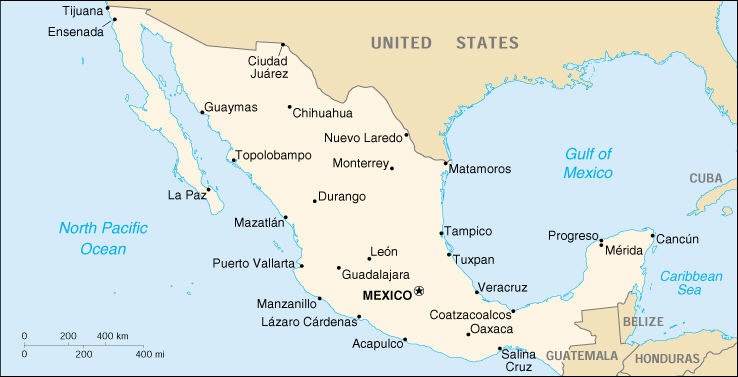
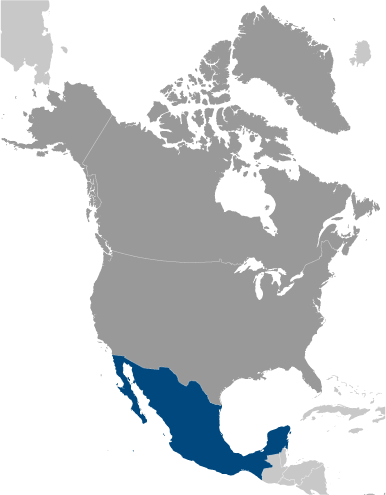
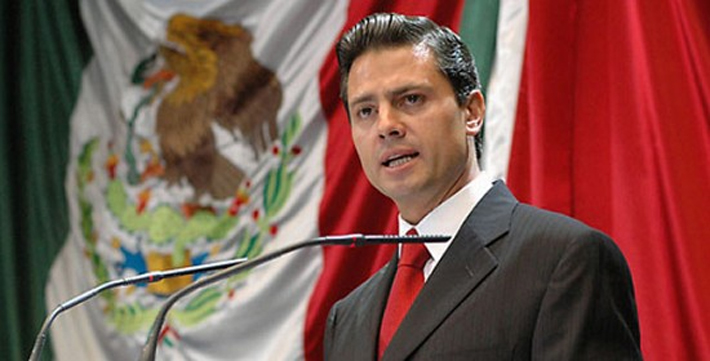
Enrique Pena Nieto
President since 1 December 2012
President since 1 December 2012