| NICARAGUA Republic of Nicaragua Republica de Nicaragua Joined United Nations: 24 October 1945 Human Rights as assured by their constitution Click here Updated 03 February 2013 |

| CAPITAL |
| POPULATION |
| CHIEF OF STATE |
| SELECTION PROCESS |
Managua
5,727,707 (July 2012 est.)
President and vice president elected on the same ticket by popular
vote for a five-year term (eligible for a second term so long as it is
not consecutive); election last held 6 November 2011
Next scheduled election: November 2016
vote for a five-year term (eligible for a second term so long as it is
not consecutive); election last held 6 November 2011
Next scheduled election: November 2016
HEAD OF GOVERNMENT
SELECTION PROCESS
According to the Nicaraguan Constitution, the President is both
the Chief of State and Head of Government
the Chief of State and Head of Government
| DECLARATION OF HUMAN RIGHTS |
| ETHNIC GROUPS |
Mestizo (mixed Amerindian and white) 69%, white 17%, black 9%, Amerindian 5%
| RELIGIONS |
Roman Catholic 58.5%, Evangelical 21.6%, Moravian 1.6%, Jehovah's Witness 0.9%, other 1.7%, none 15.7% (2005 census)
| GOVERNMENT STRUCTURE |
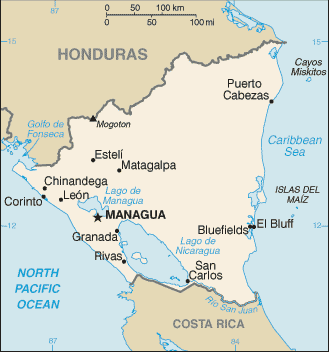
Republic with 15 departments (departamentos, singular - departamento) and 2 autonomous regions (regiones autonomistas, singular
- region autonoma); Legal system is a civil law system; Supreme Court may review administrative acts; accepts compulsory ICJ
jurisdiction
Executive: president and vice president elected on the same ticket by popular vote for a five-year term; election last held on 6
November 2011 (next to be held by November 2016)
Legislative: Unicameral National Assembly or Asamblea Nacional (92 seats; 90 members elected by proportional representation
and party lists to serve five-year terms; 1 seat for the previous president, 1 seat for the runner-up in previous presidential election)
elections: last held on 6 November 2011 (next to be held by November 2016)
Judicial: Supreme Court or Corte Suprema (16 judges elected for five-year terms by the National Assembly)
- region autonoma); Legal system is a civil law system; Supreme Court may review administrative acts; accepts compulsory ICJ
jurisdiction
Executive: president and vice president elected on the same ticket by popular vote for a five-year term; election last held on 6
November 2011 (next to be held by November 2016)
Legislative: Unicameral National Assembly or Asamblea Nacional (92 seats; 90 members elected by proportional representation
and party lists to serve five-year terms; 1 seat for the previous president, 1 seat for the runner-up in previous presidential election)
elections: last held on 6 November 2011 (next to be held by November 2016)
Judicial: Supreme Court or Corte Suprema (16 judges elected for five-year terms by the National Assembly)
| LANGUAGES |
Spanish 97.5% (official), Miskito 1.7%, other 0.8% (1995 census)
note: English and indigenous languages on Atlantic coast
note: English and indigenous languages on Atlantic coast
| BRIEF HISTORY |
The country's name is derived from Nicarao, the name of the Nahuatl-speaking tribe which inhabited the shores of Lake Nicaragua
before the Spanish conquest of the Americas, and the Spanish word Agua, meaning water, due to the presence of the large Lake
Cocibolca (or Lake Nicaragua) and Lake Managua (or Lake Xolotlán), as well as lagoons and rivers in the region. It is known that
Nicaragua was inhabited by Paleo-Indians as far back as 6000 years. The ancient footprints of Acahualinca confirms it along with
other archaeological evidences, mainly ceramics and statues made of volcanic stone like the ones found on the island of Zapatera
and petroglyphs found in Ometepe island. Most of Nicaragua's Caribbean lowlands area was inhabited by tribes that migrated north
from what is now Colombia. The various dialects and languages in this area are related to Chibcha, spoken by groups in northern
Colombia. Eastern Nicaragua's population consisted of extended families or tribes. Occupying the territory between Lake
Nicaragua and the Pacific Coast, the Niquirano were governed by chief Nicarao, or Nicaragua, a rich ruler who lived in
Nicaraocali, now the city of Rivas. The Chorotegano lived in the central region of Nicaragua. When the Spanish arrived in western
Nicaragua in the early 1500s, they found three principal tribes, each with a different culture and language: the Niquirano, the
Chorotegano, and the Chontal. Each one of these diverse groups occupied much of Nicaragua's territory, with independent
chieftains who ruled according to each group's laws and customs. Their weapons consisted of swords, lances, and arrows made out
of wood. Monarchy was the form of government of most tribes; the supreme ruler was the chief, or cacique, who, surrounded by
his princes, formed the nobility. In 1523, the first Spaniards entered the region of what would become known as Nicaragua. Gil
González Dávila with a small force reached its western portion after a trek through Costa Rica, following a near disaster while
exploring the western coast of Central America. He proceeded to explore the fertile western valleys and was impressed with the
Indian civilization he found there. He and his small army gathered gold and baptized Indians along the way. Eventually, they so
imposed upon the Indians that they were attacked and nearly annihilated. González Dávila returned to his expedition's starting point
in Panama and reported on his find, naming the area Nicaragua. Córdoba apparently came with the intention of colonization. In
1524, he established permanent settlements in the region, including two of Nicaragua's principal towns: Granada on Lake Nicaragua
and León east of Lake Managua. The inevitable clash between the Spanish forces did not impede their devastation of the indigenous
population. The Indian civilization was destroyed. The series of battles came to be known as The War of the Captains. By 1529,
the conquest of Nicaragua was complete. The land was parceled out to the conquistadores. The area of most interest was the
western portion. It included a wide, fertile valley with huge, freshwater lakes, a series of volcanoes, and volcanic lagoons. Many
Indians were soon enslaved to develop and maintain "estates" there. In 1538, the Viceroyalty of New Spain was established,
encompassing all of Mexico and Central America, except Panama. By 1570, the southern part of New Spain was designated the
Captaincy General of Guatemala. The area of Nicaragua was divided into administrative "parties" with León as the capital. In 1610,
the volcano known as Momotombo erupted, destroying the capital. It was rebuilt northwest of its original site. The history of
Nicaragua remained relatively static for three hundred years following the conquest. There were minor civil wars and rebellions, but
they were quickly suppressed. The region was subject to frequent raids by Dutch, French and British pirates; the city of Granada
was invaded twice, in 1658 and 1660. Nicaragua became a part of the Mexican Empire and then gained its independence as a part
of the United Provinces of Central America in 1821 and as an independent republic in its own right in 1838. The Mosquito Coast
based on Bluefields on the Atlantic was claimed by the United Kingdom (and its predecessor states) as a protectorate from 1655 to
1850; this was delegated to Honduras in 1859 and transferred to Nicaragua in 1860, though remained autonomous until 1894. In
1909 the United States provided political support to conservative-led forces rebelling against President Zelaya. U.S. motives
included differences over the proposed Nicaragua Canal, Nicaragua's potential as a destabilizing influence in the region, and
Zelaya's attempts to regulate foreign access to Nicaraguan natural resources. On November 18, 1909, U.S. warships were sent to
the area after 500 revolutionaries (including two Americans) were executed by order of Zelaya. The U.S. justified the intervention
by claiming to protect U.S. lives and property. Zelaya resigned later that year. U.S. Marines occupied Nicaragua from 1912 to
1933, except for a nine month period beginning in 1925. From 1927 until 1933, Gen. Augusto César Sandino led a sustained
guerrilla war first against the Conservative regime and subsequently against the U.S. Marines, who withdrew upon the establishment
of a new Liberal government. The revolt finally forced the United States to compromise and leave the country. With U.S. support
Anastasio Somoza García outmaneuvered his political opponents, including Sandino who was executed by National Guard officers
in February 1934, and took over the presidency in 1936. The Somoza family would rule until 1979. A major turning point was the
December 1972 Managua earthquake that killed over 10,000 people and left 500,000 homeless. A great deal of international relief
was sent to the nation. However, newspaperman Pedro Joaquin Chamorro began to write sensational stories alleging that Somoza
and the National Guard were embezzling relief money. This not only enraged the Nicaraguan people but also began to alienate the
United States. Violent opposition to the government, especially to its widespread corruption, was then renewed with the Sandinistas
being revived, this time backed by Cuba and the Soviet Union. As Nicaragua's government collapsed and the National Guard
commanders escaped with Somoza, the U.S. first promised and then denied them exile in Miami. The rebels advanced on the
capital victoriously. On July 19, 1979 a new government was proclaimed under a provisional junta headed by Daniel Ortega (then
age 35) and including Violeta Chamorro, Pedro's widow. The Sandinistas were victorious in the national election of November 4,
1984. Although the election was certified as "free and fair" by international observers, there were many groups, including the
Nicaraguan political opposition and the Reagan administration, who claimed political restrictions placed on the opposition by the
government. In 1982, legislation (the Boland Amendment) was enacted in the U.S. to prohibit further direct aid to the Contras.
Reagan's officials attempted to illegally supply them out of the proceeds of arms sales to Iran and third party donations, triggering
the Iran-Contra Affair of 1986-87. Mutual exhaustion, Sandinista fears of Contra unity and military success, and mediation by other
regional governments led to the Sapoa ceasefire between Sandinistas and Contras (March 23, 1988) and subsequent agreements
(February, August 1989) for Contra reintegration into Nicaraguan society preparatory to general elections. During President
Chamorro's nearly 7 years in office, her government achieved major progress toward consolidating democratic institutions,
advancing national reconciliation, stabilizing the economy, privatizing state-owned enterprises, and reducing human rights violations.
Presidential and legislative elections were held on November 4, 2001--the country's fourth free and fair elections since 1990.
President Bolaños was inaugurated on January 10, 2002. During the campaign Bolaños promised to reinvigorate the economy,
create jobs, fight corruption and support the war against terrorism. In November 2006 the presidential election was won by Daniel
Ortega, bringing him back into power after 16 years of opposition. International observers, including the Carter Center, judged the
election to be free and fair. The country has partly rebuilt its economy during the 1990s, but was hit hard by Hurricane Mitch at the
end of October 1998, almost exactly a decade after the similarly destructive Hurricane Joan and again in 2007 it was hit by
Hurricane Felix a category 5 hurricane when it made landfall. On 6 March 2008, following the 2008 Andean diplomatic crisis,
Ortega announced that Nicaragua was breaking diplomatic ties with Colombia "in solidarity with the Ecuadoran people". On 2
September 2008, during ceremonies for the 29th anniversary of the founding of the Nicaraguan army, Ortega announced that
"Nicaragua recognizes the independence of South Ossetia and Abkhazia and fully supports the Russian government's position."
Ortega's decision made Nicaragua the second country after Russia to recognize the independence of Abkhazia and South Ossetia
from Georgia. During the 2011 Libyan civil war, Ortega was among the very few leaders that clearly spoke out in defense of the
embattled Muammar Gaddafi. Ortega was re-elected president with a vote on November 6 and confirmation on November 16,
2011.
Source: Wikipedia: History of Nicaragua
before the Spanish conquest of the Americas, and the Spanish word Agua, meaning water, due to the presence of the large Lake
Cocibolca (or Lake Nicaragua) and Lake Managua (or Lake Xolotlán), as well as lagoons and rivers in the region. It is known that
Nicaragua was inhabited by Paleo-Indians as far back as 6000 years. The ancient footprints of Acahualinca confirms it along with
other archaeological evidences, mainly ceramics and statues made of volcanic stone like the ones found on the island of Zapatera
and petroglyphs found in Ometepe island. Most of Nicaragua's Caribbean lowlands area was inhabited by tribes that migrated north
from what is now Colombia. The various dialects and languages in this area are related to Chibcha, spoken by groups in northern
Colombia. Eastern Nicaragua's population consisted of extended families or tribes. Occupying the territory between Lake
Nicaragua and the Pacific Coast, the Niquirano were governed by chief Nicarao, or Nicaragua, a rich ruler who lived in
Nicaraocali, now the city of Rivas. The Chorotegano lived in the central region of Nicaragua. When the Spanish arrived in western
Nicaragua in the early 1500s, they found three principal tribes, each with a different culture and language: the Niquirano, the
Chorotegano, and the Chontal. Each one of these diverse groups occupied much of Nicaragua's territory, with independent
chieftains who ruled according to each group's laws and customs. Their weapons consisted of swords, lances, and arrows made out
of wood. Monarchy was the form of government of most tribes; the supreme ruler was the chief, or cacique, who, surrounded by
his princes, formed the nobility. In 1523, the first Spaniards entered the region of what would become known as Nicaragua. Gil
González Dávila with a small force reached its western portion after a trek through Costa Rica, following a near disaster while
exploring the western coast of Central America. He proceeded to explore the fertile western valleys and was impressed with the
Indian civilization he found there. He and his small army gathered gold and baptized Indians along the way. Eventually, they so
imposed upon the Indians that they were attacked and nearly annihilated. González Dávila returned to his expedition's starting point
in Panama and reported on his find, naming the area Nicaragua. Córdoba apparently came with the intention of colonization. In
1524, he established permanent settlements in the region, including two of Nicaragua's principal towns: Granada on Lake Nicaragua
and León east of Lake Managua. The inevitable clash between the Spanish forces did not impede their devastation of the indigenous
population. The Indian civilization was destroyed. The series of battles came to be known as The War of the Captains. By 1529,
the conquest of Nicaragua was complete. The land was parceled out to the conquistadores. The area of most interest was the
western portion. It included a wide, fertile valley with huge, freshwater lakes, a series of volcanoes, and volcanic lagoons. Many
Indians were soon enslaved to develop and maintain "estates" there. In 1538, the Viceroyalty of New Spain was established,
encompassing all of Mexico and Central America, except Panama. By 1570, the southern part of New Spain was designated the
Captaincy General of Guatemala. The area of Nicaragua was divided into administrative "parties" with León as the capital. In 1610,
the volcano known as Momotombo erupted, destroying the capital. It was rebuilt northwest of its original site. The history of
Nicaragua remained relatively static for three hundred years following the conquest. There were minor civil wars and rebellions, but
they were quickly suppressed. The region was subject to frequent raids by Dutch, French and British pirates; the city of Granada
was invaded twice, in 1658 and 1660. Nicaragua became a part of the Mexican Empire and then gained its independence as a part
of the United Provinces of Central America in 1821 and as an independent republic in its own right in 1838. The Mosquito Coast
based on Bluefields on the Atlantic was claimed by the United Kingdom (and its predecessor states) as a protectorate from 1655 to
1850; this was delegated to Honduras in 1859 and transferred to Nicaragua in 1860, though remained autonomous until 1894. In
1909 the United States provided political support to conservative-led forces rebelling against President Zelaya. U.S. motives
included differences over the proposed Nicaragua Canal, Nicaragua's potential as a destabilizing influence in the region, and
Zelaya's attempts to regulate foreign access to Nicaraguan natural resources. On November 18, 1909, U.S. warships were sent to
the area after 500 revolutionaries (including two Americans) were executed by order of Zelaya. The U.S. justified the intervention
by claiming to protect U.S. lives and property. Zelaya resigned later that year. U.S. Marines occupied Nicaragua from 1912 to
1933, except for a nine month period beginning in 1925. From 1927 until 1933, Gen. Augusto César Sandino led a sustained
guerrilla war first against the Conservative regime and subsequently against the U.S. Marines, who withdrew upon the establishment
of a new Liberal government. The revolt finally forced the United States to compromise and leave the country. With U.S. support
Anastasio Somoza García outmaneuvered his political opponents, including Sandino who was executed by National Guard officers
in February 1934, and took over the presidency in 1936. The Somoza family would rule until 1979. A major turning point was the
December 1972 Managua earthquake that killed over 10,000 people and left 500,000 homeless. A great deal of international relief
was sent to the nation. However, newspaperman Pedro Joaquin Chamorro began to write sensational stories alleging that Somoza
and the National Guard were embezzling relief money. This not only enraged the Nicaraguan people but also began to alienate the
United States. Violent opposition to the government, especially to its widespread corruption, was then renewed with the Sandinistas
being revived, this time backed by Cuba and the Soviet Union. As Nicaragua's government collapsed and the National Guard
commanders escaped with Somoza, the U.S. first promised and then denied them exile in Miami. The rebels advanced on the
capital victoriously. On July 19, 1979 a new government was proclaimed under a provisional junta headed by Daniel Ortega (then
age 35) and including Violeta Chamorro, Pedro's widow. The Sandinistas were victorious in the national election of November 4,
1984. Although the election was certified as "free and fair" by international observers, there were many groups, including the
Nicaraguan political opposition and the Reagan administration, who claimed political restrictions placed on the opposition by the
government. In 1982, legislation (the Boland Amendment) was enacted in the U.S. to prohibit further direct aid to the Contras.
Reagan's officials attempted to illegally supply them out of the proceeds of arms sales to Iran and third party donations, triggering
the Iran-Contra Affair of 1986-87. Mutual exhaustion, Sandinista fears of Contra unity and military success, and mediation by other
regional governments led to the Sapoa ceasefire between Sandinistas and Contras (March 23, 1988) and subsequent agreements
(February, August 1989) for Contra reintegration into Nicaraguan society preparatory to general elections. During President
Chamorro's nearly 7 years in office, her government achieved major progress toward consolidating democratic institutions,
advancing national reconciliation, stabilizing the economy, privatizing state-owned enterprises, and reducing human rights violations.
Presidential and legislative elections were held on November 4, 2001--the country's fourth free and fair elections since 1990.
President Bolaños was inaugurated on January 10, 2002. During the campaign Bolaños promised to reinvigorate the economy,
create jobs, fight corruption and support the war against terrorism. In November 2006 the presidential election was won by Daniel
Ortega, bringing him back into power after 16 years of opposition. International observers, including the Carter Center, judged the
election to be free and fair. The country has partly rebuilt its economy during the 1990s, but was hit hard by Hurricane Mitch at the
end of October 1998, almost exactly a decade after the similarly destructive Hurricane Joan and again in 2007 it was hit by
Hurricane Felix a category 5 hurricane when it made landfall. On 6 March 2008, following the 2008 Andean diplomatic crisis,
Ortega announced that Nicaragua was breaking diplomatic ties with Colombia "in solidarity with the Ecuadoran people". On 2
September 2008, during ceremonies for the 29th anniversary of the founding of the Nicaraguan army, Ortega announced that
"Nicaragua recognizes the independence of South Ossetia and Abkhazia and fully supports the Russian government's position."
Ortega's decision made Nicaragua the second country after Russia to recognize the independence of Abkhazia and South Ossetia
from Georgia. During the 2011 Libyan civil war, Ortega was among the very few leaders that clearly spoke out in defense of the
embattled Muammar Gaddafi. Ortega was re-elected president with a vote on November 6 and confirmation on November 16,
2011.
Source: Wikipedia: History of Nicaragua
| ECONOMIC OVERVIEW |
Nicaragua, the poorest country in Central America and the second poorest in the Hemisphere, has widespread underemployment
and poverty. The US-Central America Free Trade Agreement (CAFTA) has been in effect since April 2006 and has expanded
export opportunities for many agricultural and manufactured goods. Textiles and apparel account for nearly 60% of Nicaragua's
exports, but increases in the minimum wage during the ORTEGA administration will likely erode its comparative advantage in this
industry. ORTEGA's promotion of mixed business initiatives, owned by the Nicaraguan and Venezuelan state oil firms, together with
the weak rule of law, could undermine the investment climate for domestic and international private firms in the near-term.
Nicaragua relies on international economic assistance to meet internal- and external-debt financing obligations. Foreign donors have
curtailed this funding, however, in response to November 2008 electoral fraud. In early 2004, Nicaragua secured some $4.5 billion
in foreign debt reduction under the Heavily Indebted Poor Countries (HIPC) initiative. Managua still struggles with a high public
debt burden, however, it succeeded in reducing that burden in 2011. The economy grew at a rate of about 4% in 2012.
Source: CIA World Factbook (select Nicaragua)
and poverty. The US-Central America Free Trade Agreement (CAFTA) has been in effect since April 2006 and has expanded
export opportunities for many agricultural and manufactured goods. Textiles and apparel account for nearly 60% of Nicaragua's
exports, but increases in the minimum wage during the ORTEGA administration will likely erode its comparative advantage in this
industry. ORTEGA's promotion of mixed business initiatives, owned by the Nicaraguan and Venezuelan state oil firms, together with
the weak rule of law, could undermine the investment climate for domestic and international private firms in the near-term.
Nicaragua relies on international economic assistance to meet internal- and external-debt financing obligations. Foreign donors have
curtailed this funding, however, in response to November 2008 electoral fraud. In early 2004, Nicaragua secured some $4.5 billion
in foreign debt reduction under the Heavily Indebted Poor Countries (HIPC) initiative. Managua still struggles with a high public
debt burden, however, it succeeded in reducing that burden in 2011. The economy grew at a rate of about 4% in 2012.
Source: CIA World Factbook (select Nicaragua)
| POLITICAL CLIMATE |
In 1995, the executive and legislative branches negotiated a reform of the 1987 Sandinista constitution which gave extensive new
powers and independence to the National Assembly, including permitting the Assembly to override a presidential veto with a simple
majority vote and eliminating the president's ability to pocket veto a bill. Both the president and the members of the unicameral
National Assembly are elected to concurrent five-year terms.
The National Assembly (Asamblea Nacional) consists of 90 deputies elected from party lists drawn at the department and national
level, plus the outgoing president and the runner-up in the presidential race, for a total of 92. In the 2001 elections, the PLC and its
allies won 52 seats, the FSLN won 37 seats, and the Conservative Party 1 seat. In addition, ex-president Arnoldo Alemán
assumed a seat, as did runner-up Daniel Ortega. During the 2002 legislative term, Alemán would have served as President of the
National Assembly, however, he and other members of his family were charged with corruption in December 2002, and on 7
December 2003 he was sentenced to a 20-year prison term for a string of crimes including money laundering, embezzlement and
corruption. He won reelection in 2011.
Freedom of speech is a right guaranteed by the Nicaraguan constitution and vigorously exercised by its people. Diverse viewpoints
are freely and openly discussed in the media and in academia. There is no state censorship in Nicaragua. Other constitutional
freedoms include peaceful assembly and association, freedom of religion, and freedom of movement within the country, as well as
foreign travel, emigration, and repatriation. The government also permits domestic and international human rights monitors to
operate freely in Nicaragua. The constitution prohibits discrimination based on birth, nationality, political belief, race, gender,
language, religion, opinion, national origin, economic or social condition. However, homosexuality is un-criminalized. All public and
private sector workers, except the military and the police, are entitled to form and join unions of their own choosing, and they
exercise this right extensively. Nearly half of Nicaragua's work force, including agricultural workers, is unionized. Workers have the
right to strike. Collective bargaining is becoming more common in the private sector.
Source: Wikipedia: Politics of Nicaragua
powers and independence to the National Assembly, including permitting the Assembly to override a presidential veto with a simple
majority vote and eliminating the president's ability to pocket veto a bill. Both the president and the members of the unicameral
National Assembly are elected to concurrent five-year terms.
The National Assembly (Asamblea Nacional) consists of 90 deputies elected from party lists drawn at the department and national
level, plus the outgoing president and the runner-up in the presidential race, for a total of 92. In the 2001 elections, the PLC and its
allies won 52 seats, the FSLN won 37 seats, and the Conservative Party 1 seat. In addition, ex-president Arnoldo Alemán
assumed a seat, as did runner-up Daniel Ortega. During the 2002 legislative term, Alemán would have served as President of the
National Assembly, however, he and other members of his family were charged with corruption in December 2002, and on 7
December 2003 he was sentenced to a 20-year prison term for a string of crimes including money laundering, embezzlement and
corruption. He won reelection in 2011.
Freedom of speech is a right guaranteed by the Nicaraguan constitution and vigorously exercised by its people. Diverse viewpoints
are freely and openly discussed in the media and in academia. There is no state censorship in Nicaragua. Other constitutional
freedoms include peaceful assembly and association, freedom of religion, and freedom of movement within the country, as well as
foreign travel, emigration, and repatriation. The government also permits domestic and international human rights monitors to
operate freely in Nicaragua. The constitution prohibits discrimination based on birth, nationality, political belief, race, gender,
language, religion, opinion, national origin, economic or social condition. However, homosexuality is un-criminalized. All public and
private sector workers, except the military and the police, are entitled to form and join unions of their own choosing, and they
exercise this right extensively. Nearly half of Nicaragua's work force, including agricultural workers, is unionized. Workers have the
right to strike. Collective bargaining is becoming more common in the private sector.
Source: Wikipedia: Politics of Nicaragua
| INTERNATIONAL DISPUTES |
Memorials and counter-memorials were filed by the parties in Nicaragua's 1999 and 2001 proceedings against Honduras and
Colombia at the ICJ over the maritime boundary and territorial claims in the western Caribbean Sea, final public hearings are
scheduled for 2007; the 1992 ICJ ruling for El Salvador and Honduras advised a tripartite resolution to establish a maritime
boundary in the Gulf of Fonseca, which considers Honduran access to the Pacific; legal dispute over navigational rights of San Juan
River on border with Costa Rica
Colombia at the ICJ over the maritime boundary and territorial claims in the western Caribbean Sea, final public hearings are
scheduled for 2007; the 1992 ICJ ruling for El Salvador and Honduras advised a tripartite resolution to establish a maritime
boundary in the Gulf of Fonseca, which considers Honduran access to the Pacific; legal dispute over navigational rights of San Juan
River on border with Costa Rica


| REFUGEES AND INTERNALLY DISPLACED PERSONS (IDPS) |
None reported.
| ILLICIT DRUGS |
Transshipment point for cocaine destined for the US and transshipment point for arms-for-drugs dealing.
| HUMAN RIGHTS STATEMENTS, ANALYSIS AND CRITIQUES |
2011 Human Rights Report: Nicaragua
Bureau of Democracy, Human Rights, and Labor
2011 Country Reports on Human Rights Practices
May 25, 2012
Nicaragua is a multiparty constitutional republic by law, but in recent years political power has been concentrated in a single party, with
an increasingly authoritarian executive exercising significant control over the legislative, judicial, and electoral branches. On November 6,
the Supreme Electoral Council (CSE) announced that Daniel Ortega Saavedra of the Sandinista National Liberation Front (FSLN) had
been reelected as president in elections that international and domestic observers characterized as seriously flawed. International and
domestic organizations also raised concerns regarding the constitutional legitimacy of Ortega’s reelection. Security forces generally
reported to civilian authorities, but in several instances elements of the security forces acted independently of government control.
The principal human rights abuses during the year were restrictions on citizens’ right to vote, violence against women, and police abuse
of suspects during arrest and detention.
Additional significant human rights abuses included occasional unlawful killings by security forces; harsh and overcrowded prison
conditions; arbitrary and lengthy pretrial detention; widespread corruption and politicization of the membership and actions of the CSE,
the Supreme Court of Justice (CSJ), and other government organs, as well as a lack of respect for the rule of law by these bodies;
withholding of accreditation from election-monitoring nongovernmental organizations (NGOs); and erosion of freedom of speech and
press, including government intimidation and harassment of journalists and independent media. There were also reports of corrupt
practices; government harassment and intimidation of NGOs; trafficking in persons; discrimination against ethnic minorities and
indigenous persons and communities; societal discrimination against and abuse of lesbian, gay, bisexual, and transgender (LGBT)
individuals; discrimination against persons with HIV/AIDS; and violations of trade union rights.
The government occasionally took steps to prosecute officials who committed abuses, whether in the security services or elsewhere in
government. However, impunity was a widespread problem.
Click here to read more »
Bureau of Democracy, Human Rights, and Labor
2011 Country Reports on Human Rights Practices
May 25, 2012
Nicaragua is a multiparty constitutional republic by law, but in recent years political power has been concentrated in a single party, with
an increasingly authoritarian executive exercising significant control over the legislative, judicial, and electoral branches. On November 6,
the Supreme Electoral Council (CSE) announced that Daniel Ortega Saavedra of the Sandinista National Liberation Front (FSLN) had
been reelected as president in elections that international and domestic observers characterized as seriously flawed. International and
domestic organizations also raised concerns regarding the constitutional legitimacy of Ortega’s reelection. Security forces generally
reported to civilian authorities, but in several instances elements of the security forces acted independently of government control.
The principal human rights abuses during the year were restrictions on citizens’ right to vote, violence against women, and police abuse
of suspects during arrest and detention.
Additional significant human rights abuses included occasional unlawful killings by security forces; harsh and overcrowded prison
conditions; arbitrary and lengthy pretrial detention; widespread corruption and politicization of the membership and actions of the CSE,
the Supreme Court of Justice (CSJ), and other government organs, as well as a lack of respect for the rule of law by these bodies;
withholding of accreditation from election-monitoring nongovernmental organizations (NGOs); and erosion of freedom of speech and
press, including government intimidation and harassment of journalists and independent media. There were also reports of corrupt
practices; government harassment and intimidation of NGOs; trafficking in persons; discrimination against ethnic minorities and
indigenous persons and communities; societal discrimination against and abuse of lesbian, gay, bisexual, and transgender (LGBT)
individuals; discrimination against persons with HIV/AIDS; and violations of trade union rights.
The government occasionally took steps to prosecute officials who committed abuses, whether in the security services or elsewhere in
government. However, impunity was a widespread problem.
Click here to read more »
1 October 2010
Committee on the Rights of the Child
Fifty-fifth session
1 September – 13 October 2010
Consideration of reports submitted by states parties under article 44 of the convention
Concluding Observations: Nicaragua
A. Introduction
2. The Committee welcomes the submission of the fourth periodic report as well as the written replies to its list of issues
(CRC/C/NIC/Q/4/Add.1). The Committee appreciates the presence of a high level delegation and the open and positive dialogue it
conducted, which allowed a better understanding of the situation of children in the State party.
3. The Committee reminds the State party that these concluding observations should be read in conjunction with its concluding
observations adopted on 1 October 2010 on the State party’s initial reports to the Optional Protocols on the sale of children, child
prostitution and child pornography and on the involvement of children in armed conflict, contained in CRC/C/OPSC/NIC/CO/1 and
CRC/C/OPAC/NIC/CO/1.
B. Follow-up measures undertaken and progress achieved by the State party
4. The Committee welcomes a number of positive developments in the reporting period, including the adoption of legislative
measures taken with a view to implementing the Convention, such as:
(a) The Framework Law on the Right to Food (2009);
(b) The Special Law for the Promotion of Housing Construction and Access to Social Housing (2009);
C. Main areas of concern and recommendations
1. General Measures of Implementation(arts. 4, 42 and 44, paragraph 6 of the Convention)
The Committee’s previous recommendations
6. The Committee notes with concern that various concerns and recommendations made upon the consideration of the State party’s
third periodic report (CRC/C/15/Add.265, 21 September 2005) have not been given sufficient follow-up. The Committee notes that those
concerns and recommendations are reiterated in the present document.
7. The Committee urges the State party to take all necessary measures to address those recommendations contained in the
concluding observations on the third periodic report that have not been sufficiently implemented, including those related to
implementation of legislation, National Plan of Action and coordination, data collection, the age for marriage, birth registration, corporal
punishment, abuse and neglect and teenage pregnancies, and to provide adequate follow-up to the recommendations contained in the
present concluding observations on the fourth periodic report.
Click here to read more »
Committee on the Rights of the Child
Fifty-fifth session
1 September – 13 October 2010
Consideration of reports submitted by states parties under article 44 of the convention
Concluding Observations: Nicaragua
A. Introduction
2. The Committee welcomes the submission of the fourth periodic report as well as the written replies to its list of issues
(CRC/C/NIC/Q/4/Add.1). The Committee appreciates the presence of a high level delegation and the open and positive dialogue it
conducted, which allowed a better understanding of the situation of children in the State party.
3. The Committee reminds the State party that these concluding observations should be read in conjunction with its concluding
observations adopted on 1 October 2010 on the State party’s initial reports to the Optional Protocols on the sale of children, child
prostitution and child pornography and on the involvement of children in armed conflict, contained in CRC/C/OPSC/NIC/CO/1 and
CRC/C/OPAC/NIC/CO/1.
B. Follow-up measures undertaken and progress achieved by the State party
4. The Committee welcomes a number of positive developments in the reporting period, including the adoption of legislative
measures taken with a view to implementing the Convention, such as:
(a) The Framework Law on the Right to Food (2009);
(b) The Special Law for the Promotion of Housing Construction and Access to Social Housing (2009);
C. Main areas of concern and recommendations
1. General Measures of Implementation(arts. 4, 42 and 44, paragraph 6 of the Convention)
The Committee’s previous recommendations
6. The Committee notes with concern that various concerns and recommendations made upon the consideration of the State party’s
third periodic report (CRC/C/15/Add.265, 21 September 2005) have not been given sufficient follow-up. The Committee notes that those
concerns and recommendations are reiterated in the present document.
7. The Committee urges the State party to take all necessary measures to address those recommendations contained in the
concluding observations on the third periodic report that have not been sufficiently implemented, including those related to
implementation of legislation, National Plan of Action and coordination, data collection, the age for marriage, birth registration, corporal
punishment, abuse and neglect and teenage pregnancies, and to provide adequate follow-up to the recommendations contained in the
present concluding observations on the fourth periodic report.
Click here to read more »
Freedom In The World 2012 Report
Political Rights Score: 5
Civil Liberties Score: 4
Status: Partly Free
Overview
In November 2011, President Daniel Ortega was re-elected by an overwhelming margin and his party, the Sandanista National Liberation
Front, won a two-thirds majority in the National Assembly. There were concerns about the legality of Ortega’s candidacy, as well as
transparency issues and other irregularities during the election. Although international observers found no evidence of widespread fraud,
serious concerns remained about the politicization of institutions and the rule of law.
n January 2010, Ortega decreed that appointed officials could remain in their posts until the National Assembly selected replacements,
even if that occurred after the end of their terms. The decree affected 25 high-level posts, including the presidency and magistrates of
the CSE, who had supported allowing Ortega to run for a second consecutive presidential term in 2011. The struggle over these
appointments sent Nicaragua into a political crisis in 2010, as members of the National Assembly were unable to achieve the majority
necessary to select replacements. In keeping with Ortega’s decree, many officials remained in their posts after their terms expired in
June, including the CSE president and members of the Supreme Court, which moved ahead with preparations for the 2011 elections.
Ortega’s candidacy for another term was officially approved by the CSE in April 2011, effectively ending legal challenges to his
candidacy. Fabio Gadea Mantilla’s Nicaraguan Unity for Hope (UNE) attempted to unite the opposition against Ortega, but former
president Alemán refused to abandon his candidacy. Instead, Gadea became the candidate for the Liberal Independent Party (PLI)
coalition, which united parties from Montealegre’s ALN and the MRS. Alemán was selected as the presidential candidate for the PLC-
Conservative Party alliance.
The CSE delayed issuing invitations to international observer teams until August 2011, significantly reducing the time available for
observers to conduct their work. As with the 2008 municipal elections, several domestic observer groups with significant experience in
electoral observation did not receive accreditation, though several international observer missions that were excluded in 2008—including
the EU, the Organization of American States, and the Carter Center—were invited to observe. There was some controversy over the
rules for accompaniment issued by the CSE, which some observer teams feared would limit their capacity to effectively observe the
electoral process.
Ortega won the election in November 2011 with almost 63 percent of the vote, followed by Gadea with 31 percent and Alemán with
almost 6 percent. The FSLN won 63 seats in the National Assembly, followed by the PLI with 27 and the PLC with 2. Though
international observation teams noted irregularities and lamented a lack of transparency, there was no conclusive evidence of fraud.
Observers did, however, report issues with the distribution of voting cards, the voter registry, difficulty accessing polling places, and
concerns about the composition of electoral boards. Both Gadea and Alemán denounced the outcome and refused to recognize the
results. Several protestors were killed and dozens of police officers were injured in post-election violence between supporters of the
government and the opposition.
Click here to read more »
Political Rights Score: 5
Civil Liberties Score: 4
Status: Partly Free
Overview
In November 2011, President Daniel Ortega was re-elected by an overwhelming margin and his party, the Sandanista National Liberation
Front, won a two-thirds majority in the National Assembly. There were concerns about the legality of Ortega’s candidacy, as well as
transparency issues and other irregularities during the election. Although international observers found no evidence of widespread fraud,
serious concerns remained about the politicization of institutions and the rule of law.
n January 2010, Ortega decreed that appointed officials could remain in their posts until the National Assembly selected replacements,
even if that occurred after the end of their terms. The decree affected 25 high-level posts, including the presidency and magistrates of
the CSE, who had supported allowing Ortega to run for a second consecutive presidential term in 2011. The struggle over these
appointments sent Nicaragua into a political crisis in 2010, as members of the National Assembly were unable to achieve the majority
necessary to select replacements. In keeping with Ortega’s decree, many officials remained in their posts after their terms expired in
June, including the CSE president and members of the Supreme Court, which moved ahead with preparations for the 2011 elections.
Ortega’s candidacy for another term was officially approved by the CSE in April 2011, effectively ending legal challenges to his
candidacy. Fabio Gadea Mantilla’s Nicaraguan Unity for Hope (UNE) attempted to unite the opposition against Ortega, but former
president Alemán refused to abandon his candidacy. Instead, Gadea became the candidate for the Liberal Independent Party (PLI)
coalition, which united parties from Montealegre’s ALN and the MRS. Alemán was selected as the presidential candidate for the PLC-
Conservative Party alliance.
The CSE delayed issuing invitations to international observer teams until August 2011, significantly reducing the time available for
observers to conduct their work. As with the 2008 municipal elections, several domestic observer groups with significant experience in
electoral observation did not receive accreditation, though several international observer missions that were excluded in 2008—including
the EU, the Organization of American States, and the Carter Center—were invited to observe. There was some controversy over the
rules for accompaniment issued by the CSE, which some observer teams feared would limit their capacity to effectively observe the
electoral process.
Ortega won the election in November 2011 with almost 63 percent of the vote, followed by Gadea with 31 percent and Alemán with
almost 6 percent. The FSLN won 63 seats in the National Assembly, followed by the PLI with 27 and the PLC with 2. Though
international observation teams noted irregularities and lamented a lack of transparency, there was no conclusive evidence of fraud.
Observers did, however, report issues with the distribution of voting cards, the voter registry, difficulty accessing polling places, and
concerns about the composition of electoral boards. Both Gadea and Alemán denounced the outcome and refused to recognize the
results. Several protestors were killed and dozens of police officers were injured in post-election violence between supporters of the
government and the opposition.
Click here to read more »
Report 2012: No longer business as usual for tyranny and injustice ...
24 May 2012
Nicaragua
At least four people died and scores more were injured in post-election violence. Rape and sexual abuse were widespread. The total ban
on all forms of abortion remained in force. The independence of the judiciary was called into question.
Background
In the wake of the November elections, violence erupted amid widespread allegations of electoral fraud. At least four people were killed
and scores were injured in confrontations across the country between supporters and opponents of Daniel Ortega, who was re-elected
for a third term as President.
Violence against women and girls
Rape and sexual abuse remained a concern. Despite this, in July the Supreme Court of Justice reduced the sentence imposed on Farinton
Reyes for the rape in 2009 of his co-worker, Fátima Hernández, to four years’ imprisonment. The Court sought to justify its decision on
the grounds that Farinton Reyes had committed the crime while under the influence of alcohol and in a state of sexual excitement that he
could not control. The judges also argued that Fátima Hernández had acted permissively and co-operated in the rape.
Sexual and reproductive rights
The total ban on all forms of abortion remained in force, giving rise to serious violations of the rights of women and girls. The revised
criminal laws, which came into force in 2008, allow for no exceptions to the ban. As a result women and girls who were pregnant as a
result of rape or whose lives or health were threatened by continued pregnancy were denied the right to seek safe and legal abortion
services. All abortion remained a criminal offence and anyone seeking, or assisting someone seeking, an abortion risked prosecution.
In March, the state was urged by the Inter-American Commission on Human Rights to take action to put an end to sexual violence
against women and girls and to repeal the total ban on abortion.
Freedom of expression
Reports of intimidation of media workers increased in the context of a heated political debate in the run-up to the November presidential
elections.
Click here to read more »
24 May 2012
Nicaragua
At least four people died and scores more were injured in post-election violence. Rape and sexual abuse were widespread. The total ban
on all forms of abortion remained in force. The independence of the judiciary was called into question.
Background
In the wake of the November elections, violence erupted amid widespread allegations of electoral fraud. At least four people were killed
and scores were injured in confrontations across the country between supporters and opponents of Daniel Ortega, who was re-elected
for a third term as President.
Violence against women and girls
Rape and sexual abuse remained a concern. Despite this, in July the Supreme Court of Justice reduced the sentence imposed on Farinton
Reyes for the rape in 2009 of his co-worker, Fátima Hernández, to four years’ imprisonment. The Court sought to justify its decision on
the grounds that Farinton Reyes had committed the crime while under the influence of alcohol and in a state of sexual excitement that he
could not control. The judges also argued that Fátima Hernández had acted permissively and co-operated in the rape.
Sexual and reproductive rights
The total ban on all forms of abortion remained in force, giving rise to serious violations of the rights of women and girls. The revised
criminal laws, which came into force in 2008, allow for no exceptions to the ban. As a result women and girls who were pregnant as a
result of rape or whose lives or health were threatened by continued pregnancy were denied the right to seek safe and legal abortion
services. All abortion remained a criminal offence and anyone seeking, or assisting someone seeking, an abortion risked prosecution.
In March, the state was urged by the Inter-American Commission on Human Rights to take action to put an end to sexual violence
against women and girls and to repeal the total ban on abortion.
Freedom of expression
Reports of intimidation of media workers increased in the context of a heated political debate in the run-up to the November presidential
elections.
Click here to read more »
Uruguay: New Abortion Law Breaks Ground for Women’s Rights
But Burdensome Procedures Could Undermine Access
October 26, 2012
In a historic move this week, Uruguayan President José Mujica has signed into law a bill that waives criminal penalties for abortion in the
first 12 weeks of gestation, with certain procedural requirements, and in the first 14 weeks of gestation in the cases of rape.
The law marks a significant development in realizing women’s human rights and preventing unsafe, clandestine abortions in the region.
“This bill is an important step forward to prevent the life-threatening risks of clandestine abortion,” said Amanda Klasing, women’s
rights researcher at Human Rights Watch. “Uruguay’s neighbors should take note of this progress. As sensitive an issue as abortion is,
governments can and should pass laws that save women’s lives.”
Latin American countries have some of the most restrictive abortion policies in the world. Several countries, such as Chile, El Salvador,
and Nicaragua have absolute bans on abortion with no exceptions whatsoever. These highly restrictive laws fuel unsafe, clandestine
abortions, putting women’s lives at risk. The United Nation’s World Health Organization estimates that approximately 13 percent of
maternal deaths in the region are from unsafe abortion.
Mujica had promised he would sign the bill passed by the Senate to waive penalties for abortion with few restrictions in December 2011.
However, it took until September 2012 for the bill to pass through the Chamber of Deputies, the lower house of Uruguay’s legislature.
The lower house made significant changes to the Senate bill, adding procedural requirements that must be met for women to access
abortions. The bill passed by a margin of just one vote, with 50 deputies in favor and 49 against. In October, Uruguay’s senate ratified
the Chamber of Deputies’ version of the bill, clearing the way for the president’s signature. The final version retains abortion as a crime
under the criminal code, but waives penalties.
The law requires women seeking abortions to inform a doctor of the circumstances of the conception and the economic, social, or
family hardships which would prevent her from continuing the pregnancy. The same or next day, the doctor is required to consult an
interdisciplinary team of at least three professionals, including at least one gynecologist, one mental health professional, and one specialist
in social support. The interdisciplinary team must meet with the woman to inform her about the law, the process of abortion, and any
inherent risks of the procedure. It will also inform her of alternatives to abortion and offer psycho-social support and information.
Click here to read more »
But Burdensome Procedures Could Undermine Access
October 26, 2012
In a historic move this week, Uruguayan President José Mujica has signed into law a bill that waives criminal penalties for abortion in the
first 12 weeks of gestation, with certain procedural requirements, and in the first 14 weeks of gestation in the cases of rape.
The law marks a significant development in realizing women’s human rights and preventing unsafe, clandestine abortions in the region.
“This bill is an important step forward to prevent the life-threatening risks of clandestine abortion,” said Amanda Klasing, women’s
rights researcher at Human Rights Watch. “Uruguay’s neighbors should take note of this progress. As sensitive an issue as abortion is,
governments can and should pass laws that save women’s lives.”
Latin American countries have some of the most restrictive abortion policies in the world. Several countries, such as Chile, El Salvador,
and Nicaragua have absolute bans on abortion with no exceptions whatsoever. These highly restrictive laws fuel unsafe, clandestine
abortions, putting women’s lives at risk. The United Nation’s World Health Organization estimates that approximately 13 percent of
maternal deaths in the region are from unsafe abortion.
Mujica had promised he would sign the bill passed by the Senate to waive penalties for abortion with few restrictions in December 2011.
However, it took until September 2012 for the bill to pass through the Chamber of Deputies, the lower house of Uruguay’s legislature.
The lower house made significant changes to the Senate bill, adding procedural requirements that must be met for women to access
abortions. The bill passed by a margin of just one vote, with 50 deputies in favor and 49 against. In October, Uruguay’s senate ratified
the Chamber of Deputies’ version of the bill, clearing the way for the president’s signature. The final version retains abortion as a crime
under the criminal code, but waives penalties.
The law requires women seeking abortions to inform a doctor of the circumstances of the conception and the economic, social, or
family hardships which would prevent her from continuing the pregnancy. The same or next day, the doctor is required to consult an
interdisciplinary team of at least three professionals, including at least one gynecologist, one mental health professional, and one specialist
in social support. The interdisciplinary team must meet with the woman to inform her about the law, the process of abortion, and any
inherent risks of the procedure. It will also inform her of alternatives to abortion and offer psycho-social support and information.
Click here to read more »
STATEMENT BY H.E. MR.SAMUEL SANTOS LOPEZ
MINISTER OF FOREIGN AFFAIRS OF THE REPUBLIC OF NICARAGUA
GENERAL DEBATE OF THE SIXTY-SEVENTH SESSION OF THE GENERAL ASSEMBLY OF TIlE UNITED NATIONS
New York, 28 September 2012
Dear Delegates,
As I speak before the Sixty-seventh ordinary period of sessions of the United Nations General Assembly, frrst, may I convey the warm
and caring greeting from the people of Nicaragua and it National Reconciliation and Unity Government presided by Commander Daniel
Ortega Saavedra, who wishes us much success in our work.
1. The changes now taking place in science, economy, geopolitics, technology, ecology and culture represent true revolutions in the life
of all human societies around the world, but this puts into doubt the effectiveness of international organizations in the conduct of global
affairs.
2. The current situation in our world demonstrates how governance seen and exercised from the perspective of global, savage
capitalism, as it was called by the Holy Pope, John Paul H, is taking us to the edge of civilization instead of becoming a factor for
positive transformation, as we were led to believe it would.
3. The intense development of speculative ventures capital in developed counties has reduced the role of State in public affairs. The
market is present in all areas: the economy, politics, culture, society, the individual arena and the mass media of communication, thus
strengthening the influence of the giant corporations involved in food production, communications, drugs and the military-industrial
complex. These are the real powers in world encompassing decisions - thus their decisions hold the outcome of many and important
developments related to the economy and peace. This is totally contrary to the idea that gave rise to our Organization.
4. The situation described is aggravated by the growing sense that the world's wellbeing and power is increasingly in the hands of
market and finance 4lites; that the people's standard of living is quickly crumbling, and that the capacity of governments to solve the
most pressing problems is rapidly decreasing.
5. The impact of the economic and financial crisis in capitalism's pivotal centers of power is provoking political and social change of
great international impact. The United States and the European countries, paradigms of that egotistical model, are at a !oss to find
solutions to structural problems. They drag their citizens and the world into insecuity and greater poverty, thus making an obvious
exclusion of their nature of privatization of the state and the way it succumbs to market forces, speculation and financial fraud. This
makes clear the urgent need for an equal distribution of wealth at the world level.
Click here to read more »
MINISTER OF FOREIGN AFFAIRS OF THE REPUBLIC OF NICARAGUA
GENERAL DEBATE OF THE SIXTY-SEVENTH SESSION OF THE GENERAL ASSEMBLY OF TIlE UNITED NATIONS
New York, 28 September 2012
Dear Delegates,
As I speak before the Sixty-seventh ordinary period of sessions of the United Nations General Assembly, frrst, may I convey the warm
and caring greeting from the people of Nicaragua and it National Reconciliation and Unity Government presided by Commander Daniel
Ortega Saavedra, who wishes us much success in our work.
1. The changes now taking place in science, economy, geopolitics, technology, ecology and culture represent true revolutions in the life
of all human societies around the world, but this puts into doubt the effectiveness of international organizations in the conduct of global
affairs.
2. The current situation in our world demonstrates how governance seen and exercised from the perspective of global, savage
capitalism, as it was called by the Holy Pope, John Paul H, is taking us to the edge of civilization instead of becoming a factor for
positive transformation, as we were led to believe it would.
3. The intense development of speculative ventures capital in developed counties has reduced the role of State in public affairs. The
market is present in all areas: the economy, politics, culture, society, the individual arena and the mass media of communication, thus
strengthening the influence of the giant corporations involved in food production, communications, drugs and the military-industrial
complex. These are the real powers in world encompassing decisions - thus their decisions hold the outcome of many and important
developments related to the economy and peace. This is totally contrary to the idea that gave rise to our Organization.
4. The situation described is aggravated by the growing sense that the world's wellbeing and power is increasingly in the hands of
market and finance 4lites; that the people's standard of living is quickly crumbling, and that the capacity of governments to solve the
most pressing problems is rapidly decreasing.
5. The impact of the economic and financial crisis in capitalism's pivotal centers of power is provoking political and social change of
great international impact. The United States and the European countries, paradigms of that egotistical model, are at a !oss to find
solutions to structural problems. They drag their citizens and the world into insecuity and greater poverty, thus making an obvious
exclusion of their nature of privatization of the state and the way it succumbs to market forces, speculation and financial fraud. This
makes clear the urgent need for an equal distribution of wealth at the world level.
Click here to read more »
TRANSLATED FROM SPANISH BY GOOGLE TRANSLATE
Intervention by the Attorney for the Defense of Human Rights due to the emergency caused by the eruption of Mount San
Cristobal Chinandega, Nicaragua, 29 and 30 December 2012.
ATTORNEY FOR THE DEFENSE OF HUMAN RIGHTS
"For Equality, Human Dignity and Solidarity"
25 January 2013
For guidance of Mr. Attorney Omar Cabezas Lacayo, 29 and 30 December 2012, a team from the Office for the Defense of Human
Rights (PDDH), gave support to the Municipal Committee of Prevention, Mitigation and Attention to Disasters ( COMUPRED), in the
department of Chinandega, to investigate the situation in terms of impact on the population resulting from volcanic activity caused by the
eruption of Mount San Cristobal.
The delegation of the Attorney Chinandega reached the 29th in the morning, being composed by the Special Ombudsman for Citizen
Participation, Rev. Sixto Ulloa, his assistant, Johanna Alvarez, the Deputy Western Regional PDDH Largaespada Holman, the analyst
Francisco Samayoa Espinoza and Mr. Alfredo Martinez.
Prior to the regular meeting, the delegation met with the Mayor in office, Mr. Enrique Saravia, and part of the management team
COMUPRED Chinandega, comprising various civil and military authorities.
The City Hall Auditorium Chinandega hosted the meeting with COMUPRED members of that department, in which the Rev. Sixto Ulloa,
presented the objectives of the visit of the delegation of the Attorney for the Defense of Human Rights.
By the COMUPRED-Chinandega representatives attended the Mayor and members of the Police Chinandega, Nicaragua's Army, the
Ministry of the Family (MIFAM), the Ministry of Education (MOE), the Ministry of Interior (MIGOB), the Ministry Agriculture and
Forestry (MAG), the National System for Prevention, Mitigation and Attention to Disasters (SINAPRED), the Rural Development
Institute (IDR), the National Institute of Technology (INATEC), the National Institute of Social Security (INSS) , the Department of
Revenue (DGI), the Local System of Comprehensive Health Care (SILAIS), the Red Cross and Nicaraguan Aqueduct and Sewer
(ENACAL).
Mayor Elect Pastora Indalecio, as head of the commission, gave explanation on the volcano's behavior on December 29, 2012. He
explained that when 10:45 a.m. volcano temperature had dropped from 700 to 75 degrees, which had no outlet and no ash explosions as
in previous days and everything was relatively calm, but still maintained and continued preventive measures yellow alert.
In terms of health, work focused primarily on serving the people who were in the areas of risk, with symptoms of respiratory
affectations from inhaling ash.
Click here to read more »
Intervention by the Attorney for the Defense of Human Rights due to the emergency caused by the eruption of Mount San
Cristobal Chinandega, Nicaragua, 29 and 30 December 2012.
ATTORNEY FOR THE DEFENSE OF HUMAN RIGHTS
"For Equality, Human Dignity and Solidarity"
25 January 2013
For guidance of Mr. Attorney Omar Cabezas Lacayo, 29 and 30 December 2012, a team from the Office for the Defense of Human
Rights (PDDH), gave support to the Municipal Committee of Prevention, Mitigation and Attention to Disasters ( COMUPRED), in the
department of Chinandega, to investigate the situation in terms of impact on the population resulting from volcanic activity caused by the
eruption of Mount San Cristobal.
The delegation of the Attorney Chinandega reached the 29th in the morning, being composed by the Special Ombudsman for Citizen
Participation, Rev. Sixto Ulloa, his assistant, Johanna Alvarez, the Deputy Western Regional PDDH Largaespada Holman, the analyst
Francisco Samayoa Espinoza and Mr. Alfredo Martinez.
Prior to the regular meeting, the delegation met with the Mayor in office, Mr. Enrique Saravia, and part of the management team
COMUPRED Chinandega, comprising various civil and military authorities.
The City Hall Auditorium Chinandega hosted the meeting with COMUPRED members of that department, in which the Rev. Sixto Ulloa,
presented the objectives of the visit of the delegation of the Attorney for the Defense of Human Rights.
By the COMUPRED-Chinandega representatives attended the Mayor and members of the Police Chinandega, Nicaragua's Army, the
Ministry of the Family (MIFAM), the Ministry of Education (MOE), the Ministry of Interior (MIGOB), the Ministry Agriculture and
Forestry (MAG), the National System for Prevention, Mitigation and Attention to Disasters (SINAPRED), the Rural Development
Institute (IDR), the National Institute of Technology (INATEC), the National Institute of Social Security (INSS) , the Department of
Revenue (DGI), the Local System of Comprehensive Health Care (SILAIS), the Red Cross and Nicaraguan Aqueduct and Sewer
(ENACAL).
Mayor Elect Pastora Indalecio, as head of the commission, gave explanation on the volcano's behavior on December 29, 2012. He
explained that when 10:45 a.m. volcano temperature had dropped from 700 to 75 degrees, which had no outlet and no ash explosions as
in previous days and everything was relatively calm, but still maintained and continued preventive measures yellow alert.
In terms of health, work focused primarily on serving the people who were in the areas of risk, with symptoms of respiratory
affectations from inhaling ash.
Click here to read more »
TRANSLATED FROM SPANISH BY GOOGLE TRANSLATE
CENIDH attends election violence in Nicaragua
Updated at 07/11/2012 - 11:12
Members of the Nicaraguan Center for Human Rights (Cenidh) moved two of the five provinces where violence occurred after
municipal elections in Nicaragua, reported the president of the civil organization, Vilma Núñez.
Members of the Nicaraguan Center for Human Rights (Cenidh) moved two of the five provinces where violence occurred after
municipal elections in Nicaragua, reported the president of the civil organization, Vilma Núñez.
In the municipality of La Paz Centro, in the west of the country, there were major incidents of violence, once the final results of the
municipal elections last Sunday, said the president of Cenidh.
The National Police (PN) on Monday reported three people dead and several injured in violence between Sandinista and Liberal
supporters after learning the results of the municipal elections on November 4.
Nunez, digital page opposition newspaper "La Prensa", said the Tuesday Cenidh mobilized its members in a group led by lawyer Gonzalo
Carrión, two of five provinces.
According to Nunez, in the municipality of La Paz Centro at least 27 supporters of the Independent Liberal Party (PLI) were arrested and
taken to the police of the city of Leon, 93 miles west of Managua.
He added that in the municipality of La Paz Centro is experiencing a "tense calm" and that the population is "fear" by the heavy presence
of riot police.
Nunez, who is Sandinista dissident, said the mayoral candidate for the PLI in the municipality of La Paz Centro, Isaac Ruiz, walks
"hidden" by the "great military deployment."
In photographs released Tuesday by local media shown PLI angry fans when the old fire station Ferrocaril Pacific Nicaragua, in the
municipality of La Paz Centro.
Meanwhile, Sandinista sympathizers "burned" party headquarters right in that locality.
Click here to read more>>
CENIDH attends election violence in Nicaragua
Updated at 07/11/2012 - 11:12
Members of the Nicaraguan Center for Human Rights (Cenidh) moved two of the five provinces where violence occurred after
municipal elections in Nicaragua, reported the president of the civil organization, Vilma Núñez.
Members of the Nicaraguan Center for Human Rights (Cenidh) moved two of the five provinces where violence occurred after
municipal elections in Nicaragua, reported the president of the civil organization, Vilma Núñez.
In the municipality of La Paz Centro, in the west of the country, there were major incidents of violence, once the final results of the
municipal elections last Sunday, said the president of Cenidh.
The National Police (PN) on Monday reported three people dead and several injured in violence between Sandinista and Liberal
supporters after learning the results of the municipal elections on November 4.
Nunez, digital page opposition newspaper "La Prensa", said the Tuesday Cenidh mobilized its members in a group led by lawyer Gonzalo
Carrión, two of five provinces.
According to Nunez, in the municipality of La Paz Centro at least 27 supporters of the Independent Liberal Party (PLI) were arrested and
taken to the police of the city of Leon, 93 miles west of Managua.
He added that in the municipality of La Paz Centro is experiencing a "tense calm" and that the population is "fear" by the heavy presence
of riot police.
Nunez, who is Sandinista dissident, said the mayoral candidate for the PLI in the municipality of La Paz Centro, Isaac Ruiz, walks
"hidden" by the "great military deployment."
In photographs released Tuesday by local media shown PLI angry fans when the old fire station Ferrocaril Pacific Nicaragua, in the
municipality of La Paz Centro.
Meanwhile, Sandinista sympathizers "burned" party headquarters right in that locality.
Click here to read more>>
| Click map for larger view |
| Click flag for Country Report |



Daniel Ortega Saavedra
President since 10 January 2007
President since 10 January 2007
Moises Omar Halleslevens Acevedo
Vice President since 10 January 2012
Vice President since 10 January 2012
| TRAFFICKING IN PERSONS |
None reported.

Daniel Ortega Saavedra
President since 10 January 2007
President since 10 January 2007