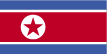
| NORTH KOREA Democratic People's Republic of Korea Choson-minjujuui-inmin-konghwaguk Joined United Nations: 17 September 1991 Human Rights as assured by their constitution Click here Updated 03 April 2013 |
| CAPITAL |
| POPULATION |
| CHIEF OF STATE |
| SELECTION PROCESS |
Pyongyang
24,589,122 (July 2011 est.)
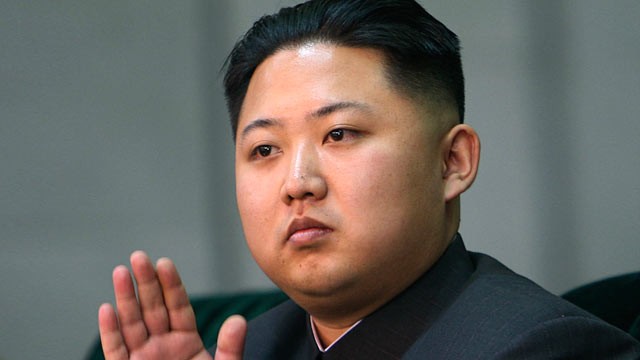
Kim Jung Un
Supreme Leader since 17 December 2011
Supreme Leader since 17 December 2011
On 17 December 2011, the Supreme People's Assembly
(SPA) named Kim Jung Un Supreme Leader upon the death of
his father KIM Jong Il who was the Chairman of the National
Defense Commission, a position accorded nation's "highest
administrative authority"; SPA reelected KIM Yong Nam
president of its Presidium also with responsibility of representing
state and receiving diplomatic credentials. Elections last held: 08
March 2009
Next scheduled election: Unknown
(SPA) named Kim Jung Un Supreme Leader upon the death of
his father KIM Jong Il who was the Chairman of the National
Defense Commission, a position accorded nation's "highest
administrative authority"; SPA reelected KIM Yong Nam
president of its Presidium also with responsibility of representing
state and receiving diplomatic credentials. Elections last held: 08
March 2009
Next scheduled election: Unknown
HEAD OF GOVERNMENT
SELECTION PROCESS
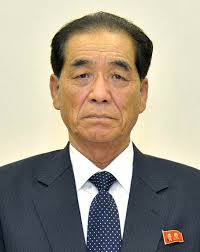
Pak Pong-ju
Premier since 01 April 2013
Premier since 01 April 2013
Premier elected by the Supreme People's Assembly. Elections: last held 08 March 2009
Next scheduled election: 2014
Next scheduled election: 2014
| DECLARATION OF HUMAN RIGHTS |
| ETHNIC GROUPS |
Racially homogeneous; there is a small Chinese community and a few ethnic Japanese
| RELIGIONS |
Traditionally Buddhist and Confucianist, some Christian and Syncretic Chondogyo (Religion of the Heavenly Way)
NOTE: autonomous religious activities now almost nonexistent; government-sponsored religious groups exist to
provide illusion of religious freedom
NOTE: autonomous religious activities now almost nonexistent; government-sponsored religious groups exist to
provide illusion of religious freedom
| GOVERNMENT STRUCTURE |
Communist State where Chairman of the National Defense Commission has absolute authority; 9 provinces (do,
singular and plural) and 4 municipalities (si, singular and plural) Legal system is based on German civil law system
with Japanese influences and Communist legal theory; no judicial review of legislative acts; has not accepted
compulsory ICJ jurisdiction
Executive: Chairman of the National Defense Commission and President of the Presidium elected by SPA for a five
year term, no term limits. Premier appointed by SPA for a five year term, no term limits; last election held 11
December 2011
Legislative: Unicameral Supreme People's Assembly or Ch'oego Inmin Hoeui (687 seats; members elected by
popular vote to serve five-year terms)
elections: last held 08 March 2009 (next to be held: March 2014)
Judicial: Central Court (judges are elected by the Supreme People's Assembly)
singular and plural) and 4 municipalities (si, singular and plural) Legal system is based on German civil law system
with Japanese influences and Communist legal theory; no judicial review of legislative acts; has not accepted
compulsory ICJ jurisdiction
Executive: Chairman of the National Defense Commission and President of the Presidium elected by SPA for a five
year term, no term limits. Premier appointed by SPA for a five year term, no term limits; last election held 11
December 2011
Legislative: Unicameral Supreme People's Assembly or Ch'oego Inmin Hoeui (687 seats; members elected by
popular vote to serve five-year terms)
elections: last held 08 March 2009 (next to be held: March 2014)
Judicial: Central Court (judges are elected by the Supreme People's Assembly)
| LANGUAGES |
Korean
| BRIEF HISTORY |
An independent kingdom for much of its long history, Korea was occupied by Japan in 1905 following the
Russo-Japanese War. Five years later, Japan formally annexed the entire peninsula. Following World War II, Korea
was split with the northern half coming under Soviet-sponsored Communist domination. After failing in the Korean War
(1950-53) to conquer the US-backed Republic of Korea (ROK) in the southern portion by force, North Korea
(DPRK), under its founder President KIM Il-so'ng, adopted a policy of ostensible diplomatic and economic
"self-reliance" as a check against excessive Soviet or Communist Chinese influence. The DPRK demonized the US as
the ultimate threat to its social system through state-funded propaganda, and molded political, economic, and military
policies around the core ideological objective of eventual unification of Korea under Pyongyang's control. KIM's son,
the current ruler KIM Jong Il, was officially designated as his father's successor in 1980, assuming a growing political
and managerial role until the elder KIM's death in 1994. After decades of economic mismanagement and resource
misallocation, the DPRK since the mid-1990s has relied heavily on international aid to feed its population while
continuing to expend resources to maintain an army of 1 million.In December 2002, following revelations that the
DPRK was pursuing a nuclear weapons program based on enriched uranium in violation of a 1994 agreement with the
US to freeze and ultimately dismantle its existing plutonium-based program, North Korea expelled monitors from the
International Atomic Energy Agency (IAEA). In January 2003, it declared its withdrawal from the international
Non-Proliferation Treaty. In mid-2003 Pyongyang announced it had completed the reprocessing of spent nuclear fuel
rods (to extract weapons-grade plutonium) and was developing a "nuclear deterrent." On October 9, 2006, North
Korea's Korean Central News Agency announced that it had successfully conducted an underground nuclear test.
North Korea returned to the Six-Party Talks in December 2006 and subsequently signed two agreements on
denuclearization. The 13 February 2007 Initial Actions Agreement led to the shut down of three of the North's nuclear
facilities at Yongbyon in July 2007. In the 3 October 2007 Second Phase Actions Agreement, Pyongyang pledged to
disable those three facilities and provide a correct and complete declaration of its nuclear programs by the end of the
year. Under the supervision of US nuclear experts, North Korean personnel completed some of agreed-upon
disablement actions at those three Yongbyon facilities by the end of 2007. North Korea began the discharge of spent
fuel rods in December 2007 and provided a declaration of its nuclear program in June 2008.KIM Jong Un was
publicly unveiled as his father's successor in September 2010. Following KIM Jong Il's death in December 2011, the
regime began to take actions to transfer power to KIM Jong Un and Jong Un has begun to assume his father's former
titles and duties. After decades of economic mismanagement and resource misallocation, the DPRK since the
mid-1990s has relied heavily on international aid to feed its population. North Korea's history of regional military
provocations, proliferation of military-related items, long-range missile development, WMD programs including tests of
nuclear devices in 2006 and 2009, and massive conventional armed forces are of major concern to the international
community. The regime has marked 2012, the centenary of KIM Il Sung's birth, a banner year; to that end, the country
has heightened its focus on developing its economy and improving its people's livelihoods.
Sources CIA World Factbook (select Korea, North); GlobalSecurity.org
Russo-Japanese War. Five years later, Japan formally annexed the entire peninsula. Following World War II, Korea
was split with the northern half coming under Soviet-sponsored Communist domination. After failing in the Korean War
(1950-53) to conquer the US-backed Republic of Korea (ROK) in the southern portion by force, North Korea
(DPRK), under its founder President KIM Il-so'ng, adopted a policy of ostensible diplomatic and economic
"self-reliance" as a check against excessive Soviet or Communist Chinese influence. The DPRK demonized the US as
the ultimate threat to its social system through state-funded propaganda, and molded political, economic, and military
policies around the core ideological objective of eventual unification of Korea under Pyongyang's control. KIM's son,
the current ruler KIM Jong Il, was officially designated as his father's successor in 1980, assuming a growing political
and managerial role until the elder KIM's death in 1994. After decades of economic mismanagement and resource
misallocation, the DPRK since the mid-1990s has relied heavily on international aid to feed its population while
continuing to expend resources to maintain an army of 1 million.In December 2002, following revelations that the
DPRK was pursuing a nuclear weapons program based on enriched uranium in violation of a 1994 agreement with the
US to freeze and ultimately dismantle its existing plutonium-based program, North Korea expelled monitors from the
International Atomic Energy Agency (IAEA). In January 2003, it declared its withdrawal from the international
Non-Proliferation Treaty. In mid-2003 Pyongyang announced it had completed the reprocessing of spent nuclear fuel
rods (to extract weapons-grade plutonium) and was developing a "nuclear deterrent." On October 9, 2006, North
Korea's Korean Central News Agency announced that it had successfully conducted an underground nuclear test.
North Korea returned to the Six-Party Talks in December 2006 and subsequently signed two agreements on
denuclearization. The 13 February 2007 Initial Actions Agreement led to the shut down of three of the North's nuclear
facilities at Yongbyon in July 2007. In the 3 October 2007 Second Phase Actions Agreement, Pyongyang pledged to
disable those three facilities and provide a correct and complete declaration of its nuclear programs by the end of the
year. Under the supervision of US nuclear experts, North Korean personnel completed some of agreed-upon
disablement actions at those three Yongbyon facilities by the end of 2007. North Korea began the discharge of spent
fuel rods in December 2007 and provided a declaration of its nuclear program in June 2008.KIM Jong Un was
publicly unveiled as his father's successor in September 2010. Following KIM Jong Il's death in December 2011, the
regime began to take actions to transfer power to KIM Jong Un and Jong Un has begun to assume his father's former
titles and duties. After decades of economic mismanagement and resource misallocation, the DPRK since the
mid-1990s has relied heavily on international aid to feed its population. North Korea's history of regional military
provocations, proliferation of military-related items, long-range missile development, WMD programs including tests of
nuclear devices in 2006 and 2009, and massive conventional armed forces are of major concern to the international
community. The regime has marked 2012, the centenary of KIM Il Sung's birth, a banner year; to that end, the country
has heightened its focus on developing its economy and improving its people's livelihoods.
Sources CIA World Factbook (select Korea, North); GlobalSecurity.org
| ECONOMIC OVERVIEW |
North Korea, one of the world's most centrally directed and least open economies, faces chronic economic problems.
Industrial capital stock is nearly beyond repair as a result of years of underinvestment, shortages of spare parts, and
poor maintenance. Large-scale military spending draws off resources needed for investment and civilian consumption.
Industrial and power output have stagnated for years at a fraction of pre-1990 levels. Frequent weather-related crop
failures aggravated chronic food shortages caused by on-going systemic problems, including a lack of arable land,
collective farming practices, poor soil quality, insufficient fertilization, and persistent shortages of tractors and fuel.
Large-scale international food aid deliveries have allowed the people of North Korea to escape widespread starvation
since famine threatened in 1995, but the population continues to suffer from prolonged malnutrition and poor living
conditions. Since 2002, the government has allowed private "farmers' markets" to begin selling a wider range of goods.
It also permitted some private farming - on an experimental basis - in an effort to boost agricultural output. In
December 2009, North Korea carried out a redenomination of its currency, capping the amount of North Korean won
that could be exchanged for the new notes, and limiting the exchange to a one-week window. A concurrent crackdown
on markets and foreign currency use yielded severe shortages and inflation, forcing Pyongyang to ease the restrictions
by February 2010. In response to the sinking of the South Korean destroyer Cheonan and the shelling of Yeonpyeong
Island, South Korea's government cut off most aid, trade, and bilateral cooperation activities, with the exception of
operations at the Kaesong Industrial Complex. In preparation for 2012, the 100th anniversary of KIM Il-sung's
birthday, North Korea continued efforts to develop special economic zones with China and expressed willingness to
permit construction of a trilateral gas pipeline that would carry Russian natural gas to South Korea. The North Korean
government often highlights its 2012 goal of becoming a "strong and prosperous" nation and attracting foreign
investment, a key factor for improving the overall standard of living. Nevertheless, firm political control remains the
government's overriding concern, which likely will inhibit changes to North Korea's current economic system.
Industrial capital stock is nearly beyond repair as a result of years of underinvestment, shortages of spare parts, and
poor maintenance. Large-scale military spending draws off resources needed for investment and civilian consumption.
Industrial and power output have stagnated for years at a fraction of pre-1990 levels. Frequent weather-related crop
failures aggravated chronic food shortages caused by on-going systemic problems, including a lack of arable land,
collective farming practices, poor soil quality, insufficient fertilization, and persistent shortages of tractors and fuel.
Large-scale international food aid deliveries have allowed the people of North Korea to escape widespread starvation
since famine threatened in 1995, but the population continues to suffer from prolonged malnutrition and poor living
conditions. Since 2002, the government has allowed private "farmers' markets" to begin selling a wider range of goods.
It also permitted some private farming - on an experimental basis - in an effort to boost agricultural output. In
December 2009, North Korea carried out a redenomination of its currency, capping the amount of North Korean won
that could be exchanged for the new notes, and limiting the exchange to a one-week window. A concurrent crackdown
on markets and foreign currency use yielded severe shortages and inflation, forcing Pyongyang to ease the restrictions
by February 2010. In response to the sinking of the South Korean destroyer Cheonan and the shelling of Yeonpyeong
Island, South Korea's government cut off most aid, trade, and bilateral cooperation activities, with the exception of
operations at the Kaesong Industrial Complex. In preparation for 2012, the 100th anniversary of KIM Il-sung's
birthday, North Korea continued efforts to develop special economic zones with China and expressed willingness to
permit construction of a trilateral gas pipeline that would carry Russian natural gas to South Korea. The North Korean
government often highlights its 2012 goal of becoming a "strong and prosperous" nation and attracting foreign
investment, a key factor for improving the overall standard of living. Nevertheless, firm political control remains the
government's overriding concern, which likely will inhibit changes to North Korea's current economic system.
| POLITICAL CLIMATE |
The ruling party is the Workers' Party of Korea (WPK), which is thought to allow some slight inner-party democracy
(see Democratic centralism). The WPK has ruled since North Korea's independence in 1948. Two minor political
parties exist but are legally bound to accept the ruling role of the WPK.[3] Elections occur only in single-candidate
races where the candidate has been selected by the WPK beforehand. Kim Il-sung served as General Secretary and
President of North Korea from 1948 until his death in July 1994. He was given the posthumous title of Eternal
President, symbolizing that he forever holds the position of President, which is formally vacant. Most analysts believe
the title a product of the cult of personality he cultivated during his life. The government is highly controlling and severely
limits freedom of expression and participation of its citizens in government (see Human rights in North Korea).
North Korea is widely considered a Communist state in the Western world, but the government has formally replaced
references to Marxism-Leninism in its constitution with the locally developed concept of Juche, or self-reliance. In
recent years, there has been great emphasis on the Songun or "military-first" philosophy. The constitution of North
Korea declares that "the Democratic People’s Republic of Korea shall, by carrying out a thorough cultural revolution,
train all the people to be builders of socialism and communism". Most of its policies resemble those of Communist
regimes before the fall of the Soviet Union.
Although there exist occasional reports of opposition to the government, these appear to be isolated, and there is no
evidence of major internal threats to the current regime. Some foreign analysts have pointed to widespread starvation,
increased imigration through China, and new sources of information about the outside world for ordinary North
Koreans as factors pointing to an imminent collapse of the regime, but North Korea has remained stable in spite of
more than a decade of such predictions. The Workers' Party of Korea maintains a monopoly on political power and
Kim Jong-il remained the leader of the country, until 2011, ever since he first gained power following the death of his
father.
According to Cheong Seong-chang of Sejong Institute, speaking on June 25, 2012, there is some possibility that the
new leader Kim Jong-un, who has greater visible interest in the welfare of his people and engages in greater interaction
with them than his father did, will consider economic reforms and regularization of international relations.
Wikipedia: Politics of North Korea
(see Democratic centralism). The WPK has ruled since North Korea's independence in 1948. Two minor political
parties exist but are legally bound to accept the ruling role of the WPK.[3] Elections occur only in single-candidate
races where the candidate has been selected by the WPK beforehand. Kim Il-sung served as General Secretary and
President of North Korea from 1948 until his death in July 1994. He was given the posthumous title of Eternal
President, symbolizing that he forever holds the position of President, which is formally vacant. Most analysts believe
the title a product of the cult of personality he cultivated during his life. The government is highly controlling and severely
limits freedom of expression and participation of its citizens in government (see Human rights in North Korea).
North Korea is widely considered a Communist state in the Western world, but the government has formally replaced
references to Marxism-Leninism in its constitution with the locally developed concept of Juche, or self-reliance. In
recent years, there has been great emphasis on the Songun or "military-first" philosophy. The constitution of North
Korea declares that "the Democratic People’s Republic of Korea shall, by carrying out a thorough cultural revolution,
train all the people to be builders of socialism and communism". Most of its policies resemble those of Communist
regimes before the fall of the Soviet Union.
Although there exist occasional reports of opposition to the government, these appear to be isolated, and there is no
evidence of major internal threats to the current regime. Some foreign analysts have pointed to widespread starvation,
increased imigration through China, and new sources of information about the outside world for ordinary North
Koreans as factors pointing to an imminent collapse of the regime, but North Korea has remained stable in spite of
more than a decade of such predictions. The Workers' Party of Korea maintains a monopoly on political power and
Kim Jong-il remained the leader of the country, until 2011, ever since he first gained power following the death of his
father.
According to Cheong Seong-chang of Sejong Institute, speaking on June 25, 2012, there is some possibility that the
new leader Kim Jong-un, who has greater visible interest in the welfare of his people and engages in greater interaction
with them than his father did, will consider economic reforms and regularization of international relations.
Wikipedia: Politics of North Korea
| INTERNATIONAL DISPUTES |
Risking arrest, imprisonment, and deportation, tens of thousands of North Koreans cross into China to escape famine,
economic privation, and political oppression; North Korea and China dispute the sovereignty of certain islands in Yalu
and Tumen rivers; Military Demarcation Line within the 4-km wide Demilitarized Zone has separated North from South
Korea since 1953; periodic incidents in the Yellow Sea with South Korea which claims the Northern Limiting Line as a
maritime boundary; North Korea supports South Korea in rejecting Japan's claim to Liancourt Rocks
(Tok-do/Take-shima)
economic privation, and political oppression; North Korea and China dispute the sovereignty of certain islands in Yalu
and Tumen rivers; Military Demarcation Line within the 4-km wide Demilitarized Zone has separated North from South
Korea since 1953; periodic incidents in the Yellow Sea with South Korea which claims the Northern Limiting Line as a
maritime boundary; North Korea supports South Korea in rejecting Japan's claim to Liancourt Rocks
(Tok-do/Take-shima)


| REFUGEES AND INTERNALLY DISPLACED PERSONS (IDP) |
IDPs: Undetermined (flooding in mid-2007 and famine during mid-1990s) (2007)
| ILLICIT DRUGS |
For years, from the 1970s into the 2000s, citizens of the Democratic People's Republic of (North) Korea (DPRK),
many of them diplomatic employees of the government, were apprehended abroad while trafficking in narcotics,
including two in Turkey in December 2004; police investigations in Taiwan and Japan in recent years have linked North
Korea to large illicit shipments of heroin and methamphetamine, including an attempt by the North Korean merchant
ship Pong Su to deliver 150 kg of heroin to Australia in April 2003
many of them diplomatic employees of the government, were apprehended abroad while trafficking in narcotics,
including two in Turkey in December 2004; police investigations in Taiwan and Japan in recent years have linked North
Korea to large illicit shipments of heroin and methamphetamine, including an attempt by the North Korean merchant
ship Pong Su to deliver 150 kg of heroin to Australia in April 2003
| HUMAN RIGHTS STATEMENTS, ANALYSIS AND CRITIQUES |
2011 Human Rights Report: Democratic People's Republic of Korea*
Bureau of Democracy, Human Rights, and Labor
2011 Country Reports on Human Rights Practices
May 24, 2012
The Democratic People’s Republic of Korea (DPRK or North Korea) is an authoritarian state led by the Kim family for more than
60 years. On December 30, Kim Jong Un was named supreme commander of the Korean People’s Army following the December
17 death of his father Kim Jong Il. Kim Jong Un’s grandfather, the late Kim Il Sung, remains “eternal president.” The most recent
national elections, held in March 2009, were neither free nor fair. Security forces report to the supreme leader of North Korea, Kim
Jong Un, and to the civilians and military officers that form the National Defense Commission, the supreme ruling body of the state.
Citizens did not have the right to change their government. The government subjected citizens to rigid controls over many aspects
of their lives, including denial of the freedoms of speech, press, assembly, association, religion, and movement and worker rights.
There continued to be reports of a vast network of political prison camps in which conditions were often harsh and life threatening.
Defectors continued to report extrajudicial killings, disappearances, arbitrary detention, arrests of political prisoners, and torture.
The judiciary was not independent and did not provide fair trials. There continued to be reports of severe punishment of some
repatriated refugees and their family members. There were reports of trafficked women among refugees and workers crossing the
border into China.
The government made no known attempts to prosecute officials who committed human rights abuses.
The United States does not have diplomatic relations with the Democratic People’s Republic of Korea. North Korea does not allow
representatives of foreign governments, journalists, or other invited guests the freedom of movement that would enable them to
assess fully human rights conditions or confirm reported abuses. Some reports that rely on defector testimony can be dated
because of the time lapse between departure from North Korea and contact with NGOs or officials able to document human rights
conditions.
Click here to read more »
Bureau of Democracy, Human Rights, and Labor
2011 Country Reports on Human Rights Practices
May 24, 2012
The Democratic People’s Republic of Korea (DPRK or North Korea) is an authoritarian state led by the Kim family for more than
60 years. On December 30, Kim Jong Un was named supreme commander of the Korean People’s Army following the December
17 death of his father Kim Jong Il. Kim Jong Un’s grandfather, the late Kim Il Sung, remains “eternal president.” The most recent
national elections, held in March 2009, were neither free nor fair. Security forces report to the supreme leader of North Korea, Kim
Jong Un, and to the civilians and military officers that form the National Defense Commission, the supreme ruling body of the state.
Citizens did not have the right to change their government. The government subjected citizens to rigid controls over many aspects
of their lives, including denial of the freedoms of speech, press, assembly, association, religion, and movement and worker rights.
There continued to be reports of a vast network of political prison camps in which conditions were often harsh and life threatening.
Defectors continued to report extrajudicial killings, disappearances, arbitrary detention, arrests of political prisoners, and torture.
The judiciary was not independent and did not provide fair trials. There continued to be reports of severe punishment of some
repatriated refugees and their family members. There were reports of trafficked women among refugees and workers crossing the
border into China.
The government made no known attempts to prosecute officials who committed human rights abuses.
The United States does not have diplomatic relations with the Democratic People’s Republic of Korea. North Korea does not allow
representatives of foreign governments, journalists, or other invited guests the freedom of movement that would enable them to
assess fully human rights conditions or confirm reported abuses. Some reports that rely on defector testimony can be dated
because of the time lapse between departure from North Korea and contact with NGOs or officials able to document human rights
conditions.
Click here to read more »
Statement by the UN Special Rapporteur on the Situation of Human Rights in the Democratic People’s Republic of Korea
at the end of his visit to Japan, 25 to 28 January 2011
28 January 2011
As the United Nations Special Rapporteur on the situation of human rights in the Democratic People’s Republic of Korea, I was on
my first official visit to Japan from 25 to 28 January 2011. The main objective of my visit is to assess the human rights situation in
the Democratic People’s Republic of Korea (DPRK) and its impacts on the countries in the region, such as Japan.
Here in Japan, I held several meetings with the Government Officials, such as the Minister for Foreign Affairs, the Minister of
Justice, the Minister in-charge of abduction issues, the Senior Vice-Minister of Cabinet Office in-charge of abduction issue,
Ambassador in charge of Human Rights and Humanitarian Affairs, the Deputy Vice-Minister for Foreign Policy, the Director
General of Asian and Oceanian affairs of MoFA.
I also interacted with national and international non-governmental organizations, diplomats, some of the United Nations agencies,
and other relevant individuals working on the human rights and the humanitarian situation in the DPRK.
A number of issues that came up during my visit to the Republic of Korea in November 2010 were brought to my attention during
my current mission as well. The information gathered during the meeting with the defectors from the DPRK, who are currently
living in Japan reinforces number of reports that emphasizes dire humanitarian situation and absence of civil, cultural, economic,
political and social rights for the people of the DPRK, underscoring the importance of providing humanitarian aid to the DPRK,
subject of course to proper monitoring of distribution of aid, and measures to be taken by the DPRK to ensure respecting a wide
range of human rights.
Among others, the question of 17 identified cases of abduction of Japanese nationals by the agents of the Democratic People’s
Republic of Korea stood out strongly in several discussions with the civil society and the Government Officials here in Japan. As of
today, the subject remains unresolved notwithstanding several meetings between Japan and the DPRK.
As of today, only 5 of 17 abductees have returned to Japan, with another 12 identified Japanese cases still pending. In this regard,
the world community saw a glimmer of hope between year 2002, when the Japan-DPRK summit showed traces of the DRPK
forthcoming to admit the abductions it carried out, and 2008 when the DPRK agreed to establish an investigation committee with
adequate authority to look into the matter. Since then however, to much regret of the international community, there has not been
any real positive outcome and the agreement stands unimplemented.
Click here to read more »
at the end of his visit to Japan, 25 to 28 January 2011
28 January 2011
As the United Nations Special Rapporteur on the situation of human rights in the Democratic People’s Republic of Korea, I was on
my first official visit to Japan from 25 to 28 January 2011. The main objective of my visit is to assess the human rights situation in
the Democratic People’s Republic of Korea (DPRK) and its impacts on the countries in the region, such as Japan.
Here in Japan, I held several meetings with the Government Officials, such as the Minister for Foreign Affairs, the Minister of
Justice, the Minister in-charge of abduction issues, the Senior Vice-Minister of Cabinet Office in-charge of abduction issue,
Ambassador in charge of Human Rights and Humanitarian Affairs, the Deputy Vice-Minister for Foreign Policy, the Director
General of Asian and Oceanian affairs of MoFA.
I also interacted with national and international non-governmental organizations, diplomats, some of the United Nations agencies,
and other relevant individuals working on the human rights and the humanitarian situation in the DPRK.
A number of issues that came up during my visit to the Republic of Korea in November 2010 were brought to my attention during
my current mission as well. The information gathered during the meeting with the defectors from the DPRK, who are currently
living in Japan reinforces number of reports that emphasizes dire humanitarian situation and absence of civil, cultural, economic,
political and social rights for the people of the DPRK, underscoring the importance of providing humanitarian aid to the DPRK,
subject of course to proper monitoring of distribution of aid, and measures to be taken by the DPRK to ensure respecting a wide
range of human rights.
Among others, the question of 17 identified cases of abduction of Japanese nationals by the agents of the Democratic People’s
Republic of Korea stood out strongly in several discussions with the civil society and the Government Officials here in Japan. As of
today, the subject remains unresolved notwithstanding several meetings between Japan and the DPRK.
As of today, only 5 of 17 abductees have returned to Japan, with another 12 identified Japanese cases still pending. In this regard,
the world community saw a glimmer of hope between year 2002, when the Japan-DPRK summit showed traces of the DRPK
forthcoming to admit the abductions it carried out, and 2008 when the DPRK agreed to establish an investigation committee with
adequate authority to look into the matter. Since then however, to much regret of the international community, there has not been
any real positive outcome and the agreement stands unimplemented.
Click here to read more »
The International Coalition to Stop Crimes against Humanity in North Korea Submits Petition to United Nations to End
Kwan-Li-So (Gulag System)
Apr 3 2012
The International Coalition to Stop Crimes against Humanity in North Korea (ICNK), consisting over 40 prominent human rights
organizations and activists, today submitted a petition to the special procedures of the United Nation Human Rights Council calling
for the UN to help shut down North Korea’s vast gulag system.
North Korea holds as many as 200,000 people in its gulag system, known as the kwan-li-so. In these prison-camps, both real and
imagined dissenters are imprisoned alongside their relatives—including the elderly and children—under a guilt-by-association system
that was instituted by Kim Il-sung and which is now overseen by Kim Jong-eun.
“The environment in the gulag is horrific, making the suffering of the prisoners one of the most serious human-rights and
humanitarian disasters in the world today” said Jared Genser, Managing Director of Perseus Strategies and pro bono counsel to the
ICNK. Prisoners, including children, must undergo backbreaking labor, such as mining, logging, and farming, seven days a week
for twelve or more hours a day. The labor is usually dangerous and a large percentage of the prison population, approximately 20-
25, dies each year due to the horrendous labor conditions. It is estimated that over the past few decades more than 400,000 of the
camp prisoners have perished.
“The labor conditions are only part of the misery the prisoners face,” said Ha Tae-keung of Open North Korea. “They also endure
starvation-level food rations.” One defector reported the daily ration as approximately twenty grains of corn per inmate, an amount
so meager that prisoners have to dig through cow dung to search for undigested grain in order to stave off death. Even though
illnesses such as pneumonia and tuberculosis run rampant in the camps, there is no medical treatment available for prisoners. They
are forced to work while sick, and for those who are no longer physically able to work, they are sent to sanatoriums to await their
death. Alongside the hard labor and starvation, prisoners must also face the routine occurrence of torture, rape, and extrajudicial
killing.
“Kim Jong-eun now has a choice to make,” said Kanae Doi, Japan Director of Human Rights Watch. “He can do nothing and
continue operating the gulag system, thus making him responsible for the ongoing crimes against humanity his government is
committing. Or, he can shut down the gulag and put this terrible chapter in the history of his country to an end.”
The petition submitted today urges the UN to carry out an investigation and reporting on the gulag. ICNK hopes to maximize the
use of the UN system for the benefit of the victims in North Korea.
Click here to read more »
Kwan-Li-So (Gulag System)
Apr 3 2012
The International Coalition to Stop Crimes against Humanity in North Korea (ICNK), consisting over 40 prominent human rights
organizations and activists, today submitted a petition to the special procedures of the United Nation Human Rights Council calling
for the UN to help shut down North Korea’s vast gulag system.
North Korea holds as many as 200,000 people in its gulag system, known as the kwan-li-so. In these prison-camps, both real and
imagined dissenters are imprisoned alongside their relatives—including the elderly and children—under a guilt-by-association system
that was instituted by Kim Il-sung and which is now overseen by Kim Jong-eun.
“The environment in the gulag is horrific, making the suffering of the prisoners one of the most serious human-rights and
humanitarian disasters in the world today” said Jared Genser, Managing Director of Perseus Strategies and pro bono counsel to the
ICNK. Prisoners, including children, must undergo backbreaking labor, such as mining, logging, and farming, seven days a week
for twelve or more hours a day. The labor is usually dangerous and a large percentage of the prison population, approximately 20-
25, dies each year due to the horrendous labor conditions. It is estimated that over the past few decades more than 400,000 of the
camp prisoners have perished.
“The labor conditions are only part of the misery the prisoners face,” said Ha Tae-keung of Open North Korea. “They also endure
starvation-level food rations.” One defector reported the daily ration as approximately twenty grains of corn per inmate, an amount
so meager that prisoners have to dig through cow dung to search for undigested grain in order to stave off death. Even though
illnesses such as pneumonia and tuberculosis run rampant in the camps, there is no medical treatment available for prisoners. They
are forced to work while sick, and for those who are no longer physically able to work, they are sent to sanatoriums to await their
death. Alongside the hard labor and starvation, prisoners must also face the routine occurrence of torture, rape, and extrajudicial
killing.
“Kim Jong-eun now has a choice to make,” said Kanae Doi, Japan Director of Human Rights Watch. “He can do nothing and
continue operating the gulag system, thus making him responsible for the ongoing crimes against humanity his government is
committing. Or, he can shut down the gulag and put this terrible chapter in the history of his country to an end.”
The petition submitted today urges the UN to carry out an investigation and reporting on the gulag. ICNK hopes to maximize the
use of the UN system for the benefit of the victims in North Korea.
Click here to read more »
Wire, July/August 2012. Vol. 42, issue 04
1 July 2012
"I'll never be able to escape my past"
Shin Dong-hyuk is the only known north Korean born in a political prison camp (kwanliso) who has managed to escape. Born in
camp 14 in South Pyongan Province in 1982, he crawled through the barbed wire in 2005 and made it to South Korea. We spoke to
him when he visited London, UK, to promote Escape from Camp 14, the extraordinary story about his life told by journalist Blaine
Harden.
What was life like in the kwanliso?
I lived in a small, dirty room with my mother. A place where criminals live cannot be clean. I was born to criminal parents, so I
had to live the life of a criminal. The walls were mouldy and rain would leak through. In winter, the room would be icy. I woke up
worrying every morning about whether I would meet the work quota that day. If I didn’t, I wouldn’t get fed. I ate whatever the
prison guards gave me and I did what they ordered me to do. At school, all I learned was to write, do simple arithmetic and hard
labour in the fields from the age of six. We were not told anything about North Korea, its government or the world outside. People
in Kwanliso are considered sub-human − animals that are not worthy of being taught anything.
What were your worst experiences in the camp?
Starvation, combined with hard labour and constant beatings, was the hardest. Prison guards show no leniency towards children,
women or the elderly. If you make a mistake, you are immediately beaten. Several people were beaten to death. One day at school,
the teacher searched us and found five kernels of corn on one of the girls. The teacher thought she had stolen the corn and beat
her severely in front of us. She fainted, and we carried her home to her mother. The next day she was dead. [She was six years
old.] This sort of thing was very common. Later, when I was working in a fabric factory, I accidentally dropped a sewing machine
on the floor and it broke beyond repair. One of the guards got very angry and cut off a knuckle of my middle finger to punish me.
At the time, I just thought I was lucky to have escaped execution.
What was your relationship with your parents like?
It wasn’t an affectionate relationship. The concept of family was unknown to me. We were just all criminals. I’m still learning
what it means to be a family.
Click here to read more »
1 July 2012
"I'll never be able to escape my past"
Shin Dong-hyuk is the only known north Korean born in a political prison camp (kwanliso) who has managed to escape. Born in
camp 14 in South Pyongan Province in 1982, he crawled through the barbed wire in 2005 and made it to South Korea. We spoke to
him when he visited London, UK, to promote Escape from Camp 14, the extraordinary story about his life told by journalist Blaine
Harden.
What was life like in the kwanliso?
I lived in a small, dirty room with my mother. A place where criminals live cannot be clean. I was born to criminal parents, so I
had to live the life of a criminal. The walls were mouldy and rain would leak through. In winter, the room would be icy. I woke up
worrying every morning about whether I would meet the work quota that day. If I didn’t, I wouldn’t get fed. I ate whatever the
prison guards gave me and I did what they ordered me to do. At school, all I learned was to write, do simple arithmetic and hard
labour in the fields from the age of six. We were not told anything about North Korea, its government or the world outside. People
in Kwanliso are considered sub-human − animals that are not worthy of being taught anything.
What were your worst experiences in the camp?
Starvation, combined with hard labour and constant beatings, was the hardest. Prison guards show no leniency towards children,
women or the elderly. If you make a mistake, you are immediately beaten. Several people were beaten to death. One day at school,
the teacher searched us and found five kernels of corn on one of the girls. The teacher thought she had stolen the corn and beat
her severely in front of us. She fainted, and we carried her home to her mother. The next day she was dead. [She was six years
old.] This sort of thing was very common. Later, when I was working in a fabric factory, I accidentally dropped a sewing machine
on the floor and it broke beyond repair. One of the guards got very angry and cut off a knuckle of my middle finger to punish me.
At the time, I just thought I was lucky to have escaped execution.
What was your relationship with your parents like?
It wasn’t an affectionate relationship. The concept of family was unknown to me. We were just all criminals. I’m still learning
what it means to be a family.
Click here to read more »
North Korea: Economic System Built on Forced Labor
New Testimonies Say Even Children Must Work or Face Detention Camps
June 13, 2012
(New York) – The North Korean government continues to require forced, uncompensated labor from workers, including even
schoolchildren and university students, Human Rights Watch said today. In recent interviews with Human Rights Watch, North
Korean defectors say they have faced years of work for either no wages or symbolic compensation and either had to pay bribes or
face severe punishments if they did not report for work at assigned workplaces.
Defectors reported to Human Rights Watch that they were required to work at an assigned workplace after completing school. The
effective collapse of much of the North Korean economy means that many of these jobs are either unpaid or provide minimal
substitute compensation in the form of food or other rations. Failure to report to an assigned job for those who try to earn money
in other ways can result in being sent to a forced labor camp for six months to as long as two years.
“The harsh reality faced by North Korean workers and students is unpaid forced labor and exploitation,” said Phil Robertson,
deputy Asia director at Human Rights Watch. “Those who refuse face being sent to forced labor camps where they must do hard
labor, face physical abuse from guards, and are treated as less than human.”
Human Rights Watch interviewed approximately 65 defectors in South Korea and Thailand over the past six months. One female
North Korean defector who left North Korea in December 2009 told Human Rights Watch that “anyone who quits his job … is
legally punished for the reason of being unemployed …” and will be “taken to the forced labor camp for between three to six
months. Anyone who doesn’t work is assumed to be a criminal in North Korea.” Another male who escaped from North Korea in
March 2011 said that “… if you are placed somewhere [to work], you must go there without question” and “it is impossible to
refuse working because you didn’t like it, it’s compulsory without a doubt.”
Another defector told Human Rights Watch “After I finished school, the authorities forced me to work at the government mine but
it’s far away from my home. I had to take care of my sick father because my mother had died … so I had to bribe the authorities
so they would put me in the ceramics factory nearby … then I was forced to labor at the ceramics factory …”
Failing to report to work can result in physical punishment at the hands of work-place managers. A defector told Human Rights
Watch “The factory manager would summon me and beat me and curse at me because I didn’t go to work. Many people saw me
getting beaten…. I told them I didn’t come to work because I didn’t have anything to eat…The more I talked, the angrier they got,
and they kicked and beat me…It was not just me, it would happen to other people as well. If a person did not come to work, the
authorities would go to their home to find them. They would beat them severely and curse at them, saying ‘Why didn’t you come
to work?’”
Click here to read more »
New Testimonies Say Even Children Must Work or Face Detention Camps
June 13, 2012
(New York) – The North Korean government continues to require forced, uncompensated labor from workers, including even
schoolchildren and university students, Human Rights Watch said today. In recent interviews with Human Rights Watch, North
Korean defectors say they have faced years of work for either no wages or symbolic compensation and either had to pay bribes or
face severe punishments if they did not report for work at assigned workplaces.
Defectors reported to Human Rights Watch that they were required to work at an assigned workplace after completing school. The
effective collapse of much of the North Korean economy means that many of these jobs are either unpaid or provide minimal
substitute compensation in the form of food or other rations. Failure to report to an assigned job for those who try to earn money
in other ways can result in being sent to a forced labor camp for six months to as long as two years.
“The harsh reality faced by North Korean workers and students is unpaid forced labor and exploitation,” said Phil Robertson,
deputy Asia director at Human Rights Watch. “Those who refuse face being sent to forced labor camps where they must do hard
labor, face physical abuse from guards, and are treated as less than human.”
Human Rights Watch interviewed approximately 65 defectors in South Korea and Thailand over the past six months. One female
North Korean defector who left North Korea in December 2009 told Human Rights Watch that “anyone who quits his job … is
legally punished for the reason of being unemployed …” and will be “taken to the forced labor camp for between three to six
months. Anyone who doesn’t work is assumed to be a criminal in North Korea.” Another male who escaped from North Korea in
March 2011 said that “… if you are placed somewhere [to work], you must go there without question” and “it is impossible to
refuse working because you didn’t like it, it’s compulsory without a doubt.”
Another defector told Human Rights Watch “After I finished school, the authorities forced me to work at the government mine but
it’s far away from my home. I had to take care of my sick father because my mother had died … so I had to bribe the authorities
so they would put me in the ceramics factory nearby … then I was forced to labor at the ceramics factory …”
Failing to report to work can result in physical punishment at the hands of work-place managers. A defector told Human Rights
Watch “The factory manager would summon me and beat me and curse at me because I didn’t go to work. Many people saw me
getting beaten…. I told them I didn’t come to work because I didn’t have anything to eat…The more I talked, the angrier they got,
and they kicked and beat me…It was not just me, it would happen to other people as well. If a person did not come to work, the
authorities would go to their home to find them. They would beat them severely and curse at them, saying ‘Why didn’t you come
to work?’”
Click here to read more »
DPRK Foreign Ministry Spokesman Blasts U.S. Secretary of State's Reckless Remarks
Pyongyang, June 17, 2012 (KCNA)
A spokesman for the DPRK Foreign Ministry Sunday gave the following answer to the question put by KCNA as regards the
reckless remarks made by the U.S. secretary of State against the DPRK:
U.S. authorities are imprudently talking about "human rights record" in the DPRK and "the issue of its people's living" these days
whenever an opportunity presents itself. Typical of them is U.S. Secretary of State Hillary Clinton.
It was the U.S. that has long antagonized and threatened the DPRK, compelling it to build defence capability to cope with it. It is,
however, urging the DPRK to give priority to "people's living." This is a hypocritical act of causing illness and then administering
medicine.
It was an undying historical feat that leader Kim Jong Il protected the dignity and supreme interests of the country and nation and
built the DPRK into a self-defensive military power which no aggressor forces dare to provoke. This serves as an eternal
foundation for accelerating the building of a thriving socialist nation.
The dear respected Kim Jong Un has already set forth a goal of Korean-style development and strategies and tactics for enabling the
Korean people to live well with nothing to desire more in the world. He is now wisely leading the general advance of the Korean
people for economic construction and improving the standard of people's living.
The world witnessed the events in December last year when the Korean people bitterly grieved over the demise of leader Kim Jong
Il, the auspicious events in April this year when the country shook with their cheers and the spectacular celebrations of the
anniversary of the Korean Children's Union on June 6 this year. These events clearly showed how foolish and ridiculous the U.S.
was in its attempt to meddle in the internal affairs of the DPRK over its "human rights issue" and "people's living" and hurt its
single-minded unity.
The DPRK will make sustained efforts to bolster up its nuclear deterrent to guarantee the peace and security of the country and the
nation as long as the U.S. persistently antagonizes it, in actuality, while saying that it has no hostile intent on the former.
Click here to read more »
Pyongyang, June 17, 2012 (KCNA)
A spokesman for the DPRK Foreign Ministry Sunday gave the following answer to the question put by KCNA as regards the
reckless remarks made by the U.S. secretary of State against the DPRK:
U.S. authorities are imprudently talking about "human rights record" in the DPRK and "the issue of its people's living" these days
whenever an opportunity presents itself. Typical of them is U.S. Secretary of State Hillary Clinton.
It was the U.S. that has long antagonized and threatened the DPRK, compelling it to build defence capability to cope with it. It is,
however, urging the DPRK to give priority to "people's living." This is a hypocritical act of causing illness and then administering
medicine.
It was an undying historical feat that leader Kim Jong Il protected the dignity and supreme interests of the country and nation and
built the DPRK into a self-defensive military power which no aggressor forces dare to provoke. This serves as an eternal
foundation for accelerating the building of a thriving socialist nation.
The dear respected Kim Jong Un has already set forth a goal of Korean-style development and strategies and tactics for enabling the
Korean people to live well with nothing to desire more in the world. He is now wisely leading the general advance of the Korean
people for economic construction and improving the standard of people's living.
The world witnessed the events in December last year when the Korean people bitterly grieved over the demise of leader Kim Jong
Il, the auspicious events in April this year when the country shook with their cheers and the spectacular celebrations of the
anniversary of the Korean Children's Union on June 6 this year. These events clearly showed how foolish and ridiculous the U.S.
was in its attempt to meddle in the internal affairs of the DPRK over its "human rights issue" and "people's living" and hurt its
single-minded unity.
The DPRK will make sustained efforts to bolster up its nuclear deterrent to guarantee the peace and security of the country and the
nation as long as the U.S. persistently antagonizes it, in actuality, while saying that it has no hostile intent on the former.
Click here to read more »
02-19-2012 17:15
Canada launches English-language course for NK defectors
By Philip Iglauer
The Canadian Embassy has teamed up with the Citizens’ Alliance for North Korean Human Rights (NKHR) to help North Korean
defectors who are students here learn English starting from Feb. 22.
Canadian Embassy’s Inside Canada Defectors Program (ICDP) and the NKHR have selected 13 young people to learn English and
culture in 22 sessions through May 25 at the Canadian Embassy in Seoul.
The embassy and NKHR held a reception to commemorate their pedagogic partnership at the embassy, Wednesday.
The program aims to provide students with exposure to global culture, including Canadian values and perspectives, in a native
English-language context, the embassy said in a press release.
“We are very pleased to have this opportunity to help build a potential future generation of North Korean civil society through the
mechanism of cultural exchange with our valued Canadian "global citizens" here in the South,” said Geoffrey Dean, counselor of
the Political, Economic and Public Affairs Section of the Canadian Embassy here.
Canada launched this program for young people who fled North Korea because it has a deep and longstanding commitment to
promoting North Korean human rights, and peaceful reconciliation on the Korean Peninsula, Canadian Embassy said in an email
interview.
“We are always looking for ways to make a positive contribution. With this program, we are drawing on the large population of
dedicated, talented, Canadian English teachers in South Korea to help young North Korean defectors achieve their goals through
success in their university studies,” the embassy said in the statement.
The embassy said that the program is also designed to help alleviate “integration challenges” faced by young defectors in South
Korea.
The ICDP will be run in partnership with NKHR and with support from the North Korean Refugees Foundation. It is free of charge
for the students and will be taught by experienced Canadian English teachers on a volunteer basis.
Click here to read more »
Canada launches English-language course for NK defectors
By Philip Iglauer
The Canadian Embassy has teamed up with the Citizens’ Alliance for North Korean Human Rights (NKHR) to help North Korean
defectors who are students here learn English starting from Feb. 22.
Canadian Embassy’s Inside Canada Defectors Program (ICDP) and the NKHR have selected 13 young people to learn English and
culture in 22 sessions through May 25 at the Canadian Embassy in Seoul.
The embassy and NKHR held a reception to commemorate their pedagogic partnership at the embassy, Wednesday.
The program aims to provide students with exposure to global culture, including Canadian values and perspectives, in a native
English-language context, the embassy said in a press release.
“We are very pleased to have this opportunity to help build a potential future generation of North Korean civil society through the
mechanism of cultural exchange with our valued Canadian "global citizens" here in the South,” said Geoffrey Dean, counselor of
the Political, Economic and Public Affairs Section of the Canadian Embassy here.
Canada launched this program for young people who fled North Korea because it has a deep and longstanding commitment to
promoting North Korean human rights, and peaceful reconciliation on the Korean Peninsula, Canadian Embassy said in an email
interview.
“We are always looking for ways to make a positive contribution. With this program, we are drawing on the large population of
dedicated, talented, Canadian English teachers in South Korea to help young North Korean defectors achieve their goals through
success in their university studies,” the embassy said in the statement.
The embassy said that the program is also designed to help alleviate “integration challenges” faced by young defectors in South
Korea.
The ICDP will be run in partnership with NKHR and with support from the North Korean Refugees Foundation. It is free of charge
for the students and will be taught by experienced Canadian English teachers on a volunteer basis.
Click here to read more »
Responding to Reports that Kim Young Hwan Refused SK Government’s Diplomatic Support
May 18, 2012
Responding to Reports that Kim Refused South Korean Government’s Diplomatic Support
○ According to some media reports, Kim Young Hwan reportedly said, when meeting with a representative from the South Korean
consulate in Shenyang, he did not want the South Korean government to get involved in his arrest since he could handle it on his
own, and “government reaction might not be helpful in the trial.”
○ However, the Committee points out that Kim’s refusal of diplomatic support from the South Korean government is not confirmed
but merely guessing.
○ Kim requested a consular interview, and the interview took place. A person who has requested a consular interview would have
no reason to refuse further diplomatic support for his/her release.
○ Reportedly Kim only could talk about his health condition when meeting with the consul, since the consul was not his attorney.
Also, a Chinese police officer was present at the meeting, and Kim was reportedly told not to talk about the nature of his arrest.
○ Based on what the Committee has learned, at the April 26 interview when the consul asked Kim about any violations of his human
rights, Kim said, “Can I say such thing (in the presence of the Chinese police)?”
○ Therefore, it is likely that Kim was under pressure from the Chinese authorities. Furthermore, there was no reason for Kim to
refuse diplomatic support. The confusion in media reports has been caused by a lack of clarity from the Chinese government about
the arrests. We demand that the PRC government allow consular meetings and access to an attorney for the four arrested South
Koreans.
Committee for the Release of North Korean Human Rights Activist Kim Young Hwan
May 18, 2012
Click here to read more »
May 18, 2012
Responding to Reports that Kim Refused South Korean Government’s Diplomatic Support
○ According to some media reports, Kim Young Hwan reportedly said, when meeting with a representative from the South Korean
consulate in Shenyang, he did not want the South Korean government to get involved in his arrest since he could handle it on his
own, and “government reaction might not be helpful in the trial.”
○ However, the Committee points out that Kim’s refusal of diplomatic support from the South Korean government is not confirmed
but merely guessing.
○ Kim requested a consular interview, and the interview took place. A person who has requested a consular interview would have
no reason to refuse further diplomatic support for his/her release.
○ Reportedly Kim only could talk about his health condition when meeting with the consul, since the consul was not his attorney.
Also, a Chinese police officer was present at the meeting, and Kim was reportedly told not to talk about the nature of his arrest.
○ Based on what the Committee has learned, at the April 26 interview when the consul asked Kim about any violations of his human
rights, Kim said, “Can I say such thing (in the presence of the Chinese police)?”
○ Therefore, it is likely that Kim was under pressure from the Chinese authorities. Furthermore, there was no reason for Kim to
refuse diplomatic support. The confusion in media reports has been caused by a lack of clarity from the Chinese government about
the arrests. We demand that the PRC government allow consular meetings and access to an attorney for the four arrested South
Koreans.
Committee for the Release of North Korean Human Rights Activist Kim Young Hwan
May 18, 2012
Click here to read more »

Kim Yong Nam
President of the Presidium since
September 1998
President of the Presidium since
September 1998

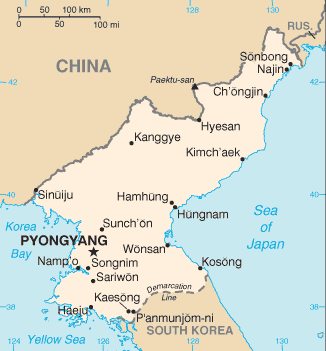
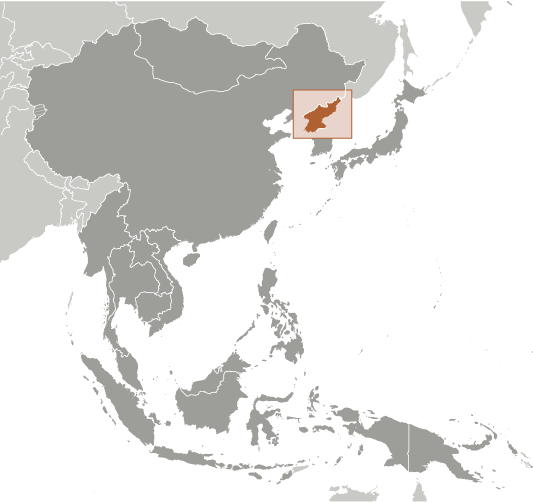
Click on map for larger view
Click on flag for Country Report



| TRAFFICKING IN PERSONS |
Current situation: North Korea is a source country for men, women, and children trafficked for the purposes of
forced labor and commercial sexual exploitation; the most common form of trafficking involves North Korean women
and girls who cross the border into China voluntarily; additionally, North Korean women and girls are lured out of
North Korea to escape poor social and economic conditions by the promise of food, jobs, and freedom, only to be
forced into prostitution, marriage, or exploitative labor arrangements once in China
Tier rating: Tier 3 - North Korea does not fully comply with minimum standards for the elimination of trafficking and
is not making significant efforts to do so; the government does not acknowledge the existence of human rights abuses in
the country or recognize trafficking, either within the country or transnationally; North Korea has not ratified the 2000
UN TIP Protocol (2008)
forced labor and commercial sexual exploitation; the most common form of trafficking involves North Korean women
and girls who cross the border into China voluntarily; additionally, North Korean women and girls are lured out of
North Korea to escape poor social and economic conditions by the promise of food, jobs, and freedom, only to be
forced into prostitution, marriage, or exploitative labor arrangements once in China
Tier rating: Tier 3 - North Korea does not fully comply with minimum standards for the elimination of trafficking and
is not making significant efforts to do so; the government does not acknowledge the existence of human rights abuses in
the country or recognize trafficking, either within the country or transnationally; North Korea has not ratified the 2000
UN TIP Protocol (2008)
Ro Tu Chol
Vice Premier since 3 September 2003
Vice Premier since 3 September 2003
Han Kwang Bok, Jo Pyong Ju, Jon Ha Chol, Kang Nung Su and Kim Rak Hui
Vice Premiers since 07 June 2010
Vice Premiers since 07 June 2010
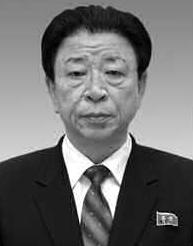
Pak Su Gil
Vice Premier since 18 September 2009
Vice Premier since 18 September 2009
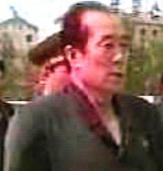
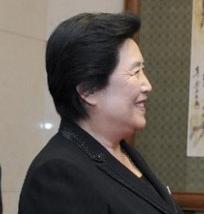
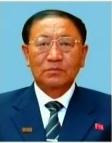
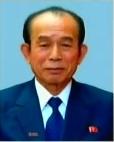
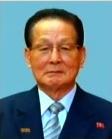
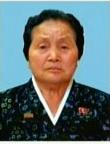
Kang Sok Ju
Vice Premier since 23 September 2010
Vice Premier since 23 September 2010
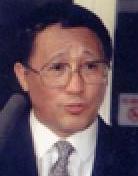
Kim Yong Jin
Vice Premier since 6 January 2012
Vice Premier since 6 January 2012

Kim In Sik and Ri Chol Man
Vice Premiers since 13 April 2012
Vice Premiers since 13 April 2012
Ri Mu Yong
Vice Premier since 31 May 2011
Vice Premier since 31 May 2011
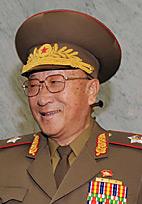
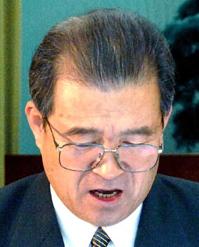
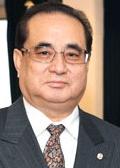
Hyon Yong Chol
Vice Premier since 19 July 2012
Vice Premier since 19 July 2012