| PANAMA Republic of Panama Republica de Panama Joined United Nations: 13 November 1945 Human Rights as assured by their constitution Click here Updated 07 November 2012 |
| CAPITAL |
| POPULATION |
| CHIEF OF STATE |
| SELECTION PROCESS |
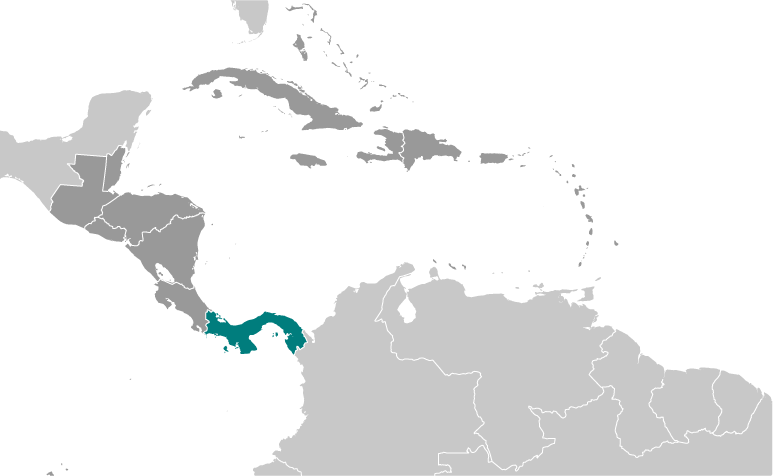
Panama

3,510,045 (July 2012 est.)
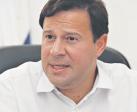
Ricardo Martinelli Berrocal
President since 1 July 2009
President since 1 July 2009

President and Vice President elected on the same ticket by
popular vote for five-year terms (eligible for two more terms);
election last held 3 May 2009
Next scheduled election: 2014
popular vote for five-year terms (eligible for two more terms);
election last held 3 May 2009
Next scheduled election: 2014
HEAD OF GOVERNMENT
According to the Panamanian Constitution, the President is both
the Chief of State and Head of Government
the Chief of State and Head of Government
| DECLARATION OF HUMAN RIGHTS |
| ETHNIC GROUPS |
Mestizo (mixed Amerindian and white) 70%, Amerindian and mixed (West Indian) 14%, white 10%, Amerindian 6%
| RELIGIONS |
Roman Catholic 85%, Protestant 15%
| GOVERNMENT STRUCTURE |
Constitutional democracy with 9 provinces (provincias, singular - provincia) and 1 territory (comarca);. Legal system
is based on civil law system; judicial review of legislative acts in the Supreme Court of Justice; accepts compulsory
ICJ jurisdiction, with reservations
Executive: President and Vice President elected on the same ticket by popular vote for five-year terms (not eligible
for immediate reelection; president and vice president must sit out two additional terms (10 years) before becoming
eligible for reelection); election last held 3 May 2009 (next to be held in 2014)
Legislative: Unicameral National Assembly (formerly called Legislative Assembly) or Asamblea Nacional (71
seats; members are elected by popular vote to serve five-year terms)
elections: last held 3 May 2009 (next to be held May 2014)
Judicial: Supreme Court of Justice or Corte Suprema de Justicia (nine judges appointed for 10-year terms); five
superior courts; three courts of appeal
is based on civil law system; judicial review of legislative acts in the Supreme Court of Justice; accepts compulsory
ICJ jurisdiction, with reservations
Executive: President and Vice President elected on the same ticket by popular vote for five-year terms (not eligible
for immediate reelection; president and vice president must sit out two additional terms (10 years) before becoming
eligible for reelection); election last held 3 May 2009 (next to be held in 2014)
Legislative: Unicameral National Assembly (formerly called Legislative Assembly) or Asamblea Nacional (71
seats; members are elected by popular vote to serve five-year terms)
elections: last held 3 May 2009 (next to be held May 2014)
Judicial: Supreme Court of Justice or Corte Suprema de Justicia (nine judges appointed for 10-year terms); five
superior courts; three courts of appeal
| LANGUAGES |
Spanish (official), English 14%; note - many Panamanians bilingual
| BRIEF HISTORY |
Panama had a rich Pre-Colombian heritage of native populations whose presence stretched back over 12,000 years.
The earliest traces of these indigenous peoples include fluted projectile points. Central Panama was home to some of
the first pottery-making villages in the Americas, such as the Monagrillo culture dating to about 2500-1700 BC. These
evolved into significant populations that are best known through the spectacular burials of the Conte site (dating to c.
AD 500-900) and the beautiful polychrome pottery of the Coclé style. At the time of European conquest, the
indigenous population of the isthmus was said to be between one and two million people. In 1501, Rodrigo de Bastidas
from Seville, who had accompanied Columbus on his second voyage to the Americas, sailed westward from the
Atlantic side of present day Colombia in an attempt to militarily observe the coastline of the Caribbean basin. Though
the poor condition of his ships forced him to turn back and return to Santo Domingo to effect repairs, de Bastidas
would reach La Punta de Manzanillo on Panama's upper Caribbean coast before having to abandon his effort. He is
acknowledged to be the first European to have claimed that part of the isthmus, which includes the famous San Blas
region of the Kuna Indians. Prior to the arrival of Europeans, Panama was widely settled by Chibchan, Chocoan, and
Cueva peoples, among whom the largest group were the Cueva (whose specific language affiliation is poorly
documented). A year after de Bastidas's arrival to Panama and on his fourth trip to the Americas, Christopher
Columbus would sail south to the isthmus from the northern, present day Central American states of Honduras and
Costa Rica. Columbus produced hand drawn maps of Panama's coastline and unlike de Bastidas explored Panama's
western territories. He landed at a place that is today called Almirante and proceeded along the coast to a part of the
territory he would name Veragua meaning 'to see water'. He continued his coastal journey up to the Chagres River,
taking refuge in a natural bay he christened Portobelo (Beautiful Port). This site would become a key port for colonial
Spain in 1597 replacing Nombre de Dios which had burned and had proven to be vulnerable to attack. Columbus
ended his explorations at Del Retrete having spent just shy of two months in what would be Panama. Vasco Núñez de
Balboa, who had been aboard de Bastidas's ship in 1501, made a hard-fought and tortuous trek from the Atlantic to
the Pacific in 1513 and was able to verify what indigenous people had reported; that the isthmus had another coast and
that there was another ocean. Balboa would call it the South Sea though it was later renamed the Pacific. By the late
17th century, Cueva culture had all but disappeared. Mining techniques included the looting of Indian cemeteries for the
pre-Colombian gold treasures they contained. Gold and silver were brought by ship from South America, hauled
across the isthmus, and loaded aboard ships for Spain. The route starting at Panamá la Vieja became known as the
Camino Real, or Royal Road, although was more commonly known as Camino de Cruces (Road of the Crosses)
because of the frequency of gravesites along the way. Panama was the site of the ill-fated, Darién scheme, which set up
a Scottish trading colony in the region in 1698. This failed for a number of reasons, and the resulting economic
depression and financial loss incurred played a significant part in influencing the union of Scotland with England in 1707.
Panama was part of the Spanish Empire for 300 years (1538-1821) and Panamanian fortunes fluctuated with the
geopolitical importance of the isthmus to the Spanish crown. In 1821 the isthmus joined with present Venezuela,
Colombia and Ecuador to form 'Gran' or Greater Colombia; this territory more or less corresponded to the old colonial
administrative district called the Viceroyalty of New Granada. Panama became its Department of the Isthmus, under a
number of successive governors. In September of 1830, under the guidance of General José Domingo Espinar, the
local military commander who rebelled against the nation's central government in response to his being transferred to
another command, Panama separated from Greater Colombia and requested that general Simón Bolívar take direct
command of the isthmus department. It made this a condition to its reunification with the rest of the country. Bolívar
rejected Espinar's actions, and though he did not assume control of the isthmus he desired and called for Panama to
rejoin the central state. Because of the overall political tension, Greater Colombia's final days were approaching.
Bolívar's vision for territorial unity disintegrated finally when General Juan Eligio Alzuru undertook a military coup
against Espinar's authority. By early 1831 with order restored, Panama had reincorporated itself to what was left of
Greater Colombia, which had adopted the name of Republic of New Granada. In the 1840s, two decades after the
Monroe Doctrine declared U.S. intentions to be the dominant imperial power in the Western Hemisphere, North
American and French interests became excited about the prospects of constructing railroads and/or canals through
Central America to quicken trans-oceanic travel. In 1846, the United States and Colombia signed the Bidlack
Mallarino Treaty, granting the U.S. rights to build railroads through Panama, as well as the power to militarily intervene
against revolt to guarantee Colombian control of the isthmus. The world's first transcontinental railroad, the Panama
Railway, was completed in 1855 across the Isthmus from Aspinwall/Colón to Panama City.[1] From 1850 until 1903,
the United States used troops to suppress independence revolts and quell social disturbances several times, creating a
long-term animosity among the Panamanian people against the US military. From 1880 to 1889, the French
Compagnie Universelle du Canal Interocéanique under the direction of Ferdinand de Lesseps, who had successfully
built the Suez Canal, attempted to construct a sea-level canal in the same general area as the present Panama Canal.
The company faced insurmountable health problems such as yellow fever and malaria as well as engineering challenges
caused by frequent landslides, slippage of equipment and mud. U.S. President Theodore Roosevelt convinced U.S.
Congress to take on the abandoned works in 1902, while Colombia was in the midst of the Thousand Days War. By
the middle of 1903, though, the Colombian government in Bogotá had balked at the prospect of a U.S. controlled
canal under the terms that Roosevelt's administration was offering. The U.S. was unwilling to alter its terms and quickly
changed tactics, encouraging a handful of Conservative Panamanian landholding families to demand a Panama
independent from Colombia. The USS Nashville was dispatched to local waters around the city of Colón to deter any
resistance from Bogotà and so, on November 3, 1903, with United States' encouragement and French financial
support, Panama proclaimed its independence. From 1903 until 1968, Panama was a republic dominated by a
commercially-oriented oligarchy. During the 1950s, the Panamanian military began to challenge the oligarchy's political
hegemony. In October 1968, Dr. Arnulfo Arias Madrid, elected president for the third time and twice ousted by the
Panamanian military, was again ousted (for the third time) as president by the corrupt National Guard after only 10
days in office. A military junta government was established, and the commander of the National Guard, Brig. Gen.
Omar Torrijos, emerged as the principal power in Panamanian political life. On September 7, 1977, an agreement was
signed for the complete transfer of the Canal and the fourteen US army bases from the US to Panama by 1999 apart
from granting the US a perpetual right of military intervention. Torrijos died in a mysterious plane crash on August 1,
1981. The circumstances of his death generated charges and speculation that he was the victim of an assassination plot.
By this time, Gen. Manuel Noriega was firmly in control of both the PDF and the civilian government, and had created
the Dignity Battalions to help suppress opposition. Despite undercover collaboration with Ronald Reagan on his Contra
war in Nicaragua (including the infamous Iran-Contra Affair), which had planes flying arms as well as drugs, relations
between the United States and the Panama regime worsened in the 1980s. When Guillermo Endara won the
Presidential elections held in May 1989, the Noriega regime annulled the election, citing massive US interference. The
US began sending thousands of troops to bases in the canal zone. Panamanian authorities alleged that US troops left
their bases and illegally stopped and searched vehicles in Panama. During one such search a firefight broke out between
US Marines and Panamanian soldiers and a US Marine was killed. On December 20, 1989 the United States troops
commenced an invasion of Panama. Their primary objectives were achieved quickly, and troop withdrawal began on
December 27. The US was obligated to hand control of the Panama Canal over to Panama on January 1 due to a
treaty signed decades before. Endara was sworn in as President at a US military base on the day of the invasion.
General Manuel Noriega is now serving a 40-year sentence for drug trafficking but slated for release in September
2007 on good behavior. Panama's counternarcotics cooperation has historically been excellent (in fact, officials of the
DEA praised the role played by Manuel Noriega prior to his falling-out with the U.S.) The Panamanian Government
has expanded money-laundering legislation and concluded with the U.S. a Counternarcotics Maritime Agreement and a
Stolen Vehicles Agreement. In 2004, Martín Torrijos again ran for president but this time won handily. He was
replaced by Ricardo Martinelli who was elected with single Vice Presidential running mate Juan Carlos Varela on 3
May 2009.
Sources: Wikipedia: History of Panama
The earliest traces of these indigenous peoples include fluted projectile points. Central Panama was home to some of
the first pottery-making villages in the Americas, such as the Monagrillo culture dating to about 2500-1700 BC. These
evolved into significant populations that are best known through the spectacular burials of the Conte site (dating to c.
AD 500-900) and the beautiful polychrome pottery of the Coclé style. At the time of European conquest, the
indigenous population of the isthmus was said to be between one and two million people. In 1501, Rodrigo de Bastidas
from Seville, who had accompanied Columbus on his second voyage to the Americas, sailed westward from the
Atlantic side of present day Colombia in an attempt to militarily observe the coastline of the Caribbean basin. Though
the poor condition of his ships forced him to turn back and return to Santo Domingo to effect repairs, de Bastidas
would reach La Punta de Manzanillo on Panama's upper Caribbean coast before having to abandon his effort. He is
acknowledged to be the first European to have claimed that part of the isthmus, which includes the famous San Blas
region of the Kuna Indians. Prior to the arrival of Europeans, Panama was widely settled by Chibchan, Chocoan, and
Cueva peoples, among whom the largest group were the Cueva (whose specific language affiliation is poorly
documented). A year after de Bastidas's arrival to Panama and on his fourth trip to the Americas, Christopher
Columbus would sail south to the isthmus from the northern, present day Central American states of Honduras and
Costa Rica. Columbus produced hand drawn maps of Panama's coastline and unlike de Bastidas explored Panama's
western territories. He landed at a place that is today called Almirante and proceeded along the coast to a part of the
territory he would name Veragua meaning 'to see water'. He continued his coastal journey up to the Chagres River,
taking refuge in a natural bay he christened Portobelo (Beautiful Port). This site would become a key port for colonial
Spain in 1597 replacing Nombre de Dios which had burned and had proven to be vulnerable to attack. Columbus
ended his explorations at Del Retrete having spent just shy of two months in what would be Panama. Vasco Núñez de
Balboa, who had been aboard de Bastidas's ship in 1501, made a hard-fought and tortuous trek from the Atlantic to
the Pacific in 1513 and was able to verify what indigenous people had reported; that the isthmus had another coast and
that there was another ocean. Balboa would call it the South Sea though it was later renamed the Pacific. By the late
17th century, Cueva culture had all but disappeared. Mining techniques included the looting of Indian cemeteries for the
pre-Colombian gold treasures they contained. Gold and silver were brought by ship from South America, hauled
across the isthmus, and loaded aboard ships for Spain. The route starting at Panamá la Vieja became known as the
Camino Real, or Royal Road, although was more commonly known as Camino de Cruces (Road of the Crosses)
because of the frequency of gravesites along the way. Panama was the site of the ill-fated, Darién scheme, which set up
a Scottish trading colony in the region in 1698. This failed for a number of reasons, and the resulting economic
depression and financial loss incurred played a significant part in influencing the union of Scotland with England in 1707.
Panama was part of the Spanish Empire for 300 years (1538-1821) and Panamanian fortunes fluctuated with the
geopolitical importance of the isthmus to the Spanish crown. In 1821 the isthmus joined with present Venezuela,
Colombia and Ecuador to form 'Gran' or Greater Colombia; this territory more or less corresponded to the old colonial
administrative district called the Viceroyalty of New Granada. Panama became its Department of the Isthmus, under a
number of successive governors. In September of 1830, under the guidance of General José Domingo Espinar, the
local military commander who rebelled against the nation's central government in response to his being transferred to
another command, Panama separated from Greater Colombia and requested that general Simón Bolívar take direct
command of the isthmus department. It made this a condition to its reunification with the rest of the country. Bolívar
rejected Espinar's actions, and though he did not assume control of the isthmus he desired and called for Panama to
rejoin the central state. Because of the overall political tension, Greater Colombia's final days were approaching.
Bolívar's vision for territorial unity disintegrated finally when General Juan Eligio Alzuru undertook a military coup
against Espinar's authority. By early 1831 with order restored, Panama had reincorporated itself to what was left of
Greater Colombia, which had adopted the name of Republic of New Granada. In the 1840s, two decades after the
Monroe Doctrine declared U.S. intentions to be the dominant imperial power in the Western Hemisphere, North
American and French interests became excited about the prospects of constructing railroads and/or canals through
Central America to quicken trans-oceanic travel. In 1846, the United States and Colombia signed the Bidlack
Mallarino Treaty, granting the U.S. rights to build railroads through Panama, as well as the power to militarily intervene
against revolt to guarantee Colombian control of the isthmus. The world's first transcontinental railroad, the Panama
Railway, was completed in 1855 across the Isthmus from Aspinwall/Colón to Panama City.[1] From 1850 until 1903,
the United States used troops to suppress independence revolts and quell social disturbances several times, creating a
long-term animosity among the Panamanian people against the US military. From 1880 to 1889, the French
Compagnie Universelle du Canal Interocéanique under the direction of Ferdinand de Lesseps, who had successfully
built the Suez Canal, attempted to construct a sea-level canal in the same general area as the present Panama Canal.
The company faced insurmountable health problems such as yellow fever and malaria as well as engineering challenges
caused by frequent landslides, slippage of equipment and mud. U.S. President Theodore Roosevelt convinced U.S.
Congress to take on the abandoned works in 1902, while Colombia was in the midst of the Thousand Days War. By
the middle of 1903, though, the Colombian government in Bogotá had balked at the prospect of a U.S. controlled
canal under the terms that Roosevelt's administration was offering. The U.S. was unwilling to alter its terms and quickly
changed tactics, encouraging a handful of Conservative Panamanian landholding families to demand a Panama
independent from Colombia. The USS Nashville was dispatched to local waters around the city of Colón to deter any
resistance from Bogotà and so, on November 3, 1903, with United States' encouragement and French financial
support, Panama proclaimed its independence. From 1903 until 1968, Panama was a republic dominated by a
commercially-oriented oligarchy. During the 1950s, the Panamanian military began to challenge the oligarchy's political
hegemony. In October 1968, Dr. Arnulfo Arias Madrid, elected president for the third time and twice ousted by the
Panamanian military, was again ousted (for the third time) as president by the corrupt National Guard after only 10
days in office. A military junta government was established, and the commander of the National Guard, Brig. Gen.
Omar Torrijos, emerged as the principal power in Panamanian political life. On September 7, 1977, an agreement was
signed for the complete transfer of the Canal and the fourteen US army bases from the US to Panama by 1999 apart
from granting the US a perpetual right of military intervention. Torrijos died in a mysterious plane crash on August 1,
1981. The circumstances of his death generated charges and speculation that he was the victim of an assassination plot.
By this time, Gen. Manuel Noriega was firmly in control of both the PDF and the civilian government, and had created
the Dignity Battalions to help suppress opposition. Despite undercover collaboration with Ronald Reagan on his Contra
war in Nicaragua (including the infamous Iran-Contra Affair), which had planes flying arms as well as drugs, relations
between the United States and the Panama regime worsened in the 1980s. When Guillermo Endara won the
Presidential elections held in May 1989, the Noriega regime annulled the election, citing massive US interference. The
US began sending thousands of troops to bases in the canal zone. Panamanian authorities alleged that US troops left
their bases and illegally stopped and searched vehicles in Panama. During one such search a firefight broke out between
US Marines and Panamanian soldiers and a US Marine was killed. On December 20, 1989 the United States troops
commenced an invasion of Panama. Their primary objectives were achieved quickly, and troop withdrawal began on
December 27. The US was obligated to hand control of the Panama Canal over to Panama on January 1 due to a
treaty signed decades before. Endara was sworn in as President at a US military base on the day of the invasion.
General Manuel Noriega is now serving a 40-year sentence for drug trafficking but slated for release in September
2007 on good behavior. Panama's counternarcotics cooperation has historically been excellent (in fact, officials of the
DEA praised the role played by Manuel Noriega prior to his falling-out with the U.S.) The Panamanian Government
has expanded money-laundering legislation and concluded with the U.S. a Counternarcotics Maritime Agreement and a
Stolen Vehicles Agreement. In 2004, Martín Torrijos again ran for president but this time won handily. He was
replaced by Ricardo Martinelli who was elected with single Vice Presidential running mate Juan Carlos Varela on 3
May 2009.
Sources: Wikipedia: History of Panama
| ECONOMIC OVERVIEW |
Panama's dollar-based economy rests primarily on a well-developed services sector that accounts for more than
three-quarters of GDP. Services include operating the Panama Canal, logistics, banking, the Colon Free Zone,
insurance, container ports, flagship registry, and tourism. Economic growth will be bolstered by the Panama Canal
expansion project that began in 2007 and is scheduled to be completed by 2014 at a cost of $5.3 billion - about 10%
of current GDP. The expansion project will more than double the Canal''s capacity, enabling it to accommodate ships
that are too large to traverse the existing canal. The United States and China are the top users of the Canal. Panama
also plans to construct a metro system in Panama City, valued at $1.2 billion and scheduled to be completed by 2014.
Panama''s booming transportation and logistics services sectors, along with aggressive infrastructure development
projects, have lead the economy to continued growth in 2011. Strong economic performance has not translated into
broadly shared prosperity, as Panama has the second worst income distribution in Latin America. About 30% of the
population lives in poverty; however, from 2006 to 2010 poverty was reduced by 10 percentage points, while
unemployment dropped from 12% to less than 3% of the labor force in 2011. A US-Panama Trade Promotion
Agreement was approved by Congress and signed into law in October 2011. Seeking removal from the Organization
of Economic Development's gray-list of tax havens, Panama has also recently signed various double taxation treaties
with other nations.
Source: CIA World Factbook (Select Panama)
three-quarters of GDP. Services include operating the Panama Canal, logistics, banking, the Colon Free Zone,
insurance, container ports, flagship registry, and tourism. Economic growth will be bolstered by the Panama Canal
expansion project that began in 2007 and is scheduled to be completed by 2014 at a cost of $5.3 billion - about 10%
of current GDP. The expansion project will more than double the Canal''s capacity, enabling it to accommodate ships
that are too large to traverse the existing canal. The United States and China are the top users of the Canal. Panama
also plans to construct a metro system in Panama City, valued at $1.2 billion and scheduled to be completed by 2014.
Panama''s booming transportation and logistics services sectors, along with aggressive infrastructure development
projects, have lead the economy to continued growth in 2011. Strong economic performance has not translated into
broadly shared prosperity, as Panama has the second worst income distribution in Latin America. About 30% of the
population lives in poverty; however, from 2006 to 2010 poverty was reduced by 10 percentage points, while
unemployment dropped from 12% to less than 3% of the labor force in 2011. A US-Panama Trade Promotion
Agreement was approved by Congress and signed into law in October 2011. Seeking removal from the Organization
of Economic Development's gray-list of tax havens, Panama has also recently signed various double taxation treaties
with other nations.
Source: CIA World Factbook (Select Panama)
| POLITICAL CLIMATE |
Politics of Panama takes place in a framework of a presidential representative democratic republic, whereby the
President of Panama is both head of state and head of government, and of a multi-party system. Executive power is
exercised by the government. Legislative power is vested in both the government and the National Assembly. The
Judiciary is independent of the executive and the legislature. The branches are according to Panama's Political
Constitution of 1972, reformed by the Actos Reformatorios of 1978, and by the Acto Constitucional in 1983. , united
in cooperation and limited through the classic system of checks and balances. Three independent organizations with
clearly defined responsibilities are found in the Political Constitution. Thus, the Comptroller General of the Republic has
the responsibility to manage public funds. There also exists the Electoral Tribunal, which has the responsibility to
guarantee liberty, transparency, and the efficacy of the popular vote; and, finally, the Ministry of the Public exists to
oversee interests of State and of the municipalities.
The executive branch includes a president and two vice presidents. The president and the vice-presidents are elected
on one ballot for a single non-renewable five year term by the people. With the 2009 elections, only one vice-president
was included on the presidential ticket.
Sources: Wikipedia: Politics of Panama
President of Panama is both head of state and head of government, and of a multi-party system. Executive power is
exercised by the government. Legislative power is vested in both the government and the National Assembly. The
Judiciary is independent of the executive and the legislature. The branches are according to Panama's Political
Constitution of 1972, reformed by the Actos Reformatorios of 1978, and by the Acto Constitucional in 1983. , united
in cooperation and limited through the classic system of checks and balances. Three independent organizations with
clearly defined responsibilities are found in the Political Constitution. Thus, the Comptroller General of the Republic has
the responsibility to manage public funds. There also exists the Electoral Tribunal, which has the responsibility to
guarantee liberty, transparency, and the efficacy of the popular vote; and, finally, the Ministry of the Public exists to
oversee interests of State and of the municipalities.
The executive branch includes a president and two vice presidents. The president and the vice-presidents are elected
on one ballot for a single non-renewable five year term by the people. With the 2009 elections, only one vice-president
was included on the presidential ticket.
Sources: Wikipedia: Politics of Panama
| INTERNATIONAL DISPUTES |
Freedom In The World 2012 Report
Political Rights Score: 1
Civil Liberties Score: 2
Status: Free
Overview
The governing Alliance for Change coalition collapsed in September 2011 when the Panameñista Party withdrew in protest over
President Ricardo Martinelli’s plan to hold a referendum on electoral reforms that could allow him to run for a second consecutive
term. Juan Carlos Varela, head of the Panameñista Party, was subsequently dismissed from his position as foreign minister.
Freedom of the press continued to be infringed upon in 2011.
In the 2009 elections, Ricardo Martinelli of the center-right, business-oriented Democratic Change (CD) party won the presidency
as part of the Alliance for Change coalition with the Panameñista Party (PP), capturing 60 percent of the vote. Balbina Herrera of
the PRD, who had served as housing minister under the outgoing administration, placed second with 38 percent. The PRD won 26
of 71 congressional seats, followed by the PP with 22 seats, the CD with 14 seats, and smaller parties and independents each
taking fewer than 5 seats.
Martinelli made several controversial decisions in 2010, including the passage of Law 30, which weakened labor unions, relaxed
environmental laws, and reduced penalties for police officers who break the law while on duty. In October, Martinelli agreed to
repeal the controversial measures contained in the original legislation following public protests.
The CD’s congressional representation increased from 17 to 35 members by the end of 2011 due to changes in party affiliation by
several deputies. The CD’s alliance with the PP collapsed in August 2011 when Martinelli announced plans to hold a referendum on
proposed electoral reforms, including abolishing the requirement that presidents may not seek consecutive terms in office. The PP’
s opposition to the proposal also led to Martinelli dismissing Juan Carlos Varela—the president of the PP and the country’s vice
president—as foreign minister. The finance minister and several other PP ministers, who had been widely credited with Panama’s
economic growth, tendered their resignations shortly thereafter. Martinelli’s approval ratings declined from 64 percent in May to 48
percent in November. Proposals to reform the constitution were continuing at year’s end.
Panama is an electoral democracy. The 2009 national elections were considered free and fair by international observers. The
president and deputies of the 71-seat unicameral National Assembly are elected by popular vote for five-year terms. Presidents may
not seek consecutive terms and must wait two terms before running again.
Anonymous campaign contributions were banned in 1999 in an effort to stem the infiltration of drug money into the political
process. Nevertheless, corruption remains widespread, and electoral reforms have been criticized for failing to improve the
transparency of campaign financing. Panama and the UN Office on Drugs and Crime signed an agreement in June 2011 to establish
a regional anticorruption academy. After serving 20 years in a U.S. jail for drug trafficking, racketeering, and money laundering,
former dictator Manuel Noriega was extradited to France in April 2010 to complete a seven-year prison term on money laundering
charges. However, in December 2011, France extradited Noriega to Panama to serve a 20-year sentence related to human rights
violations. Panama was ranked 86 out of 183 countries surveyed in Transparency International’s 2011 Corruption Perceptions
Index.
Click here to read more »
Political Rights Score: 1
Civil Liberties Score: 2
Status: Free
Overview
The governing Alliance for Change coalition collapsed in September 2011 when the Panameñista Party withdrew in protest over
President Ricardo Martinelli’s plan to hold a referendum on electoral reforms that could allow him to run for a second consecutive
term. Juan Carlos Varela, head of the Panameñista Party, was subsequently dismissed from his position as foreign minister.
Freedom of the press continued to be infringed upon in 2011.
In the 2009 elections, Ricardo Martinelli of the center-right, business-oriented Democratic Change (CD) party won the presidency
as part of the Alliance for Change coalition with the Panameñista Party (PP), capturing 60 percent of the vote. Balbina Herrera of
the PRD, who had served as housing minister under the outgoing administration, placed second with 38 percent. The PRD won 26
of 71 congressional seats, followed by the PP with 22 seats, the CD with 14 seats, and smaller parties and independents each
taking fewer than 5 seats.
Martinelli made several controversial decisions in 2010, including the passage of Law 30, which weakened labor unions, relaxed
environmental laws, and reduced penalties for police officers who break the law while on duty. In October, Martinelli agreed to
repeal the controversial measures contained in the original legislation following public protests.
The CD’s congressional representation increased from 17 to 35 members by the end of 2011 due to changes in party affiliation by
several deputies. The CD’s alliance with the PP collapsed in August 2011 when Martinelli announced plans to hold a referendum on
proposed electoral reforms, including abolishing the requirement that presidents may not seek consecutive terms in office. The PP’
s opposition to the proposal also led to Martinelli dismissing Juan Carlos Varela—the president of the PP and the country’s vice
president—as foreign minister. The finance minister and several other PP ministers, who had been widely credited with Panama’s
economic growth, tendered their resignations shortly thereafter. Martinelli’s approval ratings declined from 64 percent in May to 48
percent in November. Proposals to reform the constitution were continuing at year’s end.
Panama is an electoral democracy. The 2009 national elections were considered free and fair by international observers. The
president and deputies of the 71-seat unicameral National Assembly are elected by popular vote for five-year terms. Presidents may
not seek consecutive terms and must wait two terms before running again.
Anonymous campaign contributions were banned in 1999 in an effort to stem the infiltration of drug money into the political
process. Nevertheless, corruption remains widespread, and electoral reforms have been criticized for failing to improve the
transparency of campaign financing. Panama and the UN Office on Drugs and Crime signed an agreement in June 2011 to establish
a regional anticorruption academy. After serving 20 years in a U.S. jail for drug trafficking, racketeering, and money laundering,
former dictator Manuel Noriega was extradited to France in April 2010 to complete a seven-year prison term on money laundering
charges. However, in December 2011, France extradited Noriega to Panama to serve a 20-year sentence related to human rights
violations. Panama was ranked 86 out of 183 countries surveyed in Transparency International’s 2011 Corruption Perceptions
Index.
Click here to read more »
Organized illegal narcotics operations in Colombia operate within the remote border region with Panama
| REFUGEES AND INTERNALLY DISPLACED PERSONS (IDP) |
Refugees (country of origin): 15,432 (Colombia) (2010)
| ILLICIT DRUGS |
Schools and Armed Conflict
July 20, 2011
Appendix: Laws and State Practice by Country
Panama
Key Recommendations for Panama
Enact domestic legislation that prohibits as a war crime intentionally attacking a building dedicated to education, provided it is not
a military objective, in line with the Rome Statute.
Consider enacting domestic legislation or instituting regulations or official policies that would prohibit armed forces and armed
groups from using or occupying schools, school grounds, or other education facilities in a manner that either violates the
international humanitarian law requirement to take all feasible precautions to protect the civilian population and civilian objects
against the effects of attacks, or that violates the right to education under international human rights law.
· At a minimum, devise regulations for state security forces that prescribe in which circumstances, if ever, a building or
other property dedicated to education, can be used or occupied during periods of conflict; that concurrent use of a site for both
education and military purposes is impermissible; the appropriate planning and logistics required prior to operations to minimize the
need for a force to use an education institution; the mitigating action required by the government to ensure that such use and
occupation does not endanger civilians or violate students’ right to education; and appropriate penalties for violations of such
regulations.
Discussion of Domestic Law and Policies
Under Panama’s constitution the country may have no military; however the police could be temporarily organized for the
protection of the country’s borders and territory.
Attacks on civilians objects have been classified as “crimes against persons and property protected by international humanitarian
law” in the Panamanian Penal Code.[330] However, national legislation does not explicitly mention that schools and other
educational institutions should not be subject to attack.[331]
Panamanian law does not establish any regulations regarding the use of school building by security forces[332]
The Minister of Public Security, José Raúl Mulino, informed Human Rights Watch that “in some cases” education centers will also
be considered cultural property and therefore protected under the Hague Protocol of 1954 and the Second Protocol to the Hague
Convention of 1999, to both of which Panama is a party.
Article 87 of Panama’s constitution states: “All have the right to an education, and the responsibility to become educated.”
Click here to read more »
July 20, 2011
Appendix: Laws and State Practice by Country
Panama
Key Recommendations for Panama
Enact domestic legislation that prohibits as a war crime intentionally attacking a building dedicated to education, provided it is not
a military objective, in line with the Rome Statute.
Consider enacting domestic legislation or instituting regulations or official policies that would prohibit armed forces and armed
groups from using or occupying schools, school grounds, or other education facilities in a manner that either violates the
international humanitarian law requirement to take all feasible precautions to protect the civilian population and civilian objects
against the effects of attacks, or that violates the right to education under international human rights law.
· At a minimum, devise regulations for state security forces that prescribe in which circumstances, if ever, a building or
other property dedicated to education, can be used or occupied during periods of conflict; that concurrent use of a site for both
education and military purposes is impermissible; the appropriate planning and logistics required prior to operations to minimize the
need for a force to use an education institution; the mitigating action required by the government to ensure that such use and
occupation does not endanger civilians or violate students’ right to education; and appropriate penalties for violations of such
regulations.
Discussion of Domestic Law and Policies
Under Panama’s constitution the country may have no military; however the police could be temporarily organized for the
protection of the country’s borders and territory.
Attacks on civilians objects have been classified as “crimes against persons and property protected by international humanitarian
law” in the Panamanian Penal Code.[330] However, national legislation does not explicitly mention that schools and other
educational institutions should not be subject to attack.[331]
Panamanian law does not establish any regulations regarding the use of school building by security forces[332]
The Minister of Public Security, José Raúl Mulino, informed Human Rights Watch that “in some cases” education centers will also
be considered cultural property and therefore protected under the Hague Protocol of 1954 and the Second Protocol to the Hague
Convention of 1999, to both of which Panama is a party.
Article 87 of Panama’s constitution states: “All have the right to an education, and the responsibility to become educated.”
Click here to read more »
Major cocaine transshipment point and primary money-laundering center for narcotics revenue; money-laundering
activity is especially heavy in the Colon Free Zone; offshore financial center; negligible signs of coca cultivation;
monitoring of financial transactions is improving; official corruption remains a major problem
activity is especially heavy in the Colon Free Zone; offshore financial center; negligible signs of coca cultivation;
monitoring of financial transactions is improving; official corruption remains a major problem
Thursday, November 01, 2012 at 5:59 pm
Panama inaugurates Regional Anticorruption Academy
The Secretary of the Presidency, Roberto Henriquez, inaugurated the Regional Anticorruption Academy for Central America and
the Caribbean, which is the first in the region and receives support from the National Council of Transparency against Corruption
and the United Nations Office on Drugs and Crime.
At the event, Secretary Henriquez, who presides the National Council of Transparency against Corruption, stated that the
inauguration of the Academy emerges as a petition from the National Government to ratify Panama´s compromise on the global
fight against this social problem.
“Being aware that corruption limits the capabilities of the States and its citizens and that dealing with this evil requires the
knowledge of this complex phenomenon, today we make this project a reality, which is a significant contribution to our country
and the region, because we understand that corruption threatens democratic states, as well as the consolidation of democracy
itself”, said Henriquez.
Likewise, the Secretary mentioned the efforts the Government of President Ricardo Martinelli is making to fight this calamity, as
well as the presence in Panama of the team of international experts that are making evaluations of the fulfillment of the dispositions
of the United Nations Convention against Corruption.
Panamanian authorities and the Chief of the Corruption and Economic Crime Branch of the UNODC, Dimitri Vlassis, explained that
the Academy will serve as a permanent formative instrument and offer specialized courses directed to the public and private sector
to prevent, investigate and repress corruption through the participation of judicial and civil institutions, as well as ONGs.
At the same time, the executive secretary of the National Council of Transparency Against Corruption, Abigail Benzadon said that
the inauguration of the Academy is an important step forward and ratifies Panama´s efforts in fighting and preventing corruption.
“We continue with the firm conviction that contributions, such as the creation of the Academy, and joint efforts will strengthen the
road in the fight against this evil that affects our communities”, said the anticorruption czarina.
The coordinator of the Regional Anticorruption Academy, Melissa Flynn; regional representative of the Regional Office for Central
America and the Caribbean of the United Nations Office on Drugs and Crime, Amado De Andres; the archbishop of Panama, Jose
Domingo Ulloa and other special guests assisted the activity.
Click here to read more »
Panama inaugurates Regional Anticorruption Academy
The Secretary of the Presidency, Roberto Henriquez, inaugurated the Regional Anticorruption Academy for Central America and
the Caribbean, which is the first in the region and receives support from the National Council of Transparency against Corruption
and the United Nations Office on Drugs and Crime.
At the event, Secretary Henriquez, who presides the National Council of Transparency against Corruption, stated that the
inauguration of the Academy emerges as a petition from the National Government to ratify Panama´s compromise on the global
fight against this social problem.
“Being aware that corruption limits the capabilities of the States and its citizens and that dealing with this evil requires the
knowledge of this complex phenomenon, today we make this project a reality, which is a significant contribution to our country
and the region, because we understand that corruption threatens democratic states, as well as the consolidation of democracy
itself”, said Henriquez.
Likewise, the Secretary mentioned the efforts the Government of President Ricardo Martinelli is making to fight this calamity, as
well as the presence in Panama of the team of international experts that are making evaluations of the fulfillment of the dispositions
of the United Nations Convention against Corruption.
Panamanian authorities and the Chief of the Corruption and Economic Crime Branch of the UNODC, Dimitri Vlassis, explained that
the Academy will serve as a permanent formative instrument and offer specialized courses directed to the public and private sector
to prevent, investigate and repress corruption through the participation of judicial and civil institutions, as well as ONGs.
At the same time, the executive secretary of the National Council of Transparency Against Corruption, Abigail Benzadon said that
the inauguration of the Academy is an important step forward and ratifies Panama´s efforts in fighting and preventing corruption.
“We continue with the firm conviction that contributions, such as the creation of the Academy, and joint efforts will strengthen the
road in the fight against this evil that affects our communities”, said the anticorruption czarina.
The coordinator of the Regional Anticorruption Academy, Melissa Flynn; regional representative of the Regional Office for Central
America and the Caribbean of the United Nations Office on Drugs and Crime, Amado De Andres; the archbishop of Panama, Jose
Domingo Ulloa and other special guests assisted the activity.
Click here to read more »
| HUMAN RIGHTS STATEMENTS, ANALYSIS AND CRITIQUES |
2011 Human Rights Report: Panama
Bureau of Democracy, Human Rights, and Labor
2011 Country Reports on Human Rights Practices
May 25, 2012
Panama is a constitutional, multiparty democracy. In 2009 voters chose Ricardo A. Martinelli Berrocal as president in national
elections that international and domestic observers considered generally free and fair. Security forces reported to civilian authorities.
The principle human rights abuses reported during the year were harsh prison conditions, judicial ineffectiveness, and
discrimination against various groups and individuals, including some cases of violence.
Other human rights abuses included problems with freedom of the press, trafficking in persons, and child labor.
The government did not actively prosecute alleged cases of corruption or abuse of authority by government officials but took steps
to improve the functioning of the judiciary and penitentiary systems.
Click here to read more »
Bureau of Democracy, Human Rights, and Labor
2011 Country Reports on Human Rights Practices
May 25, 2012
Panama is a constitutional, multiparty democracy. In 2009 voters chose Ricardo A. Martinelli Berrocal as president in national
elections that international and domestic observers considered generally free and fair. Security forces reported to civilian authorities.
The principle human rights abuses reported during the year were harsh prison conditions, judicial ineffectiveness, and
discrimination against various groups and individuals, including some cases of violence.
Other human rights abuses included problems with freedom of the press, trafficking in persons, and child labor.
The government did not actively prosecute alleged cases of corruption or abuse of authority by government officials but took steps
to improve the functioning of the judiciary and penitentiary systems.
Click here to read more »
TRANSLATED FROM SPANISH BY GOOGLE TRANSLATE
30/08/12 - World
TRUTH AND JUSTICE FOR MURDERED AND MISSING THE DICTDURA: PENDING TASK
By Copodehupa, Panama
A recent find in these days of human remains in a vacant lot in the neighborhood of El Chorrillo reaffirms martyr the tragedy of
disappearances in Panama, is forcefully as those from the period of the military dictatorship of Omar Torrijos Herrera, Manuel
Antonio Noriega and others (which began on October 11, 1968), the invasion of the U.S. Army in Panama on December 20, 1989,
or criminal acts as is happening at an alarming rate in recent times.
Human rights of personal integrity, security and the sacred right to life is being violated, historically and in the present day, which
means an increasing disrespect, disregard, neglect to set human rights as are established in the Universal Declaration of UN Human
Rights, in various instruments on different subjects as well as in Panamanian law, of national authorities.
The Coordinadora Popular Panama Human Rights and the Committee of Relatives of Disappeared and Murdered in Panama Hector
Gallego, we deal with the tragic consequences of military coup, took advantage of the International Day of the Disappeared, to
reiterate the following:
· Our commitment to continue fighting and demanding the truth, that justice is done and to break the impunity prevailing in the
country since then.
· Our appeal to the national authorities to give greater impetus to true and the steps taken to do justice.
· Make Bureau of Understanding, achieved with the national government, an active and belligerent struggle term platform to
accelerate the processes of justice of the pending cases, prosecute the masterminds and perpetrators of crimes against humanity,
do serve their sentences in prisons who have been sentenced, the moral and economic families of the victims and keep alive the
memory of the events and consequences of the military dictatorship through the inclusion of the topic in the curriculum system
education.
· A call to the families of the victims to join, to coordinate actions and exert pressure in order to be heard.
· Vehemently urge those who know or witnesses of crimes during the military dictatorship to approach our committee to present
their reports.
We are looking forward to the early arrival of the Argentine Forensic Anthropology Team, EAAF, whom the prosecution is
reaching agreements in order to make the analysis of the bones in place custody in Medicine, with the expectation of family that
between them may be remains of husbands, brothers, sons forcibly disappeared during the military dictatorship.
We believe it is urgent to overcome the indifference, negligence and complicity, even fears, versus time of the military dictatorship
of Omar Torrijos Herrera, Manuel Antonio Noriega and others, leading to a kind of national agreement to turn the page and only
watch the futuro.Sin Truth without justice, no peace in the country, larger only Impunity and human rights violation.
Popular Coordinator of Human Rights in Panama, COPODEHUPA.
Committee of Relatives of Disappeared and Murdered in Panama Hector Gallego, COFADEPA-HG.
Panama, August 30, 2012.
Click here to read more »
30/08/12 - World
TRUTH AND JUSTICE FOR MURDERED AND MISSING THE DICTDURA: PENDING TASK
By Copodehupa, Panama
A recent find in these days of human remains in a vacant lot in the neighborhood of El Chorrillo reaffirms martyr the tragedy of
disappearances in Panama, is forcefully as those from the period of the military dictatorship of Omar Torrijos Herrera, Manuel
Antonio Noriega and others (which began on October 11, 1968), the invasion of the U.S. Army in Panama on December 20, 1989,
or criminal acts as is happening at an alarming rate in recent times.
Human rights of personal integrity, security and the sacred right to life is being violated, historically and in the present day, which
means an increasing disrespect, disregard, neglect to set human rights as are established in the Universal Declaration of UN Human
Rights, in various instruments on different subjects as well as in Panamanian law, of national authorities.
The Coordinadora Popular Panama Human Rights and the Committee of Relatives of Disappeared and Murdered in Panama Hector
Gallego, we deal with the tragic consequences of military coup, took advantage of the International Day of the Disappeared, to
reiterate the following:
· Our commitment to continue fighting and demanding the truth, that justice is done and to break the impunity prevailing in the
country since then.
· Our appeal to the national authorities to give greater impetus to true and the steps taken to do justice.
· Make Bureau of Understanding, achieved with the national government, an active and belligerent struggle term platform to
accelerate the processes of justice of the pending cases, prosecute the masterminds and perpetrators of crimes against humanity,
do serve their sentences in prisons who have been sentenced, the moral and economic families of the victims and keep alive the
memory of the events and consequences of the military dictatorship through the inclusion of the topic in the curriculum system
education.
· A call to the families of the victims to join, to coordinate actions and exert pressure in order to be heard.
· Vehemently urge those who know or witnesses of crimes during the military dictatorship to approach our committee to present
their reports.
We are looking forward to the early arrival of the Argentine Forensic Anthropology Team, EAAF, whom the prosecution is
reaching agreements in order to make the analysis of the bones in place custody in Medicine, with the expectation of family that
between them may be remains of husbands, brothers, sons forcibly disappeared during the military dictatorship.
We believe it is urgent to overcome the indifference, negligence and complicity, even fears, versus time of the military dictatorship
of Omar Torrijos Herrera, Manuel Antonio Noriega and others, leading to a kind of national agreement to turn the page and only
watch the futuro.Sin Truth without justice, no peace in the country, larger only Impunity and human rights violation.
Popular Coordinator of Human Rights in Panama, COPODEHUPA.
Committee of Relatives of Disappeared and Murdered in Panama Hector Gallego, COFADEPA-HG.
Panama, August 30, 2012.
Click here to read more »
21 December 2011
Committee on the Rights of the Child
Fifty-eighth session
19 September – 7 October 2011
Consideration of reports submitted by States parties under article 44 of the Convention
Concluding observations: Panama
I. Introduction
2. The Committee welcomes the submission of the consolidated third and fourth periodic reports of the State party (CRC/C/PAN/3-
4) and the written replies to its list of issues (CRC/C/PAN/Q/3-4/Add.1), which allowed for a better understanding of the
situation in the State party. The Committee expresses appreciation for the constructive and open dialogue held with the high-level
and cross-sectoral delegation of the State party.
II. Follow-up measures undertaken and progress achieved by
the State party
3. The Committee welcomes the adoption of Law 61/2008 (General Adoption Act) which establishes safeguards for Panamanian
children in international adoptions and is harmonized with the Hague Convention on Protection of Children and Cooperation in
Respect of Inter-country Adoption.
4. The Committee also welcomes the ratification of:
(a) The International Convention for the Protection of All Persons from Enforced Disappearance in 2011;
III. Main areas of concern and recommendations
A. General measures of implementation (arts. 4, 42 and 44, para. 6, of the Convention)
The Committee’s previous recommendations
7. While welcoming the State party’s efforts to implement the concluding observations on its previous reports (CRC/C/15/Add.
233), the Committee regrets that some of the recommendations contained therein have not been implemented or only partially
implemented.
8. The Committee urges the State party to take all necessary measures to address those recommendations from the concluding
observations on its second periodic report under the Convention that have not been implemented or sufficiently implemented,
particularly those related to a comprehensive law to protect children’s rights; a national plan to promote and protect the rights of
the child; the minimum age of marriage; universal birth registration; early pregnancies and adolescent health; discrimination against
children (especially Afro-Panamanian and indigenous children); illegal arrest, detention and ill-treatment; juvenile justice; and
conditions in detention centres.
Click here to read more »
Committee on the Rights of the Child
Fifty-eighth session
19 September – 7 October 2011
Consideration of reports submitted by States parties under article 44 of the Convention
Concluding observations: Panama
I. Introduction
2. The Committee welcomes the submission of the consolidated third and fourth periodic reports of the State party (CRC/C/PAN/3-
4) and the written replies to its list of issues (CRC/C/PAN/Q/3-4/Add.1), which allowed for a better understanding of the
situation in the State party. The Committee expresses appreciation for the constructive and open dialogue held with the high-level
and cross-sectoral delegation of the State party.
II. Follow-up measures undertaken and progress achieved by
the State party
3. The Committee welcomes the adoption of Law 61/2008 (General Adoption Act) which establishes safeguards for Panamanian
children in international adoptions and is harmonized with the Hague Convention on Protection of Children and Cooperation in
Respect of Inter-country Adoption.
4. The Committee also welcomes the ratification of:
(a) The International Convention for the Protection of All Persons from Enforced Disappearance in 2011;
III. Main areas of concern and recommendations
A. General measures of implementation (arts. 4, 42 and 44, para. 6, of the Convention)
The Committee’s previous recommendations
7. While welcoming the State party’s efforts to implement the concluding observations on its previous reports (CRC/C/15/Add.
233), the Committee regrets that some of the recommendations contained therein have not been implemented or only partially
implemented.
8. The Committee urges the State party to take all necessary measures to address those recommendations from the concluding
observations on its second periodic report under the Convention that have not been implemented or sufficiently implemented,
particularly those related to a comprehensive law to protect children’s rights; a national plan to promote and protect the rights of
the child; the minimum age of marriage; universal birth registration; early pregnancies and adolescent health; discrimination against
children (especially Afro-Panamanian and indigenous children); illegal arrest, detention and ill-treatment; juvenile justice; and
conditions in detention centres.
Click here to read more »
TRANSLATED FROM SPANISH BY GOOGLE TRANSLATE
Friday, November 2, 2012 10:28
OMBUDSMAN PRELIMINARY REPORT PRESENTS on the events REJECTION BY LAW N ° 72
The Ombudsman, Patria Portugal, said that in past events that occurred in the province of Colón in rejection of Act 72 that allowed
the sale of the land in the Colon Free Zone, the National Police used excessive force to control outbreaks of violence and civil
disobedience thereby violating several human rights.
The Ombudsman presented the preliminary report on the investigations conducted in relation to the demonstrations raised in the city
of Colon and Panama, according to the owner's actions units of the National Police violated rights: Life, Personal Integrity, personal
liberty, judicial protection and due process, all covered by the Constitution of the Republic of Panama, American Convention on
Human Rights and the International Covenant on Civil and Political Rights, among others.
It also supports the Ombudsman's Report that police units did not stick to the protocols and the correct application of the rules for
the containment of public demonstrations, as it was proved that shot to the torso and faces of people, including minors and older
adults, a situation that unfortunately brought the loss of human lives and a plural number of people injured.
Similarly, the Ombudsman stated that these clashes product handles count 48 wounded, 32 of them by gunfire and 16 wounded by
buckshot, three people dead, including a minor figure. Additionally, some 13 police units were seriously injured by the use of
firearms by groups outside the active forces of Columbus.
In this regard, the Ombudsman calls for an inquiry into the events that occurred in the province of Colon and Panama City,
especially in cases which was compromised the right to life, personal integrity and individual liberty.
Authorities also suggests eliminating the use of lethal force weapons, pellets or similar, as tools to deter or control protests.
Click here to read more »
Friday, November 2, 2012 10:28
OMBUDSMAN PRELIMINARY REPORT PRESENTS on the events REJECTION BY LAW N ° 72
The Ombudsman, Patria Portugal, said that in past events that occurred in the province of Colón in rejection of Act 72 that allowed
the sale of the land in the Colon Free Zone, the National Police used excessive force to control outbreaks of violence and civil
disobedience thereby violating several human rights.
The Ombudsman presented the preliminary report on the investigations conducted in relation to the demonstrations raised in the city
of Colon and Panama, according to the owner's actions units of the National Police violated rights: Life, Personal Integrity, personal
liberty, judicial protection and due process, all covered by the Constitution of the Republic of Panama, American Convention on
Human Rights and the International Covenant on Civil and Political Rights, among others.
It also supports the Ombudsman's Report that police units did not stick to the protocols and the correct application of the rules for
the containment of public demonstrations, as it was proved that shot to the torso and faces of people, including minors and older
adults, a situation that unfortunately brought the loss of human lives and a plural number of people injured.
Similarly, the Ombudsman stated that these clashes product handles count 48 wounded, 32 of them by gunfire and 16 wounded by
buckshot, three people dead, including a minor figure. Additionally, some 13 police units were seriously injured by the use of
firearms by groups outside the active forces of Columbus.
In this regard, the Ombudsman calls for an inquiry into the events that occurred in the province of Colon and Panama City,
especially in cases which was compromised the right to life, personal integrity and individual liberty.
Authorities also suggests eliminating the use of lethal force weapons, pellets or similar, as tools to deter or control protests.
Click here to read more »
7 February 2012
URGENT ACTION
FEARS FOR PROTESTERS AFTER TWO KILLED
Two protestors were killed and reportedly over 40 people injured when police dispersed a protest by Indigenous Peoples in Panama
on 5 February. Protests are likely to continue across the country and there are fears that excessive force may be used by State
security forces.
On 30 January members of the Ngäbe-Buglé people took to the streets to protest against an amendment to a bill which they believe
will leave their lands vulnerable to the construction of hydroelectric projects, in the provinces of Chiriquí, Veraguas, and Bocas del
Toro in the north of the country. Since then protests have grown and parts of the Pan-American Highway have been blocked by
thousands of demonstrators. On 5 February one demonstrator, Jerónimo Rodríguez Tugri, was shot dead in San Felix, Chiriquí
province, and there are reports that another protestor is in a critical condition. Over 40 others have reportedly been wounded,
including police officers. On 7 February the media reported the death of another demonstrator, Mauricio Méndez, in David, Chiriquí
province.
The circumstances of his death have yet to be confirmed.
There are numerous allegations of excessive force on the part of the police by human rights, environmental and church groups,
including the use of firearms to disperse the protestors which resulted in the death of Jerónimo Rodríguez Tugrí.
Media and civil society organizations have also reported the use tear gas in close proximity to medical centres, the denial of access
to legal representation of those arrested, and lack of access to medical attention for the injured. After initially denying reports that it
had cut off access to the mobile phone network in areas where the demonstrations were occurring, the government has now
confirmed it had cut access. As of 7 February, the phone network has been restored.
Demonstrations are likely to continue over the coming days and there are fears that more people could be
wounded or killed.
Click here to read more »
URGENT ACTION
FEARS FOR PROTESTERS AFTER TWO KILLED
Two protestors were killed and reportedly over 40 people injured when police dispersed a protest by Indigenous Peoples in Panama
on 5 February. Protests are likely to continue across the country and there are fears that excessive force may be used by State
security forces.
On 30 January members of the Ngäbe-Buglé people took to the streets to protest against an amendment to a bill which they believe
will leave their lands vulnerable to the construction of hydroelectric projects, in the provinces of Chiriquí, Veraguas, and Bocas del
Toro in the north of the country. Since then protests have grown and parts of the Pan-American Highway have been blocked by
thousands of demonstrators. On 5 February one demonstrator, Jerónimo Rodríguez Tugri, was shot dead in San Felix, Chiriquí
province, and there are reports that another protestor is in a critical condition. Over 40 others have reportedly been wounded,
including police officers. On 7 February the media reported the death of another demonstrator, Mauricio Méndez, in David, Chiriquí
province.
The circumstances of his death have yet to be confirmed.
There are numerous allegations of excessive force on the part of the police by human rights, environmental and church groups,
including the use of firearms to disperse the protestors which resulted in the death of Jerónimo Rodríguez Tugrí.
Media and civil society organizations have also reported the use tear gas in close proximity to medical centres, the denial of access
to legal representation of those arrested, and lack of access to medical attention for the injured. After initially denying reports that it
had cut off access to the mobile phone network in areas where the demonstrations were occurring, the government has now
confirmed it had cut access. As of 7 February, the phone network has been restored.
Demonstrations are likely to continue over the coming days and there are fears that more people could be
wounded or killed.
Click here to read more »

Juan Carlos Varela
Vice President since 1 July 2009
Vice President since 1 July 2009

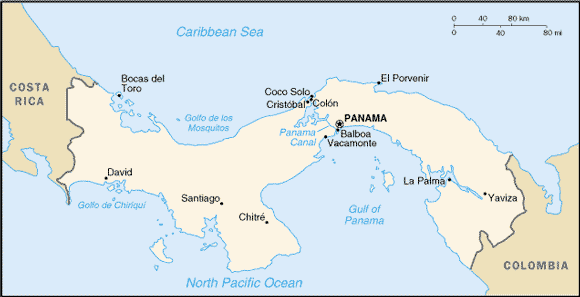
Click on map for larger view
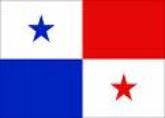
Click on flag for Country Report



| TRAFFICKING IN PERSONS |
None reported.