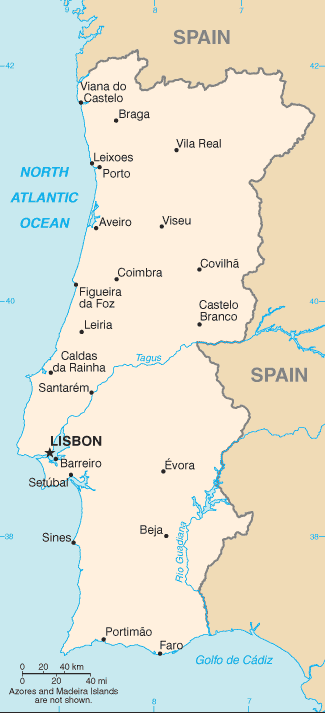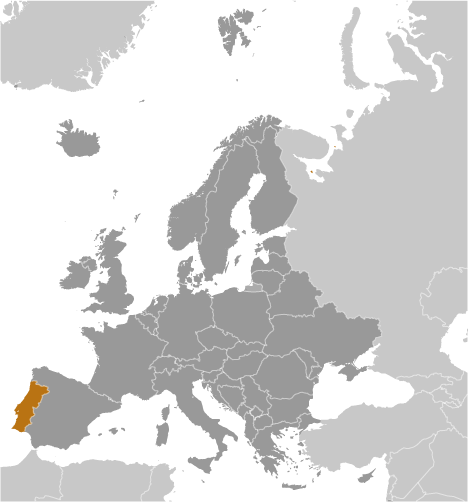

| PORTUGAL Portuguese Republic Republica Portuguesa Joined United Nations: 14 December 1955 Human Rights as assured by their constitution Click here Updated 28 March 2013 |

| CAPITAL |
| POPULATION |
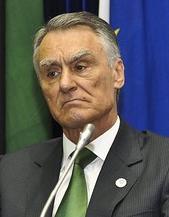
| CHIEF OF STATE |
| SELECTION PROCESS |
Lisbon
10,799,270 (July 2013 est.)
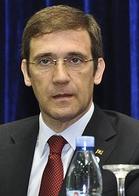
Pedro Manuel Mamede Passos
Coelho
Prime Minister since 21 June 2011
Coelho
Prime Minister since 21 June 2011
President elected by popular vote for a five-year term (eligible for a
second term); election last held 23 January 2011
Next scheduled election: January 2016
second term); election last held 23 January 2011
Next scheduled election: January 2016
HEAD OF GOVERNMENT
SELECTION PROCESS
Following legislative elections, the leader of the majority party or
leader of a majority coalition is usually appointed prime minister
by the president. Elections last held on 5 June 2011
Next scheduled election: 2015
leader of a majority coalition is usually appointed prime minister
by the president. Elections last held on 5 June 2011
Next scheduled election: 2015
| DECLARATION OF HUMAN RIGHTS |
| ETHNIC GROUPS |
Homogeneous Mediterranean stock; citizens of black African descent who immigrated to mainland during decolonization number
less than 100,000; since 1990 East Europeans have entered Portugal
less than 100,000; since 1990 East Europeans have entered Portugal
| RELIGIONS |
Roman Catholic 84.5%, other Christian 2.2%, other 0.3%, unknown 9%, none 3.9% (2001 census)
| GOVERNMENT STRUCTURE |
Republic; parliamentary democracy with 18 districts (distritos, singular - distrito) and 2 autonomous regions (regioes autonomas,
singular - regiao autonoma); Legal system is based on civil law system; the Constitutional Tribunal reviews the constitutionality of
legislation; accepts compulsory ICJ jurisdiction with reservations
Executive: President elected by popular vote for a five-year term (eligible for a second term); election last held 23 January 2011
(next to be held in January 2016); following legislative elections, the leader of the majority party or leader of a majority coalition is
usually appointed prime minister by the president
Legislative: Unicameral Assembly of the Republic or Assembleia da Republica (230 seats; members are elected by popular vote
to serve four-year terms)
elections: last held 5 June 2011 (next to be held in 2015)
Judicial: Supreme Court or Supremo Tribunal de Justica (judges appointed for life by the Conselho Superior da Magistratura)
singular - regiao autonoma); Legal system is based on civil law system; the Constitutional Tribunal reviews the constitutionality of
legislation; accepts compulsory ICJ jurisdiction with reservations
Executive: President elected by popular vote for a five-year term (eligible for a second term); election last held 23 January 2011
(next to be held in January 2016); following legislative elections, the leader of the majority party or leader of a majority coalition is
usually appointed prime minister by the president
Legislative: Unicameral Assembly of the Republic or Assembleia da Republica (230 seats; members are elected by popular vote
to serve four-year terms)
elections: last held 5 June 2011 (next to be held in 2015)
Judicial: Supreme Court or Supremo Tribunal de Justica (judges appointed for life by the Conselho Superior da Magistratura)
| LANGUAGES |
Portuguese (official), Mirandese (official - but locally used)
| BRIEF HISTORY |
The region of present-day Portugal was inhabited by Neanderthals and then by Homo sapiens. Early in the first millennium BC,
several waves of Celts invaded Portugal from central Europe and intermarried with the local populations, forming different ethnic
groups, with many tribes. Chief among these tribes were the Calaicians or Gallaeci of northern Portugal, the Lusitanians of central
Portugal, the Celtici of Alentejo, and the Cynetes or Conii of the Algarve. Among the lesser tribes or sub-divisions were the
Bracari, Coelerni, Equaesi, Grovii, Interamici, Leuni, Luanqui, Limici, Narbasi, Nemetati, Paesuri, Quaquerni, Seurbi, Tamagani,
Tapoli, Turduli, Turduli Veteres, Turdulorum Oppida, Turodi, and Zoelae). There were in the southern part the country, some small,
semipermanent commercial coastal settlements founded by Phoenicians-Carthaginians (such as Tavira, in the Algarve). The first
Roman invasion of the Iberian Peninsula occurred in 219 BC. Within 200 years, almost the entire peninsula had been annexed to the
Roman Empire. The Carthaginians, Rome's adversary in the Punic Wars, were expelled from their coastal colonies. Rome installed
a colonial regime. During this period, Lusitania grew in prosperity and many of modern day Portugal's cities and towns were
founded. In 27 BC, Lusitania gained the status of Roman province. Later, a northern province of Lusitania was formed, known as
Gallaecia, with capital in Bracara (today's Braga). Portugal's name derives from the Roman name Portus Cale. Cale was the name
of an early settlement located at the mouth of the Douro River, which flows into the Atlantic Ocean in the north of what is now
Portugal. In the early 5th century, Germanic tribes, not all of them truly barbarian, invaded the peninsula, namely the Suevi, the
Vandals (Silingi and Hasdingi) and their allies, the Sarmatian Alans. Only the kingdom of the Suevi (Quadi and Marcomanni)
endured after the arrival of another wave of Germanic invaders, the Visigoths, who conquered all of the Iberian Peninsula and
expelled or partially integrated the Vandals and the Alans. The Visigoths eventually conquered the Suevi kingdom and its capital city
Bracara in 584–585. In 711, the Islamic Moors (mainly Berber with some Arab) from North Africa invaded the Iberian Peninsula,
destroying the Visigothic Kingdom. Many of the ousted Gothic nobles took refuge in the unconquered north Asturian highlands.
From there they aimed to reconquer their lands from the Moors: this war of reconquest is known in Portuguese as the Reconquista.
In 868, Count Vímara Peres reconquered and governed the region between the Minho and Douro rivers. The county was then
known as Portucale (i.e., Portugal). Portugal gained its first de jure independence (as the Kingdom of Galicia and Portugal) in 1065
under the rule of Garcia II. Because of feudal power struggles, Portuguese and Galician nobles rebelled. In 1072, the country
rejoined León and Castile under Garcia II's brother Alphonso VI of Castile. In 1095, Portugal separated almost completely from
the Kingdom of Galicia. Its territories consisting largely of mountain, moorland and forest were bounded on the north by the Minho,
on the south by the Mondego. Portugal traces its national origin to 24 June 1128 with the Battle of São Mamede. Afonso
proclaimed himself first Prince of Portugal and in 1139 the first King of Portugal. By 1143, with the assistance of a representative of
the Holy See at the conference of Zamora, Portugal was formally recognized as independent, with the prince recognized as Dux
Portucalensis. In 1179, Afonso I was declared, by the Pope, as king. From 1249 to 1250, the Algarve, the southernmost region,
was finally re-conquered by Portugal from the Moors. In 1255, the capital shifted to Lisbon. Portugal's land-based boundaries have
been notably stable in history. The border with Spain has remained almost unchanged since the 13th century. During the 15th and
16th centuries, Portugal was a major European power, ranking with England, France and Spain in terms of economic, political, and
cultural influence. Though not predominant in European affairs, Portugal did have an extensive colonial trading empire throughout the
world backed by a powerful thalassocracy. July 25, 1415 marked the beginning of the Portuguese Empire, when the Portuguese
Armada departed to the rich trade Islamic centre of Ceuta in North Africa with King John I and his sons Prince Duarte (future
king), Prince Pedro, Prince Henry the Navigator and Prince Afonso, and legendary Portuguese hero Nuno Álvares Pereira. On
August 21, the city was conquered by Portugal, and the long-lived Portuguese Empire was founded. In 1484, Portugal officially
rejected Christopher Columbus's idea of reaching India from the west, because it was seen as unreasonable. The Portuguese
became the first civilization to fully start the process we know today as globalization. After the 16th century, Portugal gradually saw
its wealth decreasing. Even if Portugal was officially an autonomous state, the country was under the rule of the Spanish monarchy
from 1580 to 1640, and Portuguese colonies were attacked by Spain's opponents, especially the Dutch and English who aspired to
dominate both the Atlantic slave trade and the spice trade with the Far East. For a short time the Dutch even managed to dominate
Portugal's possessions in Brazil but this was reversed, beginning with a major Spanish-Portuguese military operation in 1625. In the
17th century the Portuguese emigrated in large numbers to Brazil. By 1709, John V prohibited emigration, since Portugal had lost a
sizable fraction of its population. Brazil was elevated to a vice-kingdom. Napoleon Bonaparte's demand to accede to the
Continental System of embargo against the United Kingdom; a French invasion under General Junot followed, and Lisbon was
captured on 1 December 1807. British intervention in the Peninsular War restored Portuguese independence, the last French troops
being expelled in 1812. A republican constitution was approved in 1911, inaugurating a parliamentary regime with reduced
presidential powers and two chambers of parliament. By the mid-1920s the domestic and international scenes began to favour
another authoritarian solution, wherein a strengthened executive might restore political and social order. Since the opposition’s
constitutional route to power was blocked by the various means deployed by the PRP to protect itself, it turned to the army for
support. Political chaos, several strikes, harsh relations with the Church, and considerable economic problems aggravated by a
disastrous military intervention in the First World War led to the military 28th May 1926 coup d'état, installing the "Second
Republic" that would later become the Estado Novo in 1933, led by António de Oliveira Salazar, which transformed Portugal into a
proto-Fascist Axis-leaning state, which later evolved into some mixture of single party corporative regime. The "'Carnation
Revolution" of 1974, an effectively bloodless left-wing military coup, installed the "Third Republic". Broad democratic reforms were
implemented. In 1975, Portugal granted independence to its Overseas Provinces (Províncias Ultramarinas in Portuguese) in Africa
(Mozambique, Angola, Guinea-Bissau, Cape Verde and São Tomé and Príncipe). Nearly 1 million Portuguese or persons of
Portuguese descent left these former colonies. In that same year, Indonesia invaded and annexed the Portuguese province of
Portuguese Timor (East Timor) in Asia before independence could be granted. The Asian dependency of Macau, after an
agreement in 1986, was returned to Chinese sovereignty in 1999. Portugal applied international pressure to secure East Timor's
independence from Indonesia, as East Timor was still legally a Portuguese dependency, and recognized as such by the United
Nations. After a referendum in 1999, East Timor voted for independence and Portugal recognized its independence in 2002. With
the 1975–76 independence of its colonies (other than Macau which had no independence movement), the 560 year old Portuguese
Empire had already effectively ended. With it, 15 years of war effort also came to an end. Also many Portuguese returned from the
colonies, coming to comprise a sizeable sector of the population and starting an economic recovery, thus opening new paths for the
country's future just as others closed. In 1986, Portugal entered the European Economic Community and joined the Euro in 1999.
The Portuguese empire finished de facto in 1999 when Macau was returned to China, and de jure in 2002 when East Timor was
independent. On 4 March 2001, the Hintze Ribeiro bridge disaster killed 70 people in the collapse of an old bridge on the Douro
river. Hours after the accident, Jorge Coelho, Minister of Transportation, resigned. On January 1, 2002 Portugal adopts the euro as
currency. The 2004 European Football Championship is held in Portugal from 12 June – 4 July. On 31 December 2005 The 2006
Dakar Rally, the longest and, arguably, the hardest off-road rally in the world starts in Lisbon. On 9 March 2006 Anibal Cavaco
Silva was elected president On 11 February 2007, In the second Portuguese abortation referendum, almost 9 years after the first,
the proposal to allow the abortion until 10 weeks of pregnancy is now approved by 59,25% of the voters. The law is published in
April. On 17 May 2010 the law that allows the same-sex marriage is approved by the Portuguese President of the Republic,
Cavaco Silva. Also in 2010, the official infant mortality rate was 2.53 per mil, the lowest ever recorded in Portugal (1.6‰ below
the UE-27, 2010 average), placing the country among the top-5 in the European Union in this particular value of Human
Development. On 23 January 2011, Cavaco Silva was reelected for another five year term. A general election was held in Portugal
on 5 June 2011 to elect all 230 members of the Assembly of the Republic. Pedro Passos Coelho led the center-right Social
Democratic Party to victory over the Socialist Party, led by incumbent Prime Minister José Sócrates.
Source: Wikipedia: History of Portugal
several waves of Celts invaded Portugal from central Europe and intermarried with the local populations, forming different ethnic
groups, with many tribes. Chief among these tribes were the Calaicians or Gallaeci of northern Portugal, the Lusitanians of central
Portugal, the Celtici of Alentejo, and the Cynetes or Conii of the Algarve. Among the lesser tribes or sub-divisions were the
Bracari, Coelerni, Equaesi, Grovii, Interamici, Leuni, Luanqui, Limici, Narbasi, Nemetati, Paesuri, Quaquerni, Seurbi, Tamagani,
Tapoli, Turduli, Turduli Veteres, Turdulorum Oppida, Turodi, and Zoelae). There were in the southern part the country, some small,
semipermanent commercial coastal settlements founded by Phoenicians-Carthaginians (such as Tavira, in the Algarve). The first
Roman invasion of the Iberian Peninsula occurred in 219 BC. Within 200 years, almost the entire peninsula had been annexed to the
Roman Empire. The Carthaginians, Rome's adversary in the Punic Wars, were expelled from their coastal colonies. Rome installed
a colonial regime. During this period, Lusitania grew in prosperity and many of modern day Portugal's cities and towns were
founded. In 27 BC, Lusitania gained the status of Roman province. Later, a northern province of Lusitania was formed, known as
Gallaecia, with capital in Bracara (today's Braga). Portugal's name derives from the Roman name Portus Cale. Cale was the name
of an early settlement located at the mouth of the Douro River, which flows into the Atlantic Ocean in the north of what is now
Portugal. In the early 5th century, Germanic tribes, not all of them truly barbarian, invaded the peninsula, namely the Suevi, the
Vandals (Silingi and Hasdingi) and their allies, the Sarmatian Alans. Only the kingdom of the Suevi (Quadi and Marcomanni)
endured after the arrival of another wave of Germanic invaders, the Visigoths, who conquered all of the Iberian Peninsula and
expelled or partially integrated the Vandals and the Alans. The Visigoths eventually conquered the Suevi kingdom and its capital city
Bracara in 584–585. In 711, the Islamic Moors (mainly Berber with some Arab) from North Africa invaded the Iberian Peninsula,
destroying the Visigothic Kingdom. Many of the ousted Gothic nobles took refuge in the unconquered north Asturian highlands.
From there they aimed to reconquer their lands from the Moors: this war of reconquest is known in Portuguese as the Reconquista.
In 868, Count Vímara Peres reconquered and governed the region between the Minho and Douro rivers. The county was then
known as Portucale (i.e., Portugal). Portugal gained its first de jure independence (as the Kingdom of Galicia and Portugal) in 1065
under the rule of Garcia II. Because of feudal power struggles, Portuguese and Galician nobles rebelled. In 1072, the country
rejoined León and Castile under Garcia II's brother Alphonso VI of Castile. In 1095, Portugal separated almost completely from
the Kingdom of Galicia. Its territories consisting largely of mountain, moorland and forest were bounded on the north by the Minho,
on the south by the Mondego. Portugal traces its national origin to 24 June 1128 with the Battle of São Mamede. Afonso
proclaimed himself first Prince of Portugal and in 1139 the first King of Portugal. By 1143, with the assistance of a representative of
the Holy See at the conference of Zamora, Portugal was formally recognized as independent, with the prince recognized as Dux
Portucalensis. In 1179, Afonso I was declared, by the Pope, as king. From 1249 to 1250, the Algarve, the southernmost region,
was finally re-conquered by Portugal from the Moors. In 1255, the capital shifted to Lisbon. Portugal's land-based boundaries have
been notably stable in history. The border with Spain has remained almost unchanged since the 13th century. During the 15th and
16th centuries, Portugal was a major European power, ranking with England, France and Spain in terms of economic, political, and
cultural influence. Though not predominant in European affairs, Portugal did have an extensive colonial trading empire throughout the
world backed by a powerful thalassocracy. July 25, 1415 marked the beginning of the Portuguese Empire, when the Portuguese
Armada departed to the rich trade Islamic centre of Ceuta in North Africa with King John I and his sons Prince Duarte (future
king), Prince Pedro, Prince Henry the Navigator and Prince Afonso, and legendary Portuguese hero Nuno Álvares Pereira. On
August 21, the city was conquered by Portugal, and the long-lived Portuguese Empire was founded. In 1484, Portugal officially
rejected Christopher Columbus's idea of reaching India from the west, because it was seen as unreasonable. The Portuguese
became the first civilization to fully start the process we know today as globalization. After the 16th century, Portugal gradually saw
its wealth decreasing. Even if Portugal was officially an autonomous state, the country was under the rule of the Spanish monarchy
from 1580 to 1640, and Portuguese colonies were attacked by Spain's opponents, especially the Dutch and English who aspired to
dominate both the Atlantic slave trade and the spice trade with the Far East. For a short time the Dutch even managed to dominate
Portugal's possessions in Brazil but this was reversed, beginning with a major Spanish-Portuguese military operation in 1625. In the
17th century the Portuguese emigrated in large numbers to Brazil. By 1709, John V prohibited emigration, since Portugal had lost a
sizable fraction of its population. Brazil was elevated to a vice-kingdom. Napoleon Bonaparte's demand to accede to the
Continental System of embargo against the United Kingdom; a French invasion under General Junot followed, and Lisbon was
captured on 1 December 1807. British intervention in the Peninsular War restored Portuguese independence, the last French troops
being expelled in 1812. A republican constitution was approved in 1911, inaugurating a parliamentary regime with reduced
presidential powers and two chambers of parliament. By the mid-1920s the domestic and international scenes began to favour
another authoritarian solution, wherein a strengthened executive might restore political and social order. Since the opposition’s
constitutional route to power was blocked by the various means deployed by the PRP to protect itself, it turned to the army for
support. Political chaos, several strikes, harsh relations with the Church, and considerable economic problems aggravated by a
disastrous military intervention in the First World War led to the military 28th May 1926 coup d'état, installing the "Second
Republic" that would later become the Estado Novo in 1933, led by António de Oliveira Salazar, which transformed Portugal into a
proto-Fascist Axis-leaning state, which later evolved into some mixture of single party corporative regime. The "'Carnation
Revolution" of 1974, an effectively bloodless left-wing military coup, installed the "Third Republic". Broad democratic reforms were
implemented. In 1975, Portugal granted independence to its Overseas Provinces (Províncias Ultramarinas in Portuguese) in Africa
(Mozambique, Angola, Guinea-Bissau, Cape Verde and São Tomé and Príncipe). Nearly 1 million Portuguese or persons of
Portuguese descent left these former colonies. In that same year, Indonesia invaded and annexed the Portuguese province of
Portuguese Timor (East Timor) in Asia before independence could be granted. The Asian dependency of Macau, after an
agreement in 1986, was returned to Chinese sovereignty in 1999. Portugal applied international pressure to secure East Timor's
independence from Indonesia, as East Timor was still legally a Portuguese dependency, and recognized as such by the United
Nations. After a referendum in 1999, East Timor voted for independence and Portugal recognized its independence in 2002. With
the 1975–76 independence of its colonies (other than Macau which had no independence movement), the 560 year old Portuguese
Empire had already effectively ended. With it, 15 years of war effort also came to an end. Also many Portuguese returned from the
colonies, coming to comprise a sizeable sector of the population and starting an economic recovery, thus opening new paths for the
country's future just as others closed. In 1986, Portugal entered the European Economic Community and joined the Euro in 1999.
The Portuguese empire finished de facto in 1999 when Macau was returned to China, and de jure in 2002 when East Timor was
independent. On 4 March 2001, the Hintze Ribeiro bridge disaster killed 70 people in the collapse of an old bridge on the Douro
river. Hours after the accident, Jorge Coelho, Minister of Transportation, resigned. On January 1, 2002 Portugal adopts the euro as
currency. The 2004 European Football Championship is held in Portugal from 12 June – 4 July. On 31 December 2005 The 2006
Dakar Rally, the longest and, arguably, the hardest off-road rally in the world starts in Lisbon. On 9 March 2006 Anibal Cavaco
Silva was elected president On 11 February 2007, In the second Portuguese abortation referendum, almost 9 years after the first,
the proposal to allow the abortion until 10 weeks of pregnancy is now approved by 59,25% of the voters. The law is published in
April. On 17 May 2010 the law that allows the same-sex marriage is approved by the Portuguese President of the Republic,
Cavaco Silva. Also in 2010, the official infant mortality rate was 2.53 per mil, the lowest ever recorded in Portugal (1.6‰ below
the UE-27, 2010 average), placing the country among the top-5 in the European Union in this particular value of Human
Development. On 23 January 2011, Cavaco Silva was reelected for another five year term. A general election was held in Portugal
on 5 June 2011 to elect all 230 members of the Assembly of the Republic. Pedro Passos Coelho led the center-right Social
Democratic Party to victory over the Socialist Party, led by incumbent Prime Minister José Sócrates.
Source: Wikipedia: History of Portugal
| ECONOMIC OVERVIEW |
Portugal has become a diversified and increasingly service-based economy since joining the European Community - the EU's
predecessor - in 1986. Over the following two decades, successive governments privatized many state-controlled firms and
liberalized key areas of the economy, including the financial and telecommunications sectors. The country qualified for the Economic
and Monetary Union (EMU) in 1998 and began circulating the euro on 1 January 2002 along with 11 other EU members. The
economy grew by more than the EU average for much of the 1990s, but the rate of growth slowed in 2001-08. The economy
contracted 2.5% in 2009, before growing 1.4% in 2010, but GDP fell again in 2011 and 2012, as the government began
implementing spending cuts and tax increases to comply with conditions of an EU-IMF financial rescue package, agreed to in May
2011. GDP per capita stands at roughly two-thirds of the EU-27 average. Portugal also has been increasingly overshadowed by
lower-cost producers in Central Europe and Asia as a destination for foreign direct investment, in part because its rigid labor market
hindered greater productivity and growth. However, the government of Pedro PASSOS COELHO has enacted several measures
to introduce more flexibility into the labor market, and, this, along with steps to reduce high levels of public debt, could make
Portugal more attractive to foreign investors. The government reduced the budget deficit from 10.1% of GDP in 2009 to 4.5% in
2011, an achievement made possible only by the extraordinary revenues obtained from the one-time transfer of bank pension funds
to the social security system. The budget deficit worsened in 2012 as a sharp reduction in domestic consumption took a bigger bite
out of value-added tax revenues while rising unemployment benefits increased expenditures more than anticipated. Poor growth
prospects over the next year have reinforced investors' concerns about the government's ability to achieve its budget deficit targets
and regain full access to bond market financing when the EU-IMF financing program expires in 2013.
Source: CIA World Factbook (select Portugal)
predecessor - in 1986. Over the following two decades, successive governments privatized many state-controlled firms and
liberalized key areas of the economy, including the financial and telecommunications sectors. The country qualified for the Economic
and Monetary Union (EMU) in 1998 and began circulating the euro on 1 January 2002 along with 11 other EU members. The
economy grew by more than the EU average for much of the 1990s, but the rate of growth slowed in 2001-08. The economy
contracted 2.5% in 2009, before growing 1.4% in 2010, but GDP fell again in 2011 and 2012, as the government began
implementing spending cuts and tax increases to comply with conditions of an EU-IMF financial rescue package, agreed to in May
2011. GDP per capita stands at roughly two-thirds of the EU-27 average. Portugal also has been increasingly overshadowed by
lower-cost producers in Central Europe and Asia as a destination for foreign direct investment, in part because its rigid labor market
hindered greater productivity and growth. However, the government of Pedro PASSOS COELHO has enacted several measures
to introduce more flexibility into the labor market, and, this, along with steps to reduce high levels of public debt, could make
Portugal more attractive to foreign investors. The government reduced the budget deficit from 10.1% of GDP in 2009 to 4.5% in
2011, an achievement made possible only by the extraordinary revenues obtained from the one-time transfer of bank pension funds
to the social security system. The budget deficit worsened in 2012 as a sharp reduction in domestic consumption took a bigger bite
out of value-added tax revenues while rising unemployment benefits increased expenditures more than anticipated. Poor growth
prospects over the next year have reinforced investors' concerns about the government's ability to achieve its budget deficit targets
and regain full access to bond market financing when the EU-IMF financing program expires in 2013.
Source: CIA World Factbook (select Portugal)
| POLITICAL CLIMATE |
Portugal's April 25, 1976 constitution reflected the country's 1974-76 move from authoritarian rule to provisional military
government to a parliamentary democracy with some initial communist and left-wing influence. The military coup in 1974 was a
result of the colonial wars and removed the authoritarian dictator, Marcelo Caetano, from power. The prospect of a communist
takeover in Portugal generated considerable concern among the country's NATO allies. The revolution also led to the country
abruptly abandoning its colonies overseas and to the return of an estimated 600,000 Portuguese citizens from abroad. The 1976
constitution, which defined Portugal as a "Republic ... engaged in the formation of a classless society," was revised in 1982, 1989,
1992, 1997, 2001, and 2004.
The 1982 revision of the constitution placed the military under strict civilian control, trimmed the powers of the president, and
abolished the Revolutionary Council (a non-elected committee with legislative veto powers). The country joined the European
Union in 1986, beginning a path toward greater economic and political integration with its richer neighbors in Europe. The 1989
revision of the constitution eliminated much of the remaining Marxist rhetoric of the original document, abolished the communist-
inspired "agrarian reform", and laid the groundwork for further privatization of nationalized firms and the government-owned
communications media. The 1992 revision made it compatible with the Maastricht treaty.
The current Portuguese constitution provides for progressive administrative decentralization and calls for future reorganization on a
regional basis. The Azores and Madeira Islands have constitutionally mandated autonomous status. A regional autonomy statute
promulgated in 1980 established the Government of the Autonomous Region of the Azores; the Government of the Autonomous
Region of Madeira operates under a provisional autonomy statute in effect since 1976. Apart from the Azores and Madeira, the
country is divided into 18 districts, each headed by a governor appointed by the Minister of Internal Administration. Macau, a
former dependency, reverted to Chinese sovereignty in December 1999.
Legislative elections in Portugal were held on 27 September 2009 to renew all 230 members of the Assembly of the Republic. The
Socialist Party, led by incumbent Prime Minister José Sócrates, won the largest number of seats, but didn't repeat the overall
majority they gained in 2005. The 2011 Portuguese presidential election was held on 23 January, 2011. This election resulted in the
re-election of Aníbal Cavaco Silva to a second term as President of Portugal. Turnout in this election was very low, where only
46.60% of the electorate cast their ballots. Cavaco Silva won by a landslide winning all 18 districts, both Autonomous regions of
Azores and Madeira and 293 municipalities of a total of 308. A general election was held in Portugal on 5 June 2011 to elect all
230 members of the Assembly of the Republic. Pedro Passos Coelho led the center-right Social Democratic Party to victory over
the Socialist Party, led by incumbent Prime Minister José Sócrates.
Source: Wikipedia: Politics of Portugal
government to a parliamentary democracy with some initial communist and left-wing influence. The military coup in 1974 was a
result of the colonial wars and removed the authoritarian dictator, Marcelo Caetano, from power. The prospect of a communist
takeover in Portugal generated considerable concern among the country's NATO allies. The revolution also led to the country
abruptly abandoning its colonies overseas and to the return of an estimated 600,000 Portuguese citizens from abroad. The 1976
constitution, which defined Portugal as a "Republic ... engaged in the formation of a classless society," was revised in 1982, 1989,
1992, 1997, 2001, and 2004.
The 1982 revision of the constitution placed the military under strict civilian control, trimmed the powers of the president, and
abolished the Revolutionary Council (a non-elected committee with legislative veto powers). The country joined the European
Union in 1986, beginning a path toward greater economic and political integration with its richer neighbors in Europe. The 1989
revision of the constitution eliminated much of the remaining Marxist rhetoric of the original document, abolished the communist-
inspired "agrarian reform", and laid the groundwork for further privatization of nationalized firms and the government-owned
communications media. The 1992 revision made it compatible with the Maastricht treaty.
The current Portuguese constitution provides for progressive administrative decentralization and calls for future reorganization on a
regional basis. The Azores and Madeira Islands have constitutionally mandated autonomous status. A regional autonomy statute
promulgated in 1980 established the Government of the Autonomous Region of the Azores; the Government of the Autonomous
Region of Madeira operates under a provisional autonomy statute in effect since 1976. Apart from the Azores and Madeira, the
country is divided into 18 districts, each headed by a governor appointed by the Minister of Internal Administration. Macau, a
former dependency, reverted to Chinese sovereignty in December 1999.
Legislative elections in Portugal were held on 27 September 2009 to renew all 230 members of the Assembly of the Republic. The
Socialist Party, led by incumbent Prime Minister José Sócrates, won the largest number of seats, but didn't repeat the overall
majority they gained in 2005. The 2011 Portuguese presidential election was held on 23 January, 2011. This election resulted in the
re-election of Aníbal Cavaco Silva to a second term as President of Portugal. Turnout in this election was very low, where only
46.60% of the electorate cast their ballots. Cavaco Silva won by a landslide winning all 18 districts, both Autonomous regions of
Azores and Madeira and 293 municipalities of a total of 308. A general election was held in Portugal on 5 June 2011 to elect all
230 members of the Assembly of the Republic. Pedro Passos Coelho led the center-right Social Democratic Party to victory over
the Socialist Party, led by incumbent Prime Minister José Sócrates.
Source: Wikipedia: Politics of Portugal
| INTERNATIONAL DISPUTES |
Portugal does not recognize Spanish sovereignty over the territory of Olivenza based on a difference of interpretation of the 1815
Congress of Vienna and the 1801 Treaty of Badajoz
Congress of Vienna and the 1801 Treaty of Badajoz


| REFUGEES AND INTERNALLY DISPLACED PERSONS (IDPS) |
None reported.
| ILLICIT DRUGS |
Seizing record amounts of Latin American cocaine destined for Europe; a European gateway for Southwest Asian heroin;
transshipment point for hashish from North Africa to Europe; consumer of Southwest Asian heroin.
transshipment point for hashish from North Africa to Europe; consumer of Southwest Asian heroin.
| HUMAN RIGHTS STATEMENTS, ANALYSIS AND CRITIQUES |
2011 Human Rights Report: Portugal
Bureau of Democracy, Human Rights, and Labor
2011 Country Reports on Human Rights Practices
May 25, 2012
Portugal, which includes the archipelagos of the Azores and Madeira, is a constitutional democracy with a president, a prime minister,
and a parliament elected in multiparty elections. National parliamentary elections on June 5 were free and fair. Security forces reported to
civilian authorities.
There were no reports of widespread or systemic abuses. The most important human rights problems included excessive use of force
and abuse of detainees and prisoners by police and prison guards, poor and unhealthy prison conditions, and the incarceration of
juveniles with adults and pretrial detainees with convicted criminals.
Other problems included violence against women and children, discrimination against women, and trafficking in persons for sexual
exploitation and forced labor.
The government usually prosecuted and punished officials who committed abuses.
Click here to read more »
Bureau of Democracy, Human Rights, and Labor
2011 Country Reports on Human Rights Practices
May 25, 2012
Portugal, which includes the archipelagos of the Azores and Madeira, is a constitutional democracy with a president, a prime minister,
and a parliament elected in multiparty elections. National parliamentary elections on June 5 were free and fair. Security forces reported to
civilian authorities.
There were no reports of widespread or systemic abuses. The most important human rights problems included excessive use of force
and abuse of detainees and prisoners by police and prison guards, poor and unhealthy prison conditions, and the incarceration of
juveniles with adults and pretrial detainees with convicted criminals.
Other problems included violence against women and children, discrimination against women, and trafficking in persons for sexual
exploitation and forced labor.
The government usually prosecuted and punished officials who committed abuses.
Click here to read more »
2 November 2012
Human Rights Committee
Concluding observations on the fourth periodic report of the Portugal, adopted by the Committee at its 106th session, 15
October to 2 November
A. Introduction
2. The Committee welcomes the fourth periodic report of Portugal and the information presented therein. It expresses appreciation
for the constructive dialogue with the State party’s delegation on the measures that the State party has taken during the reporting period
to implement the provisions of the Covenant. The Committee is grateful to the State party for its written replies (CCPR/C/PRT/Q/4/Add.
1) to the list of issues (CCPR/C/PRT/Q/4) which were supplemented by the oral responses provided by the delegation and for the
supplementary information provided to it in writing.
B. Positive aspects
3. The Committee welcomes:
(a) the adoption of the Second National Plan against Trafficking in Human Beings (2012-2013);
(b) the adoption in 2011 of the fourth National Plan for Gender Equality;
(c) the amendment to the Penal Code in 2007, criminalizing all forms of corporal punishment of children and making domestic
violence an autonomous crime;
(d) the setting up in 2005 of a National Network of Domestic Violence Centres; and
(e) the creation in 2007 of the Office to Support Roma Communities, as well as the establishment of a Pilot Project for
Municipal Roma Mediators.
C. Principal matters of concern and recommendations
4. The Committee is concerned that women are underrepresented in decision-making positions in the public sector, including in the
Foreign Service, as well as in the legislative assemblies of the autonomous regions of the Azores and Madeira. The Committee is also
concerned about the significant and increasing wage gap between men and women (articles 2, 3, 25, 26).
The State party should strengthen its efforts to increase the representation of women in decision-making positions in the public sector,
including in the Foreign Service, as well as in the legislative assemblies of the autonomous regions of the Azores and Madeira, if
necessary, through appropriate temporary special measures. The State party should continue to take steps to guarantee equal pay for
women and men for work of equal value, in line with the 2009 Labor Code. It should also take steps to address the structural difficulties
identified with regard to the implementation of gender-equality policies, including insufficient human and financial resources, limited
conceptions of equality in public opinion and lack of political commitment, as mentioned in paragraph 47 of the State party’s fourth
periodic report.
Click here to read more »
Human Rights Committee
Concluding observations on the fourth periodic report of the Portugal, adopted by the Committee at its 106th session, 15
October to 2 November
A. Introduction
2. The Committee welcomes the fourth periodic report of Portugal and the information presented therein. It expresses appreciation
for the constructive dialogue with the State party’s delegation on the measures that the State party has taken during the reporting period
to implement the provisions of the Covenant. The Committee is grateful to the State party for its written replies (CCPR/C/PRT/Q/4/Add.
1) to the list of issues (CCPR/C/PRT/Q/4) which were supplemented by the oral responses provided by the delegation and for the
supplementary information provided to it in writing.
B. Positive aspects
3. The Committee welcomes:
(a) the adoption of the Second National Plan against Trafficking in Human Beings (2012-2013);
(b) the adoption in 2011 of the fourth National Plan for Gender Equality;
(c) the amendment to the Penal Code in 2007, criminalizing all forms of corporal punishment of children and making domestic
violence an autonomous crime;
(d) the setting up in 2005 of a National Network of Domestic Violence Centres; and
(e) the creation in 2007 of the Office to Support Roma Communities, as well as the establishment of a Pilot Project for
Municipal Roma Mediators.
C. Principal matters of concern and recommendations
4. The Committee is concerned that women are underrepresented in decision-making positions in the public sector, including in the
Foreign Service, as well as in the legislative assemblies of the autonomous regions of the Azores and Madeira. The Committee is also
concerned about the significant and increasing wage gap between men and women (articles 2, 3, 25, 26).
The State party should strengthen its efforts to increase the representation of women in decision-making positions in the public sector,
including in the Foreign Service, as well as in the legislative assemblies of the autonomous regions of the Azores and Madeira, if
necessary, through appropriate temporary special measures. The State party should continue to take steps to guarantee equal pay for
women and men for work of equal value, in line with the 2009 Labor Code. It should also take steps to address the structural difficulties
identified with regard to the implementation of gender-equality policies, including insufficient human and financial resources, limited
conceptions of equality in public opinion and lack of political commitment, as mentioned in paragraph 47 of the State party’s fourth
periodic report.
Click here to read more »
Freedom In The World 2012 Report
Political Rights Score: 1
Civil Liberties Score: 1
Status: Free
Overview
In March 2011, Prime Minister Jose Socrates stepped down after failing to pass his government’s fourth austerity budget proposal.
Early elections in June saw the victory of the centre-right Social Democratic Party headed by Pedro Passos Coelho. Massive protests
swept the country throughout the year due to the dire financial situation that has troubled the country since 2008.
While holding the rotating EU presidency during the second half of 2007, Portugal oversaw the drafting of the Lisbon Treaty, an
agreement that outlined the constitutional framework of the EU. Ratification of the treaty by the 27-country bloc was completed in
November 2009.
In March 2011, Jose Socrates of the Socialist Party stepped down as prime minister after his government’s fourth austerity budget
proposal was rejected by all five opposition parties. Early elections were held in June and saw the victory of the Social Democratic Party
(PSD) with 39 percent of the vote, compared to the Socialist Party’s 28 percent. PSD leader Pedro Passos Coelho immediately formed a
coalition government with the Popular Party.
A series of protests swept the nation in 2011 in response to the financial crisis that has gripped the country for several years. Tens of
thousands of people took to the streets in March to protest against a proposed austerity budget, which the parliament ultimately rejected.
Another mass protest took place in Lisbon in October, in response to the government’s plan to lay off more than 1,700 government
workers, raise taxes, and reduce severance pay in the wake of its acceptance of a 78 billion euro (US$96 billion) bailout package from
the International Monetary Fund and EU. In October, two of Portugal’s largest trade unions, the General Confederation of Portuguese
Workers and the General Workers’ Union, announced that they would organize a massive strike in November to protest the worsening
economy. The ensuing marches were peaceful, and no clashes or arrests were reported.
Portugal is an electoral democracy. The 230 members of the unicameral legislature, the Assembly of the Republic, are elected every four
years using a system of proportional representation. The president can serve up to two five-year terms; while the position is largely
ceremonial, the president can delay legislation through a veto, dissolve the assembly to trigger early elections, and is the commander in
chief of the armed forces and has the power to declare war. The prime minister is nominated by the assembly, and is then confirmed by
the president. The constitution was amended in 1997 to allow Portuguese citizens living abroad to vote in presidential and legislative
elections as well as national referendums.
The main political parties are the Socialist Party, the PSD, and the Social Centre/People’s Party. The autonomous regions of Azores and
Madeira—two island groups in the Atlantic—have their own political structures with legislative and executive powers.
Click here to read more »
Political Rights Score: 1
Civil Liberties Score: 1
Status: Free
Overview
In March 2011, Prime Minister Jose Socrates stepped down after failing to pass his government’s fourth austerity budget proposal.
Early elections in June saw the victory of the centre-right Social Democratic Party headed by Pedro Passos Coelho. Massive protests
swept the country throughout the year due to the dire financial situation that has troubled the country since 2008.
While holding the rotating EU presidency during the second half of 2007, Portugal oversaw the drafting of the Lisbon Treaty, an
agreement that outlined the constitutional framework of the EU. Ratification of the treaty by the 27-country bloc was completed in
November 2009.
In March 2011, Jose Socrates of the Socialist Party stepped down as prime minister after his government’s fourth austerity budget
proposal was rejected by all five opposition parties. Early elections were held in June and saw the victory of the Social Democratic Party
(PSD) with 39 percent of the vote, compared to the Socialist Party’s 28 percent. PSD leader Pedro Passos Coelho immediately formed a
coalition government with the Popular Party.
A series of protests swept the nation in 2011 in response to the financial crisis that has gripped the country for several years. Tens of
thousands of people took to the streets in March to protest against a proposed austerity budget, which the parliament ultimately rejected.
Another mass protest took place in Lisbon in October, in response to the government’s plan to lay off more than 1,700 government
workers, raise taxes, and reduce severance pay in the wake of its acceptance of a 78 billion euro (US$96 billion) bailout package from
the International Monetary Fund and EU. In October, two of Portugal’s largest trade unions, the General Confederation of Portuguese
Workers and the General Workers’ Union, announced that they would organize a massive strike in November to protest the worsening
economy. The ensuing marches were peaceful, and no clashes or arrests were reported.
Portugal is an electoral democracy. The 230 members of the unicameral legislature, the Assembly of the Republic, are elected every four
years using a system of proportional representation. The president can serve up to two five-year terms; while the position is largely
ceremonial, the president can delay legislation through a veto, dissolve the assembly to trigger early elections, and is the commander in
chief of the armed forces and has the power to declare war. The prime minister is nominated by the assembly, and is then confirmed by
the president. The constitution was amended in 1997 to allow Portuguese citizens living abroad to vote in presidential and legislative
elections as well as national referendums.
The main political parties are the Socialist Party, the PSD, and the Social Centre/People’s Party. The autonomous regions of Azores and
Madeira—two island groups in the Atlantic—have their own political structures with legislative and executive powers.
Click here to read more »
Portugal - Amnesty International Report 2010
20 January 2011
The judicial investigation into alleged complicity by Portuguese authorities with the illegal transfer of prisoners to Guantánamo Bay was
closed in May on the grounds of lack of evidence. Two former Guantánamo Bay detainees took up residency in Portugal. Domestic
violence led to numerous deaths. Investigations into allegations of torture by law enforcement officials proceeded slowly, with evidence
of impunity.
Counter-terror and security
At the end of May the judicial investigation into suspected CIA rendition flights and other illegal transfers of prisoners to Guantánamo
Bay alleged to have crossed through Portuguese territory was closed by the public prosecutor on the grounds of insufficient evidence.
Ana Gomes, a Portuguese member of the European Parliament, submitted an appeal in July calling for the investigation to be continued,
arguing that it had been inadequate. She cited numerous shortcomings, including the failure to take testimony from relevant intelligence
service officials, the foreign affairs and defence ministers, former prime ministers, US embassy officials, or the directors of the
Portuguese Civil Aviation Institute and air traffic control authorities. She also criticized the failure of the prosecutor to request
clarification from the Ministry of Foreign Affairs about whether its exceptional authorizations to the USA allowing “the transport of
contentious material and people” included the transfer of prisoners to secret detention centres. The appeal was rejected in September by
the public prosecutor, who stated that the additional investigatory measures requested were “irrelevant”.
On 28 August, two Syrian detainees at Guantánamo Bay were released and transferred to Portugal. They were not able to return to Syria
due to the risk of torture and other serious human rights violations. The Portuguese government granted both men residence permits on
humanitarian grounds, and confirmed that no charges would be brought against them.
Violence against women and girls
The Portuguese Association for Victim Support registered 15,904 complaints concerning domestic violence in 2009. These included 16
murders.
Torture and other ill-treatment
Criminal investigations into allegations of torture and other ill-treatment by law enforcement officials continued in 2009.
On 22 May the Criminal Court of Faro issued its sentence in the case of the torture of Leonor Cipriano. The court recognized that she
had been tortured in police custody in 2004, but acquitted all three police officers, claiming that it was impossible to identify exactly who
had been responsible. A fourth officer was convicted of giving false testimony and another was convicted of falsifying documents.
Leonor Cipriano’s appeal was pending at the end of the year.
By the end of the year, no trial date had been set for three judicial police officers accused of torturing Virgolino Borges in March
2000. The case was due to go to trial in November 2008 but was delayed pending further medical examinations requested by the
defence. Virgolino Borges said that he had been tortured by police officers who punched him and beat him on the soles of his feet with a
wooden post while in custody. The investigation had been closed in 2005 by the public prosecutor, who stated that Virgolino Borges’
injuries could have been self-inflicted. Virgolino Borges appealed against this decision to the Lisbon region courts: first to the Tribunal de
Instrução and then to the Tribunal da Relação, which in November 2005 ordered that the case go to trial.
Click here to read more »
20 January 2011
The judicial investigation into alleged complicity by Portuguese authorities with the illegal transfer of prisoners to Guantánamo Bay was
closed in May on the grounds of lack of evidence. Two former Guantánamo Bay detainees took up residency in Portugal. Domestic
violence led to numerous deaths. Investigations into allegations of torture by law enforcement officials proceeded slowly, with evidence
of impunity.
Counter-terror and security
At the end of May the judicial investigation into suspected CIA rendition flights and other illegal transfers of prisoners to Guantánamo
Bay alleged to have crossed through Portuguese territory was closed by the public prosecutor on the grounds of insufficient evidence.
Ana Gomes, a Portuguese member of the European Parliament, submitted an appeal in July calling for the investigation to be continued,
arguing that it had been inadequate. She cited numerous shortcomings, including the failure to take testimony from relevant intelligence
service officials, the foreign affairs and defence ministers, former prime ministers, US embassy officials, or the directors of the
Portuguese Civil Aviation Institute and air traffic control authorities. She also criticized the failure of the prosecutor to request
clarification from the Ministry of Foreign Affairs about whether its exceptional authorizations to the USA allowing “the transport of
contentious material and people” included the transfer of prisoners to secret detention centres. The appeal was rejected in September by
the public prosecutor, who stated that the additional investigatory measures requested were “irrelevant”.
On 28 August, two Syrian detainees at Guantánamo Bay were released and transferred to Portugal. They were not able to return to Syria
due to the risk of torture and other serious human rights violations. The Portuguese government granted both men residence permits on
humanitarian grounds, and confirmed that no charges would be brought against them.
Violence against women and girls
The Portuguese Association for Victim Support registered 15,904 complaints concerning domestic violence in 2009. These included 16
murders.
Torture and other ill-treatment
Criminal investigations into allegations of torture and other ill-treatment by law enforcement officials continued in 2009.
On 22 May the Criminal Court of Faro issued its sentence in the case of the torture of Leonor Cipriano. The court recognized that she
had been tortured in police custody in 2004, but acquitted all three police officers, claiming that it was impossible to identify exactly who
had been responsible. A fourth officer was convicted of giving false testimony and another was convicted of falsifying documents.
Leonor Cipriano’s appeal was pending at the end of the year.
By the end of the year, no trial date had been set for three judicial police officers accused of torturing Virgolino Borges in March
2000. The case was due to go to trial in November 2008 but was delayed pending further medical examinations requested by the
defence. Virgolino Borges said that he had been tortured by police officers who punched him and beat him on the soles of his feet with a
wooden post while in custody. The investigation had been closed in 2005 by the public prosecutor, who stated that Virgolino Borges’
injuries could have been self-inflicted. Virgolino Borges appealed against this decision to the Lisbon region courts: first to the Tribunal de
Instrução and then to the Tribunal da Relação, which in November 2005 ordered that the case go to trial.
Click here to read more »
The Supreme Court Cases on Same-Sex Marriage
March 28, 2013
(Washington, DC) – In June 2013, the US Supreme Court will decide two cases on the right of same-sex couples to civil marriage.
Human Rights Watch has long advocated the right of same-sex couples to marry based on the international human rights principles of
nondiscrimination and equal protection of the law.
The Supreme Court heard arguments in the two cases on March 26 and 27, 2013. Hollingsworth v. Perry challenges California’s
Proposition 8, which bans same-sex marriage. United States v. Windsorconcerns the denial of more than 1,000 types of federal benefits
and programs to same-sex married couples under the 1996 Defense of Marriage Act (DOMA), which defines marriage as the union of a
man and a woman.
Nine US states and the District of Columbia permit same-sex marriage. On November 6, 2012, the states of Maine, Maryland, and
Washington passed ballot initiatives to allow same-sex marriages – the first time same-sex marriage was approved by popular vote
anywhere. The other states that allow same-sex marriage are Connecticut, Iowa, Massachusetts, New Hampshire, New York, and
Vermont.
Eleven other countries have enacted legislation that recognizes the right of same-sex couples to civil marriage. The first same-sex
marriage law in the world went into effect on April 1, 2001, in the Netherlands. The other countries are Belgium, Canada, South Africa,
Argentina, Spain, Portugal, Norway, Sweden, Denmark, and Iceland. In addition, parts of Mexico and Brazil permit same-sex marriage.
Marriage equality legislative proposals are being discussed in the parliaments of New Zealand, France, Uruguay, and the United Kingdom.
Click here to read more »
March 28, 2013
(Washington, DC) – In June 2013, the US Supreme Court will decide two cases on the right of same-sex couples to civil marriage.
Human Rights Watch has long advocated the right of same-sex couples to marry based on the international human rights principles of
nondiscrimination and equal protection of the law.
The Supreme Court heard arguments in the two cases on March 26 and 27, 2013. Hollingsworth v. Perry challenges California’s
Proposition 8, which bans same-sex marriage. United States v. Windsorconcerns the denial of more than 1,000 types of federal benefits
and programs to same-sex married couples under the 1996 Defense of Marriage Act (DOMA), which defines marriage as the union of a
man and a woman.
Nine US states and the District of Columbia permit same-sex marriage. On November 6, 2012, the states of Maine, Maryland, and
Washington passed ballot initiatives to allow same-sex marriages – the first time same-sex marriage was approved by popular vote
anywhere. The other states that allow same-sex marriage are Connecticut, Iowa, Massachusetts, New Hampshire, New York, and
Vermont.
Eleven other countries have enacted legislation that recognizes the right of same-sex couples to civil marriage. The first same-sex
marriage law in the world went into effect on April 1, 2001, in the Netherlands. The other countries are Belgium, Canada, South Africa,
Argentina, Spain, Portugal, Norway, Sweden, Denmark, and Iceland. In addition, parts of Mexico and Brazil permit same-sex marriage.
Marriage equality legislative proposals are being discussed in the parliaments of New Zealand, France, Uruguay, and the United Kingdom.
Click here to read more »
2012-12-11 at 14:25
COMMUNIQUÉ ON THE INTERNATIONAL HUMAN RIGHTS DAY 64TH ANNIVERSARY
The Portuguese government fully subscribes the commemoration of the 64th Anniversary of the International Human Rights Day, which
took place December 10.
The International Human Rights Day evokes the adoption of the Universal Declaration of Human Rights on December 10, 1948.
Portugal is a country strongly committed for the respect of fundamental rights and freedoms, a principle that is embodied in the
Constitution of the Portuguese Republic, as well as the respect for all Human Rights enshrined in the international Human Rights
instruments of which Portugal is part.
Portugal's commitment to the defence of human rights is unquestionable and is reflected, in particular, for its efforts to eliminate the
Death Penalty - where Portugal holds special authority as the first country to abolish capital punishment; in promoting the Rights of
Children, Women and Youth; and also on Economic, Social and Cultural Rights, for its work in promoting the Right to Education and the
Right to Water and Sanitation.
As non-permanent member of the UN Security Council for the 2011-2012 period, Portugal has played an important role in including the
respect for human rights as an increasingly key point on the Council's agenda and that the respect for Human Rights is an effective
reality in the world.
Portugal's candidature to the UN Human Rights Council for the 2015-2017 period, is a national priority. We are convinced that our
activities in these areas are an asset for the Council's work in defence of the fundamental principles of human dignity and universal
human rights.
At the national level, the Portuguese Government highlights the work undertaken by the National Commission for Human Rights; a body
represented by different ministries with the aim of reaching a multidisciplinary approach to the Human Rights problem and the
cooperation of public and private organizations in this area.
Click here to read more »
COMMUNIQUÉ ON THE INTERNATIONAL HUMAN RIGHTS DAY 64TH ANNIVERSARY
The Portuguese government fully subscribes the commemoration of the 64th Anniversary of the International Human Rights Day, which
took place December 10.
The International Human Rights Day evokes the adoption of the Universal Declaration of Human Rights on December 10, 1948.
Portugal is a country strongly committed for the respect of fundamental rights and freedoms, a principle that is embodied in the
Constitution of the Portuguese Republic, as well as the respect for all Human Rights enshrined in the international Human Rights
instruments of which Portugal is part.
Portugal's commitment to the defence of human rights is unquestionable and is reflected, in particular, for its efforts to eliminate the
Death Penalty - where Portugal holds special authority as the first country to abolish capital punishment; in promoting the Rights of
Children, Women and Youth; and also on Economic, Social and Cultural Rights, for its work in promoting the Right to Education and the
Right to Water and Sanitation.
As non-permanent member of the UN Security Council for the 2011-2012 period, Portugal has played an important role in including the
respect for human rights as an increasingly key point on the Council's agenda and that the respect for Human Rights is an effective
reality in the world.
Portugal's candidature to the UN Human Rights Council for the 2015-2017 period, is a national priority. We are convinced that our
activities in these areas are an asset for the Council's work in defence of the fundamental principles of human dignity and universal
human rights.
At the national level, the Portuguese Government highlights the work undertaken by the National Commission for Human Rights; a body
represented by different ministries with the aim of reaching a multidisciplinary approach to the Human Rights problem and the
cooperation of public and private organizations in this area.
Click here to read more »
TRANSLATED FROM PORTUGUESE BY GOOGLE TRANSLATE
Ombudsman again urge the Government to defend the rights of the users of public transport passenger
Press Release of December 3, 2012
The Ombudsman, Alfredo José de Sousa, sent in November last year, a recommendation to the Secretary of State for Public Works,
Transport and Communications, to reconsider this bill to revise the penalties applicable to violations occurring on collective passenger
transport, approved by Law no. No. 28/2006, 4:07, already anticipated that it would not solve the main problems caused by the
application of this statute.
In many cases, the fines can rise to very high values, while the passenger fined can not defend themselves after paying the respective
fine, since this implies the voluntary payment of the filing process.
In this context, the Ombudsman recommended that the work of revision of that law, is contemplated:
- A substantial reduction in the maximum fines that can amount applicable to offenses committed in public transport of passengers;
- The ability of the accused to defend, even after volunteer to pay the fine that was imposed.
It was also requested full priority to completing such review work, given the manifest inadequacy of the sanctions regime in place, not
only challenged by public transport users, as recognized also by the companies themselves transport operators.
The compliance of the recommendation of 14/B/2012 was, however, rejected by the Secretary of State for Public Works, Transport and
Communications, arguing that the amounts of the fines were determined according to the gravity of the offenses, so that only the most
serious cases , according to the bill under discussion, could amount to € 300.
The impossibility of being fined by the defense submitted voluntarily to pay the fine, it is considered to be a balanced and consistent with
the general scheme of offenses.
Given this position, the Ombudsman reiterated its recommendation of content with the Secretary of State for Public Works, Transport
and Communications, believes that:
One. fixing to € 300 as the maximum value that can reach a fine for a misdemeanor committed in public transport passenger collides
with the constitutional principle of proportionality of the fines given the seriousness of the offenses, which emanates from the art. # 18.,
no. Paragraph 2 of the Constitution of the Portuguese Republic;
2nd. the infringement of the right of defense apprehended the passenger that comes with the voluntary payment of the fine imposed
upon it collides with the principle of appealability generic administrative decisions that affect the rights and interests of citizens, enshrined
in several constitutional provisions, as well as the European Convention on Rights.
Click here to read more »
Ombudsman again urge the Government to defend the rights of the users of public transport passenger
Press Release of December 3, 2012
The Ombudsman, Alfredo José de Sousa, sent in November last year, a recommendation to the Secretary of State for Public Works,
Transport and Communications, to reconsider this bill to revise the penalties applicable to violations occurring on collective passenger
transport, approved by Law no. No. 28/2006, 4:07, already anticipated that it would not solve the main problems caused by the
application of this statute.
In many cases, the fines can rise to very high values, while the passenger fined can not defend themselves after paying the respective
fine, since this implies the voluntary payment of the filing process.
In this context, the Ombudsman recommended that the work of revision of that law, is contemplated:
- A substantial reduction in the maximum fines that can amount applicable to offenses committed in public transport of passengers;
- The ability of the accused to defend, even after volunteer to pay the fine that was imposed.
It was also requested full priority to completing such review work, given the manifest inadequacy of the sanctions regime in place, not
only challenged by public transport users, as recognized also by the companies themselves transport operators.
The compliance of the recommendation of 14/B/2012 was, however, rejected by the Secretary of State for Public Works, Transport and
Communications, arguing that the amounts of the fines were determined according to the gravity of the offenses, so that only the most
serious cases , according to the bill under discussion, could amount to € 300.
The impossibility of being fined by the defense submitted voluntarily to pay the fine, it is considered to be a balanced and consistent with
the general scheme of offenses.
Given this position, the Ombudsman reiterated its recommendation of content with the Secretary of State for Public Works, Transport
and Communications, believes that:
One. fixing to € 300 as the maximum value that can reach a fine for a misdemeanor committed in public transport passenger collides
with the constitutional principle of proportionality of the fines given the seriousness of the offenses, which emanates from the art. # 18.,
no. Paragraph 2 of the Constitution of the Portuguese Republic;
2nd. the infringement of the right of defense apprehended the passenger that comes with the voluntary payment of the fine imposed
upon it collides with the principle of appealability generic administrative decisions that affect the rights and interests of citizens, enshrined
in several constitutional provisions, as well as the European Convention on Rights.
Click here to read more »
TRANSLATE FROM PORTUGUESE BY GOOGLE TRANSLATE
Program "We" dedicated to the International Day for Tolerance
15/11/2012
Sunday, November 18l 2012
In this program we discuss three articles of the Universal Declaration of Human Rights, articles that are reaffirmed every 16 November
on the occasion of the celebration of the International Day for Tolerance. Our stories will be a mirror of this declaration, meet people
daily who promote human rights.
And if education is the basis of understanding, Viktoriya Starchenko today will lead us to the discovery of the oldest university of
Portugal and one of the oldest in the world. Meet the academic environment of Coimbra.
Our program always has a place at the table reserved for you, this time Renato Tezolin will lead us to taste the dishes of the country Alps
- Switzerland.
We have a packed program of traditions and customs, which are not going to miss the news that marked the present and also the many
suggestions from our multicultural calendar.
Click here to read more>>
Program "We" dedicated to the International Day for Tolerance
15/11/2012
Sunday, November 18l 2012
In this program we discuss three articles of the Universal Declaration of Human Rights, articles that are reaffirmed every 16 November
on the occasion of the celebration of the International Day for Tolerance. Our stories will be a mirror of this declaration, meet people
daily who promote human rights.
And if education is the basis of understanding, Viktoriya Starchenko today will lead us to the discovery of the oldest university of
Portugal and one of the oldest in the world. Meet the academic environment of Coimbra.
Our program always has a place at the table reserved for you, this time Renato Tezolin will lead us to taste the dishes of the country Alps
- Switzerland.
We have a packed program of traditions and customs, which are not going to miss the news that marked the present and also the many
suggestions from our multicultural calendar.
Click here to read more>>
| Click map for larger view |
| Click flag for Country Report |



Anibal Cavaco Silva
President since 9 March 2006
President since 9 March 2006
| TRAFFICKING IN PERSONS |
None reported.