| REPUBLIC OF THE CONGO Republic of the Congo Republique du Congo Joined United Nations: 20 September 1960 Human Rights as assured by their constitution Click here Updated 08 February 2013 |

| CAPITAL |
| POPULATION |
| CHIEF OF STATE |
| SELECTION PROCESS |
Brazzaville
4,366,266
note: estimates for this country explicitly take into account the effects of excess mortality
due to AIDS; this can result in lower life expectancy, higher infant mortality and death
rates, lower population and growth rates, and changes in the distribution of population
by age and sex than would otherwise be expected (July 2012 est.)
note: estimates for this country explicitly take into account the effects of excess mortality
due to AIDS; this can result in lower life expectancy, higher infant mortality and death
rates, lower population and growth rates, and changes in the distribution of population
by age and sex than would otherwise be expected (July 2012 est.)
President elected by popular vote for a seven-year term (eligible for
a second term); election last held 12 July 2009
Next scheduled election: 2016
a second term); election last held 12 July 2009
Next scheduled election: 2016
HEAD OF GOVERNMENT
According to the Republic of Congo Constitution, the position
of Prime Minister was abolished. The President is both the Chief
of State and Head of Government
of Prime Minister was abolished. The President is both the Chief
of State and Head of Government
| DECLARATION OF HUMAN RIGHTS |
| ETHNIC GROUPS |
Kongo 48%, Sangha 20%, M'Bochi 12%, Teke 17%, Europeans and other 3%
| RELIGIONS |
Christian 50%, animist 48%, Muslim 2%
| GOVERNMENT STRUCTURE |
Republic with 10 regions (regions, singular - region) and 1 commune; Legal system is based on French civil law system and
customary law
Executive: President elected by popular vote for a seven-year term (eligible for a second term); election last 12 July 2009; (next to
be held in 2016)
Legislative: bicameral Parliament consists of the Senate (72 seats; members elected by indirect vote to serve five-year terms) and
the National Assembly (139 seats; members elected by popular vote to serve five-year terms)
elections: Senate - last held on 5 August 2008 (next to be held in July 2013); National Assembly - last held on 15 July and 5 August
2012 (next to be held in 2017)
Judicial: Supreme Court or Cour Supreme
customary law
Executive: President elected by popular vote for a seven-year term (eligible for a second term); election last 12 July 2009; (next to
be held in 2016)
Legislative: bicameral Parliament consists of the Senate (72 seats; members elected by indirect vote to serve five-year terms) and
the National Assembly (139 seats; members elected by popular vote to serve five-year terms)
elections: Senate - last held on 5 August 2008 (next to be held in July 2013); National Assembly - last held on 15 July and 5 August
2012 (next to be held in 2017)
Judicial: Supreme Court or Cour Supreme
| LANGUAGES |
French (official), Lingala and Monokutuba (lingua franca trade languages), many local languages and dialects (of which Kikongo is
the most widespread)
the most widespread)
| BRIEF HISTORY |
The earliest inhabitants of the region comprising present-day Congo were the Bambuti people. The Bambuti were linked to Pygmy
tribes whose Stone Age culture was slowly replaced by Bantu tribes coming from regions north of present-day Democratic
Republic of the Congo about two thousand years ago introducing superior Iron Age culture to the region. The main Bantu tribe
living in the region were the Kongo, also known as Bakongo, who established mostly weak and unstable kingdoms along the mouth,
north and south of the Congo River. The capital of this Congolese kingdom, Mbanza Kongo, later baptized as Sao Salvador by the
Portuguese, is a town in northern Angola near the border with the DRC. From the capital they ruled over an empire encompassing
large parts of Angola, the Republic of Congo and the Democratic Republic of Congo. Ruling over nearby tributary states often by
appointing sons of the Kongo kings to head these states. It had six so-called provinces called Mbemba, Soyo, Mbamba, Mbata,
Nsundi and Mpangu. With the Kingdom of Loango in the north and the Kingdom of Mbundu in the south being tributary states. In
the East it bordered on the Kwango river, a tributary of the Congo River. In total the kingdom is said to have had 3 to 4 million
inhabitants and a surface of about 300.000 square km. According to oral traditions it was established in around 1400 when king
Lukena Lua Nimi conquered the kingdom of Kabunga and established Mbanza Kongo as its capital. This African Iron Age culture
came under great pressure with the arrival of the first Europeans, being in this case the Portuguese explorers. In Portugal the king
said in order to break Venetian and Ottoman control over trade with the East, they needed to organise a series of expeditions
southwards along the African coast with the idea of establishing direct contacts with Asia. In 1482-1483 under orders of the
Portuguese king Joao II Captain Diogo Cão sailing southwards discovered the Congo River en made the first contact with the local
population. In the beginning relations were limited and considered beneficial to both sides. With Christianity easily being accepted
by the local nobility, leading on the 3rd of May 1491 to the baptising of king Nzinga a Nkuwu as the first Christian Congolese king
Joao I. Being replaced after his death in 1506 by his son Nzinga Mbemba who ruled as king Afonso I until 1543. Relations
between both kingdoms deteriorated rapidly after 1510. The discovery of Brazil in 1500 and the need for labour to work on the
Portuguese plantations in Brazil, Cape Verde and Sao Tome led Portugal to look for more slaves. As the Portuguese's demand for
black slaves grew, the pressure on the Kongo kings increased. With the Kongo king Afonso I complaining in 1526 to his
Portuguese counterpart, Joao III, bitterly of the damage done to his kingdom by this trade, which was depopulating whole areas
and leading to constant wars with his neighbors. At some point even members of the royal family were taken and deported as slaves
to work on these plantations. The result was a series of revolts against Portuguese rule of which the battle of Mbwilla and the revolt
led by Kimpa Vita (Tchimpa Vita) were the most important. The Battle of Mbwilla (or Battle of Ambouilla or Battle of Ulanga) was
the result of a conflict between the Portuguese led by governor André Vidal de Negreiros and the Kongolese king Antonio I
concerning mining rights. As a result of all these wars the kingdom of the Loango in the north gained independence from Kongo.
Also new kingdoms came to existence of which that of the Téké was the most important, ruling over a large area encompassing
present-day Brazzaville and Kinshasa. The period leading up to the Berlin Conference on Africa of 1884-1885 saw a rush by the
major European powers to increase their control of the African continent. The rise in Western Europe of capitalism and the
consequent industrialization led to a fast growing demand for African raw materials like rubber, palm oil and cotton. Those who had
these raw materials could have their economy grow strong. Others would lose out. Resulting in a new and more intensified scramble
for Africa. The Congo River hereby was a prime target for this new conquest by the European nations. On the north bank of the
river arrived the French explorer Pierre Savorgnan de Brazza, born in the Italian town of Castel Gandolfo in 1868. As a French
naval officer he refused to work for the International African Society and instead helped the French in their conquest of the area
north of the Congo River. Traveling from the Atlantic Ocean coast in present-day Gabon via the rivers Ogooué and Lefini he
arrived in 1880 in the kingdom of the Téké where on the 10th of September 1880 he signed the treaty with king Makoko
establishing French control over the region and making his capital soon afterwards at the small village named Mfoa later to be called
Brazzaville. The first name given officially on the 1st of August 1886 for the new colony was Colony of Gabon and Congo. On the
30th of April 1891 this was renamed Colony of French Congo, consisting of Gabon and Middle Congo, the name the French gave
to Congo-Brazzaville at that time. On the 15th of January 1910 the colony again was renamed to French Equatorial Africa (Afrique
Equatoriale Française or A.E.F.), this time it also included Chad and Oubangui-Chari, nowadays the Central African Republic.
Congo-Brazzaville gained autonomy on the November 28, 1958 and independence from France on the August 15, 1960.
Brazzaville hereby became the capital of the so-called Free French under the Gaulle ruled in theory by a Conseil de défense de l’
Empire set up by De Gaulle on the 27th of October 1940. In this revolt the then-governor of Chad Félix Eboué played a key role.
Because of this and his earlier support for De Gaulle he became Governor General of the Afrique Equatoriale Française (AEF) in
1940, the first non-white to achieve this position in French colonial history. Governor General Felix Eboué had in fact a carrot and
stick approach to local Congolese grievances. While allowing certain freedoms he brutally repressed any activities deemed
dangerous to French colonial control. The case of the Congolese trade unionist André Matsoua (Matswa) shows his tough
approach to political dissent. Shortly before gaining independence an event occurred that in the years to come would have deep
influence on the country and its relations with the outside world, mainly France. In 1957 near Pointe Indienne the French Societé
des Pétroles de l’Afrique Equatoriale Françaises (S.P.A.E.F.) found oil and gas reserves offshore in sufficient exploitable quantities.
After this turbulent difficult period the country gained independence from France on the 15th of August 1960 with Fulbert Youlou as
president. His powerbase already disputed by the local elite and with the French officially no longer in control his difficulties to stay
in power increased. As Brazzaville used to be the capital of the large AEF it had an important workforce and trade unions. Further
radicalisation elsewhere in Africa as a result of the decolonization led to revolt against the dictatorial rule of Youlou. After a period
of consolidation under the newly formed National Revolutionary Council, Ngouabi assumed the presidency on December 31, 1968.
One year later, President Ngouabi proclaimed Congo to be Africa's first "people's republic" and announced the decision of the
National Revolutionary Movement to change its name to the Congolese Labor Party (PCT). On March 18, 1977 President
Ngouabi was assassinated. Although the persons accused of shooting Ngouabi were tried and some of them executed, the
motivation behind the assassination is still not clear. An 11-member Military Committee of the Party (CMP) was named to head an
interim government with Col. (later Gen.) Joachim Yhombi-Opango to serve as President of the Republic. Accused of corruption
and deviation from party directives, Yhombi-Opango was removed from office on February 5, 1979, by the Central Committee of
the PCT, which then simultaneously designated Vice President and Defense Minister Col. Denis Sassou-Nguesso as interim
President. After decades of turbulent politics bolstered by Marxist-Leninist rhetoric, and with the collapse of the Soviet Union, the
Congolese gradually moderated their economic and political views to the point that, in 1992, Congo completed a transition to multi-
party democracy. Ending a long history of one-party Marxist rule, a specific agenda for this transition was laid out during Congo's
national conference of 1991 and culminated in August 1992 with multi-party presidential elections. Sassou-Nguesso conceded
defeat and Congo's new president, Professor Pascal Lissouba, was inaugurated on August 31, 1992. However, Congo's
democratic progress derailed in 1997. While the Army said the operation searched for arms Sassou used the incident as a casus
belli for armed insurrection, igniting a 4-month conflict that destroyed or damaged much of Brazzaville. Lissouba fled the capital
while his soldiers surrendered and citizens began looting. Soon thereafter, Sassou declared himself President and named a 33-
member government. Sassou won elections in 2002 with almost 90% of the vote.A new constitution was agreed upon in January
2002, granting the president new powers and extending his term to seven years as well as introducing a new bicameral assembly.
On December 30, twenty opposition political parties issued a statement through spokesman Chistope Ngokaka, saying Sassou's
government had purchased "weapons and military craft... under contracts signed between the officials in Brazzaville and the
government in Beijing." A presidential election was held in the Republic of the Congo on 12 July 2009. Long-time President Denis
Sassou Nguesso won another seven-year term with a large majority of the vote, but the election was marked by accusations of
irregularities and fraud from the opposition; six opposition candidates chose to boycott the election. Parliamentary elections were
held in the Republic of the Congo on 15 July 2012. A second round was held on 5 August 2012. The second round was previously
moved forward to 29 July, without explanation, but ultimately was held on the original date.
Source: Wikipedia: History of Republic of the Congo
tribes whose Stone Age culture was slowly replaced by Bantu tribes coming from regions north of present-day Democratic
Republic of the Congo about two thousand years ago introducing superior Iron Age culture to the region. The main Bantu tribe
living in the region were the Kongo, also known as Bakongo, who established mostly weak and unstable kingdoms along the mouth,
north and south of the Congo River. The capital of this Congolese kingdom, Mbanza Kongo, later baptized as Sao Salvador by the
Portuguese, is a town in northern Angola near the border with the DRC. From the capital they ruled over an empire encompassing
large parts of Angola, the Republic of Congo and the Democratic Republic of Congo. Ruling over nearby tributary states often by
appointing sons of the Kongo kings to head these states. It had six so-called provinces called Mbemba, Soyo, Mbamba, Mbata,
Nsundi and Mpangu. With the Kingdom of Loango in the north and the Kingdom of Mbundu in the south being tributary states. In
the East it bordered on the Kwango river, a tributary of the Congo River. In total the kingdom is said to have had 3 to 4 million
inhabitants and a surface of about 300.000 square km. According to oral traditions it was established in around 1400 when king
Lukena Lua Nimi conquered the kingdom of Kabunga and established Mbanza Kongo as its capital. This African Iron Age culture
came under great pressure with the arrival of the first Europeans, being in this case the Portuguese explorers. In Portugal the king
said in order to break Venetian and Ottoman control over trade with the East, they needed to organise a series of expeditions
southwards along the African coast with the idea of establishing direct contacts with Asia. In 1482-1483 under orders of the
Portuguese king Joao II Captain Diogo Cão sailing southwards discovered the Congo River en made the first contact with the local
population. In the beginning relations were limited and considered beneficial to both sides. With Christianity easily being accepted
by the local nobility, leading on the 3rd of May 1491 to the baptising of king Nzinga a Nkuwu as the first Christian Congolese king
Joao I. Being replaced after his death in 1506 by his son Nzinga Mbemba who ruled as king Afonso I until 1543. Relations
between both kingdoms deteriorated rapidly after 1510. The discovery of Brazil in 1500 and the need for labour to work on the
Portuguese plantations in Brazil, Cape Verde and Sao Tome led Portugal to look for more slaves. As the Portuguese's demand for
black slaves grew, the pressure on the Kongo kings increased. With the Kongo king Afonso I complaining in 1526 to his
Portuguese counterpart, Joao III, bitterly of the damage done to his kingdom by this trade, which was depopulating whole areas
and leading to constant wars with his neighbors. At some point even members of the royal family were taken and deported as slaves
to work on these plantations. The result was a series of revolts against Portuguese rule of which the battle of Mbwilla and the revolt
led by Kimpa Vita (Tchimpa Vita) were the most important. The Battle of Mbwilla (or Battle of Ambouilla or Battle of Ulanga) was
the result of a conflict between the Portuguese led by governor André Vidal de Negreiros and the Kongolese king Antonio I
concerning mining rights. As a result of all these wars the kingdom of the Loango in the north gained independence from Kongo.
Also new kingdoms came to existence of which that of the Téké was the most important, ruling over a large area encompassing
present-day Brazzaville and Kinshasa. The period leading up to the Berlin Conference on Africa of 1884-1885 saw a rush by the
major European powers to increase their control of the African continent. The rise in Western Europe of capitalism and the
consequent industrialization led to a fast growing demand for African raw materials like rubber, palm oil and cotton. Those who had
these raw materials could have their economy grow strong. Others would lose out. Resulting in a new and more intensified scramble
for Africa. The Congo River hereby was a prime target for this new conquest by the European nations. On the north bank of the
river arrived the French explorer Pierre Savorgnan de Brazza, born in the Italian town of Castel Gandolfo in 1868. As a French
naval officer he refused to work for the International African Society and instead helped the French in their conquest of the area
north of the Congo River. Traveling from the Atlantic Ocean coast in present-day Gabon via the rivers Ogooué and Lefini he
arrived in 1880 in the kingdom of the Téké where on the 10th of September 1880 he signed the treaty with king Makoko
establishing French control over the region and making his capital soon afterwards at the small village named Mfoa later to be called
Brazzaville. The first name given officially on the 1st of August 1886 for the new colony was Colony of Gabon and Congo. On the
30th of April 1891 this was renamed Colony of French Congo, consisting of Gabon and Middle Congo, the name the French gave
to Congo-Brazzaville at that time. On the 15th of January 1910 the colony again was renamed to French Equatorial Africa (Afrique
Equatoriale Française or A.E.F.), this time it also included Chad and Oubangui-Chari, nowadays the Central African Republic.
Congo-Brazzaville gained autonomy on the November 28, 1958 and independence from France on the August 15, 1960.
Brazzaville hereby became the capital of the so-called Free French under the Gaulle ruled in theory by a Conseil de défense de l’
Empire set up by De Gaulle on the 27th of October 1940. In this revolt the then-governor of Chad Félix Eboué played a key role.
Because of this and his earlier support for De Gaulle he became Governor General of the Afrique Equatoriale Française (AEF) in
1940, the first non-white to achieve this position in French colonial history. Governor General Felix Eboué had in fact a carrot and
stick approach to local Congolese grievances. While allowing certain freedoms he brutally repressed any activities deemed
dangerous to French colonial control. The case of the Congolese trade unionist André Matsoua (Matswa) shows his tough
approach to political dissent. Shortly before gaining independence an event occurred that in the years to come would have deep
influence on the country and its relations with the outside world, mainly France. In 1957 near Pointe Indienne the French Societé
des Pétroles de l’Afrique Equatoriale Françaises (S.P.A.E.F.) found oil and gas reserves offshore in sufficient exploitable quantities.
After this turbulent difficult period the country gained independence from France on the 15th of August 1960 with Fulbert Youlou as
president. His powerbase already disputed by the local elite and with the French officially no longer in control his difficulties to stay
in power increased. As Brazzaville used to be the capital of the large AEF it had an important workforce and trade unions. Further
radicalisation elsewhere in Africa as a result of the decolonization led to revolt against the dictatorial rule of Youlou. After a period
of consolidation under the newly formed National Revolutionary Council, Ngouabi assumed the presidency on December 31, 1968.
One year later, President Ngouabi proclaimed Congo to be Africa's first "people's republic" and announced the decision of the
National Revolutionary Movement to change its name to the Congolese Labor Party (PCT). On March 18, 1977 President
Ngouabi was assassinated. Although the persons accused of shooting Ngouabi were tried and some of them executed, the
motivation behind the assassination is still not clear. An 11-member Military Committee of the Party (CMP) was named to head an
interim government with Col. (later Gen.) Joachim Yhombi-Opango to serve as President of the Republic. Accused of corruption
and deviation from party directives, Yhombi-Opango was removed from office on February 5, 1979, by the Central Committee of
the PCT, which then simultaneously designated Vice President and Defense Minister Col. Denis Sassou-Nguesso as interim
President. After decades of turbulent politics bolstered by Marxist-Leninist rhetoric, and with the collapse of the Soviet Union, the
Congolese gradually moderated their economic and political views to the point that, in 1992, Congo completed a transition to multi-
party democracy. Ending a long history of one-party Marxist rule, a specific agenda for this transition was laid out during Congo's
national conference of 1991 and culminated in August 1992 with multi-party presidential elections. Sassou-Nguesso conceded
defeat and Congo's new president, Professor Pascal Lissouba, was inaugurated on August 31, 1992. However, Congo's
democratic progress derailed in 1997. While the Army said the operation searched for arms Sassou used the incident as a casus
belli for armed insurrection, igniting a 4-month conflict that destroyed or damaged much of Brazzaville. Lissouba fled the capital
while his soldiers surrendered and citizens began looting. Soon thereafter, Sassou declared himself President and named a 33-
member government. Sassou won elections in 2002 with almost 90% of the vote.A new constitution was agreed upon in January
2002, granting the president new powers and extending his term to seven years as well as introducing a new bicameral assembly.
On December 30, twenty opposition political parties issued a statement through spokesman Chistope Ngokaka, saying Sassou's
government had purchased "weapons and military craft... under contracts signed between the officials in Brazzaville and the
government in Beijing." A presidential election was held in the Republic of the Congo on 12 July 2009. Long-time President Denis
Sassou Nguesso won another seven-year term with a large majority of the vote, but the election was marked by accusations of
irregularities and fraud from the opposition; six opposition candidates chose to boycott the election. Parliamentary elections were
held in the Republic of the Congo on 15 July 2012. A second round was held on 5 August 2012. The second round was previously
moved forward to 29 July, without explanation, but ultimately was held on the original date.
Source: Wikipedia: History of Republic of the Congo
| ECONOMIC OVERVIEW |
The economy is a mixture of subsistence agriculture, an industrial sector based largely on oil and support services, and government
spending. Oil has supplanted forestry as the mainstay of the economy, providing a major share of government revenues and exports.
In the early 1980s, rapidly rising oil revenues enabled the government to finance large-scale development projects with GDP growth
averaging 5% annually, one of the highest rates in Africa. Characterized by budget problems and overstaffing, the government has
mortgaged a substantial portion of its oil earnings through oil-backed loans that have contributed to a growing debt burden and
chronic revenue shortfalls. Economic reform efforts have been undertaken with the support of international organizations, notably the
World Bank and the IMF. However, the reform program came to a halt in June 1997 when civil war erupted. Denis
SASSOU-Nguesso, who returned to power when the war ended in October 1997, publicly expressed interest in moving forward
on economic reforms and privatization and in renewing cooperation with international financial institutions. Economic progress was
badly hurt by slumping oil prices and the resumption of armed conflict in December 1998, which worsened the republic's budget
deficit. The current administration presides over an uneasy internal peace and faces difficult economic challenges of stimulating
recovery and reducing poverty. The drop in oil prices during the global crisis reduced oil revenue by about 30%, but the subsequent
recovery of oil prices has boosted the economy's GDP and near-term prospects. In March 2006, the World Bank and the
International Monetary Fund (IMF) approved Heavily Indebted Poor Countries (HIPC) treatment for Congo, which received $1.9
billion in debt relief under the program in 2010.
Source: CIA World Factbook (select Congo, Republic of the)
spending. Oil has supplanted forestry as the mainstay of the economy, providing a major share of government revenues and exports.
In the early 1980s, rapidly rising oil revenues enabled the government to finance large-scale development projects with GDP growth
averaging 5% annually, one of the highest rates in Africa. Characterized by budget problems and overstaffing, the government has
mortgaged a substantial portion of its oil earnings through oil-backed loans that have contributed to a growing debt burden and
chronic revenue shortfalls. Economic reform efforts have been undertaken with the support of international organizations, notably the
World Bank and the IMF. However, the reform program came to a halt in June 1997 when civil war erupted. Denis
SASSOU-Nguesso, who returned to power when the war ended in October 1997, publicly expressed interest in moving forward
on economic reforms and privatization and in renewing cooperation with international financial institutions. Economic progress was
badly hurt by slumping oil prices and the resumption of armed conflict in December 1998, which worsened the republic's budget
deficit. The current administration presides over an uneasy internal peace and faces difficult economic challenges of stimulating
recovery and reducing poverty. The drop in oil prices during the global crisis reduced oil revenue by about 30%, but the subsequent
recovery of oil prices has boosted the economy's GDP and near-term prospects. In March 2006, the World Bank and the
International Monetary Fund (IMF) approved Heavily Indebted Poor Countries (HIPC) treatment for Congo, which received $1.9
billion in debt relief under the program in 2010.
Source: CIA World Factbook (select Congo, Republic of the)
| POLITICAL CLIMATE |
Politics of the Republic of the Congo takes place in a framework of a presidential republic, whereby the President is both head of
state and head of government, and of a pluriform multi-party system. Executive power is exercised by the government. Legislative
power is vested in both the government and the two chambers of the parliament. Before the 1997 civil war, the Republic of the
Congo's system of government was similar to that of the French. However, after taking power, Denis Sassou-Nguesso suspended
the constitution approved in 1992 upon which this system was based. The new constitution (adopted by popular vote in 2002),
returns to the earlier model with a seven-year presidential term and a bicameral national parliament.
The Parliament (Parlement) has two chambers. The National Assembly (Assemblée Nationale) has 139 members, for a five year
term in single-seat constituencies. The Senate (Sénat) has 72 members, elected for a six year term by district, local and regional
councils. The Republic of Congo is a one party dominant state with the Congolese Labour Party in power. Opposition parties are
allowed, but are widely considered to have no real chance of gaining power.
A presidential election was held in the Republic of the Congo on 12 July 2009. Long-time President Denis Sassou Nguesso won
another seven-year term with a large majority of the vote, but the election was marked by accusations of irregularities and fraud
from the opposition; six opposition candidates chose to boycott the election. Parliamentary elections were held in the Republic of
the Congo on 15 July 2012. A second round was held on 5 August 2012. The second round was previously moved forward to 29
July, without explanation, but ultimately was held on the original date.
Source: Wikipedia: Politics of Republic of the Congo
state and head of government, and of a pluriform multi-party system. Executive power is exercised by the government. Legislative
power is vested in both the government and the two chambers of the parliament. Before the 1997 civil war, the Republic of the
Congo's system of government was similar to that of the French. However, after taking power, Denis Sassou-Nguesso suspended
the constitution approved in 1992 upon which this system was based. The new constitution (adopted by popular vote in 2002),
returns to the earlier model with a seven-year presidential term and a bicameral national parliament.
The Parliament (Parlement) has two chambers. The National Assembly (Assemblée Nationale) has 139 members, for a five year
term in single-seat constituencies. The Senate (Sénat) has 72 members, elected for a six year term by district, local and regional
councils. The Republic of Congo is a one party dominant state with the Congolese Labour Party in power. Opposition parties are
allowed, but are widely considered to have no real chance of gaining power.
A presidential election was held in the Republic of the Congo on 12 July 2009. Long-time President Denis Sassou Nguesso won
another seven-year term with a large majority of the vote, but the election was marked by accusations of irregularities and fraud
from the opposition; six opposition candidates chose to boycott the election. Parliamentary elections were held in the Republic of
the Congo on 15 July 2012. A second round was held on 5 August 2012. The second round was previously moved forward to 29
July, without explanation, but ultimately was held on the original date.
Source: Wikipedia: Politics of Republic of the Congo
| INTERNATIONAL DISPUTES |
The location of the boundary in the broad Congo River with the Democratic Republic of the Congo is indefinite except in the Pool
Malebo/Stanley Pool area
Malebo/Stanley Pool area


| REFUGEES AND INTERNALLY DISPLACED PERSONS (IDPS) |
Refugees (country of origin): 131,648 (Democratic Republic of Congo); 8,374 (Rwanda) (2011)
IDPs: 7,800 (multiple civil wars since 1992) (2009)
IDPs: 7,800 (multiple civil wars since 1992) (2009)
| ILLICIT DRUGS |
None reported.
| HUMAN RIGHTS STATEMENTS, ANALYSIS AND CRITIQUES |
2011 Human Rights Report: Republic of the Congo
Bureau of Democracy, Human Rights, and Labor
2011 Country Reports on Human Rights Practices
May 25, 2012
The Republic of the Congo is a parliamentary republic in which most of the decision-making authority and political power is vested in the
president and his administration, although the method by which internal decision-making occurs is unclear. Denis Sassou-Nguesso was
reelected president in 2009 with 78 percent of the vote, but the validity of these figures is questioned. The 2009 election was peaceful,
and the African Union declared the elections to have been free and fair; however, opposition candidates and nongovernmental
organizations (NGOs) cited irregularities. While the country has a multiparty political system, members of the president’s Congolese
Labor Party (PCT) occupy most senior government positions. Security forces reported to civilian authorities.
Major human rights problems included suspected beatings and torturing of detainees by security forces; poor prison conditions; and
societal discrimination against women.
Other human rights abuses included arbitrary arrest; lengthy pretrial detention; an ineffective and under-resourced judiciary; infringement
of citizens’ privacy rights; some restrictions on freedom of speech, press, and assembly, official corruption and lack of transparency;
domestic violence, including rape; trafficking in persons; discrimination on the basis of ethnicity, particularly against indigenous persons;
and child labor.
The government seldom took steps to prosecute or punish officials who committed abuses, whether in the security services or
elsewhere in the government, and official impunity was a problem.
Click here to read more »
Bureau of Democracy, Human Rights, and Labor
2011 Country Reports on Human Rights Practices
May 25, 2012
The Republic of the Congo is a parliamentary republic in which most of the decision-making authority and political power is vested in the
president and his administration, although the method by which internal decision-making occurs is unclear. Denis Sassou-Nguesso was
reelected president in 2009 with 78 percent of the vote, but the validity of these figures is questioned. The 2009 election was peaceful,
and the African Union declared the elections to have been free and fair; however, opposition candidates and nongovernmental
organizations (NGOs) cited irregularities. While the country has a multiparty political system, members of the president’s Congolese
Labor Party (PCT) occupy most senior government positions. Security forces reported to civilian authorities.
Major human rights problems included suspected beatings and torturing of detainees by security forces; poor prison conditions; and
societal discrimination against women.
Other human rights abuses included arbitrary arrest; lengthy pretrial detention; an ineffective and under-resourced judiciary; infringement
of citizens’ privacy rights; some restrictions on freedom of speech, press, and assembly, official corruption and lack of transparency;
domestic violence, including rape; trafficking in persons; discrimination on the basis of ethnicity, particularly against indigenous persons;
and child labor.
The government seldom took steps to prosecute or punish officials who committed abuses, whether in the security services or
elsewhere in the government, and official impunity was a problem.
Click here to read more »
TRANSLATED FROM FRENCH BY GOOGLE TRANSLATE
November 30, 2012
Committee on Economic, Social and Cultural Observations of the Committee in the absence of the initial report
Congo, adopted by the Committee at its forty-ninth session
(12-30 November 2012)
CONGO
A. Introduction
2. At its forty-seventh session, the Committee on Economic, Social and Cultural decided to review the implementation of the
International Covenant Covenant on Economic, Social and Cultural Rights in a number of States Parties in Despite numerous requests
that had been sent for this purpose have not fulfilled their obligation to report in accordance with Articles 16 and 17 of the Covenant.
3. The Committee regrets that, despite the dialogue between the Committee and the State party in 2000 and maintenance of the National
Training Seminar of the Interministerial Committee of the State party on the preparation and submission of reports to treaty bodies in
2011, the State party has still not submitted its initial report was due June 20, 1990. In addition, while noting the State party's replies to
the list of questions (E/C.12/COG/Q/1/Add.1), the Committee believes that without comprehensive initial report, the obligation stipulated
in Articles 16 and 17 Pact is not met.
B. Positive aspects
6. The Committee takes note of the ratification by the State party of the Optional Protocol to the Convention on the Rights of the Child
on the sale of children, child prostitution children and pornography of children, October 27, 2009, as well as on the involvement of
children in armed conflict, 24 September 2010.
7. The Committee takes note of the following measures taken by the State party:
(A) The adoption of Law No. 5-2011 of 25 February 2011 on the promotion and protection of indigenous peoples;
C. Principal subjects of concern and recommendations
8. The Committee notes with concern that the National Commission of Human Man is not fully compliant with the Paris Principles.
The State party requests the State party to include in its initial report information on measures taken to make the National Commission
Rights in full conformity with the Paris Principles, in particular the selection and appointment of members of the Commission,
representation of women, and resources. The Committee also requests the State party to provide information on actions taken by the
Commission the purpose of promoting economic, social and cultural rights. The Committee refers the State party to its general comment
No. 10 (1998) on the role of national institutions for human rights protection in the rights economic, social and cultural rights.
9. The Committee is concerned about the extent of corruption in the State party and the reports of misappropriation of public funds at
the expense of resources can be allocated to the promotion of economic, social and cultural rights.
The Committee requests the State party to include in the initial report information on measures taken to improve public governance and
fight against corruption, including corruption cases brought to justice. The Committee also requests the State party to provide statistical
data on from the public budget allocated to different sectors rights economic, social and cultural rights over the past five years
Click here to read more »
November 30, 2012
Committee on Economic, Social and Cultural Observations of the Committee in the absence of the initial report
Congo, adopted by the Committee at its forty-ninth session
(12-30 November 2012)
CONGO
A. Introduction
2. At its forty-seventh session, the Committee on Economic, Social and Cultural decided to review the implementation of the
International Covenant Covenant on Economic, Social and Cultural Rights in a number of States Parties in Despite numerous requests
that had been sent for this purpose have not fulfilled their obligation to report in accordance with Articles 16 and 17 of the Covenant.
3. The Committee regrets that, despite the dialogue between the Committee and the State party in 2000 and maintenance of the National
Training Seminar of the Interministerial Committee of the State party on the preparation and submission of reports to treaty bodies in
2011, the State party has still not submitted its initial report was due June 20, 1990. In addition, while noting the State party's replies to
the list of questions (E/C.12/COG/Q/1/Add.1), the Committee believes that without comprehensive initial report, the obligation stipulated
in Articles 16 and 17 Pact is not met.
B. Positive aspects
6. The Committee takes note of the ratification by the State party of the Optional Protocol to the Convention on the Rights of the Child
on the sale of children, child prostitution children and pornography of children, October 27, 2009, as well as on the involvement of
children in armed conflict, 24 September 2010.
7. The Committee takes note of the following measures taken by the State party:
(A) The adoption of Law No. 5-2011 of 25 February 2011 on the promotion and protection of indigenous peoples;
C. Principal subjects of concern and recommendations
8. The Committee notes with concern that the National Commission of Human Man is not fully compliant with the Paris Principles.
The State party requests the State party to include in its initial report information on measures taken to make the National Commission
Rights in full conformity with the Paris Principles, in particular the selection and appointment of members of the Commission,
representation of women, and resources. The Committee also requests the State party to provide information on actions taken by the
Commission the purpose of promoting economic, social and cultural rights. The Committee refers the State party to its general comment
No. 10 (1998) on the role of national institutions for human rights protection in the rights economic, social and cultural rights.
9. The Committee is concerned about the extent of corruption in the State party and the reports of misappropriation of public funds at
the expense of resources can be allocated to the promotion of economic, social and cultural rights.
The Committee requests the State party to include in the initial report information on measures taken to improve public governance and
fight against corruption, including corruption cases brought to justice. The Committee also requests the State party to provide statistical
data on from the public budget allocated to different sectors rights economic, social and cultural rights over the past five years
Click here to read more »
Freedom In The World 2012 Report
Political Rights Score: 6
Civil Liberties Score: 5
Status: Not Free
Overview
With legislative elections scheduled for June 2012, the Republic of Congo’s ruling Congolese Labor Party convened in July 2011 for its
Sixth Extraordinary Congress. Notable developments included the election of a new 51-member Political Bureau, as well as a 471-
member Central Committee. Among those elected was Denis Christel Sassou-Nguesso, son of President Denis Sassou-Nguesso, a
development which many observers regarded as further evidence of Sassou-Nguesso’s aspirations to have his son succeed him.
The opposition attempted to unify ahead of the July 2009 presidential poll, with 20 parties forming the Front of Congolese Opposition
Parties. Six of the original 16 opposition candidates withdrew to protest electoral conditions. The government again refused to establish
an independent electoral commission, and the existing commission disqualified four opposition candidates, including Ange Edouard
Poungui, leader of the largest opposition party in the National Assembly, the Pan-African Union for Social Democracy. Sassou-Nguesso
won another term with 79 percent of the vote; his closest challenger, independent candidate Joseph Kignoumbi Kia Mboungou, took 7
percent of the vote. The government reported voter turnout of 66 percent, while the opposition claimed 10 percent. Following the
election, Sassou-Nguesso eliminated the position of prime minister, becoming both head of state and head of government.
Further efforts were made by Sassou-Nguesso in 2011 to strengthen his grip on power. During the PCT’s Sixth Extraordinary
Congress in July, Sassou-Nguesso’s son Denis Christel Sassou-Nguesso became a member of both the party’s newly elected 471-
member Central Committee and 51-member Political Bureau. Notorious for his lavish lifestyle, Denis Christel’s growing prominence
within the PCT is seen as yet another example of his father grooming him for eventual succession to the Congolese presidency. On
October 9, indirect elections for half of Congo’s Senate seats resulted in yet another overwhelming victory for Sassou-Nguesso’s
political allies.
Congo is one of sub-Saharan Africa’s major oil producers, though corruption and decades of instability have contributed to poor
humanitarian conditions. Congo was ranked 137 out of 187 countries on the 2011 UN Human Development Index.
The Republic of Congo is not an electoral democracy. Irregularities, opposition boycotts and disqualifications, and the absence of an
independent electoral commission marred recent elections. The 2002 constitution limits the president to two seven-year terms. However,
current president Denis Sassou-Nguesso, who ruled from 1979 to 1992, has held office continuously since seizing power in 1997. The
Senate, the upper house of Parliament, consists of 72 members, with councilors from each department electing six senators for six-year
terms. Half of them come up for election every three years, although 42 seats were at stake in 2008. Members of the 137-seat National
Assembly, the lower house, are directly elected for five-year terms. Most of the over 100 registered political parties are personality
driven and ethnically based. The ruling RMP coalition faces a weak and fragmented opposition.
Click here to read more »
Political Rights Score: 6
Civil Liberties Score: 5
Status: Not Free
Overview
With legislative elections scheduled for June 2012, the Republic of Congo’s ruling Congolese Labor Party convened in July 2011 for its
Sixth Extraordinary Congress. Notable developments included the election of a new 51-member Political Bureau, as well as a 471-
member Central Committee. Among those elected was Denis Christel Sassou-Nguesso, son of President Denis Sassou-Nguesso, a
development which many observers regarded as further evidence of Sassou-Nguesso’s aspirations to have his son succeed him.
The opposition attempted to unify ahead of the July 2009 presidential poll, with 20 parties forming the Front of Congolese Opposition
Parties. Six of the original 16 opposition candidates withdrew to protest electoral conditions. The government again refused to establish
an independent electoral commission, and the existing commission disqualified four opposition candidates, including Ange Edouard
Poungui, leader of the largest opposition party in the National Assembly, the Pan-African Union for Social Democracy. Sassou-Nguesso
won another term with 79 percent of the vote; his closest challenger, independent candidate Joseph Kignoumbi Kia Mboungou, took 7
percent of the vote. The government reported voter turnout of 66 percent, while the opposition claimed 10 percent. Following the
election, Sassou-Nguesso eliminated the position of prime minister, becoming both head of state and head of government.
Further efforts were made by Sassou-Nguesso in 2011 to strengthen his grip on power. During the PCT’s Sixth Extraordinary
Congress in July, Sassou-Nguesso’s son Denis Christel Sassou-Nguesso became a member of both the party’s newly elected 471-
member Central Committee and 51-member Political Bureau. Notorious for his lavish lifestyle, Denis Christel’s growing prominence
within the PCT is seen as yet another example of his father grooming him for eventual succession to the Congolese presidency. On
October 9, indirect elections for half of Congo’s Senate seats resulted in yet another overwhelming victory for Sassou-Nguesso’s
political allies.
Congo is one of sub-Saharan Africa’s major oil producers, though corruption and decades of instability have contributed to poor
humanitarian conditions. Congo was ranked 137 out of 187 countries on the 2011 UN Human Development Index.
The Republic of Congo is not an electoral democracy. Irregularities, opposition boycotts and disqualifications, and the absence of an
independent electoral commission marred recent elections. The 2002 constitution limits the president to two seven-year terms. However,
current president Denis Sassou-Nguesso, who ruled from 1979 to 1992, has held office continuously since seizing power in 1997. The
Senate, the upper house of Parliament, consists of 72 members, with councilors from each department electing six senators for six-year
terms. Half of them come up for election every three years, although 42 seats were at stake in 2008. Members of the 137-seat National
Assembly, the lower house, are directly elected for five-year terms. Most of the over 100 registered political parties are personality
driven and ethnically based. The ruling RMP coalition faces a weak and fragmented opposition.
Click here to read more »
10 July 2012
First Sentence: Lubanga Dyilo Sentenced to 14 years at the ICC
The first ever sentence handed down by the International Criminal Court saw Thomas Lubanga Dyilo given 14 years for recruiting and
using child soldiers in armed conflict. This is a historic moment for international justice, Amnesty International said.
The sentence takes into account that Lubanga has been in custody since his 2006 arrest. Prosecutors had originally asked for a 30-year
sentence.
“This first sentence is a historic moment. It puts the whole world on notice: anyone who recruits or uses children as soldiers faces trial
and imprisonment,” said Michael Bochenek, Amnesty International’s director of law and policy.
“Today’s verdict demonstrates that the International Criminal Court is up and running.”
The prosecution’s decision to limit the charges to conscription, enlistment, and use of child soldiers meant that the court could not
consider allegations of other crimes committed by the FPLC under Lubanga Dyilo – including crimes of sexual violence – potentially
denying justice and reparation to many more victims.
The court did however add these crimes in March to the arrest warrant already issued for one of Lubanga’s deputies, Bosco Ntaganda
who is currently leading the armed group, M23 in North Kivu province, Eastern Congo .
“It’s critical that defendants in subsequent trials face a full charge sheet rather than one reduced for expediency,” Bochenek said.
One of the three presiding judges, has written a letter expressing her dissent from the majority decision for the sentence, saying that in
her opinion it disregarded the extent of the damage the victims and their families suffered and the harsh violent and sexual punishments
meted out to conscripted children.
Click here to read more »
First Sentence: Lubanga Dyilo Sentenced to 14 years at the ICC
The first ever sentence handed down by the International Criminal Court saw Thomas Lubanga Dyilo given 14 years for recruiting and
using child soldiers in armed conflict. This is a historic moment for international justice, Amnesty International said.
The sentence takes into account that Lubanga has been in custody since his 2006 arrest. Prosecutors had originally asked for a 30-year
sentence.
“This first sentence is a historic moment. It puts the whole world on notice: anyone who recruits or uses children as soldiers faces trial
and imprisonment,” said Michael Bochenek, Amnesty International’s director of law and policy.
“Today’s verdict demonstrates that the International Criminal Court is up and running.”
The prosecution’s decision to limit the charges to conscription, enlistment, and use of child soldiers meant that the court could not
consider allegations of other crimes committed by the FPLC under Lubanga Dyilo – including crimes of sexual violence – potentially
denying justice and reparation to many more victims.
The court did however add these crimes in March to the arrest warrant already issued for one of Lubanga’s deputies, Bosco Ntaganda
who is currently leading the armed group, M23 in North Kivu province, Eastern Congo .
“It’s critical that defendants in subsequent trials face a full charge sheet rather than one reduced for expediency,” Bochenek said.
One of the three presiding judges, has written a letter expressing her dissent from the majority decision for the sentence, saying that in
her opinion it disregarded the extent of the damage the victims and their families suffered and the harsh violent and sexual punishments
meted out to conscripted children.
Click here to read more »
U.S. Must Enforce Ban on Child Soldiers
June 28, 2012
The State Department’s new list of governments using child soldiers is out. Seven countries are named this year. The list is not that
surprising: It includes the Democratic Republic of Congo, Burma and South Sudan, which have deployed child soldiers for years. What
five countries have in common, however, is that they get U.S. military assistance. This puts the Obama administration’s commitment to
end the use of child soldiers to the test — and the clock is ticking.
Congress agreed on a fairly simple concept in 2008 — U.S. tax money should not go to governments that conscript children younger
than 18 or use them in hostilities. The Child Soldiers Prevention Act prohibits five categories of military aid to these governments. In the
two years the law has been in effect, however, the Obama administration has withheld money only once — keeping back $2.7 million in
foreign military financing for Congo. In other cases, the administration invoked national security waivers to allow military assistance to
continue.
Now that the State Department has issued its list, the president has approximately three months to determine whether the act’s
prohibitions on military aid will automatically go into effect or he will give some governments a pass by granting waivers. He needs to
use the strategic leverage the law provides to send a strong message that Washington won’t tolerate the use of child soldiers by its allies.
Four governments named — Congo, Libya, South Sudan and Yemen — get U.S. military aid prohibited by the act. Somalia receives
peacekeeping help not covered by the law, and Burma and Sudan receive no U.S. military assistance.
In Congo, army commanders have long recruited children, sometimes by force, as fighters, escorts and porters. The army has been on
the U.N. “list of shame” for using child soldiers for seven consecutive years and last year, the U.N. says, recruited more children than
any other Congolese military group.
One former rebel commander, Bosco Ntaganda, was promoted to army general — despite a 2006 International Criminal Court arrest
warrant for his recruitment and use of child soldiers. After he launched a mutiny in April, the government said it intends to arrest him.
Meanwhile, Ntaganda is again a rebel fighter and has continued to recruit children as young as 12.
The U.N. has been trying for years — unsuccessfully — to negotiate an agreement with the Congolese government to end its
recruitment and use of child soldiers. Though the two parties have worked together to demobilize dozens of children in recent weeks
because of the continued U.S. and U.N. pressure. The Obama administration’s decision last year to withhold $2.7 million in foreign
military financing from Congo until it takes steps to stop using child soldiers was the first time the Child Soldiers Prevention Act has
been used to actually withhold military aid from any government. But the administration needs to keep up the pressure and continue to
condition Congo’s assistance on concrete progress.
Click here to read more »
June 28, 2012
The State Department’s new list of governments using child soldiers is out. Seven countries are named this year. The list is not that
surprising: It includes the Democratic Republic of Congo, Burma and South Sudan, which have deployed child soldiers for years. What
five countries have in common, however, is that they get U.S. military assistance. This puts the Obama administration’s commitment to
end the use of child soldiers to the test — and the clock is ticking.
Congress agreed on a fairly simple concept in 2008 — U.S. tax money should not go to governments that conscript children younger
than 18 or use them in hostilities. The Child Soldiers Prevention Act prohibits five categories of military aid to these governments. In the
two years the law has been in effect, however, the Obama administration has withheld money only once — keeping back $2.7 million in
foreign military financing for Congo. In other cases, the administration invoked national security waivers to allow military assistance to
continue.
Now that the State Department has issued its list, the president has approximately three months to determine whether the act’s
prohibitions on military aid will automatically go into effect or he will give some governments a pass by granting waivers. He needs to
use the strategic leverage the law provides to send a strong message that Washington won’t tolerate the use of child soldiers by its allies.
Four governments named — Congo, Libya, South Sudan and Yemen — get U.S. military aid prohibited by the act. Somalia receives
peacekeeping help not covered by the law, and Burma and Sudan receive no U.S. military assistance.
In Congo, army commanders have long recruited children, sometimes by force, as fighters, escorts and porters. The army has been on
the U.N. “list of shame” for using child soldiers for seven consecutive years and last year, the U.N. says, recruited more children than
any other Congolese military group.
One former rebel commander, Bosco Ntaganda, was promoted to army general — despite a 2006 International Criminal Court arrest
warrant for his recruitment and use of child soldiers. After he launched a mutiny in April, the government said it intends to arrest him.
Meanwhile, Ntaganda is again a rebel fighter and has continued to recruit children as young as 12.
The U.N. has been trying for years — unsuccessfully — to negotiate an agreement with the Congolese government to end its
recruitment and use of child soldiers. Though the two parties have worked together to demobilize dozens of children in recent weeks
because of the continued U.S. and U.N. pressure. The Obama administration’s decision last year to withhold $2.7 million in foreign
military financing from Congo until it takes steps to stop using child soldiers was the first time the Child Soldiers Prevention Act has
been used to actually withhold military aid from any government. But the administration needs to keep up the pressure and continue to
condition Congo’s assistance on concrete progress.
Click here to read more »
TRANSLATED FROM FRENCH BY GOOGLE TRANSLATE
Congo (The)
H.E. Mr. Basile Ikouebe, Minister of Foreign Affairs
01 October 2012
Statement Summary:
BASILE IKOUEBE, Minister for Foreign Affairs and Cooperation of Congo, stressed that the persistence and resurgence of crisis
“flashpoints” all over the world “mortgaged the promotion and protection of human rights”, as well as attempts at development. In that
context, Congo welcomed the choice of theme for the Assembly’s sixty-seventh session, which truly addressed the concerns of the
hour. Congo, having been mired in conflict during the 1990s, had made the choice of mediation and dialogue, he said. It had overcome
socio-political turbulence, and the resulting peace had opened up a space for the nation to evolve its democracy and economic
development. Congo expressed its deep concern with the ongoing crises that threatened the peace and security of the region, in
particular the Sahel, which was subject to ever worsening instability. The Democratic Republic of the Congo was also undergoing a
serious conflict in its eastern region, with the emergence of armed groups such as the “M23”; the political, security and humanitarian
effects of that conflict extended to the entire Great Lakes region. He welcomed, in that respect, the recent initiative of the Secretary-
General to convene a high-level meeting on the situation in the Democratic Republic of the Congo, on 27 September. Congo hoped to see
a concrete solution to that situation as soon as possible.
The collapse of democracy in Mali was a regression that Congo deplored, he said, calling for a return to constitutional order in that State.
The risks of the contagion of terrorism, in particular, called for the support of the Economic Community of West African States
(ECOWAS) and the international community, so that the “dangerous precedent” established in Mali would not happen again elsewhere.
He further welcomed positive developments in the process established between the African Union and Somalia, as well as the election of
that country’s new president, Hassan Sheikh Mohamud.
Click here to read more »
Congo (The)
H.E. Mr. Basile Ikouebe, Minister of Foreign Affairs
01 October 2012
Statement Summary:
BASILE IKOUEBE, Minister for Foreign Affairs and Cooperation of Congo, stressed that the persistence and resurgence of crisis
“flashpoints” all over the world “mortgaged the promotion and protection of human rights”, as well as attempts at development. In that
context, Congo welcomed the choice of theme for the Assembly’s sixty-seventh session, which truly addressed the concerns of the
hour. Congo, having been mired in conflict during the 1990s, had made the choice of mediation and dialogue, he said. It had overcome
socio-political turbulence, and the resulting peace had opened up a space for the nation to evolve its democracy and economic
development. Congo expressed its deep concern with the ongoing crises that threatened the peace and security of the region, in
particular the Sahel, which was subject to ever worsening instability. The Democratic Republic of the Congo was also undergoing a
serious conflict in its eastern region, with the emergence of armed groups such as the “M23”; the political, security and humanitarian
effects of that conflict extended to the entire Great Lakes region. He welcomed, in that respect, the recent initiative of the Secretary-
General to convene a high-level meeting on the situation in the Democratic Republic of the Congo, on 27 September. Congo hoped to see
a concrete solution to that situation as soon as possible.
The collapse of democracy in Mali was a regression that Congo deplored, he said, calling for a return to constitutional order in that State.
The risks of the contagion of terrorism, in particular, called for the support of the Economic Community of West African States
(ECOWAS) and the international community, so that the “dangerous precedent” established in Mali would not happen again elsewhere.
He further welcomed positive developments in the process established between the African Union and Somalia, as well as the election of
that country’s new president, Hassan Sheikh Mohamud.
Click here to read more »
TRANSLATED FROM FRENCH BY GOOGLE TRANSLATE
Explosion of the ammunition depot Mpila: The mystery of its causes are heavier on the bottom of disregard for human rights
By OCDH Saturday, April 7, 2012
The Congolese Observatory of Human Rights is hereby expresses its deep concern regarding the opacity in which the investigation takes
place on the explosion of the ammunition depot of weapons of war camp armored regiment Mpila.
Indeed, following the explosion of the ammunition depot of weapons of war camp armored regiment in Brazzaville March 4, 2012, the
government decided to establish a commission of inquiry. Contrary to the recommendations of the OCDH, the government has not
bothered to set up a commission of inquiry that would combine international international experts and representatives of victims to
ensure the transparency and objectivity of its findings.
This inquiry based in the Directorate of Territorial Surveillance has arrested several officers and noncommissioned officers, including
Colonel Marcel Ntsourou deputy general secretary of the National Security Council (NSC), and nine (9 ) elements custody namely Etou
Chief Warrant Officer, Warrant Officers and Lambini Onono, Sergeant Ndong-Man, sergeants Kakou Miere Koua Ngami and two
civilians, including the driver and Bilankoui Ruffin Depaget Guy, so the Lieutenant and Sergeant Benjamin Okana Ngolani Missié. This list
is not exhaustive.
These officers and NCOs are held in the premises of the Directorate of Territorial Surveillance Zone and autonomous military Brazzaville
deadlines are in custody. Indeed, Articles 47, 48, 49 and 50 of the Code of Criminal Procedure stipulates that custody can not exceed 72
hours.
The parents of those in custody complain that they are not allowed any access. This has resulted in rumors run most disturbing reports
of cases of torture and cruel, inhuman and degrading treatment against these "suspects" whose leaders indictments are not notified their
dependents. In addition, Masters and Gabriel Ambroise Malonga Hombessa, registered lawyers Brazzaville seized by the family of Colonel
Ntsourou, were regularly made for defense.
Having made representations to the STB, in vain, to visit their client, they decided to organize a press conference to make public the
procedures identified defects. Holding this press conference was originally scheduled to Hotel Saphir Brazzaville, but due to obstructions
and threats thereto, Masters and Gabriel Ambroise Malonga Hombessa agreed, at the request of the family of their client, to keep April 9,
2012 at the home of Colonel Ntsourou. It was on this occasion they were arrested by elements of the police and taken to police
headquarters and referred to the House Arrest Central Brazzaville April 10, 2012.
In their analyzes, the colonel Ntsourou lawyers concluded that his arrest was motivated by political considerations which have no
connection with the explosion of ammunition Mpila camp. It is the fact of "manifest desire to put an end to the rule of law to restore to
the single-Congo - Brazzaville." Some relatives are visited Master Malonga have been subjected to torture and other cruel and inhuman
treatment. He is accused of crimes Malonga Master "title theft and damage to the safety outside of the state." A Master Hombessa only
the complaint of "endangering the safety of the foreign State" is used. Until proof elements materializing these grievances are not
presented.
Click here to read more »
Explosion of the ammunition depot Mpila: The mystery of its causes are heavier on the bottom of disregard for human rights
By OCDH Saturday, April 7, 2012
The Congolese Observatory of Human Rights is hereby expresses its deep concern regarding the opacity in which the investigation takes
place on the explosion of the ammunition depot of weapons of war camp armored regiment Mpila.
Indeed, following the explosion of the ammunition depot of weapons of war camp armored regiment in Brazzaville March 4, 2012, the
government decided to establish a commission of inquiry. Contrary to the recommendations of the OCDH, the government has not
bothered to set up a commission of inquiry that would combine international international experts and representatives of victims to
ensure the transparency and objectivity of its findings.
This inquiry based in the Directorate of Territorial Surveillance has arrested several officers and noncommissioned officers, including
Colonel Marcel Ntsourou deputy general secretary of the National Security Council (NSC), and nine (9 ) elements custody namely Etou
Chief Warrant Officer, Warrant Officers and Lambini Onono, Sergeant Ndong-Man, sergeants Kakou Miere Koua Ngami and two
civilians, including the driver and Bilankoui Ruffin Depaget Guy, so the Lieutenant and Sergeant Benjamin Okana Ngolani Missié. This list
is not exhaustive.
These officers and NCOs are held in the premises of the Directorate of Territorial Surveillance Zone and autonomous military Brazzaville
deadlines are in custody. Indeed, Articles 47, 48, 49 and 50 of the Code of Criminal Procedure stipulates that custody can not exceed 72
hours.
The parents of those in custody complain that they are not allowed any access. This has resulted in rumors run most disturbing reports
of cases of torture and cruel, inhuman and degrading treatment against these "suspects" whose leaders indictments are not notified their
dependents. In addition, Masters and Gabriel Ambroise Malonga Hombessa, registered lawyers Brazzaville seized by the family of Colonel
Ntsourou, were regularly made for defense.
Having made representations to the STB, in vain, to visit their client, they decided to organize a press conference to make public the
procedures identified defects. Holding this press conference was originally scheduled to Hotel Saphir Brazzaville, but due to obstructions
and threats thereto, Masters and Gabriel Ambroise Malonga Hombessa agreed, at the request of the family of their client, to keep April 9,
2012 at the home of Colonel Ntsourou. It was on this occasion they were arrested by elements of the police and taken to police
headquarters and referred to the House Arrest Central Brazzaville April 10, 2012.
In their analyzes, the colonel Ntsourou lawyers concluded that his arrest was motivated by political considerations which have no
connection with the explosion of ammunition Mpila camp. It is the fact of "manifest desire to put an end to the rule of law to restore to
the single-Congo - Brazzaville." Some relatives are visited Master Malonga have been subjected to torture and other cruel and inhuman
treatment. He is accused of crimes Malonga Master "title theft and damage to the safety outside of the state." A Master Hombessa only
the complaint of "endangering the safety of the foreign State" is used. Until proof elements materializing these grievances are not
presented.
Click here to read more »
| COMMISSION NATIONALE DES DROITS DE L'HOMME DU CONGO/NATIONAL COMMISSION ON HUMAN RIGHTS OF THE CONGO |
TRANSLATED FROM FRENCH BY GOOGLE TRANSLATE
The rights in the spotlight
23/01/2013
The Ambassador of France presented to Monsignor Miguel Angel Olaverri, Apostolic Administrator of the Diocese of Pointe Noire and
president of the Diocesan Commission for Justice and Peace (CDJP) Pointe Noire, the medal of the National Consultative Commission of
Human Rights the French Republic. CDJP the Pointe-Noire is recognized for its efforts in favor of social rights of people living in areas
of oil.
Since 1988, the National Consultative Commission on Human Rights of the French Republic (CNCDH) awards the rights of the French
Republic. This award aims to reward projects of NGOs and human rights around the world. He distinguishes two themes, field activities
and projects on the effective protection and promotion of Human Rights, without distinction of nationality or borders.
On December 10, on the occasion of the International Day of Human Rights, the National Consultative Commission of Human Rights
(CNCDH), awarded to five winners Award of NGO human rights of French Republic. Five special mentions were also awarded.
The Diocesan Justice and Peace Commission of Pointe-Noire has received one of these special mention for his project entitled "Oil
exploitation and socio-economic rights in the diocese of Pointe Noire," she implemented from January 2010 to June , 2012. His work has
helped to educate companies and public authorities on the urgent need for environmental and social responsibility, essential for
sustainable development of surrounding communities.
CDJP the Pointe-Noire is also known for his work in favor of greater transparency in the management of oil revenues in Congo. His
involvement has contributed significantly to the successful implementation of the EITI process, which is to verify that the amounts paid
by the Congolese state oil companies match the amounts collected by the Treasury. Encouraging prospects from last EITI report
recognize the work done by the CDJP Pointe-Noire and its partners for a better management of oil resources.
More than a project, it is this working together has welcomed the National Consultative Commission on Human Rights.
Click here to read more>>
The rights in the spotlight
23/01/2013
The Ambassador of France presented to Monsignor Miguel Angel Olaverri, Apostolic Administrator of the Diocese of Pointe Noire and
president of the Diocesan Commission for Justice and Peace (CDJP) Pointe Noire, the medal of the National Consultative Commission of
Human Rights the French Republic. CDJP the Pointe-Noire is recognized for its efforts in favor of social rights of people living in areas
of oil.
Since 1988, the National Consultative Commission on Human Rights of the French Republic (CNCDH) awards the rights of the French
Republic. This award aims to reward projects of NGOs and human rights around the world. He distinguishes two themes, field activities
and projects on the effective protection and promotion of Human Rights, without distinction of nationality or borders.
On December 10, on the occasion of the International Day of Human Rights, the National Consultative Commission of Human Rights
(CNCDH), awarded to five winners Award of NGO human rights of French Republic. Five special mentions were also awarded.
The Diocesan Justice and Peace Commission of Pointe-Noire has received one of these special mention for his project entitled "Oil
exploitation and socio-economic rights in the diocese of Pointe Noire," she implemented from January 2010 to June , 2012. His work has
helped to educate companies and public authorities on the urgent need for environmental and social responsibility, essential for
sustainable development of surrounding communities.
CDJP the Pointe-Noire is also known for his work in favor of greater transparency in the management of oil revenues in Congo. His
involvement has contributed significantly to the successful implementation of the EITI process, which is to verify that the amounts paid
by the Congolese state oil companies match the amounts collected by the Treasury. Encouraging prospects from last EITI report
recognize the work done by the CDJP Pointe-Noire and its partners for a better management of oil resources.
More than a project, it is this working together has welcomed the National Consultative Commission on Human Rights.
Click here to read more>>
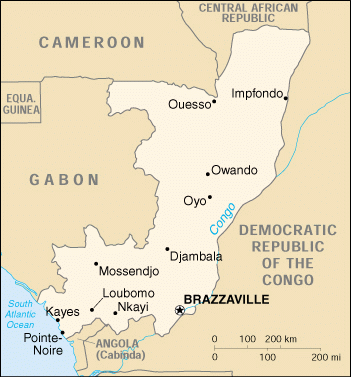
| Click map for larger view |
| Click flag for Country Report |



Denis Sassou-Nguesso
President since 25 October 1997
President since 25 October 1997
| TRAFFICKING IN PERSONS |
Current situation: Republic of the Congo is a source and destination country for children trafficked for the purposes of forced
labor and commercial sexual exploitation; girls are trafficked from rural areas within the country for commercial sexual exploitation,
forced street vending, and domestic servitude; children are trafficked from other African countries for domestic servitude, forced
market vending, and forced labor in the fishing industry
Tier rating: Tier 2 Watch List - Republic of the Congo is on the Tier 2 Watch List for its failure to show evidence of increasing
efforts to combat trafficking in persons in 2007; struggling to recover from six years of civil conflict that ended in 2003, the Republic
of the Congo's capacity to address trafficking is handicapped; the government neither monitors its borders for trafficking activity nor
provides specialized anti-trafficking training for law enforcement officials; the government does not encourage victims to assist in
trafficking investigations or prosecutions, and has not taken measures to reduce demand for commercial sex acts in the Republic of
the Congo (2008)
labor and commercial sexual exploitation; girls are trafficked from rural areas within the country for commercial sexual exploitation,
forced street vending, and domestic servitude; children are trafficked from other African countries for domestic servitude, forced
market vending, and forced labor in the fishing industry
Tier rating: Tier 2 Watch List - Republic of the Congo is on the Tier 2 Watch List for its failure to show evidence of increasing
efforts to combat trafficking in persons in 2007; struggling to recover from six years of civil conflict that ended in 2003, the Republic
of the Congo's capacity to address trafficking is handicapped; the government neither monitors its borders for trafficking activity nor
provides specialized anti-trafficking training for law enforcement officials; the government does not encourage victims to assist in
trafficking investigations or prosecutions, and has not taken measures to reduce demand for commercial sex acts in the Republic of
the Congo (2008)