
| ROMANIA Romania Romania Joined United Nations: 14 December 1955 Human Rights as assured by their constitution Click here Updated 14 January 2013 |

| CAPITAL |
| POPULATION |
| CHIEF OF STATE |
| SELECTION PROCESS |
Bucharest
21,848,504 (July 2012 est.)
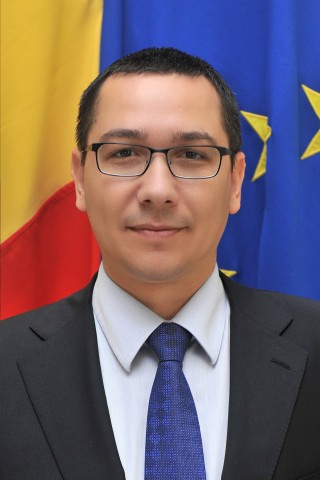
Victor-Viorel Ponta
Prime Minister since 7 May 2012
Prime Minister since 7 May 2012
President elected by popular vote for a five-year term (eligible for a
second term);
NOTE: Basescu has had two suspensions to his presidency since
assuming the post on 20 December 2004, the first from 20 April-23
May 2007, the second from 6 July-27 August 2012; he survived a
referendum on both occasions; election last held 22 November
2009 with runoff on 6 December 2009
Next scheduled election: November-December 2014
second term);
NOTE: Basescu has had two suspensions to his presidency since
assuming the post on 20 December 2004, the first from 20 April-23
May 2007, the second from 6 July-27 August 2012; he survived a
referendum on both occasions; election last held 22 November
2009 with runoff on 6 December 2009
Next scheduled election: November-December 2014
HEAD OF GOVERNMENT
SELECTION PROCESS
Prime minister appointed by the president with the consent of
the Parliament; Election last held: 9 December 2012
Next scheduled election: December 2016
the Parliament; Election last held: 9 December 2012
Next scheduled election: December 2016
| DECLARATION OF HUMAN RIGHTS |
| ETHNIC GROUPS |
Romanian 89.5%, Hungarian 6.6%, Roma 2.5%, Ukrainian 0.3%, German 0.3%, Russian 0.2%, Turkish 0.2%, other 0.4% (2002
census)
census)
| RELIGIONS |
Eastern Orthodox (including all sub-denominations) 86.8%, Protestant (various denominations including Reformate and Pentecostal) 7.5%,
Roman Catholic 4.7%, other (mostly Muslim) and unspecified 0.9%, none 0.1% (2002 census)
Roman Catholic 4.7%, other (mostly Muslim) and unspecified 0.9%, none 0.1% (2002 census)
| GOVERNMENT STRUCTURE |
Republic with 241 counties (judete, singular - judet) and 1 municipality (municipiu); Legal system is based on civil law system; has
not accepted compulsory ICJ jurisdiction
Executive: President elected by popular vote for a five-year term (eligible for a second term); note: Basescu has had two
suspensions to his presidency since assuming the post on 20 December 2004, the first from 20 April-23 May 2007, the second
from 6 July-27 August 2012; he survived a referendum on both occasions election last held 22 November 2009 with runoff on 6
December 2009 (next to be held in November-December 2014); prime minister appointed by the president with the consent of the
Parliament
Legislative: Bicameral Parliament or Parlament consists of the Senate or Senat (176 seats; members elected by popular vote in a
mixed electoral system to serve four-year terms) and the Chamber of Deputies or Camera Deputatilor (412 seats; members elected
by popular vote in a mixed electoral system to serve four-year terms)
elections: Senate - last held on 9 December 2012 (next by December 2016); Chamber of Deputies - last held on 9 December
2012 (next by December 2016)
Judicial: Supreme Court of Justice (comprised of 11 judges appointed for three-year terms by the president in consultation with the
Superior Council of Magistrates, which is comprised of the minister of justice, the prosecutor general, two civil society
representatives appointed by the Senate, and 14 judges and prosecutors elected by their peers); a separate body, the Constitutional
Court, validates elections and makes decisions regarding the constitutionality of laws, treaties, ordinances, and internal rules of the
Parliament; it is comprised of nine members serving nine-year terms, with three members each appointed by the president, the
Senate, and the Chamber of Deputies
not accepted compulsory ICJ jurisdiction
Executive: President elected by popular vote for a five-year term (eligible for a second term); note: Basescu has had two
suspensions to his presidency since assuming the post on 20 December 2004, the first from 20 April-23 May 2007, the second
from 6 July-27 August 2012; he survived a referendum on both occasions election last held 22 November 2009 with runoff on 6
December 2009 (next to be held in November-December 2014); prime minister appointed by the president with the consent of the
Parliament
Legislative: Bicameral Parliament or Parlament consists of the Senate or Senat (176 seats; members elected by popular vote in a
mixed electoral system to serve four-year terms) and the Chamber of Deputies or Camera Deputatilor (412 seats; members elected
by popular vote in a mixed electoral system to serve four-year terms)
elections: Senate - last held on 9 December 2012 (next by December 2016); Chamber of Deputies - last held on 9 December
2012 (next by December 2016)
Judicial: Supreme Court of Justice (comprised of 11 judges appointed for three-year terms by the president in consultation with the
Superior Council of Magistrates, which is comprised of the minister of justice, the prosecutor general, two civil society
representatives appointed by the Senate, and 14 judges and prosecutors elected by their peers); a separate body, the Constitutional
Court, validates elections and makes decisions regarding the constitutionality of laws, treaties, ordinances, and internal rules of the
Parliament; it is comprised of nine members serving nine-year terms, with three members each appointed by the president, the
Senate, and the Chamber of Deputies
| LANGUAGES |
Romanian 91% (official), Hungarian 6.7%, Romany (Gypsy) 1.1%, other 1.2%
| BRIEF HISTORY |
The territory of Romania has been inhabited by different groups of people since prehistory. One of the fossils found - a male, adult
jawbone - has been dated to be between 34,000 and 36,000 years old which would make it one of the oldest fossils found to date
of modern humans in Europe. The territory of today's Romania was inhabited since at least 513 BC by the Getae or Dacians, a
Thracian tribe. Under the leadership of Burebista (70-44 BC) the Dacians became a powerful state which threatened even the
regional interests of the Romans. Julius Caesar intended to start a campaign against the Dacians, but was assassinated in 44 BC. A
few months later, Burebista shared the same fate, assassinated by his own noblemen. His powerful state was divided in four and did
not become unified again until 95, under the reign of the Dacian king Decebalus. The Dacian state sustained a series of conflicts with
the expanding Roman Empire, and was finally conquered in AD 106 by the Roman emperor Trajan, who defeated Decebalus.
Faced by successive invasions of the Goths and Carpi, the Roman administration withdrew in 271. Different people from other
kingdoms (or empires) lived with the Romanians, such as the Gothic Empire (Oium) from 271 until 378, the Hunnish Empire until
435, the Avar Empire and Slavs during the 6th century. Much of Romania fell under the First Bulgarian Empire during the 9th
through 11th centuries. Subsequently Magyars, Pechenegs, Cumans and Tatars also raided and settled in the lands to various
extents. By the 11th century, the area of today's Transylvania became a largely autonomous part of the Kingdom of Hungary. Kings
of Hungary invited the Székely, the Teutonic Order and the Saxons to settle in Transylvania. Many small local states with varying
degree of independence developed, but only in the 14th century the larger principalities of Moldavia and Wallachia emerged to fight
the danger of a new threat in the form of the Ottoman Turks, who conquered Constantinople in 1453. In 1475, Stephen III ("the
Great") of Moldavia scored a decisive victory against the Ottoman Empire at the Battle of Vaslui. By 1541, the entire Balkan
peninsula and most of Hungary became Ottoman provinces. In contrast, Moldavia, Wallachia, and Transylvania, came under
Ottoman suzerainty, but conserved fully internal autonomy and, until the 18th century, some external independence. During this
period the Romanian lands were characterised by the slow disappearance of the feudal system, the distinguishment of some rulers
like Vasile Lupu and Dimitrie Cantemir in Moldavia, Matei Basarab and Constantin Brâncoveanu in Wallachia, Gabriel Bethlen in
Transylvania, the Phanariot Epoch, and the appearance of the Russian Empire as a political and military influence. John II, the last
non-Habsburg king of Hungary, moved his royal court to Alba Iulia in Transylvania, and after his abdication as king of Hungary,
became the first Prince of Transylvania. His Edict of Turda was the first decree of religious freedom in the modern history of Europe
(1568). In the subsequent period, Transylvania was ruled by mostly Calvinist Hungarian princes (until the end of the 17th century),
and Protestantism flourished in the region. The Principality of Transylvania experienced a golden age under the absolutistic rule of
Gabriel Bethlen (1613-1629). In 1699, Transylvania became a territory of the Habsburg's Austrian empire, following the Austrian
victory over the Turks. As in most European countries, 1848 brought revolution to Moldavia, Wallachia, and Transylvania,
announced by Tudor Vladimirescu and his Pandurs in the Wallachian uprising of 1821. The goals of the revolutionaries - complete
independence for Moldavia and Wallachia, and national emancipation in Transylvania - remained unfulfilled, but were the basis of
the subsequent evolutions. Also, the uprising helped the population of the three principalities recognise their unity of language and
interests. Heavily taxed and badly administered under the Ottoman Empire, in 1859, people in both Moldavia and Wallachia elected
the same "Domnitor" (ruler) - Alexandru Ioan Cuza - as prince. In 1866, the German prince Carol I (Charles or Karl) of
Hohenzollern-Sigmaringen was appointed as Domnitor—Prince—of the Principality of Romania. In 1877, Romania declared
independence from the Ottoman Empire and, following a Russian-Romanian-Turkish war, its independence was recognized by the
Treaty of Berlin, 1878, making it the first independent national state in the eastern half of Europe. Following the war Romania
acquired Dobruja in its southeast, but it was forced to cede southern Bessarabia to Russia. Carol I was proclaimed the first King of
Romania on March 26, 1881. The new state, squeezed between the great powers of the Ottoman, Austro-Hungarian, and Russian
empires, looked to the West, particularly France, for its cultural, educational, military and administrative models. In 1916 Romania
entered World War I on the Entente side, after the Entente agreed to recognize Romanian rights over Transylvania, which at that
time was part of Austria-Hungary. The new state, squeezed between the great powers of the Ottoman, Austro-Hungarian, and
Russian empires, looked to the West, particularly France, for its cultural, educational, military and administrative models. In 1916
Romania entered World War I on the Entente side, after the Entente agreed to recognize Romanian rights over Transylvania, which
at that time was part of Austria-Hungary. Romania was defeated, its capital, Bucharest, and two-thirds of the country occupied by
the Central Powers. In May 1918, Romania was in no position to continue the war, and negotiated a peace treaty with Germany
(see Treaty of Bucharest, 1918). In October 1918, Romania joined the war again. By the end of the war, the Austro-Hungarian
and Russian empires had disintegrated; governing bodies created by the Romanians of Transylvania, Bessarabia and Bukovina
chose union with the Kingdom of Romania, resulting in Greater Romania. In August 1940, Northern Transylvania was awarded to
Hungary by Germany and Italy through the Second Vienna Award. Southern Dobruja was also lost to Bulgaria shortly after Carol's
abdication. Soviet occupation following World War II led to the formation of a communist Peoples' Republic in 1947, and the
abdication of King Michael, who went into exile. In the early 1960s, Romania's communist government began to assert some
independence from the Soviet Union. Nicolae Ceauşescu became General secretary in 1965, and head of state in 1967. The
Romanian Revolution of 1989 resulted in more than 1,000 deaths in Timişoara and Bucharest, and brought about the fall of
Ceauşescu and the end of the Communist regime in Romania. After a weeklong state of unrest in Timişoara, a mass rally summoned
in Bucharest in support of Ceauşescu on December 21, 1989 turned hostile. The Ceauşescu couple, fleeing Bucharest by
helicopter, ended up in the custody of the army; after being tried and convicted by a kangaroo court for genocide and other crimes,
they were executed on December 25, 1989. In December 1991, a new constitution was drafted and subsequently adopted, after a
popular referendum, which, however, attracted criticism from international observers who accused the government of manipulating
the population and even of outright fraud. (The constitution was most recently revised by a national referendum on October 18-19,
2003, again plagued by fraud accusations made by internal and international observers.) The new constitution, which took effect
October 29, 2003, follows the structure of the Constitution of 1991, but makes significant revisions, among which the most
significant are extension of the presidential mandate from four years to five, and the guaranteed protection of private property. The
PNL leader, Călin Popescu Tăriceanu was assigned the difficult task of building a coalition government without including the PSD.
In December 2004, the new coalition government (PD, PNL, PUR Romanian Humanist Party - which eventually changed its name
to Romanian Conservative Party and UDMR), was sworn in under Prime Minister Tăriceanu. Romania joined NATO in 2004, and
the European Union (EU), alongside Bulgaria, on January 1, 2007. In April 2008, Bucharest hosted the NATO summit. In January
2012, Romania started the first large national protests since '89, motivated by the global economical crisis of that time and as an
answer to the crisis situations and unrest in Europe of 2000s.
Source: Wikipedia: History of Romania
jawbone - has been dated to be between 34,000 and 36,000 years old which would make it one of the oldest fossils found to date
of modern humans in Europe. The territory of today's Romania was inhabited since at least 513 BC by the Getae or Dacians, a
Thracian tribe. Under the leadership of Burebista (70-44 BC) the Dacians became a powerful state which threatened even the
regional interests of the Romans. Julius Caesar intended to start a campaign against the Dacians, but was assassinated in 44 BC. A
few months later, Burebista shared the same fate, assassinated by his own noblemen. His powerful state was divided in four and did
not become unified again until 95, under the reign of the Dacian king Decebalus. The Dacian state sustained a series of conflicts with
the expanding Roman Empire, and was finally conquered in AD 106 by the Roman emperor Trajan, who defeated Decebalus.
Faced by successive invasions of the Goths and Carpi, the Roman administration withdrew in 271. Different people from other
kingdoms (or empires) lived with the Romanians, such as the Gothic Empire (Oium) from 271 until 378, the Hunnish Empire until
435, the Avar Empire and Slavs during the 6th century. Much of Romania fell under the First Bulgarian Empire during the 9th
through 11th centuries. Subsequently Magyars, Pechenegs, Cumans and Tatars also raided and settled in the lands to various
extents. By the 11th century, the area of today's Transylvania became a largely autonomous part of the Kingdom of Hungary. Kings
of Hungary invited the Székely, the Teutonic Order and the Saxons to settle in Transylvania. Many small local states with varying
degree of independence developed, but only in the 14th century the larger principalities of Moldavia and Wallachia emerged to fight
the danger of a new threat in the form of the Ottoman Turks, who conquered Constantinople in 1453. In 1475, Stephen III ("the
Great") of Moldavia scored a decisive victory against the Ottoman Empire at the Battle of Vaslui. By 1541, the entire Balkan
peninsula and most of Hungary became Ottoman provinces. In contrast, Moldavia, Wallachia, and Transylvania, came under
Ottoman suzerainty, but conserved fully internal autonomy and, until the 18th century, some external independence. During this
period the Romanian lands were characterised by the slow disappearance of the feudal system, the distinguishment of some rulers
like Vasile Lupu and Dimitrie Cantemir in Moldavia, Matei Basarab and Constantin Brâncoveanu in Wallachia, Gabriel Bethlen in
Transylvania, the Phanariot Epoch, and the appearance of the Russian Empire as a political and military influence. John II, the last
non-Habsburg king of Hungary, moved his royal court to Alba Iulia in Transylvania, and after his abdication as king of Hungary,
became the first Prince of Transylvania. His Edict of Turda was the first decree of religious freedom in the modern history of Europe
(1568). In the subsequent period, Transylvania was ruled by mostly Calvinist Hungarian princes (until the end of the 17th century),
and Protestantism flourished in the region. The Principality of Transylvania experienced a golden age under the absolutistic rule of
Gabriel Bethlen (1613-1629). In 1699, Transylvania became a territory of the Habsburg's Austrian empire, following the Austrian
victory over the Turks. As in most European countries, 1848 brought revolution to Moldavia, Wallachia, and Transylvania,
announced by Tudor Vladimirescu and his Pandurs in the Wallachian uprising of 1821. The goals of the revolutionaries - complete
independence for Moldavia and Wallachia, and national emancipation in Transylvania - remained unfulfilled, but were the basis of
the subsequent evolutions. Also, the uprising helped the population of the three principalities recognise their unity of language and
interests. Heavily taxed and badly administered under the Ottoman Empire, in 1859, people in both Moldavia and Wallachia elected
the same "Domnitor" (ruler) - Alexandru Ioan Cuza - as prince. In 1866, the German prince Carol I (Charles or Karl) of
Hohenzollern-Sigmaringen was appointed as Domnitor—Prince—of the Principality of Romania. In 1877, Romania declared
independence from the Ottoman Empire and, following a Russian-Romanian-Turkish war, its independence was recognized by the
Treaty of Berlin, 1878, making it the first independent national state in the eastern half of Europe. Following the war Romania
acquired Dobruja in its southeast, but it was forced to cede southern Bessarabia to Russia. Carol I was proclaimed the first King of
Romania on March 26, 1881. The new state, squeezed between the great powers of the Ottoman, Austro-Hungarian, and Russian
empires, looked to the West, particularly France, for its cultural, educational, military and administrative models. In 1916 Romania
entered World War I on the Entente side, after the Entente agreed to recognize Romanian rights over Transylvania, which at that
time was part of Austria-Hungary. The new state, squeezed between the great powers of the Ottoman, Austro-Hungarian, and
Russian empires, looked to the West, particularly France, for its cultural, educational, military and administrative models. In 1916
Romania entered World War I on the Entente side, after the Entente agreed to recognize Romanian rights over Transylvania, which
at that time was part of Austria-Hungary. Romania was defeated, its capital, Bucharest, and two-thirds of the country occupied by
the Central Powers. In May 1918, Romania was in no position to continue the war, and negotiated a peace treaty with Germany
(see Treaty of Bucharest, 1918). In October 1918, Romania joined the war again. By the end of the war, the Austro-Hungarian
and Russian empires had disintegrated; governing bodies created by the Romanians of Transylvania, Bessarabia and Bukovina
chose union with the Kingdom of Romania, resulting in Greater Romania. In August 1940, Northern Transylvania was awarded to
Hungary by Germany and Italy through the Second Vienna Award. Southern Dobruja was also lost to Bulgaria shortly after Carol's
abdication. Soviet occupation following World War II led to the formation of a communist Peoples' Republic in 1947, and the
abdication of King Michael, who went into exile. In the early 1960s, Romania's communist government began to assert some
independence from the Soviet Union. Nicolae Ceauşescu became General secretary in 1965, and head of state in 1967. The
Romanian Revolution of 1989 resulted in more than 1,000 deaths in Timişoara and Bucharest, and brought about the fall of
Ceauşescu and the end of the Communist regime in Romania. After a weeklong state of unrest in Timişoara, a mass rally summoned
in Bucharest in support of Ceauşescu on December 21, 1989 turned hostile. The Ceauşescu couple, fleeing Bucharest by
helicopter, ended up in the custody of the army; after being tried and convicted by a kangaroo court for genocide and other crimes,
they were executed on December 25, 1989. In December 1991, a new constitution was drafted and subsequently adopted, after a
popular referendum, which, however, attracted criticism from international observers who accused the government of manipulating
the population and even of outright fraud. (The constitution was most recently revised by a national referendum on October 18-19,
2003, again plagued by fraud accusations made by internal and international observers.) The new constitution, which took effect
October 29, 2003, follows the structure of the Constitution of 1991, but makes significant revisions, among which the most
significant are extension of the presidential mandate from four years to five, and the guaranteed protection of private property. The
PNL leader, Călin Popescu Tăriceanu was assigned the difficult task of building a coalition government without including the PSD.
In December 2004, the new coalition government (PD, PNL, PUR Romanian Humanist Party - which eventually changed its name
to Romanian Conservative Party and UDMR), was sworn in under Prime Minister Tăriceanu. Romania joined NATO in 2004, and
the European Union (EU), alongside Bulgaria, on January 1, 2007. In April 2008, Bucharest hosted the NATO summit. In January
2012, Romania started the first large national protests since '89, motivated by the global economical crisis of that time and as an
answer to the crisis situations and unrest in Europe of 2000s.
Source: Wikipedia: History of Romania
| ECONOMIC OVERVIEW |
Romania, which joined the European Union on 1 January 2007, began the transition from Communism in 1989 with a largely
obsolete industrial base and a pattern of output unsuited to the country's needs. The country emerged in 2000 from a punishing
three-year recession thanks to strong demand in EU export markets. Domestic consumption and investment fueled strong GDP
growth, but led to large current account imbalances. Romania's macroeconomic gains have only recently started to spur creation of
a middle class and to address Romania's widespread poverty. Corruption and red tape continue to permeate its business
environment. Inflation rose in 2007-08, driven by strong consumer demand and high wage growth, rising energy costs, a
nation-wide drought, and a relaxation of fiscal discipline. As a result of the global financial crisis, Romania's GDP fell more than 7%
in 2009, prompting Bucharest to seek a $26 billion emergency assistance package from the IMF, the EU, and other international
lenders. Drastic austerity measures, as part of Romania's IMF-led agreement, led to a 1.3% GDP contraction in 2010. The
economy returned to positive growth in 2011 due to a strong export performance, but in a deflationary environment caused by
bountiful crops and weak domestic demand. In March 2011, Romania and the IMF/EC/World Bank signed a 24-month
precautionary stand-by agreement, worth $4.9 billion, to promote compliance with fiscal targets, progress on structural reforms, and
financial sector stability. The Romanian authorities have announced that they do not intend to draw funds from the facility.
Source: CIA World Factbook (select Romania)
obsolete industrial base and a pattern of output unsuited to the country's needs. The country emerged in 2000 from a punishing
three-year recession thanks to strong demand in EU export markets. Domestic consumption and investment fueled strong GDP
growth, but led to large current account imbalances. Romania's macroeconomic gains have only recently started to spur creation of
a middle class and to address Romania's widespread poverty. Corruption and red tape continue to permeate its business
environment. Inflation rose in 2007-08, driven by strong consumer demand and high wage growth, rising energy costs, a
nation-wide drought, and a relaxation of fiscal discipline. As a result of the global financial crisis, Romania's GDP fell more than 7%
in 2009, prompting Bucharest to seek a $26 billion emergency assistance package from the IMF, the EU, and other international
lenders. Drastic austerity measures, as part of Romania's IMF-led agreement, led to a 1.3% GDP contraction in 2010. The
economy returned to positive growth in 2011 due to a strong export performance, but in a deflationary environment caused by
bountiful crops and weak domestic demand. In March 2011, Romania and the IMF/EC/World Bank signed a 24-month
precautionary stand-by agreement, worth $4.9 billion, to promote compliance with fiscal targets, progress on structural reforms, and
financial sector stability. The Romanian authorities have announced that they do not intend to draw funds from the facility.
Source: CIA World Factbook (select Romania)
| POLITICAL CLIMATE |
Romania has made great progress in institutionalizing democratic principles, civil liberties, and respect for human rights since the
Romanian Revolution of 1989.
A large number of present-day Romanian politicians (members of all parties, across the current political spectrum) are former
members of the Romanian Communist Party. Since membership in the party was a key requirement for advancing to high-level
positions before 1989, many people joined more out of a desire to get ahead than as a result of any deep political persuasion.
Nevertheless, the Communist past of the majority of current Romanian politicians is a source of neverending controversy.
The current president is Traian Băsescu, a former leader of the Democratic Party (PD). He fought a close election campaign, and
was elected in December 2004 by a narrow margin. He appointed as prime minister National Liberal Party (PNL) leader Călin
Popescu-Tăriceanu, who headed a new government comprised of the PNL, PD, UDMR, and the Conservative Party (formerly the
Humanist Party). To secure a parliamentary majority, the coalition government also relied on the support of 18 seats in the
Parliament reserved for ethnic minority representatives.
The government's narrow majority in the Romanian Parliament led to calls by some for early elections. In July 2005, Prime Minister
Tăriceanu expressed plans to resign to prompt new elections, but then recanted, noting the need for him and the cabinet to focus on
relief efforts in response to summer floods. In its first year, the government was also tested by a successfully resolved hostage crisis
involving three Romanian journalists kidnapped in Iraq; and the appearance of avian influenza in several parts of the country,
transmitted by wild birds migrating from Asia.
Source: Wikipedia: Politics of Romania
Romanian Revolution of 1989.
A large number of present-day Romanian politicians (members of all parties, across the current political spectrum) are former
members of the Romanian Communist Party. Since membership in the party was a key requirement for advancing to high-level
positions before 1989, many people joined more out of a desire to get ahead than as a result of any deep political persuasion.
Nevertheless, the Communist past of the majority of current Romanian politicians is a source of neverending controversy.
The current president is Traian Băsescu, a former leader of the Democratic Party (PD). He fought a close election campaign, and
was elected in December 2004 by a narrow margin. He appointed as prime minister National Liberal Party (PNL) leader Călin
Popescu-Tăriceanu, who headed a new government comprised of the PNL, PD, UDMR, and the Conservative Party (formerly the
Humanist Party). To secure a parliamentary majority, the coalition government also relied on the support of 18 seats in the
Parliament reserved for ethnic minority representatives.
The government's narrow majority in the Romanian Parliament led to calls by some for early elections. In July 2005, Prime Minister
Tăriceanu expressed plans to resign to prompt new elections, but then recanted, noting the need for him and the cabinet to focus on
relief efforts in response to summer floods. In its first year, the government was also tested by a successfully resolved hostage crisis
involving three Romanian journalists kidnapped in Iraq; and the appearance of avian influenza in several parts of the country,
transmitted by wild birds migrating from Asia.
Source: Wikipedia: Politics of Romania
| INTERNATIONAL DISPUTES |
The ICJ gave Ukraine until December 2006 to reply, and Romania until June 2007 to issue a rejoinder, in their dispute submitted in
2004 over Ukrainian-administered Zmiyinyy/Serpilor (Snake) Island and Black Sea maritime boundary delimitation; Romania also
opposes Ukraine's reopening of a navigation canal from the Danube border through Ukraine to the Black Sea
2004 over Ukrainian-administered Zmiyinyy/Serpilor (Snake) Island and Black Sea maritime boundary delimitation; Romania also
opposes Ukraine's reopening of a navigation canal from the Danube border through Ukraine to the Black Sea


| REFUGEES AND INTERNALLY DISPLACED PERSONS (IDPS) |
None reported.
| ILLICIT DRUGS |
Major transshipment point for Southwest Asian heroin transiting the Balkan route and small amounts of Latin American cocaine
bound for Western Europe; although not a significant financial center, role as a narcotics conduit leaves it vulnerable to laundering,
which occurs via the banking system, currency exchange houses, and casinos
bound for Western Europe; although not a significant financial center, role as a narcotics conduit leaves it vulnerable to laundering,
which occurs via the banking system, currency exchange houses, and casinos
| HUMAN RIGHTS STATEMENTS, ANALYSIS AND CRITIQUES |
2011 Human Rights Report: Romania
Bureau of Democracy, Human Rights, and Labor
2011 Country Reports on Human Rights Practices
May 25, 2012
Romania is a constitutional republic with a democratic, multiparty, parliamentary system. The bicameral parliament (Parlament) consists
of the Senate (Senat) and the Chamber of Deputies (Camera Deputatilor), both elected by popular vote. The 2009 presidential elections
were considered generally free and fair. Security forces reported to civilian authorities.
Major human rights problems included trafficking of persons for labor, sexual exploitation, and forced begging. Significant societal
discrimination against Roma continued. Government corruption remained a widespread problem that affected all sections of society.
During the year there were reports that police and gendarmes mistreated and harassed detainees and Roma. Prison conditions remained
poor. The judiciary lacked impartiality and was sometimes subject to political influence. Property restitution remained extremely slow,
and the government failed to take effective action to return Greek Catholic churches confiscated by the former Communist government
in 1948. A restrictive law on religion remained in effect. There were continued reports of violence and discrimination against women as
well as child abuse. Anti-Semitic articles continued to be published and anti-Semitic, racist, xenophobic, and nationalistic views
continued to be disseminated via the Internet. Government agencies provided inadequate assistance to persons with disabilities and
neglected persons with disabilities who were institutionalized. Societal discrimination against lesbian, gay, bisexual, and transgender
(LGBT) persons and individuals with HIV/AIDS, particularly children, remained problems. A new labor code eliminated the legal basis
for collective bargaining at the national level, reduced protections against antiunion discrimination, and generally weakened workers’
position vis-a-vis employers.
The government took hesitant steps to prosecute and punish officials who committed abuses. Lawsuits alleging police abuse were
repeatedly delayed and in many cases ended in acquittals.
Click here to read more »
Bureau of Democracy, Human Rights, and Labor
2011 Country Reports on Human Rights Practices
May 25, 2012
Romania is a constitutional republic with a democratic, multiparty, parliamentary system. The bicameral parliament (Parlament) consists
of the Senate (Senat) and the Chamber of Deputies (Camera Deputatilor), both elected by popular vote. The 2009 presidential elections
were considered generally free and fair. Security forces reported to civilian authorities.
Major human rights problems included trafficking of persons for labor, sexual exploitation, and forced begging. Significant societal
discrimination against Roma continued. Government corruption remained a widespread problem that affected all sections of society.
During the year there were reports that police and gendarmes mistreated and harassed detainees and Roma. Prison conditions remained
poor. The judiciary lacked impartiality and was sometimes subject to political influence. Property restitution remained extremely slow,
and the government failed to take effective action to return Greek Catholic churches confiscated by the former Communist government
in 1948. A restrictive law on religion remained in effect. There were continued reports of violence and discrimination against women as
well as child abuse. Anti-Semitic articles continued to be published and anti-Semitic, racist, xenophobic, and nationalistic views
continued to be disseminated via the Internet. Government agencies provided inadequate assistance to persons with disabilities and
neglected persons with disabilities who were institutionalized. Societal discrimination against lesbian, gay, bisexual, and transgender
(LGBT) persons and individuals with HIV/AIDS, particularly children, remained problems. A new labor code eliminated the legal basis
for collective bargaining at the national level, reduced protections against antiunion discrimination, and generally weakened workers’
position vis-a-vis employers.
The government took hesitant steps to prosecute and punish officials who committed abuses. Lawsuits alleging police abuse were
repeatedly delayed and in many cases ended in acquittals.
Click here to read more »
30 June 2011
Human Rights Council
Eighteenth session
Agenda item 3
Promotion and protection of all human rights, civil, political, economic, social and cultural rights, including the right to
development
Report of the Special Rapporteur on contemporary forms of slavery, including its causes and consequences, Gulnara
Shahinian
Mission to Romania*
Summary
The Special Rapporteur on contemporary forms of slavery, including its causes and consequences, Gulnara Shainian, conducted an
official mission to Romania from 13 to 17 December 2010. The present report presents information on the existing legislation,
institutional mechanisms, programmes, plans and activities aimed at preventing, combating and eradicating contemporary forms of
slavery, its causes and consequences, in light of international human rights standards. The report also highlights achievements and
promising measures to eradicate contemporary forms of slavery as well as the worst forms of child labour and draws attention to major
challenges. The report also makes recommendations to further address the worst forms of child labour, to prevent slavery-like situations
among non-European Union (EU) country migrant workers, Romanian migrant workers and victims of trafficking in human beings for
forced labour or sexual exploitation and to respond to risks indicating increased vulnerabilities to exploitation and slave-like situations.
I. Introduction
1. In accordance with the mandate approved by the Human Rights Council in its resolution 6/14, and at the invitation of the Government
of Romania, the Special Rapporteur on contemporary forms of slavery, including its causes and consequences, Gulnara Shahinian,
visited Romania from 13 to 17 December 2010. The main objectives of the mission were to examine the nature and incidence of
contemporary forms of slavery, its causes and consequences - in particular forced labour and the worst forms of child labour
(WFCL), engage in a dialogue with the Government in order to analyse the policies and laws towards the eradication of contemporary
forms of slavery, study good practices undertaken by Romania to combat slavery in all its forms as well as identify the challenges
that the country faces in responding to such issues, explore solutions, and strengthen partnerships.
2. The present report presents information gathered on the legislation, institutional mechanisms, programmes, plans and activities aimed
at preventing, combating and eradicating contemporary forms of slavery, its causes and consequences, in light of international human
rights standards. The report also presents major challenges and makes recommendations to address the worst forms of child labour , to
prevent slavery-like situations among non-European Union (EU) country migrant workers, Romanian migrant workers and victims of
trafficking in human beings for forced labour or sexual exploitation, and to respond to risks indicating increased vulnerabilities to
exploitation and slave-like situations.
Click here to read more »
Human Rights Council
Eighteenth session
Agenda item 3
Promotion and protection of all human rights, civil, political, economic, social and cultural rights, including the right to
development
Report of the Special Rapporteur on contemporary forms of slavery, including its causes and consequences, Gulnara
Shahinian
Mission to Romania*
Summary
The Special Rapporteur on contemporary forms of slavery, including its causes and consequences, Gulnara Shainian, conducted an
official mission to Romania from 13 to 17 December 2010. The present report presents information on the existing legislation,
institutional mechanisms, programmes, plans and activities aimed at preventing, combating and eradicating contemporary forms of
slavery, its causes and consequences, in light of international human rights standards. The report also highlights achievements and
promising measures to eradicate contemporary forms of slavery as well as the worst forms of child labour and draws attention to major
challenges. The report also makes recommendations to further address the worst forms of child labour, to prevent slavery-like situations
among non-European Union (EU) country migrant workers, Romanian migrant workers and victims of trafficking in human beings for
forced labour or sexual exploitation and to respond to risks indicating increased vulnerabilities to exploitation and slave-like situations.
I. Introduction
1. In accordance with the mandate approved by the Human Rights Council in its resolution 6/14, and at the invitation of the Government
of Romania, the Special Rapporteur on contemporary forms of slavery, including its causes and consequences, Gulnara Shahinian,
visited Romania from 13 to 17 December 2010. The main objectives of the mission were to examine the nature and incidence of
contemporary forms of slavery, its causes and consequences - in particular forced labour and the worst forms of child labour
(WFCL), engage in a dialogue with the Government in order to analyse the policies and laws towards the eradication of contemporary
forms of slavery, study good practices undertaken by Romania to combat slavery in all its forms as well as identify the challenges
that the country faces in responding to such issues, explore solutions, and strengthen partnerships.
2. The present report presents information gathered on the legislation, institutional mechanisms, programmes, plans and activities aimed
at preventing, combating and eradicating contemporary forms of slavery, its causes and consequences, in light of international human
rights standards. The report also presents major challenges and makes recommendations to address the worst forms of child labour , to
prevent slavery-like situations among non-European Union (EU) country migrant workers, Romanian migrant workers and victims of
trafficking in human beings for forced labour or sexual exploitation, and to respond to risks indicating increased vulnerabilities to
exploitation and slave-like situations.
Click here to read more »
Freedom In The World 2012 Report
Political Rights Score: 2
Civil Liberties Score: 2
Status: Free
Overview
The center-right ruling coalition led by Prime Minister Emil Boc continued to implement unpopular fiscal austerity measures in 2011. The
government also attempted to crack down on widespread corruption during the year, but Romania failed to win entry to the European
Union’s passport-free travel zone amid ongoing concerns about graft and smuggling.
The new Democratic Liberal Party (PDL), a union of the PD and a PNL splinter faction, won parliamentary elections in November 2008,
narrowly defeating a PSD-PC alliance in the lower house, 115 seats to 114, and in the Senate, 51 seats to 49. The rivals then formed a
grand coalition in December. Meanwhile, the PNL was left with 65 seats in the lower house and 28 seats in the Senate, followed by the
UDMR with 22 and 9. The remaining 18 lower house seats were set aside for ethnic minorities. Voter turnout was less than 40 percent;
unlike in previous years, no major fraud allegations were reported. PDL leader Emil Boc was confirmed by Parliament as the new prime
minister.
The grand coalition broke down in October 2009, when the PSD withdrew and Boc’s resulting minority government was toppled in a no-
confidence vote, though it remained in place in a caretaker capacity as the presidential election campaign began.
Băsescu and his PSD challenger, Mircea Geoană, led the first round in November with 32 percent and 31 percent, respectively. Although
the PNL and UDMR then endorsed Geoană, Băsescu won the December runoff by some 70,000 votes amid 58 percent turnout, and the
Constitutional Court confirmed the results after the PSD forced a partial recount. Parliament subsequently approved a new PDL-UDMR
coalition government led by Boc.
The government struggled throughout 2010 and 2011 to implement a harsh fiscal austerity package as part of a 2009 emergency loan
agreement with the International Monetary Fund. The budgetary measures and labor reforms drew repeated protests by workers and
criticism from opposition parties, but Boc survived a series of confidence votes. Although the government also pressed ahead in 2011
with a crackdown on corruption, the EU declined to accept Romania into its passport-free travel zone. An EU progress report issued in
July found ongoing problems with the judiciary and its handling of high-level corruption cases.
Romania is an electoral democracy. Elections since 1991 have been considered generally free and fair. The president is directly elected
for up to two five-year terms and appoints the prime minister with the approval of Parliament. Members of the bicameral Parliament,
consisting of the 137-seat Senate and 334-seat Chamber of Deputies, are elected for four-year terms. New rules governing the 2008
parliamentary elections replaced the old party-list voting system with single-member districts, although all districts with no majority
winner were allotted based on collective proportional representation.
Click here to read more »
Political Rights Score: 2
Civil Liberties Score: 2
Status: Free
Overview
The center-right ruling coalition led by Prime Minister Emil Boc continued to implement unpopular fiscal austerity measures in 2011. The
government also attempted to crack down on widespread corruption during the year, but Romania failed to win entry to the European
Union’s passport-free travel zone amid ongoing concerns about graft and smuggling.
The new Democratic Liberal Party (PDL), a union of the PD and a PNL splinter faction, won parliamentary elections in November 2008,
narrowly defeating a PSD-PC alliance in the lower house, 115 seats to 114, and in the Senate, 51 seats to 49. The rivals then formed a
grand coalition in December. Meanwhile, the PNL was left with 65 seats in the lower house and 28 seats in the Senate, followed by the
UDMR with 22 and 9. The remaining 18 lower house seats were set aside for ethnic minorities. Voter turnout was less than 40 percent;
unlike in previous years, no major fraud allegations were reported. PDL leader Emil Boc was confirmed by Parliament as the new prime
minister.
The grand coalition broke down in October 2009, when the PSD withdrew and Boc’s resulting minority government was toppled in a no-
confidence vote, though it remained in place in a caretaker capacity as the presidential election campaign began.
Băsescu and his PSD challenger, Mircea Geoană, led the first round in November with 32 percent and 31 percent, respectively. Although
the PNL and UDMR then endorsed Geoană, Băsescu won the December runoff by some 70,000 votes amid 58 percent turnout, and the
Constitutional Court confirmed the results after the PSD forced a partial recount. Parliament subsequently approved a new PDL-UDMR
coalition government led by Boc.
The government struggled throughout 2010 and 2011 to implement a harsh fiscal austerity package as part of a 2009 emergency loan
agreement with the International Monetary Fund. The budgetary measures and labor reforms drew repeated protests by workers and
criticism from opposition parties, but Boc survived a series of confidence votes. Although the government also pressed ahead in 2011
with a crackdown on corruption, the EU declined to accept Romania into its passport-free travel zone. An EU progress report issued in
July found ongoing problems with the judiciary and its handling of high-level corruption cases.
Romania is an electoral democracy. Elections since 1991 have been considered generally free and fair. The president is directly elected
for up to two five-year terms and appoints the prime minister with the approval of Parliament. Members of the bicameral Parliament,
consisting of the 137-seat Senate and 334-seat Chamber of Deputies, are elected for four-year terms. New rules governing the 2008
parliamentary elections replaced the old party-list voting system with single-member districts, although all districts with no majority
winner were allotted based on collective proportional representation.
Click here to read more »
17 December 2012
Romania: The Roma who were evicted to live by a landfill site
Two years ago the local authorities of Cluj-Napoca forcibly evicted around 300 people – mostly Roma – from Coastei Street in the
centre of the Romanian city.
Since then, most of them have been living close to the landfill and a chemical waste dump in an area on the outskirts known as Pata Rât,
where they were moved by the municipality.
Soon after their eviction, Romani people started a long struggle for justice. One of them is Ernest Creta who now lives in an improvised
home in Pata Rât.
“It is a sad anniversary for us. On 17 December 2010, early in the morning, an impressive number of police forces arrived on Coastei
Street, joined by the local authorities. We were overwhelmed and terrified by the number of police officers. Following pressure and
verbal threats from the local authorities, we accepted the housing they proposed without knowing the exact location and the condition it
was in,” said Creta.
And it turned out the new conditions were grim.
Around 36 out of the 76 evicted families were not offered any alternative accommodation and were effectively left homeless.
The remaining 40 families were provided with one room per family. They each have to share communal bathrooms with three other
families. The main connection with the city is a school bus that leaves at 7.15 am. The closest regular bus stop is 2.5 kilometres away
across the railway.
“We were integrated in the life of the city when lived in Coastei Street. We used to have jobs, the children went to high school, we had
decent living standards, we had access to the park, etc. Here, by the garbage dump, we feel like in a ghetto, we feel discriminated
against from all points of view,” said Creta.
For the past two years, the Working Group of Civil Society Organizations (gLOC), Amnesty International and European Roma Rights
Centre (ERRC) have been supporting people from the former Coastei Street in their struggle for justice and dignity. In their joint s
Click here to read more »
Romania: The Roma who were evicted to live by a landfill site
Two years ago the local authorities of Cluj-Napoca forcibly evicted around 300 people – mostly Roma – from Coastei Street in the
centre of the Romanian city.
Since then, most of them have been living close to the landfill and a chemical waste dump in an area on the outskirts known as Pata Rât,
where they were moved by the municipality.
Soon after their eviction, Romani people started a long struggle for justice. One of them is Ernest Creta who now lives in an improvised
home in Pata Rât.
“It is a sad anniversary for us. On 17 December 2010, early in the morning, an impressive number of police forces arrived on Coastei
Street, joined by the local authorities. We were overwhelmed and terrified by the number of police officers. Following pressure and
verbal threats from the local authorities, we accepted the housing they proposed without knowing the exact location and the condition it
was in,” said Creta.
And it turned out the new conditions were grim.
Around 36 out of the 76 evicted families were not offered any alternative accommodation and were effectively left homeless.
The remaining 40 families were provided with one room per family. They each have to share communal bathrooms with three other
families. The main connection with the city is a school bus that leaves at 7.15 am. The closest regular bus stop is 2.5 kilometres away
across the railway.
“We were integrated in the life of the city when lived in Coastei Street. We used to have jobs, the children went to high school, we had
decent living standards, we had access to the park, etc. Here, by the garbage dump, we feel like in a ghetto, we feel discriminated
against from all points of view,” said Creta.
For the past two years, the Working Group of Civil Society Organizations (gLOC), Amnesty International and European Roma Rights
Centre (ERRC) have been supporting people from the former Coastei Street in their struggle for justice and dignity. In their joint s
Click here to read more »
EU Action on Member States Limited by Political Will, Not Tools
Letter to the Editor
by Lydia Gall
Published in: Financial Times
July 19, 2012
Sir, the article “Romania illustrates limits of EU power” on July 15 asserts that the EU has few options when it comes to tackling
individual member states who flout its rules.
In fact there is a range of tools short of suspending voting rights that EU institutions can use to hold recalcitrant states to account. The
European Commission can initiate infringement proceedings against members in breach of EU law, including the Charter of Fundamental
Rights; the European Parliament can demand an official explanation of a member state's conduct; and the EU Council, meaning all 27 EU
member states, can consider member state practice in its working group on fundamental rights and justice as well as in council meetings
of member states ministers.
The real impediment is political will. Beyond barking, EU institutions rarely act. The Commission backed down over infringement
proceedings when France deported Roma to Eastern Europe in 2010, and over Hungary's media law in 2011. The European Parliament is
riven by factionalism, with political groups appearing willing to support condemnation only when the abusive government is of the
opposite stripe. And the Council seems reluctant even formally to discuss human rights abuse by member states, let alone speak out
against them.
If the EU is to stand up for the values it supposedly embodies, it should recognize that member states that breach the rules on rights need
to be held to account, in the same way as those who breach competition or fisheries law. That includes being prepared to suspend voting
rights where warranted. The alternative is an EU whose entreaties to the rest of the world on human rights will sound increasingly
hollow.
Click here to read more »
Letter to the Editor
by Lydia Gall
Published in: Financial Times
July 19, 2012
Sir, the article “Romania illustrates limits of EU power” on July 15 asserts that the EU has few options when it comes to tackling
individual member states who flout its rules.
In fact there is a range of tools short of suspending voting rights that EU institutions can use to hold recalcitrant states to account. The
European Commission can initiate infringement proceedings against members in breach of EU law, including the Charter of Fundamental
Rights; the European Parliament can demand an official explanation of a member state's conduct; and the EU Council, meaning all 27 EU
member states, can consider member state practice in its working group on fundamental rights and justice as well as in council meetings
of member states ministers.
The real impediment is political will. Beyond barking, EU institutions rarely act. The Commission backed down over infringement
proceedings when France deported Roma to Eastern Europe in 2010, and over Hungary's media law in 2011. The European Parliament is
riven by factionalism, with political groups appearing willing to support condemnation only when the abusive government is of the
opposite stripe. And the Council seems reluctant even formally to discuss human rights abuse by member states, let alone speak out
against them.
If the EU is to stand up for the values it supposedly embodies, it should recognize that member states that breach the rules on rights need
to be held to account, in the same way as those who breach competition or fisheries law. That includes being prepared to suspend voting
rights where warranted. The alternative is an EU whose entreaties to the rest of the world on human rights will sound increasingly
hollow.
Click here to read more »
Theme: Tuesday, August 21, 2012
PM Victor Ponta: We have done our duty as Government, not only in organizing the referendum but over the next period too,
ensuring Romania’ stability and well functioning of the administration
I would like to express the Executive’s and my stance as Prime Minister, on today’s decision of the Constitutional Court, decision which
I hope to put an end to political crisis which did damage to Romania and which surely will leave clear traces in what means the
Romanian society. I want to convey a message as Prime Minister, a very clear message to Romanian citizens towards whom the
Executive has responsibility, a message of stability and confidence in our future as country and as nation. I want to tell from outset that
the decision of the Constitutional Court will be observed and implemented but we are compelled to notice the effects of this decision, an
unfair decision taken against democratic rules, against what the laws of this country stipulate, and in the end, against the absolute
majority of Romanian citizens, those who voted democratically and fairly on July 29 for a change of political regime. It is very clear that
from the Executive’ standpoint, the July 29 referendum was fairly organized and it was a success, for those who believe in democracy
and that through their vote, should express their option in a democratic society, when 87 percent of the voters demand the replacement
of a President, a President elected with 5 million votes and dismissed with 7, 5 million votes, the voice of the Romanian people was clear
and the Executive is duty bound to hear and act in compliance with this will. For the rest, the referendum was legitimate, the will of the
Romanian people is legitimate, the decision of the Constitutional Court should be obeyed, but it is very clear that Mr. Traian Basescu will
be, as of July 29, an illegitimate President, a President of the Constitutional Court, and the Executive is duty bound, and the Executive I
am leading should be an Executive of Romanian citizens and an Executive of Romania, not of some backstage games and of some
procedures used only to deny what people chose through vote. I can also say that we did our duty as Government, not only through
organizing the referendum but over the next period too, ensuring Romania’ stability, well – functioning of administration, and including
with good faith, we communicated to the Constitutional Court what the Court requested us through three successive and contradictory
notifications. Today, we, the Executive and everybody understood that there was not a real desire any moment to find out what many
Romanians with voting right are currently in our country. It is good that we found out this, but this was not the concern of the
Constitutional Court, but to persuade a judge, a Madam Judge, to join the supports of impeached President Basescu, this became possible
today, and furthermore, I cannot but say that the message for future should be one of confidence that only democratic instruments can
change what happened today undemocratically and we have the obligation together to build constitutional mechanisms, democratic
mechanisms, to enforce the people’s will, not to oppose to what Romanian people decides.
I also want to say that the USL Government that I am leading in the next period, will continue to defend the citizens of Romania from
Traian Basescu’s regime, and the representatives of this regime who have oppressed them so far, and who, in this period, behaved as a
repressive regime against the Romanian people. Let us repair the injustice done by the Basescu regime governments, to stop the huge
thefts from public money, committed by PDL representatives, and Traian Basescu regime governments and to build for Romania a
future and a society without Traian Basescu, a society with a clear programme of economic, social and constitutional reforms,
absolutely necessary.
I would also want to announce you that I learnt the lesson after this experience which proved that democratic rules do not function in
Romania, therefore, the will of people expressed legally and constitutionally can be defeated by a single man who built a system of
protection from state institutions. It is my belief and I will propose in the Government, a ample Constitutional reform to ensure in the
future that Romania after 1989, it happened in 2012, cannot be anymore a country on the liking of a single person who builds a
repressive regime with which he can fight against the clearly, democratically expressed will by the Romanian people. It is very clear that
in the new Constitutional system, the powers of President, Government, and Parliament should be clearer, we should really have a
control system among state powers, and we should find the Constitutional, democratic means for, in the future, the tragedy caused by
Traian Basescu regime to Romanian people should not repeat. For the rest, I am very determined along my USL colleagues, along Crin
Antonescu, along the Cabinet Ministers to do our duty to people, to fight for the implementation of our programme and to defend
Romanians of what today officially turned into a power regime of President Traian Basescu, an illegitimate, antidemocratic and anti-
popular regime.
Click here to read more »
PM Victor Ponta: We have done our duty as Government, not only in organizing the referendum but over the next period too,
ensuring Romania’ stability and well functioning of the administration
I would like to express the Executive’s and my stance as Prime Minister, on today’s decision of the Constitutional Court, decision which
I hope to put an end to political crisis which did damage to Romania and which surely will leave clear traces in what means the
Romanian society. I want to convey a message as Prime Minister, a very clear message to Romanian citizens towards whom the
Executive has responsibility, a message of stability and confidence in our future as country and as nation. I want to tell from outset that
the decision of the Constitutional Court will be observed and implemented but we are compelled to notice the effects of this decision, an
unfair decision taken against democratic rules, against what the laws of this country stipulate, and in the end, against the absolute
majority of Romanian citizens, those who voted democratically and fairly on July 29 for a change of political regime. It is very clear that
from the Executive’ standpoint, the July 29 referendum was fairly organized and it was a success, for those who believe in democracy
and that through their vote, should express their option in a democratic society, when 87 percent of the voters demand the replacement
of a President, a President elected with 5 million votes and dismissed with 7, 5 million votes, the voice of the Romanian people was clear
and the Executive is duty bound to hear and act in compliance with this will. For the rest, the referendum was legitimate, the will of the
Romanian people is legitimate, the decision of the Constitutional Court should be obeyed, but it is very clear that Mr. Traian Basescu will
be, as of July 29, an illegitimate President, a President of the Constitutional Court, and the Executive is duty bound, and the Executive I
am leading should be an Executive of Romanian citizens and an Executive of Romania, not of some backstage games and of some
procedures used only to deny what people chose through vote. I can also say that we did our duty as Government, not only through
organizing the referendum but over the next period too, ensuring Romania’ stability, well – functioning of administration, and including
with good faith, we communicated to the Constitutional Court what the Court requested us through three successive and contradictory
notifications. Today, we, the Executive and everybody understood that there was not a real desire any moment to find out what many
Romanians with voting right are currently in our country. It is good that we found out this, but this was not the concern of the
Constitutional Court, but to persuade a judge, a Madam Judge, to join the supports of impeached President Basescu, this became possible
today, and furthermore, I cannot but say that the message for future should be one of confidence that only democratic instruments can
change what happened today undemocratically and we have the obligation together to build constitutional mechanisms, democratic
mechanisms, to enforce the people’s will, not to oppose to what Romanian people decides.
I also want to say that the USL Government that I am leading in the next period, will continue to defend the citizens of Romania from
Traian Basescu’s regime, and the representatives of this regime who have oppressed them so far, and who, in this period, behaved as a
repressive regime against the Romanian people. Let us repair the injustice done by the Basescu regime governments, to stop the huge
thefts from public money, committed by PDL representatives, and Traian Basescu regime governments and to build for Romania a
future and a society without Traian Basescu, a society with a clear programme of economic, social and constitutional reforms,
absolutely necessary.
I would also want to announce you that I learnt the lesson after this experience which proved that democratic rules do not function in
Romania, therefore, the will of people expressed legally and constitutionally can be defeated by a single man who built a system of
protection from state institutions. It is my belief and I will propose in the Government, a ample Constitutional reform to ensure in the
future that Romania after 1989, it happened in 2012, cannot be anymore a country on the liking of a single person who builds a
repressive regime with which he can fight against the clearly, democratically expressed will by the Romanian people. It is very clear that
in the new Constitutional system, the powers of President, Government, and Parliament should be clearer, we should really have a
control system among state powers, and we should find the Constitutional, democratic means for, in the future, the tragedy caused by
Traian Basescu regime to Romanian people should not repeat. For the rest, I am very determined along my USL colleagues, along Crin
Antonescu, along the Cabinet Ministers to do our duty to people, to fight for the implementation of our programme and to defend
Romanians of what today officially turned into a power regime of President Traian Basescu, an illegitimate, antidemocratic and anti-
popular regime.
Click here to read more »
TRANSLATED FROM ROMANIAN BY GOOGLE TRANSLATE
"Ombudsman, Gheorghe Iancu I take Ponta's statements as a joke,"
Ziare.com, June 26, 2012
Ombudsman , Gheorghe Iancu , said Friday that the institution he runs is independent and autonomous and take it as a joke and
accusations that brought Prime Minister Victor Ponta .
"I think it's a joke. Ombudsman institution is autonomous and independent, not subordinate to anyone.'ll Take that as a joke," he referred
to criticism Iancu which brought Prime Minister.
He added that he does not feel any pressure because of Ponta statements, commenting that it takes and former student.
Prime minister on Friday accused Ponta Gheorghe Iancu is that by the Constitutional Court on the ordinance emergency 15/2012, the
government blocked the halls grant money by the former government, wanted to pay their political debts to the PDL .
"I see Ombudsman is the one who asked the Constitutional Court (the GEO 15/2012, No). Do not know if there is a confusion between
the Romanian and mayors PDL. Ombudsman option If these two notions are confused I think it's a mistake we must uphold, "said the
Prime Minister.
Victor Ponta said that "the fundamental role of institutions is to protect the population of Romania and rights of everyone and not to pay
political debts to those who appointed him."
Click here to read more »
"Ombudsman, Gheorghe Iancu I take Ponta's statements as a joke,"
Ziare.com, June 26, 2012
Ombudsman , Gheorghe Iancu , said Friday that the institution he runs is independent and autonomous and take it as a joke and
accusations that brought Prime Minister Victor Ponta .
"I think it's a joke. Ombudsman institution is autonomous and independent, not subordinate to anyone.'ll Take that as a joke," he referred
to criticism Iancu which brought Prime Minister.
He added that he does not feel any pressure because of Ponta statements, commenting that it takes and former student.
Prime minister on Friday accused Ponta Gheorghe Iancu is that by the Constitutional Court on the ordinance emergency 15/2012, the
government blocked the halls grant money by the former government, wanted to pay their political debts to the PDL .
"I see Ombudsman is the one who asked the Constitutional Court (the GEO 15/2012, No). Do not know if there is a confusion between
the Romanian and mayors PDL. Ombudsman option If these two notions are confused I think it's a mistake we must uphold, "said the
Prime Minister.
Victor Ponta said that "the fundamental role of institutions is to protect the population of Romania and rights of everyone and not to pay
political debts to those who appointed him."
Click here to read more »
TRANSLATED FROM ROMANIAN BY GOOGLE TRANSLATE
Romania ECHR sentenced for violating the obligation to cooperate with the European Court, but for the violation of Articles
6, 8, 10 and 13 for Bucur and Thomas
08/01/2013
On 8 January 2013, the European Court of Human Rights (Court) ruled in the case Bucur and Thomas v. Romania, which retained the
Romanian state breach of Article 38 (obligation to cooperate with the Court), the Article 6 (right to a fair trial), Article 10 (freedom of
expression), Article 8 (right to respect for private and family life) and Article 13 (right to an effective remedy) of the European
Convention of Human Rights (Convention). APADOR-CH plaintiffs alleged efforts by lawyers who provided representation before the
Court.
Because the three applicants. The first applicant, Constantin Bucur, a former employee of the Romanian Intelligence Service (SRI) in the
monitoring section of telephone calls. In this capacity, he became aware of violations of law related to wiretapping by SRI and
organized, in 1996, a press conference where he presented several audio tapes of telephone conversations conducted by politicians,
journalists , minor children and others as evidence of violations of law that they found. Subsequently, the first applicant was convicted
by military courts for avoiding audio cassettes and disclosure of information in the possession of which came through exercising.
The second applicant. Mircea Toma is one of SRI and registered journalists whose phone calls are on the audio tapes submitted by the
first applicant in the press conference, and third applicant, Sorana Thomas, the daughter (a minor at the time) the applicant number two ,
also recorded on audio cassettes SRI listed.
APADOR-CH stresses that violation of art. 38 of the Convention by a State which is the State's refusal to cooperate with the European
Court is a very rare and completely unspecified violation of the rule of law in Europe. In this case, the Court held that the Romanian
government refused to provide any documents necessary to solve the case, because some of them are classified as state secret and,
therefore, no Court can not access them. Court held in its judgment that, in fact, the novel, when ratifying the Convention, has assumed
the obligation to take all necessary measures (including declassified documents relating to a case to the Court) to allow serious and
thorough examination by Court of a case (par. 72-73 of that judgment).
If the first applicant, the Court found a violation of Article 6 (right to a fair trial), Article 10 (freedom of expression) and Article 13 (right
to an effective remedy) of the European Convention on Human Rights.
In essence, the Court held that the first applicant was wrongly sentenced to disclose, in the case of bona fide presentation in public of
violations. The Court notes that the public interest to disclose illegal acts committed within SRI is more important than the interest of
preserving public confidence in SRI. Court also notes that courts have convicted the first applicant from an unfair trial during whom
they rejected key evidence in defense.
In case of other applicants, the Court found a violation of Article 8 (right to respect for private and family life) and Article 13 (right to an
effective remedy) of the European Convention on Human Rights.
In essence, the Court held that national security law makes no guarantee against arbitrary conduct records, missing and guarantee that
the information from secret surveillance are destroyed by default as soon as they are no longer necessary for the purpose for which it
was collected legally. The absence of those safeguards privacy is violated. The Court also held that there was no legal provisions to
ensure control of the person on the data and information it collects secret service and stores them on it.
APADOR-CH stresses that this judgment of the Court of particular importance in the context of the forthcoming debate of the draft law
of "package" national security, because the Romanian authorities are required to adopt regulations to provide guarantees that situations
similar to those of the judgment not be repeated in Romania.
Click here to read more>>
Romania ECHR sentenced for violating the obligation to cooperate with the European Court, but for the violation of Articles
6, 8, 10 and 13 for Bucur and Thomas
08/01/2013
On 8 January 2013, the European Court of Human Rights (Court) ruled in the case Bucur and Thomas v. Romania, which retained the
Romanian state breach of Article 38 (obligation to cooperate with the Court), the Article 6 (right to a fair trial), Article 10 (freedom of
expression), Article 8 (right to respect for private and family life) and Article 13 (right to an effective remedy) of the European
Convention of Human Rights (Convention). APADOR-CH plaintiffs alleged efforts by lawyers who provided representation before the
Court.
Because the three applicants. The first applicant, Constantin Bucur, a former employee of the Romanian Intelligence Service (SRI) in the
monitoring section of telephone calls. In this capacity, he became aware of violations of law related to wiretapping by SRI and
organized, in 1996, a press conference where he presented several audio tapes of telephone conversations conducted by politicians,
journalists , minor children and others as evidence of violations of law that they found. Subsequently, the first applicant was convicted
by military courts for avoiding audio cassettes and disclosure of information in the possession of which came through exercising.
The second applicant. Mircea Toma is one of SRI and registered journalists whose phone calls are on the audio tapes submitted by the
first applicant in the press conference, and third applicant, Sorana Thomas, the daughter (a minor at the time) the applicant number two ,
also recorded on audio cassettes SRI listed.
APADOR-CH stresses that violation of art. 38 of the Convention by a State which is the State's refusal to cooperate with the European
Court is a very rare and completely unspecified violation of the rule of law in Europe. In this case, the Court held that the Romanian
government refused to provide any documents necessary to solve the case, because some of them are classified as state secret and,
therefore, no Court can not access them. Court held in its judgment that, in fact, the novel, when ratifying the Convention, has assumed
the obligation to take all necessary measures (including declassified documents relating to a case to the Court) to allow serious and
thorough examination by Court of a case (par. 72-73 of that judgment).
If the first applicant, the Court found a violation of Article 6 (right to a fair trial), Article 10 (freedom of expression) and Article 13 (right
to an effective remedy) of the European Convention on Human Rights.
In essence, the Court held that the first applicant was wrongly sentenced to disclose, in the case of bona fide presentation in public of
violations. The Court notes that the public interest to disclose illegal acts committed within SRI is more important than the interest of
preserving public confidence in SRI. Court also notes that courts have convicted the first applicant from an unfair trial during whom
they rejected key evidence in defense.
In case of other applicants, the Court found a violation of Article 8 (right to respect for private and family life) and Article 13 (right to an
effective remedy) of the European Convention on Human Rights.
In essence, the Court held that national security law makes no guarantee against arbitrary conduct records, missing and guarantee that
the information from secret surveillance are destroyed by default as soon as they are no longer necessary for the purpose for which it
was collected legally. The absence of those safeguards privacy is violated. The Court also held that there was no legal provisions to
ensure control of the person on the data and information it collects secret service and stores them on it.
APADOR-CH stresses that this judgment of the Court of particular importance in the context of the forthcoming debate of the draft law
of "package" national security, because the Romanian authorities are required to adopt regulations to provide guarantees that situations
similar to those of the judgment not be repeated in Romania.
Click here to read more>>
| Click map for larger view |
| Click flag for Country Report |



Traian Basescu
President since 20 December 2004
President since 20 December 2004
| TRAFFICKING IN PERSONS |
None reported.


Daniel Chitoiu, Liviu Dragnea and Gabriel Oprea
Deputy Prime Ministers since 19 December 2012
Deputy Prime Ministers since 19 December 2012