
| RWANDA Republic of Rwanda Republika y'u Rwanda Joined United Nations: 18 September 1962 Human Rights as assured by their constitution Click here Updated 14 October 2012 |

| CAPITAL |
| POPULATION |
| CHIEF OF STATE |
| SELECTION PROCESS |
Kigali
11,689,696
note: estimates for this country explicitly take into account the effects of excess
mortality due to AIDS; this can result in lower life expectancy, higher infant
mortality and death rates, lower population and growth rates, and changes in the
distribution of population by age and sex than would otherwise be expected
(July 2012 est.)
note: estimates for this country explicitly take into account the effects of excess
mortality due to AIDS; this can result in lower life expectancy, higher infant
mortality and death rates, lower population and growth rates, and changes in the
distribution of population by age and sex than would otherwise be expected
(July 2012 est.)
Paul Kagame
President since 22 April 2000
President since 22 April 2000
President elected by popular vote for a seven-year term (eligible
for a second term); elections last held 09 August 2010
Next scheduled election: 2017
for a second term); elections last held 09 August 2010
Next scheduled election: 2017
HEAD OF GOVERNMENT
SELECTION PROCESS
Pierre Damien Habumuremyi
Prime Minister since 07 October 2011
Prime Minister since 07 October 2011
Prime Minister is appointed by the president
| DECLARATION OF HUMAN RIGHTS |
| ETHNIC GROUPS |
Hutu (Bantu) 84%, Tutsi (Hamitic) 15%, Twa (Pygmy) 1%
| RELIGIONS |
Roman Catholic 56.5%, Protestant 26%, Adventist 11.1%, Muslim 4.6%, indigenous beliefs 0.1%, none 1.7% (2001)
| GOVERNMENT STRUCTURE |
Republic with a presidential, multiparty system 5 provinces (in French - provinces, singular - province; in Kinyarwanda -
prefigintara for singular and plural); Legal system is based on German and Belgian civil law systems and customary law; judicial
review of legislative acts in the Supreme Court; has not accepted compulsory ICJ jurisdiction
Executive: President popularly elected for seven-year term eligible for a second term); Prime Minister appointed by the
President; elections last held 09 August 2010 (next to be held in 2017)
Legislative: Bicameral Parliament consists of Senate (26 seats; 12 members elected local councils, 8 appointed by the
president, 4 by the Political Organizations Forum, 2 represent institutions of higher learning, to serve eight-year terms) and
Chamber of Deputies (80 seats; 53 members elected by popular vote, 24 women elected by local bodies, 3 selected by
youth and disability organizations, to serve five-year terms)
elections: Senate - NA; Chamber of Deputies - last held on 15 September 2008 (next to be held in September 2013)
Judicial: Supreme Court; High Courts of the Republic; Provincial Courts; District Courts; mediation committees
prefigintara for singular and plural); Legal system is based on German and Belgian civil law systems and customary law; judicial
review of legislative acts in the Supreme Court; has not accepted compulsory ICJ jurisdiction
Executive: President popularly elected for seven-year term eligible for a second term); Prime Minister appointed by the
President; elections last held 09 August 2010 (next to be held in 2017)
Legislative: Bicameral Parliament consists of Senate (26 seats; 12 members elected local councils, 8 appointed by the
president, 4 by the Political Organizations Forum, 2 represent institutions of higher learning, to serve eight-year terms) and
Chamber of Deputies (80 seats; 53 members elected by popular vote, 24 women elected by local bodies, 3 selected by
youth and disability organizations, to serve five-year terms)
elections: Senate - NA; Chamber of Deputies - last held on 15 September 2008 (next to be held in September 2013)
Judicial: Supreme Court; High Courts of the Republic; Provincial Courts; District Courts; mediation committees
| LANGUAGES |
Kinyarwanda (official) universal Bantu vernacular, French (official), English (official), Kiswahili (Swahili) used in
commercial centers
commercial centers
| BRIEF HISTORY |
The earliest confirmed inhabitants of the region now known as Rwanda were the pygmy Twa, a group now accounting for
only about one percent (1%) of Rwanda's population and playing only a marginal role in Rwandan life. In a time before
memory, the Twa were supplanted by the immigration of the forbearers of today's Hutus. Historians debate the size and
importance of a third major migration of Tutsis. Traditionally the Tutsis have been portrayed as a separate "Hamitic"
people coming from east Africa (possibly the horn region of the modern Oromo group). However, current research is
inconclusive about this migration. Colonial scholars of the early twentieth century were quick to accept it because it
confirmed their racial theories. Today's scholarship focuses on the many cultural and genetic similarities between Hutus
and Tutsis. Many scholars today believe that the differences have been greatly exaggerated and are largely culturally
constructed. Many researchers point out that both groups speak the same language, have a history of intermarriage and
share many cultural characteristics. Traditionally, the differences between the two groups were occupational rather than
ethnic. Modern Rwanda is believed to have begun as a small state on the shores of Lake Muhazi around the town of
Buganza. Early Rwandan history is still vague, a combination of limited archeology and oral history. The principality is said
to have expanded under the rule of Cyirima who conquered the neighbouring areas of Bumbogo, Buriza, and Rukoma.
Evidence shows the growing power of the rulers of Buganza during this period. However the state was soon broken up
by an invasion by the Bunyoro. Oral history states that the nation revived, centered further west on the Nduga highlands.
This new state remained small and subservient to its neighbours until the late sixteenth century when under the rule of
Ruganzu Ndori it expanded in all directions and retook Buganza. The next four rulers of Rwanda continued this rapid
expansion. In the mid-eighteenth century the Rwandan state became far more centralized, and the history far more
precise. Expansion continued, reaching the shores of Lake Kivu. This expansion was less about military conquest and
more about a migrating population spreading Rwandan agricultural techniques, social organization, and the extension of a
Mwami's political control. Unlike much of Africa, the fate of Rwanda and the Great Lakes region was not decided by the
1884 Berlin Conference. Rather the region was divided in an 1890 conference in Brussels. This gave Rwanda and
Burundi to the German Empire as colonial spheres of interest in exchange, renouncing all claims on Uganda in exchange
for being given the island of Heligoland. The poor maps referenced in these agreements left Belgium with a claim on the
western half of the country, and after several border skirmishes the final borders of the colony were not established until
1900. These borders contained the kingdom of Rwanda as well as a group of smaller kingdoms on the shore of Lake
Victoria. In 1894 Rutarindwa inherited the kingdom from his father Rwabugiri IV, but many of the king's council were
unhappy. There was a rebellion and the family was killed. Yuhi Musinga inherited the throne through his mother and
uncles, but there was still dissent. War and division seemed to open the door for colonialism, and in 1897 German
colonialists arrived in Rwanda. The Rwandans were divided with a portion of the royal court being very wary and the
other seeing the Germans as a welcome alternative to the dominance of Buganda or the rapacious Belgians. Backing their
faction in the country a pliant government was soon in place. Rwanda put up far less resistance than Burundi to German
rule. While the agreements dividing the region had called for the region to remain neutral in the event of any European war,
this was disregarded after the outbreak of World War I. Small forces of Europeans, backed by large numbers of locals
fought for control of the region. The main offensive was by the Belgians who quickly forced the German forces out of the
region. A British offensive from Uganda aided them. The Belgian army was mostly made up of Congolese forces who
proceeded to loot and pillage the region. A great number of Rwandans, who were fighting alongside the Germans, were
killed in the long German retreat. At the end of the war the League of Nations mandated Rwanda and its southern
neighbor, Burundi, to Belgium as the territory of Ruanda-Urundi. The portion of the German territory, never a part of the
Kingdom of Rwanda, was stripped from the colony and attached to Tanganyika, which had been mandated to the British.
The Belgian government continued to rely on the Tutsi power structure for administering the country. It also consistently
favoured the Tutsis where education was concerned, leading to a situation where many Tutsis were literate, while the
majority of Hutus were not. Belgians educated the Tutsis in Catholic schools, which widened the ethnic rift between Hutu
and Tutsi. Belgian rule in the region was far more direct and harsh than the German. The Belgians insisted that the colony
turn a profit, and this meant forcing the population to grow large quantities of coffee. Due to the eugenics movement in
Europe and the United States, the colonial government became concerned with the differences between Hutu and Tutsi.
Scientists arrived to measure skull--and thus, they believed, brain--size. Tutsi's skulls were bigger, they were taller, and
their skin was lighter. As a result of this, Europeans came to believe that Tutsis had caucasian ancestry, and were thus
"superior" to Hutus. Following World War II, Ruanda-Urundi became a UN trust territory with Belgium as the
administrative authority. Reforms instituted by the Belgians in the 1950s encouraged the growth of democratic political
institutions but were resisted by the Tutsi traditionalists who saw in them a threat to Tutsi rule. Charles made many
changes - in 1954 he shared out the land between the Hutu and the Tutsi. The Tutsi were unhappy with this, which led to
Charles' assassination in 1959. On 25 September 1960, through United Nations intervention, a referendum was held to
establish whether Rwanda should become a republic or remain a kingdom. The result indicated an overwhelming support
for a republic. After elections, the first Rwandese Republic was declared, with Grégoire Kayibanda as prime minister.
Under President Kayibanda, a system of quotas was established. Thenceforth, the Tutsis would be allowed only ten
percent of school and university seats. The quotas also extended to the civil service. In these posts too, the Tutsis would
only be allotted a 10% take. At the time, employment was bad, and competition for the available seats only exacerbated
ethnic tensions. The Kayibanda government also continued the government policy of labeling people with ethnic identity
cards, a practice first begun by the Belgian colonial government, and using this practice to attack mixed marriages. This
was not, however, meant to generally target all Tutsi, but was directed against the educated classes. Another bout of
violence followed in 1964, and for years a system of inequality was instituted. A Hutu could freely murder a Tutsi and
would never be prosecuted. Tutsi were described as inyenzi or cockroaches. Hundreds of thousands fled as refugees into
neighbouring countries. While some in the west, most notably Bertrand Russell, acknowledged that this was the worst
event since the Holocaust and called for something to be done, these calls were ignored. The Rwandan government was
friendly to the west and the base of CIA operations in the successful effort to oust the left leaning Patrice Lumumba of the
Congo. On October 1, 1990, the RPF invaded Rwanda from their base in neighboring Uganda. The rebel force,
composed primarily of ethnic Tutsis, blamed the government for failing to democratize and resolve the problems of some
500,000 Tutsi refugees living in diaspora around the world. Habyarimana immediately instituted genocidal programs,
which would be directed against all Tutsis and against any Hutus seen as in league with Tutsi interests. Habyarimana
justified these acts by proclaiming it was the intent of the Tutsis to restore a Tutsi feudal system and to thus enslave the
Hutu race. The killing swiftly spread from Kigali to all corners of the country; between April 6 and the beginning of July, a
genocide of unprecedented swiftness officially left 937,000 Tutsis and moderate Hutus dead at the hands of organized
bands of militia: Interahamwe. Even ordinary citizens were called on by local officials to kill their neighbors. The Tutsi
rebels defeated the Hutu regime and ended the genocide in July 1994, but approximately two million Hutu refugees -
some who participated in the genocide and fearing Tutsi retribution - fled to neighboring Burundi, Tanzania, Uganda, and
Zaire. Rwandan coffee began to gain importance after international taste tests pronounced it among the best in the world,
and the U.S. responded with a contribution of 8 million dollars. Rwanda now earns some revenue from coffee and tea
export, although it has been difficult to compete with larger coffee-producing countries. The main source of revenue,
however, is tourism, mainly mountain gorilla visitation. Rwanda applied to join the Commonwealth of Nations in 2007 and
2009, a sign that is trying to distance itself from French foreign policy. Public scrutiny of the government's policies and
practices has been limited by press freedom. In June 2009 journalist for Umuvugizi newspaper Jean-Leonard Rugambage
was shot dead outside his home in Kagali. The new group of Rwanda led by INGABO became the new leaders of
Rwanda. They are divided in two groups; The Rwanda-EACU group of most KIGA and the Banyamulenge of Rwanda
Kazembe. In 2011 war broke out in Libya, the African Military Contingent will be part of the new settlement that happens
in Libya, Rwanda will be part of it, with particular cooperation between Rwanda, Uganda, and Sudan to the Libyan Confli
Sources; Wikipedia History of Rwanda
only about one percent (1%) of Rwanda's population and playing only a marginal role in Rwandan life. In a time before
memory, the Twa were supplanted by the immigration of the forbearers of today's Hutus. Historians debate the size and
importance of a third major migration of Tutsis. Traditionally the Tutsis have been portrayed as a separate "Hamitic"
people coming from east Africa (possibly the horn region of the modern Oromo group). However, current research is
inconclusive about this migration. Colonial scholars of the early twentieth century were quick to accept it because it
confirmed their racial theories. Today's scholarship focuses on the many cultural and genetic similarities between Hutus
and Tutsis. Many scholars today believe that the differences have been greatly exaggerated and are largely culturally
constructed. Many researchers point out that both groups speak the same language, have a history of intermarriage and
share many cultural characteristics. Traditionally, the differences between the two groups were occupational rather than
ethnic. Modern Rwanda is believed to have begun as a small state on the shores of Lake Muhazi around the town of
Buganza. Early Rwandan history is still vague, a combination of limited archeology and oral history. The principality is said
to have expanded under the rule of Cyirima who conquered the neighbouring areas of Bumbogo, Buriza, and Rukoma.
Evidence shows the growing power of the rulers of Buganza during this period. However the state was soon broken up
by an invasion by the Bunyoro. Oral history states that the nation revived, centered further west on the Nduga highlands.
This new state remained small and subservient to its neighbours until the late sixteenth century when under the rule of
Ruganzu Ndori it expanded in all directions and retook Buganza. The next four rulers of Rwanda continued this rapid
expansion. In the mid-eighteenth century the Rwandan state became far more centralized, and the history far more
precise. Expansion continued, reaching the shores of Lake Kivu. This expansion was less about military conquest and
more about a migrating population spreading Rwandan agricultural techniques, social organization, and the extension of a
Mwami's political control. Unlike much of Africa, the fate of Rwanda and the Great Lakes region was not decided by the
1884 Berlin Conference. Rather the region was divided in an 1890 conference in Brussels. This gave Rwanda and
Burundi to the German Empire as colonial spheres of interest in exchange, renouncing all claims on Uganda in exchange
for being given the island of Heligoland. The poor maps referenced in these agreements left Belgium with a claim on the
western half of the country, and after several border skirmishes the final borders of the colony were not established until
1900. These borders contained the kingdom of Rwanda as well as a group of smaller kingdoms on the shore of Lake
Victoria. In 1894 Rutarindwa inherited the kingdom from his father Rwabugiri IV, but many of the king's council were
unhappy. There was a rebellion and the family was killed. Yuhi Musinga inherited the throne through his mother and
uncles, but there was still dissent. War and division seemed to open the door for colonialism, and in 1897 German
colonialists arrived in Rwanda. The Rwandans were divided with a portion of the royal court being very wary and the
other seeing the Germans as a welcome alternative to the dominance of Buganda or the rapacious Belgians. Backing their
faction in the country a pliant government was soon in place. Rwanda put up far less resistance than Burundi to German
rule. While the agreements dividing the region had called for the region to remain neutral in the event of any European war,
this was disregarded after the outbreak of World War I. Small forces of Europeans, backed by large numbers of locals
fought for control of the region. The main offensive was by the Belgians who quickly forced the German forces out of the
region. A British offensive from Uganda aided them. The Belgian army was mostly made up of Congolese forces who
proceeded to loot and pillage the region. A great number of Rwandans, who were fighting alongside the Germans, were
killed in the long German retreat. At the end of the war the League of Nations mandated Rwanda and its southern
neighbor, Burundi, to Belgium as the territory of Ruanda-Urundi. The portion of the German territory, never a part of the
Kingdom of Rwanda, was stripped from the colony and attached to Tanganyika, which had been mandated to the British.
The Belgian government continued to rely on the Tutsi power structure for administering the country. It also consistently
favoured the Tutsis where education was concerned, leading to a situation where many Tutsis were literate, while the
majority of Hutus were not. Belgians educated the Tutsis in Catholic schools, which widened the ethnic rift between Hutu
and Tutsi. Belgian rule in the region was far more direct and harsh than the German. The Belgians insisted that the colony
turn a profit, and this meant forcing the population to grow large quantities of coffee. Due to the eugenics movement in
Europe and the United States, the colonial government became concerned with the differences between Hutu and Tutsi.
Scientists arrived to measure skull--and thus, they believed, brain--size. Tutsi's skulls were bigger, they were taller, and
their skin was lighter. As a result of this, Europeans came to believe that Tutsis had caucasian ancestry, and were thus
"superior" to Hutus. Following World War II, Ruanda-Urundi became a UN trust territory with Belgium as the
administrative authority. Reforms instituted by the Belgians in the 1950s encouraged the growth of democratic political
institutions but were resisted by the Tutsi traditionalists who saw in them a threat to Tutsi rule. Charles made many
changes - in 1954 he shared out the land between the Hutu and the Tutsi. The Tutsi were unhappy with this, which led to
Charles' assassination in 1959. On 25 September 1960, through United Nations intervention, a referendum was held to
establish whether Rwanda should become a republic or remain a kingdom. The result indicated an overwhelming support
for a republic. After elections, the first Rwandese Republic was declared, with Grégoire Kayibanda as prime minister.
Under President Kayibanda, a system of quotas was established. Thenceforth, the Tutsis would be allowed only ten
percent of school and university seats. The quotas also extended to the civil service. In these posts too, the Tutsis would
only be allotted a 10% take. At the time, employment was bad, and competition for the available seats only exacerbated
ethnic tensions. The Kayibanda government also continued the government policy of labeling people with ethnic identity
cards, a practice first begun by the Belgian colonial government, and using this practice to attack mixed marriages. This
was not, however, meant to generally target all Tutsi, but was directed against the educated classes. Another bout of
violence followed in 1964, and for years a system of inequality was instituted. A Hutu could freely murder a Tutsi and
would never be prosecuted. Tutsi were described as inyenzi or cockroaches. Hundreds of thousands fled as refugees into
neighbouring countries. While some in the west, most notably Bertrand Russell, acknowledged that this was the worst
event since the Holocaust and called for something to be done, these calls were ignored. The Rwandan government was
friendly to the west and the base of CIA operations in the successful effort to oust the left leaning Patrice Lumumba of the
Congo. On October 1, 1990, the RPF invaded Rwanda from their base in neighboring Uganda. The rebel force,
composed primarily of ethnic Tutsis, blamed the government for failing to democratize and resolve the problems of some
500,000 Tutsi refugees living in diaspora around the world. Habyarimana immediately instituted genocidal programs,
which would be directed against all Tutsis and against any Hutus seen as in league with Tutsi interests. Habyarimana
justified these acts by proclaiming it was the intent of the Tutsis to restore a Tutsi feudal system and to thus enslave the
Hutu race. The killing swiftly spread from Kigali to all corners of the country; between April 6 and the beginning of July, a
genocide of unprecedented swiftness officially left 937,000 Tutsis and moderate Hutus dead at the hands of organized
bands of militia: Interahamwe. Even ordinary citizens were called on by local officials to kill their neighbors. The Tutsi
rebels defeated the Hutu regime and ended the genocide in July 1994, but approximately two million Hutu refugees -
some who participated in the genocide and fearing Tutsi retribution - fled to neighboring Burundi, Tanzania, Uganda, and
Zaire. Rwandan coffee began to gain importance after international taste tests pronounced it among the best in the world,
and the U.S. responded with a contribution of 8 million dollars. Rwanda now earns some revenue from coffee and tea
export, although it has been difficult to compete with larger coffee-producing countries. The main source of revenue,
however, is tourism, mainly mountain gorilla visitation. Rwanda applied to join the Commonwealth of Nations in 2007 and
2009, a sign that is trying to distance itself from French foreign policy. Public scrutiny of the government's policies and
practices has been limited by press freedom. In June 2009 journalist for Umuvugizi newspaper Jean-Leonard Rugambage
was shot dead outside his home in Kagali. The new group of Rwanda led by INGABO became the new leaders of
Rwanda. They are divided in two groups; The Rwanda-EACU group of most KIGA and the Banyamulenge of Rwanda
Kazembe. In 2011 war broke out in Libya, the African Military Contingent will be part of the new settlement that happens
in Libya, Rwanda will be part of it, with particular cooperation between Rwanda, Uganda, and Sudan to the Libyan Confli
Sources; Wikipedia History of Rwanda
| ECONOMIC OVERVIEW |
Rwanda is a poor rural country with about 90% of the population engaged in (mainly subsistence) agriculture and some
mineral and agro-processing. Tourism, minerals, coffee and tea are Rwanda's main sources of foreign exchange. Minerals
exports declined 40% in 2009-10 due to the global economic downturn. The 1994 genocide decimated Rwanda's fragile
economic base, severely impoverished the population, particularly women, and temporarily stalled the country's ability to
attract private and external investment. However, Rwanda has made substantial progress in stabilizing and rehabilitating its
economy to pre-1994 levels. GDP has rebounded with an average annual growth of 7%-8% since 2003 and inflation has
been reduced to single digits. Nonetheless, a significant percent of the population still live below the official poverty line.
Despite Rwanda's fertile ecosystem, food production often does not keep pace with demand, requiring food imports.
Rwanda continues to receive substantial aid money and obtained IMF-World Bank Heavily Indebted Poor Country
(HIPC) initiative debt relief in 2005-06. In recognition of Rwanda's successful management of its macro economy, in
2010, the IMF graduated Rwanda to a Policy Support Instrument (PSI). Rwanda also received a Millennium Challenge
Threshold Program in 2008. Africa's most densely populated country is trying to overcome the limitations of its small,
landlocked economy by leveraging regional trade. Rwanda joined the East African Community and is aligning its budget,
trade, and immigration policies with its regional partners. The government has embraced an expansionary fiscal policy to
reduce poverty by improving education, infrastructure, and foreign and domestic investment and pursuing market-oriented
reforms. Energy shortages, instability in neighboring states, and lack of adequate transportation linkages to other countries
continue to handicap private sector growth. The Rwandan government is seeking to become regional leader in information
and communication technologies. In 2010, Rwanda neared completion of the first modern Special Economic Zone (SEZ)
in Kigali. The SEZ seeks to attract investment in all sectors, but specifically in agribusiness, information and
communications technologies, trade and logistics, mining, and construction. The global downturn hurt export demand and
tourism, but economic growth is recovering, driven in large part by the services sector, and inflation has been contained.
On the back of this growth, government is gradually ending its fiscal stimulus policy while protecting aid to the poor. In
2011 rises in global food and fuel prices increased inflation in Rwanda from 1% in January to more than 7% in October.
Sources; CIA World Factbook (select Rwanda)
mineral and agro-processing. Tourism, minerals, coffee and tea are Rwanda's main sources of foreign exchange. Minerals
exports declined 40% in 2009-10 due to the global economic downturn. The 1994 genocide decimated Rwanda's fragile
economic base, severely impoverished the population, particularly women, and temporarily stalled the country's ability to
attract private and external investment. However, Rwanda has made substantial progress in stabilizing and rehabilitating its
economy to pre-1994 levels. GDP has rebounded with an average annual growth of 7%-8% since 2003 and inflation has
been reduced to single digits. Nonetheless, a significant percent of the population still live below the official poverty line.
Despite Rwanda's fertile ecosystem, food production often does not keep pace with demand, requiring food imports.
Rwanda continues to receive substantial aid money and obtained IMF-World Bank Heavily Indebted Poor Country
(HIPC) initiative debt relief in 2005-06. In recognition of Rwanda's successful management of its macro economy, in
2010, the IMF graduated Rwanda to a Policy Support Instrument (PSI). Rwanda also received a Millennium Challenge
Threshold Program in 2008. Africa's most densely populated country is trying to overcome the limitations of its small,
landlocked economy by leveraging regional trade. Rwanda joined the East African Community and is aligning its budget,
trade, and immigration policies with its regional partners. The government has embraced an expansionary fiscal policy to
reduce poverty by improving education, infrastructure, and foreign and domestic investment and pursuing market-oriented
reforms. Energy shortages, instability in neighboring states, and lack of adequate transportation linkages to other countries
continue to handicap private sector growth. The Rwandan government is seeking to become regional leader in information
and communication technologies. In 2010, Rwanda neared completion of the first modern Special Economic Zone (SEZ)
in Kigali. The SEZ seeks to attract investment in all sectors, but specifically in agribusiness, information and
communications technologies, trade and logistics, mining, and construction. The global downturn hurt export demand and
tourism, but economic growth is recovering, driven in large part by the services sector, and inflation has been contained.
On the back of this growth, government is gradually ending its fiscal stimulus policy while protecting aid to the poor. In
2011 rises in global food and fuel prices increased inflation in Rwanda from 1% in January to more than 7% in October.
Sources; CIA World Factbook (select Rwanda)
| POLITICAL CLIMATE |
Political organizing was banned until 2003. The first post-war presidential and legislative elections were held in August and
September 2003, respectively.
The biggest problems facing the government are reintegration of more than 2 million refugees returning from as long ago as
1959; the end of the insurgency and counter-insurgency among ex-military and Interahamwe militia and the Rwandan
Patriotic Army, which is concentrated in the north and south west; and the shift away from crisis to medium- and
long-term development planning. The prison population will continue to be an urgent problem for the foreseeable future,
having swelled to more than 100,000 in the 3 years after the war. Trying this many suspects of genocide will tax Rwanda's
resources sorely.
The current government prohibits any form of discrimination by gender, ethnicity, race or religion. The government has
also passed laws prohibiting emphasis on Hutu or Tutsi identity in most types of political activity.
Sources; Wikipedia Politics of Rwanda
September 2003, respectively.
The biggest problems facing the government are reintegration of more than 2 million refugees returning from as long ago as
1959; the end of the insurgency and counter-insurgency among ex-military and Interahamwe militia and the Rwandan
Patriotic Army, which is concentrated in the north and south west; and the shift away from crisis to medium- and
long-term development planning. The prison population will continue to be an urgent problem for the foreseeable future,
having swelled to more than 100,000 in the 3 years after the war. Trying this many suspects of genocide will tax Rwanda's
resources sorely.
The current government prohibits any form of discrimination by gender, ethnicity, race or religion. The government has
also passed laws prohibiting emphasis on Hutu or Tutsi identity in most types of political activity.
Sources; Wikipedia Politics of Rwanda
| INTERNATIONAL DISPUTES |
Fighting among ethnic groups - loosely associated political rebels, armed gangs, and various government forces in Great
Lakes region transcending the boundaries of Burundi, Democratic Republic of the Congo, Rwanda, and Uganda - abated
substantially from a decade ago due largely to UN peacekeeping, international mediation, and efforts by local
governments to create civil societies; nonetheless, 57,000 Rwandan refugees still reside in 21 African states, including
Zambia, Gabon, and 20,000 who fled to Burundi in 2005 and 2006 to escape drought and recriminations from traditional
courts investigating the 1994 massacres; the 2005 DROC and Rwanda border verification mechanism to stem rebel
actions on both sides of the border remains in place
Lakes region transcending the boundaries of Burundi, Democratic Republic of the Congo, Rwanda, and Uganda - abated
substantially from a decade ago due largely to UN peacekeeping, international mediation, and efforts by local
governments to create civil societies; nonetheless, 57,000 Rwandan refugees still reside in 21 African states, including
Zambia, Gabon, and 20,000 who fled to Burundi in 2005 and 2006 to escape drought and recriminations from traditional
courts investigating the 1994 massacres; the 2005 DROC and Rwanda border verification mechanism to stem rebel
actions on both sides of the border remains in place



| REFUGEES AND INTERNALLY DISPLACED PERSONS (IDP) |
Refugees (country of origin): 55,027 (Democratic Republic of the Congo) (2010)
IDPs: undetermined (fighting between government and insurgency in 1998-99; returning refugees) (2012)
IDPs: undetermined (fighting between government and insurgency in 1998-99; returning refugees) (2012)
| ILLICIT DRUGS |
None reported.
| HUMAN RIGHTS STATEMENTS, ANALYSIS AND CRITIQUES |
2011 Human Rights Report: Rwanda
Bureau of Democracy, Human Rights, and Labor
2011 Country Reports on Human Rights Practices
May 25, 2012
Rwanda is a constitutional republic dominated by a strong presidency. The ruling Rwandan Patriotic Front (RPF) leads a coalition that
includes six smaller parties. Three other registered political parties participate in elections. In August 2010 voters elected President Paul
Kagame to a second seven-year term. Senate elections took place in September, with RPF candidates winning the majority of seats by
wide margins. International observers reported the senate elections met generally recognized standards of free and fair elections in most
respects but noted concerns regarding the independence of voters’ decisions. State security forces (SSF) generally reported to civilian
authorities, although there were instances in which elements of the security forces acted independently of civilian control.
The most important human rights problems were lack of respect for the integrity of the person, particularly illegal detention, torture, and
disappearance of persons detained by SSF; unwarranted restrictions on the freedoms of speech and press, particularly harassment,
violence, and arrest of journalists, political dissidents, and human rights advocates; and societal violence and discrimination against
women and children.
Other major human rights problems included allegations of attempted assassinations of government opponents, both within the country
and abroad; conditions within prisons and detention centers that sometimes failed to comply with international standards; prolonged
pretrial detention; irregularities in the judicial process; unwarranted restrictions on freedoms of assembly, association, and, to a lesser
extent, religion; inadequate security for refugees; official corruption; trafficking in persons; discrimination and occasional societal
violence against the Twa minority and lesbian, gay, bisexual, and transgender (LGBT) persons; restrictions on labor rights; and child
labor.
The government generally took steps to prosecute or punish officials who committed abuses, whether in the security services or
elsewhere, but impunity involving civilian officials and SSF was a problem.
Click here to read more »
Bureau of Democracy, Human Rights, and Labor
2011 Country Reports on Human Rights Practices
May 25, 2012
Rwanda is a constitutional republic dominated by a strong presidency. The ruling Rwandan Patriotic Front (RPF) leads a coalition that
includes six smaller parties. Three other registered political parties participate in elections. In August 2010 voters elected President Paul
Kagame to a second seven-year term. Senate elections took place in September, with RPF candidates winning the majority of seats by
wide margins. International observers reported the senate elections met generally recognized standards of free and fair elections in most
respects but noted concerns regarding the independence of voters’ decisions. State security forces (SSF) generally reported to civilian
authorities, although there were instances in which elements of the security forces acted independently of civilian control.
The most important human rights problems were lack of respect for the integrity of the person, particularly illegal detention, torture, and
disappearance of persons detained by SSF; unwarranted restrictions on the freedoms of speech and press, particularly harassment,
violence, and arrest of journalists, political dissidents, and human rights advocates; and societal violence and discrimination against
women and children.
Other major human rights problems included allegations of attempted assassinations of government opponents, both within the country
and abroad; conditions within prisons and detention centers that sometimes failed to comply with international standards; prolonged
pretrial detention; irregularities in the judicial process; unwarranted restrictions on freedoms of assembly, association, and, to a lesser
extent, religion; inadequate security for refugees; official corruption; trafficking in persons; discrimination and occasional societal
violence against the Twa minority and lesbian, gay, bisexual, and transgender (LGBT) persons; restrictions on labor rights; and child
labor.
The government generally took steps to prosecute or punish officials who committed abuses, whether in the security services or
elsewhere, but impunity involving civilian officials and SSF was a problem.
Click here to read more »
14 September 2012
Committee on the Protection of the Rights of All Migrant Workers and Members of Their Families
Seventeenth session
10–14 September 2012
Consideration of reports submitted by States parties under article 73 of the Convention
Concluding observations of the Committee on the Protection of the Rights of All Migrant Workers and Members of Their
Families
Rwanda
A. Introduction
2. The Committee welcomes the initial report of the State party, despite its late submission, and the constructive dialogue it has had with
the delegation. It is grateful to the State party for its replies to the list of issues and the additional information provided by its delegation.
It nevertheless regrets that the report and the written and oral replies do not provide sufficient information or statistical data on certain
points.
3. The Committee notes that several countries in which large numbers of Rwandan migrant workers are employed are not yet parties to
the Convention, which makes it difficult for these workers to exercise their rights under the Convention.
B. Positive aspects
4. The Committee notes with satisfaction the following legislative and policy measures:
(a) The adoption of Law No. 04/2011 of 21 March 2011 on immigration to and emigration from Rwanda and of Ministerial Order No.
02/01 of 31 May 2011 establishing regulations and procedures implementing the Law;
C. Principal subjects of concern, suggestions and recommendations
1. General measures of implementation (arts. 73 and 84)
Legislation and application
7. While noting that consultations are ongoing within the State party regarding the declarations provided for in articles 76 and 77 of the
Convention recognizing the Committee’s competence to receive communications from States parties and individuals, the Committee
notes that the State party has not yet made those declarations.
8. The Committee invites the State party to make the declarations provided for in articles 76 and 77 of the Convention.
Click here to read more »
Committee on the Protection of the Rights of All Migrant Workers and Members of Their Families
Seventeenth session
10–14 September 2012
Consideration of reports submitted by States parties under article 73 of the Convention
Concluding observations of the Committee on the Protection of the Rights of All Migrant Workers and Members of Their
Families
Rwanda
A. Introduction
2. The Committee welcomes the initial report of the State party, despite its late submission, and the constructive dialogue it has had with
the delegation. It is grateful to the State party for its replies to the list of issues and the additional information provided by its delegation.
It nevertheless regrets that the report and the written and oral replies do not provide sufficient information or statistical data on certain
points.
3. The Committee notes that several countries in which large numbers of Rwandan migrant workers are employed are not yet parties to
the Convention, which makes it difficult for these workers to exercise their rights under the Convention.
B. Positive aspects
4. The Committee notes with satisfaction the following legislative and policy measures:
(a) The adoption of Law No. 04/2011 of 21 March 2011 on immigration to and emigration from Rwanda and of Ministerial Order No.
02/01 of 31 May 2011 establishing regulations and procedures implementing the Law;
C. Principal subjects of concern, suggestions and recommendations
1. General measures of implementation (arts. 73 and 84)
Legislation and application
7. While noting that consultations are ongoing within the State party regarding the declarations provided for in articles 76 and 77 of the
Convention recognizing the Committee’s competence to receive communications from States parties and individuals, the Committee
notes that the State party has not yet made those declarations.
8. The Committee invites the State party to make the declarations provided for in articles 76 and 77 of the Convention.
Click here to read more »
FREEDOM ON THE NET 2012
A Global Assessment of Internet
and Digital Media
September 24, 2012
RWANDA
Since Rwanda’s 1994 genocide that ravaged the country’s skilled workforce and destroyed its already underdeveloped telecommunications
infrastructure,1 the ruling Rwandan Patriotic Front (RPF) has set forth an ambitious plan to establish Rwanda as a globally competitive,
knowledge-based society and economy.2 Although the internet penetration remains low, over the past decade the country has experienced
an increase in the number of fixed telephone lines, mobile phones, and technicians. The proliferation of information and communication
technologies (ICTs), in return, has contributed to progress in education, good governance, human capacity development, and rural
community activities.
While internet and mobile phone usage has expanded over the past two decades, the country’s tenuous political environment has led the
government to exert some controls over online content and expression. In addition, despite recent improvements to internet access, poverty
and lack of appropriate infrastructure, especially in rural areas, continue to impede access to and the expansion of ICTs in Rwanda.
There remain concerns that the government’s firm restrictions on print and broadcast media—particularly on contentious content regarding
the ruling party or the 1994 genocide—will cross over into the internet sphere, as occurred when the authorities blocked the online version
of an independent newspaper in the lead-up to the 2010 presidential election. Furthermore, violence against online journalists, although
sporadic, appears to be on the rise, with one alarming murder of an online journalist reported in December 2011.
OBSTACLES TO ACCESS
Widespread poverty is the primary impediment barring Rwandans from accessing new ICT developments, especially the internet. Over 90
percent of the population lives in rural areas, with the majority practicing subsistence agriculture and approximately 64 percent living below
the poverty line. In addition, though over 70 percent of the population is literate,3 between 70 and 90 percent speak only Kinyarwanda.4
Further, while the cost of internet services and private VSAT5 satellite links has dropped in recent years, access is still limited mostly to
Kigali, the capital city, and remains beyond the economic capacity of most citizens, particularly those in rural areas who are limited by low
disposable incomes. Consequently, the internet penetration rate is still quite low at 7 percent in 2011, according to official government
statistics and the International Telecommunication Union (ITU).6
LIMITS ON CONTENT
Access to online content in Rwanda is generally unfettered; however, there have been increasing instances of government control over
internet expression in recent years. The websites of international human rights organizations such as Freedom House, Amnesty
International, and Human Rights Watch, as well as the online versions of media outlets like the British Broadcasting Corporation (BBC), Le
Monde, Radio France Internationale, the New York Times, and many others are freely accessible.
Click here to read more »
A Global Assessment of Internet
and Digital Media
September 24, 2012
RWANDA
Since Rwanda’s 1994 genocide that ravaged the country’s skilled workforce and destroyed its already underdeveloped telecommunications
infrastructure,1 the ruling Rwandan Patriotic Front (RPF) has set forth an ambitious plan to establish Rwanda as a globally competitive,
knowledge-based society and economy.2 Although the internet penetration remains low, over the past decade the country has experienced
an increase in the number of fixed telephone lines, mobile phones, and technicians. The proliferation of information and communication
technologies (ICTs), in return, has contributed to progress in education, good governance, human capacity development, and rural
community activities.
While internet and mobile phone usage has expanded over the past two decades, the country’s tenuous political environment has led the
government to exert some controls over online content and expression. In addition, despite recent improvements to internet access, poverty
and lack of appropriate infrastructure, especially in rural areas, continue to impede access to and the expansion of ICTs in Rwanda.
There remain concerns that the government’s firm restrictions on print and broadcast media—particularly on contentious content regarding
the ruling party or the 1994 genocide—will cross over into the internet sphere, as occurred when the authorities blocked the online version
of an independent newspaper in the lead-up to the 2010 presidential election. Furthermore, violence against online journalists, although
sporadic, appears to be on the rise, with one alarming murder of an online journalist reported in December 2011.
OBSTACLES TO ACCESS
Widespread poverty is the primary impediment barring Rwandans from accessing new ICT developments, especially the internet. Over 90
percent of the population lives in rural areas, with the majority practicing subsistence agriculture and approximately 64 percent living below
the poverty line. In addition, though over 70 percent of the population is literate,3 between 70 and 90 percent speak only Kinyarwanda.4
Further, while the cost of internet services and private VSAT5 satellite links has dropped in recent years, access is still limited mostly to
Kigali, the capital city, and remains beyond the economic capacity of most citizens, particularly those in rural areas who are limited by low
disposable incomes. Consequently, the internet penetration rate is still quite low at 7 percent in 2011, according to official government
statistics and the International Telecommunication Union (ITU).6
LIMITS ON CONTENT
Access to online content in Rwanda is generally unfettered; however, there have been increasing instances of government control over
internet expression in recent years. The websites of international human rights organizations such as Freedom House, Amnesty
International, and Human Rights Watch, as well as the online versions of media outlets like the British Broadcasting Corporation (BBC), Le
Monde, Radio France Internationale, the New York Times, and many others are freely accessible.
Click here to read more »
8 October 2012
Rwanda must investigate unlawful detention and torture by military intelligence
Rwanda’s military intelligence department known as J2 has illegally held scores of civilians in military detention without charge or trial amid
credible claims of torture, Amnesty International states today in a new report.
Rwanda: Shrouded in Secrecy: Illegal Detention and Torture by Military Intelligence reveals unlawful detention, enforced disappearances, as
well as allegations of torture by J2.
The report details credible accounts of individuals being subjected to serious beatings, electric shocks and sensory deprivation to force
confessions during interrogations.
“The Rwandan military’s human rights record abroad is increasingly scrutinized, but their unlawful detention and torture of civilians in
Rwanda is shrouded in secrecy,” said Sarah Jackson, Amnesty International’s Acting Deputy Africa Director.
Hidden from view by J2, scores of men languished in incommunicado detention for months and some alleged they were tortured.
Between March 2010 and June 2012, Amnesty International documented 45 cases of unlawful detention and 18 allegations of torture or ill-
treatment at Camp Kami, Mukamira military camp, and in safe houses in the capital, Kigali.
The men were detained by J2 for periods ranging from 10 days to nine months without access to lawyers, doctors and family members.
Most had been rounded-up by the military from March 2010 onwards after grenade attacks in Kigali, the departure of the former army chief,
Kayumba Nyamwasa, and in the run-up to the August 2010 presidential elections. Many of these detainees were later charged with threatening
national security.
Some stated in court that they had been tortured and coerced to confess. In violation of international law, judges typically asked them to prove
torture, rather than ensuring that the allegations are investigated. The failure of judges to probe confessions that defendants claimed to have
been coerced undermines the credibility of the Rwandan justice system.
Two individuals – Robert Ndengeye Urayeneza and Sheikh Iddy Abbasi – are still missing since their enforced disappearance in March 2010.
At the United Nations Committee against Torture in Geneva in May 2012, the Rwandan authorities denied these cases of unlawful detention,
despite overwhelming evidence to the contrary.
The Committee against Torture called on the Rwandan government to investigate reports of secret detention places and provide information
on enforced disappearances.
Click here to read more »
Rwanda must investigate unlawful detention and torture by military intelligence
Rwanda’s military intelligence department known as J2 has illegally held scores of civilians in military detention without charge or trial amid
credible claims of torture, Amnesty International states today in a new report.
Rwanda: Shrouded in Secrecy: Illegal Detention and Torture by Military Intelligence reveals unlawful detention, enforced disappearances, as
well as allegations of torture by J2.
The report details credible accounts of individuals being subjected to serious beatings, electric shocks and sensory deprivation to force
confessions during interrogations.
“The Rwandan military’s human rights record abroad is increasingly scrutinized, but their unlawful detention and torture of civilians in
Rwanda is shrouded in secrecy,” said Sarah Jackson, Amnesty International’s Acting Deputy Africa Director.
Hidden from view by J2, scores of men languished in incommunicado detention for months and some alleged they were tortured.
Between March 2010 and June 2012, Amnesty International documented 45 cases of unlawful detention and 18 allegations of torture or ill-
treatment at Camp Kami, Mukamira military camp, and in safe houses in the capital, Kigali.
The men were detained by J2 for periods ranging from 10 days to nine months without access to lawyers, doctors and family members.
Most had been rounded-up by the military from March 2010 onwards after grenade attacks in Kigali, the departure of the former army chief,
Kayumba Nyamwasa, and in the run-up to the August 2010 presidential elections. Many of these detainees were later charged with threatening
national security.
Some stated in court that they had been tortured and coerced to confess. In violation of international law, judges typically asked them to prove
torture, rather than ensuring that the allegations are investigated. The failure of judges to probe confessions that defendants claimed to have
been coerced undermines the credibility of the Rwandan justice system.
Two individuals – Robert Ndengeye Urayeneza and Sheikh Iddy Abbasi – are still missing since their enforced disappearance in March 2010.
At the United Nations Committee against Torture in Geneva in May 2012, the Rwandan authorities denied these cases of unlawful detention,
despite overwhelming evidence to the contrary.
The Committee against Torture called on the Rwandan government to investigate reports of secret detention places and provide information
on enforced disappearances.
Click here to read more »
Rwanda is hindering justice for Congo's atrocity victims
Rebel leader Thomas Lubanga may now be in jail, but Rwanda continues to support his co-accused, Bosco Ntaganda
by Anneke Van Woudenberg
Published in: The Guardian
July 11, 2012
The sentencing on Tuesday of Thomas Lubanga, a rebel leader from eastern Democratic Republic of Congo was a rare victory for
Congolese victims of atrocities. There have been few occasions during my 13 years of documenting abuses in Congo by Lubanga and
others in which justice was done. This was one of those moments.
The trial at The Hague and 14-year sentence for Lubanga's use of child soldiers sent the strong message from the international criminal
court (ICC) that this is a grave crime that will be punished by the full force of the law. The verdict firmly told warlords and military
commanders around the world who use children in war, that they could face justice. But it is also important for another reason: it shines a
spotlight on Lubanga's co-accused, Bosco Ntaganda, who remains at large in eastern Congo and is getting help from Rwandan army
officers. Ntaganda was the chief of military operations under Lubanga and is wanted by the ICC for similar crimes. Unlike Lubanga, he
eluded arrest, joined another armed group and, in 2009, was made a general in the Congolese army. His promotion was a slap in the face
for his victims. Not only was Ntaganda rewarded with a high rank and able to wine and dine in eastern Congo's best restaurants, but forces
under his command continued to use child soldiers and commit killings and rape.
The Congolese government dismissed calls for Ntaganda's arrest and said he was necessary for the peace process in eastern Congo. But
Ntaganda's victims and Congolese human rights activists did not buy this argument. For them, Ntaganda was the poster-child for the
impunity that plagues Congo.
Lubanga has the dubious distinction of being the first person ever to be tried and convicted by the ICC. The court, which was established
in July 2002, took six years to try the case. Numerous difficulties occurred along the way, including the prosecution's failure to disclose
evidence to the defence and to comply with court orders to disclose other information. The problems were eventually overcome, and the
new ICC prosecutor should make sure she learns from these mistakes.
But now Ntaganda may be feeling the net tightening around him. In March, following Lubanga's guilty verdict and new attempts by the
Congolese government to dilute Ntaganda's power base, he mutinied and orchestrated a new rebellion, known as the M23. His forces
continued to commit crimes. The ICC prosecutor requested a second arrest warrant against him for murder, pillage and rape which he had
committed while he was with Lubanga's militia. Crucially, the Congolese government in April said it was finally prepared to arrest him.
No more than an estimated 600 men joined Ntaganda's rebellion, which seemed to suggest that his life on the run might be short-lived.
Instead, this past week, Ntaganda's M23 rebels took over numerous villages and towns in Rutshuru territory, overthrowing the defences of
the Congolese army and United Nations peacekeepers in the area.
Click here to read more »
Rebel leader Thomas Lubanga may now be in jail, but Rwanda continues to support his co-accused, Bosco Ntaganda
by Anneke Van Woudenberg
Published in: The Guardian
July 11, 2012
The sentencing on Tuesday of Thomas Lubanga, a rebel leader from eastern Democratic Republic of Congo was a rare victory for
Congolese victims of atrocities. There have been few occasions during my 13 years of documenting abuses in Congo by Lubanga and
others in which justice was done. This was one of those moments.
The trial at The Hague and 14-year sentence for Lubanga's use of child soldiers sent the strong message from the international criminal
court (ICC) that this is a grave crime that will be punished by the full force of the law. The verdict firmly told warlords and military
commanders around the world who use children in war, that they could face justice. But it is also important for another reason: it shines a
spotlight on Lubanga's co-accused, Bosco Ntaganda, who remains at large in eastern Congo and is getting help from Rwandan army
officers. Ntaganda was the chief of military operations under Lubanga and is wanted by the ICC for similar crimes. Unlike Lubanga, he
eluded arrest, joined another armed group and, in 2009, was made a general in the Congolese army. His promotion was a slap in the face
for his victims. Not only was Ntaganda rewarded with a high rank and able to wine and dine in eastern Congo's best restaurants, but forces
under his command continued to use child soldiers and commit killings and rape.
The Congolese government dismissed calls for Ntaganda's arrest and said he was necessary for the peace process in eastern Congo. But
Ntaganda's victims and Congolese human rights activists did not buy this argument. For them, Ntaganda was the poster-child for the
impunity that plagues Congo.
Lubanga has the dubious distinction of being the first person ever to be tried and convicted by the ICC. The court, which was established
in July 2002, took six years to try the case. Numerous difficulties occurred along the way, including the prosecution's failure to disclose
evidence to the defence and to comply with court orders to disclose other information. The problems were eventually overcome, and the
new ICC prosecutor should make sure she learns from these mistakes.
But now Ntaganda may be feeling the net tightening around him. In March, following Lubanga's guilty verdict and new attempts by the
Congolese government to dilute Ntaganda's power base, he mutinied and orchestrated a new rebellion, known as the M23. His forces
continued to commit crimes. The ICC prosecutor requested a second arrest warrant against him for murder, pillage and rape which he had
committed while he was with Lubanga's militia. Crucially, the Congolese government in April said it was finally prepared to arrest him.
No more than an estimated 600 men joined Ntaganda's rebellion, which seemed to suggest that his life on the run might be short-lived.
Instead, this past week, Ntaganda's M23 rebels took over numerous villages and towns in Rutshuru territory, overthrowing the defences of
the Congolese army and United Nations peacekeepers in the area.
Click here to read more »
SPEECH BY H.E. PAUL KAGAME, PRESIDENT OF THE REPUBLIC OF RWANDA, AT THE LAUNCH OF THE JUDICIAL YEAR
2012-2013
Parliament, 4 October 2012
Ladies and Gentlemen;
There is no doubt that the Judiciary in Rwanda has greatly improved. Many Rwandans have trust in their Judiciary and so does the
international community. The international community has recognised this progress and this is why there is now good collaboration in
transferring cases to be tried in Rwanda. Any other excuse not to transfer cases here can be interpreted in another way, but not because
our judiciary doesn’t have the capacity. Cases which have not yet been transferred are a result of external hindrances and political reasons
that we cannot solve. So, we leave that to the international community.
What is in our power is to continue to find strategies to strengthen our judiciary and transparency in the judicial sector. We need to do this
by fighting all corruption and misuse of public funds. Just as we demand quality service delivery from other public officials, so do we of
the judiciary. I call upon Rwandans to seek their services and play their role in supporting these institutions so that all problems can be
solved. History has taught us that we need to continue building our capacity for home-grown solutions to the problems of our country.
Although our judiciary has generally improved significantly, we still have challenges that we cannot control - those originating from the
external justice. All our efforts have not stopped some foreign jurisdictions from misinterpreting us, especially when it comes to building
our countries and our continent. In fact, this applies to developing countries in general.
As far as Africa is concerned or Rwanda in particular, it’s not possible to tell whether what is applied is justice or politics - you cannot
easily see the dividing line.
Those who caused the current problems in Congo know themselves. They caused these problems in the past centuries. Now, strangely,
they want Rwanda to be accountable for the existence of Rwandaphones in Congo. Those who took Rwandophones to the Congo should
be the ones accountable for these problems. These Rwandaphones are persecuted every day. Yet the people who give us lessons about
human rights keep quiet and condone what goes on. And they turn around and blame Rwanda for the problems of the Congo. They should
bear responsibility for the problems.
Click here to read more
2012-2013
Parliament, 4 October 2012
Ladies and Gentlemen;
There is no doubt that the Judiciary in Rwanda has greatly improved. Many Rwandans have trust in their Judiciary and so does the
international community. The international community has recognised this progress and this is why there is now good collaboration in
transferring cases to be tried in Rwanda. Any other excuse not to transfer cases here can be interpreted in another way, but not because
our judiciary doesn’t have the capacity. Cases which have not yet been transferred are a result of external hindrances and political reasons
that we cannot solve. So, we leave that to the international community.
What is in our power is to continue to find strategies to strengthen our judiciary and transparency in the judicial sector. We need to do this
by fighting all corruption and misuse of public funds. Just as we demand quality service delivery from other public officials, so do we of
the judiciary. I call upon Rwandans to seek their services and play their role in supporting these institutions so that all problems can be
solved. History has taught us that we need to continue building our capacity for home-grown solutions to the problems of our country.
Although our judiciary has generally improved significantly, we still have challenges that we cannot control - those originating from the
external justice. All our efforts have not stopped some foreign jurisdictions from misinterpreting us, especially when it comes to building
our countries and our continent. In fact, this applies to developing countries in general.
As far as Africa is concerned or Rwanda in particular, it’s not possible to tell whether what is applied is justice or politics - you cannot
easily see the dividing line.
Those who caused the current problems in Congo know themselves. They caused these problems in the past centuries. Now, strangely,
they want Rwanda to be accountable for the existence of Rwandaphones in Congo. Those who took Rwandophones to the Congo should
be the ones accountable for these problems. These Rwandaphones are persecuted every day. Yet the people who give us lessons about
human rights keep quiet and condone what goes on. And they turn around and blame Rwanda for the problems of the Congo. They should
bear responsibility for the problems.
Click here to read more
Rwanda: Treatment by society and by authorities of family members of people who were convicted by a gacaca court
29 June 2012
Information on the treatment by society and by authorities of family members of people who were convicted by a gacaca court was scarce
among the sources consulted by the Research Directorate.
During a 15 June 2012 telephone interview with the Research Directorate, the Rwandan issues representative of the Great Lakes Region
Human Rights League (Ligue des droits de la personne dans la région des Grands Lacs, LDGL) stated that his organization was not familiar
with any case in which a family member of a person who was convicted by a gacaca court was the victim of poor treatment by the
authorities or by fellow citizens. In addition, during an 18 June 2012 telephone interview with the Research Directorate, an advisor to the
Central African Media Organization (Organisation des médias d’Afrique central, OMAC) stated that he was not familiar with any case in
which a family member of a person who was convicted by a gacaca court had a [translation] “particular problem” with the government
authorities or other members of society. The OMAC is an NGO that brings together officials from professional media organizations and
freedom of the press associations, executives from news organizations and professional journalists from Central Africa (OMAC 18 June
2012). The OMAC advisor stated that the situation is [translation] “generally calm” given that since the genocide, the authorities have
deployed many members of the security forces, in particular to dissuade the survivors of the genocide from engaging in acts of revenge
against family members of people who were convicted of genocide, pointing out, nevertheless, that it is not 100 percent safe (ibid.). This
information could not be corroborated among the sources consulted by the Research Directorate.
However, during a 15 June 2012 telephone interview with the Research Directorate, a journalist from the daily The New Times from Kigali
pointed out that although some genocide survivors and family members of people who were convicted by the gacaca courts have been
implicated in the settling of accounts, these incidents are generally considered to be isolated cases. The journalist did not provide details
about these incidents. This information could not be corroborated among the sources consulted by the Research Directorate.
Furthermore, a 19 March 2009 article published by the Syfia Grands Lacs news agency states the following about the wives and children
of prisoners who had been accused of genocide: [translation] “At the end of the genocide, some of them-wives of prisoners-and their
children, were sworn at and even beaten by the survivors. With the gacaca courts, society understands that they were generally not
associated with their husband’s crimes.” Syfia Grands Lacs is a project of Syfia International, an association that brings together 10 news
agencies (Syfia International n.d.). Moreover, a May 2000 article published by Syfia International on the people imprisoned after the
genocide pointed out that the survivors of the 1994 genocide did not easily [translation] “agree to live with the released prisoners and return
their goods to them”; the article added that the former prisoners were concerned about their safety (Syfia International 1 May 2000). In
that article, Syfia International specified that, in February 2000, after a former prisoner was released, he was shot and killed and, after a
grenade attack, his wife, son and servant were [translation] “seriously” injured (ibid.). In another incident a few days earlier, another
former prisoner’s home was set on fire and all of the property destroyed (ibid.); the article provides no further details about the
perpetrators of these acts. Furthermore, Syfia International explained that cases of revenge against the detainees after their release were
[translation] “frequent” (ibid.). This information could not be corroborated among the sources consulted by the Research Directorate.
This Response was prepared after researching publicly accessible information currently available to the Research Directorate within time
constraints. This Response is not, and does not purport to be, conclusive as to the merit of any particular claim for refugee protection.
Please find below the list of sources consulted in researching this Information Request.
Click here to read more »
29 June 2012
Information on the treatment by society and by authorities of family members of people who were convicted by a gacaca court was scarce
among the sources consulted by the Research Directorate.
During a 15 June 2012 telephone interview with the Research Directorate, the Rwandan issues representative of the Great Lakes Region
Human Rights League (Ligue des droits de la personne dans la région des Grands Lacs, LDGL) stated that his organization was not familiar
with any case in which a family member of a person who was convicted by a gacaca court was the victim of poor treatment by the
authorities or by fellow citizens. In addition, during an 18 June 2012 telephone interview with the Research Directorate, an advisor to the
Central African Media Organization (Organisation des médias d’Afrique central, OMAC) stated that he was not familiar with any case in
which a family member of a person who was convicted by a gacaca court had a [translation] “particular problem” with the government
authorities or other members of society. The OMAC is an NGO that brings together officials from professional media organizations and
freedom of the press associations, executives from news organizations and professional journalists from Central Africa (OMAC 18 June
2012). The OMAC advisor stated that the situation is [translation] “generally calm” given that since the genocide, the authorities have
deployed many members of the security forces, in particular to dissuade the survivors of the genocide from engaging in acts of revenge
against family members of people who were convicted of genocide, pointing out, nevertheless, that it is not 100 percent safe (ibid.). This
information could not be corroborated among the sources consulted by the Research Directorate.
However, during a 15 June 2012 telephone interview with the Research Directorate, a journalist from the daily The New Times from Kigali
pointed out that although some genocide survivors and family members of people who were convicted by the gacaca courts have been
implicated in the settling of accounts, these incidents are generally considered to be isolated cases. The journalist did not provide details
about these incidents. This information could not be corroborated among the sources consulted by the Research Directorate.
Furthermore, a 19 March 2009 article published by the Syfia Grands Lacs news agency states the following about the wives and children
of prisoners who had been accused of genocide: [translation] “At the end of the genocide, some of them-wives of prisoners-and their
children, were sworn at and even beaten by the survivors. With the gacaca courts, society understands that they were generally not
associated with their husband’s crimes.” Syfia Grands Lacs is a project of Syfia International, an association that brings together 10 news
agencies (Syfia International n.d.). Moreover, a May 2000 article published by Syfia International on the people imprisoned after the
genocide pointed out that the survivors of the 1994 genocide did not easily [translation] “agree to live with the released prisoners and return
their goods to them”; the article added that the former prisoners were concerned about their safety (Syfia International 1 May 2000). In
that article, Syfia International specified that, in February 2000, after a former prisoner was released, he was shot and killed and, after a
grenade attack, his wife, son and servant were [translation] “seriously” injured (ibid.). In another incident a few days earlier, another
former prisoner’s home was set on fire and all of the property destroyed (ibid.); the article provides no further details about the
perpetrators of these acts. Furthermore, Syfia International explained that cases of revenge against the detainees after their release were
[translation] “frequent” (ibid.). This information could not be corroborated among the sources consulted by the Research Directorate.
This Response was prepared after researching publicly accessible information currently available to the Research Directorate within time
constraints. This Response is not, and does not purport to be, conclusive as to the merit of any particular claim for refugee protection.
Please find below the list of sources consulted in researching this Information Request.
Click here to read more »
Malawian Ombudsman on Rwandan visit
Yanditswe kuya 10-07-2012
The Ombudsman of Malawi, Justice Tujilane Chizumila, has hailed the government of Rwanda for the progress made in for promotion of
good governance and fight against corruption.
I have learnt how to work closely with the local authorities
The official said this yesterday shortly after visiting the Office of the Ombudsman in Kigali.
“The main objective of this visit is to learn from our Rwandan counterparts because, as you are aware, the Rwandan Office of the
Ombudsman, and the government in general, just 18 years after the 1994 Genocide against the Tutsi has so far done so much on justice
issues and good governance, so we have come to learn and also share experience with them,” Chizumila said.
The Ombudsman, who is in the country for a week, said the Malawian Office of Ombudsman was established in 1996. She said they will
use the best practices and experiences from Rwanda to improve her institution’s performance.
“From the presentation made by the Office of the Ombudsman here, I noticed that we have a lot of similarities but the way our
counterparts in Rwanda handle their issues is far beyond what we are doing back home. For instance, I have learnt how to work closely
with the local authorities which we haven’t started yet and we shall do through public awareness programmes,” Chizumila said
The official was also impressed that the Office of the Ombudsman in Rwanda involves the youth through forming anti-corruption youth
clubs around the country, saying they will open up similar clubs in Malawi.
Click here to read more »
Yanditswe kuya 10-07-2012
The Ombudsman of Malawi, Justice Tujilane Chizumila, has hailed the government of Rwanda for the progress made in for promotion of
good governance and fight against corruption.
I have learnt how to work closely with the local authorities
The official said this yesterday shortly after visiting the Office of the Ombudsman in Kigali.
“The main objective of this visit is to learn from our Rwandan counterparts because, as you are aware, the Rwandan Office of the
Ombudsman, and the government in general, just 18 years after the 1994 Genocide against the Tutsi has so far done so much on justice
issues and good governance, so we have come to learn and also share experience with them,” Chizumila said.
The Ombudsman, who is in the country for a week, said the Malawian Office of Ombudsman was established in 1996. She said they will
use the best practices and experiences from Rwanda to improve her institution’s performance.
“From the presentation made by the Office of the Ombudsman here, I noticed that we have a lot of similarities but the way our
counterparts in Rwanda handle their issues is far beyond what we are doing back home. For instance, I have learnt how to work closely
with the local authorities which we haven’t started yet and we shall do through public awareness programmes,” Chizumila said
The official was also impressed that the Office of the Ombudsman in Rwanda involves the youth through forming anti-corruption youth
clubs around the country, saying they will open up similar clubs in Malawi.
Click here to read more »
| Click map for larger view |
| Click flag for Country Report |



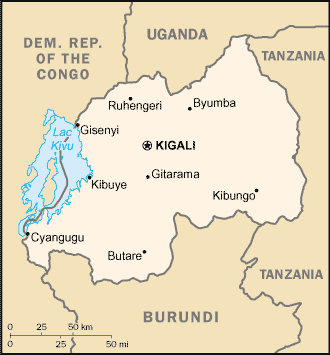
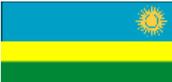
| TRAFFICKING IN PERSONS |
None reported.