
| SLOVENIA Republic of Slovenia Republika Slovenija Joined United Nations: 22 March 1992 Human Rights as assured by their constitution Click here Updated 09 February 2013 |

| CAPITAL |
| POPULATION |
| CHIEF OF STATE |
| SELECTION PROCESS |
Ljubljana
1,996,617 (July 2012 est.)
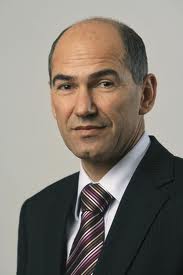
Janez Janza
Prime Minister since 10 February 2012
Prime Minister since 10 February 2012
President elected by popular vote for a five-year term (eligible for
a second term); election last held 11 November and a runoff on 2
December 2012
Next scheduled election: 2017
a second term); election last held 11 November and a runoff on 2
December 2012
Next scheduled election: 2017
HEAD OF GOVERNMENT
SELECTION PROCESS
Following National Assembly elections, the leader of the majority
party or the leader of a majority coalition is usually nominated to
become prime minister by the president and elected by the
National Assembly; election last held on 4 December 2011
Next scheduled election: 2015
party or the leader of a majority coalition is usually nominated to
become prime minister by the president and elected by the
National Assembly; election last held on 4 December 2011
Next scheduled election: 2015
| DECLARATION OF HUMAN RIGHTS |
| ETHNIC GROUPS |
Slovene 83.1%, Serb 2%, Croat 1.8%, Bosniak 1.1%, other or unspecified 12% (2002 census)
| RELIGIONS |
Catholic 57.8%, Muslim 2.4%, Orthodox 2.3%, other Christian 0.9%, unaffiliated 3.5%, other or unspecified 23%, none 10.1%
(2002 census)
(2002 census)
| GOVERNMENT STRUCTURE |
Parliamentary republic with 182 municipalities (obcine, singular - obcina) and 11 urban municipalities (mestne obcine , singular -
mestna obcina ); Legal system is based on civil law system; has not accepted compulsory ICJ jurisdiction
Executive: President elected by popular vote for a five-year term (eligible for a second term); election last held on 11 November
and a runoff on 2 December 2012 (next presidential election to be held in 2017); following National Assembly elections, the leader
of the majority party or the leader of a majority coalition usually nominated to become prime minister by the president and elected
by the National Assembly
Legislative: bicameral Parliament consists of a National Council or Drzavni Svet (40 seats; members indirectly elected by an
electoral college to serve five-year terms; note - this is primarily an advisory body with limited legislative powers; it may propose
laws, ask to review any National Assembly decision, and call national referenda) and the National Assembly or Drzavni Zbor (90
seats; 40 members directly elected and 50 are elected on a proportional basis; note - the number of directly elected and
proportionally elected seats varies with each election; the constitution mandates 1 seat each for Slovenia's Hungarian and Italian
minorities; members elected by popular vote to serve four-year terms)
elections: National Assembly - last held on 4 December 2011 (next to be held in 2015)
Judicial: Supreme Court (judges are elected by the National Assembly on the recommendation of the Judicial Council);
Constitutional Court (judges elected for nine-year terms by the National Assembly and nominated by the president)
mestna obcina ); Legal system is based on civil law system; has not accepted compulsory ICJ jurisdiction
Executive: President elected by popular vote for a five-year term (eligible for a second term); election last held on 11 November
and a runoff on 2 December 2012 (next presidential election to be held in 2017); following National Assembly elections, the leader
of the majority party or the leader of a majority coalition usually nominated to become prime minister by the president and elected
by the National Assembly
Legislative: bicameral Parliament consists of a National Council or Drzavni Svet (40 seats; members indirectly elected by an
electoral college to serve five-year terms; note - this is primarily an advisory body with limited legislative powers; it may propose
laws, ask to review any National Assembly decision, and call national referenda) and the National Assembly or Drzavni Zbor (90
seats; 40 members directly elected and 50 are elected on a proportional basis; note - the number of directly elected and
proportionally elected seats varies with each election; the constitution mandates 1 seat each for Slovenia's Hungarian and Italian
minorities; members elected by popular vote to serve four-year terms)
elections: National Assembly - last held on 4 December 2011 (next to be held in 2015)
Judicial: Supreme Court (judges are elected by the National Assembly on the recommendation of the Judicial Council);
Constitutional Court (judges elected for nine-year terms by the National Assembly and nominated by the president)
| LANGUAGES |
Slovenian (official) 91.1%, Serbo-Croatian 4.5%, other or unspecified 4.4%, Italian (official, only in municipalities where Italian
national communities reside), Hungarian (official, only in municipalities where Hungarian national communities reside) (2002 census)
national communities reside), Hungarian (official, only in municipalities where Hungarian national communities reside) (2002 census)
| BRIEF HISTORY |
In ancient times Celts and Illyrians inhabited the territory of present-day Slovenia. The Roman Empire established its rule in the
region in the 1st century, after 200 years of fighting with the local tribes. The most important ancient Roman cities in this area
included: Celeia (now Celje), Emona (Ljubljana), Nauportus (Vrhnika), Poetovio (Ptuj). The modern country's territory was split
among the Roman provinces of Dalmatia, Italia, Noricum, and Pannonia. The Slavic Duchy of Karantania mainly occupied the
territory of today's Austrian Carinthia and Slovenian Carinthia. It emerged from the ashes of the first Slavic union: Samo's Tribal
Union. Samo connected the Western and the Southern Slavic tribes. The union extended from the Baltic Sea to the Adriatic Sea. Its
purpose was to defend the Slavs from the Bavarians, the Langobards and the Avars. It collapsed due to the death of Samo (658)
and the disconnected link between the western and the southern Slavs. After the demise of Samo's Tribal Union, Karantanians
established their duchy under the guidance of Knez (Lord) Valuk. In 745 Karantania joined the Frankish kingdom as an
independent country with its own law (consuetudo Sclavorum) and preserved the inauguration of its knez (prince) in the Slovenian
language until the year 1414 on the Prince's Stone (knežji kamen). Until the year 1651 the oath ceremony of the lord took place at
the Duke's Chair (vojvodski stol) and then, until the year 1728, in the county house in Klagenfurt (Celovec). From as early as the
9th century, the lands inhabited by Karantanians, later Slovenes, fell under non-Karantanian ruler, including partial but co-operative
control by Bavarian dukes and by the Republic of Venice. The Slovenes living in the provinces of Carinthia, Carniola and Styria,
lived under the rule of the Habsburg dynasty from the 14th century until 1918, with the exceptions of Napoleon's 4-year tutelage of
parts of modern-day Slovenia and Croatia — the "Illyrian provinces" and Prekmurje region was managed by Ottomans
approximately 150 years. While the elites of these regions mostly became Germanized, the peasants strongly resisted Germanization
influences and retained their unique Slavic language and culture. A major step towards the social and cultural emancipation of the
Slovenians happened during the Reformation, when Primož Trubar published the first printed books in the Slovenian language
(Catechismus and Abecedarium, 1550 in Tübingen, Germany). Protestant publishing in Slovene culminated by a full translation of
the Bible (Jurij Dalmatin, Wittenberg 1584). Even though the majority of the population assumed Protestant teaching, the region
became re-Catholicized under the rule of Archduke Ferdinand of Inner Austria (ruled 1590 - 1637), who later became Emperor
and pursued similar policies in the other Habsburg territories. See also: Croatian and Slovenian peasant revolt of 1573. In the 19th
century intellectuals codified Slovene into a literary language, and Slovene nationalist movements began to take hold, initially
demanding Slovene autonomy within the framework of the Habsburg Monarchy (see United Slovenia). In the second half of 19th
century, Slovenia gained an administrative autonomy in the province of Carinthia. Other provinces settled with Slovenians had some
cultural and educational concessions. In 1918, after World War I, the Slovenes joined with other southern Slav peoples in forming
the State of Slovenes, Croats and Serbs (October 29, 1918) and then the Kingdom of Serbs, Croats and Slovenes (December 1,
1918) under King Peter I of Serbia. In 1929, the Kingdom of Serbs, Croats, and Slovenes was renamed as the Kingdom of
Yugoslavia. In 1941, Yugoslavia fell to the Axis powers during the invasion of Yugoslavia. After Yugoslavia fell, Germany, Italy,
and Hungary each annexed parts of Slovenia, the largest part being Lower Styria which was annexed to the "Ostmark" (Nazi
German Austria). Following Yugoslav partisan resistance to German, Hungarian, and Italian occupation and the elimination of
quisling groups, Josip Broz Tito established the Socialist Federal Republic of Yugoslavia in 1945. During the immediate postwar
period, political opponents and members of non-communist armed formations were imprisoned and executed, and many were
buried in unmarked mass graves. Following the 1948 Tito-Stalin split, measures became less repressive. Slovenia formed a
constituent republic of the Socialist Federal Republic of Yugoslavia. Slovenia continued to form Yugoslavia's most prosperous and
advanced republic throughout the communist era. Slovenia was at the forefront of Yugoslavia's unique version of communism. The
independence of Slovenia came about as a result of the dissolution of Yugoslavia, and the rise of nationalism. Crisis emerged in
Yugoslavia with the weakening of communism in Eastern Europe towards the end of the Cold War in the late 1980s. In Yugoslavia,
the federal Communist party, officially called Alliance or League of Communists, was losing its ideological dominance. At the same
time, nationalist and separatist ideologies were on the rise in the late 1980s throughout Yugoslavia. This was particularly noticeable
in Serbia and Croatia, Bosnia and Herzegovina, and to a lesser extent in Slovenia and the Republic of Macedonia. Slobodan
Milošević's rise to power in Serbia, and his rhetoric in favour of the unity of all Serbs, was responded to with nationalist movements
in other republics, particularly Croatia and Slovenia. These Republics began to seek greater autonomy within the Federation,
including confederative status and even full independence. Nationalism also grew within the still ruling League of Communists. So the
weakening of the communist regime allowed nationalism to become a more powerful force in Yugoslav politics. In January 1990,
the League of Communists broke up on the lines of the individual Republics. On December 23, 1990, 88% of Slovenia's population
voted for independence in a plebiscite, and on June 25, 1991, the Republic of Slovenia declared its independence. A 10-day war
with Yugoslavia followed (June 27, 1991 - July 6, 1991). The Yugoslav People's Army (JNA) forces withdrew after Slovenia
demonstrated stiff resistance to Belgrade. The conflict resulted in relatively few casualties: 67 people were killed according to
statistics compiled by the International Red Cross, of which most (39) were JNA soldiers. Slovenia joined the United Nations on
May 22, 1992. Historical ties to Western Europe made Slovenia a strong candidate for accession to the European Union. This
occurred on May 1, 2004. The other Yugoslav Republics all had to remain outside the European Union. Just a few weeks earlier -
in March 2004 - Slovenia had become a member of NATO. The boundaries of Slovenia today are as they were as a Socialist
Republic prior to independence, but a series of border disputes arose between Slovenia and its neighbour Croatia. The Slovenian
tolar became part of the European Exchange Rate Mechanism in 2004. Slovenia joined the European Monetary Union and adopted
the Euro as its currency on the 1 January 2007 as the first of the new member countries. Slovenia implemented Schengen
Agreement on December 21, 2007. In 2008, the Social Democrats made a coalition agreement with two other centre-left
opposition parties, the Liberal Democracy of Slovenia and Zares. In the parliamentary elections of 2008, these parties defeated the
Slovenian Democratic Party and formed a government headed by Pahor. In the elections, the Slovenian Democratic Party lost to
the left wing coalition. In November 2008, Janša was replaced as Prime Minister by the Social Democrat leader Borut Pahor.
Presidential elections were held in Slovenia on 11 November 2012, with a run-off held on 2 December 2012. Slovenia's 1.7 million
registered voters chose between the incumbent president Danilo Türk, the SDS/NSi party candidate Milan Zver and Borut Pahor of
the Social Democrats who was also supported by the Civic List. The first round was won, contrary to the opinion poll predictions,
by Pahor, with Türk placing second. In the run-off election, Pahor won with roughly two thirds of the vote.
Source: Wikipedia: History of Slovenia
region in the 1st century, after 200 years of fighting with the local tribes. The most important ancient Roman cities in this area
included: Celeia (now Celje), Emona (Ljubljana), Nauportus (Vrhnika), Poetovio (Ptuj). The modern country's territory was split
among the Roman provinces of Dalmatia, Italia, Noricum, and Pannonia. The Slavic Duchy of Karantania mainly occupied the
territory of today's Austrian Carinthia and Slovenian Carinthia. It emerged from the ashes of the first Slavic union: Samo's Tribal
Union. Samo connected the Western and the Southern Slavic tribes. The union extended from the Baltic Sea to the Adriatic Sea. Its
purpose was to defend the Slavs from the Bavarians, the Langobards and the Avars. It collapsed due to the death of Samo (658)
and the disconnected link between the western and the southern Slavs. After the demise of Samo's Tribal Union, Karantanians
established their duchy under the guidance of Knez (Lord) Valuk. In 745 Karantania joined the Frankish kingdom as an
independent country with its own law (consuetudo Sclavorum) and preserved the inauguration of its knez (prince) in the Slovenian
language until the year 1414 on the Prince's Stone (knežji kamen). Until the year 1651 the oath ceremony of the lord took place at
the Duke's Chair (vojvodski stol) and then, until the year 1728, in the county house in Klagenfurt (Celovec). From as early as the
9th century, the lands inhabited by Karantanians, later Slovenes, fell under non-Karantanian ruler, including partial but co-operative
control by Bavarian dukes and by the Republic of Venice. The Slovenes living in the provinces of Carinthia, Carniola and Styria,
lived under the rule of the Habsburg dynasty from the 14th century until 1918, with the exceptions of Napoleon's 4-year tutelage of
parts of modern-day Slovenia and Croatia — the "Illyrian provinces" and Prekmurje region was managed by Ottomans
approximately 150 years. While the elites of these regions mostly became Germanized, the peasants strongly resisted Germanization
influences and retained their unique Slavic language and culture. A major step towards the social and cultural emancipation of the
Slovenians happened during the Reformation, when Primož Trubar published the first printed books in the Slovenian language
(Catechismus and Abecedarium, 1550 in Tübingen, Germany). Protestant publishing in Slovene culminated by a full translation of
the Bible (Jurij Dalmatin, Wittenberg 1584). Even though the majority of the population assumed Protestant teaching, the region
became re-Catholicized under the rule of Archduke Ferdinand of Inner Austria (ruled 1590 - 1637), who later became Emperor
and pursued similar policies in the other Habsburg territories. See also: Croatian and Slovenian peasant revolt of 1573. In the 19th
century intellectuals codified Slovene into a literary language, and Slovene nationalist movements began to take hold, initially
demanding Slovene autonomy within the framework of the Habsburg Monarchy (see United Slovenia). In the second half of 19th
century, Slovenia gained an administrative autonomy in the province of Carinthia. Other provinces settled with Slovenians had some
cultural and educational concessions. In 1918, after World War I, the Slovenes joined with other southern Slav peoples in forming
the State of Slovenes, Croats and Serbs (October 29, 1918) and then the Kingdom of Serbs, Croats and Slovenes (December 1,
1918) under King Peter I of Serbia. In 1929, the Kingdom of Serbs, Croats, and Slovenes was renamed as the Kingdom of
Yugoslavia. In 1941, Yugoslavia fell to the Axis powers during the invasion of Yugoslavia. After Yugoslavia fell, Germany, Italy,
and Hungary each annexed parts of Slovenia, the largest part being Lower Styria which was annexed to the "Ostmark" (Nazi
German Austria). Following Yugoslav partisan resistance to German, Hungarian, and Italian occupation and the elimination of
quisling groups, Josip Broz Tito established the Socialist Federal Republic of Yugoslavia in 1945. During the immediate postwar
period, political opponents and members of non-communist armed formations were imprisoned and executed, and many were
buried in unmarked mass graves. Following the 1948 Tito-Stalin split, measures became less repressive. Slovenia formed a
constituent republic of the Socialist Federal Republic of Yugoslavia. Slovenia continued to form Yugoslavia's most prosperous and
advanced republic throughout the communist era. Slovenia was at the forefront of Yugoslavia's unique version of communism. The
independence of Slovenia came about as a result of the dissolution of Yugoslavia, and the rise of nationalism. Crisis emerged in
Yugoslavia with the weakening of communism in Eastern Europe towards the end of the Cold War in the late 1980s. In Yugoslavia,
the federal Communist party, officially called Alliance or League of Communists, was losing its ideological dominance. At the same
time, nationalist and separatist ideologies were on the rise in the late 1980s throughout Yugoslavia. This was particularly noticeable
in Serbia and Croatia, Bosnia and Herzegovina, and to a lesser extent in Slovenia and the Republic of Macedonia. Slobodan
Milošević's rise to power in Serbia, and his rhetoric in favour of the unity of all Serbs, was responded to with nationalist movements
in other republics, particularly Croatia and Slovenia. These Republics began to seek greater autonomy within the Federation,
including confederative status and even full independence. Nationalism also grew within the still ruling League of Communists. So the
weakening of the communist regime allowed nationalism to become a more powerful force in Yugoslav politics. In January 1990,
the League of Communists broke up on the lines of the individual Republics. On December 23, 1990, 88% of Slovenia's population
voted for independence in a plebiscite, and on June 25, 1991, the Republic of Slovenia declared its independence. A 10-day war
with Yugoslavia followed (June 27, 1991 - July 6, 1991). The Yugoslav People's Army (JNA) forces withdrew after Slovenia
demonstrated stiff resistance to Belgrade. The conflict resulted in relatively few casualties: 67 people were killed according to
statistics compiled by the International Red Cross, of which most (39) were JNA soldiers. Slovenia joined the United Nations on
May 22, 1992. Historical ties to Western Europe made Slovenia a strong candidate for accession to the European Union. This
occurred on May 1, 2004. The other Yugoslav Republics all had to remain outside the European Union. Just a few weeks earlier -
in March 2004 - Slovenia had become a member of NATO. The boundaries of Slovenia today are as they were as a Socialist
Republic prior to independence, but a series of border disputes arose between Slovenia and its neighbour Croatia. The Slovenian
tolar became part of the European Exchange Rate Mechanism in 2004. Slovenia joined the European Monetary Union and adopted
the Euro as its currency on the 1 January 2007 as the first of the new member countries. Slovenia implemented Schengen
Agreement on December 21, 2007. In 2008, the Social Democrats made a coalition agreement with two other centre-left
opposition parties, the Liberal Democracy of Slovenia and Zares. In the parliamentary elections of 2008, these parties defeated the
Slovenian Democratic Party and formed a government headed by Pahor. In the elections, the Slovenian Democratic Party lost to
the left wing coalition. In November 2008, Janša was replaced as Prime Minister by the Social Democrat leader Borut Pahor.
Presidential elections were held in Slovenia on 11 November 2012, with a run-off held on 2 December 2012. Slovenia's 1.7 million
registered voters chose between the incumbent president Danilo Türk, the SDS/NSi party candidate Milan Zver and Borut Pahor of
the Social Democrats who was also supported by the Civic List. The first round was won, contrary to the opinion poll predictions,
by Pahor, with Türk placing second. In the run-off election, Pahor won with roughly two thirds of the vote.
Source: Wikipedia: History of Slovenia
| ECONOMIC OVERVIEW |
Slovenia became the first 2004 European Union entrant to adopt the euro (on 1 January 2007) and has experienced one of the
most stable political and economic transitions in Central and Southeastern Europe. With the highest per capita GDP in Central
Europe, Slovenia has excellent infrastructure, a well-educated work force, and a strategic location between the Balkans and
Western Europe. Privatization has lagged since 2002, and the economy has one of highest levels of state control in the EU.
Structural reforms to improve the business environment have allowed for somewhat greater foreign participation in Slovenia's
economy and helped to lower unemployment. In March 2004, Slovenia became the first transition country to graduate from
borrower status to donor partner at the World Bank. In 2007, Slovenia was invited to begin the process for joining the OECD; it
became a member in 2012. Despite its economic success, foreign direct investment (FDI) in Slovenia has lagged behind the region
average, and taxes remain relatively high. Furthermore, the labor market is often seen as inflexible, and legacy industries are losing
sales to more competitive firms in China, India, and elsewhere. In 2009, the global recession caused the economy to contract -
through falling exports and industrial production - by 8%, and unemployment to rise. Although growth resumed in 2010, it dipped
into negative territory in 2012 and the unemployment rate continued to rise, exceeding 12% in 2012.
Source: CIA World Factbook (select Slovenia)
most stable political and economic transitions in Central and Southeastern Europe. With the highest per capita GDP in Central
Europe, Slovenia has excellent infrastructure, a well-educated work force, and a strategic location between the Balkans and
Western Europe. Privatization has lagged since 2002, and the economy has one of highest levels of state control in the EU.
Structural reforms to improve the business environment have allowed for somewhat greater foreign participation in Slovenia's
economy and helped to lower unemployment. In March 2004, Slovenia became the first transition country to graduate from
borrower status to donor partner at the World Bank. In 2007, Slovenia was invited to begin the process for joining the OECD; it
became a member in 2012. Despite its economic success, foreign direct investment (FDI) in Slovenia has lagged behind the region
average, and taxes remain relatively high. Furthermore, the labor market is often seen as inflexible, and legacy industries are losing
sales to more competitive firms in China, India, and elsewhere. In 2009, the global recession caused the economy to contract -
through falling exports and industrial production - by 8%, and unemployment to rise. Although growth resumed in 2010, it dipped
into negative territory in 2012 and the unemployment rate continued to rise, exceeding 12% in 2012.
Source: CIA World Factbook (select Slovenia)
| POLITICAL CLIMATE |
Ten years after independence, Slovenia has made tremendous progress establishing democratic institutions, enshrining respect for
human rights, establishing a market economy and adapting its military to Western norms and standards. In contrast to its neighbors,
civil tranquility and strong economic growth have marked this period. Upon achieving independence, Slovenia offered citizenship to
all residents, regardless of ethnicity or origin, avoiding a sectarian trap that has caught out many central European countries. Slovenia
willingly accepted refugees from the fighting in Bosnia and has since participated in international stabilization efforts in the region.
On the international front, Slovenia has advanced rapidly toward integration into the Euro-Atlantic community of nations. Invited to
begin accession negotiations with the European Union in November 1998, Slovenia has achieve two of its primary foreign policy
goals--membership in the EU and NATO. Slovenia also participates in the Southeast Europe Cooperation Initiative (SECI).
Slovenia remains firmly committed to achieving NATO membership in a second round of enlargement. Slovenia has been an active
participant in Partnership for Peace (PfP) and has sought to demonstrate its preparedness to take on the responsibilities and
burdens of membership in the Alliance. The United States looks to Slovenia to play a productive role in continuing security efforts
throughout the region. It has done much—contributing to the success of IFOR, SFOR, efforts in Albania, the Republic of
Macedonia, Montenegro, Kosovo, and elsewhere—and has continued to expand actively its constructive regional engagement.
Slovenia is one of the focus countries for the United States' southeast European policy, aimed at reinforcing regional stability and
integration. The Slovenian Government is well-positioned to be an influential role model for other southeast European governments
at different stages of reform and integration. To these ends, the United States urges Slovenia to maintain momentum on internal
economic, political, and legal reforms, while expanding their international cooperation as resources allow. Although harmonization
with EU law and standards will require great efforts, already underway, the EU accession process will serve to advance Slovenia's
structural reform agenda. U.S. and Allied efforts to assist Slovenia's military restructuring and modernization efforts are ongoing.
A parliamentary election for the 90 deputies to the National Assembly of Slovenia was held on 4 December 2011. This was the first
early election in Slovenia's history. 65.60% of voters cast their vote. The election was surprisingly won by the center-left Positive
Slovenia party, led by Zoran Janković. However, he failed to be elected as the new Prime Minister in the National Assembly, and
the new government was formed by a right-leaning coalition of five parties, led by Janez Janša, the president of the second-placed
Slovenian Democratic Party. Presidential elections were held in Slovenia on 11 November 2012, with a run-off held on 2
December 2012. Slovenia's 1.7 million registered voters chose between the incumbent president Danilo Türk, the SDS/NSi party
candidate Milan Zver and Borut Pahor of the Social Democrats who was also supported by the Civic List. The first round was
won, contrary to the opinion poll predictions, by Pahor, with Türk placing second. In the run-off election, Pahor won with roughly
two thirds of the vote.
Source: Wikipedia: Politics of Slovenia
human rights, establishing a market economy and adapting its military to Western norms and standards. In contrast to its neighbors,
civil tranquility and strong economic growth have marked this period. Upon achieving independence, Slovenia offered citizenship to
all residents, regardless of ethnicity or origin, avoiding a sectarian trap that has caught out many central European countries. Slovenia
willingly accepted refugees from the fighting in Bosnia and has since participated in international stabilization efforts in the region.
On the international front, Slovenia has advanced rapidly toward integration into the Euro-Atlantic community of nations. Invited to
begin accession negotiations with the European Union in November 1998, Slovenia has achieve two of its primary foreign policy
goals--membership in the EU and NATO. Slovenia also participates in the Southeast Europe Cooperation Initiative (SECI).
Slovenia remains firmly committed to achieving NATO membership in a second round of enlargement. Slovenia has been an active
participant in Partnership for Peace (PfP) and has sought to demonstrate its preparedness to take on the responsibilities and
burdens of membership in the Alliance. The United States looks to Slovenia to play a productive role in continuing security efforts
throughout the region. It has done much—contributing to the success of IFOR, SFOR, efforts in Albania, the Republic of
Macedonia, Montenegro, Kosovo, and elsewhere—and has continued to expand actively its constructive regional engagement.
Slovenia is one of the focus countries for the United States' southeast European policy, aimed at reinforcing regional stability and
integration. The Slovenian Government is well-positioned to be an influential role model for other southeast European governments
at different stages of reform and integration. To these ends, the United States urges Slovenia to maintain momentum on internal
economic, political, and legal reforms, while expanding their international cooperation as resources allow. Although harmonization
with EU law and standards will require great efforts, already underway, the EU accession process will serve to advance Slovenia's
structural reform agenda. U.S. and Allied efforts to assist Slovenia's military restructuring and modernization efforts are ongoing.
A parliamentary election for the 90 deputies to the National Assembly of Slovenia was held on 4 December 2011. This was the first
early election in Slovenia's history. 65.60% of voters cast their vote. The election was surprisingly won by the center-left Positive
Slovenia party, led by Zoran Janković. However, he failed to be elected as the new Prime Minister in the National Assembly, and
the new government was formed by a right-leaning coalition of five parties, led by Janez Janša, the president of the second-placed
Slovenian Democratic Party. Presidential elections were held in Slovenia on 11 November 2012, with a run-off held on 2
December 2012. Slovenia's 1.7 million registered voters chose between the incumbent president Danilo Türk, the SDS/NSi party
candidate Milan Zver and Borut Pahor of the Social Democrats who was also supported by the Civic List. The first round was
won, contrary to the opinion poll predictions, by Pahor, with Türk placing second. In the run-off election, Pahor won with roughly
two thirds of the vote.
Source: Wikipedia: Politics of Slovenia
| INTERNATIONAL DISPUTES |
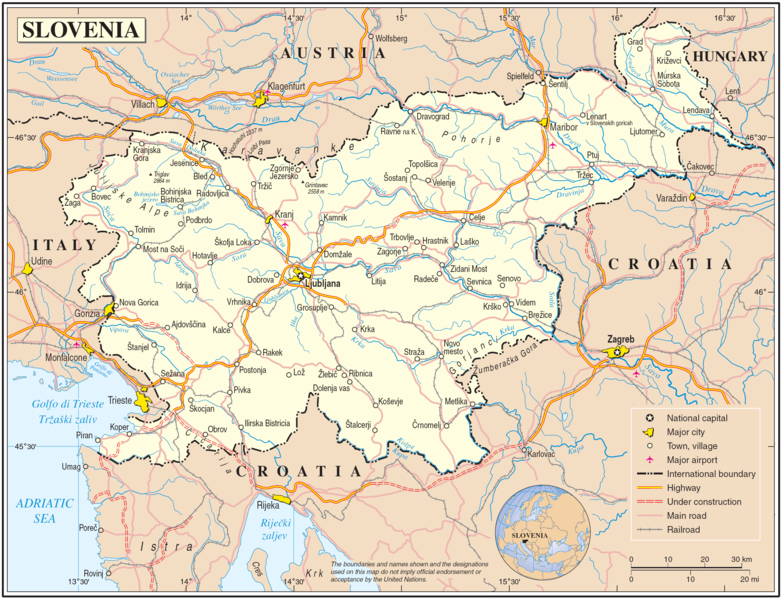
The Croatia-Slovenia land and maritime boundary agreement, which would have ceded most of Piran Bay and maritime access to
Slovenia and several villages to Croatia, remains unratified and in dispute; Slovenia also protests Croatia's 2003 claim to an
exclusive economic zone in the Adriatic; as a member state that forms part of the EU's external border, Slovenia has implemented
the strict Schengen border rules to curb illegal migration and commerce through southeastern Europe while encouraging close
cross-border ties with Croatia
Slovenia and several villages to Croatia, remains unratified and in dispute; Slovenia also protests Croatia's 2003 claim to an
exclusive economic zone in the Adriatic; as a member state that forms part of the EU's external border, Slovenia has implemented
the strict Schengen border rules to curb illegal migration and commerce through southeastern Europe while encouraging close
cross-border ties with Croatia


| REFUGEES AND INTERNALLY DISPLACED PERSONS (IDPS) |
None reported.
| ILLICIT DRUGS |
Minor transit point for cocaine and Southwest Asian heroin bound for Western Europe, and for precursor chemicals
| HUMAN RIGHTS STATEMENTS, ANALYSIS AND CRITIQUES |
2011 Human Rights Report: Slovenia
Bureau of Democracy, Human Rights, and Labor
2011 Country Reports on Human Rights Practices
May 25, 2012
Slovenia is a parliamentary democracy and constitutional republic. Power is shared among a directly elected president (head of state), a
prime minister (head of government), and a bicameral parliament composed of the National Assembly (lower house) and the National
Council (upper house). The coalition government of Prime Minister Borut Pahor lost a no-confidence vote on September 20; citizens
elected a new government on December 4 in free and fair multiparty elections. Security forces reported to civilian authorities.
The most significant human rights problem was societal discrimination and occasional extremist harassment and violence against the
country’s Roma, which aggravated their harsh living conditions, limited access to education and employment opportunities, and
heightened social exclusion. Judicial and administrative backlogs and inefficiency resulted in significant delays in trials and in processing
of asylum applications. While the government made some progress in restoring residency to persons whose status as residents was
“erased” after the break-up of the former Yugoslavia, these “erased” individuals were unable to exercise fully their rights regarding
access to housing, health care, employment, and social security.
Other problems reported during the year included prison overcrowding; government corruption; domestic violence against women and
children; trafficking in men, women, and girls; and violence and discrimination against gay men and lesbians.
The government took steps to prosecute and punish officials who committed abuses, whether in the security services or elsewhere in
the governmen
Click here to read more »
Bureau of Democracy, Human Rights, and Labor
2011 Country Reports on Human Rights Practices
May 25, 2012
Slovenia is a parliamentary democracy and constitutional republic. Power is shared among a directly elected president (head of state), a
prime minister (head of government), and a bicameral parliament composed of the National Assembly (lower house) and the National
Council (upper house). The coalition government of Prime Minister Borut Pahor lost a no-confidence vote on September 20; citizens
elected a new government on December 4 in free and fair multiparty elections. Security forces reported to civilian authorities.
The most significant human rights problem was societal discrimination and occasional extremist harassment and violence against the
country’s Roma, which aggravated their harsh living conditions, limited access to education and employment opportunities, and
heightened social exclusion. Judicial and administrative backlogs and inefficiency resulted in significant delays in trials and in processing
of asylum applications. While the government made some progress in restoring residency to persons whose status as residents was
“erased” after the break-up of the former Yugoslavia, these “erased” individuals were unable to exercise fully their rights regarding
access to housing, health care, employment, and social security.
Other problems reported during the year included prison overcrowding; government corruption; domestic violence against women and
children; trafficking in men, women, and girls; and violence and discrimination against gay men and lesbians.
The government took steps to prosecute and punish officials who committed abuses, whether in the security services or elsewhere in
the governmen
Click here to read more »
20 June 2011
Committee against Torture
Forty-sixth session
9 May–3 June 2011
Consideration of reports submitted by States parties under article 19 of the Convention
Concluding observations of the Committee against Torture
Slovenia
A. Introduction
2. The Committee welcomes the submission of the third periodic report of Slovenia, which was submitted in accordance with its
reporting guidelines, but regrets that it was submitted three years late.
3. The Committee notes with appreciation that a high-level delegation from the State party met with the Committee, and also notes with
appreciation the opportunity to engage in a constructive dialogue covering many areas under the Convention.
B. Positive aspects
4. The Committee welcomes that since the consideration of the second periodic report, the State party has ratified the following
international instruments:
(a) Optional Protocol to the Convention against Torture, on 23 January 2007;
(b) International Convention on the Rights of Persons with Disabilities and its Optional Protocol, on 24 April 2008;
(c) Optional Protocols to the Convention on the Rights of the Child, on 23 September 2004;
C. Principal subjects of concern and recommendations
Definition and offence of torture
7. While welcoming the introduction of a new provision defining and criminalizing torture which contains all the elements specified in
article 1 of the Convention, the Committee remains concerned that the crime of torture is subject to statute of limitation (arts. 1 and 4).
The Committee urges the State party to amend article 90 of its Penal Code with a view to abolishing the statute of limitation for the crime
of torture. The State party should also ensure that such offence is punishable by appropriate penalty which takes into account its grave
nature, as set out in article 4, paragraph 2, of the Convention.
Fundamental legal safeguards
8. While noting that under article 148 of the Criminal Procedure Act there is a possibility for audio and video-recording of interrogations,
the Committee is concerned that the audio and video-recording generally does not take place as there is no requirement therefor in law1
(art. 2).
Click here to read more »
Committee against Torture
Forty-sixth session
9 May–3 June 2011
Consideration of reports submitted by States parties under article 19 of the Convention
Concluding observations of the Committee against Torture
Slovenia
A. Introduction
2. The Committee welcomes the submission of the third periodic report of Slovenia, which was submitted in accordance with its
reporting guidelines, but regrets that it was submitted three years late.
3. The Committee notes with appreciation that a high-level delegation from the State party met with the Committee, and also notes with
appreciation the opportunity to engage in a constructive dialogue covering many areas under the Convention.
B. Positive aspects
4. The Committee welcomes that since the consideration of the second periodic report, the State party has ratified the following
international instruments:
(a) Optional Protocol to the Convention against Torture, on 23 January 2007;
(b) International Convention on the Rights of Persons with Disabilities and its Optional Protocol, on 24 April 2008;
(c) Optional Protocols to the Convention on the Rights of the Child, on 23 September 2004;
C. Principal subjects of concern and recommendations
Definition and offence of torture
7. While welcoming the introduction of a new provision defining and criminalizing torture which contains all the elements specified in
article 1 of the Convention, the Committee remains concerned that the crime of torture is subject to statute of limitation (arts. 1 and 4).
The Committee urges the State party to amend article 90 of its Penal Code with a view to abolishing the statute of limitation for the crime
of torture. The State party should also ensure that such offence is punishable by appropriate penalty which takes into account its grave
nature, as set out in article 4, paragraph 2, of the Convention.
Fundamental legal safeguards
8. While noting that under article 148 of the Criminal Procedure Act there is a possibility for audio and video-recording of interrogations,
the Committee is concerned that the audio and video-recording generally does not take place as there is no requirement therefor in law1
(art. 2).
Click here to read more »
Freedom In The World 2012 Report
Political Rights Score: 1
Civil Liberties Score: 1
Status: Free
Overview
In September 2011, Prime Minister Borut Pahor's government collapsed after a no confidence vote, leading to early elections in
December. Ljubljana Mayor Zoran Janković's center-left Positive Slovenia won in an upset but failed to form a government. A pension
reform package was rejected in a June referendum. October saw protests outside the Ljubljana Stock Exchange amid Slovenia’s ongoing
economic troubles.
Partly due to the effects of the global economic crisis, the Pahor government weakened in 2010, and the SDS had a strong showing in
the October municipal elections. Ghanian-born doctor Peter Bossman was elected mayor of Piran, making him the first black mayor of
an Eastern European city.
At the urging of the International Monetary Fund and other economic watchdogs, the government proposed reforms in December 2010
to reduce public debt by increasing the retirement age to 65, implementing pension reform, and cutting social benefits. However, voters
rejected the measures in a June 2011 referendum. Pahor’s government fell after two coalition partners, critical of his handling of the
economy, departed his ruling coalition that summer, leading to a parliamentary no-confidence vote in September. After parliament failed
to elect a new premier, President Türk called early elections for December 4. Though Janša’s SDS led in pre-election polling, Ljubljana
Mayor Zoran Janković's center-left Positive Slovenia won with 28 seats, followed by the SDS followed with 26 seats, and the SD with
10. However, Janković failed to secure a parliamentary majority to form a government or become prime minister by year’s end.
After two decades, a border dispute with Croatia remains a key foreign policy issue in Slovenia. The dispute concerns the delineation of
the countries’ maritime border in the Bay of Piran, and parts of their common territorial border. In 2009, Pahor and his Croatian
counterpart, Jadranka Kosor, agreed that Slovenia would lift its veto of Croatia’s EU accession and allow an international arbitration
panel to settle the dispute, pending ratification by both states’ Parliaments. Slovenia’s Parliament ratified the agreement in April 2010, but
the opposition requested a referendum. Voters narrowly approved the agreement in June, and it entered into force in November 2010.
The agreement was submitted to the United Nations in May 2011.
Click here to read more »
Political Rights Score: 1
Civil Liberties Score: 1
Status: Free
Overview
In September 2011, Prime Minister Borut Pahor's government collapsed after a no confidence vote, leading to early elections in
December. Ljubljana Mayor Zoran Janković's center-left Positive Slovenia won in an upset but failed to form a government. A pension
reform package was rejected in a June referendum. October saw protests outside the Ljubljana Stock Exchange amid Slovenia’s ongoing
economic troubles.
Partly due to the effects of the global economic crisis, the Pahor government weakened in 2010, and the SDS had a strong showing in
the October municipal elections. Ghanian-born doctor Peter Bossman was elected mayor of Piran, making him the first black mayor of
an Eastern European city.
At the urging of the International Monetary Fund and other economic watchdogs, the government proposed reforms in December 2010
to reduce public debt by increasing the retirement age to 65, implementing pension reform, and cutting social benefits. However, voters
rejected the measures in a June 2011 referendum. Pahor’s government fell after two coalition partners, critical of his handling of the
economy, departed his ruling coalition that summer, leading to a parliamentary no-confidence vote in September. After parliament failed
to elect a new premier, President Türk called early elections for December 4. Though Janša’s SDS led in pre-election polling, Ljubljana
Mayor Zoran Janković's center-left Positive Slovenia won with 28 seats, followed by the SDS followed with 26 seats, and the SD with
10. However, Janković failed to secure a parliamentary majority to form a government or become prime minister by year’s end.
After two decades, a border dispute with Croatia remains a key foreign policy issue in Slovenia. The dispute concerns the delineation of
the countries’ maritime border in the Bay of Piran, and parts of their common territorial border. In 2009, Pahor and his Croatian
counterpart, Jadranka Kosor, agreed that Slovenia would lift its veto of Croatia’s EU accession and allow an international arbitration
panel to settle the dispute, pending ratification by both states’ Parliaments. Slovenia’s Parliament ratified the agreement in April 2010, but
the opposition requested a referendum. Voters narrowly approved the agreement in June, and it entered into force in November 2010.
The agreement was submitted to the United Nations in May 2011.
Click here to read more »
Slovenia: European Court of Human Rights demands justice be done to the erased
26 June 2012
Amnesty International welcomes today’s ruling of the Grand Chamber of the European Court of Human Rights in the case of Kurić v.
Slovenia. The Grand chamber ruled that erasure – unlawful removal of people from registry of permanent residents - and its
consequences constitute grave human rights violations.
Twenty years after 25.671 people were unlawfully removed from the Slovenian registry of permanent residents, the ruling marks the end
of controversy over erasure. By ruling in favor of the erased, the Court clearly and thoroughly rejected arguments of Slovenian
authorities claiming the erased were themselves to blame.
The deletion of thousands of people from the country's permanent residence registry is one of the gravest human rights violations in
independent Slovenia. The authorities must recognize the discriminatory nature of its actions and conduct a thorough and impartial
investigation of erasure and its consequences. The European court of human rights ruling is a clear message that redresses along
international law standards, including restitution, satisfaction, compensation, rehabilitation and guarantees of non-repetition is long
overdue. Amnesty International is calling on the authorities to thoroughly study the Grand Chamber ruling and present
measures for its implementation aimed at resolving the erasure without any delay.
Background information:
26 February 1992: Some 25,671 people – more than one per cent of Slovenian population – were unlawfully removed from the Slovenian
registry of permanent residents – without notice, without due process of law and without the possibility to complain. The erased are
mainly people from other constituent republics of the former Yugoslavia, who had been living in Slovenia but had not for various reasons
acquired Slovenian citizenship after the country became independent.
Consequences: Erasure effectively deprived these people of their economic, social and political rights, forcing the erased to live at the
margins of society or to migrate to other European countries - often pretending that they were refugees or even asylum-seekers. There
were some cases of suicide and death due to poverty and lack of medical care. Many were forcibly removed from the country, even if
they had spouses or children who were Slovenian citizens, thus effectively breaking up families.
Click here to read more »
26 June 2012
Amnesty International welcomes today’s ruling of the Grand Chamber of the European Court of Human Rights in the case of Kurić v.
Slovenia. The Grand chamber ruled that erasure – unlawful removal of people from registry of permanent residents - and its
consequences constitute grave human rights violations.
Twenty years after 25.671 people were unlawfully removed from the Slovenian registry of permanent residents, the ruling marks the end
of controversy over erasure. By ruling in favor of the erased, the Court clearly and thoroughly rejected arguments of Slovenian
authorities claiming the erased were themselves to blame.
The deletion of thousands of people from the country's permanent residence registry is one of the gravest human rights violations in
independent Slovenia. The authorities must recognize the discriminatory nature of its actions and conduct a thorough and impartial
investigation of erasure and its consequences. The European court of human rights ruling is a clear message that redresses along
international law standards, including restitution, satisfaction, compensation, rehabilitation and guarantees of non-repetition is long
overdue. Amnesty International is calling on the authorities to thoroughly study the Grand Chamber ruling and present
measures for its implementation aimed at resolving the erasure without any delay.
Background information:
26 February 1992: Some 25,671 people – more than one per cent of Slovenian population – were unlawfully removed from the Slovenian
registry of permanent residents – without notice, without due process of law and without the possibility to complain. The erased are
mainly people from other constituent republics of the former Yugoslavia, who had been living in Slovenia but had not for various reasons
acquired Slovenian citizenship after the country became independent.
Consequences: Erasure effectively deprived these people of their economic, social and political rights, forcing the erased to live at the
margins of society or to migrate to other European countries - often pretending that they were refugees or even asylum-seekers. There
were some cases of suicide and death due to poverty and lack of medical care. Many were forcibly removed from the country, even if
they had spouses or children who were Slovenian citizens, thus effectively breaking up families.
Click here to read more »
Slovenia: Extend Civil Marriage to Same-Sex Couples
Ensure Lesbian and Gay Couples Adoption Rights
February 25, 2011
(New York) - The Slovenian Parliament should adopt the new Family Code proposed by the Slovenian Government, Human Rights
Watch said today in a letter to parliament members. The law would extend civil marriage to lesbian and gay couples and put heterosexual
and homosexual partnerships on equal legal footing, including the right of same-sex partners to adopt.
"In recent years many European states have extended civil marriage and adoption rights to same-sex couples," said Boris Dittrich, acting
director of the Lesbian, Gay, Bisexual and Transgender Rights Program at Human Rights Watch. "The proposed Family Code is
Slovenia's chance to join others in Europe in enabling same-sex couples to participate fully in family life."
Many governments within Europe have grasped the urgency of ending discrimination in access to civil marriage and adoption, Human
Rights Watch said. The Netherlands' legislature extended full civil marriage and adoption rights to same-sex couples in 2001; Belgium did
the same in 2003 for civil marriage and in 2006 for adoption. Spain followed suit in 2005. Same-sex marriage became legal in Norway on
January 1, 2009; in Sweden on May 1, 2009; in Portugal on June 5, 2010; and in Iceland on June 27, 2010. Outside Europe, South
Africa, Canada, Argentina, Mexico City, and several states within the US recognize same-sex marriage.
On March 31, 2010, the Committee of Ministers of the Council of Europe also unanimously adopted a set of recommendations to
member states, including Slovenia, on measures to combat discrimination on the grounds of sexual orientation or gender identity.
The Slovenian government first proposed the bill in September 2009. In accordance with international human rights standards and in line
with recent decisions of the European Court of Human Rights and Slovenian national courts, the new Family Code would make three
significant and necessary changes, Human Rights Watch said.
Click here to read more »
Ensure Lesbian and Gay Couples Adoption Rights
February 25, 2011
(New York) - The Slovenian Parliament should adopt the new Family Code proposed by the Slovenian Government, Human Rights
Watch said today in a letter to parliament members. The law would extend civil marriage to lesbian and gay couples and put heterosexual
and homosexual partnerships on equal legal footing, including the right of same-sex partners to adopt.
"In recent years many European states have extended civil marriage and adoption rights to same-sex couples," said Boris Dittrich, acting
director of the Lesbian, Gay, Bisexual and Transgender Rights Program at Human Rights Watch. "The proposed Family Code is
Slovenia's chance to join others in Europe in enabling same-sex couples to participate fully in family life."
Many governments within Europe have grasped the urgency of ending discrimination in access to civil marriage and adoption, Human
Rights Watch said. The Netherlands' legislature extended full civil marriage and adoption rights to same-sex couples in 2001; Belgium did
the same in 2003 for civil marriage and in 2006 for adoption. Spain followed suit in 2005. Same-sex marriage became legal in Norway on
January 1, 2009; in Sweden on May 1, 2009; in Portugal on June 5, 2010; and in Iceland on June 27, 2010. Outside Europe, South
Africa, Canada, Argentina, Mexico City, and several states within the US recognize same-sex marriage.
On March 31, 2010, the Committee of Ministers of the Council of Europe also unanimously adopted a set of recommendations to
member states, including Slovenia, on measures to combat discrimination on the grounds of sexual orientation or gender identity.
The Slovenian government first proposed the bill in September 2009. In accordance with international human rights standards and in line
with recent decisions of the European Court of Human Rights and Slovenian national courts, the new Family Code would make three
significant and necessary changes, Human Rights Watch said.
Click here to read more »
Address by His Excellency the President of the Republic of Slovenia Borut Pahor
Brdo pri Kranju, 5. 2. 2013
In the history of its independence, and in contrast with today, Slovenia showed its brighter side. In recent years, we have been in the
grip of financial, economic, social and moral crises. But there is no doubt that when the going gets tough, our small but strong nation
shows its best qualities. I am deeply convinced that with the necessary unity, tolerance and determination, in this and in the coming
years, we will overcome our difficulties and find the driving force to face future development challenges and opportunities.
As President of the Republic, I will strive to ensure that our strong engagement in measures to overcome the crisis will not weaken our
European and foreign policy efforts for good neighbourly relations, peace, safety, friendship and multilateral cooperation between nations
and states. Please communicate our firm commitment to these fundamental values and principles to the Heads of your Governments and
States. Slovenia wants to be – to the best of its ability – an ally in all initiatives taken to create a just and safer world.
In my speech, I will touch briefly on some of the major issues:
Firstly, the development of friendly relations with neighbouring nations and states. Undoubtedly, the ratification of the Accession Treaty
of the Republic of Croatia to the European Union has been and will continue to be at the forefront of our attention in the coming months.
Slovenia is sincerely looking forward to welcoming Croatia as a new member of the European Union. I firmly believe that the
Governments of both states will find appropriate solutions in line with the conclusions of the December European Council and within the
framework of the Vienna 2001 Agreement on Succession Issues. The ratification of the accession treaty requires a two-thirds majority
vote, and last week the National Assembly proved it can also adopt decisions with such a demanding quorum in this term of office. As
EU Member States, Slovenia and Croatia will be even more successful in continuing the process of enhancing their friendships and
comprehensive bilateral cooperation.
Furthermore, Slovenia will maintain its focus on cooperation with all neighbouring countries. As regards Italy, Austria and Hungary, we
will continue to pursue our policy to foster common interests regarding both bilateral and multilateral issues. Slovenia will devote
particular attention to economic cooperation, since, in these times of crisis, the increase in the volume of trade and services is of
considerable importance for boosting economic growth and reducing unemployment.
The future of the European Union. I allow myself to think that you are familiar with my personal views. I am very much in favour of
strengthening the Member States in political terms. The crisis has revealed institutional and other weaknesses of the current
arrangements. For this reason, irrespective of different views on issues regarding the political strengthening of cooperation, the topic of
the future of the EU deserves our close attention. Slovenia wants to actively participate in this debate, which is only about to begin. Both
the Government and the National Assembly are well aware of the significance of this debate within national borders and our
responsibility in this respect.
Last but not least, Slovenian citizens might wish to decide on a potential new treaty at a referendum, and they have every right to do so.
Therefore, thorough information and the exchange of views within national borders and between the Member States are of essential
importance. In this way, we will have the opportunity of stressing the relevance of the Nobel Peace Prize, which reflects the success of
the EU in the promotion of solidarity, tolerance, stability, respect for human rights and democratic development.
Click here to read more »
Brdo pri Kranju, 5. 2. 2013
In the history of its independence, and in contrast with today, Slovenia showed its brighter side. In recent years, we have been in the
grip of financial, economic, social and moral crises. But there is no doubt that when the going gets tough, our small but strong nation
shows its best qualities. I am deeply convinced that with the necessary unity, tolerance and determination, in this and in the coming
years, we will overcome our difficulties and find the driving force to face future development challenges and opportunities.
As President of the Republic, I will strive to ensure that our strong engagement in measures to overcome the crisis will not weaken our
European and foreign policy efforts for good neighbourly relations, peace, safety, friendship and multilateral cooperation between nations
and states. Please communicate our firm commitment to these fundamental values and principles to the Heads of your Governments and
States. Slovenia wants to be – to the best of its ability – an ally in all initiatives taken to create a just and safer world.
In my speech, I will touch briefly on some of the major issues:
Firstly, the development of friendly relations with neighbouring nations and states. Undoubtedly, the ratification of the Accession Treaty
of the Republic of Croatia to the European Union has been and will continue to be at the forefront of our attention in the coming months.
Slovenia is sincerely looking forward to welcoming Croatia as a new member of the European Union. I firmly believe that the
Governments of both states will find appropriate solutions in line with the conclusions of the December European Council and within the
framework of the Vienna 2001 Agreement on Succession Issues. The ratification of the accession treaty requires a two-thirds majority
vote, and last week the National Assembly proved it can also adopt decisions with such a demanding quorum in this term of office. As
EU Member States, Slovenia and Croatia will be even more successful in continuing the process of enhancing their friendships and
comprehensive bilateral cooperation.
Furthermore, Slovenia will maintain its focus on cooperation with all neighbouring countries. As regards Italy, Austria and Hungary, we
will continue to pursue our policy to foster common interests regarding both bilateral and multilateral issues. Slovenia will devote
particular attention to economic cooperation, since, in these times of crisis, the increase in the volume of trade and services is of
considerable importance for boosting economic growth and reducing unemployment.
The future of the European Union. I allow myself to think that you are familiar with my personal views. I am very much in favour of
strengthening the Member States in political terms. The crisis has revealed institutional and other weaknesses of the current
arrangements. For this reason, irrespective of different views on issues regarding the political strengthening of cooperation, the topic of
the future of the EU deserves our close attention. Slovenia wants to actively participate in this debate, which is only about to begin. Both
the Government and the National Assembly are well aware of the significance of this debate within national borders and our
responsibility in this respect.
Last but not least, Slovenian citizens might wish to decide on a potential new treaty at a referendum, and they have every right to do so.
Therefore, thorough information and the exchange of views within national borders and between the Member States are of essential
importance. In this way, we will have the opportunity of stressing the relevance of the Nobel Peace Prize, which reflects the success of
the EU in the promotion of solidarity, tolerance, stability, respect for human rights and democratic development.
Click here to read more »
Ombudsman against any form of violence, stressed again in honour of Human Rights Day
11.12.2012 14:34
Ladies and gentlemen,
At the National Assembly Session on 20 December 2006, I was elected the human rights ombudsman with 64 positive and no negative
votes. This opened a new period in my professional and personal life. The transition from medicine to the field of human rights
protection was not easy. As a specialist in psychiatry and a systemic family therapist, I found myself in the world of a different, mostly
legal language and way of thinking. I encouraged my lawyer co-workers to speak and write their thoughts in a manner understandable to
us “non-lawyers”. We gradually managed to bring the seemingly distant worlds of law and human psyche closer together as we sought
optimal solutions for all who turned to the Human Rights Ombudsman of the Republic of Slovenia for help.
We raised issues which were not always related to human rights and fundamental freedoms in the way understood by the law, but which
opened a broader look at the personal dignity of human beings. Poverty, the right to a healthy living environment, the rights of persons
with mental disorders, and the rights of the dying and their close relatives were integrated with the rights of children, the elderly and the
disabled and their right to an active participation in the resolution of problems which concern them.
Six years, the duration of a term of office of an ombudsman, is a long period in which a lot can be done, but still too short for the
implementation of all good ideas. The term which is slowly coming to an end will leave lasting traces in the form of different projects,
some of which will remain as a permanent form of the Ombudsman’s activities (for example the National Preventive Mechanism
established under the Optional Protocol to the Convention against Torture and Other Cruel, Inhuman or Degrading Treatment or
Punishment); others serve as a basis for the future legal arrangements (for example Advocate – A Child’s Voice), while some constitute
a conclusion of thorough work in certain fields (for example the environment, the Roma minority and rights deriving from employment).
Our door was wide open for cooperation with non-governmental organisations and civil society; together with their representatives, we
elaborated on several topics, most prominently in the field of care for a healthy living environment.
I decided to replace my already composed address, which stressed the milestones of this term of office, with my thoughts about the
current situation, in which it will be hard to avoid references to political decisions.
Click here to read more »
11.12.2012 14:34
Ladies and gentlemen,
At the National Assembly Session on 20 December 2006, I was elected the human rights ombudsman with 64 positive and no negative
votes. This opened a new period in my professional and personal life. The transition from medicine to the field of human rights
protection was not easy. As a specialist in psychiatry and a systemic family therapist, I found myself in the world of a different, mostly
legal language and way of thinking. I encouraged my lawyer co-workers to speak and write their thoughts in a manner understandable to
us “non-lawyers”. We gradually managed to bring the seemingly distant worlds of law and human psyche closer together as we sought
optimal solutions for all who turned to the Human Rights Ombudsman of the Republic of Slovenia for help.
We raised issues which were not always related to human rights and fundamental freedoms in the way understood by the law, but which
opened a broader look at the personal dignity of human beings. Poverty, the right to a healthy living environment, the rights of persons
with mental disorders, and the rights of the dying and their close relatives were integrated with the rights of children, the elderly and the
disabled and their right to an active participation in the resolution of problems which concern them.
Six years, the duration of a term of office of an ombudsman, is a long period in which a lot can be done, but still too short for the
implementation of all good ideas. The term which is slowly coming to an end will leave lasting traces in the form of different projects,
some of which will remain as a permanent form of the Ombudsman’s activities (for example the National Preventive Mechanism
established under the Optional Protocol to the Convention against Torture and Other Cruel, Inhuman or Degrading Treatment or
Punishment); others serve as a basis for the future legal arrangements (for example Advocate – A Child’s Voice), while some constitute
a conclusion of thorough work in certain fields (for example the environment, the Roma minority and rights deriving from employment).
Our door was wide open for cooperation with non-governmental organisations and civil society; together with their representatives, we
elaborated on several topics, most prominently in the field of care for a healthy living environment.
I decided to replace my already composed address, which stressed the milestones of this term of office, with my thoughts about the
current situation, in which it will be hard to avoid references to political decisions.
Click here to read more »
Slovenian Protests: The End Of The World
12/20/2012
Remember Petition 571? A group of journos went wailing to the international community about the media onslaught Janez Janša and his
government undertook during their tenure and PM Janša was really unhappy about it, saying that allegations of political influence over
the media (the said petition) and human rights abuses (the Roma family Strojan and the Erased) should be dealt with on domestic scene
as not to mar Slovenia’s reputation just prior to its taking over the EU presidency.
While SDS and its leader went apeshit when someone was dissing the family on their watch, they were happy to do it when it was their
turn to sit in the back of the classroom (i.e.: lose the 2008 elections).
And they seem to have acquired a bit of a taste for it. Either that or some rights are more human than others as far as SDS is concerned.
Because in the past few days this leading opposition party made a big show of tearing apart the nomination of Branko Masleša for
President of the Supreme Court (not to be confused with the Constitutional Court). SDS went after Masleša for a number or reasons and
saw it fit to go international with the story. And then some. And then some more.
Twenty-four years ago, in 1988, tens of thousands of people swarmed Kongresni trg in Ljubljana supporting Janez Janša and three other
people detained by the Yugoslav national army. Today, in 2012, tens of thousands of people are protesting against Janez Janša all over
the country with the biggest rally so far planned for tomorrow, 21 December. Also known as The End Of The World.
Pengovsky said a couple of times that the political elite is scared. We’ve seen plenty of evidence for this in the past few days. PM Janša
had a bad interview on state television where he (albeit slightly ill) was his usual paranoid self, blaming the opposition and the media for
the protest wave. The difference this time around was that on occasion he was gasping for air, so to speak, which was a novelty.
Interior minister Vinko Gorenak who survived a no-confidence vote on Tuesday, accused the opposition of trying to undermine the
coalition (as if that was somehow illegal) by trying to place a wedge between SDS and DL (some 36 pages of signatures calling for now-
nixed referendum on bad bank were “lost” last month, with ministry of interior, led by SDS’s Gorenak and the parliament led by DL’s
Gregor Virant pointing fingers at each other).
Also, the swearing-in ceremony for the new president Borut Pahor was rescheduled. Originally planned for tomorrow, it will now be
held on Saturday. Officially, this is a cost-cutting measure, unofficially, a security one. Today, ministers Senko Pličanič (justice) and
Gorenak demanded that people who are organising the protests show themselves and register the event with the proper authorities. I
guess they didn’t get Janša’s memo about the opposition and the media being behind protests. And finally, the hunt for “left wing
extremists”, meant to “level out” the fact that neo-nazis are on the rise again in Slovenia, finally yielded results this evening, with the
police reportedly confiscating Molotov cocktails and granite cubes in the Metelkova Mesto area in Ljubljana, where left-wing, alternative
and similar groups gather for concerts and other events. The problem is that eye-witness reports claim the evidence was planted.
So, the party is on for tomorrow. The National Uprising, they call it. Rumours are flying around and the nervousness is in the air again.
There’s talk of army personnel being drafted as reserve police force. Riot barricades are already deployed in Ljubljana and it only remains
to be seen whether it will be a Big Bang or a Gnab Gib. But the ball is rolling and the protest movement is starting to voice its various
demands ever more clearly.
It does seem as if the world is ending for some.
Click here to read more>>
12/20/2012
Remember Petition 571? A group of journos went wailing to the international community about the media onslaught Janez Janša and his
government undertook during their tenure and PM Janša was really unhappy about it, saying that allegations of political influence over
the media (the said petition) and human rights abuses (the Roma family Strojan and the Erased) should be dealt with on domestic scene
as not to mar Slovenia’s reputation just prior to its taking over the EU presidency.
While SDS and its leader went apeshit when someone was dissing the family on their watch, they were happy to do it when it was their
turn to sit in the back of the classroom (i.e.: lose the 2008 elections).
And they seem to have acquired a bit of a taste for it. Either that or some rights are more human than others as far as SDS is concerned.
Because in the past few days this leading opposition party made a big show of tearing apart the nomination of Branko Masleša for
President of the Supreme Court (not to be confused with the Constitutional Court). SDS went after Masleša for a number or reasons and
saw it fit to go international with the story. And then some. And then some more.
Twenty-four years ago, in 1988, tens of thousands of people swarmed Kongresni trg in Ljubljana supporting Janez Janša and three other
people detained by the Yugoslav national army. Today, in 2012, tens of thousands of people are protesting against Janez Janša all over
the country with the biggest rally so far planned for tomorrow, 21 December. Also known as The End Of The World.
Pengovsky said a couple of times that the political elite is scared. We’ve seen plenty of evidence for this in the past few days. PM Janša
had a bad interview on state television where he (albeit slightly ill) was his usual paranoid self, blaming the opposition and the media for
the protest wave. The difference this time around was that on occasion he was gasping for air, so to speak, which was a novelty.
Interior minister Vinko Gorenak who survived a no-confidence vote on Tuesday, accused the opposition of trying to undermine the
coalition (as if that was somehow illegal) by trying to place a wedge between SDS and DL (some 36 pages of signatures calling for now-
nixed referendum on bad bank were “lost” last month, with ministry of interior, led by SDS’s Gorenak and the parliament led by DL’s
Gregor Virant pointing fingers at each other).
Also, the swearing-in ceremony for the new president Borut Pahor was rescheduled. Originally planned for tomorrow, it will now be
held on Saturday. Officially, this is a cost-cutting measure, unofficially, a security one. Today, ministers Senko Pličanič (justice) and
Gorenak demanded that people who are organising the protests show themselves and register the event with the proper authorities. I
guess they didn’t get Janša’s memo about the opposition and the media being behind protests. And finally, the hunt for “left wing
extremists”, meant to “level out” the fact that neo-nazis are on the rise again in Slovenia, finally yielded results this evening, with the
police reportedly confiscating Molotov cocktails and granite cubes in the Metelkova Mesto area in Ljubljana, where left-wing, alternative
and similar groups gather for concerts and other events. The problem is that eye-witness reports claim the evidence was planted.
So, the party is on for tomorrow. The National Uprising, they call it. Rumours are flying around and the nervousness is in the air again.
There’s talk of army personnel being drafted as reserve police force. Riot barricades are already deployed in Ljubljana and it only remains
to be seen whether it will be a Big Bang or a Gnab Gib. But the ball is rolling and the protest movement is starting to voice its various
demands ever more clearly.
It does seem as if the world is ending for some.
Click here to read more>>
| Click map for larger view |
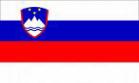
| Click flag for Country Report |


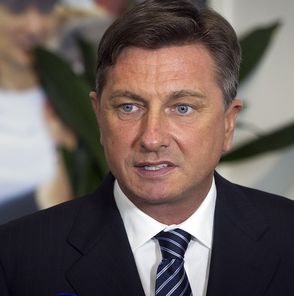
Borut Pahor
President since 22 December 2012
President since 22 December 2012
| TRAFFICKING IN PERSONS |
None reported.