| SOLOMON ISLANDS Solomon Islands Solomon Islands Joined United Nations: 19 September 1978 Human Rights as assured by their constitution Click here Updated 02 September 2012 |
| CAPITAL |
| POPULATION |
| CHIEF OF STATE |
| SELECTION PROCESS |
Honiara
584,578 (July 2012 est.)
Elizabeth II of United Kingdom
Queen since 6 February 1952
Queen since 6 February 1952
None; the monarch is hereditary; governor general appointed by
the monarch on the advice of Parliament for up to five years
(eligible for a second term)
Next scheduled election: None
the monarch on the advice of Parliament for up to five years
(eligible for a second term)
Next scheduled election: None
HEAD OF GOVERNMENT
SELECTION PROCESS
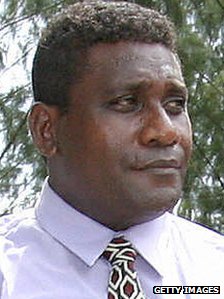
Gordon Darcy Lilo
Prime Minister since 16 November 2011
Prime Minister since 16 November 2011
Following legislative elections, the leader of the majority party or
the leader of a majority coalition is usually elected prime minister
by Parliament. Gordon Darcy LILO elected on 16 November
2011; Deputy Prime Minister appointed by the governor general
on the advice of the prime minister from among the members of
Parliament
Next scheduled election: 2014
the leader of a majority coalition is usually elected prime minister
by Parliament. Gordon Darcy LILO elected on 16 November
2011; Deputy Prime Minister appointed by the governor general
on the advice of the prime minister from among the members of
Parliament
Next scheduled election: 2014
| DECLARATION OF HUMAN RIGHTS |
| ETHNIC GROUPS |
Melanesian 94.5%, Polynesian 3%, Micronesian 1.2%, other 1.1%, unspecified 0.2% (1999 census)
| RELIGIONS |
Church of Melanesia 32.8%, Roman Catholic 19%, South Seas Evangelical 17%, Seventh-Day Adventist 11.2%, United
Church 10.3%, Christian Fellowship Church 2.4%, other Christian 4.4%, other 2.4%, unspecified 0.3%, none 0.2%
(1999 census)
Church 10.3%, Christian Fellowship Church 2.4%, other Christian 4.4%, other 2.4%, unspecified 0.3%, none 0.2%
(1999 census)
| GOVERNMENT STRUCTURE |
Parliamentary democracy ; 9 provinces and 1 capital territory. Legal system English common law, which is widely
disregarded
Executive: Monarch represented by Governor General; Prime Minister selected by Governor General as leader of
majority part or coalition; deputy prime minister appointed by the governor general on the advice of the prime minister
from among the members of Parliament
Legislative: unicameral National Parliament (50 seats; members elected from single-member constituencies by popular
vote to serve four-year terms)
elections: last held 4 August 2010 (next to be held in 2014)
Judicial: Court of Appeal
disregarded
Executive: Monarch represented by Governor General; Prime Minister selected by Governor General as leader of
majority part or coalition; deputy prime minister appointed by the governor general on the advice of the prime minister
from among the members of Parliament
Legislative: unicameral National Parliament (50 seats; members elected from single-member constituencies by popular
vote to serve four-year terms)
elections: last held 4 August 2010 (next to be held in 2014)
Judicial: Court of Appeal
| LANGUAGES |
Melanesian pidgin in much of the country is lingua franca; English is official but spoken by only 1%-2% of the
population note: 120 indigenous languages
population note: 120 indigenous languages
| BRIEF HISTORY |
The Solomon Islands have been inhabited by Melanesians for over 30,000 years. Polynesian settlers began to arrive in
4,000 BC. The first European to discover the islands was Álvaro de Mendaña de Neira in 1568. Missionaries began
visiting the Solomons in the mid-1800s. They made little progress at first, because "blackbirding" (the often brutal
recruitment of laborers for the sugar plantations in Queensland and Fiji) led to a series of reprisals and massacres. The
evils of the labor trade prompted the United Kingdom to declare a protectorate over the southern Solomons in 1893. In
1898 and 1899, more outlying islands were added to the protectorate; in 1900 the remainder of the archipelago, an area
previously under German jurisdiction, was transferred to British administration apart from the islands of Buka and
Bougainville which remained under German administration as part of German New Guinea until occupied by Australia in
1914 at the commencement of World War I. Traditional trade and social intercourse between the western Solomon
islands of Mono and Alu (the Shortlands) and the traditional societies in the south of Bougainville, however, continued
without hindrance. Under the protectorate, missionaries settled in the Solomons, converting most of the population to
Christianity. In the early 20th century, several British and Australian firms began large-scale coconut planting. Economic
growth was slow, however, and the islanders benefited little. With the outbreak of World War II, most planters and
traders were evacuated to Australia, and most cultivation ceased. Some of the most intense fighting of World War II
occurred in the Solomons. The most significant of the Allied Forces' operations against the Japanese Imperial Forces was
launched on August 7, 1942 with simultaneous naval bombardments and amphibious landings on the Florida Islands at
Tulagi and Red Beach on Guadalcanal. The Battle of Guadalcanal became an important and bloody battle fought in the
Pacific War and the Allies begin to repulse the Japanese expansion. Of strategic importance in the during the war were the
coastwatchers who provided intelligence of Japanese naval, army and aircraft movements during the campaign. Sergeant-
Major Jacob Vouza was a notable coastwatcher who refused to divulge Allied information inspite of interrogation and
torture by Japanese Imperial forces. He was awarded the highest award for bravery by the Americans. Islanders Biuku
Gasa and Eroni Kumana would be noted by National Geographic for being the first to find the shipwrecked John F.
Kennedy and his crew of the PT-109. They suggested using a coconut to write a rescue message for delivery by dugout
canoe, which was later kept on the desk of the president. Following the end of World War II, the British colonial
government returned. The capital was moved from Tulagi to Honiara to take advantage of the infrastructure left behind by
the U.S. military. A revolutionary movement known as Maasina Ruru helped to organise and focus a mass campaign of
civil disobedience and strikes across the islands. There was much disorder and the leaders were jailed in late 1948.
Throughout the 1950s, other indigenous dissident groups appeared and disappeared without gaining strength. In 1960, an
advisory council of Solomon Islanders was superseded by a legislative council, and an executive council was created as
the protectorate's policymaking body. The council was given progressively more authority. In 1974, a new constitution
was adopted establishing a parliamentary democracy and ministerial system of government. In mid-1975, the name
Salmon Islands officially replaced that of British Solomon Islands Protectorate. On January 2, 1976, the Solomons
became self-governing, and independence followed on July 7, 1978, the first post-independence government was elected
in August 1980. The series of governments formed from there on have not performed to upgrade and build the country.
Following the 1997 election of Bartholomew Ulufa'alu the political situation in the Solomon's began to deteriorate.
Governance was slipping as the performance of the police and other government agencies deteriorated due to ethnic
rivalries. The capital of Honiara on Guadalcanal was increasingly populated by migrants from the island of Malaita. In June
2002, an insurrection mounted by militants from the island of Malaita resulted in the brief detention of Ulufa’alu and his
subsequent forced resignation. Manasseh Sogavare, leader of the People's Progressive Party, was chosen Prime Minister
by a loose coalition of parties. Guadalcanal militants retaliated and sought to drive Malaitan settlers from Guadalcanal,
resulting in the closure of a large oil-palm estate and gold mine which were vital to exports. New elections in December
2002 brought Sir Allan Kemakeza into the Prime Minister’s chair with the support of a coalition of parties. Kemakeza
attempted to address the deteriorating law and order situation in the country, but the prevailing atmosphere of lawlessness,
widespread extortion, and ineffective police, prompted a formal request by the Solomon Islands Government for outside
help. With the country bankrupt and the capital in chaos, the request was unanimously supported in Parliament. In July
2003, Australian and Pacific Island police and troops arrived in the Solomon Islands under the auspices of the Australian-
led Regional Assistance Mission to the Solomon Islands (RAMSI). A sizable international security contingent of 2,200
police and troops, led by Australia and New Zealand, and with representatives from about 20 other Pacific nations began
arriving the next month under Operation Helpem Fren. Since this time some commentators have considered the country a
failed state. In April 2006 allegations that the newly elected Prime Minister Snyder Rini had used bribes from Chinese
businessmen to buy the votes of members of Parliament led to mass rioting in the capital Honiara. A deep underlying
resentment against the minority Chinese business community led to much of Chinatown in the city being destroyed. China
sent chartered aircraft to evacuate hundreds of Chinese who fled to avoid the riots. Further Australian and New Zealand
troops were dispatched to try to quell the unrest. Rini eventually resigned before facing a motion of no confidence in
Parliament, and Parliament elected Manasseh Sogavare as Prime Minister. He was replace by David Sikua. In 2009, the
government is scheduled to set up a Truth and Reconciliation Commission, with the assistance of South African
Archbishop Desmond Tutu, to "address people’s traumatic experiences during the five year ethnic conflict on
Guadalcanal". The government continues to face serious problems, including an uncertain economic outlook,
deforestation, and malaria control. At one point, prior to the deployment of RAMSI forces, the country was facing a
serious financial crisis. While economic conditions are improving, the situation remains unstable.
Sources Wikipedia: History of Solomon Islands
4,000 BC. The first European to discover the islands was Álvaro de Mendaña de Neira in 1568. Missionaries began
visiting the Solomons in the mid-1800s. They made little progress at first, because "blackbirding" (the often brutal
recruitment of laborers for the sugar plantations in Queensland and Fiji) led to a series of reprisals and massacres. The
evils of the labor trade prompted the United Kingdom to declare a protectorate over the southern Solomons in 1893. In
1898 and 1899, more outlying islands were added to the protectorate; in 1900 the remainder of the archipelago, an area
previously under German jurisdiction, was transferred to British administration apart from the islands of Buka and
Bougainville which remained under German administration as part of German New Guinea until occupied by Australia in
1914 at the commencement of World War I. Traditional trade and social intercourse between the western Solomon
islands of Mono and Alu (the Shortlands) and the traditional societies in the south of Bougainville, however, continued
without hindrance. Under the protectorate, missionaries settled in the Solomons, converting most of the population to
Christianity. In the early 20th century, several British and Australian firms began large-scale coconut planting. Economic
growth was slow, however, and the islanders benefited little. With the outbreak of World War II, most planters and
traders were evacuated to Australia, and most cultivation ceased. Some of the most intense fighting of World War II
occurred in the Solomons. The most significant of the Allied Forces' operations against the Japanese Imperial Forces was
launched on August 7, 1942 with simultaneous naval bombardments and amphibious landings on the Florida Islands at
Tulagi and Red Beach on Guadalcanal. The Battle of Guadalcanal became an important and bloody battle fought in the
Pacific War and the Allies begin to repulse the Japanese expansion. Of strategic importance in the during the war were the
coastwatchers who provided intelligence of Japanese naval, army and aircraft movements during the campaign. Sergeant-
Major Jacob Vouza was a notable coastwatcher who refused to divulge Allied information inspite of interrogation and
torture by Japanese Imperial forces. He was awarded the highest award for bravery by the Americans. Islanders Biuku
Gasa and Eroni Kumana would be noted by National Geographic for being the first to find the shipwrecked John F.
Kennedy and his crew of the PT-109. They suggested using a coconut to write a rescue message for delivery by dugout
canoe, which was later kept on the desk of the president. Following the end of World War II, the British colonial
government returned. The capital was moved from Tulagi to Honiara to take advantage of the infrastructure left behind by
the U.S. military. A revolutionary movement known as Maasina Ruru helped to organise and focus a mass campaign of
civil disobedience and strikes across the islands. There was much disorder and the leaders were jailed in late 1948.
Throughout the 1950s, other indigenous dissident groups appeared and disappeared without gaining strength. In 1960, an
advisory council of Solomon Islanders was superseded by a legislative council, and an executive council was created as
the protectorate's policymaking body. The council was given progressively more authority. In 1974, a new constitution
was adopted establishing a parliamentary democracy and ministerial system of government. In mid-1975, the name
Salmon Islands officially replaced that of British Solomon Islands Protectorate. On January 2, 1976, the Solomons
became self-governing, and independence followed on July 7, 1978, the first post-independence government was elected
in August 1980. The series of governments formed from there on have not performed to upgrade and build the country.
Following the 1997 election of Bartholomew Ulufa'alu the political situation in the Solomon's began to deteriorate.
Governance was slipping as the performance of the police and other government agencies deteriorated due to ethnic
rivalries. The capital of Honiara on Guadalcanal was increasingly populated by migrants from the island of Malaita. In June
2002, an insurrection mounted by militants from the island of Malaita resulted in the brief detention of Ulufa’alu and his
subsequent forced resignation. Manasseh Sogavare, leader of the People's Progressive Party, was chosen Prime Minister
by a loose coalition of parties. Guadalcanal militants retaliated and sought to drive Malaitan settlers from Guadalcanal,
resulting in the closure of a large oil-palm estate and gold mine which were vital to exports. New elections in December
2002 brought Sir Allan Kemakeza into the Prime Minister’s chair with the support of a coalition of parties. Kemakeza
attempted to address the deteriorating law and order situation in the country, but the prevailing atmosphere of lawlessness,
widespread extortion, and ineffective police, prompted a formal request by the Solomon Islands Government for outside
help. With the country bankrupt and the capital in chaos, the request was unanimously supported in Parliament. In July
2003, Australian and Pacific Island police and troops arrived in the Solomon Islands under the auspices of the Australian-
led Regional Assistance Mission to the Solomon Islands (RAMSI). A sizable international security contingent of 2,200
police and troops, led by Australia and New Zealand, and with representatives from about 20 other Pacific nations began
arriving the next month under Operation Helpem Fren. Since this time some commentators have considered the country a
failed state. In April 2006 allegations that the newly elected Prime Minister Snyder Rini had used bribes from Chinese
businessmen to buy the votes of members of Parliament led to mass rioting in the capital Honiara. A deep underlying
resentment against the minority Chinese business community led to much of Chinatown in the city being destroyed. China
sent chartered aircraft to evacuate hundreds of Chinese who fled to avoid the riots. Further Australian and New Zealand
troops were dispatched to try to quell the unrest. Rini eventually resigned before facing a motion of no confidence in
Parliament, and Parliament elected Manasseh Sogavare as Prime Minister. He was replace by David Sikua. In 2009, the
government is scheduled to set up a Truth and Reconciliation Commission, with the assistance of South African
Archbishop Desmond Tutu, to "address people’s traumatic experiences during the five year ethnic conflict on
Guadalcanal". The government continues to face serious problems, including an uncertain economic outlook,
deforestation, and malaria control. At one point, prior to the deployment of RAMSI forces, the country was facing a
serious financial crisis. While economic conditions are improving, the situation remains unstable.
Sources Wikipedia: History of Solomon Islands
| ECONOMIC OVERVIEW |
The bulk of the population depends on agriculture, fishing, and forestry for at least part of its livelihood. Most
manufactured goods and petroleum products must be imported. The islands are rich in undeveloped mineral resources
such as lead, zinc, nickel, and gold. Prior to the arrival of RAMSI, severe ethnic violence, the closing of key businesses,
and an empty government treasury culminated in economic collapse. RAMSI's efforts to restore law and order and
economic stability have led to modest growth as the economy rebuilds.
Source: CIA World Factbook (select Solomon Islands)
manufactured goods and petroleum products must be imported. The islands are rich in undeveloped mineral resources
such as lead, zinc, nickel, and gold. Prior to the arrival of RAMSI, severe ethnic violence, the closing of key businesses,
and an empty government treasury culminated in economic collapse. RAMSI's efforts to restore law and order and
economic stability have led to modest growth as the economy rebuilds.
Source: CIA World Factbook (select Solomon Islands)
| POLITICAL CLIMATE |
Solomon Islands governments are characterized by weak political parties (see List of political parties in Solomon Islands)
and highly unstable parliamentary coalitions. They are subject to frequent votes of no confidence, and government
leadership changes frequently as a result. Cabinet changes are common. Land ownership is reserved for Solomon
Islanders. The law provides that resident expatriates, such as the Chinese and Kiribati, may obtain citizenship through
naturalization. Land generally is still held on a family or village basis and may be handed down from mother or father
according to local custom. The islanders are reluctant to provide land for nontraditional economic undertakings, and this
has resulted in continual disputes over land ownership. No military forces are maintained by the Solomon Islands, although
a police force of nearly 500 includes a border protection unit. The police also are responsible for fire service, disaster
relief, and maritime surveillance. The police force is headed by a commissioner, appointed by the governor-general and
responsible to the prime minister. The current commissioner is an Australian.Land ownership is reserved for Solomon
Islanders.
Source: Wikipedia: Politics of Solomon Islands
and highly unstable parliamentary coalitions. They are subject to frequent votes of no confidence, and government
leadership changes frequently as a result. Cabinet changes are common. Land ownership is reserved for Solomon
Islanders. The law provides that resident expatriates, such as the Chinese and Kiribati, may obtain citizenship through
naturalization. Land generally is still held on a family or village basis and may be handed down from mother or father
according to local custom. The islanders are reluctant to provide land for nontraditional economic undertakings, and this
has resulted in continual disputes over land ownership. No military forces are maintained by the Solomon Islands, although
a police force of nearly 500 includes a border protection unit. The police also are responsible for fire service, disaster
relief, and maritime surveillance. The police force is headed by a commissioner, appointed by the governor-general and
responsible to the prime minister. The current commissioner is an Australian.Land ownership is reserved for Solomon
Islanders.
Source: Wikipedia: Politics of Solomon Islands
| INTERNATIONAL DISPUTES |
Since 2003, RAMSI, consisting of police, military, and civilian advisors drawn from 15 countries, has assisted in
reestablishing and maintaining civil and political order while reinforcing regional stability and security.
reestablishing and maintaining civil and political order while reinforcing regional stability and security.


| REFUGEES AND INTERNALLY DISPLACED PERSONS (IDP) |
None reported.
| ILLICIT DRUGS |
None reported.
| HUMAN RIGHTS STATEMENTS, ANALYSIS AND CRITIQUES |
2011 Human Rights Report: Solomon Islands
Bureau of Democracy, Human Rights, and Labor
2011 Country Reports on Human Rights Practices
May 24, 2012
The Solomon Islands is a constitutional multiparty parliamentary democracy. Parliamentary elections held in August 2010 were
considered generally free and fair, although there were incidents of vote buying. In August 2010 Parliament elected Danny Philip as
prime minister. Philip resigned on November 11 ahead of a vote of no-confidence and Gordon Darcy Lilo was elected prime
minister. Security forces reported to civilian authorities. The Regional Assistance Mission to the Solomon Islands (RAMSI), a
multinational police-centered force organized by the Pacific Islands Forum, continued its assistance during the year.
Human rights problems during the year included lengthy pretrial detention, government corruption, and violence and discrimination
against women.
The government with assistance from RAMSI took steps to prosecute officials who committed abuses.
Click here to read more »
Bureau of Democracy, Human Rights, and Labor
2011 Country Reports on Human Rights Practices
May 24, 2012
The Solomon Islands is a constitutional multiparty parliamentary democracy. Parliamentary elections held in August 2010 were
considered generally free and fair, although there were incidents of vote buying. In August 2010 Parliament elected Danny Philip as
prime minister. Philip resigned on November 11 ahead of a vote of no-confidence and Gordon Darcy Lilo was elected prime
minister. Security forces reported to civilian authorities. The Regional Assistance Mission to the Solomon Islands (RAMSI), a
multinational police-centered force organized by the Pacific Islands Forum, continued its assistance during the year.
Human rights problems during the year included lengthy pretrial detention, government corruption, and violence and discrimination
against women.
The government with assistance from RAMSI took steps to prosecute officials who committed abuses.
Click here to read more »
25 May 2011
Human Rights Council
Seventeenth session
Agenda item 3
Promotion and protection of all human rights, civil, political, economic, social and cultural rights, including the right to
development
Report of the Independent Expert on the effects of foreign debt and other related international financial obligations of
States on the full enjoyment of all human rights, particularly economic, social and cultural rights, Cephas Lumina
Mission to Australia (7–11 February 2011) and Solomon Islands (14–18 February 2011)
Summary
In this report, the Independent Expert on the effects of foreign debt and other related international financial obligations of States on
the full enjoyment of all human rights, particularly economic, social and cultural rights, presents the main findings from his visits
to Australia (7-11 February 2011) and Solomon Islands (14-18 February 2011).
In Australia, the Independent Expert’s primary focus was on the country’s development assistance programme and its impact on
the realization of economic, social and cultural rights and the right to development, as well as the attainment of the Millennium
Development Goals in Pacific Island countries receiving Australian development assistance. In Solomon Islands, he assessed the
effectiveness of bilateral and multilateral aid in supporting the realization of human rights and achievement of the Goals. The visits
were linked in order to consider the issues from the perspective of provider and recipient of development assistance.
The Independent Expert commends the Government of Australia for its commitment to scale up its overseas development
assistance to 0.5 per cent of gross national income by 2015-2016, but notes that this still falls short of the internationally agreed
target of 0.7 of gross national income. He also notes with concern the lack of a human rights-based approach to Australia’s
development programme and the over-reliance on technical assistance and private contractors to deliver the aid programme.
Foreign aid (including that provided by Australia as the largest contributor to the country’s development assistance budget) has
helped Solomon Islands make important progress towards achievement of the Millennium Development Goals, particularly those on
health and education, and has contributed to the restoration of law and order as well as fiscal and economic stability following the
end of the “tensions” in 2003. However, a number of challenges remain, including ensuring sustainable capacity-building, aligning
donor priorities with the Government’s development agenda, ensuring transparency and accountability in the use and management
of public resources, ensuring equitable distribution of the country’s resources, particularly for the majority of the population who
live in the rural areas, and reducing aid dependency. The Independent Expert notes the lack of a human rights framework that
informs both the Government’s and donors’ development’s strategies and that enables citizens to hold the Government and donors
accountable for their policies and actions.
The report concludes with some recommendations addressed to the Governments of Australia and Solomon Islands, and to other
development partners of Solomon Islands.
Click here to read more »
Human Rights Council
Seventeenth session
Agenda item 3
Promotion and protection of all human rights, civil, political, economic, social and cultural rights, including the right to
development
Report of the Independent Expert on the effects of foreign debt and other related international financial obligations of
States on the full enjoyment of all human rights, particularly economic, social and cultural rights, Cephas Lumina
Mission to Australia (7–11 February 2011) and Solomon Islands (14–18 February 2011)
Summary
In this report, the Independent Expert on the effects of foreign debt and other related international financial obligations of States on
the full enjoyment of all human rights, particularly economic, social and cultural rights, presents the main findings from his visits
to Australia (7-11 February 2011) and Solomon Islands (14-18 February 2011).
In Australia, the Independent Expert’s primary focus was on the country’s development assistance programme and its impact on
the realization of economic, social and cultural rights and the right to development, as well as the attainment of the Millennium
Development Goals in Pacific Island countries receiving Australian development assistance. In Solomon Islands, he assessed the
effectiveness of bilateral and multilateral aid in supporting the realization of human rights and achievement of the Goals. The visits
were linked in order to consider the issues from the perspective of provider and recipient of development assistance.
The Independent Expert commends the Government of Australia for its commitment to scale up its overseas development
assistance to 0.5 per cent of gross national income by 2015-2016, but notes that this still falls short of the internationally agreed
target of 0.7 of gross national income. He also notes with concern the lack of a human rights-based approach to Australia’s
development programme and the over-reliance on technical assistance and private contractors to deliver the aid programme.
Foreign aid (including that provided by Australia as the largest contributor to the country’s development assistance budget) has
helped Solomon Islands make important progress towards achievement of the Millennium Development Goals, particularly those on
health and education, and has contributed to the restoration of law and order as well as fiscal and economic stability following the
end of the “tensions” in 2003. However, a number of challenges remain, including ensuring sustainable capacity-building, aligning
donor priorities with the Government’s development agenda, ensuring transparency and accountability in the use and management
of public resources, ensuring equitable distribution of the country’s resources, particularly for the majority of the population who
live in the rural areas, and reducing aid dependency. The Independent Expert notes the lack of a human rights framework that
informs both the Government’s and donors’ development’s strategies and that enables citizens to hold the Government and donors
accountable for their policies and actions.
The report concludes with some recommendations addressed to the Governments of Australia and Solomon Islands, and to other
development partners of Solomon Islands.
Click here to read more »
Freedom in the World Report- 2012
Solomon Islands
Political Rights Score: 4
Civil Liberties Score: 3
Status: Partly Free
Overview
Danny Philip resigned as prime minister in November 2011 over corruption charges and was replaced by former minister of finance
Gordon Darcy Lilo. Jimmy Lusibaea, a former militant leader and elected lawmaker, was stripped of his seat in Parliament
following his conviction on charges including attempted murder in 2000.
In the August 2010 general elections, independents won 19 seats, the Solomon Islands Democratic Party (SIDP) captured 13 seats,
the Reform Democratic Party (RDP) and the Ownership, Unity, and Responsibility Party each took 3 seats, and smaller parties
captured the remainder. Approximately 100 international observers and police officers monitored the elections and maintained order.
As is common in the Solomon Islands, new parties formed before the elections and disbanded afterward; legislators aligned
themselves with these parties, but the groupings were fluid. RDP leader Danny Philip was chosen as the new prime minister,
narrowly defeating SIDP leader Steve Abana. Philip, who served in Parliament from 1994 to 2001, reaffirmed the country’s ties
with Taiwan and pledged to work with RAMSI, fight corruption, and promote gender equality and development.
Philip resigned on November 10, 2011 in response to corruption allegations. On November 15, Parliament chose Philip’s former
finance minister, Gordon Darcy Lilo, as the new prime minister. His selection resulted in rioting throughout the capital. Malaitans, in
particular, opposed Lilo’s selection because he had previously proposed termination of government allocations to Malaita. Within
two days, Lilo faced a no-confidence vote, which was withdrawn due to lack of support.
In November 2010, Jimmy Lusibaea—the former leader of a militant group during the country’s civil war—was convicted on
charges including assault and attempted murder in 2000 and sentenced to almost three years in prison. Lusibaea challenged his
conviction in January 2011, claiming that his crimes had occurred during a period covered under an amnesty for atrocities
committed during the war. In October, his sentence was drastically reduced, though a High Court stripped him of his seat in
Parliament.
In December 2011, the cabinet endorsed a phased withdrawal of RAMSI, which has shifted its emphasis from direct policing to a
capacity-building mission for the Solomon Island police force.
Click here to read more »
Solomon Islands
Political Rights Score: 4
Civil Liberties Score: 3
Status: Partly Free
Overview
Danny Philip resigned as prime minister in November 2011 over corruption charges and was replaced by former minister of finance
Gordon Darcy Lilo. Jimmy Lusibaea, a former militant leader and elected lawmaker, was stripped of his seat in Parliament
following his conviction on charges including attempted murder in 2000.
In the August 2010 general elections, independents won 19 seats, the Solomon Islands Democratic Party (SIDP) captured 13 seats,
the Reform Democratic Party (RDP) and the Ownership, Unity, and Responsibility Party each took 3 seats, and smaller parties
captured the remainder. Approximately 100 international observers and police officers monitored the elections and maintained order.
As is common in the Solomon Islands, new parties formed before the elections and disbanded afterward; legislators aligned
themselves with these parties, but the groupings were fluid. RDP leader Danny Philip was chosen as the new prime minister,
narrowly defeating SIDP leader Steve Abana. Philip, who served in Parliament from 1994 to 2001, reaffirmed the country’s ties
with Taiwan and pledged to work with RAMSI, fight corruption, and promote gender equality and development.
Philip resigned on November 10, 2011 in response to corruption allegations. On November 15, Parliament chose Philip’s former
finance minister, Gordon Darcy Lilo, as the new prime minister. His selection resulted in rioting throughout the capital. Malaitans, in
particular, opposed Lilo’s selection because he had previously proposed termination of government allocations to Malaita. Within
two days, Lilo faced a no-confidence vote, which was withdrawn due to lack of support.
In November 2010, Jimmy Lusibaea—the former leader of a militant group during the country’s civil war—was convicted on
charges including assault and attempted murder in 2000 and sentenced to almost three years in prison. Lusibaea challenged his
conviction in January 2011, claiming that his crimes had occurred during a period covered under an amnesty for atrocities
committed during the war. In October, his sentence was drastically reduced, though a High Court stripped him of his seat in
Parliament.
In December 2011, the cabinet endorsed a phased withdrawal of RAMSI, which has shifted its emphasis from direct policing to a
capacity-building mission for the Solomon Island police force.
Click here to read more »
27 September 2011
Solomon Islands: Amnesty International welcomes commitment to criminalize violence against women, including spousal
rape, and urges renewed action to ensure women’s freedom from violence in informal settlements
Human Rights Council adopts Universal Periodic Review outcome on Solomon Islands
Amnesty International welcomes the focus in the review on violence against women.1 A 2009 survey, conducted by the Secretariat
of the Pacific Community and the government, revealed that 64% of women and girls in Solomon Islands between the ages of 15
and 49 had experienced physical and/or sexual violence by their partners or other family members. The organization calls on the
government to implement fully its Gender Equality and Women’s Development Policy and the National Policy on Eliminating
Violence against Women.2 Amnesty International welcomes the statement by Solomon Islands that it is in the process of enacting
legislation to criminalize all forms of violence against women, including spousal rape, and its commitment to facilitate the reporting,
investigation and prosecution of domestic violence cases.3 However, it notes that violence within the family continues to be seen as
a private issue and the police may therefore be reluctant to intervene. Amnesty International’s investigations also reveal that lawyers
in the Public Solicitors Office have refused to represent victims of domestic violence seeking a restraining order unless the victim
had visible injuries to her body. The organization urges the government to ensure prompt and effective implementation of
recommendations related to violence against women.
Amnesty International’s research reveals a dire human rights situation in informal settlements in Honiara, with few sources of clean
water nearby.4 Women and girls must walk long distances to the nearest streams to collect water, and residents have to wash their
clothes, kitchen utensils and themselves in dirty, contaminated water. According to a 2009 study, only a quarter of residents had
adequate toilet facilities.5 Amnesty International welcomes that Solomon Islands accepted the recommendation to ensure a supply
of good quality water to all informal settlements and urges its prompt implementation.
Women and girls in the settlements risk physical and sexual violence, when collecting water, bathing, or using toilets at night. In
August 2010, a 37 year old woman in the Mamanawata settlement told Amnesty International that she had been severely beaten up
and raped by two men after relieving herself in the sea. The men were very violent and she did not dare report them to the police.
The organization urges Solomon Islands to guarantee the right of women to live free from violence and discrimination and
guarantee their right to clean water and adequate sanitation.
Amnesty International welcomes the commitment by Solomon Islands to establish a National Human Rights Institution fully
compliant with the Paris Principles.6
Click here to read more »
Solomon Islands: Amnesty International welcomes commitment to criminalize violence against women, including spousal
rape, and urges renewed action to ensure women’s freedom from violence in informal settlements
Human Rights Council adopts Universal Periodic Review outcome on Solomon Islands
Amnesty International welcomes the focus in the review on violence against women.1 A 2009 survey, conducted by the Secretariat
of the Pacific Community and the government, revealed that 64% of women and girls in Solomon Islands between the ages of 15
and 49 had experienced physical and/or sexual violence by their partners or other family members. The organization calls on the
government to implement fully its Gender Equality and Women’s Development Policy and the National Policy on Eliminating
Violence against Women.2 Amnesty International welcomes the statement by Solomon Islands that it is in the process of enacting
legislation to criminalize all forms of violence against women, including spousal rape, and its commitment to facilitate the reporting,
investigation and prosecution of domestic violence cases.3 However, it notes that violence within the family continues to be seen as
a private issue and the police may therefore be reluctant to intervene. Amnesty International’s investigations also reveal that lawyers
in the Public Solicitors Office have refused to represent victims of domestic violence seeking a restraining order unless the victim
had visible injuries to her body. The organization urges the government to ensure prompt and effective implementation of
recommendations related to violence against women.
Amnesty International’s research reveals a dire human rights situation in informal settlements in Honiara, with few sources of clean
water nearby.4 Women and girls must walk long distances to the nearest streams to collect water, and residents have to wash their
clothes, kitchen utensils and themselves in dirty, contaminated water. According to a 2009 study, only a quarter of residents had
adequate toilet facilities.5 Amnesty International welcomes that Solomon Islands accepted the recommendation to ensure a supply
of good quality water to all informal settlements and urges its prompt implementation.
Women and girls in the settlements risk physical and sexual violence, when collecting water, bathing, or using toilets at night. In
August 2010, a 37 year old woman in the Mamanawata settlement told Amnesty International that she had been severely beaten up
and raped by two men after relieving herself in the sea. The men were very violent and she did not dare report them to the police.
The organization urges Solomon Islands to guarantee the right of women to live free from violence and discrimination and
guarantee their right to clean water and adequate sanitation.
Amnesty International welcomes the commitment by Solomon Islands to establish a National Human Rights Institution fully
compliant with the Paris Principles.6
Click here to read more »
Global State of Pain Treatment
June 2, 2011
Summary
Every year, tens of millions of people around the world with life-threatening illnesses suffer unnecessarily from severe pain and
other debilitating symptoms because they lack access to palliative care, an inexpensive health service that aims to improve the
quality of life of people with serious health conditions. As Human Rights Watch has documented, their suffering is often so intense
they would rather die than live with their pain.
Although the World Health Organization (WHO) considers palliative care an integral component of cancer care and has urged
countries to improve its availability, too often palliative care continues to be the neglected child of the health care family, receiving
low priority from health policy makers and health care professionals and almost no funding. This is despite the fact that experts
estimate that 60 percent of those who die each year in the developing world—a staggering 33 million people—need palliative care.
[1] In part, this is because most cancer patients in developing countries are diagnosed when they have advanced disease and cannot
be cured, so the only treatment option is palliative care.
VII. Asia
Regional Overview
Consumption of opioids varies dramatically throughout Asia. Australia and New Zealand consume more than 20 times more opioids
than are needed to treat their terminal cancer and HIV/AIDS patients. By contrast, Bhutan, North Korea, India, Indonesia, the
Maldives, Mongolia, Nepal, and Sri Lanka can all treat less than 20 percent of their terminal cancer and HIV/AIDS patients, and
Bangladesh, Burma, Cambodia, Laos, and Vietnam less than 10 percent. The Solomon Islands reported no consumption of opioids
at all between 2006 and 2008.
The world’s two most populous countries—India and China—can treat just 12 and 53 percent of their terminal cancer and
HIV/AIDS patients respectively. Thus although Asia has better treatment coverage than sub-Saharan Africa, it also has the largest
number of patients suffering without treatment of any region, at least 1.7 million terminal cancer and HIV/AIDS patients.
Click here to read more »
June 2, 2011
Summary
Every year, tens of millions of people around the world with life-threatening illnesses suffer unnecessarily from severe pain and
other debilitating symptoms because they lack access to palliative care, an inexpensive health service that aims to improve the
quality of life of people with serious health conditions. As Human Rights Watch has documented, their suffering is often so intense
they would rather die than live with their pain.
Although the World Health Organization (WHO) considers palliative care an integral component of cancer care and has urged
countries to improve its availability, too often palliative care continues to be the neglected child of the health care family, receiving
low priority from health policy makers and health care professionals and almost no funding. This is despite the fact that experts
estimate that 60 percent of those who die each year in the developing world—a staggering 33 million people—need palliative care.
[1] In part, this is because most cancer patients in developing countries are diagnosed when they have advanced disease and cannot
be cured, so the only treatment option is palliative care.
VII. Asia
Regional Overview
Consumption of opioids varies dramatically throughout Asia. Australia and New Zealand consume more than 20 times more opioids
than are needed to treat their terminal cancer and HIV/AIDS patients. By contrast, Bhutan, North Korea, India, Indonesia, the
Maldives, Mongolia, Nepal, and Sri Lanka can all treat less than 20 percent of their terminal cancer and HIV/AIDS patients, and
Bangladesh, Burma, Cambodia, Laos, and Vietnam less than 10 percent. The Solomon Islands reported no consumption of opioids
at all between 2006 and 2008.
The world’s two most populous countries—India and China—can treat just 12 and 53 percent of their terminal cancer and
HIV/AIDS patients respectively. Thus although Asia has better treatment coverage than sub-Saharan Africa, it also has the largest
number of patients suffering without treatment of any region, at least 1.7 million terminal cancer and HIV/AIDS patients.
Click here to read more »
ELECTORAL OFFICIALS ENDS STUDY TOUR
Posted Mon, 2012-08-27
Officials from the Solomon Islands Electoral Commission and the Ministry of Home Affairs say their recent trip to Fiji was a
success.
They went there to look at how Fiji implements its voter registration programme and to learn from them, establishing relationship
with the Fiji Electoral Office.
This is a step taken in line with the Electoral Commission’s strategic plan 2012-2015 to conduct a new voter’s registration in the
country; which should begin as of next year.
Chief Electoral Officer Polycarp Haununu stresses that the trip is an attempt to get the basic understanding of level of preparations,
necessary resources including the required policy that may best suite implementation of such programme in the country.
Haununu added the trip was taken under their 2012-2015 Corporate Plan.
“It is also an opportunity for us to build relationships with the other Election Management Bodies like Fiji,” he says.
Haununu says the trip gave them the chance to interact and share ideas.
"It is also an opportunity to strengthen the existing ties between the two countries as MSG members.
“Our two countries are also members of the Pacific Islands, Australian and New Zealand Electoral Administrators' Network
(PIANZEA),” says Haununu.
He says that Fiji is currently conducting its electronic voter registration and it is a perfect opportunity to see and learn how the
voter registration is conducted.
“In particular, how voter registration centres open at different periods within the total voter registration timeframe as Solomon
Islands is committing itself to undertake a nation-wide voter registration in 2013.”
Click here to read more »
Posted Mon, 2012-08-27
Officials from the Solomon Islands Electoral Commission and the Ministry of Home Affairs say their recent trip to Fiji was a
success.
They went there to look at how Fiji implements its voter registration programme and to learn from them, establishing relationship
with the Fiji Electoral Office.
This is a step taken in line with the Electoral Commission’s strategic plan 2012-2015 to conduct a new voter’s registration in the
country; which should begin as of next year.
Chief Electoral Officer Polycarp Haununu stresses that the trip is an attempt to get the basic understanding of level of preparations,
necessary resources including the required policy that may best suite implementation of such programme in the country.
Haununu added the trip was taken under their 2012-2015 Corporate Plan.
“It is also an opportunity for us to build relationships with the other Election Management Bodies like Fiji,” he says.
Haununu says the trip gave them the chance to interact and share ideas.
"It is also an opportunity to strengthen the existing ties between the two countries as MSG members.
“Our two countries are also members of the Pacific Islands, Australian and New Zealand Electoral Administrators' Network
(PIANZEA),” says Haununu.
He says that Fiji is currently conducting its electronic voter registration and it is a perfect opportunity to see and learn how the
voter registration is conducted.
“In particular, how voter registration centres open at different periods within the total voter registration timeframe as Solomon
Islands is committing itself to undertake a nation-wide voter registration in 2013.”
Click here to read more »
Integrity agencies’ MoU consolidates Pacific partnership
6 August 2012
A new memorandum of understanding (MoU) between the offices of the Commonwealth Ombudsman and the Ombudsman of
Solomon Islands (OOSI) consolidates an already strong relationship and provides an opportunity to build on, and implement, a
comprehensive program of capacity-building activities.
Signed in Brisbane last week by acting Commonwealth Ombudsman Alison Larkins and Solomon Islands Ombudsman Joe
Poraiwai, the MoU formally commits the offices to work in partnership to strengthen the OOSI’s capacity to perform its mandated
functions.
‘My office is looking forward to working with our Australian colleagues to enhance our skills and abilities in a range of areas,
including corporate governance, information systems and staff management,’ Mr Poraiwai said.
‘In fact, this work has already begun with the development of a proposal to connect my office to the central Solomon Islands
Government IT system and training sessions in using Excel to manage complaints, assets and finances.’
Ms Larkins said the two offices had worked well together for several years as members of the Pacific Ombudsman Alliance.
‘Our relationship is underpinned by values such as respect, open communication, cooperation and friendship,’ she said.
‘The MoU means that we will continue to work together long-term. In fact, we may even expand the partnership to include other
Australian state and territory ombudsmen who receive complaints on issues similar to those received by the OOSI.’
The ombudsmen are planning activities that will assist the OOSI to:
improve its technical capacity through effective case management systems and processes, and strengthened ICT systems and
processes
strengthen its workforce capacity through technical, ICT, and financial and senior staff management capabilities
improve financial management through strengthened financial management processes.
‘We have put together an ambitious but achievable program,’ Mr Poraiwai said. ‘And I am confident that the productive
relationship our two offices enjoy will continue to flourish.’
Click here to read more »
6 August 2012
A new memorandum of understanding (MoU) between the offices of the Commonwealth Ombudsman and the Ombudsman of
Solomon Islands (OOSI) consolidates an already strong relationship and provides an opportunity to build on, and implement, a
comprehensive program of capacity-building activities.
Signed in Brisbane last week by acting Commonwealth Ombudsman Alison Larkins and Solomon Islands Ombudsman Joe
Poraiwai, the MoU formally commits the offices to work in partnership to strengthen the OOSI’s capacity to perform its mandated
functions.
‘My office is looking forward to working with our Australian colleagues to enhance our skills and abilities in a range of areas,
including corporate governance, information systems and staff management,’ Mr Poraiwai said.
‘In fact, this work has already begun with the development of a proposal to connect my office to the central Solomon Islands
Government IT system and training sessions in using Excel to manage complaints, assets and finances.’
Ms Larkins said the two offices had worked well together for several years as members of the Pacific Ombudsman Alliance.
‘Our relationship is underpinned by values such as respect, open communication, cooperation and friendship,’ she said.
‘The MoU means that we will continue to work together long-term. In fact, we may even expand the partnership to include other
Australian state and territory ombudsmen who receive complaints on issues similar to those received by the OOSI.’
The ombudsmen are planning activities that will assist the OOSI to:
improve its technical capacity through effective case management systems and processes, and strengthened ICT systems and
processes
strengthen its workforce capacity through technical, ICT, and financial and senior staff management capabilities
improve financial management through strengthened financial management processes.
‘We have put together an ambitious but achievable program,’ Mr Poraiwai said. ‘And I am confident that the productive
relationship our two offices enjoy will continue to flourish.’
Click here to read more »
ASIA PACIFIC HUMAN RIGHTS TEAM SEEKS PARLIAMENT'S VIEW
WEDNESDAY 8TH FEBRUARY 2012
A team from the Pacific Islands Forum Secretariat (PIFS), the Asia Pacific Forum of National Human Rights Institutions (APF),
and the United Nations’ Human Rights Office for the Pacific (OHCHR) has sought the views of the Speaker of the National
Parliament of Solomon Islands and Committee Chairs for a potential pathway to establish a National Human Rights Institution in
Solomon Islands.
Speaker of National Parliament, Sir Allan Kemakeza and three Committee Chairpersons namely: Chairman of the Bills and
Legislation Committee, Hon Manasseh Sogavare, Chairman of the Foreign Relations Committee, Hon Milner Tozaka and Chairman
of the Public Accounts Committee, Hon David Tome met with the team on Friday the 27th of January.
Team Leader, Filipo Masaurua of PIFS, told the leaders that they were here to seek their views on the pledge that the Government
has made for a potential pathway for a National Human Rights Institution and to see whether the timing is right.
Filipo said they have already sought the views of Government line Ministries and Non Government Organizations (NGOs) but
would also need the views of the National Parliament as it is Parliament that will need to approve the establishment of such an
institution...
Speaker of the National Parliament, Sir Allan Kemakeza welcomed the idea but encourages that Solomon Islands begin it through
the same process Samoa had took where it is the government who first look at the concept through a taskforce.
“I think what Samoa have done will go down well here,” Sir Allan said.
Sir Allan said Parliament will only take an oversight role but it will also consult the executive government, thus the focal point for
such consultations would be the Ministry of Foreign Affairs.
The Government of Samoa invited APF consultants in October last year to explore the establishment of a national human rights
institution. A report setting out a detailed framework for implementation has been presented to the Samoan Government.
Samoa is one of a number of Pacific Island countries currently taking steps towards establishing a national human rights institution,
including Papua New Guinea, Palau and Vanuatu.
Chairman of the Bills and Legislation Committee, Hon Manasseh Sogavare, however, told the team that it would be appropriate to
begin the process of a framework when the New Federal Constitution is in place because it is more elaborate on what the people of
Solomon Islands want.
Chairman of the Foreign Relations Committee, Milner Tozaka said his Committee will put this as an agenda as they have an
oversight role to look into it.
The team consisted of Mika Kanervavuori, Deputy Head of United Nations Human Rights Regional office; Benjamin Lee, Pacific
Manager, Asia Pacific Forum of National Human Rights Institutions and Filipo Masaurua, Human Rights Adviser of the Pacific
Islands Forum Secretariat , accompanied by Janice Mose, Chief Desk Officer (Acting), United Nations, Americas & Treaties
Branch, Ministry of Foreign Affairs.
Click here to read more »
WEDNESDAY 8TH FEBRUARY 2012
A team from the Pacific Islands Forum Secretariat (PIFS), the Asia Pacific Forum of National Human Rights Institutions (APF),
and the United Nations’ Human Rights Office for the Pacific (OHCHR) has sought the views of the Speaker of the National
Parliament of Solomon Islands and Committee Chairs for a potential pathway to establish a National Human Rights Institution in
Solomon Islands.
Speaker of National Parliament, Sir Allan Kemakeza and three Committee Chairpersons namely: Chairman of the Bills and
Legislation Committee, Hon Manasseh Sogavare, Chairman of the Foreign Relations Committee, Hon Milner Tozaka and Chairman
of the Public Accounts Committee, Hon David Tome met with the team on Friday the 27th of January.
Team Leader, Filipo Masaurua of PIFS, told the leaders that they were here to seek their views on the pledge that the Government
has made for a potential pathway for a National Human Rights Institution and to see whether the timing is right.
Filipo said they have already sought the views of Government line Ministries and Non Government Organizations (NGOs) but
would also need the views of the National Parliament as it is Parliament that will need to approve the establishment of such an
institution...
Speaker of the National Parliament, Sir Allan Kemakeza welcomed the idea but encourages that Solomon Islands begin it through
the same process Samoa had took where it is the government who first look at the concept through a taskforce.
“I think what Samoa have done will go down well here,” Sir Allan said.
Sir Allan said Parliament will only take an oversight role but it will also consult the executive government, thus the focal point for
such consultations would be the Ministry of Foreign Affairs.
The Government of Samoa invited APF consultants in October last year to explore the establishment of a national human rights
institution. A report setting out a detailed framework for implementation has been presented to the Samoan Government.
Samoa is one of a number of Pacific Island countries currently taking steps towards establishing a national human rights institution,
including Papua New Guinea, Palau and Vanuatu.
Chairman of the Bills and Legislation Committee, Hon Manasseh Sogavare, however, told the team that it would be appropriate to
begin the process of a framework when the New Federal Constitution is in place because it is more elaborate on what the people of
Solomon Islands want.
Chairman of the Foreign Relations Committee, Milner Tozaka said his Committee will put this as an agenda as they have an
oversight role to look into it.
The team consisted of Mika Kanervavuori, Deputy Head of United Nations Human Rights Regional office; Benjamin Lee, Pacific
Manager, Asia Pacific Forum of National Human Rights Institutions and Filipo Masaurua, Human Rights Adviser of the Pacific
Islands Forum Secretariat , accompanied by Janice Mose, Chief Desk Officer (Acting), United Nations, Americas & Treaties
Branch, Ministry of Foreign Affairs.
Click here to read more »

Represented by
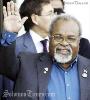
Sir Frank Utu Ofagioro Kabui
Governor General since 7 July 2009
Sir Frank Utu Ofagioro Kabui
Governor General since 7 July 2009
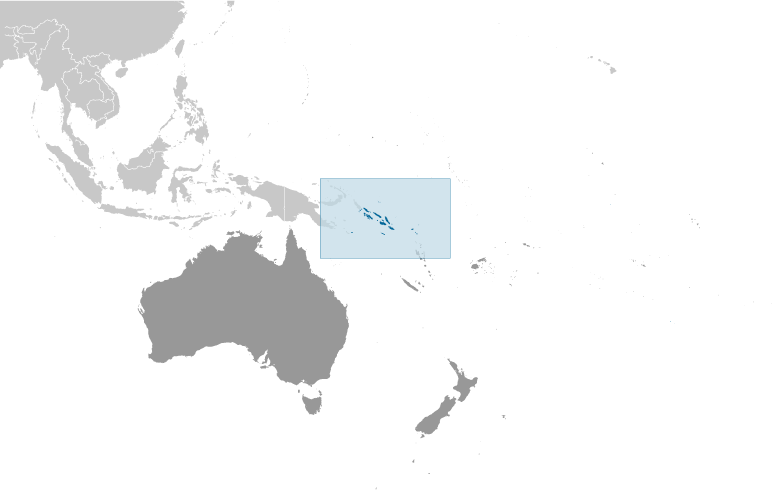
| Click map for larger view |
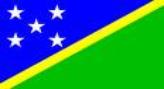
| Click flag for Country Report |





| TRAFFICKING IN PERSONS |
None reported.
Manasseh Maelanga
Deputy Prime Minister
since 04 August 2010
Deputy Prime Minister
since 04 August 2010