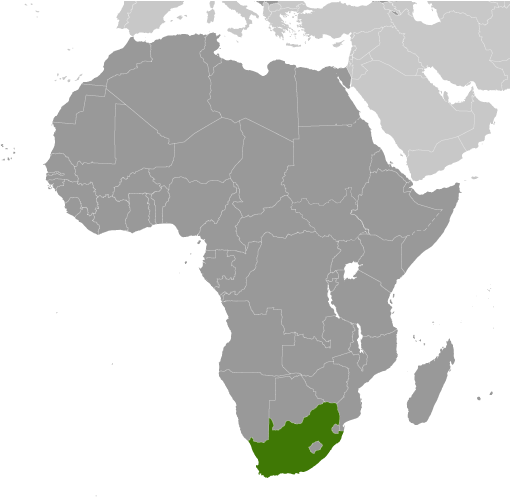
| SOUTH AFRICA Republic of South Africa Republic of South Africa Joined United Nations: 7 November 1945 Human Rights as assured by their constitution Click here Updated 16 November 2012 |
| CAPITALS |
| POPULATION |
| CHIEF OF STATE |
| SELECTION PROCESS |
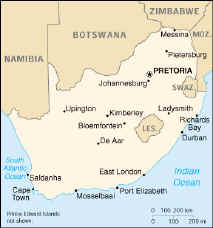
Pretoria (administrative capital)
Cape Town (legislative capital)
Bloemfontein (judicial capital)
Cape Town (legislative capital)
Bloemfontein (judicial capital)
48,810,427
note: estimates for this country explicitly take into account the effects of excess mortality due to
AIDS; this can result in lower life expectancy, higher infant mortality and death rates, lower
population and growth rates, and changes in the distribution of population by age and sex than
would otherwise be expected (July 2012 est.)
note: estimates for this country explicitly take into account the effects of excess mortality due to
AIDS; this can result in lower life expectancy, higher infant mortality and death rates, lower
population and growth rates, and changes in the distribution of population by age and sex than
would otherwise be expected (July 2012 est.)
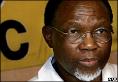
Kgalema Motlanthe
Executive Deputy President
since 09 May 2009
Executive Deputy President
since 09 May 2009
President elected by the National Assembly for a five-year term
(eligible for a second term); election last held 6 May 2009
Next scheduled election: 2014
(eligible for a second term); election last held 6 May 2009
Next scheduled election: 2014
HEAD OF GOVERNMENT
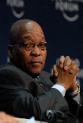
Jacob Zuma
President since 09 May 2009
President since 09 May 2009
According to the South African constitution the president is both
the chief of state and head of government
the chief of state and head of government
| DECLARATION OF HUMAN RIGHTS |
| ETHNIC GROUPS |
Black African 79%, white 9.6%, colored 8.9%, Indian/Asian 2.5% (2001 census)
| RELIGIONS |
Zion Christian 11.1%, Pentecostal/Charismatic 8.2%, Catholic 7.1%, Methodist 6.8%, Dutch Reformed 6.7%, Anglican
3.8%, Muslim 1.5%, other Christian 36%, other 2.3%, unspecified 1.4%, none 15.1% (2001 census)
3.8%, Muslim 1.5%, other Christian 36%, other 2.3%, unspecified 1.4%, none 15.1% (2001 census)
| GOVERNMENT STRUCTURE |
Republic comprised of 9 provinces; Legal system is based on Roman-Dutch law and English common law; Does not
accept compulsory ICJ jurisdiction
Executive: President elected by the National Assembly for a five-year term (eligible for a second term); election last held on 6
May 2009 (next to be held in 2014)
Legislative: Bicameral Parliament consisting of the National Council of Provinces (90 seats, 10 members elected by
each of the nine provincial legislatures for five-year terms; has special powers to protect regional interests, including the
safeguarding of cultural and linguistic traditions among ethnic minorities) and the National Assembly (400 seats; members
are elected by popular vote under a system of proportional representation to serve five-year terms); note - following the
implementation of the new constitution on 4 February 1997, the former Senate was disbanded and replaced by the
National Council of Provinces with essentially no change in membership and party affiliations, although the new institution's
responsibilities have been changed somewhat by the new constitution
National Assembly and National Council of Provinces - last held on 22 April 2009 (next to be held in April 2014)
Judicial: Constitutional Court; Supreme Court of Appeals; High Courts; Magistrate Courts
accept compulsory ICJ jurisdiction
Executive: President elected by the National Assembly for a five-year term (eligible for a second term); election last held on 6
May 2009 (next to be held in 2014)
Legislative: Bicameral Parliament consisting of the National Council of Provinces (90 seats, 10 members elected by
each of the nine provincial legislatures for five-year terms; has special powers to protect regional interests, including the
safeguarding of cultural and linguistic traditions among ethnic minorities) and the National Assembly (400 seats; members
are elected by popular vote under a system of proportional representation to serve five-year terms); note - following the
implementation of the new constitution on 4 February 1997, the former Senate was disbanded and replaced by the
National Council of Provinces with essentially no change in membership and party affiliations, although the new institution's
responsibilities have been changed somewhat by the new constitution
National Assembly and National Council of Provinces - last held on 22 April 2009 (next to be held in April 2014)
Judicial: Constitutional Court; Supreme Court of Appeals; High Courts; Magistrate Courts
| LANGUAGES |
IsiZulu 23.8%, IsiXhosa 17.6%, Afrikaans 13.3%, Sepedi 9.4%, English 8.2%, Setswana 8.2%, Sesotho 7.9%,
Xitsonga 4.4%, other 7.2% (2001 census)
Xitsonga 4.4%, other 7.2% (2001 census)
| BRIEF HISTORY |
| ECONOMIC OVERVIEW |
South Africa is a middle-income, emerging market with an abundant supply of natural resources; well-developed financial,
legal, communications, energy, and transport sectors; a stock exchange that is the 18th largest in the world; and modern
infrastructure supporting a relatively efficient distribution of goods to major urban centers throughout the region. Growth
was robust from 2004 to 2007 as South Africa reaped the benefits of macroeconomic stability and a global commodities
boom but began to slow in the second half of 2007 due to an electricity crisis and the subsequent global financial crisis'
impact on commodity prices and demand. GDP fell nearly 2% in 2009 but recovered in 2010-11. Unemployment
remains high and outdated infrastructure has constrained growth. State power supplier Eskom encountered problems with
aging plants and meeting electricity demand necessitating "load-shedding" cuts in 2007 and 2008 to residents and
businesses in the major cities. Daunting economic problems remain from the apartheid era - especially poverty, lack of
economic empowerment among the disadvantaged groups, and a shortage of public transportation. South Africa''s
economic policy is fiscally conservative focusing on controlling inflation and attaining a budget surplus. The current
government largely follows these prudent policies but must contend with the impact of the global crisis and is facing
growing pressure from special interest groups to use state-owned enterprises to deliver basic services to low-income
areas and to increase job growth.
Sources: CIA World Factbook (select South Africa)
legal, communications, energy, and transport sectors; a stock exchange that is the 18th largest in the world; and modern
infrastructure supporting a relatively efficient distribution of goods to major urban centers throughout the region. Growth
was robust from 2004 to 2007 as South Africa reaped the benefits of macroeconomic stability and a global commodities
boom but began to slow in the second half of 2007 due to an electricity crisis and the subsequent global financial crisis'
impact on commodity prices and demand. GDP fell nearly 2% in 2009 but recovered in 2010-11. Unemployment
remains high and outdated infrastructure has constrained growth. State power supplier Eskom encountered problems with
aging plants and meeting electricity demand necessitating "load-shedding" cuts in 2007 and 2008 to residents and
businesses in the major cities. Daunting economic problems remain from the apartheid era - especially poverty, lack of
economic empowerment among the disadvantaged groups, and a shortage of public transportation. South Africa''s
economic policy is fiscally conservative focusing on controlling inflation and attaining a budget surplus. The current
government largely follows these prudent policies but must contend with the impact of the global crisis and is facing
growing pressure from special interest groups to use state-owned enterprises to deliver basic services to low-income
areas and to increase job growth.
Sources: CIA World Factbook (select South Africa)
| POLITICAL CLIMATE |
The Republic of South Africa is a unitary, parliamentary republic. The President of South Africa serves both as head of
state and as head of government - in the same manner as prime ministers of other nations, the President is elected by the
National Assembly (the lower house of the South African Parliament) and must enjoy the confidence of the Assembly in
order to remain in office. South Africans also elect provincial legislatures which govern each of the country's nine
provinces.
Since the end of apartheid in the 1990s the African National Congress (ANC) has dominated South Africa's politics. The
ANC is the ruling party in the national legislature, as well as in eight of the nine provinces, having received 65.9% of the
vote during the 2009 general election and 62.9%[1] of the popular vote in the 2011 municipal election. The main
challenger to the ANC's rule is the Democratic Alliance, led by Helen Zille, which received 16.66% of the vote in the
2009 election and 24.1%[1] of the popular vote in the 2011 election. Other major political parties represented in
Parliament include the Inkatha Freedom Party, which mainly represents Zulu voters, with 4.55%; and the Congress of the
People with 7.42% in the 2009 election. The formerly dominant New National Party, which both introduced and ended
apartheid through its predecessor the National Party, disbanded in 2005 to merge with the ANC.
As of 2012 Jacob Zuma serves as the South African president.
Sources: Wikipedia: Politics of South Africa
state and as head of government - in the same manner as prime ministers of other nations, the President is elected by the
National Assembly (the lower house of the South African Parliament) and must enjoy the confidence of the Assembly in
order to remain in office. South Africans also elect provincial legislatures which govern each of the country's nine
provinces.
Since the end of apartheid in the 1990s the African National Congress (ANC) has dominated South Africa's politics. The
ANC is the ruling party in the national legislature, as well as in eight of the nine provinces, having received 65.9% of the
vote during the 2009 general election and 62.9%[1] of the popular vote in the 2011 municipal election. The main
challenger to the ANC's rule is the Democratic Alliance, led by Helen Zille, which received 16.66% of the vote in the
2009 election and 24.1%[1] of the popular vote in the 2011 election. Other major political parties represented in
Parliament include the Inkatha Freedom Party, which mainly represents Zulu voters, with 4.55%; and the Congress of the
People with 7.42% in the 2009 election. The formerly dominant New National Party, which both introduced and ended
apartheid through its predecessor the National Party, disbanded in 2005 to merge with the ANC.
As of 2012 Jacob Zuma serves as the South African president.
Sources: Wikipedia: Politics of South Africa
| INTERNATIONAL DISPUTES |
South Africa has placed military along the border to apprehend the thousands of Zimbabweans fleeing economic
dysfunction and political persecution; as of January 2007, South Africa also supports large numbers of refugees and
asylum seekers from the Democratic Republic of the Congo (33,000), Somalia (20,000), Burundi (6,500), and other
states in Africa (26,000); managed dispute with Namibia over the location of the boundary in the Orange River; in 2006,
Swazi king advocates resort to ICJ to claim parts of Mpumalanga and KwaZulu-Natal from South Africa
dysfunction and political persecution; as of January 2007, South Africa also supports large numbers of refugees and
asylum seekers from the Democratic Republic of the Congo (33,000), Somalia (20,000), Burundi (6,500), and other
states in Africa (26,000); managed dispute with Namibia over the location of the boundary in the Orange River; in 2006,
Swazi king advocates resort to ICJ to claim parts of Mpumalanga and KwaZulu-Natal from South Africa


| REFUGEES AND INTERNALLY DISPLACED PERSONS (IDP) |
Refugees (country of origin): 12,970 (Democratic Republic of Congo); 15,186 (Somalia); 5,808 (Angola) (2010)
| ILLICIT DRUGS |
Transshipment center for heroin, hashish, and cocaine, as well as a major cultivator of marijuana in its own right; cocaine
and heroin consumption on the rise; world's largest market for illicit methaqualone, usually imported illegally from India
through various east African countries, but increasingly producing its own synthetic drugs for domestic consumption;
attractive venue for money launderers given the increasing level of organized criminal and narcotics activity in the region
and the size of the South African economy
and heroin consumption on the rise; world's largest market for illicit methaqualone, usually imported illegally from India
through various east African countries, but increasingly producing its own synthetic drugs for domestic consumption;
attractive venue for money launderers given the increasing level of organized criminal and narcotics activity in the region
and the size of the South African economy
| HUMAN RIGHTS STATEMENTS, ANALYSIS AND CRITIQUES |
2011 Human Rights Report: South Africa
Bureau of Democracy, Human Rights, and Labor
2011 Country Reports on Human Rights Practices
May 25, 2012
South Africa is a multiparty parliamentary democracy in which constitutional power is shared between the president and the
parliament. In 2009 the country held a largely free and fair election in which the ruling African National Congress (ANC) won 65.9
percent of the vote and 264 of 400 seats in the National Assembly, which then elected ANC President Jacob Zuma as the country’s
president. Security forces reported to civilian authorities.
Principal human rights problems included police use of lethal and excessive force, including torture, against suspects and detainees,
which resulted in deaths and injuries; vigilante and mob violence; and prison overcrowding and abuse of prisoners, including beatings
and rape by prison guards.
Other human rights problems included arbitrary arrest; lengthy delays in trials and prolonged pretrial detention; forcible dispersal of
demonstrations; pervasive violence against women and children; societal discrimination against women, persons with disabilities, and
the lesbian, gay, bisexual, and transgender (LGBT) community; trafficking in persons; violence resulting from racial and ethnic
tensions and conflicts with foreigners; and child labor, including forced child labor and child prostitution.
The government investigated and prosecuted officials who committed abuses, but there were numerous reports of impunity.
Click here to read more »
Bureau of Democracy, Human Rights, and Labor
2011 Country Reports on Human Rights Practices
May 25, 2012
South Africa is a multiparty parliamentary democracy in which constitutional power is shared between the president and the
parliament. In 2009 the country held a largely free and fair election in which the ruling African National Congress (ANC) won 65.9
percent of the vote and 264 of 400 seats in the National Assembly, which then elected ANC President Jacob Zuma as the country’s
president. Security forces reported to civilian authorities.
Principal human rights problems included police use of lethal and excessive force, including torture, against suspects and detainees,
which resulted in deaths and injuries; vigilante and mob violence; and prison overcrowding and abuse of prisoners, including beatings
and rape by prison guards.
Other human rights problems included arbitrary arrest; lengthy delays in trials and prolonged pretrial detention; forcible dispersal of
demonstrations; pervasive violence against women and children; societal discrimination against women, persons with disabilities, and
the lesbian, gay, bisexual, and transgender (LGBT) community; trafficking in persons; violence resulting from racial and ethnic
tensions and conflicts with foreigners; and child labor, including forced child labor and child prostitution.
The government investigated and prosecuted officials who committed abuses, but there were numerous reports of impunity.
Click here to read more »
5 April 2011
Committee on the Elimination of
Discrimination against Women
Forty-eighth session
17 January–4 February 2011
Concluding observations of the Committee on the Elimination of Discrimination against Women
South Africa
A. Introduction
2. The Committee expresses its appreciation to the State party for its combined second, third and fourth periodic report, which was
well structured and, in general, followed the Committee’s guidelines for the preparation of reports, although it lacked references to the
Committee’s general recommendations, and to some specific sex disaggregated data, and was long overdue. The Committee
expresses its appreciation to the State party for its oral presentation, the written replies to the list of issues and questions raised by the
pre-session working group, and the further clarifications to the questions posed orally by the Committee.
3. The Committee commends the State party for its high-level delegation, headed by the Minister for Women, Children and People
with Disabilities, which included several representatives from relevant ministries and the judiciary, with expertise in the areas covered
by the Convention. The Committee appreciates the frank and constructive dialogue that took place between the delegation and the
members of the Committee.
B. Positive Aspects
5. The Committee commends the State party for its extraordinary efforts and the impressive results obtained in the 15 years since the
abolition of the apartheid regime in promoting equality for women, and the fight against discrimination. The Committee further
welcomes the progressive legislative framework of the State party to ensure de jure equality between women and men, and the
achievements in this regard since the consideration of the State party’s initial report in 1998 (CEDAW/C/ZAF/1), such as the adoption
of the following laws:
a) Criminal Law (Sexual Offences and Related Matters) Amendment Act, 2007;
b) Children’s Act of 2005, which seeks, among other things, to ensure a gender-responsive treatment of girls in conflict with the law;
and
c) Promotion of Equality and Prevention of Unfair Discrimination Act (Equality Act), 2000.
C. Principle areas of concern and recommendations
10. The Committee recalls the State party’s obligation to systematically and continuously implement all the provisions of the
Convention on the Elimination of All Forms of Discrimination against Women, and considers the concerns and recommendations
identified in the present concluding observations as requiring the State party’s priority attention between now and the submission of its
next periodic report. Consequently, the Committee urges the State party to focus on these areas in its implementation activities, and to
report on action taken and results achieved in its next periodic report. It calls on the State party to submit the present concluding
observations to all relevant ministries, Parliament and the judiciary, so as to ensure their full implementation.
Parliament
11. While reaffirming that the Government has the primary responsibility and is particularly accountable for the full implementation of
the State party’s obligations under the Convention, the Committee stresses that the Convention is binding on all branches of
Government, and it invites the State party to encourage Parliament, in line with its procedures, where appropriate, to take the
necessary steps with regard to the implementation of these concluding observations and the Government’s next reporting process
under the Convention.
Click here to read more »
Committee on the Elimination of
Discrimination against Women
Forty-eighth session
17 January–4 February 2011
Concluding observations of the Committee on the Elimination of Discrimination against Women
South Africa
A. Introduction
2. The Committee expresses its appreciation to the State party for its combined second, third and fourth periodic report, which was
well structured and, in general, followed the Committee’s guidelines for the preparation of reports, although it lacked references to the
Committee’s general recommendations, and to some specific sex disaggregated data, and was long overdue. The Committee
expresses its appreciation to the State party for its oral presentation, the written replies to the list of issues and questions raised by the
pre-session working group, and the further clarifications to the questions posed orally by the Committee.
3. The Committee commends the State party for its high-level delegation, headed by the Minister for Women, Children and People
with Disabilities, which included several representatives from relevant ministries and the judiciary, with expertise in the areas covered
by the Convention. The Committee appreciates the frank and constructive dialogue that took place between the delegation and the
members of the Committee.
B. Positive Aspects
5. The Committee commends the State party for its extraordinary efforts and the impressive results obtained in the 15 years since the
abolition of the apartheid regime in promoting equality for women, and the fight against discrimination. The Committee further
welcomes the progressive legislative framework of the State party to ensure de jure equality between women and men, and the
achievements in this regard since the consideration of the State party’s initial report in 1998 (CEDAW/C/ZAF/1), such as the adoption
of the following laws:
a) Criminal Law (Sexual Offences and Related Matters) Amendment Act, 2007;
b) Children’s Act of 2005, which seeks, among other things, to ensure a gender-responsive treatment of girls in conflict with the law;
and
c) Promotion of Equality and Prevention of Unfair Discrimination Act (Equality Act), 2000.
C. Principle areas of concern and recommendations
10. The Committee recalls the State party’s obligation to systematically and continuously implement all the provisions of the
Convention on the Elimination of All Forms of Discrimination against Women, and considers the concerns and recommendations
identified in the present concluding observations as requiring the State party’s priority attention between now and the submission of its
next periodic report. Consequently, the Committee urges the State party to focus on these areas in its implementation activities, and to
report on action taken and results achieved in its next periodic report. It calls on the State party to submit the present concluding
observations to all relevant ministries, Parliament and the judiciary, so as to ensure their full implementation.
Parliament
11. While reaffirming that the Government has the primary responsibility and is particularly accountable for the full implementation of
the State party’s obligations under the Convention, the Committee stresses that the Convention is binding on all branches of
Government, and it invites the State party to encourage Parliament, in line with its procedures, where appropriate, to take the
necessary steps with regard to the implementation of these concluding observations and the Government’s next reporting process
under the Convention.
Click here to read more »
South Africa: Secrecy Bill Puts Free Expression at Risk
Sep 20 2012 - 4:03pm
The International Partnership on Freedom of Expression in South Africa, a delegation of regional and international rights groups,
raised their opposition to a proposed secrecy bill and threats of state regulation of the press during a joint mission to South Africa
from Sept. 8-14. The Partnership met with stakeholders from the media industry, the ANC and opposition parties, and civil society to
discuss the proposed Protection of State Information Bill and media regulation developments.
“South Africa has been a role model for transitional democracies, and it now faces critical choices that will shape its media and the
public’s right to freedom of expression,” said Courtney C. Radsch, senior program manager for the Global Freedom of Expression
Campaign at Freedom House.
The mission welcomes the thorough process of developing and revising legislation and mechanisms that seek to improve public
access to information, but was concerned about a number of issues:
Protection of State Information Bill (a.k.a The Secrecy Bill)
The mission notes government assurances that this bill is not aimed at curbing the media, but rather to safeguard legitimate national
security interests, and recognizes there have been several improvements in the various drafts of the bill. However, we remain deeply
concerned about:
Harsh prison sentences that will ensnare innocent third parties who may come into possession of classified information like
journalists and human rights defenders as well as the general public
Re-introduction of minimum sentences lessening judicial independence and discretion in adjudicating matters
The reduction of protections for whistleblowers that are guaranteed in various South African laws
“In order to present South Africans with a well-defined mechanism for the classification of information related to national security, it’
s crucial that the law provide for protection for whistle blowers acting in the public interest and that there be consistency across
South African laws,” said Henry Maina, Director, ARTICLE 19 Eastern Africa.
The mission supports the need to repeal the 1982 Apartheid-era Protection of Information Act and replace the 1996 Minimum
Information Security Standards. Certain aspects of the proposed bill appear to be against the spirit of the Constitution, if not the letter,
as well as the Promotion of Access to Information Act. This act was the first comprehensive right to information law on the continent.
Click here to read more »
Sep 20 2012 - 4:03pm
The International Partnership on Freedom of Expression in South Africa, a delegation of regional and international rights groups,
raised their opposition to a proposed secrecy bill and threats of state regulation of the press during a joint mission to South Africa
from Sept. 8-14. The Partnership met with stakeholders from the media industry, the ANC and opposition parties, and civil society to
discuss the proposed Protection of State Information Bill and media regulation developments.
“South Africa has been a role model for transitional democracies, and it now faces critical choices that will shape its media and the
public’s right to freedom of expression,” said Courtney C. Radsch, senior program manager for the Global Freedom of Expression
Campaign at Freedom House.
The mission welcomes the thorough process of developing and revising legislation and mechanisms that seek to improve public
access to information, but was concerned about a number of issues:
Protection of State Information Bill (a.k.a The Secrecy Bill)
The mission notes government assurances that this bill is not aimed at curbing the media, but rather to safeguard legitimate national
security interests, and recognizes there have been several improvements in the various drafts of the bill. However, we remain deeply
concerned about:
Harsh prison sentences that will ensnare innocent third parties who may come into possession of classified information like
journalists and human rights defenders as well as the general public
Re-introduction of minimum sentences lessening judicial independence and discretion in adjudicating matters
The reduction of protections for whistleblowers that are guaranteed in various South African laws
“In order to present South Africans with a well-defined mechanism for the classification of information related to national security, it’
s crucial that the law provide for protection for whistle blowers acting in the public interest and that there be consistency across
South African laws,” said Henry Maina, Director, ARTICLE 19 Eastern Africa.
The mission supports the need to repeal the 1982 Apartheid-era Protection of Information Act and replace the 1996 Minimum
Information Security Standards. Certain aspects of the proposed bill appear to be against the spirit of the Constitution, if not the letter,
as well as the Promotion of Access to Information Act. This act was the first comprehensive right to information law on the continent.
Click here to read more »
South Africa: Shop raids jeopardise safety of refugees
12 October 2012
Hundreds of asylum-seekers and refugees in South Africa’s Limpopo province are being pushed into destitution because police are
forcibly and without notice closing their shops and seizing their goods. Traumatised by this harassment, many victims may be
coerced into returning to the countries from which they originally fled. The shop closures began from late June and have continued
regularly since then across the province. Fears are growing that this coordinated campaign could spread to other provinces.
At least 600 small businesses run by asylum-seekers and refugees have been forcibly closed across the province since the police
operation, known as Hard Stick, began. The police raids are taking place without warning and involve seizing trading stock and
forcibly closing the premises. Some asylum-seekers and refugees have also been subjected to xenophobic verbal abuse, detention in
police cells, and charged or fined for running their business.
The apparent justification for these actions is that the businesses are unlicensed or run by asylum-seekers. Police appear to have acted
on information given to them from the government Department of Home Affairs (DHA) that an asylum-seeker’s right to work does
not include the right to run a business. However police are acting harshly and indiscriminately, with recognized refugees also being
swept up in the wave of forced closures.
Victims of these raids report that the police ignored the license or refugee documents which they showed them, sometimes allegedly
saying that they had no right, as “foreigners”, to work and should go back to their country. In most cases all of the shop goods were
removed by police, with no receipts provided. One visibly distressed refugee said that two months after the forced closure of his shop
he had no income, was unable to pay his creditor and support his family, all of whom would be made homeless imminently. In
September, 30 displaced Ethiopians were forced to flee a house in which they were sheltering after it was petrol-bombed.
Click here to read more »
12 October 2012
Hundreds of asylum-seekers and refugees in South Africa’s Limpopo province are being pushed into destitution because police are
forcibly and without notice closing their shops and seizing their goods. Traumatised by this harassment, many victims may be
coerced into returning to the countries from which they originally fled. The shop closures began from late June and have continued
regularly since then across the province. Fears are growing that this coordinated campaign could spread to other provinces.
At least 600 small businesses run by asylum-seekers and refugees have been forcibly closed across the province since the police
operation, known as Hard Stick, began. The police raids are taking place without warning and involve seizing trading stock and
forcibly closing the premises. Some asylum-seekers and refugees have also been subjected to xenophobic verbal abuse, detention in
police cells, and charged or fined for running their business.
The apparent justification for these actions is that the businesses are unlicensed or run by asylum-seekers. Police appear to have acted
on information given to them from the government Department of Home Affairs (DHA) that an asylum-seeker’s right to work does
not include the right to run a business. However police are acting harshly and indiscriminately, with recognized refugees also being
swept up in the wave of forced closures.
Victims of these raids report that the police ignored the license or refugee documents which they showed them, sometimes allegedly
saying that they had no right, as “foreigners”, to work and should go back to their country. In most cases all of the shop goods were
removed by police, with no receipts provided. One visibly distressed refugee said that two months after the forced closure of his shop
he had no income, was unable to pay his creditor and support his family, all of whom would be made homeless imminently. In
September, 30 displaced Ethiopians were forced to flee a house in which they were sheltering after it was petrol-bombed.
Click here to read more »
South Africa: NPA still wrong in Lonmin matter
by Cameron Jacobs
Published in:
SABC
September 4, 2012
Despite the withdrawal of the charges on Sunday by South Africa’s National Prosecuting Authority (NPA) to charge 270 arrested
mine workers for the killings of their colleagues, the initial decision to charge them in respect of the doctrine of common purpose is a
perverse application of the law and that may have had the consequence of exacerbating tensions at Lonmin Mine in Marikana, North
Western Province.
The tragic scenes of August 16, 2012, when police opened fire and killed 34 miners who were part of a group protesting against low
wages, sent shockwaves throughout the world. Many reacted with horror at a display of police force that was reminiscent of
apartheid South Africa.
Irrespective of what the Judicial Commission of Inquiry - established by President Zuma to investigate the killings and those
responsible - may find once it conducts its investigation, there can be no doubt that the actions of the police can at best be described
as extremely heavy handed.
While police may have overreacted, what happened in Marikana was a result of a Molotov cocktail of extremely angry miners (many
of whom were armed with machetes and spears), a recalcitrant employer that seemed reluctant to negotiate to resolve the labour
dispute, and an absent political and union leadership.
As a result of the killings and cognizant of the broader context in which the killings occurred, Human Rights Watch called on the
South African government to ensure that the Commission is established speedily and for its terms of reference to include a fact-
finding mission on the background and underlying events leading to the violence in Marikana.
It is a perversion of the doctrine to suggest that whatever common crime it is alleged the miners were pursuing, that the killing of
their colleagues by the police was a foreseeable outcome on their part of achieving that goal.
The creation of the Judicial Commission of Inquiry and the appointment of retired Judge Farlam to head it, is therefore a welcome
step. Farlam is a highly respected judge who served many years on the Supreme Court of Appeal. The Commission will have four
months in which to conduct its investigation and to submit its final report a month thereafter.
However, the actions by the NPA to add the doctrine of common purpose to the initial charge of public violence could have undone all
the good efforts to address the situation. According to the doctrine, where two or more people agree to commit a crime or actively
associate in a joint unlawful enterprise, each will be responsible for specific criminal conduct committed by one of their number
which falls within their common design.
Click here to read more »
by Cameron Jacobs
Published in:
SABC
September 4, 2012
Despite the withdrawal of the charges on Sunday by South Africa’s National Prosecuting Authority (NPA) to charge 270 arrested
mine workers for the killings of their colleagues, the initial decision to charge them in respect of the doctrine of common purpose is a
perverse application of the law and that may have had the consequence of exacerbating tensions at Lonmin Mine in Marikana, North
Western Province.
The tragic scenes of August 16, 2012, when police opened fire and killed 34 miners who were part of a group protesting against low
wages, sent shockwaves throughout the world. Many reacted with horror at a display of police force that was reminiscent of
apartheid South Africa.
Irrespective of what the Judicial Commission of Inquiry - established by President Zuma to investigate the killings and those
responsible - may find once it conducts its investigation, there can be no doubt that the actions of the police can at best be described
as extremely heavy handed.
While police may have overreacted, what happened in Marikana was a result of a Molotov cocktail of extremely angry miners (many
of whom were armed with machetes and spears), a recalcitrant employer that seemed reluctant to negotiate to resolve the labour
dispute, and an absent political and union leadership.
As a result of the killings and cognizant of the broader context in which the killings occurred, Human Rights Watch called on the
South African government to ensure that the Commission is established speedily and for its terms of reference to include a fact-
finding mission on the background and underlying events leading to the violence in Marikana.
It is a perversion of the doctrine to suggest that whatever common crime it is alleged the miners were pursuing, that the killing of
their colleagues by the police was a foreseeable outcome on their part of achieving that goal.
The creation of the Judicial Commission of Inquiry and the appointment of retired Judge Farlam to head it, is therefore a welcome
step. Farlam is a highly respected judge who served many years on the Supreme Court of Appeal. The Commission will have four
months in which to conduct its investigation and to submit its final report a month thereafter.
However, the actions by the NPA to add the doctrine of common purpose to the initial charge of public violence could have undone all
the good efforts to address the situation. According to the doctrine, where two or more people agree to commit a crime or actively
associate in a joint unlawful enterprise, each will be responsible for specific criminal conduct committed by one of their number
which falls within their common design.
Click here to read more »
Statement by President Jacob Zuma of the Republic of South Africa to the General Debate of the 67th Session of the
General Assembly, New York
25 Sep 2012
Theme: “Bringing about adjustment or settlement of international disputes or situations by peaceful means”
Mr President,
The protection and promotion of human rights and fundamental freedoms should be at the centre of our collective desire to resolve
international disputes through peaceful means.
Racism and racial discrimination continue to be an affront to the very basic founding principles of the United Nations and must be
fought relentlessly.
We should shun any idea that seems to suggest that there is a superior race or human being on the basis of skin colour in any part of
the world.
The danger of such ideas is still fresh in our collective memory. We have learned from the evils of colonialism, two world wars and
the system of apartheid.
We should all renew our commitment to continue to build on the solid foundation laid by the Durban Declaration and the Plan of
Action that we adopted more than a decade ago, at the end of the World Conference Against Racism.
Mr President,
South Africa had the honour to host the United Nations COP 17/CMP7 climate change conference last December.
Member states must ensure that agreements are implemented.
In this regard the Durban Platform offers an opportunity for progress which we must utilise to move forward.
Excellencies Heads of State and Government,
Your Majesties,
This timely debate is a reminder that ultimately, peace is a choice. Peace is achievable.
The wise and brave choices that we have the power to make can deliver lasting peace to every corner of the world.
We are called upon at this 67th Session of the General Assembly to choose peace through reforming and strengthening the UN so that
it can play its rightful role and deliver peace, security, sustainable development and the respect for human rights and fundamental
freedoms in the world.
As the foremost multilateral forum bringing together all nations of the world, the UN is better placed to play this role. It requires our
support as member states at all times, for our sake and that of future generations.
Click here to read more »
General Assembly, New York
25 Sep 2012
Theme: “Bringing about adjustment or settlement of international disputes or situations by peaceful means”
Mr President,
The protection and promotion of human rights and fundamental freedoms should be at the centre of our collective desire to resolve
international disputes through peaceful means.
Racism and racial discrimination continue to be an affront to the very basic founding principles of the United Nations and must be
fought relentlessly.
We should shun any idea that seems to suggest that there is a superior race or human being on the basis of skin colour in any part of
the world.
The danger of such ideas is still fresh in our collective memory. We have learned from the evils of colonialism, two world wars and
the system of apartheid.
We should all renew our commitment to continue to build on the solid foundation laid by the Durban Declaration and the Plan of
Action that we adopted more than a decade ago, at the end of the World Conference Against Racism.
Mr President,
South Africa had the honour to host the United Nations COP 17/CMP7 climate change conference last December.
Member states must ensure that agreements are implemented.
In this regard the Durban Platform offers an opportunity for progress which we must utilise to move forward.
Excellencies Heads of State and Government,
Your Majesties,
This timely debate is a reminder that ultimately, peace is a choice. Peace is achievable.
The wise and brave choices that we have the power to make can deliver lasting peace to every corner of the world.
We are called upon at this 67th Session of the General Assembly to choose peace through reforming and strengthening the UN so that
it can play its rightful role and deliver peace, security, sustainable development and the respect for human rights and fundamental
freedoms in the world.
As the foremost multilateral forum bringing together all nations of the world, the UN is better placed to play this role. It requires our
support as member states at all times, for our sake and that of future generations.
Click here to read more »
Report on the findings of the investigation into the killing of Free State activist, Andries Tatane.
Delivered by Commissioner Danny Titus:
31 October 2012
ATTENTION: Editors and Reporters
The South African Human Rights Commission has completed and made a finding following its investigation into the 2011 killing of
Andries Tatane, an activist from Ficksburg in the Free State Province. The report we are releasing today, contains findings pursuant
to an investigation into allegations that human rights of a citizen were violated in the course of a public protest.
The complaint was brought by the Council for the Advancement of the South African Constitution on the 15th April 2011. They
alleged that members of the South African Police Services, Respondents in this matter, assaulted and/or caused the death of an
unarmed civilian on the 13th April 2012, Tatane, who was one of a group of community members in Ficksburg, engaging in a public
protest against poor service delivery, fraud,
The Complainant further alleges that, in the result, the actions of the police amounted to a breach of a number of human rights,
including the right to life, right to assemble as protected in the Bill of Rights of the Constitution of the Republic.
In determining its role in this matter, the Commission determined possible causes of action: Criminal action in respect of assault and/or
murder, Civil action in respect of damages arising from loss of support to dependants of the deceased citizen or Human Rights
investigation into possible violations of Chapter II of the Bill of Rights.
The Commission determined that the parameters of its interest in this matter was a very specific and narrow one; it was strictly
limited to declaring and determining the nature, if any, of the human rights of parties that may have been violated in the course of this
incident.
Accordingly, this report should not be construed as making any legal conclusions on the criminal culpability or civil liability of the
Respondents. Where conclusions of fact or law are made in this Report that overlap or coincide with the conclusions made by the
appropriate authorities in respect of civil and criminal actions, such conclusions are incidental similarities and should not be construed
as pre-judging the outcome of either of these judicial processes.
Preliminary Assessment of Complaint Upon receipt of the complaint, the allegations were assessed by the SAHRC to determine
whether a prima facie case existed for further investigation to be conducted into human rights violations arising from the alleged facts.
As an outcome of the assessment, the Commission determined that the complaint gave rise to:
a criminal cause of action that fell outside the Commission’s mandate. The Commission referred this aspect of the complaint to the
Independent Police Investigative Directorate (IPID), a statutory body entrusted with the duty to investigate a myriad of criminal
offences committed by members of the South African Police Service including police brutality.
a civil cause of action in respect of a Dependants Claim for damages for loss of support and other ancillary relief. The Commission
referred this aspect to the Legal Aid Board of South Africa. The residual cause of action was that of the investigation into possible
violations of human rights. It was this aspect that the Commission decided to accept jurisdiction over, with a limited, and specific
interest in declaring the ambit of the rights of the deceased and public protestors, measured against acceptable limitations to these
rights, and making a finding of fact and law regarding any possible violation of same.
Motivation for pursuing investigation
There are a number of reasons that motivated the Commission to undertake the investigation:
During pre-constitutional era public protests and demonstrations against the violation of human rights were often met by the use of
force by law enforcement agents on defenceless citizens, frequently resulting in the loss of life;
In post-democratic South Africa, the Commission noted rise in the incidence of community protests within the Republic due to
public discontent with municipal service delivery;
A growing policy inclination of the police in post-democratic South Africa towards the use of force to maintain public order.
Click here to read more »
Delivered by Commissioner Danny Titus:
31 October 2012
ATTENTION: Editors and Reporters
The South African Human Rights Commission has completed and made a finding following its investigation into the 2011 killing of
Andries Tatane, an activist from Ficksburg in the Free State Province. The report we are releasing today, contains findings pursuant
to an investigation into allegations that human rights of a citizen were violated in the course of a public protest.
The complaint was brought by the Council for the Advancement of the South African Constitution on the 15th April 2011. They
alleged that members of the South African Police Services, Respondents in this matter, assaulted and/or caused the death of an
unarmed civilian on the 13th April 2012, Tatane, who was one of a group of community members in Ficksburg, engaging in a public
protest against poor service delivery, fraud,
The Complainant further alleges that, in the result, the actions of the police amounted to a breach of a number of human rights,
including the right to life, right to assemble as protected in the Bill of Rights of the Constitution of the Republic.
In determining its role in this matter, the Commission determined possible causes of action: Criminal action in respect of assault and/or
murder, Civil action in respect of damages arising from loss of support to dependants of the deceased citizen or Human Rights
investigation into possible violations of Chapter II of the Bill of Rights.
The Commission determined that the parameters of its interest in this matter was a very specific and narrow one; it was strictly
limited to declaring and determining the nature, if any, of the human rights of parties that may have been violated in the course of this
incident.
Accordingly, this report should not be construed as making any legal conclusions on the criminal culpability or civil liability of the
Respondents. Where conclusions of fact or law are made in this Report that overlap or coincide with the conclusions made by the
appropriate authorities in respect of civil and criminal actions, such conclusions are incidental similarities and should not be construed
as pre-judging the outcome of either of these judicial processes.
Preliminary Assessment of Complaint Upon receipt of the complaint, the allegations were assessed by the SAHRC to determine
whether a prima facie case existed for further investigation to be conducted into human rights violations arising from the alleged facts.
As an outcome of the assessment, the Commission determined that the complaint gave rise to:
a criminal cause of action that fell outside the Commission’s mandate. The Commission referred this aspect of the complaint to the
Independent Police Investigative Directorate (IPID), a statutory body entrusted with the duty to investigate a myriad of criminal
offences committed by members of the South African Police Service including police brutality.
a civil cause of action in respect of a Dependants Claim for damages for loss of support and other ancillary relief. The Commission
referred this aspect to the Legal Aid Board of South Africa. The residual cause of action was that of the investigation into possible
violations of human rights. It was this aspect that the Commission decided to accept jurisdiction over, with a limited, and specific
interest in declaring the ambit of the rights of the deceased and public protestors, measured against acceptable limitations to these
rights, and making a finding of fact and law regarding any possible violation of same.
Motivation for pursuing investigation
There are a number of reasons that motivated the Commission to undertake the investigation:
During pre-constitutional era public protests and demonstrations against the violation of human rights were often met by the use of
force by law enforcement agents on defenceless citizens, frequently resulting in the loss of life;
In post-democratic South Africa, the Commission noted rise in the incidence of community protests within the Republic due to
public discontent with municipal service delivery;
A growing policy inclination of the police in post-democratic South Africa towards the use of force to maintain public order.
Click here to read more »
Public Protector calls for tolerance of Ombudsman institutions
Wednesday, 14 November 2012
Democratic processes would be eroded if institutions such as the Public Protector looked the other way and pretended there were no
problems in state affairs, delegates at the 10th World Conference of the International Ombudsman Institute in Wellington, New
Zealand heard on Wednesday.
Presenting a paper on the role of the Ombudsman in promoting ethical governance and integrity in the public service, with a special
focus on her own experiences in relation to holding leaders to account, Public Protector Adv. Thuli Madonsela said public confidence
in such institutions would also be dealt a blow if their heads turned a blind eye on bad governance.
While emphasising that the majority of key public figures against whom she had previously made adverse findings accepted their fate
ethically, the Public Protector told the conference about a few backlash cases her office has had to deal with after finding against
some senior persons in government. A few “parochial-minded” leaders appeared to prefer that her office ignores that there were
problems, she said.
“Some of the parochial-minded leaders have decided to retaliate by trying to foster a perception that my office is not above reproach
and accordingly has no right to judge others,” the Public Protector said, adding that she had recently learned that a parliamentarian
preferred she rather focus on governance matters within her office.
“My office has an outward mandate and corporate governance is meant to be an enabler rather than the office’s focus. This is not to
say my office is not answerable for its own governance and administrative arrangements. No person or office is above the law or the
dictates of accountability for entrusted power.”
In her engagements with those entrusted with public power, she always highlighted the fact that her office would be a foe rather than
a friend if it let those who exercised entrusted power think they were on the right track while they were actually headed for a cliff, the
Public Protector said.
Sharing with her peers some of the challenges her office faced, the Public Protector referred to difficulties in getting information she
required for investigations, particularly those relating to ethical or integrity violations. She said this happened despite extensive
information sourcing powers including subpoena, search and seizure and contempt orders. Implementation of remedial action directed
following investigations was a growing area of concern, the Public Protector said.
She emphasised that the 16 years of existence of the Public Protector, a South African version of an Ombudsman, had been primarily
marked by positive developments. The office, said the Public Protector, had contributed to the transformation of the state from an
insular apartheid to one more responsive to the people’s needs.
The Public Protector indicated that the governance situation was still a long way from the accountable, responsive and ethical state
envisaged in the constitution. Singling out administrative justice and good stewardship in exercising control over state resources, the
Public Protector told the conference that the Ombudsman institution had an important role to play as a pillar of public accountability.
She stated that now more than ever, where people were increasingly restless about state responsiveness and accountability, the
Ombudsman was an important partner in the pursuit of public accountability and good governance.
Click here to read more »
Wednesday, 14 November 2012
Democratic processes would be eroded if institutions such as the Public Protector looked the other way and pretended there were no
problems in state affairs, delegates at the 10th World Conference of the International Ombudsman Institute in Wellington, New
Zealand heard on Wednesday.
Presenting a paper on the role of the Ombudsman in promoting ethical governance and integrity in the public service, with a special
focus on her own experiences in relation to holding leaders to account, Public Protector Adv. Thuli Madonsela said public confidence
in such institutions would also be dealt a blow if their heads turned a blind eye on bad governance.
While emphasising that the majority of key public figures against whom she had previously made adverse findings accepted their fate
ethically, the Public Protector told the conference about a few backlash cases her office has had to deal with after finding against
some senior persons in government. A few “parochial-minded” leaders appeared to prefer that her office ignores that there were
problems, she said.
“Some of the parochial-minded leaders have decided to retaliate by trying to foster a perception that my office is not above reproach
and accordingly has no right to judge others,” the Public Protector said, adding that she had recently learned that a parliamentarian
preferred she rather focus on governance matters within her office.
“My office has an outward mandate and corporate governance is meant to be an enabler rather than the office’s focus. This is not to
say my office is not answerable for its own governance and administrative arrangements. No person or office is above the law or the
dictates of accountability for entrusted power.”
In her engagements with those entrusted with public power, she always highlighted the fact that her office would be a foe rather than
a friend if it let those who exercised entrusted power think they were on the right track while they were actually headed for a cliff, the
Public Protector said.
Sharing with her peers some of the challenges her office faced, the Public Protector referred to difficulties in getting information she
required for investigations, particularly those relating to ethical or integrity violations. She said this happened despite extensive
information sourcing powers including subpoena, search and seizure and contempt orders. Implementation of remedial action directed
following investigations was a growing area of concern, the Public Protector said.
She emphasised that the 16 years of existence of the Public Protector, a South African version of an Ombudsman, had been primarily
marked by positive developments. The office, said the Public Protector, had contributed to the transformation of the state from an
insular apartheid to one more responsive to the people’s needs.
The Public Protector indicated that the governance situation was still a long way from the accountable, responsive and ethical state
envisaged in the constitution. Singling out administrative justice and good stewardship in exercising control over state resources, the
Public Protector told the conference that the Ombudsman institution had an important role to play as a pillar of public accountability.
She stated that now more than ever, where people were increasingly restless about state responsiveness and accountability, the
Ombudsman was an important partner in the pursuit of public accountability and good governance.
Click here to read more »
Ape-like hominids who migrated to South Africa around 3 million years ago became the first human-like inhabitants of the
area now known as South Africa. Representatives of homo erectus gradually replaced them around a million years ago
when they also spread across Africa and into Europe and Asia. Homo erectus gave way to homo sapiens around
100,000 years ago. The first homo sapiens formed the Bushman culture of skilled hunter-gatherers. South Africa prior to
the emergence of modern humans (Homo sapiens) remains shrouded in mystery. A major archaeological find in 1998 at
Sterkfontein near Johannesburg revealed that hominids roamed across the Highveld at least three million years ago. About
a million years ago, Homo erectus had emerged and ranged well beyond Africa, leaving traces in Europe and in Asia.
Somewhere around 100,000 years ago, modern man replaced the hominids. Although archaeologists continue to debate
the details, fossils found near the mouth of the Klasies River in Eastern Cape Province indicate that Homo sapiens may
have lived in South Africa as early as 100,000 years ago. The Bushmen probably became the first modern people to
migrate to the southern tip of the African continent. Skilled hunter-gatherers and nomads, the Bushmen had great respect
for the land, and their lifestyle had low environmental impact, allowing them to sustain their way of life for years without
leaving much archaeological evidence. Other than a series of striking rock paintings, the Bushmen left few traces of their
early culture. Attempts to analyse the existing samples by radiocarbon dating indicate that the Bushmen lived in the area of
modern-day South Africa at least as early as 25,000 years ago, and possibly as early as 40,000 years ago. Small
numbers of Bushmen still live in South Africa today, making their culture one of the oldest continuously existing in the
world, along with that of the Indigenous Australians. European explorers "discovered" South Africa as a direct result of
European countries' rivalry with each other for dominance and the subsequent need for wealth which lead to the efforts to
"discover" (by exploration) sea routes to trade with Asia and the Far East during the Age of Discovery. Far-off places,
whether they became colonies or not, were regarded as sources for raw materials to be processed or enjoyed by
Europeans. It had been Portugal in the Age of Discovery that sent Bartolomeu Dias sailing southwards in the Atlantic
Ocean (in those days sailing ship tried to stay close to the coast of Western Africa as they did so) looking for a route to
India. Dias sailed around the Cape of Good Hope, the southern tip of Africa into the Southern Indian Ocean, in 1488, the
first European known to do so since ancient times. Dias did not settle in South Africa but took back a report that the
Cape could be rounded. It was Vasco da Gama who was the first person to sail directly from Europe to India during
1497-1499. Sir Francis Drake rounded the Cape of Good Hope, in 1580 in his ship the Golden Hind. Drake was so
enchanted by Table Mountain in the bay of what is today Cape Town, that he is reputed to have declared, that "No
longer shall this be called the Cape of Storms, for it is the fairest Cape of them all." The Cape was known as "The Cape
of Storms" because it was so dangerous for sailing ships, and it was only by 1652 that the Dutch finally saw fit to set up a
permanent station at the Cape of Good Hope (it was not even a colony, just a station to supply passing ships with fresh
water and vegetables.) This "supply depot" that was set up by the Dutch developed into the Cape Colony over the next
two hundred years. The British seized the Cape Colony from the Dutch at the end of the 18th century because they feared
French fleets would take control following Napoleon's victories over much of mainland Europe. The United Kingdom
invaded and occupied the Cape Colony in 1795 ("The First Occupation") but relinquished control of the territory in 1803.
However, British forces returned on January 19, 1806 and occupied the Cape once again ("The Second Occupation").
The territory was ceded to the UK in the Anglo-Dutch Treaty of 1814 and was henceforth administered as the Cape
Colony. It remained a British colony until incorporated into the independent Union of South Africa in 1910, now known
as the Republic of South Africa. The Dutch (by then known as Boers) and the British went to war twice in the
Anglo-Boer Wars in the late 1800s, which ended in the defeat of the Boers and of their independent republics. The Cape
Colony, Natal and the two Boer republics united in 1910 as the Union of South Africa. The Boer republics did not grant
Black people suffrage, and the rights of Black, Coloured, and Asian people continued to erode in the Union. The National
Party came to power (1948), on a platform of racial discrimination which became known as apartheid. As a rising tide of
national liberation grew in the Third World receiving support, arms, and training from the newly dominant Soviet Union
and the People's Republic of China, South Africa's Blacks demanded freedom and political rights that white South Africa
had not granted them. Instead, the Afrikaner-dominated government answered with increased Apartheid policies which
then became deeply entrenched in South African society, despite continued resistance. When Commonwealth nations
began to threaten South Africa with economic and political sanctions, white South Africa headed by Prime Minister HF
Verwoerd decided to leave the commonwealth, and chose to become a republic in 1961, with its own State President
CR Swart. This was the first time that there was a South African president in sixty years, since the days of the old
Transvaal South African Republic when President Paul Kruger was exiled by the British in 1900. The African National
Congress offered the most active black-run opposition to apartheid, and after two decades of racial oppression and
increasing economic pressures, the government of F.W. de Klerk dismantled the apartheid system in 1992. The first
fully-inclusive election, in which blacks from the entire South Africa could vote, took place in 1994, electing Nelson
Mandela as President. South Africa now sees itself as a multiracial democracy. After considerable debate, and following
submissions from advocacy groups, individuals and ordinary citizens, the Parliament enacted a new Constitution and Bill
of Rights in 1996. In early 2002 a planned military coup by a white supremacist movement known as the Boeremag (Boer
Force) was foiled by the South African police.Two dozen conspirators including senior South African Army officers were
arrested and the extremist organisation dismantled. The effectiveness of the police in foiling the planned coup strengthened
public perceptions that the democratic order was irreversible.
Sources: Wikipedia: History of South Africa
area now known as South Africa. Representatives of homo erectus gradually replaced them around a million years ago
when they also spread across Africa and into Europe and Asia. Homo erectus gave way to homo sapiens around
100,000 years ago. The first homo sapiens formed the Bushman culture of skilled hunter-gatherers. South Africa prior to
the emergence of modern humans (Homo sapiens) remains shrouded in mystery. A major archaeological find in 1998 at
Sterkfontein near Johannesburg revealed that hominids roamed across the Highveld at least three million years ago. About
a million years ago, Homo erectus had emerged and ranged well beyond Africa, leaving traces in Europe and in Asia.
Somewhere around 100,000 years ago, modern man replaced the hominids. Although archaeologists continue to debate
the details, fossils found near the mouth of the Klasies River in Eastern Cape Province indicate that Homo sapiens may
have lived in South Africa as early as 100,000 years ago. The Bushmen probably became the first modern people to
migrate to the southern tip of the African continent. Skilled hunter-gatherers and nomads, the Bushmen had great respect
for the land, and their lifestyle had low environmental impact, allowing them to sustain their way of life for years without
leaving much archaeological evidence. Other than a series of striking rock paintings, the Bushmen left few traces of their
early culture. Attempts to analyse the existing samples by radiocarbon dating indicate that the Bushmen lived in the area of
modern-day South Africa at least as early as 25,000 years ago, and possibly as early as 40,000 years ago. Small
numbers of Bushmen still live in South Africa today, making their culture one of the oldest continuously existing in the
world, along with that of the Indigenous Australians. European explorers "discovered" South Africa as a direct result of
European countries' rivalry with each other for dominance and the subsequent need for wealth which lead to the efforts to
"discover" (by exploration) sea routes to trade with Asia and the Far East during the Age of Discovery. Far-off places,
whether they became colonies or not, were regarded as sources for raw materials to be processed or enjoyed by
Europeans. It had been Portugal in the Age of Discovery that sent Bartolomeu Dias sailing southwards in the Atlantic
Ocean (in those days sailing ship tried to stay close to the coast of Western Africa as they did so) looking for a route to
India. Dias sailed around the Cape of Good Hope, the southern tip of Africa into the Southern Indian Ocean, in 1488, the
first European known to do so since ancient times. Dias did not settle in South Africa but took back a report that the
Cape could be rounded. It was Vasco da Gama who was the first person to sail directly from Europe to India during
1497-1499. Sir Francis Drake rounded the Cape of Good Hope, in 1580 in his ship the Golden Hind. Drake was so
enchanted by Table Mountain in the bay of what is today Cape Town, that he is reputed to have declared, that "No
longer shall this be called the Cape of Storms, for it is the fairest Cape of them all." The Cape was known as "The Cape
of Storms" because it was so dangerous for sailing ships, and it was only by 1652 that the Dutch finally saw fit to set up a
permanent station at the Cape of Good Hope (it was not even a colony, just a station to supply passing ships with fresh
water and vegetables.) This "supply depot" that was set up by the Dutch developed into the Cape Colony over the next
two hundred years. The British seized the Cape Colony from the Dutch at the end of the 18th century because they feared
French fleets would take control following Napoleon's victories over much of mainland Europe. The United Kingdom
invaded and occupied the Cape Colony in 1795 ("The First Occupation") but relinquished control of the territory in 1803.
However, British forces returned on January 19, 1806 and occupied the Cape once again ("The Second Occupation").
The territory was ceded to the UK in the Anglo-Dutch Treaty of 1814 and was henceforth administered as the Cape
Colony. It remained a British colony until incorporated into the independent Union of South Africa in 1910, now known
as the Republic of South Africa. The Dutch (by then known as Boers) and the British went to war twice in the
Anglo-Boer Wars in the late 1800s, which ended in the defeat of the Boers and of their independent republics. The Cape
Colony, Natal and the two Boer republics united in 1910 as the Union of South Africa. The Boer republics did not grant
Black people suffrage, and the rights of Black, Coloured, and Asian people continued to erode in the Union. The National
Party came to power (1948), on a platform of racial discrimination which became known as apartheid. As a rising tide of
national liberation grew in the Third World receiving support, arms, and training from the newly dominant Soviet Union
and the People's Republic of China, South Africa's Blacks demanded freedom and political rights that white South Africa
had not granted them. Instead, the Afrikaner-dominated government answered with increased Apartheid policies which
then became deeply entrenched in South African society, despite continued resistance. When Commonwealth nations
began to threaten South Africa with economic and political sanctions, white South Africa headed by Prime Minister HF
Verwoerd decided to leave the commonwealth, and chose to become a republic in 1961, with its own State President
CR Swart. This was the first time that there was a South African president in sixty years, since the days of the old
Transvaal South African Republic when President Paul Kruger was exiled by the British in 1900. The African National
Congress offered the most active black-run opposition to apartheid, and after two decades of racial oppression and
increasing economic pressures, the government of F.W. de Klerk dismantled the apartheid system in 1992. The first
fully-inclusive election, in which blacks from the entire South Africa could vote, took place in 1994, electing Nelson
Mandela as President. South Africa now sees itself as a multiracial democracy. After considerable debate, and following
submissions from advocacy groups, individuals and ordinary citizens, the Parliament enacted a new Constitution and Bill
of Rights in 1996. In early 2002 a planned military coup by a white supremacist movement known as the Boeremag (Boer
Force) was foiled by the South African police.Two dozen conspirators including senior South African Army officers were
arrested and the extremist organisation dismantled. The effectiveness of the police in foiling the planned coup strengthened
public perceptions that the democratic order was irreversible.
Sources: Wikipedia: History of South Africa

Click on map for larger view
Click on flag for Country Report



| TRAFFICKING IN PERSONS |
None reported.