| South Korea Republic of Korea Taehan-min'guk Joined United Nations: 17 September 1991 Human Rights as assured by their constitution Click here Updated 26 February 2013 |
| CAPITAL |
| POPULATION |
| CHIEF OF STATE |
| SELECTION PROCESS |
Seoul
48,860,500 (July 2012 est.)
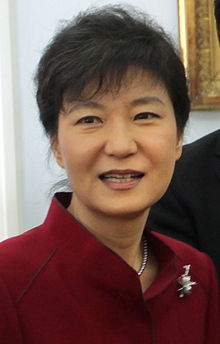
Park Geun-hye
President since 25 February 2013
President since 25 February 2013
President elected by popular vote for a single five-year term;
election last held 19 December 2012
Next scheduled election: December 2017
election last held 19 December 2012
Next scheduled election: December 2017
HEAD OF GOVERNMENT
SELECTION PROCESS
Prime Minister appointed by president with consent of National
Assembly; Deputy Prime Ministers appointed by President on
Prime Minister's recommendation
Assembly; Deputy Prime Ministers appointed by President on
Prime Minister's recommendation
| DECLARATION OF HUMAN RIGHTS |
| ETHNIC GROUPS |
Homogeneous Korean (except for about 20,000 Chinese)
| RELIGIONS |
Christian 26.3% (Protestant 19.7%, Roman Catholic 6.6%), Buddhist 23.2%, other or unknown 1.3%, none 49.3%
(1995 census)
(1995 census)
| GOVERNMENT STRUCTURE |
Republic with 9 provinces (do, singular and plural) and 7 metropolitan cities (gwangyoksi, singular and plural). Legal
system combines elements of continental European civil law systems, Anglo-American law, and Chinese classical
thought
Executive: President elected by popular vote for a single five-year term; election last held 19 December 2012 (next
to be held on December 2017); Prime Minister appointed by president with consent of National Assembly; Deputy
Prime Ministers appointed by President on Prime Minister's recommendation
Legislative: Unicameral National Assembly or Kukhoe (299 seats - members elected for four-year terms; 243 in
single-seat constituencies, 56 by proportional representation)
elections: last held 11 April 2012 (next to be held in April 2016)
Judicial: Supreme Court (justices appointed by president with consent of National Assembly); Constitutional Court
(justices appointed by president based partly on nominations by National Assembly and Chief Justice of the court)
system combines elements of continental European civil law systems, Anglo-American law, and Chinese classical
thought
Executive: President elected by popular vote for a single five-year term; election last held 19 December 2012 (next
to be held on December 2017); Prime Minister appointed by president with consent of National Assembly; Deputy
Prime Ministers appointed by President on Prime Minister's recommendation
Legislative: Unicameral National Assembly or Kukhoe (299 seats - members elected for four-year terms; 243 in
single-seat constituencies, 56 by proportional representation)
elections: last held 11 April 2012 (next to be held in April 2016)
Judicial: Supreme Court (justices appointed by president with consent of National Assembly); Constitutional Court
(justices appointed by president based partly on nominations by National Assembly and Chief Justice of the court)
| LANGUAGES |
Korean, English widely taught in junior high and high school
| BRIEF HISTORY |
The history of Korea stretches from Lower Paleolithic times to the present. The earliest known Korean pottery dates to
around 8000 BCE, and the Neolithic period began before 6000 BCE, followed by the Bronze Age around 2500 BCE.
According to legend, the Gojoseon(Old Joseon) kingdom was founded in 2333 BCE, eventually stretching from the
peninsula to much of Manchuria. By 3rd Century BCE, it disintegrated into many successor states. In the early
Common Era, the Three Kingdoms (Goguryeo, Silla, and Baekje) conquered other successor states of Gojoseon and
came to dominate the peninsula and much of Manchuria. During this period, Koreans played an important role as a
transmitter of cultural advances, aiding the formation of early Japanese culture and politics. Census records from early
Japan show that most Japanese aristocratic clans traced their lineage to the Korean peninsula. The current Japanese
Emperor stated that "it is recorded in the Chronicles of Japan that the mother of Emperor Kammu was of the line of
King Muryeong of Baekje," and "I believe it was fortunate to see such culture and skills transmitted from Korea to
Japan." The Korean kingdoms competed with each other both economically and militarily. While Goguryeo and Baekje
were more powerful for much of the era, defeating Chinese invasions several times, Silla's power gradually extended
across Korea and it eventually established the first unified state to cover most of Korean peninsula by 676. This period
is often called Unified Silla. Soon after the fall of Goguryeo however, former Goguryeo general Dae Joyeong led a
group of Koreans to eastern Manchuria and founded Balhae (698 AD - 926 AD) as the successor to Goguryeo. After
Balhae was defeated in 926, much of its people led by the Crown Prince was absorbed into Goryeo. Unified Silla itself
fell apart in the late 9th century, giving way to the tumultuous Later Three Kingdoms period (892-936), which ended
with the establishment of the Goryeo Dynasty. During the Goryeo period, laws were codified, a civil service system
was introduced, and Buddhism flourished. In 1238, the Mongolian Empire invaded and after nearly thirty years of war,
the two sides signed a peace treaty. In 1392, the general Yi Seong-gye established the Joseon Dynasty (1392-1910)
after a coup. King Sejong the Great (1418-1450) promulgated Hangul, the Korean alphabet, as an alternative to
Chinese characters which were previously the only system of writing. This period saw various other cultural and
technological advances. Between 1592-1598, Japan invaded Korea, but was eventually repelled with the efforts by the
Navy led by Admiral Yi Sun-sin, resistance armies, and Chinese aid. In the 1620s and 1630s, Joseon suffered
invasions by the Manchu Qing Dynasty. Beginning in the 1870s, Japan began to force Korea out of China's sphere of
influence into its own. In 1895, Empress Myeongseong of Korea was assassinated by Japanese agents. In 1905, Japan
forced Korea to sign the Eulsa Treaty making Korea a protectorate, and in 1910 annexed Korea, although neither is
considered to be legally valid. Korean resistance to the Japanese occupation was manifested in the massive nonviolent
March 1st Movement of 1919. Thereafter the Korean independence movement, coordinated by the Provisional
Government of the Republic of Korea in exile, was largely active in neighboring Manchuria, China and Siberia. With the
defeat of Japan in 1945, the United Nations developed plans for a trusteeship administration by the Soviet Union and
the United States, but the plan was soon abandoned. In 1948, new governments were established, the democratic
South Korea and Communist North Korea divided at the 38th parallel. The unresolved tensions of the division surfaced
in the Korean war of 1950, when North Korea invaded South Korea. The History of South Korea formally begins
with the establishment of South Korea in 1948. In the aftermath of the Japanese occupation of Korea which ended with
Japan's defeat in World War II in 1945, Korea was divided at the 38th parallel in accordance with a United Nations
arrangement, to be administered by the Soviet Union in the north and the United States in the south. The Soviets and
Americans were unable to agree on the implementation of Joint Trusteeship over Korea. This led in 1948 to the
establishment of separate governments, each claiming to be the legitimate government of all of Korea. South Korea's
subsequent history is marked by alternating periods of democratic and autocratic rule. Civilian governments are
conventionally numbered from the First Republic of Syngman Rhee to the contemporary Sixth Republic. The First
Republic, arguably democratic at its inception, became increasingly autocratic until its collapse in 1960. The Second
Republic was strongly democratic, but was overthrown in less than a year and replaced by an autocratic military
regime. The Third, Fourth, and Fifth Republics were nominally democratic, but are widely regarded as the continuation
of military rule. With the Sixth Republic, the country has gradually stabilized into a liberal democracy. Since its
inception, South Korea has seen substantial development in education, economy, and culture. Since the 1960s, the
country has developed from one of Asia's poorest to one of the continent's most well-off. Education, particularly at the
tertiary level, has expanded dramatically. Since the 1990s, Korean popular music, TV drama, and films have become
popular throughout East and Southeast Asia, in a phenomenon known as "Korean wave." On 12 March 2004, the
South Korean National Assembly (Parliament) voted to impeach President Roh Moo-hyun on charges of corruption
and political patronage. The Uri Party, which solely supported the President, angrily boycotted the vote. This motion
clearly affected the outcome of the parliamentary election held on 15 April 2004, in which the Uri Party won 152 seats
from the total of 299 seats in the National Assembly. For the first time in 18 years the ruling party became the majority
in the House. This was arguably the first time in more than 40 years that a liberal party had held a majority in the
Assembly. However, the Uri Party then lost its majority in by-elections in 2005. Roh Moo-hyun and his family
members were investigated for bribery and corruption in April 2009. Roh denied the charges, but subsequently
committed suicide by jumping into a ravine on May 23, 2009. Roh's successor, Lee Myung-bak, was inaugurated in
February, 2008. Stating "creative pragmatism" as a guiding principle, Lee's administration set out to revitalize the
flagging economy, re-energize diplomatic ties, stabilize social welfare, and meet the challenges of globalization.The
2010 G20 summit was held in Seoul, where issues regarding the global economic crisis were discussed. The 18th
South Korean presidential election was held in South Korea on 19 December 2012. It was the sixth presidential
election since democratization and the establishment of the Sixth Republic, and was held under a first-past-the-post
system, in which there was a single round of voting and the candidate receiving the highest number of votes was
elected. Under the South Korean constitution, presidents are restricted to a single five-year term in office. The term of
incumbent president Lee Myung-bak will end on 24 February 2013. According to the Korea Times, 30.7 million
people voted with turnout at 75.8%. Park Geun-hye of the Saenuri party was elected the first female South Korean
president with 51.6% of the vote opposed to 48.0% for her opponent Moon Jae-in. Park's share of the vote was the
highest won by any candidate since the beginning of free and fair direct elections in 1987. She is the first female
president of South Korea and the daughter (and acting first lady following her mother's assassination) of former
president and military dictator Park Chung-hee who was also assassinated in 1979.
Sources: Wikipedia: History of Korea; Wikipedia: History of South Korea
around 8000 BCE, and the Neolithic period began before 6000 BCE, followed by the Bronze Age around 2500 BCE.
According to legend, the Gojoseon(Old Joseon) kingdom was founded in 2333 BCE, eventually stretching from the
peninsula to much of Manchuria. By 3rd Century BCE, it disintegrated into many successor states. In the early
Common Era, the Three Kingdoms (Goguryeo, Silla, and Baekje) conquered other successor states of Gojoseon and
came to dominate the peninsula and much of Manchuria. During this period, Koreans played an important role as a
transmitter of cultural advances, aiding the formation of early Japanese culture and politics. Census records from early
Japan show that most Japanese aristocratic clans traced their lineage to the Korean peninsula. The current Japanese
Emperor stated that "it is recorded in the Chronicles of Japan that the mother of Emperor Kammu was of the line of
King Muryeong of Baekje," and "I believe it was fortunate to see such culture and skills transmitted from Korea to
Japan." The Korean kingdoms competed with each other both economically and militarily. While Goguryeo and Baekje
were more powerful for much of the era, defeating Chinese invasions several times, Silla's power gradually extended
across Korea and it eventually established the first unified state to cover most of Korean peninsula by 676. This period
is often called Unified Silla. Soon after the fall of Goguryeo however, former Goguryeo general Dae Joyeong led a
group of Koreans to eastern Manchuria and founded Balhae (698 AD - 926 AD) as the successor to Goguryeo. After
Balhae was defeated in 926, much of its people led by the Crown Prince was absorbed into Goryeo. Unified Silla itself
fell apart in the late 9th century, giving way to the tumultuous Later Three Kingdoms period (892-936), which ended
with the establishment of the Goryeo Dynasty. During the Goryeo period, laws were codified, a civil service system
was introduced, and Buddhism flourished. In 1238, the Mongolian Empire invaded and after nearly thirty years of war,
the two sides signed a peace treaty. In 1392, the general Yi Seong-gye established the Joseon Dynasty (1392-1910)
after a coup. King Sejong the Great (1418-1450) promulgated Hangul, the Korean alphabet, as an alternative to
Chinese characters which were previously the only system of writing. This period saw various other cultural and
technological advances. Between 1592-1598, Japan invaded Korea, but was eventually repelled with the efforts by the
Navy led by Admiral Yi Sun-sin, resistance armies, and Chinese aid. In the 1620s and 1630s, Joseon suffered
invasions by the Manchu Qing Dynasty. Beginning in the 1870s, Japan began to force Korea out of China's sphere of
influence into its own. In 1895, Empress Myeongseong of Korea was assassinated by Japanese agents. In 1905, Japan
forced Korea to sign the Eulsa Treaty making Korea a protectorate, and in 1910 annexed Korea, although neither is
considered to be legally valid. Korean resistance to the Japanese occupation was manifested in the massive nonviolent
March 1st Movement of 1919. Thereafter the Korean independence movement, coordinated by the Provisional
Government of the Republic of Korea in exile, was largely active in neighboring Manchuria, China and Siberia. With the
defeat of Japan in 1945, the United Nations developed plans for a trusteeship administration by the Soviet Union and
the United States, but the plan was soon abandoned. In 1948, new governments were established, the democratic
South Korea and Communist North Korea divided at the 38th parallel. The unresolved tensions of the division surfaced
in the Korean war of 1950, when North Korea invaded South Korea. The History of South Korea formally begins
with the establishment of South Korea in 1948. In the aftermath of the Japanese occupation of Korea which ended with
Japan's defeat in World War II in 1945, Korea was divided at the 38th parallel in accordance with a United Nations
arrangement, to be administered by the Soviet Union in the north and the United States in the south. The Soviets and
Americans were unable to agree on the implementation of Joint Trusteeship over Korea. This led in 1948 to the
establishment of separate governments, each claiming to be the legitimate government of all of Korea. South Korea's
subsequent history is marked by alternating periods of democratic and autocratic rule. Civilian governments are
conventionally numbered from the First Republic of Syngman Rhee to the contemporary Sixth Republic. The First
Republic, arguably democratic at its inception, became increasingly autocratic until its collapse in 1960. The Second
Republic was strongly democratic, but was overthrown in less than a year and replaced by an autocratic military
regime. The Third, Fourth, and Fifth Republics were nominally democratic, but are widely regarded as the continuation
of military rule. With the Sixth Republic, the country has gradually stabilized into a liberal democracy. Since its
inception, South Korea has seen substantial development in education, economy, and culture. Since the 1960s, the
country has developed from one of Asia's poorest to one of the continent's most well-off. Education, particularly at the
tertiary level, has expanded dramatically. Since the 1990s, Korean popular music, TV drama, and films have become
popular throughout East and Southeast Asia, in a phenomenon known as "Korean wave." On 12 March 2004, the
South Korean National Assembly (Parliament) voted to impeach President Roh Moo-hyun on charges of corruption
and political patronage. The Uri Party, which solely supported the President, angrily boycotted the vote. This motion
clearly affected the outcome of the parliamentary election held on 15 April 2004, in which the Uri Party won 152 seats
from the total of 299 seats in the National Assembly. For the first time in 18 years the ruling party became the majority
in the House. This was arguably the first time in more than 40 years that a liberal party had held a majority in the
Assembly. However, the Uri Party then lost its majority in by-elections in 2005. Roh Moo-hyun and his family
members were investigated for bribery and corruption in April 2009. Roh denied the charges, but subsequently
committed suicide by jumping into a ravine on May 23, 2009. Roh's successor, Lee Myung-bak, was inaugurated in
February, 2008. Stating "creative pragmatism" as a guiding principle, Lee's administration set out to revitalize the
flagging economy, re-energize diplomatic ties, stabilize social welfare, and meet the challenges of globalization.The
2010 G20 summit was held in Seoul, where issues regarding the global economic crisis were discussed. The 18th
South Korean presidential election was held in South Korea on 19 December 2012. It was the sixth presidential
election since democratization and the establishment of the Sixth Republic, and was held under a first-past-the-post
system, in which there was a single round of voting and the candidate receiving the highest number of votes was
elected. Under the South Korean constitution, presidents are restricted to a single five-year term in office. The term of
incumbent president Lee Myung-bak will end on 24 February 2013. According to the Korea Times, 30.7 million
people voted with turnout at 75.8%. Park Geun-hye of the Saenuri party was elected the first female South Korean
president with 51.6% of the vote opposed to 48.0% for her opponent Moon Jae-in. Park's share of the vote was the
highest won by any candidate since the beginning of free and fair direct elections in 1987. She is the first female
president of South Korea and the daughter (and acting first lady following her mother's assassination) of former
president and military dictator Park Chung-hee who was also assassinated in 1979.
Sources: Wikipedia: History of Korea; Wikipedia: History of South Korea
| ECONOMIC OVERVIEW |
South Korea over the past four decades has demonstrated incredible growth and global integration to become a
high-tech industrialized economy. In the 1960s, GDP per capita was comparable with levels in the poorer countries of
Africa and Asia. In 2004, South Korea joined the trillion dollar club of world economies, and currently is among the
world's 20 largest economies. Initially, a system of close government and business ties, including directed credit and
import restrictions, made this success possible. The government promoted the import of raw materials and technology
at the expense of consumer goods, and encouraged savings and investment over consumption. The Asian financial crisis
of 1997-98 exposed longstanding weaknesses in South Korea''s development model including high debt/equity ratios
and massive short-term foreign borrowing. GDP plunged by 6.9% in 1998, and then recovered by 9% in 1999-2000.
Korea adopted numerous economic reforms following the crisis, including greater openness to foreign investment and
imports. Growth moderated to about 4% annually between 2003 and 2007. With the global economic downturn in late
2008, South Korean GDP growth slowed to 0.3% in 2009. In the third quarter of 2009, the economy began to
recover, in large part due to export growth, low interest rates, and an expansionary fiscal policy, and growth was 3.6%
in 2011. In 2011, the US-South Korea Free Trade Agreement was ratified by both governments and is projected to
go into effect in early 2012. The South Korean economy''s long term challenges include a rapidly aging population,
inflexible labor market, and heavy reliance on exports - which comprise half of GDP.
Source: CIA World Factbook (Select Korea, South)
high-tech industrialized economy. In the 1960s, GDP per capita was comparable with levels in the poorer countries of
Africa and Asia. In 2004, South Korea joined the trillion dollar club of world economies, and currently is among the
world's 20 largest economies. Initially, a system of close government and business ties, including directed credit and
import restrictions, made this success possible. The government promoted the import of raw materials and technology
at the expense of consumer goods, and encouraged savings and investment over consumption. The Asian financial crisis
of 1997-98 exposed longstanding weaknesses in South Korea''s development model including high debt/equity ratios
and massive short-term foreign borrowing. GDP plunged by 6.9% in 1998, and then recovered by 9% in 1999-2000.
Korea adopted numerous economic reforms following the crisis, including greater openness to foreign investment and
imports. Growth moderated to about 4% annually between 2003 and 2007. With the global economic downturn in late
2008, South Korean GDP growth slowed to 0.3% in 2009. In the third quarter of 2009, the economy began to
recover, in large part due to export growth, low interest rates, and an expansionary fiscal policy, and growth was 3.6%
in 2011. In 2011, the US-South Korea Free Trade Agreement was ratified by both governments and is projected to
go into effect in early 2012. The South Korean economy''s long term challenges include a rapidly aging population,
inflexible labor market, and heavy reliance on exports - which comprise half of GDP.
Source: CIA World Factbook (Select Korea, South)
| POLITICAL CLIMATE |
The speed and scope of South Korea's political development in recent years have been as impressive as its economic
development in previous decades. Since the transition to democracy occurred, with the belated arrival of political
liberalization and a return to direct presidential elections in 1987, virtually all realms of Korean society have
democratized. The most impressive gains, however, were made in the area of democratization, with the rise of a civil
society. Although still not to the degree seen in advanced nations, Korean society has become increasingly conscious
and supportive of the rights of women and minorities, including the handicapped and homosexuals. Traditional Korean
values such as respect for authority and hierarchy are rapidly giving way as increased value is placed on individual
freedoms and equality. These social democratic changes were driven in part by reform-minded governments and the
efforts of domestic NGOs. Paradoxically, all this progress appears to have created a society more fragmented than
ever before, with increased social conflict and instability. In the last few years, the debate over major policy issues has
reflected the increasing polarization of Korean social values and attitudes. At the same time, the ideological pendulum
has been swinging in the liberal, or leftist, direction. For the last several decades, Korean society has been relatively
conservative, valuing stability and order. Naturally, democratization, which has been more vibrant in Korea than in any
other part of Asia, has generated a range of competing ideas that promise a departure from the past, and opportunities
for more new ideas. Korea's democratization has had an especially liberating effect on leftist ideals and values, which
were severely repressed in the past. Since "leftist" remains a negative label to many Koreans, new contesting ideas and
ideological dispositions have been termed "progressive." Thus, the political divide between "conservatives" and
"progressives" would be analogous to the divide between "conservatives" and "liberals" in U.S. politics.
A legislative election for the 19th National Assembly was held in South Korea on 11 April 2012. The election was won
by the ruling Saenuri or New Frontier Party, which renewed its majority in the National Assembly, despite losing seats.
The election has been read as a bellwether for the presidential election to be held later in the year. The result
confounded exit polls and media analysis which had predicted a closer outcome. The 18th South Korean presidential
election was held in South Korea on 19 December 2012. It was the sixth presidential election since democratization
and the establishment of the Sixth Republic, and was held under a first-past-the-post system, in which there was a
single round of voting and the candidate receiving the highest number of votes was elected. Under the South Korean
constitution, presidents are restricted to a single five-year term in office. The term of incumbent president Lee
Myung-bak will end on 24 February 2013. According to the Korea Times, 30.7 million people voted with turnout at
75.8%. Park Geun-hye of the Saenuri party was elected the first female South Korean president with 51.6% of the
vote opposed to 48.0% for her opponent Moon Jae-in. Park's share of the vote was the highest won by any candidate
since the beginning of free and fair direct elections in 1987.
Source: The Brookings Institute: The Transformation of South Korean Politics
development in previous decades. Since the transition to democracy occurred, with the belated arrival of political
liberalization and a return to direct presidential elections in 1987, virtually all realms of Korean society have
democratized. The most impressive gains, however, were made in the area of democratization, with the rise of a civil
society. Although still not to the degree seen in advanced nations, Korean society has become increasingly conscious
and supportive of the rights of women and minorities, including the handicapped and homosexuals. Traditional Korean
values such as respect for authority and hierarchy are rapidly giving way as increased value is placed on individual
freedoms and equality. These social democratic changes were driven in part by reform-minded governments and the
efforts of domestic NGOs. Paradoxically, all this progress appears to have created a society more fragmented than
ever before, with increased social conflict and instability. In the last few years, the debate over major policy issues has
reflected the increasing polarization of Korean social values and attitudes. At the same time, the ideological pendulum
has been swinging in the liberal, or leftist, direction. For the last several decades, Korean society has been relatively
conservative, valuing stability and order. Naturally, democratization, which has been more vibrant in Korea than in any
other part of Asia, has generated a range of competing ideas that promise a departure from the past, and opportunities
for more new ideas. Korea's democratization has had an especially liberating effect on leftist ideals and values, which
were severely repressed in the past. Since "leftist" remains a negative label to many Koreans, new contesting ideas and
ideological dispositions have been termed "progressive." Thus, the political divide between "conservatives" and
"progressives" would be analogous to the divide between "conservatives" and "liberals" in U.S. politics.
A legislative election for the 19th National Assembly was held in South Korea on 11 April 2012. The election was won
by the ruling Saenuri or New Frontier Party, which renewed its majority in the National Assembly, despite losing seats.
The election has been read as a bellwether for the presidential election to be held later in the year. The result
confounded exit polls and media analysis which had predicted a closer outcome. The 18th South Korean presidential
election was held in South Korea on 19 December 2012. It was the sixth presidential election since democratization
and the establishment of the Sixth Republic, and was held under a first-past-the-post system, in which there was a
single round of voting and the candidate receiving the highest number of votes was elected. Under the South Korean
constitution, presidents are restricted to a single five-year term in office. The term of incumbent president Lee
Myung-bak will end on 24 February 2013. According to the Korea Times, 30.7 million people voted with turnout at
75.8%. Park Geun-hye of the Saenuri party was elected the first female South Korean president with 51.6% of the
vote opposed to 48.0% for her opponent Moon Jae-in. Park's share of the vote was the highest won by any candidate
since the beginning of free and fair direct elections in 1987.
Source: The Brookings Institute: The Transformation of South Korean Politics
| INTERNATIONAL DISPUTES |
Military Demarcation Line within the 4-km wide Demilitarized Zone has separated North from South Korea since
1953; periodic incidents with North Korea in the Yellow Sea over the Northern Limiting Line, which South Korea
claims as a maritime boundary; South Korea and Japan claim Liancourt Rocks (Tok-do/Take-shima), occupied by
South Korea since 1954
note: the two rocky islets of Tok-do have become a South Korean tourist destination - over 132,000 people visited
them in 2009, most by ship but also a substantial number by helicopter
1953; periodic incidents with North Korea in the Yellow Sea over the Northern Limiting Line, which South Korea
claims as a maritime boundary; South Korea and Japan claim Liancourt Rocks (Tok-do/Take-shima), occupied by
South Korea since 1954
note: the two rocky islets of Tok-do have become a South Korean tourist destination - over 132,000 people visited
them in 2009, most by ship but also a substantial number by helicopter


| REFUGEES AND INTERNALLY DISPLACED PERSONS (IDP) |
None reported.
| TRAFFICKING IN PERSONS |
None reported.
| HUMAN RIGHTS STATEMENTS, ANALYSIS AND CRITIQUES |
2011 Human Rights Report: Republic of Korea
Bureau of Democracy, Human Rights, and Labor
2011 Country Reports on Human Rights Practices
May 25, 2012
The Republic of Korea (South Korea or ROK) is a constitutional democracy governed by President Lee Myung-bak and a
unicameral legislature. In 2008 the Grand National Party obtained a majority of National Assembly seats in a free and fair election.
Security forces reported to civilian authorities.
The primary human rights problems reported were the government’s interpretation of national security and other laws to limit
freedom of expression and restrict access to the Internet as well as incidents of hazing in the military.
Other human rights problems included some official corruption; sexual and domestic violence; children engaged in prostitution;
trafficking in persons; societal discrimination against foreigners, defectors from the Democratic People’s Republic of Korea (DPRK
or North Korea), and persons with HIV/AIDS; and limitations on worker rights.
The government took steps to prosecute officials who committed abuses, and impunity was not evident.
Click here to read more »
Bureau of Democracy, Human Rights, and Labor
2011 Country Reports on Human Rights Practices
May 25, 2012
The Republic of Korea (South Korea or ROK) is a constitutional democracy governed by President Lee Myung-bak and a
unicameral legislature. In 2008 the Grand National Party obtained a majority of National Assembly seats in a free and fair election.
Security forces reported to civilian authorities.
The primary human rights problems reported were the government’s interpretation of national security and other laws to limit
freedom of expression and restrict access to the Internet as well as incidents of hazing in the military.
Other human rights problems included some official corruption; sexual and domestic violence; children engaged in prostitution;
trafficking in persons; societal discrimination against foreigners, defectors from the Democratic People’s Republic of Korea (DPRK
or North Korea), and persons with HIV/AIDS; and limitations on worker rights.
The government took steps to prosecute officials who committed abuses, and impunity was not evident.
Click here to read more »
31 August 2012
Committee on the Elimination of Racial Discrimination
Eighty-first session
6 – 31 August 2012
Consideration of reports submitted by States parties under article 9 of the convention
Concluding observations of the Committee on the Elimination of Racial Discrimination
Republic of Korea
A. Introduction
2. The Committee welcomes the timely submission of the combined fifteenth and sixteenth periodic report submitted by the State
party in accordance to the Committee reporting guidelines (CERD/C/2007/1).
3. The Committee appreciates the presence of the delegation and the responses provided to the questions and comments raised by
the Committee members during the consideration of the report.
B. Positive aspects
4. The Committee welcomes a number of positive developments and activities undertaken by the State party in fighting racial
discrimination, and promoting diversity, including:
(a) The enactment of the Refugee Act which will enter into force in July 2013;
(b) The ratification of the UNESCO Convention on the Protection and Promotion of the Diversity of Cultural Expressions;
(c) The Enforcement Decree on the Primary and Secondary Education Act;
C. Concerns and recommendations
Definition of racial discrimination
6. While noting that the State party affirms that article 11(1) of its Constitution, as well as a series of individual laws, are sufficient
to ensure equality among citizens and prohibit racial discrimination, the Committee reiterates its concern about the absence of a legal
definition of racial discrimination in line with article 1 of the Convention.
The Committee reiterates its recommendation that the State party review its position that a definition of racial discrimination in line
with the Convention is not necessary on the assumption that sufficient protection from discrimination is guaranteed to citizens
through article 11(1) of its Constitution. It urges the State party to include in its legislation a definition of racial discrimination
which encompasses all prohibited grounds of discrimination in line with article 1 of the Convention and which guarantees equal
rights to citizens and non-citizens as recommended in the Committee’s general recommendation No. 30 (2004).
Click here to read more »
Committee on the Elimination of Racial Discrimination
Eighty-first session
6 – 31 August 2012
Consideration of reports submitted by States parties under article 9 of the convention
Concluding observations of the Committee on the Elimination of Racial Discrimination
Republic of Korea
A. Introduction
2. The Committee welcomes the timely submission of the combined fifteenth and sixteenth periodic report submitted by the State
party in accordance to the Committee reporting guidelines (CERD/C/2007/1).
3. The Committee appreciates the presence of the delegation and the responses provided to the questions and comments raised by
the Committee members during the consideration of the report.
B. Positive aspects
4. The Committee welcomes a number of positive developments and activities undertaken by the State party in fighting racial
discrimination, and promoting diversity, including:
(a) The enactment of the Refugee Act which will enter into force in July 2013;
(b) The ratification of the UNESCO Convention on the Protection and Promotion of the Diversity of Cultural Expressions;
(c) The Enforcement Decree on the Primary and Secondary Education Act;
C. Concerns and recommendations
Definition of racial discrimination
6. While noting that the State party affirms that article 11(1) of its Constitution, as well as a series of individual laws, are sufficient
to ensure equality among citizens and prohibit racial discrimination, the Committee reiterates its concern about the absence of a legal
definition of racial discrimination in line with article 1 of the Convention.
The Committee reiterates its recommendation that the State party review its position that a definition of racial discrimination in line
with the Convention is not necessary on the assumption that sufficient protection from discrimination is guaranteed to citizens
through article 11(1) of its Constitution. It urges the State party to include in its legislation a definition of racial discrimination
which encompasses all prohibited grounds of discrimination in line with article 1 of the Convention and which guarantees equal
rights to citizens and non-citizens as recommended in the Committee’s general recommendation No. 30 (2004).
Click here to read more »
South Korean Activist Indicted for Sharing Tweet
Feb 6 2012 - 3:59pm
Freedom House is deeply concerned by the indictment of photographer and activist Park Jung-geun on January 31 for violating
South Korea’s National Security Law and sharing a Twitter posting from the North Korean government with his followers, in what
he says was an attempt at satire. Freedom House calls for Park’s immediate release – his arrest is a clear violation of international
freedom of expression standards. Jung-geun faced scrutiny in 2011 for reposting “propaganda” about then-leader Kim Jong-Il and
subsequently had his photography studio raided, materials confiscated and faced interrogation.
International human rights groups have voiced concerns that freedom of expression in South Korea has declined since 2008
protests. Despite its impressive transition to democracy over the past two decades and its reputation as one of most wired
countries in the world, in 2011, South Korea was rated “Partly Free” in both Freedom House’s Freedom of the Press and Freedom
on the Net reports. South Korea engages in substantial censorship of North Korea-related content, including blocking access to the
government-run Twitter account, whose postings Park forwarded. Defamation remains a criminal offense, and several laws have
been used to restrict freedom of expression in traditional media and online communications. The National Security Law, enacted in
1948, sentences violators to up to seven years in prison for “praising or expressing sympathy with the North Korean regime.” In
recent years, the law has been used with increased frequency - more than 150 people were interrogated in 2010 on suspicion of
violating the National Security Law.
Click here to read more »
Feb 6 2012 - 3:59pm
Freedom House is deeply concerned by the indictment of photographer and activist Park Jung-geun on January 31 for violating
South Korea’s National Security Law and sharing a Twitter posting from the North Korean government with his followers, in what
he says was an attempt at satire. Freedom House calls for Park’s immediate release – his arrest is a clear violation of international
freedom of expression standards. Jung-geun faced scrutiny in 2011 for reposting “propaganda” about then-leader Kim Jong-Il and
subsequently had his photography studio raided, materials confiscated and faced interrogation.
International human rights groups have voiced concerns that freedom of expression in South Korea has declined since 2008
protests. Despite its impressive transition to democracy over the past two decades and its reputation as one of most wired
countries in the world, in 2011, South Korea was rated “Partly Free” in both Freedom House’s Freedom of the Press and Freedom
on the Net reports. South Korea engages in substantial censorship of North Korea-related content, including blocking access to the
government-run Twitter account, whose postings Park forwarded. Defamation remains a criminal offense, and several laws have
been used to restrict freedom of expression in traditional media and online communications. The National Security Law, enacted in
1948, sentences violators to up to seven years in prison for “praising or expressing sympathy with the North Korean regime.” In
recent years, the law has been used with increased frequency - more than 150 people were interrogated in 2010 on suspicion of
violating the National Security Law.
Click here to read more »
Republic of Korea’s candidacy for election to the UN Human Rights Council: Open letter
19 October 2012
We write on the occasion of your country’s candidacy for membership to the UN Human Rights Council in the elections scheduled
on 12 November 2012. We welcome your election pledges to promote and protect human rights at the national and international
levels, as indicated in the Annex to the note verbale dated 4 September 2012 from the Permanent Mission of the Republic of Korea
to the United Nations addressed to the President of the General Assembly.1
We recall that, according to General Assembly resolution 60/251, members of the Council shall uphold the highest standards in the
promotion and protection of human rights and fully cooperate with the Council.2 Following your candidacy to the Human Rights
Council, we take the opportunity to comment on the Republic of Korea’s election pledges and to note additional opportunities for
your government to promote and protect human rights. In doing so, we refer to the guidance of the Office of the High
Commissioner for Human Rights on presenting voluntary human rights pledges and commitments, including that such pledges and
commitments should be specific, measurable and verifiable.3 Commitments at the international level
Ratification of international human rights instruments
We welcome your commitments to ratify the UN Convention against Transnational Organized Crime; the Protocol to Prevent,
Suppress and Punish Trafficking in Persons Especially Women and Children, supplementing the United Nations Convention against
Transnational Organized Crime; the 1993 Hague Convention on Protection of Children and Co-operation in Respect of Intercountry
Adoption; and the ILO Maritime Labour Convention. We also welcome your commitment to consider withdrawal of reservations
made to the Convention on the Rights of Persons with Disabilities; to pursue feasibility studies towards becoming a party to the
International Convention for the Protection of All Persons from Enforced Disappearance; and to consider accession to the Optional
Protocol to the Convention against Torture and Other Cruel, Inhuman or Degrading Treatment or Punishment.
We wish to take this opportunity to also encourage you to ratify the Second Optional Protocol to the International Covenant on Civil
and Political Rights, aiming at the abolition of the death penalty; the Optional Protocols to the International Covenant on Economic,
Social and Cultural Rights and the Convention on the Rights of Persons with Disabilities; and the International Convention on the
Protection of the Rights of All Migrant Workers and Members of Their Families.
Cooperation with the Special Procedures
We welcome your commitment to cooperate fully with all the Human Rights Council’s Special Procedures, by rendering the full
support necessary for any visits. In this regard, we regret that the Special Rapporteur on the promotion and protection of the right
to freedom of opinion and expression was unable to meet with the President, the Prime Minister, any government ministers, the
Prosecutor General, or officials of the National Intelligence Service during his visit to the Republic of Korea in 2010, despite the
fact that he came to the country on an official invitation, and furthermore that he was unable to meet collectively with
Commissioners of the National Human Rights Commission of Korea despite numerous requests.4 We also encourage you to
implement his recommendations, including to abolish Article 7 of the National Security Act.5
Click here to read more »
19 October 2012
We write on the occasion of your country’s candidacy for membership to the UN Human Rights Council in the elections scheduled
on 12 November 2012. We welcome your election pledges to promote and protect human rights at the national and international
levels, as indicated in the Annex to the note verbale dated 4 September 2012 from the Permanent Mission of the Republic of Korea
to the United Nations addressed to the President of the General Assembly.1
We recall that, according to General Assembly resolution 60/251, members of the Council shall uphold the highest standards in the
promotion and protection of human rights and fully cooperate with the Council.2 Following your candidacy to the Human Rights
Council, we take the opportunity to comment on the Republic of Korea’s election pledges and to note additional opportunities for
your government to promote and protect human rights. In doing so, we refer to the guidance of the Office of the High
Commissioner for Human Rights on presenting voluntary human rights pledges and commitments, including that such pledges and
commitments should be specific, measurable and verifiable.3 Commitments at the international level
Ratification of international human rights instruments
We welcome your commitments to ratify the UN Convention against Transnational Organized Crime; the Protocol to Prevent,
Suppress and Punish Trafficking in Persons Especially Women and Children, supplementing the United Nations Convention against
Transnational Organized Crime; the 1993 Hague Convention on Protection of Children and Co-operation in Respect of Intercountry
Adoption; and the ILO Maritime Labour Convention. We also welcome your commitment to consider withdrawal of reservations
made to the Convention on the Rights of Persons with Disabilities; to pursue feasibility studies towards becoming a party to the
International Convention for the Protection of All Persons from Enforced Disappearance; and to consider accession to the Optional
Protocol to the Convention against Torture and Other Cruel, Inhuman or Degrading Treatment or Punishment.
We wish to take this opportunity to also encourage you to ratify the Second Optional Protocol to the International Covenant on Civil
and Political Rights, aiming at the abolition of the death penalty; the Optional Protocols to the International Covenant on Economic,
Social and Cultural Rights and the Convention on the Rights of Persons with Disabilities; and the International Convention on the
Protection of the Rights of All Migrant Workers and Members of Their Families.
Cooperation with the Special Procedures
We welcome your commitment to cooperate fully with all the Human Rights Council’s Special Procedures, by rendering the full
support necessary for any visits. In this regard, we regret that the Special Rapporteur on the promotion and protection of the right
to freedom of opinion and expression was unable to meet with the President, the Prime Minister, any government ministers, the
Prosecutor General, or officials of the National Intelligence Service during his visit to the Republic of Korea in 2010, despite the
fact that he came to the country on an official invitation, and furthermore that he was unable to meet collectively with
Commissioners of the National Human Rights Commission of Korea despite numerous requests.4 We also encourage you to
implement his recommendations, including to abolish Article 7 of the National Security Act.5
Click here to read more »
The Problem of North Korean Refugees in China and Possible Solutions
July 19, 2012
First of all, let me thank KINU President Kim Tae-Woo and his team at KINU for organizing this conference and inviting Human
Rights Watch to participate. It’s a great pleasure and an honor to be here.
Conducting research on human rights violations in North Korea for organizations like Human Rights Watch is a consistent challenge
to gain access to North Korean refugees in a way that comports with our methodology while also ensuring refugees are protected.
North Koreans who have fled their country are literally a moving target – not just for human rights groups like us, who wish them
well and want to help them tell their story, but also for many others who wish to arrest them and/or profit from them. There are
scores of North Korean officials trying to prevent departures and punishing those caught leaving; border officials on both sides
extorting refugees to let them pass; Chinese police and other agencies rounding up and returning the refugees to certain punishment
in North Korea; human traffickers delivering North Korean women into the hands of Chinese men seeking wives; and people
smugglers prepared to profit by delivering them to Thailand and ultimately, a chance to come to South Korea.
In this past year Human Rights Watch has managed to interview over 60 North Koreans who have fled the country in 2010, 2011,
and the first quarter of 2012. We’re still analyzing the interviews so I cannot offer a comprehensive analysis at this stage, but will
rather offer some snapshots of some of the things we’ve found and promise that you’ll see more in the coming months.
Overall, what our research shows is that private market activities, corruption of North Korean officials and new information and
communication technologies are increasingly combining to facilitate heretofore restricted activities, permit greater internal
movement, break down government propaganda, and enable flight from North Korea. These trends in turn make it ever more
critical for UNHCR and the international community to persuade China to comply with its international human rights obligations and
recognize North Koreans. And not as “escapees” or “defectors” or “economic migrants” but rather what they really are, as
“refugees” eligible for protection and durable solutions such as third country resettlement to South Korea, the US, or other
countries prepared to receive them.
Click here to read more »
July 19, 2012
First of all, let me thank KINU President Kim Tae-Woo and his team at KINU for organizing this conference and inviting Human
Rights Watch to participate. It’s a great pleasure and an honor to be here.
Conducting research on human rights violations in North Korea for organizations like Human Rights Watch is a consistent challenge
to gain access to North Korean refugees in a way that comports with our methodology while also ensuring refugees are protected.
North Koreans who have fled their country are literally a moving target – not just for human rights groups like us, who wish them
well and want to help them tell their story, but also for many others who wish to arrest them and/or profit from them. There are
scores of North Korean officials trying to prevent departures and punishing those caught leaving; border officials on both sides
extorting refugees to let them pass; Chinese police and other agencies rounding up and returning the refugees to certain punishment
in North Korea; human traffickers delivering North Korean women into the hands of Chinese men seeking wives; and people
smugglers prepared to profit by delivering them to Thailand and ultimately, a chance to come to South Korea.
In this past year Human Rights Watch has managed to interview over 60 North Koreans who have fled the country in 2010, 2011,
and the first quarter of 2012. We’re still analyzing the interviews so I cannot offer a comprehensive analysis at this stage, but will
rather offer some snapshots of some of the things we’ve found and promise that you’ll see more in the coming months.
Overall, what our research shows is that private market activities, corruption of North Korean officials and new information and
communication technologies are increasingly combining to facilitate heretofore restricted activities, permit greater internal
movement, break down government propaganda, and enable flight from North Korea. These trends in turn make it ever more
critical for UNHCR and the international community to persuade China to comply with its international human rights obligations and
recognize North Koreans. And not as “escapees” or “defectors” or “economic migrants” but rather what they really are, as
“refugees” eligible for protection and durable solutions such as third country resettlement to South Korea, the US, or other
countries prepared to receive them.
Click here to read more »
PM: I feel regretful about public concerns over crimes against children and women
Date 11.Sep.2012
Prime Minister Kim Hwang-sik said on September 11, "As the Prime Minister, it is heartbreaking and regretful to see crimes against
children and women continue despite the government’s efforts."
Prime Minister Kim presided and delivered remarks at the Cabinet meeting held at Central Government Complex on the same day,
saying "The government has concentrated all energy to root out various crimes against public security in our society and come up
with countermeasures."
"In order to eradicate sex crimes and hate crimes, we should comprehensively and systemically improve relevant laws and policy.
Most of all, such measures should be put into practice to make people feel the difference," he continued. "Related ministries must
solidify their determination and make every effort to make such measures effective until all Koreans can feel safe."
He also commented on a series of typhoons that came in August, saying "Emergency restoration in typhoon affected areas is almost
complete, but there are many heart-broken people suffering from damage on livestock and farms. Relevantagencies must promptly
pursue necessary procedures to pay compensation to typhoon victims as quickly as possible."
Click here to read more »
Date 11.Sep.2012
Prime Minister Kim Hwang-sik said on September 11, "As the Prime Minister, it is heartbreaking and regretful to see crimes against
children and women continue despite the government’s efforts."
Prime Minister Kim presided and delivered remarks at the Cabinet meeting held at Central Government Complex on the same day,
saying "The government has concentrated all energy to root out various crimes against public security in our society and come up
with countermeasures."
"In order to eradicate sex crimes and hate crimes, we should comprehensively and systemically improve relevant laws and policy.
Most of all, such measures should be put into practice to make people feel the difference," he continued. "Related ministries must
solidify their determination and make every effort to make such measures effective until all Koreans can feel safe."
He also commented on a series of typhoons that came in August, saying "Emergency restoration in typhoon affected areas is almost
complete, but there are many heart-broken people suffering from damage on livestock and farms. Relevantagencies must promptly
pursue necessary procedures to pay compensation to typhoon victims as quickly as possible."
Click here to read more »
Open Forum on Woman Flight Attendant’s Appearance and Outfit from the Human Rights Perspective
Date : 2012-11-05
The National Human Rights Commission of Korea (NHRCK) held an open forum on 30 October 2012 from 14:00 to 16:00 at the
Human Rights Education Center (10th floor) on the “Restrictions on Appearance and Outfit of a Woman Flight Attendant” in order
to analyze the current situation and grope for alternatives from the human rights perspective.
The NHRCK received a petition in June 2012 claiming that the “A” Airlines compulsory advises women flight attendants to wear a
skirt and hair in a bun and forbids eyeglasses, which constitues discrimination against women flight attendants without reasonable
ground.
Against it, the “A” Airlines insists that it adopted only a skirt as woman flight attendant’s uniform in order to accent its image of
elegant Korean traditional beauty. Also, it said regulations on the figure and outfit are vital tools for securing competitiveness of the
company in this globalized era rather than restrictions on appearance.
In this context, the NHRCK held this forum for the in-depth review on the petition and would take presented opinions into accounts
when deciding whether or not it is discrimination.
The NHRCK also takes note of the fact that many places such as department stores, banks, restaurants, information desk, and
commercial promotion events put restrictions on the look of service providers as well as women crew members. The NHRCK
expects this open debate will trigger a vibrant discussion on the regulations on the appearance and outfit of employees in the service
industry from the human rights perspective in the society.
At the forum, Professor Jun-il Lee (School of Law of Korea University) presented his paper on the “Human Rights-violative Traits
of Restrictions on the Appearance and Outfit against Women Flight Attendants”. The discussion panels included a Deputy Senior
Researcher of the Korea Gender Policy Research Institute Mi-young Gu, Professor Sun-hee Sim from the Seoul City University,
Director of the Brand 38 Research Institute Mun-kee Park, Professor Soon-won Kwon from the Economy and Commerce
Department of the Sookmyung Women’s University, and Director of Gender Policy of the Ministry of Gender-Equality and Family
Sung-ji Choi.
Click here to read more »
Date : 2012-11-05
The National Human Rights Commission of Korea (NHRCK) held an open forum on 30 October 2012 from 14:00 to 16:00 at the
Human Rights Education Center (10th floor) on the “Restrictions on Appearance and Outfit of a Woman Flight Attendant” in order
to analyze the current situation and grope for alternatives from the human rights perspective.
The NHRCK received a petition in June 2012 claiming that the “A” Airlines compulsory advises women flight attendants to wear a
skirt and hair in a bun and forbids eyeglasses, which constitues discrimination against women flight attendants without reasonable
ground.
Against it, the “A” Airlines insists that it adopted only a skirt as woman flight attendant’s uniform in order to accent its image of
elegant Korean traditional beauty. Also, it said regulations on the figure and outfit are vital tools for securing competitiveness of the
company in this globalized era rather than restrictions on appearance.
In this context, the NHRCK held this forum for the in-depth review on the petition and would take presented opinions into accounts
when deciding whether or not it is discrimination.
The NHRCK also takes note of the fact that many places such as department stores, banks, restaurants, information desk, and
commercial promotion events put restrictions on the look of service providers as well as women crew members. The NHRCK
expects this open debate will trigger a vibrant discussion on the regulations on the appearance and outfit of employees in the service
industry from the human rights perspective in the society.
At the forum, Professor Jun-il Lee (School of Law of Korea University) presented his paper on the “Human Rights-violative Traits
of Restrictions on the Appearance and Outfit against Women Flight Attendants”. The discussion panels included a Deputy Senior
Researcher of the Korea Gender Policy Research Institute Mi-young Gu, Professor Sun-hee Sim from the Seoul City University,
Director of the Brand 38 Research Institute Mun-kee Park, Professor Soon-won Kwon from the Economy and Commerce
Department of the Sookmyung Women’s University, and Director of Gender Policy of the Ministry of Gender-Equality and Family
Sung-ji Choi.
Click here to read more »
ACRC offers recommendations for preventing corruption at the local government-funded organizations
2012-07-12
A new measure will be promoted that will force the local government-funded organizations to participate in the management
evaluation that is administered by the Ministry of Public Administration and Security (MOPAS). According to the measure, the
organizations which have frequent cases of corruption or are assessed to have poor management will face strict actions such as the
dismissal of executives and staff members or liquidation of the corporate body.
Improvement schemes will also be pushed for. One such scheme will require that the recruitment of executives and staff members
take place as an open competition. Another scheme will allow organizations to merge in cases where the organizations have
overlapping functions, lack capability because of their small size or have lost their orientation due to policy changes.
The organizations that are funded in part or in whole by the local governments have been continuously criticized for not disclosing
the business promotion expenses spent by the heads and for imposing light penalties on those involved in irregularities in H.R.
affairs and other forms of corruption. In order to establish a comprehensive management system for these organizations, the ACRC
made recommendations for institutional improvement to the MOPAS, the local governments and the local government-funded
organizations.
The number of the local government-funded organizations rapidly increased from 141 in 1999 to 492 at present, which is a 350%
increase. As many as 109 organizations were newly established in 2008 and 2009 prior to the election of the heads of local
governments in 2010.
The annual budget of the organizations is as high as KRW 5.99 trillion, but the ACRC's inspection found that the supervisory bodies
have not figured out the actual budget management practices nor investigated them thoroughly.
The ACRC also sent a recommendation to the MOPAS to prepare a standard guideline which is applicable to personnel affairs,
budgets and the organizational operation of the government-funded organizations. In order to root out the risks of corruption
through round-the-clock outside monitoring, the Commission also recommended releasing the management information of the
government-contributed organizations by expanding "the Local Public Enterprise Clean-Eye," the system that publicizes the
management information of the public enterprises located in a local area.
"If the recommendations are accepted, the government-funded organizations that are currently in a blind spot will be operated in
more transparency. Consequently, corruption will reduce significantly, and the annual budget reaching KRW 1.38 trillion that is the
support offered to the organizations will be used in a fairer and more transparent manner," said the ACRC.
Click here to read more »
2012-07-12
A new measure will be promoted that will force the local government-funded organizations to participate in the management
evaluation that is administered by the Ministry of Public Administration and Security (MOPAS). According to the measure, the
organizations which have frequent cases of corruption or are assessed to have poor management will face strict actions such as the
dismissal of executives and staff members or liquidation of the corporate body.
Improvement schemes will also be pushed for. One such scheme will require that the recruitment of executives and staff members
take place as an open competition. Another scheme will allow organizations to merge in cases where the organizations have
overlapping functions, lack capability because of their small size or have lost their orientation due to policy changes.
The organizations that are funded in part or in whole by the local governments have been continuously criticized for not disclosing
the business promotion expenses spent by the heads and for imposing light penalties on those involved in irregularities in H.R.
affairs and other forms of corruption. In order to establish a comprehensive management system for these organizations, the ACRC
made recommendations for institutional improvement to the MOPAS, the local governments and the local government-funded
organizations.
The number of the local government-funded organizations rapidly increased from 141 in 1999 to 492 at present, which is a 350%
increase. As many as 109 organizations were newly established in 2008 and 2009 prior to the election of the heads of local
governments in 2010.
The annual budget of the organizations is as high as KRW 5.99 trillion, but the ACRC's inspection found that the supervisory bodies
have not figured out the actual budget management practices nor investigated them thoroughly.
The ACRC also sent a recommendation to the MOPAS to prepare a standard guideline which is applicable to personnel affairs,
budgets and the organizational operation of the government-funded organizations. In order to root out the risks of corruption
through round-the-clock outside monitoring, the Commission also recommended releasing the management information of the
government-contributed organizations by expanding "the Local Public Enterprise Clean-Eye," the system that publicizes the
management information of the public enterprises located in a local area.
"If the recommendations are accepted, the government-funded organizations that are currently in a blind spot will be operated in
more transparency. Consequently, corruption will reduce significantly, and the annual budget reaching KRW 1.38 trillion that is the
support offered to the organizations will be used in a fairer and more transparent manner," said the ACRC.
Click here to read more »

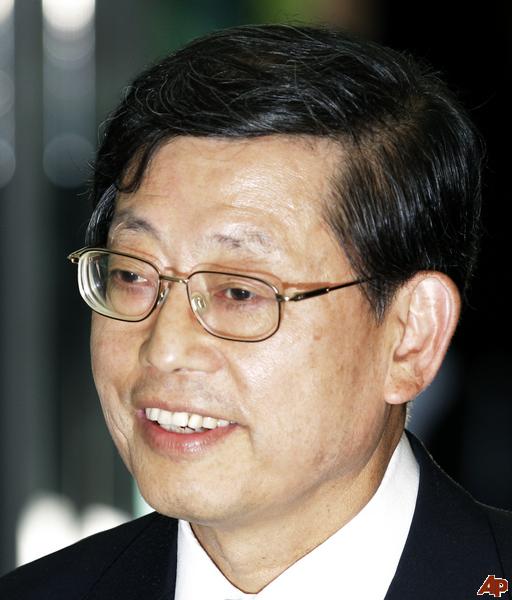
Kim Hwang-sik
Prime Minister since 1 October 2010
Prime Minister since 1 October 2010

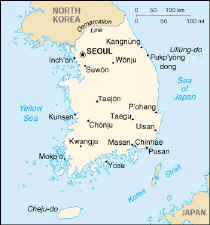
Click on map for larger view
Click on flag for Country Report



| ILLICIT DRUGS |
None reported.