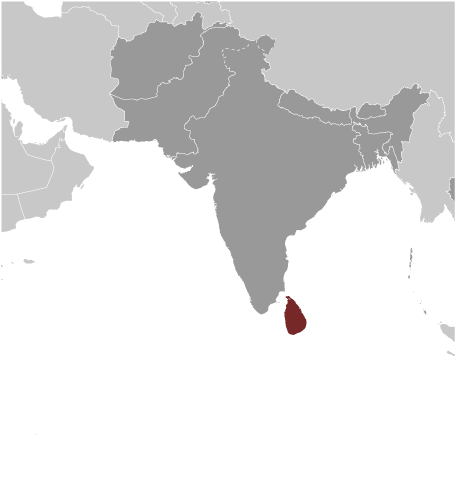

| SRI LANKA Democratic Socialist Republic of Sri Lanka Shri Lamka Prajatantrika Samajaya di Janarajaya/ Ilankai Jananayaka Choshalichak Kutiyarachu Joined United Nations: 14 December 1955 Human Rights as assured by their constitution Click here Updated 25 December 2012 |

| CAPITAL |
| POPULATION |
| CHIEF OF STATE |
| SELECTION PROCESS |
Colombo (Executive and judicial capital)
Sri Jayewardenepura Kotte (legislative capital)
Sri Jayewardenepura Kotte (legislative capital)
21,481,334
note: since the outbreak of hostilities between the government and armed Tamil separatists
in the mid-1980s, several hundred thousand Tamil civilians have fled the island and more
than 200,000 Tamils have sought refuge in the West (July 2012 est.)
note: since the outbreak of hostilities between the government and armed Tamil separatists
in the mid-1980s, several hundred thousand Tamil civilians have fled the island and more
than 200,000 Tamils have sought refuge in the West (July 2012 est.)
Dissanayake Mudiyanselage Jayaratne
Prime Minister since 21 April 2010
Prime Minister since 21 April 2010
President elected by popular vote for a six-year term (eligible for a
second term); Prime minister selected by the President; election last
held on 26 January 2010
Next scheduled election: 2016
second term); Prime minister selected by the President; election last
held on 26 January 2010
Next scheduled election: 2016
HEAD OF GOVERNMENT
SELECTION PROCESS
According to the Sri Lankan Constitution, the President is the
Chief of State and Head of Government
Chief of State and Head of Government
| DECLARATION OF HUMAN RIGHTS |
| ETHNIC GROUPS |
Sinhalese 73.8%, Sri Lankan Moors 7.2%, Indian Tamil 4.6%, Sri Lankan Tamil 3.9%, other 0.5%, unspecified 10% (2001
census provisional data)
census provisional data)
| RELIGIONS |
Buddhist 69.1%, Muslim 7.6%, Hindu 7.1%, Christian 6.2%, unspecified 10% (2001 census provisional data)
| GOVERNMENT STRUCTURE |
Republic with 8 provinces; Legal system is a highly complex mixture of English common law, Roman-Dutch, Islamic, Sinhalese, and
customary law; has not accepted compulsory ICJ jurisdiction
Executive: President elected by popular vote for a six-year term (eligible for a second term); election last held on 26 January 2010
(next to be held in 2016); Prime Minister selected by the President
Legislative: Unicameral Parliament (225 seats; members elected by popular vote on the basis of a modified proportional
representation system by district to serve six-year terms)
elections: last held on 8 April 2010 with a repoll in two electorates held on 20 April 2010 (next to be held in April 2016)
Judicial: Supreme Court; Court of Appeals; judges for both courts are appointed by the president
customary law; has not accepted compulsory ICJ jurisdiction
Executive: President elected by popular vote for a six-year term (eligible for a second term); election last held on 26 January 2010
(next to be held in 2016); Prime Minister selected by the President
Legislative: Unicameral Parliament (225 seats; members elected by popular vote on the basis of a modified proportional
representation system by district to serve six-year terms)
elections: last held on 8 April 2010 with a repoll in two electorates held on 20 April 2010 (next to be held in April 2016)
Judicial: Supreme Court; Court of Appeals; judges for both courts are appointed by the president
| LANGUAGES |
Sinhala (official and national language) 74%, Tamil (national language) 18%, other 8%
note: English is commonly used in government and is spoken competently by about 10% of the population
note: English is commonly used in government and is spoken competently by about 10% of the population
| BRIEF HISTORY |
The island is estimated to have been colonised by the Balangoda people (named after the area where their remains were
discovered) about 34,000 years ago. They have been identified as a group of Mesolithic hunter gatherers who lived in caves.
Several of these caves including the well known Batadombalena and the Fa-Hien Rock cave) have yielded many artefacts that
points to them being the first inhabitants of the island. The Balangoda people appear to have been responsible for creating Horton
Plains, in the central hills, by burning the trees in order to catch game. However, discovery of Oats and Barley on the plains dating
to about 15,000 BC suggest they may have engaged in agriculture. Cinnamon, which is native to Sri Lanka, was in use in Ancient
Egypt in about 1500 BC, suggesting that there were trading links with the island. It is possible that Biblical Tarshish was located on
the island (James Emerson Tennent identified it with Galle). The earliest chronicles the Dipavamsa and Mahavamsa say that, before
the migration of the Indo-Aryans, tribes of Yakkhas (demons) and Nagas (cobras) inhabited the island. These names might refer to
the tribal totems of the people living in the island. Pottery has been found at Anuradhapura, bearing Brahmi script and non-Brahmi
writing, dating back to 600 BC, suggesting that the art of writing may have been re-introduced to the subcontinent via Sri Lanka.
The Mahavamsa, written circa 5th century A. D. by the monk Nagasena, using the Deepavmsa, the Attakatha and other written
sources available to him, collates well with the Indian history of the period, with King Asoka's reign actually discoverd through the
Mahavamsa. The period prior to Asoka's coronation (given in the Mahavamsa as 218 years after the Buddha's death) tends to be
part legend. The pressure of migrations from the north and the rise of Dravidian power lead to invasions of the Island, especially in
later times. The Chola kings of South india, sons of Rajendra I, controlled the "Rajarata", while the Sinhala kings fled to Rohana
(south-east). The first Europeans to visit Sri Lanka in modern times were the Portuguese: Francisco de Almeida arrived in 1505,
finding the island divided into seven warring kingdoms and unable to fend off intruders. The Portuguese founded a fort at the Muslim
port city of Colombo in 1517 and gradually extended their control over the coastal areas. In 1592 the Sinhalese moved their capital
to the inland city of Kandy, a location more secure against attack from invaders. Intermittent warfare continued through the 16th
century. Many lowland Sinhalese were forced to convert to Christianity, but the Buddhist majority disliked Portuguese occupation
and its influences and welcomed any power who might rescue them. In 1602, therefore, when the Dutch captain Joris Spilberg
landed, the king at Kandy appealed to him for help. It was in 1638 that the Dutch attacked in earnest, and not until 1656 that
Colombo fell. By 1660 the Dutch controlled the whole island except the kingdom of Kandy. The Dutch persecuted the Catholics
but left the Buddhists, Hindus and Moslems alone. However they taxed the people far more heavily than the Portuguese had done.
A mixed Dutch-Sinhalese people known as Burgher peoples are the legacy of Dutch rule. In 1659, the British sea captain Robert
Knox landed by chance on Sri Lanka and was captured by the king of Kandy. He escaped 19 years later and wrote an account of
his stay. This helped to bring the island to the attention of the British. During the Napoleonic Wars the United Kingdom, fearing that
French control of the Netherlands might deliver Sri Lanka to the French, occupied the coastal areas of the island (which they called
Ceylon) with little difficulty in 1796. In 1802 by the Treaty of Amiens the Dutch part of the island was formally ceded to Britain, and
became a crown colony. In 1803 the British invaded the Kingdom of Kandy in the 1st Kandyan War, but were bloodily repulsed.
In 1815 Kandy was occupied in the 2nd Kandyan War, finally ending Sri Lankan independence. Following the bloody suppression
of the Uva Rebellion or 3rd Kandyan War in 1817–1818, a treaty in 1818 preserved the Kandyan monarchy (Nayaks of Kandy)
as a British dependency. The Kandyan peasantry were stripped of their lands by the Wastelands Ordinance, a modern enclosure
movement and reduced to penury. The British found that the uplands of Sri Lanka were very suited to coffee, tea and rubber
cultivation, and by the mid 19th century Ceylon tea had become a staple of the British market, bringing great wealth to a small class
of white tea planters. To work the estates, the planters imported large numbers of Tamil workers as indentured labourers from south
India, who soon made up 10% of the island's population. These workers had to work in slave-like conditions and to live in line
rooms, not very different from cattle sheds. The British colonialists favoured the semi-European Burghers, certain high-caste
Sinhalese and the Tamils who were mainly concentrated to the north of the country, exacerbating divisions and enmities which have
survived ever since. Nevertheless, the British also introduced democratic elements to Sri Lanka for the first time in its history. The
Burghers were given some degree of self-government as early as 1833. It was not until 1909 that constitutional development began
with a partly-elected assembly, and not until 1920 that elected members outnumbered official appointees. Universal suffrage was
introduced in 1931, over the protests of the Sinhalese, Tamil and Burgher elite who objected to the common people being allowed
to vote. In 1919 the Ceylon National Congress (CNC) was founded to agitate for greater autonomy. The party soon split along
ethnic and caste lines, however. It did not seek independence. During World War II, Sri Lanka was a front-line British base against
the Japanese. There was considerable opposition to the war in Sri Lanka, and the LSSP leaders of the pro-independence agitation
were arrested by the Colonial authorities. The Sinhalese leader Don Stephen Senanayake left the CNC on the issue of
independence, disagreeing with the revised aim of 'the achieving of freedom'. He subsequently formed the United National Party
(UNP) in 1946, when a new constitution was agreed on. Dominion status followed in February 1948, with military treaties with
Britain (the upper ranks of the armed forces were British) and British air and sea bases remaining intact. Senanayake became the
first Prime Minister of Sri Lanka. In 1956 the UNP was defeated at elections (being reduced to 8 seats in Parliament) by the
Mahajana Eksath Peramuna, which included the Sri Lanka Freedom Party (SLFP) led by Solomon Bandaranaike and the
Viplavakari Lanka Sama Samaja Party of Philip Gunawardena. In 1957 British bases were removed and Sri Lanka officially
became a non-aligned country. Fresh elections in July saw Bandaranaike's widow, Sirimavo Bandaranaike, lead the SLFP to power
and become the world's first elected female head of government. Her government avoided further confrontations with the Tamils,
but its socialist policies of nationalization led to a cut-off of United States aid and a growing economic crisis. After an attempted
coup-d'etat by right-wing Army and Police officers, aimed at bringing the UNP back to power, Bandaraneike nationalised the oil
companies. This led to a boycott of the country by the oil cartels, which was broken with aid from the Kansas oil producers co-
operative. Under Bandaranaike the country became a republic, the Free Sovereign and Independent Republic of Sri Lanka, the
Senate was abolished and the position of Sinhala as the official language (with Tamil as a second language) was confirmed. Full
independence was established as the last remaining ties of subjection to the UK were broken (e.g. the Privy Council was no longer
a body of appeal above the Supreme Court). In July 1983 communal riots took place due to the ambush and killing of 13 Sri
Lankan Army soldiers by the Tamil Tigers. Using the voters list which contained the exact addresses of Tamils, the Tamil community
faced a severe backlash from the Sinhalese rioters including the destruction of shops. By 2005 there had been no further progress
towards either a military or political solution. The assassination of Foreign Minister Lakshman Kadirgamar in August 2005, by the
LTTE (although they denied responsibility), further hardened attitudes. His successor was Anura Bandaranaike, the President's
brother and putative political heir. Twenty years of civil conflict had done immense damage to Sri Lankan society and the economy,
which has fallen behind other Asian economies, although it remains the second most prosperous nation in South Asia. In elections
held on 17 November 2005, Mahinda Rajapakse, the son of Don Alwin Rajapaksa, was elected President, defeating
Wickremasinghe. He appointed Ratnasiri Wickremanayake Prime Minister and Mangala Samaraweera Foreign Minister.
Negotiations with the LTTE stalled and low-intensity conflict began. The violence dipped off after talks in February, but escalated in
April; it remains to be seen whether or not the conflict will revert to full-scale war. On August 2006 Red Cross evacuated 150
foreigners from Jaffna region after one month of fighting between the LTTE and the government.After a 30-month-long military
campaign, the Sri Lankan military defeated the Tamil Tigers in May 2009. on 18 May 2009. On 19 May 2009 the Sri Lankan
military led by General Sarath Fonseka, effectively concluded its 26 year operation against the LTTE, its military forces recaptured
all remaining LTTE controlled territories in the Northern Province including Killinochchi (2 January), the Elephant Pass (9 January)
and ultimately the entire district of Mullaitivu. On 22 May 2009 the Sri Lankan Defence Secretary Gotabhaya Rajapaksa confirmed
that 6,261 personnel of the Sri Lankan Armed Forces had lost their lives and 29,551 were wounded during the Eelam War IV
since July 2006. Brigadier Udaya Nanayakkara added that approximately 22,000 LTTE fighters had died during this time.
Presidential elections were completed in January 2010. Mahinda Rajapaksa won the elections with 59% of the votes, defeating
General Sarath Fonseka who was the united opposition candidate. Fonseka was subsequently arrested and convicted by court
martial.
Source: Wikipedia: History of Sri Lanka
discovered) about 34,000 years ago. They have been identified as a group of Mesolithic hunter gatherers who lived in caves.
Several of these caves including the well known Batadombalena and the Fa-Hien Rock cave) have yielded many artefacts that
points to them being the first inhabitants of the island. The Balangoda people appear to have been responsible for creating Horton
Plains, in the central hills, by burning the trees in order to catch game. However, discovery of Oats and Barley on the plains dating
to about 15,000 BC suggest they may have engaged in agriculture. Cinnamon, which is native to Sri Lanka, was in use in Ancient
Egypt in about 1500 BC, suggesting that there were trading links with the island. It is possible that Biblical Tarshish was located on
the island (James Emerson Tennent identified it with Galle). The earliest chronicles the Dipavamsa and Mahavamsa say that, before
the migration of the Indo-Aryans, tribes of Yakkhas (demons) and Nagas (cobras) inhabited the island. These names might refer to
the tribal totems of the people living in the island. Pottery has been found at Anuradhapura, bearing Brahmi script and non-Brahmi
writing, dating back to 600 BC, suggesting that the art of writing may have been re-introduced to the subcontinent via Sri Lanka.
The Mahavamsa, written circa 5th century A. D. by the monk Nagasena, using the Deepavmsa, the Attakatha and other written
sources available to him, collates well with the Indian history of the period, with King Asoka's reign actually discoverd through the
Mahavamsa. The period prior to Asoka's coronation (given in the Mahavamsa as 218 years after the Buddha's death) tends to be
part legend. The pressure of migrations from the north and the rise of Dravidian power lead to invasions of the Island, especially in
later times. The Chola kings of South india, sons of Rajendra I, controlled the "Rajarata", while the Sinhala kings fled to Rohana
(south-east). The first Europeans to visit Sri Lanka in modern times were the Portuguese: Francisco de Almeida arrived in 1505,
finding the island divided into seven warring kingdoms and unable to fend off intruders. The Portuguese founded a fort at the Muslim
port city of Colombo in 1517 and gradually extended their control over the coastal areas. In 1592 the Sinhalese moved their capital
to the inland city of Kandy, a location more secure against attack from invaders. Intermittent warfare continued through the 16th
century. Many lowland Sinhalese were forced to convert to Christianity, but the Buddhist majority disliked Portuguese occupation
and its influences and welcomed any power who might rescue them. In 1602, therefore, when the Dutch captain Joris Spilberg
landed, the king at Kandy appealed to him for help. It was in 1638 that the Dutch attacked in earnest, and not until 1656 that
Colombo fell. By 1660 the Dutch controlled the whole island except the kingdom of Kandy. The Dutch persecuted the Catholics
but left the Buddhists, Hindus and Moslems alone. However they taxed the people far more heavily than the Portuguese had done.
A mixed Dutch-Sinhalese people known as Burgher peoples are the legacy of Dutch rule. In 1659, the British sea captain Robert
Knox landed by chance on Sri Lanka and was captured by the king of Kandy. He escaped 19 years later and wrote an account of
his stay. This helped to bring the island to the attention of the British. During the Napoleonic Wars the United Kingdom, fearing that
French control of the Netherlands might deliver Sri Lanka to the French, occupied the coastal areas of the island (which they called
Ceylon) with little difficulty in 1796. In 1802 by the Treaty of Amiens the Dutch part of the island was formally ceded to Britain, and
became a crown colony. In 1803 the British invaded the Kingdom of Kandy in the 1st Kandyan War, but were bloodily repulsed.
In 1815 Kandy was occupied in the 2nd Kandyan War, finally ending Sri Lankan independence. Following the bloody suppression
of the Uva Rebellion or 3rd Kandyan War in 1817–1818, a treaty in 1818 preserved the Kandyan monarchy (Nayaks of Kandy)
as a British dependency. The Kandyan peasantry were stripped of their lands by the Wastelands Ordinance, a modern enclosure
movement and reduced to penury. The British found that the uplands of Sri Lanka were very suited to coffee, tea and rubber
cultivation, and by the mid 19th century Ceylon tea had become a staple of the British market, bringing great wealth to a small class
of white tea planters. To work the estates, the planters imported large numbers of Tamil workers as indentured labourers from south
India, who soon made up 10% of the island's population. These workers had to work in slave-like conditions and to live in line
rooms, not very different from cattle sheds. The British colonialists favoured the semi-European Burghers, certain high-caste
Sinhalese and the Tamils who were mainly concentrated to the north of the country, exacerbating divisions and enmities which have
survived ever since. Nevertheless, the British also introduced democratic elements to Sri Lanka for the first time in its history. The
Burghers were given some degree of self-government as early as 1833. It was not until 1909 that constitutional development began
with a partly-elected assembly, and not until 1920 that elected members outnumbered official appointees. Universal suffrage was
introduced in 1931, over the protests of the Sinhalese, Tamil and Burgher elite who objected to the common people being allowed
to vote. In 1919 the Ceylon National Congress (CNC) was founded to agitate for greater autonomy. The party soon split along
ethnic and caste lines, however. It did not seek independence. During World War II, Sri Lanka was a front-line British base against
the Japanese. There was considerable opposition to the war in Sri Lanka, and the LSSP leaders of the pro-independence agitation
were arrested by the Colonial authorities. The Sinhalese leader Don Stephen Senanayake left the CNC on the issue of
independence, disagreeing with the revised aim of 'the achieving of freedom'. He subsequently formed the United National Party
(UNP) in 1946, when a new constitution was agreed on. Dominion status followed in February 1948, with military treaties with
Britain (the upper ranks of the armed forces were British) and British air and sea bases remaining intact. Senanayake became the
first Prime Minister of Sri Lanka. In 1956 the UNP was defeated at elections (being reduced to 8 seats in Parliament) by the
Mahajana Eksath Peramuna, which included the Sri Lanka Freedom Party (SLFP) led by Solomon Bandaranaike and the
Viplavakari Lanka Sama Samaja Party of Philip Gunawardena. In 1957 British bases were removed and Sri Lanka officially
became a non-aligned country. Fresh elections in July saw Bandaranaike's widow, Sirimavo Bandaranaike, lead the SLFP to power
and become the world's first elected female head of government. Her government avoided further confrontations with the Tamils,
but its socialist policies of nationalization led to a cut-off of United States aid and a growing economic crisis. After an attempted
coup-d'etat by right-wing Army and Police officers, aimed at bringing the UNP back to power, Bandaraneike nationalised the oil
companies. This led to a boycott of the country by the oil cartels, which was broken with aid from the Kansas oil producers co-
operative. Under Bandaranaike the country became a republic, the Free Sovereign and Independent Republic of Sri Lanka, the
Senate was abolished and the position of Sinhala as the official language (with Tamil as a second language) was confirmed. Full
independence was established as the last remaining ties of subjection to the UK were broken (e.g. the Privy Council was no longer
a body of appeal above the Supreme Court). In July 1983 communal riots took place due to the ambush and killing of 13 Sri
Lankan Army soldiers by the Tamil Tigers. Using the voters list which contained the exact addresses of Tamils, the Tamil community
faced a severe backlash from the Sinhalese rioters including the destruction of shops. By 2005 there had been no further progress
towards either a military or political solution. The assassination of Foreign Minister Lakshman Kadirgamar in August 2005, by the
LTTE (although they denied responsibility), further hardened attitudes. His successor was Anura Bandaranaike, the President's
brother and putative political heir. Twenty years of civil conflict had done immense damage to Sri Lankan society and the economy,
which has fallen behind other Asian economies, although it remains the second most prosperous nation in South Asia. In elections
held on 17 November 2005, Mahinda Rajapakse, the son of Don Alwin Rajapaksa, was elected President, defeating
Wickremasinghe. He appointed Ratnasiri Wickremanayake Prime Minister and Mangala Samaraweera Foreign Minister.
Negotiations with the LTTE stalled and low-intensity conflict began. The violence dipped off after talks in February, but escalated in
April; it remains to be seen whether or not the conflict will revert to full-scale war. On August 2006 Red Cross evacuated 150
foreigners from Jaffna region after one month of fighting between the LTTE and the government.After a 30-month-long military
campaign, the Sri Lankan military defeated the Tamil Tigers in May 2009. on 18 May 2009. On 19 May 2009 the Sri Lankan
military led by General Sarath Fonseka, effectively concluded its 26 year operation against the LTTE, its military forces recaptured
all remaining LTTE controlled territories in the Northern Province including Killinochchi (2 January), the Elephant Pass (9 January)
and ultimately the entire district of Mullaitivu. On 22 May 2009 the Sri Lankan Defence Secretary Gotabhaya Rajapaksa confirmed
that 6,261 personnel of the Sri Lankan Armed Forces had lost their lives and 29,551 were wounded during the Eelam War IV
since July 2006. Brigadier Udaya Nanayakkara added that approximately 22,000 LTTE fighters had died during this time.
Presidential elections were completed in January 2010. Mahinda Rajapaksa won the elections with 59% of the votes, defeating
General Sarath Fonseka who was the united opposition candidate. Fonseka was subsequently arrested and convicted by court
martial.
Source: Wikipedia: History of Sri Lanka
| ECONOMIC OVERVIEW |
Sri Lanka continues to experience strong economic growth, driven by large-scale reconstruction and development projects
following the end of the 26-year conflict with the LTTE. Sri Lanka is pursuing a combination of government directed policies,
private investment, both foreign and domestic, to spur growth in disadvantaged areas, develop small and medium enterprises, and
increase agricultural productivity. The government struggles with high debt interest payments, a bloated civil service, and historically
high budget deficits. However recent reforms to the tax code have resulted in higher revenue and lower budget deficits in recent
years. The 2008-09 global financial crisis and recession exposed Sri Lanka's economic vulnerabilities and nearly caused a balance
of payments crisis. Growth slowed to 3.5% in 2009. Economic activity rebounded strongly with the end of the war and an IMF
agreement, resulting in two straight years of high growth in 2010 and 2011. Per capita income of $5,600 on a purchasing power
parity basis is among the highest in the region.
Source: CIA World Factbook (select Sri Lanka)
following the end of the 26-year conflict with the LTTE. Sri Lanka is pursuing a combination of government directed policies,
private investment, both foreign and domestic, to spur growth in disadvantaged areas, develop small and medium enterprises, and
increase agricultural productivity. The government struggles with high debt interest payments, a bloated civil service, and historically
high budget deficits. However recent reforms to the tax code have resulted in higher revenue and lower budget deficits in recent
years. The 2008-09 global financial crisis and recession exposed Sri Lanka's economic vulnerabilities and nearly caused a balance
of payments crisis. Growth slowed to 3.5% in 2009. Economic activity rebounded strongly with the end of the war and an IMF
agreement, resulting in two straight years of high growth in 2010 and 2011. Per capita income of $5,600 on a purchasing power
parity basis is among the highest in the region.
Source: CIA World Factbook (select Sri Lanka)
| POLITICAL CLIMATE |
Sri Lanka's two major political parties -- the United National Party and the Sri Lanka Freedom Party -- embrace democratic
values, international nonalignment, and encouragement of Sinhalese culture. Past differences between the two on foreign and
economic policy have narrowed. Generally, the SLFP envisions a broader role for the state, and the UNP a broader role for
capitalism.
Sri Lanka has a multi-party democracy that enjoys surprising stability given the high levels of political violence, especially that which
occurred under the UNP regime of 1977-1993. During the civil war the LTTE has targeted politicians (Sinhalese and Tamil),
economic targets, and Buddhist religious sites. Recent elections have seen decreasing election violence between the SLFP and the
UNP, compared to the period 1977-1994. Elections have been cleaner, without the rampant impersonation and vote-rigging which
characterised the 1982 Presidential Election, the notorious Referendum of the same year, the Presidential Election of 1988 and the
General Election of 1989.
The Sri Lankan presidential election of 2010 was the sixth presidential election of Sri Lanka. The election was announced on 23
November 2009 when incumbent President Mahinda Rajapaksa decided to seek a fresh mandate prior to the expiration of his term
in 2011. Nominations were accepted on 17 December 2009, and the election was held on 26 January 2010. Rajapaksa, who was
elected president for a 6 year term in November 2005, was the candidate of the ruling United People's Freedom Alliance. General
Sarath Fonseka, a former commander of the Sri Lankan Army, was his main opponent in the election. Fonseka had been endorsed
by a number of main opposition parties, including the United National Party and the Janatha Vimukthi Peramuna. President
Rajapaksa proceeded to win re-election, over 57% of all votes cast.
The 2010 Sri Lankan parliamentary election was held on April 8 and April 20, 2010, to elect 225 members to Sri Lanka's 14th
Parliament. While the election was initially scheduled to be concluded on April 8, irregularities in two districts led the Commissioner
of Elections to hold re-polls on April 20. Final results were announced on the 21st, a day before the new parliament is scheduled to
meet for the very first time. On the day of the election, there were a number of elections violations reported around the country.
Source: Wikipedia: Politics of Sri Lanka
values, international nonalignment, and encouragement of Sinhalese culture. Past differences between the two on foreign and
economic policy have narrowed. Generally, the SLFP envisions a broader role for the state, and the UNP a broader role for
capitalism.
Sri Lanka has a multi-party democracy that enjoys surprising stability given the high levels of political violence, especially that which
occurred under the UNP regime of 1977-1993. During the civil war the LTTE has targeted politicians (Sinhalese and Tamil),
economic targets, and Buddhist religious sites. Recent elections have seen decreasing election violence between the SLFP and the
UNP, compared to the period 1977-1994. Elections have been cleaner, without the rampant impersonation and vote-rigging which
characterised the 1982 Presidential Election, the notorious Referendum of the same year, the Presidential Election of 1988 and the
General Election of 1989.
The Sri Lankan presidential election of 2010 was the sixth presidential election of Sri Lanka. The election was announced on 23
November 2009 when incumbent President Mahinda Rajapaksa decided to seek a fresh mandate prior to the expiration of his term
in 2011. Nominations were accepted on 17 December 2009, and the election was held on 26 January 2010. Rajapaksa, who was
elected president for a 6 year term in November 2005, was the candidate of the ruling United People's Freedom Alliance. General
Sarath Fonseka, a former commander of the Sri Lankan Army, was his main opponent in the election. Fonseka had been endorsed
by a number of main opposition parties, including the United National Party and the Janatha Vimukthi Peramuna. President
Rajapaksa proceeded to win re-election, over 57% of all votes cast.
The 2010 Sri Lankan parliamentary election was held on April 8 and April 20, 2010, to elect 225 members to Sri Lanka's 14th
Parliament. While the election was initially scheduled to be concluded on April 8, irregularities in two districts led the Commissioner
of Elections to hold re-polls on April 20. Final results were announced on the 21st, a day before the new parliament is scheduled to
meet for the very first time. On the day of the election, there were a number of elections violations reported around the country.
Source: Wikipedia: Politics of Sri Lanka
| INTERNATIONAL DISPUTES |
None reported.


| REFUGEES AND INTERNALLY DISPLACED PERSONS (IDPS) |
IDPs: 95,000 (civil war, more than half displaced prior to 2008) (2011)
| ILLICIT DRUGS |
None reported.
| HUMAN RIGHTS STATEMENTS, ANALYSIS AND CRITIQUES |
2011 Human Rights Report: Sri Lanka
Bureau of Democracy, Human Rights, and Labor
2011 Country Reports on Human Rights Practices
May 25, 2012
Sri Lanka is a constitutional, multiparty republic. President Mahinda Rajapaksa, who was reelected to a second six-year term in January
2010, and the parliament, which was elected in April 2010, share constitutional power. The government is dominated by the president’s
family; two of the president’s brothers hold key executive branch posts as defense secretary and minister of economic development,
while a third brother is the speaker of parliament. A large number of other relatives, including the president’s son, also serve in important
political or diplomatic positions. Independent observers generally characterized the presidential and parliamentary elections as
problematic. Both elections were fraught with violations of the election law by all major parties and were influenced by the governing
coalition’s massive use of state resources. There were instances in which elements of the security forces acted independently of civilian
control.
The major human rights problems were unlawful killings by security forces and government-allied paramilitary groups, often in
predominantly Tamil areas, which led many to regard them as politically motivated, and attacks on and harassment of civil society
activists, persons viewed as Liberation Tigers of Tamil Eelam (LTTE) sympathizers, and journalists by persons allegedly tied to the
government, which created an environment of fear and self-censorship.
Other serious human rights problems included disappearances, as well as a lack of accountability for thousands who disappeared in
previous years. Security forces tortured and abused detainees, poor prison conditions remained a problem, and authorities arbitrarily
arrested and detained citizens. A number of suspects detained by police or other security forces died under questionable circumstances.
Lengthy pretrial detention was a problem. Denial of fair public trial remained a problem, and the judiciary was subject to executive
influence. The government infringed on citizens’ privacy rights. There were some restrictions on freedom of speech, press, assembly,
association, and movement. Infringement on freedom of movement was less frequent than in 2010. While citizens were generally able to
travel almost anywhere in the island, police and military checkpoints were still widespread in the north and east, and numerous high
security zones and other areas remained off-limits to citizens. Authorities harassed journalists critical of the government and self-
censorship was widespread. The president used his authority under the September 2010 18th Amendment to take greater control of
appointments to previously independent public institutions that oversee the judiciary, the police, and human rights. The president now
holds the authority to name all members to the Constitutional Council and its subsidiary councils, with only the requirement to “seek
advice,” but not approval, of parliament. Doubts remained about the fairness of both the 2010 presidential and parliamentary elections
due to election law violations and government influence. Lack of government transparency was a serious problem. Violence and
discrimination against women were problems, as were abuse of children and trafficking in persons. Discrimination against persons with
disabilities and against the ethnic Tamil minority continued, and a disproportionate number of victims of human rights violations were
Tamils. Discrimination against persons based on their sexual orientation and against persons with HIV/AIDS were problems. Limits on
workers’ rights and child labor remained problems.
The government prosecuted a very small number of officials implicated in human rights abuses but had yet to hold anyone accountable
for alleged violations of international humanitarian law and international human rights law that occurred during the conflict. Official
impunity for a wide range of human rights abuses, particularly in cases of police torture, corruption, and attacks on media institutions,
was a problem.
During the year unknown actors suspected of association with progovernment paramilitary groups committed killings, assaults, and
intimidation of civilians. There were persistent reports of close, ground-level ties between paramilitary groups and government security
forces.
Click here to read more »
Bureau of Democracy, Human Rights, and Labor
2011 Country Reports on Human Rights Practices
May 25, 2012
Sri Lanka is a constitutional, multiparty republic. President Mahinda Rajapaksa, who was reelected to a second six-year term in January
2010, and the parliament, which was elected in April 2010, share constitutional power. The government is dominated by the president’s
family; two of the president’s brothers hold key executive branch posts as defense secretary and minister of economic development,
while a third brother is the speaker of parliament. A large number of other relatives, including the president’s son, also serve in important
political or diplomatic positions. Independent observers generally characterized the presidential and parliamentary elections as
problematic. Both elections were fraught with violations of the election law by all major parties and were influenced by the governing
coalition’s massive use of state resources. There were instances in which elements of the security forces acted independently of civilian
control.
The major human rights problems were unlawful killings by security forces and government-allied paramilitary groups, often in
predominantly Tamil areas, which led many to regard them as politically motivated, and attacks on and harassment of civil society
activists, persons viewed as Liberation Tigers of Tamil Eelam (LTTE) sympathizers, and journalists by persons allegedly tied to the
government, which created an environment of fear and self-censorship.
Other serious human rights problems included disappearances, as well as a lack of accountability for thousands who disappeared in
previous years. Security forces tortured and abused detainees, poor prison conditions remained a problem, and authorities arbitrarily
arrested and detained citizens. A number of suspects detained by police or other security forces died under questionable circumstances.
Lengthy pretrial detention was a problem. Denial of fair public trial remained a problem, and the judiciary was subject to executive
influence. The government infringed on citizens’ privacy rights. There were some restrictions on freedom of speech, press, assembly,
association, and movement. Infringement on freedom of movement was less frequent than in 2010. While citizens were generally able to
travel almost anywhere in the island, police and military checkpoints were still widespread in the north and east, and numerous high
security zones and other areas remained off-limits to citizens. Authorities harassed journalists critical of the government and self-
censorship was widespread. The president used his authority under the September 2010 18th Amendment to take greater control of
appointments to previously independent public institutions that oversee the judiciary, the police, and human rights. The president now
holds the authority to name all members to the Constitutional Council and its subsidiary councils, with only the requirement to “seek
advice,” but not approval, of parliament. Doubts remained about the fairness of both the 2010 presidential and parliamentary elections
due to election law violations and government influence. Lack of government transparency was a serious problem. Violence and
discrimination against women were problems, as were abuse of children and trafficking in persons. Discrimination against persons with
disabilities and against the ethnic Tamil minority continued, and a disproportionate number of victims of human rights violations were
Tamils. Discrimination against persons based on their sexual orientation and against persons with HIV/AIDS were problems. Limits on
workers’ rights and child labor remained problems.
The government prosecuted a very small number of officials implicated in human rights abuses but had yet to hold anyone accountable
for alleged violations of international humanitarian law and international human rights law that occurred during the conflict. Official
impunity for a wide range of human rights abuses, particularly in cases of police torture, corruption, and attacks on media institutions,
was a problem.
During the year unknown actors suspected of association with progovernment paramilitary groups committed killings, assaults, and
intimidation of civilians. There were persistent reports of close, ground-level ties between paramilitary groups and government security
forces.
Click here to read more »
8 December 2011
Committee against Torture
Forty-seventh session
31 October–25 November 2011
Consideration of reports submitted by States parties under article 19 of the Convention
Concluding observations of the Committee against Torture
Sri Lanka
A. Introduction
2. The Committee welcomes the submission of the combined third and fourth periodic reports of Sri Lanka, which generally follows the
Committee’s guidelines for reporting. However, the Committee regrets that the report lacks statistical and practical information on the
implementation of the provisions of the Convention and that it was submitted two years late. The Committee appreciates the dialogue
with the delegation, the answers provided orally during the consideration of the report and the additional written submissions.
B. Positive aspects
3. The Committee welcomes that, in the period since the consideration of the second
periodic report, the State party has ratified or acceded to the following international instruments:
(a) Optional Protocol to the Convention on the Rights of the Child on the sale of children, child prostitution and child pornography, in
September 2006;
(b) United Nations Convention against Transnational Organized Crime, in September 2006.
4. The Committee notes the efforts undertaken by the State party to reform its legislation, including:
C. Principal subjects of concern and recommendations
Allegations of widespread use of torture and ill-treatment
6. Notwithstanding the new circumstances prevailing since the defeat of the Liberation Tigers of Tamil Eelam (LTTE) and the end of the
military conflict that had consumed the country for nearly 30 years, and the State party’s public commitment to the Committee that it
has a zero-tolerance policy on torture as a matter of State policy and practice, the Committee remains seriously concerned about the
continued and consistent allegations of widespread use of torture and other cruel, inhuman or degrading treatment of suspects in police
custody, especially to extract confessions or information to be used in criminal proceedings. The Committee is further concerned at
reports that suggest that torture and ill-treatment perpetrated by State actors, both the military and the police, have continued in many
parts of the country after the conflict ended in May 2009 and is still occurring in 2011 (arts. 2, 4, 11 and 15).
As a matter of urgency, the Committee calls upon the State party to take immediate and effective measures to investigate all acts of
torture and ill-treatment and prosecute and punish those responsible with penalties that are consistent with the gravity of their acts. It
calls upon the State party to ensure that torture is not used by law enforcement personnel and members of the military. In addition to
these measures, the State party should unambiguously reaffirm the absolute prohibition of torture and publicly condemn practices of
torture, accompanied by a clear warning that anyone committing such acts or otherwise complicit or participating in torture will be held
personally responsible before the law for such acts and will be subject to criminal prosecution and appropriate penalties.
The Committee recalls the absolute prohibition of torture contained in article 2, paragraph 2, of the Convention, stating that “no
exceptional circumstances whatsoever, whether a state of war or a threat of war, internal political instability or any other public
emergency, may be invoked as a justification of torture”, as well as the statement by the representative of the State party reaffirming this.
Click here to read more »
Committee against Torture
Forty-seventh session
31 October–25 November 2011
Consideration of reports submitted by States parties under article 19 of the Convention
Concluding observations of the Committee against Torture
Sri Lanka
A. Introduction
2. The Committee welcomes the submission of the combined third and fourth periodic reports of Sri Lanka, which generally follows the
Committee’s guidelines for reporting. However, the Committee regrets that the report lacks statistical and practical information on the
implementation of the provisions of the Convention and that it was submitted two years late. The Committee appreciates the dialogue
with the delegation, the answers provided orally during the consideration of the report and the additional written submissions.
B. Positive aspects
3. The Committee welcomes that, in the period since the consideration of the second
periodic report, the State party has ratified or acceded to the following international instruments:
(a) Optional Protocol to the Convention on the Rights of the Child on the sale of children, child prostitution and child pornography, in
September 2006;
(b) United Nations Convention against Transnational Organized Crime, in September 2006.
4. The Committee notes the efforts undertaken by the State party to reform its legislation, including:
C. Principal subjects of concern and recommendations
Allegations of widespread use of torture and ill-treatment
6. Notwithstanding the new circumstances prevailing since the defeat of the Liberation Tigers of Tamil Eelam (LTTE) and the end of the
military conflict that had consumed the country for nearly 30 years, and the State party’s public commitment to the Committee that it
has a zero-tolerance policy on torture as a matter of State policy and practice, the Committee remains seriously concerned about the
continued and consistent allegations of widespread use of torture and other cruel, inhuman or degrading treatment of suspects in police
custody, especially to extract confessions or information to be used in criminal proceedings. The Committee is further concerned at
reports that suggest that torture and ill-treatment perpetrated by State actors, both the military and the police, have continued in many
parts of the country after the conflict ended in May 2009 and is still occurring in 2011 (arts. 2, 4, 11 and 15).
As a matter of urgency, the Committee calls upon the State party to take immediate and effective measures to investigate all acts of
torture and ill-treatment and prosecute and punish those responsible with penalties that are consistent with the gravity of their acts. It
calls upon the State party to ensure that torture is not used by law enforcement personnel and members of the military. In addition to
these measures, the State party should unambiguously reaffirm the absolute prohibition of torture and publicly condemn practices of
torture, accompanied by a clear warning that anyone committing such acts or otherwise complicit or participating in torture will be held
personally responsible before the law for such acts and will be subject to criminal prosecution and appropriate penalties.
The Committee recalls the absolute prohibition of torture contained in article 2, paragraph 2, of the Convention, stating that “no
exceptional circumstances whatsoever, whether a state of war or a threat of war, internal political instability or any other public
emergency, may be invoked as a justification of torture”, as well as the statement by the representative of the State party reaffirming this.
Click here to read more »
New Report: Governments Grow Increasingly Repressive Online, Activists Fight Back
Sep 24 2012 - 12:01am
Brutal attacks against bloggers, politically motivated surveillance, proactive manipulation of web content, and restrictive laws regulating
speech online are among the diverse threats to internet freedom emerging over the past two years, according to a new study released
today by Freedom House. Despite these threats, Freedom on the Net 2012: A Global Assessment of Internet and Digital Media found that
increased pushback by civil society, technology companies, and independent courts resulted in several notable victories.
“The findings clearly show that threats to internet freedom are becoming more diverse. As authoritarian rulers see that blocked websites
and high-profile arrests draw local and international condemnation, they are turning to murkier—but no less dangerous—methods for
controlling online conversations,” said Sanja Kelly, project director for Freedom on the Net at Freedom House.
The battle over internet freedom comes at a time when nearly one third of the world’s population has used the internet. Governments are
responding to the increased influence of the new medium by seeking to control online activity, restricting the free flow of information,
and otherwise infringing on the rights of users. The methods of control are becoming more sophisticated, and tactics previously evident
in only the most repressive environments—such as governments instigating deliberate connection disruptions or hiring armies of paid
commentators to manipulate online discussions—are appearing in a wider set of countries.
Freedom on the Net 2012, which identifies key trends in internet freedom in 47 countries, evaluates each country based on barriers to
access, limits on content, and violations of user rights.
The study found that Estonia had the greatest degree of internet freedom among the countries examined, while the United States ranked
second. Iran, Cuba, and China received the lowest scores in the analysis. Eleven other countries received a ranking of Not Free,
including Belarus, Saudi Arabia, Uzbekistan, and Thailand. A total of 20 of the 47 countries examined experienced a negative trajectory in
internet freedom since January 2011, with Bahrain, Pakistan, and Ethiopia registering the greatest declines.
Several downgrades, particularly in the Middle East, reflected intensified censorship, arrests, and violence against bloggers as the
authorities sought to quell public calls for reform. In Saudi Arabia, Ethiopia, Uzbekistan, and China, authorities imposed new restrictions
after observing the key role that social media played in the uprisings in Egypt and Tunisia.
At the same time, 14 countries registered a positive trajectory, with Tunisia and Burma experiencing the largest improvements following
dramatic political openings. The remaining gains occurred almost exclusively in democracies, highlighting the crucial importance of
broader institutions of democratic governance in upholding internet freedom.
Countries at Risk: As part of its analysis, Freedom House identified a number of important countries that are seen as particularly
vulnerable to deterioration in the coming 12 months: Azerbaijan, Libya, Malaysia, Pakistan, Russia, Rwanda, and Sri Lanka.
Click here to read more »
Sep 24 2012 - 12:01am
Brutal attacks against bloggers, politically motivated surveillance, proactive manipulation of web content, and restrictive laws regulating
speech online are among the diverse threats to internet freedom emerging over the past two years, according to a new study released
today by Freedom House. Despite these threats, Freedom on the Net 2012: A Global Assessment of Internet and Digital Media found that
increased pushback by civil society, technology companies, and independent courts resulted in several notable victories.
“The findings clearly show that threats to internet freedom are becoming more diverse. As authoritarian rulers see that blocked websites
and high-profile arrests draw local and international condemnation, they are turning to murkier—but no less dangerous—methods for
controlling online conversations,” said Sanja Kelly, project director for Freedom on the Net at Freedom House.
The battle over internet freedom comes at a time when nearly one third of the world’s population has used the internet. Governments are
responding to the increased influence of the new medium by seeking to control online activity, restricting the free flow of information,
and otherwise infringing on the rights of users. The methods of control are becoming more sophisticated, and tactics previously evident
in only the most repressive environments—such as governments instigating deliberate connection disruptions or hiring armies of paid
commentators to manipulate online discussions—are appearing in a wider set of countries.
Freedom on the Net 2012, which identifies key trends in internet freedom in 47 countries, evaluates each country based on barriers to
access, limits on content, and violations of user rights.
The study found that Estonia had the greatest degree of internet freedom among the countries examined, while the United States ranked
second. Iran, Cuba, and China received the lowest scores in the analysis. Eleven other countries received a ranking of Not Free,
including Belarus, Saudi Arabia, Uzbekistan, and Thailand. A total of 20 of the 47 countries examined experienced a negative trajectory in
internet freedom since January 2011, with Bahrain, Pakistan, and Ethiopia registering the greatest declines.
Several downgrades, particularly in the Middle East, reflected intensified censorship, arrests, and violence against bloggers as the
authorities sought to quell public calls for reform. In Saudi Arabia, Ethiopia, Uzbekistan, and China, authorities imposed new restrictions
after observing the key role that social media played in the uprisings in Egypt and Tunisia.
At the same time, 14 countries registered a positive trajectory, with Tunisia and Burma experiencing the largest improvements following
dramatic political openings. The remaining gains occurred almost exclusively in democracies, highlighting the crucial importance of
broader institutions of democratic governance in upholding internet freedom.
Countries at Risk: As part of its analysis, Freedom House identified a number of important countries that are seen as particularly
vulnerable to deterioration in the coming 12 months: Azerbaijan, Libya, Malaysia, Pakistan, Russia, Rwanda, and Sri Lanka.
Click here to read more »
14 November 2012
Sri Lanka: How UN failed during Sri Lanka’s armed conflict
The UN failed to protect civilians during Sri Lanka’s armed conflict according its own report, released today, prompting Amnesty
International to renew its call for an independent investigation into alleged war crimes by the Sri Lankan army and the Tamil Tigers
(LTTE).
The Report of the UN Secretary-General’s Internal Review Panel on United Nations Action in Sri Lanka, submitted to Ban Ki-moon and
made public today, offers a strong indictment of the UN’s response to Sri Lanka’s armed conflict.
It deals with a period of conflict in Sri Lanka when very grave violations of international law are alleged and where effective UN action
might have averted some of the worst of the violations.
Instead the text describes a scenario where UN officials repeatedly failed civilians they were entrusted to protect, while ignoring or
downplaying mounting evidence of war crimes compiled by their own staff as they struggled to appease Sri Lankan authorities intent on
restricting humanitarian space.
“Unfortunately this report confirms the many troubling allegation of UN failings we have heard since the May 2009 end of the conflict”,
said José Luis Díaz, Head of Amnesty International's UN New York office.
“We hope that the report’s strong findings will help improve the way the UN and the international community protect civilians in times of
conflict and reform errant relief systems.”
The report should also help to refocus international attention on the very grave problem of impunity in Sri Lanka.
Tens of thousands of Sri Lankan civilians may have been killed through the indiscriminate actions of combatants.
Allegations that war crimes were committed by both the Sri Lankan armed forces and by the Tamil Tigers (LTTE) have been deemed
credible by UN SG Ban Ki-moon's Panel of Experts on Accountability in Sri Lanka, which recommended an independent international
investigation.
The Internal Review describes vividly the conditions faced by civilians and UN workers.
Click here to read more »
Sri Lanka: How UN failed during Sri Lanka’s armed conflict
The UN failed to protect civilians during Sri Lanka’s armed conflict according its own report, released today, prompting Amnesty
International to renew its call for an independent investigation into alleged war crimes by the Sri Lankan army and the Tamil Tigers
(LTTE).
The Report of the UN Secretary-General’s Internal Review Panel on United Nations Action in Sri Lanka, submitted to Ban Ki-moon and
made public today, offers a strong indictment of the UN’s response to Sri Lanka’s armed conflict.
It deals with a period of conflict in Sri Lanka when very grave violations of international law are alleged and where effective UN action
might have averted some of the worst of the violations.
Instead the text describes a scenario where UN officials repeatedly failed civilians they were entrusted to protect, while ignoring or
downplaying mounting evidence of war crimes compiled by their own staff as they struggled to appease Sri Lankan authorities intent on
restricting humanitarian space.
“Unfortunately this report confirms the many troubling allegation of UN failings we have heard since the May 2009 end of the conflict”,
said José Luis Díaz, Head of Amnesty International's UN New York office.
“We hope that the report’s strong findings will help improve the way the UN and the international community protect civilians in times of
conflict and reform errant relief systems.”
The report should also help to refocus international attention on the very grave problem of impunity in Sri Lanka.
Tens of thousands of Sri Lankan civilians may have been killed through the indiscriminate actions of combatants.
Allegations that war crimes were committed by both the Sri Lankan armed forces and by the Tamil Tigers (LTTE) have been deemed
credible by UN SG Ban Ki-moon's Panel of Experts on Accountability in Sri Lanka, which recommended an independent international
investigation.
The Internal Review describes vividly the conditions faced by civilians and UN workers.
Click here to read more »
UN: Act on Failings in Sri Lanka
Appoint Independent Inquiry Into Violations by Government and Tamil Tigers
November 14, 2012
(New York) – The United Nations secretary-general’s internal review on UN action in Sri Lanka should lead to specific and concrete
measures to ensure the UN takes all needed measures to prevent mass atrocities in future conflicts, Human Rights Watch said today. The
“Internal Review Panel on United Nations Action in Sri Lanka,” commissioned by UN Secretary-General Ban Ki-moon and published on
November 14, 2012, was a major recommendation of the 2011 UN Panel of Experts report on Sri Lanka’s armed conflict. The conflict
was characterized by deadly abuses against civilians by both sides, Human Rights Watch said.
The internal review found serious failings in the conduct of UN officials and institutions during the final months of fighting in 2008 and
2009 between the Sri Lankan government and the Liberation Tigers of Tamil Eelam (LTTE). It concludes that “there was a continued
reluctance among UN country team institutions to stand up for the rights of the people they were mandated to assist” and that in Sri
Lanka “some senior staff did not perceive the prevention of killing of civilians as their responsibility – and agency and department heads
at UN headquarters were not instructing them otherwise.”
“The UN internal review identifies the tragic mistakes that led the UN to fail in its most basic obligations to civilians in Sri Lanka,” said
Philippe Bolopion, UN director at Human Rights Watch. “It is a call to action and reform for the entire UN system. While Ban deserves
credit for starting a process he knew could tarnish his office, he will now be judged on his willingness to implement the report’s
recommendations and push for justice for Sri Lanka’s victims.”
The internal review, written by former UN official Charles Petrie, also found fault with the UN Security Council, Human Rights Watch
said. The “absence of clear Security Council backing,” and its failure to even meet until it was too late, also explained why “the UN’s
actions lacked adequate purpose and direction,” the internal review says. The review also emphasized, however, that “the primary
responsibility for killings and other violations against the estimated 360,000 or more civilians trapped during the final stages of the
conflict in the Wanni lies with the Government of Sri Lanka and the LTTE.”
The internal review paints a grim picture of UN actions in Sri Lanka. In early 2009 the senior UN official in Sri Lanka, Neil Buhne,
“excluded his Human Rights Adviser from key meetings and from providing inputs on correspondence with the Government and UNHQ
on human rights violations.” While some UN staff “showed commitment far beyond the call of duty,” in general there was a “failure to
adequately confront the Government on its obstructions to humanitarian assistance” and the “unwillingness of the UN in headquarters
and Colombo to address Government responsibility for attacks that were killing civilians,” despite considerable evidence.
While the internal review noted the dilemmas facing an organization that was trying to avoid being expelled from a country when its
services were badly needed, it decried an “institutional culture of trade-offs,” concluding the UN had “the capabilities to simultaneously
strive for humanitarian access while also robustly condemning the perpetrators of killings of civilians.”
Click here to read more »
Appoint Independent Inquiry Into Violations by Government and Tamil Tigers
November 14, 2012
(New York) – The United Nations secretary-general’s internal review on UN action in Sri Lanka should lead to specific and concrete
measures to ensure the UN takes all needed measures to prevent mass atrocities in future conflicts, Human Rights Watch said today. The
“Internal Review Panel on United Nations Action in Sri Lanka,” commissioned by UN Secretary-General Ban Ki-moon and published on
November 14, 2012, was a major recommendation of the 2011 UN Panel of Experts report on Sri Lanka’s armed conflict. The conflict
was characterized by deadly abuses against civilians by both sides, Human Rights Watch said.
The internal review found serious failings in the conduct of UN officials and institutions during the final months of fighting in 2008 and
2009 between the Sri Lankan government and the Liberation Tigers of Tamil Eelam (LTTE). It concludes that “there was a continued
reluctance among UN country team institutions to stand up for the rights of the people they were mandated to assist” and that in Sri
Lanka “some senior staff did not perceive the prevention of killing of civilians as their responsibility – and agency and department heads
at UN headquarters were not instructing them otherwise.”
“The UN internal review identifies the tragic mistakes that led the UN to fail in its most basic obligations to civilians in Sri Lanka,” said
Philippe Bolopion, UN director at Human Rights Watch. “It is a call to action and reform for the entire UN system. While Ban deserves
credit for starting a process he knew could tarnish his office, he will now be judged on his willingness to implement the report’s
recommendations and push for justice for Sri Lanka’s victims.”
The internal review, written by former UN official Charles Petrie, also found fault with the UN Security Council, Human Rights Watch
said. The “absence of clear Security Council backing,” and its failure to even meet until it was too late, also explained why “the UN’s
actions lacked adequate purpose and direction,” the internal review says. The review also emphasized, however, that “the primary
responsibility for killings and other violations against the estimated 360,000 or more civilians trapped during the final stages of the
conflict in the Wanni lies with the Government of Sri Lanka and the LTTE.”
The internal review paints a grim picture of UN actions in Sri Lanka. In early 2009 the senior UN official in Sri Lanka, Neil Buhne,
“excluded his Human Rights Adviser from key meetings and from providing inputs on correspondence with the Government and UNHQ
on human rights violations.” While some UN staff “showed commitment far beyond the call of duty,” in general there was a “failure to
adequately confront the Government on its obstructions to humanitarian assistance” and the “unwillingness of the UN in headquarters
and Colombo to address Government responsibility for attacks that were killing civilians,” despite considerable evidence.
While the internal review noted the dilemmas facing an organization that was trying to avoid being expelled from a country when its
services were badly needed, it decried an “institutional culture of trade-offs,” concluding the UN had “the capabilities to simultaneously
strive for humanitarian access while also robustly condemning the perpetrators of killings of civilians.”
Click here to read more »
Wednesday, December 19, 2012 - 05.46 GMT
SL-Aus Joint Working Group on human smuggling & transnational crime launched
The Foreign Ministers of Sri Lanka and Australia launched the Sri Lanka-Australia Joint Working Group (JWG) on People Smuggling
and Transnational Crime at the inaugural meeting of the JWG held on Monday.
In his opening remarks, Minister of External Affairs Prof. G. L. Peiris underscored the need for joint action in combating people
smuggling, which was inextricably linked to terrorism, gun running, illegal trade in small arms, drug trafficking, money laundering and
other transnational crimes. He said that people smuggling was distressing not only from a political perspective but also from a
humanitarian angle, and constituted the worst form of exploitation of human beings. The Australian Minister for Foreign Affairs
endorsed the comments on the linkages between people smuggling and terrorism, illegal arms trade and human slavery and emphasised
that Australia will return people who come to its borders through people smugglers within 72 hours as a part of its new policy. Both
Ministers acknowledged the excellent cooperation between the two countries on combating people smuggling and transnational crime
and expressed the hope that the Joint Working Group would strengthen existing ties.
Secretary of Defence Gotabaya Rajapaksa stated that people smuggling had become a very lucrative criminal enterprise that ruthlessly
exploited the desires of people who sought better prospects overseas through irregular means, often placing the lives of these illegal
migrants at risk. He expressed confidence that the JWG would allow both countries to address a range of related issues in a more
holistic manner.
Secretary Defence also spoke of the continuation of the LTTE's international network despite its military defeat in Sri Lanka, and the use
of LTTE vessels to transport a large number of illegal migrants through international waters to other nations including Australia since the
end of the conflict. These linkages not only allowed economic migrants to seek asylum under false pretences, but allowed trained
terrorists to escape justice in Sri Lanka and pose a threat to the domestic security of the nations they entered. Given that normalcy had
returned to the North and East swiftly following the end of the conflict,
He said that those attempting to migrate illegally from Sri Lanka to other countries are primarily economic migrants. Refuting continued
allegations of harassment and torture of failed asylum seekers on return to Sri Lanka, the Secretary said that such allegations had no
basis in fact as Sri Lanka treats all such returnees in keeping with its domestic laws and international obligations and with utmost fairness.
Secretary of the Ministry of Immigration and Citizenship of Australia, Martin Bowles said that JWG provided an ideal platform to discuss
issues of concern to both countries in the areas of people smuggling and transnational crime and commended the Government of Sri
Lanka for the excellent cooperation extended to the Australian authorities. Mr Bowles also described the significant changes made to
Australian policies in recent times in order to send a clear signal to people smugglers that putting people's lives at risk would not be
tolerated.
Click here to read more »
SL-Aus Joint Working Group on human smuggling & transnational crime launched
The Foreign Ministers of Sri Lanka and Australia launched the Sri Lanka-Australia Joint Working Group (JWG) on People Smuggling
and Transnational Crime at the inaugural meeting of the JWG held on Monday.
In his opening remarks, Minister of External Affairs Prof. G. L. Peiris underscored the need for joint action in combating people
smuggling, which was inextricably linked to terrorism, gun running, illegal trade in small arms, drug trafficking, money laundering and
other transnational crimes. He said that people smuggling was distressing not only from a political perspective but also from a
humanitarian angle, and constituted the worst form of exploitation of human beings. The Australian Minister for Foreign Affairs
endorsed the comments on the linkages between people smuggling and terrorism, illegal arms trade and human slavery and emphasised
that Australia will return people who come to its borders through people smugglers within 72 hours as a part of its new policy. Both
Ministers acknowledged the excellent cooperation between the two countries on combating people smuggling and transnational crime
and expressed the hope that the Joint Working Group would strengthen existing ties.
Secretary of Defence Gotabaya Rajapaksa stated that people smuggling had become a very lucrative criminal enterprise that ruthlessly
exploited the desires of people who sought better prospects overseas through irregular means, often placing the lives of these illegal
migrants at risk. He expressed confidence that the JWG would allow both countries to address a range of related issues in a more
holistic manner.
Secretary Defence also spoke of the continuation of the LTTE's international network despite its military defeat in Sri Lanka, and the use
of LTTE vessels to transport a large number of illegal migrants through international waters to other nations including Australia since the
end of the conflict. These linkages not only allowed economic migrants to seek asylum under false pretences, but allowed trained
terrorists to escape justice in Sri Lanka and pose a threat to the domestic security of the nations they entered. Given that normalcy had
returned to the North and East swiftly following the end of the conflict,
He said that those attempting to migrate illegally from Sri Lanka to other countries are primarily economic migrants. Refuting continued
allegations of harassment and torture of failed asylum seekers on return to Sri Lanka, the Secretary said that such allegations had no
basis in fact as Sri Lanka treats all such returnees in keeping with its domestic laws and international obligations and with utmost fairness.
Secretary of the Ministry of Immigration and Citizenship of Australia, Martin Bowles said that JWG provided an ideal platform to discuss
issues of concern to both countries in the areas of people smuggling and transnational crime and commended the Government of Sri
Lanka for the excellent cooperation extended to the Australian authorities. Mr Bowles also described the significant changes made to
Australian policies in recent times in order to send a clear signal to people smugglers that putting people's lives at risk would not be
tolerated.
Click here to read more »
Message for International Migrant Day
December 17, 2012
Migration touches upon every country either as a place of origin, transit or destination or as a combination of these. It is estimated that
3 percent of the world’s population, lives outside the country of their birth.
Sometimes Migration is a positive and empowering experience for a migrant. But sometimes it is an awful experience as they face
discrimination, exploitation and abuse.
The globalization of labour market facilitates and provides motivation for thousands of workers to seek their fortunes in foreign countries
and sell their labour. Migrant workers make a vast contribution to host countries as workers.
Over 1.8 million Sri Lankans work abroad with an annual outflow of approximately 250,000 people. The majority of Migrants going
abroad are female workers as domestics. Poverty, unemployment and almost three decades of civil war have been main drivers of
international labour market in Sri Lanka.
It is of paramount importance to identify and recognize the contribution of migrant workers to the economic development of the country.
At this juncture it is important to have a Memoranda of understandings (MoUs) between Sri Lanka and host countries.
The Human Rights Commission of Sri Lanka has already signed a MoU with Qatar Human Rights Commission to protect workers’ rights
within their local mandates and to take action in protecting Sri Lankan Migrant Workers. The International Convention on Protection of
the Rights of All Migrant Workers and Members of their Families a define Migrant Worker as “a person who is to be engaged, is
engaged or has been engaged in a remunerated activity in a state of which he or she is not a national.”
When the Rights of Migrant Workers are violated and marginalized they will not be able to make any contribution to society either
economically or socially. Taking constructive steps to protect Human Rights of Migrant Workers would be a strength for countries of
origin, transit and destination.
Let us give meaning to the International Migrant’s Day by promoting and protecting their rights.
Click here to read more »
December 17, 2012
Migration touches upon every country either as a place of origin, transit or destination or as a combination of these. It is estimated that
3 percent of the world’s population, lives outside the country of their birth.
Sometimes Migration is a positive and empowering experience for a migrant. But sometimes it is an awful experience as they face
discrimination, exploitation and abuse.
The globalization of labour market facilitates and provides motivation for thousands of workers to seek their fortunes in foreign countries
and sell their labour. Migrant workers make a vast contribution to host countries as workers.
Over 1.8 million Sri Lankans work abroad with an annual outflow of approximately 250,000 people. The majority of Migrants going
abroad are female workers as domestics. Poverty, unemployment and almost three decades of civil war have been main drivers of
international labour market in Sri Lanka.
It is of paramount importance to identify and recognize the contribution of migrant workers to the economic development of the country.
At this juncture it is important to have a Memoranda of understandings (MoUs) between Sri Lanka and host countries.
The Human Rights Commission of Sri Lanka has already signed a MoU with Qatar Human Rights Commission to protect workers’ rights
within their local mandates and to take action in protecting Sri Lankan Migrant Workers. The International Convention on Protection of
the Rights of All Migrant Workers and Members of their Families a define Migrant Worker as “a person who is to be engaged, is
engaged or has been engaged in a remunerated activity in a state of which he or she is not a national.”
When the Rights of Migrant Workers are violated and marginalized they will not be able to make any contribution to society either
economically or socially. Taking constructive steps to protect Human Rights of Migrant Workers would be a strength for countries of
origin, transit and destination.
Let us give meaning to the International Migrant’s Day by promoting and protecting their rights.
Click here to read more »
Budget Control
22 Oct, 2012 09:42:31
Sri Lanka parliament has little control over finances: legislator
Oct 22, 2012 (LBO) - Sri Lanka's parliament has no real control over public finances with the arm of the government not even having a
budget committee, though the country's constitution says otherwise, a legislator said.
"When I first went into parliament, I was surprised that there was no budget committee in parliament," Eran Wickremaratne, an
appointed legislator representing the country's opposition told the annual sessions of the Sri Lanka Economics Association.
"There is no budget office in parliament. We only get a budget speech like you get. And then from those numbers we get we begin a
plenary debate, not a committee debate."
"And then at the end of the plenary debate, the majority carries, and it is carried through."
A committee stage debate allows for changes in a proposed law to represent a wider view of citizens representatives, and not just that of
the ruling administration.
Sri Lanka has a British-style parliament where most laws come from the ruling administration and the concept of 'parliamentary
sovereignty' is bandied about by the elected rulers, both in power and in the opposition.
Such a process has given good results in countries like the UK where liberal thought mostly evolved and gained a foothold and the
parliament was devised as an instrument to restrain the sovereign and the state.
But in countries where liberal thought is not valued, and where nationalism and interventionism prevails, parliamentary sovereignty can
lead to a type of 'anything goes' absolutism, where even constitutions are changed at will.
In such countries the 'sovereignty' of the state and rulers can override that of the citizen.
Analysts say that under fully fledged National Socialism in Eastern Europe, the gazette and 'enabling law' eventually replaced what
remained of Western European style parliaments.
In the United States, where its founding fathers fought for self-determination from the British, the concept of the sovereignty of the
individual is more developed, going beyond a Cromwellian status of parliamentary sovereignty.
Click here to read more>>
22 Oct, 2012 09:42:31
Sri Lanka parliament has little control over finances: legislator
Oct 22, 2012 (LBO) - Sri Lanka's parliament has no real control over public finances with the arm of the government not even having a
budget committee, though the country's constitution says otherwise, a legislator said.
"When I first went into parliament, I was surprised that there was no budget committee in parliament," Eran Wickremaratne, an
appointed legislator representing the country's opposition told the annual sessions of the Sri Lanka Economics Association.
"There is no budget office in parliament. We only get a budget speech like you get. And then from those numbers we get we begin a
plenary debate, not a committee debate."
"And then at the end of the plenary debate, the majority carries, and it is carried through."
A committee stage debate allows for changes in a proposed law to represent a wider view of citizens representatives, and not just that of
the ruling administration.
Sri Lanka has a British-style parliament where most laws come from the ruling administration and the concept of 'parliamentary
sovereignty' is bandied about by the elected rulers, both in power and in the opposition.
Such a process has given good results in countries like the UK where liberal thought mostly evolved and gained a foothold and the
parliament was devised as an instrument to restrain the sovereign and the state.
But in countries where liberal thought is not valued, and where nationalism and interventionism prevails, parliamentary sovereignty can
lead to a type of 'anything goes' absolutism, where even constitutions are changed at will.
In such countries the 'sovereignty' of the state and rulers can override that of the citizen.
Analysts say that under fully fledged National Socialism in Eastern Europe, the gazette and 'enabling law' eventually replaced what
remained of Western European style parliaments.
In the United States, where its founding fathers fought for self-determination from the British, the concept of the sovereignty of the
individual is more developed, going beyond a Cromwellian status of parliamentary sovereignty.
Click here to read more>>
| Click map for larger view |
| Click flag for Country Report |



Mahinda Rajapaksa
President since 19 November 2005
President since 19 November 2005
| TRAFFICKING IN PERSONS |
Current situation: Sri Lanka is a source and destination country for men and women trafficked for the purposes of involuntary
servitude and commercial sexual exploitation; Sri Lankan men and women migrate willingly to the Persian Gulf, Middle East, and
East Asia to work as construction workers, domestic servants, or garment factory workers, where some find themselves in
situations of involuntary servitude when faced with restrictions on movement, withholding of passports, threats, physical or sexual
abuse, and debt bondage; children are trafficked internally for commercial sexual exploitation and, less frequently, for forced labor
Tier rating: Tier 2 Watch List - for a second consecutive year, Sri Lanka is on the Tier 2 Watch List for failing to provide
evidence of increasing efforts to combat severe forms of human trafficking, particularly in the area of law enforcement; the
government failed to arrest, prosecute, or convict any person for trafficking offenses and continued to punish some victims of
trafficking for crimes committed as a result of being trafficked; Sri Lanka has not ratified the 2000 UN TIP Protocol (2008)
servitude and commercial sexual exploitation; Sri Lankan men and women migrate willingly to the Persian Gulf, Middle East, and
East Asia to work as construction workers, domestic servants, or garment factory workers, where some find themselves in
situations of involuntary servitude when faced with restrictions on movement, withholding of passports, threats, physical or sexual
abuse, and debt bondage; children are trafficked internally for commercial sexual exploitation and, less frequently, for forced labor
Tier rating: Tier 2 Watch List - for a second consecutive year, Sri Lanka is on the Tier 2 Watch List for failing to provide
evidence of increasing efforts to combat severe forms of human trafficking, particularly in the area of law enforcement; the
government failed to arrest, prosecute, or convict any person for trafficking offenses and continued to punish some victims of
trafficking for crimes committed as a result of being trafficked; Sri Lanka has not ratified the 2000 UN TIP Protocol (2008)
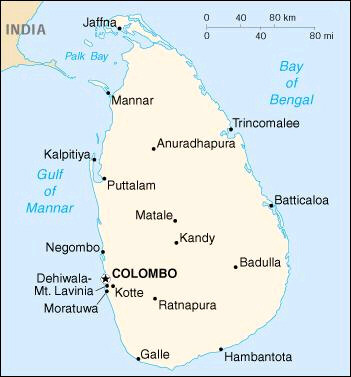

Mahinda Rajapaksa
President since 19 November 2005
President since 19 November 2005