| TAIWAN Taiwan T'ai-wan Joined United Nations: Not applicable- (lost status in 1971 to the People's Republic of China) Human Rights as assured by their constitution Click here Updated 12 October 2012 |
| CAPITAL |
| POPULATION |
| CHIEF OF STATE |
| SELECTION PROCESS |
Taipei
23,234,936 (July 2012 est.)
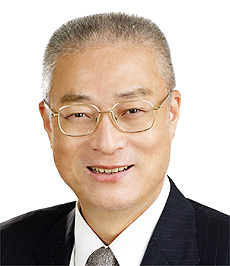
Ma Ying-jeou
President since 20 May 2008
President since 20 May 2008
President and vice president elected on the same ticket by
popular vote for four-year terms (eligible for a second term);
election last held 14 January 2012
Next scheduled election: January 2016
popular vote for four-year terms (eligible for a second term);
election last held 14 January 2012
Next scheduled election: January 2016
HEAD OF GOVERNMENT
SELECTION PROCESS
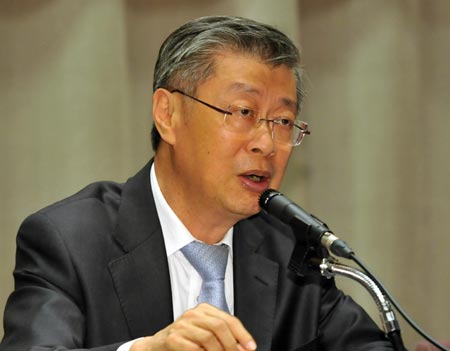
Sean C. Chen
Premier
(President of the Executive Yuan)
Since 6 February 2012
Premier
(President of the Executive Yuan)
Since 6 February 2012
Premier appointed by the president; vice premiers appointed by
the president on the recommendation of the premier
the president on the recommendation of the premier
| DECLARATION OF HUMAN RIGHTS |
| ETHNIC GROUPS |
Taiwanese (including Hakka) 84%, mainland Chinese 14%, aborigine 2%
| RELIGIONS |
Mixture of Buddhist, Confucian, and Taoist 93%, Christian 4.5%, other 2.5%
| GOVERNMENT STRUCTURE |
Multiparty democracy includes central island of Taiwan plus numerous smaller islands near central island and off coast of
China's Fujian Province; Taiwan is divided into 18 counties (hsien, singular and plural), 5 municipalities (shih, singular and
plural), and 2 special municipalities (chuan-shih, singular and plural). Legal system is based on civil law system
Executive: President and vice president elected on the same ticket by popular vote for four-year terms (eligible for a
second term); election last held 14 January 2012 (next to be held in January 2016); premier appointed by the president;
vice premiers appointed by the president on the recommendation of the premier
Legislative: Unicameral Legislative Yuan (113 seats - 73 district members elected by popular vote, 34 at-large members
elected on basis of proportion of islandwide votes received by participating political parties, 6 elected by popular vote
among aboriginal populations; to serve four-year terms); parties must receive 5% of vote to qualify for at-large seats
elections: Legislative Yuan - last held 14 January 2011 (next to be held in January 2016)
Judicial: Judicial Yuan (justices appointed by the president with consent of the Legislative Yuan)
China's Fujian Province; Taiwan is divided into 18 counties (hsien, singular and plural), 5 municipalities (shih, singular and
plural), and 2 special municipalities (chuan-shih, singular and plural). Legal system is based on civil law system
Executive: President and vice president elected on the same ticket by popular vote for four-year terms (eligible for a
second term); election last held 14 January 2012 (next to be held in January 2016); premier appointed by the president;
vice premiers appointed by the president on the recommendation of the premier
Legislative: Unicameral Legislative Yuan (113 seats - 73 district members elected by popular vote, 34 at-large members
elected on basis of proportion of islandwide votes received by participating political parties, 6 elected by popular vote
among aboriginal populations; to serve four-year terms); parties must receive 5% of vote to qualify for at-large seats
elections: Legislative Yuan - last held 14 January 2011 (next to be held in January 2016)
Judicial: Judicial Yuan (justices appointed by the president with consent of the Legislative Yuan)
| LANGUAGES |
Mandarin Chinese (official), Taiwanese (Min), Hakka dialects
| BRIEF HISTORY |
Taiwan is estimated by anthropologists to have been populated for approximately 30,000 years. Little is known about
the original inhabitants, but distinctive jadeware, and corded pottery of the Changpin, Puyuma and Tapenkeng
(Dapenkeng) cultures show a marked diversity in the island's early inhabitants. Today's Taiwan's aboriginal peoples are
classified as belonging to the Austronesian ethno-linguistic group of people, a linguistic group that stretches as far west as
Madagascar, to Easter Island in the east and to New Zealand in the south with Taiwan as the northern most point.
Austronesian culture on Taiwan begins about 4,000 B.C. Several entries that may refer to Taiwan appear in Chinese
historical records, but otherwise no records exist of Taiwan in the early period. Between 607 and 610, some generals of
Sui Dynasty embarked on several military operations on Liuqiu, described in the Book of Sui. Many scholars think that
the Liuqiu of the Sui Dynasty was what is the island of Taiwan. In 1292, Kublai Khan of the Yuan Dynasty tried to force
minorities in Yizhou to pay tribute. Between 1335 and 1340, Wang Dayuan wrote a book which describes Liuqiu after
he had visited it. In 1375, the Ming Dynasty dispatched a delegation to the now Ryūkyū Islands. Thereafter the Han
referred to the Ryūkyū Islands as "Liuqiu" and an island south of the Ryūkyū Islands as "little Liuqiu" which may be the
island of Taiwan. Between 1403 and 1424, the great fleet of Ming Dynasty's admiral Zheng He possibly visited Taiwan.
Portuguese sailors, passing Taiwan in 1544, first jotted in a ship's log the name of the island "Ilha Formosa", meaning
Beautiful Island. In 1582 the survivors of a Portuguese shipwreck spent ten weeks battling malaria and aborigines before
returning to Macau on a raft. Dutch traders, in search of an Asian base first arrived on the island at the request of the
Ming court in 1623 to use the island as a base for Dutch commerce with Japan and the coastal areas of China. The
Spanish and allies established a settlement at Santissima Trinidad, building Fort San Salvador on the northwest coast of
Taiwan near Keelung in 1626 which they occupied until 1642 when they were driven out by a joint Dutch-Aborigine
invasion force. They also built a fort in Tamsui (1628) but already abandoned it in 1638. The Dutch later built Fort
Anthonio here (1642), which still stands (now part of the Fort San Domingo museum complex). The Dutch East India
Company (VOC) administered the island and its predominantly aboriginal population until 1662, setting up a tax system,
schools to teach romanized script of aboriginal languages and evangelizing. Japan had sought to claim sovereignty over
Taiwan (known as Takayama Koku) since 1592, when Toyotomi Hideyoshi undertook a policy of overseas expansion
and extending Japanese influence southward [1]. Korea, to the west, was invaded and an attempt to invade Taiwan and
subsequent invasion attempts were to be unsuccessful due mainly to disease and attacks by aborigines on the island. In
1609, the Tokugawa Shogunate sent Haruno Arima on an exploratory mission of the island. In 1616, Murayama Toan
led an unsuccessful invasion of the island. In 1871, an Okinawan vessel shipwrecked on the southern tip of Taiwan and
the crew of 54 were beheaded by the Botan aborigines. When Japan sought compensation from Qing China, the court
rejected compensation on the account that they didn't have jurisdiction over the island. This was to lead to Japan testing
the situation for colonizing the island and in 1874 an expedition force of 3,000 troops were sent to the island . It was not
until the defeat of the Chinese navy during the First Sino-Japanese War in 1894-95 was Japan to finally realize
possession of Taiwan and the shifting of Asian dominance from China to Japan. The Treaty of Shimonoseki was signed
in 1895 ceding Taiwan and the Pescadores over to Japan, which would rule the island for 50 years until its defeat in
World War II. Chinese Nationalist Party (Kuomintang) military occupation of Taiwan began on October 25, 1945 with
the surrender of Japanese troops. During the immediate postwar period, the Kuomintang (KMT) administration on
Taiwan was repressive and extremely corrupt compared with the previous Japanese rule, leading to local discontent.
Anti-mainlander violence flared on February 28, 1947, prompted by an incident in which a cigarette seller was injured
and a passerby was indiscriminately shot dead by Nationalist authorities (Kerr, 1966; pp. 254-255). For several weeks
after the February 28 Incident the rebels held control of much of the island. Feigning negotiation, the Nationalists
assembled a large military force (carried on United States naval vessels) that attacked Taiwan, massacring nearly 30,000
Taiwanese and imprisoning thousands of others. In October 1949 the People's Republic of China (P.R.C.) was founded
on the mainland by the victorious communists; several months before, Chiang Kai-shek had established a "provisional"
ROC capital in Taipei and moved his government there from Nanjing, thus becoming a government in exile. Under
Nationalist rule, the mainlanders dominated the government and civil service forcing 37,000 Taiwanese out of the
government sector. In the 1952 San Francisco Peace Treaty, Japan renounced all right, claim, and title to Taiwan, but
no "receiving country" was specified. Hence, although Chiang Kai-shek's ROC government retained its position as the
sole legal government of China in the world community, it was not internationally recognized as the legal government of
Taiwan. The introduction of popular elections in Taiwan means that except for the most extreme Taiwan independence
supporters, supporters of the popular sovereignty theory no longer see a conflict between this theory of sovereignty and
the ROC's position that it is the current sovereign government of Taiwan, Kinmen, the Pescadores and the Matsu
Islands. In fact, Chen Shui-bian has often promoted the popular sovereignty theory by emphasizing it in his speeches.
Nevertheless, under international law, the consideration of "territorial sovereignty" is a completely separate issue, and for
the ROC to claim the territorial sovereignty of Formosa and the Pescadores, it would have to produce (1) international
treaty references which clearly show that the territorial sovereignty of these areas has been awarded to the ROC, and
(2) relevant documentation to prove that these areas have been incorporated into the ROC national territory via the
provisions of Article 4 of the ROC Constitution. Since the ROC government is unable to produce these legal references,
so it is not recognized as a sovereign nation by the world community or the United Nations. Recent allegations about
corruption inside the First Family had led to three recall motions votes in the Legislative Yuan aimed at ousting President
Chen Shui-bian. In the presidential election in May 2008, KMT candidate Ma Ying-jeou ran on a platform supporting
friendlier relations with mainland China and economic reforms, and defeated DPP candidate Frank Hsieh with 58.48%
of the vote. On the same day President Chen left office, losing presidential immunity, the Supreme Prosecutor's Office
announced that they were launching an inquiry into corruption charges regarding Chen. Ma was re-elected, and the
KMT retained its majority in the Legislative Yuan, in combined elections in January 2012.
Sources: Wikipedia: History of Taiwan
the original inhabitants, but distinctive jadeware, and corded pottery of the Changpin, Puyuma and Tapenkeng
(Dapenkeng) cultures show a marked diversity in the island's early inhabitants. Today's Taiwan's aboriginal peoples are
classified as belonging to the Austronesian ethno-linguistic group of people, a linguistic group that stretches as far west as
Madagascar, to Easter Island in the east and to New Zealand in the south with Taiwan as the northern most point.
Austronesian culture on Taiwan begins about 4,000 B.C. Several entries that may refer to Taiwan appear in Chinese
historical records, but otherwise no records exist of Taiwan in the early period. Between 607 and 610, some generals of
Sui Dynasty embarked on several military operations on Liuqiu, described in the Book of Sui. Many scholars think that
the Liuqiu of the Sui Dynasty was what is the island of Taiwan. In 1292, Kublai Khan of the Yuan Dynasty tried to force
minorities in Yizhou to pay tribute. Between 1335 and 1340, Wang Dayuan wrote a book which describes Liuqiu after
he had visited it. In 1375, the Ming Dynasty dispatched a delegation to the now Ryūkyū Islands. Thereafter the Han
referred to the Ryūkyū Islands as "Liuqiu" and an island south of the Ryūkyū Islands as "little Liuqiu" which may be the
island of Taiwan. Between 1403 and 1424, the great fleet of Ming Dynasty's admiral Zheng He possibly visited Taiwan.
Portuguese sailors, passing Taiwan in 1544, first jotted in a ship's log the name of the island "Ilha Formosa", meaning
Beautiful Island. In 1582 the survivors of a Portuguese shipwreck spent ten weeks battling malaria and aborigines before
returning to Macau on a raft. Dutch traders, in search of an Asian base first arrived on the island at the request of the
Ming court in 1623 to use the island as a base for Dutch commerce with Japan and the coastal areas of China. The
Spanish and allies established a settlement at Santissima Trinidad, building Fort San Salvador on the northwest coast of
Taiwan near Keelung in 1626 which they occupied until 1642 when they were driven out by a joint Dutch-Aborigine
invasion force. They also built a fort in Tamsui (1628) but already abandoned it in 1638. The Dutch later built Fort
Anthonio here (1642), which still stands (now part of the Fort San Domingo museum complex). The Dutch East India
Company (VOC) administered the island and its predominantly aboriginal population until 1662, setting up a tax system,
schools to teach romanized script of aboriginal languages and evangelizing. Japan had sought to claim sovereignty over
Taiwan (known as Takayama Koku) since 1592, when Toyotomi Hideyoshi undertook a policy of overseas expansion
and extending Japanese influence southward [1]. Korea, to the west, was invaded and an attempt to invade Taiwan and
subsequent invasion attempts were to be unsuccessful due mainly to disease and attacks by aborigines on the island. In
1609, the Tokugawa Shogunate sent Haruno Arima on an exploratory mission of the island. In 1616, Murayama Toan
led an unsuccessful invasion of the island. In 1871, an Okinawan vessel shipwrecked on the southern tip of Taiwan and
the crew of 54 were beheaded by the Botan aborigines. When Japan sought compensation from Qing China, the court
rejected compensation on the account that they didn't have jurisdiction over the island. This was to lead to Japan testing
the situation for colonizing the island and in 1874 an expedition force of 3,000 troops were sent to the island . It was not
until the defeat of the Chinese navy during the First Sino-Japanese War in 1894-95 was Japan to finally realize
possession of Taiwan and the shifting of Asian dominance from China to Japan. The Treaty of Shimonoseki was signed
in 1895 ceding Taiwan and the Pescadores over to Japan, which would rule the island for 50 years until its defeat in
World War II. Chinese Nationalist Party (Kuomintang) military occupation of Taiwan began on October 25, 1945 with
the surrender of Japanese troops. During the immediate postwar period, the Kuomintang (KMT) administration on
Taiwan was repressive and extremely corrupt compared with the previous Japanese rule, leading to local discontent.
Anti-mainlander violence flared on February 28, 1947, prompted by an incident in which a cigarette seller was injured
and a passerby was indiscriminately shot dead by Nationalist authorities (Kerr, 1966; pp. 254-255). For several weeks
after the February 28 Incident the rebels held control of much of the island. Feigning negotiation, the Nationalists
assembled a large military force (carried on United States naval vessels) that attacked Taiwan, massacring nearly 30,000
Taiwanese and imprisoning thousands of others. In October 1949 the People's Republic of China (P.R.C.) was founded
on the mainland by the victorious communists; several months before, Chiang Kai-shek had established a "provisional"
ROC capital in Taipei and moved his government there from Nanjing, thus becoming a government in exile. Under
Nationalist rule, the mainlanders dominated the government and civil service forcing 37,000 Taiwanese out of the
government sector. In the 1952 San Francisco Peace Treaty, Japan renounced all right, claim, and title to Taiwan, but
no "receiving country" was specified. Hence, although Chiang Kai-shek's ROC government retained its position as the
sole legal government of China in the world community, it was not internationally recognized as the legal government of
Taiwan. The introduction of popular elections in Taiwan means that except for the most extreme Taiwan independence
supporters, supporters of the popular sovereignty theory no longer see a conflict between this theory of sovereignty and
the ROC's position that it is the current sovereign government of Taiwan, Kinmen, the Pescadores and the Matsu
Islands. In fact, Chen Shui-bian has often promoted the popular sovereignty theory by emphasizing it in his speeches.
Nevertheless, under international law, the consideration of "territorial sovereignty" is a completely separate issue, and for
the ROC to claim the territorial sovereignty of Formosa and the Pescadores, it would have to produce (1) international
treaty references which clearly show that the territorial sovereignty of these areas has been awarded to the ROC, and
(2) relevant documentation to prove that these areas have been incorporated into the ROC national territory via the
provisions of Article 4 of the ROC Constitution. Since the ROC government is unable to produce these legal references,
so it is not recognized as a sovereign nation by the world community or the United Nations. Recent allegations about
corruption inside the First Family had led to three recall motions votes in the Legislative Yuan aimed at ousting President
Chen Shui-bian. In the presidential election in May 2008, KMT candidate Ma Ying-jeou ran on a platform supporting
friendlier relations with mainland China and economic reforms, and defeated DPP candidate Frank Hsieh with 58.48%
of the vote. On the same day President Chen left office, losing presidential immunity, the Supreme Prosecutor's Office
announced that they were launching an inquiry into corruption charges regarding Chen. Ma was re-elected, and the
KMT retained its majority in the Legislative Yuan, in combined elections in January 2012.
Sources: Wikipedia: History of Taiwan
| ECONOMIC OVERVIEW |
The second National Assembly, elected in 1991, was composed of 325 members. The majority was elected directly;
100 were chosen from party slates in proportion to the popular vote. This National Assembly amended the constitution
in 1994, paving the way for the direct election of the president and vice president that was held in March, 1996. The
National Assembly retained the authority to amend the constitution, to recall or to impeach the president or vice
president, and to ratify select senior-level presidential appointments. In April 2000, the members of the National
Assembly voted to permit their terms of office to expire without holding new elections. They also determined that such
an election would be called in the event the National Assembly is needed to decide a presidential recall or a
constitutional amendment. In recent years, the National Assembly has handed most of its powers to the Legislative
Yuan, including the power of impeachment. In 2005, the National Assembly permanently abolished itself by ratifying a
constitution amendment passed by the Legislative Yuan. Amending the ROC constitution now requires the approval of
three-fourths of the quorum of members of the Legislative Yuan. This quorum requires at least three-fourths of all
members of the Legislature. After passing by the legislature, the amendment needs ratification from at least fifty percent
of all eligible voters of the ROC regardless of voter turnout.
According to a survey conducted in March 2009, 49% of the respondents consider themselves as Taiwanese only, and
44% of the respondents consider themselves as Taiwanese and Chinese. 3% consider themselves as only Chinese.
Another survey, conducted in Taiwan in July 2009, showed that 82.8% of respondents consider that Taiwan and China
are two separate countries developing each on its own. A recent survey conducted in December 2009 showed that
62% of the respondents consider themselves as Taiwanese only, and 22% of the respondents consider themselves as
both Taiwanese and Chinese. 8% consider themselves as only Chinese. The survey also shows that among 18–29 year
old respondents, 75% consider themselves as Taiwanese only.
Source: Wikipedia: Politics of the Republic of China
100 were chosen from party slates in proportion to the popular vote. This National Assembly amended the constitution
in 1994, paving the way for the direct election of the president and vice president that was held in March, 1996. The
National Assembly retained the authority to amend the constitution, to recall or to impeach the president or vice
president, and to ratify select senior-level presidential appointments. In April 2000, the members of the National
Assembly voted to permit their terms of office to expire without holding new elections. They also determined that such
an election would be called in the event the National Assembly is needed to decide a presidential recall or a
constitutional amendment. In recent years, the National Assembly has handed most of its powers to the Legislative
Yuan, including the power of impeachment. In 2005, the National Assembly permanently abolished itself by ratifying a
constitution amendment passed by the Legislative Yuan. Amending the ROC constitution now requires the approval of
three-fourths of the quorum of members of the Legislative Yuan. This quorum requires at least three-fourths of all
members of the Legislature. After passing by the legislature, the amendment needs ratification from at least fifty percent
of all eligible voters of the ROC regardless of voter turnout.
According to a survey conducted in March 2009, 49% of the respondents consider themselves as Taiwanese only, and
44% of the respondents consider themselves as Taiwanese and Chinese. 3% consider themselves as only Chinese.
Another survey, conducted in Taiwan in July 2009, showed that 82.8% of respondents consider that Taiwan and China
are two separate countries developing each on its own. A recent survey conducted in December 2009 showed that
62% of the respondents consider themselves as Taiwanese only, and 22% of the respondents consider themselves as
both Taiwanese and Chinese. 8% consider themselves as only Chinese. The survey also shows that among 18–29 year
old respondents, 75% consider themselves as Taiwanese only.
Source: Wikipedia: Politics of the Republic of China
| POLITICAL CLIMATE |
Taiwan has a dynamic capitalist economy with gradually decreasing government guidance of investment and foreign
trade. In keeping with this trend, some large, state-owned banks and industrial firms have been privatized. Exports, led
by electronics, machinery, and petrochemicals have provided the primary impetus for economic development. This
heavy dependence on exports exposes the economy to fluctuations in world demand. In 2009, Taiwan's GDP
contracted 1.9%, due primarily to a 20% year-on-year decline in exports. In 2010 GDP grew 10.9%, as exports
returned to the level of previous years, and in 2011, grew 5.2%. However, 2012 growth will likely be less, according
to most forecasters, because of softening global demand. Taiwan's diplomatic isolation, low birth rate, and rapidly aging
population are major long-term challenges. Free trade agreements have proliferated in East Asia over the past several
years, but so far Taiwan has been excluded from this greater economic integration largely because of its diplomatic
status with the exception of the landmark Economic Cooperation Framework Agreement (ECFA) signed with China in
June 2010. The MA administration has said that the ECFA will serve as a stepping stone toward trade pacts with other
regional partners, and negotiations on a deal with Singapore began this year. Follow-on components of ECFA,
including deals on trade in goods, services, and investment, have yet to be completed. Taiwan's Total Fertility rate of
just over one child per woman is among the lowest in the world, raising the prospect of future labor shortages, falling
domestic demand, and declining tax revenues. Taiwan's population is aging quickly, with the number of people over 65
accounting for 10.9% of the island's total population as of 2011. The island runs a large trade surplus, and its foreign
reserves are the world's fourth largest, behind China, Japan, and Russia. Since 2005 China has overtaken the US to
become Taiwan's second-largest source of imports after Japan. China is also the island's number one destination for
foreign direct investment. Three financial memorandums of understanding, covering banking, securities, and insurance,
took effect in mid-January 2010, opening the island to greater investments from the mainland's financial firms and
institutional investors, and providing new opportunities for Taiwan financial firms to operate in China. Closer economic
links with the mainland bring greater opportunities for the Taiwan economy, but also poses new challenges as the island
becomes more economically dependent on China while political differences remain unresolved.
Sources: CIA World Factbook (select Taiwan)
trade. In keeping with this trend, some large, state-owned banks and industrial firms have been privatized. Exports, led
by electronics, machinery, and petrochemicals have provided the primary impetus for economic development. This
heavy dependence on exports exposes the economy to fluctuations in world demand. In 2009, Taiwan's GDP
contracted 1.9%, due primarily to a 20% year-on-year decline in exports. In 2010 GDP grew 10.9%, as exports
returned to the level of previous years, and in 2011, grew 5.2%. However, 2012 growth will likely be less, according
to most forecasters, because of softening global demand. Taiwan's diplomatic isolation, low birth rate, and rapidly aging
population are major long-term challenges. Free trade agreements have proliferated in East Asia over the past several
years, but so far Taiwan has been excluded from this greater economic integration largely because of its diplomatic
status with the exception of the landmark Economic Cooperation Framework Agreement (ECFA) signed with China in
June 2010. The MA administration has said that the ECFA will serve as a stepping stone toward trade pacts with other
regional partners, and negotiations on a deal with Singapore began this year. Follow-on components of ECFA,
including deals on trade in goods, services, and investment, have yet to be completed. Taiwan's Total Fertility rate of
just over one child per woman is among the lowest in the world, raising the prospect of future labor shortages, falling
domestic demand, and declining tax revenues. Taiwan's population is aging quickly, with the number of people over 65
accounting for 10.9% of the island's total population as of 2011. The island runs a large trade surplus, and its foreign
reserves are the world's fourth largest, behind China, Japan, and Russia. Since 2005 China has overtaken the US to
become Taiwan's second-largest source of imports after Japan. China is also the island's number one destination for
foreign direct investment. Three financial memorandums of understanding, covering banking, securities, and insurance,
took effect in mid-January 2010, opening the island to greater investments from the mainland's financial firms and
institutional investors, and providing new opportunities for Taiwan financial firms to operate in China. Closer economic
links with the mainland bring greater opportunities for the Taiwan economy, but also poses new challenges as the island
becomes more economically dependent on China while political differences remain unresolved.
Sources: CIA World Factbook (select Taiwan)
| INTERNATIONAL DISPUTES |
Involved in complex dispute with China, Malaysia, Philippines, Vietnam, and possibly Brunei over the Spratly Islands;
the 2002 "Declaration on the Conduct of Parties in the South China Sea" has eased tensions but falls short of a legally
binding "code of conduct" desired by several of the disputants; Paracel Islands are occupied by China, but claimed by
Taiwan and Vietnam; in 2003, China and Taiwan became more vocal in rejecting both Japan's claims to the uninhabited
islands of the Senkaku-shoto (Diaoyu Tai) and Japan's unilaterally declared exclusive economic zone in the East China
Sea where all parties engage in hydrocarbon prospecting
the 2002 "Declaration on the Conduct of Parties in the South China Sea" has eased tensions but falls short of a legally
binding "code of conduct" desired by several of the disputants; Paracel Islands are occupied by China, but claimed by
Taiwan and Vietnam; in 2003, China and Taiwan became more vocal in rejecting both Japan's claims to the uninhabited
islands of the Senkaku-shoto (Diaoyu Tai) and Japan's unilaterally declared exclusive economic zone in the East China
Sea where all parties engage in hydrocarbon prospecting


| TRAFFICKING IN PERSONS |
None reported.
| ILLICIT DRUGS |
Regional transit point for heroin, methamphetamine, and precursor chemicals; transshipment point for drugs to Japan;
major problem with domestic consumption of methamphetamine and heroin; rising problems with use of ketamine and
club drugs
major problem with domestic consumption of methamphetamine and heroin; rising problems with use of ketamine and
club drugs
| HUMAN RIGHTS STATEMENTS, ANALYSIS AND CRITIQUES |
2011 Human Rights Reports: Taiwan*
Bureau of Democracy, Human Rights, and Labor
2011 Country Reports on Human Rights Practices
May 25, 2012
Taiwan is governed by a president and a parliament selected in multiparty elections. In March 2008 voters elected as President Ma
Ying-jeou of the Kuomintang Party (KMT) in an election that international observers considered free and fair. Security forces report to
civilian authorities.
Principal human rights problems reported during the year were corruption and violence against women and children.
During the year the authorities indicted more than 400 officials, including 54 high-ranking officials, on corruption charges. There were
no reports of impunity.
Click here to read more »
Bureau of Democracy, Human Rights, and Labor
2011 Country Reports on Human Rights Practices
May 25, 2012
Taiwan is governed by a president and a parliament selected in multiparty elections. In March 2008 voters elected as President Ma
Ying-jeou of the Kuomintang Party (KMT) in an election that international observers considered free and fair. Security forces report to
civilian authorities.
Principal human rights problems reported during the year were corruption and violence against women and children.
During the year the authorities indicted more than 400 officials, including 54 high-ranking officials, on corruption charges. There were
no reports of impunity.
Click here to read more »
10 March 2011
Core document forming part of the reports of States parties China
Core document accompanying the second report of the People’s Republic of China on its implementation of the
International Covenant on Economic, Social and Cultural Rights
2. Basic political systems
The system of people’s congresses, the system of multi-party cooperation and political consultation under the leadership of the
Communist Party of China (CPC), and the system of regional national (ethnic) autonomy are the three major basic political systems of
the People’s Republic of China.
(a) The system of people’s congresses
The system of people’s congresses is a basic political system in China. All power in the People’s Republic of China belongs to
the people, who exercise State power through the National People’s Congress and local people’s congresses at all levels, formulating
laws and regulations and resolving important issues at the State and local levels. The administrative, judicial and supervisory organs of
the State are created by the people’s congresses, and are responsible to and supervised by them. The people’s congresses are in turn
created by the people through democratic elections, in which all citizens 18 years of age and above have the right to vote and to stand
for election. People’s congresses at the county and township levels are directly elected by the people. Voter turnout rates have
consistently exceeded 90 per cent for many years.
(b) The system of multi-party cooperation and political consultation
The system of multi-party cooperation and political consultation under the leadership of the CPC is the political party system of
the People’s Republic of China. In addition to the CPC, a total of eight democratic parties (the Revolutionary Committee of the
Chinese Guomindang, the China Democratic League, the China Democratic National Construction Association, the China Association
for Promoting Democracy, the Chinese Peasants’ and Workers’ Democratic Party, the China Party for Public Interest, the Jiusan
Society, and the Taiwan Democratic Self-Government League) participate with the ruling party in managing the affairs of State and in
drafting and implementing laws and regulations. The Chinese People’s Political Consultative Conference is the main forum for multi-
party cooperation and political consultation under the leadership of the CPC.
Click here to read more »
Core document forming part of the reports of States parties China
Core document accompanying the second report of the People’s Republic of China on its implementation of the
International Covenant on Economic, Social and Cultural Rights
2. Basic political systems
The system of people’s congresses, the system of multi-party cooperation and political consultation under the leadership of the
Communist Party of China (CPC), and the system of regional national (ethnic) autonomy are the three major basic political systems of
the People’s Republic of China.
(a) The system of people’s congresses
The system of people’s congresses is a basic political system in China. All power in the People’s Republic of China belongs to
the people, who exercise State power through the National People’s Congress and local people’s congresses at all levels, formulating
laws and regulations and resolving important issues at the State and local levels. The administrative, judicial and supervisory organs of
the State are created by the people’s congresses, and are responsible to and supervised by them. The people’s congresses are in turn
created by the people through democratic elections, in which all citizens 18 years of age and above have the right to vote and to stand
for election. People’s congresses at the county and township levels are directly elected by the people. Voter turnout rates have
consistently exceeded 90 per cent for many years.
(b) The system of multi-party cooperation and political consultation
The system of multi-party cooperation and political consultation under the leadership of the CPC is the political party system of
the People’s Republic of China. In addition to the CPC, a total of eight democratic parties (the Revolutionary Committee of the
Chinese Guomindang, the China Democratic League, the China Democratic National Construction Association, the China Association
for Promoting Democracy, the Chinese Peasants’ and Workers’ Democratic Party, the China Party for Public Interest, the Jiusan
Society, and the Taiwan Democratic Self-Government League) participate with the ruling party in managing the affairs of State and in
drafting and implementing laws and regulations. The Chinese People’s Political Consultative Conference is the main forum for multi-
party cooperation and political consultation under the leadership of the CPC.
Click here to read more »
China Media Bulletin: Issue No. 66
Freedom House’s weekly update of press freedom and censorship news related to the People’s Republic of China
Issue No. 66: July 26, 2012
BEYOND CHINA
Taiwan regulator grants conditional approval for media merger
Taiwan’s National Communications Commission (NCC) on July 25 conditionally approved Want Want Broadband’s proposal to
purchase China Network Systems (CNS), the country’s second-largest cable provider. Want Want Broadband is a subsidiary of the
Want Want Group conglomerate, which is known for its friendly relations with the Chinese government and state-run media outlets
(see CMB No. 55). The NCC said it would give its final approval after Want Want chairman Tsai Eng-meng comes up with a plan
to ensure the editorial independence of his television news assets. A Want Want representative told Reuters that the group would
need to evaluate whether the regulator’s conditions were achievable. Amid concerns about Tsai’s political stance and his influence
over Taiwan’s media landscape, the proposed merger has been under review for more than a year and a half. In October 2011,
lawmaker Hsieh Kuo-liang of the ruling Nationalist Party (KMT) sued New Talk reporter Lin Chauyi for criminal defamation, after
he wrote an article implying that Hsieh had pressed the NCC to expedite its review (see CMB No. 38). On July 24, the Taipei
district prosecutor’s office issued a final ruling in Lin’s favor.
Click here to read more»
Freedom House’s weekly update of press freedom and censorship news related to the People’s Republic of China
Issue No. 66: July 26, 2012
BEYOND CHINA
Taiwan regulator grants conditional approval for media merger
Taiwan’s National Communications Commission (NCC) on July 25 conditionally approved Want Want Broadband’s proposal to
purchase China Network Systems (CNS), the country’s second-largest cable provider. Want Want Broadband is a subsidiary of the
Want Want Group conglomerate, which is known for its friendly relations with the Chinese government and state-run media outlets
(see CMB No. 55). The NCC said it would give its final approval after Want Want chairman Tsai Eng-meng comes up with a plan
to ensure the editorial independence of his television news assets. A Want Want representative told Reuters that the group would
need to evaluate whether the regulator’s conditions were achievable. Amid concerns about Tsai’s political stance and his influence
over Taiwan’s media landscape, the proposed merger has been under review for more than a year and a half. In October 2011,
lawmaker Hsieh Kuo-liang of the ruling Nationalist Party (KMT) sued New Talk reporter Lin Chauyi for criminal defamation, after
he wrote an article implying that Hsieh had pressed the NCC to expedite its review (see CMB No. 38). On July 24, the Taipei
district prosecutor’s office issued a final ruling in Lin’s favor.
Click here to read more»
World Report 2012
24 May 2012
Taiwan handed down more death sentences in 2011 than in any year in the past decade, despite stating that its long-term goal was
abolition of the death penalty. Restrictions on freedom of assembly remained, with no progress made towards a relaxation of existing,
stringent laws. The authorities did little to protect the housing rights of farmers across the island, at times colluding in their eviction.
Background
In 2009, Taiwan ratified the ICCPR and the International Covenant on Economic, Social and Cultural Rights. Despite passing an
Implementation Act, which required the government to bring all laws, regulations, ordinances and administrative measures in line with
the covenants before 10 December 2011, Taiwan had yet to amend or abolish the majority of those not in compliance.
Death penalty
Five people were executed on 4 March – just one month after President Ma apologized for the 1997 execution of an innocent man. As
of November, there were 55 inmates with confirmed death sentences.
On 28 July, the Supreme Court rejected Chiou-Ho-shun’s final appeal against his death sentence. On 25 August, the Prosecutor
General rejected a request to seek an extraordinary appeal for a retrial. Chiou Ho-shun had been sentenced to death for robbery,
kidnapping, blackmail and murder in 1989. With no material evidence, his conviction was based on confessions he and co-defendants
alleged were extracted through torture. His case had bounced between the High Court and the Supreme Court for more than two
decades.
Justice system
As a step towards ensuring judicial independence and transparency, the Legislative Yuan passed the Judges Act in June to make it
easier to remove judges found to be incompetent or corrupt.
Freedom of expression and assembly
Despite continued public demand, there was no progress on the government’s proposal to amend the Assembly and Parade Law. The
law allows police to forcibly disperse peaceful protesters, and places other restrictions on peaceful demonstrations.
Click here to read more »
24 May 2012
Taiwan handed down more death sentences in 2011 than in any year in the past decade, despite stating that its long-term goal was
abolition of the death penalty. Restrictions on freedom of assembly remained, with no progress made towards a relaxation of existing,
stringent laws. The authorities did little to protect the housing rights of farmers across the island, at times colluding in their eviction.
Background
In 2009, Taiwan ratified the ICCPR and the International Covenant on Economic, Social and Cultural Rights. Despite passing an
Implementation Act, which required the government to bring all laws, regulations, ordinances and administrative measures in line with
the covenants before 10 December 2011, Taiwan had yet to amend or abolish the majority of those not in compliance.
Death penalty
Five people were executed on 4 March – just one month after President Ma apologized for the 1997 execution of an innocent man. As
of November, there were 55 inmates with confirmed death sentences.
On 28 July, the Supreme Court rejected Chiou-Ho-shun’s final appeal against his death sentence. On 25 August, the Prosecutor
General rejected a request to seek an extraordinary appeal for a retrial. Chiou Ho-shun had been sentenced to death for robbery,
kidnapping, blackmail and murder in 1989. With no material evidence, his conviction was based on confessions he and co-defendants
alleged were extracted through torture. His case had bounced between the High Court and the Supreme Court for more than two
decades.
Justice system
As a step towards ensuring judicial independence and transparency, the Legislative Yuan passed the Judges Act in June to make it
easier to remove judges found to be incompetent or corrupt.
Freedom of expression and assembly
Despite continued public demand, there was no progress on the government’s proposal to amend the Assembly and Parade Law. The
law allows police to forcibly disperse peaceful protesters, and places other restrictions on peaceful demonstrations.
Click here to read more »
Getting It Right on China
by Sophie Richardson
Published in: The Huffington Post
February 18, 2010
"At the State Department...every week is Human Rights Week."
That's what US Secretary of State Hillary Clinton told an audience at Georgetown University in Washington in December. Clinton's
speech, on the heels of President Obama's lofty rhetoric at the Nobel Peace Prize ceremony in Oslo, sought to clarify the
administration's approach to human rights. Clinton laced the speech with tangible accomplishments, ranging from the US's
willingness to rejoin the UN Human Rights Council to pushing for international condemnation of rape as a weapon of war.
But when it came to China, the speech spotlighted the Obama administration's flawed approach. Clinton identified a few of the
human rights problems the US sees in China-minority rights, religious freedom, and freedom of expression-but quickly moved on to
wax nostalgic about the 1995 Beijing Women's Conference.
A year of the Obama administration playing nice to Beijing-while down-playing the deteriorating human rights environment-has left
it stunned by Beijing's hostility. Recent flashpoints include US approval of arms sales to Taiwan (with China's response as inevitable
as death and taxes), Google's protests over internet account hacking, and the Dalai Lama's visit to Washington this month.
Click here to read more »
by Sophie Richardson
Published in: The Huffington Post
February 18, 2010
"At the State Department...every week is Human Rights Week."
That's what US Secretary of State Hillary Clinton told an audience at Georgetown University in Washington in December. Clinton's
speech, on the heels of President Obama's lofty rhetoric at the Nobel Peace Prize ceremony in Oslo, sought to clarify the
administration's approach to human rights. Clinton laced the speech with tangible accomplishments, ranging from the US's
willingness to rejoin the UN Human Rights Council to pushing for international condemnation of rape as a weapon of war.
But when it came to China, the speech spotlighted the Obama administration's flawed approach. Clinton identified a few of the
human rights problems the US sees in China-minority rights, religious freedom, and freedom of expression-but quickly moved on to
wax nostalgic about the 1995 Beijing Women's Conference.
A year of the Obama administration playing nice to Beijing-while down-playing the deteriorating human rights environment-has left
it stunned by Beijing's hostility. Recent flashpoints include US approval of arms sales to Taiwan (with China's response as inevitable
as death and taxes), Google's protests over internet account hacking, and the Dalai Lama's visit to Washington this month.
Click here to read more »
Press Releases
Government pledges to protect girls’ rights
Date: 2012-10-11
Premier Sean Chen urged government agencies to work closely with the Executive Yuan’s Department of Gender Equality to
comprehensively protect girls’ rights, augment their abilities and increase their social opportunities to commemorate the United
Nations’ first annual International Day of the Girl Child today.
The Department of Gender Equality’s objectives, which the premier called on other relevant agencies to pursue as well, include:
Reducing the gender imbalance among newborns
Promulgating gender equality through parenting and family education
Empowering girls to unleash their potential and participate in sports
Protecting girls from violence
Educating girls about health and body image to counter the objectification and commercialization of women and girls in the
media
The premier noted the UN last year called for member states to make a greater effort to address the disadvantages facing female
children worldwide and empower girls, and assure they receive adequate rights and protection. It also declared October 11 the
International Day of the Girl Child. The Legislative Yuan later approved a proposal to designate October 11 Girls’ Day.
Statistics show that girls account for 47.8 percent of the population aged 18 and under, and the distribution of family care,
education and healthcare between genders is by and large similar to that in other age brackets. However, girls are considerably
disadvantaged in terms of personal safety: a disproportionately high number of juvenile victims of violence is female, and
compared to a normal newborn gender ratio of 105-106 males for every 100 females, Taiwan’s figure was 107.9:100 in 2011 and
even reached 113.4:100 for families with three or more children. These facts indicate Taiwanese girls must receive greater
protection, Chen said.
Click here to read more »
Government pledges to protect girls’ rights
Date: 2012-10-11
Premier Sean Chen urged government agencies to work closely with the Executive Yuan’s Department of Gender Equality to
comprehensively protect girls’ rights, augment their abilities and increase their social opportunities to commemorate the United
Nations’ first annual International Day of the Girl Child today.
The Department of Gender Equality’s objectives, which the premier called on other relevant agencies to pursue as well, include:
Reducing the gender imbalance among newborns
Promulgating gender equality through parenting and family education
Empowering girls to unleash their potential and participate in sports
Protecting girls from violence
Educating girls about health and body image to counter the objectification and commercialization of women and girls in the
media
The premier noted the UN last year called for member states to make a greater effort to address the disadvantages facing female
children worldwide and empower girls, and assure they receive adequate rights and protection. It also declared October 11 the
International Day of the Girl Child. The Legislative Yuan later approved a proposal to designate October 11 Girls’ Day.
Statistics show that girls account for 47.8 percent of the population aged 18 and under, and the distribution of family care,
education and healthcare between genders is by and large similar to that in other age brackets. However, girls are considerably
disadvantaged in terms of personal safety: a disproportionately high number of juvenile victims of violence is female, and
compared to a normal newborn gender ratio of 105-106 males for every 100 females, Taiwan’s figure was 107.9:100 in 2011 and
even reached 113.4:100 for families with three or more children. These facts indicate Taiwanese girls must receive greater
protection, Chen said.
Click here to read more »
Phased implementation of a funding method = unconstitutional
Submitted by tahr on Mon, 03/09/2012
Executive Yuan issued a press release on August 30, determined two years ago, the Legislative Yuan has passed as a funding
method will be implemented in phases, some of the provisions will suspend the implementation of, and mention of the Legislative
Yuan to amend law. Provisions in accordance with Article III of the Additional Articles of the Constitution of the Republic of
China, the resolution of the legal case for the Legislative Yuan, the Executive Yuan as difficult of execution, may be made after
reconsideration. The reconsideration the overdue resolved, the failure of the original resolution. Reconsideration, if the resolution of
more than half of the total number of Legislative Yuan members uphold the original the Premier shall accept the resolution, and
administration of the law.
However, the Executive Yuan had proposed amending the law draft, not ready assessment for amending the law views of civil
society are mostly not adopted the legislation during the controversial provisions is yet to do a full discussion. The bill passed by
the Legislative Yuan, the Executive Yuan neither announcement nor taken the practice of constitutional provisions, but self-
selective freeze some of the provisions, the suspension of the purposes. Taiwan Association for Human Rights, Taiwan guardian
democratic platform of Taiwan women connection, the the civilian oversight NHI Union community consensus of the Executive
Yuan a lack of respect for the powers of the Legislative Yuan resolution, in violation of the Constitution of the principle of
separation of behavior and serious infringement of the fundamental rights of the people, issued a solemn condemnation .
Taiwan Association for Human Rights Executive Committee, pointed out that if any of the disputed provisions should postpone
implementation of most of the suspension imposed should be <the Assembly and Parade Law> and <Urban Renewal Act, such as
draconian, but against the rights of the people, for the country, the Executive Yuan Qiu Wencong the bill, said the draconian laws
in accordance with the law, disputed the suspension of the purposes for the bill to protect the rights of the people, but as long as
fundamental the two sets of standards. Legislators Yi-Chen Wu also required to attend the press conference of the Ministry of
Justice Director Description Executive Yuan in the end is the basis on which a law to announce a funding method phased
implementation of, but the Ministry of Justice, the Secretary did not have a positive response.
In 2010, the Executive Yuan reason for making a funding laws or amend, precisely because there is too many owned leakage,
frequent fraud cases and the industry in general abuse the improperly collected to one owned marketing, resulting in the daily lives
of many troubled. However, in 2010, the Legislative Yuan by amending the law, the Executive Yuan has unauthorized bill suspend,
no announcement purposes, empty window of the crisis caused by the old and new law alternating serious. Finally, the Executive
Yuan turned without authorization resolution to October 1 this year, only the purposes of certain provisions in the first, and caused
the executive power is a serious infringement of the legislative power of the constitutional crisis. This practice equal to "veto laws
passed by the Legislative Yuan allow the Executive Yuan freely!
For the Executive Yuan suspend the purposes of the provisions of Article VI, the new amendments adopted by the Executive Yuan
provisions to add more conditions to collect sensitive personal information. Taiwan Association for Human Rights noted that this
amendment is not only contrary to the principle of sensitive personal data shall be arbitrarily collected, more to the collection of
sensitive personal data processing principles and general personal equate obviously inadequate for sensitive personal data protection.
In addition, the Executive Yuan suspend the purposes of the original draft amendments to Article 54, so that the original industry
did not inform the parties collected a capital still not required to fulfill the provisions of the complement inform and allow the
industry to continue to take advantage of such a capital. The Executive Yuan proposed new draft law allows the industry to retain
indirect collect personal information indefinitely, even without the use of beyond destroyed.
Taiwan Association for Human Rights called on again, the provisions of a funding method, not only the Executive Yuan proposed
provisions, to amend the law, it should be re-holistic review, the Executive Yuan was not to re-act with discretion, brewing more
of a capital protection and constitutional crisis!
Attachment:
2010 Legislative Yuan passed a funding method has not yet been carrying out the provisions of
The provisions of the old law of a funding method
Executive Yuan to suspend the implementation of a mention amended owned law provisions
Click here to read more »
Submitted by tahr on Mon, 03/09/2012
Executive Yuan issued a press release on August 30, determined two years ago, the Legislative Yuan has passed as a funding
method will be implemented in phases, some of the provisions will suspend the implementation of, and mention of the Legislative
Yuan to amend law. Provisions in accordance with Article III of the Additional Articles of the Constitution of the Republic of
China, the resolution of the legal case for the Legislative Yuan, the Executive Yuan as difficult of execution, may be made after
reconsideration. The reconsideration the overdue resolved, the failure of the original resolution. Reconsideration, if the resolution of
more than half of the total number of Legislative Yuan members uphold the original the Premier shall accept the resolution, and
administration of the law.
However, the Executive Yuan had proposed amending the law draft, not ready assessment for amending the law views of civil
society are mostly not adopted the legislation during the controversial provisions is yet to do a full discussion. The bill passed by
the Legislative Yuan, the Executive Yuan neither announcement nor taken the practice of constitutional provisions, but self-
selective freeze some of the provisions, the suspension of the purposes. Taiwan Association for Human Rights, Taiwan guardian
democratic platform of Taiwan women connection, the the civilian oversight NHI Union community consensus of the Executive
Yuan a lack of respect for the powers of the Legislative Yuan resolution, in violation of the Constitution of the principle of
separation of behavior and serious infringement of the fundamental rights of the people, issued a solemn condemnation .
Taiwan Association for Human Rights Executive Committee, pointed out that if any of the disputed provisions should postpone
implementation of most of the suspension imposed should be <the Assembly and Parade Law> and <Urban Renewal Act, such as
draconian, but against the rights of the people, for the country, the Executive Yuan Qiu Wencong the bill, said the draconian laws
in accordance with the law, disputed the suspension of the purposes for the bill to protect the rights of the people, but as long as
fundamental the two sets of standards. Legislators Yi-Chen Wu also required to attend the press conference of the Ministry of
Justice Director Description Executive Yuan in the end is the basis on which a law to announce a funding method phased
implementation of, but the Ministry of Justice, the Secretary did not have a positive response.
In 2010, the Executive Yuan reason for making a funding laws or amend, precisely because there is too many owned leakage,
frequent fraud cases and the industry in general abuse the improperly collected to one owned marketing, resulting in the daily lives
of many troubled. However, in 2010, the Legislative Yuan by amending the law, the Executive Yuan has unauthorized bill suspend,
no announcement purposes, empty window of the crisis caused by the old and new law alternating serious. Finally, the Executive
Yuan turned without authorization resolution to October 1 this year, only the purposes of certain provisions in the first, and caused
the executive power is a serious infringement of the legislative power of the constitutional crisis. This practice equal to "veto laws
passed by the Legislative Yuan allow the Executive Yuan freely!
For the Executive Yuan suspend the purposes of the provisions of Article VI, the new amendments adopted by the Executive Yuan
provisions to add more conditions to collect sensitive personal information. Taiwan Association for Human Rights noted that this
amendment is not only contrary to the principle of sensitive personal data shall be arbitrarily collected, more to the collection of
sensitive personal data processing principles and general personal equate obviously inadequate for sensitive personal data protection.
In addition, the Executive Yuan suspend the purposes of the original draft amendments to Article 54, so that the original industry
did not inform the parties collected a capital still not required to fulfill the provisions of the complement inform and allow the
industry to continue to take advantage of such a capital. The Executive Yuan proposed new draft law allows the industry to retain
indirect collect personal information indefinitely, even without the use of beyond destroyed.
Taiwan Association for Human Rights called on again, the provisions of a funding method, not only the Executive Yuan proposed
provisions, to amend the law, it should be re-holistic review, the Executive Yuan was not to re-act with discretion, brewing more
of a capital protection and constitutional crisis!
Attachment:
2010 Legislative Yuan passed a funding method has not yet been carrying out the provisions of
The provisions of the old law of a funding method
Executive Yuan to suspend the implementation of a mention amended owned law provisions
Click here to read more »
A Brief Report on the Work of the Control Yuan
Taiwan, Republic of China
2011
01 May 2012
2011: Our Work at a Glance
Human Rights Protection
In 2011, the government passed the Enforcement Act of Convention on the Elimination of All forms of Discrimination against
Women (CEDAW). This followed the International Covenant on Economic, Social, and Cultural in 2009. The Control Yuan
monitors all government agencies to ensure that their conduct remains in accordance with the laws and conforms to human
rights standards.
In 2011, 86.7 percent of individual complaints were related to human rights, and we completed 316 investigation reports and
proposed 109 corrective measures against particular government agencies.
Protecting human rights has long been crucial to assessing a nation's democracy and legal system and has always been a
significant issue in the international community. In May 2000, the Human Rights Protection Committee (HRPC) of the Control
Yuan was established mainly to focus both on human rights protection in Taiwan and on the latest human rights issues at home
and abroad.
In 2011 the Control Yuan achieved the following in Human Rights Protection:
• The Control Yuan attended the deliberation in the Legislative Yuan on the draft law to implement the Convention on the
Elimination of All Forms of Discrimination against Women (CEDAW). And the Control Yuan was invited by the Ministry of
Interior to participate in the meeting on the policy (draft) of gender equality. Also, HRPC has been assigned to manage the affairs
related to the fight for gender equality.
• On Sept. 6 to Sept. 8, 2011, Control Yuan members participated in the 16th Annual Meeting and Biennial Conference of the Asia
Pacific Forum of National Human Rights Institutions in Bangkok, Thailand, to enhance the Control Yuan's involvement with
international human rights organizations.
Following the event, the Control Yuan members visited the National Human Rights Commission of Thailand and the Office of the
Ombudsman in
Thailand for discussions between the offices of the two sides.
• The Control Yuan worked with domestic human rights institutions, including the Chinese Association for Human Rights,
Covenants Watch (International Covenant on Economic, Social and Cultural Rights and International Covenant on Civil and
Political Rights, otherwise known as the two Covenants), The Child Welfare League Foundation, The Humanistic Education
Foundation and The Garden of Hope Foundation. The issues of human rights violations in Taiwan were discussed in several
meetings.
Click here to read more »
Taiwan, Republic of China
2011
01 May 2012
2011: Our Work at a Glance
Human Rights Protection
In 2011, the government passed the Enforcement Act of Convention on the Elimination of All forms of Discrimination against
Women (CEDAW). This followed the International Covenant on Economic, Social, and Cultural in 2009. The Control Yuan
monitors all government agencies to ensure that their conduct remains in accordance with the laws and conforms to human
rights standards.
In 2011, 86.7 percent of individual complaints were related to human rights, and we completed 316 investigation reports and
proposed 109 corrective measures against particular government agencies.
Protecting human rights has long been crucial to assessing a nation's democracy and legal system and has always been a
significant issue in the international community. In May 2000, the Human Rights Protection Committee (HRPC) of the Control
Yuan was established mainly to focus both on human rights protection in Taiwan and on the latest human rights issues at home
and abroad.
In 2011 the Control Yuan achieved the following in Human Rights Protection:
• The Control Yuan attended the deliberation in the Legislative Yuan on the draft law to implement the Convention on the
Elimination of All Forms of Discrimination against Women (CEDAW). And the Control Yuan was invited by the Ministry of
Interior to participate in the meeting on the policy (draft) of gender equality. Also, HRPC has been assigned to manage the affairs
related to the fight for gender equality.
• On Sept. 6 to Sept. 8, 2011, Control Yuan members participated in the 16th Annual Meeting and Biennial Conference of the Asia
Pacific Forum of National Human Rights Institutions in Bangkok, Thailand, to enhance the Control Yuan's involvement with
international human rights organizations.
Following the event, the Control Yuan members visited the National Human Rights Commission of Thailand and the Office of the
Ombudsman in
Thailand for discussions between the offices of the two sides.
• The Control Yuan worked with domestic human rights institutions, including the Chinese Association for Human Rights,
Covenants Watch (International Covenant on Economic, Social and Cultural Rights and International Covenant on Civil and
Political Rights, otherwise known as the two Covenants), The Child Welfare League Foundation, The Humanistic Education
Foundation and The Garden of Hope Foundation. The issues of human rights violations in Taiwan were discussed in several
meetings.
Click here to read more »

Wu Den-yih
Vice President since 20 May 2012
Vice President since 20 May 2012
Jiang Yi-huah
Vice Premier
(Vice President of the Executive Yuan)
Since 6 February 2012
Vice Premier
(Vice President of the Executive Yuan)
Since 6 February 2012

Click on map for larger view
Click on flag for Country Report



| INTERNALLY DISPLACED PERSONS (IDPS) |
None reported.