



| TAJIKISTAN Republic of Tajikistan Jumhurii Tojikiston Joined United Nations: 2 March 1992 Human Rights as assured by their constitution Click here Updated 30 August 2012 |

| CAPITAL |
| POPULATION |
| CHIEF OF STATE |
| SELECTION PROCESS |
Dushanbe
7,768,385 (July 2012 est.)
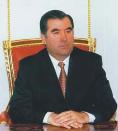
Emomali Rahmonov
President, Head of State and
Chairman of Supreme Assembly
since 19 November 1992
President, Head of State and
Chairman of Supreme Assembly
since 19 November 1992
President elected by popular vote for a seven-year term (eligible
for a second term); election last held 6 November 2006)
Next scheduled election: November 2013
for a second term); election last held 6 November 2006)
Next scheduled election: November 2013
| HEAD OF GOVERNMENT |
| SELECTION PROCESS |
Oqil Oqilov
Prime Minister
since 20 January 1999
Prime Minister
since 20 January 1999
Prime minister appointed by the president
| DECLARATION OF HUMAN RIGHTS |
| ETHNIC GROUPS |
Tajik 79.9%, Uzbek 15.3%, Russian 1.1%, Kyrgyz 1.1%, other 2.6% (2000 census)
| RELIGIONS |
Sunni Muslim 85%, Shi'a Muslim 5%, other 10% (2003 est.)
| GOVERNMENT STRUCTURE |
Republic; Republic with 2 provinces (viloyatho, singular - viloyat) and 1 autonomous province Legal system is based on civil law
system with no judicial review of legislative acts
Executive: president elected by popular vote for a seven-year term (eligible for a second term); prime minister appointed by the
president; election last held 6 November 2006 (next to be held November 2013)
Legislative: bicameral Supreme Assembly or Majlisi Oli consists of the Assembly of Representatives (lower chamber) or
Majlisi Namoyandagon (63 seats; members are elected by popular vote to serve five-year terms) and the National
Assembly (upper chamber) or Majlisi Milliy (34 seats; members are indirectly elected, 25 selected by local deputies, 8
appointed by the president; 1 seat reserved for the former president; all serve five-year terms)
elections: last held last held on 28 February 2010 (next to be held in February 2015); Assembly of Representatives - last
held on 28 February 2010 (next to be held in February 2015)
Judicial: Supreme Court (judges are appointed by the president)
system with no judicial review of legislative acts
Executive: president elected by popular vote for a seven-year term (eligible for a second term); prime minister appointed by the
president; election last held 6 November 2006 (next to be held November 2013)
Legislative: bicameral Supreme Assembly or Majlisi Oli consists of the Assembly of Representatives (lower chamber) or
Majlisi Namoyandagon (63 seats; members are elected by popular vote to serve five-year terms) and the National
Assembly (upper chamber) or Majlisi Milliy (34 seats; members are indirectly elected, 25 selected by local deputies, 8
appointed by the president; 1 seat reserved for the former president; all serve five-year terms)
elections: last held last held on 28 February 2010 (next to be held in February 2015); Assembly of Representatives - last
held on 28 February 2010 (next to be held in February 2015)
Judicial: Supreme Court (judges are appointed by the president)
| LANGUAGES |
Tajik (official), Russian widely used in government and business
| BRIEF HISTORY |
The Ancient Age of Tajik history began around 4000 BC. This period of Tajik history started with the migration of Proto-
Indo-European (possibly the most distant ancestors of the Tajiks) from their native home which was possibly to the north of
Central Asia, to south Central Asia. Numerous and fascinating studies show that the Tajiks ancestors were the Scythians,
Massagetae, Bactrians Sogdians, Marvians and Aryans, who were living in Central Asia. At some time around 1750 BC,
the Tajik ancestors emigrated to North India. Thereafter, they emigrated to the Iranian Plateau (c. 1250 BC) and to the
northwest of Iran (c. 600 BC). This migration was crucial in formation of many Indo-European nations, languages, and
civilizations that are currently living in Eurasia. It resulted in the settling of the Proto-Indo-European tribes in areas of Eurasia,
some of whom were mentioned by Herodotus. The western Scythians started to be replaced by the Sarmatians and Alans in
Europe around 400 BC. It needs to be noted that Sarmatian and Alans were descendants of western Scythians. The people
who eventually became known as Bukharan Jews migrated into this area from the Middle East during this period as well.
Sogdiana, Bactria, Merv and Khorezm were the four principal divisions of Ancient Central Asia inhabited by the ancestors
of the present-day Tajiks. Tajiks are now found only in historic Bactria and Sogdiana. During the Achaemenid period,
Sogdiana was one of the provinces of the Persian empire. Among the cities of Tajikistan, Panjakent and Istarawshan are
founded in that period. After the Persian Empire was defeated by Alexander the Great Bactria, Sogdiana and Merv being
part of Persian Empire had to defend themselves from new invaders. For another 400 hundred years until AD 410, the
Kushan Empire would be a major power in the region along with Roman, Parthian Empire and Han Empire (China). The
Hephthalites are considered to be another Scythian-related tribe although there is controversy about their name (which
means 'White Hun') which normally refers to Mongolian-Turkish invaders. The origin of the Gokturks is uncertain, but it
seems likely that they had lived to the South of the Altai Mountains until the year 542 AD. Chinese sources suggest that they
were descended from the Huns and located to the North of them. The Transoxiana principalities never formed a viable
confederacy. Beginning in 651 AD, the Arabs organized periodic marauding raids deep into the territory of Transoxania, but
it was not until the appointment of Ibn Qutaiba as Governor of Khorasan in 705 AD, during the reign of Walid I, that the
Caliphate adopted the policy of annexing the lands beyond the Oxus. In 715 AD the task of annexation was accomplished.
The entire region thus came under the control of the Caliph and of Islam, but the Arabs continued to rule through local
Soghdian Kings and dihqans. Islam spread rapidly in Transoxiana. The new religion was received mostly by popular
acclaim, for it promised greater social mobility and created favourable conditions for trade. With Islam there came Arabic
that became the language of Abbasid court. The Samanid dynasty, that ruled (819–1005) in Khorasan (Eastern Iran) and
Transoxiana, was founded by Saman-Khuda . The Samanids were one of the first purely indigenous dynasties to rule in
Persia following the Muslim Arab conquest. The modern state of Tajikistan considers that the Tajik name and identity,
although in existence for thousands of years in this area, began its formation during the Samanid period. After the collapse of
Samanid Dynasty Central Asia became the battleground of many Asian invaders who came from the north-east. The
Mongol Empire swept through Central Asia invaded Khorezm and sacked the cities of Bukhara and Samarkand, looting and
massacring people everywhere. Timur, founder of the Timurid Empire, was born 8th April 1336 in Kesh near Samarkand. A
Member of the Turkicized Barlas tribe, a Mongol subgroup that had settled in Transoxiana after taking part in Genghis
Khan's son Chagatai's campaigns in that region. In 1740 the Janid khanate was conquered by Nadir Shah, the Afsharid ruler
of Persia. The Janid khan Abu al Faiz retained his throne, becoming Nadir's vassal. Conflict with Russia started in 1865,
shortly after Russian conquest of Tashkent. Being more technologically advanced the Russians had little difficulty in
conquering the regions inhabited by Tajiks, meeting fierce resistance only at Jizzakh, Ura-Tyube, and when their garrison at
Samarkand was besieged in 1868 by forces from Shahr-e Sabz and the inhabitants of the city. At the end of August 1920
the last emir, Sayyid Alim Khan, was overthrown as a result of the invasion of the emirate by Soviet troops, and on 6
October the emirate was abolished and the Bukharan People's Soviet Republic proclaimed. Tajiks in this period underwent
the greatest catastrophe in their history. The Tajiks' lack of concern, especially their cosmopolitanism during this period, cost
them dearly. They were deprived of the use of their language, of achieving an independent republic, and of their historical
and cultural centers. The national-administrative divisions placed the ancient Tajik cities, Bukhara and Samarkand, outside
the Tajikistan SSR when the borders were drawn in 1928. As citizens of the Uzbek SSR many Tajiks came under pressure
to conform to their newly-ascribed 'Uzbek' identity, and under threat of exile or worse for nonconformity, many were forced
to change their identity. Tajik schools were closed and, Tajiks were not appointed to leadership positions simply because of
their ethnicity. With the establishment of Soviet rule, Jewish life seriously deteriorated and thousands of Jews left the region
due to religious oppression, confiscation of property, arrests, and repressions. In the last years of Soviet Union (1986-1990)
Tajikistan SSR went through numerous positive changes due to mass protests and initiative of few notable members of
Majlisi Oli (Verkhovniy Soviet) or Parliament, which lead the movement towards independence. During this time Kojiki
regains status of Oficial language of Tajikistan SSR next to Russian. Also ethnic Russians start loosing grip on power and
more Tajiks become politically active and in this time prominent leaders of movement towards independence also known as
Opposition, emerge. Opposition lead the mass protests in the capital city of Dushanbe and in august of 1991 forces
president K. Makhkamov to resign. In short, Tajik identity has been once again challenged with the out-break of Civil War.
The Tajiks have survived this blow of history too and finally reached a much-needed stage of self-examination and relative
prosperity. Nevertheless severe political problems remain, not least the fact that, having been run by Leninabadis (Khujand)
throughout the Soviet period, Tajikistan is now almost entirely controlled by Kulyabis, from the home region of President
Rakhmonov. Numerous notable individual were murdered during the war and throughout the 1990s. This list includes
journalist and politician Otakhon Latifi, journalist and Jewish leader Meirkhaim Gavrielov, and politician Safarali Kenjayev.
Since 1991, much of the country's non-Muslim population, including Russians and Jews, has emigrated due to severe
poverty and instability. In 1992 most of the country’s Jewish population was evacuated to Israel. Emomalii Rahmon came to
power in 1994, and continues to rule to this day. Ethnic cleansing was controversial during the civil war in Tajikistan. By the
end of the war Tajikistan was in a state of complete devastation. The estimated dead numbered over 100,000. Around 1.2
million people were refugees inside and outside of the country. In 1997, a ceasefire was reached between Rahmon and
opposition parties (United Tajik Opposition). Peaceful elections were held in 1999, but they were reported by the
opposition as unfair, and Rahmon was re-elected by almost unanimous vote. Russian troops were stationed in southern
Tajikistan, in order to guard the border with Afghanistan, until summer 2005. Since the September 11, 2001 attacks,
American, Indian and French troops have also been stationed in the country.
Sources: Wikipedia: History of Tajikistan
Indo-European (possibly the most distant ancestors of the Tajiks) from their native home which was possibly to the north of
Central Asia, to south Central Asia. Numerous and fascinating studies show that the Tajiks ancestors were the Scythians,
Massagetae, Bactrians Sogdians, Marvians and Aryans, who were living in Central Asia. At some time around 1750 BC,
the Tajik ancestors emigrated to North India. Thereafter, they emigrated to the Iranian Plateau (c. 1250 BC) and to the
northwest of Iran (c. 600 BC). This migration was crucial in formation of many Indo-European nations, languages, and
civilizations that are currently living in Eurasia. It resulted in the settling of the Proto-Indo-European tribes in areas of Eurasia,
some of whom were mentioned by Herodotus. The western Scythians started to be replaced by the Sarmatians and Alans in
Europe around 400 BC. It needs to be noted that Sarmatian and Alans were descendants of western Scythians. The people
who eventually became known as Bukharan Jews migrated into this area from the Middle East during this period as well.
Sogdiana, Bactria, Merv and Khorezm were the four principal divisions of Ancient Central Asia inhabited by the ancestors
of the present-day Tajiks. Tajiks are now found only in historic Bactria and Sogdiana. During the Achaemenid period,
Sogdiana was one of the provinces of the Persian empire. Among the cities of Tajikistan, Panjakent and Istarawshan are
founded in that period. After the Persian Empire was defeated by Alexander the Great Bactria, Sogdiana and Merv being
part of Persian Empire had to defend themselves from new invaders. For another 400 hundred years until AD 410, the
Kushan Empire would be a major power in the region along with Roman, Parthian Empire and Han Empire (China). The
Hephthalites are considered to be another Scythian-related tribe although there is controversy about their name (which
means 'White Hun') which normally refers to Mongolian-Turkish invaders. The origin of the Gokturks is uncertain, but it
seems likely that they had lived to the South of the Altai Mountains until the year 542 AD. Chinese sources suggest that they
were descended from the Huns and located to the North of them. The Transoxiana principalities never formed a viable
confederacy. Beginning in 651 AD, the Arabs organized periodic marauding raids deep into the territory of Transoxania, but
it was not until the appointment of Ibn Qutaiba as Governor of Khorasan in 705 AD, during the reign of Walid I, that the
Caliphate adopted the policy of annexing the lands beyond the Oxus. In 715 AD the task of annexation was accomplished.
The entire region thus came under the control of the Caliph and of Islam, but the Arabs continued to rule through local
Soghdian Kings and dihqans. Islam spread rapidly in Transoxiana. The new religion was received mostly by popular
acclaim, for it promised greater social mobility and created favourable conditions for trade. With Islam there came Arabic
that became the language of Abbasid court. The Samanid dynasty, that ruled (819–1005) in Khorasan (Eastern Iran) and
Transoxiana, was founded by Saman-Khuda . The Samanids were one of the first purely indigenous dynasties to rule in
Persia following the Muslim Arab conquest. The modern state of Tajikistan considers that the Tajik name and identity,
although in existence for thousands of years in this area, began its formation during the Samanid period. After the collapse of
Samanid Dynasty Central Asia became the battleground of many Asian invaders who came from the north-east. The
Mongol Empire swept through Central Asia invaded Khorezm and sacked the cities of Bukhara and Samarkand, looting and
massacring people everywhere. Timur, founder of the Timurid Empire, was born 8th April 1336 in Kesh near Samarkand. A
Member of the Turkicized Barlas tribe, a Mongol subgroup that had settled in Transoxiana after taking part in Genghis
Khan's son Chagatai's campaigns in that region. In 1740 the Janid khanate was conquered by Nadir Shah, the Afsharid ruler
of Persia. The Janid khan Abu al Faiz retained his throne, becoming Nadir's vassal. Conflict with Russia started in 1865,
shortly after Russian conquest of Tashkent. Being more technologically advanced the Russians had little difficulty in
conquering the regions inhabited by Tajiks, meeting fierce resistance only at Jizzakh, Ura-Tyube, and when their garrison at
Samarkand was besieged in 1868 by forces from Shahr-e Sabz and the inhabitants of the city. At the end of August 1920
the last emir, Sayyid Alim Khan, was overthrown as a result of the invasion of the emirate by Soviet troops, and on 6
October the emirate was abolished and the Bukharan People's Soviet Republic proclaimed. Tajiks in this period underwent
the greatest catastrophe in their history. The Tajiks' lack of concern, especially their cosmopolitanism during this period, cost
them dearly. They were deprived of the use of their language, of achieving an independent republic, and of their historical
and cultural centers. The national-administrative divisions placed the ancient Tajik cities, Bukhara and Samarkand, outside
the Tajikistan SSR when the borders were drawn in 1928. As citizens of the Uzbek SSR many Tajiks came under pressure
to conform to their newly-ascribed 'Uzbek' identity, and under threat of exile or worse for nonconformity, many were forced
to change their identity. Tajik schools were closed and, Tajiks were not appointed to leadership positions simply because of
their ethnicity. With the establishment of Soviet rule, Jewish life seriously deteriorated and thousands of Jews left the region
due to religious oppression, confiscation of property, arrests, and repressions. In the last years of Soviet Union (1986-1990)
Tajikistan SSR went through numerous positive changes due to mass protests and initiative of few notable members of
Majlisi Oli (Verkhovniy Soviet) or Parliament, which lead the movement towards independence. During this time Kojiki
regains status of Oficial language of Tajikistan SSR next to Russian. Also ethnic Russians start loosing grip on power and
more Tajiks become politically active and in this time prominent leaders of movement towards independence also known as
Opposition, emerge. Opposition lead the mass protests in the capital city of Dushanbe and in august of 1991 forces
president K. Makhkamov to resign. In short, Tajik identity has been once again challenged with the out-break of Civil War.
The Tajiks have survived this blow of history too and finally reached a much-needed stage of self-examination and relative
prosperity. Nevertheless severe political problems remain, not least the fact that, having been run by Leninabadis (Khujand)
throughout the Soviet period, Tajikistan is now almost entirely controlled by Kulyabis, from the home region of President
Rakhmonov. Numerous notable individual were murdered during the war and throughout the 1990s. This list includes
journalist and politician Otakhon Latifi, journalist and Jewish leader Meirkhaim Gavrielov, and politician Safarali Kenjayev.
Since 1991, much of the country's non-Muslim population, including Russians and Jews, has emigrated due to severe
poverty and instability. In 1992 most of the country’s Jewish population was evacuated to Israel. Emomalii Rahmon came to
power in 1994, and continues to rule to this day. Ethnic cleansing was controversial during the civil war in Tajikistan. By the
end of the war Tajikistan was in a state of complete devastation. The estimated dead numbered over 100,000. Around 1.2
million people were refugees inside and outside of the country. In 1997, a ceasefire was reached between Rahmon and
opposition parties (United Tajik Opposition). Peaceful elections were held in 1999, but they were reported by the
opposition as unfair, and Rahmon was re-elected by almost unanimous vote. Russian troops were stationed in southern
Tajikistan, in order to guard the border with Afghanistan, until summer 2005. Since the September 11, 2001 attacks,
American, Indian and French troops have also been stationed in the country.
Sources: Wikipedia: History of Tajikistan
| ECONOMIC OVERVIEW |
Tajikistan has one of the lowest per capita GDPs among the 15 former Soviet republics. Because of a lack of employment
opportunities in Tajikistan, as many as a million Tajik citizens work abroad, almost all of them in Russia, supporting families
in Tajikistan through remittances. Less than 7% of the land area is arable. Cotton is the most important crop, and its
production is closely monitored, and in many cases controlled, by the government. In the wake of the National Bank of
Tajikistan's admission in December 2007 that it had improperly lent money to investors in the cotton sector, the IMF
canceled its program in Tajikistan. A reform agenda is underway, according to which over half a billion dollars in farmer
debt is being forgiven, and IMF assistance has been reinstated. Mineral resources include silver, gold, uranium, and tungsten.
Industry consists only of a large aluminum plant, hydropower facilities, and small obsolete factories mostly in light industry
and food processing. The civil war (1992-97) severely damaged the already weak economic infrastructure and caused a
sharp decline in industrial and agricultural production. Tajikistan's economic situation remains fragile due to uneven
implementation of structural reforms, corruption, weak governance, seasonal power shortages, and the external debt burden.
Electricity output expanded with the completion of the Sangtuda-1 hydropower dam - finished in 2009 with Russian
investment. The smaller Sangtuda-2, built with Iranian investment, began operating in 2011. The government of Tajikistan is
pinning major hopes on the massive Roghun dam which, if finished according to Tajik plans, will be the tallest dam in the
world and significantly expand electricity output. The World Bank has agreed to fund technical, economic, social, and
environmental feasibility studies for the dam, scheduled to be completed in 2012. In January 2010, the government began
selling shares in the Roghun enterprise to its population, ultimately raising over $180 million but Tajikistan will still need
significant investment to complete the dam. According to numerous reports, many Tajik individuals and businesses were
forced to buy shares. The coerced share sales finally ended in mid-2010 under intense criticism from donors, particularly the
IMF. Food and fuel prices in 2011 increased to the highest levels seen since 2002 due in part to an increase in rail transport
tariffs through Uzbekistan. Tajikistan imports approximately 60% of its food and 90% of that comes by rail.
Source: CIA World Factbook (select Tajikistan)
opportunities in Tajikistan, as many as a million Tajik citizens work abroad, almost all of them in Russia, supporting families
in Tajikistan through remittances. Less than 7% of the land area is arable. Cotton is the most important crop, and its
production is closely monitored, and in many cases controlled, by the government. In the wake of the National Bank of
Tajikistan's admission in December 2007 that it had improperly lent money to investors in the cotton sector, the IMF
canceled its program in Tajikistan. A reform agenda is underway, according to which over half a billion dollars in farmer
debt is being forgiven, and IMF assistance has been reinstated. Mineral resources include silver, gold, uranium, and tungsten.
Industry consists only of a large aluminum plant, hydropower facilities, and small obsolete factories mostly in light industry
and food processing. The civil war (1992-97) severely damaged the already weak economic infrastructure and caused a
sharp decline in industrial and agricultural production. Tajikistan's economic situation remains fragile due to uneven
implementation of structural reforms, corruption, weak governance, seasonal power shortages, and the external debt burden.
Electricity output expanded with the completion of the Sangtuda-1 hydropower dam - finished in 2009 with Russian
investment. The smaller Sangtuda-2, built with Iranian investment, began operating in 2011. The government of Tajikistan is
pinning major hopes on the massive Roghun dam which, if finished according to Tajik plans, will be the tallest dam in the
world and significantly expand electricity output. The World Bank has agreed to fund technical, economic, social, and
environmental feasibility studies for the dam, scheduled to be completed in 2012. In January 2010, the government began
selling shares in the Roghun enterprise to its population, ultimately raising over $180 million but Tajikistan will still need
significant investment to complete the dam. According to numerous reports, many Tajik individuals and businesses were
forced to buy shares. The coerced share sales finally ended in mid-2010 under intense criticism from donors, particularly the
IMF. Food and fuel prices in 2011 increased to the highest levels seen since 2002 due in part to an increase in rail transport
tariffs through Uzbekistan. Tajikistan imports approximately 60% of its food and 90% of that comes by rail.
Source: CIA World Factbook (select Tajikistan)
| POLITICAL CLIMATE |
The president, who is directly elected, is both the head of state and the head of government. The president appoints the
prime minister and all the members of the government, with parliamentary approval. Tajikistan is thus a presidential republic.
Tajikistan held a constitutional referendum on 22 June 2003 and the 2003 Constitution, among other amendments, set a limit
of two seven-year terms for the president. Emomalii Rahmon's election to the office of the president in 2006 counts as his
first 7-year term under the 2003 Constitution, and in principle he may be re-elected for a second term in 2013, remaining in
office until 2020.
In this geographically divided country, the ceremonial position of prime minister traditionally is held by a person from the
north to nominally balance President Emomalii Rakhmon’s southern origin. In 2004 the executive branch fell further under
the control of the governing party as appointments by Rakhmon left the opposition with only 5 percent of major government
positions. This event followed the expiration of the 1997 peace guarantee that the United Tajik Opposition (UPO) would
occupy at least 30 percent of top government positions. Prior to the 2006 election, the Council of Ministers, which executes
the decisions of the president, included two deputy prime ministers, 19 ministers, nine committee heads, and several ex
officio members. After the election, Rakhmon abolished 10 ministries and five state committees and reappointed Oqil Oqilov
as prime minister. Rakhmon is said to have accumulated substantial informal power through patronage.
Source: Wikipedia: Politics of Tajikistan
prime minister and all the members of the government, with parliamentary approval. Tajikistan is thus a presidential republic.
Tajikistan held a constitutional referendum on 22 June 2003 and the 2003 Constitution, among other amendments, set a limit
of two seven-year terms for the president. Emomalii Rahmon's election to the office of the president in 2006 counts as his
first 7-year term under the 2003 Constitution, and in principle he may be re-elected for a second term in 2013, remaining in
office until 2020.
In this geographically divided country, the ceremonial position of prime minister traditionally is held by a person from the
north to nominally balance President Emomalii Rakhmon’s southern origin. In 2004 the executive branch fell further under
the control of the governing party as appointments by Rakhmon left the opposition with only 5 percent of major government
positions. This event followed the expiration of the 1997 peace guarantee that the United Tajik Opposition (UPO) would
occupy at least 30 percent of top government positions. Prior to the 2006 election, the Council of Ministers, which executes
the decisions of the president, included two deputy prime ministers, 19 ministers, nine committee heads, and several ex
officio members. After the election, Rakhmon abolished 10 ministries and five state committees and reappointed Oqil Oqilov
as prime minister. Rakhmon is said to have accumulated substantial informal power through patronage.
Source: Wikipedia: Politics of Tajikistan
| INTERNATIONAL DISPUTES |
In 2006, China and Tajikistan pledged to commence demarcation of the revised boundary agreed to in the delimitation of
2002; talks continue with Uzbekistan to delimit border and remove minefields; disputes in Isfara Valley delay delimitation
with Kyrgyzstan
2002; talks continue with Uzbekistan to delimit border and remove minefields; disputes in Isfara Valley delay delimitation
with Kyrgyzstan


| REFUGEES AND INTERNALLY DISPLACED PERSONS (IDP) |
Refugees (country of origin): 4,000 (Afghanistan) (2012)
| ILLICIT DRUGS |
Major transit country for Afghan narcotics bound for Russian and, to a lesser extent, Western European markets; limited
illicit cultivation of opium poppy for domestic consumption; Tajikistan seizes roughly 80% of all drugs captured in Central
Asia and stands third worldwide in seizures of opiates (heroin and raw opium); significant consumer of opiates
illicit cultivation of opium poppy for domestic consumption; Tajikistan seizes roughly 80% of all drugs captured in Central
Asia and stands third worldwide in seizures of opiates (heroin and raw opium); significant consumer of opiates
| HUMAN RIGHTS STATEMENTS, ANALYSIS AND CRITIQUES |
2011 Human Rights Reports: Tajikistan
Bureau of Democracy, Human Rights, and Labor
2011 Country Reports on Human Rights Practices
May 24, 2012
Tajikistan is an authoritarian state that President Emomali Rahmon and his supporters, drawn mainly from one region of the
country, dominated politically. The constitution provides for a multiparty political system, but in practice the government
obstructed political pluralism. The February 2010 parliamentary elections were marked by widespread fraud to ensure the continued
rule of the ruling People’s Democratic Party of Tajikistan (PDPT). The PDPT, progovernment independents, and government-
affiliated political parties dominated parliament. The opposition Islamic Revival Party of Tajikistan (IRPT) and Communist Party of
Tajikistan had two seats each in parliament. Security forces reported to civilian authorities.
The most significant human rights problems included torture and abuse of detainees and other persons by security forces,
restrictions on freedoms of expression and religion (especially regarding the prosecution of journalists and repression of faith
groups), and violence and discrimination against women.
Other human rights problems included arbitrary arrest; denial of the right to a fair trial; harsh and life-threatening prison conditions;
prohibition of international monitor access to prisons; limitations on children’s religious education; corruption; and forced labor
including begging, cotton harvesting, and trafficking in persons.
Officials in the security services and elsewhere in the government acted with impunity. There were no prosecutions of government
officials for human rights abuses.
Click here to read more »
Bureau of Democracy, Human Rights, and Labor
2011 Country Reports on Human Rights Practices
May 24, 2012
Tajikistan is an authoritarian state that President Emomali Rahmon and his supporters, drawn mainly from one region of the
country, dominated politically. The constitution provides for a multiparty political system, but in practice the government
obstructed political pluralism. The February 2010 parliamentary elections were marked by widespread fraud to ensure the continued
rule of the ruling People’s Democratic Party of Tajikistan (PDPT). The PDPT, progovernment independents, and government-
affiliated political parties dominated parliament. The opposition Islamic Revival Party of Tajikistan (IRPT) and Communist Party of
Tajikistan had two seats each in parliament. Security forces reported to civilian authorities.
The most significant human rights problems included torture and abuse of detainees and other persons by security forces,
restrictions on freedoms of expression and religion (especially regarding the prosecution of journalists and repression of faith
groups), and violence and discrimination against women.
Other human rights problems included arbitrary arrest; denial of the right to a fair trial; harsh and life-threatening prison conditions;
prohibition of international monitor access to prisons; limitations on children’s religious education; corruption; and forced labor
including begging, cotton harvesting, and trafficking in persons.
Officials in the security services and elsewhere in the government acted with impunity. There were no prosecutions of government
officials for human rights abuses.
Click here to read more »
16 May 2012
Committee on the Protection of the Rights of All Migrant Workers and Members of Their Families
Sixteenth session
16–27 April 2012
Consideration of reports submitted by States parties under article 74 of the Convention
Concluding observations of the Committee on the Protection of the Rights of All Migrant Workers and Members of
Their Families
Tajikistan
A. Introduction
2. The Committee welcomes the submission, albeit late, of the State party’s initial report and appreciates the constructive dialogue
held with the high-level delegation. The Committee thanks the State party for its detailed replies to the list of issues and the
additional information provided by the delegation.
B. Positive aspects
5. The Committee welcomes the adoption of several legislative measures and Government decisions and orders:
(a) The Joint Order of the Ministry of Internal Affairs and the Ministry of Education on education of migrant workers in vocational
training initiatives in 2010;
C. Principal subjects of concern, suggestions and recommendations
1. General measures of implementation (arts. 73 and 84)
Legislation and application
9. The Committee notes that the State party is in the process of adopting new legislation to regulate migration from and to the
country. However, it notes with concern that the draft Law on Labour Migration of Tajik Nationals Abroad uses terminology such
as “illegal migrant” which is not compatible with the Convention and the General Assembly resolution 3449 (XXX) of 9 December
1975. It is also concerned that the draft law contains provisions that restrict the right of citizens to leave the State party and that it
imposes obligations on its citizens to obtain professional qualifications before migrating abroad and to provide material support to
their families through remittances. The Committee also notes that the draft Law on Private Recruitment Agencies has significant
gaps in relation to implementation mechanisms and mechanisms to protect the rights of migrants who are recruited through
employment agencies.
10. The Committee recommends that the State party consider amending the draft Law on Labour Migration of Tajik Nationals
Abroad to ensure that it is fully in line with the Convention, namely by using the terminology “migrants in an irregular situation” and
lifting restrictions to leave the country, and the draft Law on Private Recruitment Agencies in order to provide for mechanisms of
implementation and protection of the rights of migrants. The Committee encourages the State party to accelerate the adoption of the
draft laws thus amended.
Click here to read more »
Committee on the Protection of the Rights of All Migrant Workers and Members of Their Families
Sixteenth session
16–27 April 2012
Consideration of reports submitted by States parties under article 74 of the Convention
Concluding observations of the Committee on the Protection of the Rights of All Migrant Workers and Members of
Their Families
Tajikistan
A. Introduction
2. The Committee welcomes the submission, albeit late, of the State party’s initial report and appreciates the constructive dialogue
held with the high-level delegation. The Committee thanks the State party for its detailed replies to the list of issues and the
additional information provided by the delegation.
B. Positive aspects
5. The Committee welcomes the adoption of several legislative measures and Government decisions and orders:
(a) The Joint Order of the Ministry of Internal Affairs and the Ministry of Education on education of migrant workers in vocational
training initiatives in 2010;
C. Principal subjects of concern, suggestions and recommendations
1. General measures of implementation (arts. 73 and 84)
Legislation and application
9. The Committee notes that the State party is in the process of adopting new legislation to regulate migration from and to the
country. However, it notes with concern that the draft Law on Labour Migration of Tajik Nationals Abroad uses terminology such
as “illegal migrant” which is not compatible with the Convention and the General Assembly resolution 3449 (XXX) of 9 December
1975. It is also concerned that the draft law contains provisions that restrict the right of citizens to leave the State party and that it
imposes obligations on its citizens to obtain professional qualifications before migrating abroad and to provide material support to
their families through remittances. The Committee also notes that the draft Law on Private Recruitment Agencies has significant
gaps in relation to implementation mechanisms and mechanisms to protect the rights of migrants who are recruited through
employment agencies.
10. The Committee recommends that the State party consider amending the draft Law on Labour Migration of Tajik Nationals
Abroad to ensure that it is fully in line with the Convention, namely by using the terminology “migrants in an irregular situation” and
lifting restrictions to leave the country, and the draft Law on Private Recruitment Agencies in order to provide for mechanisms of
implementation and protection of the rights of migrants. The Committee encourages the State party to accelerate the adoption of the
draft laws thus amended.
Click here to read more »
Increasing Pressure on Opposition Party in Tajikistan Raises Concerns of Crackdown
Aug 30 2012 - 3:45pm
The regime of President Emomali Rahmon continued to encroach on religious freedoms and shackle the media in 2008, even as
basic services slipped, debt problems deepened, and public discontent increased. Tajikistan cooperated with international
organizations to ensure food security, but admitted that it had lied to the International Monetary Fund to obtain a $48 million loan.
The president broadened his influence to the cultural sphere in 2007, de-Russifying his surname to “Rahmon” in March and signing
legislation in May to establishspendinglimits on birthday and wedding celebrations.
The severewinter of 2007-08 featured widespread power outages and a number of spontaneous demonstrations, even in Dushanbe.
In February 2008, the United Nations appealed for $25 million in emergency assistance for the country to stave off famine. The UN
World Food Program noted in August that bread and vegetable prices had more than doubled over the last year, and in October, the
United Nations warned that one-third of Tajikistan’s inhabitants could face hunger during the coming winter.
Most of the population lives in poverty and survives on subsistence agriculture, remittances from relatives working abroad (mainly
in Russia), and foreign humanitarian aid. However, Tajikistan’s relations with international financial institutions were complicated by
an April 2008 admission that the Central Bank had lied about its reserves to secure a $48 million loan from the International
Monetary Fund, which demanded repayment over six months starting in September 2008. Meanwhile, the global economic
downturn in the fall threatened to cut off the vital remittance income.
Tajikistan is not an electoral democracy. The 1994 constitution provides for a strong, directly elected president who enjoys broad
authority to appoint and dismiss officials. Amendments adopted in 1999 increased the powers of the president and created a full-
time, bicameral parliament, while 2003 amendments allowed current president Emomali Rahmon to serve two additional seven-year
terms beyond the 2006 election. In the Assembly of Representatives (lower chamber), 63 members are elected by popular vote to
serve five-year terms. In the 33-seat National Assembly (upper chamber), 25 members are chosen by local assemblies, and 8 are
appointed by the president, all for five-year terms. Elections are neither free nor fair.
Patronage networks and regional affiliations are central to political life, with officials from the president’s native Kulyob region
dominant in government. Rahmon’s PDP is the ruling political party. Secular opposition parties are weak and enjoy minimal popular
support. The limited influence of the IRP, currently the only legal religion-based party in Central Asia, was further reduced by the
August 2006 death of Said Abdullo Nuri, its widely respected leader.
Click here to read more »
Aug 30 2012 - 3:45pm
The regime of President Emomali Rahmon continued to encroach on religious freedoms and shackle the media in 2008, even as
basic services slipped, debt problems deepened, and public discontent increased. Tajikistan cooperated with international
organizations to ensure food security, but admitted that it had lied to the International Monetary Fund to obtain a $48 million loan.
The president broadened his influence to the cultural sphere in 2007, de-Russifying his surname to “Rahmon” in March and signing
legislation in May to establishspendinglimits on birthday and wedding celebrations.
The severewinter of 2007-08 featured widespread power outages and a number of spontaneous demonstrations, even in Dushanbe.
In February 2008, the United Nations appealed for $25 million in emergency assistance for the country to stave off famine. The UN
World Food Program noted in August that bread and vegetable prices had more than doubled over the last year, and in October, the
United Nations warned that one-third of Tajikistan’s inhabitants could face hunger during the coming winter.
Most of the population lives in poverty and survives on subsistence agriculture, remittances from relatives working abroad (mainly
in Russia), and foreign humanitarian aid. However, Tajikistan’s relations with international financial institutions were complicated by
an April 2008 admission that the Central Bank had lied about its reserves to secure a $48 million loan from the International
Monetary Fund, which demanded repayment over six months starting in September 2008. Meanwhile, the global economic
downturn in the fall threatened to cut off the vital remittance income.
Tajikistan is not an electoral democracy. The 1994 constitution provides for a strong, directly elected president who enjoys broad
authority to appoint and dismiss officials. Amendments adopted in 1999 increased the powers of the president and created a full-
time, bicameral parliament, while 2003 amendments allowed current president Emomali Rahmon to serve two additional seven-year
terms beyond the 2006 election. In the Assembly of Representatives (lower chamber), 63 members are elected by popular vote to
serve five-year terms. In the 33-seat National Assembly (upper chamber), 25 members are chosen by local assemblies, and 8 are
appointed by the president, all for five-year terms. Elections are neither free nor fair.
Patronage networks and regional affiliations are central to political life, with officials from the president’s native Kulyob region
dominant in government. Rahmon’s PDP is the ruling political party. Secular opposition parties are weak and enjoy minimal popular
support. The limited influence of the IRP, currently the only legal religion-based party in Central Asia, was further reduced by the
August 2006 death of Said Abdullo Nuri, its widely respected leader.
Click here to read more »
Tajikistan: "Murder suspect" tortured to confess
24 July 2012
URGENT ACTION
A 45-year-old man was arrested on 13 July on suspicion of the murder of President Rahmon’s brother-in-law. He is now in police
custody in the capital, Dushanbe, where witnesses say he has been tortured and otherwise ill-treated to force him to confess.
The husband of President Rahmon’s elder sister was found dead on 13 June: he had been shot several times in the head. A 45-year-
old man is known to have been arrested on 13 July on suspicion of murder (Article 104 of the Criminal Code) and of participation
in a terrorist act (Article 179.3) after ammunition was found in a water tank at his home. He has said the ammunition was not his,
but planted by police the third time they searched the premises.
Although a lawyer was present at the start of his first interrogation, the suspect was not allowed to see a lawyer from 16 to 21
July. According to local sources, he was badly tortured in the Dushanbe police temporary detention centre, where he is still held:
this included being denied food, drink or sleep, being made to stand up all night, and being beaten on the ears. He had his nose
broken and is being subjected to psychological torture including threats to his family.
The man, whose name has not been formally disclosed, is reportedly only allowed food and rest when his lawyer visits him, though
his family take him food parcels three times a day. He has said he is beaten after each visit from his lawyer, to get him to confess:
he was taken to the scene of the crime by the Ministry of Internal Affairs Department of Criminal Investigation in a car with tinted
windows, and beaten.
On 21 July his lawyer asked the investigator of the General Prosecutor’s office to conduct a forensic medical examination but the
request was reportedly refused. The suspect’s wife and son have reportedly been forced to give false evidence against him.
Please write immediately in Tajik, Russian, English or your own language:
*Urge the authorities to ensure that the individual being held as a suspect for the murder of the President’s brother-in-law is
protected from torture and other ill-treatment, order a prompt, independent investigation into allegations that he has been tortured
and bring those responsible to justice;
*Urge them to ensure that he is examined promptly by an independent doctor and the results provided to his lawyer and family;
*Express concern that he was not allowed to see his lawyer between 16 and 21 July and urge them to ensure that he is interrogated
only in the presence of his lawyer.
*Urge the authorities to take immediate measures to protect his family.
Click here to read more »
24 July 2012
URGENT ACTION
A 45-year-old man was arrested on 13 July on suspicion of the murder of President Rahmon’s brother-in-law. He is now in police
custody in the capital, Dushanbe, where witnesses say he has been tortured and otherwise ill-treated to force him to confess.
The husband of President Rahmon’s elder sister was found dead on 13 June: he had been shot several times in the head. A 45-year-
old man is known to have been arrested on 13 July on suspicion of murder (Article 104 of the Criminal Code) and of participation
in a terrorist act (Article 179.3) after ammunition was found in a water tank at his home. He has said the ammunition was not his,
but planted by police the third time they searched the premises.
Although a lawyer was present at the start of his first interrogation, the suspect was not allowed to see a lawyer from 16 to 21
July. According to local sources, he was badly tortured in the Dushanbe police temporary detention centre, where he is still held:
this included being denied food, drink or sleep, being made to stand up all night, and being beaten on the ears. He had his nose
broken and is being subjected to psychological torture including threats to his family.
The man, whose name has not been formally disclosed, is reportedly only allowed food and rest when his lawyer visits him, though
his family take him food parcels three times a day. He has said he is beaten after each visit from his lawyer, to get him to confess:
he was taken to the scene of the crime by the Ministry of Internal Affairs Department of Criminal Investigation in a car with tinted
windows, and beaten.
On 21 July his lawyer asked the investigator of the General Prosecutor’s office to conduct a forensic medical examination but the
request was reportedly refused. The suspect’s wife and son have reportedly been forced to give false evidence against him.
Please write immediately in Tajik, Russian, English or your own language:
*Urge the authorities to ensure that the individual being held as a suspect for the murder of the President’s brother-in-law is
protected from torture and other ill-treatment, order a prompt, independent investigation into allegations that he has been tortured
and bring those responsible to justice;
*Urge them to ensure that he is examined promptly by an independent doctor and the results provided to his lawyer and family;
*Express concern that he was not allowed to see his lawyer between 16 and 21 July and urge them to ensure that he is interrogated
only in the presence of his lawyer.
*Urge the authorities to take immediate measures to protect his family.
Click here to read more »
Tajikistan: Ensure Free Flow of Information
August 1, 2012
Statement by the Global Network Initiative
The Global Network Initiative (GNI) is concerned by the restrictions on the right to freedom of expression imposed by the
Government of Tajikistan following violence in the region of Gorno-Badakhshan. Last week the government mandated the blocking
of video-sharing website YouTube and reportedly shut down communications networks in Gorno-Badakhshan, severely restricting
the free flow of information. A number of news sites, including the British Broadcasting Corporation (BBC), have also been
reported blocked.
We urge the Tajik government to restore access to these websites and maintain phone, mobile, and Internet connections to the
region. As the Organization for Security and Co-operation in Europe (OSCE) Representative on Freedom of the Media Dunja
Mijatović stated on July 27, “Blocking is a restriction on free media and, most importantly, deprives citizens of their right to know,
to receive and impart information about the developments in their own country.”
Companies providing Internet and telecommunications services in Tajikistan at this time face a difficult situation, and may find
themselves under duress from the government to operate in ways that go beyond legally accountable law enforcement activities. In
these complex circumstances, a valuable first step for companies is to be transparent with their users to the maximum extent
possible, and if human rights policies are not already in place, companies should issue guidance to in-country staff to ensure that
their response is within the framework of international human rights principles.
Click here to read more »
August 1, 2012
Statement by the Global Network Initiative
The Global Network Initiative (GNI) is concerned by the restrictions on the right to freedom of expression imposed by the
Government of Tajikistan following violence in the region of Gorno-Badakhshan. Last week the government mandated the blocking
of video-sharing website YouTube and reportedly shut down communications networks in Gorno-Badakhshan, severely restricting
the free flow of information. A number of news sites, including the British Broadcasting Corporation (BBC), have also been
reported blocked.
We urge the Tajik government to restore access to these websites and maintain phone, mobile, and Internet connections to the
region. As the Organization for Security and Co-operation in Europe (OSCE) Representative on Freedom of the Media Dunja
Mijatović stated on July 27, “Blocking is a restriction on free media and, most importantly, deprives citizens of their right to know,
to receive and impart information about the developments in their own country.”
Companies providing Internet and telecommunications services in Tajikistan at this time face a difficult situation, and may find
themselves under duress from the government to operate in ways that go beyond legally accountable law enforcement activities. In
these complex circumstances, a valuable first step for companies is to be transparent with their users to the maximum extent
possible, and if human rights policies are not already in place, companies should issue guidance to in-country staff to ensure that
their response is within the framework of international human rights principles.
Click here to read more »
Statements & Documents
Statements and documents - 2012
Address of the National Council in connection with events in Khorog
The National Council wishes to inform the Jamat that the ongoing security situation in Khorog involves government action against
criminal elements, and is not aimed at the Jamat. Therefore, the Jamat in Badakshan and throughout Tajikistan is kindly advised to
remain calm and to follow the advice given by the local authorities - who are responsible for the safety and security of all citizens.
With your families, relatives and friends in Khorog we understand that this situation must be very difficult. However, the Jamat is
requested to conduct itself with responsibility and maturity, and not spread rumours or participate in unlawful gatherings or
interactions on the internet, or participate in other discussions. Most importantly, the Jamat is requested not to get drawn into any
disturbances, demonstrations or violence.
The National Council together with the AKDN is monitoring the situation closely and will communicate relevant developments with
the Jamat, as and when necessary.
Click here to read more »
Statements and documents - 2012
Address of the National Council in connection with events in Khorog
The National Council wishes to inform the Jamat that the ongoing security situation in Khorog involves government action against
criminal elements, and is not aimed at the Jamat. Therefore, the Jamat in Badakshan and throughout Tajikistan is kindly advised to
remain calm and to follow the advice given by the local authorities - who are responsible for the safety and security of all citizens.
With your families, relatives and friends in Khorog we understand that this situation must be very difficult. However, the Jamat is
requested to conduct itself with responsibility and maturity, and not spread rumours or participate in unlawful gatherings or
interactions on the internet, or participate in other discussions. Most importantly, the Jamat is requested not to get drawn into any
disturbances, demonstrations or violence.
The National Council together with the AKDN is monitoring the situation closely and will communicate relevant developments with
the Jamat, as and when necessary.
Click here to read more »
08/10/2012
Tajikistan reported on the Elimination of Racial Discrimination
DUSHANBE -- Tajikistan's new prosecutor-general has fired 13 public prosecutors in what he says is an effort to reform the On
Thursday in Geneva, the UN Committee on the Elimination of All Forms of Racial Discrimination concluded the discussion of the
combined reports of Tajikistan on the legislative, judicial, administrative or other measures aimed at eliminating racial discrimination.
Speaking to members of the Committee, the Minister of Justice of Tajikistan Mengliev Rustam said that racial equality is enshrined
in the Constitution, in which there are 137 ethnic groups with a population of 7.8 million people. The minister stressed that his
country is pursuing a consistent policy of non-discrimination on grounds of race, sex, language, nationality and religion. He told us
that hatred on racial or religious grounds in Tajikistan is punishable under criminal law.
Tajik authorities to educate the younger generation of tolerance and respect for other cultures. The Minister said that the country's
freedom of speech prevails, many news agencies work in different languages. Recently, the authorities have stepped up measures
to address the problem of statelessness and to find acceptable solutions to the fate of many asylum seekers and refugees,
particularly from Afghanistan.
Experts had asked the delegation of Tajikistan questions about the situation of religious minorities and cooperation between the
government and NGOs. They also inquired about the fate of a large number of Tajiks working illegally in Russia, often in difficult
conditions. The experts were asked whether the authorities to help the Tajik population in Russia. They were interested in how well
the Tajik Embassy in Moscow in the protection of such persons, including - from discrimination.
The conclusions of the Committee of Experts on the situation of racial discrimination
Tajikistan and its recommendations will be presented at the final meeting of the current session of the Committee on August 31 this
year.
August 28 The Committee will hold a panel discussion on the racist, hate-motivated.
The Committee shall consist of eighteen experts and established to monitor the implementation of the International Convention on
the Elimination of All Forms of Racial Discrimination. The Convention was adopted in 1965 by the UN General Assembly and
entered into force in 1969. Its participants are 175 countries that regularly report to the Committee on the implementation of the
requirements of this legal document.
Click here to read more »
Tajikistan reported on the Elimination of Racial Discrimination
DUSHANBE -- Tajikistan's new prosecutor-general has fired 13 public prosecutors in what he says is an effort to reform the On
Thursday in Geneva, the UN Committee on the Elimination of All Forms of Racial Discrimination concluded the discussion of the
combined reports of Tajikistan on the legislative, judicial, administrative or other measures aimed at eliminating racial discrimination.
Speaking to members of the Committee, the Minister of Justice of Tajikistan Mengliev Rustam said that racial equality is enshrined
in the Constitution, in which there are 137 ethnic groups with a population of 7.8 million people. The minister stressed that his
country is pursuing a consistent policy of non-discrimination on grounds of race, sex, language, nationality and religion. He told us
that hatred on racial or religious grounds in Tajikistan is punishable under criminal law.
Tajik authorities to educate the younger generation of tolerance and respect for other cultures. The Minister said that the country's
freedom of speech prevails, many news agencies work in different languages. Recently, the authorities have stepped up measures
to address the problem of statelessness and to find acceptable solutions to the fate of many asylum seekers and refugees,
particularly from Afghanistan.
Experts had asked the delegation of Tajikistan questions about the situation of religious minorities and cooperation between the
government and NGOs. They also inquired about the fate of a large number of Tajiks working illegally in Russia, often in difficult
conditions. The experts were asked whether the authorities to help the Tajik population in Russia. They were interested in how well
the Tajik Embassy in Moscow in the protection of such persons, including - from discrimination.
The conclusions of the Committee of Experts on the situation of racial discrimination
Tajikistan and its recommendations will be presented at the final meeting of the current session of the Committee on August 31 this
year.
August 28 The Committee will hold a panel discussion on the racist, hate-motivated.
The Committee shall consist of eighteen experts and established to monitor the implementation of the International Convention on
the Elimination of All Forms of Racial Discrimination. The Convention was adopted in 1965 by the UN General Assembly and
entered into force in 1969. Its participants are 175 countries that regularly report to the Committee on the implementation of the
requirements of this legal document.
Click here to read more »
OSCE Office in Tajikistan holds preparatory meeting ahead of major human rights conference
DUSHANBE, 3 July 2012
The sixth annual OSCE Preparatory Human Dimension Implementation Meeting for government and civil society representatives to
discuss human rights issues concluded in Dushanbe today.
The two-day event was organized by the OSCE Office in Tajikistan and the Department on Constitutional Guarantees of Citizen
Rights within the Executive Office of the President, in co-operation with civil society organizations from across the country.
The meeting, held ahead of the OSCE-wide annual Human Dimension Implementation Meeting, which takes place in Warsaw in
autumn, serves as an open forum to examine topical issues in human rights and the rule of law.
The agenda of this year’s meeting in Tajikistan was developed jointly by government and civil society representatives, with the
OSCE Office facilitating the process. Sessions focused on freedom of expression and new media, freedom from torture, freedom
of expression, freedom of religion, access to justice, human rights and counter-terrorism, property rights and forced resettlement,
democratic standards of elections and political participation of youth.
This year’s meeting brought together more than 120 participants, including representatives of the Office of the General Prosecutor,
the Central Commission for Election and Referenda, Parliament, the Supreme Court and the Ministries of Interior, Health, Justice
and Labour and Social Protection. This year saw the participation of more than 30 representatives of non-governmental
organizations and political parties from the regions alongside their national-level counterparts.
"The intensity of this year’s discussion reflects the shared will of government and civil society to take measures to improve both
the legal framework for human rights protection as well as the practical implementation of legislation," said Ambassador Ivar Vikki,
the Head of the OSCE Office in Tajikistan.
Muzaffar Ashurov, the Head of the Department of Constitutional Guarantees of Citizen Rights in the Executive Office of the
President, said: "Recommendations on key human rights issues resulting from this meeting will not be left without attention. They
help us to develop effective policies for improving the framework for human rights protection."
Click here to read more »
DUSHANBE, 3 July 2012
The sixth annual OSCE Preparatory Human Dimension Implementation Meeting for government and civil society representatives to
discuss human rights issues concluded in Dushanbe today.
The two-day event was organized by the OSCE Office in Tajikistan and the Department on Constitutional Guarantees of Citizen
Rights within the Executive Office of the President, in co-operation with civil society organizations from across the country.
The meeting, held ahead of the OSCE-wide annual Human Dimension Implementation Meeting, which takes place in Warsaw in
autumn, serves as an open forum to examine topical issues in human rights and the rule of law.
The agenda of this year’s meeting in Tajikistan was developed jointly by government and civil society representatives, with the
OSCE Office facilitating the process. Sessions focused on freedom of expression and new media, freedom from torture, freedom
of expression, freedom of religion, access to justice, human rights and counter-terrorism, property rights and forced resettlement,
democratic standards of elections and political participation of youth.
This year’s meeting brought together more than 120 participants, including representatives of the Office of the General Prosecutor,
the Central Commission for Election and Referenda, Parliament, the Supreme Court and the Ministries of Interior, Health, Justice
and Labour and Social Protection. This year saw the participation of more than 30 representatives of non-governmental
organizations and political parties from the regions alongside their national-level counterparts.
"The intensity of this year’s discussion reflects the shared will of government and civil society to take measures to improve both
the legal framework for human rights protection as well as the practical implementation of legislation," said Ambassador Ivar Vikki,
the Head of the OSCE Office in Tajikistan.
Muzaffar Ashurov, the Head of the Department of Constitutional Guarantees of Citizen Rights in the Executive Office of the
President, said: "Recommendations on key human rights issues resulting from this meeting will not be left without attention. They
help us to develop effective policies for improving the framework for human rights protection."
Click here to read more »
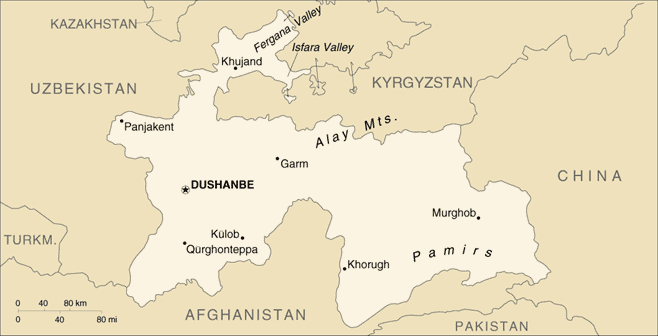
| Click map for larger view |
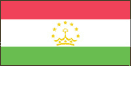
| Click flag for Country Report |




| TRAFFICKING IN PERSONS |
Current situation: Tajikistan is a source country for women trafficked through Kyrgyzstan and Russia to the UAE, Turkey,
and Russia for the purpose of commercial sexual exploitation; men are trafficked to Russia and Kazakhstan for the purpose
of forced labor, primarily in the construction and agricultural industries; boys and girls are trafficked internally for various
purposes, including forced labor and forced begging
Tier rating: Tier 2 Watch List - Tajikistan is on the Tier 2 Watch List for its failure to provide evidence of increasing efforts
to combat human trafficking, especially efforts to investigate, prosecute, convict, and sentence traffickers; despite evidence
of low- and mid-level officials' complicity in trafficking, the government did not punish any public officials for trafficking
complicity during 2007; lack of capacity and poor coordination between government institutions remained key obstacles to
effective anti-trafficking efforts (2008)
and Russia for the purpose of commercial sexual exploitation; men are trafficked to Russia and Kazakhstan for the purpose
of forced labor, primarily in the construction and agricultural industries; boys and girls are trafficked internally for various
purposes, including forced labor and forced begging
Tier rating: Tier 2 Watch List - Tajikistan is on the Tier 2 Watch List for its failure to provide evidence of increasing efforts
to combat human trafficking, especially efforts to investigate, prosecute, convict, and sentence traffickers; despite evidence
of low- and mid-level officials' complicity in trafficking, the government did not punish any public officials for trafficking
complicity during 2007; lack of capacity and poor coordination between government institutions remained key obstacles to
effective anti-trafficking efforts (2008)

Matlubkhon Davlatov
Deputy Prime Minister
since 5 January 2012
Deputy Prime Minister
since 5 January 2012