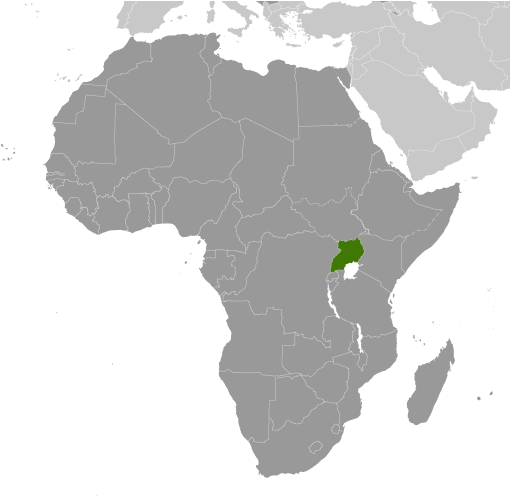
| UGANDA Republic of Uganda Republic of Uganda Joined United Nations: 25 October 1962 Human Rights as assured by their constitution Click here Updated 01 September 2012 |
| CAPITAL |
| POPULATION |
| CHIEF OF STATE |
| SELECTION PROCESS |
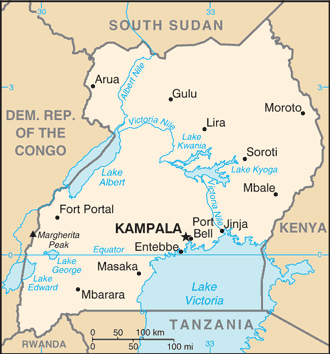
Kampala
33,640,833
note: estimates for this country explicitly take into account the effects of excess
mortality due to AIDS; this can result in lower life expectancy, higher infant
mortality and death rates, lower population and growth rates, and changes in the
distribution of population by age and sex than would otherwise be expected (July
2012 est.)
note: estimates for this country explicitly take into account the effects of excess
mortality due to AIDS; this can result in lower life expectancy, higher infant
mortality and death rates, lower population and growth rates, and changes in the
distribution of population by age and sex than would otherwise be expected (July
2012 est.)
Lt. Gen. Yoweri Kaguta Museveni
President since 26 January 1986
President since 26 January 1986
The president is both chief of state and head of government;
President reelected by popular vote for a five-year term with no
term limits; election last held 18 February 2011
Next scheduled election: 2016
President reelected by popular vote for a five-year term with no
term limits; election last held 18 February 2011
Next scheduled election: 2016
HEAD OF GOVERNMENT
SELECTION PROCESS
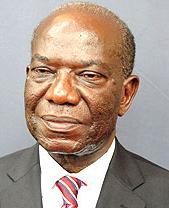
Edward Ssekandi
Vice President since 24 May 2011
Vice President since 24 May 2011
The president is both the chief of state and head of government;
the prime minister assists the president in the supervision of the
cabinet.
the prime minister assists the president in the supervision of the
cabinet.
| DECLARATION OF HUMAN RIGHTS |
| ETHNIC GROUPS |
Baganda 16.9%, Banyakole 9.5%, Basoga 8.4%, Bakiga 6.9%, Iteso 6.4%, Langi 6.1%, Acholi 4.7%, Bagisu 4.6%,
Lugbara 4.2%, Bunyoro 2.7%, other 29.6% (2002 census)
Lugbara 4.2%, Bunyoro 2.7%, other 29.6% (2002 census)
| RELIGIONS |
Roman Catholic 41.9%, Protestant 42% (Anglican 35.9%, Pentecostal 4.6%, Seventh Day Adventist 1.5%), Muslim 12.1%,
other 3.1%, none 0.9% (2002 census)
other 3.1%, none 0.9% (2002 census)
| GOVERNMENT STRUCTURE |
Republic , 50 states, 56 districts, note: as of a July 2005, 13 new districts were reportedly added bringing the total up to 69; In
1995, the government restored the legal system to one based on English common law and customary law; accepts compulsory
ICJ jurisdiction, with reservations
Executive: The president is both chief of state and head of government; the prime minister assists the president in the supervision of
the cabinet. President reelected by popular vote for a five-year term; election last held 18 February 2011 (next to be held in 2016)
Legislative: Unicameral National Assembly (375 seats; 238 members elected by popular vote, 112 women directly elected,
25 nominated by legally established special interest groups [army 10, disabled 5, youth 5, labor 5], additional ex-officio
members may be nominated by the President; members serve five-year terms)
elections: last held on 18 February 2011 (next to be held in 2016)
Judicial: Court of Appeal (judges are appointed by the president and approved by the legislature); High Court (judges are
appointed by the president)
1995, the government restored the legal system to one based on English common law and customary law; accepts compulsory
ICJ jurisdiction, with reservations
Executive: The president is both chief of state and head of government; the prime minister assists the president in the supervision of
the cabinet. President reelected by popular vote for a five-year term; election last held 18 February 2011 (next to be held in 2016)
Legislative: Unicameral National Assembly (375 seats; 238 members elected by popular vote, 112 women directly elected,
25 nominated by legally established special interest groups [army 10, disabled 5, youth 5, labor 5], additional ex-officio
members may be nominated by the President; members serve five-year terms)
elections: last held on 18 February 2011 (next to be held in 2016)
Judicial: Court of Appeal (judges are appointed by the president and approved by the legislature); High Court (judges are
appointed by the president)
| LANGUAGES |
English (official national language, taught in grade schools, used in courts of law and by most newspapers and some radio
broadcasts), Ganda or Luganda (most widely used of the Niger-Congo languages, preferred for native language publications in
the capital and may be taught in school), other Niger-Congo languages, Nilo-Saharan languages, Swahili, Arabic
broadcasts), Ganda or Luganda (most widely used of the Niger-Congo languages, preferred for native language publications in
the capital and may be taught in school), other Niger-Congo languages, Nilo-Saharan languages, Swahili, Arabic
| BRIEF HISTORY |
| ECONOMIC OVERVIEW |
Uganda has substantial natural resources, including fertile soils, regular rainfall, small deposits of copper, gold, and other
minerals, and recently discovered oil. Uganda has never conducted a national minerals survey. Agriculture is the most important
sector of the economy, employing over 80% of the work force. Coffee accounts for the bulk of export revenues. Since 1986,
the government - with the support of foreign countries and international agencies - has acted to rehabilitate and stabilize the
economy by undertaking currency reform, raising producer prices on export crops, increasing prices of petroleum products,
and improving civil service wages. The policy changes are especially aimed at dampening inflation and boosting production and
export earnings. Since 1990 economic reforms ushered in an era of solid economic growth based on continued investment in
infrastructure, improved incentives for production and exports, lower inflation, better domestic security, and the return of exiled
Indian-Ugandan entrepreneurs. Uganda has received about $2 billion in multilateral and bilateral debt relief. In 2007 Uganda
received $10 million for a Millennium Challenge Account Threshold Program. The global economic downturn has hurt
Uganda's exports; however, Uganda''s GDP growth is still relatively strong due to past reforms and sound management of the
downturn. Oil revenues and taxes will become a larger source of government funding as oil comes on line in the next few years.
Rising food and fuel prices in 2011 led to protests. Instability in southern Sudan is a risk for the Ugandan economy in 2012
because Uganda''s main export partner is Sudan, and Uganda is a key destination for Sudanese refugees.
Source: CIA World Factbook (select Uganda)
minerals, and recently discovered oil. Uganda has never conducted a national minerals survey. Agriculture is the most important
sector of the economy, employing over 80% of the work force. Coffee accounts for the bulk of export revenues. Since 1986,
the government - with the support of foreign countries and international agencies - has acted to rehabilitate and stabilize the
economy by undertaking currency reform, raising producer prices on export crops, increasing prices of petroleum products,
and improving civil service wages. The policy changes are especially aimed at dampening inflation and boosting production and
export earnings. Since 1990 economic reforms ushered in an era of solid economic growth based on continued investment in
infrastructure, improved incentives for production and exports, lower inflation, better domestic security, and the return of exiled
Indian-Ugandan entrepreneurs. Uganda has received about $2 billion in multilateral and bilateral debt relief. In 2007 Uganda
received $10 million for a Millennium Challenge Account Threshold Program. The global economic downturn has hurt
Uganda's exports; however, Uganda''s GDP growth is still relatively strong due to past reforms and sound management of the
downturn. Oil revenues and taxes will become a larger source of government funding as oil comes on line in the next few years.
Rising food and fuel prices in 2011 led to protests. Instability in southern Sudan is a risk for the Ugandan economy in 2012
because Uganda''s main export partner is Sudan, and Uganda is a key destination for Sudanese refugees.
Source: CIA World Factbook (select Uganda)
| POLITICAL CLIMATE |
Politics of Uganda takes place in a framework of a presidential republic, whereby the President of Uganda is both head of
state and head of government, and of a pluriform multi-party system. Executive power is exercised by the government.
Legislative power is vested in both the government and the National Assembly. The system is based on a democratic
parliamentary system with universal suffrage for all citizens over 18 years of age. In a measure ostensibly designed to reduce
sectarian violence, political parties were restricted in their activities from 1986. In the non-party "Movement" system instituted
by Museveni, political parties continued to exist but could not campaign in elections or field candidates directly (although
electoral candidates could belong to political parties). A constitutional referendum cancelled this 19-year ban on multi-party
politics in July 2005. The presidential elections were held in February 2006. Museveni ran against several candidates, the most
prominent of whom was exiled Dr. Kizza Besigye. Museveni was declared the winner in the elections which were
predominantly free and fair according to international and national observers. Despite technically democratic elections,
harassment of opposition had started months earlier in the form of disturbing of opposition campaign, detention of activists,
rape and other criminal allegations against Besigye and use of state funds for electoral campaigning.
Source: Wikipedia: Politics of Uganda
state and head of government, and of a pluriform multi-party system. Executive power is exercised by the government.
Legislative power is vested in both the government and the National Assembly. The system is based on a democratic
parliamentary system with universal suffrage for all citizens over 18 years of age. In a measure ostensibly designed to reduce
sectarian violence, political parties were restricted in their activities from 1986. In the non-party "Movement" system instituted
by Museveni, political parties continued to exist but could not campaign in elections or field candidates directly (although
electoral candidates could belong to political parties). A constitutional referendum cancelled this 19-year ban on multi-party
politics in July 2005. The presidential elections were held in February 2006. Museveni ran against several candidates, the most
prominent of whom was exiled Dr. Kizza Besigye. Museveni was declared the winner in the elections which were
predominantly free and fair according to international and national observers. Despite technically democratic elections,
harassment of opposition had started months earlier in the form of disturbing of opposition campaign, detention of activists,
rape and other criminal allegations against Besigye and use of state funds for electoral campaigning.
Source: Wikipedia: Politics of Uganda
| INTERNATIONAL DISPUTES |
Uganda is subject to armed fighting among hostile ethnic groups, rebels, armed gangs, militias, and various government forces
that extend across its borders; Uganda hosts 209,860 Sudanese, 27,560 Congolese, and 19,710 Rwandan refugees, while
Ugandan refugees as well as members of the Lord's Resistance Army (LRA) seek shelter in southern Sudan and the
Democratic Republic of the Congo's Garamba National Park; LRA forces have also attacked Kenyan villages across the
border
that extend across its borders; Uganda hosts 209,860 Sudanese, 27,560 Congolese, and 19,710 Rwandan refugees, while
Ugandan refugees as well as members of the Lord's Resistance Army (LRA) seek shelter in southern Sudan and the
Democratic Republic of the Congo's Garamba National Park; LRA forces have also attacked Kenyan villages across the
border


| REFUGEES AND INTERNALLY DISPLACED PERSONS (IDP) |
Refugees 81,840 (Democratic Republic of Congo); 21,899 (Somalia); 19,382 (Sudan); 12,590 (Rwanda) (2010)
IDPs: 30,000 (northern Uganda) (2011)
IDPs: 30,000 (northern Uganda) (2011)
| ILLICIT DRUGS |
None reported.
| HUMAN RIGHTS STATEMENTS, ANALYSIS AND CRITIQUES |
2011 Human Rights Report: Uganda
Bureau of Democracy, Human Rights, and Labor
2011 Country Reports on Human Rights Practices
May 24, 2012
Uganda is a constitutional republic led since 1986 by President Yoweri Museveni of the ruling National Resistance Movement
(NRM) party. Voters reelected Museveni to another five-year term in February. While the elections marked an improvement over
previous elections, they were marred by irregularities. State security forces (SSF) generally reported to civilian authorities.
The three most important human rights problems in the country were lack of respect for the integrity of the person (including
unlawful killings, torture, and other abuse of suspects and detainees); unwarranted restrictions on civil liberties (freedom of
assembly, the media, and association); and violence and discrimination against marginalized groups (women, including female
genital mutilation victims; children, including victims of sexual abuse and ritual killing; persons with disabilities; and the lesbian, gay,
bisexual, and transgender community).
Other human rights problems included mob violence; harsh prison conditions; official corruption; arbitrary and politically motivated
arrest and detention; incommunicado and lengthy pretrial detention; restrictions on the right to a fair trial; electoral irregularities;
trafficking in persons; and forced labor, including child labor.
The Lord’s Resistance Army (LRA), driven out of the country in 2005, continued to hold children forcibly abducted from the
country. The governments of Uganda, South Sudan, the Central African Republic (CAR), and the Democratic Republic of the
Congo (DRC) continued military actions against the LRA.
SSF and other government agents committed human rights abuses, generally with impunity. The government took minimal steps to
hold perpetrators accountable.
Click here to read more »
Bureau of Democracy, Human Rights, and Labor
2011 Country Reports on Human Rights Practices
May 24, 2012
Uganda is a constitutional republic led since 1986 by President Yoweri Museveni of the ruling National Resistance Movement
(NRM) party. Voters reelected Museveni to another five-year term in February. While the elections marked an improvement over
previous elections, they were marred by irregularities. State security forces (SSF) generally reported to civilian authorities.
The three most important human rights problems in the country were lack of respect for the integrity of the person (including
unlawful killings, torture, and other abuse of suspects and detainees); unwarranted restrictions on civil liberties (freedom of
assembly, the media, and association); and violence and discrimination against marginalized groups (women, including female
genital mutilation victims; children, including victims of sexual abuse and ritual killing; persons with disabilities; and the lesbian, gay,
bisexual, and transgender community).
Other human rights problems included mob violence; harsh prison conditions; official corruption; arbitrary and politically motivated
arrest and detention; incommunicado and lengthy pretrial detention; restrictions on the right to a fair trial; electoral irregularities;
trafficking in persons; and forced labor, including child labor.
The Lord’s Resistance Army (LRA), driven out of the country in 2005, continued to hold children forcibly abducted from the
country. The governments of Uganda, South Sudan, the Central African Republic (CAR), and the Democratic Republic of the
Congo (DRC) continued military actions against the LRA.
SSF and other government agents committed human rights abuses, generally with impunity. The government took minimal steps to
hold perpetrators accountable.
Click here to read more »
22 October 2010
Committee on the Elimination of Discrimination against Women
Forty-seventh session
4 - 22 October 2010
Concluding observations of the Committee on the Elimination of Discrimination against Women
Uganda
Introduction
2. The Committee expresses its appreciation to the State party for its combined fourth, fifth, sixth and seventh periodic report,
which was well structured and in general followed the Committee’s guidelines for the preparation of reports with references to the
previous concluding observations, although it lacked references to the Committee’s general recommendations, as well as some
specific disaggregated data, and was overdue. The Committee expresses its appreciation to the State party for its oral presentation,
the written replies to the list of issues and questions raised by its pre-session working group and the further clarifications to the
questions posed orally by the Committee.
Positive aspects
5. The Committee welcomes the promulgation of the 2006 Refugee Act which contains provisions in line with international
standards, including the specific provision recognizing discriminatory practices based on gender as a ground for seeking asylum.
6. The Committee welcomes the progress achieved since the consideration of the State party’s third periodic report in 2002
(CEDAW/C/UGA/3), including the legislative reforms that have been undertaken and the adoption of a wide range of legislative
measures. Specific reference is made to:
a) The Land Act Amendment (2004);
b) The Employment Act (2006);
Principal areas of concern and recommendations
9. The Committee recalls the State party’s obligation to systematically and continuously implement all the provisions of the
Convention on the Elimination of All Forms of Discrimination against Women and views the concerns and recommendations
identified in the present concluding observations as requiring the State party’s priority attention between now and the submission of
the next periodic report. Consequently, the Committee urges the State party to focus on those areas in its implementation activities
and to report on action taken and results achieved in its next periodic report. It calls upon the State party to submit the present
concluding observations to all relevant ministries, to the National Assembly and to the judiciary, so as to ensure their full
implementation.
Click here to read more »
Committee on the Elimination of Discrimination against Women
Forty-seventh session
4 - 22 October 2010
Concluding observations of the Committee on the Elimination of Discrimination against Women
Uganda
Introduction
2. The Committee expresses its appreciation to the State party for its combined fourth, fifth, sixth and seventh periodic report,
which was well structured and in general followed the Committee’s guidelines for the preparation of reports with references to the
previous concluding observations, although it lacked references to the Committee’s general recommendations, as well as some
specific disaggregated data, and was overdue. The Committee expresses its appreciation to the State party for its oral presentation,
the written replies to the list of issues and questions raised by its pre-session working group and the further clarifications to the
questions posed orally by the Committee.
Positive aspects
5. The Committee welcomes the promulgation of the 2006 Refugee Act which contains provisions in line with international
standards, including the specific provision recognizing discriminatory practices based on gender as a ground for seeking asylum.
6. The Committee welcomes the progress achieved since the consideration of the State party’s third periodic report in 2002
(CEDAW/C/UGA/3), including the legislative reforms that have been undertaken and the adoption of a wide range of legislative
measures. Specific reference is made to:
a) The Land Act Amendment (2004);
b) The Employment Act (2006);
Principal areas of concern and recommendations
9. The Committee recalls the State party’s obligation to systematically and continuously implement all the provisions of the
Convention on the Elimination of All Forms of Discrimination against Women and views the concerns and recommendations
identified in the present concluding observations as requiring the State party’s priority attention between now and the submission of
the next periodic report. Consequently, the Committee urges the State party to focus on those areas in its implementation activities
and to report on action taken and results achieved in its next periodic report. It calls upon the State party to submit the present
concluding observations to all relevant ministries, to the National Assembly and to the judiciary, so as to ensure their full
implementation.
Click here to read more »
Uganda Targets NGOs in Escalation of Assault on LGBT Rights
Jun 20 2012 - 2:12pm
Freedom House strongly condemns Uganda’s targeting of civil society in a new and disturbing tactic in the country’s ongoing
assault on LGBT rights. In a plan announced today, the government will revoke the registrations of 38 non-governmental
organizations (NGOs) it accuses of promoting homosexuality, effectively banning them from operating in the country. The plan
was announced by Uganda’s ethics minister, Simon Lokodo, who claims that the NGOs channel foreign funds to support gays and
lesbians who recruit children into homosexuality. The move will only intensify international condemnations against Uganda’s
statutory intolerance and violation of human rights, and should be immediately withdrawn.
Homosexuality is illegal in Uganda, and the country’s parliament has repeatedly proposed legislation to harshly persecute the LGBT
community. In February 2012 a legislator reintroduced an anti-gay bill that would enforce the death penalty or life imprisonment
against homosexuals in some circumstances, but strong international outcry has made it more likely that those provisions will be
dropped in future drafts. The version currently under deliberation would enforce strict penalties for “promotion” of homosexuality,
broadly defined to include financial support for homosexual individuals.
Harassment and repression of LGBT groups continues to escalate in severity. On June 18, 2012, police forces raided a lesbian,
gay, bisexual, and intersex (LGBTI) workshop in the capital city of Kampala, arbitrarily detaining around 20 human rights
defenders, as well as other hotel guests and staff at the venue. Several participants were arrested and intimidated by police.
Another LGBTI workshop was similarly shut down by Lokodo and his forces four months earlier.
Uganda, under the powerful rule of President Yoweri Museveni for over 26 years, is rated Partly Free in Freedom House’s
Freedom in the World 2012 survey, and is trending downward due to poor conduct of national elections and violent crackdowns on
protesters and journalists.
Click here to read more »
Jun 20 2012 - 2:12pm
Freedom House strongly condemns Uganda’s targeting of civil society in a new and disturbing tactic in the country’s ongoing
assault on LGBT rights. In a plan announced today, the government will revoke the registrations of 38 non-governmental
organizations (NGOs) it accuses of promoting homosexuality, effectively banning them from operating in the country. The plan
was announced by Uganda’s ethics minister, Simon Lokodo, who claims that the NGOs channel foreign funds to support gays and
lesbians who recruit children into homosexuality. The move will only intensify international condemnations against Uganda’s
statutory intolerance and violation of human rights, and should be immediately withdrawn.
Homosexuality is illegal in Uganda, and the country’s parliament has repeatedly proposed legislation to harshly persecute the LGBT
community. In February 2012 a legislator reintroduced an anti-gay bill that would enforce the death penalty or life imprisonment
against homosexuals in some circumstances, but strong international outcry has made it more likely that those provisions will be
dropped in future drafts. The version currently under deliberation would enforce strict penalties for “promotion” of homosexuality,
broadly defined to include financial support for homosexual individuals.
Harassment and repression of LGBT groups continues to escalate in severity. On June 18, 2012, police forces raided a lesbian,
gay, bisexual, and intersex (LGBTI) workshop in the capital city of Kampala, arbitrarily detaining around 20 human rights
defenders, as well as other hotel guests and staff at the venue. Several participants were arrested and intimidated by police.
Another LGBTI workshop was similarly shut down by Lokodo and his forces four months earlier.
Uganda, under the powerful rule of President Yoweri Museveni for over 26 years, is rated Partly Free in Freedom House’s
Freedom in the World 2012 survey, and is trending downward due to poor conduct of national elections and violent crackdowns on
protesters and journalists.
Click here to read more »
Press releases
19 June 2012
Joint Press Statement: Police raid on human rights workshop in Kampala condemned
Yesterday’s raid on a lesbian, gay, bisexual, transgender and intersex (LGBTI) workshop by the Uganda police was arbitrary, and
an illegitimate infringement on freedom of association and assembly, said the East and Horn of Africa Human Rights Defenders
Project (EHAHRDP), Front Line Defenders(FL), Foundation for Human Rights Initiative (FHRI), Amnesty International (AI) and
the Civil Society Coalition on Human Rights and Constitutional Law (CSCHRCL).
The skills-building workshop for LGBTI rights activists at Esella Country Hotel outside Kampala, was abruptly closed after Uganda
police raided the venue a few hours after the three day workshop started. The workshop, organised by EHAHRDP, brought
together approximately twenty defenders of LGBTI rights from Uganda, Kenya, Tanzania, and Rwanda.
This incident occurred barely four months after another LGBTI workshop was arbitrarily shut down by the Minister of State for
Ethics and Integrity, Hon. Rev. Fr. Lokodo Simon.
“This arbitrary closure confirms a pattern of behaviour by the authorities, that LGBTI people, and those working on LGBTI issues,
will not be afforded the same protections as other people in this country” said Hassan Shire Sheikh, Executive Director of
EHAHRDP.
Local journalists were the first to arrive at the workshop venue, having been tipped off by the Hon. Rev. Fr Lokodo Simon that
arrests were to occur at the venue. A large contingent of uniformed and plain-clothed police arrived at the venue shortly after, and
sealed off all entrances.
Workshop participants, other hotel guests and hotel staff were then effectively held hostage for over three hours while police
attempted to identify and detain the participants. Two EHAHRDP staff members, an EHAHRDP intern, and three workshop
participants were detained in a police bus for approximately one hour. One of the detained participants, Jane Wothaya,
Communications Officer with Gay Kenya Trust, said:
“While walking back to the room with other colleagues, three police officers ran after me and grabbed me, mishandling me as they
walked me back towards the front of the hotel. I felt intimidated... [and] was not informed why I was being arrested, or why I was
picked among a group of other persons.”
Those who were detained eventually met with the Regional Criminal Investigations Department (CID) Officer Charles Kataratambi
and other CID officers. The police advised EHAHRDP to stay the proceeding of the training and to deliver to the CID a copy of
their registration and incorporation documents, which EHAHRDP submitted on 19th June 2012. EHAHRDP was further advised to
seek approval from police institutions when such gatherings are scheduled to occur in order to avoid future disruptions.
Click here to read more »
19 June 2012
Joint Press Statement: Police raid on human rights workshop in Kampala condemned
Yesterday’s raid on a lesbian, gay, bisexual, transgender and intersex (LGBTI) workshop by the Uganda police was arbitrary, and
an illegitimate infringement on freedom of association and assembly, said the East and Horn of Africa Human Rights Defenders
Project (EHAHRDP), Front Line Defenders(FL), Foundation for Human Rights Initiative (FHRI), Amnesty International (AI) and
the Civil Society Coalition on Human Rights and Constitutional Law (CSCHRCL).
The skills-building workshop for LGBTI rights activists at Esella Country Hotel outside Kampala, was abruptly closed after Uganda
police raided the venue a few hours after the three day workshop started. The workshop, organised by EHAHRDP, brought
together approximately twenty defenders of LGBTI rights from Uganda, Kenya, Tanzania, and Rwanda.
This incident occurred barely four months after another LGBTI workshop was arbitrarily shut down by the Minister of State for
Ethics and Integrity, Hon. Rev. Fr. Lokodo Simon.
“This arbitrary closure confirms a pattern of behaviour by the authorities, that LGBTI people, and those working on LGBTI issues,
will not be afforded the same protections as other people in this country” said Hassan Shire Sheikh, Executive Director of
EHAHRDP.
Local journalists were the first to arrive at the workshop venue, having been tipped off by the Hon. Rev. Fr Lokodo Simon that
arrests were to occur at the venue. A large contingent of uniformed and plain-clothed police arrived at the venue shortly after, and
sealed off all entrances.
Workshop participants, other hotel guests and hotel staff were then effectively held hostage for over three hours while police
attempted to identify and detain the participants. Two EHAHRDP staff members, an EHAHRDP intern, and three workshop
participants were detained in a police bus for approximately one hour. One of the detained participants, Jane Wothaya,
Communications Officer with Gay Kenya Trust, said:
“While walking back to the room with other colleagues, three police officers ran after me and grabbed me, mishandling me as they
walked me back towards the front of the hotel. I felt intimidated... [and] was not informed why I was being arrested, or why I was
picked among a group of other persons.”
Those who were detained eventually met with the Regional Criminal Investigations Department (CID) Officer Charles Kataratambi
and other CID officers. The police advised EHAHRDP to stay the proceeding of the training and to deliver to the CID a copy of
their registration and incorporation documents, which EHAHRDP submitted on 19th June 2012. EHAHRDP was further advised to
seek approval from police institutions when such gatherings are scheduled to occur in order to avoid future disruptions.
Click here to read more »
Uganda making life tough for NGOs, LGBT rights
by Maria Burnett
Published in: CNN
August 30, 2012
I’ve interviewed hundreds of victims and witnesses of human rights abuses in Uganda, but I was genuinely surprised at the fear I
heard recently when I met with activists in the country. “If you preach human rights, you are anti-development, an economic
saboteur,” a colleague told me. “You aren’t going to talk about land, oil, and good governance. This is just the beginning, but the
tensions have been accumulating.”
Uganda has made the news in recent months over issues like the Ebola virus, Joseph Kony, and the notorious anti-homosexuality
law known as the “kill the gays bill.” Less-well-known has been its longstanding patterns of torture and mistreatment of detainees
by security forces.
President Yoweri Museveni and the ruling National Resistance Movement have been in power for more than 25 years, with a 2005
constitutional amendment lifting presidential term limits and permitting him to run and win in 2006, and then again, heavily assisted
by off-budget spending from state coffers, in 2011.
Since 2011, Museveni has faced increasing criticism for economic woes, corruption, unemployment, rising HIV rates and
deteriorating health and education services. In April 2011, demonstrators “walked to work” to protest raising food and fuel prices.
The military and police took to the streets, using live ammunition and killing at least nine bystanders and beating journalists
documenting the events. The government has routinely blocked demonstrations in the last few years, contending that they threaten
public safety.
The president appears to be preparing to run again in 2016 – which would be his 30th year in office – and it seems no coincidence
that in the wake of growing public grievances, the ruling party’s officials are scrutinizing nongovernmental organizations and the
impact they have on public perceptions of governance and management of public funds.
Organizations working on human rights, land acquisitions, oil revenue transparency, and other sensitive issues are the main targets,
and apparently viewed as a threat to the administration’s interests. Uganda’s laws reflect this analysis. The intelligence agencies are
legally mandated to monitor civil society, and the president’s office has a role in reviewing requests to do research, via the Uganda
Council on Science and Technology.
Click here to read more »
by Maria Burnett
Published in: CNN
August 30, 2012
I’ve interviewed hundreds of victims and witnesses of human rights abuses in Uganda, but I was genuinely surprised at the fear I
heard recently when I met with activists in the country. “If you preach human rights, you are anti-development, an economic
saboteur,” a colleague told me. “You aren’t going to talk about land, oil, and good governance. This is just the beginning, but the
tensions have been accumulating.”
Uganda has made the news in recent months over issues like the Ebola virus, Joseph Kony, and the notorious anti-homosexuality
law known as the “kill the gays bill.” Less-well-known has been its longstanding patterns of torture and mistreatment of detainees
by security forces.
President Yoweri Museveni and the ruling National Resistance Movement have been in power for more than 25 years, with a 2005
constitutional amendment lifting presidential term limits and permitting him to run and win in 2006, and then again, heavily assisted
by off-budget spending from state coffers, in 2011.
Since 2011, Museveni has faced increasing criticism for economic woes, corruption, unemployment, rising HIV rates and
deteriorating health and education services. In April 2011, demonstrators “walked to work” to protest raising food and fuel prices.
The military and police took to the streets, using live ammunition and killing at least nine bystanders and beating journalists
documenting the events. The government has routinely blocked demonstrations in the last few years, contending that they threaten
public safety.
The president appears to be preparing to run again in 2016 – which would be his 30th year in office – and it seems no coincidence
that in the wake of growing public grievances, the ruling party’s officials are scrutinizing nongovernmental organizations and the
impact they have on public perceptions of governance and management of public funds.
Organizations working on human rights, land acquisitions, oil revenue transparency, and other sensitive issues are the main targets,
and apparently viewed as a threat to the administration’s interests. Uganda’s laws reflect this analysis. The intelligence agencies are
legally mandated to monitor civil society, and the president’s office has a role in reviewing requests to do research, via the Uganda
Council on Science and Technology.
Click here to read more »
H.E.YOWERI KAGUTA MUSEVENI- PRESIDENT OF THE REPUBLIC OF UGANDA
AT THE 4th EXTRAORDINARY SUMMIT AND SPECIAL SESSIONON THE SEXUAL GENDER-BASED VIOLENCE IN THE
GREAT LAKES REGION
MUNYONYO, 15th DECEMBER 2011
The subject of “Sexual and Gender-based Violence”, but the Theme is: “United to Prevent Sexual and Gender-based Violence, End
Impunity and Provide Support to the Victims.”
Addressing this subject from a historical perspective, I think that, it is a shameful subject considering that many of our African
cultures did not take kindly to harsh treatment of women. Women in my culture were pampered and spoiled because a family that
treated women badly was penalized by being denied the right to marry from respectable families. Therefore, there is no good reason
in present day Africa why sexual violence should be tolerated especially as we struggle to stabilize our nations. Therefore, the only
thing I can say here is that indeed there should be “zero tolerance” on this practice and to allow impunity in this era is indeed
indiscipline of the highest order.
I am informed that in Uganda, Gender-based Violence is reportedly on the increase. I note many times that our media show that
mostly women are often the victims of domestic and sexual violence. This has resulted in some women dying and many have
suffered from sexually transmitted diseases including HIV/AIDS.
The Uganda Police Crime Report for 2008 shows that 1,536 cases of rape were reported to Police compared to 511 cases in 2007,
indicating more than 100% increase!
Some studies have suggested that there is a strong link between the risk of domestic violence and alcohol consumption which I have
learned has been steadily rising higher.
Women have made public complaints to me, petitioning me to reinstate the Graduated tax which the NRM Government abolished.
They are convinced that perhaps men may not have to drink the whole day if they had reason to work. Apparently, without the
obligation to pay graduated tax, men are no longer pushed to work and, therefore, ‘drink themselves to the grave’.
This is a pathetic situation and indeed as I said already it is a real shame to the generation of the African men today who behave like
this. If we have never felt ashamed in the past because of the famines that kill our children, or the HIV/AIDS scourge that wiped off
whole communities because of irresponsible lifestyles, I think, time has come for Africans to really reconsider their lifestyles so that
we change for the better.
Click here to read more »
AT THE 4th EXTRAORDINARY SUMMIT AND SPECIAL SESSIONON THE SEXUAL GENDER-BASED VIOLENCE IN THE
GREAT LAKES REGION
MUNYONYO, 15th DECEMBER 2011
The subject of “Sexual and Gender-based Violence”, but the Theme is: “United to Prevent Sexual and Gender-based Violence, End
Impunity and Provide Support to the Victims.”
Addressing this subject from a historical perspective, I think that, it is a shameful subject considering that many of our African
cultures did not take kindly to harsh treatment of women. Women in my culture were pampered and spoiled because a family that
treated women badly was penalized by being denied the right to marry from respectable families. Therefore, there is no good reason
in present day Africa why sexual violence should be tolerated especially as we struggle to stabilize our nations. Therefore, the only
thing I can say here is that indeed there should be “zero tolerance” on this practice and to allow impunity in this era is indeed
indiscipline of the highest order.
I am informed that in Uganda, Gender-based Violence is reportedly on the increase. I note many times that our media show that
mostly women are often the victims of domestic and sexual violence. This has resulted in some women dying and many have
suffered from sexually transmitted diseases including HIV/AIDS.
The Uganda Police Crime Report for 2008 shows that 1,536 cases of rape were reported to Police compared to 511 cases in 2007,
indicating more than 100% increase!
Some studies have suggested that there is a strong link between the risk of domestic violence and alcohol consumption which I have
learned has been steadily rising higher.
Women have made public complaints to me, petitioning me to reinstate the Graduated tax which the NRM Government abolished.
They are convinced that perhaps men may not have to drink the whole day if they had reason to work. Apparently, without the
obligation to pay graduated tax, men are no longer pushed to work and, therefore, ‘drink themselves to the grave’.
This is a pathetic situation and indeed as I said already it is a real shame to the generation of the African men today who behave like
this. If we have never felt ashamed in the past because of the famines that kill our children, or the HIV/AIDS scourge that wiped off
whole communities because of irresponsible lifestyles, I think, time has come for Africans to really reconsider their lifestyles so that
we change for the better.
Click here to read more »
Uganda Human Rights Commission commemorates the UN International Day in Support of Victims of Torture
26 June 2012
Uganda annually joins the rest of the world to remember victims/survivors of torture every 26th June. In Uganda, the Coalition
against Torture (CAT) and the Uganda Human Rights Commission working with international agencies such as the United Nations
Office of the High Commissioner of Human Rights in Uganda have spearheaded the crusade against Torture in the country.
Unlike previous years, 2012 provides Ugandans cause to celebrate because the Parliament of Uganda passed the Prevention and
Prohibition of Torture Bill, 2010 that shall become law upon assent by His Excellency the President of Uganda in fulfillment of
national, regional and international commitments undertaken by Uganda to end torture. The hard work of implementation of the Anti-
Torture Law begins now.
As we remember survivors of torture, the theme this year 2012, is “Torture affects Development, Stop it”.The Coalition Against
Torture (CAT), the Uganda Human Rights Commission with support from the UN Office of the High Commissioner for Human
Rights have this year marked the day with a number of activities which started last week on Thursday 21stJune 2012 with a
Community Dialogue at Kibuye to interface with the community on this important theme. This has been followed by a media
briefing to raise awareness about the day, which will be followed by a public debate in the afternoon at Hotel Africana on ‘The
importance of human rights in development and policy discourse: understanding the effect of torture on development.’
Commemoration activities will be crowned tomorrow 26th June 2012 with a peaceful procession from the Chogm Square to the
KCCA Railway Grounds, with the Minister of Justice and Constitutional Affairs Hon. KahindaOtafiire as the Chief Walker.
We continue to advocate for the elimination of torture in Uganda because torture, inhuman, cruel and degrading treatment continue
to be the leading human rights violations in Uganda. This is evident in the UHRC Annual report of 2011 where it accounted for
34.77% up from 28.3% in 2010. The notable increase is a reflection of the challenge that requires to be addressed with resolve.
The resultant damage to individual, family and society retards progress both at the individual and national levels, greatly affecting
functions and progress at all levels nationally.
Today the obligations of Uganda at international, regional and national level to end torture, cruel, inhuman and degrading treatment
need to be fulfilled more than ever before. Government has demonstrated its commitment to the elimination of torture by embracing
the proposal by the Uganda Human Rights Commission and the Coalition Against Torture (CAT) to enact a law on torture. The
passing of the Prohibition and Prevention of Torture Bill, 2010 is testimony to this. This however, requires urgent implementation.
As we commemorate this year’s UN Day in Support of Victims of Torture and cognisant of the aforementioned, CAT-UHRC and
partners recommend the following;
1. Request for expeditious assent to the Prohibition and Prevention of Torture Bill 2010 which was passed by Parliament on 26th
April 2012 With the comprehensive nature of the bill and deterrent provisions therein, legal redress shall have been found for acts
of torture cruel, inhuman and degrading treatment. Subsequent implementation guidelines for the law need to be put in place for the
law to work.
2. Urge government to prioritise the payment of compensation to persons whose rights were violated and have been awarded
through the UHRC tribunals. The incalculable losses incurred by the individuals and communities through torture can never be
adequately compensated. Delay in receiving compensation is denial of timely justice. The state should allocate adequate funds to
address this anomaly.
3. Expeditious investigation and trial of all cases of torture, cruel, inhuman and degrading treatment. This addresses impunity, a
cardinal impediment to the elimination of torture in Uganda.
4. Improvement of the capacities of all investigative arms of government and the state to accurately and expeditiously handle
crime. With most complaints registered against state actors, it is imperative that investment in modern forensic investigative
technology and techniques is prioritized. This coupled with similar training for security personnel shall greatly reduce incidents of
torture.
5. Provision of competitive rehabilitation services for survivors of torture. The peculiar needs of torture survivors need deliberate
specialized care. The obligation of government to keep survivors healthy ad rehabilitated can only be fulfilled in investing in proper
restorative care and rehabilitation services.
6. Maintaining the Police as the principle law enforcement agency in word and practice with clearly gazetted detention places.
Quasi- security organs greatly contribute to torture since they make follow up difficult.
Click here to read more »
26 June 2012
Uganda annually joins the rest of the world to remember victims/survivors of torture every 26th June. In Uganda, the Coalition
against Torture (CAT) and the Uganda Human Rights Commission working with international agencies such as the United Nations
Office of the High Commissioner of Human Rights in Uganda have spearheaded the crusade against Torture in the country.
Unlike previous years, 2012 provides Ugandans cause to celebrate because the Parliament of Uganda passed the Prevention and
Prohibition of Torture Bill, 2010 that shall become law upon assent by His Excellency the President of Uganda in fulfillment of
national, regional and international commitments undertaken by Uganda to end torture. The hard work of implementation of the Anti-
Torture Law begins now.
As we remember survivors of torture, the theme this year 2012, is “Torture affects Development, Stop it”.The Coalition Against
Torture (CAT), the Uganda Human Rights Commission with support from the UN Office of the High Commissioner for Human
Rights have this year marked the day with a number of activities which started last week on Thursday 21stJune 2012 with a
Community Dialogue at Kibuye to interface with the community on this important theme. This has been followed by a media
briefing to raise awareness about the day, which will be followed by a public debate in the afternoon at Hotel Africana on ‘The
importance of human rights in development and policy discourse: understanding the effect of torture on development.’
Commemoration activities will be crowned tomorrow 26th June 2012 with a peaceful procession from the Chogm Square to the
KCCA Railway Grounds, with the Minister of Justice and Constitutional Affairs Hon. KahindaOtafiire as the Chief Walker.
We continue to advocate for the elimination of torture in Uganda because torture, inhuman, cruel and degrading treatment continue
to be the leading human rights violations in Uganda. This is evident in the UHRC Annual report of 2011 where it accounted for
34.77% up from 28.3% in 2010. The notable increase is a reflection of the challenge that requires to be addressed with resolve.
The resultant damage to individual, family and society retards progress both at the individual and national levels, greatly affecting
functions and progress at all levels nationally.
Today the obligations of Uganda at international, regional and national level to end torture, cruel, inhuman and degrading treatment
need to be fulfilled more than ever before. Government has demonstrated its commitment to the elimination of torture by embracing
the proposal by the Uganda Human Rights Commission and the Coalition Against Torture (CAT) to enact a law on torture. The
passing of the Prohibition and Prevention of Torture Bill, 2010 is testimony to this. This however, requires urgent implementation.
As we commemorate this year’s UN Day in Support of Victims of Torture and cognisant of the aforementioned, CAT-UHRC and
partners recommend the following;
1. Request for expeditious assent to the Prohibition and Prevention of Torture Bill 2010 which was passed by Parliament on 26th
April 2012 With the comprehensive nature of the bill and deterrent provisions therein, legal redress shall have been found for acts
of torture cruel, inhuman and degrading treatment. Subsequent implementation guidelines for the law need to be put in place for the
law to work.
2. Urge government to prioritise the payment of compensation to persons whose rights were violated and have been awarded
through the UHRC tribunals. The incalculable losses incurred by the individuals and communities through torture can never be
adequately compensated. Delay in receiving compensation is denial of timely justice. The state should allocate adequate funds to
address this anomaly.
3. Expeditious investigation and trial of all cases of torture, cruel, inhuman and degrading treatment. This addresses impunity, a
cardinal impediment to the elimination of torture in Uganda.
4. Improvement of the capacities of all investigative arms of government and the state to accurately and expeditiously handle
crime. With most complaints registered against state actors, it is imperative that investment in modern forensic investigative
technology and techniques is prioritized. This coupled with similar training for security personnel shall greatly reduce incidents of
torture.
5. Provision of competitive rehabilitation services for survivors of torture. The peculiar needs of torture survivors need deliberate
specialized care. The obligation of government to keep survivors healthy ad rehabilitated can only be fulfilled in investing in proper
restorative care and rehabilitation services.
6. Maintaining the Police as the principle law enforcement agency in word and practice with clearly gazetted detention places.
Quasi- security organs greatly contribute to torture since they make follow up difficult.
Click here to read more »
[2012-06-27] - Posted by Hurinet - Uganda
MILITARISATION OF THE UGANDA POLICE FORCE IS UNCONSTITUTIONAL
n a press statement issued on 19/June/2012 Human Rights Network-Uganda (HURINET-U) and the National Coalition on Police
Accountability and Reform expressed concern about the continued assertions by the Inspector General of Police to militarize the
Uganda Police Force
HURINET-U AND THE NATIONAL COALITION ON POLICE ACCOUNTABILITY AND REFORM fully appreciate and
commend the Uganda Police Force for the commitment to fulfill its mandate under Article 212 of the Constitution of the Republic
of Uganda of preventing crime, protection of the people of Uganda and their property and generally maintaining law and order in the
country especially in light of the growing challenges of terrorism, robbery, murder among other escalating social evils; HURINET-
U is cognizant of and fully appreciates the need to combat these growing crimes and apprehend the perpetrators to ensure that they
face justice; HURINET-U is however concerned about the continued assertions by the Inspector General of Police, General Kale
Kayihura to militarize the Uganda Police Force (see The Daily Monitor, 18th June, 2012, ‘Police to Use Military Tactics, Says
Kayihura’).
HURINET-U is concerned and indeed contends that this move or direction by the Uganda Police Force is in contradiction with
various provisions of Uganda’s celebrated Constitution which is the guiding instrument to all government institutions including the
Uganda Police Force.
A CALL TO ADHERE TO NORMS OF CONSTITUTIONALISM AMIDST CHALLENGING TIMES
Click here to read more »
MILITARISATION OF THE UGANDA POLICE FORCE IS UNCONSTITUTIONAL
n a press statement issued on 19/June/2012 Human Rights Network-Uganda (HURINET-U) and the National Coalition on Police
Accountability and Reform expressed concern about the continued assertions by the Inspector General of Police to militarize the
Uganda Police Force
HURINET-U AND THE NATIONAL COALITION ON POLICE ACCOUNTABILITY AND REFORM fully appreciate and
commend the Uganda Police Force for the commitment to fulfill its mandate under Article 212 of the Constitution of the Republic
of Uganda of preventing crime, protection of the people of Uganda and their property and generally maintaining law and order in the
country especially in light of the growing challenges of terrorism, robbery, murder among other escalating social evils; HURINET-
U is cognizant of and fully appreciates the need to combat these growing crimes and apprehend the perpetrators to ensure that they
face justice; HURINET-U is however concerned about the continued assertions by the Inspector General of Police, General Kale
Kayihura to militarize the Uganda Police Force (see The Daily Monitor, 18th June, 2012, ‘Police to Use Military Tactics, Says
Kayihura’).
HURINET-U is concerned and indeed contends that this move or direction by the Uganda Police Force is in contradiction with
various provisions of Uganda’s celebrated Constitution which is the guiding instrument to all government institutions including the
Uganda Police Force.
A CALL TO ADHERE TO NORMS OF CONSTITUTIONALISM AMIDST CHALLENGING TIMES
Click here to read more »
The earliest human inhabitants in contemporary Uganda were hunter-gatherers. Residuals of these people are today to be
found among the pygmies in western Uganda. Between approximately 2000 to 1500 years ago, Bantu speaking populations
from central and western Africa migrated and occupied most of the southern parts of the country. The migrants brought with
them agriculture, ironworking skills and new ideas of social and political organization, that by the fifteenth or sixteenth resulted
in the development of centralized kingdoms, including the kingdoms of Buganda, Bunyoro-Kitara and Ankole. Nilotic people,
including Luo and Ateker entered the area from the north probably beginning about AD 100. They were cattle herders and
subsistence farmers who settled mainly the northern and eastern parts of the country. Some Luo invaded the area of Bunyoro
and assimilated with the Bantu there, establishing the Babiito dynasty of the current Omukama (ruler) of Bunyoro-Kitara. Luo
migration proceeded until the 16th century, with some Luo settling amid Bantu people in Eastern Uganda, and proceeding to
the western shores of Lake Victoria in Kenya and Tanzania. The Ateker (Karimojong and Teso peoples) settled in the
north-eastern and eastern parts of the country, and some fused with the Luo in the area north of lake Kyoga. When Arab
traders moved inland from their enclaves along the Indian Ocean coast of East Africa and reached the interior of Uganda in the
1830s, they found several kingdoms with well-developed political institutions. These traders were followed in the 1860s by
British explorers searching for the source of the Nile River. Protestant missionaries entered the country in 1877, followed by
Catholic missionaries in 1879. In 1888, control of the emerging British "sphere of interest" in East Africa was assigned by royal
charter to the Imperial British East Africa Company, an arrangement strengthened in 1890 by an Anglo-German agreement
confirming British dominance over Kenya and Uganda. The high cost of occupying the territory caused the company to
withdraw in 1893, and its administrative functions were taken over by a British commissioner. In 1894, the Kingdom of
Buganda was placed under a formal British protectorate. Britain granted internal self-government to Uganda in 1961, with the
first elections held on March 1, 1961. Benedicto Kiwanuka of the Democratic Party became the first Chief Minister. Uganda
maintained its Commonwealth membership. In succeeding years, supporters of a centralized state vied with those in favor of a
loose federation and a strong role for tribally-based local kingdoms. Political maneuvering climaxed in February 1966, when
Prime Minister Milton Obote suspended the constitution, assumed all government powers, and removed the president and vice
president. In September 1967, a new constitution proclaimed Uganda a republic, gave the president even greater powers, and
abolished the traditional kingdoms. On January 25, 1971, Obote's government was ousted in a military coup led by armed
forces commander Idi Amin Dada. Amin declared himself president, dissolved the parliament, and amended the constitution to
give himself absolute power. Idi Amin's eight-year rule produced economic decline, social disintegration, and massive human
rights violations. The Acholi and Langi ethnic groups were particular objects of Amin's political persecution because they had
supported Obote and made up a large part of the army. In 1978, the International Commission of Jurists estimated that more
than 100,000 Ugandans had been murdered during Amin's reign of terror; some authorities place the figure much higher. In
October 1978, Tanzanian armed forces repulsed an incursion of Amin's troops into Tanzanian territory. The Tanzanian army,
backed by Ugandan exiles waged a war of liberation against Amin's troops and the Libyan soldiers sent to help him. On April
11, 1979, Kampala was captured, and Amin fled with his remaining forces. After Amin's removal, the Uganda National
Liberation Front formed an interim government with Yusuf Lule as president. Obote ruled until July 27, 1985, when an army
brigade, composed mostly of ethnic Acholi troops and commanded by Lt. Gen. Bazilio Olara-Okello, took Kampala and
proclaimed a military government. Obote fled to exile in Zambia. Although agreeing in late 1985 to a cease-fire, the NRA
continued fighting, and seized Kampala and the country in late January 1986, forcing Okello's forces to flee north into Sudan.
Museveni's forces organized a government with Museveni as president. In August 2005, Parliament voted to change the
constitution to lift presidential term limits, allowing Museveni to run for a third term if he wishes to do so. In a referendum in
July, 2005, 92.5% supported restoring multiparty politics, thereby scrapping the no-party or "movement" system. In August
2005, Parliament voted to change the constitution to lift presidential term limits, allowing Museveni to run for a third term if he
wishes to do so. In a referendum in July, 2005, 92.5% supported restoring multiparty politics, thereby scrapping the no-party
or "movement" system. Kizza Besigye, Museveni's political rival, returned from exile in October 2005, and was a presidential
candidate for the 2006 elections. In the same month, Milton Obote died in South Africa. Museveni won the February 2006
presidential election. In 2009, the Anti-Homosexuality Bill was proposed and under consideration. It was proposed on 13
October 2009 by Member of Parliament David Bahati and would, if enacted, broaden the criminalization of homosexuality in
Uganda, including introducing the death penalty for people who have previous convictions, who are HIV-positive, or who
engage in sexual acts with those under 18, introducing extradition for those engaging in same-sex sexual relations outside
Uganda, and penalising individuals, companies, media organizations, or NGOs who support LGBT rights.
Source: Wikipedia: History of Uganda
found among the pygmies in western Uganda. Between approximately 2000 to 1500 years ago, Bantu speaking populations
from central and western Africa migrated and occupied most of the southern parts of the country. The migrants brought with
them agriculture, ironworking skills and new ideas of social and political organization, that by the fifteenth or sixteenth resulted
in the development of centralized kingdoms, including the kingdoms of Buganda, Bunyoro-Kitara and Ankole. Nilotic people,
including Luo and Ateker entered the area from the north probably beginning about AD 100. They were cattle herders and
subsistence farmers who settled mainly the northern and eastern parts of the country. Some Luo invaded the area of Bunyoro
and assimilated with the Bantu there, establishing the Babiito dynasty of the current Omukama (ruler) of Bunyoro-Kitara. Luo
migration proceeded until the 16th century, with some Luo settling amid Bantu people in Eastern Uganda, and proceeding to
the western shores of Lake Victoria in Kenya and Tanzania. The Ateker (Karimojong and Teso peoples) settled in the
north-eastern and eastern parts of the country, and some fused with the Luo in the area north of lake Kyoga. When Arab
traders moved inland from their enclaves along the Indian Ocean coast of East Africa and reached the interior of Uganda in the
1830s, they found several kingdoms with well-developed political institutions. These traders were followed in the 1860s by
British explorers searching for the source of the Nile River. Protestant missionaries entered the country in 1877, followed by
Catholic missionaries in 1879. In 1888, control of the emerging British "sphere of interest" in East Africa was assigned by royal
charter to the Imperial British East Africa Company, an arrangement strengthened in 1890 by an Anglo-German agreement
confirming British dominance over Kenya and Uganda. The high cost of occupying the territory caused the company to
withdraw in 1893, and its administrative functions were taken over by a British commissioner. In 1894, the Kingdom of
Buganda was placed under a formal British protectorate. Britain granted internal self-government to Uganda in 1961, with the
first elections held on March 1, 1961. Benedicto Kiwanuka of the Democratic Party became the first Chief Minister. Uganda
maintained its Commonwealth membership. In succeeding years, supporters of a centralized state vied with those in favor of a
loose federation and a strong role for tribally-based local kingdoms. Political maneuvering climaxed in February 1966, when
Prime Minister Milton Obote suspended the constitution, assumed all government powers, and removed the president and vice
president. In September 1967, a new constitution proclaimed Uganda a republic, gave the president even greater powers, and
abolished the traditional kingdoms. On January 25, 1971, Obote's government was ousted in a military coup led by armed
forces commander Idi Amin Dada. Amin declared himself president, dissolved the parliament, and amended the constitution to
give himself absolute power. Idi Amin's eight-year rule produced economic decline, social disintegration, and massive human
rights violations. The Acholi and Langi ethnic groups were particular objects of Amin's political persecution because they had
supported Obote and made up a large part of the army. In 1978, the International Commission of Jurists estimated that more
than 100,000 Ugandans had been murdered during Amin's reign of terror; some authorities place the figure much higher. In
October 1978, Tanzanian armed forces repulsed an incursion of Amin's troops into Tanzanian territory. The Tanzanian army,
backed by Ugandan exiles waged a war of liberation against Amin's troops and the Libyan soldiers sent to help him. On April
11, 1979, Kampala was captured, and Amin fled with his remaining forces. After Amin's removal, the Uganda National
Liberation Front formed an interim government with Yusuf Lule as president. Obote ruled until July 27, 1985, when an army
brigade, composed mostly of ethnic Acholi troops and commanded by Lt. Gen. Bazilio Olara-Okello, took Kampala and
proclaimed a military government. Obote fled to exile in Zambia. Although agreeing in late 1985 to a cease-fire, the NRA
continued fighting, and seized Kampala and the country in late January 1986, forcing Okello's forces to flee north into Sudan.
Museveni's forces organized a government with Museveni as president. In August 2005, Parliament voted to change the
constitution to lift presidential term limits, allowing Museveni to run for a third term if he wishes to do so. In a referendum in
July, 2005, 92.5% supported restoring multiparty politics, thereby scrapping the no-party or "movement" system. In August
2005, Parliament voted to change the constitution to lift presidential term limits, allowing Museveni to run for a third term if he
wishes to do so. In a referendum in July, 2005, 92.5% supported restoring multiparty politics, thereby scrapping the no-party
or "movement" system. Kizza Besigye, Museveni's political rival, returned from exile in October 2005, and was a presidential
candidate for the 2006 elections. In the same month, Milton Obote died in South Africa. Museveni won the February 2006
presidential election. In 2009, the Anti-Homosexuality Bill was proposed and under consideration. It was proposed on 13
October 2009 by Member of Parliament David Bahati and would, if enacted, broaden the criminalization of homosexuality in
Uganda, including introducing the death penalty for people who have previous convictions, who are HIV-positive, or who
engage in sexual acts with those under 18, introducing extradition for those engaging in same-sex sexual relations outside
Uganda, and penalising individuals, companies, media organizations, or NGOs who support LGBT rights.
Source: Wikipedia: History of Uganda

Click on map for larger view
Click on flag for Country Report



Lt. Gen. Yoweri Kaguta Museveni
President since 26 January 1986
President since 26 January 1986
| TRAFFICKING IN PERSONS |
None reported.
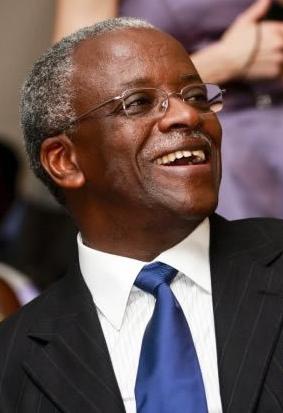
Amama Mbabazi
Prime Minister since 24 May 2011
Prime Minister since 24 May 2011