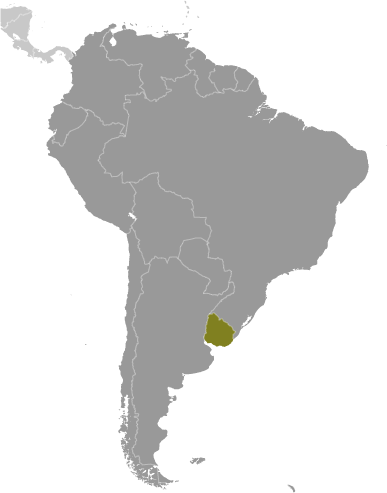
| URUGUAY Oriental Republic of Uruguay Republica Oriental del Uruguay Joined United Nations: 18 December 1945 Human Rights as assured by their constitution Click here Updated 11 August 2012 |
| CAPITAL |
| POPULATION |
| CHIEF OF STATE |
| SELECTION PROCESS |
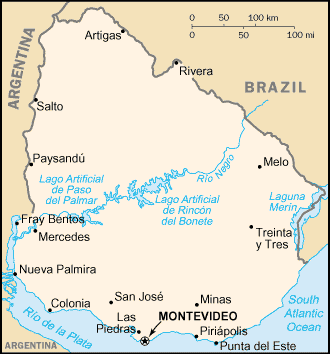
Montevideo
3,316,328 (July 2012 est.)
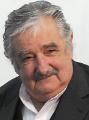
Jose "Pepe" Mujica Cordano
President since 1 March 2010
President since 1 March 2010
President and vice president elected on the same ticket by
popular vote for five-year terms (may not serve consecutive
terms); election last held 29 November 2009
Next scheduled election: October 2014
popular vote for five-year terms (may not serve consecutive
terms); election last held 29 November 2009
Next scheduled election: October 2014
HEAD OF GOVERNMENT
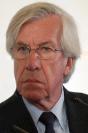
Danilo Astori Saragoza
Vice President since 1 March 2010
Vice President since 1 March 2010
According to the Uruguay Constitution the president is both the
chief of state and head of government
chief of state and head of government
| DECLARATION OF HUMAN RIGHTS |
| ETHNIC GROUPS |
White 88%, mestizo 8%, black 4%, Amerindian (practically nonexistent)
| RELIGIONS |
Roman Catholic 47.1%, non-Catholic Christians 11.1%, nondenominational 23.2%, Jewish 0.3%, atheist or
agnostic 17.2%, other 1.1% (2006)
agnostic 17.2%, other 1.1% (2006)
| GOVERNMENT STRUCTURE |
Constitutional republic comprised of 19 departments (departamentos, singular - departamento); ; Legal system is
based on Spanish civil law system; accepts compulsory ICJ jurisdiction
Executive: president and vice president elected on the same ticket by popular vote for five-year terms (may not serve
consecutive terms); election last held 29 November 2009 (next to be held in October 2014)
Legislative: bicameral General Assembly or Asamblea General consists of Chamber of Senators or Camara de
Senadores (30 seats; members are elected by popular vote to serve five-year terms; vice president has one vote in
the Senate) and Chamber of Representatives or Camara de Representantes (99 seats; members are elected by
popular vote to serve five-year terms)
Elections: Chamber of Senators - last held 25 October 2009 (next to be held in October 2014); Chamber of
Representatives - last held 25 October 2009 (next to be held in October 2014)
Judicial: Supreme Court (judges are nominated by the president and elected for 10-year terms by the General
Assembly)
based on Spanish civil law system; accepts compulsory ICJ jurisdiction
Executive: president and vice president elected on the same ticket by popular vote for five-year terms (may not serve
consecutive terms); election last held 29 November 2009 (next to be held in October 2014)
Legislative: bicameral General Assembly or Asamblea General consists of Chamber of Senators or Camara de
Senadores (30 seats; members are elected by popular vote to serve five-year terms; vice president has one vote in
the Senate) and Chamber of Representatives or Camara de Representantes (99 seats; members are elected by
popular vote to serve five-year terms)
Elections: Chamber of Senators - last held 25 October 2009 (next to be held in October 2014); Chamber of
Representatives - last held 25 October 2009 (next to be held in October 2014)
Judicial: Supreme Court (judges are nominated by the president and elected for 10-year terms by the General
Assembly)
| LANGUAGES |
Spanish, Portunol, or Brazilero (Portuguese-Spanish mix on the Brazilian frontier)
| BRIEF HISTORY |
| ECONOMIC OVERVIEW |
Uruguay's economy is characterized by an export-oriented agricultural sector, a well-educated work force, and high
levels of social spending. Following financial difficulties in the late 1990s and early 2000s, economic growth for
Uruguay averaged 8% annually during the period 2004-08. The 2008-09 global financial crisis put a brake on
Uruguay's vigorous growth, which decelerated to 2.6% in 2009. Nevertheless, the country managed to avoid a
recession and keep positive growth rates, mainly through higher public expenditure and investment, and GDP growth
reached 8.5% in 2010 and 6% in 2011.
Source: CIA World Factbook (select Uruguay)
levels of social spending. Following financial difficulties in the late 1990s and early 2000s, economic growth for
Uruguay averaged 8% annually during the period 2004-08. The 2008-09 global financial crisis put a brake on
Uruguay's vigorous growth, which decelerated to 2.6% in 2009. Nevertheless, the country managed to avoid a
recession and keep positive growth rates, mainly through higher public expenditure and investment, and GDP growth
reached 8.5% in 2010 and 6% in 2011.
Source: CIA World Factbook (select Uruguay)
| POLITICAL CLIMATE |
The Politics of Uruguay abide by a presidential representative democratic republic, under which the President of
Uruguay is both the head of state and the head of government, as well as a multiform party system. The president
exercises executive power and Legislative power is vested in the two chambers of the General Assembly of
Uruguay. The Judiciary branch is independent from that of the executive and legislature.
The Colorado and National parties have been locked in a power struggle, alternating throughout most of Uruguay's
history. The elections of 2004, however, brought the Encuentro Progresista-Frente Amplio-Nueva Mayoría, a
coalition of socialists, former Tupamaros, communists, social democrats, and Christian Democrats among others to
power with majorities in both houses of parliament. A majority vote elected President Tabaré Vázquez.
In 2009, the majority was once again for the Broad Front, however, the amount of votes for the Broad Front didn't
reach consensus, as the majority must be from more than half of the votes casted, so, it was necessary for a runoff to
decide the next President. José Mujica and Luis Alberto Lacalle (supported by its former rivals, the Colorado Party)
disputed the runoff, resulting in a win for the Broad Front candidate, thus being the second President of Uruguay
from that party, being as well, the second consecutive.
Source: Wikipedia: Politics of Uruguay
Uruguay is both the head of state and the head of government, as well as a multiform party system. The president
exercises executive power and Legislative power is vested in the two chambers of the General Assembly of
Uruguay. The Judiciary branch is independent from that of the executive and legislature.
The Colorado and National parties have been locked in a power struggle, alternating throughout most of Uruguay's
history. The elections of 2004, however, brought the Encuentro Progresista-Frente Amplio-Nueva Mayoría, a
coalition of socialists, former Tupamaros, communists, social democrats, and Christian Democrats among others to
power with majorities in both houses of parliament. A majority vote elected President Tabaré Vázquez.
In 2009, the majority was once again for the Broad Front, however, the amount of votes for the Broad Front didn't
reach consensus, as the majority must be from more than half of the votes casted, so, it was necessary for a runoff to
decide the next President. José Mujica and Luis Alberto Lacalle (supported by its former rivals, the Colorado Party)
disputed the runoff, resulting in a win for the Broad Front candidate, thus being the second President of Uruguay
from that party, being as well, the second consecutive.
Source: Wikipedia: Politics of Uruguay
| INTERNATIONAL DISPUTES |
in 2010, the ICJ ruled in favor of Uruguay's operation of two paper mills on the Uruguay River, which forms the
border with Argentina; the two countries formed a joint pollution monitoring regime; uncontested boundary dispute
between Brazil and Uruguay over Braziliera/Brasiliera Island in the Quarai/Cuareim River leaves the tripoint with
Argentina in question; smuggling of firearms and narcotics continues to be an issue along the Uruguay-Brazil border.
border with Argentina; the two countries formed a joint pollution monitoring regime; uncontested boundary dispute
between Brazil and Uruguay over Braziliera/Brasiliera Island in the Quarai/Cuareim River leaves the tripoint with
Argentina in question; smuggling of firearms and narcotics continues to be an issue along the Uruguay-Brazil border.


| REFUGEES AND INTERNALLY DISPLACED PERSONS (IDP) |
None reported.
| ILLICIT DRUGS |
Small-scale transit country for drugs mainly bound for Europe, often through sea-borne containers; law enforcement
corruption; money laundering because of strict banking secrecy laws; weak border control along Brazilian frontier;
increasing consumption of cocaine base and synthetic drugs
corruption; money laundering because of strict banking secrecy laws; weak border control along Brazilian frontier;
increasing consumption of cocaine base and synthetic drugs
| HUMAN RIGHTS STATEMENTS, ANALYSIS AND CRITIQUES |
2011 Human Rights Report: Uruguay
Bureau of Democracy, Human Rights, and Labor
2011 Country Reports on Human Rights Practices
May 24, 2012
The Oriental Republic of Uruguay is a constitutional republic with an elected president and a bicameral legislature. The country has
a multiparty electoral system with three major parties. In November 2009, in a free and fair runoff election, Jose Mujica won a five-
year presidential term and his Frente Amplio party a majority in parliament. Mujica assumed office in March 2010. Security forces
reported to civilian authorities.
Principal human rights abuses included severe overcrowding, inhumane conditions, and disrepair in the prison system, as well as
violence against women.
Other problems included widespread use of extended pretrial detention, some trafficking in persons, and societal discrimination
against the Afro-Uruguayan minority.
The government took steps to prosecute officials who committed abuses, and there were no reports of impunity during the year.
On November 1, President Mujica signed a bill into law that classifies crimes committed during the military dictatorship as crimes
against humanity, thus eliminating their statute of limitations, which was set to expire that same day.
Click here to read more »
Bureau of Democracy, Human Rights, and Labor
2011 Country Reports on Human Rights Practices
May 24, 2012
The Oriental Republic of Uruguay is a constitutional republic with an elected president and a bicameral legislature. The country has
a multiparty electoral system with three major parties. In November 2009, in a free and fair runoff election, Jose Mujica won a five-
year presidential term and his Frente Amplio party a majority in parliament. Mujica assumed office in March 2010. Security forces
reported to civilian authorities.
Principal human rights abuses included severe overcrowding, inhumane conditions, and disrepair in the prison system, as well as
violence against women.
Other problems included widespread use of extended pretrial detention, some trafficking in persons, and societal discrimination
against the Afro-Uruguayan minority.
The government took steps to prosecute officials who committed abuses, and there were no reports of impunity during the year.
On November 1, President Mujica signed a bill into law that classifies crimes committed during the military dictatorship as crimes
against humanity, thus eliminating their statute of limitations, which was set to expire that same day.
Click here to read more »
10 March 2011
Committee on the Elimination of Racial Discrimination
Seventy-eighth session
14 February – 11 March 2011
Consideration of reports submitted by States parties under article 9 of the convention
Concluding observations of the Committee on the Elimination of Racial Discrimination
Uruguay
A. Introduction
2. The Committee welcomes the submission by the State party of its sixteenth to twentieth periodic reports drafted in accordance
with the Committee’s guidelines for the preparation of reports, despite the long delay. The Committee appreciates the resumption of
dialogue with the State party.
3. The Committee welcomes the frank and open dialogue held with the delegation as well as its efforts to provide comprehensive
responses to issues raised by Committee members during the dialogue.
B. Positive aspects
4. The Committee welcomes the progress made by the State party towards recognizing the diversity of ethnic groups that make up
the Uruguayan population and in promoting their economic, social and cultural integration.
5. The Committee notes with appreciation the various legislative, institutional and policy developments which have taken place in
the State party to combat racial discrimination:
C. Concerns and Recommendations
8. While noting the statistical data provided by the State party pertaining to the year 2006, the Committee requires reliable and more
comprehensive statistical data on the population including economic and social indicators disaggregated by race or ethnicity, in
particular on people of African descent and indigenous people, to enable it to better evaluate their enjoyment of civil and political,
economic, social and cultural rights in the State party.
The Committee recommends that the State party accelerate the collection and publication of statistical data on the composition of
its population and its economic and social indicators disaggregated by ethnicity and race, including data from the 2010 national
census, as well as any subsequent censuses and surveys which included the ethnic and racial dimension based on self-identification
such as the recent national prison census. The Committee requests the State party to provide the Committee with such
disaggregated data in its next report.
Click here to read more »
Committee on the Elimination of Racial Discrimination
Seventy-eighth session
14 February – 11 March 2011
Consideration of reports submitted by States parties under article 9 of the convention
Concluding observations of the Committee on the Elimination of Racial Discrimination
Uruguay
A. Introduction
2. The Committee welcomes the submission by the State party of its sixteenth to twentieth periodic reports drafted in accordance
with the Committee’s guidelines for the preparation of reports, despite the long delay. The Committee appreciates the resumption of
dialogue with the State party.
3. The Committee welcomes the frank and open dialogue held with the delegation as well as its efforts to provide comprehensive
responses to issues raised by Committee members during the dialogue.
B. Positive aspects
4. The Committee welcomes the progress made by the State party towards recognizing the diversity of ethnic groups that make up
the Uruguayan population and in promoting their economic, social and cultural integration.
5. The Committee notes with appreciation the various legislative, institutional and policy developments which have taken place in
the State party to combat racial discrimination:
C. Concerns and Recommendations
8. While noting the statistical data provided by the State party pertaining to the year 2006, the Committee requires reliable and more
comprehensive statistical data on the population including economic and social indicators disaggregated by race or ethnicity, in
particular on people of African descent and indigenous people, to enable it to better evaluate their enjoyment of civil and political,
economic, social and cultural rights in the State party.
The Committee recommends that the State party accelerate the collection and publication of statistical data on the composition of
its population and its economic and social indicators disaggregated by ethnicity and race, including data from the 2010 national
census, as well as any subsequent censuses and surveys which included the ethnic and racial dimension based on self-identification
such as the recent national prison census. The Committee requests the State party to provide the Committee with such
disaggregated data in its next report.
Click here to read more »
FREEDOM IN THE WORLD REPORT- 2012
Political Rights Score: 1
Civil Liberties Score: 1
Status: Free
Overview
Uruguay finally annulled the country’s long-standing amnesty for members of the 1973-85 dictatorship in November 2011.
President José Mujica, who lost standing within his Frente Amplio coalition due in part to his indecisive handling of the issue, also
struggled to push forward a proposal to increase taxes on large landholdings.
In October 2009 parliamentary elections, the FA coalition won slim majorities in both houses, securing 16 of 30 seats in the Senate
and 50 of 99 seats in the Chamber of Representatives. Aided by Vázquez’s ongoing popularity, José Mujica of the FA coalition was
elected president in November 2009. Mujica, a socialist senator who spent 14 years in prison for waging a guerilla movement
against the military regime, focused his first year on national reconciliation and maintaining moderate policies. Mujica’s diverse FA
coalition complicated reform efforts during his first two years in office, as the president aimed to appease the multiple elements of
his coalition, as well as the right-leaning opposition. Public disagreement between Mujica and Vice President Danilo Astori delayed
the administration’s controversial proposal to tax large land holdings. The bill was finally sent to Congress on August 22, but had
not been debated by year’s end.
Uruguay’s efforts to bring to justice those responsible for human rights violations committed during its military regime have been
inconsistent and at times contradictory. The 1986 amnesty law gives the executive rather than the judicial branch final say over
what cases can be tried. A majority of Uruguayans have supported the amnesty, and voted to maintain it in two separate referenda
in 1989 and 2009. However, recent administrations and court rulings have undermined its reach, reinterpreting the law to allow for
higher-level officers to be tried. Since the FA coalition took office in 2005, an estimated twenty former military officers have been
tried and convicted. Former military dictator Gregorio Álvarez was convicted in October 2009 of abducting political opponents and
for 37 counts of murder during the period of military rule and was sentenced to 25 years in prison. In February 2010, former
president Juan María Bordaberry received a 30-year prison sentence for the 1976 kidnapping and murder of two parliamentary
leaders; he died in July 2011 while under house-arrest.
Notwithstanding these convictions, lawmakers continued to push to eliminate the amnesty bill, especially in light of the February
2011 Inter-American Court ruling that Uruguay should investigate alleged crimes from its dirty war. After failing to overturn the
law in a close parliamentary vote in May 2011, both houses of parliament voted to nullify the law in October. Despite going against
popular opinion, Mujica signed the bill into law on November 1. His overall indecisive handling of the amnesty issue, however,
caused him to lose standing within the FA coalition.
Click here to read more »
Political Rights Score: 1
Civil Liberties Score: 1
Status: Free
Overview
Uruguay finally annulled the country’s long-standing amnesty for members of the 1973-85 dictatorship in November 2011.
President José Mujica, who lost standing within his Frente Amplio coalition due in part to his indecisive handling of the issue, also
struggled to push forward a proposal to increase taxes on large landholdings.
In October 2009 parliamentary elections, the FA coalition won slim majorities in both houses, securing 16 of 30 seats in the Senate
and 50 of 99 seats in the Chamber of Representatives. Aided by Vázquez’s ongoing popularity, José Mujica of the FA coalition was
elected president in November 2009. Mujica, a socialist senator who spent 14 years in prison for waging a guerilla movement
against the military regime, focused his first year on national reconciliation and maintaining moderate policies. Mujica’s diverse FA
coalition complicated reform efforts during his first two years in office, as the president aimed to appease the multiple elements of
his coalition, as well as the right-leaning opposition. Public disagreement between Mujica and Vice President Danilo Astori delayed
the administration’s controversial proposal to tax large land holdings. The bill was finally sent to Congress on August 22, but had
not been debated by year’s end.
Uruguay’s efforts to bring to justice those responsible for human rights violations committed during its military regime have been
inconsistent and at times contradictory. The 1986 amnesty law gives the executive rather than the judicial branch final say over
what cases can be tried. A majority of Uruguayans have supported the amnesty, and voted to maintain it in two separate referenda
in 1989 and 2009. However, recent administrations and court rulings have undermined its reach, reinterpreting the law to allow for
higher-level officers to be tried. Since the FA coalition took office in 2005, an estimated twenty former military officers have been
tried and convicted. Former military dictator Gregorio Álvarez was convicted in October 2009 of abducting political opponents and
for 37 counts of murder during the period of military rule and was sentenced to 25 years in prison. In February 2010, former
president Juan María Bordaberry received a 30-year prison sentence for the 1976 kidnapping and murder of two parliamentary
leaders; he died in July 2011 while under house-arrest.
Notwithstanding these convictions, lawmakers continued to push to eliminate the amnesty bill, especially in light of the February
2011 Inter-American Court ruling that Uruguay should investigate alleged crimes from its dirty war. After failing to overturn the
law in a close parliamentary vote in May 2011, both houses of parliament voted to nullify the law in October. Despite going against
popular opinion, Mujica signed the bill into law on November 1. His overall indecisive handling of the amnesty issue, however,
caused him to lose standing within the FA coalition.
Click here to read more »
ANNUAL REPORT-2012
Uruguay
24 May 2012
In October, Congress adopted a landmark law to tackle impunity for human rights violations committed during the period of civilian
and military rule (1973-1985).
Background
A bill to legalize same-sex marriage was pending before Congress at the end of the year.
In September, five Uruguayan marines serving with the UN mission in Haiti were accused of sexually abusing an 18-year-old
Haitian man, after video footage of the alleged incident appeared on the internet. Investigations in military and civilian jurisdictions
were continuing at the end of the year.
Impunity
In February, the Inter-American Court of Human Rights ordered Uruguay to remove the obstacles blocking investigations and
prosecutions for human rights violations committed during the years of civilian and military rule (1973-1985). The Court held
Uruguay responsible for the enforced disappearance in 1976 of María Claudia García Iruretagoyena de Gelman, and for abducting
her baby daughter María Macarena Gelman García. It ordered the state to pursue investigations to clarify María Claudia García
Iruretagoyena de Gelman’s whereabouts and bring those responsible to justice. In October, a court ruled that five former military
officers, already serving prison sentences, should be prosecuted for the aggravated murder of María Claudia García Iruretagoyena
de Gelman.
In May, the Supreme Court concluded that two former military officers could not be charged with enforced disappearance because
the crime was not incorporated into domestic law until 2006 and could not be applied retroactively. Instead, they were convicted of
aggravated murder in connection with the deaths of 28 people and sentenced to 25 years’ imprisonment. There were concerns that
this ruling could mean that grave human rights violations would be subject to a statute of limitations. This led Congress to pass a
law in October that in practice annulled the effects of the 1986 Law on the Expiration of Punitive Claims of the State (Expiry Law)
and repealed statutes of limitations that would have prevented victims from filing criminal complaints.
Click here to read more »
Uruguay
24 May 2012
In October, Congress adopted a landmark law to tackle impunity for human rights violations committed during the period of civilian
and military rule (1973-1985).
Background
A bill to legalize same-sex marriage was pending before Congress at the end of the year.
In September, five Uruguayan marines serving with the UN mission in Haiti were accused of sexually abusing an 18-year-old
Haitian man, after video footage of the alleged incident appeared on the internet. Investigations in military and civilian jurisdictions
were continuing at the end of the year.
Impunity
In February, the Inter-American Court of Human Rights ordered Uruguay to remove the obstacles blocking investigations and
prosecutions for human rights violations committed during the years of civilian and military rule (1973-1985). The Court held
Uruguay responsible for the enforced disappearance in 1976 of María Claudia García Iruretagoyena de Gelman, and for abducting
her baby daughter María Macarena Gelman García. It ordered the state to pursue investigations to clarify María Claudia García
Iruretagoyena de Gelman’s whereabouts and bring those responsible to justice. In October, a court ruled that five former military
officers, already serving prison sentences, should be prosecuted for the aggravated murder of María Claudia García Iruretagoyena
de Gelman.
In May, the Supreme Court concluded that two former military officers could not be charged with enforced disappearance because
the crime was not incorporated into domestic law until 2006 and could not be applied retroactively. Instead, they were convicted of
aggravated murder in connection with the deaths of 28 people and sentenced to 25 years’ imprisonment. There were concerns that
this ruling could mean that grave human rights violations would be subject to a statute of limitations. This led Congress to pass a
law in October that in practice annulled the effects of the 1986 Law on the Expiration of Punitive Claims of the State (Expiry Law)
and repealed statutes of limitations that would have prevented victims from filing criminal complaints.
Click here to read more »
Uruguay: Letter to President Jose Mujica on the inclusion of Venezuela into MERCOSUR
Washington, DC, August 3, 2012
Dear President Mujica,
I am writing you regarding the recent inclusion of Venezuela into the membership of MERCOSUR and the opportunity—and
responsibility—it creates for your government and other MERCOSUR members to address the very serious human rights problems
that exist in Venezuela today.
As you know, article 1 of the Asunción Protocol on Commitment with the Promotion and Protection of Human Rights of
MERCOSUR states: "The full respect of democratic institutions and the respect of human rights and fundamental liberties are
essential conditions for the existence and evolution of the process of integration among parties."1 And article 2 establishes that:
"The parties will cooperate for the effective promotion and protection of human rights and fundamental liberties through the
institutional mechanisms established by MERCOSUR."
With respect to article 1, the government of President Hugo Chávez has concentrated power in the executive branch, deliberately
undermining the independence of other democratic institutions and eliminating essential checks on the arbitrary and abusive use of
state power.2
President Chávez and his supporters in Venezuela’s National Assembly carried out a political takeover of the judiciary in 2004 by
increasing the number of seats on the Supreme Court from 20 to 32 and filling the 12 new seats with political allies. After
legislative elections in 2010 reduced the Chávez majority in Congress, they rushed to change the law governing the process for
appointing justices and then re-packed the Supreme Court before the newly elected opposition legislators took their seats.
The packed Supreme Court has ceased to function as a check on abusive state power or guarantee of fundamental rights. Its
magistrates have openly rejected the principle of separation of powers and publicly pledged their commitment to advancing the
political agenda of President Chávez. This political commitment has been reflected in the court’s rulings, which explicitly reject the
principle that the judiciary should serve as a check on presidential power and have repeatedly validated the government’s disregard
for international human rights norms.
Click here to read more »
Washington, DC, August 3, 2012
Dear President Mujica,
I am writing you regarding the recent inclusion of Venezuela into the membership of MERCOSUR and the opportunity—and
responsibility—it creates for your government and other MERCOSUR members to address the very serious human rights problems
that exist in Venezuela today.
As you know, article 1 of the Asunción Protocol on Commitment with the Promotion and Protection of Human Rights of
MERCOSUR states: "The full respect of democratic institutions and the respect of human rights and fundamental liberties are
essential conditions for the existence and evolution of the process of integration among parties."1 And article 2 establishes that:
"The parties will cooperate for the effective promotion and protection of human rights and fundamental liberties through the
institutional mechanisms established by MERCOSUR."
With respect to article 1, the government of President Hugo Chávez has concentrated power in the executive branch, deliberately
undermining the independence of other democratic institutions and eliminating essential checks on the arbitrary and abusive use of
state power.2
President Chávez and his supporters in Venezuela’s National Assembly carried out a political takeover of the judiciary in 2004 by
increasing the number of seats on the Supreme Court from 20 to 32 and filling the 12 new seats with political allies. After
legislative elections in 2010 reduced the Chávez majority in Congress, they rushed to change the law governing the process for
appointing justices and then re-packed the Supreme Court before the newly elected opposition legislators took their seats.
The packed Supreme Court has ceased to function as a check on abusive state power or guarantee of fundamental rights. Its
magistrates have openly rejected the principle of separation of powers and publicly pledged their commitment to advancing the
political agenda of President Chávez. This political commitment has been reflected in the court’s rulings, which explicitly reject the
principle that the judiciary should serve as a check on presidential power and have repeatedly validated the government’s disregard
for international human rights norms.
Click here to read more »
STATEMENT BY H.E. Cr. DANILO ASTORI- VICE-PRESIDENT OF THE EASTERN REPUBLIC OF URUGUAY
- GENERAL DEBATE -
66th SESSION OF THE GENERAL ASSEMBLY UNITED NATIONS
New York, 26th September, 2011
Ladies and gentlemen,
I come to speak before this Assembly representing a country that is celebrating the 200th anniversary of an endeavor that led to its
inception as an independent State. A country that holds its aspiration intact to continue providing its long-standing tradition of respect
to the principles of International Law and its permanent commitment with the cause of peace and the peaceful coexistence among
nations. Uruguay takes pride in its vocation of service to the international community, promoting dialogue, understanding, and the
endless search for consensus, as the most appropriate ways of interaction among its members.
The full force of the principles of international law and the strengthening of multilateralism, embodied by this organization as it
maximum expression, are the guiding star of our international actions. Not only are they a moral imperative, but a legal obligation for
all States, as they are enshrined in the United Nations Charter since its creation, at an occasion when my country had the honor to
participate reaffirming its vocation, already expressed in the older days of the League of Nations, of which it had also been an active
member.
Uruguay has an outstanding record in this area, not only because it is one of the countries that has adhered to the widest array of
conventions, but also because it made specific contributions in fields as diverse as the defense of the rights of the child;
mainstreaming a gender perspective into all United Nations system policies and programs, which allowed to establish and implement
the United Nations Entity for Gender Equality and Empowerment of Women (UN Women) and promoting fundamental freedoms,
such as freedom of expression, among others.
During the course of its mandate, our country intends to promote a new culture of dialogue on Human Rights. A practice which
favors cooperation of the countries with the system, but also of the system with those countries that need assistance to improve their
internal situation with regards to Human Rights. We would also like to improve the procedures and favor the application of the
instruments that the Council has in a non selective manner and avoiding double standards. Also to strengthen the role of the High
Commissioner of the U.N. for Human Rights, a key factor in the promotion and protection mechanisms, providing the necessary
resources to efficiently conduct the different mandates that the Member States are increasingly assigning. To achieve all these goals it
will be critical to count on the support from all the countries here represented.
Click here to read more »
- GENERAL DEBATE -
66th SESSION OF THE GENERAL ASSEMBLY UNITED NATIONS
New York, 26th September, 2011
Ladies and gentlemen,
I come to speak before this Assembly representing a country that is celebrating the 200th anniversary of an endeavor that led to its
inception as an independent State. A country that holds its aspiration intact to continue providing its long-standing tradition of respect
to the principles of International Law and its permanent commitment with the cause of peace and the peaceful coexistence among
nations. Uruguay takes pride in its vocation of service to the international community, promoting dialogue, understanding, and the
endless search for consensus, as the most appropriate ways of interaction among its members.
The full force of the principles of international law and the strengthening of multilateralism, embodied by this organization as it
maximum expression, are the guiding star of our international actions. Not only are they a moral imperative, but a legal obligation for
all States, as they are enshrined in the United Nations Charter since its creation, at an occasion when my country had the honor to
participate reaffirming its vocation, already expressed in the older days of the League of Nations, of which it had also been an active
member.
Uruguay has an outstanding record in this area, not only because it is one of the countries that has adhered to the widest array of
conventions, but also because it made specific contributions in fields as diverse as the defense of the rights of the child;
mainstreaming a gender perspective into all United Nations system policies and programs, which allowed to establish and implement
the United Nations Entity for Gender Equality and Empowerment of Women (UN Women) and promoting fundamental freedoms,
such as freedom of expression, among others.
During the course of its mandate, our country intends to promote a new culture of dialogue on Human Rights. A practice which
favors cooperation of the countries with the system, but also of the system with those countries that need assistance to improve their
internal situation with regards to Human Rights. We would also like to improve the procedures and favor the application of the
instruments that the Council has in a non selective manner and avoiding double standards. Also to strengthen the role of the High
Commissioner of the U.N. for Human Rights, a key factor in the promotion and protection mechanisms, providing the necessary
resources to efficiently conduct the different mandates that the Member States are increasingly assigning. To achieve all these goals it
will be critical to count on the support from all the countries here represented.
Click here to read more »
TRANSLATED FROM SPANISH BY GOOGLE TRANSLATE
"Forceful rejection" of the prison policy
Listen to the text Listen to the text
April 26th, 2012 at 19:00
The Institute for Legal and Social Stages of Uruguay (IELSUR) rejected in a statement carried on prison policy by the government.
For the organization, as the registered riot Wednesday in the COMCAR "are the sole responsibility of the authorities by deprivation
of the right to visit persons deprived of liberty."
"As you continue to violate the rights of persons deprived of liberty, through overcrowding, and the systematic deprivation of all
rights they hold, the events of recent days continue happening," the statement said.
The IELSUR remember that collective sanctions, including suspension of visits ordered by the Ministry of the Interior after the
riots in Libertad Prison and the Prison for Women, are prohibited "in different international standards and best practices Prison"
which recommend no "impose collective sanctions for violating the principles of legality, due process and guilt."
"The visits are for detainees the opportunity to see their families, as well as to provide themselves with basic elements of hygiene
and food that the state provides," the statement said.
For IELSUR the onus is on the "inability" to manage "a prison policy with a different symbol, which involves a real change in
strategy that respects the rights of persons deprived of liberty." So, they say, "no real change in the judicial and prison of
deprivation of liberty the government will continue to accrue victims of the prison system."
Finally, the IELSUR rejects military involvement in prison custody announced Thursday by President Jose Mujica. This "implies
that the only factor of concern for the authorities is the control of the prisons and the inhuman conditions in which detainees are
held."
Click here to read more »
"Forceful rejection" of the prison policy
Listen to the text Listen to the text
April 26th, 2012 at 19:00
The Institute for Legal and Social Stages of Uruguay (IELSUR) rejected in a statement carried on prison policy by the government.
For the organization, as the registered riot Wednesday in the COMCAR "are the sole responsibility of the authorities by deprivation
of the right to visit persons deprived of liberty."
"As you continue to violate the rights of persons deprived of liberty, through overcrowding, and the systematic deprivation of all
rights they hold, the events of recent days continue happening," the statement said.
The IELSUR remember that collective sanctions, including suspension of visits ordered by the Ministry of the Interior after the
riots in Libertad Prison and the Prison for Women, are prohibited "in different international standards and best practices Prison"
which recommend no "impose collective sanctions for violating the principles of legality, due process and guilt."
"The visits are for detainees the opportunity to see their families, as well as to provide themselves with basic elements of hygiene
and food that the state provides," the statement said.
For IELSUR the onus is on the "inability" to manage "a prison policy with a different symbol, which involves a real change in
strategy that respects the rights of persons deprived of liberty." So, they say, "no real change in the judicial and prison of
deprivation of liberty the government will continue to accrue victims of the prison system."
Finally, the IELSUR rejects military involvement in prison custody announced Thursday by President Jose Mujica. This "implies
that the only factor of concern for the authorities is the control of the prisons and the inhuman conditions in which detainees are
held."
Click here to read more »
TRANSLATED FROM SPANISH BY GOOGLE TRANSLATE
October 25, 2011
Editorial.
This year we decided to publish two issues of the Journal of Human Rights Education, Handbooks Teachers with the conviction
that the first would be a special issue.
In this issue we decided to pay tribute to Perico. Etymologically the word homage is defined something like acting out of loyalty to
the man. (Homen means man, Agere means do for man). Atege is an act of fidelity, in the Middle Ages was a oath of allegiance to
the man.
We remember visiting their life choices and their thoughts. We remember talking to him and with who knew him in an exercise that
allows us to agree, disagree, grow and make a critical and humanizate.
It was not easy because Perico did many things in his short life and met many people. Co-organized the establishment of several
institutions, defended different causes of human distress, fought for the Rights Human inside and outside borders. He was a
member fee on all sides. Advisory was recently UN Secretary General and Member of the Commission for Peace at the request of
Relatives of Detained Disappeared.
Perico did, thought, said and wrote with love and for human love. Perico felt, lived in hope. How to close the list to participate in
this magazine? A Prepo we set a deadline, June, otherwise this number had not come out ever. Many people want to keep
reminding Perico, who tells us something Again, as was his very special relationship with him. Parakeet had many links, some
groups, others personal, but deep down we all know that we talking about the same person in all the testimonies of Perico life with
no meetings and common languages.
We use methodologies to assemble large "Pericos" that make Luis Pérez Aguirre. We managed to have articles written by fellow
travelers at different options, interviews, friendly voices that expressed in the presentation of his posthumous book "Naked
Securities" songs and poems in his name, and a compilation of his thought and his contributions to Education in Human Rights.
As we always say these materials allow us to learn more Perico but we get people off and know that none of us alone.
We thank all who collaborated in this publication and also very especially all the greetings that have come and continue to arrive
from Serpaj everywhere.
Click here to read more »
October 25, 2011
Editorial.
This year we decided to publish two issues of the Journal of Human Rights Education, Handbooks Teachers with the conviction
that the first would be a special issue.
In this issue we decided to pay tribute to Perico. Etymologically the word homage is defined something like acting out of loyalty to
the man. (Homen means man, Agere means do for man). Atege is an act of fidelity, in the Middle Ages was a oath of allegiance to
the man.
We remember visiting their life choices and their thoughts. We remember talking to him and with who knew him in an exercise that
allows us to agree, disagree, grow and make a critical and humanizate.
It was not easy because Perico did many things in his short life and met many people. Co-organized the establishment of several
institutions, defended different causes of human distress, fought for the Rights Human inside and outside borders. He was a
member fee on all sides. Advisory was recently UN Secretary General and Member of the Commission for Peace at the request of
Relatives of Detained Disappeared.
Perico did, thought, said and wrote with love and for human love. Perico felt, lived in hope. How to close the list to participate in
this magazine? A Prepo we set a deadline, June, otherwise this number had not come out ever. Many people want to keep
reminding Perico, who tells us something Again, as was his very special relationship with him. Parakeet had many links, some
groups, others personal, but deep down we all know that we talking about the same person in all the testimonies of Perico life with
no meetings and common languages.
We use methodologies to assemble large "Pericos" that make Luis Pérez Aguirre. We managed to have articles written by fellow
travelers at different options, interviews, friendly voices that expressed in the presentation of his posthumous book "Naked
Securities" songs and poems in his name, and a compilation of his thought and his contributions to Education in Human Rights.
As we always say these materials allow us to learn more Perico but we get people off and know that none of us alone.
We thank all who collaborated in this publication and also very especially all the greetings that have come and continue to arrive
from Serpaj everywhere.
Click here to read more »
The only inhabitants of Uruguay before European colonization of the area were the Charrua Indians, a small tribe
driven south by the Guaraní Indians of Paraguay. They were a nomadic people that sustained themselves through
fishing and foraging. They did not build permanent structures, living instead in tents. Charrúa people are believed to
have killed Spanish explorer Juan Díaz de Solís during his 1515 voyage up the Río de la Plata. The Spanish arrived
in the territory of present-day Uruguay in 1516, but the Indians' fierce resistance to conquest, combined with the
absence of gold and silver, limited settlement in the region during the 16th and 17th centuries. Uruguay became a
zone of contention between the Spanish and the Portuguese empires. In 1603 the Spanish began to introduce cattle,
which became a source of wealth in the region. The first permanent settlement on the territory of present-day
Uruguay was founded by the Spanish in 1624 at Soriano on the Río Negro. In 1669-71, the Portuguese built a fort
at Colonia del Sacramento. Spanish colonization increased as Spain sought to limit Portugal's expansion of Brazil's
frontiers. Montevideo was founded by the Spanish in the early 18th century as a military stronghold; its natural
harbor soon developed into a commercial center competing with Argentina's capital, Buenos Aires. Uruguay's early
19th century history was shaped by ongoing fights between the British, Spanish, Portuguese, and colonial forces for
dominance in the Argentina-Brazil-Uruguay region. In 1806 and 1807, the British army attempted to seize Buenos
Aires as part of their war with Spain. As a result, at the beginning of 1807, Montevideo was occupied by a 10,000-
strong British force who held it until the middle of the year when they left to attack Buenos Aires. Following the
arrival of European settlers, the Charrúa were progressively killed and integrated into the prevailing colonial cultures.
Most of the remaining ones were massacred at Salsipuedes creek in 1831 by a group led by Fructuoso Rivera, who
had recently become the first president of Uruguay, after they were invited to a meeting and ambushed. Only a few
escaped this massacre − basically the ones who refused to attend the meeting because they did not trust the
intentions of the Spanish. Four of them were taken to France in 1833, including Tacuabe, to whom there is a
monument in Montevideo, Uruguay. Not much is known about the Charrúa due to their eradication at an early time
in Uruguay history. The only surviving documents that concern the Charrua are those of Spanish explorers.In 1811,
José Gervasio Artigas, who became Uruguay's national hero, launched a successful revolt against Spain. In 1821, the
Provincia Oriental del Río de la Plata, present-day Uruguay, was annexed to Brazil by Portugal under the name of
Província Cisplatina. The Província declared independence from Brazil on August 25, 1825 (after numerous revolts
in 1821, 1823, and 1825) and decided to adhere to a regional federation with Argentina. The regional federation
fought Brazil during a 500-day war. Neither side gained the upper hand and in 1828 the Treaty of Montevideo,
fostered by the United Kingdom, gave birth to Uruguay as an independent state. The nation's first constitution was
adopted on July 18, 1830. The remainder of the 19th century under a series of elected and appointed presidents saw
interventions by — and conflicts with — neighboring states, political and economic fluctuations, and large inflows of
immigrants, mostly from Europe. José Batlle y Ordóñez, president from 1903 to 1907 and again from 1911 to 1915,
set the pattern for Uruguay's modern political development. He established widespread political, social, and
economic reforms such as a welfare program, government participation in many facets of the economy, and a plural
executive. Some of these reforms were continued by his successors. An urban guerrilla movement known as the
Tupamaros formed in the early 1960s, first robbing banks and distributing food and money in poor neighborhoods,
then undertaking political kidnappings and attacks on security forces. Their efforts succeeded in first embarrassing,
and then destabilizing the government. The US Office of Public Safety (OPS) began operating in Uruguay in 1965.
The US Office of Public Safety trained Uruguayan police and intelligence in policing and interrogation techniques.
The Uruguayan Chief of Police intelligence, Alejandro Otero, told a Brazilian newspaper in 1970 that the OPS,
especially the head of the OPS in Uruguay, Dan Mitrione, had instructed the Uruguayan police how to torture
suspects, especially with electrical implements. President Jorge Pacheco Areco declared a state of emergency in
1968, followed by a further suspension of civil liberties in 1972 by his successor, President Juan María Bordaberry,
who brought in the Army to combat the guerrillas MLN, led by Raúl Sendic. After defeating the Tupamaros, the
military seized power in 1973. Torture was effectively used to decompose the MLN. Uruguay soon had the highest
per capita percentage of political prisoners in the world. In 1984, massive protests against the dictatorship broke out.
After a 24 hour general strike, talks began and the armed forces announced a plan for return to civilian rule. National
elections were held in 1984. Throughout the 80's and 90's unemployment rose to close to twenty percent, real wages
fell, the peso was devalued and the percentage of Uruguayans in poverty reached almost forty percent. These
worsening economic conditions played a part in turning public opinion against the free market economic policies
adopted by the Batlle administration and its predecessors, leading to popular rejection through plebiscites of
proposals for privatization of the state petroleum company in 2003 and of the state water company in 2004. In 2004
Uruguayans elected Tabaré Vázquez as president, while giving the Broad Front coalition a majority in both houses of
parliament. The newly elected government, while pledging to continue payments on Uruguay's external debt, has also
promised to undertake a crash jobs programs to attack the widespread problems of poverty and unemployment.
"Pepe" Mujica was elected 1 March 2010.
Sources: Wikipedia: History of Uruguay; Wikipedia: History of the Charrua people
driven south by the Guaraní Indians of Paraguay. They were a nomadic people that sustained themselves through
fishing and foraging. They did not build permanent structures, living instead in tents. Charrúa people are believed to
have killed Spanish explorer Juan Díaz de Solís during his 1515 voyage up the Río de la Plata. The Spanish arrived
in the territory of present-day Uruguay in 1516, but the Indians' fierce resistance to conquest, combined with the
absence of gold and silver, limited settlement in the region during the 16th and 17th centuries. Uruguay became a
zone of contention between the Spanish and the Portuguese empires. In 1603 the Spanish began to introduce cattle,
which became a source of wealth in the region. The first permanent settlement on the territory of present-day
Uruguay was founded by the Spanish in 1624 at Soriano on the Río Negro. In 1669-71, the Portuguese built a fort
at Colonia del Sacramento. Spanish colonization increased as Spain sought to limit Portugal's expansion of Brazil's
frontiers. Montevideo was founded by the Spanish in the early 18th century as a military stronghold; its natural
harbor soon developed into a commercial center competing with Argentina's capital, Buenos Aires. Uruguay's early
19th century history was shaped by ongoing fights between the British, Spanish, Portuguese, and colonial forces for
dominance in the Argentina-Brazil-Uruguay region. In 1806 and 1807, the British army attempted to seize Buenos
Aires as part of their war with Spain. As a result, at the beginning of 1807, Montevideo was occupied by a 10,000-
strong British force who held it until the middle of the year when they left to attack Buenos Aires. Following the
arrival of European settlers, the Charrúa were progressively killed and integrated into the prevailing colonial cultures.
Most of the remaining ones were massacred at Salsipuedes creek in 1831 by a group led by Fructuoso Rivera, who
had recently become the first president of Uruguay, after they were invited to a meeting and ambushed. Only a few
escaped this massacre − basically the ones who refused to attend the meeting because they did not trust the
intentions of the Spanish. Four of them were taken to France in 1833, including Tacuabe, to whom there is a
monument in Montevideo, Uruguay. Not much is known about the Charrúa due to their eradication at an early time
in Uruguay history. The only surviving documents that concern the Charrua are those of Spanish explorers.In 1811,
José Gervasio Artigas, who became Uruguay's national hero, launched a successful revolt against Spain. In 1821, the
Provincia Oriental del Río de la Plata, present-day Uruguay, was annexed to Brazil by Portugal under the name of
Província Cisplatina. The Província declared independence from Brazil on August 25, 1825 (after numerous revolts
in 1821, 1823, and 1825) and decided to adhere to a regional federation with Argentina. The regional federation
fought Brazil during a 500-day war. Neither side gained the upper hand and in 1828 the Treaty of Montevideo,
fostered by the United Kingdom, gave birth to Uruguay as an independent state. The nation's first constitution was
adopted on July 18, 1830. The remainder of the 19th century under a series of elected and appointed presidents saw
interventions by — and conflicts with — neighboring states, political and economic fluctuations, and large inflows of
immigrants, mostly from Europe. José Batlle y Ordóñez, president from 1903 to 1907 and again from 1911 to 1915,
set the pattern for Uruguay's modern political development. He established widespread political, social, and
economic reforms such as a welfare program, government participation in many facets of the economy, and a plural
executive. Some of these reforms were continued by his successors. An urban guerrilla movement known as the
Tupamaros formed in the early 1960s, first robbing banks and distributing food and money in poor neighborhoods,
then undertaking political kidnappings and attacks on security forces. Their efforts succeeded in first embarrassing,
and then destabilizing the government. The US Office of Public Safety (OPS) began operating in Uruguay in 1965.
The US Office of Public Safety trained Uruguayan police and intelligence in policing and interrogation techniques.
The Uruguayan Chief of Police intelligence, Alejandro Otero, told a Brazilian newspaper in 1970 that the OPS,
especially the head of the OPS in Uruguay, Dan Mitrione, had instructed the Uruguayan police how to torture
suspects, especially with electrical implements. President Jorge Pacheco Areco declared a state of emergency in
1968, followed by a further suspension of civil liberties in 1972 by his successor, President Juan María Bordaberry,
who brought in the Army to combat the guerrillas MLN, led by Raúl Sendic. After defeating the Tupamaros, the
military seized power in 1973. Torture was effectively used to decompose the MLN. Uruguay soon had the highest
per capita percentage of political prisoners in the world. In 1984, massive protests against the dictatorship broke out.
After a 24 hour general strike, talks began and the armed forces announced a plan for return to civilian rule. National
elections were held in 1984. Throughout the 80's and 90's unemployment rose to close to twenty percent, real wages
fell, the peso was devalued and the percentage of Uruguayans in poverty reached almost forty percent. These
worsening economic conditions played a part in turning public opinion against the free market economic policies
adopted by the Batlle administration and its predecessors, leading to popular rejection through plebiscites of
proposals for privatization of the state petroleum company in 2003 and of the state water company in 2004. In 2004
Uruguayans elected Tabaré Vázquez as president, while giving the Broad Front coalition a majority in both houses of
parliament. The newly elected government, while pledging to continue payments on Uruguay's external debt, has also
promised to undertake a crash jobs programs to attack the widespread problems of poverty and unemployment.
"Pepe" Mujica was elected 1 March 2010.
Sources: Wikipedia: History of Uruguay; Wikipedia: History of the Charrua people


| Click on map for larger view |
| Click on flag for Country Report |




| TRAFFICKING IN PERSONS |
None reported.