
| UZBEKISTAN Republic of Uzbekistan Ozbekiston Respublikasi Joined United Nations: 2 March 1992 Human Rights as assured by their constitution Click here Updated 06 November 2012 |

| CAPITAL |
| POPULATION |
| CHIEF OF STATE |
| SELECTION PROCESS |
Tashkent (Toshkent)
28,394,180 (July 2012 est.)
Islom Karimov
President since 24 March 1990
President since 24 March 1990
President elected by popular vote for a seven-year term (eligible
for a second term; previously was a five-year term, extended by
constitutional amendment in 2002); election last held 23
December 2007. Karimov has been President since he was
elected President of the Supreme Soviet
Next scheduled election: November 2014
for a second term; previously was a five-year term, extended by
constitutional amendment in 2002); election last held 23
December 2007. Karimov has been President since he was
elected President of the Supreme Soviet
Next scheduled election: November 2014
| HEAD OF GOVERNMENT |
| SELECTION PROCESS |
Shavkat Mirziyoyev
Prime Minister since 11 December 2003
Prime Minister since 11 December 2003
Prime Minister, ministers, and deputy ministers appointed by the
President
President
| DECLARATION OF HUMAN RIGHTS |
| ETHNIC GROUPS |
Uzbek 80%, Russian 5.5%, Tajik 5%, Kazakh 3%, Karakalpak 2.5%, Tatar 1.5%, other 2.5% (1996 est.)
| RELIGIONS |
Muslim 88% (mostly Sunnis), Eastern Orthodox 9%, other 3%
| GOVERNMENT STRUCTURE |
Republic; authoritarian presidential rule, with little power outside the executive branch with 12 provinces (viloyatlar, singular
- viloyat), 1 autonomous republic (respublika), and 1 city (shahar); Legal system is an evolution of Soviet civil law; still
lacks independent judicial system
Executive: President elected by popular vote for a seven-year term (eligible for a second term; previously was a five-year
term, extended by constitutional amendment in 2002); election last held 23 December 2007 (next to be held in 2014); prime
minister, ministers, and deputy ministers appointed by the president
Legislative: Bicameral Supreme Assembly or Oliy Majlis consists of an Upper House or Senate (100 seats; 84 members
are elected by regional governing councils to serve five-year terms and 16 are appointed by the president) and a Lower
House or Legislative Chamber (120 seats; elected by popular vote to serve five-year terms)
elections: 27 December 2009 and 10 January 2010 (next to be held in December 2014)
Judicial: Supreme Court (judges are nominated by the president and confirmed by the Supreme Assembly)
- viloyat), 1 autonomous republic (respublika), and 1 city (shahar); Legal system is an evolution of Soviet civil law; still
lacks independent judicial system
Executive: President elected by popular vote for a seven-year term (eligible for a second term; previously was a five-year
term, extended by constitutional amendment in 2002); election last held 23 December 2007 (next to be held in 2014); prime
minister, ministers, and deputy ministers appointed by the president
Legislative: Bicameral Supreme Assembly or Oliy Majlis consists of an Upper House or Senate (100 seats; 84 members
are elected by regional governing councils to serve five-year terms and 16 are appointed by the president) and a Lower
House or Legislative Chamber (120 seats; elected by popular vote to serve five-year terms)
elections: 27 December 2009 and 10 January 2010 (next to be held in December 2014)
Judicial: Supreme Court (judges are nominated by the president and confirmed by the Supreme Assembly)
| LANGUAGES |
Uzbek 74.3%, Russian 14.2%, Tajik 4.4%, other 7.1%
| BRIEF HISTORY |
Territory of Uzbekistan was populated in the II millennium BC. There are findings of early human’s tools and monuments in
Ferghana, Tashkent, Bukhara, Khorezm (Khwarezm, Chorasmia), Samarkand regions. The first civilizations to appear in
Uzbekistan were Sogdiana, Bactria and Khwarezm (Chorasmia). Territories of this states became a part of Achaemenid
empire in the 6th century. Alexander the Great conquered Sogdiana and Bactria in 327 BC, marrying Roxane, daughter of a
local Sogdian chieftain. However, as the story tells, the conquest was of little help to Alexander as popular resistance was
fierce; causing Alexander's army to be bogged down in the region. The territory of Uzbekistan was referred to as
Transoxiana until the 8th century. The area was conquered by Muslim Arabs in the 8th century AD. A century later, the
Persian Samanid dynasty established an empire. The Samanids encouraged Persian culture in the area. Later, the Samanid
empire was overthrown by the Kara-Khanid Khanate. Uzbekistan and rest Central Asia was invaded by Jenghis Khan and
his Mongol tribes in 1220. In the 1300s, Timur (1336 - 1405), known in the west as Tamerlane, overpowered the Mongols
and built his own empire. In his military campaigns Tamerlane reached as far as the Middle East. He defeated Ottoman
Emperor Bayezid I and rescued Europe from Turkish conquest. Tamerlane sought to build a capital of his empire in
Samarkand. From each campaign he would send artisans to the city, sparing their lives. Samarkand became home for many
people; there used to be Greek and Chinese, Egyptian and Persian, Syrian and Armenian neighborhoods. Uzbekistan's most
noted tourist sights date from the Timurid dynasty. Later, separate Muslim city-states emerged with strong ties to Persia. In
1865, Russia occupied Tashkent and by the end of the 19th century, Russia had conquered all of Central Asia. In 1876, the
Russians dissolved the Khanate of Kokand, while allowing the Khanate of Khiva and the Emirate of Bukhara to remain as
direct protectorates. Russia placed the rest of Central Asia under colonial administration, and invested in the development of
Central Asia's infrastructure, promoting cotton growing, and encouraging settlement by Russian colonists. Though stiff
resistance to the Red Army after World War I was eventually suppressed, resistance groups called basmachi operated in the
region reaching as far as the Pamir mountains until the 1930s. In 1924, following the establishment of Soviet rule, the Uzbek
Soviet Socialist Republic was created from ethnic Uzbek areas of Central Asia, including most of the territories of the
Emirate of Bukhara and Khanate of Khiva as well as portions of the Fergana Valley that had constituted the Khanate of
Kokand. During the Soviet era, Moscow used Uzbekistan for its tremendous cotton-growing ("white gold"), grain, and
natural resource potential. The extensive and inefficient irrigation used to support the former has been the main cause of
shrinkage of the Aral Sea to less than one-third of its original volume, making this one of the world's worst environmental
disasters. The overuse of agrochemicals and the depletion of water supplies, have left large parts of the land poisoned. On
August 31, 1991, Uzbekistan reluctantly declared independence, marking September 1 as a national holiday. While the
Baltic States led the fight for independence, Central Asian states were afraid of it. "The centrifugal forces pulling the Union
apart were weakest in Central Asia. Well after the August 1991 coup attempt, all Central Asian countries believed that the
Union might somehow be preserved," wrote Michael McFaul in Russia's Unfinished Revolution. Islam Karimov, former First
Secretary of the Communist Party, was elected president in December 1991 with 88% of the vote; however, the elections
were viewed as not free and fair by international observers. After independence Karimov encouraged anti-Russian
nationalist sentiment, and 80% of ethnic Russians - more than 2 million people - fled Uzbekistan. Activities of missionaries
from some Islamic countries coupled with absence of real opportunities to participate in public affairs contributed to
popularization of radical interpretation of Islam. In February 1999, car bombs hit Tashkent and President Karimov nearly
escaped an attempt. The government blamed the Islamic Movement of Uzbekistan (IMU) in the attacks. In result of law-
enforcement operations, dozens of hundreds of people suspected in complicity were imprisoned. In August 2000, the
militant groups tried to penetrate to the Uzbek territory from the Kyrgyz soil; acts of armed violence were noted in the
southern part of the country as well. In March 2004, another wave of attacks committed reportedly by international terrorist
network shook the country. An explosion in the central part of Bukhara killed ten people in a house used by alleged
terrorists on March 28, 2004. Later that day policemen faced an attack at a factory, then at a traffic check point early the
following morning. The violence escalated on March 29, when two women separately set off bombs near the main bazaar in
Tashkent, killing two people and injuring around twenty, the first suicide bombers in this county. On the same day, three
police officers were shot dead; and in Bukhara another explosion at a suspected terrorist bomb factory claimed ten fatalities.
Police raided a militant's hideout south of the capital city in retaliation the following day. President Karimov claimed the
attacks were probably the work of a banned radical group Hizb ut-Tahrir ("The Party of Liberation"), although the group
denied responsibility. Other possibly responsible groups include militant groups operating from camps in Tajikistan and
Afghanistan and opposed to the government's support of the United States since September 9, 2001. In 2004 British
ambassador Craig Murray was removed from his post after speaking out against the regime's human rights abuses. On July
30, 2004 terrorists bombed the embassies of Israel and the United States in Tashkent, killing 3 people and wounding several
in the process. The Jihad Group in Uzbekistan posted a claim of responsibility for those attacks on a website linked to Al-
Qaeda. Terrorism experts say the reasons for the attacks is Uzbekistan's support of the United States and its War on terror.
In May 2005, several hundred demonstrators were killed after Uzbek troops fired into a crowd protesting against the
imprisonment of 23 local businessmen. (For further details, see May 2005 unrest in Uzbekistan.) In July 2005, the Uzbek
government gave the US 180 days' notice to leave the airbase it leases in Uzbekistan. A Russian airbase and a German
airbase remain. In December 2007 Islam A. Karimov was reelected to power in a fraudulent election. Western election
observers noted that the election failed to meet many OSCE benchmarks for democratic elections, the elections were held in
a strictly controlled environment, and there had been no real opposition since all the candidates publicly endorsed the
incumbent. Human rights activists reported various cases of multiple voting throughout the country as well as official pressure
on voters at polling stations to cast ballots for Karimov. The BBC reported that many people were afraid to vote for anyone
other than the president. According to the constitution Karimov was ineligible to stand as a candidate, having already served
two consecutive presidential terms and thus his candidature was illegal.
Sources: Wikipedia: History of Uzbekistan
Ferghana, Tashkent, Bukhara, Khorezm (Khwarezm, Chorasmia), Samarkand regions. The first civilizations to appear in
Uzbekistan were Sogdiana, Bactria and Khwarezm (Chorasmia). Territories of this states became a part of Achaemenid
empire in the 6th century. Alexander the Great conquered Sogdiana and Bactria in 327 BC, marrying Roxane, daughter of a
local Sogdian chieftain. However, as the story tells, the conquest was of little help to Alexander as popular resistance was
fierce; causing Alexander's army to be bogged down in the region. The territory of Uzbekistan was referred to as
Transoxiana until the 8th century. The area was conquered by Muslim Arabs in the 8th century AD. A century later, the
Persian Samanid dynasty established an empire. The Samanids encouraged Persian culture in the area. Later, the Samanid
empire was overthrown by the Kara-Khanid Khanate. Uzbekistan and rest Central Asia was invaded by Jenghis Khan and
his Mongol tribes in 1220. In the 1300s, Timur (1336 - 1405), known in the west as Tamerlane, overpowered the Mongols
and built his own empire. In his military campaigns Tamerlane reached as far as the Middle East. He defeated Ottoman
Emperor Bayezid I and rescued Europe from Turkish conquest. Tamerlane sought to build a capital of his empire in
Samarkand. From each campaign he would send artisans to the city, sparing their lives. Samarkand became home for many
people; there used to be Greek and Chinese, Egyptian and Persian, Syrian and Armenian neighborhoods. Uzbekistan's most
noted tourist sights date from the Timurid dynasty. Later, separate Muslim city-states emerged with strong ties to Persia. In
1865, Russia occupied Tashkent and by the end of the 19th century, Russia had conquered all of Central Asia. In 1876, the
Russians dissolved the Khanate of Kokand, while allowing the Khanate of Khiva and the Emirate of Bukhara to remain as
direct protectorates. Russia placed the rest of Central Asia under colonial administration, and invested in the development of
Central Asia's infrastructure, promoting cotton growing, and encouraging settlement by Russian colonists. Though stiff
resistance to the Red Army after World War I was eventually suppressed, resistance groups called basmachi operated in the
region reaching as far as the Pamir mountains until the 1930s. In 1924, following the establishment of Soviet rule, the Uzbek
Soviet Socialist Republic was created from ethnic Uzbek areas of Central Asia, including most of the territories of the
Emirate of Bukhara and Khanate of Khiva as well as portions of the Fergana Valley that had constituted the Khanate of
Kokand. During the Soviet era, Moscow used Uzbekistan for its tremendous cotton-growing ("white gold"), grain, and
natural resource potential. The extensive and inefficient irrigation used to support the former has been the main cause of
shrinkage of the Aral Sea to less than one-third of its original volume, making this one of the world's worst environmental
disasters. The overuse of agrochemicals and the depletion of water supplies, have left large parts of the land poisoned. On
August 31, 1991, Uzbekistan reluctantly declared independence, marking September 1 as a national holiday. While the
Baltic States led the fight for independence, Central Asian states were afraid of it. "The centrifugal forces pulling the Union
apart were weakest in Central Asia. Well after the August 1991 coup attempt, all Central Asian countries believed that the
Union might somehow be preserved," wrote Michael McFaul in Russia's Unfinished Revolution. Islam Karimov, former First
Secretary of the Communist Party, was elected president in December 1991 with 88% of the vote; however, the elections
were viewed as not free and fair by international observers. After independence Karimov encouraged anti-Russian
nationalist sentiment, and 80% of ethnic Russians - more than 2 million people - fled Uzbekistan. Activities of missionaries
from some Islamic countries coupled with absence of real opportunities to participate in public affairs contributed to
popularization of radical interpretation of Islam. In February 1999, car bombs hit Tashkent and President Karimov nearly
escaped an attempt. The government blamed the Islamic Movement of Uzbekistan (IMU) in the attacks. In result of law-
enforcement operations, dozens of hundreds of people suspected in complicity were imprisoned. In August 2000, the
militant groups tried to penetrate to the Uzbek territory from the Kyrgyz soil; acts of armed violence were noted in the
southern part of the country as well. In March 2004, another wave of attacks committed reportedly by international terrorist
network shook the country. An explosion in the central part of Bukhara killed ten people in a house used by alleged
terrorists on March 28, 2004. Later that day policemen faced an attack at a factory, then at a traffic check point early the
following morning. The violence escalated on March 29, when two women separately set off bombs near the main bazaar in
Tashkent, killing two people and injuring around twenty, the first suicide bombers in this county. On the same day, three
police officers were shot dead; and in Bukhara another explosion at a suspected terrorist bomb factory claimed ten fatalities.
Police raided a militant's hideout south of the capital city in retaliation the following day. President Karimov claimed the
attacks were probably the work of a banned radical group Hizb ut-Tahrir ("The Party of Liberation"), although the group
denied responsibility. Other possibly responsible groups include militant groups operating from camps in Tajikistan and
Afghanistan and opposed to the government's support of the United States since September 9, 2001. In 2004 British
ambassador Craig Murray was removed from his post after speaking out against the regime's human rights abuses. On July
30, 2004 terrorists bombed the embassies of Israel and the United States in Tashkent, killing 3 people and wounding several
in the process. The Jihad Group in Uzbekistan posted a claim of responsibility for those attacks on a website linked to Al-
Qaeda. Terrorism experts say the reasons for the attacks is Uzbekistan's support of the United States and its War on terror.
In May 2005, several hundred demonstrators were killed after Uzbek troops fired into a crowd protesting against the
imprisonment of 23 local businessmen. (For further details, see May 2005 unrest in Uzbekistan.) In July 2005, the Uzbek
government gave the US 180 days' notice to leave the airbase it leases in Uzbekistan. A Russian airbase and a German
airbase remain. In December 2007 Islam A. Karimov was reelected to power in a fraudulent election. Western election
observers noted that the election failed to meet many OSCE benchmarks for democratic elections, the elections were held in
a strictly controlled environment, and there had been no real opposition since all the candidates publicly endorsed the
incumbent. Human rights activists reported various cases of multiple voting throughout the country as well as official pressure
on voters at polling stations to cast ballots for Karimov. The BBC reported that many people were afraid to vote for anyone
other than the president. According to the constitution Karimov was ineligible to stand as a candidate, having already served
two consecutive presidential terms and thus his candidature was illegal.
Sources: Wikipedia: History of Uzbekistan
| ECONOMIC OVERVIEW |
Uzbekistan is a dry, landlocked country; 11% of the land is intensely cultivated, in irrigated river valleys. More than 60% of
the population lives in densely populated rural communities. Export of hydrocarbons, primarily natural gas, provided about
40% of foreign exchange earnings in 2009. Other major export earners include gold and cotton. Uzbekistan is now the
world's second-largest cotton exporter and fifth largest producer; it has come under increasing international criticism for the
use of child labor in its annual cotton harvest. Uzbekistan enjoyed a bumper cotton crop in 2010 amidst record high prices,
but is gradually diversifying away from cotton toward more high-value fruits and vegetables. Following independence in
September 1991, the government sought to prop up its Soviet-style command economy with subsidies and tight controls on
production and prices. While aware of the need to improve the investment climate, the government still sponsors measures
that often increase, not decrease, its control over business decisions. A sharp increase in the inequality of income distribution
has hurt the lower ranks of society since independence. In 2003, the government accepted Article VIII obligations under the
IMF, providing for full currency convertibility. However, strict currency controls and tightening of borders have lessened the
effects of convertibility and have also led to some shortages that have further stifled economic activity. The Central Bank
often delays or restricts convertibility, especially for consumer goods. Uzbekistan has posted GDP growth of over 8% for
the past several years, driven primarily by rising world prices for its main export commodities - natural gas, cotton and gold -
and some industrial growth. In 2006, Uzbekistan took steps to rejoin the Collective Security Treaty Organization (CSTO)
and the Eurasian Economic Community (EurASEC), which it subsequently left in 2008, both organizations dominated by
Russia. In the past Uzbekistani authorities have accused US and other foreign companies operating in Uzbekistan of violating
Uzbekistani tax laws and have frozen their assets, with several new expropriations in 2010-11. At the same time, the
Uzbekistani Government has actively courted several major US and international corporations, offering attractive financing
and tax advantages, and has landed a significant US investment in the automotive industry, including the opening of a
powertrain manufacturing facility in Tashkent in November, 2011. Uzbekistan has seen few effects from the global economic
downturn, primarily due to its relative isolation from the global financial markets.
Source: CIA World Factbook (select Uzbekistan)
the population lives in densely populated rural communities. Export of hydrocarbons, primarily natural gas, provided about
40% of foreign exchange earnings in 2009. Other major export earners include gold and cotton. Uzbekistan is now the
world's second-largest cotton exporter and fifth largest producer; it has come under increasing international criticism for the
use of child labor in its annual cotton harvest. Uzbekistan enjoyed a bumper cotton crop in 2010 amidst record high prices,
but is gradually diversifying away from cotton toward more high-value fruits and vegetables. Following independence in
September 1991, the government sought to prop up its Soviet-style command economy with subsidies and tight controls on
production and prices. While aware of the need to improve the investment climate, the government still sponsors measures
that often increase, not decrease, its control over business decisions. A sharp increase in the inequality of income distribution
has hurt the lower ranks of society since independence. In 2003, the government accepted Article VIII obligations under the
IMF, providing for full currency convertibility. However, strict currency controls and tightening of borders have lessened the
effects of convertibility and have also led to some shortages that have further stifled economic activity. The Central Bank
often delays or restricts convertibility, especially for consumer goods. Uzbekistan has posted GDP growth of over 8% for
the past several years, driven primarily by rising world prices for its main export commodities - natural gas, cotton and gold -
and some industrial growth. In 2006, Uzbekistan took steps to rejoin the Collective Security Treaty Organization (CSTO)
and the Eurasian Economic Community (EurASEC), which it subsequently left in 2008, both organizations dominated by
Russia. In the past Uzbekistani authorities have accused US and other foreign companies operating in Uzbekistan of violating
Uzbekistani tax laws and have frozen their assets, with several new expropriations in 2010-11. At the same time, the
Uzbekistani Government has actively courted several major US and international corporations, offering attractive financing
and tax advantages, and has landed a significant US investment in the automotive industry, including the opening of a
powertrain manufacturing facility in Tashkent in November, 2011. Uzbekistan has seen few effects from the global economic
downturn, primarily due to its relative isolation from the global financial markets.
Source: CIA World Factbook (select Uzbekistan)
| POLITICAL CLIMATE |
The politics of Uzbekistan take place in a framework of a presidential republic, whereby the President of Uzbekistan is both
head of state and head of government. Executive power is exercised by the government. Legislative power is vested in both
the government and the two chambers of parliament, Legislative Chamber and Senate. Positions in Uzbekistan's government
are largely dependent on clan membership and politics, rather than on party membership.
The government severely represses those it suspects of Islamic extremism. Some 6,000 suspected members of
Hizb_ut-Tahrir are incarcerated among others, and some are believed to have died over the past several years from prison
disease, torture, and abuse. With few options for religious instruction, some young Muslims have turned to underground
Islamic movements. The police force and the intelligence service use torture as a routine investigation technique. The
government has begun to bring to trial some officers accused of torture. Four police officers and three intelligence service
officers have been convicted. The government has granted amnesty to approximately 2000 political and nonpolitical
prisoners over the past 2 years, but this is believed to be insignificant. In 2002 and the beginning of 2003 the government has
arrested fewer suspected Islamic fundamentalists than in the past. However in May 2005, hundreds were killed by police in
demonstrations in the city of Andijan.
In December 2007 Islam A. Karimov was reelected to power in a fraudulent election. Western election observers noted
that the election failed to meet many OSCE benchmarks for democratic elections, the elections were held in a strictly
controlled environment, and there had been no real opposition since all the candidates publicly endorsed the incumbent.
Human rights activists reported various cases of multiple voting throughout the country as well as official pressure on voters
at polling stations to cast ballots for Karimov. The BBC reported that many people were afraid to vote for anyone other
than the president. According to the constitution Karimov was ineligible to stand as a candidate, having already served two
consecutive presidential terms and thus his candidature was illegal.
Sources: Wikipedia: Government of Uzbekistan
head of state and head of government. Executive power is exercised by the government. Legislative power is vested in both
the government and the two chambers of parliament, Legislative Chamber and Senate. Positions in Uzbekistan's government
are largely dependent on clan membership and politics, rather than on party membership.
The government severely represses those it suspects of Islamic extremism. Some 6,000 suspected members of
Hizb_ut-Tahrir are incarcerated among others, and some are believed to have died over the past several years from prison
disease, torture, and abuse. With few options for religious instruction, some young Muslims have turned to underground
Islamic movements. The police force and the intelligence service use torture as a routine investigation technique. The
government has begun to bring to trial some officers accused of torture. Four police officers and three intelligence service
officers have been convicted. The government has granted amnesty to approximately 2000 political and nonpolitical
prisoners over the past 2 years, but this is believed to be insignificant. In 2002 and the beginning of 2003 the government has
arrested fewer suspected Islamic fundamentalists than in the past. However in May 2005, hundreds were killed by police in
demonstrations in the city of Andijan.
In December 2007 Islam A. Karimov was reelected to power in a fraudulent election. Western election observers noted
that the election failed to meet many OSCE benchmarks for democratic elections, the elections were held in a strictly
controlled environment, and there had been no real opposition since all the candidates publicly endorsed the incumbent.
Human rights activists reported various cases of multiple voting throughout the country as well as official pressure on voters
at polling stations to cast ballots for Karimov. The BBC reported that many people were afraid to vote for anyone other
than the president. According to the constitution Karimov was ineligible to stand as a candidate, having already served two
consecutive presidential terms and thus his candidature was illegal.
Sources: Wikipedia: Government of Uzbekistan
| INTERNATIONAL DISPUTES |
Prolonged drought and cotton monoculture in Uzbekistan and Turkmenistan creates water-sharing difficulties for Amu Darya
river states; field demarcation of the boundaries with Kazakhstan commenced in 2004; border delimitation of 130 km of
border with Kyrgyzstan is hampered by serious disputes around enclaves and other areas
river states; field demarcation of the boundaries with Kazakhstan commenced in 2004; border delimitation of 130 km of
border with Kyrgyzstan is hampered by serious disputes around enclaves and other areas


| REFUGEES AND INTERNALLY DISPLACED PERSONS (IDP) |
Refugees (country of origin): 39,202 (Tajikistan) 1,060 (Afghanistan)
IDPs: 3,400 (forced population transfers by government from villages near Tajikistan border) (2007)
IDPs: 3,400 (forced population transfers by government from villages near Tajikistan border) (2007)
| ILLICIT DRUGS |
Transit country for Afghan narcotics bound for Russian and, to a lesser extent, Western European markets; limited illicit
cultivation of cannabis and small amounts of opium poppy for domestic consumption; poppy cultivation almost wiped out by
government crop eradication program; transit point for heroin precursor chemicals bound for Afghanistan
cultivation of cannabis and small amounts of opium poppy for domestic consumption; poppy cultivation almost wiped out by
government crop eradication program; transit point for heroin precursor chemicals bound for Afghanistan
| HUMAN RIGHTS STATEMENTS, ANALYSIS AND CRITIQUES |
2011 Human Rights Report: Uzbekistan
Bureau of Democracy, Human Rights, and Labor
2011 Country Reports on Human Rights Practices
May 25, 2012
Uzbekistan is an authoritarian state with a constitution that provides for a presidential system with separation of powers among the
executive, legislative, and judicial branches. In practice President Islam Karimov and the centralized executive branch dominated
political life and exercised nearly complete control over the other branches of government. In 2007 the country elected President
Karimov to a third term in office in polling that, according to the limited observer mission from the Organization for Security and
Cooperation in Europe (OSCE), deprived voters of a genuine choice. Parliamentary elections took place in December 2009. While
OSCE observers reported noticeable procedural improvements in comparison to the 2004 parliamentary elections, the 2009
elections were not considered free and fair due to government restrictions on eligible candidates and government control of media
and campaign financing. There are four progovernment political parties represented in the bicameral parliament. Security forces
reported to civilian authorities.
The most significant human rights problems included: instances of torture and abuse of detainees by security forces; denial of due
process and fair trial; and restrictions on religious freedom, including harassment and imprisonment of religious minority group
members.
Other continuing human rights problems included: incommunicado and prolonged detention; harsh and sometimes life-threatening
prison conditions; arbitrary arrest and detention (although officials released four high-profile prisoners detained for apparently
political reasons); restrictions on freedom of speech, press, assembly, and association; governmental restrictions on civil society
activity; restrictions on freedom of movement; violence against women; and government-organized forced labor in cotton
harvesting. Authorities subjected human rights activists, journalists, and others who criticized the government to harassment,
arbitrary arrest, and politically motivated prosecution and detention.
Government officials frequently engaged in corrupt practices with impunity.
Click here to read more »
Bureau of Democracy, Human Rights, and Labor
2011 Country Reports on Human Rights Practices
May 25, 2012
Uzbekistan is an authoritarian state with a constitution that provides for a presidential system with separation of powers among the
executive, legislative, and judicial branches. In practice President Islam Karimov and the centralized executive branch dominated
political life and exercised nearly complete control over the other branches of government. In 2007 the country elected President
Karimov to a third term in office in polling that, according to the limited observer mission from the Organization for Security and
Cooperation in Europe (OSCE), deprived voters of a genuine choice. Parliamentary elections took place in December 2009. While
OSCE observers reported noticeable procedural improvements in comparison to the 2004 parliamentary elections, the 2009
elections were not considered free and fair due to government restrictions on eligible candidates and government control of media
and campaign financing. There are four progovernment political parties represented in the bicameral parliament. Security forces
reported to civilian authorities.
The most significant human rights problems included: instances of torture and abuse of detainees by security forces; denial of due
process and fair trial; and restrictions on religious freedom, including harassment and imprisonment of religious minority group
members.
Other continuing human rights problems included: incommunicado and prolonged detention; harsh and sometimes life-threatening
prison conditions; arbitrary arrest and detention (although officials released four high-profile prisoners detained for apparently
political reasons); restrictions on freedom of speech, press, assembly, and association; governmental restrictions on civil society
activity; restrictions on freedom of movement; violence against women; and government-organized forced labor in cotton
harvesting. Authorities subjected human rights activists, journalists, and others who criticized the government to harassment,
arbitrary arrest, and politically motivated prosecution and detention.
Government officials frequently engaged in corrupt practices with impunity.
Click here to read more »
27 August 2010
Committee on the Elimination of Racial Discrimination
Seventy-seventh session
2 –27 August 2010
Consideration of reports submitted by States parties under article 9 of the convention
Concluding observations of the Committee on the Elimination of Racial Discrimination
Uzbekistan
A. Introduction
2. The Committee welcomes the comprehensive report submitted in due time by the State Party, which was drafted in
accordance with the guidelines for the preparation of reports. It also expresses appreciation for the frank and sincere dialogue held
with the high-level delegation and the efforts made to provide comprehensive responses to many issues raised in the list of themes
and by Committee members during the dialogue.
B. Positive aspects
3. The Committee welcomes the ratification by the State party of several international instruments related to human rights
protection and in particular the accession of the State party to the Second Optional Protocol to the International Covenant on Civil
and Political Rights in December 2008.
4. The Committee welcomes the legislative measures taken to improve the promotion and protection of human rights in the
State party since the examination of the fourth and fifth periodic reports, in particular the abolition of the death penalty and the
introduction of judicial control over decisions to place individuals in custody (habeas corpus) in January 2008 and other judicial and
legal reforms.
C. Concerns and recommendations
7. The Committee reiterates its concern about the absence of a definition of racial discrimination in domestic law that is in full
compliance with the Convention definition, even if the provisions of the Convention may be directly invoked before national courts
and also its concern for sufficient clarity on the relationship between the Convention and the domestic law.
The Committee is of the view that the elaboration of specific legislation on racial discrimination, including all elements
provided in article 1 of the Convention, is an indispensable tool for effectively combating racial discrimination and recommends that
the State party include such a definition in its legislation covering all fields of public and private life.
Click here to read more »
Committee on the Elimination of Racial Discrimination
Seventy-seventh session
2 –27 August 2010
Consideration of reports submitted by States parties under article 9 of the convention
Concluding observations of the Committee on the Elimination of Racial Discrimination
Uzbekistan
A. Introduction
2. The Committee welcomes the comprehensive report submitted in due time by the State Party, which was drafted in
accordance with the guidelines for the preparation of reports. It also expresses appreciation for the frank and sincere dialogue held
with the high-level delegation and the efforts made to provide comprehensive responses to many issues raised in the list of themes
and by Committee members during the dialogue.
B. Positive aspects
3. The Committee welcomes the ratification by the State party of several international instruments related to human rights
protection and in particular the accession of the State party to the Second Optional Protocol to the International Covenant on Civil
and Political Rights in December 2008.
4. The Committee welcomes the legislative measures taken to improve the promotion and protection of human rights in the
State party since the examination of the fourth and fifth periodic reports, in particular the abolition of the death penalty and the
introduction of judicial control over decisions to place individuals in custody (habeas corpus) in January 2008 and other judicial and
legal reforms.
C. Concerns and recommendations
7. The Committee reiterates its concern about the absence of a definition of racial discrimination in domestic law that is in full
compliance with the Convention definition, even if the provisions of the Convention may be directly invoked before national courts
and also its concern for sufficient clarity on the relationship between the Convention and the domestic law.
The Committee is of the view that the elaboration of specific legislation on racial discrimination, including all elements
provided in article 1 of the Convention, is an indispensable tool for effectively combating racial discrimination and recommends that
the State party include such a definition in its legislation covering all fields of public and private life.
Click here to read more »
September 24, 2012
Testimony Delivered by Susan Corke, Director for Eurasia Programs at Freedom House
Freedom House, as an NGO that works throughout the OSCE region to support those who champion freedom of expression, calls
attention to recent negative trends in certain participating states. We would also like to recognize the excellent work of the OSCE,
the Representative of Freedom of the Media, and the Irish chairmanship.
Ensuring freedom of expression remains a challenge in traditional forms, but also requires states to ensure protections on the
Internet and in the use of digital technologies. Several participating states of the OSCE, including Belarus, Russia, Ukraine,
Azerbaijan Kazakhstan, Tajikistan, Uzbekistan, Turkey, and Kyrgyzstan, are not fulfilling this commitment. In Freedom House’s
Freedom on the Net report released today, Belarus and Uzbekistan have the distinction of ranking near the bottom of our list as
“Not Free.”
Freedom of expression is a core principle of the OSCE, as enshrined in the Helsinki Accords’ commitment “to facilitate the freer
and wider dissemination of information of all kinds, to encourage co-operation in the field of information and the exchange of
information with other countries,” and in the Copenhagen Document’s commitment that “everyone will have the right to freedom
of expression including the right to communication.” As a technology that transcends borders and opens up new possibilities for
communication, the Internet is a powerful tool for realizing freedom of expression. Freedom House calls on all countries of the
OSCE to support the right to freedom of expression in the digital age.
Freedom House is especially concerned by the following developments:
In Kazakhstan, the government blocked mobile communications from the city of Zhanaozen in December 2011 after riots there. In
addition, Twitter services across the country were cut off. The government’s claims that the disruption was due to technical
difficulties are unsupportable. These limitations came against a backdrop of continuing restrictions on access to digital media,
including blocking of specific websites, such as the opposition news site Respublika and the blogging platform WordPress.
In Tajikistan, the government blocked mobile communications from the region of Gorno-Badakshan during the military operation in
July. As in Kazakhstan, government claims that the disruption was due to technical difficulties are unsupportable. Access to
independent news websites was also blocked. According to news reports, these blockages took place without judicial order. These
actions came against a backdrop of heightened pressure on independent news outlets throughout the country.
In Uzbekistan, the government maintains a tight grip on independent and foreign media. Numerous journalists for international news
outlets have had their accreditation refused in recent years. Websites disseminating independent information, such as Uznews.net
and Fergana.ru, are blocked within the country. Recently, government-controlled media have run stories depicting social media as
pernicious and socially destructive.
Click here to read more »
Testimony Delivered by Susan Corke, Director for Eurasia Programs at Freedom House
Freedom House, as an NGO that works throughout the OSCE region to support those who champion freedom of expression, calls
attention to recent negative trends in certain participating states. We would also like to recognize the excellent work of the OSCE,
the Representative of Freedom of the Media, and the Irish chairmanship.
Ensuring freedom of expression remains a challenge in traditional forms, but also requires states to ensure protections on the
Internet and in the use of digital technologies. Several participating states of the OSCE, including Belarus, Russia, Ukraine,
Azerbaijan Kazakhstan, Tajikistan, Uzbekistan, Turkey, and Kyrgyzstan, are not fulfilling this commitment. In Freedom House’s
Freedom on the Net report released today, Belarus and Uzbekistan have the distinction of ranking near the bottom of our list as
“Not Free.”
Freedom of expression is a core principle of the OSCE, as enshrined in the Helsinki Accords’ commitment “to facilitate the freer
and wider dissemination of information of all kinds, to encourage co-operation in the field of information and the exchange of
information with other countries,” and in the Copenhagen Document’s commitment that “everyone will have the right to freedom
of expression including the right to communication.” As a technology that transcends borders and opens up new possibilities for
communication, the Internet is a powerful tool for realizing freedom of expression. Freedom House calls on all countries of the
OSCE to support the right to freedom of expression in the digital age.
Freedom House is especially concerned by the following developments:
In Kazakhstan, the government blocked mobile communications from the city of Zhanaozen in December 2011 after riots there. In
addition, Twitter services across the country were cut off. The government’s claims that the disruption was due to technical
difficulties are unsupportable. These limitations came against a backdrop of continuing restrictions on access to digital media,
including blocking of specific websites, such as the opposition news site Respublika and the blogging platform WordPress.
In Tajikistan, the government blocked mobile communications from the region of Gorno-Badakshan during the military operation in
July. As in Kazakhstan, government claims that the disruption was due to technical difficulties are unsupportable. Access to
independent news websites was also blocked. According to news reports, these blockages took place without judicial order. These
actions came against a backdrop of heightened pressure on independent news outlets throughout the country.
In Uzbekistan, the government maintains a tight grip on independent and foreign media. Numerous journalists for international news
outlets have had their accreditation refused in recent years. Websites disseminating independent information, such as Uznews.net
and Fergana.ru, are blocked within the country. Recently, government-controlled media have run stories depicting social media as
pernicious and socially destructive.
Click here to read more »
9 July 2012
URGENT ACTION
UZBEK MAN FACING EXTRADITION, TORTURE
The Russian authorities are preparing to extradite an Uzbek man, Yusup Salimakhunovich Kasymakhunov. He will face a real risk of
torture and other ill-treatment if he is extradited to Uzbekistan.
Yusup Salimakhunovich Kasymakhunov came to Russia in 1995 where in 2004 he was sentenced to eight years’ imprisonment on a
charge of involvement in the Islamist political party Hizb-ut-Tahrir, which is considered a terrorist organization in Russia and
banned in Uzbekistan. Near the end of his sentence, in June 2011, the Uzbekistani authorities requested his extradition on the
grounds that he was involved in Hizb-ut-Tahrir.
On 26 April 2012, Yusup Kasymakhunov was notified that the General Prosecutor’s Office of the Russian Federation had decided
on 19 April to extradite him to Uzbekistan on the basis of the criminal proceedings against him in Uzbekistan. Yusup Kasymakhunov
has appealed. The next hearing of his extradition proceedings is scheduled for 18 July at the Supreme Court of the Russian
Federation.
Amnesty International believes that Yusup Kasymakhunov will be at serious risk of grave human rights violations, in particular
incommunicado detention, torture and other ill-treatment and imprisonment in cruel, inhuman and degrading conditions following an
unfair trial. Amnesty International has documented many cases of people forcibly returned to Uzbekistan at the request of the
Uzbekistani authorities who have been tortured and sentenced after unfair trials. The organization continues to receive reports of
widespread torture and other ill-treatment of detainees and prisoners in Uzbekistan. If they extradited him, the Russian authorities
would be violating the absolute prohibition of torture under international law.
Click here to read more »
URGENT ACTION
UZBEK MAN FACING EXTRADITION, TORTURE
The Russian authorities are preparing to extradite an Uzbek man, Yusup Salimakhunovich Kasymakhunov. He will face a real risk of
torture and other ill-treatment if he is extradited to Uzbekistan.
Yusup Salimakhunovich Kasymakhunov came to Russia in 1995 where in 2004 he was sentenced to eight years’ imprisonment on a
charge of involvement in the Islamist political party Hizb-ut-Tahrir, which is considered a terrorist organization in Russia and
banned in Uzbekistan. Near the end of his sentence, in June 2011, the Uzbekistani authorities requested his extradition on the
grounds that he was involved in Hizb-ut-Tahrir.
On 26 April 2012, Yusup Kasymakhunov was notified that the General Prosecutor’s Office of the Russian Federation had decided
on 19 April to extradite him to Uzbekistan on the basis of the criminal proceedings against him in Uzbekistan. Yusup Kasymakhunov
has appealed. The next hearing of his extradition proceedings is scheduled for 18 July at the Supreme Court of the Russian
Federation.
Amnesty International believes that Yusup Kasymakhunov will be at serious risk of grave human rights violations, in particular
incommunicado detention, torture and other ill-treatment and imprisonment in cruel, inhuman and degrading conditions following an
unfair trial. Amnesty International has documented many cases of people forcibly returned to Uzbekistan at the request of the
Uzbekistani authorities who have been tortured and sentenced after unfair trials. The organization continues to receive reports of
widespread torture and other ill-treatment of detainees and prisoners in Uzbekistan. If they extradited him, the Russian authorities
would be violating the absolute prohibition of torture under international law.
Click here to read more »
Uzbekistan: Joint Letter regarding US Failure to Downgrade Uzbekistan's TIP Tier Status
June 19, 2012
Dear Secretary Clinton:
We write to express our sincere disappointment that the State Department once again did not downgrade Uzbekistan to Tier III in
the 2012 Trafficking in Persons Report, and we call on the U.S. government to urge the Uzbek government to immediately invite
the International Labour Organisation (ILO) to conduct unfettered monitoring of the 2012 cotton harvest. In 2011 and years prior,
the Uzbek government-controlled system of cotton production forced more than a million adults and children to pick cotton. We
are disheartened by the disconnect between the failure to downgrade Uzbekistan and the Uzbek government’s continued and
systematic use of forced labor, repression of its citizens who attempt to monitor the situation, and overall denial of the problem.
In 2011, the State Department exercised its authority to waive an automatic downgrade of Uzbekistan to Tier III for Trafficking in
Persons (TIP), citing a written and funded plan of action from the government of Uzbekistan. Since then, the Uzbek government
continued to implement its forced labor cotton production system, consistently denied the existence of forced labor, and silenced
citizen monitors. According to reports from non-governmental organizations working in Uzbekistan and academic studies,
provincial government offices (khokimiyats) shut down schools and mobilized children and adults -- including employees of a
General Motors plant -- to meet the 2011 harvest quotas. According to Ambassador George Krol, with whom we met recently at
the Global Chiefs of Missions Conference, the mobilization of adults and children continues to be the prevalent practice in
Uzbekistan, and the new inter-ministerial committee of the Uzbek government had not done much. To the contrary, after working
with UNICEF in 2011, the Fergana provincial governor attempted to establish and implement systematic monitoring of the harvest,
and the Uzbek government dismissed him.
Further indication of the Uzbek government’s lack of political will to address this issue has been its continuous and relentless
crackdown on independent civil society activists who attempt to monitor the use of forced and child labor in the cotton sector – in
2011 including Elena Urlaeva, Gulshan Karaeva, and Nodir Akhatov, who was again recently attacked for her activism. International
non-governmental organizations and foreign media outlets are prevented from operating in Uzbekistan to support Uzbek civil society
and report on forced labor and other egregious human rights abuses. The Uzbek government has also failed to follow the
recommendations of the tripartite ILO supervisory system to accept a high level monitoring mission and avail itself to technical
assistance from the ILO.
Click here to read more »
June 19, 2012
Dear Secretary Clinton:
We write to express our sincere disappointment that the State Department once again did not downgrade Uzbekistan to Tier III in
the 2012 Trafficking in Persons Report, and we call on the U.S. government to urge the Uzbek government to immediately invite
the International Labour Organisation (ILO) to conduct unfettered monitoring of the 2012 cotton harvest. In 2011 and years prior,
the Uzbek government-controlled system of cotton production forced more than a million adults and children to pick cotton. We
are disheartened by the disconnect between the failure to downgrade Uzbekistan and the Uzbek government’s continued and
systematic use of forced labor, repression of its citizens who attempt to monitor the situation, and overall denial of the problem.
In 2011, the State Department exercised its authority to waive an automatic downgrade of Uzbekistan to Tier III for Trafficking in
Persons (TIP), citing a written and funded plan of action from the government of Uzbekistan. Since then, the Uzbek government
continued to implement its forced labor cotton production system, consistently denied the existence of forced labor, and silenced
citizen monitors. According to reports from non-governmental organizations working in Uzbekistan and academic studies,
provincial government offices (khokimiyats) shut down schools and mobilized children and adults -- including employees of a
General Motors plant -- to meet the 2011 harvest quotas. According to Ambassador George Krol, with whom we met recently at
the Global Chiefs of Missions Conference, the mobilization of adults and children continues to be the prevalent practice in
Uzbekistan, and the new inter-ministerial committee of the Uzbek government had not done much. To the contrary, after working
with UNICEF in 2011, the Fergana provincial governor attempted to establish and implement systematic monitoring of the harvest,
and the Uzbek government dismissed him.
Further indication of the Uzbek government’s lack of political will to address this issue has been its continuous and relentless
crackdown on independent civil society activists who attempt to monitor the use of forced and child labor in the cotton sector – in
2011 including Elena Urlaeva, Gulshan Karaeva, and Nodir Akhatov, who was again recently attacked for her activism. International
non-governmental organizations and foreign media outlets are prevented from operating in Uzbekistan to support Uzbek civil society
and report on forced labor and other egregious human rights abuses. The Uzbek government has also failed to follow the
recommendations of the tripartite ILO supervisory system to accept a high level monitoring mission and avail itself to technical
assistance from the ILO.
Click here to read more »
27.10.2012
Women and men have equal rights.
Constitution of the Republic of Uzbekistan, Article 46.
A workshop on execution of the Uzbekistan National Plan of Action to implement the recommendations of the UN
Committee on the Elimination of All Forms of Discrimination against Women (CEDAW).
At the event, which was attended by representatives of the relevant ministries and agencies, public and non-governmental
organizations, members of the media, it was noted that extensive works, carried out under the leadership of President Islam
Karimov to improve the status of women in society, to ensure their rights and interests, to utilize their intellectual and spiritual
potential, to protect family, maternity and childhood, yield good results.
Presidential decree "On additional measures to support the activities of the Women's Committee of Uzbekistan" on 25 May 2004
and the decree "On the “Year of the Family” State program" dated from February 27, 2012 serve as an important guide for action
to improve these activities to a new level.
The Constitution and laws of the Republic of Uzbekistan contains provisions for further improving the status of women in society,
ensuring their rights and interests, and to provide them with decent working conditions.
Women's Committee with the involvement of non-governmental organizations actively takes part in the preparation of national
reports on the implementation of commitments made by our country in the field of women's rights. In 1995 Uzbekistan ratified the
Convention on the Elimination of All Forms of Discrimination against Women. Every country that has ratified the convention
Presents to the UN CEDAW Committee its periodic reports on practical works, carried out for the implementation of the
convention. Uzbekistan has also presented four national reports on the implementation of the convention in the country to the
committee. Consistent work, carried out in Uzbekistan to protect and promote the interests of women are highlighted in the
recommendations of the CEDAW Committee.
The participants exchanged views on further development of activity in this field.
Click here to read more »
Women and men have equal rights.
Constitution of the Republic of Uzbekistan, Article 46.
A workshop on execution of the Uzbekistan National Plan of Action to implement the recommendations of the UN
Committee on the Elimination of All Forms of Discrimination against Women (CEDAW).
At the event, which was attended by representatives of the relevant ministries and agencies, public and non-governmental
organizations, members of the media, it was noted that extensive works, carried out under the leadership of President Islam
Karimov to improve the status of women in society, to ensure their rights and interests, to utilize their intellectual and spiritual
potential, to protect family, maternity and childhood, yield good results.
Presidential decree "On additional measures to support the activities of the Women's Committee of Uzbekistan" on 25 May 2004
and the decree "On the “Year of the Family” State program" dated from February 27, 2012 serve as an important guide for action
to improve these activities to a new level.
The Constitution and laws of the Republic of Uzbekistan contains provisions for further improving the status of women in society,
ensuring their rights and interests, and to provide them with decent working conditions.
Women's Committee with the involvement of non-governmental organizations actively takes part in the preparation of national
reports on the implementation of commitments made by our country in the field of women's rights. In 1995 Uzbekistan ratified the
Convention on the Elimination of All Forms of Discrimination against Women. Every country that has ratified the convention
Presents to the UN CEDAW Committee its periodic reports on practical works, carried out for the implementation of the
convention. Uzbekistan has also presented four national reports on the implementation of the convention in the country to the
committee. Consistent work, carried out in Uzbekistan to protect and promote the interests of women are highlighted in the
recommendations of the CEDAW Committee.
The participants exchanged views on further development of activity in this field.
Click here to read more »
Over 100 companies boycotting Uzbek cotton.
02.11.12 07:53
Over 100 companies boycotting Uzbek cotton
A non-profit organisation, Responsible Sourcing Network, announced today that over 100 well-known world brands and
companies had refused to use Uzbek cotton.
A famous apparel manufacturer, the Spanish brand Zara, has become one of the companies that recently refused to use Uzbek
cotton because of forced labour of millions of children.
Thus, the number of companies that have boycotted the “white gold” from Uzbekistan has reached the record-breaking figure of
100, and even exceeded it, the Responsible Sourcing Network reported.
The organisation’s list includes 108 companies, among them manufacturers of apparel and accessories such as H&M, Gap,
Walmart, as well as de luxe brands like Gucci and Yves Saint Laurent.
In the US, the boycott was supported by the American Apparel and Footwear Association (AAFA), which represents over 75% of
the manufacturers in this sector.
The Responsible Sourcing Network called on all of the world’s apparel manufacturers to condemn modern slavery in Uzbekistan
where millions of children and adults are sent to cotton fields by the government’s order.
“This call had an unprecedented response on the part of the American and European companies, fashion houses and designers,” a
Responsible Sourcing Network representative wrote.
The NGO intends to continue its campaign against the distribution of Uzbek cotton in the world until the International Labour
Organisation (ILO) confirms that the country quit the slavery of children and adults in cotton fields.
Uznews.net
Click here to read more »
02.11.12 07:53
Over 100 companies boycotting Uzbek cotton
A non-profit organisation, Responsible Sourcing Network, announced today that over 100 well-known world brands and
companies had refused to use Uzbek cotton.
A famous apparel manufacturer, the Spanish brand Zara, has become one of the companies that recently refused to use Uzbek
cotton because of forced labour of millions of children.
Thus, the number of companies that have boycotted the “white gold” from Uzbekistan has reached the record-breaking figure of
100, and even exceeded it, the Responsible Sourcing Network reported.
The organisation’s list includes 108 companies, among them manufacturers of apparel and accessories such as H&M, Gap,
Walmart, as well as de luxe brands like Gucci and Yves Saint Laurent.
In the US, the boycott was supported by the American Apparel and Footwear Association (AAFA), which represents over 75% of
the manufacturers in this sector.
The Responsible Sourcing Network called on all of the world’s apparel manufacturers to condemn modern slavery in Uzbekistan
where millions of children and adults are sent to cotton fields by the government’s order.
“This call had an unprecedented response on the part of the American and European companies, fashion houses and designers,” a
Responsible Sourcing Network representative wrote.
The NGO intends to continue its campaign against the distribution of Uzbek cotton in the world until the International Labour
Organisation (ILO) confirms that the country quit the slavery of children and adults in cotton fields.
Uznews.net
Click here to read more »
People’s Movement of Uzbekistan is a threat to democracy
Tuesday, May 1, 2012
A séance of exposing witchcraft has happened – the People’s Movement of Uzbekistan (PMU) in its present state is
capable of only offering the lack of freedom and it will be greater than the country has now.
By Galima Bukharbaeva, Editor-in-Chief
The last fig leave from the body of the People’s Movement of Uzbekistan has been stripped of by Muhammadsolih Abutov, one of
the movement’s leaders and the head of his own Tayanch (Support) organisation.
On 18 April he emailed a selection of porn pictures to me. They were assembled using my photos taken from my account on the
odnoclassniki.ru social networking site.
Imam Abutov, who once told me in an interview that he wanted a European-style democracy, but with “higher morals”, joked
vulgarly:
“I have accidentally come across your photos. And I have no idea why you needed to show your ‘charms’ to everyone. It is not
decent! Everyone is saying everything [about you] now. But you know better,” he wrote with grammar mistakes.
The depictions of its opponent naked and in the most obscene poses came as if the People’s Movement of Uzbekistan was trying to
put it uniquely – this is “our response to Chamberlain”.
But there is only one difference that the leaders of the movement, who are so proud of their religiosity, have outdone the finger
gesture of the commie workers of 1927.
Abutov’s stunts was preceded by the movement’s statement with accusations and threats aimed at Uznews.net that is not worthy
of any critique and the movement’s leader Muhammad Salih’s refusal to discuss them in public debates suggested by the Radio
Free Europe/Radio Liberty Uzbek Service (Radio Ozodlik).
The situation that has resulted in the dispersion of the movement’s claims to be democratic and civilised has not been planned by
anyone but it has emerged logically: one cannot expect liberalism, fine politics and strategically deliberated steps from opposition
leaders because they do not posses relevant qualities.
Credit of trust
Muhammad Salih and many other opponents or victims of Uzbek President Islam Karimov’s dictatorship have acquired a reputation
and status of fighters for freedoms and democracy, as they say, by default.
They were on the opposite side of the barricades that automatically made them better, more honest, more liberal and more
democratic than the rulers in Tashkent.
And there has been no chance to test their convictions, ideas and principles in real life.
Karimov’s opponents are either languishing in prison or are dead, or are in exile all over the world, facing isolation which has
resulted in their being out of public control and scrutiny.
It is possible that Salih, who is a national politician, should have long been preserved in a museum of history: his ideas about
independence and the status of the Uzbek language have already been implemented, and he does not have new ones.
However, the persecution of Salih and his family by Karimov and no opportunity for the emergence of new politicians in the
country have ensured that Salih remains in politics with him putting minimum efforts for this.
The worse the situation has become in Uzbekistan, the more beautiful and attractive Salih has looked. And even if someone noticed
his problems, they simply shrugged saying there were no-one else around.
Authoritarian Islamic democrat
Many critics of Muhammad Salih accuse him of leading the Erk party for the past two years single-handedly and compare him to
irreplaceable Islam Karimov.
Actually, the length of term does not matter. South Africa and the whole world are grateful to Nelson Mandela for leading the anti-
apartheid movement for decades, of which he had spent 27 years in prison.
The freedom-loving Burmese people are obliged to Aung San Suu Kyi for leading their way to freedom for the past 23 years,
symbolising another Burma despite being under house arrest.
But Muhammad Salih is neither Nelson Mandela nor Aung San Suu Kyi. He is not even Ayatollah Khomeini who led the Iranian
revolution against the Iranian shah from his base in Paris in 1979 – this role may rather be claimed by imam Obid-kori Nazarov.
Muhammad Salih tries to position himself as both democrat and Islamist, seeking followers and resources in both camps which,
from the point of view of political science, results in nothing.
As one cannot be partially pregnant, so Salih should not claim adherence to a certain religious dogma and democracy at one time
because one rules out the other.
Religion is not compatible with other ideas. It is claims to truth which should be taken on faith that make it religion, while
democracy opens up a field for everything, including for the overthrow and ridicule of any idols.
That is why in democratic secular countries religion is separated from state, but some people are given all religious rights, while
others enjoy the right to reject religion and its dogma.
Click here to read more »
Tuesday, May 1, 2012
A séance of exposing witchcraft has happened – the People’s Movement of Uzbekistan (PMU) in its present state is
capable of only offering the lack of freedom and it will be greater than the country has now.
By Galima Bukharbaeva, Editor-in-Chief
The last fig leave from the body of the People’s Movement of Uzbekistan has been stripped of by Muhammadsolih Abutov, one of
the movement’s leaders and the head of his own Tayanch (Support) organisation.
On 18 April he emailed a selection of porn pictures to me. They were assembled using my photos taken from my account on the
odnoclassniki.ru social networking site.
Imam Abutov, who once told me in an interview that he wanted a European-style democracy, but with “higher morals”, joked
vulgarly:
“I have accidentally come across your photos. And I have no idea why you needed to show your ‘charms’ to everyone. It is not
decent! Everyone is saying everything [about you] now. But you know better,” he wrote with grammar mistakes.
The depictions of its opponent naked and in the most obscene poses came as if the People’s Movement of Uzbekistan was trying to
put it uniquely – this is “our response to Chamberlain”.
But there is only one difference that the leaders of the movement, who are so proud of their religiosity, have outdone the finger
gesture of the commie workers of 1927.
Abutov’s stunts was preceded by the movement’s statement with accusations and threats aimed at Uznews.net that is not worthy
of any critique and the movement’s leader Muhammad Salih’s refusal to discuss them in public debates suggested by the Radio
Free Europe/Radio Liberty Uzbek Service (Radio Ozodlik).
The situation that has resulted in the dispersion of the movement’s claims to be democratic and civilised has not been planned by
anyone but it has emerged logically: one cannot expect liberalism, fine politics and strategically deliberated steps from opposition
leaders because they do not posses relevant qualities.
Credit of trust
Muhammad Salih and many other opponents or victims of Uzbek President Islam Karimov’s dictatorship have acquired a reputation
and status of fighters for freedoms and democracy, as they say, by default.
They were on the opposite side of the barricades that automatically made them better, more honest, more liberal and more
democratic than the rulers in Tashkent.
And there has been no chance to test their convictions, ideas and principles in real life.
Karimov’s opponents are either languishing in prison or are dead, or are in exile all over the world, facing isolation which has
resulted in their being out of public control and scrutiny.
It is possible that Salih, who is a national politician, should have long been preserved in a museum of history: his ideas about
independence and the status of the Uzbek language have already been implemented, and he does not have new ones.
However, the persecution of Salih and his family by Karimov and no opportunity for the emergence of new politicians in the
country have ensured that Salih remains in politics with him putting minimum efforts for this.
The worse the situation has become in Uzbekistan, the more beautiful and attractive Salih has looked. And even if someone noticed
his problems, they simply shrugged saying there were no-one else around.
Authoritarian Islamic democrat
Many critics of Muhammad Salih accuse him of leading the Erk party for the past two years single-handedly and compare him to
irreplaceable Islam Karimov.
Actually, the length of term does not matter. South Africa and the whole world are grateful to Nelson Mandela for leading the anti-
apartheid movement for decades, of which he had spent 27 years in prison.
The freedom-loving Burmese people are obliged to Aung San Suu Kyi for leading their way to freedom for the past 23 years,
symbolising another Burma despite being under house arrest.
But Muhammad Salih is neither Nelson Mandela nor Aung San Suu Kyi. He is not even Ayatollah Khomeini who led the Iranian
revolution against the Iranian shah from his base in Paris in 1979 – this role may rather be claimed by imam Obid-kori Nazarov.
Muhammad Salih tries to position himself as both democrat and Islamist, seeking followers and resources in both camps which,
from the point of view of political science, results in nothing.
As one cannot be partially pregnant, so Salih should not claim adherence to a certain religious dogma and democracy at one time
because one rules out the other.
Religion is not compatible with other ideas. It is claims to truth which should be taken on faith that make it religion, while
democracy opens up a field for everything, including for the overthrow and ridicule of any idols.
That is why in democratic secular countries religion is separated from state, but some people are given all religious rights, while
others enjoy the right to reject religion and its dogma.
Click here to read more »
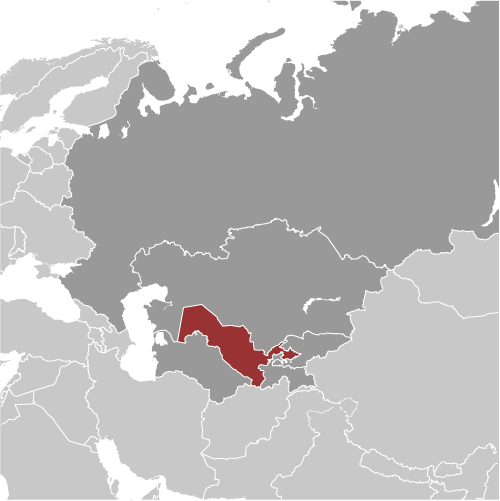
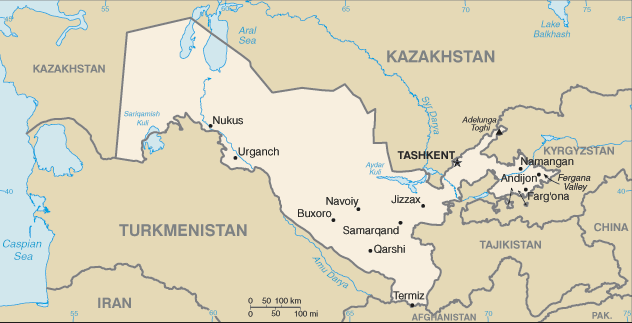
| Click map for larger view |
| Click flag for Country Report |





| TRAFFICKING IN PERSONS |
Current situation: Uzbekistan is a source country for women and girls trafficked to Kazakhstan, Russia, Middle East, and
Asia for the purpose of commercial sexual exploitation; men are trafficked to Kazakhstan and Russia for purposes of forced
labor in the construction, cotton, and tobacco industries; men and women are also trafficked internally for the purposes of
domestic servitude, forced labor in the agricultural and construction industries, and for commercial sexual exploitation
Tier rating: Tier 2 Watch List - Uzbekistan is on the Tier 2 Watch List for its failure to provide evidence of increasing
efforts to combat severe forms of trafficking in 2007; the government did not amend its criminal code to increase penalties
for convicted traffickers; in March 2008, Uzbekistan adopted ILO Conventions on minimum age of employment and on the
elimination of the worst forms of child labor and is working with the ILO on implementation; the government also
demonstrated its increasing commitment to combat trafficking in March 2008 by adopting a comprehensive anti-trafficking
law; Uzbekistan has not ratified the 2000 UN TIP Protocol (2008)
Asia for the purpose of commercial sexual exploitation; men are trafficked to Kazakhstan and Russia for purposes of forced
labor in the construction, cotton, and tobacco industries; men and women are also trafficked internally for the purposes of
domestic servitude, forced labor in the agricultural and construction industries, and for commercial sexual exploitation
Tier rating: Tier 2 Watch List - Uzbekistan is on the Tier 2 Watch List for its failure to provide evidence of increasing
efforts to combat severe forms of trafficking in 2007; the government did not amend its criminal code to increase penalties
for convicted traffickers; in March 2008, Uzbekistan adopted ILO Conventions on minimum age of employment and on the
elimination of the worst forms of child labor and is working with the ILO on implementation; the government also
demonstrated its increasing commitment to combat trafficking in March 2008 by adopting a comprehensive anti-trafficking
law; Uzbekistan has not ratified the 2000 UN TIP Protocol (2008)
Rustam Azimov
First Deputy Prime Minister
since 2 January 2008
First Deputy Prime Minister
since 2 January 2008