
| WESTERN SAHARA Western Sahara Western Sahara Joined United Nations: N/A Human Rights as assured by their constitution Click here Updated 16 February 2013 |

| CAPITAL |
| POPULATION |
| CHIEF OF STATE- DISPUTED |
| SELECTION PROCESS |
None (Laayoune {El Aaiun} operates as a de facto
capital by Morocco and Saharawi. Bir Lehlou
serves as the interim capital of Saharawi)
capital by Morocco and Saharawi. Bir Lehlou
serves as the interim capital of Saharawi)
522,928
note: estimate is based on projections by age, sex, fertility, mortality, and migration; fertility
and mortality are based on data from neighboring countries (July 2012 est.)
note: estimate is based on projections by age, sex, fertility, mortality, and migration; fertility
and mortality are based on data from neighboring countries (July 2012 est.)
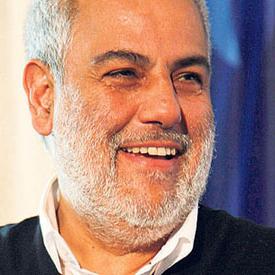
Abdelilah Benkirane
Prime Minister of Morocco
since 29 November 2011
Prime Minister of Morocco
since 29 November 2011
Mohamed VI is a monarch and thus achieves his position through
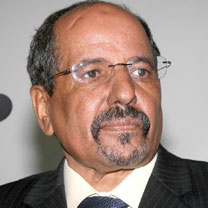
hereditary; Mohammed Abdelaziz is the Secretary General of the
Polisario Front and President of the Saharawi Arab Democratic
Republic- a government in exile residing in Tindouf Algeria. Neither
is formally recognized pending Western Sahara sovereignty
Next scheduled election: None
hereditary; Mohammed Abdelaziz is the Secretary General of the
Polisario Front and President of the Saharawi Arab Democratic
Republic- a government in exile residing in Tindouf Algeria. Neither
is formally recognized pending Western Sahara sovereignty
Next scheduled election: None
HEAD OF GOVERNMENT-
DISPUTED
DISPUTED
SELECTION PROCESS
Prime Minister of Morocco appointed by the Monarch; Prime
Minister of the Saharawi Arab Democratic Republic by
appointment of the President
Minister of the Saharawi Arab Democratic Republic by
appointment of the President
| DECLARATION OF HUMAN RIGHTS |
| ETHNIC GROUPS |
Arab, Berber
| RELIGIONS |
Muslim
| GOVERNMENT STRUCTURE |
Legal status of territory and issue of sovereignty unresolved; territory contested by Morocco and Polisario Front (Popular Front for
the Liberation of the Saguia el Hamra and Rio de Oro), which in February 1976 formally proclaimed a government-in-exile of the
Sahrawi Arab Democratic Republic (SADR), led by President Mohamed ABDELAZIZ; territory partitioned between Morocco
and Mauritania in April 1976, with Morocco acquiring northern two-thirds; Mauritania, under pressure from Polisario guerrillas,
abandoned all claims to its portion in August 1979; Morocco moved to occupy that sector shortly thereafter and has since asserted
administrative control; the Polisario's government-in-exile was seated as an Organization of African Unity (OAU) member in 1984;
guerrilla activities continued sporadically until a UN-monitored cease-fire was implemented on 6 September 1991 (Security Council
Resolution 690) by the United Nations Mission for the Referendum in Western Sahara or MINURSO
the Liberation of the Saguia el Hamra and Rio de Oro), which in February 1976 formally proclaimed a government-in-exile of the
Sahrawi Arab Democratic Republic (SADR), led by President Mohamed ABDELAZIZ; territory partitioned between Morocco
and Mauritania in April 1976, with Morocco acquiring northern two-thirds; Mauritania, under pressure from Polisario guerrillas,
abandoned all claims to its portion in August 1979; Morocco moved to occupy that sector shortly thereafter and has since asserted
administrative control; the Polisario's government-in-exile was seated as an Organization of African Unity (OAU) member in 1984;
guerrilla activities continued sporadically until a UN-monitored cease-fire was implemented on 6 September 1991 (Security Council
Resolution 690) by the United Nations Mission for the Referendum in Western Sahara or MINURSO
| LANGUAGES |
Hassaniya Arabic, Moroccan Arabic
| BRIEF HISTORY |
Western Sahara area has never formed a state in the modern sense of the word. Phoenician/Carthaginian colonies established or
reinforced by Hanno the Navigator in the 5th century BC have vanished with virtually no trace. The desertification of the Sahara
during the "transitional arid phase" ca. 300 BC - 300 AD" made contact with some parts with the outside world very difficult before
the introduction of the camel into these areas, from the third century of the Christian era on. The camel was primarily used as a beast
of burden. People walked beside them. Also camel's meat, milk and skin were important. The horse, not the camel was the animal
that was used in warfare in the period 1000-1500 AD ("the period of horse warriors and conquest states"). Before Islam arrived in
the 8th century AD a Berber population inhabitated the western part of the Sahara, consisting of nomads (mainly of the Sanhaja
tribal confederation) in the plains and sedentaries in river valleys, in oases and in towns like Awdaghust Tichitt, Oualata, Taghaza,
Timbuktu, Awlil, Azuki and Tamdult. The new faith achieved quick expansion, but Arab immigrants initially only blended
superficially with the population, mostly confining themselves to the cities of present-day Morocco and Spain. In the time of the
Almoravids professional warriors had fought as 'mujahideen' in their holy war. Just like the people who had united in zawyas, the
mujahideen began to form tribes based on their specific occupation. This development was accelerated by the arrival of Maqil Arab
tribes. In the 13th and 14th century, these tribes migrated westwards along the northern border of the Sahara to settle in the Fezzan
(Libya), Ifriqiya (Tunisia), Tlemcen (Algeria), Jebel Saghro (Morocco), and Saguia el-Hamra, (Western Sahara). When the Maqil
Arabs arrived in the western part of the Sahara the muyahidin were most prone to Arabization. While the zawiya tribes retained
many of their Berber characteristics, the warrior tribes tried to 'Arabize' as much as possible. The Arabized Berber tribes controlled
key oasis settlements of the Sahara and played an important role in the trans-Saharan slave trade. The Maqil tribes, who entered the
domains of the Sanhaja Berber tribe, sometimes intermarried with the Berber population. The Arabo-Berber people of the region is
now known as Saharawis. After the fall of the Almoravid empire in 1147 the new Moroccan empires (Almohads, Merinids and
Wattasids) retained sovereignty over the western part of the Sahara but the effectiveness of it depended largely on the sultan that
ruled. It was only with the coming to power of the Saadi Dynasty that the sovereignty of Morocco over the western part of the
Sahara became complete again: The Portuguese colonisers were expelled from Cape Bojador and from Cap Blanc and the borders
of Morocco were moved up to the Senegal River in the south-west and to the Niger River in the south-east (see: Battle of Tondibi
in 1591). The Moroccan sovereignty over the western Sahara did not change with the coming of the (present) Alaouite Dynasty in
1659. At the invitation of Germany 14 countries attended the Berlin Conference in 1884-1885 to come to an agreement amongst
them about the division of the territories. At the time of the conference, 80% of Africa was still under traditional African control.
What resulted of the conference was a new map with geometric, often arbitrary, boundaries of fifty new countries. Morocco was
cut up between Spain and France. Morocco's oases of Tuat in the south-east went to the immense territory of the French Sahara.
Northern Morocco went to Spain as did a large part of the western Sahara that had been part of Morocco until then. As with most
Saharan peoples, the tribes reflect a highly mixed heritage, combining Arab, Berber, and other influences, including black African
ethnic and cultural characteristics. In 1884, Spain claimed a protectorate over the coast from Cape Bojador to Cap Blanc. Later,
the Spanish extended their area of control. In 1958 Spain joined the previously separate districts of Saguia el-Hamra (in the north)
and Río de Oro (in the south) to form the province of Spanish Sahara. Raids and rebellions by the indigenous Sahrawi population
kept the Spanish forces out of much of the territory for a long time. Ma al-Aynayn started an uprising against the French in the
1910s, at a time when France had expanded its influence and control in North-West Africa. French forces finally beat him when he
tried to conquer Marrakesh, but his sons and followers figured prominently in several rebellions which followed. Not until the
second destruction of Smara in 1934, by joint Spanish and French forces, did the territory finally become subdued. Another
uprising in 1956 - 1958, initiated by the Moroccan-backed Army of Liberation, led to heavy fighting, but eventually the Spanish
forces regained control - again with French aid. However, unrest simmered, and in 1967 the Harakat Tahrir arose to challenge
Spanish rule peacefully. After the events of the Zemla Intifada in 1970, when Spanish police destroyed the organization and
"disappeared" its founder, Muhammad Bassiri, Sahrawi nationalism again took a militant turn. From 1973 the colonizers gradually
lost control over the countryside to the armed guerrillas of the Polisario Front, a nationalist organization. Successive Spanish
attempts to form loyal Sahrawi political institutions (such as the Djema'a and the PUNS party) to support its rule, and draw activists
away from the radical nationalists, failed. The fall in 1974 of the Portuguese Estado Novo-government after unpopular wars in its
own African provinces seems to have hastened the decision to pull out. In late 1975, Spain held meetings with Polisario leader
El-Ouali, to negotiate the terms for a handover of power. But at the same time, Morocco and Mauritania began to put pressure on
the Franco government: both countries argued that Spanish Sahara formed an historical part of their own territories. The United
Nations became involved after Morocco asked for an opinion on the legality of its demands from the International Court of Justice
(ICJ), and the UN also sent a visiting mission to examine the wishes of the population. The visiting mission returned its report on
October 15, announcing "an overwhelming consensus" in favor of independence. Neither Morocco nor Mauritania accepted this,
and on October 31, 1975, Morocco sent its army into Western Sahara to attack Polisario positions. On November 6, 1975
Morocco launched the Green March into Western Sahara. About 350,000 unarmed Moroccans converged on the city of Tarfaya
in southern Morocco and waited for a signal from King Hassan II of Morocco to cross into Western Sahara. As a result, Spain
acceded to Moroccan demands, and entered bilateral negotiations. On February 26th 1976 Spain's formal mandate over the
territory ended when it handed administrative power on to Morocco in a ceremony in Laayoune. The day after, the Polisario
proclaimed in Bir Lehlou the Sahrawi Arab Democratic Republic (SADR) as a government in exile. Mauritania in its turn renamed
the southern parts of Río de Oro as Tiris al-Gharbiyya, but proved unable to maintain control over the territory. Through the 1980s,
the war stalemated through the construction of the Moroccan Wall, but sporadic fighting continued, and Morocco faced heavy
burdens due to the economic costs of its massive troop deployments along the Wall. In 1991 Morocco and the Polisario Front
agreed on a UN-backed cease-fire in the Settlement Plan. The UN dispatched a peace-keeping mission, the MINURSO, to
oversee the cease-fire and make arrangements for the vote. Initially scheduled for 1992, the referendum has not taken place, due to
the conflict over who has the right to vote. A second United Nations attempt to solve the conflict, James Baker's 2003 peace plan,
though accepted by the Polisario, met rejection out-of-hand from Morocco, which had by then reneged on its promise to hold a
referendum, declaring it "unnecessary". The UN dispatched a peace-keeping mission, the MINURSO, to oversee the cease-fire
and make arrangements for the vote. Initially scheduled for 1992, the referendum has not taken place, due to the conflict over who
has the right to vote. A second United Nations attempt to solve the conflict, James Baker's 2003 peace plan, though accepted by
the Polisario, met rejection out-of-hand from Morocco, which had by then reneged on its promise to hold a referendum, declaring it
"unnecessary". In May 2005, a wave of demonstrations subsequently dubbed the Independence Intifada in separatists circles, broke
out. These demonstrations, which continued into 2006, were the most intense in years, and engendered a new wave of interest in
the conflict - as well as new fears of instability. Polisario has demanded international intervention, but declared that it could not stand
idly by if the "escalation of repression" continues. In 2007 Morocco requested U.N. action against a congress to be held by the
Polisario Front in Tifariti from December 14th to December 16th. Morocco claims Tifariti is part of a buffer zone and the holding
the congress there violates a ceasefire between the two parties. In addition, the Polisario Front is planning a vote on a proposal for
making preparations for war. If passed it would be the first time in 16 years preparations for war have been part of the Polisario's
strategy. In October 2010 Gadaym Izik camp was set up near Laayoune as a protest by displaced Sahrawi people about their living
conditions. It was home to more than 12,000 people. In November 2010 Moroccan security forces entered Gadaym Izik camp in
the early hours of the morning, using helicopters and water cannons to force people to leave. The Polisario Front said Moroccan
security forces had killed a 26-year-old protester at the camp, a claim denied by Morocco. Protesters in Laayoune threw stones at
police and set fire to tires and vehicles. Several buildings, including a TV station, were also set on fire. Moroccan officials said five
security personnel had been killed in the unrest. The Gdeim Izik protest camp was a protest camp in Western Sahara established on
9 October 2010 and lasting into November, with related incidents occurring in the aftermath of its dismantlement on 8 November. It
has been suggested that the month-long protest encampment at Gdeim Izik constituted the start of the Arab Spring. Clashes
between Moroccan and Sahrawi students in Smara erupted again in January 13, 2011, causing 15 injuries according to a
CODAPSO statement.
Source: Wikipedia: History of Western Sahara
reinforced by Hanno the Navigator in the 5th century BC have vanished with virtually no trace. The desertification of the Sahara
during the "transitional arid phase" ca. 300 BC - 300 AD" made contact with some parts with the outside world very difficult before
the introduction of the camel into these areas, from the third century of the Christian era on. The camel was primarily used as a beast
of burden. People walked beside them. Also camel's meat, milk and skin were important. The horse, not the camel was the animal
that was used in warfare in the period 1000-1500 AD ("the period of horse warriors and conquest states"). Before Islam arrived in
the 8th century AD a Berber population inhabitated the western part of the Sahara, consisting of nomads (mainly of the Sanhaja
tribal confederation) in the plains and sedentaries in river valleys, in oases and in towns like Awdaghust Tichitt, Oualata, Taghaza,
Timbuktu, Awlil, Azuki and Tamdult. The new faith achieved quick expansion, but Arab immigrants initially only blended
superficially with the population, mostly confining themselves to the cities of present-day Morocco and Spain. In the time of the
Almoravids professional warriors had fought as 'mujahideen' in their holy war. Just like the people who had united in zawyas, the
mujahideen began to form tribes based on their specific occupation. This development was accelerated by the arrival of Maqil Arab
tribes. In the 13th and 14th century, these tribes migrated westwards along the northern border of the Sahara to settle in the Fezzan
(Libya), Ifriqiya (Tunisia), Tlemcen (Algeria), Jebel Saghro (Morocco), and Saguia el-Hamra, (Western Sahara). When the Maqil
Arabs arrived in the western part of the Sahara the muyahidin were most prone to Arabization. While the zawiya tribes retained
many of their Berber characteristics, the warrior tribes tried to 'Arabize' as much as possible. The Arabized Berber tribes controlled
key oasis settlements of the Sahara and played an important role in the trans-Saharan slave trade. The Maqil tribes, who entered the
domains of the Sanhaja Berber tribe, sometimes intermarried with the Berber population. The Arabo-Berber people of the region is
now known as Saharawis. After the fall of the Almoravid empire in 1147 the new Moroccan empires (Almohads, Merinids and
Wattasids) retained sovereignty over the western part of the Sahara but the effectiveness of it depended largely on the sultan that
ruled. It was only with the coming to power of the Saadi Dynasty that the sovereignty of Morocco over the western part of the
Sahara became complete again: The Portuguese colonisers were expelled from Cape Bojador and from Cap Blanc and the borders
of Morocco were moved up to the Senegal River in the south-west and to the Niger River in the south-east (see: Battle of Tondibi
in 1591). The Moroccan sovereignty over the western Sahara did not change with the coming of the (present) Alaouite Dynasty in
1659. At the invitation of Germany 14 countries attended the Berlin Conference in 1884-1885 to come to an agreement amongst
them about the division of the territories. At the time of the conference, 80% of Africa was still under traditional African control.
What resulted of the conference was a new map with geometric, often arbitrary, boundaries of fifty new countries. Morocco was
cut up between Spain and France. Morocco's oases of Tuat in the south-east went to the immense territory of the French Sahara.
Northern Morocco went to Spain as did a large part of the western Sahara that had been part of Morocco until then. As with most
Saharan peoples, the tribes reflect a highly mixed heritage, combining Arab, Berber, and other influences, including black African
ethnic and cultural characteristics. In 1884, Spain claimed a protectorate over the coast from Cape Bojador to Cap Blanc. Later,
the Spanish extended their area of control. In 1958 Spain joined the previously separate districts of Saguia el-Hamra (in the north)
and Río de Oro (in the south) to form the province of Spanish Sahara. Raids and rebellions by the indigenous Sahrawi population
kept the Spanish forces out of much of the territory for a long time. Ma al-Aynayn started an uprising against the French in the
1910s, at a time when France had expanded its influence and control in North-West Africa. French forces finally beat him when he
tried to conquer Marrakesh, but his sons and followers figured prominently in several rebellions which followed. Not until the
second destruction of Smara in 1934, by joint Spanish and French forces, did the territory finally become subdued. Another
uprising in 1956 - 1958, initiated by the Moroccan-backed Army of Liberation, led to heavy fighting, but eventually the Spanish
forces regained control - again with French aid. However, unrest simmered, and in 1967 the Harakat Tahrir arose to challenge
Spanish rule peacefully. After the events of the Zemla Intifada in 1970, when Spanish police destroyed the organization and
"disappeared" its founder, Muhammad Bassiri, Sahrawi nationalism again took a militant turn. From 1973 the colonizers gradually
lost control over the countryside to the armed guerrillas of the Polisario Front, a nationalist organization. Successive Spanish
attempts to form loyal Sahrawi political institutions (such as the Djema'a and the PUNS party) to support its rule, and draw activists
away from the radical nationalists, failed. The fall in 1974 of the Portuguese Estado Novo-government after unpopular wars in its
own African provinces seems to have hastened the decision to pull out. In late 1975, Spain held meetings with Polisario leader
El-Ouali, to negotiate the terms for a handover of power. But at the same time, Morocco and Mauritania began to put pressure on
the Franco government: both countries argued that Spanish Sahara formed an historical part of their own territories. The United
Nations became involved after Morocco asked for an opinion on the legality of its demands from the International Court of Justice
(ICJ), and the UN also sent a visiting mission to examine the wishes of the population. The visiting mission returned its report on
October 15, announcing "an overwhelming consensus" in favor of independence. Neither Morocco nor Mauritania accepted this,
and on October 31, 1975, Morocco sent its army into Western Sahara to attack Polisario positions. On November 6, 1975
Morocco launched the Green March into Western Sahara. About 350,000 unarmed Moroccans converged on the city of Tarfaya
in southern Morocco and waited for a signal from King Hassan II of Morocco to cross into Western Sahara. As a result, Spain
acceded to Moroccan demands, and entered bilateral negotiations. On February 26th 1976 Spain's formal mandate over the
territory ended when it handed administrative power on to Morocco in a ceremony in Laayoune. The day after, the Polisario
proclaimed in Bir Lehlou the Sahrawi Arab Democratic Republic (SADR) as a government in exile. Mauritania in its turn renamed
the southern parts of Río de Oro as Tiris al-Gharbiyya, but proved unable to maintain control over the territory. Through the 1980s,
the war stalemated through the construction of the Moroccan Wall, but sporadic fighting continued, and Morocco faced heavy
burdens due to the economic costs of its massive troop deployments along the Wall. In 1991 Morocco and the Polisario Front
agreed on a UN-backed cease-fire in the Settlement Plan. The UN dispatched a peace-keeping mission, the MINURSO, to
oversee the cease-fire and make arrangements for the vote. Initially scheduled for 1992, the referendum has not taken place, due to
the conflict over who has the right to vote. A second United Nations attempt to solve the conflict, James Baker's 2003 peace plan,
though accepted by the Polisario, met rejection out-of-hand from Morocco, which had by then reneged on its promise to hold a
referendum, declaring it "unnecessary". The UN dispatched a peace-keeping mission, the MINURSO, to oversee the cease-fire
and make arrangements for the vote. Initially scheduled for 1992, the referendum has not taken place, due to the conflict over who
has the right to vote. A second United Nations attempt to solve the conflict, James Baker's 2003 peace plan, though accepted by
the Polisario, met rejection out-of-hand from Morocco, which had by then reneged on its promise to hold a referendum, declaring it
"unnecessary". In May 2005, a wave of demonstrations subsequently dubbed the Independence Intifada in separatists circles, broke
out. These demonstrations, which continued into 2006, were the most intense in years, and engendered a new wave of interest in
the conflict - as well as new fears of instability. Polisario has demanded international intervention, but declared that it could not stand
idly by if the "escalation of repression" continues. In 2007 Morocco requested U.N. action against a congress to be held by the
Polisario Front in Tifariti from December 14th to December 16th. Morocco claims Tifariti is part of a buffer zone and the holding
the congress there violates a ceasefire between the two parties. In addition, the Polisario Front is planning a vote on a proposal for
making preparations for war. If passed it would be the first time in 16 years preparations for war have been part of the Polisario's
strategy. In October 2010 Gadaym Izik camp was set up near Laayoune as a protest by displaced Sahrawi people about their living
conditions. It was home to more than 12,000 people. In November 2010 Moroccan security forces entered Gadaym Izik camp in
the early hours of the morning, using helicopters and water cannons to force people to leave. The Polisario Front said Moroccan
security forces had killed a 26-year-old protester at the camp, a claim denied by Morocco. Protesters in Laayoune threw stones at
police and set fire to tires and vehicles. Several buildings, including a TV station, were also set on fire. Moroccan officials said five
security personnel had been killed in the unrest. The Gdeim Izik protest camp was a protest camp in Western Sahara established on
9 October 2010 and lasting into November, with related incidents occurring in the aftermath of its dismantlement on 8 November. It
has been suggested that the month-long protest encampment at Gdeim Izik constituted the start of the Arab Spring. Clashes
between Moroccan and Sahrawi students in Smara erupted again in January 13, 2011, causing 15 injuries according to a
CODAPSO statement.
Source: Wikipedia: History of Western Sahara
| ECONOMIC OVERVIEW |
Western Sahara has a small market-based economy whose main industries are fishing, phosphate mining, and pastoral nomadism.
The territory's arid desert climate makes sedentary agriculture difficult, and Western Sahara imports much of its food. The
Moroccan Government administers Western Sahara's economy and is a key source of employment, infrastructure development, and
social spending in the territory. Western Sahara's unresolved legal status makes the exploitation of its natural resources a contentious
issue between Morocco and the Polisario. Morocco and the EU in July 2006 signed a four-year agreement allowing European
vessels to fish off the coast of Morocco, including the disputed waters off the coast of Western Sahara, but this agreement was
terminated in 2011. Oil has never been found in Western Sahara in commercially significant quantities, but Morocco and the
Polisario have quarreled over who has the right to authorize and benefit from oil exploration in the territory. Western Sahara's main
long-term economic challenge is the development of a more diverse set of industries capable of providing greater employment and
income to the territory.
Source: CIA World Factbook (select Western Sahara)
The territory's arid desert climate makes sedentary agriculture difficult, and Western Sahara imports much of its food. The
Moroccan Government administers Western Sahara's economy and is a key source of employment, infrastructure development, and
social spending in the territory. Western Sahara's unresolved legal status makes the exploitation of its natural resources a contentious
issue between Morocco and the Polisario. Morocco and the EU in July 2006 signed a four-year agreement allowing European
vessels to fish off the coast of Morocco, including the disputed waters off the coast of Western Sahara, but this agreement was
terminated in 2011. Oil has never been found in Western Sahara in commercially significant quantities, but Morocco and the
Polisario have quarreled over who has the right to authorize and benefit from oil exploration in the territory. Western Sahara's main
long-term economic challenge is the development of a more diverse set of industries capable of providing greater employment and
income to the territory.
Source: CIA World Factbook (select Western Sahara)
| POLITICAL CLIMATE |
Following to the Madrid Accords, the territory was partitioned between Morocco and Mauritania in November 1975, with
Morocco acquiring northern two-thirds. Mauritania, under pressure from Polisario guerrillas, abandoned all claims to its portion in
August 1979, with Morocco moving to annex that sector shortly thereafter and has since asserted administrative control over the
majority of the territory. A portion is administered by the SADR. The Sahrawi Arab Democratic Republic was seated as member of
the Organisation of African Unity in 1984, and was a founding member of the African Union. Guerrilla activities continued until a
United Nations-monitored cease-fire was implemented September 6, 1991 via the mission MINURSO. The mission patrols the
separation line between the two territories
In 2003, the UN's envoy to the territory, James Baker, presented the Baker Plan, known as Baker II which would have given
Western Sahara immediate autonomy as the Western Sahara Authority during a five-year transition period to prepare for a
referendum, offering the inhabitants of the territory a choice between independence, autonomy within the Kingdom of Morocco, or
complete integration with Morocco. Polisario has accepted the plan, but Morocco has rejected it. Previously in 2001, Baker had
presented his framework plan, called Baker I, where the dispute would be finally solved through an autonomy within Moroccan
sovereignty, but Algeria and the Polisario front refused it. Algeria had proposed the partition of the territory instead.
The population under Moroccan control participates in countrywide and regional Moroccan elections. A referendum on
independence or integration with Morocco was agreed upon by Morocco and the Polisario Front in 1991, but it has yet to take
place.
The population under Polisario control and in the Sahrawi refugee camps of Tindouf, Algeria, participates in elections to the Sahrawi
Arab Democratic Republic.
Source: Wikipedia: Politics of Western Sahara
Morocco acquiring northern two-thirds. Mauritania, under pressure from Polisario guerrillas, abandoned all claims to its portion in
August 1979, with Morocco moving to annex that sector shortly thereafter and has since asserted administrative control over the
majority of the territory. A portion is administered by the SADR. The Sahrawi Arab Democratic Republic was seated as member of
the Organisation of African Unity in 1984, and was a founding member of the African Union. Guerrilla activities continued until a
United Nations-monitored cease-fire was implemented September 6, 1991 via the mission MINURSO. The mission patrols the
separation line between the two territories
In 2003, the UN's envoy to the territory, James Baker, presented the Baker Plan, known as Baker II which would have given
Western Sahara immediate autonomy as the Western Sahara Authority during a five-year transition period to prepare for a
referendum, offering the inhabitants of the territory a choice between independence, autonomy within the Kingdom of Morocco, or
complete integration with Morocco. Polisario has accepted the plan, but Morocco has rejected it. Previously in 2001, Baker had
presented his framework plan, called Baker I, where the dispute would be finally solved through an autonomy within Moroccan
sovereignty, but Algeria and the Polisario front refused it. Algeria had proposed the partition of the territory instead.
The population under Moroccan control participates in countrywide and regional Moroccan elections. A referendum on
independence or integration with Morocco was agreed upon by Morocco and the Polisario Front in 1991, but it has yet to take
place.
The population under Polisario control and in the Sahrawi refugee camps of Tindouf, Algeria, participates in elections to the Sahrawi
Arab Democratic Republic.
Source: Wikipedia: Politics of Western Sahara
| INTERNATIONAL DISPUTES |
Morocco claims and administers Western Sahara, whose sovereignty remains unresolved; UN-administered cease-fire has
remained in effect since September 1991, administered by the UN Mission for the Referendum in Western Sahara (MINURSO),
but attempts to hold a referendum have failed and parties thus far have rejected all brokered proposals; several states have
extended diplomatic relations to the "Sahrawi Arab Democratic Republic" represented by the Polisario Front in exile in Algeria,
while others recognize Moroccan sovereignty over Western Sahara; most of the approximately 102,000 Sahrawi refugees are
sheltered in camps in Tindouf, Algeria
remained in effect since September 1991, administered by the UN Mission for the Referendum in Western Sahara (MINURSO),
but attempts to hold a referendum have failed and parties thus far have rejected all brokered proposals; several states have
extended diplomatic relations to the "Sahrawi Arab Democratic Republic" represented by the Polisario Front in exile in Algeria,
while others recognize Moroccan sovereignty over Western Sahara; most of the approximately 102,000 Sahrawi refugees are
sheltered in camps in Tindouf, Algeria


| REFUGEES AND INTERNALLY DISPLACED PERSONS (IDPS) |
None reported.
| ILLICIT DRUGS |
None reported.
| HUMAN RIGHTS STATEMENTS, ANALYSIS AND CRITIQUES |
2011 Human Rights Report: Western Sahara
Bureau of Democracy, Human Rights, and Labor
2011 Country Reports on Human Rights Practices
May 25, 2012
Morocco claims the Western Sahara territory and administers Moroccan law through Moroccan institutions in the estimated 85 percent
of the territory it controls. However, the Popular Front for the Liberation of Saguia el Hamra and Rio de Oro (Polisario), an organization
that has sought independence for the former Spanish territory since 1973, disputes Morocco’s claim to sovereignty over the territory.
There has been no census since the Spanish left the territory, but the population was estimated to be more than 500,000, many of whom
were attributable to Moroccan in-migration. The indigenous population is Sahrawi, (literally “people of the desert” in Arabic) who also
live in southern Morocco, in Algeria, and in Mauritania.
The Moroccan government sent troops and settlers into the northern two provinces after Spain withdrew in 1975 and extended its
administration to the third province after Mauritania renounced its claim in 1979. Moroccan and Polisario forces fought intermittently
from 1975 until a 1991 ceasefire and the deployment of a UN peacekeeping contingent, the UN Mission for a Referendum in Western
Sahara, whose mandate does not include human rights monitoring. In the late 1980s, Morocco constructed a 1,250-mile stone and sand
wall known as the "berm" that effectively marks the limit of its administrative control.
In 1988 Morocco and the Polisario agreed to settle the sovereignty dispute by referendum. The parties did not resolve disagreements
over voter eligibility and which options for self-determination (integration, independence, or something in between) should be on the
ballot; consequently, a referendum never took place.
There have been several attempts to broker a solution since 2007 in face-to-face negotiations between representatives of the two sides
under UN auspices. Morocco has proposed autonomy for the territory within the kingdom; the Polisario has proposed a referendum in
which full independence would be an option. Meetings in January, March, June, and July under the auspices of Personal Envoy of the
UN Secretary General for Western Sahara Christopher Ross did not yield significant progress toward a permanent solution.
Morocco considers the part of the territory that it administers to be an integral part of the kingdom with the same laws and structures
conditioning the exercise of civil liberties and political and economic rights. Under the constitution, ultimate authority rests with King
Mohammed VI who presides over the Council of Ministers and approves members of the government recommended to him by the prime
minister. On July 1, Moroccans adopted a new constitution and on November 25, Morocco held legislative elections, which included
Western Saharan provinces. (For additional information on political developments in Morocco, see the 2011 Morocco Human Rights
Report.)
Apart from government action to restrict pro-independence views and associations, overall human rights conditions in the territory
tended to converge with those in the kingdom. Several long-standing human rights issues that continue to be of concern were related to
pro-independence activity, including limitations on the freedom of speech and assembly, the use of arbitrary detention to quell dissent,
and physical and verbal abuse of detainees during arrests and imprisonment.
Widespread impunity existed, although the government prosecuted at least one official who committed abuses. Corruption continued
among security forces and the judiciary. In addition, Sahrawis faced discrimination in the application of the laws on prison visitation
rights and NGO registration.
Click here to read more »
Bureau of Democracy, Human Rights, and Labor
2011 Country Reports on Human Rights Practices
May 25, 2012
Morocco claims the Western Sahara territory and administers Moroccan law through Moroccan institutions in the estimated 85 percent
of the territory it controls. However, the Popular Front for the Liberation of Saguia el Hamra and Rio de Oro (Polisario), an organization
that has sought independence for the former Spanish territory since 1973, disputes Morocco’s claim to sovereignty over the territory.
There has been no census since the Spanish left the territory, but the population was estimated to be more than 500,000, many of whom
were attributable to Moroccan in-migration. The indigenous population is Sahrawi, (literally “people of the desert” in Arabic) who also
live in southern Morocco, in Algeria, and in Mauritania.
The Moroccan government sent troops and settlers into the northern two provinces after Spain withdrew in 1975 and extended its
administration to the third province after Mauritania renounced its claim in 1979. Moroccan and Polisario forces fought intermittently
from 1975 until a 1991 ceasefire and the deployment of a UN peacekeeping contingent, the UN Mission for a Referendum in Western
Sahara, whose mandate does not include human rights monitoring. In the late 1980s, Morocco constructed a 1,250-mile stone and sand
wall known as the "berm" that effectively marks the limit of its administrative control.
In 1988 Morocco and the Polisario agreed to settle the sovereignty dispute by referendum. The parties did not resolve disagreements
over voter eligibility and which options for self-determination (integration, independence, or something in between) should be on the
ballot; consequently, a referendum never took place.
There have been several attempts to broker a solution since 2007 in face-to-face negotiations between representatives of the two sides
under UN auspices. Morocco has proposed autonomy for the territory within the kingdom; the Polisario has proposed a referendum in
which full independence would be an option. Meetings in January, March, June, and July under the auspices of Personal Envoy of the
UN Secretary General for Western Sahara Christopher Ross did not yield significant progress toward a permanent solution.
Morocco considers the part of the territory that it administers to be an integral part of the kingdom with the same laws and structures
conditioning the exercise of civil liberties and political and economic rights. Under the constitution, ultimate authority rests with King
Mohammed VI who presides over the Council of Ministers and approves members of the government recommended to him by the prime
minister. On July 1, Moroccans adopted a new constitution and on November 25, Morocco held legislative elections, which included
Western Saharan provinces. (For additional information on political developments in Morocco, see the 2011 Morocco Human Rights
Report.)
Apart from government action to restrict pro-independence views and associations, overall human rights conditions in the territory
tended to converge with those in the kingdom. Several long-standing human rights issues that continue to be of concern were related to
pro-independence activity, including limitations on the freedom of speech and assembly, the use of arbitrary detention to quell dissent,
and physical and verbal abuse of detainees during arrests and imprisonment.
Widespread impunity existed, although the government prosecuted at least one official who committed abuses. Corruption continued
among security forces and the judiciary. In addition, Sahrawis faced discrimination in the application of the laws on prison visitation
rights and NGO registration.
Click here to read more »
TRANSLATED FROM FRENCH BY GOOGLE TRANSLATE
Morocco and Western Sahara: UN expert calls for better promotion of cultural rights and diversity
RABAT (16 September 2011)
The United Nations Independent Expert in the field of cultural rights, Farida Shaheed, thanked the Government of Morocco for inviting
her to conduct a mission which took place from September 5th to 16th. She visited Rabat, Casablanca, Agadir, Marrakesh, Meknes,
Khemisset and Fès and met with senior Government officials at the national, regional, provincial and commune levels, working in the
areas of culture, education, human rights, women’s issues, religious affairs, and tourism. She also met with academics, representatives
of civil society and religious communities. She expressed her gratitude to all those who have given her and her colleagues the benefit of
their time and expertise and also for the warm hospitality, courtesy and openness extended. She was particularly grateful to the Office of
the Resident Coordinator of United Nations for their support in the preparation and conduct of the mission.
The mission focused on issues Ms. Shaheed considers to be particularly important, namely: the right to participate in cultural life, the
measures adopted to create an open cultural climate and to foster an intercultural understanding, to provide access to and the means of
participating in cultural heritage, in particular through education, and to promote cultural rights within education and media systems. The
Independent Expert has also looked into issues related to the cultural rights of particular communities, including minority groups, persons
with disabilities, and women.
Ms. Shaheed commended Morocco’s remarkable work in the last decade to recognise, respect and promote human rights. She
welcomed the adoption of the new Constitution in July of this year which provides a reinforced framework for protecting and promoting
human rights, including those of the most vulnerable populations. The new Constitution places greater emphasis on cultural rights and
diversity and confers an official status to the languages of the Amazigh population, and the Independent Expert called upon the
government to operationalize these commitments by passing relevant bylaws without delay.
A human rights-based approach requires a long-term national plan of action with clear targets, benchmarks and indicators to evaluate
progress and guide State priorities and actions. In this context, Ms. Shaheed recommended that greater investments be made in strategic
planning, the establishment of monitoring and accountability mechanisms, as well as providing trainings in new policies, regulations and
laws with standard operational procedures. It is also necessary to issue all decisions made by government officials in writing.
In the context of institution building, the Independent Expert welcomed the reinforced mandate of the office of the ombudsman, and
encouraged the government to confer upon this institution awareness-raising and monitoring prerogatives.
Ms. Shaheed welcomed the Government’s achievements in the promotion of Amazigh culture and language and the resources allocated
for this. She also appreciated a number of excellent publications and manuals produced in three languages (Arabic, French and Amazigh)
regarding human rights and international commitments in the area of gender equality and persons with disabilities, amongst other
subjects.
Click here to read more »
Morocco and Western Sahara: UN expert calls for better promotion of cultural rights and diversity
RABAT (16 September 2011)
The United Nations Independent Expert in the field of cultural rights, Farida Shaheed, thanked the Government of Morocco for inviting
her to conduct a mission which took place from September 5th to 16th. She visited Rabat, Casablanca, Agadir, Marrakesh, Meknes,
Khemisset and Fès and met with senior Government officials at the national, regional, provincial and commune levels, working in the
areas of culture, education, human rights, women’s issues, religious affairs, and tourism. She also met with academics, representatives
of civil society and religious communities. She expressed her gratitude to all those who have given her and her colleagues the benefit of
their time and expertise and also for the warm hospitality, courtesy and openness extended. She was particularly grateful to the Office of
the Resident Coordinator of United Nations for their support in the preparation and conduct of the mission.
The mission focused on issues Ms. Shaheed considers to be particularly important, namely: the right to participate in cultural life, the
measures adopted to create an open cultural climate and to foster an intercultural understanding, to provide access to and the means of
participating in cultural heritage, in particular through education, and to promote cultural rights within education and media systems. The
Independent Expert has also looked into issues related to the cultural rights of particular communities, including minority groups, persons
with disabilities, and women.
Ms. Shaheed commended Morocco’s remarkable work in the last decade to recognise, respect and promote human rights. She
welcomed the adoption of the new Constitution in July of this year which provides a reinforced framework for protecting and promoting
human rights, including those of the most vulnerable populations. The new Constitution places greater emphasis on cultural rights and
diversity and confers an official status to the languages of the Amazigh population, and the Independent Expert called upon the
government to operationalize these commitments by passing relevant bylaws without delay.
A human rights-based approach requires a long-term national plan of action with clear targets, benchmarks and indicators to evaluate
progress and guide State priorities and actions. In this context, Ms. Shaheed recommended that greater investments be made in strategic
planning, the establishment of monitoring and accountability mechanisms, as well as providing trainings in new policies, regulations and
laws with standard operational procedures. It is also necessary to issue all decisions made by government officials in writing.
In the context of institution building, the Independent Expert welcomed the reinforced mandate of the office of the ombudsman, and
encouraged the government to confer upon this institution awareness-raising and monitoring prerogatives.
Ms. Shaheed welcomed the Government’s achievements in the promotion of Amazigh culture and language and the resources allocated
for this. She also appreciated a number of excellent publications and manuals produced in three languages (Arabic, French and Amazigh)
regarding human rights and international commitments in the area of gender equality and persons with disabilities, amongst other
subjects.
Click here to read more »
Freedom In The World 2012 Report
Political Rights Score: 7
Civil Liberties Score: 7
Status: Not Free
Overview
Morocco and the pro-independence Polisario Front failed to make progress in mediated talks on Western Sahara’s status in 2011.
Informal negotiations failed once again, with no future round scheduled. Meanwhile, Sahrawis continued to be denied basic political,
civil, and economic rights.
Morocco tried to bolster its annexation by offering financial incentives for Moroccans to move to Western Sahara and for Sahrawis to
move to Morocco. Morocco also used more coercive measures, engaging in forced resettlements of Sahrawis and long-term detention
and “disappearances” of pro-independence activists. Neighboring Algeria will not accept Moroccan control of the territory and hosts
refugee camps in Tindouf, Algeria, which are home to an estimated 90,000 Sahrawis as well as the SADR government in exile.
In 2004, the Polisario Front accepted a UN Security Council plan that called for up to five years of autonomy followed by a referendum
on the territory’s status. However, Morocco rejected the plan, fearing it could lead to independence, and in 2007 offered its own
autonomy plan.
Because the Polisario Front remains committed to an eventual referendum with independence as an option, while Morocco continues to
push for autonomy, the two sides have failed to make meaningful progress in a series of negotiations that started in 2007 and continued
in 2011. A November 2010 meeting was overshadowed by a confrontation in the Gadaym Izik protest camp outside Western Sahara’s
main city, Laayoune, in which Moroccan forces violently dispersed residents who had mobilized within the camp. Around a dozen
people were killed and scores were injured in the fighting, although the precise numbers are difficult to verify. The talks were
reconvened on July 19–21, 2011, and brokered by the UN special envoy, Christopher Ross. These talks, which also included Algeria and
Mauritania, failed as well.
As the occupying force in Western Sahara, Morocco controls local elections and works to ensure that independence-minded leaders are
excluded from both the local political process and the Moroccan Parliament.
Reports of corruption are widespread. Although the territory possesses extensive natural resources, including phosphate, iron ore
deposits, hydrocarbon reserves, and fisheries, the local population remains largely impoverished.
Click here to read more »
Political Rights Score: 7
Civil Liberties Score: 7
Status: Not Free
Overview
Morocco and the pro-independence Polisario Front failed to make progress in mediated talks on Western Sahara’s status in 2011.
Informal negotiations failed once again, with no future round scheduled. Meanwhile, Sahrawis continued to be denied basic political,
civil, and economic rights.
Morocco tried to bolster its annexation by offering financial incentives for Moroccans to move to Western Sahara and for Sahrawis to
move to Morocco. Morocco also used more coercive measures, engaging in forced resettlements of Sahrawis and long-term detention
and “disappearances” of pro-independence activists. Neighboring Algeria will not accept Moroccan control of the territory and hosts
refugee camps in Tindouf, Algeria, which are home to an estimated 90,000 Sahrawis as well as the SADR government in exile.
In 2004, the Polisario Front accepted a UN Security Council plan that called for up to five years of autonomy followed by a referendum
on the territory’s status. However, Morocco rejected the plan, fearing it could lead to independence, and in 2007 offered its own
autonomy plan.
Because the Polisario Front remains committed to an eventual referendum with independence as an option, while Morocco continues to
push for autonomy, the two sides have failed to make meaningful progress in a series of negotiations that started in 2007 and continued
in 2011. A November 2010 meeting was overshadowed by a confrontation in the Gadaym Izik protest camp outside Western Sahara’s
main city, Laayoune, in which Moroccan forces violently dispersed residents who had mobilized within the camp. Around a dozen
people were killed and scores were injured in the fighting, although the precise numbers are difficult to verify. The talks were
reconvened on July 19–21, 2011, and brokered by the UN special envoy, Christopher Ross. These talks, which also included Algeria and
Mauritania, failed as well.
As the occupying force in Western Sahara, Morocco controls local elections and works to ensure that independence-minded leaders are
excluded from both the local political process and the Moroccan Parliament.
Reports of corruption are widespread. Although the territory possesses extensive natural resources, including phosphate, iron ore
deposits, hydrocarbon reserves, and fisheries, the local population remains largely impoverished.
Click here to read more »
1 February 2013
Morocco military trial of Sahrawi civilians flawed from the outset
The trial of 24 Sahrawi civilians before a military court in Morocco is flawed from the outset Amnesty International said today as it
called for the defendants to be tried in a civilian court and for an investigation into their torture allegations.
All of the group, which includes several activists, are on trial in Rabat today in relation to violence during and after the dismantling of the
Gdim Izik protest camp near Laayoune, Western Sahara in November 2010, when 11 members of the security forces and two Sahrawis
were killed.
Most of the defendants have said that they were tortured and otherwise ill-treated at different stages of their two-year pre-trial detention.
Some are said to have been coerced into signing statements.
"The trial of civilians before a military court does not meet internationally recognized standards for a fair trial. The 24 accused must be
brought before a civilian court with all the human rights guarantees that go along with it, and in no event must anyone be sentenced to
death," said Philip Luther, Amnesty International’s Director of the Middle East and North Africa.
"Allegations of the torture of detainees must be investigated and any evidence obtained under torture must be dismissed by the court. The
authorities must also launch an independent and impartial investigation into the events of Gdim Izik, which is already two years too late."
The 24 - including members of Sahrawi civil society organizations and Sahrawi political activists - face charges including belonging to a
criminal organization, violence against a public official and the desecration of a corpse.
The crime of violence against a public official can be punished by the death penalty when such violence leads to intentional death.
On 8 November 2010, violence broke out when Moroccan security forces tried forcibly to remove people from and dismantle the Gdim
Izik protest camp a few kilometres east of the town of Laayoune, in the Moroccan-administered Western Sahara.
The Gdim Izik camp had been set up in early October by Sahrawis protesting against their perceived marginalization and demanding jobs
and adequate housing.
Eleven members of the security forces and two Sahrawi's were killed during the violence.
Some 200 Sahrawis were arrested by the security forces during and days after the violence. Further arrests were also made in
December.
Click here to read more »
Morocco military trial of Sahrawi civilians flawed from the outset
The trial of 24 Sahrawi civilians before a military court in Morocco is flawed from the outset Amnesty International said today as it
called for the defendants to be tried in a civilian court and for an investigation into their torture allegations.
All of the group, which includes several activists, are on trial in Rabat today in relation to violence during and after the dismantling of the
Gdim Izik protest camp near Laayoune, Western Sahara in November 2010, when 11 members of the security forces and two Sahrawis
were killed.
Most of the defendants have said that they were tortured and otherwise ill-treated at different stages of their two-year pre-trial detention.
Some are said to have been coerced into signing statements.
"The trial of civilians before a military court does not meet internationally recognized standards for a fair trial. The 24 accused must be
brought before a civilian court with all the human rights guarantees that go along with it, and in no event must anyone be sentenced to
death," said Philip Luther, Amnesty International’s Director of the Middle East and North Africa.
"Allegations of the torture of detainees must be investigated and any evidence obtained under torture must be dismissed by the court. The
authorities must also launch an independent and impartial investigation into the events of Gdim Izik, which is already two years too late."
The 24 - including members of Sahrawi civil society organizations and Sahrawi political activists - face charges including belonging to a
criminal organization, violence against a public official and the desecration of a corpse.
The crime of violence against a public official can be punished by the death penalty when such violence leads to intentional death.
On 8 November 2010, violence broke out when Moroccan security forces tried forcibly to remove people from and dismantle the Gdim
Izik protest camp a few kilometres east of the town of Laayoune, in the Moroccan-administered Western Sahara.
The Gdim Izik camp had been set up in early October by Sahrawis protesting against their perceived marginalization and demanding jobs
and adequate housing.
Eleven members of the security forces and two Sahrawi's were killed during the violence.
Some 200 Sahrawis were arrested by the security forces during and days after the violence. Further arrests were also made in
December.
Click here to read more »
Morocco/Western Sahara: Repression Belies Reform Pledges
Police Violence, Unfair Trials Undercut New Progressive Constitution
January 31, 2013
(Beirut)–Moroccans still await tangible improvements in human rights a year after the adoption of a progressive new constitution and the
election of an Islamist-led parliament and government, Human Rights Watch said today in its World Report 2013.
Even as government ministers talked of reform, the courts imprisoned dissidents during 2012 under repressive laws curtailing free
speech, and after unfair trials. The police used excessive force against demonstrators, abused the rights of migrants, and advocates of
self-determination for Western Sahara faced continuing repression.
“Judging by the text of the 2011 constitution, Morocco’s leaders recognize that enhancing human rights is central to meeting popular
aspirations,” said Sarah Leah Whitson, Middle East and North Africa director at Human Rights Watch. “But judging by the practice on
the ground, they have yet to grasp that words alone are not enough.”
In its 665-page report, Human Rights Watch assessed progress on human rights during the past year in more than 90 countries,
including an analysis of the aftermath of the Arab uprisings. The willingness of new governments to respect rights will determine
whether the Arab uprisings give birth to genuine democracy or simply spawn authoritarianism in new clothes, Human Rights Watch said.
Among those imprisoned in Morocco for exercising their right to free speech are journalist Rachid Nini, who served one year in prison
for his writing; rapper Mouad Belghouat, who is serving a one-year prison term for a song critical of the police, and 22 Sahrawis who
have spent more than two years in pre-trial detention far from their homes in a politically charged case.
Moroccan police allowed some public protests to go ahead unmolested but on other occasions used excessive force to disperse
demonstrations, regardless of whether they were peaceful or disorderly. In one recent instance, on December 27, police beat and
dragged a member of parliament, Abdessamad Idrissi, after he intervened as they were violently dispersing a protest by unemployed
people in front of the parliament in Rabat.
Courts sometimes sentenced demonstrators to prison terms after convicting them in unfair trials of charges such as assaulting or
insulting police officers. For example, an appeals court in January 2013 sentenced to prison five demonstrators who support the
February 20 movement, created at the time of pro-reform protests in 2011, on the basis of confessions that they claimed had been
beaten out of them, and without any witness testimony or other evidence presented in court that linked them to the offenses.
The authorities severely restrict the rights of those who advocate self-determination for Western Sahara, which has been under de facto
Moroccan rule since 1975. Morocco refuses to allow pro-independence demonstrations in Western Sahara or to permit the legal
recognition of associations whose leaders are known to favor independence. This policy is underpinned by legislation that prohibits
“harming” Islam, the monarchy, and Morocco’s “territorial integrity.” The last phrase is understood to mean Morocco’s claim to, and
annexation of, Western Sahara. Abolishing such laws should be a priority as Morocco sets about harmonizing its legislation with the
2011 constitution, Human Rights Watch said.
Click here to read more »
Police Violence, Unfair Trials Undercut New Progressive Constitution
January 31, 2013
(Beirut)–Moroccans still await tangible improvements in human rights a year after the adoption of a progressive new constitution and the
election of an Islamist-led parliament and government, Human Rights Watch said today in its World Report 2013.
Even as government ministers talked of reform, the courts imprisoned dissidents during 2012 under repressive laws curtailing free
speech, and after unfair trials. The police used excessive force against demonstrators, abused the rights of migrants, and advocates of
self-determination for Western Sahara faced continuing repression.
“Judging by the text of the 2011 constitution, Morocco’s leaders recognize that enhancing human rights is central to meeting popular
aspirations,” said Sarah Leah Whitson, Middle East and North Africa director at Human Rights Watch. “But judging by the practice on
the ground, they have yet to grasp that words alone are not enough.”
In its 665-page report, Human Rights Watch assessed progress on human rights during the past year in more than 90 countries,
including an analysis of the aftermath of the Arab uprisings. The willingness of new governments to respect rights will determine
whether the Arab uprisings give birth to genuine democracy or simply spawn authoritarianism in new clothes, Human Rights Watch said.
Among those imprisoned in Morocco for exercising their right to free speech are journalist Rachid Nini, who served one year in prison
for his writing; rapper Mouad Belghouat, who is serving a one-year prison term for a song critical of the police, and 22 Sahrawis who
have spent more than two years in pre-trial detention far from their homes in a politically charged case.
Moroccan police allowed some public protests to go ahead unmolested but on other occasions used excessive force to disperse
demonstrations, regardless of whether they were peaceful or disorderly. In one recent instance, on December 27, police beat and
dragged a member of parliament, Abdessamad Idrissi, after he intervened as they were violently dispersing a protest by unemployed
people in front of the parliament in Rabat.
Courts sometimes sentenced demonstrators to prison terms after convicting them in unfair trials of charges such as assaulting or
insulting police officers. For example, an appeals court in January 2013 sentenced to prison five demonstrators who support the
February 20 movement, created at the time of pro-reform protests in 2011, on the basis of confessions that they claimed had been
beaten out of them, and without any witness testimony or other evidence presented in court that linked them to the offenses.
The authorities severely restrict the rights of those who advocate self-determination for Western Sahara, which has been under de facto
Moroccan rule since 1975. Morocco refuses to allow pro-independence demonstrations in Western Sahara or to permit the legal
recognition of associations whose leaders are known to favor independence. This policy is underpinned by legislation that prohibits
“harming” Islam, the monarchy, and Morocco’s “territorial integrity.” The last phrase is understood to mean Morocco’s claim to, and
annexation of, Western Sahara. Abolishing such laws should be a priority as Morocco sets about harmonizing its legislation with the
2011 constitution, Human Rights Watch said.
Click here to read more »
Corcas chairman welcomes guideline note on development model of the Sahara
1/4/2013
This initiative, tangible evidence of Morocco’s good faith to resolve the issue of development through ways that meet the aspirations of
Sahrawis.
The guideline note on the model of regional development in the southern provinces, presented Wednesday before King Mohammed VI by
the President of the Economic, Social and Environmental Council, Chakib Benmoussa is an excellent approach that reflects the interest
by the Sovereign to economic and social development in the region, said Thursday Khalihenna Ould Errachid, the chairman of the Royal
Advisory Council for Saharan Affairs (CORCAS).
This note "is an excellent approach that reflects the will of His Majesty the King to ensure the well-being of people in the southern
provinces and the royal interest given to all socio-economic development issues in this region," Mr. Ould Errachid told MAP.
"With all the inhabitants of the southern provinces, we welcomed this note which reflects the strong commitment of HM King
Mohammed VI to implement the royal policy of advanced regionalization, in particular the section on the founding model the socio-
economic development, as contained in the Speech by His Majesty the King on the occasion of the 37th anniversary of the green
March," Corcas chairman said.
Corcas chairman concluded that this initiative is also "tangible evidence of Morocco’s good faith to resolve the issue of development in a
way that meets the aspirations of the people of the region involved in this process, and which
Click here to read more »
1/4/2013
This initiative, tangible evidence of Morocco’s good faith to resolve the issue of development through ways that meet the aspirations of
Sahrawis.
The guideline note on the model of regional development in the southern provinces, presented Wednesday before King Mohammed VI by
the President of the Economic, Social and Environmental Council, Chakib Benmoussa is an excellent approach that reflects the interest
by the Sovereign to economic and social development in the region, said Thursday Khalihenna Ould Errachid, the chairman of the Royal
Advisory Council for Saharan Affairs (CORCAS).
This note "is an excellent approach that reflects the will of His Majesty the King to ensure the well-being of people in the southern
provinces and the royal interest given to all socio-economic development issues in this region," Mr. Ould Errachid told MAP.
"With all the inhabitants of the southern provinces, we welcomed this note which reflects the strong commitment of HM King
Mohammed VI to implement the royal policy of advanced regionalization, in particular the section on the founding model the socio-
economic development, as contained in the Speech by His Majesty the King on the occasion of the 37th anniversary of the green
March," Corcas chairman said.
Corcas chairman concluded that this initiative is also "tangible evidence of Morocco’s good faith to resolve the issue of development in a
way that meets the aspirations of the people of the region involved in this process, and which
Click here to read more »
AMDH calls for UN mechanism to protect human rights in Western Sahara
Tue, 09/18/2012
El Aaiun (occupied territories), Sept 18, 2012 (SPS) - Moroccan Association for Human Rights (AMDH) has called for UN mechanism
to monitor and protect human rights in occupied Western Sahara, according to statement issued by AMDH’s office in occupied Al Auin.
during a meeting with UN Special Rapporteur on torture Juan E. Mendez, members of the association highlighted in a meeting with the
involvement of the Moroccan judiciary system in protecting the perpetrators of the gross violations of human rights against the
Saharawis.
“the demand of the victims to activate the UN mechanism to pursue those perpetrates of human right violations at the level of the
international courts became an urgent need “ says AMDH statement.
The Moroccan association expressed concern over the deteriorating situation of human rights in occupied Western Sahara, renewing its
fears about the repeated attempts of the Moroccan state to hide and change the parameters of its crimes.
Moroccan Association for Human Rights tated that the visit of the UN official to the occupied city of Al has marked by tight security
siege and repression against the Saharawi peaceful protesters which resulted several casualties. (SPS)
Click here to read more »
Tue, 09/18/2012
El Aaiun (occupied territories), Sept 18, 2012 (SPS) - Moroccan Association for Human Rights (AMDH) has called for UN mechanism
to monitor and protect human rights in occupied Western Sahara, according to statement issued by AMDH’s office in occupied Al Auin.
during a meeting with UN Special Rapporteur on torture Juan E. Mendez, members of the association highlighted in a meeting with the
involvement of the Moroccan judiciary system in protecting the perpetrators of the gross violations of human rights against the
Saharawis.
“the demand of the victims to activate the UN mechanism to pursue those perpetrates of human right violations at the level of the
international courts became an urgent need “ says AMDH statement.
The Moroccan association expressed concern over the deteriorating situation of human rights in occupied Western Sahara, renewing its
fears about the repeated attempts of the Moroccan state to hide and change the parameters of its crimes.
Moroccan Association for Human Rights tated that the visit of the UN official to the occupied city of Al has marked by tight security
siege and repression against the Saharawi peaceful protesters which resulted several casualties. (SPS)
Click here to read more »
TRANSLATED FROM SPANISH BY GOOGLE TRANSLATE
Friday, February 1, 2013
Moroccan military trial against Saharawi civilians
Statement
Today is going to perpetrate a great injustice against 24 Saharawi human rights defenders by the Moroccan military justice. They are
civilians and activists Prodefensa the inalienable right of the Saharawi people to self-determination and independence. Have been
arbitrarily arrested by the Moroccan occupation authorities before, during and after the violent dismantling of the camp izic Gdeim
dignity, the November 8, 2010. Remain arbitrarily detained in the notorious prison of Salé about 2 years and 3 months without trial,
suffering harassment, intimidation, beatings and torture. During this time, his family had to move frequently to visit him for a period of
time with their loved ones. On each trip, need to travel about 2000 Km thus ruining their precarious economy, itself badly affected by the
kidnapping of the main breadwinner, in most cases.
Time to Bury strongly, firmly and energetically the military trial of Sahrawi civilians. They are prisoners of conscience and therefore,
should be released immediately and unconditionally.
AFAPREDESA calls, once again, the international community to end the gross and systematic human rights violations. The first step
should be the release of Yahya Mohamed El Hafed Izaa and all Saharawi political prisoners, including the 24 defenders and Sahrawi
activists imprisoned in Salé. We maintain our call to live the truth, justice and reparations for the hundreds of cases of disappeared
Saharawis.
AFAPREDESA also launched an urgent appeal to the UN, to the countries involved in the Moroccan intransigence, most notably France
and Spain, to allow for the extension of the mandate of the UN Mission for the Referendum in Western Sahara (MINURSO) to
supervision and human rights monitoring.
Abdeslam Omar Lahsen
President of AFAPREDESA
Saharawi refugee camps, to February 1, 2013
Click here to read more>>
Friday, February 1, 2013
Moroccan military trial against Saharawi civilians
Statement
Today is going to perpetrate a great injustice against 24 Saharawi human rights defenders by the Moroccan military justice. They are
civilians and activists Prodefensa the inalienable right of the Saharawi people to self-determination and independence. Have been
arbitrarily arrested by the Moroccan occupation authorities before, during and after the violent dismantling of the camp izic Gdeim
dignity, the November 8, 2010. Remain arbitrarily detained in the notorious prison of Salé about 2 years and 3 months without trial,
suffering harassment, intimidation, beatings and torture. During this time, his family had to move frequently to visit him for a period of
time with their loved ones. On each trip, need to travel about 2000 Km thus ruining their precarious economy, itself badly affected by the
kidnapping of the main breadwinner, in most cases.
Time to Bury strongly, firmly and energetically the military trial of Sahrawi civilians. They are prisoners of conscience and therefore,
should be released immediately and unconditionally.
AFAPREDESA calls, once again, the international community to end the gross and systematic human rights violations. The first step
should be the release of Yahya Mohamed El Hafed Izaa and all Saharawi political prisoners, including the 24 defenders and Sahrawi
activists imprisoned in Salé. We maintain our call to live the truth, justice and reparations for the hundreds of cases of disappeared
Saharawis.
AFAPREDESA also launched an urgent appeal to the UN, to the countries involved in the Moroccan intransigence, most notably France
and Spain, to allow for the extension of the mandate of the UN Mission for the Referendum in Western Sahara (MINURSO) to
supervision and human rights monitoring.
Abdeslam Omar Lahsen
President of AFAPREDESA
Saharawi refugee camps, to February 1, 2013
Click here to read more>>
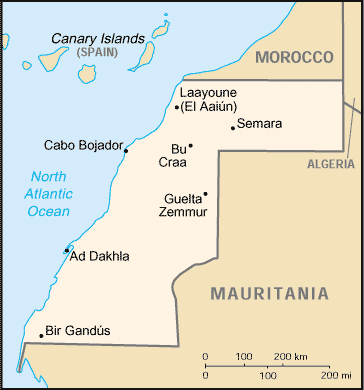
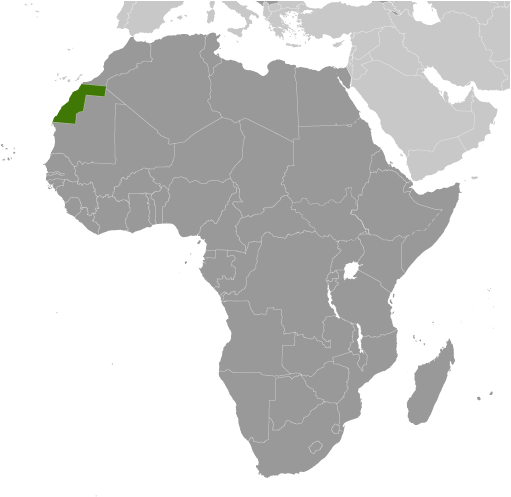
| Click map for larger view |
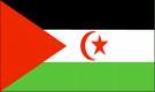
| Click flag for Country Report |



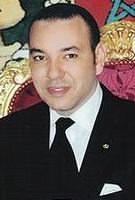
Mohammed VI
King of Morocco since 30 July 1999
King of Morocco since 30 July 1999
Mohamed Abdelaziz
President of the Saharawi Arab Democratic
Republic since 1976
President of the Saharawi Arab Democratic
Republic since 1976
| TRAFFICKING IN PERSONS |
None reported.
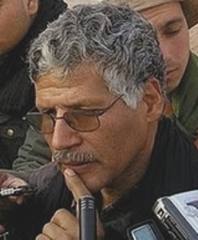
Abdelkader Taleb Oumar
Prime Minister of Saharawi Arab Democratic
Republic since 29 October 2003
Prime Minister of Saharawi Arab Democratic
Republic since 29 October 2003
Crown Prince Moulay Al- Hassan
Heir Apparent since 8 May 2003
Heir Apparent since 8 May 2003