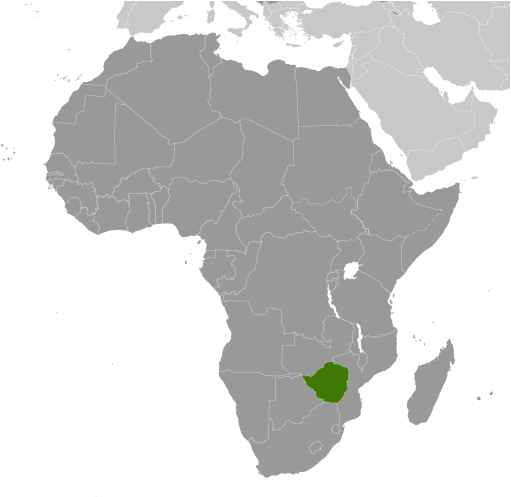

| ZIMBABWE Republic of Zimbabwe Republic of Zimbabwe Joined United Nations: 24 August 1980 Human Rights as assured by their constitution Click here Updated 12 March 2013 |

| CAPITAL |
| POPULATION |
| CHIEF OF STATE |
| SELECTION PROCESS |
Harare
12,619,600
note: estimates for this country explicitly take into account the effects of excess mortality
due to AIDS; this can result in lower life expectancy, higher infant mortality and death
rates, lower population and growth rates, and changes in the distribution of population by
age and sex than would otherwise be expected (July 2012 est.)
note: estimates for this country explicitly take into account the effects of excess mortality
due to AIDS; this can result in lower life expectancy, higher infant mortality and death
rates, lower population and growth rates, and changes in the distribution of population by
age and sex than would otherwise be expected (July 2012 est.)
VACANT
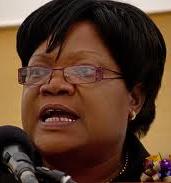
Vice President since 17 January 2013
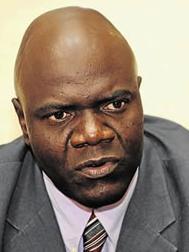
Vice President since 17 January 2013
Presidential candidates nominated with a nomination paper signed
by at least 10 registered voters (at least one from each province)
and elected by popular vote for a five-year term (no term limits);
election last held 9-11 March 2002; co-vice presidents appointed
by the president; elections last held 28 March 2008 followed by a
run-off on 27 June 2008 NOTE- Co-Vice President John Landa
Nkomo died 17 January 2013 and no replacement has been named.
Next scheduled election: 31 March 2013
by at least 10 registered voters (at least one from each province)
and elected by popular vote for a five-year term (no term limits);
election last held 9-11 March 2002; co-vice presidents appointed
by the president; elections last held 28 March 2008 followed by a
run-off on 27 June 2008 NOTE- Co-Vice President John Landa
Nkomo died 17 January 2013 and no replacement has been named.
Next scheduled election: 31 March 2013
HEAD OF GOVERNMENT
SELECTION PROCESS
In the wake of the electoral violence and controversy surrounding
the 2008 presidential election and later run-off, negotiations
between Mugabe's ZANU-PF and rival candidate Morgan
Tsvangirai's MDC led to a power-sharing agreement in
September 2008, providing for the restoration of the office of
Prime Minister.
the 2008 presidential election and later run-off, negotiations
between Mugabe's ZANU-PF and rival candidate Morgan
Tsvangirai's MDC led to a power-sharing agreement in
September 2008, providing for the restoration of the office of
Prime Minister.
| DECLARATION OF HUMAN RIGHTS |
| ETHNIC GROUPS |
African 98% (Shona 82%, Ndebele 14%, other 2%), mixed and Asian 1%, white less than 1%
| RELIGIONS |
Syncretic (part Christian, part indigenous beliefs) 50%, Christian 25%, indigenous beliefs 24%, Muslim and other 1%
| GOVERNMENT STRUCTURE |
Parliamentary democracy with 8 provinces and 2 cities with provincial status; Legal system is a mixture of Roman-Dutch and
English common law
Executive: Presidential candidates nominated with a nomination paper signed by at least 10 registered voters (at least one from
each province) and elected by popular vote for a five-year term (no term limits); elections last held 28 March 2008 followed by a
run-off on 27 June 2008 (next to be held 31 March 2013); co-vice presidents appointed by the president; In the wake of the
electoral violence and controversy surrounding the 2008 presidential election and later run-off, negotiations between Mugabe's
ZANU-PF and rival candidate Morgan Tsvangirai's MDC led to a power-sharing agreement in September 2008, providing for the
restoration of the office of Prime Minister. NOTE- Co-Vice President John Landa Nkomo died 17 January 2013 and no
replacement has been named.
Legislative: Bicameral Parliament consists of a Senate (93 seats - 60 elected by popular vote for a five-year term, 10 provincial
governors nominated by the president, 16 traditional chiefs elected by the Council of Chiefs, 2 held by the president and deputy
president of the Council of Chiefs, and 5 appointed by the president) and a House of Assembly (210 seats - all elected by popular
vote for five-year terms)
elections: last held 28 March 2008 (next to be held 31 March 2013)
Judicial: Supreme Court; High Court
English common law
Executive: Presidential candidates nominated with a nomination paper signed by at least 10 registered voters (at least one from
each province) and elected by popular vote for a five-year term (no term limits); elections last held 28 March 2008 followed by a
run-off on 27 June 2008 (next to be held 31 March 2013); co-vice presidents appointed by the president; In the wake of the
electoral violence and controversy surrounding the 2008 presidential election and later run-off, negotiations between Mugabe's
ZANU-PF and rival candidate Morgan Tsvangirai's MDC led to a power-sharing agreement in September 2008, providing for the
restoration of the office of Prime Minister. NOTE- Co-Vice President John Landa Nkomo died 17 January 2013 and no
replacement has been named.
Legislative: Bicameral Parliament consists of a Senate (93 seats - 60 elected by popular vote for a five-year term, 10 provincial
governors nominated by the president, 16 traditional chiefs elected by the Council of Chiefs, 2 held by the president and deputy
president of the Council of Chiefs, and 5 appointed by the president) and a House of Assembly (210 seats - all elected by popular
vote for five-year terms)
elections: last held 28 March 2008 (next to be held 31 March 2013)
Judicial: Supreme Court; High Court
| LANGUAGES |
English (official), Shona, Sindebele (the language of the Ndebele, sometimes called Ndebele), numerous but minor tribal dialects
| BRIEF HISTORY |
Stone Age hunters, related to today's Khoisan people, occupied the area about 5000 years ago or earlier. They depicted scenes of
life in rock paintings across Zimbabwe; these are known as the Bushman paintings. Iron Age Bantu-speaking peoples began
migrating into the area around AD 300, eventually displacing the earlier hunters. These included the ancestors of the Shona, who
account for roughly four-fifths of the country's population today. By the Middle Ages, there was a Bantu civilisation in the region, as
evidenced by ruins at Great Zimbabwe and other smaller sites, whose outstanding achievement is a unique dry stone architecture.
Around the early 10th century, trade developed with Muslim merchants on the Indian Ocean coast, helping to develop Great
Zimbabwe in the 11th century. The state traded gold, ivory, and copper for cloth and glass. It ceased to be the leading Shona state
in the mid-15th century. In 1837-8, the Shona were conquered by the Ndebele, who arrived from south of the Limpopo and forced
them to pay tribute and concentrate in northern Zimbabwe. In 1888, British entrepreneur Cecil Rhodes extracted mining rights from
King Lobengula of the Ndebele. He used this concession to persuade the British government to grant a royal charter to his British
South Africa Company (BSAC) over Matabeleland and its subject states such as Mashonaland, and to negotiate similar
concessions covering all territory between the Limpopo River and Lake Tanganyika, referred to as 'Zambesia'. Through such
concessions and treaties, many of which were deceitful, he promoted the colonisation of the region's land, labour, and precious
metal and mineral resources. In 1895 the BSAC adopted the name 'Rhodesia' for Zambesia, after Cecil Rhodes, and in 1898
'Southern Rhodesia' was officially adopted for the part south of the Zambezi, which later became Zimbabwe. The part to the north
was administered separately by the BSAC and was later named Northern Rhodesia, now Zambia. The Shona staged unsuccessful
revolts (Chimurenga) against the encroachment on their lands in 1896 and 1897. Both the Ndebele and Shona became subject to
the Rhodes administration. This was the beginning of a larger settlement of white settlers that led to land distribution favouring
whites, displacing both the Shona and Ndebele and other black people. Southern Rhodesia became a self-governing British colony
in October 1923, following a referendum a year earlier. Rhodesians fought for the United Kingdom during World War II. Among
other contributions to the war effort were Rhodesian ground and air forces involved in the East African Campaign. This campaign
fought against the Axis forces in Italian East Africa. In 1953, in the face of African opposition, Britain joined the two parts of
Rhodesia with Nyasaland (now Malawi) in the ill-fated Federation of Rhodesia and Nyasaland which was dominated by Southern
Rhodesian settlers. Growing African nationalism and unrest, particularly in Nyasaland, forced Britain to dissolve it in 1963, and each
of the three countries went their separate ways. On November 11, 1965, Ian Smith made history when he unilaterally declared
independence from Britain and Southern Rhodesia dropped the designation 'Southern', becoming the Republic of Rhodesia in 1970.
After the Unilateral Declaration of Independence (UDI), the British government requested United Nations economic sanctions
against Rhodesia as negotiations with the Smith administration in 1966 and 1968 ended in stalemate. The Smith administration
declared itself a republic in 1970 which was recognised only by South Africa,[17][18] then governed by its apartheid
administration. Over the years, the guerrilla fighting against Smith's UDI government intensified. As a result, the Smith government
opened negotiations with the leaders of the Patriotic Fronts — Zimbabwe African National Union (ZANU) and the Zimbabwe
African People's Union (ZAPU). ZANU was led by Robert Mugabe and ZAPU was led by Joshua Nkomo. In March 1978, with
his regime near the brink of collapse, Smith signed an accord with three black leaders, led by Bishop Abel Muzorewa, who offered
safeguards for white civilians. As a result of the Internal Settlement, elections were held in April 1979. The United African National
Council (UANC) party won a majority in this election. On June 1, 1979, the leader of UANC, Abel Muzorewa, became the
country's Prime Minister and the country's name was changed to Zimbabwe Rhodesia. The internal settlement left control of the
country's police, security forces, civil service, and judiciary in white hands; It assured whites of about one third of the seats in
parliament. It was essentially a power-sharing arrangement which did not amount to majority rule. However, on June 12, the United
States Senate voted to end economic sanctions against Zimbabwe Rhodesia. On December 1, 1979, delegations from the British
and Rhodesian governments and the Patriotic Front met in London and signed the Lancaster House Agreement, ending the civil war.
[20] Following the Meeting of Commonwealth Heads of Government held in Lusaka from August 1–7 1979, the British government
invited Muzorewa and the leaders of the Patriotic Front to participate in a Constitutional Conference at Lancaster House. The
purpose of the Conference was to discuss and reach agreement on the terms of an Independence Constitution, and that elections
should be supervised under British authority to enable Rhodesia to proceed to legal independence and the parties to settle their
differences by political means. Lord Carrington, Secretary of State for Foreign and Commonwealth Affairs of the United Kingdom,
chaired the Conference. The conference took place from 10 September–15 December 1979 with 47 plenary sessions. Britain's
Lord Soames was appointed governor to oversee the disarming of revolutionary guerrillas, the holding of elections, and the granting
of independence to an uneasy coalition government with Joshua Nkomo, head of ZAPU. In the free elections of February 1980,
Mugabe and his ZANU won a landslide victory. Mugabe has won re-election ever since. In 1982, Nkomo was ousted from his
cabinet, sparking fighting between ZAPU supporters in the Ndebele-speaking region of the country and the ruling ZANU. A peace
accord was negotiated in 1987, resulting in ZAPU's merger (1988) into the ZANU-PF. Land issues, which the liberation movement
promised to solve, re-emerged as the vital issue for the ruling party beginning in 1999. Despite majority rule, and the existence of a
"willing buyer-willing seller" land reform programme since the 1980s, ZANU (PF) claimed that whites made up less than 1% of the
population but held 70% of the country's commercially viable arable land (though these figures are disputed by many outside the
Government of Zimbabwe). Mugabe began to redistribute land to blacks in 2000 with a compulsory land redistribution; charges that
the programme as a whole is designed to reward loyal Mugabe deputies have persisted in Zimbabwe since the beginning of the
process. The legality and constitutionality of the process has regularly been challenged in the Zimbabwean High and Supreme
Courts; however, the policing agencies have rarely acted in accordance with courts' rulings on these matters. The chaotic
implementation of the land reform led to a sharp decline in agricultural exports, traditionally the country's leading export producing
sector. Mining and tourism have surpassed agriculture. As a result, Zimbabwe is experiencing a severe hard currency shortage,
which has led to hyperinflation and chronic shortages in imported fuel and consumer goods. In 2002, Zimbabwe was suspended
from the Commonwealth of Nations on charges of human rights abuses during the land redistribution and of election tampering.
Following elections in 2005, the government initiated "Operation Murambatsvina," a supposed effort to crack down on illegal
markets and homes that had seen slums emerge in towns and cities. This action has been widely condemned by opposition and
international figures, who charge that it has left a substantial section of urban poor homeless. The Zimbabwe government has
described the operation as an attempt to provide decent housing to the population although they have yet to deliver any new housing
for the forcefully removed people. Zimbabwe's current economic and food crisis, described by some observers as the country's
worst humanitarian crisis since independence, has been attributed, in varying degrees, to a drought affecting the entire region, the
HIV/AIDS epidemic, and the government's price controls and land reforms. In September 2005 Mugabe signed constitutional
amendments that reinstituted a national senate (abolished in 1987) and that nationalised all land. This converted all ownership rights
into leases. In August 2006 runaway inflation forced the government to replace its existing currency with a revalued one. In
December 2006, ZANU-PF proposed the "harmonisation" of the parliamentary and presidential election schedules in 2010; the
move was seen by the opposition as an excuse to extend Mugabe's term as president until 2010. Morgan Tsvangirai was badly
beaten on March 12, 2007 after being arrested and held at Machipisa Police Station in the Highfield suburb of Harare. The
educational system in Zimbabwe which was once regarded as among the best in Africa, has gone into crisis because of the country's
economic meltdown. Zimbabwe held a presidential election along with a parliamentary election on March 29, 2008. As no
candidate received an outright majority in the first round, a second round was held on June 27, 2008 between Tsvangirai (with
47.9% of the first round vote) and Mugabe (43.2%). Tsvangirai withdrew from the second round a week before it was scheduled
to take place, citing violence against his party's supporters. The second round went ahead, despite widespread criticism, and led to
victory for Mugabe. On 15 September 2008, the leaders of the 14-member Southern African Development Community witnessed
the signing of the power-sharing agreement, brokered by South African leader Thabo Mbeki. With symbolic handshake and warm
smiles at the Rainbow Towers hotel, in Harare, Mugabe and Tsvangirai signed the deal to end the violent political crisis. As
provided, Robert Mugabe will remain president, Morgan Tsvangirai will become prime minister. In November 2008 the Air Force
of Zimbabwe was sent, after some police officers began refusing orders to shoot the illegal miners at Marange diamond fields. Up to
150 of the estimated 30,000 illegal miners were shot from helicopter gunships. In January 2009, Morgan Tsvangirai announced that
he would do as the leaders across Africa had insisted and join a coalition government as prime minister with his nemesis, President
Robert Mugabe . On 11 February 2009 Tsvangirai was sworn in as the Prime Minister of Zimbabwe.On 6 March 2009,
Tsvangirai's wife was killed in a car accident in which he was also injured. Elections are scheduled for 31 March 2013.
Source: Wikipedia: History of Zimbabwe
life in rock paintings across Zimbabwe; these are known as the Bushman paintings. Iron Age Bantu-speaking peoples began
migrating into the area around AD 300, eventually displacing the earlier hunters. These included the ancestors of the Shona, who
account for roughly four-fifths of the country's population today. By the Middle Ages, there was a Bantu civilisation in the region, as
evidenced by ruins at Great Zimbabwe and other smaller sites, whose outstanding achievement is a unique dry stone architecture.
Around the early 10th century, trade developed with Muslim merchants on the Indian Ocean coast, helping to develop Great
Zimbabwe in the 11th century. The state traded gold, ivory, and copper for cloth and glass. It ceased to be the leading Shona state
in the mid-15th century. In 1837-8, the Shona were conquered by the Ndebele, who arrived from south of the Limpopo and forced
them to pay tribute and concentrate in northern Zimbabwe. In 1888, British entrepreneur Cecil Rhodes extracted mining rights from
King Lobengula of the Ndebele. He used this concession to persuade the British government to grant a royal charter to his British
South Africa Company (BSAC) over Matabeleland and its subject states such as Mashonaland, and to negotiate similar
concessions covering all territory between the Limpopo River and Lake Tanganyika, referred to as 'Zambesia'. Through such
concessions and treaties, many of which were deceitful, he promoted the colonisation of the region's land, labour, and precious
metal and mineral resources. In 1895 the BSAC adopted the name 'Rhodesia' for Zambesia, after Cecil Rhodes, and in 1898
'Southern Rhodesia' was officially adopted for the part south of the Zambezi, which later became Zimbabwe. The part to the north
was administered separately by the BSAC and was later named Northern Rhodesia, now Zambia. The Shona staged unsuccessful
revolts (Chimurenga) against the encroachment on their lands in 1896 and 1897. Both the Ndebele and Shona became subject to
the Rhodes administration. This was the beginning of a larger settlement of white settlers that led to land distribution favouring
whites, displacing both the Shona and Ndebele and other black people. Southern Rhodesia became a self-governing British colony
in October 1923, following a referendum a year earlier. Rhodesians fought for the United Kingdom during World War II. Among
other contributions to the war effort were Rhodesian ground and air forces involved in the East African Campaign. This campaign
fought against the Axis forces in Italian East Africa. In 1953, in the face of African opposition, Britain joined the two parts of
Rhodesia with Nyasaland (now Malawi) in the ill-fated Federation of Rhodesia and Nyasaland which was dominated by Southern
Rhodesian settlers. Growing African nationalism and unrest, particularly in Nyasaland, forced Britain to dissolve it in 1963, and each
of the three countries went their separate ways. On November 11, 1965, Ian Smith made history when he unilaterally declared
independence from Britain and Southern Rhodesia dropped the designation 'Southern', becoming the Republic of Rhodesia in 1970.
After the Unilateral Declaration of Independence (UDI), the British government requested United Nations economic sanctions
against Rhodesia as negotiations with the Smith administration in 1966 and 1968 ended in stalemate. The Smith administration
declared itself a republic in 1970 which was recognised only by South Africa,[17][18] then governed by its apartheid
administration. Over the years, the guerrilla fighting against Smith's UDI government intensified. As a result, the Smith government
opened negotiations with the leaders of the Patriotic Fronts — Zimbabwe African National Union (ZANU) and the Zimbabwe
African People's Union (ZAPU). ZANU was led by Robert Mugabe and ZAPU was led by Joshua Nkomo. In March 1978, with
his regime near the brink of collapse, Smith signed an accord with three black leaders, led by Bishop Abel Muzorewa, who offered
safeguards for white civilians. As a result of the Internal Settlement, elections were held in April 1979. The United African National
Council (UANC) party won a majority in this election. On June 1, 1979, the leader of UANC, Abel Muzorewa, became the
country's Prime Minister and the country's name was changed to Zimbabwe Rhodesia. The internal settlement left control of the
country's police, security forces, civil service, and judiciary in white hands; It assured whites of about one third of the seats in
parliament. It was essentially a power-sharing arrangement which did not amount to majority rule. However, on June 12, the United
States Senate voted to end economic sanctions against Zimbabwe Rhodesia. On December 1, 1979, delegations from the British
and Rhodesian governments and the Patriotic Front met in London and signed the Lancaster House Agreement, ending the civil war.
[20] Following the Meeting of Commonwealth Heads of Government held in Lusaka from August 1–7 1979, the British government
invited Muzorewa and the leaders of the Patriotic Front to participate in a Constitutional Conference at Lancaster House. The
purpose of the Conference was to discuss and reach agreement on the terms of an Independence Constitution, and that elections
should be supervised under British authority to enable Rhodesia to proceed to legal independence and the parties to settle their
differences by political means. Lord Carrington, Secretary of State for Foreign and Commonwealth Affairs of the United Kingdom,
chaired the Conference. The conference took place from 10 September–15 December 1979 with 47 plenary sessions. Britain's
Lord Soames was appointed governor to oversee the disarming of revolutionary guerrillas, the holding of elections, and the granting
of independence to an uneasy coalition government with Joshua Nkomo, head of ZAPU. In the free elections of February 1980,
Mugabe and his ZANU won a landslide victory. Mugabe has won re-election ever since. In 1982, Nkomo was ousted from his
cabinet, sparking fighting between ZAPU supporters in the Ndebele-speaking region of the country and the ruling ZANU. A peace
accord was negotiated in 1987, resulting in ZAPU's merger (1988) into the ZANU-PF. Land issues, which the liberation movement
promised to solve, re-emerged as the vital issue for the ruling party beginning in 1999. Despite majority rule, and the existence of a
"willing buyer-willing seller" land reform programme since the 1980s, ZANU (PF) claimed that whites made up less than 1% of the
population but held 70% of the country's commercially viable arable land (though these figures are disputed by many outside the
Government of Zimbabwe). Mugabe began to redistribute land to blacks in 2000 with a compulsory land redistribution; charges that
the programme as a whole is designed to reward loyal Mugabe deputies have persisted in Zimbabwe since the beginning of the
process. The legality and constitutionality of the process has regularly been challenged in the Zimbabwean High and Supreme
Courts; however, the policing agencies have rarely acted in accordance with courts' rulings on these matters. The chaotic
implementation of the land reform led to a sharp decline in agricultural exports, traditionally the country's leading export producing
sector. Mining and tourism have surpassed agriculture. As a result, Zimbabwe is experiencing a severe hard currency shortage,
which has led to hyperinflation and chronic shortages in imported fuel and consumer goods. In 2002, Zimbabwe was suspended
from the Commonwealth of Nations on charges of human rights abuses during the land redistribution and of election tampering.
Following elections in 2005, the government initiated "Operation Murambatsvina," a supposed effort to crack down on illegal
markets and homes that had seen slums emerge in towns and cities. This action has been widely condemned by opposition and
international figures, who charge that it has left a substantial section of urban poor homeless. The Zimbabwe government has
described the operation as an attempt to provide decent housing to the population although they have yet to deliver any new housing
for the forcefully removed people. Zimbabwe's current economic and food crisis, described by some observers as the country's
worst humanitarian crisis since independence, has been attributed, in varying degrees, to a drought affecting the entire region, the
HIV/AIDS epidemic, and the government's price controls and land reforms. In September 2005 Mugabe signed constitutional
amendments that reinstituted a national senate (abolished in 1987) and that nationalised all land. This converted all ownership rights
into leases. In August 2006 runaway inflation forced the government to replace its existing currency with a revalued one. In
December 2006, ZANU-PF proposed the "harmonisation" of the parliamentary and presidential election schedules in 2010; the
move was seen by the opposition as an excuse to extend Mugabe's term as president until 2010. Morgan Tsvangirai was badly
beaten on March 12, 2007 after being arrested and held at Machipisa Police Station in the Highfield suburb of Harare. The
educational system in Zimbabwe which was once regarded as among the best in Africa, has gone into crisis because of the country's
economic meltdown. Zimbabwe held a presidential election along with a parliamentary election on March 29, 2008. As no
candidate received an outright majority in the first round, a second round was held on June 27, 2008 between Tsvangirai (with
47.9% of the first round vote) and Mugabe (43.2%). Tsvangirai withdrew from the second round a week before it was scheduled
to take place, citing violence against his party's supporters. The second round went ahead, despite widespread criticism, and led to
victory for Mugabe. On 15 September 2008, the leaders of the 14-member Southern African Development Community witnessed
the signing of the power-sharing agreement, brokered by South African leader Thabo Mbeki. With symbolic handshake and warm
smiles at the Rainbow Towers hotel, in Harare, Mugabe and Tsvangirai signed the deal to end the violent political crisis. As
provided, Robert Mugabe will remain president, Morgan Tsvangirai will become prime minister. In November 2008 the Air Force
of Zimbabwe was sent, after some police officers began refusing orders to shoot the illegal miners at Marange diamond fields. Up to
150 of the estimated 30,000 illegal miners were shot from helicopter gunships. In January 2009, Morgan Tsvangirai announced that
he would do as the leaders across Africa had insisted and join a coalition government as prime minister with his nemesis, President
Robert Mugabe . On 11 February 2009 Tsvangirai was sworn in as the Prime Minister of Zimbabwe.On 6 March 2009,
Tsvangirai's wife was killed in a car accident in which he was also injured. Elections are scheduled for 31 March 2013.
Source: Wikipedia: History of Zimbabwe
| ECONOMIC OVERVIEW |
Zimbabwe's economy is growing despite continuing political uncertainty. Following a decade of contraction from 1998 to 2008,
Zimbabwe's economy recorded real growth of more than 9% per year in 2010-11, before slowing to 5% in 2012, due in part to a
poor harvest and low diamond revenues. However, the government of Zimbabwe still faces a number of difficult economic
problems, including infrastructure and regulatory deficiencies, ongoing indigenization pressure, policy uncertainty, a large external
debt burden, and insufficient formal employment. Zimbabwe's 1998-2002 involvement in the war in the Democratic Republic of the
Congo drained hundreds of millions of dollars from the economy. The government's subsequent land reform program, characterized
by chaos and violence, badly damaged the commercial farming sector, the traditional source of exports and foreign exchange and
the provider of 400,000 jobs, turning Zimbabwe into a net importer of food products. Until early 2009, the Reserve Bank of
Zimbabwe routinely printed money to fund the budget deficit, causing hyperinflation. Dollarization in early 2009 - which allowed
currencies such as the Botswana pula, the South Africa rand, and the US dollar to be used locally - ended hyperinflation and
restored price stability but exposed structural weaknesses that continue to inhibit broad-based growth.
Source: CIA World Factbook (select Zimbabwe)
Zimbabwe's economy recorded real growth of more than 9% per year in 2010-11, before slowing to 5% in 2012, due in part to a
poor harvest and low diamond revenues. However, the government of Zimbabwe still faces a number of difficult economic
problems, including infrastructure and regulatory deficiencies, ongoing indigenization pressure, policy uncertainty, a large external
debt burden, and insufficient formal employment. Zimbabwe's 1998-2002 involvement in the war in the Democratic Republic of the
Congo drained hundreds of millions of dollars from the economy. The government's subsequent land reform program, characterized
by chaos and violence, badly damaged the commercial farming sector, the traditional source of exports and foreign exchange and
the provider of 400,000 jobs, turning Zimbabwe into a net importer of food products. Until early 2009, the Reserve Bank of
Zimbabwe routinely printed money to fund the budget deficit, causing hyperinflation. Dollarization in early 2009 - which allowed
currencies such as the Botswana pula, the South Africa rand, and the US dollar to be used locally - ended hyperinflation and
restored price stability but exposed structural weaknesses that continue to inhibit broad-based growth.
Source: CIA World Factbook (select Zimbabwe)
| POLITICAL CLIMATE |
The 2008–2009 Zimbabwean political negotiations between the opposition Movement for Democratic Change (led by Morgan
Tsvangirai), its small splinter group, the Movement for Democratic Change - Mutambara (led by Arthur Mutambara), and the ruling
Zimbabwe African National Union – Patriotic Front (led by Robert Mugabe) are intended to negotiate an end to the partisan
violence and human rights violations in Zimbabwe and create a framework for a power-sharing executive government between the
two parties. These negotiations followed the 2008 presidential election, in which Mugabe was controversially re-elected, as well as
the 2008 parliamentary election, in which the MDC won a majority in the House of Assembly.
Preliminary talks to set up conditions for official negotiations began between leading negotiators from both parties on July 10, and
on July 22, the three party leaders met for the first time in Harare to express their support for a negotiated settlement of disputes
arising out of the presidential and parliamentary elections. Negotiations between the parties officially began on July 25 and are
currently proceeding with very few details released from the negotiation teams in Pretoria, as coverage by the media was barred
from the premises where the negotiations took place. The talks were mediated by South African President Thabo Mbeki. A final
deal was reached on September 11, 2008, providing for Mugabe to remain President while Tsvangirai would become Prime
Minister. The deal was signed on September 15; negotiations continue regarding the composition of a new Cabinet. Presidential and
parlamentary elections are scheduled for 31 March 2013.
Source: Wikipedia: Politics of Zimbabwe
Tsvangirai), its small splinter group, the Movement for Democratic Change - Mutambara (led by Arthur Mutambara), and the ruling
Zimbabwe African National Union – Patriotic Front (led by Robert Mugabe) are intended to negotiate an end to the partisan
violence and human rights violations in Zimbabwe and create a framework for a power-sharing executive government between the
two parties. These negotiations followed the 2008 presidential election, in which Mugabe was controversially re-elected, as well as
the 2008 parliamentary election, in which the MDC won a majority in the House of Assembly.
Preliminary talks to set up conditions for official negotiations began between leading negotiators from both parties on July 10, and
on July 22, the three party leaders met for the first time in Harare to express their support for a negotiated settlement of disputes
arising out of the presidential and parliamentary elections. Negotiations between the parties officially began on July 25 and are
currently proceeding with very few details released from the negotiation teams in Pretoria, as coverage by the media was barred
from the premises where the negotiations took place. The talks were mediated by South African President Thabo Mbeki. A final
deal was reached on September 11, 2008, providing for Mugabe to remain President while Tsvangirai would become Prime
Minister. The deal was signed on September 15; negotiations continue regarding the composition of a new Cabinet. Presidential and
parlamentary elections are scheduled for 31 March 2013.
Source: Wikipedia: Politics of Zimbabwe
| INTERNATIONAL DISPUTES |
Botswana built electric fences and South Africa has placed military along the border to stem the flow of thousands of Zimbabweans
fleeing to find work and escape political persecution; Namibia has supported, and in 2004 Zimbabwe dropped objections to, plans
between Botswana and Zambia to build a bridge over the Zambezi River, thereby de facto recognizing a short, but not clearly
delimited, Botswana-Zambia boundary in the river
fleeing to find work and escape political persecution; Namibia has supported, and in 2004 Zimbabwe dropped objections to, plans
between Botswana and Zambia to build a bridge over the Zambezi River, thereby de facto recognizing a short, but not clearly
delimited, Botswana-Zambia boundary in the river


| REFUGEES AND INTERNALLY DISPLACED PERSONS (IDPS) |
IDPs: undetermined (political violence, human rights violations, land reform, and economic collapse) (2012)
| ILLICIT DRUGS |
Transit point for cannabis and South Asian heroin, mandrax, and methamphetamines en route to South Africa
| HUMAN RIGHTS STATEMENTS, ANALYSIS AND CRITIQUES |
2011 Human Rights Report: Zimbabwe
Bureau of Democracy, Human Rights, and Labor
2011 Country Reports on Human Rights Practices
May 25, 2012
Zimbabwe is constitutionally a republic, but its authoritarian government was not freely elected and has been dominated by President
Robert Mugabe and his Zimbabwe African National Union-Patriotic Front (ZANU-PF) since independence in 1980. Presidential and
parliamentary elections held in 2008 were neither free nor fair. While the March 2008 election was generally peaceful--and two factions
of the opposition Movement for Democratic Change (MDC) gained a parliamentary majority--violence and intimidation perpetrated by
security forces and nonstate actors loyal to ZANU-PF in the months leading up to the June presidential runoff resulted in more than 270
confirmed deaths, thousands of injuries, and the displacement of tens of thousands of persons. Opposing presidential candidate Morgan
Tsvangirai withdrew from the runoff contest, and President Mugabe was declared the winner. International condemnation of the
presidential runoff election resulted in a mediated solution outlined in the 2008 Global Political Agreement (GPA) signed by ZANU-PF and
the two MDC factions led by Morgan Tsvangirai (MDC-T) and Arthur Mutambara (MDC-M). Mugabe retained the presidency,
Tsvangirai became prime minister, and Mutambara became deputy prime minister. In January the MDC-M elected Welshman Ncube as
its new president at the party’s congress, changing the party’s acronym to MDC-N. Mutambara retained his seat as the deputy prime
minister. There were instances in which elements of the security forces acted independently of civilian control.
The most important human rights problems in the country remained the government’s targeting for harassment, arrest, abuse, and
torture of members of non-ZANU-PF parties and civil society activists, widespread disregard for the rule of law among security forces
and the judiciary, and restrictions on civil liberties.
ZANU-PF’s control and manipulation of the political process effectively negated the right of citizens to change their government. Prison
conditions were harsh. Lengthy pretrial detention was a problem. Executive influence and interference in the judiciary continued, and the
government infringed on citizens’ privacy rights. Freedoms of speech, press, assembly, association, and movement were restricted, and
the government continued to evict citizens, invade farms, and demolish homes and informal marketplaces. The government impeded
nongovernmental organization (NGO) efforts to assist those displaced and other vulnerable populations. The government arrested,
detained, and harassed NGO members. Government corruption remained widespread, particularly at the local level. Violence and
discrimination against women; child abuse; trafficking of women and children; and discrimination against persons with disabilities, racial
and ethnic minorities, the lesbian, gay, bisexual, and transgender (LGBT) community, and persons with HIV/AIDS were problems.
Government interference with labor-related events occurred. Child labor, including the worst forms of child labor, was a problem.
The government did not take steps to prosecute or punish security force or ZANU-PF supporters who committed abuses, and impunity
continued to be a serious problem.
Click here to read more »
Bureau of Democracy, Human Rights, and Labor
2011 Country Reports on Human Rights Practices
May 25, 2012
Zimbabwe is constitutionally a republic, but its authoritarian government was not freely elected and has been dominated by President
Robert Mugabe and his Zimbabwe African National Union-Patriotic Front (ZANU-PF) since independence in 1980. Presidential and
parliamentary elections held in 2008 were neither free nor fair. While the March 2008 election was generally peaceful--and two factions
of the opposition Movement for Democratic Change (MDC) gained a parliamentary majority--violence and intimidation perpetrated by
security forces and nonstate actors loyal to ZANU-PF in the months leading up to the June presidential runoff resulted in more than 270
confirmed deaths, thousands of injuries, and the displacement of tens of thousands of persons. Opposing presidential candidate Morgan
Tsvangirai withdrew from the runoff contest, and President Mugabe was declared the winner. International condemnation of the
presidential runoff election resulted in a mediated solution outlined in the 2008 Global Political Agreement (GPA) signed by ZANU-PF and
the two MDC factions led by Morgan Tsvangirai (MDC-T) and Arthur Mutambara (MDC-M). Mugabe retained the presidency,
Tsvangirai became prime minister, and Mutambara became deputy prime minister. In January the MDC-M elected Welshman Ncube as
its new president at the party’s congress, changing the party’s acronym to MDC-N. Mutambara retained his seat as the deputy prime
minister. There were instances in which elements of the security forces acted independently of civilian control.
The most important human rights problems in the country remained the government’s targeting for harassment, arrest, abuse, and
torture of members of non-ZANU-PF parties and civil society activists, widespread disregard for the rule of law among security forces
and the judiciary, and restrictions on civil liberties.
ZANU-PF’s control and manipulation of the political process effectively negated the right of citizens to change their government. Prison
conditions were harsh. Lengthy pretrial detention was a problem. Executive influence and interference in the judiciary continued, and the
government infringed on citizens’ privacy rights. Freedoms of speech, press, assembly, association, and movement were restricted, and
the government continued to evict citizens, invade farms, and demolish homes and informal marketplaces. The government impeded
nongovernmental organization (NGO) efforts to assist those displaced and other vulnerable populations. The government arrested,
detained, and harassed NGO members. Government corruption remained widespread, particularly at the local level. Violence and
discrimination against women; child abuse; trafficking of women and children; and discrimination against persons with disabilities, racial
and ethnic minorities, the lesbian, gay, bisexual, and transgender (LGBT) community, and persons with HIV/AIDS were problems.
Government interference with labor-related events occurred. Child labor, including the worst forms of child labor, was a problem.
The government did not take steps to prosecute or punish security force or ZANU-PF supporters who committed abuses, and impunity
continued to be a serious problem.
Click here to read more »
1 March 2012
Committee on the Elimination of Discrimination against Women
Fifty-first session
13 February – 2 March 2012
Concluding observations of the Committee on the Elimination of Discrimination against Women
Zimbabwe
A. Introduction
2. The Committee takes note of the State party’ submission of its combined second, third, fourth and fifth periodic report, which in
general, followed the Committee’s guidelines for the preparation of reports, and was prepared through a consultative process with the
participation of Government bodies and civil society. The Committee, however, regrets that the report was long overdue. The Committee
expresses its appreciation to the State party for its oral presentation, the written replies to the list of issues and questions raised by its pre-
session working group and the further clarifications to the questions posed orally by the Committee.
B. Positive aspects
4. The Committee welcomes the progress achieved since the adoption of its previous concluding observations in 1998, including the
legislative reforms that have been undertaken and the adoption of a range of legislative measures. Specific reference is made
to the:
a. National Gender Policy (2004), to mainstream gender into all sectors and promote equal advancement of women and men;
b. Domestic Violence Act (2006);
c. Gender Implementation Strategy 2007-2010;
d. First Schedule of the Public Service Regulations (2000), prohibiting sexual harassment; and
e. Amendments to the Labour Act (Act 7 in 2002 and Act 17 in 2005) prohibiting the demand of sexual favours in return for recruitment
for employment, promotion or any other related activities.
C. Principal areas of concern and recommendations
7. The Committee recalls the obligation of the State party to systematically and continuously implement all the provisions of the
Convention and views the concerns and recommendations identified in the present concluding observations as requiring the priority
attention of the State party between now and the submission of the next periodic report. Consequently, the Committee urges the State
party to focus on those areas in its implementation activities and to report on actions taken and results achieved in its next periodic
report. The Committee calls upon the State party to submit the present concluding observations to all relevant ministries, to the
Parliament, and to the judiciary, so as to ensure their full implementation.
Click here to read more »
Committee on the Elimination of Discrimination against Women
Fifty-first session
13 February – 2 March 2012
Concluding observations of the Committee on the Elimination of Discrimination against Women
Zimbabwe
A. Introduction
2. The Committee takes note of the State party’ submission of its combined second, third, fourth and fifth periodic report, which in
general, followed the Committee’s guidelines for the preparation of reports, and was prepared through a consultative process with the
participation of Government bodies and civil society. The Committee, however, regrets that the report was long overdue. The Committee
expresses its appreciation to the State party for its oral presentation, the written replies to the list of issues and questions raised by its pre-
session working group and the further clarifications to the questions posed orally by the Committee.
B. Positive aspects
4. The Committee welcomes the progress achieved since the adoption of its previous concluding observations in 1998, including the
legislative reforms that have been undertaken and the adoption of a range of legislative measures. Specific reference is made
to the:
a. National Gender Policy (2004), to mainstream gender into all sectors and promote equal advancement of women and men;
b. Domestic Violence Act (2006);
c. Gender Implementation Strategy 2007-2010;
d. First Schedule of the Public Service Regulations (2000), prohibiting sexual harassment; and
e. Amendments to the Labour Act (Act 7 in 2002 and Act 17 in 2005) prohibiting the demand of sexual favours in return for recruitment
for employment, promotion or any other related activities.
C. Principal areas of concern and recommendations
7. The Committee recalls the obligation of the State party to systematically and continuously implement all the provisions of the
Convention and views the concerns and recommendations identified in the present concluding observations as requiring the priority
attention of the State party between now and the submission of the next periodic report. Consequently, the Committee urges the State
party to focus on those areas in its implementation activities and to report on actions taken and results achieved in its next periodic
report. The Committee calls upon the State party to submit the present concluding observations to all relevant ministries, to the
Parliament, and to the judiciary, so as to ensure their full implementation.
Click here to read more »
Civil Society Attacks Raise Concerns Ahead of Zimbabwean Referendum
Mar 1 2013 - 3:56pm
The recent state-sponsored harassment of democracy and human rights organizations in Zimbabwe is a blatant violation of citizens’
fundamental freedoms and threatens the credibility of the upcoming constitutional referendum. Freedom House calls on Zimbabwe’s
leaders to end the attacks on civil society and hold accountable those responsible for ordering the raids.
Early Friday, police working with officers from Zimbabwe’s Central Intelligence Organisation and Criminal Investigations Department
raided the Bulawayo offices of Radio Dialogue, a civil society organization working to increase access to information to local
communities. According to reports from civil society, officers presented a warrant alleging that they were searching for “possession of
smuggled radio receivers.” The raid ended with police confiscating 180 portable radios. This type of radio is used by rural communities,
which do not have access to other forms of media, to listen to local and international news programs. Recently the government of
Zimbabwe announced a ban on shortwave radios, claiming that they could be used to promote hate speech in the lead up to elections
anticipated for the coming year.
“President Mugabe’s continued calls for a peaceful vote are meaningless until he puts an end to these blatant attacks on civil society,”
said Daniel Calingaert, executive vice president at Freedom House. “This constitutional referendum is a critical juncture in Zimbabwe’s
history, and without the protection of fundamental freedoms, the country risks reliving the violence surrounding elections five years ago.”
Over the past four months, the offices of more than a dozen organizations have been raided, files and equipment confiscated, and leaders
arrested. State security forces continue to use existing restrictive legislation, such as the Public Order and Security Act and the Criminal
Codification and Reform Act, as legal justification for raids and arrests. The recent crackdown on civil society organizations, which are
defending citizens’ rights and promoting integrity in the voting process, appears to be politically motivated.
The constitutional referendum will be first national vote in Zimbabwe since the 2008 disputed presidential elections. The electoral
violence that surrounded those elections left more than 200 people dead and resulted in the regionally-mediated Global Political
Agreement (GPA), which ended violence and created Zimbabwe’s current power-sharing government. The GPA also outlined many
necessary reforms which the government needed to implement in order to ensure more democratic laws and institutions and credible
elections. To date, however, very little progress has been made by the government implementing these reforms, which seriously
threatens the chances of free and fair elections anticipated for later this year.
Click here to read more »
Mar 1 2013 - 3:56pm
The recent state-sponsored harassment of democracy and human rights organizations in Zimbabwe is a blatant violation of citizens’
fundamental freedoms and threatens the credibility of the upcoming constitutional referendum. Freedom House calls on Zimbabwe’s
leaders to end the attacks on civil society and hold accountable those responsible for ordering the raids.
Early Friday, police working with officers from Zimbabwe’s Central Intelligence Organisation and Criminal Investigations Department
raided the Bulawayo offices of Radio Dialogue, a civil society organization working to increase access to information to local
communities. According to reports from civil society, officers presented a warrant alleging that they were searching for “possession of
smuggled radio receivers.” The raid ended with police confiscating 180 portable radios. This type of radio is used by rural communities,
which do not have access to other forms of media, to listen to local and international news programs. Recently the government of
Zimbabwe announced a ban on shortwave radios, claiming that they could be used to promote hate speech in the lead up to elections
anticipated for the coming year.
“President Mugabe’s continued calls for a peaceful vote are meaningless until he puts an end to these blatant attacks on civil society,”
said Daniel Calingaert, executive vice president at Freedom House. “This constitutional referendum is a critical juncture in Zimbabwe’s
history, and without the protection of fundamental freedoms, the country risks reliving the violence surrounding elections five years ago.”
Over the past four months, the offices of more than a dozen organizations have been raided, files and equipment confiscated, and leaders
arrested. State security forces continue to use existing restrictive legislation, such as the Public Order and Security Act and the Criminal
Codification and Reform Act, as legal justification for raids and arrests. The recent crackdown on civil society organizations, which are
defending citizens’ rights and promoting integrity in the voting process, appears to be politically motivated.
The constitutional referendum will be first national vote in Zimbabwe since the 2008 disputed presidential elections. The electoral
violence that surrounded those elections left more than 200 people dead and resulted in the regionally-mediated Global Political
Agreement (GPA), which ended violence and created Zimbabwe’s current power-sharing government. The GPA also outlined many
necessary reforms which the government needed to implement in order to ensure more democratic laws and institutions and credible
elections. To date, however, very little progress has been made by the government implementing these reforms, which seriously
threatens the chances of free and fair elections anticipated for later this year.
Click here to read more »
8 March 2013
Prominent Zimbabwe human rights defender hunted down through the media
The alert issued by Zimbabwe police on state television implying that prominent human rights defender Jestina Mukoko was on the run
from the law is a new low in the recent crackdown on dissent, Amnesty International said.
On Thursday night, Zimbabwe state-owned television ran two announcements implying that Mukoko, the director of the Zimbabwe
Peace Project, was on the run and the announcements urged members of the public to call the police with any information about her
whereabouts.
Mukoko, who was at her home when the announcements were made, voluntarily reported to Harare Central Police station Friday
morning. She was charged with several counts then released into the custody of her lawyers.
“It is appalling that at this critical time when Zimbabwe is in the process of adopting a new constitution which provides a stronger bill of
human rights, human rights defenders are coming under systematic attack,” said Noel Kututwa, Amnesty International’s southern Africa
director.
“The use of state media to publically portray Mukoko as some kind of fugitive is a regrettable new low for the government.”
Mukoko was charged with several counts including operating a private voluntary organisation without registration under the Private
Voluntary Organisations Act. ZPP is registered under a deed of trust with the High Court like most other human rights groups in
Zimbabwe.
Early in February, the ZPP was raided by police who had a warrant to search for “subversive material and illegal immigrants.” They
seized material including project documents, four smart phones and 80 solar powered/crank radio receivers.
On 19 February the police announced a ban on short wave radios in Zimbabwe. It is not clear under which law this ban was made and
how it will be implemented.
Click here to read more »
Prominent Zimbabwe human rights defender hunted down through the media
The alert issued by Zimbabwe police on state television implying that prominent human rights defender Jestina Mukoko was on the run
from the law is a new low in the recent crackdown on dissent, Amnesty International said.
On Thursday night, Zimbabwe state-owned television ran two announcements implying that Mukoko, the director of the Zimbabwe
Peace Project, was on the run and the announcements urged members of the public to call the police with any information about her
whereabouts.
Mukoko, who was at her home when the announcements were made, voluntarily reported to Harare Central Police station Friday
morning. She was charged with several counts then released into the custody of her lawyers.
“It is appalling that at this critical time when Zimbabwe is in the process of adopting a new constitution which provides a stronger bill of
human rights, human rights defenders are coming under systematic attack,” said Noel Kututwa, Amnesty International’s southern Africa
director.
“The use of state media to publically portray Mukoko as some kind of fugitive is a regrettable new low for the government.”
Mukoko was charged with several counts including operating a private voluntary organisation without registration under the Private
Voluntary Organisations Act. ZPP is registered under a deed of trust with the High Court like most other human rights groups in
Zimbabwe.
Early in February, the ZPP was raided by police who had a warrant to search for “subversive material and illegal immigrants.” They
seized material including project documents, four smart phones and 80 solar powered/crank radio receivers.
On 19 February the police announced a ban on short wave radios in Zimbabwe. It is not clear under which law this ban was made and
how it will be implemented.
Click here to read more »
Zimbabwe: No Hasty EU Retreat on Sanctions
Rights Reforms, Fair Elections Needed Before Lifting Restrictions
February 7, 2013
(Johannesburg) – The European Union (EU) should require tangible human rights reforms and free and fair elections before lifting
targeted sanctions on Zimbabwe, Human Rights Watch said today. The EU is expected to review its policy toward Zimbabwe in the
coming two weeks.
An EU Council decision on July 23, 2012, indicated that a peaceful and credible constitutional referendum would be an important
milestone in preparing for democratic elections that would justify suspending the majority of EU targeted restrictions on individuals and
entities.
“It would be premature for the EU to lift targeted sanctions on President Robert Mugabe and members of his inner circle simply for
holding a referendum on a new constitution,” said Tiseke Kasambala, Africa advocacy director at Human Rights Watch. “Removing or
suspending the measures before Zimbabwe carries out any comprehensive rights reforms will give Mugabe and his party free rein to
continue repression ahead of elections.”
The EU in 2002 began imposing travel restrictions and asset freezes on President Mugabe and about 200 senior officials from his
Zimbabwe African National Union-Patriotic Front (ZANU-PF), the former ruling party, as well as on some state-owned companies with
close ties to the party.
In late January 2013, Zimbabwe’s political leaders reached agreement on a draft constitution that is likely to be presented for a
referendum in March. General elections are expected later in the year.
A new constitution is crucial but insufficient to ensure free and fair elections, Human Rights Watch said. The “unity government” of
ZANU-PF and the Movement for Democratic Change (MDC) has not carried out reforms that are vital to prepare the country for
credible elections that will meet international standards.
Oppressive laws remain on the statute books, and Zimbabwe’s highly partisan police force harasses and arbitrarily arrests civil society
activists. Some government-owned companies subject to EU sanctions, like the Zimbabwe Mining Development Corporation (ZMDC),
are mining diamonds in eastern Zimbabwe and providing unaccountable support to ZANU-PF.
A level playing field for all political parties requires robust enforcement mechanisms operated by independent and non-partisan
institutions, such as the judiciary and electoral commission. These mechanisms should act to prevent violence, hold those responsible for
abuses to account, and ensure equal access to the media by political parties and candidates, Human Rights Watch said. Credible elections
will require not only laws and regulations consistent with international standards, but also independent and professional government
institutions and civil servants responsible for delivering reforms.
Click here to read more »
Rights Reforms, Fair Elections Needed Before Lifting Restrictions
February 7, 2013
(Johannesburg) – The European Union (EU) should require tangible human rights reforms and free and fair elections before lifting
targeted sanctions on Zimbabwe, Human Rights Watch said today. The EU is expected to review its policy toward Zimbabwe in the
coming two weeks.
An EU Council decision on July 23, 2012, indicated that a peaceful and credible constitutional referendum would be an important
milestone in preparing for democratic elections that would justify suspending the majority of EU targeted restrictions on individuals and
entities.
“It would be premature for the EU to lift targeted sanctions on President Robert Mugabe and members of his inner circle simply for
holding a referendum on a new constitution,” said Tiseke Kasambala, Africa advocacy director at Human Rights Watch. “Removing or
suspending the measures before Zimbabwe carries out any comprehensive rights reforms will give Mugabe and his party free rein to
continue repression ahead of elections.”
The EU in 2002 began imposing travel restrictions and asset freezes on President Mugabe and about 200 senior officials from his
Zimbabwe African National Union-Patriotic Front (ZANU-PF), the former ruling party, as well as on some state-owned companies with
close ties to the party.
In late January 2013, Zimbabwe’s political leaders reached agreement on a draft constitution that is likely to be presented for a
referendum in March. General elections are expected later in the year.
A new constitution is crucial but insufficient to ensure free and fair elections, Human Rights Watch said. The “unity government” of
ZANU-PF and the Movement for Democratic Change (MDC) has not carried out reforms that are vital to prepare the country for
credible elections that will meet international standards.
Oppressive laws remain on the statute books, and Zimbabwe’s highly partisan police force harasses and arbitrarily arrests civil society
activists. Some government-owned companies subject to EU sanctions, like the Zimbabwe Mining Development Corporation (ZMDC),
are mining diamonds in eastern Zimbabwe and providing unaccountable support to ZANU-PF.
A level playing field for all political parties requires robust enforcement mechanisms operated by independent and non-partisan
institutions, such as the judiciary and electoral commission. These mechanisms should act to prevent violence, hold those responsible for
abuses to account, and ensure equal access to the media by political parties and candidates, Human Rights Watch said. Credible elections
will require not only laws and regulations consistent with international standards, but also independent and professional government
institutions and civil servants responsible for delivering reforms.
Click here to read more »
SADC poll observer mission jets in
12 March 2013
EAD of the Sadc electoral observer mission Mr Bernard Membe yesterday implored Zimbabweans to participate peacefully in the
referendum slated for Saturday to ensure the exercise is free, fair and democratic. Mr Membe jetted into the country yesterday
representing the chairperson of the Sadc Organ on Politics, Defence and Security President Jakaya Kikwete of Tanzania.
Speaking at the official launch of the mission in Harare yesterday, Mr Membe urged Zimbabweans to turn up in large numbers, stressing
that the exercise would also be used as a measure of democracy in the country. “My duty is to appeal to Zimbabweans to turn out in
huge numbers to make their decisions in the referendum set for March 16. This will determine democracy in the country,” he said.
Mr Membe said Zimbabwe was ready for the referendum considering that the dates have already been gazetted. Sadc executive secretary
Dr Tomaz Salamao urged Zimbabweans to demonstrate high standards of maturity and to cast their votes peacefully. “The decision to
have a peaceful and democratic vote lies in the hands of Zimbabweans. We are simply observing the process. We encourage
Zimbabweans to demonstrate political stability to achieve a peaceful and democratic referendum,” said Dr Salamao.
They both hailed the inclusive Government and Copac in particular for working together in coming up with the draft Constitution. The
former was also commended for fulfilling the bulk of the Global Political Agreement issues. Mr Membe said Sadc would deploy between
80 and 100 observers to various areas throughout the country. “The observers that entered Zimbabwe yesterday will be here up to
March 20,” he said. Responding to questions on whether the observers were enough to cover the whole country, Mr Membe said: “Yes
the figure might appear inadequate, but Sadc will never have the capacity to bring up to 1 000 observers, enough to cover all the polling
centres. After all we will not be doing much. We will simply be observing the activities,” he said.
Acting Foreign Affairs Minister Dr Ignatius Chombo received the delegation at the Harare International Airport and took them to the
venue of the conference. Minister Chombo said Zimbabweans were ready for the referendum save for a handful that will never be ready
at all. “Zimbabwe is ready for the exercise. This is so because the referendum was gazetted. Various newspapers published the draft
constitution and the political parties have been given copies. All provincial and district offices countrywide received copies of the draft
and the Constitutional Affairs Ministry has gone around the country preaching the referendum gospel.
“Political parties are also in agreement and the bulk of the population has already hinted they will vote in favour of the draft. “From what
we know, every Zimbabwean was given an opportunity to make an input in the Constitution-making process and the majority of the
people should vote yes because their views were considered. There is something for everyone in the draft. This is a people-driven
Constitution,” he said. However, MDC-99 leader Mr Job Sikhala tried to revive an application that was unsuccessfully brought to the
High Court by NCA leader Professor Lovemore Madhuku to have the referendum dates extended by at least two months.
Mr Sikhala told the observers that people have to be afforded more time to study and understand the document before casting their vote.
“My grandmother in Gutu does not know what the draft is all about. Imagine, the Constitution-making process took up to four years and
the ordinary Zimbabweans were given three weeks to study and understand it. That is very unfair and I feel something must be done,”
said Mr Sikhala. The observer team did not respond to his assertions which were generally viewed as last-minute attempts to scuttle the
process.
Click here to read more »
12 March 2013
EAD of the Sadc electoral observer mission Mr Bernard Membe yesterday implored Zimbabweans to participate peacefully in the
referendum slated for Saturday to ensure the exercise is free, fair and democratic. Mr Membe jetted into the country yesterday
representing the chairperson of the Sadc Organ on Politics, Defence and Security President Jakaya Kikwete of Tanzania.
Speaking at the official launch of the mission in Harare yesterday, Mr Membe urged Zimbabweans to turn up in large numbers, stressing
that the exercise would also be used as a measure of democracy in the country. “My duty is to appeal to Zimbabweans to turn out in
huge numbers to make their decisions in the referendum set for March 16. This will determine democracy in the country,” he said.
Mr Membe said Zimbabwe was ready for the referendum considering that the dates have already been gazetted. Sadc executive secretary
Dr Tomaz Salamao urged Zimbabweans to demonstrate high standards of maturity and to cast their votes peacefully. “The decision to
have a peaceful and democratic vote lies in the hands of Zimbabweans. We are simply observing the process. We encourage
Zimbabweans to demonstrate political stability to achieve a peaceful and democratic referendum,” said Dr Salamao.
They both hailed the inclusive Government and Copac in particular for working together in coming up with the draft Constitution. The
former was also commended for fulfilling the bulk of the Global Political Agreement issues. Mr Membe said Sadc would deploy between
80 and 100 observers to various areas throughout the country. “The observers that entered Zimbabwe yesterday will be here up to
March 20,” he said. Responding to questions on whether the observers were enough to cover the whole country, Mr Membe said: “Yes
the figure might appear inadequate, but Sadc will never have the capacity to bring up to 1 000 observers, enough to cover all the polling
centres. After all we will not be doing much. We will simply be observing the activities,” he said.
Acting Foreign Affairs Minister Dr Ignatius Chombo received the delegation at the Harare International Airport and took them to the
venue of the conference. Minister Chombo said Zimbabweans were ready for the referendum save for a handful that will never be ready
at all. “Zimbabwe is ready for the exercise. This is so because the referendum was gazetted. Various newspapers published the draft
constitution and the political parties have been given copies. All provincial and district offices countrywide received copies of the draft
and the Constitutional Affairs Ministry has gone around the country preaching the referendum gospel.
“Political parties are also in agreement and the bulk of the population has already hinted they will vote in favour of the draft. “From what
we know, every Zimbabwean was given an opportunity to make an input in the Constitution-making process and the majority of the
people should vote yes because their views were considered. There is something for everyone in the draft. This is a people-driven
Constitution,” he said. However, MDC-99 leader Mr Job Sikhala tried to revive an application that was unsuccessfully brought to the
High Court by NCA leader Professor Lovemore Madhuku to have the referendum dates extended by at least two months.
Mr Sikhala told the observers that people have to be afforded more time to study and understand the document before casting their vote.
“My grandmother in Gutu does not know what the draft is all about. Imagine, the Constitution-making process took up to four years and
the ordinary Zimbabweans were given three weeks to study and understand it. That is very unfair and I feel something must be done,”
said Mr Sikhala. The observer team did not respond to his assertions which were generally viewed as last-minute attempts to scuttle the
process.
Click here to read more »
Analysis of the election- related provisions of the Draft Constitution
March 12, 2013
Executive Summary
A constitution is the bedrock to democracy. However Constitution Building is a process and not an event. The Lancaster House
Constitution was the first supreme law of the land. This Constitution was drafted in Lancaster as a cease fire and transitional document.
This Constitution to date has been amended 19 times in 32 years. Ownership of the constitution is a problem, as this constitution is not
home grown and people driven. Zimbabweans have always had a quest to have what is termed a people driven constitution with the
aspirations and needs of the citizens, including how they desire to be governed. The lack of a constitutional blue print resulted in the
formation of the National Constitutional Assembly (NCA) a pressure group whose goal is to ensure that the country has a constitution
crafted by the people for the people.
In response to pressure from civil society and the growing need for democratic processes and democracy, the President appointed a 400
member Constitutional Commission led by Justice Chidyausiku in 1999 to come up with a Constitution. However the proposed
constitution was rejected in a Constitutional Referendum in the year 2000. The No vote however did not stop the clamor for a new
constitution. The NCA soldiered on with this quest and produced the NCA draft Constitution. In 2007 the three political parties (ZANU
PF, MDC-T, MDC) met in Kariba and came up with what is termed the Kariba Draft Constitution. The Kariba Draft Constitution was
never adopted as the Supreme Law of the Land. The Global Political Agreement (GPA), which resulted in the formation of an Inclusive
Government in February 2009, in Article VI outlined stages to draft a new constitution. This critical process has a number of stages
which are outlined and these should be adhered to. The stages include, selection of a Constitutional Parliamentary Select Committee, first
stakeholders conference, public outreach to collect views from the citizens, data analysis, drafting, second stakeholders conference,
Referendum and adoptionof the Constitution. To date this process has reached the drafting stage, though there are hiccups and
disagreements on certain issues by the political parties. Two working draft constitutions have already been published in the Herald, the
first one in February and the second one in May 2012.
Click here to read more »
March 12, 2013
Executive Summary
A constitution is the bedrock to democracy. However Constitution Building is a process and not an event. The Lancaster House
Constitution was the first supreme law of the land. This Constitution was drafted in Lancaster as a cease fire and transitional document.
This Constitution to date has been amended 19 times in 32 years. Ownership of the constitution is a problem, as this constitution is not
home grown and people driven. Zimbabweans have always had a quest to have what is termed a people driven constitution with the
aspirations and needs of the citizens, including how they desire to be governed. The lack of a constitutional blue print resulted in the
formation of the National Constitutional Assembly (NCA) a pressure group whose goal is to ensure that the country has a constitution
crafted by the people for the people.
In response to pressure from civil society and the growing need for democratic processes and democracy, the President appointed a 400
member Constitutional Commission led by Justice Chidyausiku in 1999 to come up with a Constitution. However the proposed
constitution was rejected in a Constitutional Referendum in the year 2000. The No vote however did not stop the clamor for a new
constitution. The NCA soldiered on with this quest and produced the NCA draft Constitution. In 2007 the three political parties (ZANU
PF, MDC-T, MDC) met in Kariba and came up with what is termed the Kariba Draft Constitution. The Kariba Draft Constitution was
never adopted as the Supreme Law of the Land. The Global Political Agreement (GPA), which resulted in the formation of an Inclusive
Government in February 2009, in Article VI outlined stages to draft a new constitution. This critical process has a number of stages
which are outlined and these should be adhered to. The stages include, selection of a Constitutional Parliamentary Select Committee, first
stakeholders conference, public outreach to collect views from the citizens, data analysis, drafting, second stakeholders conference,
Referendum and adoptionof the Constitution. To date this process has reached the drafting stage, though there are hiccups and
disagreements on certain issues by the political parties. Two working draft constitutions have already been published in the Herald, the
first one in February and the second one in May 2012.
Click here to read more »
08.04.11
Ombudsmans office short of staff, money and lacking independence
HARARE - The Office of the Ombudsman is battling to cope with a backlog of 1500 cases and only two law officers instead of 10.
Tasked with investigating cases of administrative malpractice and alleged contravention of the Declaration of Rights by members of the
defence forces, police, government departments and the prison service, the office is currently run by Bridget Chanetsa.
Instead of tacking the core problems of critical shortages of personnel, gross under-funding and alleged mismanagement, Justice and
Legal Affairs Minister, Patrick Chinamasa, last week tabled a few minor amendments to the Office in the House of Assembly.
These included a change of name to "Public Protector". The Ombudsmans Office has struggled to discharge its mandate amid critical
staffing levels amid reports it is operating with only two law officers instead of the desired 10, a situation that has led to a huge backlog
of cases at a time when human rights abuses are increasing.
While it does not have powers to enforce its findings, it can make recommendations to various arms of government. But its performance
has been widely described as poor and in some instances partisan. Chanetsa is married to former Mashonaland West governor Peter
Chanetsa.
Critics say the Office displays a deliberate effort to avoid confrontation with any of the government departments cited in public
complaints. A recent stinging African Commission on Human and People's Rights (ACHPR) report on Zimbabwe criticised the
Ombudsman's office in particular.
"It was evident to the mission that the office was inadequately provided for such a task and that the prevailing mindset, especially of the
Ombudsman herself, was not one which engendered the confidence of the public," the report said after a fact-finding mission to
Zimbabwe.
There had been complaints that she failed to follow up cases. That did not surprise the mission seeing that in her press statement
following our visit, and without undertaking any investigations into allegations levelled against them, the Ombudsman was defensive of
allegations against the youth militia. The office needed to be independent and to earn public trust," the ACHPR report says.
Critics say it is clear the amendments to the Ombudsman Act will not result in the required sea change.
Click here to read more>>
Ombudsmans office short of staff, money and lacking independence
HARARE - The Office of the Ombudsman is battling to cope with a backlog of 1500 cases and only two law officers instead of 10.
Tasked with investigating cases of administrative malpractice and alleged contravention of the Declaration of Rights by members of the
defence forces, police, government departments and the prison service, the office is currently run by Bridget Chanetsa.
Instead of tacking the core problems of critical shortages of personnel, gross under-funding and alleged mismanagement, Justice and
Legal Affairs Minister, Patrick Chinamasa, last week tabled a few minor amendments to the Office in the House of Assembly.
These included a change of name to "Public Protector". The Ombudsmans Office has struggled to discharge its mandate amid critical
staffing levels amid reports it is operating with only two law officers instead of the desired 10, a situation that has led to a huge backlog
of cases at a time when human rights abuses are increasing.
While it does not have powers to enforce its findings, it can make recommendations to various arms of government. But its performance
has been widely described as poor and in some instances partisan. Chanetsa is married to former Mashonaland West governor Peter
Chanetsa.
Critics say the Office displays a deliberate effort to avoid confrontation with any of the government departments cited in public
complaints. A recent stinging African Commission on Human and People's Rights (ACHPR) report on Zimbabwe criticised the
Ombudsman's office in particular.
"It was evident to the mission that the office was inadequately provided for such a task and that the prevailing mindset, especially of the
Ombudsman herself, was not one which engendered the confidence of the public," the report said after a fact-finding mission to
Zimbabwe.
There had been complaints that she failed to follow up cases. That did not surprise the mission seeing that in her press statement
following our visit, and without undertaking any investigations into allegations levelled against them, the Ombudsman was defensive of
allegations against the youth militia. The office needed to be independent and to earn public trust," the ACHPR report says.
Critics say it is clear the amendments to the Ombudsman Act will not result in the required sea change.
Click here to read more>>
| Click map for larger view |
| Click flag for Country Report |



Robert Gabriel Mugabe
Executive President since 31 December 1987
Executive President since 31 December 1987
| TRAFFICKING IN PERSONS |
Current situation: Zimbabwe is a source, transit, and destination country for men, women, and children trafficked for the purposes
of forced labor and sexual exploitation; large scale migration of Zimbabweans to surrounding countries - as they flee a progressively
more desperate situation at home - has increased; rural Zimbabwean men, women, and children are trafficked internally to farms for
agricultural labor and domestic servitude and to cities for domestic labor and commercial sexual exploitation; NGOs believe internal
trafficking increased during the year, largely due to the closure of schools, worsening political violence, and a faltering economy;
young men and boys are trafficked to South Africa for farm work, often laboring for months in South Africa without pay before
"employers" have them arrested and deported as illegal immigrants; young women and girls are lured abroad with false employment
offers that result in involuntary domestic servitude or commercial sexual exploitation; men, women, and children from neighboring
states are trafficked through Zimbabwe en route to South Africa
Tier rating: the Government of Zimbabwe does not fully comply with the minimum standards for the elimination of trafficking and is
not making significant efforts to do so; the government made minimal progress in combating trafficking in 2008, and members of its
military and the former ruling party's youth militias perpetrated acts of trafficking on local populations; anti-trafficking efforts were
further weakened as it failed to address Zimbabwe's economic and social problems during the reporting period, thus increasing the
population's vulnerability to trafficking within and outside of the country (2009)
of forced labor and sexual exploitation; large scale migration of Zimbabweans to surrounding countries - as they flee a progressively
more desperate situation at home - has increased; rural Zimbabwean men, women, and children are trafficked internally to farms for
agricultural labor and domestic servitude and to cities for domestic labor and commercial sexual exploitation; NGOs believe internal
trafficking increased during the year, largely due to the closure of schools, worsening political violence, and a faltering economy;
young men and boys are trafficked to South Africa for farm work, often laboring for months in South Africa without pay before
"employers" have them arrested and deported as illegal immigrants; young women and girls are lured abroad with false employment
offers that result in involuntary domestic servitude or commercial sexual exploitation; men, women, and children from neighboring
states are trafficked through Zimbabwe en route to South Africa
Tier rating: the Government of Zimbabwe does not fully comply with the minimum standards for the elimination of trafficking and is
not making significant efforts to do so; the government made minimal progress in combating trafficking in 2008, and members of its
military and the former ruling party's youth militias perpetrated acts of trafficking on local populations; anti-trafficking efforts were
further weakened as it failed to address Zimbabwe's economic and social problems during the reporting period, thus increasing the
population's vulnerability to trafficking within and outside of the country (2009)
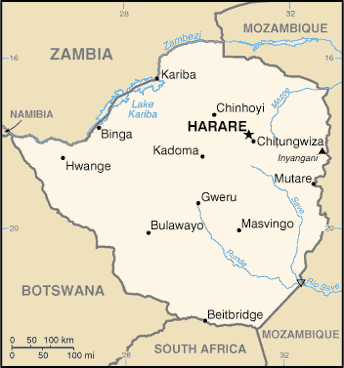
Joice Mujuru
Vice President since 6 December 2004
Vice President since 6 December 2004
Morgan Richard Tsvangirai
Prime Minister since 11 February 2009
Prime Minister since 11 February 2009
Arthur Guseni Oliver Mutambara and Thokozani Khuphe
Deputy Prime Ministers since 11 February 2009
Deputy Prime Ministers since 11 February 2009