Islamic Republic of Mauritania is located in the north of the African Continent, with a population of 3,359,185, making it
the 133rd largest national population. Its capital and largest city is Nouakchott with a total population of 881,000. The
country encompasses 1,030,700 square kilometers making it the 29th largest country in total area. It shares boundaries
with Western Sahara, Algeria, Mali, Senegal and the North Atlantic Ocean.
President of the High Council of State General Mohamed Ould Abdel Aziz became Chief of State when he deposed
President Sidi Ould Cheikh Abdellahi in a bloodless coup on 6 August 2008. Prime Minister Moulaye Ould Mohamed
Laghdaf is recognized as the Head of Government when he replaced Zeine Ould Zeidane who was deposed along with
President Abdellahi who had been duly elected on 19 April 2007. Its form of government is a republic and they celebrate the
creation of their constitution on 12th of July 1991. A special election was held on July 18, 2009 where by in which Abdel
Aziz was certified. Election commission head Sid'Ahmed Ould Deye resigned following formal opposition complaints and
an appeal lodged with Mauritania’s Constitutional Court. Foreign observers were satisfied with the conduct of the election,
and following Deye's resignation, the Court validated the result with Abdul Aziz securing 52% of the vote.
The languages commonly or officially spoken are Arabic, Pulaar, Soninke, French, Hassaniya and Wolof. It counts among
its major religion Muslim. As sources of mass communication it has 1 AM, 14 FM, 1 Short Wave and 1 Television stations.
Major geographical features are Kediet Ijill, its highest point at 915 meters and Sebkhet Te-n-Dghamcha, its lowest point at
–5 meters. Its principal waterway is the North Atlantic Ocean, which measures 754 meters.
Major industries providing for the bulk of their Gross Domestic Product (GDP) are fish processing and mining of iron ore
and gypsum. Its official currency is the Mauritanian Ouguiya.
Here’s something you may not know about Mauritania. Most of the population is concentrated in the cities of Nouakchott
and Nouadhib.
the 133rd largest national population. Its capital and largest city is Nouakchott with a total population of 881,000. The
country encompasses 1,030,700 square kilometers making it the 29th largest country in total area. It shares boundaries
with Western Sahara, Algeria, Mali, Senegal and the North Atlantic Ocean.
President of the High Council of State General Mohamed Ould Abdel Aziz became Chief of State when he deposed
President Sidi Ould Cheikh Abdellahi in a bloodless coup on 6 August 2008. Prime Minister Moulaye Ould Mohamed
Laghdaf is recognized as the Head of Government when he replaced Zeine Ould Zeidane who was deposed along with
President Abdellahi who had been duly elected on 19 April 2007. Its form of government is a republic and they celebrate the
creation of their constitution on 12th of July 1991. A special election was held on July 18, 2009 where by in which Abdel
Aziz was certified. Election commission head Sid'Ahmed Ould Deye resigned following formal opposition complaints and
an appeal lodged with Mauritania’s Constitutional Court. Foreign observers were satisfied with the conduct of the election,
and following Deye's resignation, the Court validated the result with Abdul Aziz securing 52% of the vote.
The languages commonly or officially spoken are Arabic, Pulaar, Soninke, French, Hassaniya and Wolof. It counts among
its major religion Muslim. As sources of mass communication it has 1 AM, 14 FM, 1 Short Wave and 1 Television stations.
Major geographical features are Kediet Ijill, its highest point at 915 meters and Sebkhet Te-n-Dghamcha, its lowest point at
–5 meters. Its principal waterway is the North Atlantic Ocean, which measures 754 meters.
Major industries providing for the bulk of their Gross Domestic Product (GDP) are fish processing and mining of iron ore
and gypsum. Its official currency is the Mauritanian Ouguiya.
Here’s something you may not know about Mauritania. Most of the population is concentrated in the cities of Nouakchott
and Nouadhib.
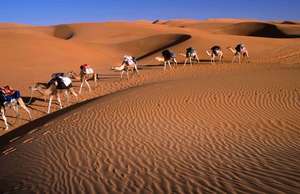
| Camels |
| Elephants on the Senegal border |
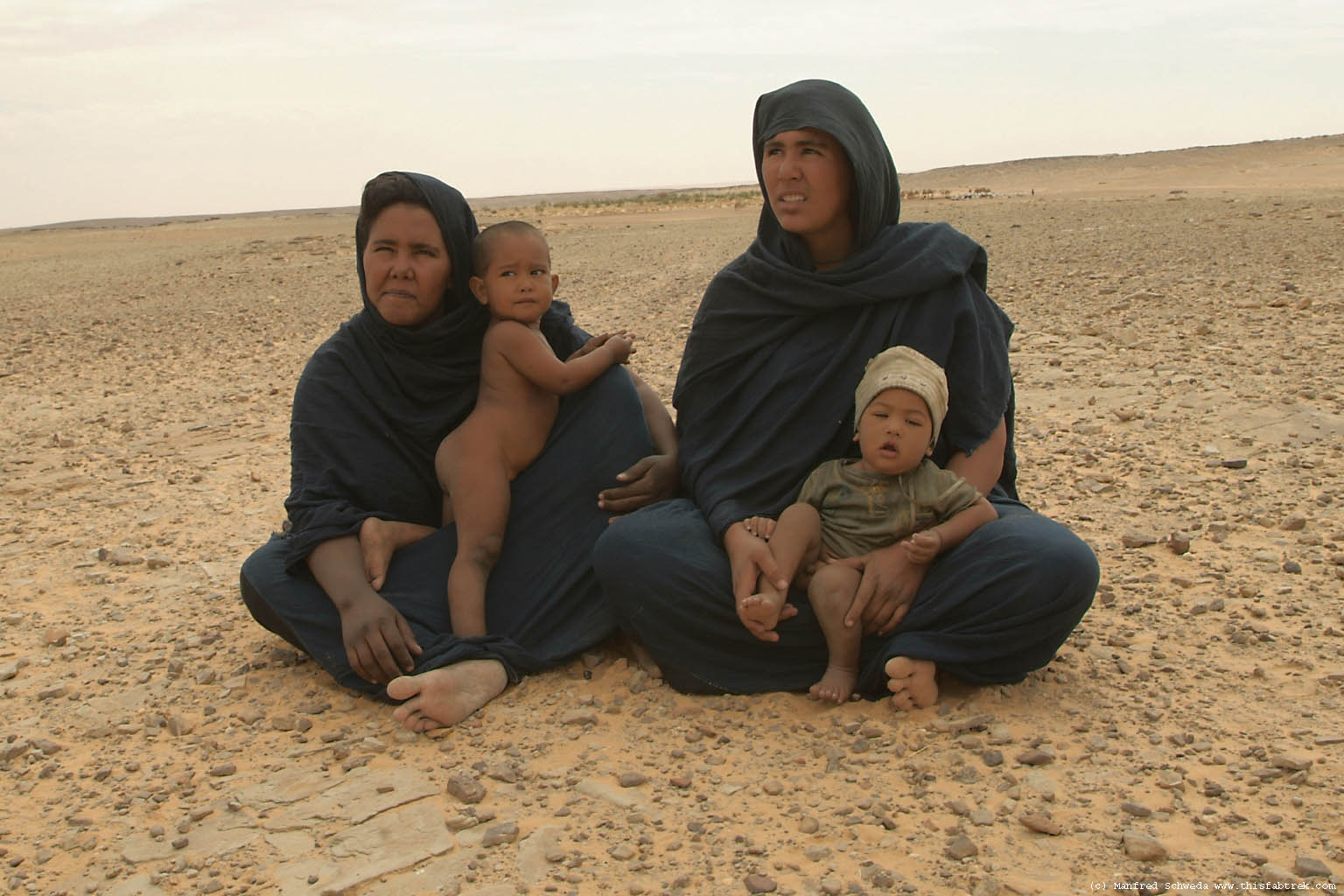
| Mauritanian mothers and babies |
| The Senegal River which forms the border of Mauritania and Senegal |
| The Sahara |


| Abi's Home Page |
| Back to |

MAURITANIA
Updated 12 December 2012
Updated 12 December 2012


| Adult Prevalence Rate: People Living with HIV/AIDS: HIV/AIDS Deaths: |
0.7% (2009 est.)
14,000
less them 1,000
14,000
less them 1,000





| Kediet Ijill- Mauritania's highest point |
| Sebkhet Te-n-Dghamcha - Mauritania's lowest point |

| Nouakchott- Mauritania's capital and largest city |


| Mauritania's northernmost point on the tri-border with Western Sahara and Algeria |

| Bir Moghrein- Mauritania's northernmost town near the border with Western Sahara |

| Mauritania ladies in traditional dress |

| Mechoui- a Mauritanian dish of marinated whole roasted lamb |

| Rich Mountains- easternmost point of Mauritania on the border with Algeria and Mali |

| Kankossa market on Mauritania's southern border with Mali |

| Selibaby- Mauritania's southernmost point on the border with Mali and Senegal |

| Rosso- on Mauritania's border with Senegal |

| Zouerat near Kediet Ijill |

| Ship graveyard at Dakhlet Nouadhibou on the Atlantic Coast |

| Nouadhibou on Cabo Blanco- Mauritania's westernmost point on the border with Western Sahara |

| Paris-Dakar Rally Car in the mountains of Mauritania before they moved the race to South America |
Read about human rights in Pax
Gaea World Post Report!
Gaea World Post Report!