Republic of Burundi is located in the center of the African Continent, with a population of 10,888,321, making it the 78th
largest national population. Its capital and largest city is Bujumbura with a total population of 800,000. The country
encompasses 27,830 square kilometers making it the 147th largest country in total area. It shares boundaries with Rwanda,
Tanzania and the Democratic Republic of the Congo.
President Pierre Nkurunziza is recognized as the Chief of State and Head of Government and, along with First Vice
President Therence Sinunguruza (Tutsi) and Second Vice President Gervais Rufyikiri (Hutu), achieves that status through
popular vote and holds that position for five years and is eligible for a second term. Its form of government is a republic
and they celebrate the creation of their constitution on 28th of February 2005.
The languages commonly or officially spoken are Kirundi, French and Swahili. It counts among its major religions
Christian, Roman Catholic, Protestant, indigenous beliefs and Muslim. As sources of mass communication it has 4 FM, 1
Short Wave and 1 Television stations.
Major geographical features are Heha, its highest point at 2,670 meters and Lake Tanganyika, its lowest point at 772
meters. Its principal waterway is Lake Tanganyika, which measures 150 kilometers.
Major industries providing for the bulk of their Gross Domestic Product (GDP) are blankets, shoes, soap, public works
construction and food processing. Its official currency is the Burundi Franc.
Here’s something you may not know about Burundi. The original inhabitants of Burundi were the Twa, a Pygmy people
who now make up only 1% of the population. Today, the population is divided between the Hutu, approximately 85% and
the Tutsi, approximately 14%.
largest national population. Its capital and largest city is Bujumbura with a total population of 800,000. The country
encompasses 27,830 square kilometers making it the 147th largest country in total area. It shares boundaries with Rwanda,
Tanzania and the Democratic Republic of the Congo.
President Pierre Nkurunziza is recognized as the Chief of State and Head of Government and, along with First Vice
President Therence Sinunguruza (Tutsi) and Second Vice President Gervais Rufyikiri (Hutu), achieves that status through
popular vote and holds that position for five years and is eligible for a second term. Its form of government is a republic
and they celebrate the creation of their constitution on 28th of February 2005.
The languages commonly or officially spoken are Kirundi, French and Swahili. It counts among its major religions
Christian, Roman Catholic, Protestant, indigenous beliefs and Muslim. As sources of mass communication it has 4 FM, 1
Short Wave and 1 Television stations.
Major geographical features are Heha, its highest point at 2,670 meters and Lake Tanganyika, its lowest point at 772
meters. Its principal waterway is Lake Tanganyika, which measures 150 kilometers.
Major industries providing for the bulk of their Gross Domestic Product (GDP) are blankets, shoes, soap, public works
construction and food processing. Its official currency is the Burundi Franc.
Here’s something you may not know about Burundi. The original inhabitants of Burundi were the Twa, a Pygmy people
who now make up only 1% of the population. Today, the population is divided between the Hutu, approximately 85% and
the Tutsi, approximately 14%.
| Chappati- an Indian bread that is used in everyday Burundian dishes |
| Traditional Burundi house in Kirundo Province |
| Mtumba Mountains near Lake Tanganyika |
| Gitembo Dancers in Gitega |
| Mount Heha- Burundi's highest point |
| Lake Tanganyika- Burundi's lowest point |


| Abi's Home Page |
| Back to |
BURUNDI
Updated 01 April 2013
Updated 01 April 2013


| Adult Prevalence Rate: People Living with HIV/AIDS: HIV/AIDS Deaths: |
3.3% (2009 est.)
180,000
15,000
180,000
15,000

| Burundian kids |
| Bujumbura- Burundi's capital and largest city |
| Elephant taking a bath |
| Terrain of southern Burundi near Mabanda |
| Kirundo Dancers |
| "Lac aux oiseaux", Bird's Lake in Kirundo Province |
| Lake Cohaha, on the Burundi/Rwanda border |
| Rusizi River along Burundi's border with the Democratic Republic of Congo |
| Traditional Burundian dress |


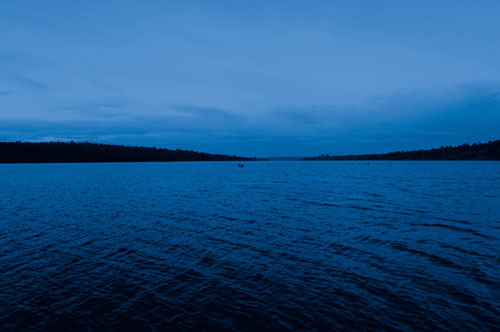


| Cibitoke- Burundi's westernmost point on the border with Democratic Republic of Congo |

| Gisagara- Burundi's easternmost point on the border with Tanzania |

| Malagarasi River- Burundi's southernmost point on the border with Tanzania |

| Refugee camp in Rweru- Burundi's northernmost point on the border with Rwanda |

| Pyramid at Rutovu atop Mount Kikizi- the Source of the Nile River in Burundi |

Read about human rights in Pax
Gaea World Post Report!
Gaea World Post Report!