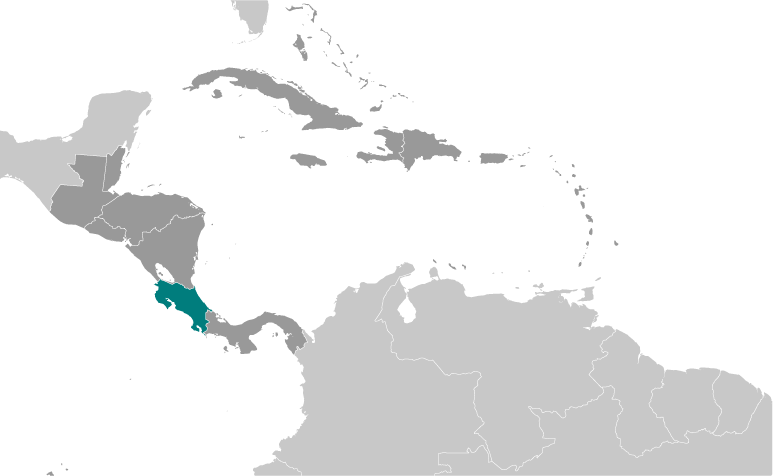
Republic of Costa Rica is located in the center of the North American Continent, with a population of 4,636,348, making it
the 121st largest national population. Its capital and largest city is San Jose with a total population of 288,054. The country
encompasses 51,100 square kilometers making it the 130th largest country in total area. It shares boundaries with
Nicaragua, Caribbean Sea, Panama and the North Pacific Ocean.
President Laura Chinchilla Miranda is recognized as the Chief of State and Head of Government and, along with First Vice
President Alfio Piva Mesen and Second Vice President Luis Liberman Ginsburg, achieves that status through popular vote
and holds that position for four years. Its form of government is a democratic republic and they celebrate the creation of
their constitution on 7th of November 1949.
The languages commonly or officially spoken are Spanish and English. It counts among its major religions Roman Catholic,
Evangelical, Jehovah's Witnesses, other Protestant and other and no faiths. As sources of mass communication it has 65
AM, 51 FM, 19 Short Wave and 20 Television stations.
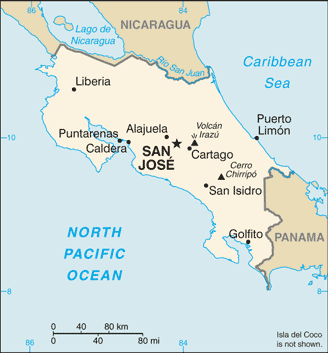
Major geographical features are Cerro Chirripo, its highest point at 3,810 meters, and the Pacific Ocean, its lowest point at
0 meters. Its principal waterways are the Caribbean Sea and the Pacific Ocean, which measure 731 kilometers of coastline.
Major industries providing for the bulk of their Gross Domestic Product (GDP) are microprocessors, food processing,
textiles and clothing, construction materials, fertilizer and plastic products. Its official currency is Costa Rican Colon.
Here’s something you may not know about Costa Rica. Why does coffee grow so well around San Jose? It's the climate.
The Central Valley, in which the city sits, has a perfect climate. At 1,125 meters above sea level, San Jose enjoys springlike
temperatures year-round.
the 121st largest national population. Its capital and largest city is San Jose with a total population of 288,054. The country
encompasses 51,100 square kilometers making it the 130th largest country in total area. It shares boundaries with
Nicaragua, Caribbean Sea, Panama and the North Pacific Ocean.
President Laura Chinchilla Miranda is recognized as the Chief of State and Head of Government and, along with First Vice
President Alfio Piva Mesen and Second Vice President Luis Liberman Ginsburg, achieves that status through popular vote
and holds that position for four years. Its form of government is a democratic republic and they celebrate the creation of
their constitution on 7th of November 1949.
The languages commonly or officially spoken are Spanish and English. It counts among its major religions Roman Catholic,
Evangelical, Jehovah's Witnesses, other Protestant and other and no faiths. As sources of mass communication it has 65
AM, 51 FM, 19 Short Wave and 20 Television stations.
Major geographical features are Cerro Chirripo, its highest point at 3,810 meters, and the Pacific Ocean, its lowest point at
0 meters. Its principal waterways are the Caribbean Sea and the Pacific Ocean, which measure 731 kilometers of coastline.
Major industries providing for the bulk of their Gross Domestic Product (GDP) are microprocessors, food processing,
textiles and clothing, construction materials, fertilizer and plastic products. Its official currency is Costa Rican Colon.
Here’s something you may not know about Costa Rica. Why does coffee grow so well around San Jose? It's the climate.
The Central Valley, in which the city sits, has a perfect climate. At 1,125 meters above sea level, San Jose enjoys springlike
temperatures year-round.
| Arenal Volcano National Park in the Tilaran Mountains |
| Tradtional Costa Rican omelet made with potatoes, eggs, tomato and peas |
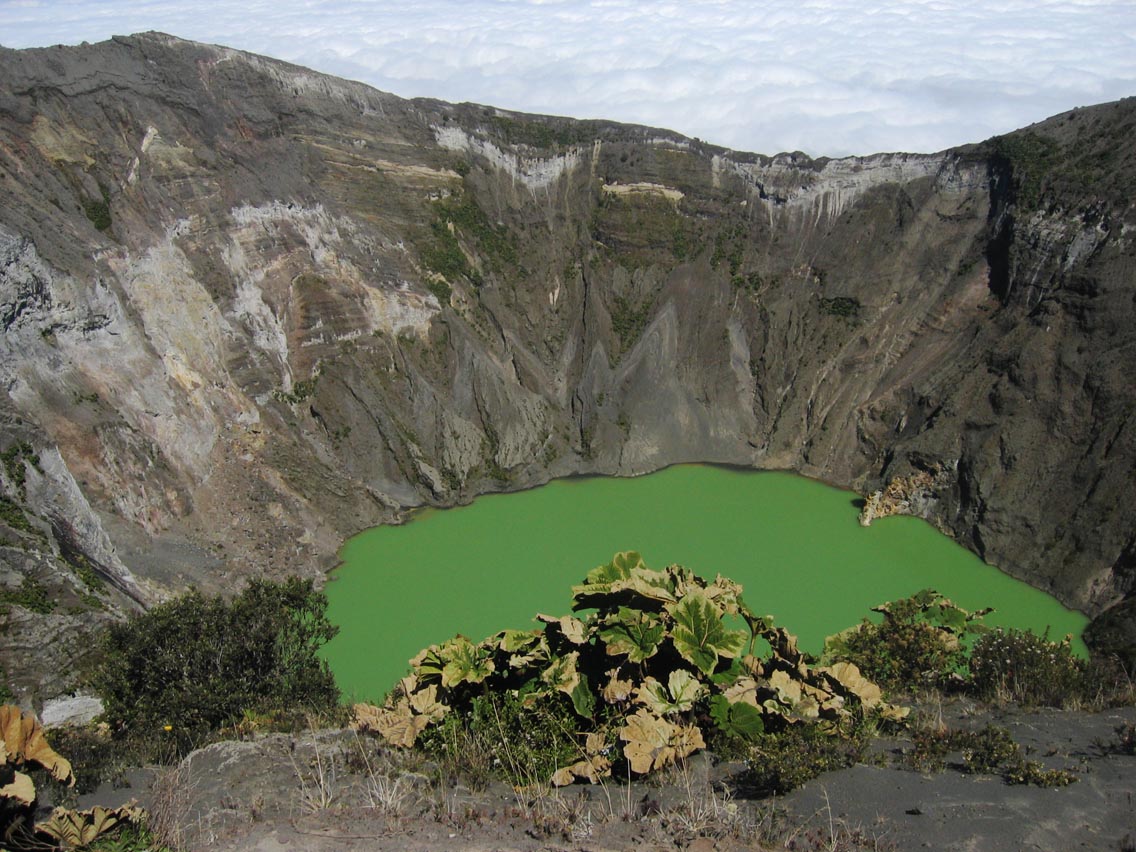
| Irazu- an active volcano near the capital of San Jose |
| Cerro Chirripo in the Talamanca Mountains- Costa Rica's highest point |
| Lake Arenal |
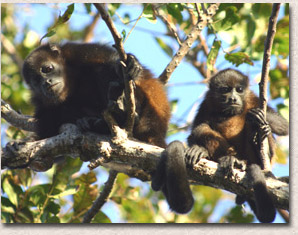
| Howler Monkeys |


| Abi's Home Page |
| Back to |
| NEWSPAPERS La Republica La Prensa Libre La Nacion |
COSTA
RICA
Updated 07 February 2013
RICA
Updated 07 February 2013


| Adult Prevalence Rate: People Living with HIV/AIDS: HIV/AIDS Deaths: |
0.3% (2009 est.)
9,800
less than 500
9,800
less than 500

| San Juan River on Costa Rica's northern border with Nicaragua |
| Tradtional Costa Rican dress |
| Black sand beach on the Pacific Ocean- Costa Rica's lowest point and one of its waterways |
| San Jose- Costa Rica's capital and largest city |
| Monteverde Cloud Forest |
| Drake Bay on the Costa Rica's Pacific Coast |
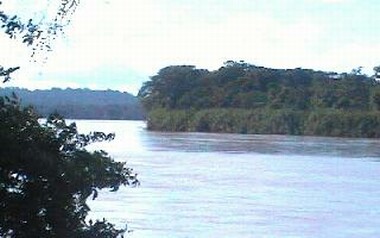
| Frio River- a source for Lago de Nicaragua |
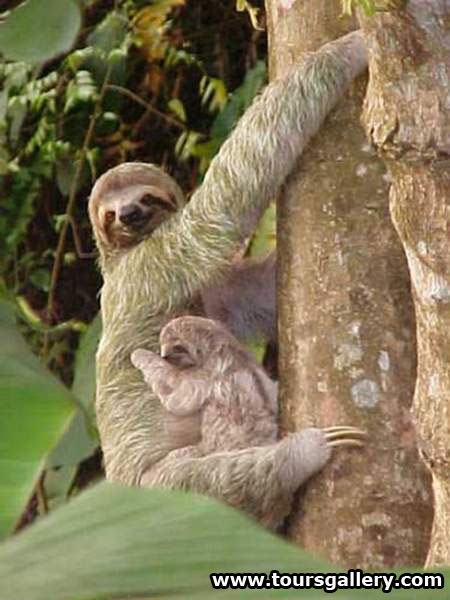
| Mama and baby sloth |
| Magia Blanca Waterfall |
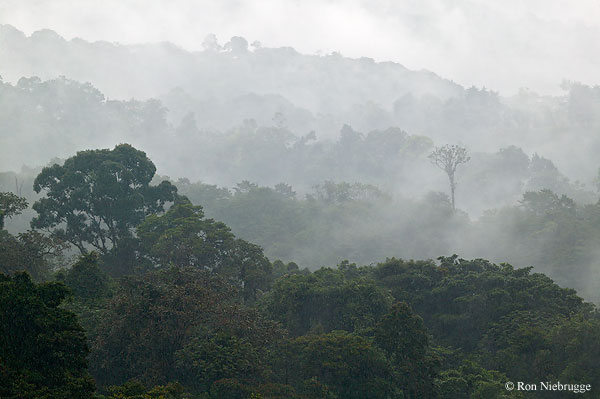
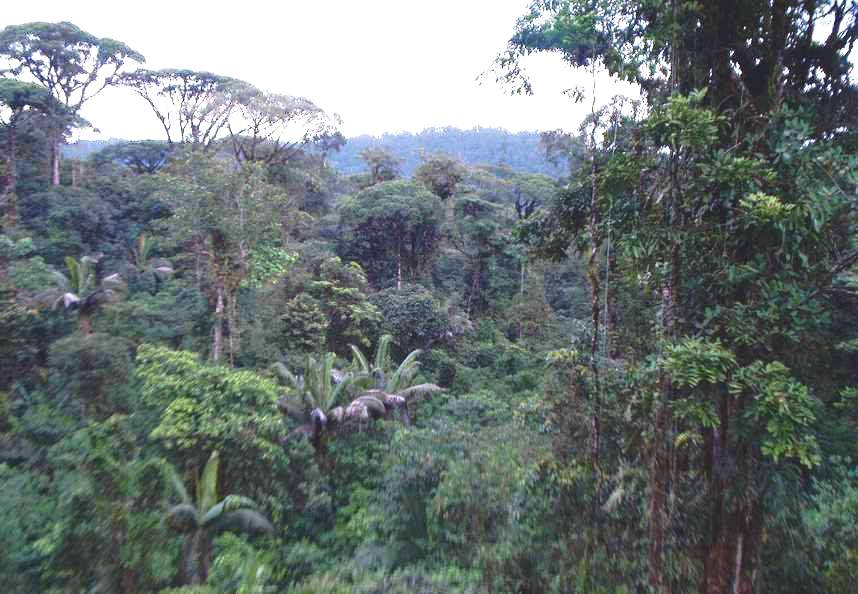
| Rainforest |
| Playa Espadilla and Parque National Manuel Antonio on the Pacific Coast- Costa Rica's most popular tourist destination |












| Osa Peninsula |
| Tortuguero National Park on Costa Rica's Caribbean Sea |

| This railroad bridge is a common means of crossing from Costa Rica to the Panama border |


| North of La Cruz- Costa Rica's northernmost point on the Nicaragua border |

| Playa Grande in Parque Nacional Marino Las Baulas- Costa Rica's westernmost point |

| Puerto Viejo- Costa Rica's easternmost point on the Caribbean Sea |

| Punta Gorda- Costa Rica's southernmost point on the Pacific coast and the Panama border |

Read about human rights in Pax
Gaea World Post Report!
Gaea World Post Report!