
| GUINEA Republic of Guinea Republique de Guinee Joined United Nations: 12 December 1958 Human Rights as assured by their constitution Click here Updated 09 November 2012 |

| CAPITAL |
| POPULATION |
| CHIEF OF STATE |
| SELECTION PROCESS |
Conakry
10,884,958 (July 2012 est.)

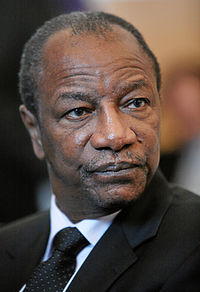
Alpha Conde
President since 21 December 2010
President since 21 December 2010
President elected by popular vote for a five-year term (eligible
for a second term); candidate must receive a majority of the
votes cast to be elected president; election last held on 27 June
2010 with a runoff election held on 7 November 2010
Next scheduled election: June 2015
for a second term); candidate must receive a majority of the
votes cast to be elected president; election last held on 27 June
2010 with a runoff election held on 7 November 2010
Next scheduled election: June 2015

HEAD OF GOVERNMENT
SELECTION PROCESS
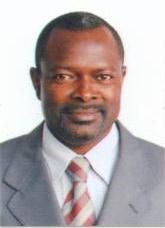
Mohamed Said Fofana
Prime Minister since 24 December 2010
Prime Minister since 24 December 2010
Prime Minister and Council of Ministers appointed by President
| DECLARATION OF HUMAN RIGHTS |
| ETHNIC GROUPS |
Peuhl 40%, Malinke 30%, Soussou 20%, smaller ethnic groups 10%
| RELIGIONS |
Muslim 85%, Christian 8%, indigenous beliefs 7%
| GOVERNMENT STRUCTURE |
Republic comprised of 33 prefectures and 1 special zone (zone special). Legal system is based on French civil law system,
customary law, and decree; legal codes currently being revised; accepts compulsory ICJ jurisdiction, with reservations
Executive: president elected by popular vote for a five-year term (eligible for a second term); candidate must receive a majority of
the votes cast to be elected president; election last held on 27 June 2010 with a runoff election held on 7 November 2010; Next
election: June 2015
Legislative: The legislature was dissolved by junta leader Moussa Dadis CAMARA in December 2008 and in February
2010, the Transition Government appointed a 155 member National Transition Council (CNT) that has since acted in the
legislature's place
elections: last held on 30 June 2002 (next election scheduled for 8 July 2012); After a reschuffle in the Electoral Commission
,the election is now expected to be held not before March 2013.
Judicial: Constitutional Court; Court of First Instance or Tribunal de Premiere Instance; Court of Appeal or Cour d'Appel;
Supreme Court or Cour Supreme
customary law, and decree; legal codes currently being revised; accepts compulsory ICJ jurisdiction, with reservations
Executive: president elected by popular vote for a five-year term (eligible for a second term); candidate must receive a majority of
the votes cast to be elected president; election last held on 27 June 2010 with a runoff election held on 7 November 2010; Next
election: June 2015
Legislative: The legislature was dissolved by junta leader Moussa Dadis CAMARA in December 2008 and in February
2010, the Transition Government appointed a 155 member National Transition Council (CNT) that has since acted in the
legislature's place
elections: last held on 30 June 2002 (next election scheduled for 8 July 2012); After a reschuffle in the Electoral Commission
,the election is now expected to be held not before March 2013.
Judicial: Constitutional Court; Court of First Instance or Tribunal de Premiere Instance; Court of Appeal or Cour d'Appel;
Supreme Court or Cour Supreme
| LANGUAGES |
French (official); note - each ethnic group has its own language
| BRIEF HISTORY |
The modern state of Guinea did not come into existence until 1958 but the history of the area stretches back much further.
West Africa saw many empires rise and fall in the period before European intervention and Guinea fell within many of them.
The Ghana Empire is believed to be the earliest of these which grew on trade but contracted and ultimately fell due to the
hostile influence of the Almoravides. It was in this period that Islam first arrived in the region. The Sosso kingdom (12th to
13th centuries) briefly flourished in the void but the Islamic Mandinka Mali Empire came to prominence when Soundiata
Kéïta defeated the Sosso ruler, Soumangourou Kanté at the semi-historical Battle of Kirina in c. 1235. The Mali Empire
was ruled by Mansa (Emperors), the most famous being Kankou Moussa, who made a famous hajj to Mecca in 1324.
Shortly after his reign the Mali Empire began to decline and was ultimately supplanted by its vassal states in the 15th century.
The most successful of these was the Songhai Empire which surpassed the Mali Empire in both territory and wealth. It
continued to prosper until a civil war over succession followed the death of Askia Daoud in 1582. The weakened empire fell
to invaders from Morocco at the Battle of Tondibi just 3 years later. The Moroccans proved unable to rule the kingdom
effectively, however, and it split into many small kingdoms. Fulani Muslims migrated to Fouta Djallon in Central Guinea and
established an Islamic state from 1735 to 1898 with a written Constitution and alternate rulers. The slave trade came to the
coastal region of Guinea with European adventurers in the 16th century. Slavery had always been part of every day life but
the scale increased as slaves were exported to work elsewhere in the triangular trade. Some sources suggest that more than
half of the population of Sub-Saharan Africa were removed. Guinea's colonial period began with French military penetration
into the area in the mid-19th century. French domination was assured by the defeat in 1898 of the armies of Samory Touré,
Mansa (or Emperor) of the Ouassoulou state and leader of Malinké descent, which gave France control of what today is
Guinea and adjacent areas. France negotiated Guinea's present boundaries in the late 19th and early 20th centuries with the
British for Sierra Leone, the Portuguese for their Guinea colony (now Guinea-Bissau), and Liberia. Under the French, the
country formed the Territory of Guinea within French West Africa, administered by a governor general resident in Dakar.
Lieutenant governors administered the individual colonies, including Guinea. In 1958 the French Fourth Republic collapsed
due to political instability and its failures in dealing with its colonies, especially Indochina and Algeria. The founding of a Fifth
Republic was supported by the French people, while France's colonies were given the choice between more autonomy in a
new French Community and immediate independence. The other colonies chose the former but Guinea — under the
leadership of Ahmed Sékou Touré whose Democratic Party of Guinea (PDG) had won 56 of 60 seats in 1957 territorial
elections — voted overwhelmingly for independence. The French withdrew quickly, and on October 2, 1958, Guinea
proclaimed itself a sovereign and independent republic, with Sékou Touré as president. De Gaulle withdrew the French
administration, with much of the French population following, which took much of the country’s infrastructure and large
amounts of capital. Guinea quickly aligned itself with the Soviet Union and adopted socialist policies. This alliance was short
lived, however, as Guinea moved towards a Chinese model of socialism. Despite this, however, the country continued to
receive aid and investment from capitalist countries such as the U.S.. Even the relationship with France improved after the
election of Valéry Giscard d'Estaing as president — trade increased and the two countries exchanged diplomatic visits.
Under Touré, Guinea became a one-party dictatorship, with a closed, socialized economy and no tolerance for human
rights, free expression, or political opposition, which was ruthlessly suppressed. Originally credited for his advocacy of cross-
ethnic nationalism, Touré gradually came to rely on his own Malinké ethnic group to fill positions in the party and
government. Alleging plots and conspiracies against him at home and abroad, Touré’s regime targeted real and imagined
opponents, imprisoning many thousands in Soviet-style prison gulags, where hundreds perished. The regime's repression
drove more than a million Guineans into exile, and Touré's paranoia ruined relations with foreign nations, including
neighboring African states, increasing Guinea's isolation and further devastating its economy. Sékou Touré died on March
26, 1984 after a simple heart operation in the United States, and was replaced in an interim role by Prime Minister Louis
Lansana Beavogui. Beavogui’s rule was brief, however, and a military junta headed by Lansana Conté and Diarra Traoré
seized power on April 3, 1984 in a bloodless coup. Conté assumed the role of president with Traoré as his prime minister.
Conté immediately denounced the previous regime’s record on human rights, released 250 political prisoners and
encouraged approximately 200,000 more to return from exile. He also turned away from socialism, but this did little to
alleviate poverty and the country showed no immediate signs of moving towards democracy. In 1992, Conté announced a
return to civilian rule, with a presidential poll in 1993 followed by elections to parliament in 1995 (in which his party - the
Party of Unity and Progress - won 71 of 114 seats.) Despite this, Conté's grip on power remained tight. In September 2001
the opposition leader Alpha Condé was imprisoned for endangering state security, though he was pardoned 8 months later.
He subsequently spent a period of exile in France. In 2001 Conté organized and won a referendum to lengthen the
presidential term and in 2003 begun his third term after elections were boycotted by the opposition. In January 2005, Conté
survived a suspected assassination attempt while making a rare public appearance in the capital Conakry. His opponents
claim that he is a "tired dictator" whose departure is inevitable whereas his supporters believe he is winning a battle with
dissidents. As of 2005 Guinea still faces very real problems and according to the International Crisis Group is in danger of
becoming a failed state.In 2000 Guinea became embroiled in the instability which had long blighted the rest of West Africa
as rebels crossed the borders with Liberia and Sierra Leone and it seemed for a time that the country was headed for civil
war. Conté blamed neighbouring leaders coveting Guinea's natural resources, though these claims were strenuously denied.
In 2003 Guinea agreed plans with her neighbours to tackle the insurgents. On 23 December 2008, Aboubacar Somparé,
flanked by the Prime Minister and the head of the Army, announced that the long-time President of Guinea, Lansana Conté,
had died "after a long illness". Under the Guinean constitution, Somparé was to assume the Presidency of the Republic and a
new presidential election was to have been held within 60 days. However, six hours after the announcement of Conté's
death, Captain Moussa Dadis Camara announced a coup d'état by the Guinean Army, saying that "the government and the
institutions of the Republic have been dissolved". Camara also announced the suspension of the constitution "as well as
political and union activity" and a new Prime Minister on 30 December 2008. Captain Camara had promised to hold
elections by the end of December 2009. The 2008 Guinean coup d'état was a Guinean military coup d'état that occurred in
Guinea on 23 December 2008, shortly after the death of long-time President Lansana Conté. A junta called the National
Council for Democracy and Development (Conseil National de la Démocratie et du Development, CNDD), headed by
Captain Moussa Dadis Camara, seized power and announced that it planned to rule the country for two years prior to a
new presidential election. Camara did indeed step down after Alpha Condé was elected in the 2010 election.The election
was seen as a chance to change decades of authoritarian rule following independence, as well as to bring stability and foreign
investment. This was also the first democratic election since independence in 1958. After Conde preliminarily declared the
winner some members of the Fula ethnic group (which largely backed Diallo) rioted, barricading roads and destroyed homes
and businesses of some Malinkes (which tended to back Conde). On November 18, the military declared a state of
emergency. Nouhou Thiam, the armed forces chief, read the decree on state television which prohibited civilians from
congregating in the streets, while only the military and security personnel would have unrestricted movement. He said the
decree would be enforced until the Supreme Court declares certifies final results, which was to occur before November 24.
The Guinean legislative election of 2012 was scheduled to be held in Guinea on 8 July 2012 to elect members to the
National Assembly of Guinea, which has not met since 2008. In April 2012, the election was postponed indefinitely by
Guinea President Alpha Condé, citing the need to ensure that it was "transparent and democratic". The election was
originally scheduled to occur in June 2007 and has been postponed many times. After a reschuffle in the Electoral
Commission ,the election is now expected to be held not before March 2013.
Sources: Wikipedia History of Guinea
West Africa saw many empires rise and fall in the period before European intervention and Guinea fell within many of them.
The Ghana Empire is believed to be the earliest of these which grew on trade but contracted and ultimately fell due to the
hostile influence of the Almoravides. It was in this period that Islam first arrived in the region. The Sosso kingdom (12th to
13th centuries) briefly flourished in the void but the Islamic Mandinka Mali Empire came to prominence when Soundiata
Kéïta defeated the Sosso ruler, Soumangourou Kanté at the semi-historical Battle of Kirina in c. 1235. The Mali Empire
was ruled by Mansa (Emperors), the most famous being Kankou Moussa, who made a famous hajj to Mecca in 1324.
Shortly after his reign the Mali Empire began to decline and was ultimately supplanted by its vassal states in the 15th century.
The most successful of these was the Songhai Empire which surpassed the Mali Empire in both territory and wealth. It
continued to prosper until a civil war over succession followed the death of Askia Daoud in 1582. The weakened empire fell
to invaders from Morocco at the Battle of Tondibi just 3 years later. The Moroccans proved unable to rule the kingdom
effectively, however, and it split into many small kingdoms. Fulani Muslims migrated to Fouta Djallon in Central Guinea and
established an Islamic state from 1735 to 1898 with a written Constitution and alternate rulers. The slave trade came to the
coastal region of Guinea with European adventurers in the 16th century. Slavery had always been part of every day life but
the scale increased as slaves were exported to work elsewhere in the triangular trade. Some sources suggest that more than
half of the population of Sub-Saharan Africa were removed. Guinea's colonial period began with French military penetration
into the area in the mid-19th century. French domination was assured by the defeat in 1898 of the armies of Samory Touré,
Mansa (or Emperor) of the Ouassoulou state and leader of Malinké descent, which gave France control of what today is
Guinea and adjacent areas. France negotiated Guinea's present boundaries in the late 19th and early 20th centuries with the
British for Sierra Leone, the Portuguese for their Guinea colony (now Guinea-Bissau), and Liberia. Under the French, the
country formed the Territory of Guinea within French West Africa, administered by a governor general resident in Dakar.
Lieutenant governors administered the individual colonies, including Guinea. In 1958 the French Fourth Republic collapsed
due to political instability and its failures in dealing with its colonies, especially Indochina and Algeria. The founding of a Fifth
Republic was supported by the French people, while France's colonies were given the choice between more autonomy in a
new French Community and immediate independence. The other colonies chose the former but Guinea — under the
leadership of Ahmed Sékou Touré whose Democratic Party of Guinea (PDG) had won 56 of 60 seats in 1957 territorial
elections — voted overwhelmingly for independence. The French withdrew quickly, and on October 2, 1958, Guinea
proclaimed itself a sovereign and independent republic, with Sékou Touré as president. De Gaulle withdrew the French
administration, with much of the French population following, which took much of the country’s infrastructure and large
amounts of capital. Guinea quickly aligned itself with the Soviet Union and adopted socialist policies. This alliance was short
lived, however, as Guinea moved towards a Chinese model of socialism. Despite this, however, the country continued to
receive aid and investment from capitalist countries such as the U.S.. Even the relationship with France improved after the
election of Valéry Giscard d'Estaing as president — trade increased and the two countries exchanged diplomatic visits.
Under Touré, Guinea became a one-party dictatorship, with a closed, socialized economy and no tolerance for human
rights, free expression, or political opposition, which was ruthlessly suppressed. Originally credited for his advocacy of cross-
ethnic nationalism, Touré gradually came to rely on his own Malinké ethnic group to fill positions in the party and
government. Alleging plots and conspiracies against him at home and abroad, Touré’s regime targeted real and imagined
opponents, imprisoning many thousands in Soviet-style prison gulags, where hundreds perished. The regime's repression
drove more than a million Guineans into exile, and Touré's paranoia ruined relations with foreign nations, including
neighboring African states, increasing Guinea's isolation and further devastating its economy. Sékou Touré died on March
26, 1984 after a simple heart operation in the United States, and was replaced in an interim role by Prime Minister Louis
Lansana Beavogui. Beavogui’s rule was brief, however, and a military junta headed by Lansana Conté and Diarra Traoré
seized power on April 3, 1984 in a bloodless coup. Conté assumed the role of president with Traoré as his prime minister.
Conté immediately denounced the previous regime’s record on human rights, released 250 political prisoners and
encouraged approximately 200,000 more to return from exile. He also turned away from socialism, but this did little to
alleviate poverty and the country showed no immediate signs of moving towards democracy. In 1992, Conté announced a
return to civilian rule, with a presidential poll in 1993 followed by elections to parliament in 1995 (in which his party - the
Party of Unity and Progress - won 71 of 114 seats.) Despite this, Conté's grip on power remained tight. In September 2001
the opposition leader Alpha Condé was imprisoned for endangering state security, though he was pardoned 8 months later.
He subsequently spent a period of exile in France. In 2001 Conté organized and won a referendum to lengthen the
presidential term and in 2003 begun his third term after elections were boycotted by the opposition. In January 2005, Conté
survived a suspected assassination attempt while making a rare public appearance in the capital Conakry. His opponents
claim that he is a "tired dictator" whose departure is inevitable whereas his supporters believe he is winning a battle with
dissidents. As of 2005 Guinea still faces very real problems and according to the International Crisis Group is in danger of
becoming a failed state.In 2000 Guinea became embroiled in the instability which had long blighted the rest of West Africa
as rebels crossed the borders with Liberia and Sierra Leone and it seemed for a time that the country was headed for civil
war. Conté blamed neighbouring leaders coveting Guinea's natural resources, though these claims were strenuously denied.
In 2003 Guinea agreed plans with her neighbours to tackle the insurgents. On 23 December 2008, Aboubacar Somparé,
flanked by the Prime Minister and the head of the Army, announced that the long-time President of Guinea, Lansana Conté,
had died "after a long illness". Under the Guinean constitution, Somparé was to assume the Presidency of the Republic and a
new presidential election was to have been held within 60 days. However, six hours after the announcement of Conté's
death, Captain Moussa Dadis Camara announced a coup d'état by the Guinean Army, saying that "the government and the
institutions of the Republic have been dissolved". Camara also announced the suspension of the constitution "as well as
political and union activity" and a new Prime Minister on 30 December 2008. Captain Camara had promised to hold
elections by the end of December 2009. The 2008 Guinean coup d'état was a Guinean military coup d'état that occurred in
Guinea on 23 December 2008, shortly after the death of long-time President Lansana Conté. A junta called the National
Council for Democracy and Development (Conseil National de la Démocratie et du Development, CNDD), headed by
Captain Moussa Dadis Camara, seized power and announced that it planned to rule the country for two years prior to a
new presidential election. Camara did indeed step down after Alpha Condé was elected in the 2010 election.The election
was seen as a chance to change decades of authoritarian rule following independence, as well as to bring stability and foreign
investment. This was also the first democratic election since independence in 1958. After Conde preliminarily declared the
winner some members of the Fula ethnic group (which largely backed Diallo) rioted, barricading roads and destroyed homes
and businesses of some Malinkes (which tended to back Conde). On November 18, the military declared a state of
emergency. Nouhou Thiam, the armed forces chief, read the decree on state television which prohibited civilians from
congregating in the streets, while only the military and security personnel would have unrestricted movement. He said the
decree would be enforced until the Supreme Court declares certifies final results, which was to occur before November 24.
The Guinean legislative election of 2012 was scheduled to be held in Guinea on 8 July 2012 to elect members to the
National Assembly of Guinea, which has not met since 2008. In April 2012, the election was postponed indefinitely by
Guinea President Alpha Condé, citing the need to ensure that it was "transparent and democratic". The election was
originally scheduled to occur in June 2007 and has been postponed many times. After a reschuffle in the Electoral
Commission ,the election is now expected to be held not before March 2013.
Sources: Wikipedia History of Guinea
| ECONOMIC OVERVIEW |
Guinea is a poor country that possesses major mineral, hydropower, and agricultural resources. The country has almost half
of the world's bauxite reserves and significant iron ore, gold, and diamond reserves. However, Guinea has been unable to
profit from this potential, as rampant corruption, dilapidated infrastructure, and political uncertainty have drained investor
confidence. In the time since a 2008 coup following the death of long-term President Lansana CONTE, international
donors, including the G-8, the IMF, and the World Bank, have significantly curtailed their development programs.
Throughout 2009, policies of the ruling military junta severely weakened the economy. The junta leaders spent and printed
money at an accelerating rate, driving inflation and debt to perilously high levels. In early 2010, the junta collapsed and was
replaced by a Transition Government, which ceded power in December 2010 to the country''s first-ever democratically
elected president, Alpha CONDE. International assistance and investment are expected to return to Guinea, but the levels
will depend upon the ability of the new government to combat corruption, reform its banking system, improve its business
environment, and build infrastructure. IMF and World Bank programs will be especially critical as Guinea attempts to gain
debt relief. International investors have expressed keen interest in Guinea''s vast iron ore reserves, which could further
propel the country''s growth. The government put forward a new mining code in September 2011 that includes provisions to
combat corruption, protect the environment, and review all existing mining contracts.
Source: CIA World Factbook (select Guinea)
of the world's bauxite reserves and significant iron ore, gold, and diamond reserves. However, Guinea has been unable to
profit from this potential, as rampant corruption, dilapidated infrastructure, and political uncertainty have drained investor
confidence. In the time since a 2008 coup following the death of long-term President Lansana CONTE, international
donors, including the G-8, the IMF, and the World Bank, have significantly curtailed their development programs.
Throughout 2009, policies of the ruling military junta severely weakened the economy. The junta leaders spent and printed
money at an accelerating rate, driving inflation and debt to perilously high levels. In early 2010, the junta collapsed and was
replaced by a Transition Government, which ceded power in December 2010 to the country''s first-ever democratically
elected president, Alpha CONDE. International assistance and investment are expected to return to Guinea, but the levels
will depend upon the ability of the new government to combat corruption, reform its banking system, improve its business
environment, and build infrastructure. IMF and World Bank programs will be especially critical as Guinea attempts to gain
debt relief. International investors have expressed keen interest in Guinea''s vast iron ore reserves, which could further
propel the country''s growth. The government put forward a new mining code in September 2011 that includes provisions to
combat corruption, protect the environment, and review all existing mining contracts.
Source: CIA World Factbook (select Guinea)
| POLITICAL CLIMATE |
In December 1993, Conté was elected to a 5-year term as president in the country's first multi-party elections, which were
marred by irregularities and lack of transparency on the part of the government. In 1995, Conté's ruling PUP party won 76
of 114 seats in elections for the National Assembly amid opposition claims of irregularities and government tampering. In
1996, President Conté reorganized the government, appointing Sidya Touré to the revived post of Prime Minister and
charging him with special responsibility for leading the government's economic reform program. In the early hours of
December 23, 2008, Aboubacar Somparé, the President of the National Assembly, announced on television that Conté had
died at 6:45pm local time on December 22 "after a long illness", without specifying the cause of death. According to
Somparé, Conté "hid his physical suffering" for years "in order to give happiness to Guinea." Conté had left the country for
medical treatment on numerous occasions in the years preceding his death, and speculation about his health had long been
widespread. Contrary to his usual practice, Conté did not appear on television to mark Tabaski earlier in December 2008,
and this sparked renewed speculation, as well as concern about the possibility of violence in the event of his death. At
around the same time, a newspaper published a photograph suggesting that Conté was in poor physical condition and having
difficulty standing up. The editor of that newspaper was arrested and the newspaper was required to print a photograph in
which Conté looked healthy.
According to the constitution, the President of the National Assembly was to assume the Presidency of the Republic in the
event of a vacancy, and a new presidential election was to be held within 60 days. Somparé requested that the President of
the Supreme Court, Lamine Sidimé, declare a vacancy in the Presidency and apply the constitution. Prime Minister Souaré
and Diarra Camara, the head of the army, stood alongside Somparé during his announcement. The government declared 40
days of national mourning and Camara called on soldiers to remain calm.
Six hours after Somparé announced Conté's death, a statement was read on television announcing a military coup d'etat.
This statement, read by Captain Moussa Dadis Camara on behalf of a group called National Council for Democracy, said
that "the government and the institutions of the Republic have been dissolved". The statement also announced the suspension
of the constitution "as well as political and union activity". In its place, the military said it had established a consultative
council composed of civilian and military leaders. Elections were to be held by the end of December 2009.
Camara was shot and wounded during a leadership dispute in December 2009, and Sékouba Konaté then took his place in
an acting capacity. Konaté said that the opposition could choose a new Prime Minister to serve in the period leading up to a
new election. On 15 January 2010, the FFV proposed two candidates for the post, Doré and the key union leader Rabiatou
Serah Diallo, telling Konaté to choose between them. Konaté's spokesman said that Doré and Diallo would need to travel
to Ouagadougou for talks with Konaté, the recovering Camara, and Burkinabé President Blaise Compaoré, who was acting
as mediator. There was reportedly a split in the FFV regarding its choice, with political parties supporting Doré while the
unions and civil society groups backed Diallo. Each candidate reportedly received 94 votes. Later, on 18 January, it was
reported that the FFV had selected Doré as its sole candidate for the post of Prime Minister. The fact that Doré held a
university degree was reportedly the deciding factor, although Diallo's union supporters were unhappy with the outcome.
On 19 January 2010, the junta announced its designation of Doré as Prime Minister. The 2008 Guinean coup d'état was a
Guinean military coup d'état that occurred in Guinea on 23 December 2008, shortly after the death of long-time President
Lansana Conté. A junta called the National Council for Democracy and Development (Conseil National de la Démocratie et
du Development, CNDD), headed by Captain Moussa Dadis Camara, seized power and announced that it planned to rule
the country for two years prior to a new presidential election. Camara did indeed step down after Alpha Condé was elected
in the 2010 election.The election was seen as a chance to change decades of authoritarian rule following independence, as
well as to bring stability and foreign investment. This was also the first democratic election since independence in 1958. After
Conde preliminarily declared the winner some members of the Fula ethnic group (which largely backed Diallo) rioted,
barricading roads and destroyed homes and businesses of some Malinkes (which tended to back Conde). On November
18, the military declared a state of emergency. Nouhou Thiam, the armed forces chief, read the decree on state television
which prohibited civilians from congregating in the streets, while only the military and security personnel would have
unrestricted movement. He said the decree would be enforced until the Supreme Court declares certifies final results, which
was to occur before November 24. The Guinean legislative election of 2012 was scheduled to be held in Guinea on 8 July
2012 to elect members to the National Assembly of Guinea, which has not met since 2008. In April 2012, the election was
postponed indefinitely by Guinea President Alpha Condé, citing the need to ensure that it was "transparent and democratic".
The election was originally scheduled to occur in June 2007 and has been postponed many times. After a reschuffle in the
Electoral Commission ,the election is now expected to be held not before March 2013.
Sources: Wikipedia Politics of Guinea
marred by irregularities and lack of transparency on the part of the government. In 1995, Conté's ruling PUP party won 76
of 114 seats in elections for the National Assembly amid opposition claims of irregularities and government tampering. In
1996, President Conté reorganized the government, appointing Sidya Touré to the revived post of Prime Minister and
charging him with special responsibility for leading the government's economic reform program. In the early hours of
December 23, 2008, Aboubacar Somparé, the President of the National Assembly, announced on television that Conté had
died at 6:45pm local time on December 22 "after a long illness", without specifying the cause of death. According to
Somparé, Conté "hid his physical suffering" for years "in order to give happiness to Guinea." Conté had left the country for
medical treatment on numerous occasions in the years preceding his death, and speculation about his health had long been
widespread. Contrary to his usual practice, Conté did not appear on television to mark Tabaski earlier in December 2008,
and this sparked renewed speculation, as well as concern about the possibility of violence in the event of his death. At
around the same time, a newspaper published a photograph suggesting that Conté was in poor physical condition and having
difficulty standing up. The editor of that newspaper was arrested and the newspaper was required to print a photograph in
which Conté looked healthy.
According to the constitution, the President of the National Assembly was to assume the Presidency of the Republic in the
event of a vacancy, and a new presidential election was to be held within 60 days. Somparé requested that the President of
the Supreme Court, Lamine Sidimé, declare a vacancy in the Presidency and apply the constitution. Prime Minister Souaré
and Diarra Camara, the head of the army, stood alongside Somparé during his announcement. The government declared 40
days of national mourning and Camara called on soldiers to remain calm.
Six hours after Somparé announced Conté's death, a statement was read on television announcing a military coup d'etat.
This statement, read by Captain Moussa Dadis Camara on behalf of a group called National Council for Democracy, said
that "the government and the institutions of the Republic have been dissolved". The statement also announced the suspension
of the constitution "as well as political and union activity". In its place, the military said it had established a consultative
council composed of civilian and military leaders. Elections were to be held by the end of December 2009.
Camara was shot and wounded during a leadership dispute in December 2009, and Sékouba Konaté then took his place in
an acting capacity. Konaté said that the opposition could choose a new Prime Minister to serve in the period leading up to a
new election. On 15 January 2010, the FFV proposed two candidates for the post, Doré and the key union leader Rabiatou
Serah Diallo, telling Konaté to choose between them. Konaté's spokesman said that Doré and Diallo would need to travel
to Ouagadougou for talks with Konaté, the recovering Camara, and Burkinabé President Blaise Compaoré, who was acting
as mediator. There was reportedly a split in the FFV regarding its choice, with political parties supporting Doré while the
unions and civil society groups backed Diallo. Each candidate reportedly received 94 votes. Later, on 18 January, it was
reported that the FFV had selected Doré as its sole candidate for the post of Prime Minister. The fact that Doré held a
university degree was reportedly the deciding factor, although Diallo's union supporters were unhappy with the outcome.
On 19 January 2010, the junta announced its designation of Doré as Prime Minister. The 2008 Guinean coup d'état was a
Guinean military coup d'état that occurred in Guinea on 23 December 2008, shortly after the death of long-time President
Lansana Conté. A junta called the National Council for Democracy and Development (Conseil National de la Démocratie et
du Development, CNDD), headed by Captain Moussa Dadis Camara, seized power and announced that it planned to rule
the country for two years prior to a new presidential election. Camara did indeed step down after Alpha Condé was elected
in the 2010 election.The election was seen as a chance to change decades of authoritarian rule following independence, as
well as to bring stability and foreign investment. This was also the first democratic election since independence in 1958. After
Conde preliminarily declared the winner some members of the Fula ethnic group (which largely backed Diallo) rioted,
barricading roads and destroyed homes and businesses of some Malinkes (which tended to back Conde). On November
18, the military declared a state of emergency. Nouhou Thiam, the armed forces chief, read the decree on state television
which prohibited civilians from congregating in the streets, while only the military and security personnel would have
unrestricted movement. He said the decree would be enforced until the Supreme Court declares certifies final results, which
was to occur before November 24. The Guinean legislative election of 2012 was scheduled to be held in Guinea on 8 July
2012 to elect members to the National Assembly of Guinea, which has not met since 2008. In April 2012, the election was
postponed indefinitely by Guinea President Alpha Condé, citing the need to ensure that it was "transparent and democratic".
The election was originally scheduled to occur in June 2007 and has been postponed many times. After a reschuffle in the
Electoral Commission ,the election is now expected to be held not before March 2013.
Sources: Wikipedia Politics of Guinea
Freedom In The World 2012 Report
Political Rights Score: 5
Civil Liberties Score: 5
Status: Partly Free
Overview
In July 2011, dissident army officers carried out an unsuccessful assassination attempt on President Alpha Condé. The run-up to
December legislative elections—seen as the final step in cementing Guinea’s return to civilian rule after a 2008 military coup—was
marred by violence and political infighting, including a police crackdown on a September opposition protest in which at least two
people were killed. The elections were ultimately postponed due to objections from the opposition.
Progress toward consolidating democratic gains in early 2011 was hampered by ongoing ethnic tensions, with Condé facing
accusations of awarding government posts to members of his Malinké group. The new president also had a fraught relationship
with the military, parts of which had difficulty accepting their diminished status under a civilian government. In July 2011, former
army officers led an unsuccessful assassination attempt, firing rocket-propelled grenades into Condé’s walled compound and
exchanging fire with the presidential guard. Among the some 50 soldiers and civilians arrested for the attack was former army chief
Nouhou Thiam and former members of Konaté’s presidential guard.
At least two people were killed and scores more injured when police and opposition demonstrators clashed on September 27. The
demonstrators, who gathered in several neighborhoods of Conakry, were demanding electoral reforms ahead of December
legislative elections, and had planned to meet at the stadium where the September 28, 2009, massacre had taken place. The
government responded by stationing police vehicles and paramilitary forces around the stadium. Security forces arrested 322 people
during the demonstrations, according to the government.
In mid-December, parliamentary elections scheduled for December 29 were officially postponed, following objections from
opposition members that they had not been consulted about the date; Condé agreed to delay the elections and to open dialogue with
the opposition.
Guinea is not an electoral democracy. The president is elected by popular vote for up to two five-year terms. The legislature was
dissolved in 2008, and replaced in 2010 by an appointed 155-member National Transitional Council that acts in its stead. A new
date for the delayed legislative elections originally scheduled for December 29, 2011, was not decided by year’s end. The 2010
election represented the country’s first ever peaceful rotation of power. In May 2010, interim president Sékouba Konaté approved a
new constitution that reinforces democratic rights, including explicitly outlining the legal status of the prime minister and
establishing a number of bodies such as an independent electoral commission, a national human rights body, and a constitutional
court. That constitution remained in place at the end of 2011.
Click here to read more »
Political Rights Score: 5
Civil Liberties Score: 5
Status: Partly Free
Overview
In July 2011, dissident army officers carried out an unsuccessful assassination attempt on President Alpha Condé. The run-up to
December legislative elections—seen as the final step in cementing Guinea’s return to civilian rule after a 2008 military coup—was
marred by violence and political infighting, including a police crackdown on a September opposition protest in which at least two
people were killed. The elections were ultimately postponed due to objections from the opposition.
Progress toward consolidating democratic gains in early 2011 was hampered by ongoing ethnic tensions, with Condé facing
accusations of awarding government posts to members of his Malinké group. The new president also had a fraught relationship
with the military, parts of which had difficulty accepting their diminished status under a civilian government. In July 2011, former
army officers led an unsuccessful assassination attempt, firing rocket-propelled grenades into Condé’s walled compound and
exchanging fire with the presidential guard. Among the some 50 soldiers and civilians arrested for the attack was former army chief
Nouhou Thiam and former members of Konaté’s presidential guard.
At least two people were killed and scores more injured when police and opposition demonstrators clashed on September 27. The
demonstrators, who gathered in several neighborhoods of Conakry, were demanding electoral reforms ahead of December
legislative elections, and had planned to meet at the stadium where the September 28, 2009, massacre had taken place. The
government responded by stationing police vehicles and paramilitary forces around the stadium. Security forces arrested 322 people
during the demonstrations, according to the government.
In mid-December, parliamentary elections scheduled for December 29 were officially postponed, following objections from
opposition members that they had not been consulted about the date; Condé agreed to delay the elections and to open dialogue with
the opposition.
Guinea is not an electoral democracy. The president is elected by popular vote for up to two five-year terms. The legislature was
dissolved in 2008, and replaced in 2010 by an appointed 155-member National Transitional Council that acts in its stead. A new
date for the delayed legislative elections originally scheduled for December 29, 2011, was not decided by year’s end. The 2010
election represented the country’s first ever peaceful rotation of power. In May 2010, interim president Sékouba Konaté approved a
new constitution that reinforces democratic rights, including explicitly outlining the legal status of the prime minister and
establishing a number of bodies such as an independent electoral commission, a national human rights body, and a constitutional
court. That constitution remained in place at the end of 2011.
Click here to read more »
| INTERNATIONAL DISPUTES |
Conflicts among rebel groups, warlords, and youth gangs in neighboring states have spilled over into Guinea, resulting in
domestic instability; Sierra Leone considers Guinea's definition of the flood plain limits to define the left bank boundary of the
Makona and Moa rivers excessive and protests Guinea's continued occupation of these lands, including the hamlet of
Yenga, occupied since 1998
domestic instability; Sierra Leone considers Guinea's definition of the flood plain limits to define the left bank boundary of the
Makona and Moa rivers excessive and protests Guinea's continued occupation of these lands, including the hamlet of
Yenga, occupied since 1998
| REFUGEES AND INTERNALLY DISPLACED PERSONS (IDP) |
Refugees (country of origin): 9,789 (Liberia); 2,800 (Cote d'Ivoire) (2011)
Guinea: Progress in Massacre Probe
Support Work of Judges; Ensure Witness Protection, Rights of Accused
February 9, 2012
(Nairobi) – The decision by investigative judges in Guinea to file charges against a high-level military official allegedly implicated in
grave violations of human rights during a massacre of protesters in 2009 is an important step toward ensuring justice for the
victims, Human Rights Watch said today. Security forces were implicated in the killings of more than 150 opposition members and
the rape of over 100 women in the aftermath of a peaceful demonstration.
Col. Moussa Tiégboro Camara is the highest-level official to be questioned and charged in relation to the crimes. On February 8,
2012, Tiégboro Camara appeared before the investigative judges overseeing the investigations, following the filing of charges on
February 1. Tiégboro Camara has been cooperative and was not taken into custody, sources in Guinea said.
“The courageous work of the judges and the charges against Colonel Moussa Tiégboro Camara are an encouraging and meaningful
step forward for justice in Guinea,” said Corinne Dufka, senior West Africa researcher for Human Rights Watch. “Ensuring justice
for the 2009 victims and their families would help break the cycle of violence, fear, and impunity that has blighted the lives and
hopes of so many Guineans for so many years.”
Human Rights Watch called on the Guinean government to support the judges’ work by allowing them to proceed independently
and to undertake efforts to protect witnesses and victims. The group also called on the Justice Ministry to ensure that Tiégboro
Camara and others accused in the massacre are prosecuted in accordance with international fair trial standards.
Tiégboro Camara is charged for his alleged involvement in abuses on and around September 28, 2009, as the security forces, some
allegedly under his command, responded to what had been a peaceful demonstration by tens of thousands of protesters gathered at
the main stadium in the capital. The demonstrators were protesting continued military rule and the presumed candidacy in planned
elections of then-junta leader Capt. Moussa Dadis Camara.
Members of the Presidential Guard and other security units opened fire on the crowds, leaving about 150 people dead. Many were
riddled with bullets and bayonet wounds, while many others died in the ensuing panic. Security forces subjected over 100 women
at the rally to brutal forms of violence, including individual and gang rape, and sexual assault with sticks, batons, rifle butts, and
bayonets.
A December 2009 report by Human Rights Watch and a 2009 report by a United Nations-led International Commission of Inquiry
concluded that the abuses committed by security forces very likely constituted crimes against humanity. Both Human Rights Watch
and the UN commission implicated Tiégboro Camara as among those most responsible for the serious crimes committed.
Click here to read more »
Support Work of Judges; Ensure Witness Protection, Rights of Accused
February 9, 2012
(Nairobi) – The decision by investigative judges in Guinea to file charges against a high-level military official allegedly implicated in
grave violations of human rights during a massacre of protesters in 2009 is an important step toward ensuring justice for the
victims, Human Rights Watch said today. Security forces were implicated in the killings of more than 150 opposition members and
the rape of over 100 women in the aftermath of a peaceful demonstration.
Col. Moussa Tiégboro Camara is the highest-level official to be questioned and charged in relation to the crimes. On February 8,
2012, Tiégboro Camara appeared before the investigative judges overseeing the investigations, following the filing of charges on
February 1. Tiégboro Camara has been cooperative and was not taken into custody, sources in Guinea said.
“The courageous work of the judges and the charges against Colonel Moussa Tiégboro Camara are an encouraging and meaningful
step forward for justice in Guinea,” said Corinne Dufka, senior West Africa researcher for Human Rights Watch. “Ensuring justice
for the 2009 victims and their families would help break the cycle of violence, fear, and impunity that has blighted the lives and
hopes of so many Guineans for so many years.”
Human Rights Watch called on the Guinean government to support the judges’ work by allowing them to proceed independently
and to undertake efforts to protect witnesses and victims. The group also called on the Justice Ministry to ensure that Tiégboro
Camara and others accused in the massacre are prosecuted in accordance with international fair trial standards.
Tiégboro Camara is charged for his alleged involvement in abuses on and around September 28, 2009, as the security forces, some
allegedly under his command, responded to what had been a peaceful demonstration by tens of thousands of protesters gathered at
the main stadium in the capital. The demonstrators were protesting continued military rule and the presumed candidacy in planned
elections of then-junta leader Capt. Moussa Dadis Camara.
Members of the Presidential Guard and other security units opened fire on the crowds, leaving about 150 people dead. Many were
riddled with bullets and bayonet wounds, while many others died in the ensuing panic. Security forces subjected over 100 women
at the rally to brutal forms of violence, including individual and gang rape, and sexual assault with sticks, batons, rifle butts, and
bayonets.
A December 2009 report by Human Rights Watch and a 2009 report by a United Nations-led International Commission of Inquiry
concluded that the abuses committed by security forces very likely constituted crimes against humanity. Both Human Rights Watch
and the UN commission implicated Tiégboro Camara as among those most responsible for the serious crimes committed.
Click here to read more »
| TRAFFICKING IN PERSONS |
Current situation: Guinea is a source, transit, and destination country for men, women, and children trafficked for the
purposes of forced labor and sexual exploitation; the majority of victims are children, and internal trafficking is more
prevalent than transnational trafficking; within the country, girls are trafficked primarily for domestic servitude and sexual
exploitation, while boys are trafficked for forced agricultural labor, and as forced beggars, street vendors, shoe shiners, and
laborers in gold and diamond mines; some Guinean men are also trafficked for agricultural labor within Guinea;
transnationally, girls are trafficked into Guinea for domestic servitude and likely also for sexual exploitation
Tier rating: Tier 2 Watch List - Guinea is on the Tier 2 Watch List for its failure to provide evidence of increasing efforts
to eliminate trafficking over 2006; Guinea demonstrated minimal law enforcement efforts for a second year in a row, while
protection efforts diminished over efforts in 2006; the government did not report any trafficking convictions in 2007; due to a
lack of resources, the government does not provide shelter services for trafficking victims; the government took no measures
to reduce the demand for commercial sexual exploitation (2008)
purposes of forced labor and sexual exploitation; the majority of victims are children, and internal trafficking is more
prevalent than transnational trafficking; within the country, girls are trafficked primarily for domestic servitude and sexual
exploitation, while boys are trafficked for forced agricultural labor, and as forced beggars, street vendors, shoe shiners, and
laborers in gold and diamond mines; some Guinean men are also trafficked for agricultural labor within Guinea;
transnationally, girls are trafficked into Guinea for domestic servitude and likely also for sexual exploitation
Tier rating: Tier 2 Watch List - Guinea is on the Tier 2 Watch List for its failure to provide evidence of increasing efforts
to eliminate trafficking over 2006; Guinea demonstrated minimal law enforcement efforts for a second year in a row, while
protection efforts diminished over efforts in 2006; the government did not report any trafficking convictions in 2007; due to a
lack of resources, the government does not provide shelter services for trafficking victims; the government took no measures
to reduce the demand for commercial sexual exploitation (2008)
Guinean gov’t asks opposition to help unblock electoral process
20 October 2012
The Guinean government on Friday appealed to the country’s opposition leaders to get involved in the process to unblock the
ongoing electoral process so that the country could hold free and fair legislative elections.
It’s on this basis that the territorial administration minister, Alhassane Conde, appeared on national television on Thursday and
castigated Guinea’s radical opposition for trying to impede the electoral process.
He said that the opposition leaders had not yet agreed on the formula for choosing their 10 representatives to the National
Independent Electoral Commission (CENI), as the presidential camp and the civil society groups had done.
“No one has a right to hold hostage the Guinean people and the ongoing democratic process,” the minister said and added that the
Guinean people were tired with the current opposition strategy of blocking the electoral process.
Conde threatened that if the opposition parties cannot agree, then he will resort to the electoral code and distribute the positions
among the opposition members, in order to end the stand- off.
In order to form the new CENI, the presidential camp has handed in a list of its ten representatives, the civil society has handed in
the list of its three representatives, the Guinean public service has handed in the list of its two representatives whereas the
opposition has handed in 14 lists containing 37 names yet they only have an allocation of ten slots.
This means that there is a total of 17 lists with 52 proposed representatives for only 25 available positions.
Click here to read more »
20 October 2012
The Guinean government on Friday appealed to the country’s opposition leaders to get involved in the process to unblock the
ongoing electoral process so that the country could hold free and fair legislative elections.
It’s on this basis that the territorial administration minister, Alhassane Conde, appeared on national television on Thursday and
castigated Guinea’s radical opposition for trying to impede the electoral process.
He said that the opposition leaders had not yet agreed on the formula for choosing their 10 representatives to the National
Independent Electoral Commission (CENI), as the presidential camp and the civil society groups had done.
“No one has a right to hold hostage the Guinean people and the ongoing democratic process,” the minister said and added that the
Guinean people were tired with the current opposition strategy of blocking the electoral process.
Conde threatened that if the opposition parties cannot agree, then he will resort to the electoral code and distribute the positions
among the opposition members, in order to end the stand- off.
In order to form the new CENI, the presidential camp has handed in a list of its ten representatives, the civil society has handed in
the list of its three representatives, the Guinean public service has handed in the list of its two representatives whereas the
opposition has handed in 14 lists containing 37 names yet they only have an allocation of ten slots.
This means that there is a total of 17 lists with 52 proposed representatives for only 25 available positions.
Click here to read more »
| HUMAN RIGHTS STATEMENTS, ANALYSIS AND CRITIQUES |
TRANSLATED FROM FRENCH BY GOOGLE TRANSLATE
Cabinet reshuffle: The Minister of Human Rights and Civil Liberties installed
Wednesday, October 10, 2012
A redesign for the part of the government by President Alpha Condé, contracting services and installation of new ministers took
place on Tuesday in the various departments concerned. It is the Secretary General of the Government, Sekou Camara Kissi lent
itself as the tradition this year.
Thus, the head of the new Ministry of Human Rights, and Civil Liberties Standards has been installed in the presence of the
Ministers of Justice, Attorney General and Guineans Abroad respectively Sow Me and Christian Mrs. Barry Rougui and several
friends and relatives Khalifa Gassama Diaby. Kissi Camara, after declaring open the ceremony, gave the floor to the new minister
who lent a verbal exercise for ten minutes.
Khalifa Gassama Diaby was first held to express his "appreciation and gratitude" to the president of the republic for the confidence
placed in his modest person. According to him, the joy is not "personal" but it is "a common joy." "It is time to hope" he insisted in
a speech with applause. Considering the way that the creation of this department is "an expression of political will" for the
promotion of human rights as a "base of democracy." The President of the National Observatory of Human Rights (ONDH),
appointed minister last Friday, warned that no "membership whether political, religious, regional or shall obstruct the rights of man"
For him, all exclusive policy leads to a "consent of violence." Regarding the work and challenges ahead, no doubt Diaby Gassama
any moment the complicity of the task. "I do not doubt the complicity and the immensity of the task ahead of me in a democratic
country without a past," he said. But to succeed, the new Minister of Human Rights and Public Freedoms in need, he said, the
support of all.
To the Minister of Justice, Keeper of the Seals, Minister about entering have "moved". But he hopes "the roots are deep." Me
Christian Sow said "Guinea thirst for freedom in the value of its rights. "Dare to be, dare act! (...) Ask acts for the future of our
country, "advised the Minister of Justice. Who apparently knows the complicity of the task awaiting the new boss. After this short
speech, the Secretary General of the Government stated in its functions installed Khalifa Gassama Diaby. The ceremony was held
in the conference room of the prime minister.
Click here to read more »
Cabinet reshuffle: The Minister of Human Rights and Civil Liberties installed
Wednesday, October 10, 2012
A redesign for the part of the government by President Alpha Condé, contracting services and installation of new ministers took
place on Tuesday in the various departments concerned. It is the Secretary General of the Government, Sekou Camara Kissi lent
itself as the tradition this year.
Thus, the head of the new Ministry of Human Rights, and Civil Liberties Standards has been installed in the presence of the
Ministers of Justice, Attorney General and Guineans Abroad respectively Sow Me and Christian Mrs. Barry Rougui and several
friends and relatives Khalifa Gassama Diaby. Kissi Camara, after declaring open the ceremony, gave the floor to the new minister
who lent a verbal exercise for ten minutes.
Khalifa Gassama Diaby was first held to express his "appreciation and gratitude" to the president of the republic for the confidence
placed in his modest person. According to him, the joy is not "personal" but it is "a common joy." "It is time to hope" he insisted in
a speech with applause. Considering the way that the creation of this department is "an expression of political will" for the
promotion of human rights as a "base of democracy." The President of the National Observatory of Human Rights (ONDH),
appointed minister last Friday, warned that no "membership whether political, religious, regional or shall obstruct the rights of man"
For him, all exclusive policy leads to a "consent of violence." Regarding the work and challenges ahead, no doubt Diaby Gassama
any moment the complicity of the task. "I do not doubt the complicity and the immensity of the task ahead of me in a democratic
country without a past," he said. But to succeed, the new Minister of Human Rights and Public Freedoms in need, he said, the
support of all.
To the Minister of Justice, Keeper of the Seals, Minister about entering have "moved". But he hopes "the roots are deep." Me
Christian Sow said "Guinea thirst for freedom in the value of its rights. "Dare to be, dare act! (...) Ask acts for the future of our
country, "advised the Minister of Justice. Who apparently knows the complicity of the task awaiting the new boss. After this short
speech, the Secretary General of the Government stated in its functions installed Khalifa Gassama Diaby. The ceremony was held
in the conference room of the prime minister.
Click here to read more »
2011 Human Rights Report: Guinea
Bureau of Democracy, Human Rights, and Labor
2011 Country Reports on Human Rights Practices
May 25, 2012
Guinea is a republic. In December 2010 Alpha Conde, the candidate of the Rally of the Guinean People (RPG) Party and longtime
opposition leader, was inaugurated as the country’s first democratically elected president since independence from France in 1958.
Conde defeated Cellou Dalein Diallo of the Union of Democratic Forces of Guinea (UFDG). While the elections generally were
regarded as free and fair, the second round was accompanied by widespread violence. Prior to Conde’s inauguration, Guinea was
headed by a transition government led by former interim president General Sekouba Konate, the defense minister in the military
junta that seized control of the country in 2008. There were instances in which elements of the security forces acted independently
of civilian control, most notably on July 19, when soldiers and high-ranking officers attacked President Conde’s home.
Using gunfire and rocket-propelled grenades, soldiers loyal to the former military junta attacked the private residence of President
Conde on July 19. Conde escaped unhurt, but three members of his presidential guard were killed. By the following day, 37
soldiers--including former army chief Nouhou Thiam, two colonels, and former members of Konate’s presidential guard--had been
arrested. By year’s end 50 persons had been arrested and charged in the attack.
The most serious human rights problems in the country included security force abuse, including the use of torture; the government’
s failure to punish the perpetrators of such abuse; and violence and discrimination against women and girls, including female genital
mutilation (FGM).
The use of excessive force by security forces to quell demonstrations resulted in deaths and injuries. Interreligious conflict and
vigilante violence also resulted in deaths. Security forces harassed opposition members and journalists. Prison conditions were life-
threatening, and prison guards tortured, beat, raped, and otherwise abused prisoners and detainees. Arbitrary arrest, prolonged
pretrial detention, incommunicado detention, and lack of judicial independence were problems. The government seized private
property without compensation. The government restricted freedom of speech, press, assembly, and movement. Corruption
remained widespread throughout all branches of government. The government harassed and arrested human rights workers.
Trafficking in persons, ethnic discrimination, child labor, and forced labor, including by children, occurred.
The government did not take steps to prosecute or punish officials who committed abuses, and impunity was a problem.
Click here to read more »
Bureau of Democracy, Human Rights, and Labor
2011 Country Reports on Human Rights Practices
May 25, 2012
Guinea is a republic. In December 2010 Alpha Conde, the candidate of the Rally of the Guinean People (RPG) Party and longtime
opposition leader, was inaugurated as the country’s first democratically elected president since independence from France in 1958.
Conde defeated Cellou Dalein Diallo of the Union of Democratic Forces of Guinea (UFDG). While the elections generally were
regarded as free and fair, the second round was accompanied by widespread violence. Prior to Conde’s inauguration, Guinea was
headed by a transition government led by former interim president General Sekouba Konate, the defense minister in the military
junta that seized control of the country in 2008. There were instances in which elements of the security forces acted independently
of civilian control, most notably on July 19, when soldiers and high-ranking officers attacked President Conde’s home.
Using gunfire and rocket-propelled grenades, soldiers loyal to the former military junta attacked the private residence of President
Conde on July 19. Conde escaped unhurt, but three members of his presidential guard were killed. By the following day, 37
soldiers--including former army chief Nouhou Thiam, two colonels, and former members of Konate’s presidential guard--had been
arrested. By year’s end 50 persons had been arrested and charged in the attack.
The most serious human rights problems in the country included security force abuse, including the use of torture; the government’
s failure to punish the perpetrators of such abuse; and violence and discrimination against women and girls, including female genital
mutilation (FGM).
The use of excessive force by security forces to quell demonstrations resulted in deaths and injuries. Interreligious conflict and
vigilante violence also resulted in deaths. Security forces harassed opposition members and journalists. Prison conditions were life-
threatening, and prison guards tortured, beat, raped, and otherwise abused prisoners and detainees. Arbitrary arrest, prolonged
pretrial detention, incommunicado detention, and lack of judicial independence were problems. The government seized private
property without compensation. The government restricted freedom of speech, press, assembly, and movement. Corruption
remained widespread throughout all branches of government. The government harassed and arrested human rights workers.
Trafficking in persons, ethnic discrimination, child labor, and forced labor, including by children, occurred.
The government did not take steps to prosecute or punish officials who committed abuses, and impunity was a problem.
Click here to read more »
TRANSLATED FROM FRENCH BY GOOGLE TRANSLATE
International Federation of Human Rights (FIDH)
Guinean Organisation for the Defence of the Rights of Man and of the Citizen (OGDH)
Press release
Guinea: Guinean justice responds to complaints and FIDH OGDH
The floor of Conakry takes two indictments complaints about serious violations human rights violations in 2007 and 2010
31 May 2012
Conakry, Paris, Nairobi, May 31, 2012 - Following the two complaints with parts civil filed on May 18 by the FIDH and the
OGDH, its member organization in Guinea/
Guinea to justice for serious violations of human rights committed in 2007 and 2010, the prosecutor took two introductory
indictments, May 29, for the opening judicial information. Our organizations welcome this important decision of Justice Guinea
which allows him to address these crimes so that the perpetrators accountable for their actions and that victims can seek redress.
"With the opening of these surveys and thereby agreeing to focus on political violence the past, even the recent Guinean justice
sends a strong and positive, "said Mr. Patrick Baudouin, honorary president of the FIDH and Head of Legal Action Group of FIDH.
"The speed with which the judiciary has responded to these complaints deposits also appears to demonstrate its willingness to work
for truth and justice in the face watching a painful past, "added Thierno Maadjou Sow, president of the OGDH.
Our organizations believe that opening these instructions on foundations similar to those incurred by the plaintiffs in their
complaints is a supplemental indenture for the fight against impunity for the most serious crimes in Guinea. Guinean justice must
now work quietly and independently to advance on three major issues concerning symptomatic and serious violations of human
rights and in which the FIDH and the parts are OGDH alongside civilian victims (see web link): Punishment of 2007, cases of
torture in 2010, and course, the massacre of 28 September 2009.
"Justice must now go through to ensure that victims are restored to their rights and that Guinea can move forward, "said
Belhassen, FIDH President. "But some something seems to be changing in Guinea: the possibility that justice is no longer an
instrument and an attribute of power, but an independent power before which all citizens are accountable for their acts, regardless
of their rank or position, "she added.
Background
On 18 May 2012, the FIDH and the OGDH already civil parties in the case of 28 September 2009 had filed in court Guinea, two
complaints with civil party alongside 65 victims of gross violations of human rights perpetrated in 2007 and 2010 by agents of the
State Guinea. These two separate lawsuits aimed at establishing the facts and responsibilities political violence that took place in
January and February 2007 during peaceful demonstrations, and in October 2010 when 15 people were arbitrarily arrested, detained
and subjected to torture in Conakry. In the latter procedure, several political and military leaders in office in 2010 are directly
affected, including the current Governor of Conakry and Commander of the Guinean army, Mr. Sékou Resco Camara; former
Chief of Staff of the transition regime, General Nouhou Thiam, and the former head of the guard in the presidential transition, the
Commander said Sidiki Camara De Gaulle.
Click here to read more »
International Federation of Human Rights (FIDH)
Guinean Organisation for the Defence of the Rights of Man and of the Citizen (OGDH)
Press release
Guinea: Guinean justice responds to complaints and FIDH OGDH
The floor of Conakry takes two indictments complaints about serious violations human rights violations in 2007 and 2010
31 May 2012
Conakry, Paris, Nairobi, May 31, 2012 - Following the two complaints with parts civil filed on May 18 by the FIDH and the
OGDH, its member organization in Guinea/
Guinea to justice for serious violations of human rights committed in 2007 and 2010, the prosecutor took two introductory
indictments, May 29, for the opening judicial information. Our organizations welcome this important decision of Justice Guinea
which allows him to address these crimes so that the perpetrators accountable for their actions and that victims can seek redress.
"With the opening of these surveys and thereby agreeing to focus on political violence the past, even the recent Guinean justice
sends a strong and positive, "said Mr. Patrick Baudouin, honorary president of the FIDH and Head of Legal Action Group of FIDH.
"The speed with which the judiciary has responded to these complaints deposits also appears to demonstrate its willingness to work
for truth and justice in the face watching a painful past, "added Thierno Maadjou Sow, president of the OGDH.
Our organizations believe that opening these instructions on foundations similar to those incurred by the plaintiffs in their
complaints is a supplemental indenture for the fight against impunity for the most serious crimes in Guinea. Guinean justice must
now work quietly and independently to advance on three major issues concerning symptomatic and serious violations of human
rights and in which the FIDH and the parts are OGDH alongside civilian victims (see web link): Punishment of 2007, cases of
torture in 2010, and course, the massacre of 28 September 2009.
"Justice must now go through to ensure that victims are restored to their rights and that Guinea can move forward, "said
Belhassen, FIDH President. "But some something seems to be changing in Guinea: the possibility that justice is no longer an
instrument and an attribute of power, but an independent power before which all citizens are accountable for their acts, regardless
of their rank or position, "she added.
Background
On 18 May 2012, the FIDH and the OGDH already civil parties in the case of 28 September 2009 had filed in court Guinea, two
complaints with civil party alongside 65 victims of gross violations of human rights perpetrated in 2007 and 2010 by agents of the
State Guinea. These two separate lawsuits aimed at establishing the facts and responsibilities political violence that took place in
January and February 2007 during peaceful demonstrations, and in October 2010 when 15 people were arbitrarily arrested, detained
and subjected to torture in Conakry. In the latter procedure, several political and military leaders in office in 2010 are directly
affected, including the current Governor of Conakry and Commander of the Guinean army, Mr. Sékou Resco Camara; former
Chief of Staff of the transition regime, General Nouhou Thiam, and the former head of the guard in the presidential transition, the
Commander said Sidiki Camara De Gaulle.
Click here to read more »
25 February 2011
Human Rights Council
Sixteenth session
Agenda items 2 and 10
Annual report of the United Nations High Commissioner for Human Rights and reports of the Office of the
High Commissioner and the Secretary-General
Technical assistance and capacity-building
Report of the High Commissioner for Human Rights on the situation of human rights in Guinea
Summary
The present report is submitted pursuant to Human Rights Council resolution 13/21 inviting the High Commissioner for Human
Rights to submit a report on the situation of human rights in Guinea to the sixteenth session of the Council. This report covers the
period from April to 31 December 2010.
The final report of the International Commission of Inquiry mandated to establish the facts and circumstances of the events of 28
September 2009 in Guinea recommended, inter alia, that the Office of the United Nations High Commissioner for Human Rights
(OHCHR) “monitor the situation in Guinea, at least in 2010, during which the country is likely to remain unstable, by an
appropriately significant presence, in both quantitative and qualitative terms, to serve as a deterrent to potential violators of
international law.” As a follow-up to this recommendation, on 4 May 2010, OHCHR and the Government of Guinea signed a host
country agreement relating to the establishment of an OHCHR Office. Since its establishment in May 2010, the OHCHR office in
Guinea has been monitoring and reporting on the situation of human rights throughout the country. During the six first months of
its operation, the Office focused on the elections.
The Office also worked with the Government of Guinea and other relevant stakeholders to develop strategies to address the key
human rights challenges in the country. These include impunity, in particular, that of the security forces, strengthening the
administration of justice, reinforcing national human rights institutions and civil society organizations, addressing the negative
impact of corruption on the realization of economic, social and cultural rights, countering discrimination, particularly against
women, and gender-based violence.18).
On 21 December 2010, Alpha Condé was sworn in as President after Cellou Dalein Diallo conceded and pledged to cooperate with
the new Government. President Condé has committed to work towards social inclusiveness and to ensure accountability for past
human rights abuses, including through the establishment of a transitional justice mechanism. This provides the opportunity to
strengthen collaboration to support Guinea building its capacity to address the culture of impunity and to promote and protect all
human rights of all throughout the country. The report concludes with a set of recommendations addressed to the Government of
Guinea and to the international community.
Click here to read more »
Human Rights Council
Sixteenth session
Agenda items 2 and 10
Annual report of the United Nations High Commissioner for Human Rights and reports of the Office of the
High Commissioner and the Secretary-General
Technical assistance and capacity-building
Report of the High Commissioner for Human Rights on the situation of human rights in Guinea
Summary
The present report is submitted pursuant to Human Rights Council resolution 13/21 inviting the High Commissioner for Human
Rights to submit a report on the situation of human rights in Guinea to the sixteenth session of the Council. This report covers the
period from April to 31 December 2010.
The final report of the International Commission of Inquiry mandated to establish the facts and circumstances of the events of 28
September 2009 in Guinea recommended, inter alia, that the Office of the United Nations High Commissioner for Human Rights
(OHCHR) “monitor the situation in Guinea, at least in 2010, during which the country is likely to remain unstable, by an
appropriately significant presence, in both quantitative and qualitative terms, to serve as a deterrent to potential violators of
international law.” As a follow-up to this recommendation, on 4 May 2010, OHCHR and the Government of Guinea signed a host
country agreement relating to the establishment of an OHCHR Office. Since its establishment in May 2010, the OHCHR office in
Guinea has been monitoring and reporting on the situation of human rights throughout the country. During the six first months of
its operation, the Office focused on the elections.
The Office also worked with the Government of Guinea and other relevant stakeholders to develop strategies to address the key
human rights challenges in the country. These include impunity, in particular, that of the security forces, strengthening the
administration of justice, reinforcing national human rights institutions and civil society organizations, addressing the negative
impact of corruption on the realization of economic, social and cultural rights, countering discrimination, particularly against
women, and gender-based violence.18).
On 21 December 2010, Alpha Condé was sworn in as President after Cellou Dalein Diallo conceded and pledged to cooperate with
the new Government. President Condé has committed to work towards social inclusiveness and to ensure accountability for past
human rights abuses, including through the establishment of a transitional justice mechanism. This provides the opportunity to
strengthen collaboration to support Guinea building its capacity to address the culture of impunity and to promote and protect all
human rights of all throughout the country. The report concludes with a set of recommendations addressed to the Government of
Guinea and to the international community.
Click here to read more »
ANNUAL REPORT 2012
Guinea
President Condé’s residence was attacked in July. The police and gendarmerie used excessive force; at least three people were
killed. Arbitrary arrests as well as torture and other abuses by security forces continued in a climate of impunity. Freedom of
expression remained under threat. Sixteen people were sentenced to death. The National Commission for Human Rights was
created.
Background
Ahead of parliamentary elections initially scheduled for late 2011, fears of potential instability grew after two gunfire and rocket
attacks were mounted in July on President Condé’s residence in the capital, Conakry. Army officers as well as civilians were
arrested and accused of organizing the attacks. President Condé also blamed Senegal, Gambia and opposition leaders during an
interview with a Senegalese radio station. Both countries denied these allegations, and political opponents criticized the President’s
stance. The independence and impartiality of the National Independent Electoral Commission were questioned after it proposed
election dates without consulting the political opposition. No dates were confirmed by the end of the year.
In February, the UN High Commissioner for Human Rights published a report on Guinea. Among the concerns highlighted were
human rights violations committed with impunity over decades by security and armed forces, and sexual and gender-based violence
sometimes linked to traditional practices. The report recommended that Guinea implement the recommendations of the UN
Universal Periodic Review of 2010, including developing close co-operation with the treaty bodies and special procedures of the UN
Human Rights Council, and allowing it to visit at regular intervals. In a subsequent resolution adopted at its 16th session
(A/HRC/RES/16/36), the Council supported the conclusions of the UN High Commissioner for Human Rights. The Council
reiterated the need for Guinea to pursue efforts to implement the recommendations of the UN Commission of Inquiry, including
taking measures to combat impunity.
In March, President Condé created by decree the National Commission for Human Rights. In July, the National Transitional Council
adopted a new law relating to the organization and function of the Independent National Institution of Human Rights.
Click here to read more »
Guinea
President Condé’s residence was attacked in July. The police and gendarmerie used excessive force; at least three people were
killed. Arbitrary arrests as well as torture and other abuses by security forces continued in a climate of impunity. Freedom of
expression remained under threat. Sixteen people were sentenced to death. The National Commission for Human Rights was
created.
Background
Ahead of parliamentary elections initially scheduled for late 2011, fears of potential instability grew after two gunfire and rocket
attacks were mounted in July on President Condé’s residence in the capital, Conakry. Army officers as well as civilians were
arrested and accused of organizing the attacks. President Condé also blamed Senegal, Gambia and opposition leaders during an
interview with a Senegalese radio station. Both countries denied these allegations, and political opponents criticized the President’s
stance. The independence and impartiality of the National Independent Electoral Commission were questioned after it proposed
election dates without consulting the political opposition. No dates were confirmed by the end of the year.
In February, the UN High Commissioner for Human Rights published a report on Guinea. Among the concerns highlighted were
human rights violations committed with impunity over decades by security and armed forces, and sexual and gender-based violence
sometimes linked to traditional practices. The report recommended that Guinea implement the recommendations of the UN
Universal Periodic Review of 2010, including developing close co-operation with the treaty bodies and special procedures of the UN
Human Rights Council, and allowing it to visit at regular intervals. In a subsequent resolution adopted at its 16th session
(A/HRC/RES/16/36), the Council supported the conclusions of the UN High Commissioner for Human Rights. The Council
reiterated the need for Guinea to pursue efforts to implement the recommendations of the UN Commission of Inquiry, including
taking measures to combat impunity.
In March, President Condé created by decree the National Commission for Human Rights. In July, the National Transitional Council
adopted a new law relating to the organization and function of the Independent National Institution of Human Rights.
Click here to read more »
| Click map for larger view |
| Click flag for Country Report |



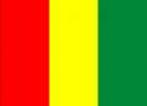
| ILLEGAL DRUGS |
None reported.