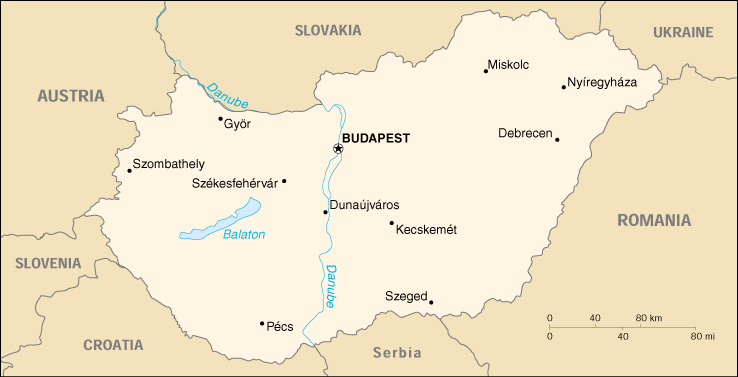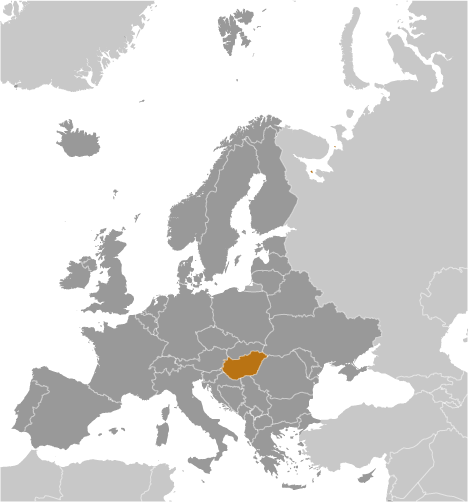

| HUNGARY Republic of Hungary Magyar Koztarsasag Joined United Nations: 14 December 1955 Human Rights as assured by their constitution Click here Updated 01 January 2013 |

| CAPITAL |
| POPULATION |
| CHIEF OF STATE |
| SELECTION PROCESS |
Budapest
9,958,453 (July 2012 est.)
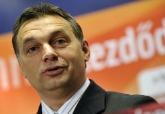
Viktor Orban
Prime Minister since 29 May 2010
Prime Minister since 29 May 2010
President elected by the National Assembly for a five-year term
(eligible for a second term); election last held 29 June 2010
Next scheduled election: June 2015
(eligible for a second term); election last held 29 June 2010
Next scheduled election: June 2015
HEAD OF GOVERNMENT
SELECTION PROCESS
Prime minister elected by the National Assembly on the
recommendation of the president; election last held: 11 and 25
April 2010
Next scheduled election: April 2014
recommendation of the president; election last held: 11 and 25
April 2010
Next scheduled election: April 2014
| DECLARATION OF HUMAN RIGHTS |
| ETHNIC GROUPS |
Hungarian 92.3%, Roma 1.9%, other or unknown 5.8% (2001 census)
| RELIGIONS |
Roman Catholic 51.9%, Calvinist 15.9%, Lutheran 3%, Greek Catholic 2.6%, other Christian 1%, other or unspecified 11.1%, unaffiliated
14.5% (2001 census)
14.5% (2001 census)
| GOVERNMENT STRUCTURE |
Parliamentary democracy with 19 counties (megyek, singular - megye), 23 urban counties (singular - megyei varos), and 1 capital
city (fovaros); Legal system is based German-Austrian legal system; accepts compulsory ICJ jurisdiction with reservations
Executive: President elected by the National Assembly for a five-year term (eligible for a second term); election last held on 2 May
2012 (next to be held by May 2017); prime minister elected by the National Assembly on the recommendation of the president;
election last held 29 May 2010
Legislative: Unicameral National Assembly or Orszaggyules (386 seats; members elected by popular vote under a system of
proportional and direct representation to serve four-year terms)
elections: last held on 11 and 25 April 2010 (next to be held in April 2014)
Judicial: Constitutional Court (judges are elected by the National Assembly for nine-year terms)
city (fovaros); Legal system is based German-Austrian legal system; accepts compulsory ICJ jurisdiction with reservations
Executive: President elected by the National Assembly for a five-year term (eligible for a second term); election last held on 2 May
2012 (next to be held by May 2017); prime minister elected by the National Assembly on the recommendation of the president;
election last held 29 May 2010
Legislative: Unicameral National Assembly or Orszaggyules (386 seats; members elected by popular vote under a system of
proportional and direct representation to serve four-year terms)
elections: last held on 11 and 25 April 2010 (next to be held in April 2014)
Judicial: Constitutional Court (judges are elected by the National Assembly for nine-year terms)
| LANGUAGES |
Hungarian 93.6%, other or unspecified 6.4% (2001 census)
| BRIEF HISTORY |
Neolithic settlement begins with the Körös culture, carbon-dated to around 6200 BC. The Middle Neolithic sees the Western
Linear Pottery culture in Transdanubia and the Szatmar and Eastern Linear pottery (called "Alföld Linear Pottery" in Hungary) in the
East, developing into Želiezovce (Slovakia) and Szakalhat and Bükk, respectively. The Late Neolithic Tisza culture is followed by
the eneolithic Tiszapolgár and Bodrogkeresztúr cultures. There are no written issues from the Iron Age (700-500 BC), but some
scholars try to identify people later mentioned in the written sources -- Dacians (generally considered to be the ancestors of the
Romanians) east of the Tisza, and Illyrians (Pannonians) west of the Danube -- but this is highly speculative. The Celts came from
the west around 450 BC, and they expanded over the whole of present-day Hungary in the Late Iron Age. The Roman Empire
subdued the Pannonians, Dacians, Celts and other peoples in this territory. The territory west of the Danube was conquered by the
Roman Empire between 35 and 9 BC, and became a province of the Roman Empire under the name of Pannonia. In 375 AD, the
nomadic Huns, most likely of diverse origin with a Turkic-speaking aristocracy, began invading Europe from the eastern steppes,
instigating the Great Age of Migrations. In 380, the Huns penetrated into the Pannonian Basin, and remained an important factor in
the region well into the 400s. The Germanic Ostrogoths inhabited Pannonia, with Rome's consent, between 456 and 471. The first
Slavs came to the region, almost certainly from the north, soon after the departure of the Ostrogoths (471 AD). The nomadic Avars
arrived from Asia in the 560s, utterly destroyed the Gepidi in the east, drove away the Lombards in the west, and subjugated the
Slavs, partly assimilating them. The commonly accepted view of the origin of the Magyars (known as Hungarians in English) is that
they were nomadic people, with indeterminate and disputed origin from the Eurasian plains until the end of the 9th century AD. They
were organized as a confederation of seven Magyar and three allied Khazar tribes; the name Hungary / Hungarian is most probably
derived from the Turkish term Onogur meaning 'Ten Arrows', signifying united military strength in nomadic symbolism. In 896 they
settled in Transylvania ("Exinde montes descenderunt per tres menses et deveniunt in confinium regni Hungariae, scilicet in Erdelw")
from where they took possession of Pannonia. Hungary was established as a Christian kingdom under Stephen I of Hungary, who
was crowned in December 1000 AD in the capital, Esztergom. What emerged was a strong kingdom that withstood attacks from
German kings and Emperors, and nomadic tribes following the Magyars from the East, integrating some of the latter into the
population (along with Germans invited to Transylvania and present-day Slovakia, especially after 1242), and subjugating Croatia in
1102. In 1241/1242, this kingdom received one major blow in the form of the Mongol invasion of Europe: after the defeat of the
Hungarian army in the Battle of Muhi, King Béla IV fled, and a large part (though not as great as suspected by historians earlier) of
the population died (leading later to the invitation of settlers from neighbours in the West and South) in the ensuing destruction
(Tatárjárás). Only strongly fortified cities and abbeys could withstand the assault. Through the centuries the Kingdom of Hungary
kept its old "constitution", based on freedom of nobles, privileged people (Saxons, Jász-kuns) and free royal towns such as Buda,
Kassa (Košice), Pressburg (Pozsony, today Bratislava), Kolozsvár (today Cluj-Napoca). After some 150 years of wars with the
Ottoman Empire in the south, the Turks conquered parts of Hungary, and continued their expansion until 1556. With the conquest
of Buda in 1541 by the Turks, Hungary fell into three parts. The north-western part (Present-day Slovakia, western Transdanubia,
present-day Burgenland, western Croatia and parts of north-eastern present-day Hungary) remained under the rule of the
Habsburgs, and although formally was independent, subsequently became a province of their empire under the informal name Royal
Hungary. The Habsburg Emperors were crowned as Kings of Hungary. Pozsony (Pressburg, today: Bratislava) became the new
capital (1536-1784), coronation town (1563-1830) and seat of the Diet (1536-1848) of Hungary. Trnava in turn, became the
religious center in 1541. Parallelly, between 1604 and 1711, there was a series of anti-Habsburg (i.e. anti-Austrian) and anti-
Catholic (requiring equal rights and freedom for all Christian religions) uprisings, which – with the exception of the last one – took
place in Royal Hungary, more exactly on the territory of present-day Slovakia. Following the defeat of Ottoman forces led by
Grand Vizier Kara Mustafa Pasha at the Second Siege of Vienna in 1683, at the hands of the combined armies of Poland and the
Holy Roman Empire under Jan III Sobieski, was the decisive event that marked the beginning of the Stagnation of the Ottoman
Empire, and ultimately swung the balance of power in the region. Under the terms of the Treaty of Karlowitz, which ended the
Great Turkish War in 1699, the Ottomans ceded nearly all of the Hungarian pashalik. The new territories where united with that of
"Royal Hungary", and where, albeit mostly formal, a Diet seated in Pressburg (Bratislava) ruled the lands. The term "Royal Hungary"
fell into disuse, and the Habsburg Kings addressed the country with the term "Kingdom of Hungary". Influenced by the French
revolution, and in response to attempts at Germanisation by Joseph II (ruled 1780-1790), there emerged a national revival
movement in Hungary of the Magyars, but also of all the other non-Magyar nationalities living in the Kingdom of Hungary. On
March 15, 1848, mass demonstrations in Pest and Buda enabled Hungarian reformists to push through a list of 12 demands. Faced
with revolution both at home and in Vienna, Austria first had to accept Hungarian demands. Later, under governor Lajos Kossuth
and the first Prime minister, Lajos Batthyány, the House of Habsburg was dethroned and the form of government was changed to
create the first Republic of Hungary. Following the war of 1848-49, the whole country was in "passive resistance". Due to external
and internal problems, reforms seemed inevitable to secure the integrity of the Habsburg Empire. Major military defeats, like the
Battle of Königgrätz (1866), forced the Emperor to concede internal reforms. To appease Hungarian separatism, the Emperor
made a deal with the Hungarian nobility led by Ferenc Deák, called the Compromise of 1867, by which the dual Monarchy of
Austria-Hungary came into existence. In First World War Hungary was fighting on the side of Austria. In 1918, as a result of defeat
in World War I, the Austro-Hungarian Monarchy collapsed. On October 31, 1918, the success of the Aster Revolution in
Budapest brought the liberal count Mihály Károlyi to power as Prime-Minister. The new government officially declared Hungary an
independent republic on November 16, after the end of the war. In January 1920, Hungarian men and women cast the first secret
ballots in the country's political history. The voting was not totally democratic, because the entire left-wing either boycotted or was
excluded from the voting. The Great Depression induced a drop in the standard of living and the political mood of the country
shifted further toward the right. On 20 November 1940, under pressure from Germany, Pál Teleki affiliated Hungary with the
Tripartite Pact. In December of 1940, he also signed an ephemeral "Treaty of Eternal Friendship" with Yugoslavia. A few months
later, after a Yugoslavian coup threatened the success of the planned German invasion on the Soviets (Operation Barbarossa),
Hitler asked Hungarians to support his invasion of Yugoslavia. The Soviet Army occupied Hungary from September 1944 until
April 1945. It took almost 2 months to conquer Budapest and almost the whole city was destroyed. By signing the Peace Treaty of
Paris, Hungary again lost all the territories that it gained between 1938 and 1941. Neither Western Allies nor the Soviet Union
supported any change in Hungary's pre-1938 borders. The Soviet Union itself annexed Sub-Carpathia, which is now part of
Ukraine. On October 23 1956, a peaceful student demonstration in Budapest produced a list of 16 demands for reform and greater
political freedom. As the students attempted to broadcast these demands, police made some arrests and tried to disperse the crowd
with tear gas. When the students attempted to free those arrested, the police opened fire on the crowd, setting off a chain of events
which lead to the Hungarian Revolution. On the day of the 1956 Revolution, October 23, 1989 the Hungarian Republic was
officially declared (by the provisional President of the Republic Mátyás Szűrös), replacing the Hungarian People's Republic. The
revised constitution also championed the "values of bourgeois democracy and democratic socialism" and gave equal status to public
and private property. In the elections of April 2006, Hungary decided to keep its government in place for the first time in the history
of the Third Hungarian Republic. From 2007, when increased inflation caused by tax increases decreased the standard of living, a
complete restructuring of the state-administration, energy sector, relation towards private economy, health sector and welfare
supports took place. Members of affected professional unions describe the measures as lacking discussion and uncompromising.
The country joined Schengen Area at the end of 2007. n 2008, the coalition broke up over the disagreement whether the insurance
side of the health sector should be state owned and therefore decided in policies the by state or by private companies. The 2008
financial crisis caused further budgetary constraints. The newly formed government from the 2010 elections set three priorities
around which it intended to govern: the New Constitution, holding those who committed criminal deeds during the former
government to account, and creating jobs. The rationale for accepting a New Constitution was that the constitution of the Third
Republic was a heavily modified version of the 1949 communist constitution, which was transformed to be the base of a western-
style democracy during the Round Table Consultations during the System-Change of 1989-90. The preamble of the 1989 version
of the 1949 Constitution even stated that it is a temporary constitution in effect until the new constitution is accepted. FIDESZ
regarded itself empowered by the people to form the new constitution on its own. FIDESZ believed this on the bases that it won a
two-thirds majority in the parliament by popular support, while the opinion of the opposition parties was that only a multi-party
compromise over a new constitution would be legitimate, regardless of the ratio of the parliamentary seats. The FIDESZ-accepted
constitution entered into force on Jan. 1, 2012.
Source: Wikipedia: History of Hungary
Linear Pottery culture in Transdanubia and the Szatmar and Eastern Linear pottery (called "Alföld Linear Pottery" in Hungary) in the
East, developing into Želiezovce (Slovakia) and Szakalhat and Bükk, respectively. The Late Neolithic Tisza culture is followed by
the eneolithic Tiszapolgár and Bodrogkeresztúr cultures. There are no written issues from the Iron Age (700-500 BC), but some
scholars try to identify people later mentioned in the written sources -- Dacians (generally considered to be the ancestors of the
Romanians) east of the Tisza, and Illyrians (Pannonians) west of the Danube -- but this is highly speculative. The Celts came from
the west around 450 BC, and they expanded over the whole of present-day Hungary in the Late Iron Age. The Roman Empire
subdued the Pannonians, Dacians, Celts and other peoples in this territory. The territory west of the Danube was conquered by the
Roman Empire between 35 and 9 BC, and became a province of the Roman Empire under the name of Pannonia. In 375 AD, the
nomadic Huns, most likely of diverse origin with a Turkic-speaking aristocracy, began invading Europe from the eastern steppes,
instigating the Great Age of Migrations. In 380, the Huns penetrated into the Pannonian Basin, and remained an important factor in
the region well into the 400s. The Germanic Ostrogoths inhabited Pannonia, with Rome's consent, between 456 and 471. The first
Slavs came to the region, almost certainly from the north, soon after the departure of the Ostrogoths (471 AD). The nomadic Avars
arrived from Asia in the 560s, utterly destroyed the Gepidi in the east, drove away the Lombards in the west, and subjugated the
Slavs, partly assimilating them. The commonly accepted view of the origin of the Magyars (known as Hungarians in English) is that
they were nomadic people, with indeterminate and disputed origin from the Eurasian plains until the end of the 9th century AD. They
were organized as a confederation of seven Magyar and three allied Khazar tribes; the name Hungary / Hungarian is most probably
derived from the Turkish term Onogur meaning 'Ten Arrows', signifying united military strength in nomadic symbolism. In 896 they
settled in Transylvania ("Exinde montes descenderunt per tres menses et deveniunt in confinium regni Hungariae, scilicet in Erdelw")
from where they took possession of Pannonia. Hungary was established as a Christian kingdom under Stephen I of Hungary, who
was crowned in December 1000 AD in the capital, Esztergom. What emerged was a strong kingdom that withstood attacks from
German kings and Emperors, and nomadic tribes following the Magyars from the East, integrating some of the latter into the
population (along with Germans invited to Transylvania and present-day Slovakia, especially after 1242), and subjugating Croatia in
1102. In 1241/1242, this kingdom received one major blow in the form of the Mongol invasion of Europe: after the defeat of the
Hungarian army in the Battle of Muhi, King Béla IV fled, and a large part (though not as great as suspected by historians earlier) of
the population died (leading later to the invitation of settlers from neighbours in the West and South) in the ensuing destruction
(Tatárjárás). Only strongly fortified cities and abbeys could withstand the assault. Through the centuries the Kingdom of Hungary
kept its old "constitution", based on freedom of nobles, privileged people (Saxons, Jász-kuns) and free royal towns such as Buda,
Kassa (Košice), Pressburg (Pozsony, today Bratislava), Kolozsvár (today Cluj-Napoca). After some 150 years of wars with the
Ottoman Empire in the south, the Turks conquered parts of Hungary, and continued their expansion until 1556. With the conquest
of Buda in 1541 by the Turks, Hungary fell into three parts. The north-western part (Present-day Slovakia, western Transdanubia,
present-day Burgenland, western Croatia and parts of north-eastern present-day Hungary) remained under the rule of the
Habsburgs, and although formally was independent, subsequently became a province of their empire under the informal name Royal
Hungary. The Habsburg Emperors were crowned as Kings of Hungary. Pozsony (Pressburg, today: Bratislava) became the new
capital (1536-1784), coronation town (1563-1830) and seat of the Diet (1536-1848) of Hungary. Trnava in turn, became the
religious center in 1541. Parallelly, between 1604 and 1711, there was a series of anti-Habsburg (i.e. anti-Austrian) and anti-
Catholic (requiring equal rights and freedom for all Christian religions) uprisings, which – with the exception of the last one – took
place in Royal Hungary, more exactly on the territory of present-day Slovakia. Following the defeat of Ottoman forces led by
Grand Vizier Kara Mustafa Pasha at the Second Siege of Vienna in 1683, at the hands of the combined armies of Poland and the
Holy Roman Empire under Jan III Sobieski, was the decisive event that marked the beginning of the Stagnation of the Ottoman
Empire, and ultimately swung the balance of power in the region. Under the terms of the Treaty of Karlowitz, which ended the
Great Turkish War in 1699, the Ottomans ceded nearly all of the Hungarian pashalik. The new territories where united with that of
"Royal Hungary", and where, albeit mostly formal, a Diet seated in Pressburg (Bratislava) ruled the lands. The term "Royal Hungary"
fell into disuse, and the Habsburg Kings addressed the country with the term "Kingdom of Hungary". Influenced by the French
revolution, and in response to attempts at Germanisation by Joseph II (ruled 1780-1790), there emerged a national revival
movement in Hungary of the Magyars, but also of all the other non-Magyar nationalities living in the Kingdom of Hungary. On
March 15, 1848, mass demonstrations in Pest and Buda enabled Hungarian reformists to push through a list of 12 demands. Faced
with revolution both at home and in Vienna, Austria first had to accept Hungarian demands. Later, under governor Lajos Kossuth
and the first Prime minister, Lajos Batthyány, the House of Habsburg was dethroned and the form of government was changed to
create the first Republic of Hungary. Following the war of 1848-49, the whole country was in "passive resistance". Due to external
and internal problems, reforms seemed inevitable to secure the integrity of the Habsburg Empire. Major military defeats, like the
Battle of Königgrätz (1866), forced the Emperor to concede internal reforms. To appease Hungarian separatism, the Emperor
made a deal with the Hungarian nobility led by Ferenc Deák, called the Compromise of 1867, by which the dual Monarchy of
Austria-Hungary came into existence. In First World War Hungary was fighting on the side of Austria. In 1918, as a result of defeat
in World War I, the Austro-Hungarian Monarchy collapsed. On October 31, 1918, the success of the Aster Revolution in
Budapest brought the liberal count Mihály Károlyi to power as Prime-Minister. The new government officially declared Hungary an
independent republic on November 16, after the end of the war. In January 1920, Hungarian men and women cast the first secret
ballots in the country's political history. The voting was not totally democratic, because the entire left-wing either boycotted or was
excluded from the voting. The Great Depression induced a drop in the standard of living and the political mood of the country
shifted further toward the right. On 20 November 1940, under pressure from Germany, Pál Teleki affiliated Hungary with the
Tripartite Pact. In December of 1940, he also signed an ephemeral "Treaty of Eternal Friendship" with Yugoslavia. A few months
later, after a Yugoslavian coup threatened the success of the planned German invasion on the Soviets (Operation Barbarossa),
Hitler asked Hungarians to support his invasion of Yugoslavia. The Soviet Army occupied Hungary from September 1944 until
April 1945. It took almost 2 months to conquer Budapest and almost the whole city was destroyed. By signing the Peace Treaty of
Paris, Hungary again lost all the territories that it gained between 1938 and 1941. Neither Western Allies nor the Soviet Union
supported any change in Hungary's pre-1938 borders. The Soviet Union itself annexed Sub-Carpathia, which is now part of
Ukraine. On October 23 1956, a peaceful student demonstration in Budapest produced a list of 16 demands for reform and greater
political freedom. As the students attempted to broadcast these demands, police made some arrests and tried to disperse the crowd
with tear gas. When the students attempted to free those arrested, the police opened fire on the crowd, setting off a chain of events
which lead to the Hungarian Revolution. On the day of the 1956 Revolution, October 23, 1989 the Hungarian Republic was
officially declared (by the provisional President of the Republic Mátyás Szűrös), replacing the Hungarian People's Republic. The
revised constitution also championed the "values of bourgeois democracy and democratic socialism" and gave equal status to public
and private property. In the elections of April 2006, Hungary decided to keep its government in place for the first time in the history
of the Third Hungarian Republic. From 2007, when increased inflation caused by tax increases decreased the standard of living, a
complete restructuring of the state-administration, energy sector, relation towards private economy, health sector and welfare
supports took place. Members of affected professional unions describe the measures as lacking discussion and uncompromising.
The country joined Schengen Area at the end of 2007. n 2008, the coalition broke up over the disagreement whether the insurance
side of the health sector should be state owned and therefore decided in policies the by state or by private companies. The 2008
financial crisis caused further budgetary constraints. The newly formed government from the 2010 elections set three priorities
around which it intended to govern: the New Constitution, holding those who committed criminal deeds during the former
government to account, and creating jobs. The rationale for accepting a New Constitution was that the constitution of the Third
Republic was a heavily modified version of the 1949 communist constitution, which was transformed to be the base of a western-
style democracy during the Round Table Consultations during the System-Change of 1989-90. The preamble of the 1989 version
of the 1949 Constitution even stated that it is a temporary constitution in effect until the new constitution is accepted. FIDESZ
regarded itself empowered by the people to form the new constitution on its own. FIDESZ believed this on the bases that it won a
two-thirds majority in the parliament by popular support, while the opinion of the opposition parties was that only a multi-party
compromise over a new constitution would be legitimate, regardless of the ratio of the parliamentary seats. The FIDESZ-accepted
constitution entered into force on Jan. 1, 2012.
Source: Wikipedia: History of Hungary
| ECONOMIC OVERVIEW |
Hungary has made the transition from a centrally planned to a market economy, with a per capita income nearly two-thirds that of
the EU-25 average. The private sector accounts for more than 80% of GDP. Foreign ownership of and investment in Hungarian
firms are widespread, with cumulative foreign direct investment worth more than $70 billion. In late 2008, Hungary's impending
inability to service its short-term debt - brought on by the global financial crisis - led Budapest to obtain an IMF/EU/World
Bank-arranged financial assistance package worth over $25 billion. The global economic downturn, declining exports, and low
domestic consumption and fixed asset accumulation, dampened by government austerity measures, resulted in an economic
contraction of 6.8% in 2009. In 2010 the new government implemented a number of changes including cutting business and
personal income taxes, but imposed "crisis taxes" on financial institutions, energy and telecom companies, and retailers. The
IMF/EU bail-out program lapsed at the end of the year and was replaced by Post Program Monitoring and Article IV
Consultations on overall economic and fiscal processes. The economy began to recover in 2010 with a big boost from exports,
especially to Germany, and achieved growth of approximately 1.4% in 2011. At the end of 2011 the government turned to the IMF
and the EU to obtain a new loan for foreign currency debt and bond obligations in 2012 and beyond. Whether negotiations result in
a loan depend on Hungary meeting EU and IMF requirements for ensuring the independence of monetary, judicial, and data privacy
institutions. The EU also launched an Excessive Deficit Procedure and requested that the government outline measures to
sustainably reduce the budget deficit to under 3% of GDP. Unemployment remained high, at nearly 11% in 2011. Ongoing
economic weakness in Western Europe is likely to further constrain growth in 2012.
Source: CIA World Factbook (select Hungary)
the EU-25 average. The private sector accounts for more than 80% of GDP. Foreign ownership of and investment in Hungarian
firms are widespread, with cumulative foreign direct investment worth more than $70 billion. In late 2008, Hungary's impending
inability to service its short-term debt - brought on by the global financial crisis - led Budapest to obtain an IMF/EU/World
Bank-arranged financial assistance package worth over $25 billion. The global economic downturn, declining exports, and low
domestic consumption and fixed asset accumulation, dampened by government austerity measures, resulted in an economic
contraction of 6.8% in 2009. In 2010 the new government implemented a number of changes including cutting business and
personal income taxes, but imposed "crisis taxes" on financial institutions, energy and telecom companies, and retailers. The
IMF/EU bail-out program lapsed at the end of the year and was replaced by Post Program Monitoring and Article IV
Consultations on overall economic and fiscal processes. The economy began to recover in 2010 with a big boost from exports,
especially to Germany, and achieved growth of approximately 1.4% in 2011. At the end of 2011 the government turned to the IMF
and the EU to obtain a new loan for foreign currency debt and bond obligations in 2012 and beyond. Whether negotiations result in
a loan depend on Hungary meeting EU and IMF requirements for ensuring the independence of monetary, judicial, and data privacy
institutions. The EU also launched an Excessive Deficit Procedure and requested that the government outline measures to
sustainably reduce the budget deficit to under 3% of GDP. Unemployment remained high, at nearly 11% in 2011. Ongoing
economic weakness in Western Europe is likely to further constrain growth in 2012.
Source: CIA World Factbook (select Hungary)
| POLITICAL CLIMATE |
Due to the Hungarian Constitution, based on the post-WWII Basic Law of the Federal Republic of Germany, the Prime Minister
has a leading role in the executive branch as he selects Cabinet ministers and has the exclusive right to dismiss them (similarly to the
competences of the German federal chancellor). Each cabinet nominee appears before one or more parliamentary committees in
consultative open hearings, survive a vote by the Parliament and must be formally approved by the president.
The unicameral, 386-member National Assembly (Országgyűlés) is the highest organ of state authority and initiates and approves
legislation sponsored by the prime minister. The National Assembly (Országgyűlés) has 386 members, elected for a four year term.
176 members are elected in single-seat constituencies, 152 by proportional representation in multi-seat constituencies, and 58 so-
called compensation seats are distributed based on the number of votes "lost" (i.e., the votes that did not produce a seat) in either
the single-seat or the multi-seat constituencies. The election threshold is 5%, but it only applies to the multi-seat constituencies and
the compensation seats, not the single-seat constituencies.
On 1 January 2012, a new constitution came into force, which impedes any successor government from changing policies enacted
by Fidesz. For instance, Fidesz loyalists occupy councils in charge of the media, judiciary, and budget for nine-year terms.
Furthermore, the borders of electoral districts have been changed to deeply favour Fidesz and virtually guarantee that they either
remain in power or retain a share of parliamentary seats that is sufficient to block any meaningful change to policies enacted by
Fidesz.
The EU and other international organisations have expressed deep concern with respect to these developments in Hungary. On 17
January 2012, the European Commission launched legal action against Hungary over the new central-bank law, judicial reforms,
and the independence of the new data ombudsman.
Source: Wikipedia: Politics of Hungary
has a leading role in the executive branch as he selects Cabinet ministers and has the exclusive right to dismiss them (similarly to the
competences of the German federal chancellor). Each cabinet nominee appears before one or more parliamentary committees in
consultative open hearings, survive a vote by the Parliament and must be formally approved by the president.
The unicameral, 386-member National Assembly (Országgyűlés) is the highest organ of state authority and initiates and approves
legislation sponsored by the prime minister. The National Assembly (Országgyűlés) has 386 members, elected for a four year term.
176 members are elected in single-seat constituencies, 152 by proportional representation in multi-seat constituencies, and 58 so-
called compensation seats are distributed based on the number of votes "lost" (i.e., the votes that did not produce a seat) in either
the single-seat or the multi-seat constituencies. The election threshold is 5%, but it only applies to the multi-seat constituencies and
the compensation seats, not the single-seat constituencies.
On 1 January 2012, a new constitution came into force, which impedes any successor government from changing policies enacted
by Fidesz. For instance, Fidesz loyalists occupy councils in charge of the media, judiciary, and budget for nine-year terms.
Furthermore, the borders of electoral districts have been changed to deeply favour Fidesz and virtually guarantee that they either
remain in power or retain a share of parliamentary seats that is sufficient to block any meaningful change to policies enacted by
Fidesz.
The EU and other international organisations have expressed deep concern with respect to these developments in Hungary. On 17
January 2012, the European Commission launched legal action against Hungary over the new central-bank law, judicial reforms,
and the independence of the new data ombudsman.
Source: Wikipedia: Politics of Hungary
| INTERNATIONAL DISPUTES |
Bilateral government, legal, technical and economic working group negotiations continue in 2006 with Slovakia over Hungary's
failure to complete its portion of the Gabcikovo-Nagymaros hydroelectric dam project along the Danube; as a member state that
forms part of the EU's external border, Hungary has implemented the strict Schengen border rules.
failure to complete its portion of the Gabcikovo-Nagymaros hydroelectric dam project along the Danube; as a member state that
forms part of the EU's external border, Hungary has implemented the strict Schengen border rules.


| REFUGEES AND INTERNALLY DISPLACED PERSONS (IDPS) |
None reported.
| ILLICIT DRUGS |
Transshipment point for Southwest Asian heroin and cannabis and for South American cocaine destined for Western Europe;
limited producer of precursor chemicals, particularly for amphetamine and methamphetamine; efforts to counter money
laundering, related to organized crime and drug trafficking, are improving, but remain vulnerable; significant consumer of ecstasy
limited producer of precursor chemicals, particularly for amphetamine and methamphetamine; efforts to counter money
laundering, related to organized crime and drug trafficking, are improving, but remain vulnerable; significant consumer of ecstasy
| HUMAN RIGHTS STATEMENTS, ANALYSIS AND CRITIQUES |
2011 Human Rights Report: Hungary
Bureau of Democracy, Human Rights, and Labor
2011 Country Reports on Human Right Practices
May 25, 2012
Hungary is a multiparty parliamentary democracy. Legislative authority is vested in the unicameral National Assembly (parliament). The
parliament elects the president (the head of state) every five years. The president appoints a prime minister from the majority party or
coalition following a two-round national election every four years. The last parliamentary elections in April 2010 were assessed as free
and fair. The conservative Fidesz-Christian Democrat (KDNP) coalition won a two-thirds majority. Fidesz’s prime ministerial candidate,
Viktor Orban, took office in May 2010. Security forces reported to civilian authorities.
Among the most important human rights problems during the year were societal discrimination and exclusion of the Romani population
and violent right-wing extremism. Discrimination against Roma exacerbated their already limited access to education, employment, health
care, and social services. Right-wing extremism, including public campaigns by paramilitaries to intimidate and incite hatred against
Roma and other minorities, increased. Also the government began implementing a new law that restricts media freedom by increasing
government influence over the media in general. The government also adopted a new Fundamental Law to replace the 1949 constitution,
as well as more than 20 cardinal laws. New laws concerning the judicial system, religious organizations, and media freedom gave rise to
concerns that the new legislation could undermine the country’s democratic institutions by removing key checks and balances. The
Fundamental Law and most cardinal laws were to come in to force on January 1, 2012.
Other human rights problems during the year included police use of excessive force against suspects, particularly Roma; new
restrictions on due process; new laws that caused concerns over the broad powers of the media regulatory authority, which could
encourage self-censorship; government corruption; questionable layoffs of state media employees; societal violence against women and
children; sexual harassment of women; anti-Semitism; trafficking in persons; and the adoption of laws that weakened the labor rights of
civil servants.
The government generally took steps to prosecute and punish officials who committed abuses, whether in the security services or
elsewhere in the government
Click here to read more »
Bureau of Democracy, Human Rights, and Labor
2011 Country Reports on Human Right Practices
May 25, 2012
Hungary is a multiparty parliamentary democracy. Legislative authority is vested in the unicameral National Assembly (parliament). The
parliament elects the president (the head of state) every five years. The president appoints a prime minister from the majority party or
coalition following a two-round national election every four years. The last parliamentary elections in April 2010 were assessed as free
and fair. The conservative Fidesz-Christian Democrat (KDNP) coalition won a two-thirds majority. Fidesz’s prime ministerial candidate,
Viktor Orban, took office in May 2010. Security forces reported to civilian authorities.
Among the most important human rights problems during the year were societal discrimination and exclusion of the Romani population
and violent right-wing extremism. Discrimination against Roma exacerbated their already limited access to education, employment, health
care, and social services. Right-wing extremism, including public campaigns by paramilitaries to intimidate and incite hatred against
Roma and other minorities, increased. Also the government began implementing a new law that restricts media freedom by increasing
government influence over the media in general. The government also adopted a new Fundamental Law to replace the 1949 constitution,
as well as more than 20 cardinal laws. New laws concerning the judicial system, religious organizations, and media freedom gave rise to
concerns that the new legislation could undermine the country’s democratic institutions by removing key checks and balances. The
Fundamental Law and most cardinal laws were to come in to force on January 1, 2012.
Other human rights problems during the year included police use of excessive force against suspects, particularly Roma; new
restrictions on due process; new laws that caused concerns over the broad powers of the media regulatory authority, which could
encourage self-censorship; government corruption; questionable layoffs of state media employees; societal violence against women and
children; sexual harassment of women; anti-Semitism; trafficking in persons; and the adoption of laws that weakened the labor rights of
civil servants.
The government generally took steps to prosecute and punish officials who committed abuses, whether in the security services or
elsewhere in the government
Click here to read more »
22 October 2012
Committee on the Rights of Persons with Disabilities
Concluding observations on the initial periodic report of Hungary, adopted by the Committee at its eighth session (17 28
September 2012)
I. Introduction
2. The Committee welcomes the initial report of Hungary, which was one of the first States to submit its initial report to the
Committee. The Committee commends the State party for the written replies to the list of issues raised by the Committee
(CRPD/C/HUN/Q/1/Add.1) and for the comprehensive responses to the questions posed during the dialogue.
3. The Committee commends the State party for its delegation, which included representatives of various Government ministries,
including many senior representatives, as well as one person with a disability who is a senior civil servant among its members. The
Committee expresses its appreciation for the spirited and fruitful dialogue held between the delegation and the members of the Committee.
II. Positive aspects
4. The Committee welcomes the State party’s support for the promotion and implementation of the Convention at the global and
regional levels, including through its support for the Bureau of the Conference of the State Parties and to other United Nations
mechanisms in support of the effective implementation of the Convention.
5. The Committee congratulates the State party for including the explicit prohibition of disability-based discrimination in its
Fundamental Law.
6. The Committee notes with satisfaction the adoption of the National Programme of Disability Affairs (2007-2013) and the
Governmental Resolution 1062/2007.(VIII.7.) on the medium term action plan of the programme for the period 2007-2010, and the
mainstreaming of disability in a number of other government policies.
III. Principal areas of concern and recommendations
A. General principles and obligations (arts. 1-4)
10. The Committee notes with concern that definitions of disability and persons with disabilities in the State party’s legislation focus
on the impairments of an individual rather than on the barriers he/she faces. The Committee expresses its concern that such definitions
fail to encompass all persons with disabilities, including those with psychosocial disabilities.
11. The Committee notes with appreciation that Act XXVI of 1998 on the Rights and Equal Opportunities of Persons with
Disabilities was drafted to promote the rights of persons with disabilities in the State party. The Committee expresses concern, however,
over the fact that the Act has not been reviewed since the adoption by the State party of the Convention, with a view to aligning it with
the provisions of the Convention.
Click here to read more »
Committee on the Rights of Persons with Disabilities
Concluding observations on the initial periodic report of Hungary, adopted by the Committee at its eighth session (17 28
September 2012)
I. Introduction
2. The Committee welcomes the initial report of Hungary, which was one of the first States to submit its initial report to the
Committee. The Committee commends the State party for the written replies to the list of issues raised by the Committee
(CRPD/C/HUN/Q/1/Add.1) and for the comprehensive responses to the questions posed during the dialogue.
3. The Committee commends the State party for its delegation, which included representatives of various Government ministries,
including many senior representatives, as well as one person with a disability who is a senior civil servant among its members. The
Committee expresses its appreciation for the spirited and fruitful dialogue held between the delegation and the members of the Committee.
II. Positive aspects
4. The Committee welcomes the State party’s support for the promotion and implementation of the Convention at the global and
regional levels, including through its support for the Bureau of the Conference of the State Parties and to other United Nations
mechanisms in support of the effective implementation of the Convention.
5. The Committee congratulates the State party for including the explicit prohibition of disability-based discrimination in its
Fundamental Law.
6. The Committee notes with satisfaction the adoption of the National Programme of Disability Affairs (2007-2013) and the
Governmental Resolution 1062/2007.(VIII.7.) on the medium term action plan of the programme for the period 2007-2010, and the
mainstreaming of disability in a number of other government policies.
III. Principal areas of concern and recommendations
A. General principles and obligations (arts. 1-4)
10. The Committee notes with concern that definitions of disability and persons with disabilities in the State party’s legislation focus
on the impairments of an individual rather than on the barriers he/she faces. The Committee expresses its concern that such definitions
fail to encompass all persons with disabilities, including those with psychosocial disabilities.
11. The Committee notes with appreciation that Act XXVI of 1998 on the Rights and Equal Opportunities of Persons with
Disabilities was drafted to promote the rights of persons with disabilities in the State party. The Committee expresses concern, however,
over the fact that the Act has not been reviewed since the adoption by the State party of the Convention, with a view to aligning it with
the provisions of the Convention.
Click here to read more »
Hungary and Ukraine at Forefront of Democratic Decline in Central and Eastern Europe
Jun 6 2012 - 8:03am
Negative developments in Hungary and Ukraine are at the forefront of an antidemocratic trend in Central and Eastern Europe that raises
serious questions about the durability of the European Union’s young democracies, as well as prospects for aspiring members, according
to a report released by Freedom House today. Nations in Transit 2012 is the latest edition of Freedom House’s annual analysis of
democratic development in Central and Eastern Europe and Eurasia. At a time of growing economic uncertainty, the report warns of
rising antidemocratic tendencies in Hungary and Ukraine that have the potential to take root elsewhere in the region.
“Hungarian prime minister Viktor Orbán and Ukrainian president Viktor Yanukovych, under the pretext of so-called reforms, have been
systematically breaking down critical checks and balances,” said David J. Kramer, president of Freedom House. “They appear to be
pursuing the ‘Putinization’ of their countries, which is ironic, given that in Russia itself Putinism has been largely discredited over the
past year, as ordinary Russians increasingly seek guarantees of government accountability and transparency.”
The report notes Hungary’s year-on-year performance as the most glaring example of democratic decline among the newer European
Union (EU) members, where the combination of weak traditions of democratic practice, resilient networks of corruption and clientelism,
low levels of public trust, and shaky economic conditions have hampered the achievement of indelible democratic reforms. Five other
EU member states in the region—Bulgaria, the Czech Republic, Lithuania, Romania, and Slovakia—have also experienced net declines
over the past five years.
Ukraine, which saw a brief democratic opening after the Orange Revolution in 2004, has suffered significant decline in an alarmingly
short period of time. Under the Yanukovych government, Ukraine’s Nations in Transit ratings worsened in five categories year on year,
with a steep decline in judicial framework and independence and an overall democracy score that is rapidly approaching its pre–Orange
Revolution level. Ukraine’s downward trajectory, like the negative trend among a number of EU hopefuls in the Balkans, raises real
doubts about the prospects for widening the circle of democratic states in Europe.
“As we see the high achievers of the past two decades, the new EU states, showing signs of trouble, it is time for a greater international
focus on the deepening challenges to democratic consolidation in Central and Southeastern Europe,” said Sylvana Habdank-
Kołaczkowska, project director for Nations in Transit.
Additional key findings:
In Russia, fraudulent parliamentary elections and the promise of a predetermined presidential succession sparked widespread protests
in December, but the authorities refrained from massive crackdowns against civil society. However, the regime continued to use the
judiciary as a means of intimidating and persecuting activists, and to defend or deny the authorities’ role in the 2009 death of
whistleblowing lawyer Sergey Magnitsky.
Critical reforms stalled in nearly all Balkan states. While Croatia demonstrated its commitment to winning EU membership by
cooperating with high-profile anticorruption investigations, four other Balkan countries—Albania, Bosnia and Herzegovina, Kosovo, and
Macedonia—experienced declines in the areas of electoral process, national democratic governance, judicial framework and
independence, and independent media.
Click here to read more »
Jun 6 2012 - 8:03am
Negative developments in Hungary and Ukraine are at the forefront of an antidemocratic trend in Central and Eastern Europe that raises
serious questions about the durability of the European Union’s young democracies, as well as prospects for aspiring members, according
to a report released by Freedom House today. Nations in Transit 2012 is the latest edition of Freedom House’s annual analysis of
democratic development in Central and Eastern Europe and Eurasia. At a time of growing economic uncertainty, the report warns of
rising antidemocratic tendencies in Hungary and Ukraine that have the potential to take root elsewhere in the region.
“Hungarian prime minister Viktor Orbán and Ukrainian president Viktor Yanukovych, under the pretext of so-called reforms, have been
systematically breaking down critical checks and balances,” said David J. Kramer, president of Freedom House. “They appear to be
pursuing the ‘Putinization’ of their countries, which is ironic, given that in Russia itself Putinism has been largely discredited over the
past year, as ordinary Russians increasingly seek guarantees of government accountability and transparency.”
The report notes Hungary’s year-on-year performance as the most glaring example of democratic decline among the newer European
Union (EU) members, where the combination of weak traditions of democratic practice, resilient networks of corruption and clientelism,
low levels of public trust, and shaky economic conditions have hampered the achievement of indelible democratic reforms. Five other
EU member states in the region—Bulgaria, the Czech Republic, Lithuania, Romania, and Slovakia—have also experienced net declines
over the past five years.
Ukraine, which saw a brief democratic opening after the Orange Revolution in 2004, has suffered significant decline in an alarmingly
short period of time. Under the Yanukovych government, Ukraine’s Nations in Transit ratings worsened in five categories year on year,
with a steep decline in judicial framework and independence and an overall democracy score that is rapidly approaching its pre–Orange
Revolution level. Ukraine’s downward trajectory, like the negative trend among a number of EU hopefuls in the Balkans, raises real
doubts about the prospects for widening the circle of democratic states in Europe.
“As we see the high achievers of the past two decades, the new EU states, showing signs of trouble, it is time for a greater international
focus on the deepening challenges to democratic consolidation in Central and Southeastern Europe,” said Sylvana Habdank-
Kołaczkowska, project director for Nations in Transit.
Additional key findings:
In Russia, fraudulent parliamentary elections and the promise of a predetermined presidential succession sparked widespread protests
in December, but the authorities refrained from massive crackdowns against civil society. However, the regime continued to use the
judiciary as a means of intimidating and persecuting activists, and to defend or deny the authorities’ role in the 2009 death of
whistleblowing lawyer Sergey Magnitsky.
Critical reforms stalled in nearly all Balkan states. While Croatia demonstrated its commitment to winning EU membership by
cooperating with high-profile anticorruption investigations, four other Balkan countries—Albania, Bosnia and Herzegovina, Kosovo, and
Macedonia—experienced declines in the areas of electoral process, national democratic governance, judicial framework and
independence, and independent media.
Click here to read more »
15 August 2012
Hungary must protect Roma communities from attack
The Hungarian authorities must do more to protect the country's Roma communities, Amnesty International said in a letter to the
government today, after reports that far-right groups attacked Roma residents in the western village of Devecser.
Violence broke out on 5 August, when more than 1,000 people gathered in Devecser's main square at a demonstration organized by far-
right party Jobbik and joined by far-right vigilante groups.
According to eyewitnesses some members of the crowd chanted anti-Roma slogans and threw pieces of concrete and other missiles at
Roma houses. The police did not act to stop the violence and it is unclear whether any arrests were made.
"The Hungarian authorities are obliged to protect all citizens and must therefore ensure that a thorough, independent and prompt
investigation is carried out into the allegations that police did not intervene to prevent the violence in Devecser," said Jezerca Tigani,
Deputy Director of Amnesty International's Europe and Central Asia Programme.
"Discriminatory violence, and incitement to discriminatory violence, against any section of Hungarian society should be publicly
condemned and all acts of racially motivated harassment and violence thoroughly investigated."
According to media reports, Jobbik called the march following a ‘brawl’ in late July between members of two households, one Roma
and the other non-Roma.
A number of speeches were made by Jobbik MP Gábor Ferenczi, László Toroczkai of the vigilante group Sixty-Four Counties and Attila
László of the For a Better Future Civil Guard Association.
Eyewitnesses said that all speeches contained anti-Roma sentiments, and that some were even calling for Hungarians to fight and
indirectly urging the eradication of "parasite Gypsies".
Zsolt Tyirityán of the group Betyársereg (Outlaw Army) in particular is reported to have made openly racist comments.
"Derogatory or racist comments made in particular by public officials or politicians might amount to incitement to racial hatred," said
Jezerca Tigani.
"Perpetrators of any acts of incitement to racial hatred must be prosecuted under laws which provide penalties reflecting the gravity of
the abuse."
Video footage posted on You Tube appeared to confirm reports that pieces of concrete and other missiles were being thrown at the
Roma houses.
Click here to read more »
Hungary must protect Roma communities from attack
The Hungarian authorities must do more to protect the country's Roma communities, Amnesty International said in a letter to the
government today, after reports that far-right groups attacked Roma residents in the western village of Devecser.
Violence broke out on 5 August, when more than 1,000 people gathered in Devecser's main square at a demonstration organized by far-
right party Jobbik and joined by far-right vigilante groups.
According to eyewitnesses some members of the crowd chanted anti-Roma slogans and threw pieces of concrete and other missiles at
Roma houses. The police did not act to stop the violence and it is unclear whether any arrests were made.
"The Hungarian authorities are obliged to protect all citizens and must therefore ensure that a thorough, independent and prompt
investigation is carried out into the allegations that police did not intervene to prevent the violence in Devecser," said Jezerca Tigani,
Deputy Director of Amnesty International's Europe and Central Asia Programme.
"Discriminatory violence, and incitement to discriminatory violence, against any section of Hungarian society should be publicly
condemned and all acts of racially motivated harassment and violence thoroughly investigated."
According to media reports, Jobbik called the march following a ‘brawl’ in late July between members of two households, one Roma
and the other non-Roma.
A number of speeches were made by Jobbik MP Gábor Ferenczi, László Toroczkai of the vigilante group Sixty-Four Counties and Attila
László of the For a Better Future Civil Guard Association.
Eyewitnesses said that all speeches contained anti-Roma sentiments, and that some were even calling for Hungarians to fight and
indirectly urging the eradication of "parasite Gypsies".
Zsolt Tyirityán of the group Betyársereg (Outlaw Army) in particular is reported to have made openly racist comments.
"Derogatory or racist comments made in particular by public officials or politicians might amount to incitement to racial hatred," said
Jezerca Tigani.
"Perpetrators of any acts of incitement to racial hatred must be prosecuted under laws which provide penalties reflecting the gravity of
the abuse."
Video footage posted on You Tube appeared to confirm reports that pieces of concrete and other missiles were being thrown at the
Roma houses.
Click here to read more »
Hungary: Failings on Media Warrant EU Action
Budapest’s Refusal to Heed Advice Should Trigger Response
July 2, 2012
(Berlin) – The Hungarian government’s failure to address concerns about media freedom warrants action by the European Union (EU)
under the EU treaty, Human Rights Watch said in a letter sent yesterday to Commissioner Neelie Kroes, who is in charge of media issues.
Hungary’s clampdown on media freedom, through several problematic media laws, has given rise to mounting EU and Council of Europe
concern. In February, Kroes urged Hungary to seek advice from the Council of Europe on media reform, which Hungary failed to do.
The Council of Europe prepared an analysis nonetheless, highlighting a range of problems that should be addressed for Hungary to
comply with European Convention standards. Ignoring the Council of Europe’s advice, the Hungarian government submitted to
parliament for vote on May 25, 2012, amendments to its media laws that not only largely failed to address concerns but also introduced
additional restrictions on media freedom.
“It is now clear that the Hungarian government isn’t prepared to take the steps necessary to improve its record on media freedom,” said
Lydia Gall, Eastern Europe and Balkans researcher at Human Rights Watch. “It’s time for Commissioner Kroes to put words into action
and pursue measures to hold Hungary accountable under the EU Treaty.”
Kroes told the European Parliament in February that she would consider referring Hungary to the Council of the European Union for
action under article 7 of the EU Treaty if Hungary ignored the Council of Europe’s advice. Under article 7 of the EU Treaty, a member
state can be stripped of its voting rights if there is a clear risk of a breach of the common values of the European Union, or if a member
state is in serious breach of those values.
On June 7, Kroes told the Hungarian weekly newspaper Figyelo that, “Hungary’s changes to its media law failed to address concerns of
the European Union and the Council of Europe,” terming the media law “embarrassing.” She said the government “failed to deliver on its
promises,” addressing only 11 of 66 recommendations from the Council of Europe, “without guaranteeing the independence of the
Media Authority or clarifying all ambiguities.”
In a June 27 speech before the European Parliament, Kroes said, “When [media freedoms] are threatened within the EU’s own borders –
as they have been in Hungary – we should indeed protect and defend them.”
Ongoing problems with Hungary’s media laws include a politicized appointments process for the Media Council, the main media
regulator, evidenced by the direct appointment of its president by the prime minister and the nine-year tenure of its members, which can
only be ended by a supermajority of parliament. Further concerns include the requirement for “balanced” reporting, which in practice
has a chilling effect on investigative journalism and leads to self-censorship.
New amendments to the laws, inserted just before the May 25 vote in the Hungarian Parliament, further curtail media freedom, Human
Rights Watch said. One new amendment authorizes the Media Council to approve broadcasting agreements, excluding courts from an
oversight role in such agreements. Another amendment gives the Media Council discretion about concluding contracts, effectively
enabling it to ignore results of public tenders for broadcasting licenses and award them as it wishes.
Click here to read more »
Budapest’s Refusal to Heed Advice Should Trigger Response
July 2, 2012
(Berlin) – The Hungarian government’s failure to address concerns about media freedom warrants action by the European Union (EU)
under the EU treaty, Human Rights Watch said in a letter sent yesterday to Commissioner Neelie Kroes, who is in charge of media issues.
Hungary’s clampdown on media freedom, through several problematic media laws, has given rise to mounting EU and Council of Europe
concern. In February, Kroes urged Hungary to seek advice from the Council of Europe on media reform, which Hungary failed to do.
The Council of Europe prepared an analysis nonetheless, highlighting a range of problems that should be addressed for Hungary to
comply with European Convention standards. Ignoring the Council of Europe’s advice, the Hungarian government submitted to
parliament for vote on May 25, 2012, amendments to its media laws that not only largely failed to address concerns but also introduced
additional restrictions on media freedom.
“It is now clear that the Hungarian government isn’t prepared to take the steps necessary to improve its record on media freedom,” said
Lydia Gall, Eastern Europe and Balkans researcher at Human Rights Watch. “It’s time for Commissioner Kroes to put words into action
and pursue measures to hold Hungary accountable under the EU Treaty.”
Kroes told the European Parliament in February that she would consider referring Hungary to the Council of the European Union for
action under article 7 of the EU Treaty if Hungary ignored the Council of Europe’s advice. Under article 7 of the EU Treaty, a member
state can be stripped of its voting rights if there is a clear risk of a breach of the common values of the European Union, or if a member
state is in serious breach of those values.
On June 7, Kroes told the Hungarian weekly newspaper Figyelo that, “Hungary’s changes to its media law failed to address concerns of
the European Union and the Council of Europe,” terming the media law “embarrassing.” She said the government “failed to deliver on its
promises,” addressing only 11 of 66 recommendations from the Council of Europe, “without guaranteeing the independence of the
Media Authority or clarifying all ambiguities.”
In a June 27 speech before the European Parliament, Kroes said, “When [media freedoms] are threatened within the EU’s own borders –
as they have been in Hungary – we should indeed protect and defend them.”
Ongoing problems with Hungary’s media laws include a politicized appointments process for the Media Council, the main media
regulator, evidenced by the direct appointment of its president by the prime minister and the nine-year tenure of its members, which can
only be ended by a supermajority of parliament. Further concerns include the requirement for “balanced” reporting, which in practice
has a chilling effect on investigative journalism and leads to self-censorship.
New amendments to the laws, inserted just before the May 25 vote in the Hungarian Parliament, further curtail media freedom, Human
Rights Watch said. One new amendment authorizes the Media Council to approve broadcasting agreements, excluding courts from an
oversight role in such agreements. Another amendment gives the Media Council discretion about concluding contracts, effectively
enabling it to ignore results of public tenders for broadcasting licenses and award them as it wishes.
Click here to read more »
Student movements are a “great thing”
December 21, 2012 12:25 PM
Prime Minister Viktor Orbán on Friday called student movements "a great thing", but stressed that perspective must be maintained.
Speaking on Kossuth Rádio's 180 minutes program, the Prime Minister said he hoped students were aware of the degree to which they
shaped recent events as well as the point at which they started to be manipulated. He said the Government had presented its plan for
higher education, but due to the concerns expressed by students, the cabinet has decided to simplify the system.
He said student movements, in which he also participated in 1982, never start or end on somebody's order, adding that politics are
always present in such movements, because the opposition tries to use them against the Government.
Among the goals of higher education reform, the Hungarian Prime Minister highlighted the importance of enhancing the system’s quality
to help students find employment after graduation, adding that dropout rates should be reduced, while emphasising that Hungary cannot
allow the luxury of financing the education of graduates, who then start working elsewhere in Europe.
Talking about the 5.4% rise in the minimum wage next year, the Prime Minister highlighted that since the Central Bank forecasts a lower,
3.5% rate of inflation for 2013, the increase in salaries will be much more significant. Touching upon the reduction of utility costs, he
stressed that the Hungarian Government is now strong enough to no longer tolerate the fact that Hungary has among the highest energy
prices in Europe. Prime Minister Orbán also noted that by purchasing E.ON’s gas business in Hungary, the Government has an
instrument at its disposal to influence prices.
Most of Hungary's economic indicators are improving, but the country still needs economic growth, he noted, adding that higher interest
rates were keeping indebted SMEs from receiving credit.
The Prime Minister expressed his hope that interest rate reductions can be achieved through good economic policy, noting that recent
central bank rate cuts point in that direction and there is a chance that businesses will have better access to credit with an acceptable
interest rate next year.
Click here to read more »
December 21, 2012 12:25 PM
Prime Minister Viktor Orbán on Friday called student movements "a great thing", but stressed that perspective must be maintained.
Speaking on Kossuth Rádio's 180 minutes program, the Prime Minister said he hoped students were aware of the degree to which they
shaped recent events as well as the point at which they started to be manipulated. He said the Government had presented its plan for
higher education, but due to the concerns expressed by students, the cabinet has decided to simplify the system.
He said student movements, in which he also participated in 1982, never start or end on somebody's order, adding that politics are
always present in such movements, because the opposition tries to use them against the Government.
Among the goals of higher education reform, the Hungarian Prime Minister highlighted the importance of enhancing the system’s quality
to help students find employment after graduation, adding that dropout rates should be reduced, while emphasising that Hungary cannot
allow the luxury of financing the education of graduates, who then start working elsewhere in Europe.
Talking about the 5.4% rise in the minimum wage next year, the Prime Minister highlighted that since the Central Bank forecasts a lower,
3.5% rate of inflation for 2013, the increase in salaries will be much more significant. Touching upon the reduction of utility costs, he
stressed that the Hungarian Government is now strong enough to no longer tolerate the fact that Hungary has among the highest energy
prices in Europe. Prime Minister Orbán also noted that by purchasing E.ON’s gas business in Hungary, the Government has an
instrument at its disposal to influence prices.
Most of Hungary's economic indicators are improving, but the country still needs economic growth, he noted, adding that higher interest
rates were keeping indebted SMEs from receiving credit.
The Prime Minister expressed his hope that interest rate reductions can be achieved through good economic policy, noting that recent
central bank rate cuts point in that direction and there is a chance that businesses will have better access to credit with an acceptable
interest rate next year.
Click here to read more »
21.12.2012 |
Rehabilitation allowances – to be modified upon motion by the Ombudsman
Ombudsman Máté Szabó deems it exemplary and significant from the point of view of defending the rights of helpless average people
that the Constitutional Court declared unconstitutional the regulation precluding the disbursement of rehabilitation allowances to people
engaging in activities earning minimal income. According to the Ombudsman, the Court confirmed that the basic requirements of legal
security and equal opportunity should prevail during the transformation of the disability provision system. The Ministry of Human
Resources has already submitted to the Government the draft amendment of the relevant legal regulation.
According to the Ombudsman’s motion, the principle of equal opportunity is infringed by the regulation restricting access to employment
for people receiving low level allowances. Ombudsman Máté Szabó submitted his motion to the Constitutional Court because, in his
view, the provisions of the Basic Law promoting equal opportunity and protection of those living with disabilities are breached if
rehabilitation allowances have to be suspended in the case of engagement in income earning activities, participation in public works or in
the case of incapacity for work, and if disability benefits have to be canceled when beneficiaries engage in income earning activities and
their incomes in average for three consecutive months surpass 150% of the minimum wage.
In its ruling adopted upon the Ombudsman motion, the Constitutional Court pointed out that the provision stipulating the suspension of
the disbursement of rehabilitation allowances does not meet the requirement of legal security. It is disconcerting that any income, no
matter how small, results in the suspension of rehabilitation allowances even if the need thereof persists and an income necessary to
minimal subsistence would be ensured. The Constitutional Court annulled this provision because it would not facilitate taking up work by
those in need and their earliest, full and equal (to those not in need) social involvement – on the contrary, it has an adverse effect.
An amendment is in the works
The Ministry of Human Resources has already submitted to the Government a draft amendment according to which, as of 2013, the
disbursement of rehabilitation allowances shall be suspended only if beneficiaries simultaneously engage in continuous income earning
activities for more than four hours per day or twenty hours per week.
Click here to read more »
Rehabilitation allowances – to be modified upon motion by the Ombudsman
Ombudsman Máté Szabó deems it exemplary and significant from the point of view of defending the rights of helpless average people
that the Constitutional Court declared unconstitutional the regulation precluding the disbursement of rehabilitation allowances to people
engaging in activities earning minimal income. According to the Ombudsman, the Court confirmed that the basic requirements of legal
security and equal opportunity should prevail during the transformation of the disability provision system. The Ministry of Human
Resources has already submitted to the Government the draft amendment of the relevant legal regulation.
According to the Ombudsman’s motion, the principle of equal opportunity is infringed by the regulation restricting access to employment
for people receiving low level allowances. Ombudsman Máté Szabó submitted his motion to the Constitutional Court because, in his
view, the provisions of the Basic Law promoting equal opportunity and protection of those living with disabilities are breached if
rehabilitation allowances have to be suspended in the case of engagement in income earning activities, participation in public works or in
the case of incapacity for work, and if disability benefits have to be canceled when beneficiaries engage in income earning activities and
their incomes in average for three consecutive months surpass 150% of the minimum wage.
In its ruling adopted upon the Ombudsman motion, the Constitutional Court pointed out that the provision stipulating the suspension of
the disbursement of rehabilitation allowances does not meet the requirement of legal security. It is disconcerting that any income, no
matter how small, results in the suspension of rehabilitation allowances even if the need thereof persists and an income necessary to
minimal subsistence would be ensured. The Constitutional Court annulled this provision because it would not facilitate taking up work by
those in need and their earliest, full and equal (to those not in need) social involvement – on the contrary, it has an adverse effect.
An amendment is in the works
The Ministry of Human Resources has already submitted to the Government a draft amendment according to which, as of 2013, the
disbursement of rehabilitation allowances shall be suspended only if beneficiaries simultaneously engage in continuous income earning
activities for more than four hours per day or twenty hours per week.
Click here to read more »
July 13, 2012
HHRF Alert:
Ethnic Hungarians Attila Markó and Tamás Marosán Sentenced to Three Years Imprisonment on False Charges in Romania:
European Parliament MPs Poised to Suspend Romania’s Voting Rights over Rule of Law Violations
On June 28, Attila Markó and Tamás Marosán were handed down three-year prison sentences on false charges of “official abuse of
power” following several show trials that began nearly a year ago. On July 3, U.S. Ambassador to Romania Mark Gitenstein
expressed “deep concern” about the state of democratic institutions in the country in response to the apparent constitutional unraveling
of the state.[1] As prominent members of the country’s largest national minority, the two ethnic Hungarians had advocated tirelessly for
the return of properties—illegally confiscated under communism—to their rightful owners, the four historic Hungarian churches. Markó
is the only ethnic Hungarian civil servant in the Romanian Special Committee on Church Property Restitution, and Marosán, was
formerly legal counsel to the Hungarian Reformed Church. The men’s ordeal began on December 22, 2010 when Markó[2] was
charged along with co-defendants Marosán and Silviu Clim by the Romanian Anti-Corruption Prosecutor for their 2002 decision to
restore the Székely Mikó Reformed High School in Sfantu Gheorghe/Sepsiszentgyörgy to its rightful owner, the Hungarian Reformed
Church.[3]
Throughout the past year the defense debunked the state’s patently absurd charge that the decision to restore title was somehow based
on “invalid” or “unacceptable” documentation and irrefutably proved that the Hungarian Reformed Church legitimately owed the
property from 1870 until its seizure by the communists in 1948. Since a judge cannot just ignore such obvious proof, “I feel that some
sort of outside power influenced this decision. Naturally I have no proof of this, but I’m convinced that a decision of this nature has to
have come from somewhere,” stated Markó upon learning of his sentence.
“This decision is a total violation of the rule of law and one of the most underhanded attacks against the Hungarian community” said
Hunor Kelemen, President of the Democratic Alliance of Hungarians in Romania.
In a brazen attempt to incite ethnic hostilities, the court issued the third defendant a suspended three-year sentence. Silviu Clim, former
Ministry of Justice official and an ethnic Romanian, has been placed on five-year probation. The court found his culpability limited and
leniency in order because—according to the official line—Clim was “led astray” by the two Hungarians who translated church property
documents into Romanian for him.
The True Crime: Depriving Minority Churches of their Properties for Nearly a Generation
These convictions have served to terrify Romania’s Hungarian community and other religious denominations. “From this moment
onward, any law can be overturned, and the country can easily slide back into conditions reminiscent of Communism or of even worse
times,” warned Béla Kató, Deputy Bishop of the Hungarian Reformed Church, on July 3. All the while, the true crime is masked: the
gross, systemic miscarriage of justice in the failure to return religious properties to their rightful owners that by now has affected an
entire generation [See Table below].
Click here to read more>>
HHRF Alert:
Ethnic Hungarians Attila Markó and Tamás Marosán Sentenced to Three Years Imprisonment on False Charges in Romania:
European Parliament MPs Poised to Suspend Romania’s Voting Rights over Rule of Law Violations
On June 28, Attila Markó and Tamás Marosán were handed down three-year prison sentences on false charges of “official abuse of
power” following several show trials that began nearly a year ago. On July 3, U.S. Ambassador to Romania Mark Gitenstein
expressed “deep concern” about the state of democratic institutions in the country in response to the apparent constitutional unraveling
of the state.[1] As prominent members of the country’s largest national minority, the two ethnic Hungarians had advocated tirelessly for
the return of properties—illegally confiscated under communism—to their rightful owners, the four historic Hungarian churches. Markó
is the only ethnic Hungarian civil servant in the Romanian Special Committee on Church Property Restitution, and Marosán, was
formerly legal counsel to the Hungarian Reformed Church. The men’s ordeal began on December 22, 2010 when Markó[2] was
charged along with co-defendants Marosán and Silviu Clim by the Romanian Anti-Corruption Prosecutor for their 2002 decision to
restore the Székely Mikó Reformed High School in Sfantu Gheorghe/Sepsiszentgyörgy to its rightful owner, the Hungarian Reformed
Church.[3]
Throughout the past year the defense debunked the state’s patently absurd charge that the decision to restore title was somehow based
on “invalid” or “unacceptable” documentation and irrefutably proved that the Hungarian Reformed Church legitimately owed the
property from 1870 until its seizure by the communists in 1948. Since a judge cannot just ignore such obvious proof, “I feel that some
sort of outside power influenced this decision. Naturally I have no proof of this, but I’m convinced that a decision of this nature has to
have come from somewhere,” stated Markó upon learning of his sentence.
“This decision is a total violation of the rule of law and one of the most underhanded attacks against the Hungarian community” said
Hunor Kelemen, President of the Democratic Alliance of Hungarians in Romania.
In a brazen attempt to incite ethnic hostilities, the court issued the third defendant a suspended three-year sentence. Silviu Clim, former
Ministry of Justice official and an ethnic Romanian, has been placed on five-year probation. The court found his culpability limited and
leniency in order because—according to the official line—Clim was “led astray” by the two Hungarians who translated church property
documents into Romanian for him.
The True Crime: Depriving Minority Churches of their Properties for Nearly a Generation
These convictions have served to terrify Romania’s Hungarian community and other religious denominations. “From this moment
onward, any law can be overturned, and the country can easily slide back into conditions reminiscent of Communism or of even worse
times,” warned Béla Kató, Deputy Bishop of the Hungarian Reformed Church, on July 3. All the while, the true crime is masked: the
gross, systemic miscarriage of justice in the failure to return religious properties to their rightful owners that by now has affected an
entire generation [See Table below].
Click here to read more>>
| Click map for larger view |
| Click flag for Country Report |



Janos Ader
President since 10 May 2012
President since 10 May 2012
| TRAFFICKING IN PERSONS |
None reported.