
| LAOS Lao People's Democratic Republic Sathalanalat Paxathipatai Paxaxon Lao Joined United Nations: 14 December 1955 Human Rights as assured by their constitution Click here Updated 11 March 2013 |

| CAPITAL |
| POPULATION |
| CHIEF OF STATE |
| SELECTION PROCESS |
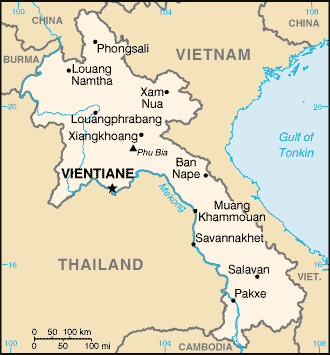
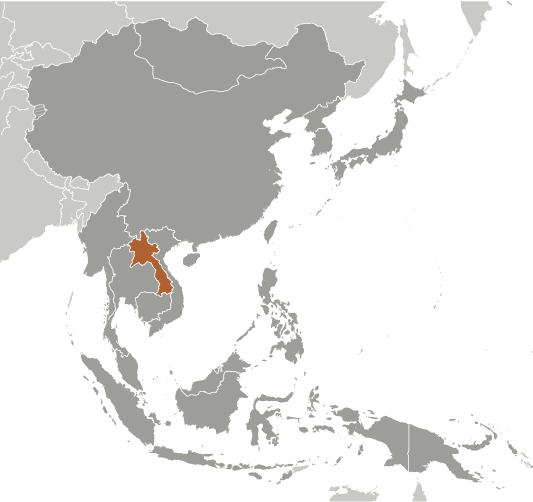
Vientiane
6,586,266 (July 2012 est.)
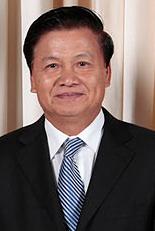
Thongsing Thammavong
Prime Minister since 24 December 2010
Prime Minister since 24 December 2010
President and vice president elected by National Assembly for
five-year terms; election last held 30 April 2011
Next scheduled election: 2016
five-year terms; election last held 30 April 2011
Next scheduled election: 2016
HEAD OF GOVERNMENT
SELECTION PROCESS
Prime Minister nominated by president and elected by National
Assembly for five-year term; Deputy Prime Ministers selected by
the President; election last held 30 April 2011
Next scheduled election: 2016
Assembly for five-year term; Deputy Prime Ministers selected by
the President; election last held 30 April 2011
Next scheduled election: 2016
| DECLARATION OF HUMAN RIGHTS |
| ETHNIC GROUPS |
Lao 55%, Khmou 11%, Hmong 8%, other (over 100 minor ethnic groups) 26% (2005 census)
| RELIGIONS |
Buddhist 67%, Christian 1.5%, other and unspecified 31.5% (2005 census)
| GOVERNMENT STRUCTURE |
Communist state with 16 provinces (khoueng, singular and plural) and 1 capital city (nakhon luang, singular and plural); Legal
system is based on traditional customs, French legal norms and procedures, and socialist practice; has not accepted compulsory
ICJ jurisdiction
Executive: Paramount ruler elected by and from the hereditary rulers of nine of the states for five-year terms; election last held on 3
30 April 2011 (next to be held in 2016); prime minister designated from among the members of the House of Representatives;
following legislative elections, the leader of the party that wins a plurality of seats in the House of Representatives becomes prime
minister
Legislative: Unicameral National Assembly (132 seats; members elected by popular vote from a list of candidates selected by the
Lao People's Revolutionary Party to serve five-year terms)
elections: last held 30 April 2011 (next to be held in 2016)
Judicial: People's Supreme Court (the president of the People's Supreme Court is elected by the National Assembly on the
recommendation of the National Assembly Standing Committee; the vice president of the People's Supreme Court and the judges
are appointed by the National Assembly Standing Committee)
system is based on traditional customs, French legal norms and procedures, and socialist practice; has not accepted compulsory
ICJ jurisdiction
Executive: Paramount ruler elected by and from the hereditary rulers of nine of the states for five-year terms; election last held on 3
30 April 2011 (next to be held in 2016); prime minister designated from among the members of the House of Representatives;
following legislative elections, the leader of the party that wins a plurality of seats in the House of Representatives becomes prime
minister
Legislative: Unicameral National Assembly (132 seats; members elected by popular vote from a list of candidates selected by the
Lao People's Revolutionary Party to serve five-year terms)
elections: last held 30 April 2011 (next to be held in 2016)
Judicial: People's Supreme Court (the president of the People's Supreme Court is elected by the National Assembly on the
recommendation of the National Assembly Standing Committee; the vice president of the People's Supreme Court and the judges
are appointed by the National Assembly Standing Committee)
| LANGUAGES |
Lao (official), French, English, and various ethnic languages
| BRIEF HISTORY |
The earliest Lao legal document (and the earliest sociological evidence about the existence of the Lao people) is known as "the laws
of Khun Borom" (also spelled "Khun Bulom"), still preserved in manuscript form. This set of memoriter laws is written in a type of
indigenous blank verse, and reflects the state of proto-Lao society as early as the 9th century, possibly prior to their adoption of
Theravada Buddhism, and prior to (or coeval with) their southward migration into the territory now comprising modern Laos (from
North-Western Vietnam). While most Lao people regard Borom/Bulom as a subject of myth only, Western scholars regard him as
an historical figure, albeit there is very little factually known about him aside from the fact of his bare existence and the description of
a very primitive kingdom in his laws. In general terms, these ancient laws describe an agrarian society in which life revolves around
subsistence agriculture with domesticated water-buffaloes (the gayal). The strict punishments set down for stealing or killing a
neighbor's elephant reflect that these were (evidently) an expensive and important possession of the time. The official History of
Laos as introduced in government textbooks, is conventionally traced to the establishment of the kingdom of Lan Xang by Fa Ngum
in 1353. This is a relatively conservative date to begin the history of the nation, providing a contrast to the course taken by Thai
historiography (which reaches back implausibly far into proto-history). By the 14th century, when this "official history" begins, the
speakers of early Lao-related languages ("Tai-Kadai")had probably developed a reasonable base of population among the prior
inhabitants of (what is now) Laos over the prior century or two. The earlier inhabitation of the land by peoples such as the Mon
kingdom of Dvaravati and Proto-Khmer peoples was given a great deal of emphasis in the histories of Laos written during the
French colonial period. However, post-colonial historiography has instead sought to represent all peoples of Laos as equally
"indigenous", relating the early history in terms of a complex interaction with the (admittedly more ancient) Cambodian kingdoms to
the south, and praising the Proto-Khmer as Lao nationalists for their heroism and modern struggles against the French and
Americans (see, e.g., the Ong Keo Rebellion starting circa 1902). Both French colonial history and post-colonial (Communist)
history sought to reverse the obvious racism of earlier, popular accounts that when the Lao migrated into the country, they simply
conquered and enslaved the native inhabitants (viz., primarily Proto-Khmer people, described in such a context with the derogatory
term "Kha-That"). It is generally assumed that, as late as the 16th century, King Photisarath helped establish Theravada Buddhism
as the predominant religion of the country. However, this aspect of official history may now have to change given recent
archaeological discoveries in Cambodia and Vietnam, showing intact Pali inscriptions as early as the 9th century. (See: JPTS, Vol.
XXIII, 1997: Peter Skilling, "New Paali Inscriptions from Southeast Asia") While there can be no doubt that animism and fragments
of Shiva-worship were popular in ancient Laos, evidence increasingly indicates a long, gradual process leading to the ascendancy of
Buddhism (rather than a single king converting the country). The reverse also did occur, as with the historical layers of statuary and
inscriptions at Wat Phu Champassak; the oldest are in Sanskrit, and worship Shiva, while the later evidence is Buddhist,
subsequently reverting to animism (with the most recent statues simply depicting giant elephants and lizards, with no references to
the organized religions of India, and neither Sanskrit nor Pali text). It is significant to note that all of these official histories exclude the
(possible and actual) influence of Chinese religion in the region. In fact, the ancient Lao calendar and Thai calendar are both of
Chinese origin (adapted from the "Heavenly Stem Branch Calendar"), and do not reflect Indian cosmology. These calendars were
both part of the royal religion (preserved in epigraphy) and, apparently, part of popular religion (fortune telling) for centuries. In the
17th century Lan Xang entered a period of decline and the late 18th century Siam (now Thailand) established control over much of
what is now Laos. The region was divided into three dependent states centered on Luang Prabang in the north, Vientiane in the
center, and Champassak in the south. The Vientiane Lao rebelled in 1828 but were defeated, and the area incorporated into Siam.
Following its occupation of Vietnam, France absorbed Laos into French Indochina via treaties with Siam in 1893 and 1904. During
World War II, the Japanese occupied French Indochina. When Japan surrendered, Lao nationalists declared Laos independent, but
by early 1946, French troops had reoccupied the country and conferred limited autonomy on Laos. During the First Indochina War,
the Indochinese Communist Party formed the Pathet Lao resistance organization committed to Lao independence. Laos gained full
independence following the French defeat by the Vietnamese communists and the subsequent Geneva peace conference in 1954.
Elections were held in 1955, and the first coalition government, led by Prince Souvanna Phouma, was formed in 1957. The coalition
government collapsed in 1958 under pressure from the United States. In 1960 Captain Kong Lae staged a coup when the cabinet
was away at the royal capital of Luang Prabang and demanded reformation of a neutralist government. The second coalition
government, once again led by Souvanna Phouma, was not successful in holding power. Rightist forces under General Phoumi
Nosavan drove out the neutralist government from power later that same year. A second Geneva conference, held in 1961-62,
provided for the independence and neutrality of Laos, but the agreement was subverted by both the United States and North
Vietnam and the war soon resumed. The government and army of Laos were generally neutral during the conflict. The United States
and North Vietnam subverted the agreement by forming private proxy armies. Growing American and North Vietnamese military
presence in the country increasingly drew Laos into the Second Indochina War (1954-1975). For nearly a decade, eastern Laos
was subjected to the heaviest bombing in the history of warfare, as the U.S. sought to destroy the Ho Chi Minh Trail that passed
through Laos. The country was also repeatedly invaded by Vietnam. Shortly after the Paris Peace Accords led to the withdrawal of
U.S. forces from Vietnam, a ceasefire between the Pathet Lao and the government led to a new coalition government. However,
North Vietnam never really withdrew from Laos and the Pathet Lao remained little more than a proxy army for Vietnamese
interests. After the fall of South Vietnam to communist forces in April 1975, the Pathet Lao with the backing of North Vietnam were
able to take total power with little resistance. On December 2, 1975, the king was forced to abdicate his throne and the Lao
People's Democratic Republic was established. The new communist government led by Kaysone Phomvihane imposed centralized
economic decision-making and incarcerated many members of the previous government and military in "re-education camps" which
also included the Hmongs. While nominally independent, the communist government was for many years effectively little more than a
puppet regime run from Vietnam. The government's policies prompted about 10 percent of the Lao population to leave the country.
Laos depended heavily on Soviet aid channeled through Vietnam up until the Soviet collapse in 1991. In the 1990s the communist
party gave up centralised management of the economy but still has a monopoly of political power. The abandonment of
collectivisation and the relaxation of discipline brought with them new problems, which grew worse the longer the communist party
enjoyed a monopoly of power. These included increasing corruption and nepotism (a traditional feature of Lao political life), as
ideological commitment faded and self-interest arose to replace it as the major motivation for seeking and holding office. The
communist party retains a monopoly of political power, but leaves the operation of the economy to market forces, and does not
interfere in the daily lives of the Lao people provided they do not challenge its rule. Attempts to police the religious, cultural,
economic and sexual activities of the people have been largely abandoned, although Christian evangelism is officially discouraged. In
March 2006 Khamtai stepped down as Party leader and President, and was succeeded in both posts by Choummaly Sayasone,
aged a relatively youthful 70. Like Khamtai, Choummaly had a military background, and was generally seen as unlikely to initiate
major reforms. A parliamentary election was held in Laos on 30 April 2011. There were an additional 17 members of parliament
(with 132 seats in total) in comparison to the last election, to reflect population growth. An indirect presidential election was held in
Laos on 15 June 2011, following the opening ceremony of the newly elected assembly. Incumbent president Choummaly Sayasone
was reelected, as had been widely expected. On 27 Jun 2012, Laos has held its first ever gay pride event in what supporters hope
is a sign of softening social values in the small communist country.
Source: Wikipedia: History of Laos
of Khun Borom" (also spelled "Khun Bulom"), still preserved in manuscript form. This set of memoriter laws is written in a type of
indigenous blank verse, and reflects the state of proto-Lao society as early as the 9th century, possibly prior to their adoption of
Theravada Buddhism, and prior to (or coeval with) their southward migration into the territory now comprising modern Laos (from
North-Western Vietnam). While most Lao people regard Borom/Bulom as a subject of myth only, Western scholars regard him as
an historical figure, albeit there is very little factually known about him aside from the fact of his bare existence and the description of
a very primitive kingdom in his laws. In general terms, these ancient laws describe an agrarian society in which life revolves around
subsistence agriculture with domesticated water-buffaloes (the gayal). The strict punishments set down for stealing or killing a
neighbor's elephant reflect that these were (evidently) an expensive and important possession of the time. The official History of
Laos as introduced in government textbooks, is conventionally traced to the establishment of the kingdom of Lan Xang by Fa Ngum
in 1353. This is a relatively conservative date to begin the history of the nation, providing a contrast to the course taken by Thai
historiography (which reaches back implausibly far into proto-history). By the 14th century, when this "official history" begins, the
speakers of early Lao-related languages ("Tai-Kadai")had probably developed a reasonable base of population among the prior
inhabitants of (what is now) Laos over the prior century or two. The earlier inhabitation of the land by peoples such as the Mon
kingdom of Dvaravati and Proto-Khmer peoples was given a great deal of emphasis in the histories of Laos written during the
French colonial period. However, post-colonial historiography has instead sought to represent all peoples of Laos as equally
"indigenous", relating the early history in terms of a complex interaction with the (admittedly more ancient) Cambodian kingdoms to
the south, and praising the Proto-Khmer as Lao nationalists for their heroism and modern struggles against the French and
Americans (see, e.g., the Ong Keo Rebellion starting circa 1902). Both French colonial history and post-colonial (Communist)
history sought to reverse the obvious racism of earlier, popular accounts that when the Lao migrated into the country, they simply
conquered and enslaved the native inhabitants (viz., primarily Proto-Khmer people, described in such a context with the derogatory
term "Kha-That"). It is generally assumed that, as late as the 16th century, King Photisarath helped establish Theravada Buddhism
as the predominant religion of the country. However, this aspect of official history may now have to change given recent
archaeological discoveries in Cambodia and Vietnam, showing intact Pali inscriptions as early as the 9th century. (See: JPTS, Vol.
XXIII, 1997: Peter Skilling, "New Paali Inscriptions from Southeast Asia") While there can be no doubt that animism and fragments
of Shiva-worship were popular in ancient Laos, evidence increasingly indicates a long, gradual process leading to the ascendancy of
Buddhism (rather than a single king converting the country). The reverse also did occur, as with the historical layers of statuary and
inscriptions at Wat Phu Champassak; the oldest are in Sanskrit, and worship Shiva, while the later evidence is Buddhist,
subsequently reverting to animism (with the most recent statues simply depicting giant elephants and lizards, with no references to
the organized religions of India, and neither Sanskrit nor Pali text). It is significant to note that all of these official histories exclude the
(possible and actual) influence of Chinese religion in the region. In fact, the ancient Lao calendar and Thai calendar are both of
Chinese origin (adapted from the "Heavenly Stem Branch Calendar"), and do not reflect Indian cosmology. These calendars were
both part of the royal religion (preserved in epigraphy) and, apparently, part of popular religion (fortune telling) for centuries. In the
17th century Lan Xang entered a period of decline and the late 18th century Siam (now Thailand) established control over much of
what is now Laos. The region was divided into three dependent states centered on Luang Prabang in the north, Vientiane in the
center, and Champassak in the south. The Vientiane Lao rebelled in 1828 but were defeated, and the area incorporated into Siam.
Following its occupation of Vietnam, France absorbed Laos into French Indochina via treaties with Siam in 1893 and 1904. During
World War II, the Japanese occupied French Indochina. When Japan surrendered, Lao nationalists declared Laos independent, but
by early 1946, French troops had reoccupied the country and conferred limited autonomy on Laos. During the First Indochina War,
the Indochinese Communist Party formed the Pathet Lao resistance organization committed to Lao independence. Laos gained full
independence following the French defeat by the Vietnamese communists and the subsequent Geneva peace conference in 1954.
Elections were held in 1955, and the first coalition government, led by Prince Souvanna Phouma, was formed in 1957. The coalition
government collapsed in 1958 under pressure from the United States. In 1960 Captain Kong Lae staged a coup when the cabinet
was away at the royal capital of Luang Prabang and demanded reformation of a neutralist government. The second coalition
government, once again led by Souvanna Phouma, was not successful in holding power. Rightist forces under General Phoumi
Nosavan drove out the neutralist government from power later that same year. A second Geneva conference, held in 1961-62,
provided for the independence and neutrality of Laos, but the agreement was subverted by both the United States and North
Vietnam and the war soon resumed. The government and army of Laos were generally neutral during the conflict. The United States
and North Vietnam subverted the agreement by forming private proxy armies. Growing American and North Vietnamese military
presence in the country increasingly drew Laos into the Second Indochina War (1954-1975). For nearly a decade, eastern Laos
was subjected to the heaviest bombing in the history of warfare, as the U.S. sought to destroy the Ho Chi Minh Trail that passed
through Laos. The country was also repeatedly invaded by Vietnam. Shortly after the Paris Peace Accords led to the withdrawal of
U.S. forces from Vietnam, a ceasefire between the Pathet Lao and the government led to a new coalition government. However,
North Vietnam never really withdrew from Laos and the Pathet Lao remained little more than a proxy army for Vietnamese
interests. After the fall of South Vietnam to communist forces in April 1975, the Pathet Lao with the backing of North Vietnam were
able to take total power with little resistance. On December 2, 1975, the king was forced to abdicate his throne and the Lao
People's Democratic Republic was established. The new communist government led by Kaysone Phomvihane imposed centralized
economic decision-making and incarcerated many members of the previous government and military in "re-education camps" which
also included the Hmongs. While nominally independent, the communist government was for many years effectively little more than a
puppet regime run from Vietnam. The government's policies prompted about 10 percent of the Lao population to leave the country.
Laos depended heavily on Soviet aid channeled through Vietnam up until the Soviet collapse in 1991. In the 1990s the communist
party gave up centralised management of the economy but still has a monopoly of political power. The abandonment of
collectivisation and the relaxation of discipline brought with them new problems, which grew worse the longer the communist party
enjoyed a monopoly of power. These included increasing corruption and nepotism (a traditional feature of Lao political life), as
ideological commitment faded and self-interest arose to replace it as the major motivation for seeking and holding office. The
communist party retains a monopoly of political power, but leaves the operation of the economy to market forces, and does not
interfere in the daily lives of the Lao people provided they do not challenge its rule. Attempts to police the religious, cultural,
economic and sexual activities of the people have been largely abandoned, although Christian evangelism is officially discouraged. In
March 2006 Khamtai stepped down as Party leader and President, and was succeeded in both posts by Choummaly Sayasone,
aged a relatively youthful 70. Like Khamtai, Choummaly had a military background, and was generally seen as unlikely to initiate
major reforms. A parliamentary election was held in Laos on 30 April 2011. There were an additional 17 members of parliament
(with 132 seats in total) in comparison to the last election, to reflect population growth. An indirect presidential election was held in
Laos on 15 June 2011, following the opening ceremony of the newly elected assembly. Incumbent president Choummaly Sayasone
was reelected, as had been widely expected. On 27 Jun 2012, Laos has held its first ever gay pride event in what supporters hope
is a sign of softening social values in the small communist country.
Source: Wikipedia: History of Laos
| ECONOMIC OVERVIEW |
The government of Laos, one of the few remaining one-party communist states, began decentralizing control and encouraging
private enterprise in 1986. The results, starting from an extremely low base, were striking - growth averaged 6% per year from
1988-2008 except during the short-lived drop caused by the Asian financial crisis that began in 1997. Laos' growth exceeded 7%
per year during 2008-12. Despite this high growth rate, Laos remains a country with an underdeveloped infrastructure, particularly
in rural areas. It has a basic, but improving, road system, and limited external and internal land-line telecommunications. Electricity is
available in urban areas and in many rural districts. Laos' economy continues to rely on subsistence agriculture, dominated by rice
cultivation in lowland areas, which accounts for about 30% of GDP and 75% of total employment. Economic growth has reduced
official poverty rates from 46% in 1992 to 26% in 2010. The economy also has benefited from high-profile foreign direct investment
in hydropower, copper and gold mining, and construction though some projects have drawn criticism for their environmental
impacts. Laos gained Normal Trade Relations status with the US in 2004. On the fiscal side, Laos initiated a VAT tax system in
2010. Simplified investment procedures and expanded bank credits for small farmers and small entrepreneurs will improve Laos'
economic prospects. The government appears committed to raising the country's profile among investors, opening the country's first
stock exchange in 2011 and participating in regional economic cooperation initiatives. Laos was admitted to the WTO in 2012. The
World Bank has declared that Laos' goal of graduating from the UN Development Program's list of least-developed countries by
2020 is achievable.
Source: CIA World Factbook (select Laos)
private enterprise in 1986. The results, starting from an extremely low base, were striking - growth averaged 6% per year from
1988-2008 except during the short-lived drop caused by the Asian financial crisis that began in 1997. Laos' growth exceeded 7%
per year during 2008-12. Despite this high growth rate, Laos remains a country with an underdeveloped infrastructure, particularly
in rural areas. It has a basic, but improving, road system, and limited external and internal land-line telecommunications. Electricity is
available in urban areas and in many rural districts. Laos' economy continues to rely on subsistence agriculture, dominated by rice
cultivation in lowland areas, which accounts for about 30% of GDP and 75% of total employment. Economic growth has reduced
official poverty rates from 46% in 1992 to 26% in 2010. The economy also has benefited from high-profile foreign direct investment
in hydropower, copper and gold mining, and construction though some projects have drawn criticism for their environmental
impacts. Laos gained Normal Trade Relations status with the US in 2004. On the fiscal side, Laos initiated a VAT tax system in
2010. Simplified investment procedures and expanded bank credits for small farmers and small entrepreneurs will improve Laos'
economic prospects. The government appears committed to raising the country's profile among investors, opening the country's first
stock exchange in 2011 and participating in regional economic cooperation initiatives. Laos was admitted to the WTO in 2012. The
World Bank has declared that Laos' goal of graduating from the UN Development Program's list of least-developed countries by
2020 is achievable.
Source: CIA World Factbook (select Laos)
| POLITICAL CLIMATE |
The politics of Laos takes place in a framework of a single-party socialist republic. The only legal political party is the Lao People's
Revolutionary Party (LPRP). The head of state is President Choummaly Sayasone, who also is secretary-general (leader) of the
LPRP. The head of government is Prime Minister Bouasone Bouphavanh. Government policies are determined by the party through
the all-powerful nine-member Politburo and the 49-member Central Committee. Important government decisions are vetted by the
Council of Ministers.
Laos' first, French-written and monarchical constitution was promulgated on May 11, 1947 and declared it to be an independent
state within the French Union. The revised constitution of May 11, 1957 omitted reference to the French Union, though close
educational, health and technical ties with the former colonial power persisted. The 1957 document was abrogated on December 3,
1975, when a communist People's Republic was proclaimed. A new constitution was adopted in 1991 and enshrined a "leading
role" for the LPRP. The following year, elections were held for a new 85-seat National Assembly with members elected by secret
ballot to five-year terms. This National Assembly, which essentially acts as a rubber stamp for the LPRP, approves all new laws,
although the executive branch retains authority to issue binding decrees. The most recent elections took place in April 2006. The
assembly was expanded to 99 members in 1997 and in 2006 elections had 115.
The FY 2000 central government budget plan called for revenue of $180 million and expenditures of $289 million, including capital
expenditures of $202 million.
In recent years bomb attacks against the government have occurred, coupled with small exchanges of fire, across Laos. A variety of
different groups have claimed responsibility including the Committee for Independence and Democracy in Laos and Lao Citizens
Movement for Democracy.
A parliamentary election was held in Laos on 30 April 2011. There were an additional 17 members of parliament (with 132 seats in
total) in comparison to the last election, to reflect population growth. An indirect presidential election was held in Laos on 15 June
2011, following the opening ceremony of the newly elected assembly. Incumbent president Choummaly Sayasone was reelected, as
had been widely expected.
Source: Wikipedia: Politics of Laos
Revolutionary Party (LPRP). The head of state is President Choummaly Sayasone, who also is secretary-general (leader) of the
LPRP. The head of government is Prime Minister Bouasone Bouphavanh. Government policies are determined by the party through
the all-powerful nine-member Politburo and the 49-member Central Committee. Important government decisions are vetted by the
Council of Ministers.
Laos' first, French-written and monarchical constitution was promulgated on May 11, 1947 and declared it to be an independent
state within the French Union. The revised constitution of May 11, 1957 omitted reference to the French Union, though close
educational, health and technical ties with the former colonial power persisted. The 1957 document was abrogated on December 3,
1975, when a communist People's Republic was proclaimed. A new constitution was adopted in 1991 and enshrined a "leading
role" for the LPRP. The following year, elections were held for a new 85-seat National Assembly with members elected by secret
ballot to five-year terms. This National Assembly, which essentially acts as a rubber stamp for the LPRP, approves all new laws,
although the executive branch retains authority to issue binding decrees. The most recent elections took place in April 2006. The
assembly was expanded to 99 members in 1997 and in 2006 elections had 115.
The FY 2000 central government budget plan called for revenue of $180 million and expenditures of $289 million, including capital
expenditures of $202 million.
In recent years bomb attacks against the government have occurred, coupled with small exchanges of fire, across Laos. A variety of
different groups have claimed responsibility including the Committee for Independence and Democracy in Laos and Lao Citizens
Movement for Democracy.
A parliamentary election was held in Laos on 30 April 2011. There were an additional 17 members of parliament (with 132 seats in
total) in comparison to the last election, to reflect population growth. An indirect presidential election was held in Laos on 15 June
2011, following the opening ceremony of the newly elected assembly. Incumbent president Choummaly Sayasone was reelected, as
had been widely expected.
Source: Wikipedia: Politics of Laos
| INTERNATIONAL DISPUTES |
Southeast Asian states have enhanced border surveillance to check the spread of avian flu; talks continue on completion of
demarcation with Thailand but disputes remain over islands in the Mekong River; concern among Mekong Commission members
that China's construction of dams on the Mekong River will affect water levels
demarcation with Thailand but disputes remain over islands in the Mekong River; concern among Mekong Commission members
that China's construction of dams on the Mekong River will affect water levels


| REFUGEES AND INTERNALLY DISPLACED PERSONS (IDPS) |
None reported.
| ILLICIT DRUGS |
Estimated opium poppy cultivation in 2008 was 1,900 hectares, about a 73% increase from 2007; estimated potential opium
production in 2008 more than tripled to 17 metric tons; unsubstantiated reports of domestic methamphetamine production;
growing domestic methamphetamine problem (2007)
production in 2008 more than tripled to 17 metric tons; unsubstantiated reports of domestic methamphetamine production;
growing domestic methamphetamine problem (2007)
| HUMAN RIGHTS STATEMENTS, ANALYSIS AND CRITIQUES |
2011 Human Rights Report: Laos
Bureau of Democracy, Human Rights, and Labor
2011 Country Reports on Human Rights Practices
May 25, 2012
The Lao People’s Democratic Republic is an authoritarian state ruled by the only party that the constitution legitimizes, the Lao People’s
Revolutionary Party (LPRP). The most recent National Assembly election was held on April 30, and almost all candidates were LPRP
members vetted by the party. Security forces reported to civilian authorities.
The most significant human rights problems were that the government continued to deny citizens the right to change their government,
prison conditions were harsh and at times life-threatening, and corruption in the police and judiciary persisted.
Other human rights problems included some police and security force abuse of prisoners and detainees; arbitrary arrest and detention;
government infringements on freedom of speech, the press, assembly, and association, as well as the right to privacy; government
restrictions on academic freedom; local restrictions on religious freedom; trafficking in persons; societal discrimination on the basis of
sexual orientation and against persons with HIV/AIDS; and government restrictions on worker rights.
The government did not take steps to prosecute and punish officials who committed abuses, and members of the police acted with
impunity.
Click here to read more »
Bureau of Democracy, Human Rights, and Labor
2011 Country Reports on Human Rights Practices
May 25, 2012
The Lao People’s Democratic Republic is an authoritarian state ruled by the only party that the constitution legitimizes, the Lao People’s
Revolutionary Party (LPRP). The most recent National Assembly election was held on April 30, and almost all candidates were LPRP
members vetted by the party. Security forces reported to civilian authorities.
The most significant human rights problems were that the government continued to deny citizens the right to change their government,
prison conditions were harsh and at times life-threatening, and corruption in the police and judiciary persisted.
Other human rights problems included some police and security force abuse of prisoners and detainees; arbitrary arrest and detention;
government infringements on freedom of speech, the press, assembly, and association, as well as the right to privacy; government
restrictions on academic freedom; local restrictions on religious freedom; trafficking in persons; societal discrimination on the basis of
sexual orientation and against persons with HIV/AIDS; and government restrictions on worker rights.
The government did not take steps to prosecute and punish officials who committed abuses, and members of the police acted with
impunity.
Click here to read more »
9 March 2012
Committee on the Elimination of Racial Discrimination
Eightieth session
13 February–9 March 2012
Consideration of reports submitted by States parties under article 9 of the convention
Concluding observations of the Committee on the Elimination of Racial Discrimination
Lao People’s Democratic Republic
A. Introduction
2. The Committee welcomes the submission of the combined sixteenth to eighteenth periodic reports which comply with the Committee’
s revised guidelines for the preparation of treaty-specific reports, and of the common core document. The Committee also welcomes the
open and frank dialogue with the high-level delegation of the State party as well as the responses given to the issues raised by Committee
members during the dialogue.
B. Positive aspects
3. The Committee notes the legislative and policy measures taken by the State party which contribute to combating racial discrimination,
including:
(a) The adoption in 2009 of the Prime Minister’s Decree on Associations;
(b) The adoption in 2009 of the Master Plan on Development of the Rule of Law in Laos toward 2020;
(c) The scientific study undertaken on the ethnic composition of the State party’s population which has led to the formal recognition of
49 ethnicities classified into 4 ethno-linguistic groups.
C. Concerns and recommendations
6. While noting the provisions of article 176 of the State party’s Criminal Code on discrimination against ethnic persons as well as the
various non-discrimination articles contained in other laws, such as those in the Labour Law and the Law on Health Care, the Committee
remains concerned that they do not include all elements of the definition of racial discrimination under article 1 of the Convention. (art. 1,
2).
The Committee recommends that the State party introduce in its legislation a comprehensive definition of racial discrimination, fully in
accordance with article 1 of the Convention, prohibiting discrimination on the basis of race, colour, descent, or national or ethnic origin.
The Committee also recommends that the State party define direct and indirect discrimination in its civil and administrative laws.
Click here to read more »
Committee on the Elimination of Racial Discrimination
Eightieth session
13 February–9 March 2012
Consideration of reports submitted by States parties under article 9 of the convention
Concluding observations of the Committee on the Elimination of Racial Discrimination
Lao People’s Democratic Republic
A. Introduction
2. The Committee welcomes the submission of the combined sixteenth to eighteenth periodic reports which comply with the Committee’
s revised guidelines for the preparation of treaty-specific reports, and of the common core document. The Committee also welcomes the
open and frank dialogue with the high-level delegation of the State party as well as the responses given to the issues raised by Committee
members during the dialogue.
B. Positive aspects
3. The Committee notes the legislative and policy measures taken by the State party which contribute to combating racial discrimination,
including:
(a) The adoption in 2009 of the Prime Minister’s Decree on Associations;
(b) The adoption in 2009 of the Master Plan on Development of the Rule of Law in Laos toward 2020;
(c) The scientific study undertaken on the ethnic composition of the State party’s population which has led to the formal recognition of
49 ethnicities classified into 4 ethno-linguistic groups.
C. Concerns and recommendations
6. While noting the provisions of article 176 of the State party’s Criminal Code on discrimination against ethnic persons as well as the
various non-discrimination articles contained in other laws, such as those in the Labour Law and the Law on Health Care, the Committee
remains concerned that they do not include all elements of the definition of racial discrimination under article 1 of the Convention. (art. 1,
2).
The Committee recommends that the State party introduce in its legislation a comprehensive definition of racial discrimination, fully in
accordance with article 1 of the Convention, prohibiting discrimination on the basis of race, colour, descent, or national or ethnic origin.
The Committee also recommends that the State party define direct and indirect discrimination in its civil and administrative laws.
Click here to read more »
All Efforts Should be Made to Locate Missing Laotian Activist
Dec 19 2012 - 4:36pm
Freedom House expresses deep concern about the disappearance of Laotian anti-poverty activist and former director of the Participatory
Development Training Centre, Sombath Somphone, who has been missing since he was reportedly detained by authorities on Saturday,
December 15. Security footage made available to his wife shows Somphone being driven away from the Vientiane police station by two
plainclothes officers on Saturday evening. Somphone’s disappearance falls on the heels of the expulsion of the Swiss development
organization Helvetas’s country director, Anne-Sophie Gindroz. Authorities told Gindroz to leave Laos after she sent a letter to her
organization’s donors criticizing the government’s for its repression of civil society and for creating a difficult operating environment for
Helvetas and other development NGOs.
Freedom House calls for the immediate release of Somphone, and urges the US government to press for the same with its Laotian
counterparts.
Somphone’s work on poverty reduction and economic development has garnered international praise, including the Ramon Magsaysay
Award for Community Leadership award in 2005. While his work highlights the need for economic and political reform, it is not overtly
critical of the government and questions remain about the government’s motive for his detention.
Freedom House consistently places Laos - a one-party communist state - among the world’s most repressive societies, as the
government stifles political dissent and the civil sphere is closely monitored.
Click here to read more »
Dec 19 2012 - 4:36pm
Freedom House expresses deep concern about the disappearance of Laotian anti-poverty activist and former director of the Participatory
Development Training Centre, Sombath Somphone, who has been missing since he was reportedly detained by authorities on Saturday,
December 15. Security footage made available to his wife shows Somphone being driven away from the Vientiane police station by two
plainclothes officers on Saturday evening. Somphone’s disappearance falls on the heels of the expulsion of the Swiss development
organization Helvetas’s country director, Anne-Sophie Gindroz. Authorities told Gindroz to leave Laos after she sent a letter to her
organization’s donors criticizing the government’s for its repression of civil society and for creating a difficult operating environment for
Helvetas and other development NGOs.
Freedom House calls for the immediate release of Somphone, and urges the US government to press for the same with its Laotian
counterparts.
Somphone’s work on poverty reduction and economic development has garnered international praise, including the Ramon Magsaysay
Award for Community Leadership award in 2005. While his work highlights the need for economic and political reform, it is not overtly
critical of the government and questions remain about the government’s motive for his detention.
Freedom House consistently places Laos - a one-party communist state - among the world’s most repressive societies, as the
government stifles political dissent and the civil sphere is closely monitored.
Click here to read more »
Laos: Summit leaders should urge student protesters' release
2012-11-05
The international community must demand the immediate release of three Lao student activists who have been imprisoned since 1999 for
peacefully protesting, Amnesty International said as European and Asian heads of state gather in Laos for the 9th Asia-Europe Meeting
Summit (ASEM 9).
On 26 October 1999, police in Laos’ capital Vientiane arrested Thongpaseuth Keuakoun, now aged 52, Seng-Aloun Phengphanh, now
40, and Bouavanh Chanhmanivong, now 52, along with several other students and teachers for trying to peacefully display posters
calling for economic, political and social change in the south-east Asian country. The three men were subsequently tried on treason
charges and have been imprisoned ever since.
“It is shameful that these men arrested as students have been behind bars for 13 years for simply exercising their right to freedom of
expression. The international community must use the ASEM summit to pressure the Lao government to free them immediately, and to
end all other restriction of dissenting views,” said Rupert Abbott, Amnesty International’s Researcher on Laos.
“Amnesty International considers the three men prisoners of conscience.”
The rights to freedom of expression, association and assembly are protected in the Lao Constitution and in the International Covenant on
Civil and Political Rights, to which Laos is a state party.
Thongpaseuth Keuakoun founded the Lao Students Movement for Democracy (LSMD) in February 1998, and recruited others including
Seng-Aloun Phengphanh and Bouavanh Chanhmanivong.
Amnesty International had in 2003 received information that the three men were sentenced to up to 10 years’ imprisonment, but the Lao
authorities in 2009 said that the men were given 20-year sentences. They are held in Vientiane’s Samkhe prison, Laos’ main detention
facility, where conditions are harsh.
Khamphouvieng Sisaath, another student protester arrested along with the three men, died in prison in September 2001 as a result of
punishment inflicted by prison guards. Another, Keochay, was released in 2002.
“There should be an independent investigation into the death in custody of Khamphouvieng Sisaath, and those found responsible must be
held accountable,” said Abbott.
Click here to read more »
2012-11-05
The international community must demand the immediate release of three Lao student activists who have been imprisoned since 1999 for
peacefully protesting, Amnesty International said as European and Asian heads of state gather in Laos for the 9th Asia-Europe Meeting
Summit (ASEM 9).
On 26 October 1999, police in Laos’ capital Vientiane arrested Thongpaseuth Keuakoun, now aged 52, Seng-Aloun Phengphanh, now
40, and Bouavanh Chanhmanivong, now 52, along with several other students and teachers for trying to peacefully display posters
calling for economic, political and social change in the south-east Asian country. The three men were subsequently tried on treason
charges and have been imprisoned ever since.
“It is shameful that these men arrested as students have been behind bars for 13 years for simply exercising their right to freedom of
expression. The international community must use the ASEM summit to pressure the Lao government to free them immediately, and to
end all other restriction of dissenting views,” said Rupert Abbott, Amnesty International’s Researcher on Laos.
“Amnesty International considers the three men prisoners of conscience.”
The rights to freedom of expression, association and assembly are protected in the Lao Constitution and in the International Covenant on
Civil and Political Rights, to which Laos is a state party.
Thongpaseuth Keuakoun founded the Lao Students Movement for Democracy (LSMD) in February 1998, and recruited others including
Seng-Aloun Phengphanh and Bouavanh Chanhmanivong.
Amnesty International had in 2003 received information that the three men were sentenced to up to 10 years’ imprisonment, but the Lao
authorities in 2009 said that the men were given 20-year sentences. They are held in Vientiane’s Samkhe prison, Laos’ main detention
facility, where conditions are harsh.
Khamphouvieng Sisaath, another student protester arrested along with the three men, died in prison in September 2001 as a result of
punishment inflicted by prison guards. Another, Keochay, was released in 2002.
“There should be an independent investigation into the death in custody of Khamphouvieng Sisaath, and those found responsible must be
held accountable,” said Abbott.
Click here to read more »
Laos: End Silence on ‘Disappeared’ Activist
ASEAN Should Intervene on Behalf of Sombath Somphone
February 19, 2013
(Bangkok) – Lao authorities have failed to provide information on leading social activist Sombath Somphone since his apparent enforced
disappearance in December 2012, Human Rights Watch said today.
The Association of Southeast Asian Nations (ASEAN) and its human rights commission should intervene in the case with the Lao
authorities, who have denied detaining Sombath, and who have not reported his fate or location.
“The Lao government’s long silence about Sombath Somphone’s whereabouts increase our concerns for his safety,” said Brad Adams,
Asia director. “The authorities seem more focused on deflecting international criticism than genuinely investigating Sombath’s
disappearance.”
There is strong evidence that Sombath, a prominent 60-year-old social activist who received the Ramon Magsaysay Award for
Community Leadership in 2005, was forcibly disappeared by Laotian authorities in Vientiane, the capital, more than two months ago. He
was last seen by his wife, Ng Shui Meng, on December 15 as they were driving separately back from his office to their home for dinner.
Shiu Meng lost sight of Sombath’s jeep at around 6 p.m. near the police post on Thadeua Road (KM 3) in Vientiane, and he never arrived
home.
Security camera footage from the Municipality Police Station, obtained by Shui Meng, shows that Sombath’s jeep was stopped by
police at the Thadeua police post at 6:03 p.m. Sombath was then taken into the police post. Later, a motorcyclist stopped at the police
post and drove off with Sombath’s jeep, leaving his own motorcycle by the roadside. Another truck with flashing lights then came and
stopped at the police post. Two people got out of the truck, took Sombath into the vehicle, and then drove off.
On December 19, the Lao Ministry of Foreign Affairs issued a statement confirming the incidents as recorded on the security camera,
but claimed he was kidnapped for personal or business reasons. Lao authorities have told Sombath’s family, foreign diplomats, United
Nations agencies, and civil society groups across Asia that they have been investigating the case. But to date, they have provided no
information on Sombath’s whereabouts, his fate, or who was responsible for his enforced disappearance.
“Lao authorities have not answered the simplest questions about this case, such as why, if Sombath was kidnapped, did the police at the
scene do nothing to protect him,” Adams said. “The absence of any real investigation points to the government’s responsibility.”
Click here to read more »
ASEAN Should Intervene on Behalf of Sombath Somphone
February 19, 2013
(Bangkok) – Lao authorities have failed to provide information on leading social activist Sombath Somphone since his apparent enforced
disappearance in December 2012, Human Rights Watch said today.
The Association of Southeast Asian Nations (ASEAN) and its human rights commission should intervene in the case with the Lao
authorities, who have denied detaining Sombath, and who have not reported his fate or location.
“The Lao government’s long silence about Sombath Somphone’s whereabouts increase our concerns for his safety,” said Brad Adams,
Asia director. “The authorities seem more focused on deflecting international criticism than genuinely investigating Sombath’s
disappearance.”
There is strong evidence that Sombath, a prominent 60-year-old social activist who received the Ramon Magsaysay Award for
Community Leadership in 2005, was forcibly disappeared by Laotian authorities in Vientiane, the capital, more than two months ago. He
was last seen by his wife, Ng Shui Meng, on December 15 as they were driving separately back from his office to their home for dinner.
Shiu Meng lost sight of Sombath’s jeep at around 6 p.m. near the police post on Thadeua Road (KM 3) in Vientiane, and he never arrived
home.
Security camera footage from the Municipality Police Station, obtained by Shui Meng, shows that Sombath’s jeep was stopped by
police at the Thadeua police post at 6:03 p.m. Sombath was then taken into the police post. Later, a motorcyclist stopped at the police
post and drove off with Sombath’s jeep, leaving his own motorcycle by the roadside. Another truck with flashing lights then came and
stopped at the police post. Two people got out of the truck, took Sombath into the vehicle, and then drove off.
On December 19, the Lao Ministry of Foreign Affairs issued a statement confirming the incidents as recorded on the security camera,
but claimed he was kidnapped for personal or business reasons. Lao authorities have told Sombath’s family, foreign diplomats, United
Nations agencies, and civil society groups across Asia that they have been investigating the case. But to date, they have provided no
information on Sombath’s whereabouts, his fate, or who was responsible for his enforced disappearance.
“Lao authorities have not answered the simplest questions about this case, such as why, if Sombath was kidnapped, did the police at the
scene do nothing to protect him,” Adams said. “The absence of any real investigation points to the government’s responsibility.”
Click here to read more »
Statement by His Excellency Dr. Thongloun SISOULITH,
Deputy Prime Minister and Minister of Foreign Affairs of the Lao PDR
at the 67th Session of the General Assembly of the United Nations,
New York, 28 September 2012
Mr. President,
In the current context, regional organizations have played an increasingly important role in addressing the global issues. For that matter,
more countries in the world have attached greater importance to ASEAN and the ever expanding ASEAN-initiated frameworks of
cooperation. ASEAN is entering a crucial stage in implementing the commitment of the ASEAN Leaders to establish an ASEAN
Community comprising 3 pillars, namely: political-security community, economic community and social-cultural community by 2015. By
utilizing its own resources combined with external support, especially from its dialogue partners, it is my firm belief that ASEAN will be
able to realize its ultimate goal of turning ASEAN into a community that is politically stable, economically integrated and socially and
culturally harmonious, thus contributing to the cause of peace and prosperity in the region and the world at large.
As a member of the international community, the Lao PDR has exerted its utmost efforts in fulfilling its international obligations by
continuing to pursue the policy of cooperation with all countries the world over based on the principles of equality, mutual benefit,
respect for national independence, sovereignty, and non-interference in each other’s internal affairs thus creating international
environment conducive for national development. During the past year, despite numerous challenges, the Lao PDR has continued to
endure political stability and social order. The national economy has grown gradually at an average of 8% annually, foreign direct
investment has increased by more than 30%, and the poverty reduction target set in the 5-Year Plan has been met, thus gradually
improving the livelihood of the Lao people. All this has laid a solid foundation for attaining the MDGs by 2015 and created conditions
conducive for the country to graduate from Least Developed Country status by 2020.
Despite the said achievements, the Lao PDR continues to face numerous challenges and constraints. In addition to the problems resulted
from the global and regional economic crisis and impact caused by natural calamities, Un-exploded Ordinance continues to harm people’
s lives and poses major obstacles on national social and economic development including the attainment of the MDGs in the country. In
this regard, we call upon all countries to become party to the Convention on Cluster Munitions with a view to fully banning the use of
such weapon. The Lao Government is committed to realizing its national aspiration towards sustainable development and achieving the
ultimate goal of graduating from the least developed status by 2020. On this occasion and on this august rostrum, the Lao PDR wishes
to express its deepest appreciation and profound gratitude to the international community for the valuable support and effective
assistance extended to the Lao PDR and we do hope that such support and assistance would continue.
Click here to read more »
Deputy Prime Minister and Minister of Foreign Affairs of the Lao PDR
at the 67th Session of the General Assembly of the United Nations,
New York, 28 September 2012
Mr. President,
In the current context, regional organizations have played an increasingly important role in addressing the global issues. For that matter,
more countries in the world have attached greater importance to ASEAN and the ever expanding ASEAN-initiated frameworks of
cooperation. ASEAN is entering a crucial stage in implementing the commitment of the ASEAN Leaders to establish an ASEAN
Community comprising 3 pillars, namely: political-security community, economic community and social-cultural community by 2015. By
utilizing its own resources combined with external support, especially from its dialogue partners, it is my firm belief that ASEAN will be
able to realize its ultimate goal of turning ASEAN into a community that is politically stable, economically integrated and socially and
culturally harmonious, thus contributing to the cause of peace and prosperity in the region and the world at large.
As a member of the international community, the Lao PDR has exerted its utmost efforts in fulfilling its international obligations by
continuing to pursue the policy of cooperation with all countries the world over based on the principles of equality, mutual benefit,
respect for national independence, sovereignty, and non-interference in each other’s internal affairs thus creating international
environment conducive for national development. During the past year, despite numerous challenges, the Lao PDR has continued to
endure political stability and social order. The national economy has grown gradually at an average of 8% annually, foreign direct
investment has increased by more than 30%, and the poverty reduction target set in the 5-Year Plan has been met, thus gradually
improving the livelihood of the Lao people. All this has laid a solid foundation for attaining the MDGs by 2015 and created conditions
conducive for the country to graduate from Least Developed Country status by 2020.
Despite the said achievements, the Lao PDR continues to face numerous challenges and constraints. In addition to the problems resulted
from the global and regional economic crisis and impact caused by natural calamities, Un-exploded Ordinance continues to harm people’
s lives and poses major obstacles on national social and economic development including the attainment of the MDGs in the country. In
this regard, we call upon all countries to become party to the Convention on Cluster Munitions with a view to fully banning the use of
such weapon. The Lao Government is committed to realizing its national aspiration towards sustainable development and achieving the
ultimate goal of graduating from the least developed status by 2020. On this occasion and on this august rostrum, the Lao PDR wishes
to express its deepest appreciation and profound gratitude to the international community for the valuable support and effective
assistance extended to the Lao PDR and we do hope that such support and assistance would continue.
Click here to read more »
On the occasion of the 40th Anniversary of the Accord of Vientiane ( 21.02.1973 – 21.02.2013)
26 February 2013
The Vientiane’s Accord of the 21st February 1973 on the agreement for the restoration of peace and the national concord signed in
Vientiane , which should hold general elections , the withdraw of the foreign troops , the cease fire, the release of the political prisoners
and the formation of a national government…. But, unfortunately , this Accord was abolished following the « Putsch » perpetrated by
the « Pathet Lao » communists helpped by the Vietnamese communist Party, december 02 1975, the date of the instauration of the
dictatorship maxist-leninist in Laos and the country’s transformation in « Lao People’s Democratic Republic » ; the Lao people has
become a people « without rights , without voice and without hope »,where the dictatorial autorities make official the independence of
the country to be beneficial to foreigner, where the corruption judges the honesty, the guilty persons sentence the innocent and where
the Lao people are not owner of the property .
Now as the world situation knows deep political changes, the Laos remains fundamentally a stalinist dictatorship where the single Party
(Lao People’s Revolutionary Party) is undividedly governs the country under a totalitarian regime and where humain rights are violated,
the prisoners of opinion remain always incarcerated without judgement and inhumanely treated , and where its inhabitants have sunken in
the misery and that the democratic expressions are meet with many obstacles, such that education has degraded and the social and
cultural values are worn down by a rampant mercantilism.
Face to the aggravating situation of this country on the political as well as economic and social of views characterized by :
1-the absence of fundamental liberties, human rights violations, and religions and ethnic conflicts are in ebullition, are growing insecurity,
fear and terror ;
2-the presence of more and more numerous and uncontrolled colonists and vietnamese soldiers on the national territory by virtue of the
said Treaty of vassalage signed in july 18, 1977 between the Lao PDR and the Viêtnam socialist Republic ;
3-the generalized misery (overspread) from North to South of the country and the upsurge of the slum areas around the agglomerations
with a rising growth of night-clubs and prostitution as the most unprecedented corruption in Laos’ history, nurtured and maintained by
the present regime, which still believes in marxist-leninist.
The Lao National Council for Democracy launches appeal to all govenments, the international organisations, the political personnalities ,
the women and the men of good will who cherish liberty and judtice, to support the Lao people in struggle for liberty and to request
them to intervene with the Lao communist autorities so that the political prisoners be liberated, human rights be respected, and the
profound reforms be carried out without delay.
Click here to read more »
26 February 2013
The Vientiane’s Accord of the 21st February 1973 on the agreement for the restoration of peace and the national concord signed in
Vientiane , which should hold general elections , the withdraw of the foreign troops , the cease fire, the release of the political prisoners
and the formation of a national government…. But, unfortunately , this Accord was abolished following the « Putsch » perpetrated by
the « Pathet Lao » communists helpped by the Vietnamese communist Party, december 02 1975, the date of the instauration of the
dictatorship maxist-leninist in Laos and the country’s transformation in « Lao People’s Democratic Republic » ; the Lao people has
become a people « without rights , without voice and without hope »,where the dictatorial autorities make official the independence of
the country to be beneficial to foreigner, where the corruption judges the honesty, the guilty persons sentence the innocent and where
the Lao people are not owner of the property .
Now as the world situation knows deep political changes, the Laos remains fundamentally a stalinist dictatorship where the single Party
(Lao People’s Revolutionary Party) is undividedly governs the country under a totalitarian regime and where humain rights are violated,
the prisoners of opinion remain always incarcerated without judgement and inhumanely treated , and where its inhabitants have sunken in
the misery and that the democratic expressions are meet with many obstacles, such that education has degraded and the social and
cultural values are worn down by a rampant mercantilism.
Face to the aggravating situation of this country on the political as well as economic and social of views characterized by :
1-the absence of fundamental liberties, human rights violations, and religions and ethnic conflicts are in ebullition, are growing insecurity,
fear and terror ;
2-the presence of more and more numerous and uncontrolled colonists and vietnamese soldiers on the national territory by virtue of the
said Treaty of vassalage signed in july 18, 1977 between the Lao PDR and the Viêtnam socialist Republic ;
3-the generalized misery (overspread) from North to South of the country and the upsurge of the slum areas around the agglomerations
with a rising growth of night-clubs and prostitution as the most unprecedented corruption in Laos’ history, nurtured and maintained by
the present regime, which still believes in marxist-leninist.
The Lao National Council for Democracy launches appeal to all govenments, the international organisations, the political personnalities ,
the women and the men of good will who cherish liberty and judtice, to support the Lao people in struggle for liberty and to request
them to intervene with the Lao communist autorities so that the political prisoners be liberated, human rights be respected, and the
profound reforms be carried out without delay.
Click here to read more »
Petition to free Sombath Somphone
published by admin on Fri, 01/25/2013
"Unfortunately, we often leave education to schools and specialized institutions and then development to development planners/specialists
and then wonder why people coming out of educational institutions seldom link what they learn with what they do in life. Hence, as
educators and development practitioners we should be stressing the inter-connectedness between four areas of education and
development mainly: Economy, Well-being, Nature, and Society as the fundamental building blocks of sustainability and happiness. In
summary, how we live and how we educate (ourselves, our children, and our peers) will dictate our future." - Sombath Somphone at the
10th API Regional Workshop
Mr. Sombath Somphone has been disappeared since Dec 15, 2012. He is the founder of Participatory Development Training Center
(PADETC), Vientiane, Lao PDR. He has been working for 30 years to promote sustainable development through training and educating
young people. His hopes rest with the young. He urges them to remain mindful of their country's traditional values even as global forces
grow stronger.
In 2005, he received the Ramon Magsaysay Award for Community Leadership in recognition of his hopeful efforts to promote
sustainable development in Laos by training and motivating its young people to become a generation of leaders.
According to information collated, on the evening of December 15, 2012, Mr. Sombath was driving his jeep in Laos-capital Vientiane,
following the car driven by his wife, Ng Shui Meng, to their home from office for dinner, when he was hailed down by two policemen
on Thadeu Road. Recorded footage of a screening of what is purported to be the closed-circuit television capture of the incident shows
the arrival of an unidentified man on motorcycle, who hurries over to the police post where Mr. Sombath is being questioned, soon after
Mr. Sombath steps out of his jeep. Later, the same motorcyclist appears to drive Mr. Sombath’s jeep away. The footage further shows
the arrival of a white pick-up truck, with flashing hazard lights.
On Dec 19, the Laotian government has responded to his wife appeals and the footage of what appears to be an enforced disappearance
by offering that it is “possible Mr. Sombath has been kidnapped perhaps because of a personal conflict or a conflict in business.”
We, the undersigned, hereby urge the Lao government to conduct urgent and transparent investigation into the disappearance of one of
its most respected civil society leaders.
Click here to read more>>
published by admin on Fri, 01/25/2013
"Unfortunately, we often leave education to schools and specialized institutions and then development to development planners/specialists
and then wonder why people coming out of educational institutions seldom link what they learn with what they do in life. Hence, as
educators and development practitioners we should be stressing the inter-connectedness between four areas of education and
development mainly: Economy, Well-being, Nature, and Society as the fundamental building blocks of sustainability and happiness. In
summary, how we live and how we educate (ourselves, our children, and our peers) will dictate our future." - Sombath Somphone at the
10th API Regional Workshop
Mr. Sombath Somphone has been disappeared since Dec 15, 2012. He is the founder of Participatory Development Training Center
(PADETC), Vientiane, Lao PDR. He has been working for 30 years to promote sustainable development through training and educating
young people. His hopes rest with the young. He urges them to remain mindful of their country's traditional values even as global forces
grow stronger.
In 2005, he received the Ramon Magsaysay Award for Community Leadership in recognition of his hopeful efforts to promote
sustainable development in Laos by training and motivating its young people to become a generation of leaders.
According to information collated, on the evening of December 15, 2012, Mr. Sombath was driving his jeep in Laos-capital Vientiane,
following the car driven by his wife, Ng Shui Meng, to their home from office for dinner, when he was hailed down by two policemen
on Thadeu Road. Recorded footage of a screening of what is purported to be the closed-circuit television capture of the incident shows
the arrival of an unidentified man on motorcycle, who hurries over to the police post where Mr. Sombath is being questioned, soon after
Mr. Sombath steps out of his jeep. Later, the same motorcyclist appears to drive Mr. Sombath’s jeep away. The footage further shows
the arrival of a white pick-up truck, with flashing hazard lights.
On Dec 19, the Laotian government has responded to his wife appeals and the footage of what appears to be an enforced disappearance
by offering that it is “possible Mr. Sombath has been kidnapped perhaps because of a personal conflict or a conflict in business.”
We, the undersigned, hereby urge the Lao government to conduct urgent and transparent investigation into the disappearance of one of
its most respected civil society leaders.
Click here to read more>>
| Click map for larger view |
| Click flag for Country Report |



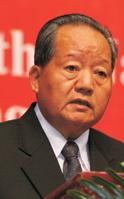
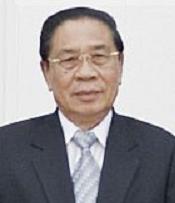
Lt. Gen. Choummali Saignason
President since 8 June 2006
President since 8 June 2006
| TRAFFICKING IN PERSONS |
None reported.

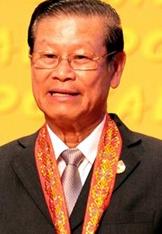
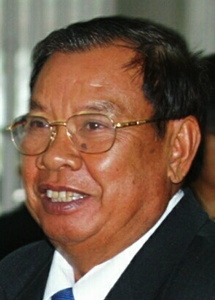
Boun-Gnang Volachit
Vice President since 8 June 2006
Vice President since 8 June 2006
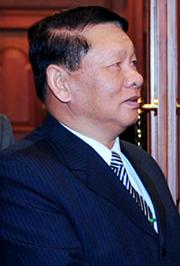
Somsavat Lengsavat, *Thongloun Sisoulit and +Maj. Gen. Douangchi Phichit
Deputy Prime Ministers since 26 February 1998, *27 March 2001 and +8 June 2006
Deputy Prime Ministers since 26 February 1998, *27 March 2001 and +8 June 2006
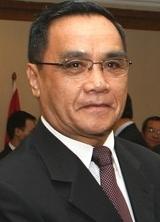
Maj. Gen. Asang Laoli
First Deputy Prime Minister since 01 May 2002
First Deputy Prime Minister since 01 May 2002