



| LIBERIA Republic of Liberia Republic of Liberia Joined United Nations: 2 November 1945 Human Rights as assured by their constitution Click here Updated 09 January 2013 |

| CAPITAL |
| POPULATION |
| CHIEF OF STATE |
| SELECTION PROCESS |
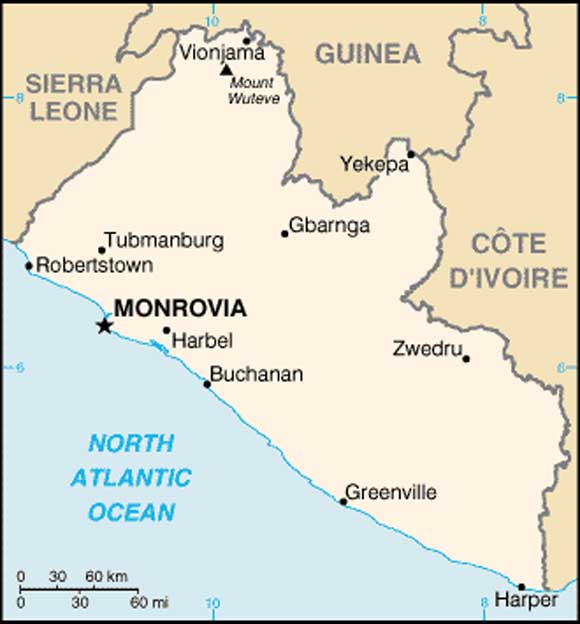
Monrovia
3,887,886 (July 2012 est.)
President elected by popular vote for a six-year term (eligible for a
second term); election last held 11 October and 8 November 2011
Next scheduled election: 2017
second term); election last held 11 October and 8 November 2011
Next scheduled election: 2017
HEAD OF GOVERNMENT
SELECTION PROCESS
According to the Liberian Constitution, the President is both the
Chief of State and Head of Government
Chief of State and Head of Government
| DECLARATION OF HUMAN RIGHTS |
| ETHNIC GROUPS |
Kpelle 20.3%, Bassa 13.4%, Grebo 10%, Gio 8%, Mano 7.9%, Kru 6%, Lorma 5.1%, Kissi 4.8%, Gola 4.4%, other 20.1%
(2008 Census)
(2008 Census)
| RELIGIONS |
Christian 85.6%, Muslim 12.2%, Traditional 0.6%, other 0.2%, none 1.4% (2008 Census)
| GOVERNMENT STRUCTURE |
Republic with 15 counties; Legal system is a dual system of statutory law based on Anglo-American common law for the modern
sector and customary law based on unwritten tribal practices for indigenous sector; accepts compulsory ICJ jurisdiction with
reservations
Executive: President elected by popular vote for a six-year term (eligible for a second term); election last held 11 October and 8
November 2011 (next to be held in 2017)
Legislative: Bicameral National Assembly consists of the Senate (30 seats; note - number of seats changed in 11 October 2005
elections; members elected by popular vote to serve nine-year terms) and the House of Representatives (73 seats; members elected
by popular vote to serve six-year terms)
elections: Senate - last held on 11 October 2011 (next to be held in 2014); House of Representatives - last held on 11 October
2011 (next to be held in 2017)
Judicial: Supreme Court
sector and customary law based on unwritten tribal practices for indigenous sector; accepts compulsory ICJ jurisdiction with
reservations
Executive: President elected by popular vote for a six-year term (eligible for a second term); election last held 11 October and 8
November 2011 (next to be held in 2017)
Legislative: Bicameral National Assembly consists of the Senate (30 seats; note - number of seats changed in 11 October 2005
elections; members elected by popular vote to serve nine-year terms) and the House of Representatives (73 seats; members elected
by popular vote to serve six-year terms)
elections: Senate - last held on 11 October 2011 (next to be held in 2014); House of Representatives - last held on 11 October
2011 (next to be held in 2017)
Judicial: Supreme Court
| LANGUAGES |
English 20% (official), some 20 ethnic group languages, of which a few can be written and are used in correspondence
| BRIEF HISTORY |
It is believed that many of the indigenous peoples of Liberia migrated there from the north and east between the 12th and 16th
centuries AD. The area of West Africa which later became Liberia was invaded in the sixteenth century by Mane, Malian Soldiers
tribes from what is now the interior of Ivory Coast and Ghana. The Manes partitioned the conquered territories and their peoples
among Mane leaders with one chieftain over all. Shortly after the Manes conquered the region there was a migration of the Vai
people into the region of Grand Cape Mount. The Vai were part of the Mali Empire that were forced to migrate when the empire
collapsed in the fourteenth century. The Vai chose to migrate to the coastal region. The Kru opposed the migration of the Vai into
their region. An alliance of the Manes and Kru were able to stop the further migration of the Vai but the Vai remained in the Grand
Cape Mount region (where the city of Robertsport is now located). Another tribal group in the area was the Glebo. The Glebo
were driven, as a result of the Manes invasion, to migrate to the coast of what later became Liberia. Portuguese explorers
established contacts with the land later known as "Liberia" as early as 1461 and named the area the Grain Coast because of the
abundance of grains of melegueta pepper. In 1602 the Dutch established a trading post at Grand Cape Mount but destroyed the
post a year later. In 1663 the British installed trading posts on the Grain Coast. No further known settlements by non-African
colonists occurred along the Grain Coast until the arrival of freed American slaves starting in 1817. Modern Liberia was founded in
1822 by freed slaves from the United States. They were sent to Africa under the auspices of the American Colonization Society, a
private organization whose purpose was "to promote and execute a plan for colonizing in Africa, with their own consent, the free
people of color residing in the US." The American Colonization Society was a group of white Americans — including some
slaveholders — that had a variety of motives. Free blacks, freedmen and their descendants, encountered widespread discrimination
in the United States of the early 19th century. They were generally perceived as a burden on society, and a threat to white workers
because they undercut wages. Some abolitionists believed that blacks could not achieve equality in the United States and would be
better off in Africa. Many slaveholders were worried that the presence of free blacks would encourage slaves to rebel. Other
supporters of removal to Africa wanted to prevent racial mixing, to promote the spread of Christianity in Africa, or to develop trade
with Africa. The first settlement was on Providence Island near where the present capital city, Monrovia, is located. Although the
Society had arranged with local chiefs for a settlement, the colonists were attacked by indigenous peoples, disease, and barely
maintained their foothold. In 1824, the settlers built fortifications for protection. In that same year, the settlement was named Liberia,
with its capital at Monrovia, named for President James Monroe. The settlers recreated American society, building churches and
homes that resembled Southern plantations. And they continued to speak English. They also entered into a complex relationship
with the indigenous people -- marrying them in some cases, discriminating against them in others, (and enslaving them in the worst of
cases) but all the time attempting to "civilize" them and impose Western values on the traditional communities. The American
Colonization Society closely controlled the development of Liberia until 1847. However, by the 1840s, Liberia had become a
financial burden on the American Colonization Society which was effectively bankrupt. The transported Liberians were demoralized
by hostile local tribes, bad management, and deadly diseases. In addition, Liberia faced political threats, chiefly from Britain,
because it was neither a sovereign power nor a bona fide colony of any sovereign nation. Because the United States refused to
claim sovereignty over Liberia, in 1846 the ACS directed the Liberians to proclaim their independence. In 1847, the colony became
the independent nation of Liberia. By 1867, the society had sent more than 13,000 emigrants. The Americo-Liberians have never
constituted above five percent of the population of Liberia; however, for over one hundred years, the Americo-Liberians reserved
within the group all political and economic leadership. Under the name of the True Whig Party (TWP), the Americo-Liberians
subdued indigenous tribes in Liberia and permitted no organized political opposition thus making Liberia a one-party state. After
Liberia declared its independence in 1847, Joseph J. Roberts, a freeborn Black who was born in Virginia, was elected Liberia's first
president and Stephen Benson was elected vice-president. Over the next few decades, escalating economic difficulties began to
weaken the state's dominance over the coastal indigenous population. When the financially burdened ACS withdrew its support,
conditions worsened as Liberia tried desperately to modernize its largely agricultural economy. The cost of imports was far greater
than the income generated by exports of coffee, rice, palm oil, sugarcane, and timber. In 1903, the British forced a concession of
Liberian territory to Sierra Leone, but tension along that border remained high. In addition to continued internal unrest, the country
faced a severe economic crisis and huge indebtedness to European creditors. By 1906 the Liberian Government was literally
bankrupt. The Government could not pay its bills without borrowing money from local German merchants. In 1912, the U.S.
arranged a 40-year international loan totaling $1.7 million, with the proviso that four outsiders (American, British, French and
German) be given control over customs receipts and taxes, which were earmarked for loan repayment. At the outbreak of World
War I, President Howard attempted to maintain the country's neutrality, though he tended to support the Allies, whose colonial
territories in Africa surrounded Liberia. World War I resulted in the trade between Liberia and Britain, France and the United
States being reduced to almost zero due to the German submarine blockade. Income from customs revenue was disrupted, when
Germany, Liberia's major trading partner, withdrew from Liberia. In 1942 Liberia signed a Defense Pact with the United States.
This commenced a period of developing strategic development including the construction of roads, airports and other infrastructure
projects. From 1946 to 1960, the Tubman Administration attracted $500 million in foreign investment. From 1962 to 1980, Liberia
received $280 million in aid from the U.S., the greatest level of U.S. aid to any African country on a per capita basis at the time. In
exchange for this aid, Liberia offered its land free of rent for U.S. facilities. On April 12, 1980, a 28-year-old Krahn tribesman from
one of the country's smallest ethnic groups -- Master Sergeant Samuel K. Doe -- successfully led a bloody coup d'état coup to
overthrow Tolbert's rule. Doe quickly re-established good relations with the United States and encouraged the U.S. to send
economic and military aid. On December 24, 1989, Charles Taylor and a small group of Libyan-trained rebels calling themselves
the National Patriotic Front of Liberia (NPFL) entered Nimba County from neighboring Côte d'Ivoire and initiated a rebellion which
became the Liberian Civil War. Doe was captured and taken to the INPFL’s Caldwell base. The circumstances that led to Doe’s
visit to the Free Port are still unclear; however, after Doe arrived, Prince Johnson’s INPFL attacked the headquarters and
captured, tortured, and killed him. His torture and execution were videotaped by his captors. In August 1995, six years of civil war
came to a sudden end as the main factions signed the Abuja Accord, an agreement largely brokered by Ghanaian President Gerry
Rawlings. A new civil war began in 1999 when a rebel group backed by the government of neighboring Guinea, the Liberians
United for Reconciliation and Democracy (LURD), emerged in northern Liberia. On August 11, 2003 under intense U.S. and
international pressure, President Taylor resigned on August 11, 2003 as part of a peace agreement and was flown into exile in
Nigeria. Vice-President Moses Blah replaced Taylor on an interim basis while a transitional government was being set up. First
round presidential elections in October 2005 resulted in a run-off between ex-footballer George Weah and Ellen Johnson-Sirleaf, a
former World Bank economist and finance minister. Johnson-Sirleaf was declared president on November 23rd, making her the
first woman president of Liberia and indeed of any African country. In November 2005, the International Labor Rights Fund filed
an Alien Tort Claims Act (ATCA) case against Bridgestone, the parent company of Firestone, alleging “forced labor, the modern
equivalent of slavery”, on the Firestone Plantation in Harbel. Under international pressure, President Sirleaf requested in March
2006 that Nigeria extradite Charles Taylor, who was then brought before an international tribunal in Sierra Leone to face charges of
crimes against humanity, arising from events during the Sierra Leone civil war (his trial was later transferred to The Hague for
security purposes). In June, 2006, the United Nations ended its embargo on Liberian timber (effective since May 2003), but
continued its diamond embargo (effective since March 2001) until an effective certificate of origin program was established, a
decision that was reaffirmed in October 2006. In March 2007, former interim president Bryant was arrested and charged with
having embezzled government funds while in office. In August 2007, the Supreme Court of Liberia allowed the criminal prosecution
for this to proceed in the lower courts. n July 2008, the Legislature reintroduced the death penalty into Liberian law, with President
Sirleaf signing the bill into law. The law allowed for executions for convictions of armed robbery, rape, terrorism, and hijacking.
Some parts of the country were declared disaster zones due to a plague of caterpillars
Source: Wikipedia: History of Liberia
centuries AD. The area of West Africa which later became Liberia was invaded in the sixteenth century by Mane, Malian Soldiers
tribes from what is now the interior of Ivory Coast and Ghana. The Manes partitioned the conquered territories and their peoples
among Mane leaders with one chieftain over all. Shortly after the Manes conquered the region there was a migration of the Vai
people into the region of Grand Cape Mount. The Vai were part of the Mali Empire that were forced to migrate when the empire
collapsed in the fourteenth century. The Vai chose to migrate to the coastal region. The Kru opposed the migration of the Vai into
their region. An alliance of the Manes and Kru were able to stop the further migration of the Vai but the Vai remained in the Grand
Cape Mount region (where the city of Robertsport is now located). Another tribal group in the area was the Glebo. The Glebo
were driven, as a result of the Manes invasion, to migrate to the coast of what later became Liberia. Portuguese explorers
established contacts with the land later known as "Liberia" as early as 1461 and named the area the Grain Coast because of the
abundance of grains of melegueta pepper. In 1602 the Dutch established a trading post at Grand Cape Mount but destroyed the
post a year later. In 1663 the British installed trading posts on the Grain Coast. No further known settlements by non-African
colonists occurred along the Grain Coast until the arrival of freed American slaves starting in 1817. Modern Liberia was founded in
1822 by freed slaves from the United States. They were sent to Africa under the auspices of the American Colonization Society, a
private organization whose purpose was "to promote and execute a plan for colonizing in Africa, with their own consent, the free
people of color residing in the US." The American Colonization Society was a group of white Americans — including some
slaveholders — that had a variety of motives. Free blacks, freedmen and their descendants, encountered widespread discrimination
in the United States of the early 19th century. They were generally perceived as a burden on society, and a threat to white workers
because they undercut wages. Some abolitionists believed that blacks could not achieve equality in the United States and would be
better off in Africa. Many slaveholders were worried that the presence of free blacks would encourage slaves to rebel. Other
supporters of removal to Africa wanted to prevent racial mixing, to promote the spread of Christianity in Africa, or to develop trade
with Africa. The first settlement was on Providence Island near where the present capital city, Monrovia, is located. Although the
Society had arranged with local chiefs for a settlement, the colonists were attacked by indigenous peoples, disease, and barely
maintained their foothold. In 1824, the settlers built fortifications for protection. In that same year, the settlement was named Liberia,
with its capital at Monrovia, named for President James Monroe. The settlers recreated American society, building churches and
homes that resembled Southern plantations. And they continued to speak English. They also entered into a complex relationship
with the indigenous people -- marrying them in some cases, discriminating against them in others, (and enslaving them in the worst of
cases) but all the time attempting to "civilize" them and impose Western values on the traditional communities. The American
Colonization Society closely controlled the development of Liberia until 1847. However, by the 1840s, Liberia had become a
financial burden on the American Colonization Society which was effectively bankrupt. The transported Liberians were demoralized
by hostile local tribes, bad management, and deadly diseases. In addition, Liberia faced political threats, chiefly from Britain,
because it was neither a sovereign power nor a bona fide colony of any sovereign nation. Because the United States refused to
claim sovereignty over Liberia, in 1846 the ACS directed the Liberians to proclaim their independence. In 1847, the colony became
the independent nation of Liberia. By 1867, the society had sent more than 13,000 emigrants. The Americo-Liberians have never
constituted above five percent of the population of Liberia; however, for over one hundred years, the Americo-Liberians reserved
within the group all political and economic leadership. Under the name of the True Whig Party (TWP), the Americo-Liberians
subdued indigenous tribes in Liberia and permitted no organized political opposition thus making Liberia a one-party state. After
Liberia declared its independence in 1847, Joseph J. Roberts, a freeborn Black who was born in Virginia, was elected Liberia's first
president and Stephen Benson was elected vice-president. Over the next few decades, escalating economic difficulties began to
weaken the state's dominance over the coastal indigenous population. When the financially burdened ACS withdrew its support,
conditions worsened as Liberia tried desperately to modernize its largely agricultural economy. The cost of imports was far greater
than the income generated by exports of coffee, rice, palm oil, sugarcane, and timber. In 1903, the British forced a concession of
Liberian territory to Sierra Leone, but tension along that border remained high. In addition to continued internal unrest, the country
faced a severe economic crisis and huge indebtedness to European creditors. By 1906 the Liberian Government was literally
bankrupt. The Government could not pay its bills without borrowing money from local German merchants. In 1912, the U.S.
arranged a 40-year international loan totaling $1.7 million, with the proviso that four outsiders (American, British, French and
German) be given control over customs receipts and taxes, which were earmarked for loan repayment. At the outbreak of World
War I, President Howard attempted to maintain the country's neutrality, though he tended to support the Allies, whose colonial
territories in Africa surrounded Liberia. World War I resulted in the trade between Liberia and Britain, France and the United
States being reduced to almost zero due to the German submarine blockade. Income from customs revenue was disrupted, when
Germany, Liberia's major trading partner, withdrew from Liberia. In 1942 Liberia signed a Defense Pact with the United States.
This commenced a period of developing strategic development including the construction of roads, airports and other infrastructure
projects. From 1946 to 1960, the Tubman Administration attracted $500 million in foreign investment. From 1962 to 1980, Liberia
received $280 million in aid from the U.S., the greatest level of U.S. aid to any African country on a per capita basis at the time. In
exchange for this aid, Liberia offered its land free of rent for U.S. facilities. On April 12, 1980, a 28-year-old Krahn tribesman from
one of the country's smallest ethnic groups -- Master Sergeant Samuel K. Doe -- successfully led a bloody coup d'état coup to
overthrow Tolbert's rule. Doe quickly re-established good relations with the United States and encouraged the U.S. to send
economic and military aid. On December 24, 1989, Charles Taylor and a small group of Libyan-trained rebels calling themselves
the National Patriotic Front of Liberia (NPFL) entered Nimba County from neighboring Côte d'Ivoire and initiated a rebellion which
became the Liberian Civil War. Doe was captured and taken to the INPFL’s Caldwell base. The circumstances that led to Doe’s
visit to the Free Port are still unclear; however, after Doe arrived, Prince Johnson’s INPFL attacked the headquarters and
captured, tortured, and killed him. His torture and execution were videotaped by his captors. In August 1995, six years of civil war
came to a sudden end as the main factions signed the Abuja Accord, an agreement largely brokered by Ghanaian President Gerry
Rawlings. A new civil war began in 1999 when a rebel group backed by the government of neighboring Guinea, the Liberians
United for Reconciliation and Democracy (LURD), emerged in northern Liberia. On August 11, 2003 under intense U.S. and
international pressure, President Taylor resigned on August 11, 2003 as part of a peace agreement and was flown into exile in
Nigeria. Vice-President Moses Blah replaced Taylor on an interim basis while a transitional government was being set up. First
round presidential elections in October 2005 resulted in a run-off between ex-footballer George Weah and Ellen Johnson-Sirleaf, a
former World Bank economist and finance minister. Johnson-Sirleaf was declared president on November 23rd, making her the
first woman president of Liberia and indeed of any African country. In November 2005, the International Labor Rights Fund filed
an Alien Tort Claims Act (ATCA) case against Bridgestone, the parent company of Firestone, alleging “forced labor, the modern
equivalent of slavery”, on the Firestone Plantation in Harbel. Under international pressure, President Sirleaf requested in March
2006 that Nigeria extradite Charles Taylor, who was then brought before an international tribunal in Sierra Leone to face charges of
crimes against humanity, arising from events during the Sierra Leone civil war (his trial was later transferred to The Hague for
security purposes). In June, 2006, the United Nations ended its embargo on Liberian timber (effective since May 2003), but
continued its diamond embargo (effective since March 2001) until an effective certificate of origin program was established, a
decision that was reaffirmed in October 2006. In March 2007, former interim president Bryant was arrested and charged with
having embezzled government funds while in office. In August 2007, the Supreme Court of Liberia allowed the criminal prosecution
for this to proceed in the lower courts. n July 2008, the Legislature reintroduced the death penalty into Liberian law, with President
Sirleaf signing the bill into law. The law allowed for executions for convictions of armed robbery, rape, terrorism, and hijacking.
Some parts of the country were declared disaster zones due to a plague of caterpillars
Source: Wikipedia: History of Liberia
| ECONOMIC OVERVIEW |
Liberia is a low income country heavily reliant on foreign assistance for revenue. Civil war and government mismanagement
destroyed much of Liberia's economy, especially the infrastructure in and around the capital, Monrovia. Many businesses fled the
country, taking capital and expertise with them, but with the conclusion of fighting and the installation of a democratically-elected
government in 2006, several have returned. Liberia has the distinction of having the highest ratio of direct foreign investment to GDP
in the world. Richly endowed with water, mineral resources, forests, and a climate favorable to agriculture, Liberia had been a
producer and exporter of basic products, primarily raw timber and rubber and is reviving those sectors. Local manufacturing, mainly
foreign owned, had been small in scope. President JOHNSON SIRLEAF, a Harvard-trained banker and administrator, has taken
steps to reduce corruption, build support from international donors, and encourage private investment. Embargos on timber and
diamond exports have been lifted, opening new sources of revenue for the government and Liberia shipped its first major timber
exports to Europe in 2010. The country reached its Heavily Indebted Poor Countries initiative completion point in 2010 and nearly
$5 billion of international debt was permanently eliminated. This new status will enable Liberia to establish a sovereign credit rating
and issue bonds. Liberia's Paris Club creditors agreed to cancel Liberia's debt as well. The IMF has completed the sixth review of
Liberia's extended credit facility, bringing total disbursements to over $379 million. The African Development Bank approved a
grant of $48 million in 2011 to support economic governance and competitiveness. Rebuilding infrastructure and raising incomes will
depend on generous financial and technical assistance from donor countries and foreign investment in key sectors, such as
infrastructure and power generation.
Source: CIA World Factbook (select Liberia)
destroyed much of Liberia's economy, especially the infrastructure in and around the capital, Monrovia. Many businesses fled the
country, taking capital and expertise with them, but with the conclusion of fighting and the installation of a democratically-elected
government in 2006, several have returned. Liberia has the distinction of having the highest ratio of direct foreign investment to GDP
in the world. Richly endowed with water, mineral resources, forests, and a climate favorable to agriculture, Liberia had been a
producer and exporter of basic products, primarily raw timber and rubber and is reviving those sectors. Local manufacturing, mainly
foreign owned, had been small in scope. President JOHNSON SIRLEAF, a Harvard-trained banker and administrator, has taken
steps to reduce corruption, build support from international donors, and encourage private investment. Embargos on timber and
diamond exports have been lifted, opening new sources of revenue for the government and Liberia shipped its first major timber
exports to Europe in 2010. The country reached its Heavily Indebted Poor Countries initiative completion point in 2010 and nearly
$5 billion of international debt was permanently eliminated. This new status will enable Liberia to establish a sovereign credit rating
and issue bonds. Liberia's Paris Club creditors agreed to cancel Liberia's debt as well. The IMF has completed the sixth review of
Liberia's extended credit facility, bringing total disbursements to over $379 million. The African Development Bank approved a
grant of $48 million in 2011 to support economic governance and competitiveness. Rebuilding infrastructure and raising incomes will
depend on generous financial and technical assistance from donor countries and foreign investment in key sectors, such as
infrastructure and power generation.
Source: CIA World Factbook (select Liberia)
| POLITICAL CLIMATE |
From 1980 to 2003, Liberia was governed by a series of military and transitional governments. The president of the last of these,
Charles Taylor, was forced to step down in 2003, and the United Nations installed a transitional government. Elections to select a
government to replace the transitional government took place in October and November 2005.
An Interim Government of National Unity (IGNU) was formed in Gambia under the auspices of ECOWAS in October 1990 and
Dr. Amos Sawyer became President. Taylor refused to work with the interim government and continued war.
By 1992, several warring factions had emerged in the Liberian civil war, all of which were absorbed in the new transitional
government. After several peace accorBy 1992, several warring factions had emerged in the Liberian civil war, all of which were
absorbed in the new transitional government. After several peace accords and declining military power, Taylor finally agreed to the
formation of a five-man transitional government.
After considerable progress in negotiations conducted by the United States, United Nations, Organization of African Unity, and the
Economic Community of West African States, disarmament and demobilization of warring factions were hastily carried out and
special elections were held on 19 July 1997 with Charles Taylor and his National Patriotic Party emerging victorious. Taylor won
the election by a large majority, primarily because Liberians feared a return to war had Taylor lost. However, unrest continued, and
by 2003, two rebel groups were challenging Taylor's control of the country. In August 2003, Taylor resigned and fled the country
and vice-president Moses Blah became acting president. The international community again intervened and helped set up a
transitional government under Gyude Bryant.
For more than a year, over 9,000 census-takers combed the densely forested nation mapping every structure. For three days
starting March 21, 2008, they revisited each dwelling and count the inhabitants.Taylor finally agreed to the formation of a five-man
transitional government.
In January 2010, Sirleaf announced that she would run for a second term in office in the 2011 presidential election while speaking to
a joint session of the Legislature. Opposition leaders noted that in doing so, she had broken a promise made during her 2005
campaign to only serve one term if elected. Sirleaf garnered 43.9% of the vote in the first round, more than any other candidate but
short of the 50% needed to avoid a run-off. Tubman came in second with 32.7%, pitting him against Sirleaf in the second round.
Tubman called for a boycott of the run-off, claiming that the results of the first round had been fraudulent. Sirleaf denied the
allegations, and international observers reported that the first round election had been free, fair and transparent. As a result of the
boycott, Sirleaf won the second round with 90.7% of the vote, though voter turnout significantly declined from the first round.
Source: Wikipedia: Politics of Liberia
Charles Taylor, was forced to step down in 2003, and the United Nations installed a transitional government. Elections to select a
government to replace the transitional government took place in October and November 2005.
An Interim Government of National Unity (IGNU) was formed in Gambia under the auspices of ECOWAS in October 1990 and
Dr. Amos Sawyer became President. Taylor refused to work with the interim government and continued war.
By 1992, several warring factions had emerged in the Liberian civil war, all of which were absorbed in the new transitional
government. After several peace accorBy 1992, several warring factions had emerged in the Liberian civil war, all of which were
absorbed in the new transitional government. After several peace accords and declining military power, Taylor finally agreed to the
formation of a five-man transitional government.
After considerable progress in negotiations conducted by the United States, United Nations, Organization of African Unity, and the
Economic Community of West African States, disarmament and demobilization of warring factions were hastily carried out and
special elections were held on 19 July 1997 with Charles Taylor and his National Patriotic Party emerging victorious. Taylor won
the election by a large majority, primarily because Liberians feared a return to war had Taylor lost. However, unrest continued, and
by 2003, two rebel groups were challenging Taylor's control of the country. In August 2003, Taylor resigned and fled the country
and vice-president Moses Blah became acting president. The international community again intervened and helped set up a
transitional government under Gyude Bryant.
For more than a year, over 9,000 census-takers combed the densely forested nation mapping every structure. For three days
starting March 21, 2008, they revisited each dwelling and count the inhabitants.Taylor finally agreed to the formation of a five-man
transitional government.
In January 2010, Sirleaf announced that she would run for a second term in office in the 2011 presidential election while speaking to
a joint session of the Legislature. Opposition leaders noted that in doing so, she had broken a promise made during her 2005
campaign to only serve one term if elected. Sirleaf garnered 43.9% of the vote in the first round, more than any other candidate but
short of the 50% needed to avoid a run-off. Tubman came in second with 32.7%, pitting him against Sirleaf in the second round.
Tubman called for a boycott of the run-off, claiming that the results of the first round had been fraudulent. Sirleaf denied the
allegations, and international observers reported that the first round election had been free, fair and transparent. As a result of the
boycott, Sirleaf won the second round with 90.7% of the vote, though voter turnout significantly declined from the first round.
Source: Wikipedia: Politics of Liberia
| INTERNATIONAL DISPUTES |
Although civil unrest continues to abate with the assistance of 18,000 UN Mission in Liberia (UNMIL) peacekeepers, as of January
2007, Liberian refugees still remain in Guinea, Cote d'Ivoire, Sierra Leone, and Ghana; Liberia, in turn, shelters refugees fleeing
turmoil in Cote d'Ivoire; despite the presence of over 9,000 UN forces (UNOCI) in Cote d'Ivoire since 2004, ethnic conflict
continues to spread into neighboring states who can no longer send their migrant workers to Ivorian cocoa plantations; UN
sanctions ban Liberia from exporting diamonds and timber
2007, Liberian refugees still remain in Guinea, Cote d'Ivoire, Sierra Leone, and Ghana; Liberia, in turn, shelters refugees fleeing
turmoil in Cote d'Ivoire; despite the presence of over 9,000 UN forces (UNOCI) in Cote d'Ivoire since 2004, ethnic conflict
continues to spread into neighboring states who can no longer send their migrant workers to Ivorian cocoa plantations; UN
sanctions ban Liberia from exporting diamonds and timber


| REFUGEES AND INTERNALLY DISPLACED PERSONS (IDPS) |
Refugees (country of origin): 12,600 (Cote d'Ivoire)
IDPs: 13,000 (civil war from 1990-2004; IDP resettlement began in November 2004) (2007)
IDPs: 13,000 (civil war from 1990-2004; IDP resettlement began in November 2004) (2007)
| ILLICIT DRUGS |
Transshipment point for Southeast and Southwest Asian heroin and South American cocaine for the European and US markets;
corruption, criminal activity, arms-dealing, and diamond trade provide significant potential for money laundering, but the lack of
well-developed financial system limits the country's utility as a major money-laundering center
corruption, criminal activity, arms-dealing, and diamond trade provide significant potential for money laundering, but the lack of
well-developed financial system limits the country's utility as a major money-laundering center
| HUMAN RIGHTS STATEMENTS, ANALYSIS AND CRITIQUES |
2011 Human Rights Report: Liberia
Bureau of Democracy, Human Rights, and Labor
2011 Country Reports on Human Rights Practices
May 25, 2012
Liberia is a constitutional republic with a bicameral National Assembly. In November Ellen Johnson Sirleaf of the Unity Party won a
second term in multiparty presidential elections, which domestic and international observers considered generally free and fair. Security
forces reported to civilian authorities.
Among the most serious human rights abuses were those tied to justice: judicial inefficiency and corruption, lengthy pretrial detention,
denial of due process, and harsh prison conditions. Violence against women and children, including rape and domestic violence, and
child labor also were serious problems.
Other important human rights abuses included unlawful deprivation of life; mob killings; reported ritualistic killings and trial by ordeal;
police abuse, harassment, and intimidation of detainees and others; arbitrary arrest and detention; official corruption; domestic human
trafficking; and racial and ethnic discrimination.
Impunity was a serious problem despite government attempts to prosecute and punish officials.
Click here to read more »
Bureau of Democracy, Human Rights, and Labor
2011 Country Reports on Human Rights Practices
May 25, 2012
Liberia is a constitutional republic with a bicameral National Assembly. In November Ellen Johnson Sirleaf of the Unity Party won a
second term in multiparty presidential elections, which domestic and international observers considered generally free and fair. Security
forces reported to civilian authorities.
Among the most serious human rights abuses were those tied to justice: judicial inefficiency and corruption, lengthy pretrial detention,
denial of due process, and harsh prison conditions. Violence against women and children, including rape and domestic violence, and
child labor also were serious problems.
Other important human rights abuses included unlawful deprivation of life; mob killings; reported ritualistic killings and trial by ordeal;
police abuse, harassment, and intimidation of detainees and others; arbitrary arrest and detention; official corruption; domestic human
trafficking; and racial and ethnic discrimination.
Impunity was a serious problem despite government attempts to prosecute and punish officials.
Click here to read more »
11 December 2012
Committee on the Rights of the Child
Concluding observations on the combined second to fourth periodic reports of Liberia, adopted by the Committee at its sixty-
first session (17 September-5 October 2012)
Liberia
I. Introduction
1. The Committee welcomes the submission of the consolidated second to fourth periodic reports of the State party, as well as the
written replies to its list of issues (CRC/C/LBR/Q/2-4/Add.1). The Committee appreciates the presence of a very high-level and multi-
sectoral delegation and the positive dialogue, which enabled the Committee to gain a better understanding of the situation of children in
the State party.
II. Follow-up measures undertaken and progress achieved by the State party
2. The Committee welcomes as positive the following legislative measures:
(a) The Children’s Law of 4 February 2012 designed to domesticate the Convention on the Rights of the Child in the national legal
system;
(b) The Education Reform Act of 8 August 2011;
(c) The Anti-Corruption Law of 21 August 2008;
(d) The Act to amend the Penal Code of 17 January 2006, known as the Rape Law;
(e) The Act to Ban Trafficking in Persons within the Republic of Liberia of 14 June 2005, known as the Anti-trafficking Law; and
(f) The Independent National Commission on Human Rights Act of the Republic of Liberia of 11 March 2005.
III. Factors and difficulties impeding the implementation of the Convention
6. The Committee notes that years of political instability followed by a 14-year civil war that ended in 2006 led to severe destruction
of physical and social infrastructure, disruption of governmental and social institutions, displacement of the vast majority of the
population internally and externally as well as severe loss of human capital, all of which constitute obstacles to the full implementation of
the Convention.
IV. Main areas of concern and recommendations
A. General measures of implementation (arts. 4, 42 and 44, para. 6, of the Convention)
The Committee’s previous recommendations
7. While welcoming the State party’s efforts to implement the concluding observations on its previous report (CRC/C/15/Add.236,
2004), the Committee regrets that some of the recommendations contained therein have not been fully addressed.
8. The Committee urges the State party to take all necessary measures to address those recommendations from the concluding
observations of the initial report under the Convention that have not been implemented or sufficiently implemented, particularly those
related to legislation, coordination, non-discrimination, harmful practices and juvenile justice.
Click here to read more »
Committee on the Rights of the Child
Concluding observations on the combined second to fourth periodic reports of Liberia, adopted by the Committee at its sixty-
first session (17 September-5 October 2012)
Liberia
I. Introduction
1. The Committee welcomes the submission of the consolidated second to fourth periodic reports of the State party, as well as the
written replies to its list of issues (CRC/C/LBR/Q/2-4/Add.1). The Committee appreciates the presence of a very high-level and multi-
sectoral delegation and the positive dialogue, which enabled the Committee to gain a better understanding of the situation of children in
the State party.
II. Follow-up measures undertaken and progress achieved by the State party
2. The Committee welcomes as positive the following legislative measures:
(a) The Children’s Law of 4 February 2012 designed to domesticate the Convention on the Rights of the Child in the national legal
system;
(b) The Education Reform Act of 8 August 2011;
(c) The Anti-Corruption Law of 21 August 2008;
(d) The Act to amend the Penal Code of 17 January 2006, known as the Rape Law;
(e) The Act to Ban Trafficking in Persons within the Republic of Liberia of 14 June 2005, known as the Anti-trafficking Law; and
(f) The Independent National Commission on Human Rights Act of the Republic of Liberia of 11 March 2005.
III. Factors and difficulties impeding the implementation of the Convention
6. The Committee notes that years of political instability followed by a 14-year civil war that ended in 2006 led to severe destruction
of physical and social infrastructure, disruption of governmental and social institutions, displacement of the vast majority of the
population internally and externally as well as severe loss of human capital, all of which constitute obstacles to the full implementation of
the Convention.
IV. Main areas of concern and recommendations
A. General measures of implementation (arts. 4, 42 and 44, para. 6, of the Convention)
The Committee’s previous recommendations
7. While welcoming the State party’s efforts to implement the concluding observations on its previous report (CRC/C/15/Add.236,
2004), the Committee regrets that some of the recommendations contained therein have not been fully addressed.
8. The Committee urges the State party to take all necessary measures to address those recommendations from the concluding
observations of the initial report under the Convention that have not been implemented or sufficiently implemented, particularly those
related to legislation, coordination, non-discrimination, harmful practices and juvenile justice.
Click here to read more »
War Crimes Conviction of Charles Taylor Welcomed by Freedom House
Apr 26 2012 - 1:50pm
Freedom House welcomes the conviction of former Liberian President Charles Taylor on charges of atrocities committed in Sierra Leone
in the late 1990s and 2000s, including mass murder, rape, and conscription of child soldiers. The verdict, handed down by the U.N.-
backed Special Court for Sierra Leone, marks the first conviction of a head of state by an international court of its kind since the
Nuremberg Trials following World War II, and sends a renewed message that national leaders cannot engage in war crimes with
impunity.
Taylor was found to have had a “sustained and significant” role supporting numerous atrocities committed during Sierra Leone’s 1991-
2002 civil war, including providing arms, ammunition, communications equipment, and other means of support to rebel forces in the
country. He was convicted on each of 11 charges after a 5-year trial and will face sentencing in May, although he is expected to
appeal. The conviction comes only a month after the International Criminal Court completed its first conviction in its 10 year history,
having found Congolese warlord Thomas Lubanga guilty of war crimes. Together, these convictions represent the growing capacity of
intergovernmental organizations to bring some of the world’s worst human rights offenders to justice.
Both Sierra Leone and Liberia have seen modest improvements in civil liberties and political freedoms over the decade following the end
of civil war in 2002 and Taylor’s resignation in 2003, and are rated Partly Free in Freedom House’s Freedom in the World 2012 report.
Click here to read more »
Apr 26 2012 - 1:50pm
Freedom House welcomes the conviction of former Liberian President Charles Taylor on charges of atrocities committed in Sierra Leone
in the late 1990s and 2000s, including mass murder, rape, and conscription of child soldiers. The verdict, handed down by the U.N.-
backed Special Court for Sierra Leone, marks the first conviction of a head of state by an international court of its kind since the
Nuremberg Trials following World War II, and sends a renewed message that national leaders cannot engage in war crimes with
impunity.
Taylor was found to have had a “sustained and significant” role supporting numerous atrocities committed during Sierra Leone’s 1991-
2002 civil war, including providing arms, ammunition, communications equipment, and other means of support to rebel forces in the
country. He was convicted on each of 11 charges after a 5-year trial and will face sentencing in May, although he is expected to
appeal. The conviction comes only a month after the International Criminal Court completed its first conviction in its 10 year history,
having found Congolese warlord Thomas Lubanga guilty of war crimes. Together, these convictions represent the growing capacity of
intergovernmental organizations to bring some of the world’s worst human rights offenders to justice.
Both Sierra Leone and Liberia have seen modest improvements in civil liberties and political freedoms over the decade following the end
of civil war in 2002 and Taylor’s resignation in 2003, and are rated Partly Free in Freedom House’s Freedom in the World 2012 report.
Click here to read more »
Report 2012: No longer business as usual for tyranny and injustice ...
24 May 2012
Liberia
Long delays in the judicial system led to appalling overcrowding in prisons, as most detainees were awaiting trial, suffering inhumane
conditions. Human rights abuses against women and girls, including rape and other forms of sexual violence, remained prevalent. The
police used excessive force during demonstrations.
Background
Presidential and legislative elections took place on 11 October. No presidential candidate secured an outright majority, and a run-off
election took place on 8 November. The main opposition party, Congress for Democratic Change (CDC), boycotted the run-off and the
incumbent, Ellen Johnson Sirleaf, was declared winner with 90.7 per cent of the vote.
More than 173,000 Ivorian refugees crossed into Liberia between November 2010 and December 2011 following post-election violence
in neighboring Côte d’Ivoire. By the end of 2011 the influx of refugees had almost stopped, and some started returning to Côte d’Ivoire.
In November, President Ellen Johnson Sirleaf and human rights defender Leymah Gbowee were two of the three women awarded the
Nobel Peace Prize “for their non-violent struggle for the safety of women and for women’s rights to full participation in peace-building
work”.
Impunity
No progress was made in bringing to justice people responsible for serious human rights violations and abuses during the years of armed
conflict and violence. The recommendation of the Truth and Reconciliation Commission (TRC) that a criminal tribunal be established to
prosecute people identified as responsible for crimes under international law was not implemented, nor were most TRC
recommendations on legal and other institutional reforms, accountability, and reparations.
In March, the Special Court for Sierra Leone, sitting in The Hague, finished hearing evidence in the trial of former Liberian President
Charles Taylor, who was charged for his individual criminal responsibility in crimes against humanity and war crimes committed during
the 11 years of armed conflict in Sierra Leone. He was not charged with crimes committed in Liberia, as the competence of the Court is
limited to crimes committed in Sierra Leone. The judges were still deliberating at the end of the year.
Click here to read more »
24 May 2012
Liberia
Long delays in the judicial system led to appalling overcrowding in prisons, as most detainees were awaiting trial, suffering inhumane
conditions. Human rights abuses against women and girls, including rape and other forms of sexual violence, remained prevalent. The
police used excessive force during demonstrations.
Background
Presidential and legislative elections took place on 11 October. No presidential candidate secured an outright majority, and a run-off
election took place on 8 November. The main opposition party, Congress for Democratic Change (CDC), boycotted the run-off and the
incumbent, Ellen Johnson Sirleaf, was declared winner with 90.7 per cent of the vote.
More than 173,000 Ivorian refugees crossed into Liberia between November 2010 and December 2011 following post-election violence
in neighboring Côte d’Ivoire. By the end of 2011 the influx of refugees had almost stopped, and some started returning to Côte d’Ivoire.
In November, President Ellen Johnson Sirleaf and human rights defender Leymah Gbowee were two of the three women awarded the
Nobel Peace Prize “for their non-violent struggle for the safety of women and for women’s rights to full participation in peace-building
work”.
Impunity
No progress was made in bringing to justice people responsible for serious human rights violations and abuses during the years of armed
conflict and violence. The recommendation of the Truth and Reconciliation Commission (TRC) that a criminal tribunal be established to
prosecute people identified as responsible for crimes under international law was not implemented, nor were most TRC
recommendations on legal and other institutional reforms, accountability, and reparations.
In March, the Special Court for Sierra Leone, sitting in The Hague, finished hearing evidence in the trial of former Liberian President
Charles Taylor, who was charged for his individual criminal responsibility in crimes against humanity and war crimes committed during
the 11 years of armed conflict in Sierra Leone. He was not charged with crimes committed in Liberia, as the competence of the Court is
limited to crimes committed in Sierra Leone. The judges were still deliberating at the end of the year.
Click here to read more »
Two steps forward, one step back
by Graeme Reid
Published in: Global Briefing
November 8, 2012
Two resolutions adopted by the United Nations Human Rights Council during the past 16 months represent potential advances and
setbacks for the global lesbian, gay, bisexual and transgender rights movement. One is concerned with defending sexual orientation and
gender identity; the other with protecting traditional values. Together they represent divergent views on the universality and indivisibility
of human rights.
On 17 June 2011, the Human Rights Council, the body mandated to protect and promote human rights worldwide, adopted a landmark
resolution introduced by South Africa on “human rights, sexual orientation and gender identity”. The resolution was adopted 23 to 19,
with 3 abstentions. This simple one-page document requested the UN High Commissioner to prepare a report in December 2011 and
convene a panel in March 2012 to discuss the findings and suggest appropriate follow-up action. Although on the surface these are
modest recommendations, it was a watershed moment. It was the first UN resolution to bring specific focus to human rights violations
based on sexual orientation and gender identity.
While the UN resolution on sexual orientation and gender identity is expressly concerned with – and limited to – violence and dis
crimination against LGBT people, some countries have elected to go further. Argentina and Mexico City opened the door to same-sex
marriage, while the Constitutional Court of Colombia gave Congress two years to legislate on equal marriage rights for same-sex
couples. Brazil has also approved civil unions for homosexual couples. Meanwhile, the marriage debate has intensified in Australia,
although it was recently rejected by the Australian parliament. In New Zealand, a bill that would permit same-sex marriage has been
through its first reading, and a full report on the issue will be presented to parliament for consideration in February 2013.
In a sense, this represents a microcosm of where things are moving – in a globalising world, what is the place of archaic laws
criminalising consensual relations between adults? Anwar Ibrahim, opposition leader in Malaysia, raised hopes about his commitment to
equality for all when he suggested a review of the sodomy laws there, but appeared to backtrack in court when he reportedly said that
some discrimination against LGBT people was justified. Jamaica’s incoming prime minister, Portia Simpson Miller, announced that she
would review the country’s sodomy laws. Shortly after becoming Africa’s second female head of state, Joyce Banda of Malawi said that
she hoped her country’s parliament would repeal the indecency laws that are used against LGBT people. Months later, she reviewed her
position, stating that “Malawians are not ready to deal with that right now”. Africa’s other woman head of state, President Ellen
Johnson-Sirleaf of Liberia, announced that she would neither repeal existing legislation, nor approve any new repressive legislation.
Click here to read more »
by Graeme Reid
Published in: Global Briefing
November 8, 2012
Two resolutions adopted by the United Nations Human Rights Council during the past 16 months represent potential advances and
setbacks for the global lesbian, gay, bisexual and transgender rights movement. One is concerned with defending sexual orientation and
gender identity; the other with protecting traditional values. Together they represent divergent views on the universality and indivisibility
of human rights.
On 17 June 2011, the Human Rights Council, the body mandated to protect and promote human rights worldwide, adopted a landmark
resolution introduced by South Africa on “human rights, sexual orientation and gender identity”. The resolution was adopted 23 to 19,
with 3 abstentions. This simple one-page document requested the UN High Commissioner to prepare a report in December 2011 and
convene a panel in March 2012 to discuss the findings and suggest appropriate follow-up action. Although on the surface these are
modest recommendations, it was a watershed moment. It was the first UN resolution to bring specific focus to human rights violations
based on sexual orientation and gender identity.
While the UN resolution on sexual orientation and gender identity is expressly concerned with – and limited to – violence and dis
crimination against LGBT people, some countries have elected to go further. Argentina and Mexico City opened the door to same-sex
marriage, while the Constitutional Court of Colombia gave Congress two years to legislate on equal marriage rights for same-sex
couples. Brazil has also approved civil unions for homosexual couples. Meanwhile, the marriage debate has intensified in Australia,
although it was recently rejected by the Australian parliament. In New Zealand, a bill that would permit same-sex marriage has been
through its first reading, and a full report on the issue will be presented to parliament for consideration in February 2013.
In a sense, this represents a microcosm of where things are moving – in a globalising world, what is the place of archaic laws
criminalising consensual relations between adults? Anwar Ibrahim, opposition leader in Malaysia, raised hopes about his commitment to
equality for all when he suggested a review of the sodomy laws there, but appeared to backtrack in court when he reportedly said that
some discrimination against LGBT people was justified. Jamaica’s incoming prime minister, Portia Simpson Miller, announced that she
would review the country’s sodomy laws. Shortly after becoming Africa’s second female head of state, Joyce Banda of Malawi said that
she hoped her country’s parliament would repeal the indecency laws that are used against LGBT people. Months later, she reviewed her
position, stating that “Malawians are not ready to deal with that right now”. Africa’s other woman head of state, President Ellen
Johnson-Sirleaf of Liberia, announced that she would neither repeal existing legislation, nor approve any new repressive legislation.
Click here to read more »
Statement by H.E. Madam Ellen Johnson Sirleaf- President of the Republic of Liberia
In a High-Level Meeting of 67th Session of the General Assembly on the Rule of Law at the National and International Levels
United Nations Headquarters
Monday, September 24, 2012
Ladies and Gentlemen:
The decision to convene this debate on the rule of law is commendable. It is timely and opportune because transformational changes,
which are occurring in the international arena, dictate that we reaffirm our shared values. We believe fundamentally that national and
international peace and security must rest upon our acceptance of the supremacy of law in the conduct of affairs; and, indeed, this law
must be founded on principles of fairness and justice.
The Government and people of Liberia, working closely with the United Nations and the international community, have made significant
progress in re-establishing the rule of law, after 14 years of a ravaging conflict that crippled the entire rule of law system. They have
further resolved to bid farewell to an era of lawlessness and impunity and, instead, to embrace the wind of “rule of law” currently
blowing across the country.
We have, among other things, set up the following institutions:
i. A Sexual and Gender-Based Violence Crimes Unit and a Specialized Court, which are investigating and prosecuting cases of sexual and
gender-based violence;
ii. Enactment of a Freedom of Information Act and signing of the Table Mountain Declaration
iii. A Law Reform Commission, which is modernizing our national laws, bringing them into conformity with international standards;
iv. An Independent National Commission on Human Rights, which has been challenged to promote a human rights culture and help
foster reconciliation amongst our people;
v. A Land Commission, which is reforming the land tenure system to minimize conflicts around land ownership in the country;
vi. A Judicial Institute, which is engaged in ongoing training of judges and other justice actors to enhance the capacity of the judiciary;
and
vii. A new Commercial Court, which is enabling the Government to speedily resolve matters relating to commercial transactions, thus
improving the investment climate.
We undertake to continue to put in place those institutions which will consolidate peace and reconciliation through greater access to
justice. In this effort, we will work in concert with our partners whose support is invaluable and highly appreciated.
Click here to read more »
In a High-Level Meeting of 67th Session of the General Assembly on the Rule of Law at the National and International Levels
United Nations Headquarters
Monday, September 24, 2012
Ladies and Gentlemen:
The decision to convene this debate on the rule of law is commendable. It is timely and opportune because transformational changes,
which are occurring in the international arena, dictate that we reaffirm our shared values. We believe fundamentally that national and
international peace and security must rest upon our acceptance of the supremacy of law in the conduct of affairs; and, indeed, this law
must be founded on principles of fairness and justice.
The Government and people of Liberia, working closely with the United Nations and the international community, have made significant
progress in re-establishing the rule of law, after 14 years of a ravaging conflict that crippled the entire rule of law system. They have
further resolved to bid farewell to an era of lawlessness and impunity and, instead, to embrace the wind of “rule of law” currently
blowing across the country.
We have, among other things, set up the following institutions:
i. A Sexual and Gender-Based Violence Crimes Unit and a Specialized Court, which are investigating and prosecuting cases of sexual and
gender-based violence;
ii. Enactment of a Freedom of Information Act and signing of the Table Mountain Declaration
iii. A Law Reform Commission, which is modernizing our national laws, bringing them into conformity with international standards;
iv. An Independent National Commission on Human Rights, which has been challenged to promote a human rights culture and help
foster reconciliation amongst our people;
v. A Land Commission, which is reforming the land tenure system to minimize conflicts around land ownership in the country;
vi. A Judicial Institute, which is engaged in ongoing training of judges and other justice actors to enhance the capacity of the judiciary;
and
vii. A new Commercial Court, which is enabling the Government to speedily resolve matters relating to commercial transactions, thus
improving the investment climate.
We undertake to continue to put in place those institutions which will consolidate peace and reconciliation through greater access to
justice. In this effort, we will work in concert with our partners whose support is invaluable and highly appreciated.
Click here to read more »
LIBERIA: WASH CSOs, Others Petition Government
Published on: Monday, November 26th, 2012
The Liberia Civil Society Organizations Water, Sanitation and Hygiene (WASH) Network, Students, Professionals and other Interest
Groups have jointly presented a petition to the Liberian government, through the Office of the President, Madam Ellen Johnson-Sirleaf.
The petition calls on the government of Liberia to improve the problems of water, sanitation and hygiene throughtout the country.
According to the petitioners, the Government of Liberia at the High Level Meeting of the Sanitation and Water for All partnership held in
Washington D.C. in April 2012, specifically set up firm commitments to address the water and sanitation crisis in Liberia.
The petitioners further challenged the Liberian government to: Decrease open defecation by at least 15%; Increase improved water
service access by at least 5%; Increase access to improve sanitation services by at least 7%; and Increase water and sanitation service
access to primary schools and rural health facilities by at least 10%.
They also called on government to: Reduce the number of non-functioning water services by at least 10%; Increase the practice of hand
washing with soap by at least 25%; Increase water and sanitation budgets annually by at least 15% in real terms; Ensure funding is not
only provided for WASH infrastructure but is also allocated, and by at least 10% of all WASH allocations, to hygiene promotion,
behavior change and demand creation.
The petitioners further acknowledged the Evidence Based Decision Making (EBDM) which commits government to the development of a
monitoring and evaluation system for the WASH sector, and said government must ensure its implementation.
They also expressed concern about the delay by the President to sign the Executive Order for the establishment of a Water and
Sanitation Commission as enshrined in the Liberia WASH Compact, which according to them is over five months since it was presented
to the President’s office for signing.
The petitioners also called on the Government of Liberia headed by Madam Ellen Johnson-Sirleaf, Africa WASH Ambassador to
Implement water supply and sanitation policy (WSSP) to ensure a functioning National Water Resources and Sanitation Board;
Implement Rural Water Supply and Sanitation Bureau and Directorate for Community Mobilization and Hygiene promotion; and ensure
that the National Budget of Liberia will always have a clear and distinct budget lines for Water, Sanitation and Hygiene (WASH).
On Monday, November 19, 2012 Liberia joined other counties around the world to celebrate World Toilet Day.
Click here to read more »
Published on: Monday, November 26th, 2012
The Liberia Civil Society Organizations Water, Sanitation and Hygiene (WASH) Network, Students, Professionals and other Interest
Groups have jointly presented a petition to the Liberian government, through the Office of the President, Madam Ellen Johnson-Sirleaf.
The petition calls on the government of Liberia to improve the problems of water, sanitation and hygiene throughtout the country.
According to the petitioners, the Government of Liberia at the High Level Meeting of the Sanitation and Water for All partnership held in
Washington D.C. in April 2012, specifically set up firm commitments to address the water and sanitation crisis in Liberia.
The petitioners further challenged the Liberian government to: Decrease open defecation by at least 15%; Increase improved water
service access by at least 5%; Increase access to improve sanitation services by at least 7%; and Increase water and sanitation service
access to primary schools and rural health facilities by at least 10%.
They also called on government to: Reduce the number of non-functioning water services by at least 10%; Increase the practice of hand
washing with soap by at least 25%; Increase water and sanitation budgets annually by at least 15% in real terms; Ensure funding is not
only provided for WASH infrastructure but is also allocated, and by at least 10% of all WASH allocations, to hygiene promotion,
behavior change and demand creation.
The petitioners further acknowledged the Evidence Based Decision Making (EBDM) which commits government to the development of a
monitoring and evaluation system for the WASH sector, and said government must ensure its implementation.
They also expressed concern about the delay by the President to sign the Executive Order for the establishment of a Water and
Sanitation Commission as enshrined in the Liberia WASH Compact, which according to them is over five months since it was presented
to the President’s office for signing.
The petitioners also called on the Government of Liberia headed by Madam Ellen Johnson-Sirleaf, Africa WASH Ambassador to
Implement water supply and sanitation policy (WSSP) to ensure a functioning National Water Resources and Sanitation Board;
Implement Rural Water Supply and Sanitation Bureau and Directorate for Community Mobilization and Hygiene promotion; and ensure
that the National Budget of Liberia will always have a clear and distinct budget lines for Water, Sanitation and Hygiene (WASH).
On Monday, November 19, 2012 Liberia joined other counties around the world to celebrate World Toilet Day.
Click here to read more »
Liberia: First Annual National Human Rights Book Fair Insight
4 December 2012
The Liberian Coalition of Human Rights Defenders(LICHRD), in collaboration with the Independent National Commission on Human
Rights, will from today, Tuesday through Wednesday(December 4-5) hold the first annual National Human Rights Book Fair in
Monrovia. According to a press release issued in Monrovia over the weekend, the event is a prelude to the celebration of the 64th
International Human Rights Day in Liberia .
At the Book Fair, human rights institutions will display human rights materials for public view and /or collection. The event, which will
bring together national and international rights organizations and pro-democracy groups, is expected to be held in Monrovia. At the same
time, Liberia joins the civilized world to celebrate World Human Rights Day on December 10. The Independent National Commission on
Human Rights(INCHR), in collaboration with the Liberia Coalition of Human Rights Defenders, National Civil Society Council of Liberia,
the Ministry of Gender and Development and the United Nations Mission to Liberia(UNMIL)has embarked on an array of activities to
celebrate the day.
Meanwhile, the INCHR is commemorating the day, which began 3through 11, by coordinating and facilitating planned activities focusing
on addressing the problem of child sexual violence with the national theme: My Voice Counts: Break the Silence on Child Rape in Liberia.
Click here to read more>>
4 December 2012
The Liberian Coalition of Human Rights Defenders(LICHRD), in collaboration with the Independent National Commission on Human
Rights, will from today, Tuesday through Wednesday(December 4-5) hold the first annual National Human Rights Book Fair in
Monrovia. According to a press release issued in Monrovia over the weekend, the event is a prelude to the celebration of the 64th
International Human Rights Day in Liberia .
At the Book Fair, human rights institutions will display human rights materials for public view and /or collection. The event, which will
bring together national and international rights organizations and pro-democracy groups, is expected to be held in Monrovia. At the same
time, Liberia joins the civilized world to celebrate World Human Rights Day on December 10. The Independent National Commission on
Human Rights(INCHR), in collaboration with the Liberia Coalition of Human Rights Defenders, National Civil Society Council of Liberia,
the Ministry of Gender and Development and the United Nations Mission to Liberia(UNMIL)has embarked on an array of activities to
celebrate the day.
Meanwhile, the INCHR is commemorating the day, which began 3through 11, by coordinating and facilitating planned activities focusing
on addressing the problem of child sexual violence with the national theme: My Voice Counts: Break the Silence on Child Rape in Liberia.
Click here to read more>>
| Click map for larger view |
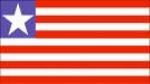
| Click flag for Country Report |



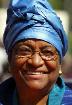
Ellen Johnson Sirleaf
President since 16 January 2006
President since 16 January 2006
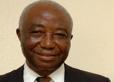
Joseph Nyumah Boakai
Vice President since 16 January 2006
Vice President since 16 January 2006
| TRAFFICKING IN PERSONS |
None reported.
Ellen Johnson Sirleaf
President since 16 January 2006
President since 16 January 2006
