



| MALDIVES Republic of Maldives Dhivehi Raajjeyge Jumhooriyyaa Joined United Nations: 21 September 1965 Human Rights as assured by their constitution Click here Updated 29 December 2012 |

| CAPITAL |
| POPULATION |
| CHIEF OF STATE |
| SELECTION PROCESS |
Male
394,451 (July 2012 est.)
Under the new constitution, the president is elected by direct vote;
president elected for a five-year term (eligible for a second term);
election last held 8 and 28 October 2008
note - Mohamed NASHEED resigned the presidency on 7
February 2012 following weeks of public protests over his
controversial order to arrest a senior judge, and Vice President
Mohamed WAHEED Hassan Maniku assumed the presidency
Next scheduled election: July 2013
president elected for a five-year term (eligible for a second term);
election last held 8 and 28 October 2008
note - Mohamed NASHEED resigned the presidency on 7
February 2012 following weeks of public protests over his
controversial order to arrest a senior judge, and Vice President
Mohamed WAHEED Hassan Maniku assumed the presidency
Next scheduled election: July 2013
HEAD OF GOVERNMENT
According to the Maldivian Constitution,the President is both
the Chief of State and Head of Government
the Chief of State and Head of Government
| DECLARATION OF HUMAN RIGHTS |
| ETHNIC GROUPS |
South Indians, Sinhalese, Arabs
| RELIGIONS |
Sunni Muslim
| GOVERNMENT STRUCTURE |
Republic with 19 atolls (atholhu, singular and plural) and the capital city; Legal system is based on Islamic law with admixtures of
English common law primarily in commercial matters; has not accepted compulsory ICJ jurisdiction
Executive: Under the new constitution, the president is elected by direct vote; president elected for a five-year term (eligible for a
second term); election last held 8 and 28 October 2008 (next to be held in July 2013)
Legislative: Unicameral People's Council or Majlis (77 seats; members elected by direct vote to serve five-year terms); note - the
Majlis in February 2009 passed legislation that increased the number of seats to 77 from 50
elections: last held 9 May 2009 (next to be held in 2014)
Judicial: High Court
English common law primarily in commercial matters; has not accepted compulsory ICJ jurisdiction
Executive: Under the new constitution, the president is elected by direct vote; president elected for a five-year term (eligible for a
second term); election last held 8 and 28 October 2008 (next to be held in July 2013)
Legislative: Unicameral People's Council or Majlis (77 seats; members elected by direct vote to serve five-year terms); note - the
Majlis in February 2009 passed legislation that increased the number of seats to 77 from 50
elections: last held 9 May 2009 (next to be held in 2014)
Judicial: High Court
| LANGUAGES |
Dhivehi (official, dialect of Sinhala, script derived from Arabic), English (spoken by most government officials)
| BRIEF HISTORY |
It is not known when the Maldives were settled for the first time. Comparative studies of the oral tradition reveal that the first settlers
must have been Dravidian people from the nearest coasts, probably fishermen from the SW coasts of the Indian subcontinent and
the western shores of Sri Lanka. The first settlements of the Maldives must have happened many millennia ago, for there is a lack of
a proper myth relating the settlement of the islands. These first Maldivian settlers didn't leave any archaeological remains. Their
buildings were probably built of wood, palm fronds and other perishable materials which would quickly decay in the tropical
climate. Moreover, their chiefs or headmen didn't live in elaborate stone palaces, and their religion did not require the building of
large temples or compounds. Therefore, although the Maldives have been populated continuously for perhaps many thousands of
years, the first archaeological remains in the Maldives date from the Buddhist period. Despite being omitted or just mentioned briefly
in most history books, the Buddhist period has a foundational importance in the history of the Maldives. It was during this period,
that the culture of the Maldives, as we know it now, flourished and developed. Buddhism probably spread to the Maldives in the
3rd century BC, at the time of the Mauryan emperor Aśoka the Great, when it extended to the regions of Afghanistan and Central
Asia, beyond the Mauryas' northwest border, as well as South to the island of Sri Lanka and the Maldive Islands. Buddhism
became the dominant religion in the Maldives and enjoyed royal patronage for many centuries, probably as long as over one
thousand and four hundred years. Practically all archaeological remains in the Maldives are from Buddhist stupas and monasteries,
and all artifacts found to date display characteristic Buddhist iconography. Buddhist (and Hindu) temples were Mandala shaped,
they are oriented according to the four cardinal points, the main gate being towards the east. Even today, many mosques in
Maldives face the sun and not Mecca. Since building space and materials were scarce, Maldivians constructed their places of
worship on the foundations of previous buildings. The ancient Buddhist stupas are called "havitta", "hatteli" or "ustubu" by the
Maldivians according to the different atolls. These stupas and other archaeological remains, like foundations of Buddhist buildings
Vihara, compound walls and stone baths, are found on many islands of the Maldives. The interest of Middle Eastern peoples in
Maldives resulted from its strategic location and its abundant supply of cowrie shells, a form of currency that was widely used
throughout Asia and parts of the East African coast since ancient times. Middle Eastern seafarers had just begun to take over the
Indian Ocean trade routes in the tenth century A.D. and found Maldives to be an important link in those routes. The importance of
the Arabs as traders in the Indian Ocean by the twelfth century A.D. may partly explain why the last Buddhist king of Maldives
converted to Islam in the year 1153 (or 1193, for certain copper plate grants give a later date). The king thereupon adopted the
Muslim title and name (in Arabic) of Sultan (besides the old Divehi title of Maha Radun or Ras Kilege or Rasgefānu) Muhammad al
Adil, initiating a series of six Islamic dynasties consisting of eighty-four sultans and sultanas that lasted until 1932 when the sultanate
became elective. The person responsible for this conversion was a Sunni Muslim visitor named Abu al Barakat. His venerated tomb
now stands on the grounds of Hukuru Mosque, or miski, in the capital of Malé. Built in 1656, this is the oldest mosque in Maldives.
Arab interest in Maldives also was reflected in the residence there in the 1340s of the well-known North African traveler Ibn
Battutah. It is worth noticing that compared to the other areas of South Asia, the conversion of the Maldives to Islam happened
relatively late. Arab Traders had converted populations in the Malabar coast since the 7th century, and the Arab invader
Muhammad Bin Qāsim had converted large swathes of Sind to Islam at about the same time. The Maldives remained a Buddhist
kingdom for another five hundred years (perhaps the westernmost Buddhist country) until the conversion to Islam. In 1558 the
Portuguese established a small garrison with a Viador (Viyazoru), or overseer of a trading warehouse in the Maldives, which they
administered from their main colony in Goa. It is said that they tried to impose Christianity on the locals. Thus, fifteen years later, a
local leader named Muhammad Thakurufaanu Al-Azam and his brother organized a popular revolt and drove the Portuguese out of
Maldives. This event is now commemorated as National Day, and a small museum and memorial center honor the hero on his home
island of Utheemu on South Thiladhummathi Atoll. In the mid-seventeenth century, the Dutch, who had replaced the Portuguese as
the dominant power in Ceylon, established hegemony over Maldivian affairs without involving themselves directly in local matters,
which were governed according to centuries-old Islamic customs. However, the British expelled the Dutch from Ceylon in 1796
and included Maldives as a British protected area. The status of Maldives as a British protectorate was officially recorded in an
1887 agreement in which the sultan accepted British influence over Maldivian external relations and defense. The British had no
presence, however, on the leading island community of Malé. They left the islanders alone, as had the Dutch, with regard to internal
administration to continue to be regulated by Muslim traditional institutions. During the British era, which lasted until 1965, Maldives
continued to be ruled under a succession of sultans. It was a period during which the Sultan's authority and powers were
increasingly and decisively taken over by the Chief Minister, much to the chagrin of the British Governor-General who continued to
deal with the ineffectual Sultan. Consequently, Britain encouraged the development of a constitutional monarchy, and the first
Constitution was proclaimed in 1932. However, the new arrangements favoured neither the aging Sultan nor the wily Chief Minister,
but rather a young crop of British-educated reformists. As a result, angry mobs were instigated against the Constitution which was
publicly torn up. Maldives remained a British crown protectorate until 1953 when the sultanate was suspended and the First
Republic was declared under the short-lived presidency of Muhammad Amin Didi. This first elected president of the country
introduced several reforms. While serving as prime minister during the 1940s, Didi nationalized the fish export industry. As president
he is remembered as a reformer of the education system and a promoter of women's rights. Muslim conservatives in Malé eventually
ousted his government, and during a riot over food shortages, Didi was beaten by a mob and died on a nearby island. Beginning in
the 1950s, political history in Maldives was largely influenced by the British military presence in the islands. In 1954 the restoration
of the sultanate perpetuated the rule of the past. Two years later, the United Kingdom obtained permission to reestablish its wartime
airfield on Gan in the southernmost Addu Atoll. On July 26, 1965, Maldives gained independence under an agreement signed with
United Kingdom. The British government retained the use of the Gan and Hitaddu facilities. In a national referendum in March
1968, Maldivians abolished the sultanate and established a republic. The Second Republic was proclaimed in November 1968
under the presidency of Ibrahim Nasir, who had increasingly dominated the political scene. Under the new constitution, Nasir was
elected indirectly to a four-year presidential term by the Majlis (legislature). He appointed Ahmed Zaki as the new prime minister. In
1973 Nasir was elected to a second term under the constitution as amended in 1972, which extended the presidential term to five
years and which also provided for the election of the prime minister by the Majlis. Elected to replace Nasir for a five-year
presidential term in 1978 was Maumoon Abdul Gayoom, a former university lecturer and Maldivian ambassador to the United
Nations (UN). The peaceful election was seen as ushering in a period of political stability and economic development in view of
Gayoom's priority to develop the poorer islands. In 1978 Maldives joined the International Monetary Fund and the World Bank.
Despite the popularity of Gayoom, those connected to the former President hired ex-SAS mercenaries in 1980 to carry out a coup
to oust him. Despite coup attempts in 1980, 1983, and 1988, Gayoom's popularity remained strong, allowing him to win three more
presidential terms. In the 1983, 1988, and 1993 elections, Gayoom received more than 90 % of the vote. The 1988 coup had been
masterminded and sponsored by a few disgruntled businessmen, chiefly Sikka Ahmed Ismail Maniku and Abdulla Luthufi, who
were operating a farm in Sri Lanka. Ex-president Nasir denied any involvement in the coup. In fact, in July 1990, President
Gayoom officially pardoned Nasir in absentia in recognition of his role in obtaining Maldives' independence. Mohamed Nasheed
won the 2008 Presidential election, resulting in Gayoom having to step down as President. Mohammed Waheed Hassan Manik was
sworn in as President of the Maldives on 7 February 2012, in connection to the resignation of President Nasheed amidst weeks of
protests and demonstrations led by local police dissidents who opposed Nasheed’s 16 January order for the military to arrest
Abdulla Mohamed, the Chief Justice of the Criminal Court. Dr. Waheed opposed the arrest order and supported the opposition
that forced Mohamed Nasheed to resign. A day later, Nasheed stated that he was forced to resign at gunpoint through a police
mutiny and coup. There have been allegations that Dr. Waheed was involved in planning the coup, though Dr. Waheed has denied
involvement. Police issued with arrest warrant for Nasheed, soon after Dr.Waheed took seat in office.
Source: Wikipedia: History of Maldives
must have been Dravidian people from the nearest coasts, probably fishermen from the SW coasts of the Indian subcontinent and
the western shores of Sri Lanka. The first settlements of the Maldives must have happened many millennia ago, for there is a lack of
a proper myth relating the settlement of the islands. These first Maldivian settlers didn't leave any archaeological remains. Their
buildings were probably built of wood, palm fronds and other perishable materials which would quickly decay in the tropical
climate. Moreover, their chiefs or headmen didn't live in elaborate stone palaces, and their religion did not require the building of
large temples or compounds. Therefore, although the Maldives have been populated continuously for perhaps many thousands of
years, the first archaeological remains in the Maldives date from the Buddhist period. Despite being omitted or just mentioned briefly
in most history books, the Buddhist period has a foundational importance in the history of the Maldives. It was during this period,
that the culture of the Maldives, as we know it now, flourished and developed. Buddhism probably spread to the Maldives in the
3rd century BC, at the time of the Mauryan emperor Aśoka the Great, when it extended to the regions of Afghanistan and Central
Asia, beyond the Mauryas' northwest border, as well as South to the island of Sri Lanka and the Maldive Islands. Buddhism
became the dominant religion in the Maldives and enjoyed royal patronage for many centuries, probably as long as over one
thousand and four hundred years. Practically all archaeological remains in the Maldives are from Buddhist stupas and monasteries,
and all artifacts found to date display characteristic Buddhist iconography. Buddhist (and Hindu) temples were Mandala shaped,
they are oriented according to the four cardinal points, the main gate being towards the east. Even today, many mosques in
Maldives face the sun and not Mecca. Since building space and materials were scarce, Maldivians constructed their places of
worship on the foundations of previous buildings. The ancient Buddhist stupas are called "havitta", "hatteli" or "ustubu" by the
Maldivians according to the different atolls. These stupas and other archaeological remains, like foundations of Buddhist buildings
Vihara, compound walls and stone baths, are found on many islands of the Maldives. The interest of Middle Eastern peoples in
Maldives resulted from its strategic location and its abundant supply of cowrie shells, a form of currency that was widely used
throughout Asia and parts of the East African coast since ancient times. Middle Eastern seafarers had just begun to take over the
Indian Ocean trade routes in the tenth century A.D. and found Maldives to be an important link in those routes. The importance of
the Arabs as traders in the Indian Ocean by the twelfth century A.D. may partly explain why the last Buddhist king of Maldives
converted to Islam in the year 1153 (or 1193, for certain copper plate grants give a later date). The king thereupon adopted the
Muslim title and name (in Arabic) of Sultan (besides the old Divehi title of Maha Radun or Ras Kilege or Rasgefānu) Muhammad al
Adil, initiating a series of six Islamic dynasties consisting of eighty-four sultans and sultanas that lasted until 1932 when the sultanate
became elective. The person responsible for this conversion was a Sunni Muslim visitor named Abu al Barakat. His venerated tomb
now stands on the grounds of Hukuru Mosque, or miski, in the capital of Malé. Built in 1656, this is the oldest mosque in Maldives.
Arab interest in Maldives also was reflected in the residence there in the 1340s of the well-known North African traveler Ibn
Battutah. It is worth noticing that compared to the other areas of South Asia, the conversion of the Maldives to Islam happened
relatively late. Arab Traders had converted populations in the Malabar coast since the 7th century, and the Arab invader
Muhammad Bin Qāsim had converted large swathes of Sind to Islam at about the same time. The Maldives remained a Buddhist
kingdom for another five hundred years (perhaps the westernmost Buddhist country) until the conversion to Islam. In 1558 the
Portuguese established a small garrison with a Viador (Viyazoru), or overseer of a trading warehouse in the Maldives, which they
administered from their main colony in Goa. It is said that they tried to impose Christianity on the locals. Thus, fifteen years later, a
local leader named Muhammad Thakurufaanu Al-Azam and his brother organized a popular revolt and drove the Portuguese out of
Maldives. This event is now commemorated as National Day, and a small museum and memorial center honor the hero on his home
island of Utheemu on South Thiladhummathi Atoll. In the mid-seventeenth century, the Dutch, who had replaced the Portuguese as
the dominant power in Ceylon, established hegemony over Maldivian affairs without involving themselves directly in local matters,
which were governed according to centuries-old Islamic customs. However, the British expelled the Dutch from Ceylon in 1796
and included Maldives as a British protected area. The status of Maldives as a British protectorate was officially recorded in an
1887 agreement in which the sultan accepted British influence over Maldivian external relations and defense. The British had no
presence, however, on the leading island community of Malé. They left the islanders alone, as had the Dutch, with regard to internal
administration to continue to be regulated by Muslim traditional institutions. During the British era, which lasted until 1965, Maldives
continued to be ruled under a succession of sultans. It was a period during which the Sultan's authority and powers were
increasingly and decisively taken over by the Chief Minister, much to the chagrin of the British Governor-General who continued to
deal with the ineffectual Sultan. Consequently, Britain encouraged the development of a constitutional monarchy, and the first
Constitution was proclaimed in 1932. However, the new arrangements favoured neither the aging Sultan nor the wily Chief Minister,
but rather a young crop of British-educated reformists. As a result, angry mobs were instigated against the Constitution which was
publicly torn up. Maldives remained a British crown protectorate until 1953 when the sultanate was suspended and the First
Republic was declared under the short-lived presidency of Muhammad Amin Didi. This first elected president of the country
introduced several reforms. While serving as prime minister during the 1940s, Didi nationalized the fish export industry. As president
he is remembered as a reformer of the education system and a promoter of women's rights. Muslim conservatives in Malé eventually
ousted his government, and during a riot over food shortages, Didi was beaten by a mob and died on a nearby island. Beginning in
the 1950s, political history in Maldives was largely influenced by the British military presence in the islands. In 1954 the restoration
of the sultanate perpetuated the rule of the past. Two years later, the United Kingdom obtained permission to reestablish its wartime
airfield on Gan in the southernmost Addu Atoll. On July 26, 1965, Maldives gained independence under an agreement signed with
United Kingdom. The British government retained the use of the Gan and Hitaddu facilities. In a national referendum in March
1968, Maldivians abolished the sultanate and established a republic. The Second Republic was proclaimed in November 1968
under the presidency of Ibrahim Nasir, who had increasingly dominated the political scene. Under the new constitution, Nasir was
elected indirectly to a four-year presidential term by the Majlis (legislature). He appointed Ahmed Zaki as the new prime minister. In
1973 Nasir was elected to a second term under the constitution as amended in 1972, which extended the presidential term to five
years and which also provided for the election of the prime minister by the Majlis. Elected to replace Nasir for a five-year
presidential term in 1978 was Maumoon Abdul Gayoom, a former university lecturer and Maldivian ambassador to the United
Nations (UN). The peaceful election was seen as ushering in a period of political stability and economic development in view of
Gayoom's priority to develop the poorer islands. In 1978 Maldives joined the International Monetary Fund and the World Bank.
Despite the popularity of Gayoom, those connected to the former President hired ex-SAS mercenaries in 1980 to carry out a coup
to oust him. Despite coup attempts in 1980, 1983, and 1988, Gayoom's popularity remained strong, allowing him to win three more
presidential terms. In the 1983, 1988, and 1993 elections, Gayoom received more than 90 % of the vote. The 1988 coup had been
masterminded and sponsored by a few disgruntled businessmen, chiefly Sikka Ahmed Ismail Maniku and Abdulla Luthufi, who
were operating a farm in Sri Lanka. Ex-president Nasir denied any involvement in the coup. In fact, in July 1990, President
Gayoom officially pardoned Nasir in absentia in recognition of his role in obtaining Maldives' independence. Mohamed Nasheed
won the 2008 Presidential election, resulting in Gayoom having to step down as President. Mohammed Waheed Hassan Manik was
sworn in as President of the Maldives on 7 February 2012, in connection to the resignation of President Nasheed amidst weeks of
protests and demonstrations led by local police dissidents who opposed Nasheed’s 16 January order for the military to arrest
Abdulla Mohamed, the Chief Justice of the Criminal Court. Dr. Waheed opposed the arrest order and supported the opposition
that forced Mohamed Nasheed to resign. A day later, Nasheed stated that he was forced to resign at gunpoint through a police
mutiny and coup. There have been allegations that Dr. Waheed was involved in planning the coup, though Dr. Waheed has denied
involvement. Police issued with arrest warrant for Nasheed, soon after Dr.Waheed took seat in office.
Source: Wikipedia: History of Maldives
| ECONOMIC OVERVIEW |
Tourism, Maldives' largest economic activity, accounts for 28% of GDP and more than 60% of foreign exchange receipts. Over
90% of government tax revenue comes from import duties and tourism-related taxes. Fishing is the second leading sector, but the
fish catch has dropped sharply in recent years. Agriculture and manufacturing continue to play a lesser role in the economy,
constrained by the limited availability of cultivable land and the shortage of domestic labor. Most staple foods must be imported. In
the last decade, real GDP growth averaged around 6% per year except for 2005, when GDP declined following the Indian Ocean
tsunami, and in 2009, when GDP shrank by nearly 5% as tourist arrivals declined and capital flows plunged in the wake of the
global financial crisis. Falling tourist arrivals and fish exports, combined with high government spending on social needs, subsidies,
and civil servant salaries contributed to a balance of payments crisis, which was eased with a December 2009, $79.3 million IMF
standby agreement. However, after the first two disbursements, the IMF withheld subsequent disbursements due to concerns over
Maldives' growing budget deficit. Maldives has had chronic budget deficits in recent years and the government's plans to cut
expenditures have not progressed well. A new Goods and Services Tax (GST) on tourism was introduced in January 2011 and a
new Business Profit Tax is to be introduced during 2012. These taxes are expected to increase government revenue by about 25%.
The government has privatized the main airport and is partially privatizing the energy sector. Tourism will remain the engine of the
economy. The Government of the Maldives has aggressively promoted building new island resorts. Due to increasing tourist arrivals,
GDP growth climbed to 8% in 2010 and around 6% in 2011. Diversifying the economy beyond tourism and fishing, reforming
public finance, and increasing employment opportunities are major challenges facing the government. Over the longer term
Maldivian authorities worry about the impact of erosion and possible global warming on their low-lying country; 80% of the area is
1 meter or less above sea level.
Source: CIA World Factbook (select Maldives)
90% of government tax revenue comes from import duties and tourism-related taxes. Fishing is the second leading sector, but the
fish catch has dropped sharply in recent years. Agriculture and manufacturing continue to play a lesser role in the economy,
constrained by the limited availability of cultivable land and the shortage of domestic labor. Most staple foods must be imported. In
the last decade, real GDP growth averaged around 6% per year except for 2005, when GDP declined following the Indian Ocean
tsunami, and in 2009, when GDP shrank by nearly 5% as tourist arrivals declined and capital flows plunged in the wake of the
global financial crisis. Falling tourist arrivals and fish exports, combined with high government spending on social needs, subsidies,
and civil servant salaries contributed to a balance of payments crisis, which was eased with a December 2009, $79.3 million IMF
standby agreement. However, after the first two disbursements, the IMF withheld subsequent disbursements due to concerns over
Maldives' growing budget deficit. Maldives has had chronic budget deficits in recent years and the government's plans to cut
expenditures have not progressed well. A new Goods and Services Tax (GST) on tourism was introduced in January 2011 and a
new Business Profit Tax is to be introduced during 2012. These taxes are expected to increase government revenue by about 25%.
The government has privatized the main airport and is partially privatizing the energy sector. Tourism will remain the engine of the
economy. The Government of the Maldives has aggressively promoted building new island resorts. Due to increasing tourist arrivals,
GDP growth climbed to 8% in 2010 and around 6% in 2011. Diversifying the economy beyond tourism and fishing, reforming
public finance, and increasing employment opportunities are major challenges facing the government. Over the longer term
Maldivian authorities worry about the impact of erosion and possible global warming on their low-lying country; 80% of the area is
1 meter or less above sea level.
Source: CIA World Factbook (select Maldives)
| POLITICAL CLIMATE |
The Maldives have scored poorly on some indices of freedom. The "Freedom in the World" index, a measure of political rights and
civil liberties and published by Freedom House, judges Maldives as "not free", and the "Worldwide Press Freedom Index",
published by Reporters Without Borders, lists Maldives as a "very serious situation" (a judgment also given to Libya, Cuba, and
China).
Violent protests broke out in Malé on September 20, 2003 after Evan Naseem, a prisoner, was killed in Maafushi jail, after the
most brutal torture, reportedly by prison staff. An attempt to cover up the death was foiled when the mother of the dead man
discovered the marks of torture on his body and made the knowledge public, therefore triggering the riots. A subsequent
disturbance at the prison resulted in three deaths when police guards at the prison opened fire on the inmates. Several government
buildings were set on fire during the riots. As a result of pressure from reformists, the junior prison guards responsible for Naseem's
death were subsequently tried, convicted and sentenced in 2005 in what was believed to be a show trial that avoided the senior
officers involved being investigated. The report of an inquiry into the prison shootings was heavily censored by the Government,
citing "national security" grounds. Pro-reformists claim this was in order to cover-up the chain of authority and circumstances that
led to the killings.
There were fresh protests on August 13, 2004, (Black Friday), which appear to have begun as a demand for the release of four
political activists from detention. Up to 5,000 demonstrators were involved. After two police officers were reportedly stabbed,
allegedly by government agents provocateur, President Gayoom declared a State of Emergency and suppressed the demonstration,
suspending all human rights guaranteed under the Constitution, banning demonstrations and the expression of views critical of the
government. At least 250 pro-reform protestors were arrested. As part of the state of emergency, and to prevent independent
reporting of events, the government shut off Internet access and some mobile telephony services to Maldives on August 13 and 14,
2004.
A new Constitution was ratified in August 2008, paving the way for the country's first multi-party presidential election two months
later. On October 8, 2008, the country held its first ever multi-party presidential election. On October 8, no candidate gained more
than 50% of the vote; a runoff was held on October 28 between Maumoon Abdul Gayoom and Mohamed Nasheed and his
running mate, Dr. Mohammed Waheed Hassan. Nasheed and Dr. Waheed won the election, unseating long time incumbent
Gayoom.
The election was the first one held democratically in the history of the Maldives. On 29 June 2010, every minister in the cabinet
resigned from their posts; excluding president Mohamed Nasheed and vice president. Political experts criticized this act, saying that
this was a move by President Nasheed to gain the decreasing public support and to silence the voices of the opposition by
threatening them. Note: the president is both the chief of state and head of government Public protests against the President in 2011
and early 2012 were triggered by the arrest of a judge accused of corruption, which drew the judiciary into opposition. The
resignation under pressure of President Nasheedh on 7 February 2012, described by his supporters as a coup that returns the
nation to prior President Gayoom's control, drew wide international attention due to Nasheedh's high-profile efforts worldwide to
promote carbon-neutral environmental policies.
Source: Wikipedia: Politics of Maldives
civil liberties and published by Freedom House, judges Maldives as "not free", and the "Worldwide Press Freedom Index",
published by Reporters Without Borders, lists Maldives as a "very serious situation" (a judgment also given to Libya, Cuba, and
China).
Violent protests broke out in Malé on September 20, 2003 after Evan Naseem, a prisoner, was killed in Maafushi jail, after the
most brutal torture, reportedly by prison staff. An attempt to cover up the death was foiled when the mother of the dead man
discovered the marks of torture on his body and made the knowledge public, therefore triggering the riots. A subsequent
disturbance at the prison resulted in three deaths when police guards at the prison opened fire on the inmates. Several government
buildings were set on fire during the riots. As a result of pressure from reformists, the junior prison guards responsible for Naseem's
death were subsequently tried, convicted and sentenced in 2005 in what was believed to be a show trial that avoided the senior
officers involved being investigated. The report of an inquiry into the prison shootings was heavily censored by the Government,
citing "national security" grounds. Pro-reformists claim this was in order to cover-up the chain of authority and circumstances that
led to the killings.
There were fresh protests on August 13, 2004, (Black Friday), which appear to have begun as a demand for the release of four
political activists from detention. Up to 5,000 demonstrators were involved. After two police officers were reportedly stabbed,
allegedly by government agents provocateur, President Gayoom declared a State of Emergency and suppressed the demonstration,
suspending all human rights guaranteed under the Constitution, banning demonstrations and the expression of views critical of the
government. At least 250 pro-reform protestors were arrested. As part of the state of emergency, and to prevent independent
reporting of events, the government shut off Internet access and some mobile telephony services to Maldives on August 13 and 14,
2004.
A new Constitution was ratified in August 2008, paving the way for the country's first multi-party presidential election two months
later. On October 8, 2008, the country held its first ever multi-party presidential election. On October 8, no candidate gained more
than 50% of the vote; a runoff was held on October 28 between Maumoon Abdul Gayoom and Mohamed Nasheed and his
running mate, Dr. Mohammed Waheed Hassan. Nasheed and Dr. Waheed won the election, unseating long time incumbent
Gayoom.
The election was the first one held democratically in the history of the Maldives. On 29 June 2010, every minister in the cabinet
resigned from their posts; excluding president Mohamed Nasheed and vice president. Political experts criticized this act, saying that
this was a move by President Nasheed to gain the decreasing public support and to silence the voices of the opposition by
threatening them. Note: the president is both the chief of state and head of government Public protests against the President in 2011
and early 2012 were triggered by the arrest of a judge accused of corruption, which drew the judiciary into opposition. The
resignation under pressure of President Nasheedh on 7 February 2012, described by his supporters as a coup that returns the
nation to prior President Gayoom's control, drew wide international attention due to Nasheedh's high-profile efforts worldwide to
promote carbon-neutral environmental policies.
Source: Wikipedia: Politics of Maldives
| INTERNATIONAL DISPUTES |
None reported.


| REFUGEES AND INTERNALLY DISPLACED PERSONS (IDPS) |
None reported.
| ILLICIT DRUGS |
None reported.
| HUMAN RIGHTS STATEMENTS, ANALYSIS AND CRITIQUES |
2011 Human Rights Report: Maldives
Bureau of Democracy, Human Rights, and Labor
2011 Country Report on Human Rights Practices
May 25, 2012
The Republic of Maldives is a multiparty constitutional democracy. In 2008 parliament ratified a new constitution that provided for the
first multiparty presidential elections. In relatively free and fair elections in October 2008, Mohamed Nasheed became the country’s first
directly elected president. Security forces reported to civilian authorities.
The most significant human rights problems include restrictions on religious rights, abuse and unequal treatment of women, and
corruption of government officials. The constitution requires all citizens to be Muslim, and the government’s Ministry of Islamic Affairs
actively polices and enforces compliance with Islamic practices. There were reports of religion-related self-censorship in the press and
among civil society contacts. Nongovernmental organizations (NGOs) condemned the performance of the judiciary and executive branch
for their inadequate treatment of criminal cases, especially rape. Corruption existed within the judiciary, members of parliament, and
among officials of the executive and state institutions.
Other human rights problems reported included flogging, arbitrary arrests, harassment of journalists, and discrimination against
expatriate laborers. Migrant laborers were subjected to labor abuses and were the primary victims of human trafficking. Many laborers
migrated illegally into the country, making them particularly vulnerable to forced labor and debt bondage.
The government took steps to prosecute and punish some police and military officials who committed abuses, but several judges
allegedly enjoyed impunity.
Click here to read more »
Bureau of Democracy, Human Rights, and Labor
2011 Country Report on Human Rights Practices
May 25, 2012
The Republic of Maldives is a multiparty constitutional democracy. In 2008 parliament ratified a new constitution that provided for the
first multiparty presidential elections. In relatively free and fair elections in October 2008, Mohamed Nasheed became the country’s first
directly elected president. Security forces reported to civilian authorities.
The most significant human rights problems include restrictions on religious rights, abuse and unequal treatment of women, and
corruption of government officials. The constitution requires all citizens to be Muslim, and the government’s Ministry of Islamic Affairs
actively polices and enforces compliance with Islamic practices. There were reports of religion-related self-censorship in the press and
among civil society contacts. Nongovernmental organizations (NGOs) condemned the performance of the judiciary and executive branch
for their inadequate treatment of criminal cases, especially rape. Corruption existed within the judiciary, members of parliament, and
among officials of the executive and state institutions.
Other human rights problems reported included flogging, arbitrary arrests, harassment of journalists, and discrimination against
expatriate laborers. Migrant laborers were subjected to labor abuses and were the primary victims of human trafficking. Many laborers
migrated illegally into the country, making them particularly vulnerable to forced labor and debt bondage.
The government took steps to prosecute and punish some police and military officials who committed abuses, but several judges
allegedly enjoyed impunity.
Click here to read more »
31 August 2012
Human Rights Committee
Consideration of reports submitted by States parties under article 40 of the Covenant
Concluding observations adopted by the Human Rights Committee at its 105th session, 9-27 July 2012
Maldives
A. Introduction
2. The Committee welcomes the submission of the initial report of the Maldives (CCPR/C/MDV/1) (together with its core document
(HRI/CORE/MDV/2010), and the information presented therein, as well as the written replies to the Committee’s list of issues
(CCPR/C/MDV/Q/1/Add.1) and the oral replies provided by the delegation to questions put forward by Committee members. The
Committee regrets that the initial periodic report of the State party was not written according to the reporting guidelines of the
Committee and the harmonized guidelines on reporting under international human rights treaties, and encourages the State party to do so
for the submission of its future periodic reports. It expresses its appreciation for the constructive dialogue with the State party’s
delegation on the measures that the State party has taken to implement the provisions of the Covenant since its ratification.
B. Positive aspects
3. The Committee welcomes the following legislative and institutional measures taken by the State:
(a) The adoption, in 2008, of a Constitution which contains a Bill of Rights ;
(b) The removal by the Parliament, in 2008, of the gender bar on running for presidency;
(c) the enactment of the Anti-Domestic Violence Act, in April 2012;
4. The Committee welcomes the ratification by the State party of the following international instruments:
(a) The International Covenant on Economic, Social and Cultural Rights, on 19 September 2006;
(b) The Optional protocol to the International Covenant on Civil and Political Rights, on 19 September 2006;
C. Principal matters of concern and recommendations
5. The Committee considers the State party’s reservation to article 18 of the Covenant to be incompatible with the object and purpose of
the Covenant (general comments No. 22 (1993) on the right to freedom of thought, conscience and religion, and No. 24 (1994) on
issues relating to reservations made upon ratification or accession to the Covenant or the Optional Protocols thereto, or in relation to
declarations under article 41 of the Covenant) because: (a) it applies unrestrictedly to all the provisions of article 18 of the Covenant,
including the right to have or adopt a religion, which right may not be subject to restriction; (b) moreover, the reservation is not specific,
and does not make clear what obligations of human rights compliance the State party has or has not undertaken (general comment No.
24 (1994), para. 19).
The State party should withdraw its reservation to article 18 of the Covenant.
Click here to read more »
Human Rights Committee
Consideration of reports submitted by States parties under article 40 of the Covenant
Concluding observations adopted by the Human Rights Committee at its 105th session, 9-27 July 2012
Maldives
A. Introduction
2. The Committee welcomes the submission of the initial report of the Maldives (CCPR/C/MDV/1) (together with its core document
(HRI/CORE/MDV/2010), and the information presented therein, as well as the written replies to the Committee’s list of issues
(CCPR/C/MDV/Q/1/Add.1) and the oral replies provided by the delegation to questions put forward by Committee members. The
Committee regrets that the initial periodic report of the State party was not written according to the reporting guidelines of the
Committee and the harmonized guidelines on reporting under international human rights treaties, and encourages the State party to do so
for the submission of its future periodic reports. It expresses its appreciation for the constructive dialogue with the State party’s
delegation on the measures that the State party has taken to implement the provisions of the Covenant since its ratification.
B. Positive aspects
3. The Committee welcomes the following legislative and institutional measures taken by the State:
(a) The adoption, in 2008, of a Constitution which contains a Bill of Rights ;
(b) The removal by the Parliament, in 2008, of the gender bar on running for presidency;
(c) the enactment of the Anti-Domestic Violence Act, in April 2012;
4. The Committee welcomes the ratification by the State party of the following international instruments:
(a) The International Covenant on Economic, Social and Cultural Rights, on 19 September 2006;
(b) The Optional protocol to the International Covenant on Civil and Political Rights, on 19 September 2006;
C. Principal matters of concern and recommendations
5. The Committee considers the State party’s reservation to article 18 of the Covenant to be incompatible with the object and purpose of
the Covenant (general comments No. 22 (1993) on the right to freedom of thought, conscience and religion, and No. 24 (1994) on
issues relating to reservations made upon ratification or accession to the Covenant or the Optional Protocols thereto, or in relation to
declarations under article 41 of the Covenant) because: (a) it applies unrestrictedly to all the provisions of article 18 of the Covenant,
including the right to have or adopt a religion, which right may not be subject to restriction; (b) moreover, the reservation is not specific,
and does not make clear what obligations of human rights compliance the State party has or has not undertaken (general comment No.
24 (1994), para. 19).
The State party should withdraw its reservation to article 18 of the Covenant.
Click here to read more »
Freedom In The World 2010 Report
Political Rights Score: 3
Civil Liberties Score: 4
Status: Partly Free
Ratings Change
The Maldives’ political rights rating improved from 4 to 3 due to largely fair and competitive legislative elections held in May
2009.
Overview
The opposition Maldivian People’s Party (DRP) won the largest number of seats in February 2011 local council elections. In May, the
DRP accused the government of using violence against demonstrators in Malé, the capital, who were protesting against rising prices.
Antigovernment demonstrations erupted again in December, with tens of thousands taking to the streets of the capital.
Nasheed’s immediate priorities included anticorruption measures, government decentralization, and press freedom. The government in
2009 abolished the Atolls Ministry, appointed seven provincial state ministers, and published a draft decentralization bill. The president
also abolished the Information Ministry, and introduced draft bills guaranteeing freedom of expression and press freedom that remained
under consideration by the parliament at the end of 2010. These plans for reform remained largely hindered by the opposition in 2011.
In the May 2009 parliamentary elections, Gayoom’s Maldivian People’s Party (DRP) won 28 of 77 seats, while the MDP captured 26,
the DRP-allied People’s Alliance (PA) took 7, and independents garnered 13. A Commonwealth observer team characterized the voting
as largely transparent and competitive, despite minor problems related to the compilation of the voter list and some other irregularities.
Nasheed’s cabinet resigned in June 2010, citing frustration over continued efforts by the opposition-controlled legislature to block the
reforms supported by the president. Nasheed reappointed the cabinet a week later, though the parliament refused to ratify the
appointments. In December 2010, the Supreme Court ruled that seven cabinet members who had not been approved by the opposition-
led parliament had to step down from office. Following the court decision, the president appointed new ministers and acting ministers.
In February 2011 local council elections, the DRP won a majority of seats, particularly in major population centers.
In May 2011, protesters marched in Malé, the capital, to express their frustration with rising food prices and unemployment. The DRP
blamed the price increases on the government’s devaluation of the nation’s currency; the government, however, said the increases were
the result of rising global commodity prices. Riot police used tear gas and batons to break up the protests, and the government accused
the protesters of initiating the violence during the demonstrations. During several nights of protests, police arrested many activists
including opposition member Umar Naseer. In December, an opposition alliance was formed against Nasheed, culminating in a
December 23 mass rally attended by tens of thousands of demonstrators who alleged that Nasheed’s government had failed to protect
Islamic values.
Click here to read more »
Political Rights Score: 3
Civil Liberties Score: 4
Status: Partly Free
Ratings Change
The Maldives’ political rights rating improved from 4 to 3 due to largely fair and competitive legislative elections held in May
2009.
Overview
The opposition Maldivian People’s Party (DRP) won the largest number of seats in February 2011 local council elections. In May, the
DRP accused the government of using violence against demonstrators in Malé, the capital, who were protesting against rising prices.
Antigovernment demonstrations erupted again in December, with tens of thousands taking to the streets of the capital.
Nasheed’s immediate priorities included anticorruption measures, government decentralization, and press freedom. The government in
2009 abolished the Atolls Ministry, appointed seven provincial state ministers, and published a draft decentralization bill. The president
also abolished the Information Ministry, and introduced draft bills guaranteeing freedom of expression and press freedom that remained
under consideration by the parliament at the end of 2010. These plans for reform remained largely hindered by the opposition in 2011.
In the May 2009 parliamentary elections, Gayoom’s Maldivian People’s Party (DRP) won 28 of 77 seats, while the MDP captured 26,
the DRP-allied People’s Alliance (PA) took 7, and independents garnered 13. A Commonwealth observer team characterized the voting
as largely transparent and competitive, despite minor problems related to the compilation of the voter list and some other irregularities.
Nasheed’s cabinet resigned in June 2010, citing frustration over continued efforts by the opposition-controlled legislature to block the
reforms supported by the president. Nasheed reappointed the cabinet a week later, though the parliament refused to ratify the
appointments. In December 2010, the Supreme Court ruled that seven cabinet members who had not been approved by the opposition-
led parliament had to step down from office. Following the court decision, the president appointed new ministers and acting ministers.
In February 2011 local council elections, the DRP won a majority of seats, particularly in major population centers.
In May 2011, protesters marched in Malé, the capital, to express their frustration with rising food prices and unemployment. The DRP
blamed the price increases on the government’s devaluation of the nation’s currency; the government, however, said the increases were
the result of rising global commodity prices. Riot police used tear gas and batons to break up the protests, and the government accused
the protesters of initiating the violence during the demonstrations. During several nights of protests, police arrested many activists
including opposition member Umar Naseer. In December, an opposition alliance was formed against Nasheed, culminating in a
December 23 mass rally attended by tens of thousands of demonstrators who alleged that Nasheed’s government had failed to protect
Islamic values.
Click here to read more »
8 October 2012
Maldives: Police violence as ex-president is arrested
Police in the Maldives used excessive force when arresting former President Mohamad Nasheed on Monday, said Amnesty International.
Nasheed was arrested in Fares-Maathoda in southern Maldives this morning for allegedly ignoring a court summons. Eyewitnesses told
Amnesty International that during the arrest police vandalised the house where Nasheed was staying, and then attacked supporters
peacefully protesting outside including former foreign minister Ahmed Naseem who was kicked and pepper sprayed in the face.
“We are deeply concerned about the reports of some police using violence around Mohamad Nasheed’s arrest, despite neither him nor
his supporters offering any resistance,” said Abbas Faiz, Amnesty International’s Researcher on Maldives.
Nasheed is to stand trial for the alleged arrest of a judge, Abdulla Mohamed, during his presidency. While it is positive the Maldivian
authorities are investigating the case, Amnesty International is concerned that the current authorities are turning a blind eye to human
rights violations during the presidencies of Maumoon Abdul Gayoom (1978-2008) and Mohamed Waheed (since February 2012).
“Investigations into past abuses are always welcome. However, accountability must not be selective – all authorities including former
presidents should be held accountable for human rights violations. The focus on human rights violations during only Nasheed’s
presidency appears politically motivated,” said Faiz.
Amnesty International has repeatedly raised concerns about police brutality against peaceful protesters this year under the new
goverment. Not a single person has been held accountable for these violations.
During the presidency of Maumoon Abdul Gayoom, his political opponents were routinely arbitrarily arrested and tortured. His
government was able for the most part to evade accountability for the many human rights violations during his time.
Click here to read more »
Maldives: Police violence as ex-president is arrested
Police in the Maldives used excessive force when arresting former President Mohamad Nasheed on Monday, said Amnesty International.
Nasheed was arrested in Fares-Maathoda in southern Maldives this morning for allegedly ignoring a court summons. Eyewitnesses told
Amnesty International that during the arrest police vandalised the house where Nasheed was staying, and then attacked supporters
peacefully protesting outside including former foreign minister Ahmed Naseem who was kicked and pepper sprayed in the face.
“We are deeply concerned about the reports of some police using violence around Mohamad Nasheed’s arrest, despite neither him nor
his supporters offering any resistance,” said Abbas Faiz, Amnesty International’s Researcher on Maldives.
Nasheed is to stand trial for the alleged arrest of a judge, Abdulla Mohamed, during his presidency. While it is positive the Maldivian
authorities are investigating the case, Amnesty International is concerned that the current authorities are turning a blind eye to human
rights violations during the presidencies of Maumoon Abdul Gayoom (1978-2008) and Mohamed Waheed (since February 2012).
“Investigations into past abuses are always welcome. However, accountability must not be selective – all authorities including former
presidents should be held accountable for human rights violations. The focus on human rights violations during only Nasheed’s
presidency appears politically motivated,” said Faiz.
Amnesty International has repeatedly raised concerns about police brutality against peaceful protesters this year under the new
goverment. Not a single person has been held accountable for these violations.
During the presidency of Maumoon Abdul Gayoom, his political opponents were routinely arbitrarily arrested and tortured. His
government was able for the most part to evade accountability for the many human rights violations during his time.
Click here to read more »
Nairobi: Films to Inform, Inspire
Annual Human Rights Watch Film Festival
November 15, 2012
(Nairobi) – The Human Rights Watch Film Festival will be presented in Nairobi from November 19 through 23, 2012, with a program of
five films.
Now in its 23rd year, the 2012 Human Rights Watch Film Festival presents films designed to inspire, inform and spark debate. This
year, the second year for the festival in Nairobi, the films all feature stories of individuals or groups who are up against great odds,
challenging barriers imposed by social, political, or geopolitical marginalization. The films will be shown in the Alliance Francaise de
Nairobi, Monrovia/Loita Street. Admission is free.
“We are thrilled to be bringing the Human Rights Watch Film Festival to Nairobi for a second year,” said Neela Ghoshal, researcher at
Human Rights Watch and coordinator of the film festival’s Nairobi screenings. “This year’s films raise issues ranging from the plight of
asylum seekers to climate change, from political violence to the rights of women and sexual minorities – all issues that are of deep
interest to Kenyan audiences. We look forward to sparking debate and encouraging both critical reflection and activism with this round
of provocative films.”
Co-sponsors are the Centre for Rights Education and Awareness (CREAW), the African Community Development Media (ACDM), the
African Women’s Development Communication Centre, the Gay and Lesbian Coalition of Kenya (GALCK), the Kenya Climate Change
Working Group (KCCWG), and the Refugee Consortium of Kenya (RCK).
The Chief Guest on the opening night will be Dr. Willy Mutunga, chief justice/president, Supreme Court of Kenya.
On November 19, opening night, the festival will feature ”Special Flight,” a portrait of the rejected asylum seekers and illegal migrants
in Switzerland’s Frambois detention centre, which reveals a world that few know from the inside.
On November 20, the feature will be “Words of Witness,” the real-life story of 22-year-old Heba Afify, who defies cultural norms and
family expectations in taking to the streets to report on an Egypt in turmoil during the Arab Spring, using tweets, texts and Facebook
posts. Every time Afify heads out to cover the historical events shaping her country's future, her mother is compelled to remind her, "I
know you are a journalist, but you're still a girl!"
The November 21 feature will be “The Island President,”the story of President Mohamed Nasheed of the Maldives, who must grapple
with the daunting prospect of his country fighting for physical survival and his citizens becoming environmental refugees. After bringing
democracy to the Indian Ocean nation following 30 years of despotic rule, Nasheed now faces an even greater challenge: rising sea
levels that threaten to submerge the Maldives’ nearly 2000 islands.
Click here to read more »
Annual Human Rights Watch Film Festival
November 15, 2012
(Nairobi) – The Human Rights Watch Film Festival will be presented in Nairobi from November 19 through 23, 2012, with a program of
five films.
Now in its 23rd year, the 2012 Human Rights Watch Film Festival presents films designed to inspire, inform and spark debate. This
year, the second year for the festival in Nairobi, the films all feature stories of individuals or groups who are up against great odds,
challenging barriers imposed by social, political, or geopolitical marginalization. The films will be shown in the Alliance Francaise de
Nairobi, Monrovia/Loita Street. Admission is free.
“We are thrilled to be bringing the Human Rights Watch Film Festival to Nairobi for a second year,” said Neela Ghoshal, researcher at
Human Rights Watch and coordinator of the film festival’s Nairobi screenings. “This year’s films raise issues ranging from the plight of
asylum seekers to climate change, from political violence to the rights of women and sexual minorities – all issues that are of deep
interest to Kenyan audiences. We look forward to sparking debate and encouraging both critical reflection and activism with this round
of provocative films.”
Co-sponsors are the Centre for Rights Education and Awareness (CREAW), the African Community Development Media (ACDM), the
African Women’s Development Communication Centre, the Gay and Lesbian Coalition of Kenya (GALCK), the Kenya Climate Change
Working Group (KCCWG), and the Refugee Consortium of Kenya (RCK).
The Chief Guest on the opening night will be Dr. Willy Mutunga, chief justice/president, Supreme Court of Kenya.
On November 19, opening night, the festival will feature ”Special Flight,” a portrait of the rejected asylum seekers and illegal migrants
in Switzerland’s Frambois detention centre, which reveals a world that few know from the inside.
On November 20, the feature will be “Words of Witness,” the real-life story of 22-year-old Heba Afify, who defies cultural norms and
family expectations in taking to the streets to report on an Egypt in turmoil during the Arab Spring, using tweets, texts and Facebook
posts. Every time Afify heads out to cover the historical events shaping her country's future, her mother is compelled to remind her, "I
know you are a journalist, but you're still a girl!"
The November 21 feature will be “The Island President,”the story of President Mohamed Nasheed of the Maldives, who must grapple
with the daunting prospect of his country fighting for physical survival and his citizens becoming environmental refugees. After bringing
democracy to the Indian Ocean nation following 30 years of despotic rule, Nasheed now faces an even greater challenge: rising sea
levels that threaten to submerge the Maldives’ nearly 2000 islands.
Click here to read more »
Statement by His Excellency Dr Mohamed Waheed, President of the Republic of Maldives, At the General Debate of the Sixty-
Seventh Session of the United Nations General Assembly
27 September 2012
I represent a small, yet proud, island nation. A nation that has long advocated for an effective international framework for the security of
small states. A nation that has vigorously campaigned for international actions to combat climate change. A nation that has contributed to
break the international silence on the human rights of climate change. I come from a nation that has successfully moved from
authoritarian system to a multi-party democratic system of governance, a historic transition achieved purely by peaceful means.
We strongly believe that tolerance and mutual respect should prevail among different religions and cultures to ensure that the world we
live in remains peaceful and harmonious for the future of our children.
Climate change remains the most important and complex developmental challenge that small states face. We face the threat of sea-level
rise. We experience ocean acidification, changes in average temperature, and variability of precipitation. Coastal erosion is a serious
problem in the Maldives that is affecting more than 113 islands. Additional 120 islands need emergency water during the dry season. My
Government now spends more than 27 per cent of our national budget on building our resilience to combat the effects of climate change.
Climate change is just one of many challenges faced by the Maldives. The country’s transition to democracy, which has reached a
critical point, is another pressing challenge that we are determined to overcome.
Four years ago, the Maldives had its first competitive multi-party Presidential Elections. It was a watershed moment in the country’s
long march to democratic governance. Four years after that historic elections in October 2008, people in the Maldives ask: are our lives
any better?
The answer, regrettably, would be ‘not yet’.
This is not because there is any inherent deficiency in the democratic form of governance. Rather it is because the road to liberal
democracy is always rocky and long. It has to be navigated by a political leadership with an unshakable commitment to the principles
and values of democracy.
Click here to read more »
Seventh Session of the United Nations General Assembly
27 September 2012
I represent a small, yet proud, island nation. A nation that has long advocated for an effective international framework for the security of
small states. A nation that has vigorously campaigned for international actions to combat climate change. A nation that has contributed to
break the international silence on the human rights of climate change. I come from a nation that has successfully moved from
authoritarian system to a multi-party democratic system of governance, a historic transition achieved purely by peaceful means.
We strongly believe that tolerance and mutual respect should prevail among different religions and cultures to ensure that the world we
live in remains peaceful and harmonious for the future of our children.
Climate change remains the most important and complex developmental challenge that small states face. We face the threat of sea-level
rise. We experience ocean acidification, changes in average temperature, and variability of precipitation. Coastal erosion is a serious
problem in the Maldives that is affecting more than 113 islands. Additional 120 islands need emergency water during the dry season. My
Government now spends more than 27 per cent of our national budget on building our resilience to combat the effects of climate change.
Climate change is just one of many challenges faced by the Maldives. The country’s transition to democracy, which has reached a
critical point, is another pressing challenge that we are determined to overcome.
Four years ago, the Maldives had its first competitive multi-party Presidential Elections. It was a watershed moment in the country’s
long march to democratic governance. Four years after that historic elections in October 2008, people in the Maldives ask: are our lives
any better?
The answer, regrettably, would be ‘not yet’.
This is not because there is any inherent deficiency in the democratic form of governance. Rather it is because the road to liberal
democracy is always rocky and long. It has to be navigated by a political leadership with an unshakable commitment to the principles
and values of democracy.
Click here to read more »
HRCM’s National Inquiry on Access to Education for Children with Disabilities Launched
Published on 21-11-2012
The National Inquiry in to Access to Education for Children with Disabilities that is to be conducted by the Human Rights Commission
of the Maldives was launched last night by the First Lady of Maldives Madam Ilham Hussein.
The purpose of this inquiry is to look in to the practices, policies and laws related to the education for children with disabilities. HRCM
will also inquire into the States role in providing for people with disabilities in a non-discriminatory manner, with a special focus on the
educational needs of children with disabilities. Preliminary visits to raise awareness among the stakeholders of the right to education for
children with disabilities will be conducted in Male’ and in the Atolls.
Addressing the audience, the President of the Commission Mariyam Azra Ahmed stated that while the Constitution of the Maldives
requires that the governments provide equal access to education for children with disabilities, considering the current situation, the
administrative and legal provisions are yet to be fully realized. Azra noted that a proper system to provide education for children with
disabilities is not in place in the Atolls. She further noted that while educational opportunities for the children in Male’ need
improvements, there are many children who do not have access to education in the atolls.
The Guest of Honor Madam Ilham Hussein also addressed the ceremony. In her speech, she stated that one of the most important aims
of such an inquiry will be to find out the reasons why there are barriers for children with disabilities to access their right to education;
whether it is due to cultural or attitudinal barriers or due to the lack of support from families or because of lack of opportunities from the
state level. She expressed her hope that the way forward will be clear to the State and other concerned parties once these questions have
been answered.
At present there are 10 Special Education Needs (SEN) classes in the Maldives; 2 schools in Male’ and 8 schools in the Atolls.
According to the most recent statistics (2009), there are 2,250 children with disabilities registered in the Maldives and of these children
only 230 have access to education.
The launching ceremony of HRCM’s National Inquiry on Access to Education for Children with Disabilities was held at Dharubaaruge’
Faashana Maalam on the 20th of November 2012 at 20:30 hours.
Click here to read more »
Published on 21-11-2012
The National Inquiry in to Access to Education for Children with Disabilities that is to be conducted by the Human Rights Commission
of the Maldives was launched last night by the First Lady of Maldives Madam Ilham Hussein.
The purpose of this inquiry is to look in to the practices, policies and laws related to the education for children with disabilities. HRCM
will also inquire into the States role in providing for people with disabilities in a non-discriminatory manner, with a special focus on the
educational needs of children with disabilities. Preliminary visits to raise awareness among the stakeholders of the right to education for
children with disabilities will be conducted in Male’ and in the Atolls.
Addressing the audience, the President of the Commission Mariyam Azra Ahmed stated that while the Constitution of the Maldives
requires that the governments provide equal access to education for children with disabilities, considering the current situation, the
administrative and legal provisions are yet to be fully realized. Azra noted that a proper system to provide education for children with
disabilities is not in place in the Atolls. She further noted that while educational opportunities for the children in Male’ need
improvements, there are many children who do not have access to education in the atolls.
The Guest of Honor Madam Ilham Hussein also addressed the ceremony. In her speech, she stated that one of the most important aims
of such an inquiry will be to find out the reasons why there are barriers for children with disabilities to access their right to education;
whether it is due to cultural or attitudinal barriers or due to the lack of support from families or because of lack of opportunities from the
state level. She expressed her hope that the way forward will be clear to the State and other concerned parties once these questions have
been answered.
At present there are 10 Special Education Needs (SEN) classes in the Maldives; 2 schools in Male’ and 8 schools in the Atolls.
According to the most recent statistics (2009), there are 2,250 children with disabilities registered in the Maldives and of these children
only 230 have access to education.
The launching ceremony of HRCM’s National Inquiry on Access to Education for Children with Disabilities was held at Dharubaaruge’
Faashana Maalam on the 20th of November 2012 at 20:30 hours.
Click here to read more »
Protests to be covered only by journalists “permitted” by the Commission
December 26, 2012
Sun Online
It has been stipulated in a bill curbing certain rights relating to freedom of assembly passed by the parliament today, that protests can
only be reported by journalists permitted by the Maldives Broadcasting Commission.
The “Bill on Peaceful Assembly” was passed by the majority vote of members supporting the current government. Article 54 of the bill
states that journalists reporting news of gatherings have to be accredited by the Maldives Broadcasting Commission, and that the
commission is to formulate and announce a regulation on accrediting journalists within three months of the passing of the bill.
When the bill was sent to the committee, it was Maldives Media Council (MMC) that had the authority to regulate journalists. However
by the time the report was researched by the committee, this authority had been given to the Broadcasting Commission. This gave the
Commission, which also has the authority to oversee broadcasting media, to influence print and online media.
However, the authority to regulate all local media is given to MMC by a separate Act.
The bill, compiled and submitted to the parliament by Kulhudhuffushi-South MP Mohamed Nasheed and researched by a parliament
committee, states that neither the police nor the public shall obstruct a duly accredited journalist reporting police actions when disbanding
a protest.
The bill states however, that the police can order journalists to move to a safe distance in an instance where the police are obligated to
exercise their legal responsibilities. This, the bills states, shall not be considered obstruction of media.
The bill also states that accredited journalists shall not act in a manner that signifies them to have joined the protests. The bill however,
fails to specify these actions. The bill states that in such an instance, police have the right to consider the journalist a part of the protest
and act accordingly.
Regarding the live broadcast of protests, Article 55 of the bill states that the broadcast media shall implement a delay of 60 seconds in
their broadcast of the events to the public. The bill states that the reason for the delay is to allow the broadcaster to refrain from
broadcasting speech or actions that contradicts principles of broadcasting.
A total of 74 members took part in the vote, of which 44 members voted in favour of the bill. The 30-member MDP parliamentary group
voted against the bill.
The bill prohibits gathering in the Republican Square and areas surrounding Maldives Monetary Authority, the Official Residence of the
President, MNDF and Police headquarters. The bill also stipulates the nearest distance a protester maybe allowed from these places.
The bill also prohibits standing still or sitting down near the Parliament building, mosques, schools, courts of the judiciary and the
President’s Office. The bill however, allows the protesters to freely walk by these places.
The bill, which was submitted to the parliament last April, was researched by a committee largely composed of members supporting the
government. The committee is made up of chairman Vilufushee MP Riyaz Rasheed, committee vice-chairman Kudahuvadhoo MP
Ahmed Amir, Hulhu-Henveyru MP Reeko Moosa Manik, Kimbidhoo MP Moosa Rameez, Kaashidhoo MP Abdulla Jabir, Maduvvari MP
Visam Ali, and Funadhoo MP Abdulla Abdul-Raheem.
Click here to read more>>
December 26, 2012
Sun Online
It has been stipulated in a bill curbing certain rights relating to freedom of assembly passed by the parliament today, that protests can
only be reported by journalists permitted by the Maldives Broadcasting Commission.
The “Bill on Peaceful Assembly” was passed by the majority vote of members supporting the current government. Article 54 of the bill
states that journalists reporting news of gatherings have to be accredited by the Maldives Broadcasting Commission, and that the
commission is to formulate and announce a regulation on accrediting journalists within three months of the passing of the bill.
When the bill was sent to the committee, it was Maldives Media Council (MMC) that had the authority to regulate journalists. However
by the time the report was researched by the committee, this authority had been given to the Broadcasting Commission. This gave the
Commission, which also has the authority to oversee broadcasting media, to influence print and online media.
However, the authority to regulate all local media is given to MMC by a separate Act.
The bill, compiled and submitted to the parliament by Kulhudhuffushi-South MP Mohamed Nasheed and researched by a parliament
committee, states that neither the police nor the public shall obstruct a duly accredited journalist reporting police actions when disbanding
a protest.
The bill states however, that the police can order journalists to move to a safe distance in an instance where the police are obligated to
exercise their legal responsibilities. This, the bills states, shall not be considered obstruction of media.
The bill also states that accredited journalists shall not act in a manner that signifies them to have joined the protests. The bill however,
fails to specify these actions. The bill states that in such an instance, police have the right to consider the journalist a part of the protest
and act accordingly.
Regarding the live broadcast of protests, Article 55 of the bill states that the broadcast media shall implement a delay of 60 seconds in
their broadcast of the events to the public. The bill states that the reason for the delay is to allow the broadcaster to refrain from
broadcasting speech or actions that contradicts principles of broadcasting.
A total of 74 members took part in the vote, of which 44 members voted in favour of the bill. The 30-member MDP parliamentary group
voted against the bill.
The bill prohibits gathering in the Republican Square and areas surrounding Maldives Monetary Authority, the Official Residence of the
President, MNDF and Police headquarters. The bill also stipulates the nearest distance a protester maybe allowed from these places.
The bill also prohibits standing still or sitting down near the Parliament building, mosques, schools, courts of the judiciary and the
President’s Office. The bill however, allows the protesters to freely walk by these places.
The bill, which was submitted to the parliament last April, was researched by a committee largely composed of members supporting the
government. The committee is made up of chairman Vilufushee MP Riyaz Rasheed, committee vice-chairman Kudahuvadhoo MP
Ahmed Amir, Hulhu-Henveyru MP Reeko Moosa Manik, Kimbidhoo MP Moosa Rameez, Kaashidhoo MP Abdulla Jabir, Maduvvari MP
Visam Ali, and Funadhoo MP Abdulla Abdul-Raheem.
Click here to read more>>
| Click map for larger view |
| Click flag for Country Report |



| TRAFFICKING IN PERSONS |
None reported.
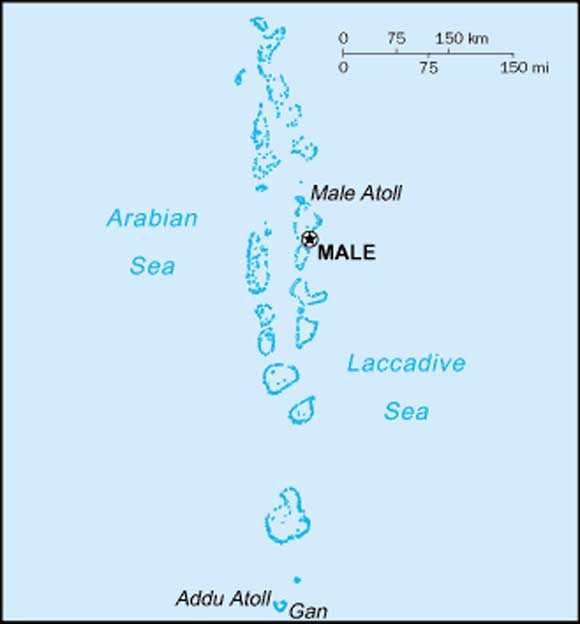
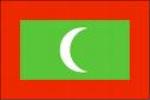
Dr. Mohamed Waheed Hassan Maniku
President since 8 February 2012
President since 8 February 2012
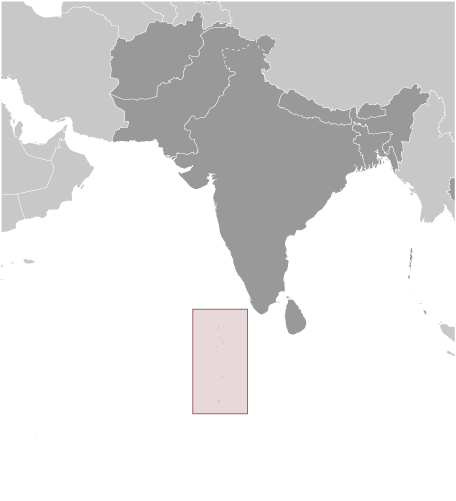
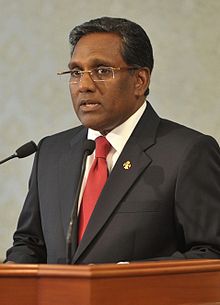
Mohamed Waheed Deen
President since33 February 2012
President since33 February 2012
